

The Difference Between ‘Minimum Wage’ and ‘Living Wage’

“What is the Difference Between ‘Minimum Wage’ and ‘Living Wage’? I went to Sri Lanka to find out.

Five days, four design students, three factory tours and two garment worker visits, resulted in one unforgettable behind the scenes journey to Sri Lanka. As the Vice Chair of my family’s foundation, The Cordes Foundation, I traveled to Sri Lanka a few years ago with Remake, a non-profit focused on building the conscious consumerism movement. The purpose of this ‘Peace Corps for Fashion’-inspired trip was to encourage people who have the power to impact the fashion industry to experience the other side. The side that remains hidden beneath the beautiful images on magazine covers and runway shows.

Having previously worked for high-end designers and magazines, I began learning about the “not so glamorous” side of the fashion industry. When I read that 80% of the supply chain were women and 98% were not being paid a living wage, I felt compelled as a conscious consumer, investor and philanthropist to change these statistics. The Cordes Foundation was built with a mission to provide economic opportunities for women and therefore it became clear that ethical fashion would need to become a significant focus of our work.

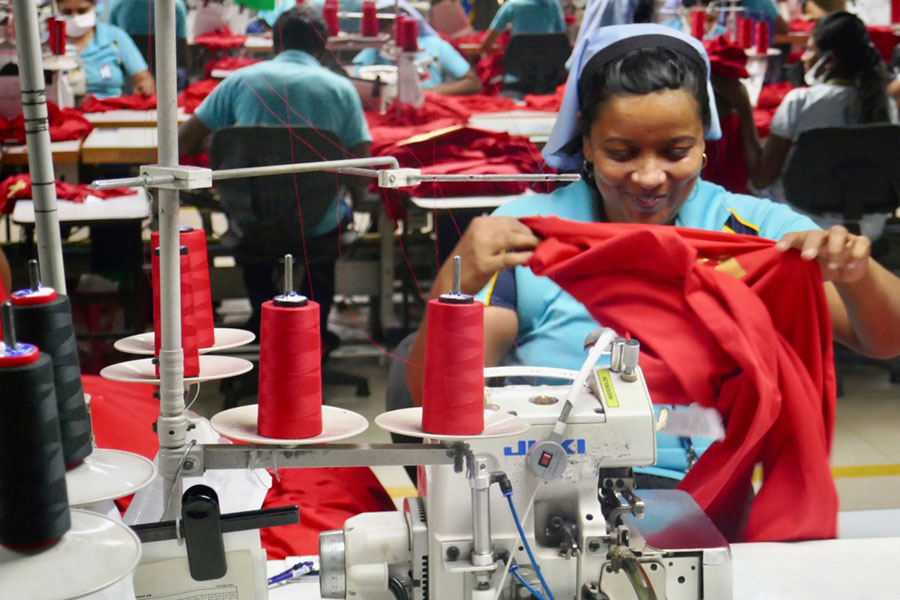
From watching the harsh, chemically-intense dye process of denim to speaking directly with the women who work endless hours to ensure our Western wardrobes are fully stocked, I returned to the US with a stronger understanding and appreciation for the people and process behind our clothes. I was particularly moved when one garment worker noted that a single t-shirt is touched by around 40 pairs of hands.

Another moving conversation was with activist Ashila Niroshine Mapalagama, Founder of Stand Up Lanka, a movement organized for and by garment workers to educate them on their rights, provide financial security and teach vocational training. A movement that she projects will include at least 4,000 members within the next 2 years. We didn’t expect her to tell us that workers are consciously drinking less water and sacrificing bathroom breaks to be able to keep up with production demand. Ashila also told us that the current minimum wage in Sri Lanka is 10,300 rupees (approximately $67), which she feels is far from the 20,000 rupees (approximately $130) considered to be a lowest “adequate” living wage.
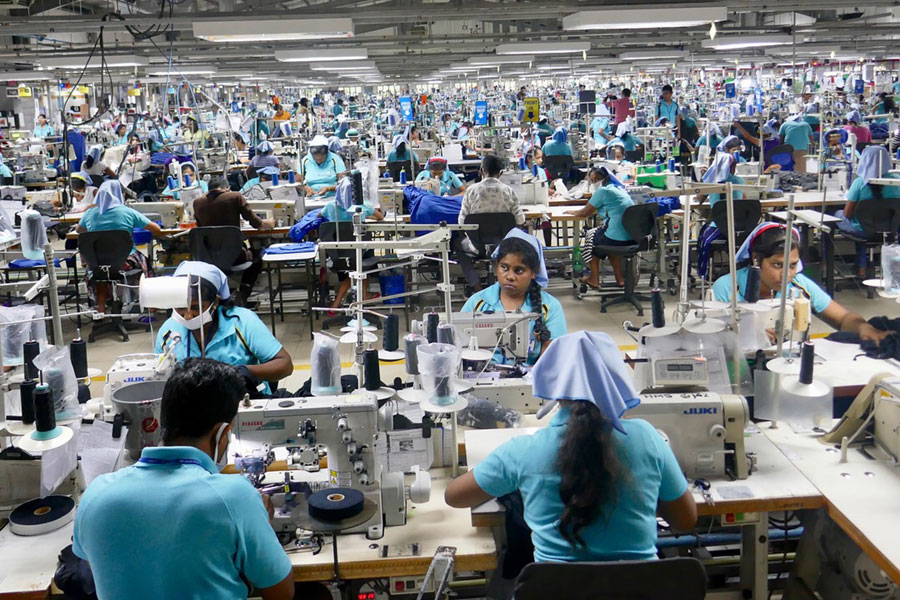
To get a better feel for the hidden lives of the garment workers, we visited 30 women at their boarding house on a Sunday, their only day off. As we sat on the floor and shared a meal of chicken and rice using our hands, our translator helped carry a dialogue to quickly discover each other’s likes, dislikes and everyday routines. From there, a trusting bond grew which led to the sharing of more personal stories about their inadequate wages, harassment issues and family struggles.

It was one of the women’s stories about a routine toothache that took us by surprise. When her low salary didn’t provide her with enough income to pay her medical bill, she was forced to take out a loan. Unable to meet her monthly payments, she turned to the only other alternative she knew would make ends meet: sex work. This disheartening story was unfortunately more common than not. This unfair pay system was the product of a variety of stakeholders caught in a vicious cycle. As we took a closer look into how the cycle began, we heard from factory owners who helped put the situation into perspective.

“Value increases but cost is always reduced. I have to give 10% salary increases every year but can’t pass that on to the customer, so we have to find ways to work around it…” said one man who employs 6,000 workers at his factory. His “never say no to a customer” motto made him start looking for the newest innovations in places like China, a country which has an average monthly worker salary of $350 versus the $70-200 range for Sri Lankan workers.

While having the newest, trendiest product is not a life or death situation for shoppers, it can easily be made one for the people who make the products. Increasingly consumers want their products faster, better and cheaper, yet remain unwilling to pay a premium for these added values. These expectations from brands force them to demand lower costs from their suppliers, ultimately reducing the end wages of workers.

Are we as consumers inadvertently contributing to the problem? I think we are and it’s time to take action. Just how doctors tell you to watch nutrition labels, watch how you spend on fashion. Remaining conscious of your purchasing power makes a significant difference. Remember, there is a human side to every designer label.
The Difference Between ‘Minimum Wage’ and ‘Living Wage’

“What is the Difference Between ‘Minimum Wage’ and ‘Living Wage’? I went to Sri Lanka to find out.

Five days, four design students, three factory tours and two garment worker visits, resulted in one unforgettable behind the scenes journey to Sri Lanka. As the Vice Chair of my family’s foundation, The Cordes Foundation, I traveled to Sri Lanka a few years ago with Remake, a non-profit focused on building the conscious consumerism movement. The purpose of this ‘Peace Corps for Fashion’-inspired trip was to encourage people who have the power to impact the fashion industry to experience the other side. The side that remains hidden beneath the beautiful images on magazine covers and runway shows.

Having previously worked for high-end designers and magazines, I began learning about the “not so glamorous” side of the fashion industry. When I read that 80% of the supply chain were women and 98% were not being paid a living wage, I felt compelled as a conscious consumer, investor and philanthropist to change these statistics. The Cordes Foundation was built with a mission to provide economic opportunities for women and therefore it became clear that ethical fashion would need to become a significant focus of our work.

From watching the harsh, chemically-intense dye process of denim to speaking directly with the women who work endless hours to ensure our Western wardrobes are fully stocked, I returned to the US with a stronger understanding and appreciation for the people and process behind our clothes. I was particularly moved when one garment worker noted that a single t-shirt is touched by around 40 pairs of hands.

Another moving conversation was with activist Ashila Niroshine Mapalagama, Founder of Stand Up Lanka, a movement organized for and by garment workers to educate them on their rights, provide financial security and teach vocational training. A movement that she projects will include at least 4,000 members within the next 2 years. We didn’t expect her to tell us that workers are consciously drinking less water and sacrificing bathroom breaks to be able to keep up with production demand. Ashila also told us that the current minimum wage in Sri Lanka is 10,300 rupees (approximately $67), which she feels is far from the 20,000 rupees (approximately $130) considered to be a lowest “adequate” living wage.

To get a better feel for the hidden lives of the garment workers, we visited 30 women at their boarding house on a Sunday, their only day off. As we sat on the floor and shared a meal of chicken and rice using our hands, our translator helped carry a dialogue to quickly discover each other’s likes, dislikes and everyday routines. From there, a trusting bond grew which led to the sharing of more personal stories about their inadequate wages, harassment issues and family struggles.

It was one of the women’s stories about a routine toothache that took us by surprise. When her low salary didn’t provide her with enough income to pay her medical bill, she was forced to take out a loan. Unable to meet her monthly payments, she turned to the only other alternative she knew would make ends meet: sex work. This disheartening story was unfortunately more common than not. This unfair pay system was the product of a variety of stakeholders caught in a vicious cycle. As we took a closer look into how the cycle began, we heard from factory owners who helped put the situation into perspective.

“Value increases but cost is always reduced. I have to give 10% salary increases every year but can’t pass that on to the customer, so we have to find ways to work around it…” said one man who employs 6,000 workers at his factory. His “never say no to a customer” motto made him start looking for the newest innovations in places like China, a country which has an average monthly worker salary of $350 versus the $70-200 range for Sri Lankan workers.

While having the newest, trendiest product is not a life or death situation for shoppers, it can easily be made one for the people who make the products. Increasingly consumers want their products faster, better and cheaper, yet remain unwilling to pay a premium for these added values. These expectations from brands force them to demand lower costs from their suppliers, ultimately reducing the end wages of workers.

Are we as consumers inadvertently contributing to the problem? I think we are and it’s time to take action. Just how doctors tell you to watch nutrition labels, watch how you spend on fashion. Remaining conscious of your purchasing power makes a significant difference. Remember, there is a human side to every designer label.

Emma Watson Partners With National Geographic on #InternationalWomensDay

A new partnership aims to accelerate gender parity by highlighting women photographers with outstanding photographic contributions. Work from eight female National Geographic photographers will be featured throughout Women’s Day, curated by Watson.

The National Geographic account is the most followed brand on Instagram worldwide, with Watson and National Geographic having a combined total of over 129 million followers.

The actor, activist and UN Women Global Goodwill Ambassador has partnered with National Geographic to become the first guest editor of the National Geographic Instagram account (@NatGeo) to mark International Women’s Day 2018.

If you like this, subscribe here for more stories that Inspire The Future.

Working with the editorial team at National Geographic, Watson will curate the account, highlighting the work of eight National Geographic female photographers. The photographers, from Saudi Arabia, Iran, Azerbaijan, Australia, the United States and the Philippines, cover a wide range of important and relevant topics including male guardianship and the longstanding ban on women driving in Saudi Arabia, the effects of displacement on women and girls running from Boko Haram in Nigeria, unequal pay in India for women day laborers in the brick industry, the bond between mothers and their babies evident even in nature, advancements in women’s rights and the importance of self-identity and the power of hope for a better tomorrow among our world’s young girls.

The National Geographic Instagram account is the most followed brand on Instagram and one of the top 15 most followed accounts on the platform.Both Watson and National Geographic have a combined total following of 129 million followers and this experience will be amplified via Facebook Stories on the National Geographic magazine Facebook page, extending the reach by another 22 million followers.

https://www.instagram.com/p/BgD7Oj9johH/?taken-by=natgeo


Watson says, “Women photographers are often under-represented and under-celebrated. I’m thrilled to mark this day by profiling the talented female story-tellers and image-makers that are working hard to build empathy across borders.”

Susan Goldberg, Editorial Director of National Geographic Partners and Editor-in-Chief of National Geographic magazine says, “We are honored to be partnering with Emma to recognize the contributions of these eight incredible women photographers, who are shedding light on important stories that make a difference in people’s lives. We are eager to use our storytelling platforms and our power as a global media brand to highlight women by calling attention to their work, their stories and their causes.”

“Women photographers are often under-represented and under-celebrated. I’m thrilled to mark this day by profiling the talented female story-tellers and image-makers that are working hard to build empathy across borders.”

In addition, in an effort to encourage conversations online and through social communities on March 8, National Geographic will also be publishing articles tied to International Women’s Day at NationalGeographic.com. This will include stories of inspirational women from around the world, portraits of powerful women throughout history, discussion around some of the greatest barriers women are facing today and highlights of some of National Geographic’s most notable female explorers, including Dr. Jane Goodall. 

https://www.instagram.com/p/BgEEpVBDRrZ/?taken-by=natgeo

National Geographic’s acclaimed documentary JANE will make its broadcast premiere on Monday, March 12. Directed by Brett Morgen and featuring an original score from legendary composer Philip Glass, JANE has won Best Documentary Awards from the National Board of Review of Motion Pictures, Producers Guild of America, Writer’s Guild of America, The American Cinema Editors Guild and the Motion Pictures Sound Editors Guild, as well as The Critics’ Choice Documentary Awards.

A number of other National Geographic Instagram accounts will also be featuring photos of and by inspiring women, including 2018 National Geographic Adventurer of the Year Hilaree Nelson O’Neil on @natgeoadventure and Dr. Jane Goodall on @natgeowild.

If you like this, subscribe here for more stories that Inspire The Future.

Emma Watson Partners With National Geographic on #InternationalWomensDay

A new partnership aims to accelerate gender parity by highlighting women photographers with outstanding photographic contributions. Work from eight female National Geographic photographers will be featured throughout Women’s Day, curated by Watson.

The National Geographic account is the most followed brand on Instagram worldwide, with Watson and National Geographic having a combined total of over 129 million followers.

The actor, activist and UN Women Global Goodwill Ambassador has partnered with National Geographic to become the first guest editor of the National Geographic Instagram account (@NatGeo) to mark International Women’s Day 2018.

If you like this, subscribe here for more stories that Inspire The Future.

Working with the editorial team at National Geographic, Watson will curate the account, highlighting the work of eight National Geographic female photographers. The photographers, from Saudi Arabia, Iran, Azerbaijan, Australia, the United States and the Philippines, cover a wide range of important and relevant topics including male guardianship and the longstanding ban on women driving in Saudi Arabia, the effects of displacement on women and girls running from Boko Haram in Nigeria, unequal pay in India for women day laborers in the brick industry, the bond between mothers and their babies evident even in nature, advancements in women’s rights and the importance of self-identity and the power of hope for a better tomorrow among our world’s young girls.

The National Geographic Instagram account is the most followed brand on Instagram and one of the top 15 most followed accounts on the platform.Both Watson and National Geographic have a combined total following of 129 million followers and this experience will be amplified via Facebook Stories on the National Geographic magazine Facebook page, extending the reach by another 22 million followers.

https://www.instagram.com/p/BgD7Oj9johH/?taken-by=natgeo


Watson says, “Women photographers are often under-represented and under-celebrated. I’m thrilled to mark this day by profiling the talented female story-tellers and image-makers that are working hard to build empathy across borders.”

Susan Goldberg, Editorial Director of National Geographic Partners and Editor-in-Chief of National Geographic magazine says, “We are honored to be partnering with Emma to recognize the contributions of these eight incredible women photographers, who are shedding light on important stories that make a difference in people’s lives. We are eager to use our storytelling platforms and our power as a global media brand to highlight women by calling attention to their work, their stories and their causes.”

“Women photographers are often under-represented and under-celebrated. I’m thrilled to mark this day by profiling the talented female story-tellers and image-makers that are working hard to build empathy across borders.”

In addition, in an effort to encourage conversations online and through social communities on March 8, National Geographic will also be publishing articles tied to International Women’s Day at NationalGeographic.com. This will include stories of inspirational women from around the world, portraits of powerful women throughout history, discussion around some of the greatest barriers women are facing today and highlights of some of National Geographic’s most notable female explorers, including Dr. Jane Goodall. 

https://www.instagram.com/p/BgEEpVBDRrZ/?taken-by=natgeo

National Geographic’s acclaimed documentary JANE will make its broadcast premiere on Monday, March 12. Directed by Brett Morgen and featuring an original score from legendary composer Philip Glass, JANE has won Best Documentary Awards from the National Board of Review of Motion Pictures, Producers Guild of America, Writer’s Guild of America, The American Cinema Editors Guild and the Motion Pictures Sound Editors Guild, as well as The Critics’ Choice Documentary Awards.

A number of other National Geographic Instagram accounts will also be featuring photos of and by inspiring women, including 2018 National Geographic Adventurer of the Year Hilaree Nelson O’Neil on @natgeoadventure and Dr. Jane Goodall on @natgeowild.

If you like this, subscribe here for more stories that Inspire The Future.

Innovating Women: The Changing Face of Technology

Singularity University Applauds New Book Crowdsourcing the Paths to Success of Hundreds of Women in Science and Technology

Innovating Women, a new book co-authored by Singularity University (SU) distinguished fellow Vivek Wadhwa and award-winning author, journalist and professor Farai Chideya, holds no punches in challenging the old-boy networks in science and tech around the world to foretell that women are prime to lead the new era of innovation.

Created with the support ofSingularity UniversityandGoogle for Entrepreneurs, Innovating Womencrowdsources the personal journeys of hundreds of women from Tehran to Mumbai to Silicon Valley and shares first-hand accounts of these pioneers’ challenges, barriers, discriminations and roads to success. Contributors to the book include Prodea CEO and the first female private space explorerAnousheh Ansari; Google(x) VP and recently announced United States CTO Megan Smith; physicist, physician, founder and CEO of Nanobiosym Dr. Anita Goel; and venture capitalist Heidi Roizen.

Ursula Burns, Chairman and CEO, Xerox Corporation called Innovating Women “a must read for every woman looking to affect change and join today’s global innovation economy.”

“This powerful new book illustrates that there are women in tech doing amazing work, even though less than 15% of senior executives are women,” said Lajuanda Asemota, director, Strategic Relations for Diversity at SU. “I’m excited to help SU ensure the future is as inclusive and diverse as it should be.”

Ray Kurzweil, inventor, author, futurist, a director of engineering at Google and co-founder of SU remarked: “As someone whose family has been dedicated to advancing women’s careers for one and a half centuries, I am excited by Vivek and Farai’s compelling book which shines a light on the remarkable achievements of brilliant and pioneering women in technology.”

“We have the ability today to create the era of abundance, but not without the leadership of women.Innovating Women explains why and how women, at every level of business and research will transform society. Of particular note is contributor Megan Smith, appointed just last week by President Obama to serve as the US CTO. We applaud Megan and all the contributors of this inspiring book,” stated Dr. Peter H. Diamandis, executive chairman, SU; chairman, XPRIZE Foundation; author, Abundance: The Future is Better Than you Think.

Innovating Womenis availablein print andeBookeditions. A portion of the proceeds will be allocated to the Singularity University Fund at the Silicon Valley Community Foundation to support women applicants toSU’s Global Solutions Program.

Written by: Vivek Wadhwa is a distinguished fellow at SU | Farai Chideya has combined media, technology and socio-political analysis during her 20-year career as an award-winning author, journalist, professor and lecturer.

Original Story: Exponential Finance (SU)


Innovating Women: The Changing Face of Technology

Singularity University Applauds New Book Crowdsourcing the Paths to Success of Hundreds of Women in Science and Technology

Innovating Women, a new book co-authored by Singularity University (SU) distinguished fellow Vivek Wadhwa and award-winning author, journalist and professor Farai Chideya, holds no punches in challenging the old-boy networks in science and tech around the world to foretell that women are prime to lead the new era of innovation.

Created with the support ofSingularity UniversityandGoogle for Entrepreneurs, Innovating Womencrowdsources the personal journeys of hundreds of women from Tehran to Mumbai to Silicon Valley and shares first-hand accounts of these pioneers’ challenges, barriers, discriminations and roads to success. Contributors to the book include Prodea CEO and the first female private space explorerAnousheh Ansari; Google(x) VP and recently announced United States CTO Megan Smith; physicist, physician, founder and CEO of Nanobiosym Dr. Anita Goel; and venture capitalist Heidi Roizen.

Ursula Burns, Chairman and CEO, Xerox Corporation called Innovating Women “a must read for every woman looking to affect change and join today’s global innovation economy.”

“This powerful new book illustrates that there are women in tech doing amazing work, even though less than 15% of senior executives are women,” said Lajuanda Asemota, director, Strategic Relations for Diversity at SU. “I’m excited to help SU ensure the future is as inclusive and diverse as it should be.”

Ray Kurzweil, inventor, author, futurist, a director of engineering at Google and co-founder of SU remarked: “As someone whose family has been dedicated to advancing women’s careers for one and a half centuries, I am excited by Vivek and Farai’s compelling book which shines a light on the remarkable achievements of brilliant and pioneering women in technology.”

“We have the ability today to create the era of abundance, but not without the leadership of women.Innovating Women explains why and how women, at every level of business and research will transform society. Of particular note is contributor Megan Smith, appointed just last week by President Obama to serve as the US CTO. We applaud Megan and all the contributors of this inspiring book,” stated Dr. Peter H. Diamandis, executive chairman, SU; chairman, XPRIZE Foundation; author, Abundance: The Future is Better Than you Think.

Innovating Womenis availablein print andeBookeditions. A portion of the proceeds will be allocated to the Singularity University Fund at the Silicon Valley Community Foundation to support women applicants toSU’s Global Solutions Program.

Written by: Vivek Wadhwa is a distinguished fellow at SU | Farai Chideya has combined media, technology and socio-political analysis during her 20-year career as an award-winning author, journalist, professor and lecturer.

Original Story: Exponential Finance (SU)


Leadership in the Spotlight

As women business owners, when we think about the topic of leadership the theme of this month’s issue of NAWBO ONE a lot of things come to mind.

We are leaders in our businesses, households and communities. We have friends, customers and vendor partners in prominent leadership positions in corporate America. And, of course, with election season in full swing, we think about our political leaders both male and female and the issues we care about most that we hope they’ll embrace and support.

As the voice of women business owners and with advocacy at the heart of our organization and its founding, NAWBO is particularly focused right now on our political leadership. We are advocating for more women to run for political office, and for more of those who make it into seats to get behind women-owned and small businesses issues.

To this end, we have released a 2016 public policy agenda to help women business owners who are part of our community and the elected officials we interact with to understand what we care about most issues that are critical to our personal and business health. The issues we have chosen to pursue benefit the majority of our NAWBO members while also increasing our visibility and credibility with elected officials, agency personnel, peer organizations and members of the media.

They include:

  • Access to Capital
  • Education and Workforce
  • Government Contracting
  • International Trade
  • Regulatory Reform
  • Taxes

Additionally, we have chosen to expand our agenda from last year to include other issues that impact women entrepreneurs, such as breast cancer, Alzheimer’s, pension reform and retirement planning. By broadening our focus, we increase our ability to build coalitions and credibility with leaders of both political parties.

A few weeks back, I was thrilled to participate in a town hall-style event in New Hampshire one day before one of the presidential debates. Hosted by the Job Creators Network (JCN) together with the Independent Women’s Forum and moderated by CNN Political Commentator Margaret Hoover, this event brought together local and national business leaders to discuss what women really want this election season is it issues like reproductive rights and the gender pay gap that typically get top billing in the media, or economic issues that impact job creation and opportunity, like a poll recently found?

The women I was proud to speak alongside, including Sabrina Schaeffer, Executive Director at the Independent Women’s Forum, and Teresa R. Rosenberger, President of Divine Strategies, a local business consultancy, focused on the economic hurdles women face to succeeding in business, highlighting the challenges of overregulation, overtaxation and a lack of access to capital. Click here to view a video of this discussion.

As always, I’d love to hear from you! What leadership qualities do you look for in your elected officials, in your own employees, in your customers, etc.? And what issues do you care about most this election season? Together, as leaders and advocates, we can make a difference.

Written by: Crystal Arredondo, NAWBO National Board Chair

Original Story: Nawbo


Leadership in the Spotlight

As women business owners, when we think about the topic of leadership the theme of this month’s issue of NAWBO ONE a lot of things come to mind.

We are leaders in our businesses, households and communities. We have friends, customers and vendor partners in prominent leadership positions in corporate America. And, of course, with election season in full swing, we think about our political leaders both male and female and the issues we care about most that we hope they’ll embrace and support.

As the voice of women business owners and with advocacy at the heart of our organization and its founding, NAWBO is particularly focused right now on our political leadership. We are advocating for more women to run for political office, and for more of those who make it into seats to get behind women-owned and small businesses issues.

To this end, we have released a 2016 public policy agenda to help women business owners who are part of our community and the elected officials we interact with to understand what we care about most issues that are critical to our personal and business health. The issues we have chosen to pursue benefit the majority of our NAWBO members while also increasing our visibility and credibility with elected officials, agency personnel, peer organizations and members of the media.

They include:

  • Access to Capital
  • Education and Workforce
  • Government Contracting
  • International Trade
  • Regulatory Reform
  • Taxes

Additionally, we have chosen to expand our agenda from last year to include other issues that impact women entrepreneurs, such as breast cancer, Alzheimer’s, pension reform and retirement planning. By broadening our focus, we increase our ability to build coalitions and credibility with leaders of both political parties.

A few weeks back, I was thrilled to participate in a town hall-style event in New Hampshire one day before one of the presidential debates. Hosted by the Job Creators Network (JCN) together with the Independent Women’s Forum and moderated by CNN Political Commentator Margaret Hoover, this event brought together local and national business leaders to discuss what women really want this election season is it issues like reproductive rights and the gender pay gap that typically get top billing in the media, or economic issues that impact job creation and opportunity, like a poll recently found?

The women I was proud to speak alongside, including Sabrina Schaeffer, Executive Director at the Independent Women’s Forum, and Teresa R. Rosenberger, President of Divine Strategies, a local business consultancy, focused on the economic hurdles women face to succeeding in business, highlighting the challenges of overregulation, overtaxation and a lack of access to capital. Click here to view a video of this discussion.

As always, I’d love to hear from you! What leadership qualities do you look for in your elected officials, in your own employees, in your customers, etc.? And what issues do you care about most this election season? Together, as leaders and advocates, we can make a difference.

Written by: Crystal Arredondo, NAWBO National Board Chair

Original Story: Nawbo


0