When More is Less, or Don’t Leave a Horse Alone

I grew up on a ranch. Dad always taught me to never leave a horse alone in the hay barn. The reason, he explained, was that horses would eat themselves to death. That’s right, if horses can get access to a lot of easy to eat feed they will quit eating only when their bloated stomachs burst.

For this reason Dad never considered horses all that smart. I have found it’s not all that uncommon for human beings act a lot like horses around money. There’s been a lot of recent research on whether money can buy happiness. The answer is a little murky.

Some research suggests that for Americans’ $75,000 a year pays for an enough of the good life to reduce stress and produce a sense of security and optimism. This research indicates that increasing income over that amount has a decreasing impact on additional life satisfaction. In other words, more money helps a little but not all that much.

What becomes much more important once our needs are met is the quality of our personal relationships, the satisfaction of our work, and the joy of our lifestyle.

Newer research says that making more money can increase your happiness a lot if you know what makes you happy. In this research it’s not about how much money you make so much as what you spend your money on that determines your happiness. Spending money on experiences that broaden your mind, stimulate new knowledge and positive feelings is high on the list of happy activities.

So is charity… people who spend significant amounts of their income on relieving suffering or solving serious human problems report higher levels of intrinsic self-worth and life satisfaction. The sad fact is that a relatively small group of super wealthy people spend their time helping others or improving their inner life from their outer life experiences. Their most favorite activity is making more money and spending more money on stuff.

Here are the three most common pitfalls about how money can make us miserable or how we can act like horses in the barn full of hay.

1. Your money owns you. Years ago I had a friend who worked for a billionaire heiress. Her father had made an enormous fortune from a business that just wouldn’t stop spewing money. The heiress spent nearly all of her time keeping track of all her stuff. She owned houses all over the world filled with furniture she rarely used. She had yachts in two oceans and enough clothes to fill several department stores.

She had a staff whose jobs was to keep all these possessions form falling into disrepair and help her find the latest version of nearly everything. Managing these people and making decisions was her full-time job. All this made her very stressed-out and my friend reported she was almost never in a good mood because she was always worried about something she owned or wanted to own.

2. Social comparison. Social research confirms that the one common measure that human beings use to gauge their well-being is how they’re doing compared to their neighbors. That’s one reason why people who live in ghettos can be very happy. They may not be rich but compared to the people they live around they’re not so bad off.

One mistake newly successful people often make is moving to a neighborhood they can barely afford. Although they were once happy with their $30,000 car now they seem miserable because all their neighbors have $50,000 cars. Trying to keep up with the richer “Joneses” is a prescription for continuous stress.

3. Untamed ambition. Humans are meaning-seeking beings. And that makes us feel good about ourselves… but not that good. There will always be people with more status or more stuff which threatens our inner peace if it’s built on validating ourselves by what we accomplish, where we live or what we drive. Yet research confirms that much of our ambition is built on a never ending drive to achieve or to compete. Those are very useful motives but are poor foundations for experiencing deep life satisfaction.

In worldwide research, the happiest people are those whose lives reflect their inner values and their choices bring them closer to their circle of loved ones whether they are family or friends. We are all motivated by the things we want but do not have.

The wisest among us are continually making sure the things that they want are relevant to their genuine happiness. Continually seeking more of what you used to not have… Now that is what a very dumb horse would do.

 

What’s Your Promise?

When I was in eight grade, I read 25 biographies of great leaders. They ranged from Alexander the Great to Benjamin Franklin. One thing I noticed even at that age is that they all had one thing in common. They accomplished something significant, in some cases, world changing, because they had the will to do it.

The other surprising truth was that they almost all operated on vision, rather than a specific plan. What this means is that they all seemed to have an inspiring idea of what they wanted to accomplish, but developed their strategies by paying close attention to developing circumstances as they happened.

As I got older and began to work with business leaders, I was disappointed to discover that few of them had a big inspiring idea… at least not one that emerged from their soul. In fact, most of them have been controlled by their boards or financial analysts whose expectations are almost solely focused on growth and profits rather than creating value. This reduces most leaders into managers struggling to compete in a “me too” world.

What I’ve come to believe is that if you really want to do something significant you have to stand for something, believe in something, be driven by something that is bigger than just making money or even success as others define it. 

Over time, I’ve come to describe this drive as your “promise.” Your promise is bigger than a vision. It is a specific commitment to make a difference… a difference that drives you. It turns out that to be driven by a personal promise is not impractical or foolish. In fact, virtually all business leaders who we truly admire are up to something bigger than simply making money.

They are driven to create unique value… value that matters to human beings. This is true regardless of whether these leaders are creating robust and elegant computers or inventing new life-changing devices or inventing micro finance to help lift the desperately poor to self-sufficiency. What these few business leaders have in common is that they understand that business is a powerful vehicle for both self-expression and moral ambition.

The other distinctive quality of these leaders is that they oppose conventional thinking. They ignore benchmarks. They over-invest in a few things that really matter and strip away everything that doesn’t. They rarely pay attention to the stock price of their company and often tell investors who may not like what they’re doing to invest elsewhere. I find these leaders to be frequently envied but rarely copied. Perhaps the reason for this is that you can’t copy someone else’s promise. It doesn’t work that way.

Leaders who have a promise to keep always face moments of truth when their bankers, investors and boards question them. During these moments of siege leaders will fold if they don’t display the confidence that only comes from an intrinsic commitment to an ideal that is bigger than themselves. They would simply remain dreamers – people with bright imaginations but low resolve. One thing I’ve learned from leaders driven by an inner promise is that they’re more effective, more successful and more inspiring then ordinary leaders. It’s not because they’re smarter, but because they are relentless in finding solutions to the problems that stand in their way.

After coaching leaders for over 30 years, I’m convinced that the source of our promise comes from the deepest intrinsic part of our essential being. Discovering our promise takes more than self-awareness. It requires soul-awareness. So how about you?

If you could change anything and it would work… what would it be? There are six great needs in the world today; six great causes that are at the core of vital human need. These are:

1. Ending ignorance through education

2. Ending poverty though self-sufficiency

3. Conquering disease and improving total health

4. Ending violence and creating peace

5. Ending oppression and promoting human rights

6. Preserving our natural environment and creating sustainable abundance

Do any of these causes inspire you? I’m not suggesting you start a nonprofit. It seems we have enough of those. What I am asking is how might you, with your talent, skills and experience, turn your career or your business into a means of creating value that addresses the real needs of our time? In helping many leaders find their promise let me assure you – this does not require taking a vow of poverty only a vow of purpose.

So…

If you could state your promise… the “give” that you could give to the world, what would it be?


Take the Personal Leadership Quiz

Whether you run a company, a consulting practice or just your own life, you are a leader. We all are.

The work of leadership consists of three things.

First, you must have a clear direction… a vision of what you want to accomplish. Second, you must be able to engage and motivate others. There are virtually no worthwhile accomplishments that can be attained without influencing others. Third, you must be able to set and achieve goals that are milestones in the pursuit of your vision.

As you can see, whether you run large enterprises, are an artist or focusing at being a parent, you must do all these three things well to be effective. Yet, there is more to life than simply being effective. Fifty years of research on life satisfaction has taken scholars to where it all started… the work of Abraham Maslow.

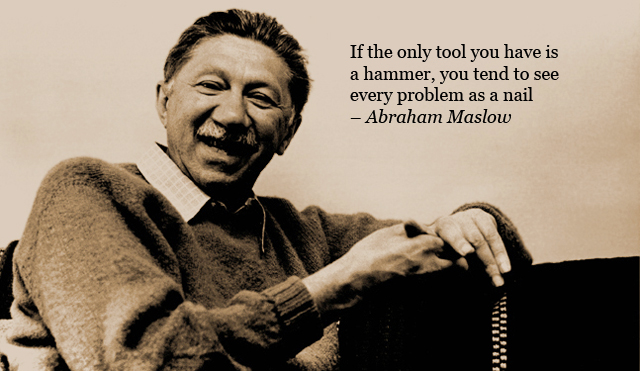
Maslow is most famous for developing a hierarchy of needs. In his view, people were always motivated by what they didn’t have. His range of motivations started with physical needs, graduated to social connection, and culminated with something he called self-actualization. Self-actualization occurs at the intersection between effectiveness and happiness. His work was considered to be a breakthrough because he was the first prominent psychologist to study very high functioning people.

The connection between Maslow’s research and leadership is profound. I’ve seen this over my 30 years of working with leaders and coaching them in both their professional and personal lives.

Just as Maslow discovered that only 10% of the population was coming to self-actualization, I have also observed that relatively few leaders are consistently both effective and happy. I use the word happy here because its core definition contains both contentment and optimism. Today many clients are resistant to the idea that self-actualization is an attainable goal. They complain that the pressures of business competition or the competing commitments of modern life are so intense that coping is the best they can do. Self-actualization is something to be achieved in retirement when the bonfire of life has settled into embers. That’s missing the point. Self-actualization isn’t the destination… it’s a means to a well-lived life.

It’s the substance of great leadership. The point of our challenges is that they drive us to self-actualization… doing our best and becoming our best. In order to get this point across, I’ve developed a simple quiz based on Maslow’s eight markers of the self-actualizing person. It just takes a minute… and see where you are.

Respond to each statement using the following scale: 1 = almost never true 2 = rarely true 3 = frequently true 4 = almost always true (You may notice this is a four-point scale. There is no middle, ‘sometimes true’ statement. That’s because four point scales have proven to be more accurate because they force people to make a clear choice rather than default to an “I am not sure” response. The result is more actionable data.

1. I experience my life vividly. I feel genuine emotions daily and am fully present at important moments throughout the day. (1-2-3-4)

2. I make choices that pust me out of my comfort zone that foster my personal growth and development. (1-2-3-4)

3. I am attuned to my inner nature and act with integrity with what I value, believe and feel. (1-2-3-4)

4. I am honest with myself and take full responsibility for the consequences of my decisions without excuses. (1-2-3-4)

5. I  have the courage to not manipulate or bully others when I am not getting what I want. (1-2-3-4)

6. In any situation I’m willing to both stand out and fit in based on who I truly am rather than the expectations of others. (1-2-3-4)

7. I have an ongoing process for reaching my potential by constantly learning and doing the work necessary to fulfill my self-vision. (1-2-3-4)

8. I frequently have peak experiences in which I feel authentic closeness to others and being extraordinarily effective in my work. (1-2-3-4)

After you answer each question on the 1 to 4 scale, add up your total. If you score 24 or above… congratulations.

You swim in the pool of high-functioning leaders and individuals. If you score below 24, perhaps it’s a little more clear on what you might work on to get in the pool.

But here is the hard truth…the research on self-knowledge with over 50,000 leaders show that the person who has the most inaccurate view of you is you!

So, to gain deeper insight… after you answer these questions, have someone that knows you well answer these same questions in terms of how they experience you. Do they see you the same way you see yourself? That might give you a clear starting point on what to work on that will both increase your success and your happiness, which is my hope for everyone.


Take the Personal Leadership Quiz

Whether you run a company, a consulting practice or just your own life, you are a leader. We all are.

The work of leadership consists of three things.

First, you must have a clear direction… a vision of what you want to accomplish. Second, you must be able to engage and motivate others. There are virtually no worthwhile accomplishments that can be attained without influencing others. Third, you must be able to set and achieve goals that are milestones in the pursuit of your vision.

As you can see, whether you run large enterprises, are an artist or focusing at being a parent, you must do all these three things well to be effective. Yet, there is more to life than simply being effective. Fifty years of research on life satisfaction has taken scholars to where it all started… the work of Abraham Maslow.

Maslow is most famous for developing a hierarchy of needs. In his view, people were always motivated by what they didn’t have. His range of motivations started with physical needs, graduated to social connection, and culminated with something he called self-actualization. Self-actualization occurs at the intersection between effectiveness and happiness. His work was considered to be a breakthrough because he was the first prominent psychologist to study very high functioning people.

The connection between Maslow’s research and leadership is profound. I’ve seen this over my 30 years of working with leaders and coaching them in both their professional and personal lives.

Just as Maslow discovered that only 10% of the population was coming to self-actualization, I have also observed that relatively few leaders are consistently both effective and happy. I use the word happy here because its core definition contains both contentment and optimism. Today many clients are resistant to the idea that self-actualization is an attainable goal. They complain that the pressures of business competition or the competing commitments of modern life are so intense that coping is the best they can do. Self-actualization is something to be achieved in retirement when the bonfire of life has settled into embers. That’s missing the point. Self-actualization isn’t the destination… it’s a means to a well-lived life.

It’s the substance of great leadership. The point of our challenges is that they drive us to self-actualization… doing our best and becoming our best. In order to get this point across, I’ve developed a simple quiz based on Maslow’s eight markers of the self-actualizing person. It just takes a minute… and see where you are.

Respond to each statement using the following scale: 1 = almost never true 2 = rarely true 3 = frequently true 4 = almost always true (You may notice this is a four-point scale. There is no middle, ‘sometimes true’ statement. That’s because four point scales have proven to be more accurate because they force people to make a clear choice rather than default to an “I am not sure” response. The result is more actionable data.

1. I experience my life vividly. I feel genuine emotions daily and am fully present at important moments throughout the day. (1-2-3-4)

2. I make choices that pust me out of my comfort zone that foster my personal growth and development. (1-2-3-4)

3. I am attuned to my inner nature and act with integrity with what I value, believe and feel. (1-2-3-4)

4. I am honest with myself and take full responsibility for the consequences of my decisions without excuses. (1-2-3-4)

5. I  have the courage to not manipulate or bully others when I am not getting what I want. (1-2-3-4)

6. In any situation I’m willing to both stand out and fit in based on who I truly am rather than the expectations of others. (1-2-3-4)

7. I have an ongoing process for reaching my potential by constantly learning and doing the work necessary to fulfill my self-vision. (1-2-3-4)

8. I frequently have peak experiences in which I feel authentic closeness to others and being extraordinarily effective in my work. (1-2-3-4)

After you answer each question on the 1 to 4 scale, add up your total. If you score 24 or above… congratulations.

You swim in the pool of high-functioning leaders and individuals. If you score below 24, perhaps it’s a little more clear on what you might work on to get in the pool.

But here is the hard truth…the research on self-knowledge with over 50,000 leaders show that the person who has the most inaccurate view of you is you!

So, to gain deeper insight… after you answer these questions, have someone that knows you well answer these same questions in terms of how they experience you. Do they see you the same way you see yourself? That might give you a clear starting point on what to work on that will both increase your success and your happiness, which is my hope for everyone.


Are You A Dandelion or An Orchid?

About 80% of us are resilient to stress. We can find ways to survive, cope, and even thrive no matter what life throws at us. Science writer David Dobbs calls us “dandelions.” We can grow in a crack in the cement. We are considered normal. We make sure the lights go on, planes don’t crash, and see to it that most families and organizations work.

For the most part we are calm, reliable, and sensible. We get our work done. We color inside the lines. We can grow anywhere. When we fail we pick ourselves up, show up and do our work. About 15% of dandelions are super-thrivers who will excel no matter what. They work hard for stupid bosses and endure mean spouses and learn from lazy teachers.

But not everyone is a dandelion. Although being a dandelion is considered normal, it’s just not the only way to be. University researcher Bruce Ellis and Dr. Thomas Bryce have been combining genetic research with experiments on learning and performance, and what they found might revolutionize how you look at people who are abnormal. In fact, you may just begin to see them as extraordinary.

It turns out about 20% of us are extra sensitive to our social environment. That means how others treat you, whether you are encouraged, supported, and nurtured makes a critical difference in whether you thrive or become a problem. But (and here’s the big deal) a large percentage of the super sensitive group achieve the extraordinary when they have a positive advocate or a nurturing environment.


You see unlike dandelions they need special treatment. Someone with super sensitive genes are known as “orchids.” They can thrive beautifully in a hothouse with just the right amount of water, nutrients, heat and light. But orchids don’t grow out of cracks in driveways. As children they either wither around mean, judgmental, competitive people, or they fight back, often with violence.

Orchids frequently suffer from a high number of challenging conditions – ADHD, depression and dyslexia are common. Nevertheless, they are called orchids for a reason. Famous ADHD orchids include Galileo, Walt Disney, Dwight Eisenhower, Stephen Hawking, and, of course, Robin Williams. Abraham Lincoln, Michelangelo, Mark Twain, Winston Churchill and Buzz Aldrin are just a few extraordinary orchids who battled depression. And Bill Gates, Edison, Henry Ford, Ted Turner, Muhammad Ali, DaVinci, Richard Branson, John Chambers, and John Lennon have transcended their dyslexia. So what’s the point?

Well for both leaders and parents it’s this. Emerging research indicates that this list of super-achieving orchids isn’t just happenstance. New experiments are showing that people with a super sensitive genetic make-up definitely do worse in adverse environments but absolutely zoom in supportive ones.

By zoom, I mean orchids zoom past dandelions on a host of performance measures. While not everyone with ADHD, depression, and dyslexia is a genius, a disproportionate number may be extraordinary. The lesson for leaders and parents is that one sure way to fail is to treat everyone the same.

As successful sport coaches know, great players have different needs than good players. And exceptional talent is often found in orchids who need exceptional support. What’s exciting is that research is showing that a supportive environment can be just one positive, nurturing person who is a patient gardener in a field of weeds.

To make the dandelion and orchid theory unforgettable, please watch this short, heart-inspiring video: Shy Boy and his Friend Shock the Audience with The Prayer Unbelievable. You’ll see a dandelion and an orchid paired up to do something absolutely amazing in the face of immense pressure and a hostile world, so perfectly embodied by Simon Cowell.

After watching, ask yourself, “Do I have an orchid on my team? How about in my home? How might I be a patent gardener?”

Will’s book, Working to Win,  focuses on how to raise your self-awareness so you change a few essential habits enabling you win more often at the game of life.


Are You A Dandelion or An Orchid?

About 80% of us are resilient to stress. We can find ways to survive, cope, and even thrive no matter what life throws at us. Science writer David Dobbs calls us “dandelions.” We can grow in a crack in the cement. We are considered normal. We make sure the lights go on, planes don’t crash, and see to it that most families and organizations work.

For the most part we are calm, reliable, and sensible. We get our work done. We color inside the lines. We can grow anywhere. When we fail we pick ourselves up, show up and do our work. About 15% of dandelions are super-thrivers who will excel no matter what. They work hard for stupid bosses and endure mean spouses and learn from lazy teachers.

But not everyone is a dandelion. Although being a dandelion is considered normal, it’s just not the only way to be. University researcher Bruce Ellis and Dr. Thomas Bryce have been combining genetic research with experiments on learning and performance, and what they found might revolutionize how you look at people who are abnormal. In fact, you may just begin to see them as extraordinary.

It turns out about 20% of us are extra sensitive to our social environment. That means how others treat you, whether you are encouraged, supported, and nurtured makes a critical difference in whether you thrive or become a problem. But (and here’s the big deal) a large percentage of the super sensitive group achieve the extraordinary when they have a positive advocate or a nurturing environment.


(adsbygoogle = window.adsbygoogle || []).push({});

You see unlike dandelions they need special treatment. Someone with super sensitive genes are known as “orchids.” They can thrive beautifully in a hothouse with just the right amount of water, nutrients, heat and light. But orchids don’t grow out of cracks in driveways. As children they either wither around mean, judgmental, competitive people, or they fight back, often with violence.

Orchids frequently suffer from a high number of challenging conditions – ADHD, depression and dyslexia are common. Nevertheless, they are called orchids for a reason. Famous ADHD orchids include Galileo, Walt Disney, Dwight Eisenhower, Stephen Hawking, and, of course, Robin Williams. Abraham Lincoln, Michelangelo, Mark Twain, Winston Churchill and Buzz Aldrin are just a few extraordinary orchids who battled depression. And Bill Gates, Edison, Henry Ford, Ted Turner, Muhammad Ali, DaVinci, Richard Branson, John Chambers, and John Lennon have transcended their dyslexia. So what’s the point?

Well for both leaders and parents it’s this. Emerging research indicates that this list of super-achieving orchids isn’t just happenstance. New experiments are showing that people with a super sensitive genetic make-up definitely do worse in adverse environments but absolutely zoom in supportive ones.

By zoom, I mean orchids zoom past dandelions on a host of performance measures. While not everyone with ADHD, depression, and dyslexia is a genius, a disproportionate number may be extraordinary. The lesson for leaders and parents is that one sure way to fail is to treat everyone the same.

As successful sport coaches know, great players have different needs than good players. And exceptional talent is often found in orchids who need exceptional support. What’s exciting is that research is showing that a supportive environment can be just one positive, nurturing person who is a patient gardener in a field of weeds.

To make the dandelion and orchid theory unforgettable, please watch this short, heart-inspiring video: Shy Boy and his Friend Shock the Audience with The Prayer Unbelievable. You’ll see a dandelion and an orchid paired up to do something absolutely amazing in the face of immense pressure and a hostile world, so perfectly embodied by Simon Cowell.

After watching, ask yourself, “Do I have an orchid on my team? How about in my home? How might I be a patent gardener?”

Will’s book, Working to Win,  focuses on how to raise your self-awareness so you change a few essential habits enabling you win more often at the game of life.


Have You Met Yourself?

Do you know what you are especially good at? Do you know why people especially value your work or your personality? Do you know that whatever secret faults you have they are not secrets to anyone else? It’s no surprise that findings of a recent study by the Hay group on differences between male and female leaders showed that no matter which gender you are we’re mostly clueless about ourselves. Of the critical drivers of human effectiveness men and women ranked dead last on the same trait. That trait is self-awareness. That’s not good.

Decades of research confirms that emotional intelligence is the most hair-on-fire critical element of effective leadership, management, as well as just plain getting along with others. Research, using 50,000 360-degree surveys shows that supervisors and subordinates most often agree on the strengths and weaknesses of a particular manager. The person who has the most distorted view is the manager himself or herself! That’s you and me. We simply don’t know how we come across to others. In fact, we are terrible at it. It’s not our fault really.

Our brains are constantly conducting a crazy inner dialogue that provides a personal color commentary on everything that’s going on in our lives minute to minute. We mistake this color commentary for reality. So we think others actually understand our thoughts, motives, and intentions.

But except for a very, very few of our closest loved ones, they don’t. It’s true. Most of us cruise through life thinking others hold us in higher or lower esteem than they actually do. Most of us have a very foggy idea of our impact on others. The result is that our influence, effectiveness, and genuine human connections are smaller than they could be.  A lot smaller. That’s what happens when you experience yourself through your intentions and others through their behavior. I learned this the hard way.

After years of success and failure I discovered that many people viewed me as a bulldozer. What they experienced was arrogance. What I was feeling was confidence. What they experienced was commanding. What I was feeling was urgency. Some small adjustments caused me to actively seek contrary points of view, which led to big improvements.

The point is, I just didn’t have a clue. The following is how I advise people. First, realize you are not normal. We are all quirky as hell. What’s normal to you is, well, abnormal to nearly everyone else.  Second, ask others who know you well, the four questions below. I’ve found it’s best to do this by urgent email. Tell people you mail it to that you’re having an interview tomorrow morning so need an immediate, off-top-of-their-head’s response. If you don’t create a burning fuse your friends and colleagues will put responding off indefinitely.

Here are the questions:

1. What do you most value about me?

2. What do you think I am best at?

3. If I were going to invest a lot of time to learn and master something, what do you think I might do?

4. If you could wish that I stop doing one thing that’s holding me back, what is it?

You don’t need a 360-survey or even a coach to start a journey of self-awareness, that could change your life. You only need an email account.  Go ahead… give it a rip.


Have You Met Yourself?

Do you know what you are especially good at? Do you know why people especially value your work or your personality? Do you know that whatever secret faults you have they are not secrets to anyone else? It’s no surprise that findings of a recent study by the Hay group on differences between male and female leaders showed that no matter which gender you are we’re mostly clueless about ourselves. Of the critical drivers of human effectiveness men and women ranked dead last on the same trait. That trait is self-awareness. That’s not good.

Decades of research confirms that emotional intelligence is the most hair-on-fire critical element of effective leadership, management, as well as just plain getting along with others. Research, using 50,000 360-degree surveys shows that supervisors and subordinates most often agree on the strengths and weaknesses of a particular manager. The person who has the most distorted view is the manager himself or herself! That’s you and me. We simply don’t know how we come across to others. In fact, we are terrible at it. It’s not our fault really.

Our brains are constantly conducting a crazy inner dialogue that provides a personal color commentary on everything that’s going on in our lives minute to minute. We mistake this color commentary for reality. So we think others actually understand our thoughts, motives, and intentions.

But except for a very, very few of our closest loved ones, they don’t. It’s true. Most of us cruise through life thinking others hold us in higher or lower esteem than they actually do. Most of us have a very foggy idea of our impact on others. The result is that our influence, effectiveness, and genuine human connections are smaller than they could be.  A lot smaller. That’s what happens when you experience yourself through your intentions and others through their behavior. I learned this the hard way.

After years of success and failure I discovered that many people viewed me as a bulldozer. What they experienced was arrogance. What I was feeling was confidence. What they experienced was commanding. What I was feeling was urgency. Some small adjustments caused me to actively seek contrary points of view, which led to big improvements.

The point is, I just didn’t have a clue. The following is how I advise people. First, realize you are not normal. We are all quirky as hell. What’s normal to you is, well, abnormal to nearly everyone else.  Second, ask others who know you well, the four questions below. I’ve found it’s best to do this by urgent email. Tell people you mail it to that you’re having an interview tomorrow morning so need an immediate, off-top-of-their-head’s response. If you don’t create a burning fuse your friends and colleagues will put responding off indefinitely.

Here are the questions:

1. What do you most value about me?

2. What do you think I am best at?

3. If I were going to invest a lot of time to learn and master something, what do you think I might do?

4. If you could wish that I stop doing one thing that’s holding me back, what is it?

You don’t need a 360-survey or even a coach to start a journey of self-awareness, that could change your life. You only need an email account.  Go ahead… give it a rip.


The Growth Agenda Of The Future is: Good, Grow, Gain

The popular and currently accepted MBA-approach view of business is as a stockholder wealth-creating machine.

MBA PowerPoints reveal a business logic mindset of Gain, Grow, Good. This business logic directs leaders to first think of a way to make money (Gain), then use a more-with-less business model to grow profitable revenue (Grow), and if there’s anything left over – to do some well-publicized, social responsibility (Good).

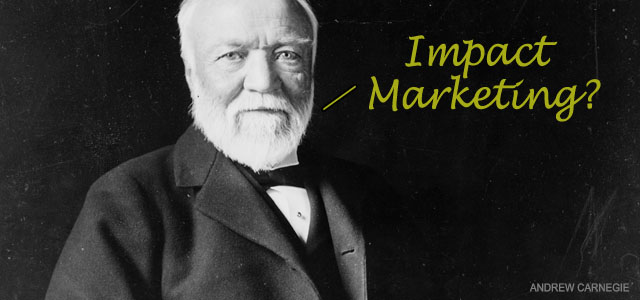
This is, in fact, the pattern of the old version of the American Dream. Start a business, create a monopoly to get really rich, and then retire as a philanthropist. This was Andrew Carnegies’ and Bill Gates’ pattern. It’s no longer relevant. This “gain first” approach to business no longer works because it kills daring motivation. In fact, a gain first business model creates risk averse cultures that become rigid, silo’d, and bureaucratic.

Trying to build fortresses around business models is a failed idea. The revolutionary forces of technology that have created a new reality in which all information is available to anyone, anywhere (think Google and mobile phones) has changed everything. Now any competitive advantage derived from a gain first mindset evaporates in months by competitors whose employees and consultants are as smart as yours (or even smarter).

The answer to this dilemma is found in the second new success factor. Think Good, Grow, Gain. It means that you, as a leader, begin with asking how much good you can do for people using the assets you have. No, this isn’t a not-for-profit agenda. In fact, it’s the growth agenda of the future. Creating unexpected value grows new demand and benchmark-breaking gains.

That’s exactly what the leaders we most admire are doing. Yet, this “do good first” thinking is such a foreign idea to the trained business mind that I’ve had to come up with a thinking model to jolt some new ideas. It looks like this: When I help retrain leaders’ minds to escape the prison of business-as-usual I teach them a process of answering questions about how they might first use their assets to create unique, innovative offerings that help customers experience a better life through one or more of these six sources of unique value above.

Once you’ve opened your mind to this model, you’ll begin to see how superbrands create consumer insistence (where customers accept no substitutes) and how they generate powerful attractive energy. Brands like Disney, Apple, Nike, and Starbucks inspire us with products and experiences while equally famous brands like Microsoft, HP, Denny’s, and Six Flags inspire only yawns. Just as Google, Harvard, and Oprah create mental energy by making people feel smarter and more capable, Yahoo, University of Phoenix, and Jerry Springer are well known but not for “good” reasons.

As I take leaders through the exercise of discovering the six ways of adding value, I see the light go on in their eyes; that making a difference is the surest way to make money in this constantly disruptive economy. I often see them blow open the cage of old, failed thinking and release their leaders’ personal sense of “unfinished business.” You see, our unfinished business is our personal TRUE work.

The work that most of us never get around to. The work we are designed to do and that our higher selves desire. Work that doesn’t just make us richer but also better. Once leaders understand their best path to personal success is the path that creates genuine value for humanity, their practical idealism kicks in and a new level of courage and conviction takes hold. Yet, even then, after a core mindshift to value-added leadership is set alight, leaders find it difficult to sustain escape-velocity.

The gravity of old ways of thinking and the pressure of short-term investors slows down, and even stops, real change. To boost the energy needed to change, I’ve developed a third step. It’s a revolutionary 21-day brain boot camp based on a set of very short and easy daily habits, designed to literally rewire a leader’s brain to tap their natural strengths and create value-added solutions to tough challenges.

It draws on the full power of new research around personal, positive, well-being to incite permanent change. What’s most rewarding is that these habits light up unique passions and talents of leaders, who want to lead better, but also live fuller lives. As I talk to audiences and work with leaders who believe they have “unfinished business,” I only ever have to ask them to look at their past accomplishments and current work and ask themselves, “Is this the best I can do?”

Those who can imagine that there is more, are those who will change the future, by creating it. For me, releasing a leader’s mind and the desire to be extraordinary is the payoff. You see, I believe that business is the most powerful institutional force that can create the future we want for our children. Imagine a world of sustainable abundance led by value-adding leaders, who redefine winning as the positive difference that only they can make.

Just imagine.  

Are you doing the best you can do? What is your unfinished business?


The Growth Agenda Of The Future is: Good, Grow, Gain

The popular and currently accepted MBA-approach view of business is as a stockholder wealth-creating machine.

MBA PowerPoints reveal a business logic mindset of Gain, Grow, Good. This business logic directs leaders to first think of a way to make money (Gain), then use a more-with-less business model to grow profitable revenue (Grow), and if there’s anything left over – to do some well-publicized, social responsibility (Good).

This is, in fact, the pattern of the old version of the American Dream. Start a business, create a monopoly to get really rich, and then retire as a philanthropist. This was Andrew Carnegies’ and Bill Gates’ pattern. It’s no longer relevant. This “gain first” approach to business no longer works because it kills daring motivation. In fact, a gain first business model creates risk averse cultures that become rigid, silo’d, and bureaucratic.

Trying to build fortresses around business models is a failed idea. The revolutionary forces of technology that have created a new reality in which all information is available to anyone, anywhere (think Google and mobile phones) has changed everything. Now any competitive advantage derived from a gain first mindset evaporates in months by competitors whose employees and consultants are as smart as yours (or even smarter).

The answer to this dilemma is found in the second new success factor. Think Good, Grow, Gain. It means that you, as a leader, begin with asking how much good you can do for people using the assets you have. No, this isn’t a not-for-profit agenda. In fact, it’s the growth agenda of the future. Creating unexpected value grows new demand and benchmark-breaking gains.

That’s exactly what the leaders we most admire are doing. Yet, this “do good first” thinking is such a foreign idea to the trained business mind that I’ve had to come up with a thinking model to jolt some new ideas. It looks like this: When I help retrain leaders’ minds to escape the prison of business-as-usual I teach them a process of answering questions about how they might first use their assets to create unique, innovative offerings that help customers experience a better life through one or more of these six sources of unique value above.

Once you’ve opened your mind to this model, you’ll begin to see how superbrands create consumer insistence (where customers accept no substitutes) and how they generate powerful attractive energy. Brands like Disney, Apple, Nike, and Starbucks inspire us with products and experiences while equally famous brands like Microsoft, HP, Denny’s, and Six Flags inspire only yawns. Just as Google, Harvard, and Oprah create mental energy by making people feel smarter and more capable, Yahoo, University of Phoenix, and Jerry Springer are well known but not for “good” reasons.

As I take leaders through the exercise of discovering the six ways of adding value, I see the light go on in their eyes; that making a difference is the surest way to make money in this constantly disruptive economy. I often see them blow open the cage of old, failed thinking and release their leaders’ personal sense of “unfinished business.” You see, our unfinished business is our personal TRUE work.

The work that most of us never get around to. The work we are designed to do and that our higher selves desire. Work that doesn’t just make us richer but also better. Once leaders understand their best path to personal success is the path that creates genuine value for humanity, their practical idealism kicks in and a new level of courage and conviction takes hold. Yet, even then, after a core mindshift to value-added leadership is set alight, leaders find it difficult to sustain escape-velocity.

The gravity of old ways of thinking and the pressure of short-term investors slows down, and even stops, real change. To boost the energy needed to change, I’ve developed a third step. It’s a revolutionary 21-day brain boot camp based on a set of very short and easy daily habits, designed to literally rewire a leader’s brain to tap their natural strengths and create value-added solutions to tough challenges.

It draws on the full power of new research around personal, positive, well-being to incite permanent change. What’s most rewarding is that these habits light up unique passions and talents of leaders, who want to lead better, but also live fuller lives. As I talk to audiences and work with leaders who believe they have “unfinished business,” I only ever have to ask them to look at their past accomplishments and current work and ask themselves, “Is this the best I can do?”

Those who can imagine that there is more, are those who will change the future, by creating it. For me, releasing a leader’s mind and the desire to be extraordinary is the payoff. You see, I believe that business is the most powerful institutional force that can create the future we want for our children. Imagine a world of sustainable abundance led by value-adding leaders, who redefine winning as the positive difference that only they can make.

Just imagine.  

Are you doing the best you can do? What is your unfinished business?


0