

Please Don’t Give Your Money to Your Children

Dad was swindled out of his sizable net worth before he passed. It was truly heartbreaking for him but a blessing to me. Study after study shows that inheriting a sizable fortune has a terrible effect on the vast majority of the unearned rich. 

It seems that what makes us strong is self-reliance. What makes us weak is feeling dependent. When I started the American Dream Project nine years ago I wanted to know what pursuits led to happiness.

I surveyed over 26,000 people and interviewed hundreds. What I discovered now seems obvious.

The value of the American Dream is in the daring pursuit of happiness far more than inheriting it. In fact, that’s what I discovered. You can neither bequeath nor inherit happiness. So we should quit trying to. I have served on several non-profit boards filled with “trust fund babies.” I have also raised investment funds from “lucky” inheritors of fortunes. Believe me; these mostly nice instant millionaires aren’t very lucky at all. Many of them are smart and extremely well educated. What’s missing is nothing less than self-respect, and self-respect is essential to happiness.

More than any external circumstance, it’s our inner opinion of ourselves that determines our contentment. The problem with inheriting serious wealth is it makes the receiver feel like they are worth-less. They live with a question of whether they could have earned what is theirs. And most seem to cover up that self-doubt with either arrogance or meekness.

I know many wealthy families that have tried to steer their children into productive lives by establishing family foundations to focus on doing good. It is a noble idea; yet I still find even with good intentions, the children philanthropists carry a certain sadness that comes from missing out on the challenge of self-determination and inner victory of finding their own path. I was lucky.

My parents paid for my college education, my first new car, and bailed me out of a few tight spots caused by life emergencies. They also allowed my first business to crater, to move my young family in with them when I was broke and couldn’t find work, and allowed me to also completely find my own career path. Instead of money my parents gave their amazing example of personal vision, resilience, and grit.

Mom and Dad refused to make decisions for me and refused to offer unsolicited advice. Instead Dad constantly encouraged me to try stuff – to quit apologizing for myself, quit trying to please everyone, and to forge my own path up the mountain. He said, “You’re a good man, what you want is good… don’t be afraid.” I grew up in a home of “just do it” –  before Nike put it on a t-shirt. The lesson I learned is that as parents I believe we are too quick to try to save our children from necessary suffering. The kind of suffering that makes us mature, responsible, and moral. Developmental psychologists tell us the most important thing we can teach our kids is to clean up their own messes.

This is the essential path to self-respect. Of course there are times when children need a boost. But they want to and need to stand on their own feet and create their own lives. I am very fortunate. I’ve raised six children to adulthood. They are all independent and are excelling at vastly different, fascinating work… careers I would have never chosen for them.

Most of them started working part time in high school and continued through college and some through graduate school. They needed to because we didn’t give them personal spending money. We just decided that what they would learn from working in retail or in restaurants or even a book binding factory would be as important as what they would learn in the classroom.

It wasn’t always easy. My youngest daughter went to a college filled with wealthy kids. According to her she was the only one with a part time job and without a daddy-paid credit card. Of course it made me feel bad, but I gritted my teeth and when she turned 25 she thanked me. There is of course more to raising children than self-reliance, but I believe it’s the bedrock skill of life.

It’s the essential gift a parent can provide. So my painful coaching advice to my super high-achieving clients, many whose children drive BMWs, go to Ivy League schools, or have never worked for an hourly paycheck is please give all your money to an exceptional social enterprise focused on solving the root cause of a terrible problem.
As for your children, give them the gift of your time, your love, your enthusiasm, and self-reliance. They may gripe about having to pay for their own lives, but it’s the path most likely to enable them to love their own lives. It’s the pursuit of happiness that makes us happy.

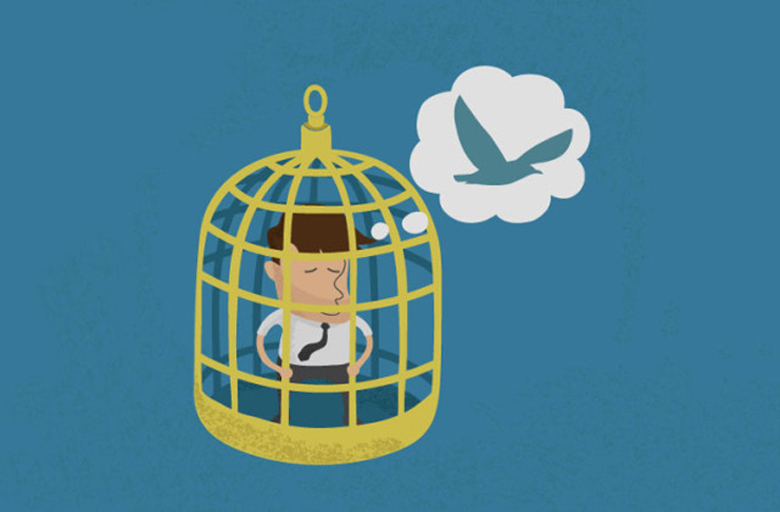
 

Please Don’t Give Your Money to Your Children

Dad was swindled out of his sizable net worth before he passed. It was truly heartbreaking for him but a blessing to me. Study after study shows that inheriting a sizable fortune has a terrible effect on the vast majority of the unearned rich. 

It seems that what makes us strong is self-reliance. What makes us weak is feeling dependent. When I started the American Dream Project nine years ago I wanted to know what pursuits led to happiness.

I surveyed over 26,000 people and interviewed hundreds. What I discovered now seems obvious.

The value of the American Dream is in the daring pursuit of happiness far more than inheriting it. In fact, that’s what I discovered. You can neither bequeath nor inherit happiness. So we should quit trying to. I have served on several non-profit boards filled with “trust fund babies.” I have also raised investment funds from “lucky” inheritors of fortunes. Believe me; these mostly nice instant millionaires aren’t very lucky at all. Many of them are smart and extremely well educated. What’s missing is nothing less than self-respect, and self-respect is essential to happiness.

More than any external circumstance, it’s our inner opinion of ourselves that determines our contentment. The problem with inheriting serious wealth is it makes the receiver feel like they are worth-less. They live with a question of whether they could have earned what is theirs. And most seem to cover up that self-doubt with either arrogance or meekness.

I know many wealthy families that have tried to steer their children into productive lives by establishing family foundations to focus on doing good. It is a noble idea; yet I still find even with good intentions, the children philanthropists carry a certain sadness that comes from missing out on the challenge of self-determination and inner victory of finding their own path. I was lucky.

My parents paid for my college education, my first new car, and bailed me out of a few tight spots caused by life emergencies. They also allowed my first business to crater, to move my young family in with them when I was broke and couldn’t find work, and allowed me to also completely find my own career path. Instead of money my parents gave their amazing example of personal vision, resilience, and grit.

Mom and Dad refused to make decisions for me and refused to offer unsolicited advice. Instead Dad constantly encouraged me to try stuff – to quit apologizing for myself, quit trying to please everyone, and to forge my own path up the mountain. He said, “You’re a good man, what you want is good… don’t be afraid.” I grew up in a home of “just do it” –  before Nike put it on a t-shirt. The lesson I learned is that as parents I believe we are too quick to try to save our children from necessary suffering. The kind of suffering that makes us mature, responsible, and moral. Developmental psychologists tell us the most important thing we can teach our kids is to clean up their own messes.

This is the essential path to self-respect. Of course there are times when children need a boost. But they want to and need to stand on their own feet and create their own lives. I am very fortunate. I’ve raised six children to adulthood. They are all independent and are excelling at vastly different, fascinating work… careers I would have never chosen for them.

Most of them started working part time in high school and continued through college and some through graduate school. They needed to because we didn’t give them personal spending money. We just decided that what they would learn from working in retail or in restaurants or even a book binding factory would be as important as what they would learn in the classroom.

It wasn’t always easy. My youngest daughter went to a college filled with wealthy kids. According to her she was the only one with a part time job and without a daddy-paid credit card. Of course it made me feel bad, but I gritted my teeth and when she turned 25 she thanked me. There is of course more to raising children than self-reliance, but I believe it’s the bedrock skill of life.

It’s the essential gift a parent can provide. So my painful coaching advice to my super high-achieving clients, many whose children drive BMWs, go to Ivy League schools, or have never worked for an hourly paycheck is please give all your money to an exceptional social enterprise focused on solving the root cause of a terrible problem.
As for your children, give them the gift of your time, your love, your enthusiasm, and self-reliance. They may gripe about having to pay for their own lives, but it’s the path most likely to enable them to love their own lives. It’s the pursuit of happiness that makes us happy.


What’s the Difference between Success and Happiness?

I’m giving a speech today to a large group of executives entitled “What To Do When You Don’t Know What’s Going On.” The company these executives work for has just been acquired so everything is going to change. And change is tough. Very tough. Uncertainty is a major brain strain. There are four bad things we typically do when there’s a lot at stake and we’re not in control of the outcome:

  1. We amplify our confusion. Of course it’s natural to feel confused when facing an unknown future. But it get amplified to levels of high anxiety if you don’t have a vision and agenda for your own future. Without a personal vision, confusion turns your brain to mush.
  2. We listen to our self-doubts. All of us have that inner critic voice that tends to whisper that we are inadequate, unprepared and about to be exposed for being a goofball when we are under any nasty stress. Remember you are not that voice, so tell it to shut the hell up!
  3. We second-guess our decisions. Whenever you have to make difficult choices that involve tradeoffs, it is tempting to think that there is one perfect choice if you can only discover what is is. It’s not true. There are no perfect choices. What life is about is making our choices work or changing our choices if we have clearly made a mistake. We are farm more resilient and capable of positive change than we give ourselves credit for.
  4. Horriblizing. This simply means freaking out. It comes from feeling that you have no choice but to do whatever is presented to you. As soon as you give up your free will, you give up your dignity and your judgement. You always have choices. And sometimes you will have to say, “No.” to something good to get something great.

We simply need to learn to deal better with uncertainty because of the world we live in. Our work and our lives are constantly being altered by forces increasingly their control. We will have many moments of truth in our lives so it is good to be strong and wise. Here is how:  Research on happiness leads to the conclusion that when you build your life by saying YES to certain types of things, live will be good. Research also confirms that success comes from committing to the words KNOW and NO. (I’m indebted to Eric Barker for bring this research to my attention.)

Saying YES to happiness means that you’re actively embracing three things in your life. First, friends.

 The happiest people in the world have five to seven friends with whom they feel comfortable sharing secrets. This is incresingly difficult. A recent Harvard study indicated that 25% of adults have no one they trust enough to share a secret with. That’s zero real friends. Cultivating genuine friendships takes time. It’s an investment in yourself and your life. People with real friends live longer and are far more resilient to life’s hard moments.

Second, experiences.

Experiences have a much more powerful effect on our happiness than buying stuff. Experiences are life fine wine, they get better with age. That’s because our memories tend to put a glow on the happy times and help us forget the difficulties surrounding positive experiences. Experiences are also social, meaning that we can share them with others and relive them together. And importantly, experiences cannot be repossessed.

Third, enthusiasm.

People who are driven by enthusiasm are bright lights. They attract opportunities, friends and positive experiences. Enthusiasm is easy to generate. It is primarily created by verbally stating for the positives in any situation and to affirm the good deeds and efforts of others. Enthusiasm is very contagious and tends to make both working teams and families more positive and productive. The good news is it’s absolutely free.

So, if friends, experiences and enthusiasm are things to say YES to, what’s the deal with KNOW and NO?

Again, it’s pretty simple. Success is a bit different from happiness so it requires a different set of mental tools. The knowing part of this is that work success comes to those who know what they want. That is, they know their soul’s desire. They have deep longings. They want to do something that has a specific impact, often for a specific group. For instance, I have a daughter who wanted to be a neo-natal nurse, not just a nurse. She wanted to go to work each day to save babies’ lives. That vision guided all her decisions until she fulfilled it. That’s success. This need to know is born out time and again in my recent study of the patter of real world-changing geniuses. Many of their lives were difficult and they faced setbacks galore.

What they had in common was the grit of determination to pursue work that fulfilled their unique nature. 

This takes deep self-knowledge. Some geniuses seem to have been born with a mission, but for most, it emerged. Yes, what really sets super successful people apart from the rest of us is extraordinary focus.

This is where the other NO comes in. 

We live in a time in which everyone wants our time and attention. Advertisers want it. The media wants it. Your boss, of course, wants it. And that’s a problem. If you don’t say, “No.” to the vast majority of demands and temptations, you will spend your life achieving other people’s goals, watching what other people want you to watch and buying what other people want you to buy. That is not a path to either success or happiness.

There is one habit that will help you the most with both YES and KNOW/NO.

It’s the universal habit of genius. Go to be a half hour earlier. Then get up 3o minutes earlier and plan your day.

Don’t you dare look at your email. 

In the quite silence of the morning, separate what’s most important to you from that which is only urgent to others. Have a daily agenda for your work and your life. Defend it, act on it. And, have the grit to stay with it. Get great at saying NO because you have a bigger YES in your life.


Don’t Work For A Jerk

Work should be a source of joy.

Okay, if that’s too strong, it should at least be a source of well-being. Gallup’s research confirms that work is the second most important factor in promoting our life satisfaction. (The first is the quality of our relationships.) We spend half our waking hours working. It is a source of personal identity, growth, and self-efficacy. That’s all great when our work is good. But when our work is not good, it’s our single greatest source of stress. And new research is confirming what we all know.

If our work is stressful, it’s mostly because our boss is bad. 

Here’s why: Business organizations are designed as power hierarchies. This is because the military is run as a power hierarchy, and modern organizations come from the military gene pool. The family tree of business also runs back to royalty, warlords, and a host of archaic organization models. They people at the top of hierarchies hold life-and-death power (or hire-or-fire power) over everyone. They are also expected to be smarter, better informed, and more capable than their employees. Of course, sometimes they are. Often they are not.

But it’s not competency alone that determines whether a leader creates a great place to work. More often, it is his or her personality, values and worldview. 

The emerging research on leaders of large, modern enterprises is that they tend to be more narcissistic and less empathetic than average. I know, this is not surprising. But let’s take a closer look. Narcissists:

  • Tend to act confident, be well-groomed, self-promoting, and extroverted. They make eye contact, offer inflated compliments, and have high energy.
  • Need and may demand the spotlight, recognition, and admiration.
  • Are self-serving, self-focused, and insistent.
  • Constantly search for better deals, better people, better jobs, better spouses.

And their grand ability is to leverage their influence to dominate a social group. That’s why leadership positions in business, politics, and the media appear to be loaded with narcissists. What’s dangerous about this is that the most dominant traits of a narcissist is fake empathy. That is when a person pretends to care about the sufferings and sacrifices of others, but really doesn’t.

It’s what enables business executives to permanently lay off hardworking, creative successful employees to temporarily raise profits. It is what enables leaders to sell and promote bad food and harmful products, or brazenly pollute and poison the environment. Researches have now administered thousands of personality assessments, and found that people with low empathy scores tend to become lawyers, economists, and investment bankers. (I know, I know, no surprise.) So what’s this got to do with our work? Everything.

IBM published research a couple of years ago revealing the person most employees least enjoy spending time with is their boss. They found that our stress hormone levels skyrocket when we talk to our bosses, due to the massive economic and social power bosses have. If that power is wielded by a narcissist or a low-empathy leader, it’s frankly very scary. The cure is simple. Not easy, but simple. And it has two elements.

First, become great at something.

That way, you have a career instead of a job. We all earn money by creating value. Value in a business is primarily created by saving money or making money. Be clear on what you’re great at and get better. Become an expert in a field you’re passionate about. You do this by reading, going to conferences, writing speaking, doing. Do something for at least 30 minutes each day to learn something new in your field of choice. Give yourself three years to get in the top 25% of your field. In five years, you’ll be in the top 10%. Life is short. Be great at your work so you will always be in demand.

Second, don’t work for a jerk.

Remember, business is a magnet for slick narcissists. So if you are going to work for someone rather than yourself, you must target great companies that push self-promoters away. You will discover these humane places to work through networking, reading local lists of good companies, and asking around.

Sometimes transitions take time. Don’t fret about it. Just don’t settle for being stressed, scared, and exploited. I recently finished teaching a career class to about 60 adults at the University of California at San Diego. What was reinforced to me is that we all have gifts to give. We all have a difference we can make. And if you want to, you can put yourself in the right place at the right place with the right people to work the way you are uniquely designed to.

Never give up your dream. 

Never.

Ready to Create Your Future AND Save the World?

Are you sick of it? Sick of hearing the doomsday scenarios we are machine-gunned daily with by the media. Well, maybe I can do something about that. Over the weekend I was approached by a TV producer about hosting a show about how ordinary people are inventing extraordinary ways to make our future better. If you’ve seen Anthony Bourdain’s adventures around the world in search of a perfect meal on CNN, the show is the same thing except I would be in search of people doing amazing things that are helping to create a future we all want to live in. It will be a tough sell.

It’s long been known that our human brains are far more sensitive to fear than opportunity. So the easiest way to get our attention is to “horriblize” our future.

Seeing The Future

A famous study done in the 1880’s predicted the future of New York would be very… well to be perfectly descriptive… shitty. I’m not kidding. Experts projected the city would grown until it became totally unlivable because of the number of horses would create waist-deep rivers of manure filling the streets and fouling the air that made living and working there impossible. It is easy to see how their mistake about the future could be made.

The people making it lived day-t0-day with the reality of an ever-growing number of horses and their street waste. At the time of their study, they couldn’t even conceive of the advent of the automobile or the impact of mass transit. I am not sure how the dire predictions of the future New York City impacted the decisions of leaders of whether it affected the optimist of people in their daily lives. But one thing we should never underestimate the innovative ingenuity of people like you and me to change the future.

Never Too Young To Start A Business

I just met Jeff, a 30-year old entrepreneur who started a creative agency when he was 16. That’s right, still in high school. He volunteered to be student leader of an anti-smoking campaign that was being run by a traditional ad agency on behalf of the local government.

Although he was passionately anti-tobacco, he quickly saw how lame the campaign was. They had a big event that attracted hundreds of kids just like him, non-smokers and anti-smokers, you know… the non-rebels. So he got this bright idea of what it would take to influence the kids who were most likely to smoke. The kids who aren’t mainstream, preppy or jocks. His brainstorm was that if he could discover what the “other” kids valued that made them want to rebel or appear rebellious, maybe he could connect those values with not smoking.

He also knew that the place to create influence was not through TV ads, but rather where these kids hung out… at local events, parties and social websites.

How To Know What Others Are Thinking

It turns out it’s not very hard to find out what these kids are thinking or what they value… you just need to listen to their voices and their music, which is exactly what Jeff’s army of 20-s0mething employees does everyday. He was savvy enough to convince the local government to give his approach a shot. It worked. This was when he was in high school. It worked well enough to build an amazing creative agency focused only on driving positive behavior changes in youth. He was just awarded a $150 million contract from the FDA to create a national smoking cessation program. That’s not a typo. It turns out solving important problems can have a big payoff.

I also recently met Sarah. Until four years ago, she was an elementary school teacher who’d been laid off several times during California’s budget crisis. One of her trademark lessons was a banner she would hang in her classroom that simply said, “Whatever It Takes.”

Being a Survivor

When Sarah got thrown overboard the last time, she decided to follow her own advice . She founded a nonprofit called WIT (Whatever It Takes). This is a program for high school students to train them in social entrepreneurship and leadership. It earns them college credit.

She teaches them the secrets of how to create a sustainable enterprise whose primary value is helping others. Sarah and her young tribe of entrepreneurs just held a Pitch Competition at the University of California, San Diego. New Enterprises pitched by her high school entrepreneurs included such things as:

  • Prevent Loneliness – a business that connects teens and seniors who feel isolated and alone by doing acts of kindesss.
  • Motivated Parks – a business that builds stronger communities by bringing kids and families together to refurbish neighborhood parks.
  • Bites to Bites – a business that creates a link between local homeless and a sustainable source of otherise wasted food from neighboring restaurants.

These are not just feel good projects. They are real businesses that generate streams of sustainable income and are build quickly to scale to regional or national organizations. Based on her on-going work with high schoolers, Sarah is working on an additional business with a billion-dollar potential that could end up helping tens of millions of young people and disrupt an entire industry. (No, I can’t tell you what that is.)

Those are just two examples of people that might be profiled on this new TV show. The focus isn’t just on entrepreneur’s hero stories, but actually how to do it yourself.

I Do Have Hope 

Every show will also feature a new entrepreneurs’ pitch to the TV audience. Like Kickstarter…if audience members like your “Pro-purpose Business” you could raise hundreds of thousands of dollars to take it big. Sort of like Shark Tank for the rest of us…but only for businesses that are solving nontrivial problems. I have no idea if this TV show will become a reality. But, it will be pitched in some major cable networks in the new few weeks.

What turns me on about thinking this way is that it gives me lots of hope. I don’t really believe our world is going to end up like the prognosticators predicted New York City would in 1880. Yes, we have lots of stupid people with lots of big opinions and many, many inept leaders in all our institutions. Yet, we are resilient and creative at our core.

What’s The Best We Can Do?

The world that we have created is not the best we can do. Today we have more bright, educated and values-driven people thinking about how to create the future of sustainable abundance than ever before in history. And while it’s true we may have to wade through a lot of stinkin’… I believe we will get to higher ground.


Ready to Create Your Future AND Save the World?

Are you sick of it? Sick of hearing the doomsday scenarios we are machine-gunned daily with by the media. Well, maybe I can do something about that. Over the weekend I was approached by a TV producer about hosting a show about how ordinary people are inventing extraordinary ways to make our future better. If you’ve seen Anthony Bourdain’s adventures around the world in search of a perfect meal on CNN, the show is the same thing except I would be in search of people doing amazing things that are helping to create a future we all want to live in. It will be a tough sell.

It’s long been known that our human brains are far more sensitive to fear than opportunity. So the easiest way to get our attention is to “horriblize” our future.

Seeing The Future

A famous study done in the 1880’s predicted the future of New York would be very… well to be perfectly descriptive… shitty. I’m not kidding. Experts projected the city would grown until it became totally unlivable because of the number of horses would create waist-deep rivers of manure filling the streets and fouling the air that made living and working there impossible. It is easy to see how their mistake about the future could be made.

The people making it lived day-t0-day with the reality of an ever-growing number of horses and their street waste. At the time of their study, they couldn’t even conceive of the advent of the automobile or the impact of mass transit. I am not sure how the dire predictions of the future New York City impacted the decisions of leaders of whether it affected the optimist of people in their daily lives. But one thing we should never underestimate the innovative ingenuity of people like you and me to change the future.

Never Too Young To Start A Business

I just met Jeff, a 30-year old entrepreneur who started a creative agency when he was 16. That’s right, still in high school. He volunteered to be student leader of an anti-smoking campaign that was being run by a traditional ad agency on behalf of the local government.

Although he was passionately anti-tobacco, he quickly saw how lame the campaign was. They had a big event that attracted hundreds of kids just like him, non-smokers and anti-smokers, you know… the non-rebels. So he got this bright idea of what it would take to influence the kids who were most likely to smoke. The kids who aren’t mainstream, preppy or jocks. His brainstorm was that if he could discover what the “other” kids valued that made them want to rebel or appear rebellious, maybe he could connect those values with not smoking.

He also knew that the place to create influence was not through TV ads, but rather where these kids hung out… at local events, parties and social websites.

How To Know What Others Are Thinking

It turns out it’s not very hard to find out what these kids are thinking or what they value… you just need to listen to their voices and their music, which is exactly what Jeff’s army of 20-s0mething employees does everyday. He was savvy enough to convince the local government to give his approach a shot. It worked. This was when he was in high school. It worked well enough to build an amazing creative agency focused only on driving positive behavior changes in youth. He was just awarded a $150 million contract from the FDA to create a national smoking cessation program. That’s not a typo. It turns out solving important problems can have a big payoff.

I also recently met Sarah. Until four years ago, she was an elementary school teacher who’d been laid off several times during California’s budget crisis. One of her trademark lessons was a banner she would hang in her classroom that simply said, “Whatever It Takes.”

Being a Survivor

When Sarah got thrown overboard the last time, she decided to follow her own advice . She founded a nonprofit called WIT (Whatever It Takes). This is a program for high school students to train them in social entrepreneurship and leadership. It earns them college credit.

She teaches them the secrets of how to create a sustainable enterprise whose primary value is helping others. Sarah and her young tribe of entrepreneurs just held a Pitch Competition at the University of California, San Diego. New Enterprises pitched by her high school entrepreneurs included such things as:

  • Prevent Loneliness – a business that connects teens and seniors who feel isolated and alone by doing acts of kindesss.
  • Motivated Parks – a business that builds stronger communities by bringing kids and families together to refurbish neighborhood parks.
  • Bites to Bites – a business that creates a link between local homeless and a sustainable source of otherise wasted food from neighboring restaurants.

These are not just feel good projects. They are real businesses that generate streams of sustainable income and are build quickly to scale to regional or national organizations. Based on her on-going work with high schoolers, Sarah is working on an additional business with a billion-dollar potential that could end up helping tens of millions of young people and disrupt an entire industry. (No, I can’t tell you what that is.)

Those are just two examples of people that might be profiled on this new TV show. The focus isn’t just on entrepreneur’s hero stories, but actually how to do it yourself.

I Do Have Hope 

Every show will also feature a new entrepreneurs’ pitch to the TV audience. Like Kickstarter…if audience members like your “Pro-purpose Business” you could raise hundreds of thousands of dollars to take it big. Sort of like Shark Tank for the rest of us…but only for businesses that are solving nontrivial problems. I have no idea if this TV show will become a reality. But, it will be pitched in some major cable networks in the new few weeks.

What turns me on about thinking this way is that it gives me lots of hope. I don’t really believe our world is going to end up like the prognosticators predicted New York City would in 1880. Yes, we have lots of stupid people with lots of big opinions and many, many inept leaders in all our institutions. Yet, we are resilient and creative at our core.

What’s The Best We Can Do?

The world that we have created is not the best we can do. Today we have more bright, educated and values-driven people thinking about how to create the future of sustainable abundance than ever before in history. And while it’s true we may have to wade through a lot of stinkin’… I believe we will get to higher ground.


Burst Your Bubble and FREE Yourself

As 2013 came to an end, I started thinking a lot about 2014. And, I reflected on it with gratitude. I had some truly amazing opportunities. I work with some great clients who are open to my ideas and my coaching. The leaders I work with are the most appreciative that I have ever worked with. And that just feels good. Moreover, I feel that I am learning, growing and experiencing insights at a faster rate than ever.

That’s a lot to be grateful for. And as far as my personal life… Well, let’s put it this way, no one in my family is in the hospital and no one is in jail, so that’s pretty good. Seriously, my family and friends are healthy, happy and acting responsibly so that’s a lot to be thankful for. My genuine hope is that you all feel about the same. And to the extent you don’t, or are facing uncommon challenges, that you have hope. Live has not always been easy for me. I have had years with nothing but hurricanes. I know what deep suffering is.

My advice to any of you whose life is less than you want to be is simply this… FREE yourself. 

We all live inside a bubble. The 21st century has created an outer life that is more like an amusement park than reality. It is driven by the powerful forces of constantly emerging technology and a culture based on consumption. We live in a strange time when originally small disagreements about how to create our best future are constantly exaggerated and made more horrible to raise our fears and close our minds.

This external noise is largely floating debris clogging the rivers of our own thoughts and flooding us with stressful emotions. 

This constant assault on our inner well-being is something we seem to have gotten used to. We think we are the fish swimming in the polluted bubble when actually we stand outside. That’s the give we have. The gift of being human. The gift of creating a new perspective that lets you see the swirling bubble without swimming in it.

The quickest way… the best way to become aware of your essentials self outside the bubble is to FREE yourself. 

There is more than one way to do this. But, this is my favorite: First, be clear that the purpose of life is to become your best self.

What you do is not as important as what you become by doing it. 

The human quest is to keep growing. Keep becoming. Whatever you consistently admire in others is a vision of what to invest your energy  and your strengths in what will fulfill your unique nature. Second, develop a conscious moral intention. We must transcend our culture that has come to glorify selfishness by mislabeling it as self-fulfillment. It has become natural for us to think of GAIN first. That is, “What do I have to gain from this relationship or this job or this opportunity?” And usually what we consider is how we might gain fame, fortune or power.

I promise you that a GAIN orientation to life will only lead to anxiety, emptiness and a stunted soul. 

What is moral intention? It’s nothing less than approaching life, work and love with “How much Good can I do?” By ‘GOOD’ I specifically mean “How much value can I create right here, right now?” Think of it this way, we all have unique assets. Your knowledge, expertise, expertise, wisdom, imagination, relationships and energy are an amazing force.

If you wisely invest it in a constant stream of creating value, imagine how that might change your life. It will also change your future circumstances and opportunities. Third, be more selective and more focused in what you’re willing to invest your life force into.

The happiest people I know are up to something more than just living their daily life. 

We seem hypnotized by the constant stream of information and entertainment on the Internet and social media. We spend our work lives achieving other people’s goals. There’s no time left for us. We must make the time. But, we won’t. Not unless we’re really clear on what we’re up to.

How much time and energy do you devote to what is most important in your life right now? 

And how do you want to live, work and love in the future? Are you investing your best in that? What I’m asking you to consider is simple. FREE yourself from the bubble, with all its distractions, anxieties and trivial pursuits. Create time each day to turn off your smartphone and television. Reclaim your own thoughts. Become acquainted with your deepest and most noble desires.

Don’t simply seek for self-awareness. Go for for soul-awareness.

Be strong. Be up to something that matters to you. Make your difference… because you can. Happy New Year!


Burst Your Bubble and FREE Yourself

As 2013 came to an end, I started thinking a lot about 2014. And, I reflected on it with gratitude. I had some truly amazing opportunities. I work with some great clients who are open to my ideas and my coaching. The leaders I work with are the most appreciative that I have ever worked with. And that just feels good. Moreover, I feel that I am learning, growing and experiencing insights at a faster rate than ever.

That’s a lot to be grateful for. And as far as my personal life… Well, let’s put it this way, no one in my family is in the hospital and no one is in jail, so that’s pretty good. Seriously, my family and friends are healthy, happy and acting responsibly so that’s a lot to be thankful for. My genuine hope is that you all feel about the same. And to the extent you don’t, or are facing uncommon challenges, that you have hope. Live has not always been easy for me. I have had years with nothing but hurricanes. I know what deep suffering is.

My advice to any of you whose life is less than you want to be is simply this… FREE yourself. 

We all live inside a bubble. The 21st century has created an outer life that is more like an amusement park than reality. It is driven by the powerful forces of constantly emerging technology and a culture based on consumption. We live in a strange time when originally small disagreements about how to create our best future are constantly exaggerated and made more horrible to raise our fears and close our minds.

This external noise is largely floating debris clogging the rivers of our own thoughts and flooding us with stressful emotions. 

This constant assault on our inner well-being is something we seem to have gotten used to. We think we are the fish swimming in the polluted bubble when actually we stand outside. That’s the give we have. The gift of being human. The gift of creating a new perspective that lets you see the swirling bubble without swimming in it.

The quickest way… the best way to become aware of your essentials self outside the bubble is to FREE yourself. 

There is more than one way to do this. But, this is my favorite: First, be clear that the purpose of life is to become your best self.

What you do is not as important as what you become by doing it. 

The human quest is to keep growing. Keep becoming. Whatever you consistently admire in others is a vision of what to invest your energy  and your strengths in what will fulfill your unique nature. Second, develop a conscious moral intention. We must transcend our culture that has come to glorify selfishness by mislabeling it as self-fulfillment. It has become natural for us to think of GAIN first. That is, “What do I have to gain from this relationship or this job or this opportunity?” And usually what we consider is how we might gain fame, fortune or power.

I promise you that a GAIN orientation to life will only lead to anxiety, emptiness and a stunted soul. 

What is moral intention? It’s nothing less than approaching life, work and love with “How much Good can I do?” By ‘GOOD’ I specifically mean “How much value can I create right here, right now?” Think of it this way, we all have unique assets. Your knowledge, expertise, expertise, wisdom, imagination, relationships and energy are an amazing force.

If you wisely invest it in a constant stream of creating value, imagine how that might change your life. It will also change your future circumstances and opportunities. Third, be more selective and more focused in what you’re willing to invest your life force into.

The happiest people I know are up to something more than just living their daily life. 

We seem hypnotized by the constant stream of information and entertainment on the Internet and social media. We spend our work lives achieving other people’s goals. There’s no time left for us. We must make the time. But, we won’t. Not unless we’re really clear on what we’re up to.

How much time and energy do you devote to what is most important in your life right now? 

And how do you want to live, work and love in the future? Are you investing your best in that? What I’m asking you to consider is simple. FREE yourself from the bubble, with all its distractions, anxieties and trivial pursuits. Create time each day to turn off your smartphone and television. Reclaim your own thoughts. Become acquainted with your deepest and most noble desires.

Don’t simply seek for self-awareness. Go for for soul-awareness.

Be strong. Be up to something that matters to you. Make your difference… because you can. Happy New Year!


Why ‘WHY’ Is So Critical for Performance and Innovation

The second principle of 5-Star Leadership is answering the question, “Why?” Remember the first principle is setting a clear direction by answering the question “What?” What am I trying to accomplish… what’s the goal here? Most seasoned leaders have no problem telling people what to do. They are goal-setting machine guns.

However setting goals without establishing a good reason for the goals…without dealing with the ‘purpose’ question never really engages followers.

Sure they may act busy. But activity is not the same as performance and when leaders sense that their goals may not be achieved they tend to escalate pressure or even issue threats. Clueless leaders do this because creating stress in employees temporarily ignites their energy. But negative stress has only a short-term effect on people’s energy. If it continues, people begin to protect themselves usually by blaming others and checking out.

This poisons a working culture and creates a toxic cycle of failure.

These are common situations I come into when leaders reach out to me to help them with their organizations’ performance. Their usual complaint is there needs to be higher accountability. Yet crying for accountability is always a sign of leadership failure.  If people are unmotivated to take responsibility there is no amount of external accountability that will change performance.

I’ve never seen accountability systems that accomplished anything other than lower performance.

Unfortunately, these kinds of employee management systems are everywhere.

Decades of psychological research confirm that personal performance rises when people are inspired.

Yet years of global leadership surveys reveal that the rarest quality of a leader is the ability to inspire followers. That’s a shame. You see people become self-accountable when they are inspired. People go the extra mile when their motivated.

People create, innovate and find better, faster, cheaper ways when your mission becomes their mission.

The flame of purpose can only be ignited by answering the question …‘Why?’

What is so important about what we’re doing? What difference will it make?

Those are simple enough questions. Yet I cannot believe the dumb answers most leaders give. Usually leaders announced to their followers that they must succeed in order for the company to be profitable, or to grow, or to survive. While these reasons maybe accurate, research is clear they are not inspiring. Brain research is clear that people are motivated by emotions not logic or facts. Even more important people’s creative centers are activated by their values.

That’s pretty important since creativity is necessary to innovate new products, connect with customers or revolutionize new business models.

On the other hand, logic and fear at best temporarily motivates people to do more of what they’re already doing… so good luck with that. I’m not sure why the vast majority of leaders continue to act so stupidly. It should not be news to anyone that humans are purpose-seeking beings. Or that inspired people work harder and create more new, cool, life enriching things.

Only a fool would treat humans as carbon-based robots. Perhaps the root cause is that so many people go to business primarily to make money. That’s just ridiculous. It’s like saying the primary reason for living is to eat. Sure, without food we die but if we live to eat, over-eating will eventually kill us. Even the world’s most uninspiring famous leader, Jack Welch, finally agreed that:

“on the face of it, shareholder value is the dumbest idea in the world. Shareholder value is a result, not a strategy… your main constituencies are your employees, your customers and your products.”

This is from a guy who pioneered firing people while businesses were profitable just so we could make the share price would go up. I appreciate the deathbed repentance but holding yourself up as an iconic leader only to later reject the core of your value system is more than a little sad. Human beings have spent thousands and thousands of years trying to create a way of life so that every day was not simply a grind to survive.

The Industrial Revolution gave us a huge boost in productivity so that we could create surplus. This surplus gives us an opportunity to improve the quality of our lives not just the quantity we consume. The Industrial Revolution was a means to higher opportunity but we haven’t seized it. Instead we are acting like idiots at a cheap buffet.

Is building an economy on never-ending mass consumption really the best idea we can come up with? Really?

Does your business depend on people buying things they really don’t need or especially value that are produced just as well by many competitors? That’s another way of describing business strategies that focus on market share rather than growth. The primary reason employees are not self-motivated is not because they’re lazy. It’s because their work is not purposeful. Of course for short periods of time simply accomplishing ambitious goals can motivate high achievers.

Goal achievement is a brain narcotic for people who define themselves through accomplishments.

But in reflective moments even people who define themselves as goal-seeking missiles have to ask… “Why?” Most businesses today are simply playing a game of trivial pursuit. When a talented leader like Amazon’s Jeff Bezos invests time and money into figuring out how to get packages to people using flying drones I just shake my head. What difference does that really make? For the last 10 years Microsoft has to represent the biggest waste of employee intelligence in recent history. What difference are they making? Would anybody care if they went bankrupt? Just look around you. The same thing could be said of 90% of business enterprises in existence today.

As far as producing unique value that really improves the quality of human life in most cases we’d be better off without them. They are just consuming resources and wasting human energy. I’ll let me be clear, I am not a moralistic snob.

I just believe the proper use of capitalism is to create new and innovative ways to actually improve the quality of our lives now in the future.

Of course you have to be profitable because profit creates investment surplus and investment is needed to research and develop new and cooler ways to progress. I think most people would agree that the world is better off because of companies like Disney and Nike and the old Apple.

Yes, these companies are not perfect but at least they’re up to more than simply making money. At least their employees feel like they are a part of making people happier or more informed or more able.

What people want from their leaders are goals that really matter.

This takes more than an MBA. It takes moral imagination, grit and discipline. In my recent study of geniuses Thomas Edison stands out. He held over 1,000 patents. He invented the modern research and development lab. He pushed his people to their limits. Edison established whole new industries because he was able to commercialize the use of electric lights, power utilities, and sound recording in motion pictures.

His inventions were critical to mass communication. And they changed the lives of virtually every human being after he was finished. The days of great breakthroughs are not behind us. Today a hard-headed leader like Elon Musk is so serious about alternative energy and sustainability that he created the Tesla car company to accelerate automotive technology to create systemic change.

Yes, Google is a scary company because they are a vacuum cleaner of all of our online lives. But at least they’re using their wealth to pursue interesting big problems like driver-less cars or doubling the average life span.

My point is that you don’t have to become Mother Teresa to run a meaningful enterprise.

You just have to be committed to solving problems that matter. Give us something to wake up in the morning for. C’mon, why are there intelligent people spending their time dreaming up Dorito tacos? Is this really the best we can do? Great leaders have meaningful answers to the “Why” question.  We need more great leaders.


Your Greatest Risk Is Business As Usual

Psychologists say that pessimism takes root in times of stress. And we are swimming in a river of stress. I know because as companies are awakening to the need to grow instead of just survive, they are asking me to help change their mind-set. You see we’ve become a culture of pessimism, and pessimists don’t come up with creative ideas that create new value. For the past 20 years American business has been obsessed with efficiency and productivity. Do more with less. Root out waste. Work harder. Work longer. Avoid risk. Benchmark. Do what everyone else is doing only do it better. Become world-class at blah. It is leadership without imagination. And it is everywhere.

It is also completely out of gas as a business strategy.

Striving for super efficiency seems smart if your goal is to avoid risk. It’s a problem however when trying to avoid risk is the highest risk you can take. Think of it this way. Microsoft has become a big lumbering bureaucracy seemingly capable of only making me-too products. Years after more innovative companies have blazed a new trail and taken consumers by storm, the best Microsoft innovations are Bing, Zune, and new versions of Windows.

But these are second tier products next to Google, iPods, and cloud based software. But why try to copy someone else’s bright idea? The world doesn’t need another fake Rolex even if you can make some money selling them. For years the business world had a bad case of Apple envy. Apple just kept cranking out I-wish-I-thought-of-that products that seemed to ignite vast amounts of consumer lust for anything with a half-eaten Apple logo on it. Under Steve Jobs Apple had a swagger of optimism.

And it produced a stream of game changing innovations. When Steve passed I saw leaders try to mimic what they thought he would do. They picked up their megaphones, yelling at their sweaty palmed boat rowers, “Innovate, dammit, innovate!”

But telling people to be creative doesn’t produce creativity. Only purpose does. 

Yes, I said it takes purpose to generate positive innovation. It is driven by the confidence that your creative response to reality will optimize the future. Instead of wishing, it is doing. It requires intense focus on reality. But unlike pessimism it doesn’t seek to eliminate risk. It seeks to make a difference that matters. This is a whole new skill set for leaders who have become addicted to saving money instead of investing it.

It’s a prime reason why our economy is stuck.

It explains why corporate treasuries are overflowing with trillions of unused capital. Leaders are wary. For the past several years most companies have struggled to keep profitable rather than grow.  But leading for profitability is a “solved problem.” It takes no imagination to shrink costs faster than sales, just ask H-P.

What I see are fear-driven leaders that are too scared to imagine innovation and too tired to deal with complexity.

It’s easier to just drive their old business model with less people and fewer expenses. I call it fake productivity. It’s crazy. We live in an age where we all know that with growth comes innovation executed with speed and agility, and yet most of our global enterprises are tangled in risk adverse bureaucracy leading to decision constipation and employee exhaustion. The antidote of this slow motion leadership is not to grow by buying and destroying valuable acquisitions but to reignite internal talent to create new value propositions, attract new customers, and solve problems people care about. It means re-designing business structures as hives of entrepreneurship.

It means growing cultures of optimism — agile, adaptive cultures capable of rapidly testing, learning and scaling success.

How? We we must personally take charge of our inner voice of purpose.

We must seek future – changing opportunities to create sustainable abundance instead of waiting for the world to change.

And we must edit the pessimistic voices that scare us into being small. It is a time to be bold. If Tesla, an electric car company, can launch in the recession, if TOMS shoes’ can sell 10,000,000 shoes so they can give away 10,000,000 shoes… hell, if Costco can pay their average employee $40,000 a year… anything is possible. The time to shake our fists, mutter and complain about dumbness and greed has long past.

It’s time to take some risks to create work and enterprises that help create the best future we can imagine.


0