


How to Lead with Sensitivity During Trying Times

Editors Note: Real Leaders is making its archive of magazines freely available to all visitors to our website as part of our contribution to the Covid-19 pandemic. We believe you’ll emerge stronger and wiser when this crisis passes, and we hope our stories will keep you entertained and inspired while we sit out this challenging time. Sign up here and you’ll be instantly redirected to our archive.

Coronavirus has affected us all, from small business owners who have been forced to shut their doors, to individuals that have postponed major life events, to companies that have completely shifted or cancelled major plans — we’re all feeling it. But we’re in this together. And now more than ever, it’s important to ensure that leaders move forward with sensitivity.

What that looks like can vary depending on your industry and circumstances. But let’s look at One Tree Planted, an environmental nonprofit, as an example. 

Typically, we’d be focused on organizing dozens of volunteer events right now for Earth Month, or promoting reforestation projects that need financial support. But the social environment has shifted, and that calls for an entirely different strategy.

Our founder and Chief Environmental Evangelist, Matt Hill, aimed for a new approach that the team implemented quickly. A video campaign that shows who we are, acknowledges the current situation, and has a final message of safety, rather than asking for anything during this challenging time. This, coupled with simple and home-friendly sustainability ideas throughout Earth Month has created an inviting and positive message aligned with a new normal we’re all trying to navigate.  

And while we experienced cancellations of high-value campaigns and a drop in donations, we also reached out to many partners to ask how they’re doing and offering creative ways that our partnership plans could be revised. Rather than dwelling on the loss, we saw an opportunity to connect and refocus on what is important now

So how can a leader embrace the idea of sensitivity both internally and externally during these turbulent times? It’s simple, just be real.  

Show Your Human Side

This is a time to be genuine, compassionate, and down-to-earth. People are sharing photos of their home offices, trying to balance work while homeschooling kids, and using digital media to share behind-the-scenes or unpolished glimpses into businesses more than ever. And that’s a good thing. Use this time to show the people behind your business and talk about how you as a leader are weathering this storm. Convey your humanity with an essence of calm that will help put others at ease. It may be a bit more raw and vulnerable than you’re used to, but the response might surprise you.  

Share Your Brand Message in a New Way

Evaluate how your business is communicating in light of what your customers or employees are experiencing in daily life, and create content to connect with that. This could help strengthen your business identity. If you have solid core values, consider a way to revisit those to share your unique message in a new way. This could be through a video series, a charity partnership, a heartfelt email or social media campaign. Revisit your central brand message and create something new that will resonate now during this unique time. If you can bring your customers along, or help them make a positive impact thanks to your business, all the better – because it turns out that 88% of consumers want you to help them make a difference.

Lean on Your Team and Community

Good ideas flow both ways, and leadership should never really be a purely top-down approach. Ask your team, colleagues, mentors, or leadership groups for recommendations on how your business can harness this moment. As a leader, you can decide which ideas have legs, but the task of coming up with a brilliant new strategy doesn’t need to be your responsibility alone. 

Leadership wouldn’t be a skill if it was easy, and adaptability is what will carry you through the hard times. Take this opportunity to elevate your business with wisdom, compassion, and creativity. 
How to Lead with Sensitivity During Trying Times

Editors Note: Real Leaders is making its archive of magazines freely available to all visitors to our website as part of our contribution to the Covid-19 pandemic. We believe you’ll emerge stronger and wiser when this crisis passes, and we hope our stories will keep you entertained and inspired while we sit out this challenging time. Sign up here and you’ll be instantly redirected to our archive.

Coronavirus has affected us all, from small business owners who have been forced to shut their doors, to individuals that have postponed major life events, to companies that have completely shifted or cancelled major plans — we’re all feeling it. But we’re in this together. And now more than ever, it’s important to ensure that leaders move forward with sensitivity.

What that looks like can vary depending on your industry and circumstances. But let’s look at One Tree Planted, an environmental nonprofit, as an example. 

Typically, we’d be focused on organizing dozens of volunteer events right now for Earth Month, or promoting reforestation projects that need financial support. But the social environment has shifted, and that calls for an entirely different strategy.

Our founder and Chief Environmental Evangelist, Matt Hill, aimed for a new approach that the team implemented quickly. A video campaign that shows who we are, acknowledges the current situation, and has a final message of safety, rather than asking for anything during this challenging time. This, coupled with simple and home-friendly sustainability ideas throughout Earth Month has created an inviting and positive message aligned with a new normal we’re all trying to navigate.  

And while we experienced cancellations of high-value campaigns and a drop in donations, we also reached out to many partners to ask how they’re doing and offering creative ways that our partnership plans could be revised. Rather than dwelling on the loss, we saw an opportunity to connect and refocus on what is important now

So how can a leader embrace the idea of sensitivity both internally and externally during these turbulent times? It’s simple, just be real.  

Show Your Human Side

This is a time to be genuine, compassionate, and down-to-earth. People are sharing photos of their home offices, trying to balance work while homeschooling kids, and using digital media to share behind-the-scenes or unpolished glimpses into businesses more than ever. And that’s a good thing. Use this time to show the people behind your business and talk about how you as a leader are weathering this storm. Convey your humanity with an essence of calm that will help put others at ease. It may be a bit more raw and vulnerable than you’re used to, but the response might surprise you.  

Share Your Brand Message in a New Way

Evaluate how your business is communicating in light of what your customers or employees are experiencing in daily life, and create content to connect with that. This could help strengthen your business identity. If you have solid core values, consider a way to revisit those to share your unique message in a new way. This could be through a video series, a charity partnership, a heartfelt email or social media campaign. Revisit your central brand message and create something new that will resonate now during this unique time. If you can bring your customers along, or help them make a positive impact thanks to your business, all the better – because it turns out that 88% of consumers want you to help them make a difference.

Lean on Your Team and Community

Good ideas flow both ways, and leadership should never really be a purely top-down approach. Ask your team, colleagues, mentors, or leadership groups for recommendations on how your business can harness this moment. As a leader, you can decide which ideas have legs, but the task of coming up with a brilliant new strategy doesn’t need to be your responsibility alone. 

Leadership wouldn’t be a skill if it was easy, and adaptability is what will carry you through the hard times. Take this opportunity to elevate your business with wisdom, compassion, and creativity. 

Take the Personal Leadership Quiz

Whether you run a company, a consulting practice or just your own life, you are a leader. We all are.

The work of leadership consists of three things.

First, you must have a clear direction… a vision of what you want to accomplish. Second, you must be able to engage and motivate others. There are virtually no worthwhile accomplishments that can be attained without influencing others. Third, you must be able to set and achieve goals that are milestones in the pursuit of your vision.

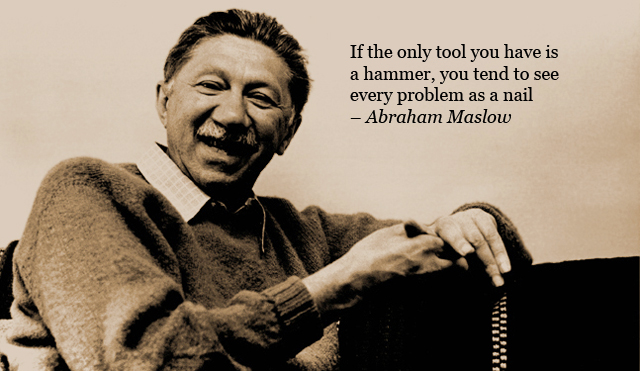
As you can see, whether you run large enterprises, are an artist or focusing at being a parent, you must do all these three things well to be effective. Yet, there is more to life than simply being effective. Fifty years of research on life satisfaction has taken scholars to where it all started… the work of Abraham Maslow.

Maslow is most famous for developing a hierarchy of needs. In his view, people were always motivated by what they didn’t have. His range of motivations started with physical needs, graduated to social connection, and culminated with something he called self-actualization. Self-actualization occurs at the intersection between effectiveness and happiness. His work was considered to be a breakthrough because he was the first prominent psychologist to study very high functioning people.

The connection between Maslow’s research and leadership is profound. I’ve seen this over my 30 years of working with leaders and coaching them in both their professional and personal lives.

Just as Maslow discovered that only 10% of the population was coming to self-actualization, I have also observed that relatively few leaders are consistently both effective and happy. I use the word happy here because its core definition contains both contentment and optimism. Today many clients are resistant to the idea that self-actualization is an attainable goal. They complain that the pressures of business competition or the competing commitments of modern life are so intense that coping is the best they can do. Self-actualization is something to be achieved in retirement when the bonfire of life has settled into embers. That’s missing the point. Self-actualization isn’t the destination… it’s a means to a well-lived life.

It’s the substance of great leadership. The point of our challenges is that they drive us to self-actualization… doing our best and becoming our best. In order to get this point across, I’ve developed a simple quiz based on Maslow’s eight markers of the self-actualizing person. It just takes a minute… and see where you are.

Respond to each statement using the following scale: 1 = almost never true 2 = rarely true 3 = frequently true 4 = almost always true (You may notice this is a four-point scale. There is no middle, ‘sometimes true’ statement. That’s because four point scales have proven to be more accurate because they force people to make a clear choice rather than default to an “I am not sure” response. The result is more actionable data.

1. I experience my life vividly. I feel genuine emotions daily and am fully present at important moments throughout the day. (1-2-3-4)

2. I make choices that pust me out of my comfort zone that foster my personal growth and development. (1-2-3-4)

3. I am attuned to my inner nature and act with integrity with what I value, believe and feel. (1-2-3-4)

4. I am honest with myself and take full responsibility for the consequences of my decisions without excuses. (1-2-3-4)

5. I  have the courage to not manipulate or bully others when I am not getting what I want. (1-2-3-4)

6. In any situation I’m willing to both stand out and fit in based on who I truly am rather than the expectations of others. (1-2-3-4)

7. I have an ongoing process for reaching my potential by constantly learning and doing the work necessary to fulfill my self-vision. (1-2-3-4)

8. I frequently have peak experiences in which I feel authentic closeness to others and being extraordinarily effective in my work. (1-2-3-4)

After you answer each question on the 1 to 4 scale, add up your total. If you score 24 or above… congratulations.

You swim in the pool of high-functioning leaders and individuals. If you score below 24, perhaps it’s a little more clear on what you might work on to get in the pool.

But here is the hard truth…the research on self-knowledge with over 50,000 leaders show that the person who has the most inaccurate view of you is you!

So, to gain deeper insight… after you answer these questions, have someone that knows you well answer these same questions in terms of how they experience you. Do they see you the same way you see yourself? That might give you a clear starting point on what to work on that will both increase your success and your happiness, which is my hope for everyone.


Take the Personal Leadership Quiz

Whether you run a company, a consulting practice or just your own life, you are a leader. We all are.

The work of leadership consists of three things.

First, you must have a clear direction… a vision of what you want to accomplish. Second, you must be able to engage and motivate others. There are virtually no worthwhile accomplishments that can be attained without influencing others. Third, you must be able to set and achieve goals that are milestones in the pursuit of your vision.

As you can see, whether you run large enterprises, are an artist or focusing at being a parent, you must do all these three things well to be effective. Yet, there is more to life than simply being effective. Fifty years of research on life satisfaction has taken scholars to where it all started… the work of Abraham Maslow.

Maslow is most famous for developing a hierarchy of needs. In his view, people were always motivated by what they didn’t have. His range of motivations started with physical needs, graduated to social connection, and culminated with something he called self-actualization. Self-actualization occurs at the intersection between effectiveness and happiness. His work was considered to be a breakthrough because he was the first prominent psychologist to study very high functioning people.

The connection between Maslow’s research and leadership is profound. I’ve seen this over my 30 years of working with leaders and coaching them in both their professional and personal lives.

Just as Maslow discovered that only 10% of the population was coming to self-actualization, I have also observed that relatively few leaders are consistently both effective and happy. I use the word happy here because its core definition contains both contentment and optimism. Today many clients are resistant to the idea that self-actualization is an attainable goal. They complain that the pressures of business competition or the competing commitments of modern life are so intense that coping is the best they can do. Self-actualization is something to be achieved in retirement when the bonfire of life has settled into embers. That’s missing the point. Self-actualization isn’t the destination… it’s a means to a well-lived life.

It’s the substance of great leadership. The point of our challenges is that they drive us to self-actualization… doing our best and becoming our best. In order to get this point across, I’ve developed a simple quiz based on Maslow’s eight markers of the self-actualizing person. It just takes a minute… and see where you are.

Respond to each statement using the following scale: 1 = almost never true 2 = rarely true 3 = frequently true 4 = almost always true (You may notice this is a four-point scale. There is no middle, ‘sometimes true’ statement. That’s because four point scales have proven to be more accurate because they force people to make a clear choice rather than default to an “I am not sure” response. The result is more actionable data.

1. I experience my life vividly. I feel genuine emotions daily and am fully present at important moments throughout the day. (1-2-3-4)

2. I make choices that pust me out of my comfort zone that foster my personal growth and development. (1-2-3-4)

3. I am attuned to my inner nature and act with integrity with what I value, believe and feel. (1-2-3-4)

4. I am honest with myself and take full responsibility for the consequences of my decisions without excuses. (1-2-3-4)

5. I  have the courage to not manipulate or bully others when I am not getting what I want. (1-2-3-4)

6. In any situation I’m willing to both stand out and fit in based on who I truly am rather than the expectations of others. (1-2-3-4)

7. I have an ongoing process for reaching my potential by constantly learning and doing the work necessary to fulfill my self-vision. (1-2-3-4)

8. I frequently have peak experiences in which I feel authentic closeness to others and being extraordinarily effective in my work. (1-2-3-4)

After you answer each question on the 1 to 4 scale, add up your total. If you score 24 or above… congratulations.

You swim in the pool of high-functioning leaders and individuals. If you score below 24, perhaps it’s a little more clear on what you might work on to get in the pool.

But here is the hard truth…the research on self-knowledge with over 50,000 leaders show that the person who has the most inaccurate view of you is you!

So, to gain deeper insight… after you answer these questions, have someone that knows you well answer these same questions in terms of how they experience you. Do they see you the same way you see yourself? That might give you a clear starting point on what to work on that will both increase your success and your happiness, which is my hope for everyone.


Have You Met Yourself?

Do you know what you are especially good at? Do you know why people especially value your work or your personality? Do you know that whatever secret faults you have they are not secrets to anyone else? It’s no surprise that findings of a recent study by the Hay group on differences between male and female leaders showed that no matter which gender you are we’re mostly clueless about ourselves. Of the critical drivers of human effectiveness men and women ranked dead last on the same trait. That trait is self-awareness. That’s not good.

Decades of research confirms that emotional intelligence is the most hair-on-fire critical element of effective leadership, management, as well as just plain getting along with others. Research, using 50,000 360-degree surveys shows that supervisors and subordinates most often agree on the strengths and weaknesses of a particular manager. The person who has the most distorted view is the manager himself or herself! That’s you and me. We simply don’t know how we come across to others. In fact, we are terrible at it. It’s not our fault really.

Our brains are constantly conducting a crazy inner dialogue that provides a personal color commentary on everything that’s going on in our lives minute to minute. We mistake this color commentary for reality. So we think others actually understand our thoughts, motives, and intentions.

But except for a very, very few of our closest loved ones, they don’t. It’s true. Most of us cruise through life thinking others hold us in higher or lower esteem than they actually do. Most of us have a very foggy idea of our impact on others. The result is that our influence, effectiveness, and genuine human connections are smaller than they could be.  A lot smaller. That’s what happens when you experience yourself through your intentions and others through their behavior. I learned this the hard way.

After years of success and failure I discovered that many people viewed me as a bulldozer. What they experienced was arrogance. What I was feeling was confidence. What they experienced was commanding. What I was feeling was urgency. Some small adjustments caused me to actively seek contrary points of view, which led to big improvements.

The point is, I just didn’t have a clue. The following is how I advise people. First, realize you are not normal. We are all quirky as hell. What’s normal to you is, well, abnormal to nearly everyone else.  Second, ask others who know you well, the four questions below. I’ve found it’s best to do this by urgent email. Tell people you mail it to that you’re having an interview tomorrow morning so need an immediate, off-top-of-their-head’s response. If you don’t create a burning fuse your friends and colleagues will put responding off indefinitely.

Here are the questions:

1. What do you most value about me?

2. What do you think I am best at?

3. If I were going to invest a lot of time to learn and master something, what do you think I might do?

4. If you could wish that I stop doing one thing that’s holding me back, what is it?

You don’t need a 360-survey or even a coach to start a journey of self-awareness, that could change your life. You only need an email account.  Go ahead… give it a rip.


Have You Met Yourself?

Do you know what you are especially good at? Do you know why people especially value your work or your personality? Do you know that whatever secret faults you have they are not secrets to anyone else? It’s no surprise that findings of a recent study by the Hay group on differences between male and female leaders showed that no matter which gender you are we’re mostly clueless about ourselves. Of the critical drivers of human effectiveness men and women ranked dead last on the same trait. That trait is self-awareness. That’s not good.

Decades of research confirms that emotional intelligence is the most hair-on-fire critical element of effective leadership, management, as well as just plain getting along with others. Research, using 50,000 360-degree surveys shows that supervisors and subordinates most often agree on the strengths and weaknesses of a particular manager. The person who has the most distorted view is the manager himself or herself! That’s you and me. We simply don’t know how we come across to others. In fact, we are terrible at it. It’s not our fault really.

Our brains are constantly conducting a crazy inner dialogue that provides a personal color commentary on everything that’s going on in our lives minute to minute. We mistake this color commentary for reality. So we think others actually understand our thoughts, motives, and intentions.

But except for a very, very few of our closest loved ones, they don’t. It’s true. Most of us cruise through life thinking others hold us in higher or lower esteem than they actually do. Most of us have a very foggy idea of our impact on others. The result is that our influence, effectiveness, and genuine human connections are smaller than they could be.  A lot smaller. That’s what happens when you experience yourself through your intentions and others through their behavior. I learned this the hard way.

After years of success and failure I discovered that many people viewed me as a bulldozer. What they experienced was arrogance. What I was feeling was confidence. What they experienced was commanding. What I was feeling was urgency. Some small adjustments caused me to actively seek contrary points of view, which led to big improvements.

The point is, I just didn’t have a clue. The following is how I advise people. First, realize you are not normal. We are all quirky as hell. What’s normal to you is, well, abnormal to nearly everyone else.  Second, ask others who know you well, the four questions below. I’ve found it’s best to do this by urgent email. Tell people you mail it to that you’re having an interview tomorrow morning so need an immediate, off-top-of-their-head’s response. If you don’t create a burning fuse your friends and colleagues will put responding off indefinitely.

Here are the questions:

1. What do you most value about me?

2. What do you think I am best at?

3. If I were going to invest a lot of time to learn and master something, what do you think I might do?

4. If you could wish that I stop doing one thing that’s holding me back, what is it?

You don’t need a 360-survey or even a coach to start a journey of self-awareness, that could change your life. You only need an email account.  Go ahead… give it a rip.


0