LGBT Advertising: How Brands are Taking a Stance on Issues

Marketing entails more than reaching the right consumer with the right message at the right time. New data from Google and YouTube shows that messages about diversity and equality for the LGBT community have widespread impact, and brands such as Burger King and Honey Maid are leading the way.

Nothing is simple when it comes to the court of public opinion. This can make promoting a brand’s message, well, tricky (to say the least). Brands are held accountable not only for the quality of their products and services but, increasingly, for their stance on the political and social issues that today’s consumers face. This is especially true when it comes to LGBT (lesbian, gay, bisexual, and transgender) advertising.

As more and more attention is focused on equal rights for the LGBT community—specifically, marriage equality and diversity in the workplace—it’s influencing how consumers make decisions. This is especially true among the young; over 45% of consumers under 34 years old say they’re more likely to do repeat business with an LGBT-friendly company, according to a Google Consumer Survey from August of 2014. Of them, more than 54% also say they’d choose an equality-focused brand over a competitor.

Brands are responding with campaigns that espouse messages of inclusion, equality, and diversity. This “pride advertising” is having widespread impact online, according to YouTube and Google data. Here we take a closer look at two brands, Burger King and Honey Maid, that are leading the way.

Burger King’s pride advertising speaks to equality

Burger King (BK) is committed to diversity and its values (“being bold, empowered, accountable, meritocratic, and fun”) are rooted in equality and inclusion. Last year, to coincide with the San Francisco Pride events, BK introduced new pride advertising in support of the LGBT community. As part of BK’s “Be Your Way” campaign, a spin on its 40-year-old “Have It Your Way” brand positioning, the Proud Whopper was introduced.

This limited-edition burger was added to the menu of its Market Street franchise in San Francisco for Pride week. The Whopper was actually the same flame-grilled sandwich customers had enjoyed since 1957. So, what made it different? Its rainbow-colored wrapper held a special message for BK customers: “We are all the same inside.”

Cameras rolled to capture reactions to the burger’s release the day of the 2014 Pride Parade. Not surprisingly, BK’s pride campaign, the Proud Whopper, and its unique messaging elicited some strong responses—poignant and powerful moments for the brand and its customers. Reaction from its younger customers (the target audience was 18- to 24-year-olds ) was overwhelmingly positive, strong, and emotional. “Burger King restaurants have always been places to eat great-tasting food, let your guard down, and just be yourself without any judgment,” Burger King’s Fernando Machado said in AdWeek.
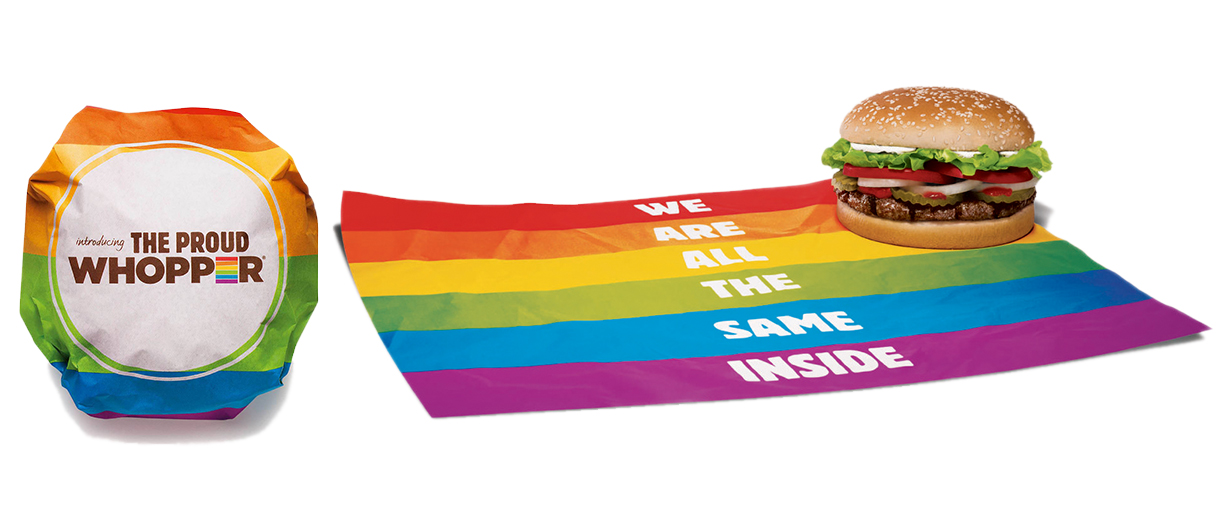
proud-whopper

The video of the audience’s reactions, which BK posted online, received 7M views across all social platforms. The YouTube video alone has received more than 5.3M to date. The Proud Whopper ad reached 20% of the U.S. population, and young millennials over-indexed by 4.8X (Burger King data). The campaign was also praised by multiple media outlets, including The Wall Street Journal and Bloomberg. The impact of BK’s message of inclusion was felt beyond the billion media impressions it received over earned media (Burger King data). Proceeds from the franchise’s sales benefited the Burger King McLamore Foundation, which provides scholarships for LGBT high-school students.

Not only did Burger King take a stand on an important social issue, but it also delivered messaging that resonated with its target audience of 18- to 24-year-olds. In fact, today’s young millennials—47% of consumers under 24-years-old—are more likely to support a brand after seeing an equality-themed ad (compared with 30% of all age groups combined), as the Google Consumer Survey showed. And that’s a win for everyone involved.

Honey Maid highlights diversity in its advertising

Honey Maid launched its This Is Wholesomecampaign in 2014 with one simple notion in mind: While the typical American family has changed over time, it remains wholesome at its core. In celebrating the diversity of the modern family, Honey Maid saw an opportunity to connect with its customers while reminding them of its long history and dedication to inclusiveness.

The brand’s target audience tuned in. The 30-second spot has over 8M views to date on YouTube. Using age and gender targeting, Honey Maid was able to see that 97% of the ad’s video views came from 25- to 54-year-olds, according to YouTube data. Of those views, women were responsible for 98%.

While the overwhelming response to the video was positive, Honey Maid’s message of inclusion didn’t resonate with everyone. This was something the company expected, given that the diversity campaign featured all kinds of families, including one with same-sex parents. Indeed, there was some backlash—negative feedback on social media and over email as well as a boycott by one group—but Honey Maid was prepared to stand by its message.

Instead of a PR problem, Honey Maid saw an opportunity. Partnering with creative agency Droga5, it delivered a creative and ingenious response to the negativity: “Love.” The video showed two artists using printouts of all the negative tweets and emails about the first spot to build the word “Love.” It was simple and powerful, allowing Honey Maid to, again, show its commitment to the issues of diversity and equality, as well as its support for the LGBT community.

Honey Maid’s message touched the hearts of people across demographics. Over 4M have watched “Love.” YouTube data shows that views over the first 90 days were evenly split among men and women, and nearly a quarter of those who watched were millennials under age 24.

And that lovin’ continued online. Searches for “Honey Maid” increased 10X during the last week in March, with sustained interest into May. In support of the campaign launch, Honey Maid drove penetration growth among millennial households +1 point, according to Gary P. Osifchin, the brand’s senior marketing director.

Marketing objectives aside, Honey Maid’s messaging about the wholesomeness of all families resonated with its customers. The brand stood up for diversity and equality and was rewarded not only with positivity among its fans but with their dollars as well. In the months following Honey Maid’s diversity campaign, the company says that June/July sales for its products increased 7% YoY.

Pride advertising is a win for consumers and brands

Pride advertising isn’t just about acknowledging and embracing the LGBT community. It’s an opportunity for brands to speak their own truth and take a stand. And when they do, consumers, especially millennials, appreciate it and respond in kind. They tune in and watch, participate in the conversation, and spend their dollars. Burger King and Honey Maid are just two of the brands making an impact by telling stories of diversity and equality in their advertising.

By Brendan Snyder. This story originally appeared at thinkwithgoogle.com

 

Ezra Jack Keats: The Grandfather of Diversity in Children’s Literature

Ezra Jack Keats, the acclaimed author-illustrator of The Snowy Day, which broke the color barrier in mainstream children’s literature, would have turned 100 on 11 March. He died in 1983, aged 67. His 1962 classic, with its protagonist a little African American boy in an iconic red snowsuit, was instantly embraced across social and racial boundaries. It was awarded the Caldecott Medal in 1963 and designated a “book that shaped America” by the Library of Congress in 2012.

The Ezra Jack Keats Foundation is making the late author-illustrator’s centenary a year-long celebration with events planned across the country. Birthday parties for Ezra are on the calendars of museums in New YorkSan FranciscoNew OrleansHouston and Los Angeles. Keats stories have inspired an original musical in Minneapolis and a musical revival in Manhattan. A park statue of Keats characters is being designated a Literary Landmark. And an animated holiday special based on Ezra’s books is in the works.

“Ezra wanted all children to be able to see themselves in picture books,” says Deborah Pope, Executive Director of The Ezra Jack Keats Foundation, which supports efforts to foster children’s love of reading and creative expression in our multicultural world. “With The Snowy Day and the nearly 30 picture books he went on to write and illustrate, Ezra transformed the landscape of children’s literature.”

Ezra Jack Keats

“Many people don’t realize that Ezra wasn’t African American,” Pope says. “However, he knew discrimination and poverty firsthand, and identified with people of different races and ethnicities who suffered similar hardships.”

One of Keats’s signature story elements is that his characters are consistently challenged with real problems that are recognizable to young readers. They deal with them, change their outlook and grow. Yet, as children do, his characters live in their imaginations, a world to which the adult Keats had extraordinary access.

Generations of children have recognized themselves in the books of Ezra Jack Keats, experiencing the joy of a day in the snow, the magic of imagination, the strength in friendship. He knew that experiences like these belong to children of all races and wanted to make sure children understood that, too.

Beyond Charity: The Biggest Impact Is Business With A Heart

“People think that running a non-profit is easy,” says Vicki Escarra, Global CEO of Opportunity International. “Like something you do when you retire, kick back and work a couple of days a week. But the reality is: it’s very tough.”

Escarra knows all about tough: she was promoted to chief marketing officer of global operations for Delta Air Lines in the week before 9/11. What followed tested her leadership to the limits, and she learned that sometimes you need to recognize that certain business models have served you well, but might one day become obsolete. She’s of the opinion that In the midst of tremendous change lies real leadership.

Opportunity International provides small business loans, savings, insurance and training to more than five million people in the developing world. While big multi-national corporations usually come to mind when thinking about insurance and financial services, Escarra has shown the world that a) a non-profit can be big and global and b) it can generate wealth in a non-traditional way – human capital. Around 90 percent of the people they serve are women, a demographic supported by another fact – that women consumers care deeply about social impact.

The key to Escarra’s success has been to run her non-profit like a for-profit.

After all, there are still bills to pay, staff to support and a global infrastructure to maintain. The ‘charity’ route was never going to work for the scale she envisioned.

“The notion of classic philanthropy is changing, with two emerging trends within the non-profit sector,” states Escarra. Firstly, donors want to continue giving because they love the mission or because it offers a good tax write-off. While this might have been the only reason to donate a few years ago, we’re finding ourselves being pushed to find social impact investments from which donors can get a market return. We’re moving away from giving to investing.

Vicki Escarra at a board meeting in India.

Vicki Escarra at a board meeting in India.


The second trend is around transparency and measuring impact. Who hasn’t heard that oft-repeated phrase, “So, we’re giving you money, but what impact are our dollars having?” Enter the University of Chicago Business School, that has joined Opportunity International to help discover exactly that. Researchers plan on fanning out across the globe to ask probing questions: ‘Is she holding down a job or growing her business? Are her children in school? Does she live in a decent home? Is she becoming a leader in her community?  Does she have clean water? Do her children have enough to eat?’ Having this information as hard academic fact, from a credible institution, can shift perceptions of non-profits from financially flaky to a professional image of corporate responsibility.

Escarra’s view is that there are too many non-profits in the world today, and that things might be more efficient if people collaborated more.

“We need to find ways of merging,” she says. “In the future there’ll be a lot of opportunity for us to all move in the same direction. There’s a high likelihood that we’ll become involved with technology firms too, who are fast-changing the way we approach everything these days.”

It really worries Escarra that the organizations she loves and cares about might become irrelevant one day. “Our world is changing so quickly that I wake up every morning thinking, ‘are we still relevant?’ If we disappeared tomorrow would it matter?  This is a question all leaders should be asking themselves on a regular basis.”

Financially, Escarra has reversed the revenue/donation model found at most non-profits. The last financial year saw Opportunity International raise $221 million in deposits and fund-raise $71 million from grants, corporations and individuals.

Escarra wants to help clients create 20 million jobs by 2020, which will affect more than 100 million lives. “It’s not just the impact of somebody opening a small grocery store and creating food security for their family,” she says. “They’ll also purchase stock from suppliers, that will create a ripple effect through the economy.”

“How much money is enough?” asks Escarra. “I think it’s important as a leader to ask yourself what your commitment is to the world. We should nurture a commitment to giving back because we’re all connected on this planet. We should all strive to become global citizens, especially those of us who’ve been given the gift of global influence.”

The Opportunity Network is made up of 49 organizations, 42 of which are microfinance institutions (program partners) operating in Africa, Eastern Europe, Central and East Asia and Latin America. These program partners provide loans and other support directly to families in need.  www.opportunity.org


We Need Women To Lead Like Women – Not Men

If you are a working woman I am talking to you. I believe that we need a new generation of women leaders who are skilled in working with male leaders to create a world of sustainable abundance. I am convinced that it’s not enough to put a few more women in senior positions. We need more than that.

We need women who are empowered to lead like women. We shouldn’t want them to lead like men. It’s in the synergy of male and female strengths that our ultimate destiny will be determined. We’ve given ‘mankind’ thousands of years to create the world we have.  It’s not good enough.  We need the influence of ‘womenkind’ to create something more.

That’s why a small team of accomplished women and I are conducting a Leadership SPA for women on February 3, 4 and 5 at the amazing Pacific Pearl in La Jolla, California.

For the past 12 months I have been speaking at many technology, science, healthcare, entertainment and financial services companies about the business performance advantages of promoting more women into leadership. I have emphasized the critical need to create cultures where women are empowered to lead like women rather than mimic men. I call this ‘Gender Synergy,’ where men and women working together harness the most productive elements of hard power, and the most collaborative strengths of soft power to innovate world-changing solutions and bring them to market.  Both women and men embrace the presentation because it leads directly to immediate practical improvements. But we need to accelerate this change.

Most of all we need more women leaders–women leaders at every level.  Women who know how to lead like women.  That’s what leads to breakthroughs in both innovation and execution. That’s not just my opinion or some politically correct fantasy.  That’s the conclusion of hundreds of research studies conducted around the world in the last five years.

I’ve been working with a group of successful women executives and health and well-being experts for over a year to refine our Leadership SPA’s program. Our goal to make every minute, every insight, every exercise, every meal, and every conversation directly lead to helping women become more clear on what they want for themselves, the contribution they want to make and a clear plan to do it.

One of the things I’m most excited about is our new collaboration with the Pacific Pearl Center for Integrative Medicine where we are holding the 2.5 day SPA. The center is led by Dr. Mimi Guarneri, a world famous cardiac surgeon who founded the Academy for Integrative Medicine which is the largest organization of medical doctors and alternative health practitioners who practice ‘whole health’ strategies. Dr. Guarneri is a thought-leader in teaching stress resilience and natural heart health. (Heart disease is the number one killer of women.) She’s also a role model for professional women who feel compelled to make a difference in a male-dominated field where in-your-face resistance and even disdain is the norm.

Speaking of stress, in many ways what we are training is the opposite of “leaning in.”  I have found that in most organizations leaning in means totally devoting yourself to achieving organizational goals and working like a workaholic. But this is the problem. Too often either the goals are misguided, or the way leaders want to achieve them is crazy.

The Leadership SPA is designed to directly deal with the blocks women need to remove to take their place at the table they want to sit at.  Women need to be at the leadership table if we are going to have any hope of changing the way we work and up-leveling the goals of what we’re trying to accomplish.

There are three foundational pillars women need to build their leadership power on.  Building and strengthening these pillars requires an inner state we can only create through a SPA experience.

This is what I mean.  To be an extraordinary woman leader and live the life that satisfies all your values you must have a clear mind, a calm body, and an inspired spirit. 

A clear mind is necessary to be firm and consistent in what you want for every priority that you hold.  This is especially challenging for women because you experience a high degree of inner stress over conflicting commitments.  You will become more powerful when you are clear about how your professional goals and personal desires fit together.  A clear mind leads to pillar number one.

  1. Your Career Vision. Women have been conditioned to spend their energy helping other people achieve their goals.  This frequently results in a lack of clarity about what you want, especially from your career. Whether you’re leading your life or leading an enterprise you have to have a vision that is built on your values, not the agenda of others.  This takes the clarity and courage only a clear mind will give you.
  2. Your Leadership Power.  SMART power is the synthesis between the positive elements of hard power and soft power…goal achievement through collaboration.  When women adopt the SMART power skill set they immediately become more influential, confident and effective.  To achieve the highest levels of leadership skills alone are insufficient.  Research is clear that extraordinary leaders are extraordinary at inspiring others.  Genuine inspiration comes from deep personal conviction.  Self-inspiration is the genesis of leadership inspiration.  At the SPA we will teach you to use the skills of SMART power to approach your work as a way to make your difference
  3. New Habits.  All of us become what we believe about ourselves.  When those beliefs are elevated so is our future.  But to make that happen more easily we need new skills.  And when skills become permanent they become habits. Once self-enhancing habits are ingrained positive change becomes permanent.  The greatest enemy to change is stress.  Emotional agitation drains your willpower. To be calm is to be strong. Calm women are powerful women. The entire SPA program is conducted on the science-based “Work Like a Genius” daily schedule so you actually experience the power of positive well-being in your minute-to-minute life. A rhythm of mindfulness, meditation and daily yoga during the training sessions literally calm the biology of stress that assaults your best self and limits your potential. Most important, you will incorporate these stress melting habits into your daily routine when you re-enter the churning cauldron of work life.

Put simply the SPA will give you a process to transform the way you lead and the way you live.  And you will do it in partnership with a small learning team of women who are just like you and want what you want. That’s a big reason why the Leadership SPA is a woman-only learning experience. Research is clear that women’s learning style is different than men’s. Your mind puts a premium on trust, collaboration and discussion. You will also support each other’s growth for the three weeks following the SPA in virtual weekly meetings as you continue to get daily habit building tips that will keep you working like a genius.

I started the Leadership SPA because we urgently need a new generation of women leaders who are skilled with working with male leaders to create a world of sustainable abundance.

Please, consider coming to our Leadership SPA. We have tried to price the tuition to make it affordable to virtually any leader willing to invest in her future. One more thing, your presence might make a big difference to someone else or the entire group.  If you’ve got the fire and desire please join us.

We Need Women To Lead Like Women – Not Men

If you are a working woman I am talking to you. I believe that we need a new generation of women leaders who are skilled in working with male leaders to create a world of sustainable abundance. I am convinced that it’s not enough to put a few more women in senior positions. We need more than that.

We need women who are empowered to lead like women. We shouldn’t want them to lead like men. It’s in the synergy of male and female strengths that our ultimate destiny will be determined. We’ve given ‘mankind’ thousands of years to create the world we have.  It’s not good enough.  We need the influence of ‘womenkind’ to create something more.

That’s why a small team of accomplished women and I are conducting a Leadership SPA for women on February 3, 4 and 5 at the amazing Pacific Pearl in La Jolla, California.

For the past 12 months I have been speaking at many technology, science, healthcare, entertainment and financial services companies about the business performance advantages of promoting more women into leadership. I have emphasized the critical need to create cultures where women are empowered to lead like women rather than mimic men. I call this ‘Gender Synergy,’ where men and women working together harness the most productive elements of hard power, and the most collaborative strengths of soft power to innovate world-changing solutions and bring them to market.  Both women and men embrace the presentation because it leads directly to immediate practical improvements. But we need to accelerate this change.

Most of all we need more women leaders–women leaders at every level.  Women who know how to lead like women.  That’s what leads to breakthroughs in both innovation and execution. That’s not just my opinion or some politically correct fantasy.  That’s the conclusion of hundreds of research studies conducted around the world in the last five years.

I’ve been working with a group of successful women executives and health and well-being experts for over a year to refine our Leadership SPA’s program. Our goal to make every minute, every insight, every exercise, every meal, and every conversation directly lead to helping women become more clear on what they want for themselves, the contribution they want to make and a clear plan to do it.

One of the things I’m most excited about is our new collaboration with the Pacific Pearl Center for Integrative Medicine where we are holding the 2.5 day SPA. The center is led by Dr. Mimi Guarneri, a world famous cardiac surgeon who founded the Academy for Integrative Medicine which is the largest organization of medical doctors and alternative health practitioners who practice ‘whole health’ strategies. Dr. Guarneri is a thought-leader in teaching stress resilience and natural heart health. (Heart disease is the number one killer of women.) She’s also a role model for professional women who feel compelled to make a difference in a male-dominated field where in-your-face resistance and even disdain is the norm.

Speaking of stress, in many ways what we are training is the opposite of “leaning in.”  I have found that in most organizations leaning in means totally devoting yourself to achieving organizational goals and working like a workaholic. But this is the problem. Too often either the goals are misguided, or the way leaders want to achieve them is crazy.

The Leadership SPA is designed to directly deal with the blocks women need to remove to take their place at the table they want to sit at.  Women need to be at the leadership table if we are going to have any hope of changing the way we work and up-leveling the goals of what we’re trying to accomplish.

There are three foundational pillars women need to build their leadership power on.  Building and strengthening these pillars requires an inner state we can only create through a SPA experience.

This is what I mean.  To be an extraordinary woman leader and live the life that satisfies all your values you must have a clear mind, a calm body, and an inspired spirit. 

A clear mind is necessary to be firm and consistent in what you want for every priority that you hold.  This is especially challenging for women because you experience a high degree of inner stress over conflicting commitments.  You will become more powerful when you are clear about how your professional goals and personal desires fit together.  A clear mind leads to pillar number one.

  1. Your Career Vision. Women have been conditioned to spend their energy helping other people achieve their goals.  This frequently results in a lack of clarity about what you want, especially from your career. Whether you’re leading your life or leading an enterprise you have to have a vision that is built on your values, not the agenda of others.  This takes the clarity and courage only a clear mind will give you.
  2. Your Leadership Power.  SMART power is the synthesis between the positive elements of hard power and soft power…goal achievement through collaboration.  When women adopt the SMART power skill set they immediately become more influential, confident and effective.  To achieve the highest levels of leadership skills alone are insufficient.  Research is clear that extraordinary leaders are extraordinary at inspiring others.  Genuine inspiration comes from deep personal conviction.  Self-inspiration is the genesis of leadership inspiration.  At the SPA we will teach you to use the skills of SMART power to approach your work as a way to make your difference
  3. New Habits.  All of us become what we believe about ourselves.  When those beliefs are elevated so is our future.  But to make that happen more easily we need new skills.  And when skills become permanent they become habits. Once self-enhancing habits are ingrained positive change becomes permanent.  The greatest enemy to change is stress.  Emotional agitation drains your willpower. To be calm is to be strong. Calm women are powerful women. The entire SPA program is conducted on the science-based “Work Like a Genius” daily schedule so you actually experience the power of positive well-being in your minute-to-minute life. A rhythm of mindfulness, meditation and daily yoga during the training sessions literally calm the biology of stress that assaults your best self and limits your potential. Most important, you will incorporate these stress melting habits into your daily routine when you re-enter the churning cauldron of work life.

Put simply the SPA will give you a process to transform the way you lead and the way you live.  And you will do it in partnership with a small learning team of women who are just like you and want what you want. That’s a big reason why the Leadership SPA is a woman-only learning experience. Research is clear that women’s learning style is different than men’s. Your mind puts a premium on trust, collaboration and discussion. You will also support each other’s growth for the three weeks following the SPA in virtual weekly meetings as you continue to get daily habit building tips that will keep you working like a genius.

I started the Leadership SPA because we urgently need a new generation of women leaders who are skilled with working with male leaders to create a world of sustainable abundance.

Please, consider coming to our Leadership SPA. We have tried to price the tuition to make it affordable to virtually any leader willing to invest in her future. One more thing, your presence might make a big difference to someone else or the entire group.  If you’ve got the fire and desire please join us.

World leaders agree: We must close the gender gap

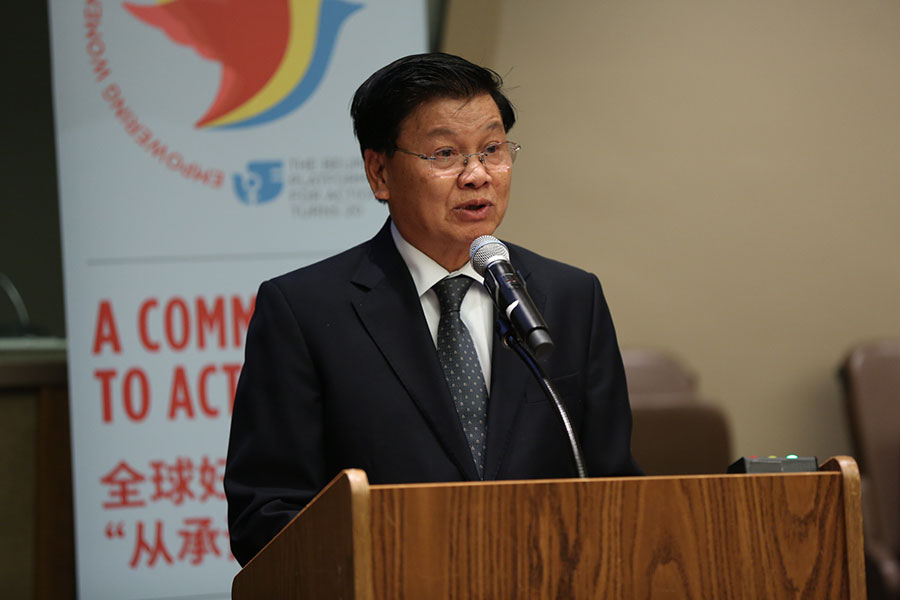
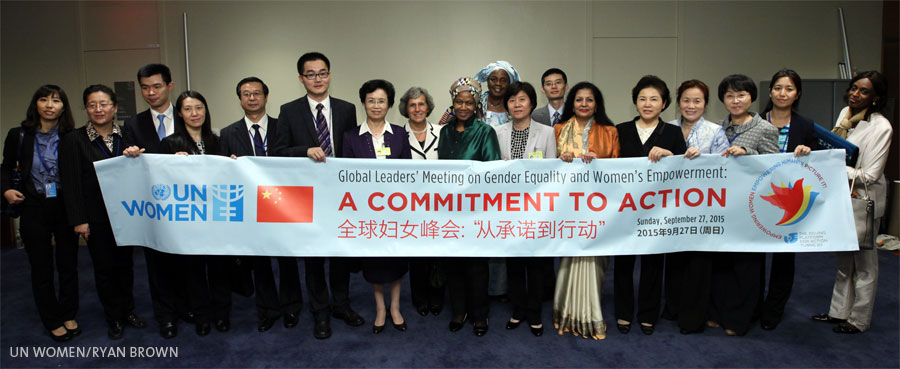
On Sunday some 80 world leaders convened at the United Nations to personally commit to ending discrimination against women by 2030 and announce concrete and measurable actions to kick-start rapid change in their countries. The event marks a historic first, with pledges delivered by Heads of State and Government. No other single issue is to receive this level of political attention at the UN Summit held from 25-27 September to adopt Agenda 2030 and its Sustainable Development Goals.

The People’s Republic of China, host of the 1995 Fourth World Conference on Women, and UN Women are co-hosting the “Global Leaders’ Meeting on Gender Equality and Women’s Empowerment: A Commitment to Action.”

Commitments covered a range of issues addressing the most pressing barriers for women, such as increasing investment in gender equality, reaching parity for women at all levels of decision-making, eliminating discriminatory legislation, and addressing social norms that perpetuate discrimination and violence against women.

Xi Jinping, President of the People’s Republic of China, opened the event. He said “we still have a long way to go in achieving gender equality. … The international community should reaffirm the spirit of the Beijing Conference with renewed commitment and pledge greater efforts to promote gender equality and women’s all-around development. … China will do more to enhance gender equality as its basic State policy, give play to women’s important role as ‘half of the sky’ and support them in realizing their own dreams and aspirations in both career and life.

The Chinese women, through their own development, will also play a greater part in the global women’s movement and make greater contributions to gender equality in the world.” President Xi Jinping announced that to support women’s development worldwide and the work of UN Women, China will contribute USD 10 million for the implementation of the Beijing Declaration and Platform for Action and the realization of the related goals in the post-2015 development agenda.

angela-merkel world leaders

President Xi further said China will support women and girls in other developing countries by providing health care, vocational training, financing for education and other assistance. In his opening remarks, UN Secretary-General Ban Ki-moon directly addressed the assembled world leaders, saying: “As Heads of State and Government you have the power and the responsibility to ensure that gender equality is—and remains—a national priority.” He continued to outline three areas for action: “First, I urge you to create and energetically implement coherent gender equality policies. Second, provide significant financing for gender equality so that commitments become reality. And third, monitor progress so that all governments will hold themselves and each other accountable for the pledges made here today.”

“The highest leaders in the land are taking personal responsibility for their commitment to gender equality and the empowerment of women,” emphasized UN Under-Secretary-General and UN Women Executive Director Phumzile Mlambo-Ngcuka. “Now the world looks up to them to lead the game-changing actions that secure and sustain implementation. Today we take the first firm steps towards 25 September, 2030.”

un-women world leaders

As the first world leader to speak at the principal segment, German Chancellor Angela Merkel said: “We need women for peace, we need women for development. This is what we emphasized at this year’s G7 Summit with our commitment to women’s empowerment and initiative to provide vocational training and entrepreneurial opportunities for women in developing countries. … In Germany … we have expanded child care and we finally have a law on women in leadership positions. … We all committed in 1995 to implement the Beijing Platform for Action. Now we are making a new commitment with Sustainable Development Goal 5. Commitments are good. Action is better. Let us take action!” While actions announced will vary, they are expected to align behind a common message: The Sustainable Development Goals cannot be achieved without gender equality.

If countries act immediately to translate the goals into action, and close many remaining gaps in implementing the landmark 1995 Beijing Platform for Action, the world could reach gender equality by 2030.

A record 167 countries undertook national reviews that assessed progress and gaps as a basis for new national actions plans to accelerate achievement of women’s empowerment and gender equality.

How Men and Women Can Co-Create Unexpected Value

Tonight I’m giving a speech to a group of senior executives on the strategic advantage of men and women working together. This is new territory, and new thinking for most male leaders. The current drive to elevate more women into leadership is largely driven by the pressure to be politically correct.  It is, after all, the right thing to do. What’s both sad and bad about that kind of thinking is that it simply marginalizes women’s potential contribution to success.

In a survey project I’m just starting it seems that many, many women in the workplace feel either invisible or patronized…but not valued.

The deeper problem is that simply telling men they should  value women as leaders only adds energy to the stereotype that women need ‘special’ help because they are the weaker sex.  This kind of thinking is not confined to the ‘Mad Men’ era.
It’s the unspoken bias that stubbornly persists.

I call it the cycle of “Bitchiness.”  It works like this.

Psychological research reveals that feeling powerless or under-appreciated leads to feelings of frustration and anger that produce either aggressive or passive-aggressive behavior.
Passive-aggressiveness is usually played out in behaviors such as complaining, blaming, silence, gossip and acting like a victim.  Low-power people tended to be passive-aggressive because it’s one way of maintaining psychological strength.
For instance it’s common for teenagers to be passive aggressive. (I have raised 6 teenagers so I am an expert in responding to passive aggressive strategies.)

Sociologists tell us that when a whole class of people, in this case women, try to effectively operate with low-power in organizations that favor high-power, that class will tend to perpetuate passive-aggressive behavior.  This of course produces the evidence that confirms the common male bias that women are too emotional, sensitive and indirect to be senior leaders.

So when I give speeches on this subject I point out that a working culture that subtly de-values the ideas, work ethic, and contributions of women will continually produce the superficial evidence to justify the dysfunction of the culture.

I take great care not to be a man basher. It’s not that men have ill-will toward women.  They just need a change of mindset. Here’s what I mean.

Men and women literally see the world differently.  Psychological research confirms that men and women regularly look at the same set of facts and see different opportunities and different threats. This is true with men and women with the same IQ, the same education, and similar work experiences. Men and women will notice different things and assign greater importance to them.

These differences offer tremendous new opportunities in both innovation and execution. Research reported in the Strategic Management Journal (September 2014) uncovered that organizations that have the most women in senior leadership positions grow faster because they produce more innovations that creates customer value. (High value innovations have higher profit margins.)

We believe that this is no accident. Neurological research confirms that male brains are wired for linear thinking.  This kind of thinking is ideal for creating consistent, incremental improvements in efficiency.  Many, many companies today make data-driven decisions to reduce costs by increasing labor and process-efficiency. This has proven to be very valuable. Male dominant skills of goal-setting and relentless accountability have been essential to building big, efficient enterprises.  However, what if being efficiency-focused is now actually getting in the way bigger bolder success?

Linear thinking tends to confine a leader’s thinking about innovation for product or service improvements.  Linear thinkers often get very excited when they can combine product and service enhancements with the mistaken notion that it represents an innovation breakthrough. Many companies are so busy working on process-efficiency they have to hire strategy consultants to come up with product or service improvements.  The problem is your competitors are hiring consultants with the same mindsets and data that your consultants have, so creating unique value becomes almost impossible. This level of innovation leads to slow growth and shrinking margins, which puts more pressure on operating efficiency. It’s very difficult to break out of this vicious and slow death cycle.

This is where women can make a big difference. For me, this is not theoretical as I’ve seen it time and again in my own leadership practice. It works like this.  Most women’s brains are wired for ‘practical empathy.’  This is also known as ‘social intelligence.’ Unlike linear thinking it is holistic, which enables people with this kind of brain design to both feel and understand what other people are feeling and experiencing.  (About 30% of men also have ‘practical empathy’ brain design. Few however rise to high levels in an organization because they are viewed as too “soft.”)

Leaders with practical empathy more naturally understand what ‘invisible needs’ their current customers and potential new customers have.  They are also more likely to come up with unexpected solutions that no one else has seemed to think of.

men and women

A great current example of this is Elizabeth Holmes the founder of Theranos.  You may have heard of her.  She is a 30-year-old Stanford dropout who developed a revolutionary way to do extremely cheap blood tests that can predict a wide spectrum of life-threatening diseases.  This is a really good idea. It’s estimated that she has a nearly $5 billion net worth.  She is described as “Steve Job’s with a big heart,” meaning that she is brilliant but driven to save lives and reduce misery for literally billions of people who otherwise would not get, or could not get their blood tested.

A major driver of her innovations is that one of the primary reasons people don’t get blood tests, even when they’re prescribed, is that they hate the pain of a blood draw.  Her test requires only a few drops of blood from a simple pinprick rather than being hooked up to a scary looking tube being jammed into your vein.

Here’s what I want to emphasize. Holmes’s motivation to innovate wasn’t because a market analysis showed that inexpensive blood testing was a multibillion-dollar market, but rather that there was a critical human problem that stood in the way of implementing our existing medical knowledge to immediately save millions of lives.

In my experience Elizabeth Holmes is not the exception when it comes to the thinking that women bring to generate high-value innovation.  When I run innovation workshops I make sure that at least half the participants are women.  I begin by asking the question, “If you look at our company’s total capabilities, how much good can we do?  How much value can we create to improve the quality of life for our current and potential customers?”  And what I see is that the people with the highest social intelligence and genuine practical empathy come up with the most astonishing and executable ideas.  And most of those people turn out to be women.

When I work with HR leaders on their struggles to attract, develop and retain talent I frame the challenge as this opportunity…“If you need to vastly improve employee talent quality, engagement, creativity, collaboration and productivity within your existing budget, what should you do?” Again, I find their social intelligence to be a volcano of unexpected solutions in spite of existing constraints.

I am a big believer in rapid, revolutionary change. We have entered the “Age of Relationships.” The value that we create is increasingly due to the quality of the relationships we are nurturing.  Relationships with customers, with employees, with society, and with the unborn. When I was working with Stephen Covey we called it “Synergy.”  One plus one equals three…or sometimes thirty.

I’m not suggesting that men are wrong and that women are right.  I am only pointing out that women are simply not valued in the essential way they bring value.  We need the synergy of  both efficiency and empathy.

Now is the time for true synergy between men and women in the quest to create a world of sustainable abundance.

Now Women CAN Win

Fund Athena… that’s the name of a new venture aimed at getting tens of millions of investment dollars in the hands of women business leaders with great ideas. It’s about time. For the most part women-lead businesses have been starved for capital. Only 2.7% of venture capital is invested in women-led or owned businesses. Yet, according to Dow Jones research, women entrepreneurs are twice as likely to be successful as men. With the failure rate of venture capital backed business now being an amazingly awful 75% it makes you wonder why the smart guys with all the money are investing in other guys who only sound smart but act dumb.

Only 2.7% of venture capital is invested in women-led or owned businesses.

You can get the full story of Fund Athena on their website. But the short story is that it’s a crowdsourcing investor site where everyday people can invest savings or 401(k) retirement funds in small companies with big growth prospects, owned and run by women. This is not Kickstarter… you don’t make donations… you make an investment in a business you believe in, with the expectation that the value of your investment will grow. This is a big deal. It took a change in the investment laws that made it possible for all of us to be venture capitalists.

So here’s why I am excited about Fund Athena.

The research on women-owned businesses indicates that most of them stay small. That’s a problem. We need them to grow. We need them to make a difference.

Sexist thinking has generated a story that women are only interested in small lifestyle businesses built around their work-life balance needs. While that’s an interesting theory there’s not a shred of evidence to support it. Interviews with male venture capitalists reveal that they are mentally handicapped by their unconscious bias that successful entrepreneurs should primarily be aggressive, competitive and decisive, which they think are key success factors. Actually, these attributes have a very low correlation with business success. In fact, leadership factor analysis points to evidence that competitive aggression and decisiveness tends to generate high-risk, impulsive decision-making, stubbornness, excessive optimism, and arrogance. Furthermore, research reveals that male entrepreneurs are much more likely to demand excessive start-up salaries and much more apt to buy Ferrari’s than more modestly-minded women.

Nearly all micro-finance institutions make loans primarily to women.

Perhaps some of the most informative evidence to support the business value of female ownership comes from the micro loan world. These are tiny loans… usually less than $200… given to impoverished women in developing nations to start home businesses. Nearly all micro-finance institutions make loans primarily to women. That’s because they have found that men are much higher risk. Frequently, loans made to men are spent on drinking, gambling or prostitutes, which virtually never happen with female borrowers. Loan losses to women typically run only 2%. That means over 98% of loans to women are paid back. Now, with gender-based brain research we may suspect there is neurological reason why.

Women’s neuro-pathways to brain centers that focus on social responsibility, connection, and long-term consequences are far more active than most male brains.

Women’s neuro-pathways to brain centers that focus on social responsibility, connection, and long-term consequences are far more active than most male brains. Studies of women’s entrepreneurship show a higher level of stick-to-it-tive-ness and business model flexibility than male entrepreneurs. Men seem to link their egos to their business plans and focus on “being right” rather than being effective. Women are more apt to change their business strategy, and shift how their business makes money faster than males.

If you think I’m going overboard in my praise of women in business just consider this. A Dow Jones study of 20,194 venture-capital backed start-ups discovered that successful startups had twice the number of females in leadership then failed startups. Yet women have a far harder time borrowing money or raising capital than men do.

There are several university research studies in which identical business loan applications with a male named applicant and a female named applicant have been submitted to the same financial institution. And guess what? Applications with male names are typically approved significantly more often. Don’t you think it’s time for this nonsense to end? I know my daughters sure do. (For up-to-date research on gender discrimination for business financing see this Princeton University link.)

I’m sure it doesn’t surprise you to learn that the co-founder of Fund Athena is an African-American woman serial entrepreneur named Kim Folsom. Over the course of her young life she has brought five separate businesses out of the ground using venture capital. She knows how finance works and she knows the extra difficulties women face in being taken seriously to start and grow significant businesses.

What particularly excites me about this new source of investment capital for women is that maybe they will finally have the chance to change the “game of business” into the serious work of harnessing business to create sustainable abundance.

When I worked with Stephen Covey we spent years helping companies craft lofty mission statements. After about a decade it became clear these mission statements weren’t worth brass plaques they were etched on. For obvious reasons business leaders became hypnotized by Jack Welch’s ridiculous commandment that the purpose of business was to create shareholder value. A glorified greed and short-term financial engineering to improve stock prices at the cost of virtually everything else.

After corporate mission statements failed to inspire leaders I got involved in the quality movement which evolved into Six Sigma, which should have brought about the synthesis of productivity and sustainability but disappointed me by mostly becoming a tool for layoffs. I then turned to Corporate Social Responsibility as a framework to help companies rethink their strategy to focus on creating prosperity through innovations that improve the future for everyone. Unfortunately this kind of thinking takes courage, imagination and a time horizon greater than the next fiscal quarter. The recession killed CSR… it seemed no one could afford to be responsible.

When executives ask me why I am so driven to promote women in leadership I look at them with wonder. The world we have today is the best that 10,000 years of hard power (male-based) leadership can produce. Sure, we have made technological progress but are we now not regressing? Do sky high stock prices and inventions like Twitter compensate for crazy wars, a degraded environment, dysfunctional education, a decaying infrastructure, bulging jails, downward economic mobility and a money-driven congress lead you to believe that the future for our children will be better? Is the status quo really the best we can do?

Do sky high stock prices and inventions like Twitter compensate for crazy wars, a degraded environment, dysfunctional education, a decaying infrastructure, bulging jails, downward economic mobility and a money-driven congress lead you to believe that the future for our children will be better? Is the status quo really the best we can do?

As for me, after 35 years of witnessing the downward spiral of moral inspiration in business leadership I am convinced the problems we face today of leadership arrogance, employee exhaustion and corporate stupidity cannot be solved from the inside.

We need a parallel economy. A better, smarter capitalism. One that’s based on a different set of principles than unlimited self-interest and negative innovation. I believe that the leaders of the new, true economy will be mostly women who are working well with SMART Power men in highly effective teams.

Before now, I was very concerned that women would be disadvantaged and limited by a lack of capital. But with innovations like Fund Athena it dawned on me that the people who will fund the revolution are you and me. This is just the beginning.

And I find that pretty damn exciting!

(Disclaimer: I am not an owner, nor a consultant to Fund Athena, nor does their management necessarily share my views of the limitations of male-based leadership.)

0