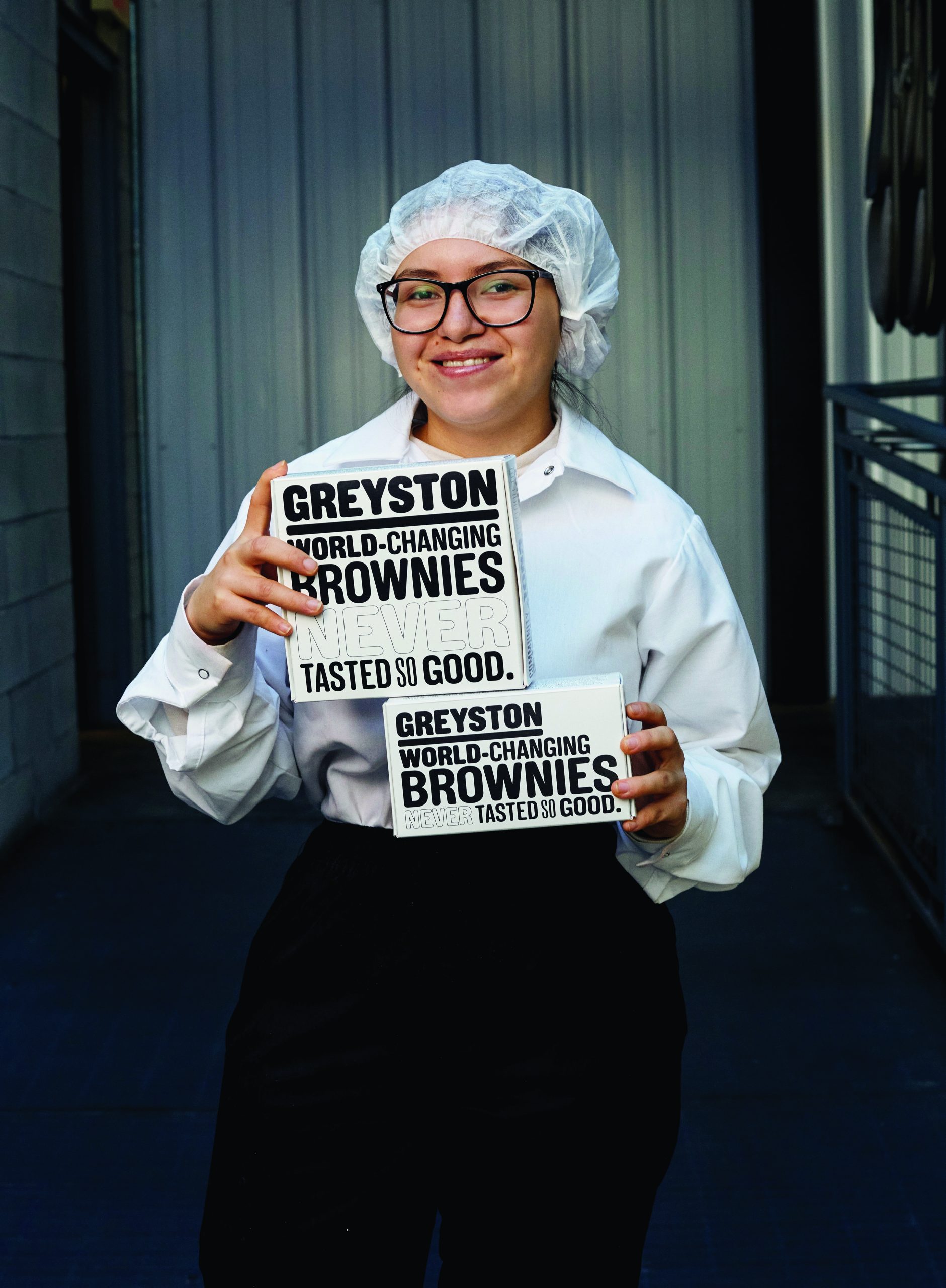
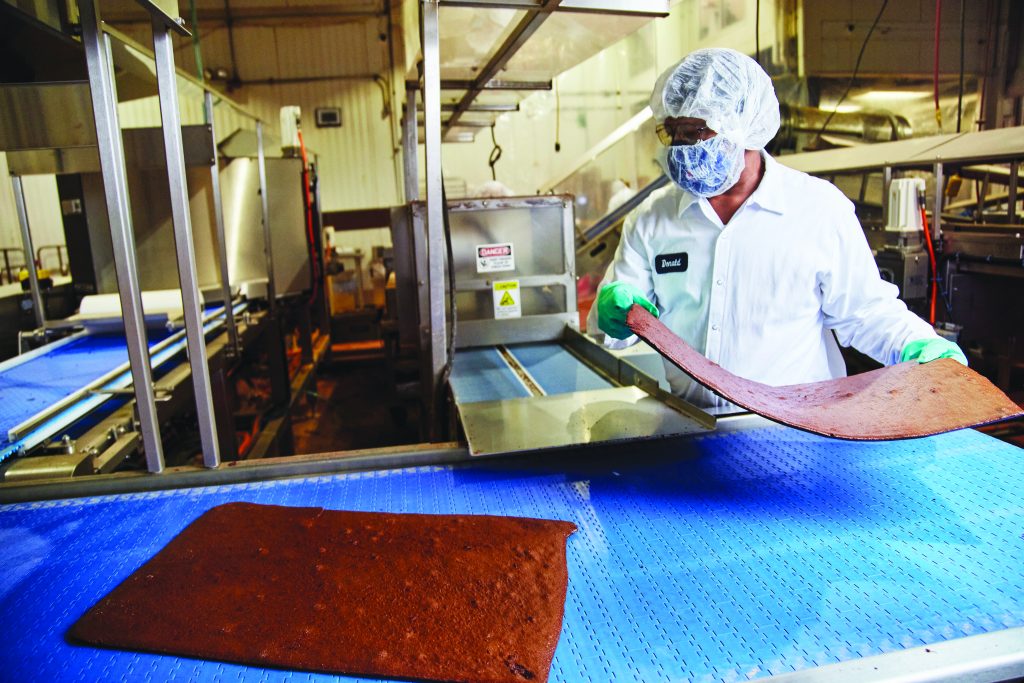
Greyston Bakery — the maker of gourmet brownies, cookies, and those chunky bits in Ben & Jerry’s ice cream — has recruited employees through open hiring for nearly 40 years. Its program helps break the cycle of poverty by hiring nearly anyone who wants to work — minorities, dropouts, refugees, the formerly incarcerated — without requiring resumes, interviews, or background checks.
Shawna Swanson, a Black single mother of five in Yonkers, New York, says the company gave her the chance she needed, as her financial situation became so dire that she considered putting some of her children up for adoption.
While Swanson’s story may seem extreme, it is all too common in the United States today, where marginalized groups have disproportionately high unemployment rates, financial instability, and food and housing insecurity. Black and Hispanic communities have continued to experience the highest poverty rate for the past three decades, reveals 2021 data released by the U.S. Census Bureau and the U.S. Department of Agriculture.
To address the systemic nature of the underlying issues, it is important to start with companies.
Corporate hiring processes that disproportionately screen out candidates based on race, gender, ethnicity, and other factors are pervasive. For example, studies have found that when HR managers screen resumes, Black first names receive much lower call-back rates, indicating an unconscious bias. A 2019 World Economic Forum study calculated that because of the low rate of change in recent decades in women’s participation in the economy, we would need 257 years to achieve gender parity on economic factors like income and workforce participation.
But through Greyston’s opening hiring, people who face situations like Swanson’s can be offered employment opportunities and community support. Instead of conventional vetting processes, open-hiring positions are filled on a first-come, first-served basis, giving opportunities to those who might otherwise face significant obstacles in finding employment. Open hiring ensures that candidates are judged solely on their willingness to work rather than on potentially discriminatory criteria.
When individuals often excluded from the workforce gain employment, the positive effects ripple through their communities.
Families become more stable, local economies strengthen, and social services face less strain. The practice encourages companies to rethink their hiring criteria and actively works against the systemic discrimination embedded in traditional hiring processes.
Greyston president and CEO Joe Kenner shares, “It’s opportunity. It’s access. We’ve been bringing folks into the mainstream for decades by investing in their potential with no judgment.” The bakery’s demographics reflect its community. Since 2017, approximately 95% of its open-hire employees are people of color, and a third are women. Latinx representation has risen steadily, consistent with the growth of the Latinx population in Yonkers, the company’s location. There has also been a significant increase in non-white employees in management positions.
Kenner explains that the company’s founder, Bernie Glassman, was overwhelmed by the myriad of unemployed and homeless people he saw daily in the Bronx. “The genesis was Bernie’s belief that we lose as a society when folks are not realizing their full potential,” Kenner states. “Open hiring isn’t charity; it’s a talent management strategy. We offer jobs to people, no questions asked. But at the end of the day, we still need to run a business that needs to make a profit, that needs to supply a product for Ben & Jerry’s. There’s accountability there.”
Glassman started open hiring by pulling unemployed people off the streets, saying, “Do you want to work? Do you want to learn a new skill? The skills are manual, and you can learn them on the job.” Greyston provides resources to help with childcare, mental health, housing, and other obstacles perpetuating poverty and inequity.
“We want to invest in bringing you in and keeping you here, as opposed to expending resources on keeping you out through, for example, interviews and background checks,” Kenner notes. With about 100 bakery employees, including 70 or so from open hiring, Greyston operates with an eye on employees’ long-term success.
The Greyston Employment Opportunity Center shares its hiring model with businesses large and small around the world. “We want to educate as many people as we can on the possibility of open hiring,” Kenner states. “If a business is skeptical about open hiring, we tell them to open up just one job. It is low risk. It can be whatever position you think works for your organization.”
Ten million Americans face a barrier to employment such as homelessness, substance abuse, or a criminal record — yet, there are roughly eight million jobs available, the Bureau of Labor Statistics reports in 2024. This hurts all of us.
Data show that open hiring is working. In 2022, Greyston filled over 2,000 new jobs through open hiring, with 95% of open hires being people of color and over one-third being women. Its board of directors has almost equal representation of men and women. Kenner concludes that the practice is “good for business, it’s good for the economy, and there are some societal implications. It’s good for the hire; it’s good for their family; it’s good for the community the family lives in.”
An important element of Greyston’s model is changing the broader employment system across the globe, and it recently began scaling the open-hiring model internationally. Kenner says, “If we fill 40,000 jobs through inclusive hiring and open hiring by 2030, that computes to about $3 billion of economic impact — and that’s before you consider the savings from corrections, people getting off public assistance, and the tax revenue that they generate from their wages. That is a huge opportunity.”
This article was adapted from Christopher Marquis’ book The Profiteers: How Business Privatizes Profit and Socializes Cost.
Many leaders launch their platforms and find their voices in business, politics, or academia, but some leaders find their passion and voice out of necessity while fighting for those they love most.
Tucked in communities all around the world are leaders advocating for people with rare diseases, special health care needs, and disabilities to elevate care, inclusion, research, awareness, and support. Many of these fierce advocates are parents. They never imagined the course their lives would take when their precious babies were born. For many families, the journey brings heartbreak, grief, individualized education program meetings, financial hardships, loneliness, and fear — but also a deeper understanding of resilience, gratitude, patience, and appreciation for the little wins, milestones, and services received for their loved ones.
One such organization filled with these incredible parents, family members, and caregivers is the Koolen-de Vries Syndrome Foundation. It was launched in 2013 by a small group of Kool families fueled by a desire to find answers for their loved ones diagnosed with KdVS. It is a genetic syndrome identified in 2006 involving the 17th chromosome and is caused by a microdeletion at 17q21.31 (including the KANSL1 gene) or a mutation of the KANSL1 gene. The microdeletion or mutation causes developmental delays and learning difficulties and may cause several other health concerns. Children and adults with KdVS tend to be friendly and cheerful, and about half of those with KdVS have recurring seizures (epilepsy). The prevalence is now estimated at 1 in 55,000 individuals.
The KdVS Foundation is now connected to over 500 Kool individuals worldwide and is still exclusively run by families dedicating their time and expertise to fulfill the foundation’s mission to educate, increase awareness, and promote research for the support and enrichment of individuals living with KdVS and their families. The foundation has a board of nine medical professionals from around the world committing research efforts and scientific expertise to advancements in KdVS.
In addition to funding worldwide research, the foundation supports patient advocacy summits every other year, bringing medical researchers and families together to learn, contribute to research efforts, and be in community together. Research is funded exclusively through fundraising by Kool friends and families, and as a result, projects include mice colonies to understand behavior and possible treatments, a biorepository containing biofluids, cell lines and biomarkers, a natural history study to understand the full progression of the syndrome, and exploration into gene therapy for a treatment of epilepsy in KdVS individuals.
Ask any of the parents who started the foundation or still serve, and they will likely tell you what began as a necessity has turned into a passion that will help future generations. These parent leaders have together built a legacy that makes the future for Kool individuals even brighter and the journey for their caregivers a little lighter.
This specialty food store is pioneering a better way forward.
By Real Leaders
Among the first specialty food stores in the U.S., Elephants Delicatessen was founded in 1979 in Portland, Oregon. Within 45 years, the company expanded into eight retail locations, a catering and events company, and a wholesale division.
Elephants Delicatessen, a 2024 Real Leaders Top Impact Company, also prides itself on pioneering sustainable practices.
In 2011, it became Oregon’s first business to invest in an electric vehicle; and in 2015, the company earned B Corp certification. In 2020, it enrolled in Energy Trust of Oregon’s Strategic Energy Management program and since then has received over $18,000 in incentives for reducing its energy use and thousands of dollars more to pay for equipment and lighting upgrades. The company cut its electricity and natural gas use by 25% and committed to reach net-zero emissions by 2030.
“Restaurants have the unique ability to help the communities we are part of,” co-owner and CEO Anne Weaver says. “We have the opportunity to showcase our values through our business. Restaurants can lead in a significant way.”
Elephants Delicatessen opts to share an annual sustainability report on its website, which looks at the company’s use of water, electricity, natural gas, and fleet vehicles, as well as refrigerant loss, greenhouse gas emissions, and waste management. Its latest summary reads, in part, “Elephants saw significant increases in production, staffing, and revenue. … And yet, with a few exceptions, increases in resources and emissions lagged the increases in productivity and revenue.”
Weaver says, “We never settle for ‘good enough’ – in our food, our business, or our sustainability practices. We’ve learned the wins are worth it — to sustain both our business and our environment.”
Pictured Above is one of their Catering Entree’s, Chicken Peperonata and Northwest Salmon
Net Zero by 2030
In its latest sustainability report, Elephants Delicatessen identified the following initiatives to mitigate its environmental impact and help reach its goal of net-zero emissions by 2030.
Continue participating in Energy Trust of Oregon’s Strategic Energy Management program and reconsider existing goals.
Establish a comprehensive water management plan with revised focus, goals, and practices.
Establish a comprehensive refrigerant management plan to initiate a transition to less emissions-intensive operations.
Establish a fleet management plan to guide reduction and mitigation efforts through 2028.
Conduct waste audits for all locations to better understand the scope and challenges of its waste disposal practices.
Expand its food donation and diversion efforts to better mitigate the negative social and environmental impacts of food waste.
Translate existing and future policies and plans into Spanish to expand accessibility for employees and stakeholders.
Implement more consistent tracking of its actions and practices to better understand and measure their impacts.
Perform a material environmental impact assessment for the entirety of its operations.
Accelerate your impact and your bottom line by attracting and building a people-first culture.
Imagine a world where work is additive to people’s lives. They take home a sense of inspiration and belonging to their families, friends, and communities, setting off a positive ripple effect.
Leaders have the power to perpetuate this cycle of good — and it’s not fluffy stuff. It’s good for business.
Companies that effectively deliver on their employee value proposition can decrease annual employee turnover by nearly 70% and increase new hire commitment by about 30%.
In a recent study, happiness led to a 12% spike in productivity, while unhappy workers proved 10% less productive.
Companies with engaged employees outperform those without them by 202%.
About 75% of Americans would not take a job with a company that has a bad reputation, even if they were unemployed.
Define Your Employee Value Proposition (aka What’s In It For Them?)
The standard hiring process starts with employers vetting candidates. But candidates are also deciding if they want to invest their professional talent and time into a specific employer. As such, the exchange needs to be two-directional. Ask, “Why would a candidate want to work here?”
What can you define and share with candidates to help them understand what their experience will be at your company? This includes tangible things like pay, benefits, and work expectations, as well as intangible things, like the ecosystem of support, recognition, values, culture, purpose, learning opportunities, etc. Collectively, this is your employee value proposition, of which company culture is one component.
10 Ways to Strengthen Company Culture
Build trust. Hire great people, equip them well, then trust them to do their jobs. No need for lots of extra rules when implicit trust (not subservience) is foundational to your culture.
Lead with empathy. Take time to understand where people are coming from.
Vulnerability can be a superpower. Be open and transparent so that your employees know you are human too.
The best leaders don’t have all the answers. Regularly invite in ideas, solutions, and collaboration from your team.
Live your company values. When you show up this way, you attract employees who naturally and authentically live similar values.
People need to feel heard. Create an environment where they feel comfortable sharing what’s working, what’s not, and what they need or can contribute.
Create an environment where mistakes are OK. Build opportunities for learning.
Personalized outreach really matters. Show that you see people as individuals by checking in and voicing your appreciation.
Show up to work as your authentic self. Buck the old way of authoritative leadership in favor of inspiring leadership.
Little things make a big difference. You don’t need to do it perfectly. Everything you choose to do will add up to something much larger.
Peggy Shellis the founder and CEO of Creative Alignments, a Time-Based Recruiting® company that partners with companies creating a great place to work. Creative Alignments is a Real Leaders Top Impact Company Award winner and sponsor of Real Leaders UNITE. Click here to see her post about her experience there.
Here’s my best advice from 30 years of C-suite experience.
By Darin Anderson
As impact companies, we see the greater purpose of our work and are dedicated to making decisions with the best interest of team members, customers, investors, partners in mind, knowing financial success will follow. However, it’s not always an easy path. From my three decades of C-suite experience, here is what I have learned are the keys to being a successful impact CEO.
1. Be clear on your purpose and what success looks for you and your organization. Find the best people who can help you achieve that — people who share your values, vision, passion, and determination.
2. Execute your plan. Listen, adapt as necessary, and execute. Work diligently and always do the right thing for your team and clients. Be highly accountable for results and actions, and be transparent in all that you do and your reasons for doing it.
3. Share the rewards equitably. Help people feel like owners in the organization’s success by allowing them to be rewarded like owners. We make it a priority to compensate our team members well and relative to the contributions they make with salary, benefits, bonuses, and company shares. Everyone in our organization can be an employee-owner. We are also transparent about our performance. When people feel truly invested in the long-term success of your organization, they will show up, give the extra effort, and deliver the desired output.
4. Surround yourself with people and peers outside of your organization who will be honest with you in life and take an active interest in your well-being and that of the company. I have many CEO friends whom I meet with regularly or run or ride bikes with to review family, personal, and business progress. I have learned so much from them and their approach and viewpoints. These connections are invaluable and have helped me be a better leader.
5. Find great partners in life. I am blessed to have an amazing spouse whom I have tremendous respect for and who appreciates me. She makes me a better person. We support each other and champion each other in this beautiful life journey. Like my marriage, my leaders are also my partners in life. We are committed to each other’s success, and we all know it.
6. Consider your personal impact and legacy. Look in the mirror and regularly ask yourself: Am I doing all the right things to achieve this? I reflect on my own impact often. Personally, I believe that if you take care of the people around you, create the right environment for individual and team success, and share rewards equitably and thoughtfully, you’re going to leave a great legacy.
Darin Andersonhas served as chairman and CEO of Salas O’Brien since 2006, guiding the company to become one of North America’s leading engineering and technical services firms. He has led large engineering and construction organizations for 30 years as CEO, COO, and CFO.
Pharrell Williams is closing the opportunity gap for entrepreneurs of color.
By Real Leaders
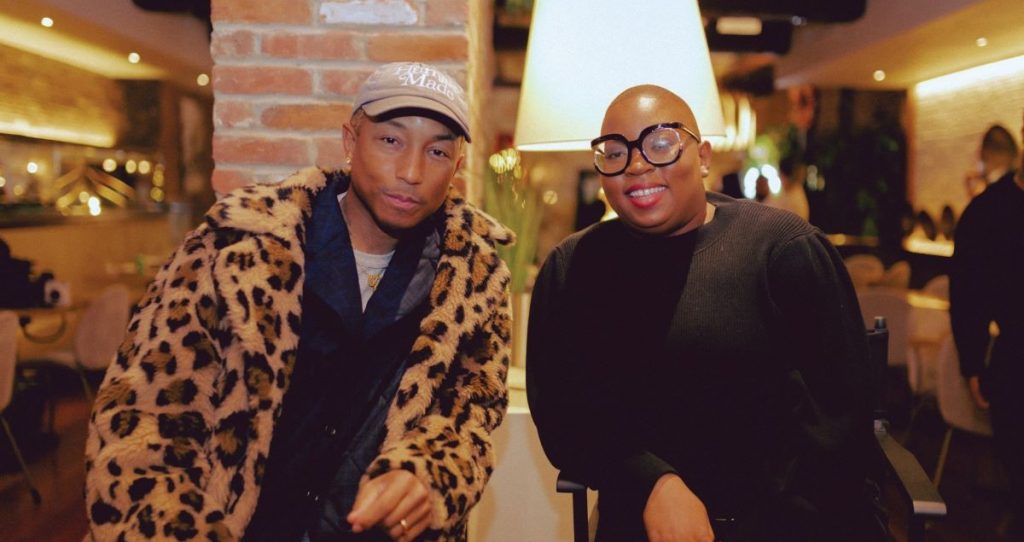
Pharrell Williams knows music. One of the most influential musical artists and producers in hip-hop, R&B, and pop, Williams has created chart-topping hits for household names, earning 13 Grammy Awards and six Billboard Music Awards. (Cue the mega-hit song Happy.)
Then there are his latest accomplishments in fashion design (Louis Vuitton’s men’s creative director), film production (Hidden Figures co-producer), and several other companies the serial entrepreneur helped found or collaborate with. But what’s music to Williams’ ears lately is not his own success as much as helping others succeed. He is determined to help Black and Hispanic entrepreneurs propel their startups through his budding nonprofit, Black Ambition.
Williams emphasizes that ambition is limitless, but access is not. Even today, Black and Hispanic founders in the U.S. receive less than 3% of all venture capital allocated. That’s why he is investing capital and resources into Black and Hispanic high-growth startups, working to close the opportunity and wealth gap for entrepreneurs who have historically been left out of traditional investment funnels.
“We can do and be anything we want to,” Williams tells Real Leaders. “We just need the support, we need the resources, and we need the tutelage and the guidance.”
Founded in 2020, Black Ambition wrapped up its third annual awards program in November. To date, the nonprofit has given out nearly $10 million to over 100 Black and Hispanic founders through a general prize track and a track for historically Black colleges and universities (HBCUs). Black Ambition has supported an additional 500-plus entrepreneurs with mentorship to strengthen their ventures. To say that Williams is happy with Black Ambition’s impact would be an understatement.
“You gotta pinch yourself because man, this is really happening,” Williams says. “These people are real. The dream is coming true.”
Black Ambition does not only give prize money. As critical as those funds are, the organization also provides other support to set up entrepreneurs for continued success. Semifinalists participate in several months of programming that includes mentorship, resources, community, and networks. Williams feels that he is answering a calling.
“I’ve learned from the mistakes that I’ve made, and I realized how much I paid dearly for it,” Williams says. “And I realize how many good things I’ve done and how they affect things in a much more exponential way. When you see all the parallels and all the patterns, you start to realize there’s this overarching goal of doing good and doing well. It’s a karma credit score. I’m just paying my tithes to the universe, not only leaving the door open, but doing my absolute best to share the codes in the most universal way possible.”
Anti-Systematic Gravity
At its core, Williams defines Black Ambition as anti-systemic gravity, a push to help Black and Hispanic startups gain momentum despite the challenges. It’s a need he witnessed first-hand growing up in the projects in Virginia Beach.
“As a child, I don’t know that I ever had ambitions to be an entrepreneur,” he says. “I had never heard of the word, and I didn’t grow up in a community that had that kind of mentality. Entrepreneurship was not something that we understood to be within the realm of possibility, and there was a hundred million percent no Black Ambition as a construct.”
He continues, “There were lots of Black-owned companies in Virginia Beach and Norfolk. They just would never celebrate it the way we celebrate it now. You didn’t hear about the person who owns the tire company or the landscaping business and was totally crushing it or the person who owns a swath of gas stations. The way that we herald it now is amazing, but we should have been doing that all along. Gravity pulls our race down, and we don’t even know it. Disproportionate access to health care, education, and representation — that’s a gravitational force that pulls down on marginalized people more so than it does for our White siblings.”
Williams considers himself fortunate to have been able to break through this gravitational pull. Born to a handyman and a teacher, the college dropout turned to music to cope with neighborhood shootings and hardships. “Music was one of the greatest distractions,” he says. “The music got us by.”
His career kicked off when he was discovered at a high school talent show by music industry veteran Teddy Riley. Williams later partnered with a friend to establish the production company The Neptunes, promoting and selling the work of pop, hip-hop, and R&B artists, as well as forming an R&B group with the same name.
“When I got into the music industry, eventually I realized, OK, you’re going to be your own publisher, so that’s a business,” he says. “As a musician, you’re making music, so you are making a product, and that product has to be managed. You are going to be known for the person who is supplying this product. The instruments that you use are what help you create or conjure this music. So, you start thinking entrepreneurially just by being a musician.”
Williams produced explosive hits for Jay-Z, Beyonce, Britney Spears, Nelly, Gwen Stefani, Madonna, Jennifer Lopez, Ed Sheeran, and other household names, and while the music side came naturally to him, some of the business side did not.
“The first 10 years, I made so many terrible investments, but I didn’t have anyone around to vet these opportunities and tell me, ‘OK, this is worth your time, this is worth your space,’ and most importantly, ‘this is also worth your financial investment,’” Williams says. He is ensuring that Black Ambition fills that role for entrepreneurs today.
“This is My Purpose”
Williams and his team are forging a way for Black and Hispanic entrepreneurs to “build uninterrupted.” It’s a phrase he uses often within Black Ambition.
“Building uninterrupted means that there is no historical and-or systemic gravity on your concept, that it is able to free float, and exist, and build on its own,” he says. “You’re uninhibited by any kind of gravitational force.”
To help create those opportunities, Williams put Felecia Hatcher at the helm of Black Ambition. As CEO, Hatcher has helped entrepreneurs connect to over $100 million in funding over the past eight years, earning honors from the Obama White House, Harvard, and Comcast, to name a few. She is an author, speaker, business owner, and co-founder of the Black Tech Week conference and The Center for Black Innovation. “Black Ambition is lucky to have her, but so are all of these entrepreneurial minds,” Williams says. “I always look to her. You listen to her speak, and you feel like you can do anything.” (Read Real Leaders’ Q&A with Hatcher.)
Black Ambition also has formed several strong partnerships with leading brands and organizations including Adidas, the Lennar Foundation, the Chan Zuckerberg Initiative, the Visa Foundation, Heineken, and Chanel. Plus, the nonprofit offers its awardees bi-weekly office hours with proven leaders in marketing, public relations, and brand building with Heineken, Snapchat, Netflix, and others.
“You need as many incredibly well-educated, well-experienced eyes around you at all times, and they should be better than you because if they aren’t better than you, then you’re never going to be better than what you are,” Williams says. “When you get a handful of them around you, wow, you’re about to be lifted.”
Winning recipients attend town hall meetings with Williams and receive life coaching and therapeutic workshops in groups and one-on-one, setting up a holistic career approach.
“It takes a village,” Williams says. “You just need the right people. You need the right energy — and that energy is curiosity, it is ambition, and it is the desire to see the person next to you do well. It is a devotion and a diligence with respectful reciprocation.”
As for fielding the prize applicants, Black Ambition looks for unique and innovative businesses to propel, primarily in the fields of technology and consumer products and services, but also in health care, media and entertainment, and Web 3.0.
“The purpose of a business should be based on its necessity,” Williams says. “It should exist because we need it and we don’t have it. Or if we already have it, it’s because this is the superior version and this is going to change the game. Other than that, it’s just fodder. We don’t need another edition of the same. We need something that is going to level us up.”
In 2023, Black Ambition introduced the So Ambitious HBCU Tour in partnership with Techstars and Thurgood Marshall College Fund. The tour brings entrepreneurial training to historically Black colleges and universities to create new wealth pathways and opportunities for undergraduate and graduate entrepreneurs. Students create real companies with the help of mentors, investors, and experienced entrepreneurs and the support of incubator and accelerator programs, business pitch competitions, boot camps, and access to capital. The tour is targeting Alabama, Florida, Virginia, Louisiana, Maryland, Texas, Georgia, and Washington, D.C.
“It looks so promising,” Williams says. “You see the support we’re getting, the kinds of partnerships we’re forming, and the people who are getting involved, the really creative Black and Brown ideas that are coming in — it’s really inspiring.”
A man of faith, Williams feels divinely aligned with his work for Black Ambition. “I believe that this is my purpose,” Williams says. “I believe that I’m supposed to share the codes, and I believe that there needs to be this organization that helps to share the codes by doing some funding and also really serious strategic advice and mentorship.”
Williams points out the need for Black Ambition to be amplified. “I see a future with Black Ambition chapters or offices all over the world because the Black and Brown diaspora isn’t just in America,” he says. “No matter what position we play in this world, we need to know that we can be anything, and that is the ultimate Black Ambition.”
Removing Barriers, Accelerating Success
Black Ambition CEO Felecia Hatcher gets real about the challenges of Black and Hispanic startups.
Real Leaders: What is Black Ambition, and what are you as an organization set out to accomplish?
Felicia Hatcher: Pharrell was the ultimate visionary creating Black Ambition, and when you think about vision, you also think about how expansive vision can be when it’s tied to legacy. So, I think of all the amazing things that he has done and has yet to do. The entrepreneurs impacted by his vision will be a part of his greatest legacy because those are the ripple effects.
We have 100 entrepreneurs that we’ve invested in up until this point at the three-year mark. A lot of organizations that do similar work have only dreamed of impacting as many entrepreneurs as fast as we can. We understand the premise that not only are we trying to close the wealth gap, but wealth has a need for speed — and a lot of people have gotten really, really comfortable wasting the time of Black and Hispanic entrepreneurs. We know that time is infinitely more valuable than money. So, once they waste that money, waste that time, they cannot get it back.
So, with Black Ambition, we do a few things. One, we’re getting them the resources faster, we’re getting them the money faster, so that they can go out into the marketplace, make decisions, hire people faster, and have a faster impact upon their communities while building really good companies. I think of all the success that the founders have had. We’ll reach the point where we’ve invested just about $10 million into these companies in 2023. They’ve gone on to raise over $92 million in the past three years with all the entrepreneurs that we interface with, and that’s no small feat when you look at the number of less than 3% of all companies actually receiving venture capital investment are Black and Hispanic.
What keeps me up at night is, if this initiative was never founded, these brilliant companies would not have been able to have the impact that they’ve had as well as the ripple and network effect. There are just so many people who stand in the way of this greatness being able to happen, which is the problem that we’re fighting every single day.
RL: What have been some of Black Ambition’s biggest challenges so far?
Hatcher: There are a lot of challenges when you’re building a program that also spans quite broadly in whom we serve — not just early entrepreneurs who are a little bit more seasoned, but then we also fund and support HBCU students. Pharrell and I feel that HBCUs are some of the most fertile but untapped grounds for talent, but that also comes with a level of additional support that’s needed sometimes because they’re very young entrepreneurs who haven’t done significant time in corporate and then decided to leave corporate America and launch a startup, which is what we see oftentimes with our early-stage startups. We make sure that they have the soft skills, support, and training that they need as well as mentorship and programmatic support so they can be globally competitive with what they’re building. We also teach them to be very good stewards of the relationships that often come from Pharrell.
In the business world, everything is a relationship game, whether you like it or not. Being able to be good stewards of those relationships, especially when you’re building a program at scale, is something that we are very careful with, and then really trying to instill that in the entrepreneurs we’re introducing them to, which he has cultivated over the years and we’ve cultivated as an organization.
The other part is funding for the organization. A lot of organizations that made very big commitments in 2020 have walked them back in a moment when we need additional capital. Funding for Black entrepreneurs and startup founders specifically is down 45% in the last year. In a time where the economic climate is a little shaky, those entrepreneurs need capital even more. Having great, strong institutional partners that have been with Black Ambition from the beginning is critical, but then we also have to navigate that day to day to make sure we’re building a sustainable organization that can continue to fund those entrepreneurs at the level in they need and which we’ve deemed to be catalytic for those entrepreneurs. It’s definitely a challenge we navigate every single day.
RL: What does Black Ambition look for in its applicants?
Hatcher: We look at their risk tolerance, how they’re able to navigate crises and change, and their ability to lead as a whole — so what makes them a great leader that not only will allow them to build teams but also to leverage Black Ambition’s initial investment to bring on additional investors. We also look at a level of resource magnetism: Do they have it? Can they attract the resources, people, and buy-in that they need to continue to build a thriving startup in their communities?
Then, we look at the usual stuff — product market fit, the market potential as a whole, the viability of being able to scale and be very good stewards of the resources.
Ultimately, what we’ve been building with Black Ambition with Pharrell’s vision is like a rocket ship for these entrepreneurs. Not every entrepreneur is ready to move and scale as fast as they think they are, so we’re also looking at some characteristics that represent that they can get on the rocket ship that all entrepreneurs hope for and then be able to take it, do something with it, and then ultimately be massive contributors back into the Black Ambition community.
RL: Is impact a common thread among Black Ambition’s winning companies?
Hatcher: When you look across our portfolio of entrepreneurs that we’ve invested in, they’re all for-profit companies, but they have the heart and soul of social impact entrepreneurs. They’re all building something much bigger than themselves with some sort of direct impact back to their communities. It’s an unstated thing that we look for in our selection process.
Community X is one of the companies that immediately comes top of mind because they built a platform that allows people to quickly sign petitions and make donations for big moments that require a lot of capital and advocacy to happen. They were our 2022 Black Ambition Prize winner. Then we have quite a few other companies solving some big problems, whether it’s in the reproductive health space for women, feminine hygiene products, or our 2021 Black Ambition Prize winner, Logistics, who is a construction software management company in the green tech space. So we are seeing these companies not just solving and getting into high-growth areas, but then also monetizing with an impact back into the community.
Support Black Ambition
Black Ambition is a nonprofit initiative launched by Pharrell Williams in 2020 that provides Black, Latino, and HBCU-affiliated entrepreneurs with prize money, high-quality mentorship, and connections to diverse entrepreneurial and investor networks and resources. Learn more at blackambitionprize.com.
Meet the 2023 Black Ambition Winners
Selected from 2,000-plus applicants, over 250 semi-finalists participated in the 2023 Black Ambitionist Mentor Program, a 12-week entrepreneurial curriculum. The top 36 finalists each received a minimum of $20,000 in prize awards, totaling $3.2 million. The final eight pitched live on stage to compete for the $1-million grand prize at Black Ambition’s third annual Demo Day in November 2023. Expert IEP, a parent-facing app that optimizes existing Individualized Education Plans with predictive AI for children diagnosed with a disability, won the $1-million grand prize; ECOMSPACES, a one-stop-shop for e-commerce solutions ranging from product photography to order fulfillment, earned the $250,000 top prize; and Monocle, a social e-reader that creates a community-focused reading experience, received the $200,000 HBCU grand prize.
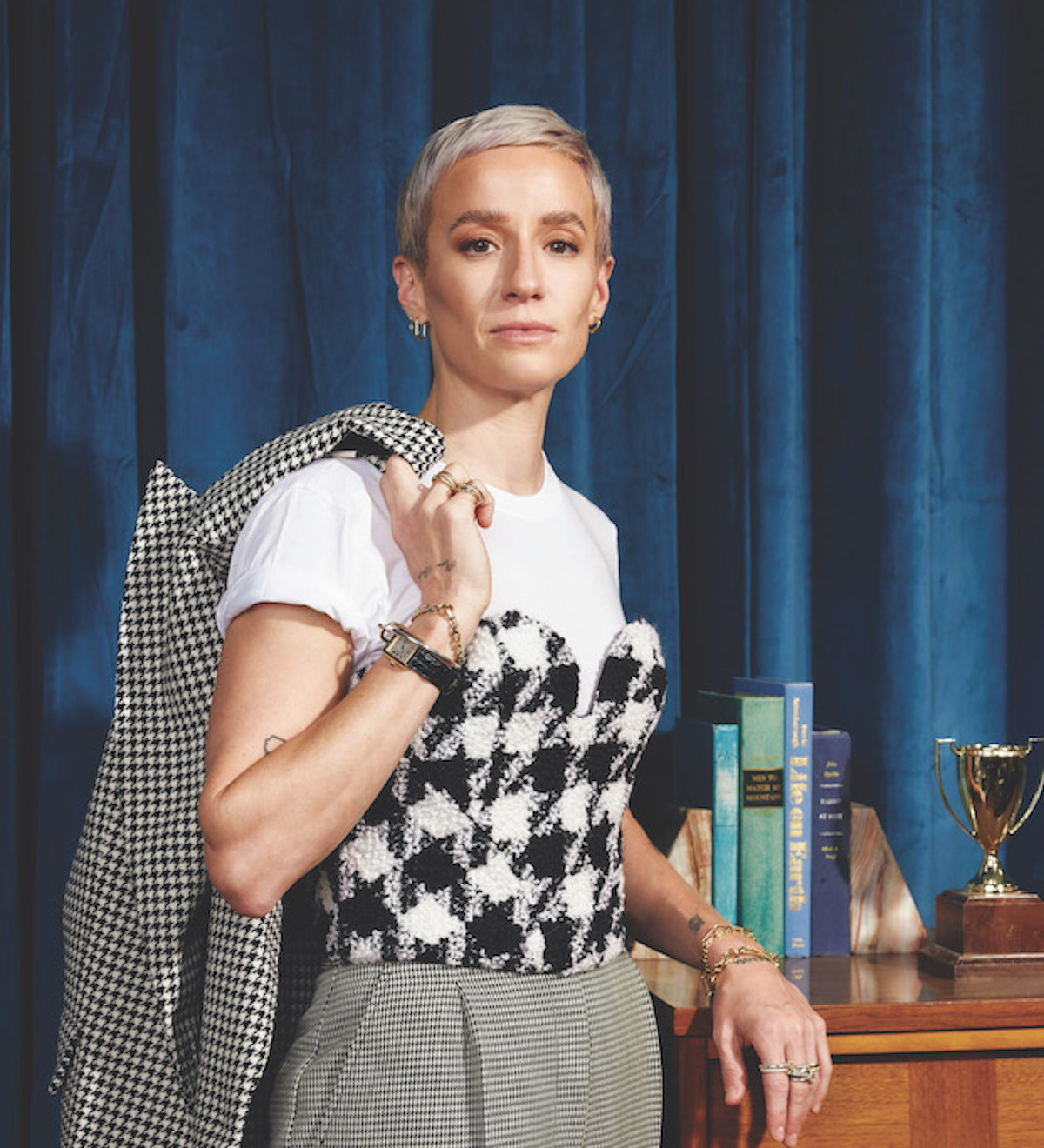
Retiring Soccer Megastar Megan Rapinoe kicks up her fight for equality in the world arena — and shares why businesses have no excuse but to close the gender pay gap now.
She has been cheered from the stands by pro soccer fans for 15-plus years. She has been called upon by Congress to testify in a historic fight for gender pay equality. And she has become synonymous with being a disruptor on both world stages. Megan Rapinoe may be hanging up her cleats this year, but her advocacy work is far from finished. In fact, she tells Real Leaders that she is just getting started.
Hanging Up Her Cleats: Rapinoe’s Transition to Full-Time Advocacy
Rapinoe will retire as one of the most influential athletes on the planet with two World Cup titles, an Olympic gold medal, and a Presidential Medal of Freedom, and one of the first soccer players to publicly come out as gay. Now, Rapinoe is taking the field for gender equality in full force and is kicking up her activism efforts for LGBTQIA+ rights and racial justice.
Known to passionately speak her mind, Rapinoe reflects with Real Leaders on her leadership lessons from the game, why businesses have no excuse but to close the gender pay gap now, the impact company she recently launched with her fiancée, WNBA legend Sue Bird, her desire to make politics “cool,” and a whole lot more. Rapinoe’s new chapter is shaping up to be her most impactful one yet, and in true Rapinoe fashion, she is embracing it with arms wide open.
Real Leaders: Congratulations on your upcoming retirement from pro soccer. How did preparing for and competing in four World Cups, including as co-captain in 2019, transfer into your leadership strategy in business?
Rapinoe: When you’re playing on a team that has been as successful as the U.S. Women’s National Team where you’re literally playing with and against the best players in the world all the time, you need to have a level of even aspirational confidence in yourself and your teammates. If you’ve made it to the World Cup on the Women’s National Team, you’ve run the gauntlet. You’ve been in a pressure cooker. You’re resilient.
I apply these same qualities — confidence, teamwork, performance under pressure — to leadership in business. For me, I was born with this amazing talent to be an athlete. Just as I grew into a leadership role on the team and tried to be the best player I could be, I’m trying to leverage these skills off the field as well.
Being a leader on a team or in a business means you have to be accountable to yourself and to your teammates. I’ve always been a team-first player, and that definitely carries over to my businesses outside of soccer. I want to be successful, of course, and I want everyone to be successful with me, and I want to be successful with them. I don’t think individual success actually exists, and the foundation of that belief came from playing on the biggest stage with my teammates. You need everyone to really win at anything.
RL: You helped lead the charge in the U.S. Women’s National Team’s class action gender discrimination lawsuit against the U.S. Soccer Federation, settled in 2022 with a promise for equal future pay with the men’s team. How is this affecting employee equity in business today? How would you characterize the progress that has been made, and what will it take to reach equal gender pay everywhere?
Rapinoe: We’re definitely experiencing a paradigm shift in how we understand the value and potential of women, which has been undervalued for so long. The Equal Pay Act became law six decades ago, and yet we still hear the statistics: Women make 82 cents for every dollar a man earns. For Black women and women of color, the gap is even greater. The wage gap has hardly moved in 15 years. It’s absurd. It’s not acceptable or sustainable, and finally it seems like enough people are starting to say “enough” — whether that’s U.S. women’s soccer, protesters, investors, or employees.
Our victory as a team was really momentous for women’s soccer and for all of women’s sports and the equal pay movement, but the average person doesn’t have the platform — much less the bandwidth or the ability or the freedom — to engage in a fight like we did. We need to ensure all working women and all marginalized groups are being paid equitably. As chief equality officer for Trusaic, my goal is to use my platform to bring awareness not only to the problem-because we all know by now that there’s a problem- but also to talk about the solutions.
And it’s not just about compensation, although obviously being paid fairly is important. For the team, it was also about equal investment and equal caring — that’s equal access to resources, investment in coaching, marketing, ticket sales, sponsorship, all of it. In a corporate setting, that looks like equal access to opportunity — who gets the new assignments, the great projects, who gets additional training and development, and who gets promoted.One thing I believe is that you have to create a space that signals to people that it’s safe before they even enter that environment. Maybe that’s diversity training, but it’s also: What are your hiring practices? How diverse is your workforce? Who do you do business with? What does your executive suite look like? Does everyone look exactly the same? Because that’s not going to signal to other people that there’s space for them there.
The pressure’s been turned up. We know investors are looking more closely at companies and their workplace practices, employees want to work for companies that pay fairly, and customers want to do business with companies that do the right thing. So the pressure is coming from a lot of places, and industries and companies should also put pressure on one another. There should be an element of holding their feet to the fire in this. Legislation and legal action are obviously part of that pressure too.
Companies hold the key to closing the wage gap. There are no longer any excuses. At this point, we have enough information and the tools, like Trusaic’s PayParity technology, for companies to get on the other side of this in a real, meaningful way.
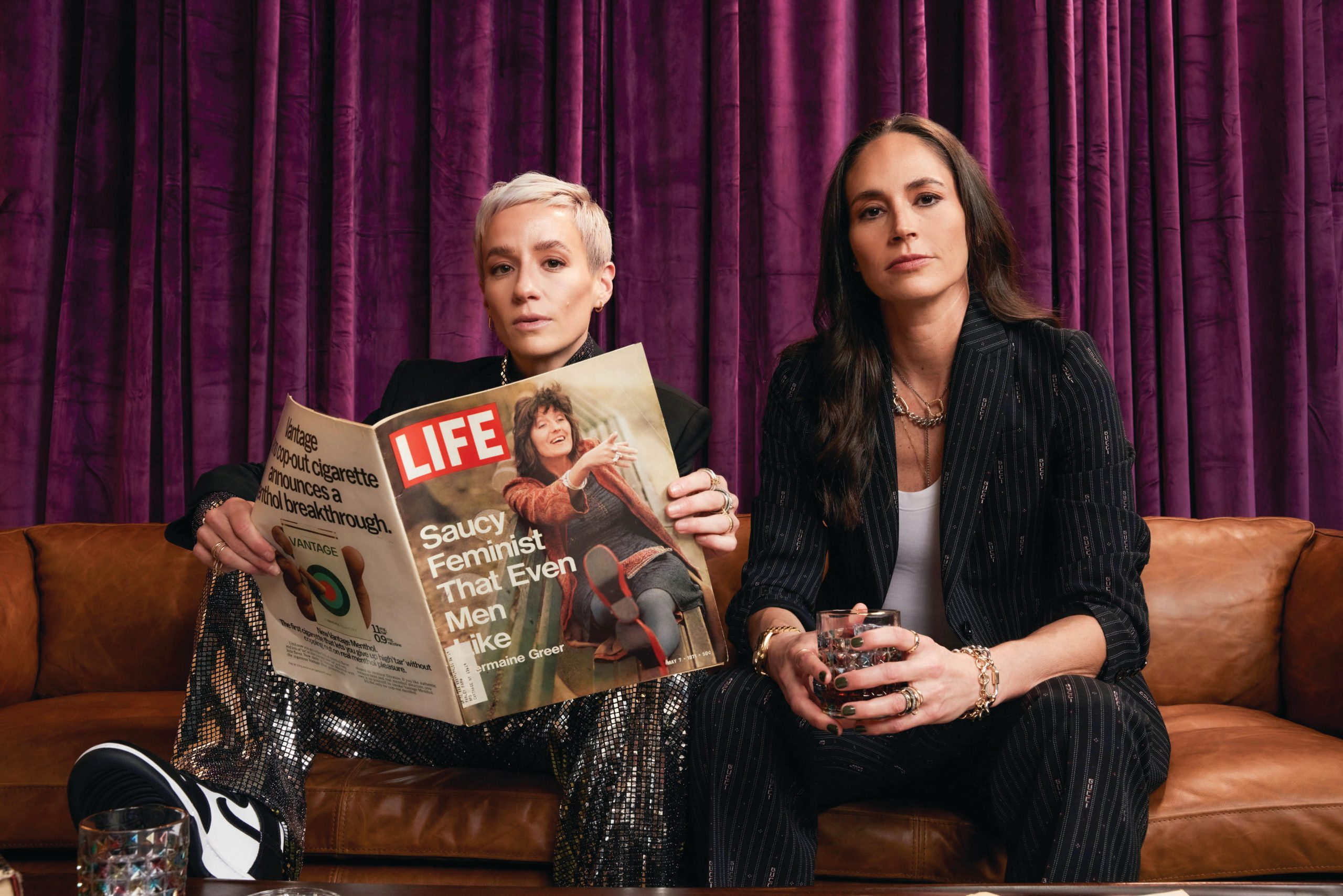
Megan Rapinoe and her fiancée, WNBA legend Sue Bird, recently announced their retirements from sports and co-founded A Touch More production company to give a voice to underrepresented groups.
RL: As a mission-oriented leader, what are your personal and professional missions right now? Rapinoe: My professional mission while I am still playing is to be the best teammate and the best player I can be and to leave the game in a better place for the next generation of players.
My personal mission is to use my platform to fight for gender equality, LGBTQIA+ rights, racial justice, and equal pay. I hope to inspire others through my advocacy and actions to join the fight for equality and justice and help create a more fair and inclusive world.
I am very selective about who I work with, and value alignment is something I take seriously in business. I became chief equality officer last year for Trusaic, which I know your publication recognized earlier this year. (Trusaic was a 2023 Real Leaders Top Impact Company.) They are a workplace equity technology company focused on achieving pay equity, which is obviously very close to my heart. And, of course, I’m involved with my own businesses as co-founder of A Touch More, the production company my fiancée, Sue Bird, and I have formed together to really change what kind of stories are being told and who is telling them.
RL: Speaking of co-founding A Touch More with Sue Bird, what are you learning about yourself and each other in this process? Rapinoe: A Touch More was actually created early in the pandemic as an Instagram Live show really just for fun. We had games and different guests. Sue produced the show and it was a blast. It really became about creating community in new ways under unprecedented circumstances. There was so much heaviness, and we just wanted to be a light however we could, even if it was just for a few hours.
So we kept that title for the production company, and our goal now is to create content that centers on stories of revolutionaries who move culture forward. If we can get eyes on these stories, we can broaden the cultural understanding of what it means to move in the world and to be successful when you don’t look a certain way or fit a certain mold. We want to partner with people and organizations and brands who want to do the same kind of thing: uplift the culture through powerful narratives.
We’ve never had any qualms about working together professionally. This experience just reinforces that we’re really passionate about the same things. We probably appreciate each other’s unique strengths even more, and we can pick each other up in those areas where the other one might fall short. It’s really cool to work with someone you love to advance your shared vision for the world. I truly think Sue’s brilliance is one of her most underrated qualities publicly.
RL: Do you and Bird have any other projects in the works together? Rapinoe: In terms of future projects, activism is probably always going to be at the heart of what we want to do. It’s what we both have always believed in as individuals, so it makes sense. We’ve both had these really influential platforms as athletes, and we know the impact we can make on the world together. It’s not about our story and our personal success. Everyone’s heard our story. We want to get eyes on things that we feel are really important and not getting enough attention, and we have the resources between us to turn up that light.
Fueling Change for Future Generations
RL: What areas of your work and mission excite you the most? Rapinoe: I’m really fueled by the opportunity to make a difference for the young athletes who look up to me, for women in the workforce, for trans kids, for marginalized groups that deserve to be championed and to be seen and heard.
I’m excited about finding ways to get more people interested and invested in politics to make politics “cool,” not necessarily in the traditional sense, but actually getting people to understand that politics is engaging with you, whether you’re engaging with it or not. So those could be the decisions that your school system, city government, and insurance company are making. If people realize that when they participate in politics at whatever level, then policies will better reflect the needs and desires of their communities. We can impact our ability to live a better life by being a little bit more involved. If we take the time to understand all the issues we can have a say in, we can hold our elected officials accountable, so that’s a big mission of mine.
RL: How can you leverage your personal brand as an advocate for the businesses you align with? Rapinoe: Many of the brands that approach me do so because they feel a connection to what I’m doing on the field or what I’m doing and saying off the field, probably some of both. So that might be finding a way to win or to push yourself to the highest level or taking a stand for things that matter — justice, equality, fairness. I’m obviously not shy about putting myself out there, and so I imagine the brands that want to work with me and the brands I want to work with feel the same.
For me, it’s how can I leverage my personal “brand” — who I am — for good? How can I make a difference? I’m fortunate to have people who do pay attention to what I say, so I feel a responsibility that comes with that — a responsibility to do what I can with that influence and try to make the world better, whatever that might look like.
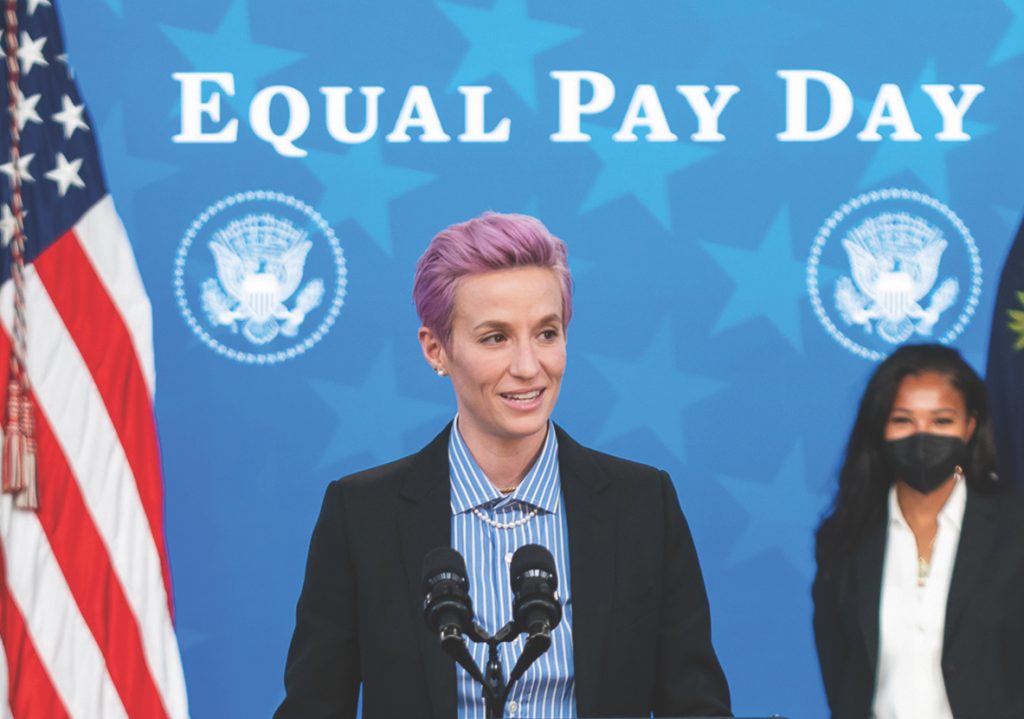
Megan Rapinoe delivers remarks during a virtual Equal Pay Day event Wednesday, March 24, 2021, in the South Court Auditorium in the Eisenhower Executive Office Building at the White House. (Official White House Photo by Adam Schultz)
RL: You’ve spoken publicly about impact investing. What led you to commit to it? Rapinoe: Values apply to every aspect of your life, not just some. My personal financial advisor and firm are really committed to impact investing. We definitely want to be successful and make money, but we also want to think about a new path forward. Doing the same things obviously isn’t working. I like to invest in companies that are disruptive and progressive and concerned with making a difference in people’s lives. My goal is to keep doing this. My portfolio includes Mendi, which is run by my sister, Rachael, and makes CBD products for athletes; Real, which is a mental health startup; and STATSports, which makes wearable technology for athletes. We are just getting started in this space. There will be more to come. I want to continue to carve out a path for women — who don’t acquire as much capital — to come together and build for everyone.
RL: Whose leadership has inspired you the most — in sports or otherwise? Rapinoe: My biggest influence on leadership is my mom, Denise Rapinoe. She has always been the leader of our family and like so many women, has worked tirelessly her entire life to provide for her family, herself, and anyone who needed her. My mother gave me the strength to be who I am today. She taught me how to stand up for what is right, fight for myself, and fight for others who need a helping hand. I absolutely would not be the person everyone knows today without her leadership.
RL: What is your definition of a real leader? Rapinoe: A real leader is someone who is confident and accountable and creates an environment where everyone feels seen and heard and like they have a place on the team. Being a leader is about being faced with the choice to make the right decision for the greater good and actually choosing it every time. A real leader is not afraid to challenge the status quo to make positive changes within their company, industry, or the world. I don’t think there’s one right leadership style. It’s about serving the person next to you and the people around you and giving them what they need. Real Leaders need to make a point of understanding the people they lead and then being intentional in their actions to support them and bring the very best out of them.
Rapinoe Embraces Her Next Chapter
RL: What’s next for you? Rapinoe: Knowing this year would be my last in soccer, I’ve just tried to really enjoy every moment and appreciate what a special opportunity I have had playing for so long. I’m so grateful for everything this game has given me and so honored to have represented my country for so many years, and it, of course, has opened up many other doors.
I definitely want to continue to use my platform to expand the conversation. It would be irresponsible of me not to. I want to push people and companies to re-imagine the status quo. We obviously need more women in leadership positions. We need more gay and trans people in leadership. We need a bigger commitment to pay equity and inclusion. It’s easy for everyone to say they agree with this until it comes time to actually invest in or hire or promote someone who doesn’t look like you. We’ve made some progress, but we certainly have a long way to go. I think a lot about how we can break down these barriers and open more doors for women, Black people and all people of color, gay people, and the people who live in intersecting spaces and have so much perspective to offer all of us.
I’d like to continue to be involved in more projects that get people energized about the civic process and more active in their communities. I don’t think enough people get involved when it’s not literally their skin in the game, but if you look at the intersectionality of everything, it is all of our skin in the game, so I hope to encourage people to speak up or to take positive action. The most important thing for anyone is to do something — and you don’t have to do it perfectly. You don’t have to have all of the answers, but don’t be scared into inaction because you don’t think you have it exactly right.
I feel strongly that the business of Megan Rapinoe can go in all kinds of different directions. I have a lot of irons in the fire. Soccer will always be that touchstone for me, but how can I use that foundation to enter other spaces? That might be fashion, technology, investing, or who knows? We’re just getting started.
As many in society are losing trust in our systems and institutions, business leaders need to step up and lead the way. Trust in Action is a leader’s guide to drive the sense of urgency and change needed to address the big issues we face today. The book, which will be released on April 10, 2023, is part memoir, business case, and model instruction, where readers learn to define trust, identify the building blocks of trust, and apply a novel model to maintain, and if needed, regain trust.
Trust in Action was written by Jim Massey, a former VP of ESG Sustainability, Ethics, and Compliance at AstraZeneca, who led and developed Ambition Zero Carbon, the world’s most comprehensive corporate environmental programs aimed at reducing greenhouse gasses.
“As ESG topics become more relevant, more and more business leaders were asking me what they should do,” says Massey, currently Chief Sustainability Officer at Zai Lab, a global biopharmaceutical company. “My answer and the reason I wrote this book, is that it comes down to trust, and trying to help others understand that we can’t afford not to be singularly focused on social impact.”
The book is based on the premise called the trust model, an idea Jim developed that focuses on three elements: can, care, and do. For trust to be present each of these elements must be present. The model demonstrates how trust is the connective tissue that makes positive action possible, as it creates the building blocks for a successful self, team, and system. Here’s how it works:
● Can: Leaders need to have clarity of their vision or purpose first, as this will enable them to be secure in their ability to tackle whatever issue or problem needs solving. This idea of ‘can’ allows leaders to try new solutions.
● Care: Leaders need to demonstrate that they and their company will engage, listen, and take actions that benefit those who depend on them, balancing company profits with impact. Employees, customers, communities, and investors want companies to be successful, just not at all costs. Leaders and companies must show they care about people and our planet when they do business.
● Do: Leaders and organizations must turn aspirations into operations and walk their talk. To make sense of the chaos, humans create built systems. Since we created these systems we can fix them and potentially use them to regain society’s trust.
“Jim’s most distinguishing characteristic is his ability to deliver on what he committed. He walks his talk,” says Dame Polly Courtice, Emeritus Director and Senior Ambassador, University of Cambridge Institute for Sustainable Leadership. “He has used these leadership qualities to help define the trust model of can, care, do.”
Book Launch Events: There will be two launch events for the book on April 10. During these events, Jim Massey will speak about what prompted him to write the book, and how the trust model he developed can help leaders gain trust to achieve their goals. To register for either event, visit: Monday, April 10, 8 AM – 9 AM EDT or Monday, April 10, 5:30 PM – 6:30 PM.
The International Committee of the Red Cross (ICRC) created the world’s first humanitarian impact bond in 2017 to help transform how vital services for people with disabilities are financed in conflict-hit countries. Now, at the end of its five-year initial run, this innovative approach has delivered on its promise.
Over 3,000 people with disabilities have benefited from physical rehabilitation services in the Democratic Republic of Congo (DRC), Mali, and Nigeria, thanks to the first humanitarian impact bond, which has proven to be an efficient tool to raise project-driven funding at a time of growing global needs.
The initial capital raised — $27 million — was used to build and run three new physical rehabilitation centers in Africa (Nigeria, Mali, and the Democratic Republic of Congo) and provided services to thousands of people. The payment-by-results program also included training for new staff and the testing and implementation of new efficiencies.
The innovative funding mechanism was created to encourage private sector social investment and support the ICRC’s health programs. The rising number of global conflicts and a growing ICRC annual budget were the driving forces for this innovative funding model.
When confronted with their funding problem, ICRC could have looked at what others had done before or chosen to create something new. The decision to innovate has created a funding model that could offer solutions to social impact funding everywhere.
“Today’s humanitarian challenges are immense, causing suffering for many millions of men, women, and children around the world,” says Peter Maurer, ICRC president. “This funding instrument is a radical, innovative but at the same time, logical step for us. It’s an opportunity not only to modernize the existing model for humanitarian action but to test a new economic model, designed to better support people in need.”
The humanitarian impact bond is legally known as the Program for Humanitarian Impact Investment. It’s not strictly a bond but a private placement. The initial payments by social investors New Re, part of Munich Re Group, and others identified by co-sponsor Bank Lombard Odier, enabled the ICRC to run the activities at each rehabilitation center and expand the ICRC’s Physical Rehabilitation Program.
With the completion of the program’s fifth year, “outcome funders” — the governments of Belgium, Switzerland, Italy, the UK, and the la Caixa Foundation — will pay the ICRC according to the results achieved. These funds will be used to pay back the social investors partially, in full, or with an additional return, depending on how well the ICRC performed in terms of the efficiency of the new centers.
Independent auditors will now verify the ICRC’s reported efficiency in the three new centers based on how many people received mobility devices as compared to existing centers that did not form part of the program. If above the benchmark, the social investor will receive its initial investment plus an annual return. If the performance of the new centers is below the benchmark, it will lose a certain amount of the initial investment.
Of the 90 million people with physical disabilities who need a mobility device worldwide, only 10%, on average, have access to adequate physical rehabilitation services, leading to both social and economic exclusion.
An estimated 29 million people — about 14 per 100 of the population — live with a disability in Nigeria, and physical rehabilitation services are not available for many of them. In the North-East of the country, conflict and violence have left many without access to essential health care services, forcing people to travel 600 miles to reach a facility with adequate care.
The ICRC is the world’s largest provider of physical rehabilitation services in developing and fragile countries. In 2016, the Physical Rehabilitation Program operated 139 projects in 34 countries, helping almost 330,000 people with physiotherapy and mobility devices, including wheelchairs, artificial limbs, and braces.
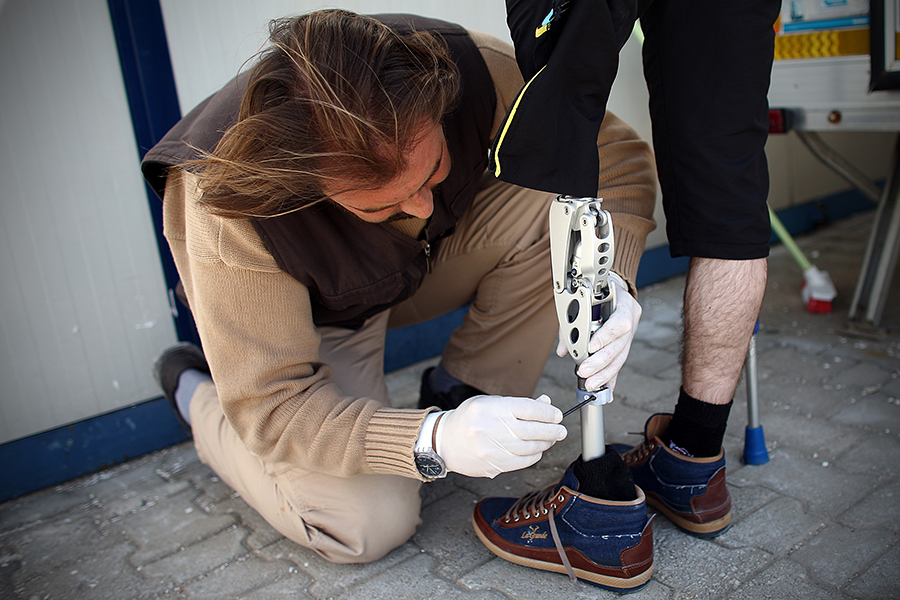
The center has already had an immense impact on patients like Bintu Umar, whose leg was amputated in 2009 after an attack on her village. “When I didn’t have the prosthetic leg, some activities were challenging for me. But thanks to the leg, I can assist my parents. I also do household chores now.”
As people protested and turned the tide to finally talk about once-taboo racial topics in the aftermath of George Floyd, the Diversity, Equity and Inclusion (DEI) prioritization that corporations promised have fallen well short of what was promised. Jochebed Fekadu discusses what real change would need to look like for meaningful DEI initiatives.
This past summer marked the second anniversary of the United States’ most recent racial reckoning. Following the senseless murders of George Floyd, Ahmaud Arbery and Breonna Taylor (among dozens of others), everyday Americans took to the streets to voice their opposition to police brutality and racial violence — and, more importantly, demand real, material change. And for a minute, it seemed like our country was finally prepared to answer this call.
People began candidly discussing once-taboo topics like white privilege, anti-Black racism and police violence. Support for the Black Lives Matter movement soared (albeit temporarily), and elected officials campaigned for sweeping police reforms. Where the public goes, corporations follow, and leaders across segments quickly pledged large sums of money to tackle societal disparities and racial injustice.
Yet two years later, precious few have ponied up. By the beginning of 2022, only about $652 million of the $67 billion promised to racial equity efforts had been disbursed. Why have companies largely failed to deliver on their bold DEI promises?
No Middle Ground
For one thing, fostering a diverse, inclusive culture often gets “stuck in the middle.” C-level executives leave this critical work to newly hired DEI chief officers and middle managers — who are tasked with leading the DEI charge, often with insufficient knowledge, team support and resources. Indeed, a McLean & Co. report found that only 42% of organizations have leaders devoted to modeling inclusive behavior and advancing DEI in 2022. For DEI efforts to be generative, organizations have to back up their good intentions with time, energy and money.
Moreover, there’s still immense fear around DEI — mostly, fear of saying or doing the wrong thing. When fear takes hold, there’s real potential for DEI regression after a few weeks or months of “work.” One Deloitte survey uncovered that over 40% of upper management leaders believe their organizations are too concentrated on DEI, while another 60% admit their DEI commitments will likely fall by the wayside as different competitive threats emerge.
The underlying thread here is that organizations aren’t executing on their DEI strategies because a majority of C-suite executives aren’t actively engaged in the work through their day-to-day actions, strategic priorities and employee interactions. And therein lies the solution.
Follow the Numbers
We need our executives to dive into DEI alongside their CDEIOs and middle managers to demonstrate that it isn’t just a passing management trend — but rather, a business and moral imperative. We need them to see the inherent value in DEI in order to properly resource and demonstrate efforts. And we need them to engage in good-faith DEI discussions to show their employees that even leaders at the highest levels can ask questions, shift systems and grow as human beings. Simply put, we need genuine executive buy-in.
One of the best ways to gain buy-in on any company initiative, not just DEI, is to show the C-suite compelling data. To that end, start by examining your Equal Employment Opportunity Commission data. All employers with 100-plus employees are required to report to the EEOC on gender, race and ethnicity by job type. As of 2019, a large majority of these companies (61%) did not disclose these numbers publicly.
Do you see gaps in your workforce? It’s wise to address them. A field experiment by an assistant professor of accounting at Stanford Graduate School of Business found that a majority of job seekers would sacrifice a higher salary to work for a more inclusive company.
Inspiring True Change
There are companies out there that can help in this regard. The Center for WorkLife Law, for example, audits how biases pop up in performance evaluations. The findings can be sobering, to say the least. Getting along with others and having a positive attitude are seemingly optional for white men but necessary characteristics for women and people of color — in one audit, 83% of Black men were praised for having good attitudes versus 46% of white men. To combat those biases, two changes to performance evaluations were suggested. The results were substantially more constructive feedback for marginalized groups and more leadership mentions.
True change comes from disrupting current power structures and systems. To turn DEI pledges into DEI practices, we need executives to get on board in a big way. DEI is three separate words, and oftentimes we get caught up on the first. But “diversity” means nothing without creating a truly equitable workplace, and that means something different to each individual based on their past experiences. And inclusion is only impactful if the company has systems to support and sustain it.
That doesn’t mean sending out companywide emails or public promises. It means acknowledging that the systems they’re operating in don’t serve the DEI work employees are demanding — and prioritizing actions that build more just workplaces.