Flourish: Design Paradigms for Our Planetary Emergency

Can indigenous knowledge help us design a more sustainable future?

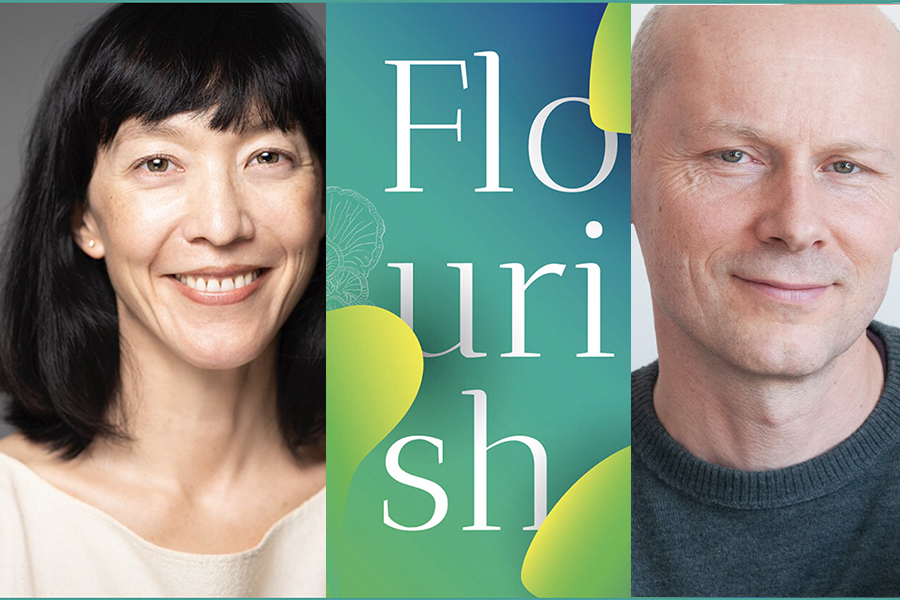
What will it take to restore balance to our world, repair past injustices, and support future generations’ survival? Reaching beyond sustainability, “regenerative” practice is increasingly named as a new goal, but what does this emerging term really mean? And which key mindset shifts might enable truly regenerative transformation? Looking deeply into the web of life that created and supports us and drawing inspiration from diverse cultural traditions and perspectives, spirited thinkers Michael Pawlyn and Sarah Ichioka propose a bold set of regenerative principles with the potential to transform how we design, make, and manage our buildings, infrastructure, and communities.

Whether you’re a built environment professional or client, an activist, or a policymaker, Flourish offers an urgent invitation to inhabit a new array of possibilities through which we can build a thriving future together. “Rather than seeing the future as something that happens to us, we need to decide on the future we want and then set about creating it,” says Ichioka.

7 Fun Ways to Create an Extraordinary Vision

Taking intentional time to nourish vision is vital. It’s amazing what can happen when you make space for it, rather than waiting for it to fit itself into your life.

It’s also helpful to take yourself out of the goal mindset, as it can be limiting and invites pressure to think in terms of deliverables or specific outcomes, which is not necessarily helpful at this stage. Instead, consider the idea of receiving whatever comes along without any effort.

We are often so caught up in the idea of being productive without really being aware of it. What I mean by a “vision quest” is intentionally taking time out of your regular routine to open yourself up to receiving, or going deeper with, your vision. Here are some general tips for a mini vision quest.

Read old journals, blog posts, letters, or other pieces of writing that you have created. Do something unusual for you. This could be anything that is off your normal beaten path — basically, just trying something different. Examples could be a language or music class, exercise, meditation, drawing, or even writing with your non-dominant hand.

Explore a part of your community where you don’t normally spend time.

Go away somewhere with the intention of letting go of old ideas and being intentionally open to new ones.

Write a letter to your future self.

Draw a picture or create a mind map of what you’re seeing and feeling. This can be as simple as putting down a bunch of words or doodles that reflect whatever comes into your head. Indicate any relationships between the images or words. Let it be messy and don’t worry if it’s not linear. Imagine this as a cool, random road trip.

Tell someone about what you experienced and invite them to ask questions to tease out details.

Visit a domain registry site and search URLs that come to mind. This is one of my favorite activities, and it can ground your vision with a very meaningful yet practical step.  

This  is an extract from Madeleine Shaw’s new book The Greater Good

Author Getting Children on the Same Page

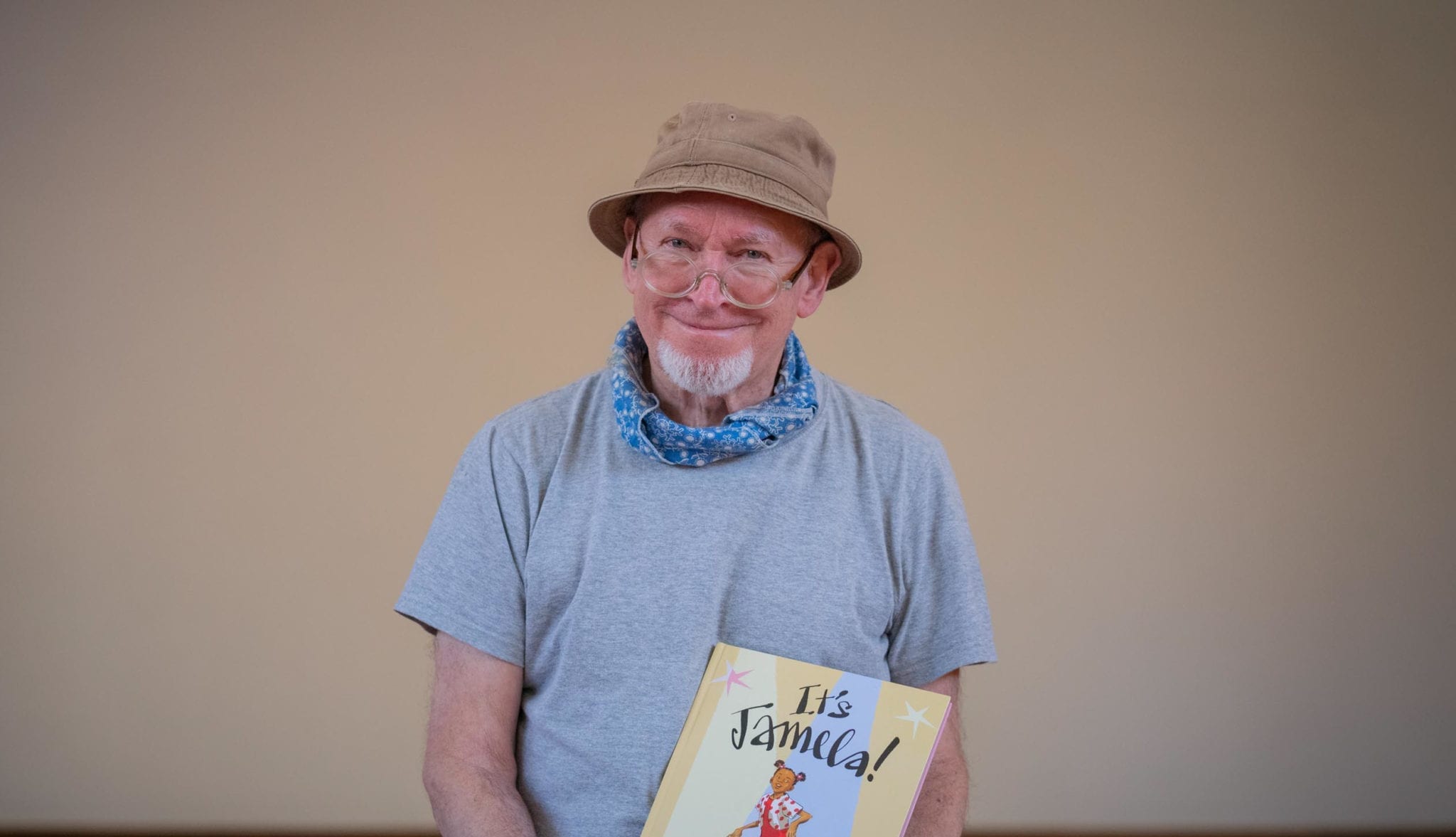
Some of our country’s first bridges were built upon books. Niki Daly grew up in a time when there was a notable absence of multiracial and multilingual stories, which created a literary divide in addition to the unrest caused by apartheid. In 1971, Daly moved to London to pursue a career as a singer and songwriter, but this wasn’t his calling. After returning to South Africa, Daly wrote and published his first book, Not So Fast Songololo in 1985, featuring primarily black characters.It was a milestone in children’s literature. 

Daly’s style embodied the perspective of the world from a child’s eyes. With pictures portraying people of colour, he aimed to accurately depict the lives of all South Africans. “Children need to see themselves identified in books,” he says. Daly’s tales kickstarted a revolution, inspiring other authors to speak up and write down their stories. As a result, he laid the foundation for distributing inclusive content. 

To this day, Daly still writes, edits, and illustrates. His stories have been published locally and abroad, winning him the Katrine Harries Award for Children’s Book Illustrations in South Africa and the Parent’s Choice Award in the USA. Daly was also shortlisted for the Hans Christian Andersen Award, one of the most prestigious literary awards. His meticulous representation of children of colour has placed a sense of power back in the minds of the youth. When they pick up a book, they can be proud of who they are. 

https://www.facebook.com/beautifulnewssa/videos/580440566038658/

Can Capitalism Be Compassionate?

The global economy can be confusing and terrifying. Financial experts, policy makers, and everyday citizens want to know: How will government policies impact our families and what can we do about it?

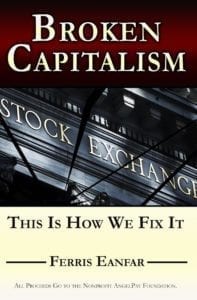
In his book, “Broken Capitalism: This is How We Fix it,” Ferris Eanfar explains the state of the global economy and its key problems in a straightforward, accessible style.

“When the 10 largest corporations on Earth have more combined economic power than 92 percent of all countries on Earth combined, the 50 largest financial corporations control wealth equal to 90 percent of Earth’s GDP [gross domestic product], the richest 1 percent of humans have more wealth than 99 percent of the world combined, and the eight richest humans have more wealth than the bottom 50 percent of Earth’s entire population combined… it’s safe to say humanity is in trouble,” Eanfar says.

The author’s work is based on more than 20 years of unique experience in economics, financial technologies (“FinTech”), blockchain/cryptocurrency development, artificial intelligence, and military and government affairs.

Three key points in the book deal with issues of defining value, following a vision, and managing innovation.

Value: Eanfar notes that money is not value itself; it represents value. Rather than focusing on money alone, he advises organizations to focus on the way value flows through their stakeholder ecosystems, which benefits all parties in the long run.

Vision: “In business and in life, having ‘vision’ is about accurately assessing current reality, defining steps to achieve specific goals, and building a bridge between vision and reality based on discipline and effective execution,” says Eanfar.

Innovation: Artificial intelligence, cryptocurrency, and other technological innovations can be used for good or ill. Eanfar dedicates a chapter of the book to the impact of artificial intelligence [AI] on government and the economy.

“When lightning-fast AI controls the political and economic apparatus of countries through their automated manipulation of social media and web-based information channels, humans won’t be able to easily differentiate between policy outcomes that serve their interests and policy outcomes that serve those who control the AI and their political patrons in the government,” he says.

Let’s Fall in Love With The Future

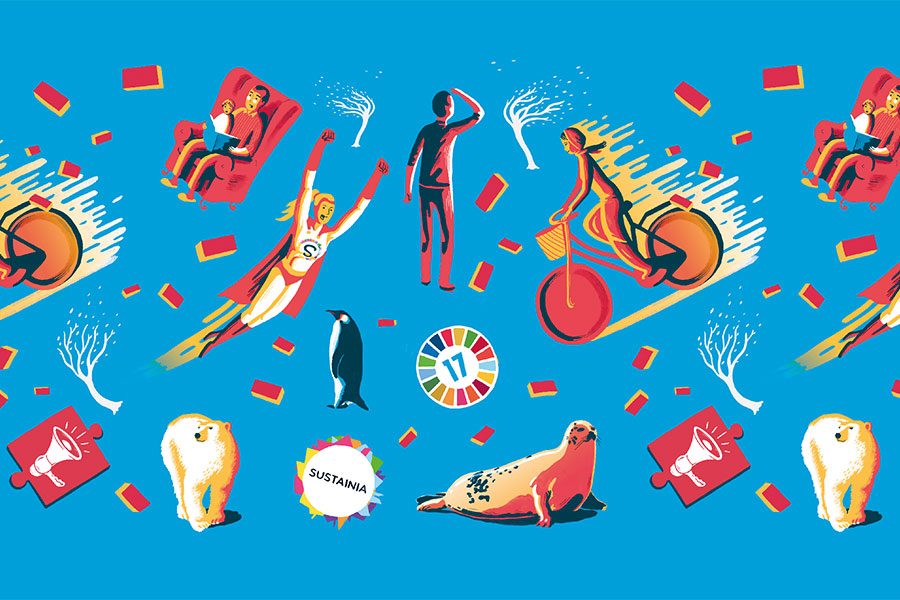
Sustainia’s new book ‘Repaint the future!’ invites you to become part of a global movement which aims to confront fear and distrust and create a more sustainable future. Want to join?

Fear and distrust are soaring in today’s society: Fear for our future, of climate change, terrorism and distrust in our decision-makers, in the media, in experts and scientists. Meanwhile, populist movements are flourishing by promising fast solutions to complex problems, supported by distorted and fake news. This breeds even more fear and distrust, and accelerates a vicious circle.

If you like this, subscribe here for more stories that Inspire The Future.

We need a new approach – new mindsets – that can break this circle. We have to repaint the gloomy and bleak picture of our future, and that is exactly the intention of Sustainia’s new book “Repaint the future!”. The book outlines 10 mindset shifts essential for reaching a more sustainable future, and it is intended as an antidote to the apathy rampant in today’s societies. Drawing on global events and politics in recent years, the book addresses key global issues such as distrust in media and exhaustion of our planetary resources, and how to deal with them.

It is your personal guide to a sustainable tomorrow – a guide which seeks to empower every single human being to be a change maker.

 
From Global Goals to personal goals
 
One of the pivotal points in “Repaint the future!” is that we cannot reach the 17 Sustainable Development Goals (SDGs or Global Goals) by 2030 unless we all know how to contribute to them. Despite the fact that 193 nations have agreed on the goals and their important purpose, very few citizens are engaged in them or even know about them: The Global Goals provide no leadership nor guidance in themselves, therefore we need to translate them and put them into a personal context.

The ambition with the Global Goals was to create a new beginning and a new level of trust and optimism in the future, but now – two years later – we face more fear and distrust than ever. If we don´t succeed in changing this perspective and outlook, the goals risk losing their significance and impact and becoming long forgotten by 2030.

“Repaint the future!” can´t solve this challenge by itself, but the book can inspire a new mindset and provide tools for how to solve the world’s biggest challenges. That’s why we think “Repaint the future!” is more than just a book. Sustainia´s ambitions reach further:  We want to invite people from all parts of the world to engage in a dialogue about how they can become “repainters” of the future. We want to let them know that they can help set a new sustainable agenda and turn the Global Goals into personal goals.

However, we don’t have much time. A few days ago, a new alarming report from the World Meteorlogical Organization documented that we are on a losing track in our fight against climate change. The year 2016 sat an all-time record in carbon emissions released into our atmosphere, which merely confirms the conclusions from other recent scientific analysis.

We can´t solve big challenges with fear and distrust, and more importantly we can´t solve them without getting civil society – people like you and me – onboard. We need to make a global joint effort to unleash the great potential every human being possesses. Never in human history has the phrase “it is now or never” been as relevant and important.

We urge anyone seeing this message to read our book, share its ideas and get involved. Your choice is our future – let’s start making the right choices today.

Let the “repainters” of our future unite!

Find out more about our new book on www.repaint-the-future.com

If you like this, subscribe here for more stories that Inspire The Future.


Challenges to the Dream

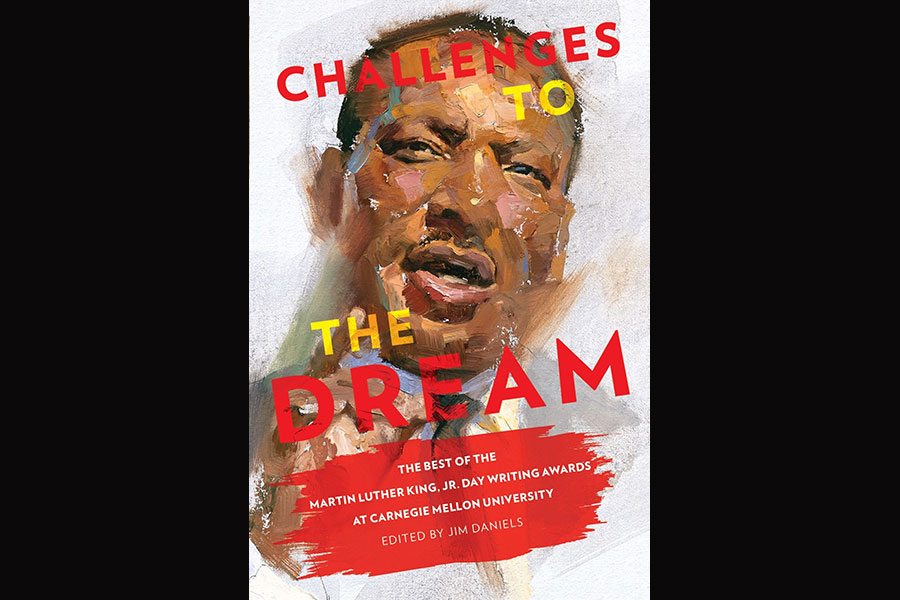
What started as an annual writing contest encouraging students to express their personal struggles with race and discrimination is now an anthology featuring 91 pieces by 83 writers on topics ranging from racial and cultural stereotypes and school bullying to homophobia and identity questions.

Published by CMU Press, “Challenges to the Dream: The Best of the Martin Luther King, Jr. Writing Awards at Carnegie Mellon University” is a powerful selection of poetry and prose. Its purpose is to not only share especially moving pieces but also encourage and extend more conversations about racial, political, gender, cultural and other diversity issues.

“The mission of the MLK Day Writing Awards is to create a space for daring, eloquent and inventive work, in the belief that the process of writing itself can help young people explore and break down issues of difference in their lives,” said Jim Daniels, the Thomas Stockham Baker UniversityProfessor of English who founded and directs the awards program.

In 2014, Deborah Monti’s “The Woman, the Paradigm” won first place for high school poetry. Now, Monti is studying history with a focus on human rights and legal studies at Yale University.

“These are the voices we need to hear. Inside these words, through these emotions, observations and declarations, we get close to what we can call real news,” said Alberto Ríos, author of “A Small Story about the Sky” and poet laureate of Arizona.

Of the 83 contributors, approximately 40 are graduates of the Pittsburgh Public Schools and about 30 are CMU alumni. Jonathan deVries received his bachelor’s degree in Hispanic Studies in 2005 and tied for first place in college poetry that year for “My Father Tries to Bond with Me.”

To help educators and others use the book as a conversation starter and resource, CMU’s M. Shernell Smith and Kitty Shropshire are preparing a reading and study guide that will be unveiled at the 2018 awards ceremony.


The High-Potential Leader

The primary reason companies like Facebook, GE, and Netflix win today is the quality of their generals. Never before has it been more valuable to have or to become a high potential leader, one who can set the path and execute a winning plan in this digital age.

If a business leader has what it takes to someday lead a large organization, how can they take charge of their growth and acquire the necessary skills quickly? Alternatively, how can organizations identify and develop high potential leaders ahead of the competition?

The High Potential Leader: How to Grow Fast, Take on New Responsibilities, and Make an Impact (Wiley; March 13, 2017) is a timely blueprint for a new era of developing leadership talent that will change how companies compete and how professionals advance.

Written by world-renowned business advisor, author and speaker Ram Charan (pictured above), the book is certain to set the agenda for business as so many of his bestsellers have done. From Execution, (co-authored with Larry Bossidy, former CEO of Honeywell) which was on the New York Times bestseller list for more than 150 weeks and defined the zeitgeist, to his most recent Attacker’s Advantage, which reached number one on the Wall Street Journal bestseller list and guides leaders through today’s increasing uncertainty.

“This is a time for leaders who can thrive in the face of relentless change, complexity, and uncertainly. Many companies have such leaders buried at lower levels. They need to find them, develop them, and find ways to use them to help the company adapt. ‘Born digital’ companies are on the prowl and will gladly poach whatever high-potential talent traditional companies overlook,” Charan explains. “The changes being wrought by things like digitization, algorithms, and data analytics will be as radical as the Industrial Revolution. We’ve already seen companies such as Google and Amazon cause revolutions in consumer behavior and reach the stratosphere in market value in record time. More of these are yet to come, led by people with the capability to conceive and grow them.”

Now that high potential leaders, or “HiPos,” are seen as a crucial source of an organization’s competitive advantage, their development can’t be left to their bosses alone. The old rules of HR and leadership development are being drastically overhauled when it comes to job promotions, hierarchies, retention strategies, rewards and the pace of moving people along the leadership track. New and more flexible practices are arising as well as new organizational problems and politics caused by younger high potentials managing older high seniority employees.

The rules for career advancement have changed as well, and Charan describes how true leaders can make exponential leaps in their capability and capacity and how to collaborate with employers on a customized development track. The book also advises professionals on how and when to make the right career move or recover from a wrong one. By exploring Five Traits of High Potential leaders, checklists, a self-test and a development guide, The High Potential Leader will put “HiPos” on the right path.

Charan adds, “Today’s high-potential leaders themselves shouldn’t just sit back and wait to be discovered. They should decide for themselves if they have what it takes to someday take a business unit, function, or the whole corporation to new heights, and make a plan to ready themselves to create the future.”


Eyes Wide Open: How Perception Shapes Our Reality

In his popular new TED Talk “What reality are you creating for yourself?” former Saved by the Bell teen star-turned-entrepreneur Isaac Lidsky recalls how the clerk he waved to in the store was really a mannequin; how he reached down to wash his hands and realized it was a urinal and not a sink. Objects appeared, morphed, and disappeared in his reality, as he learned of his diagnosis at thirteen: Retinitis Piegmentosa, a degenerative eye disease that would lead to his blindness by age 25.

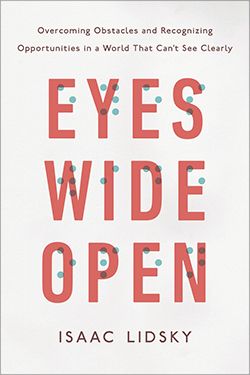
In his new book “Eyes Wide Open: Overcoming Obstacles and Recognizing Opportunities in a World That Cant’s See Clearly,” Lidsky explores what it really means to see eyes wide open. Dispelling the notion of disability, Isaac found his true vision and courage to overcome adversity, and achieve a remarkable range of accomplishments.
How did going blind end up helping you, instead of hindering your ability to see how much more you could achieve in a career with a remarkable number of accomplishments?

What we see feels like “truth”—something out there that is objective reality, factual; universal. But as my eyes progressively deteriorated, I literally saw firsthand that the experience of sight is altogether different. It is a unique, personal, virtual reality that is constructed in the brain, and it involves far more than our eyes. I began to search for other ways in which I was misperceiving as objective “truth” the beliefs and assumptions that were, in reality, creations of my own making—creations I could change. This was the “eyes wide open” vision that enabled me to take control of my reality and my destiny.                                          

Did your experience as a child actor have an impact on your later ambitions, and would you have liked to continue on that career path?

I love to connect with people, share ideas, and above all else, make them laugh. I don’t think that will ever change. But acting wasn’t a very good career path for me in the end. There was just too much disconnect for me between the hype and the daily reality of it all.

What was your primary motivation to write “Eyes Wide Open”?

When I was diagnosed with my blinding disease, I knew it would ruin my life. But I was wrong. While I lost my sight, I gained the vision to define and create the life I want for myself. It turned out to be a profound blessing, one that I want to share with others so they, too, can make use of these insights.

What are some signs that many people today can’t (or don’t) see clearly?

I think the test is simple: What are the differences between the way you’d like to live your life and the way you actually live it—the differences in terms of who you are, your career, how you treat others, how you allow others to treat you, how you spend your time, and what you accomplish? If those things are different and you aren’t doing anything about it, you’re not seeing your life very clearly.

What kind of vision is essential for people to reclaim their most meaningful senses?

Clarity of vision demands that you are absolutely honest with yourself and accountable to yourself—for your thoughts, beliefs, opinions, actions. We do ourselves great harm when we lie to ourselves. It’s even worse, though, when we avoid facing ourselves altogether. I think introspection is a neglected skill that is critical.

If fear and external circumstances need not rule our reality, and (as you note) it is how we respond to these circumstances that matters most, what might be an example of a positive, constructive response?

The biggest challenge is that our fears can lead us to buy into a false – and awful – reality. We fear the worst, assuming we’re going to face it. But most fears are born of, or at least fueled by, ignorance—the things we don’t know. The trick is to be crystal clear on what you truly know and what you think you know. When we’re afraid, we need to take in as much information as we can, expand our view, and question everything. But fear all too often has the opposite effect.

Can you explain how we can reframe our fears as fiction, and offer any suggestions for those who may feel confined by their fears or circumstances?

You are lulled into playing your part in the awful reality of your fears by perceived heroes and villains. This is how our fears become self-fulfilling—when we abdicate responsibility, blaming and celebrating others. Look for heroes and villains in your life. They’re figments of your imagination. You are the creator of your reality. You and only you.

What role, if any, does luck have in achieving our goals?

Of course luck plays a major role in life. But luck is a lot more complicated than we think. We’re too quick to characterize events of chance as “good” or “bad,” and we mistakenly see simplistic causal relationships between events not in our control and those that are in our control. The truth is that most often we will never know which is which, and almost always we play a substantial part—we determine whether events are “good” or “bad” in our lives.

Why is it so important that we hold ourselves accountable for our choices, and do you have a favorite examples?

Sure, I’ll give you an example: When my triplets were born, it would have been pretty easy for me to beg off diaper duty. Blind guy changing diapers?! A messy enough proposition that my wife would have understood—she would have given me a pass. But I was brutally honest with myself, and I realized a couple things. First, it wouldn’t really be all that difficult for me to figure out a system to get it done—no more difficult than it is for a sighted dad. Second, it was important to me to be helpful to Dorothy and involved with the childcare. I would have done myself a real disservice by surrendering to some notion that I wasn’t capable. There’s lasting damage when we make such limiting assumptions about ourselves.

Is there anything you wish you had known as a young entrepreneur, i.e., lesson learned later in your career?

It took some time for me to learn that a good leader aims to serve his or her team—the job is to empower your team to succeed and to help them do it. We tend to focus on what we might accomplish or contribute ourselves—on our performance—and expect others to assist us. But that’s backward from the perspective of effective leadership. A leader succeeds when his or her team succeeds.

What has been the most surprising discovery from your life’s experience?

I’ve been tremendously surprised, and pleased, to see how losing my sight has been a blessing in so many ways in my life. In the grip of visceral fear when I was diagnosed, I could not have imagined that I would feel grateful for the experience. Grateful because blindness gave me my eyes wide open vision, and because it has brought me great rewards in so many ways in my career and personal life.

How can we apply “Eyes Wide Open” thinking today, to advance our goals in business or life?

It starts with defining those goals. What is it that you truly want to accomplish? Who do you want to be and how do you want to live your life? Can you commit to your answers, and make the choice to work toward your goals? The rest is noise.

www.Lidsky.com

 

20 Influential Women Share Secrets on Leadership, Business and Life

Pursuing gender balance in the executive suite and boardroom is clearly a good business decision. Documented benefits include higher profits, better employee retention and a deeper talent pool.

But achieving that balance takes intentional focused efforts. On the company side, simply stating the goal does not ensure a flow of qualified women applying for the jobs. On the women’s side, they need to develop some new skills and alliances.

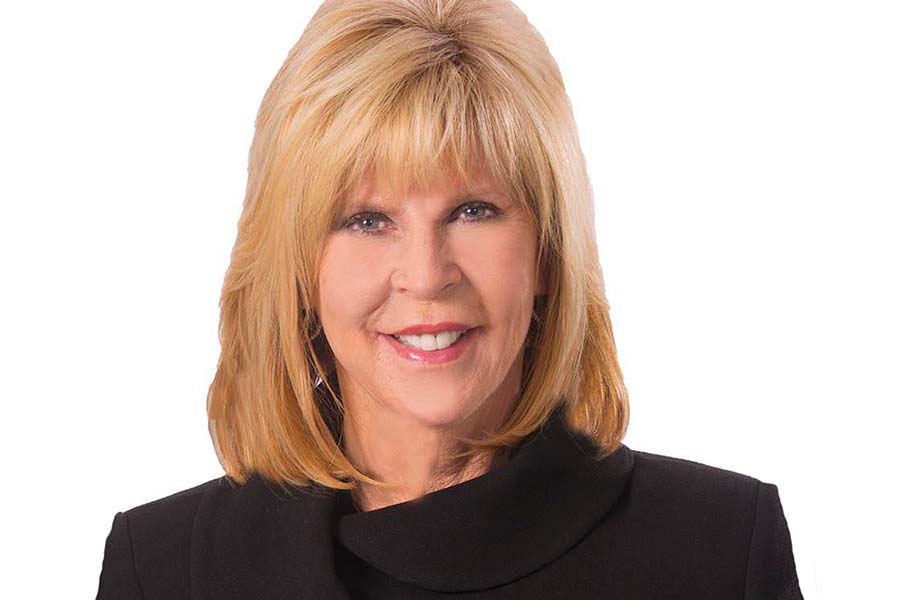
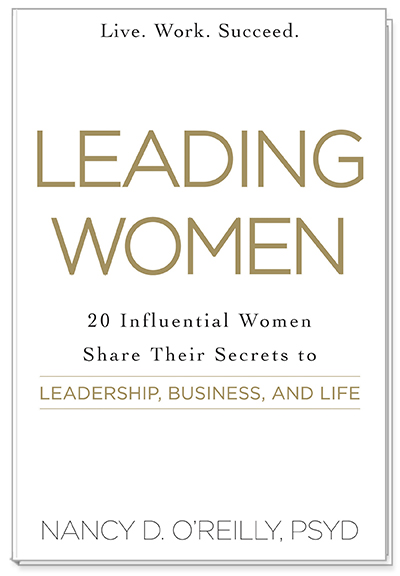
Dr. Nancy O’Reilly has long had a mission in support of filling the gender-diversity gap with a new generation of women leaders. That’s why she selected international leaders to contribute to her book, Leading Women: 20 Influential Women Share Their Secrets to Leadership, Business, and Life. The co-authors shared their wisdom, real-life stories and advice to help women conquer their internal barriers, claim their power and respect, and change the world by helping other women do the same. Each co-author offered immediately actionable steps to help women change their relationship with power, increase their confidence, and capitalize on their feminine skills.

The conscious business model identifies the value of feminine assets of collaboration, cooperation, vulnerability and big picture thinking. In the chapter, “Soft Is The New Hard,” Birute Regine details how feminine management transformed results for Kim Campbell, former Canadian Prime Minister, in negotiating a difficult piece of legislation.

When the bill was adopted, male observers assumed she must have watered it down to get it passed. But no, she used her feminine management skills to get the dissenting parties to talk to each other and negotiate. Obviously, this approach is not limited to women. Many men have long adopted feminine leadership techniques when it works best to get the job done. While these approaches come naturally to women, everyone with a conscious and open mind can learn to use them.

Opening to possibilities is the challenge of trying to change a culture while living in it. We remain stuck in the old culture where we expect men to earn the living and women to care for the family. Even though today most women are doing both, they aren’t getting the promotions, the pay or the support to propel them to the top of the organizations.

Women drop out of companies to start their own businesses. In fact, women-owned business is the fastest growing segment of US business start-ups. Companies are losing female talent before it even approaches the C-suite. And this female flight is getting worse. The brightest and the best of the new generation of millennials won’t even interview with a company that doesn’t include people who look like them, whether it’s women of color or a diversity of age and gender.

Other chapters of Leading Women address issues and ideas that hold women back from attaining top leadership positions. Gloria Feldt addresses the fraught relationship women have with power. They shun “power over” others, having been victims of oppressive power in the past. But when Gloria reframes the paradigm as the “power to” accomplish their goals, women welcome power as a tool for success.


Lois Phillips urges women to speak out and tells them how to use the podium to gain credibility and be seen and heard. If no one knows your wonderful ideas, how can you possibly get that promotion? M. Bridget Cook-Burch shows how recasting her own life story liberated her from old thought patterns, so she could embark on a new career and succeed in business.

The lesson here is that many women create their own glass ceilings. They don’t see themselves as leaders when the fact is that they lead in a myriad of ways every day.  They limit their reach by being suspicious of other women in the workplace instead of clarifying motives and looking for ways to support one another in the climb up the corporate ladder. But most of all, the biggest hurdle to overcome is fear. Whether you avoid pursuing an idea because you’re afraid of failure, or afraid of how your life will change if you succeed, it’s the fear itself that stops us from even trying.

Licensed psychologist Nancy O’Reilly relates how she has learned to do what she most fears. Once she’s accomplished it and found it’s not that difficult, she tackles the next thing, and the next. This method of building self-confidence works so well, obstacles that once loomed like unscalable cliffs become little more than speed bumps along the way.

Internationally acclaimed author Dr. Lois Frankel says in her chapter, “Women have become natural and necessary leaders… by building relationships, motivating others to succeed, carefully crafting their communications, and creating environments of trust and safety.” When corporations truly appreciate the value of these qualities, more women will enter the C-suite to create the diversity and gender equality required for profitable and self-sustaining growth.


Be Good For Goodness Sake

Written in parable by Kristin Andress, Be Good For Goodness Sake transports you from the buzz of life to a tranquil setting where strangers convene and have unique experience. In the characters, you will see a piece of yourself, and through the experience you will tell your own story. 

This is OUR World.  The distinction is how you choose to see – and be – in it.

Have you ever considered goodness as a personal and professional focused intention? Since “good begets good” it is most certainly worth your time, energy and conscious consideration to learn how goodness benefits you and those around you.   There is evidence of Goodness affecting the very stability of countries, let alone imagining what it can do for you or your business.

As busy people, we do not often make time for ourselves. Being busy can be perceived as a badge of honor, yet in that ‘busyness’ what might you be missing? In 60 pages, Be Good For Goodness Sake gives you much to think about in terms of how you see people and how they may see you. Goodness is demonstrated in our actions, communication and relationships.  It is a way of ‘being’ in the world, as much as what we are doing in it.

be-good-bookcoverImagine being in a peaceful, beautiful, tranquil setting away from the buzz of life. At the end of a gravel path lined by flowers and stretches of flowing greenery, there is a lovely B&B with a winding porch, an inviting swing, and a majestic Willow tree swaying in the breeze. You step into the freshness and are greeted by a Host that will soon create amazing aromas, appetites and experiences. You know not what to expect and are timelessly taken on a journey of awareness, understanding, and perhaps even transformation. You meet people who are different from you and yet, similar. How would you show up? What would be your judgement or your acceptance?  Those answers are part of the story you as the reader will tell.

First, you are the beneficiary of Goodness, whether you are the deliverer of good or the recipient of it. The question is “Do you recognize it and your opportunity to embody it and the opportunities that result from it?” Goodness is a quality that propels you to become a person others desire to listen to, invest time with, and who has a distinct, difference-making presence. It is a core strength that results in selfless support of others, and confidence in your worthiness and abilities no matter the endeavor. It is what attracts people to prefer to be in your presence or to do business with you.  It heightens the interest of your teams or stakeholders to do their best. It impacts your family dynamic and has a ripple effect to your community.  When you demonstrate goodness your clients and employees will be loyal. Your reputation will be absolute.  You will elevate your capacity to thrive.  

Goodness happens in many forms and functions. When the focus is on goodness our minds and hearts lift as we witness it; however, what we need to realize is that the starting point is within each one of us – not external to us. It is our choice in how we choose to see each other and show up in the world we live in.  Never will we all be the same.  Why would we want to?  Our differences are what make our collective humanity whole. 

In the book, Be Good For Goodness sake, stories are told that evoke emotion and wake up the realization that we must first see in ourselves what we also so quickly see in others. 

Your story is yours to tell.  Be Good For Goodness Sake.


0