Mental Health Challenges for Executives: Do You Display These Symptoms?

While deeply fulfilling, establishing and growing a business poses grave dangers for your mental health as an entrepreneurial executive.

During the expansion stage, a founder will often face brutally long workweeks, pressure from different sources to manage the startup while raising funding, and the stress of having to make many decisions — all at the same time. It isn’t surprising that many entrepreneur executives find themselves developing mental health challenges if they don’t prevent them. 

Unfortunately, mental health challenges still face serious stigma in entrepreneurial circles and are often not discussed and addressed. Sometimes, these issues are discussed implicitly under the framework of founder burnout or work-life balance. The key is to identify when you are on the verge of burnout and address it immediately.

Case Study: Mental Health Challenges for Entrepreneurial Executives

Mike founded a fast-growing direct-to-consumer startup in the mid-stage of expansion, and valued at just under $7 million when he hired me as a coach. He had already gone through a couple of rounds of fundraising. His Board of Directors consisted mainly of investors from those early rounds; Mike retained about 32% of the equity, and those on the Board had over 57%.

He brought me in because he wanted to figure out what to do next. Mike wanted to shift from the rapid growth stage of burning cash to seizing market share, focusing instead on more gradual growth funded by revenue rather than investment capital to become profitable. His board of directors overwhelmingly wanted him to rapidly keep growing the company.

While either position might have merit, the underlying challenge that Mike experienced was a sense of growing anxiety — even dread — about asking more investors for money. An introvert, he always felt fear in doing this and struggled over asking the early investors who now sat on his board. While there’s extensive advice for entrepreneurs over asking people for money and addressing fears of rejection, such advice generally doesn’t address the clinical anxiety and depression that might develop from repeatedly overcoming your intuitions.

Signs of Mental Health Challenges That Shouldn’t Be Ignored

The stressful period that Mike was going through wasn’t something that should be taken lightly. Often, the kind of pressure he was experiencing posed a severe threat to the mental health and potential for executives and employees’ burnout. It’s not only extensive and multiple studies that bear out this claim, but my own on-the-ground experience as a coach to business leaders.

Mike eventually started going to therapy and taking psychiatric medications. However, while I strongly urged him to reveal his mental health condition to the board, he refused to do so. He expressed high confidence that the board wouldn’t support him. Mike shared with me several instances when he saw other startup founders in different situations hide their mental health challenges from fear of an adverse reaction by board members.

He even told me he thought they might question his competence to continue to lead the company if he revealed his weakness. As someone struggling with anxiety myself, I empathized with his concerns but thought he was taking it too far. His fears fit with his broader pessimism bias, an excessive perception of potential threats common for those with anxiety or depression.

Pessimism bias is one of the many dangerous judgment errors that result from how our brains are wired, what scholars in cognitive neuroscience and behavioral economics call cognitive biases. Fortunately, recent research in these fields shows how you can use pragmatic strategies to address these mental blind-spots.

His pessimism did not serve him well. The board continued to pressure him. Despite his wise decision to seek professional help, his anxiety and stress undercut his fundraising capacity. Since we did not yet have a close relationship, Mike had trouble accepting the uncomfortable information that his gut reactions were failing him.

Turning Point: Timing Matters on Mental Health Challenges

Pretty soon, Mike was close to burnout. At that point – when he told me that he considered quitting – I finally convinced him to reveal his condition to the board by asking him what he had to lose by revealing his mental health condition.

Well, guess what? The board expressed a great deal of support. Several of the board members, who had pressured him, revealed that they had done so because of their own anxieties. Namely, they felt fearful of larger competitors who might try to catch up to the startup’s early mover advantage. As veteran investors, they saw such scenarios happen way too often, and that’s why they were pushing for rapid growth fueled by investor capital. 

These board members suffered from pessimism themselves, and took it out on Mike, pushing him to breaking point. A couple of members even revealed their own mental health issues. The board agreed to step back from its fundraising goals, focusing instead on gradual growth.

Nevertheless, the story did not have a happy ending. Badly burned out, Mike couldn’t go on to achieve the gradual goals. He lost his passion for the company and started hating going to work. Eventually, he resigned.

The company launched an extensive search for Mike’s replacement. Unfortunately, this person did not work out very well, as he lacked Mike’s credibility — a characteristic crucial in direct-to-consumer offerings. It didn’t help that many startup employees felt discontented with Mike’s resignation, and blamed the board. Many of them left after Mike resigned, further crippling the startup. 

In the end, without Mike’s drive and guidance, the company floundered. A larger company that wanted to enter the space bought the startup for less than $2.5 million, a fraction of its earlier valuation.

Mental Health Challenges in Hindsight

Part of the blame lies with me. Looking back, I believe I could have done a better job supporting Mike in sharing his mental health challenges with the board. The whole fiasco could have been prevented with a timelier revelation. An earlier strategic shift to gradual growth would have solved the need for some fundraising efforts, thereby letting Mike focus on his passion for satisfying customers and building the brand, instead of forcing him to deal with his most hated task of soliciting investor cash. 

He would have had more mental resources and wouldn’t have burned out. The startup would have continued to do well.

I share this story, for which I acknowledge a degree of blame, in the hope that startup founders will take it to heart and influence key stakeholders to be more aware of, and attentive to, mental health issues. This story also serves as a cautionary tale for startup executives wary of disclosing their mental health struggles to significant investors and board members, for fear of their competence being questioned. Mike is one of many brilliant startup founder executives pushed past their breaking point by such stakeholders, and I hope you will never travel in Mike’s shoes. It should also serve as a warning to major investors and board members to support founders and to take care of mental health as a priority.

The Fight to Address Mental Health Challenges

In an increasingly disrupted and uncertain future, which will only breed more stress and anxiety, we cannot afford to lose such talented entrepreneurial executives by ignoring the dangers that mental health pose. Startup executives and employees need to encourage and model transparency around mental wellness and training to spot and support colleagues in times of trouble while fighting the stigma around mental illness.

The Medical Company Wanting to Improve the Lives of One Million Women by 2025

PODCAST PEOPLE: A Summary from the Real Leaders Podcast

“I think that if you do the right thing, you never have to worry about making your profit numbers or your top line revenue numbers. That is oftentimes a byproduct of doing the right thing year after year.

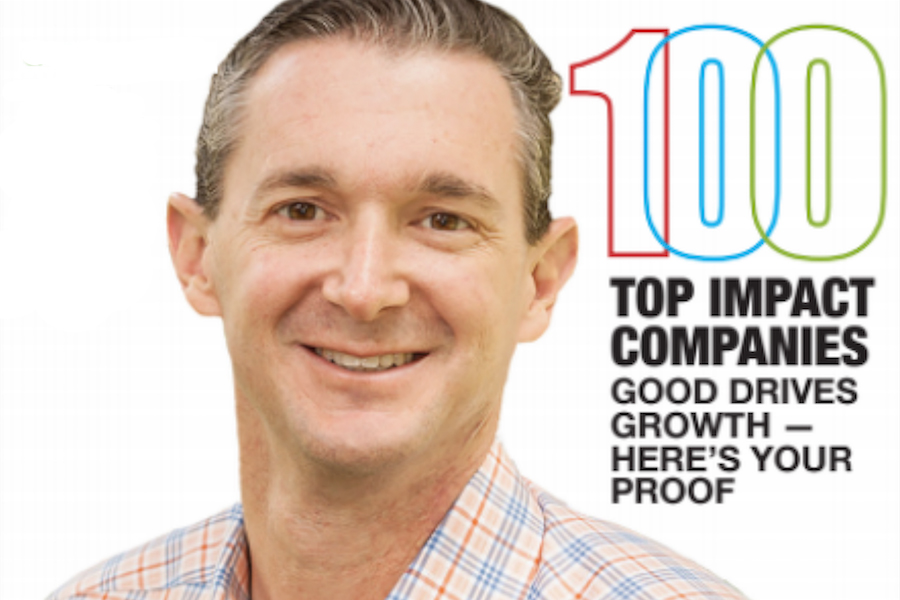
Bryon Merade is the CEO of Caldera Medical, a women‘s health medical device company dedicated to improving the quality of life for women. Caldera Medical is named among the Real Leaders 100 Top Impact Companies of 2020.

The following is a summary of Episode 57 of the Real Leaders Podcast, a conversation with Caldera Medical CEO, Bryon Merade. Watch, read, or listen to the full conversation below.

Women’s Health Initiative

Bryon explains Caldera Medical’s active goal, to improve the way of life for one million women by 2025. This Women’s Health Initiative has put the company’s charitable dollars towards helping women in marginal communities around the world who would otherwise not have access to proper medical treatment.

Caldera Medical partners with US medical experts and sends them across the globe where they train local physicians to properly address women’s health. As a result, these physicians can take their knowledge back to their communities. The outcome is a ripple effect of impact. Local physicians learn the skills necessary to treat women’s health themselves. Consequently, they are able to help exponentially more women. This successful impact has attracted renowned physicians from all over the world to the Caldera Medical mission.

“We don’t do this from a marketing perspective. In fact, we really don’t market this aspect of the organization commercially at all. But I will tell you that many customers, surgeons and hospitals come to us at conferences and say, “We want to do business with you because of the humanitarian work that you’re doing.” And I think it’s great that it resonates with people and they gravitate towards us because of that. But that’s not the reason we do it. We do it because it is the right thing to do. We have the capability to do it.”

Listen to Episode 57 on Spotify, Anchor, Crowdcast, and Apple Podcasts

A Mission-Driven Mindset

Caldera Medical’s successful impact on women’s health is a testament to the company upholding its mission above all else. The Women’s Health Campaign was the collective idea of Caldera Medical employees who wanted to turn their core values into action. Accordingly, the 4 Cs, Care, Create, Collaborate, and Challenge, continue to influence the company’s humanitarian work.

“We’re a business that is designed to do good, as a mission of improving the quality of life for women. That’s what we’re focused on each and every day. We happen to make different surgical products to treat women with these conditions on the commercial side. But really, it’s the mission that drives us and. I think anyone who gets involved with our organization at any position in our company, it’s really about people who have this shared vision of really helping women.”

Transcript

Connect

Find out more about Caldera Medical here:

Pandemic Survival Secret: Be Your Best Friend

Despite our difficult life experiences, we keep hoping, even expecting, that everything will be positive from now on. We make a tradition of greeting each other with best wishes on holidays and special occasions and meaning it as if we can wish away that life has its own plans and always has two sides. The truth is, we live in a dual world in which we can’t appreciate the brightness of a day without experiencing the darkness of the night.

No matter how hard we try to protect ourselves and do everything right, we’ll never avoid setbacks and disappointments. Every life is full of unpredictable challenges, regardless of how perfect it might look from the outside.

A study published in the Journal of Personality and Social Psychology (Ford et al. 2017) made the fascinating discovery that, to quote senior author Iris Mauss, associate professor of psychology at UC Berkeley, “People who habitually accept their negative emotions experience fewer negative emotions, which adds up to better psychological health.” In other words, we intensify our emotional distress when, on a bad day, we tell ourselves to cheer up and snap out of it, which, by the way, we would never say to a close friend when they’re having a bad day.

Remember, you are not your emotions. You’re just the one who experiences them. In our day-to-day lives, we can become distracted by and absorbed in our thoughts and feelings and often allow them to obscure our essence, the nature of who we truly are, in much the same way that clouds can obscure the sun on a cloudy day. Let the clouds pass; they need time to fulfill their purpose, too. The sun will always be there, just as your true nature will always be there, shining no matter what. You have to be aware of your inner light, which gives life and warmth and energy to you and everything around you.

For those times, when the clouds are still in the sky, and you’re experiencing moments of sorrow, hug yourself. Write the same compassionate letter to yourself that you’d write to a friend in the same situation. Comfort yourself, and notice how even your own soft, warm touch is calming and reassuring.

There’s a hormone called oxytocin secreted by the pituitary gland and released when we make a significant social bond or snuggle with a loved one, a pet, and even ourselves. It’s sometimes known as the “love hormone.” Tell yourself, with a hug, I know it’s a hard time, darling, but your heart is still full of love and kindness, and trigger your own “love hormone” while riding out your negative emotions. Your pain won’t vanish instantly, but it will begin to dissipate, especially when you keep reminding yourself that you’ve survived this darkness before and know it’s only temporary.

And you don’t have to feel alone and isolated. Remember, everyone suffers. Everyone faces challenges. That’s how we grow. If you doubt that for a moment, ask yourself this question: What have I learned when times were good? I’ll bet you learned less than when you look back at your “post-traumatic” times.

Pain has the power to change us, the invaluable potential to bring us to another level. In moments of sorrow, when we’re wandering through dark periods, we have to remember that everything has its beginning and its end. The darkness will pass, and the sunshine will brighten our lives again; we have to be patient.

One of the most challenging and most valuable lessons we can learn and embrace is that everything is temporary for better or worse. Impermanence is inevitable; it is as intrinsic to life as the air we breathe. This can seem like bad news on our best days and great news on our worst. But in the biggest possible picture, when we embrace the reality of impermanence and stop being blindsided by it, we can give ourselves the priceless gift of learning to let go.

Letting go willingly, gracefully, and without resentment to address our lives and the world around us leads to profound internal changes. It brings us peace, acceptance, gratitude, flexibility, and a significant decrease in anxiety and fear. Rather than being afraid of change, failure, and loss, mastering the art of letting go allows us to know that we’ll be facing all those things sooner or later and that they’re impermanent, too. So whatever happens, we’ll have the faith and strength to get through it.

Warriors Heart, an Integrative Approach to Addiction and PTSD Recovery

PODCAST PEOPLE: A Summary from the Real Leaders Podcast

“That’s a big part in behavioral health care or Social Capitalism or social consciousness—with businesses, we can’t forget about the people aspect of it. Yes, the balance sheet’s important. But you and me are what make the balance sheet. It’s not balance sheet run or profit loss run. We have to put our people, the planet, our responsibilities, and then we get profit. It’s a result of doing the right thing.” 

Josh Lannon is the founder and CEO of Warriors Heart, an in-patient recovery center for first responders and veterans, with a vision to bring one million warriors home from addiction and PTSD. Warriors Heart is named among the Real Leaders 100 Top Impact Companies of 2020.

The following is a summary of Episode 66 of the Real Leaders Podcast, a conversation with Warriors Heart CEO and founder, Josh Lannon. Read or listen to the full conversation below.

A Holistic Journey

Josh shares his own personal battle with addiction and recovery, and how it took visiting a few treatment centers to find the right approach to address his needs.

“I went to a place that was different. It was from a holistic standpoint. Mind, body, spirit, integrative medicine. They looked at me as a whole person. So I actually then was able to put down my guard and accept some of the information that was coming in, because the environment was so inviting. The environment wasn’t fighting against me, it really supported healing.”

Building on this positive holistic experience, Josh and his wife Lisa founded a series of behavioral health centers that incorporate a holistic integrative approach to treatment. This approach adapts recovery programs according to individual patients’ needs, rather than adapting patients to an over-arching philosophy.

“Integrative medicine, or an integrative approach to treatment, looks at it from the whole point of view. What’s the best way that you learn? And how do we adapt our philosophy or our modalities to share it with you the best thing you can absorb.”

Listen to Episode 66 on Spotify, Anchor, Crowdcast, and Apple Podcasts

Warriors Heart Modalities

Warriors Heart is the Lannons’ in-patient treatment center specifically for veterans, first responders, and the warriors actively protecting and serving the US, which addresses chemical dependencies and co-occurring psychological disorders relating to PTSD and/or the psychological effects of MTBI. Josh explains that these warriors enter a program to start rebuilding their lives through a training modality that represents the academies or basic training they understand from their warrior background.

“It’s like a training course. And we’re training them to survive and thrive in life. So we start rebuilding them with the training model, and it’s something that these guys get, they relate to, and we build upon it. Warriors, we succeed if we’re aggressive, but we teach them subtle ways to survive under pressure.”

Jiu jitsu is a key component of the Warriors Heart training program, because it teaches warriors how to leverage the difficult situations that will inevitably arise on the road to recovery by requiring them to address more immediately difficult positions in the dojo.

“One of the tools in jiu jitsu we use is we work from a bad position. Let a guy get on her back or put you in a choke hold or something. It’s like, “Okay, I’m already in a bad position. I screwed up, but I’m here. Let me work from this position and try to get out.” So where jujitsu applies in life, in business is like, “Hey, I’m here. I’m in this bad position. It is what it is. How do I get out of it now? Relax, breathe, let me think. Because there’s always a way to solve the problem. I take accountability for me, and I start trying to figure a way out.”

Transcript

Connect

Learn more about Warriors Heart here:

The Opioid Epidemic in America: Unwelcome in Addiction, Unwelcome in Recovery

Many individuals suffering from addiction experience stigma associated with their disease. Stigma also exists within the culture of addiction treatment and community recovery support groups.

In this story, stigma related to medication support in recovery illustrates how contempt prior to investigation can be fatal and yields unhealthy exclusivity to a rich recovery cultural heritage. (Names and ages have been changed to protect identities)

Meredith was a 24 year old woman who first tried opioids at the age of 15. She was a cheerleader, an A student and an athlete when a friend brought pills over to the house. Meredith couldn’t forget the feeling the first time she tried opioids. This drug helped her manage feelings of anxiety and negative body image. This drug made her numb to the feelings of anger relating to her parent’s divorce. Over the next four years she performed in school but opioids slowly became the centerpiece of Meredith’s life. After high school graduation, she began smoking heroin because it was cheaper to maintain a daily habit and within six months she was injecting. She went to “rehab” twice, expensive programs with false promises of 80% long-term success rates.  She dropped out of community college, she drifted between her parents, drug houses and worked at strip clubs. Coming and going with different people, things began to go missing and she became unwelcome at home with family and friends.

Meredith went to detox a few times, participated in outpatient treatment groups, and went to meetings, but always there was heroin. Her body and brain had changed with the physical dependency that demanded use every 4-6 hours or face traumatic withdrawals. She accepted that life had become unmanageable. She entered a third rehabilitation program that offered her choices to support her recovery. Meredith chose to stabilize on Suboxone (buprenorphine/naloxone) as she entered a residential treatment program. 

She trusted the counselors around her, and her peers. She also felt physically and emotionally well for the first time she could remember. She developed bonds in the treatment and recovery community, but often felt like an outsider. “You really should get off that stuff.”

“You know you aren’t really clean.”  That message from a person in the recovery community grabbed hold. Meredith had always felt like an outsider, to her friends on the cheerleading squad and even to her own family. She desired acceptance and would risk her life to achieve it.

Meredith succeeded in completing her residential program, she transitioned to an outpatient program with a drug-free home to live in.  She worked with her doctor to take less medication. One day at a community fellowship meeting she was told, “Don’t come back until you are really clean.”  She was again unwelcome. Devastated, she chose to comply with the demand. She stopped her medication without telling her doctor, she isolated and two weeks later found heroin again. Meredith overdosed and passed away the first time she returned to heroin after being clean for 7 months.  

Meredith’s death was preventable. As a physician who has helped patients manage their disease of addiction for more than 15 years, it is clear that Meredith for the first time was succeeding in her recovery. The disease that had made her unwelcome in her family had been effectively treated for the first time. She was a victim of a culture of recovery that continues to be challenged to accept the scientific best-practices for managing this disease. Meredith had become unwelcome among her cohort of people in recovery for choosing to manage her disease with medication support. She was stigmatized within a culture of people in recovery.

Stigma is defined as: An attribute, behavior or condition that is socially discrediting. Known to decrease treatment seeking behaviors in individuals with substance use disorders. (Recovery Research Institute 2017)

Those who suffer from substance use disorders experience stigma on many levels. Societal stigma surrounding this disease has been shown to prolong the illness and results in people seeking treatment later than they otherwise might due to fear of discovery, due to fear of judgement by others.  In many countries strict patient confidentiality laws protect the identity of individuals in an attempt to help prospective patients feel safer. However, within the drug and alcohol treatment field change that benefits patients pursuant to the general body of scientific evidence regarding best-practices has continued to be slow.   Out in the rooms, a mixed-bag of old culture and new culture has also been challenged to embrace the required sea-change to save more lives from the terrible opioid epidemic afflicting America.

Thankfully, through the voices of patients in successful recovery and the leadership of individuals within the addiction treatment field, science is empowering more patients to achieve success. Patients have expanding access to individualized treatment plans. Patients and families are empowered to ask questions informed by the scientific data. The best practices represent clinical research informed by leaders in this field from an international scope as this disease is unfortunately ubiquitous to the human condition.

A compelling study by R.E. Clark et. al. from 2015 illustrates the prevalence of relapse and the total cost of care among Medicaid patients with opioid use disorder treated with behavioral-health interventions only, or treated with medication support.  Inspection of the results reveal a 50% probability month-over-month in the probability of opioid relapse compared to roughly 5-6% for patients receiving medication support. In short, medication support conferred ten times the likelihood of remaining abstinent from opioids beginning in the first month of treatment. The treatment effect remains comparable over much of the next 36 months in this cohort study. All patients deserve access to the path which offers the greatest potential for success.

Patient choice and a diversity of treatment options leading to an improvement in access to individualized care represents the future of addiction treatment. Inclusivity as opposed to exclusivity in treatment centers and fellowship groups recognizing that everyone who works within this field desires the same outcome for their patients, success in long-term recovery. Freedom to recover without stigma associated with how a person chooses to recover.

In America, I am grateful to see policy makers, insurance companies and clinical programs working together to help more patients achieve success in their recovery from substance use disorders. This is Real leadership in the face of the opioid epidemic.

Using Super Foods to Transform Lives

PODCAST PEOPLE: A Summary of the Real Leaders Podcast

“I think it really came through my personal journey. And I realized, I want to help people, I want to help people make the right choices, and I want to help millions of people that maybe just don’t know better like me. I didn’t know better, and I educated myself, and I’m still educating myself on all the various things in how nutrition plays a role.”

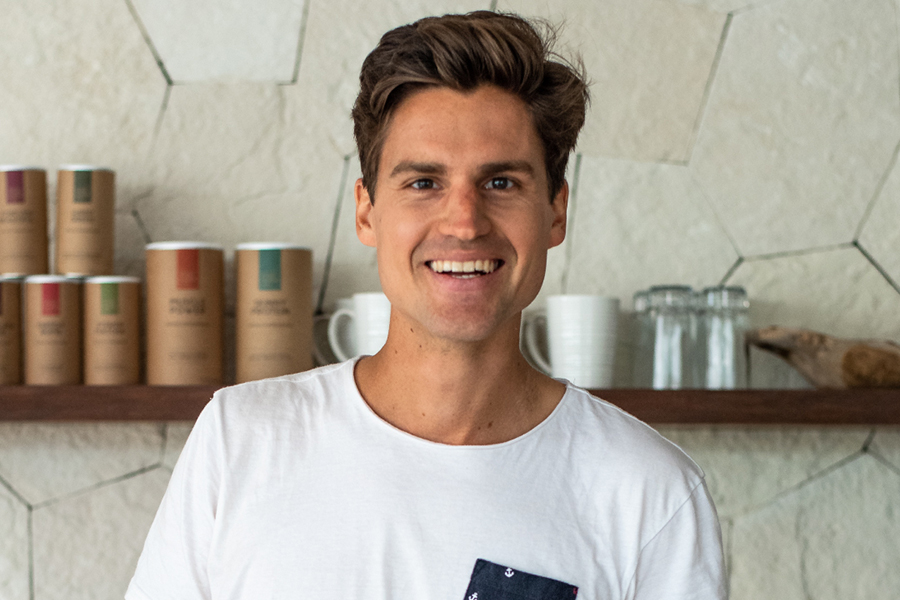
Michael Kuech is the co-founder and CEO of Your Super, which creates superfood mixes for extra energy, immunity, antioxidants and vegan protein. Your Super is a certified B corp committed to improving people’s health with the power of plants.

The following is a summary of Episode 113 of the Real Leaders Podcast, a conversation with Your Super CEO, Michael Kuech. Watch, read, or listen to the full conversation below.

Listen to Episode 113 on Spotify, Anchor, Crowdcast, and Apple Podcasts

Superfoods to Recovery

After overcoming cancer at age 24, Kuech turned to superfoods. They helped rebuild his immune system and forever changed his view on nutrition. Your Super became a way to share the benefits of healthy eating with others.

“I realized I can’t control everything in my life, but I can control what I eat. And the more I researched about why people are getting sick, and why people are experiencing diseases, is to a certain extent about lifestyle choices and what you eat. It’s not everything, there’s a puzzle, a big puzzle. But one big piece of the puzzle, how I can prevent from getting ever sick again, is the way I eat.”

Bootstrapping to Big Business

Without a budget for marketing, Your Super took a nontraditional route and focused solely on influencer marketing through social media.

“That was our earliest marketing strategy. Can we get big on Instagram and Facebook and get our audience engaged that way? And that really propelled our international brand exposure. Because social media is not bound by boundaries from any country.”

Kuech’s role has changed as the company continues to grow along with demand:

“I have to remind myself every day still to not do everything by myself. We did every job in the beginning. I packed boxes, for years I packed boxes, and called the customers. I’m making that step also now as a leader to let people do their own thing. I think that’s a huge learning call for any CEO. It’s not easy to let go.”

Impact on All Sides

Your Super is dedicated to a responsibility to its supply chain, paying fair wages and maintaining an income for farmers who are now living better lives with a stable revenue.

“I think impact for me is leaving something more positively, or having a positive influence on something. So having an impact on the way we source means we are having a positive influence on communities where we source.”

The end product superfood mixes are also created with impact in mind:

“We really are transforming people’s lives with our products. We have a massive impact there because people who have not had the chance and didn’t know anything about healthy food, they can come to us and we can actually teach them.”

Transcript

Connect

Find out more at: https://yoursuper.com/

Why I Transformed My Business Mindset To Something More Meaningful

PODCAST PEOPLE: A Summary from the Real Leaders Podcast

“This is a business that is not only about bringing about all of those things inside of us that are gifts that we can recognize, but growing a culture in our company that recognizes the gifts in one another.”

David Kahl is the founder and CEO of Fully. Fully creates and sells workplace furniture designed to inspire a positive business mindset and a healthy, supportive workplace where everyone can feel and do their best.

The following is a summary of Episode 109 of the Real Leaders Podcast, a conversation with Fully founder and CEO, David Kahl. Watch, read, or listen to the full conversation below.

Transitioning from Big Business

After a successful career as a Wall Street accountant, and witnessing the events of 9/11, David was presented with a personal and professional wake-up call:

“I want to know that I’ve done something that makes this world that we’re in a little bit better, helps us to love one another a little bit better, invites more empathy, transparency, leaning into who we are as people and connecting with one another. And I hadn’t been doing that for the first 30 years of my life. But I had a lot of my life left to do.”

Emotional awareness has given David a more holistic view of the workplace and revolutionized his business mindset:

“Leading with that emotional awareness is, I think, really important for leaders, especially in the kinds of times that we find ourselves in. There’s waves I think of when we need to practice a lot of emotional intelligence. This is one of those times when having the skills and the experience to do that really pays off as a CEO and leader.”

Listen to Episode 109 on Spotify, Anchor, Crowdcast, and Apple Podcasts

B Corp Benefits

Fully is the result of a re-worked business mindset and holds strongly to its values as a dedicated B Corporation:

“We practice a lot of empathy. We practice a lot of mindfulness. And we certainly love to be able to lead with vulnerability and transparency and all that we do. But at the same time, recognizing that we have an opportunity and a responsibility to take care of all of the stakeholders around us as well, [we] believe really strongly in this idea that businesses have a responsibility to make the world better.”

David asserts that the transparency and collaboration built into Fully’s company culture is the reason for Fully’s success, both internally and externally:

“I think it’s really important in our culture to realize when we’re in meetings or when we’re in a group, one of the big gifts we have is a big diversity of perspectives, a big diversity of life experiences. We’re going to be able to find out some great things as a company, when people feel the refuge of being together and that they can speak their mind, disagree with respect and compassion. And if we’re in a room of people, there’s nobody in that room smarter than all of us together.”

Transcript

Download the full conversation here:

Connect

Find out more about Fully here: https://www.fully.com/

Are You Angry? Embrace It and Transform It!

Just a few weeks ago, we believed that Covid-19 and its economic consequences would be the most significant events of 2020. Yet, we didn’t foresee the massive, countrywide protests triggered by police brutality and systemic racism. It’s left many people feeling frustrated and angry. 

When confronting these events, many people are emotionally and intellectually overwhelmed by feelings of grief, rage, and deep disappointment. 

When reflecting on the present, history provides us with several examples where anger in society was channeled into a moral force for change. Consider the women’s suffrage movement and the civil rights movement, both of which were sparked and sustained by anger around social injustice. 

The heightened emotional state of anger is charged with power and hidden potential. Becoming familiar with our emotions, and seeing them for what they are, allows us to navigate behavior and explore the potential power for the good within this state.

Anger is a distinctly human emotion that serves an evolutionary purpose: preparing us for “fight or flight” when faced with an enemy or danger. Most of us see anger as a terrible thing, an uncontrollable destructive force defined by rage and aggression. Still, it is one of our most basic emotions, one that is often misunderstood. We are conditioned to see anger as something negative, an emotion that needs to be suppressed, something to be cloaked under layers of controlled behavior. 

But, could you transform these emotions? Could you channel them into something positive; into something capable of redefining your daily life? 

How would your perception of anger change, if you thought of it in terms of energy — a powerful force that could be harnessed and made creative, a force you wouldn’t want to negate or suppress. Instead, you could transform anger into a source of creative potential, a valuable wellspring for your future endeavors. 

According to the laws of physics, energy can neither be created nor destroyed, only converted from one form of energy to another. As human beings, we can transform our emotions into energy that could be harnessed and channeled as a practical foundation for our well-being. Observing our emotions, rather than acting them out impulsively and with intensity, can create a sense of space and detachment. There should be no identification with your feelings, no losing yourself in an emotion; just the latent power to transform it.

There’s a practical, three-step strategy to transform the anger we feel in our bodies into a form of energy. With the help of visualization and a series of breathing techniques, this energy can be stored and then channeled back when you need it most. These three steps are embracing, identifying and transforming.

1.  Embrace the Feeling. First, we have to allow ourselves to feel the anger. Of course, this should be done without emphasizing it or harming yourself or others. Instead, let yourself feel the anger as a chain of natural reactions occurring within your body. It would be best if you came to recognize that anger is not you, nor is it your natural condition. Although it may seem to reside in you, you can “step back” and watch this reaction in your body — detached and secure. Don’t attempt to justify your feelings, look for the reasons behind it or trace its origins. Instead of thinking in terms of ‘right’ and ‘wrong,’ try to recognize what your anger feels like.

2.  Identify the Feeling. Once you have acknowledged what you are feeling, you can investigate your anger more deeply. Do it dispassionately and without judging. Investigate the feeling, its intensity, and scope, but not its cause. Try to focus exclusively on your body instead of your thoughts and mental reasoning. Try to identify those parts of your body where the sensation of anger is most intense, where the anger is intimately connected to your body. Is it in your head, hands, throat? Maybe it’s in your heart or stomach? Describe it. What does it taste like? What color is it? Can you give it a name? 

3. Transform the Energy of Anger. Once you have recognized and named your feeling, you can start to transform it. Begin by breathing it in. Harnessing your breath and channeling it is a failsafe way to deal with anger. Our breath is a fundamental tool that is available to us instantly, and requires no investment or equipment. We tend to take this vital function for granted and are mostly unaware of its ability to harmonize, bring balance, and heal. Breathing into your anger once you have identified, it will neutralize many of your body’s adverse reactions. Breathe with your stomach and see how your body relaxes with each gentle exhalation. Let that relaxation deepen with each breath. Watch how the anger begins to merge and transform as you breathe. With each smooth inhalation, visualize the energy being successfully stored in your abdominal region. Sense that energy transforming into the energy of your potential. Then, stay centered and present as you move forward.

3 Ways a Mental ‘Road Map’ Can Manifest Your Success

For an entrepreneur, professional speaker, and success coach Sheryl Grant, transformational leadership through personal development and community building is the name of the game. She’s built her success on three visualizations that can apply to any CEO or entrepreneur. Here are her mental strategies for breaking through tough times.


A Ms. Olympia, beyond the age of 50, Sheryl knows what it takes to realize over-and-above achievement both in life and in business. Today, through her eponymous company Sheryl Grant Enterprises, she is helping CEOs, executives, entrepreneurs, and other professionals master critical areas of their careers. 

Her secret sauce? Sheryl taps into a trifecta of neuro-training, physical fitness, and increased productivity to unlock personal ambition, revenue potential, and self-confidence. She urges success-minded people to aspire to be FIT: Faith, Intuition, and Tenacity, to reach their goals. 

“FIT cultivates your inner ability to push through any of life’s obstacles, breakthrough barriers, and manifest your heart’s dreams and desires,” Sheryl explains. “Whether you seeking a promotion, new business endeavor, or a healthier body, FIT helps establish a mindset and emotional framework that will nurture, uplift, and inspire all areas of your life.

A key part of Sheryl’s presentations and webinars is a focus on developing mental strength through neuro-training. With my curiosity piqued, I recently connected with Sheryl to gain some insight into her mind-bolstering methodologies. As Sheryl explains, “It can help us cultivate a greater awareness of who we are, develop a road map of where we need (and want) to go, and conceptualize how to get there.”

1. Start a Dialogue with Yourself

Begin by asking yourself some basic questions: Who are you? What are you good at? What do people you care about see in you? When have you felt the most alive? What can you learn from others who have a definite purpose and who are inspirational to you? Such self-awareness fosters drive, confidence, and self-esteem that can transform you into an unstoppable force, giving you the strength to persist through failure and adversity. You’ll likely be happier, too, and an inspiration to those around you.

2. Identify All of Your Inner Strengths 

When people live in their “sweet spot,” they are more productive and naturally add value to the world around them. Accordingly, this “mode” is when people also tend to make more money! What are the things you’ve always been good at? What motivates and inspires you? Perhaps it’s things that come naturally to you, to the point that you wonder why others struggle in the same area? While passion can indeed also blossom from areas in which you aren’t naturally talented, Sheryl’s personal and professional experiences have shown that we rarely aspire toward ambitions for which we have no natural talent. As civil rights leader Howard Thurman once wrote, “Don’t ask yourself what the world needs; ask yourself what makes you come alive, then go do that. Because what the world needs is people who have come alive.”

3. Know Where You Add Value

Doing work that you’re good at, but which holds no passion for you, is not a pathway to fulfillment. When we know our greatest strengths and when we know where we can add the most value, we can better focus on the opportunities, roles, and career paths where success will likely occur. These are usually the same areas in which a person finds the highest sense of accomplishment and contribution. All too often, we undervalue our strengths, skills, and expertise that we have naturally acquired over time. A great way to discover this for yourself is to discern what you’re equipped to help solve in the workplace, career, organization, or industry. Also, uncovering what problems you enjoy solving, and what challenges you feel passionate about solving. The answers to these questions can help you focus and develop a much clearer series of intentions that are based on natural strengths and on things that you are innately good at, rather than trying to bolster or eliminate weaknesses. 

By overcoming personal challenges with the strategies above, Sheryl says she quickly learned that her greatest difficulty was not the obstacles in front of her, but rather the lack of belief and trust in herself. By shifting from a focus on fear and limitations to a focus on empowerment fueled by faith, intuition, and tenacity (FIT), she reached greater heights than ever before.

In summary, Sheryl conveyed her belief that, ultimately, unlocking one’s inner presence makes leaders the best businesspeople and human beings that they can be. She suffered in her own life until she established, and wholeheartedly practiced, her FIT philosophy. In doing so, she tackled extreme changes and enjoyed the process along the way.

Leaders: Better Sleep Equals Better Life During COVID-19

A recent report from Express Scripts, a prescription benefit plan provider, confirmed that the use of anti-insomnia medications has spiked. Filled prescriptions increasing by 21% between February and March 2020, and those numbers peaked during the week of March 15 — the same week, the World Health Organization declared COVID-19 a pandemic, and the US declared a national emergency in response to the crisis.

We all know how much better we feel after a good night’s sleep, but a new study by the Centers for Disease Control and Prevention indicates that around 35 percent of American adults routinely fall short of the recommended seven to nine hours of rest per night. 

There are many reasons to include quality sleep on your Health and Wellness priority list.

Our bodies and minds accomplish a great deal while we are sleeping and “out of the way” for several hours. Toxins in the brain that accumulate during our waking hours are removed while we sleep. During sleep, the immune system releases cytokines, proteins produced by our cells, that help regulate the body’s response to disease, infection, inflammation, and trauma. Sleep has such a significant effect on the body’s organs and systems in general. A chronic lack of it increases the risk of disorders, ranging from high blood pressure, diabetes, heart disease, and obesity. 

Here are some reliable tips to significantly improve your mental and physical health by improving your sleep habits:

Practice deep breathing and other relaxation techniques immediately before bedtime to help reduce stress, which is a guaranteed enemy of the deep sleep phase.

• As best you can, go to bed and wake up at the same time seven days a week, rather than any time you feel like it. 

Make sure your bedroom maintains a temperature of between sixty-six to seventy-two degrees. If your room is too warm, it can interfere with your body’s tendency to sleep more reliably when your core temperature drops. Also, a study by the National Institute of Health has demonstrated that sleeping in a cool room can burn more calories during sleep and activate your metabolism by increasing levels of brown fat, a kind of fat that’s triggered when the body gets cold.

Make sure your bedroom is dark to encourage your body’s natural release of melatonin. According to multiple studies, there is a phenomenon called “iPad insomnia,” which refers to the blue light emanating from electronic screens—cell phones, computers, laptops, iPads, etc.—throws off the body’s biological clock and circadian rhythm. The strong recommendation is to turn off all electronic devices, including your TV, at least one to two hours before bedtime.

Create a relaxation routine before you go to bed. A warm salt-water bath, read, a stroll in fresh air, a cup of chamomile tea, or anything that helps your body and mind wind down. This means no checking emails, voicemails, text messages, or social media (one last time), no exercise for a few hours before bedtime, and no caffeine or alcohol.

• If you have trouble falling asleep or wake up during the night and cannot go back to sleep, don’t lie awake as it’s likely to make you anxious that you’re not sleeping. Instead, get up and repeat some part of your relaxation ritual, whether it’s reading or listening to music or having another cup of chamomile tea until you feel sleep coming on again.

Take your sleeping habits as seriously as you take your other health concerns. If you have trouble sleeping that becomes chronic or have reason to believe that you are not refreshed and reenergized from your sleep, see your doctor. Most sleep disorders can be dealt with very effectively, so don’t write them off as normal or hopeless. Quality sleep is not one of life’s luxuries; it’s a requirement.

0