Are You A Dandelion or An Orchid?

About 80% of us are resilient to stress. We can find ways to survive, cope, and even thrive no matter what life throws at us. Science writer David Dobbs calls us “dandelions.” We can grow in a crack in the cement. We are considered normal. We make sure the lights go on, planes don’t crash, and see to it that most families and organizations work.

For the most part we are calm, reliable, and sensible. We get our work done. We color inside the lines. We can grow anywhere. When we fail we pick ourselves up, show up and do our work. About 15% of dandelions are super-thrivers who will excel no matter what. They work hard for stupid bosses and endure mean spouses and learn from lazy teachers.

But not everyone is a dandelion. Although being a dandelion is considered normal, it’s just not the only way to be. University researcher Bruce Ellis and Dr. Thomas Bryce have been combining genetic research with experiments on learning and performance, and what they found might revolutionize how you look at people who are abnormal. In fact, you may just begin to see them as extraordinary.

It turns out about 20% of us are extra sensitive to our social environment. That means how others treat you, whether you are encouraged, supported, and nurtured makes a critical difference in whether you thrive or become a problem. But (and here’s the big deal) a large percentage of the super sensitive group achieve the extraordinary when they have a positive advocate or a nurturing environment.


(adsbygoogle = window.adsbygoogle || []).push({});

You see unlike dandelions they need special treatment. Someone with super sensitive genes are known as “orchids.” They can thrive beautifully in a hothouse with just the right amount of water, nutrients, heat and light. But orchids don’t grow out of cracks in driveways. As children they either wither around mean, judgmental, competitive people, or they fight back, often with violence.

Orchids frequently suffer from a high number of challenging conditions – ADHD, depression and dyslexia are common. Nevertheless, they are called orchids for a reason. Famous ADHD orchids include Galileo, Walt Disney, Dwight Eisenhower, Stephen Hawking, and, of course, Robin Williams. Abraham Lincoln, Michelangelo, Mark Twain, Winston Churchill and Buzz Aldrin are just a few extraordinary orchids who battled depression. And Bill Gates, Edison, Henry Ford, Ted Turner, Muhammad Ali, DaVinci, Richard Branson, John Chambers, and John Lennon have transcended their dyslexia. So what’s the point?

Well for both leaders and parents it’s this. Emerging research indicates that this list of super-achieving orchids isn’t just happenstance. New experiments are showing that people with a super sensitive genetic make-up definitely do worse in adverse environments but absolutely zoom in supportive ones.

By zoom, I mean orchids zoom past dandelions on a host of performance measures. While not everyone with ADHD, depression, and dyslexia is a genius, a disproportionate number may be extraordinary. The lesson for leaders and parents is that one sure way to fail is to treat everyone the same.

As successful sport coaches know, great players have different needs than good players. And exceptional talent is often found in orchids who need exceptional support. What’s exciting is that research is showing that a supportive environment can be just one positive, nurturing person who is a patient gardener in a field of weeds.

To make the dandelion and orchid theory unforgettable, please watch this short, heart-inspiring video: Shy Boy and his Friend Shock the Audience with The Prayer Unbelievable. You’ll see a dandelion and an orchid paired up to do something absolutely amazing in the face of immense pressure and a hostile world, so perfectly embodied by Simon Cowell.

After watching, ask yourself, “Do I have an orchid on my team? How about in my home? How might I be a patent gardener?”

Will’s book, Working to Win,  focuses on how to raise your self-awareness so you change a few essential habits enabling you win more often at the game of life.

 

Outrageous Generosity

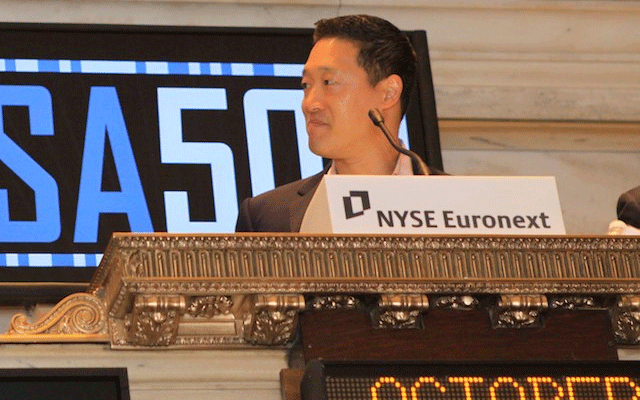
Last night I got a note from Charlie Kim, the amazing CEO of Next Jump. He told me that he had given 10,000 square ft. of Manhattan office space in his building to a nonprofit called Summer Search. This nonprofit has 14 full-time employees who help find mentors and jobs for inner-city youth.

These high school students come from terrible backgrounds with little support, surrounded by crime. Summer Search’s graduates go on to college and graduate at an 85% success rate. Charlie’s group of high-tech wizard employees who were educated in America’s finest universities will serve as mentors.

The students who will intern and study in Charlie’s free office space will also have access to his state-of-the-art employee gym as well as his custom nutrition program offered to all employees. What is this costing Charlie? Well plenty of money… Manhattan office space doesn’t come cheap. Also he doesn’t know whether or not having his employees serve as mentors may cost him some productivity.

He hopes it doesn’t, but let’s face it… this is an experiment. I am pretty inspired by Charlie. What if every for-profit business adopted a worthy nonprofit business to share office space with, share their business prowess, help mentor employees, and share some resources? Imagine having thousands of businesses magnify the impact of smart charities. Now that would be a revolution! So my question is… what is your office space?

What resources do you have that might help solve a problem for others in need? This is something you wouldn’t get paid money to do. In fact it might cost you. I’m talking about giving something more valuable than just time and money. It’s your brains, expertise, creativity and energy. I know… who has the time to do that? Most of us think that giving our time to charity is something we will get to when we retire. But that’s old thinking.

Making your difference is a way of life, not a future chapter in a perfect book of your life. Someone told me that we all have time to do exactly what we want to do. He said that if we just gave up one night a week of watching television to do something more remarkable that in the course of a year we could make quite a difference. I think he’s right. I also think all of us have “office space” resources that we can invest in people who have no investors. Charlie Kim has quite an original perspective on capitalism.

He actually runs his company to make the biggest difference to human beings he can imagine. And it’s been working since he founded his company in 1994. Charlie’s not some superman; he is just a leader who’s clear on what his life is really about. Quite an example. So how about it… what’s your office space?


Rail Crossing Leadership

For 100 years kids have learned what leaders need to practice. When they approach a railroad crossing, the sign reminds them to STOP, LOOK, LISTEN. Successful leaders follow these rules. Here’s how:

1. STOP: Stop doing, starting, prodding, pushing, and driving. Instead, create space in your day and your brain. Space to allow inference and insight: the foundation of effectiveness.

2. LOOK: Get out of the office and the meeting room. Walk around and look at what your people, your suppliers and your customers are doing. Consider that for years Toyota has required every new engineer to stand in one spot for much of a day, watching a factory at work. Then he is asked what he saw. The patterns of what’s there and not there will inform your decisions and goals powerfully.

3. LISTEN: Learn to ask carefully pointed questions. What matters more is what you do next: ask the follow-up question that will get you the gold. The “gold” is insight, the elusive reality that essential for success. Tips for better questions:

  • Ask precisely focused and specific questions.
  • Listen closely, to learn what the OTHER person wants… right or wrong.
  • Invite new information by using question words like what, when, how… instead of why. (“Why” can be aggressive, and may shut down another person before they can give you the gold.)

Are you blasting through the crossing, or stopping to look and listen?


The One Talent That Makes All Others Bigger

Most of us think of talent as a special ability to excel at something we learned in school. We might think of talent as being great at mastering math or science or writing… or we might consider useful skills such as selling, organizing or project managing as a talent.

Of course, we think of singing, painting and artistic abilities as talents too.

There are lots of others – creativity, inventing, leading others – but I recently learned about a talent that we can develop more  that will amplify any talent we already have. Anyone can develop this talent and anyone who does will begin a journey that moves them from average to invaluable.

I learned about this talent from listening to Hall of Fame basketball star Jerry West. As general manager of the LA Lakers he advised a hardworking, but moderately skilled player, Mark Madsen, that energy and enthusiasm were talents. West told Madsen that the most valued contribution he could make to the star-laden Lakers was to play his minutes with unleashed energy and focused passion.

If he could do that without making wild errors, his contribution would be invaluable. Madsen was inspired. He developed more on-demand energy by focusing on his fitness, diet, and especially sleep. He focused his mind to notice and appreciate the small positive things his teammates did when they excelled. He was quick to affirm and encourage them with specific feedback.

Although Madsen had very unexciting basketball skills his dedication to developing his energy and enthusiasm talents made him invaluable to the world champions.

When you think about it, if a professional basketball player with average athletic ability can become invaluable to his teammates by becoming great at energy and enthusiasm, then we can certainly impact the performance of our teams and families by doing the same.

If you want more energy, focus on your fitness, diet, and sleep. If you want more enthusiasm, recognize and encourage others when they contribute, achieve a goal or show a strength. Energy + enthusiasm are universal talents that we can all develop more of. So, what if you did?

Challenge:  What would happen if you increased your energy and enthusiasm by 50%…  to you, your teammates, your family or friends?

Just Start. And let me know how your challenge is going below.


Three Unconventional Lessons for Business School Students

It’s unusual when a successful entrepreneur opens a presentation to a room full of business school students with a photograph of her twin baby boys. But then Jessica Jackley isn’t a typical entrepreneur. As one of the speakers of a three-year series funded by the Pears Foundation at the Saïd Business School at Oxford, entrepreneur and investor, Jessica Jackley, had a rather unconventional set of recommendations for her audience.

Jackley cofounded Kiva.org, a nonprofit microlending platform that has facilitated nearly $440 million in loans since its inception in 2005. She went on to found ProFounder, a small/medium enteprrises fundraising platform, and is now an advisor to a Silicon Valley venture fund. She offered to her audience three pieces of advice, which she described as “reminders” to her crowd and to herself.

1. Know your mission(s)

During the early days of Kiva, the now-global microlender that Jessica cofounded in 2005, she and her team turned down a $10m offer of funding from a corporate social responsibility office of a large corporation. The funder didn’t want to connect to the borrowers on her platform, cutting against the grain of Kiva’s chief mission, which is to “connect people.”

Had she and Kiva not been crystal clear on their mission and the values from which it grew, turning down such an offer might have been difficult. Business students on the job market should similarly be clear on their mission and be willing to turn down great opportunities in favor of “the path that is true to who you are.”

2. Learn to Listen

Jackley cites as her role model and inspiration as Muhammad Yunus, the Nobel prize-winning economist credited with the creation of microfinance, in which tiny loans are typically provided to groups women with self-created income. “Yunus,” says Jackley, “arrived at his insight by listening intently to others. If we listen closely, we may hear something no one else has heard before.”

3. Iterate

In founding Kiva, Jackley didn’t wait until her product or website were perfect to begin collecting loans from her friends and family to distribute to the entrepreneurs she had met during a 2004 trip to East Africa. Such an approach demands transparency and patient supporters who are comfortable focusing on the “how might we” questions instead of the “but what about” questions.

These “what if” questions are the kinds of questions that Jackley’s twins wake up with every morning. If grownups were to approach the world with the same sense of wonder and opportunity, listen carefully to others and remaining true to who they are, how many more Kivas might we create?

By Mark Clayton Hand  www.markclaytonhand.wordpress.com Saïd Business School, University of Oxford www.sbs.ox.ac.uk


Lessons in Rwanda inspire innovation in Scotland

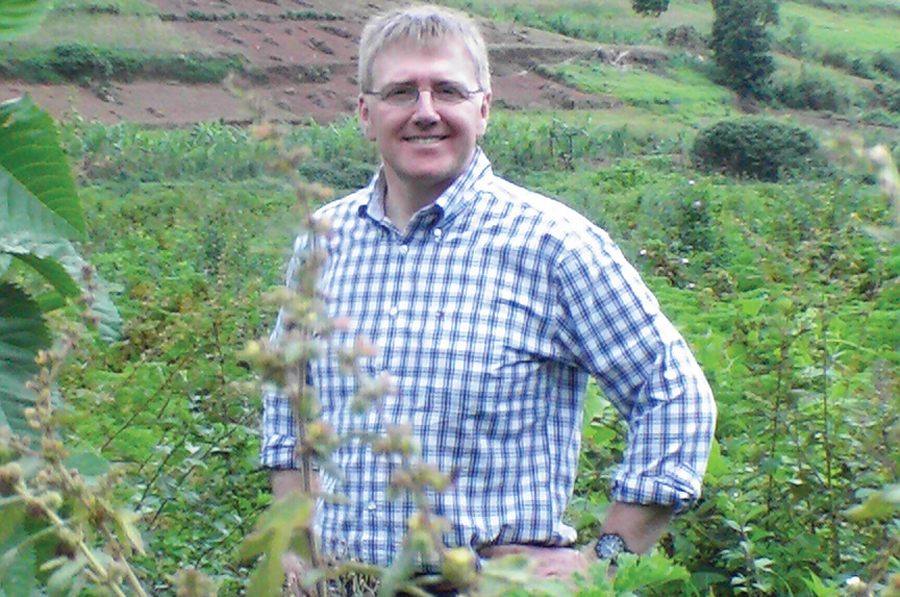
An encounter with a Rwandan fleeing the genocide in his country began the unlikely business partnership of a Scottish seafood business with a Rwandan farming community.

Dennis Overton’s business, Aquascot, revolves around the farming of fish in the North Atlantic and salmon processing in the Highlands of Scotland.

Nicholas Hitimana was studying a doctorate in agriculture at Edinburgh University and had knowledge of Rwandan oil plant production. The two befriended each other and compared thoughts on their respective agricultural worlds.

Overton at once saw some potential and realized that the farming of fish and the farming of plant oils were not that different. “Farming at sea or on land requires the same management and skills,” says Overton. Ikirezi Natural Products was established as a community-interest company in Rwanda in 2005 and specializes in the growing of oil-bearing plants such as geranium, lemongrass and eucalyptus, all of which have good selling potential on the international market.

The aim of Ikirezi is to become a leading supplier of essential oils and to maximize profits to the small farmers involved in the growing, leading to a transformation of these largely cashless communities. The company mobilizes and trains farmers, mainly widows and orphans, and then buys the harvested material to produce and market the oil. Through four farming associations and cooperatives, over 500 farmers are involved.

“We’re into year six now and almost at net profitability,” says Overton. “Not bad when you consider that we’re doing this in an emerging economy which rates in the bottom 30% on the global economic scale.” His biggest concern is how everyone can work together to save the earth’s biosphere and he considers a reliance on world governments to do this job as shaky at best. And there are plenty of challenges too in engaging a developing economy, as Overton discovered.

“In Rwanda subsistence farming is the norm with low education levels making the communication of farming skills difficult. A key to resolving this was to work with Rwandan locals to implement the training. We needed to grow the business in an inclusive manner while still recognizing the needs of the farmers.”

These needs included the need to eat, so the small farms of between one and two hectares are shared between food and oil crops. Despite these small plots and the diversification of crops, the farmers are earning up to three times more per hectare than if the land was used only for food crops. “Long-term business sustainability and a deeper understanding of true profits are key to this business model,” says Overton.

“These farmers now have more choices. Kids go to school and people are signing up for the government health insurance program for the first time. People are now earning more than the national average of US$270 a year and cash has been introduced into some communities for the first time. It’s amazing to see this happening and how it is changing lives.”

Overton’s scheme has seen the Ikirezi farmers develop a clear competitive advantage over other farmers and become innovators, yet ironically, he has benefitted too. “I’m better at what I do in Scotland because of my work in Africa,” he says.


The Only Rule You’ll Ever Need

There really is only one rule that matters. We could pretty much eliminate all our laws, end regulations, rules and every constraint on human behavior if we would all just do one thing.

It’s a simple rule. It’s not hard to understand or even comply with. But… we don’t. At least not often. As a result we have oceans of unnecessary suffering, millions of premature deaths, and a world where we are often on guard, suspicious and disappointed. One area of life where this rule is broken most often is in business.

In fact, leaders who break it are often rewarded with massive amounts of money and even get their smiling faces on important magazine covers. This rule is almost never discussed in our business schools. In fact, the opposite is enthroned semester after semester. Let me end the suspense.

The simple rule is the Golden Rule. You know… treat others as you would like to be treated. That’s it. Now, consider its impact. If we lived and led by this rule, what would be different? Everything. This is not just a Christian rule. It’s the essence of morality expressed at the core of the 17 largest religions in the world.

The Golden Rule is the opposite of the “I don’t give a damn about anyone else” business model. It seems we’ve all been misled about what capitalism philosopher Adam Smith was saying about the power of self-interest. He never proposed that if everyone acted selfishly the balance of our competing interests would create a world of abundance. His view on creating the best society required all people, especially business leaders, to be driven by something he called “moral sympathy” (we might call it moral empathy.)

He wrote that all people have the ability to imagine how our decisions affect the lives of others. Indeed, he wrote that the single human endowment of moral sympathy was essential to the growth of capitalism. Otherwise it would degrade into the exploitation of the poor by the powerful. What Smith realized was that to create a free and abundant society, self-control was essential. Otherwise, laws and regulations would be corrupted to benefit the few to exploit the many.

Ironically, this imbalance of wealth and power would cause economies to slow because average people wouldn’t earn wages, save capital and invest in new enterprises or buy the products they were producing. What some scholars have observed is an “invisible hand” that creates economic growth, the invisible power of moral sympathy — the Golden Rule. But this idea was lost when economists hijacked capitalism and legitimized naked self-interest and created an “invisible hammer.” This hammer allows us to sleep at night while factories in faraway countries burn up a thousand garment workers at a time.

Consider this: would you want your daughter to work in these unsafe, unsanitary sweat shops? Would you want your young children to be growing up in a hyper-polluted Chinese city so their lungs were literally gray instead of a healthy pink? Well, if we don’t want our children to suffer, why are we so willing to simply shrug off this merry-go-round of global exploitation? I know some “John Galt” types say that poor country workers earn more in these inhumane factories than the grinding poverty of their rural farms. This, they claim, is the price of progress.

They claim that these harsh conditions are simply a path to middle class and must be paid by generations. I wonder. What if we live in a breakthrough age of disruptive innovation where we can actually create a market-based economic system that enables tens of millions to leap-frog out of suffering in one leap? What if global companies invested half of their two trillion dollars of stagnant cash locked away in their treasuries on educating the poor labor force to be more self-reliant and more capable of adding value?

What if we co-created inexpensive, sustainable, clean, and safe factories where production waste was minimized and speed came through process innovation instead of forcing people to row harder? What if enough leaders decided to use their ingenuity and capital to create a more revolutionary business model where the value added at each step in the supply chain added value to both the work force as well as to the product?

Such innovative courage is not far-fetched. Henry Ford ignored his contemporary industrialists by insisting on hiring and training thousands of African Americans to build the highest technological product of the age. Then in one leap he raised the average wage from $1.50 to $5.00 a day so that workers could buy the product they were building.

At the time The Wall Street Journal complained that Ford was applying biblical principles where they didn’t belong — whatever. Isn’t it time for another courageous I’m-not-going-to-stand-for-this anymore leadership moment? What if we imagined that our daughters and granddaughters worked in the factories that made our clothes, shoes, and phones? What might we do? That’s the question we need to ask.


The Only Rule You’ll Ever Need

There really is only one rule that matters. We could pretty much eliminate all our laws, end regulations, rules and every constraint on human behavior if we would all just do one thing.

It’s a simple rule. It’s not hard to understand or even comply with. But… we don’t. At least not often. As a result we have oceans of unnecessary suffering, millions of premature deaths, and a world where we are often on guard, suspicious and disappointed. One area of life where this rule is broken most often is in business.

In fact, leaders who break it are often rewarded with massive amounts of money and even get their smiling faces on important magazine covers. This rule is almost never discussed in our business schools. In fact, the opposite is enthroned semester after semester. Let me end the suspense.

The simple rule is the Golden Rule. You know… treat others as you would like to be treated. That’s it. Now, consider its impact. If we lived and led by this rule, what would be different? Everything. This is not just a Christian rule. It’s the essence of morality expressed at the core of the 17 largest religions in the world.

The Golden Rule is the opposite of the “I don’t give a damn about anyone else” business model. It seems we’ve all been misled about what capitalism philosopher Adam Smith was saying about the power of self-interest. He never proposed that if everyone acted selfishly the balance of our competing interests would create a world of abundance. His view on creating the best society required all people, especially business leaders, to be driven by something he called “moral sympathy” (we might call it moral empathy.)

He wrote that all people have the ability to imagine how our decisions affect the lives of others. Indeed, he wrote that the single human endowment of moral sympathy was essential to the growth of capitalism. Otherwise it would degrade into the exploitation of the poor by the powerful. What Smith realized was that to create a free and abundant society, self-control was essential. Otherwise, laws and regulations would be corrupted to benefit the few to exploit the many.

Ironically, this imbalance of wealth and power would cause economies to slow because average people wouldn’t earn wages, save capital and invest in new enterprises or buy the products they were producing. What some scholars have observed is an “invisible hand” that creates economic growth, the invisible power of moral sympathy — the Golden Rule. But this idea was lost when economists hijacked capitalism and legitimized naked self-interest and created an “invisible hammer.” This hammer allows us to sleep at night while factories in faraway countries burn up a thousand garment workers at a time.

Consider this: would you want your daughter to work in these unsafe, unsanitary sweat shops? Would you want your young children to be growing up in a hyper-polluted Chinese city so their lungs were literally gray instead of a healthy pink? Well, if we don’t want our children to suffer, why are we so willing to simply shrug off this merry-go-round of global exploitation? I know some “John Galt” types say that poor country workers earn more in these inhumane factories than the grinding poverty of their rural farms. This, they claim, is the price of progress.

They claim that these harsh conditions are simply a path to middle class and must be paid by generations. I wonder. What if we live in a breakthrough age of disruptive innovation where we can actually create a market-based economic system that enables tens of millions to leap-frog out of suffering in one leap? What if global companies invested half of their two trillion dollars of stagnant cash locked away in their treasuries on educating the poor labor force to be more self-reliant and more capable of adding value?

What if we co-created inexpensive, sustainable, clean, and safe factories where production waste was minimized and speed came through process innovation instead of forcing people to row harder? What if enough leaders decided to use their ingenuity and capital to create a more revolutionary business model where the value added at each step in the supply chain added value to both the work force as well as to the product?

Such innovative courage is not far-fetched. Henry Ford ignored his contemporary industrialists by insisting on hiring and training thousands of African Americans to build the highest technological product of the age. Then in one leap he raised the average wage from $1.50 to $5.00 a day so that workers could buy the product they were building.

At the time The Wall Street Journal complained that Ford was applying biblical principles where they didn’t belong — whatever. Isn’t it time for another courageous I’m-not-going-to-stand-for-this anymore leadership moment? What if we imagined that our daughters and granddaughters worked in the factories that made our clothes, shoes, and phones? What might we do? That’s the question we need to ask.


George Fink: I Tip My Hat to You

I sat next to a well-dressed older gentleman on the plane the other day. For quite a while he and I exchanged pleasantries, nothing more than the typical, “do you mind getting up so I can go to the rest room,” kind of exchange.

And then, about half way through the trip he struck up a conversation. It was a memorable one for it gave me a glimpse into what I believe is the wave of future of conscious leadership. Paradoxically, it’s a blast from the past where more leaders were pure in heart and intent.

The gentleman in question was George Fink, the Chairman and CEO of the Bonterra Energy Corporation, a company that primarily produces oil. Its assets consist mainly of concentrated, stable and underdeveloped properties across western Canada, where large quantities of oil reserves still exist; a long reserve life and low-risk drilling locations. Bonterra is the third largest operator in the Pembina Cardium region, one of the world’s largest and prolific oil fields and the largest reservoir in Canada.

George has been at the helm since it’s inception in 1998. He enjoys being the CEO, but not for reasons most might suspect. In contrast to the typical “I like the power” kind of reason that causes many CEOs to become CEOs, George’s sole focus is on developing people. He sees his role as a privilege, a way of contributing to his employees and returning spectacularly steady and reliable returns to its shareholders, of which all employees are members.

I found myself marveling at this man, not just for what he’s accomplished, but more importantly about his way of being. When I asked him why he wasn’t sitting in first class among the other wealthier people, he said to me that it’s not his custom. Coach is “just fine for me,” he said in his amiable Canadian accent, even though I thought his old bones might prefer a little more room. In musing further on the subject, he said, “As executives we don’t expect anything more than what we provide for others.”

In a world where CEOs seem much like celebrities, he shies away from the spotlight and also anything that might put attention on himself. “I’m just a human being doing my best to help out,” seemed to be his attitude. George spoke confidently, yet without self-aggrandizement. If anything, he was quite understated. It was a quality I have grown accustomed to appreciating in some great leaders. It seems that the best leaders I know have this rare combination of solidity or certainty, and humility.

As we talked further, I found myself reflecting a bit on this combination and have since done some more. The way I see it, the qualities of certainty and humility are often seen as opposites, and yet paradoxically, in the most conscious of leaders I know, they live comfortably together. They certainly did so with George. He didn’t tout his own horn in any way. Instead, he seemed happy to ask questions of me, as if he was a sponge, seeking to learn from my work. He even went so far as to request we talk again, in hopes that he might gain some wisdom from my work. “I have so much to learn,” he said more than once, “and I really don’t know much about a lot of things.”

Here was an extraordinarily accomplished man, who has been a CEO for over 40 years, talking like a young man who is just starting out on his journey of leadership and learning. It reminded me of the old Buddhist story of the scholar who sat with a Buddhist master to seek wisdom. The scholar regaled the master with his knowledge of Buddhism. The master listened and as he poured tea for the scholar, he let the tea overflow and spill from the cup. When the scholar exclaimed, “What are you doing!?,” the master replied, “Your brain, like this cup, is too full. You must empty it and approach this work with your mind open before I can teach you anything.” This is the essence of the Buddhist mind — to explore with the child’s mind of deep curiosity.

George embodies this attitude beautifully and without an ounce of self-deprecation. Humility was all over this man, but at the same time, so too was his sense of certainty. He spoke confidently and with quiet self-assured tones about why his company was so successful and his role within it. He believed strongly that success comes from steady progress and not reaching for the stars. In contrast to the typical audacious goals, dreams and visions

I hear from charismatic CEOs, his was a deliberate path toward success, born out of a solid foundation of understanding, a commitment to share the fruits of the company’s success with all employees, bar none, and a belief that anything is possible with determination, hard work, and collaboration. Whether or not this man was true to his word, was beyond my ken for it was just a passing conversation on a plane, but he struck me in his tone and kind manner as a man of his word. He had no need to prove anything to me, or anyone else for that matter.

George’s self effaced assuredness is in stark contrast to the tendency of so many charismatic leaders to be so self-focused. It appears that the drive to become a CEO, so laden with the need for power and influence, also results in a high tendency to be self-focused. It’s understandable. Often people choose to be leaders because of a deeply felt need to be seen and recognized. From this place, they enjoy and even crave the spotlight.

This underbelly of leadership has been explored a great deal of late and the phrase “The Narcissistic Leader” certainly has gotten plenty of attention. I see it all the time in my work. And yet, in my research on remarkable leaders, the best leaders have a strong inner compass while at the same time having an outer focus on the needs of the whole.

This is what I saw in George Fink, and I want to honor all leaders like him. George Fink, I tip my hat to you! You show us the type of leadership, that in my estimation, great leaders are meant to be.

Shedding iSight on Blindness

The value of intuitive design in products has become increasingly important among developers, from how a vehicle adjusts its seats to how the navigation works on a smartphone. Abhishek Syal of Arise India decided to include blind people in this revolution. Simplicity of design for a mass market is Abhishek Syal’s motto, and in developing a new device for the visually-impaired, which helps them navigate maps unaided, Syal is putting this idea to work.

In addition to keeping the complex workings of his device hidden from the user, he has also explored existing technology and how it can be put to new uses. The result of Syal’s tinkering has produced a remarkably simple, yet effective, device. “I deploy an ordinary webcam as a pointing device, linked to a computer. This is mounted on an ‘exploring’ board, on which a tactile diagram of the geographic area is placed.

This map or diagram has raised objects on it which the visually challenged user can explore and understand without any sighted assistance,” he explains. “While the user explores this diagram with his fingers, the webcam tracks their movement in real-time on the computer screen, with the cursor following the exact screen image of the 3-D diagram in front of the user. Pointing to an object sees it selected on the computer screen and information is spoken through the computers speech software.”

The impact in India is potentially huge, a country with 15 million of the world’s estimated 37 million blind people.

“Imagine a class of 15 students, where the teacher simply goes to every student’s desk, holding his or her hands and explaining the diagram. The  student then goes home, needing only to memorize the positions of the diagram. This is far simpler than many other complex systems that have been developed for the visually-challenged.” Most of these students don’t do science or math after eighth grade because of a lack of adequate tools for understanding the topic. “We want to make basic concepts of trigonometry, geometry and maps understandable. This will help people visualize the world,” says Syal. He realized he was onto a good thing when he saw his device transforming the perception of learning, resulting in a change of  attitude for the better.

Schools for the blind were initially apprehensive about adopting Syal’s approach, citing  fears around ongoing technical support and upgrades. Syal’s solution was to start Arise, a research-oriented non-profit, to develop and deliver these tools, including free support and maintenance. Plans to license the technology to other companies to generate research funding are in the works and Arise hopes to grow the organization into a social enterprise.

A broad thinker, Syal believes that technological advancement will be in three major areas: biotechnology, nanotechnology and energy technology, with disruptive interventions in these sectors resulting in radically changed business models. “It’s already clear what information technology has delivered –  access to information for the world’s citizens and help in bridging the divide between rich and poor.

The poor now have a better chance to understand how the world works and the richer countries have been encouraged to outsource routine tasks,  freeing them to develop ‘thinking economies,’ which capitalize on future trends. Technological advancement in biotech will enable access to healthcare and food security.

In nanotech, access to cheaper luxuries such as automobiles and gadgets and in energy technology, a shift from consumers to ‘prosumers,’” explains Syal. While the world explores these exciting new frontiers, the blind now have a chance to become a part of it.