Meredith Perry Wants You To Drop Your Cords And Take Charge


  • A 26 year-old scientist and inventor is developing wireless power.
  • She wants investors and inventors to tackle difficult projects, not easy ones that deliver quick financial returns.
  • Investing in the future and doing something meaningful with your talents should be everyone’s primary concern.

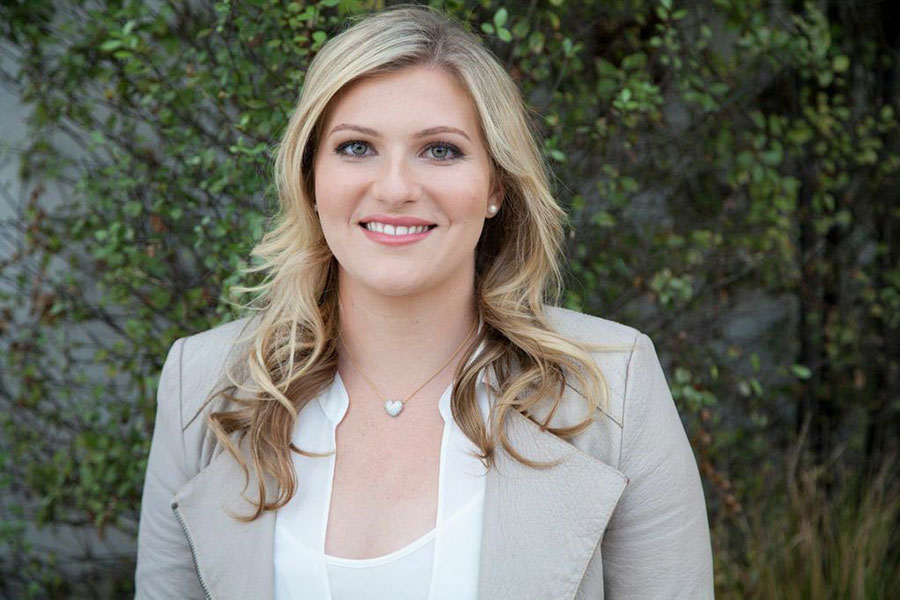
Meredith Perry is one of those rare people that actually thought being smart at school was cool. When you’re in elementary school it’s not something the other kids usually admire or respect. While her friends were dreaming of what to wear to parties that weekend, Perry would be dreaming about winning a Nobel Prize for curing cancer. “I thought that it might be possible,” she says. “I’ve always pursued things that other people think are crazy.”

How does wireless electricity sound for crazy? This is what the 26 year-old is currently working on, and she’s already formed a company, uBeam, raising more than $23 million in funding and raising the eyebrows of seasoned scientists. Her idea sounds simple: charge a device by sending electricity through the air. It’s something most of us have considered at some point, but thought impossible. Serbian-American inventor, Nikola Tesla, experimented with wireless lighting and electricity distribution in the late 1800s, but was dismissed as a “mad scientist” by an amused public.

Perry has created a technology that uses ultrasound to transmit power over the air to charge electronic devices wirelessly. A transmitter emits ultrasound waves, and then a receiver attached to a phone captures the sound and converts it into electricity. For the purpose of talking to Real Leaders, this was all Perry was prepared to give away.

“It allows for a “Wi-Fi-like” experience of charging,” says Perry. “Our goal is to have uBeam in every aircraft and airport terminal, or on the sides of buildings; anywhere electricity is available. The inventor is well aware of the large impact an invention such as uBeam can have on society, but the everyday applications of the technology and convenience factor is also top of mind.

“Yesterday, I flew from New York to L.A. and at the end of my flight I had two dead phones. I couldn’t call an Uber until I charged my phone for 10 minutes at a wall socket. While wanting to make an impact on the world, I also selfishly want to solve my own needs,” she says laughingly.

If wireless power becomes the norm, then battery sizes can shrink because devices will always be charging. Power cords will become redundant and international charging adaptors will disappear.

In school, Perry was not aware of the fact that a woman pursuing science and technology was something rare.. Only when she entered the world of business did she realize the disparity in the workplace for the very first time.

“Some of the most exciting and innovative companies, doing very complex work, are run by females,” says Perry. She gives examples of Danielle Fong of Lightsail Energy, who is solving energy storage for solar power and Leslie Dewan of Transatomic Power who is using nuclear waste to create green power.

“These technologies and companies are some of the most disruptive, futuristic and innovative that I have come across in the last five years,” says Perry. “The best way to change perceptions is to keep doing what you’re doing and people will start to see that women are leaders in engineering and business too.”

Perry is a deep thinker and her thoughts on transmitting things through space go far beyond charging a mobile device. She studied Paleobiology and astrobiology at the University of Pennsylvania and originally took an interest in finding life on other planets. Paleobiology is the study of old life and astrobiology is the study of life in space. She has a keen interest in terraforming planets too – turning other planets into ones like earth.

For example, Mars has no atmosphere,” she says. “We would need to create an atmosphere or change our biology to fit a new environment. This would require a biologically or genetically modified human to be able to survive.” Perry’s view on why we should look to space for our species survival is not based on ignoring the challenges we face on earth. “I think both are important,” she says. We need to protect earth, but I feel it’s our duty as a species to explore other worlds if we have the capability to do so”.

After developing uBeam into a marketable and scalable product within the next two years, Perry would like to focus on increasing longevity. “I view death as a problem. I don’t want to die at 90 years old,” she says. It saddens me that I will never get to visit another galaxy because it simply takes too long to get there. Finding a way to move faster than the speed of light would be nice,” she says.

For the moment though, Perry is focused on moving energy a few yards through the air and has a vision of inventors changing the world, alongside equally visionary investors. “Don’t just work to sell an app to a big company, if you have the skills, do something meaningful,” she says.

“Invest in the future. Invest in difficult things. uBeam would not exist if very specific people hadn’t taken a risk to invest in complex, difficult technologies. Sure, it will take longer to become profitable than your average software start-up, but we all need to do our part in moving the world forward.” says Perry.

Real Leaders Explains Why Gender Diversity Is Good For Business

Mark Van Ness, Founder of Real Leaders took the stage this week with members of the National Association of Women Business Owners (NAWBO) in San Antonio, Texas. While everyone agreed that including more women in your business, and promoting gender diversity, is the right thing to do, there is a more powerful reason for doing so – increased profits! Watch the discussion below to discover more.

Carly Fiorina on Leadership, Gender Equality and Why Smoking A Joint is Not Drinking A Beer


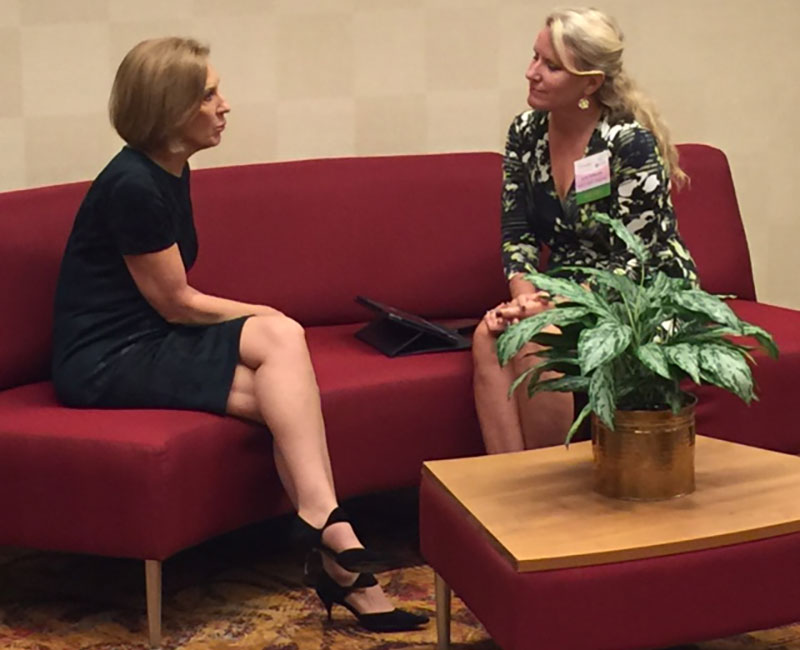
Julie Edwards, President of Real Leaders, put some questions to Republican presidential candidate Carly Fiorina at the recent National Association of Women Business Owners (NAWBO) conference in San Antonio, Texas.

What is a real leader?

A leader challenges the status quo and never accepts the way things are. You shouldn’t resist change just because things have always been that way. A leader unlocks potential in others. It has nothing to do with your title or position, anyone can lead from anywhere.

How do we get more women into top leadership roles?

We have to focus on merit and results. When we do that women will rise. I have always relentlessly built meritocracies, and at the end of the process, half my staff are usually women. In most organizations, they think they’re building on merit, but they aren’t. You’ll hear excuses such as, “Oh, I don’t know her. She’s never done this before.” Sometimes it’s about people being more comfortable with people like themselves. This is more about being a victim of the status quo than asking yourself who will produce the results, who will make the best contribution or who has the merit.

How do we fight the scourge of drugs among our youth?

Most people don’t realize what an epidemic this is. I didn’t realize either until I started hearing from so many parents that it was happening to them too. It’s a silent epidemic. We need to start talking about it more so that the stigma disappears. We need to start investing more in treatment and prevention and our criminal justice system needs to be reformed. The United States has the highest incarceration rate in the world, with two thirds of inmates imprisoned for non-violent offences, mostly drug related. This approach is not working. 

We lie to kids too. When we tell them that smoking a joint is like drinking a beer, it’s not. Lets make sure they understand the risks involved. 

Julie Edwards with Carly Fiorina.

Julie Edwards with Carly Fiorina.

Pope Francis: The future demands of us critical and global decisions

Pope Francis delivered a wide-ranging address before world leaders gathered at the United Nations General Assembly on 25th September, urging global action to protect the environment and end the suffering of “vast ranks of the excluded,” saying that “human beings take precedence over partisan interests.”

“The present time invites us to give priority to actions which generate new processes in society, so as to bear fruit in significant and positive historical events. We cannot permit ourselves to postpone ‘certain agendas’ for the future,” said Pope Francis.

“The future demands of us critical and global decisions in the face of world-wide conflicts which increase the number of the excluded and those in need,” he declared in an address just ahead of the General Assembly’s formal adoption of a new global framework, Transforming Our World: the 2030 Agenda for Sustainable Development, composed of 17 goals and 169 targets to wipe out poverty, fight inequality and tackle climate over the next 15 years.

In his remarks, he also warned that the realities in the Middle East and Africa were grave.

“I must renew my repeated appeals regarding the painful situation of the entire Middle EastNorth Africa and other African countries,” said Pope Francis, “These realities should serve as a grave summons to an examination of conscience on the part of those charged with the conduct of international affairs.”

“Not only in cases of religious or cultural persecution, but in every situation of conflict, as in UkraineSyriaIraqLibyaSouth Sudan and the Great Lakes region, real human beings take precedence over partisan interests, however legitimate the latter may be,” he continued. “In wars and conflicts there are individual persons, our brothers and sisters, men and women, young and old, boys and girls who weep, suffer and die.”

The Pope also noted the achievements of the UN as it celebrates its seventieth anniversary.

“The history of this organized community of States is one of important common achievements over a period of unusually fast-paced changes,” he said. “Without claiming to be exhaustive, we can mention the codification and development of international law, the establishment of international norms regarding human rights, advances in humanitarian law, the resolution of numerous conflicts, operations of peace-keeping and reconciliation, and any number of other accomplishments in every area of international activity and endeavour.”

But he also cautioned that the experience of the last 70 years had made it clear that reform and adaptation to the times were sometimes necessary.

“The need for greater equity is especially true in the case of those bodies with effective executive capability, such as the Security Council, the financial agencies and the groups or mechanisms specifically created to deal with economic crises,” he said.

The Pope also addressed the effects of exclusion and inequality, noting that the adoption of the 2030 Agenda, was an important step forward, adding that he was confident that the December Conference of States Parties to the UN Framework Convention on Climate Change (UNFCCC), widely referred to as COP 21, would secure fundamental and effective agreements.

During his introductory remarks, UN Secretary-General Ban Ki-moon said never in its 70-year history has the United Nations been honoured to welcome a Pope for the opening of the General Assembly.

“Your visit today coincides with the adoption of the 2030 Agenda for Sustainable Development,” Mr. Ban told Pope Francis.

“But that is no coincidence. You have often spoken of an ‘integral ecology’ – one that encompasses the environment, economic growth, social justice and human well-being – in other words, sustainable development for our common home.”

He noted that the recent Papal Encyclical – Laudato Si – defined climate change as a principal challenge facing humanity, and a moral issue.

“This message is critical as we approach the pivotal climate change conference in Paris in December,” the UN chief continued. “Across the global agenda, His Holiness is a resounding voice of conscience. He has cried out for compassion for the world’s refugees and migrants, and solidarity with people trapped in conflict and poverty.”

Mr. Ban recalled that in May 2014, Pope Francis met with the full leadership of the United Nations system at the Vatican, at which time he affirmed that the global community must mobilize the world beyond religious or political differences to forge a shared vision – a life of dignity for all.

For his part, General Assembly Mogens Lykketoft also welcomed Pope Francis to the world body.

“When you recalled previously how inseparable the ‘bond is between concern for nature, justice for the poor, commitment to society, and peace’, you spoke directly to the three pillars of the United Nations – and to the interdependency and interconnectedness between these three pillars,” Mr. Lykketoft told the Pope.

“That is the message at the heart of the new and very ambitious 2030 Agenda on Sustainable Development,” he continued.

Mr. Lykketoft also referred to the upcoming climate change conference in Paris, where, he said, the UN must adopt an ambitious climate agreement to protect people and the planet.

He also noted that a similar urgency was required “to bring an end to the conflicts and violent extremism affecting many parts of our world today,” adding that “our collective response to these crises, and to the plight of millions of displaced people and refugees has been, at beast, inadequate, and, at worst, a failure of our humanity.”

Those gathered at the General Assembly must respond “with leadership and action, in the spirit of solidarity, dialogue and tolerance,” he said.

Energy Rocks

Ukrainian born designer, Igor Gitelstain, lives and works in Israel. Igor graduated in Industrial Design at Shenkar College of Engineering and Design in Ramat Gan. He studied various fields of Industrial Design, covering different design approaches, 3D computer modeling, technical drawing and the production process. “The most important thing for me right now is to find my place in the world of design.

I want to be a designer for the real world who solves real problems for real people. Igor’s recent project is a human powered electric generator rocking chair or also known as the Otarky Rocking Chair. The concept is the design and production of products which return the energy used to produce the very same products. The chair generates electricity during the rocking motion. When someone sits in the chair and rocks, a magnet slides along a copper coil within the base of the chair.

As the magnet moves forward and back based on the movements of the person sitting in the chair, a current is generated. That current can be sent into a large battery to store the energy or hypothetically charge up an electronic device like a smartphone or a laptop. Igor specifically designed the Ortarky Chair to hide the fact that it generates electricity.

The only indication that the chair does providea source of energy is the power plug outlet located at the rear of the chair. The modern design of the chair uses laminate wood for the main seating area, white padding upholstery for comfort when sitting and brushed metal legs to hide the copper coil inductor.

When asked about the design, Gitelstain stated “If the chair gets produced on an industrial scale, I’d like people to buy it not only because of the electricity, but because of its looks and comfort.” Igor Gitelstains’ vision for the future of household products include a function of returning the energy that was invested in their creation, beyond their conventional and aesthetic uses.

The energy that the chair produces will join other renewable electricity generators within the household, such as solar panels and wind turbines. The idea is that the consumers can provide for their own energy needs.

www.igorgitelstain.me


Who Is The Best American Woman Leader?


In the recent Republican debate candidates were asked what woman they want to see on our $10 bill. This turned out to be a real stumper. After a bit of hemming and hawing Jeb Bush sheepishly blurted out Margaret Thatcher. Although he admitted that he knew that the late prime minister was not an American citizen she was the most exemplary woman he could think of. Okay, right there, that’s what’s wrong with how most men evaluate leadership. Let me explain.

Last year the global consulting firm PwC asked mostly male business executives which leaders they most admired. The highest-ranking male was Winston Churchill and the highest-ranking female was Margaret Thatcher. Both these leaders are classic, extreme practitioners of hard power. Hard power behaviors are exactly what they sound like­­ – setting aggressive goals, a ruthless commitment to results and make-no-excuses accountability. Hard power political leaders often glorify war and personal sacrifice in the service of high ideals. Hard power is high on action, low on empathy. There’s no question that hard power is useful and even necessary at times. But it is very one-dimensional. It is best exercised in very simple situations where the law of untended effects will not sabotage the results of black-and-white thinking.

In this month’s Harvard Business Review the cover story is called The New Rules of Competition. The article lays out how the interconnectedness of global markets and the disruptive power of new technologies are making decision-making and strategic execution extremely challenging. Indeed, it makes the argument that no decisions are simple anymore.

A growing tide of research from places like MIT and McKinsey & Company is finding that soft power skills of social intelligence and holistic thinking combined with collaborative wisdom is a far better way to create effective strategy and drive results in today’s fog bound world.  I have written extensively about brain research that seems to validate that women’s brains are better designed to deal with complexity. MIT researcher Thomas Malone calls it Thinking Versatility. He has run over 156 experiments proving that women’s thinking versatility is better at complex problem-solving than male-dominant linear thinking.

Nevertheless, thousands of years of male dominated leadership have created an automatic bias that we associate decisiveness, risk-taking and confidence with successful leadership. It is sobering to note that Hitler, Stalin and Mao all exhibited an evil brilliance for hard power leadership. So perhaps there is more to leadership than simply imposing your vision and issuing orders.

The most effective leaders I have worked with are SMART Power leaders. They are mentally and emotionally ambidextrous. They mix the strengths of being goal driven with powerful social empathy and a core desire to make life better for others.

When we’re looking for people to lead our country in a complex world we should be looking for wisdom, open-mindedness, empathy and strength, not just bravado.

Some women who changed our country who deserve to be commemorated on a $10 bill are Abigail Adams, Harriet Beecher Stowe, Susan B. Anthony (and many other suffragettes), Rosa Parks, and Eleanor Roosevelt.  It is not the fault of women that men cannot think of great women leaders. Our primitive bias that mistakes overblown arrogance for genuine leadership has made us blind to the new possibilities created when women lead using their own strengths.

So what can you do?  Be the leader you would like to be led by. Be wise. Be open-minded. Be empathetic. And be strong. SMART Power leaders are in short supply… just look at the people running for president!

Doctors Without Borders: Silence Must Not Be Confused With Neutrality

Doctors without Borders (Medicines Sans Frontiers – MSF) is not the first organisation to receive the Nobel Peace Prize, there have been 20 organizations, foundations and institutes that have been awarded the prize since its inception in 1901. Many individuals who have won have become laureates because of a single act or from becoming known as a champion for peace against a particular struggle, an organization because of it’s global reach.

Medicines Sans Frontiers was founded in 1968 and selected for the prize in recognition of its pioneering humanitarian work on several continents. Their work is now spread over 80 countries and they have treated tens of millions of people. They provide assistance to populations in distress, to victims of natural or man-made disasters, and to victims of armed conflict, and they do so irrespective of race, religion, creed, or political convictions.

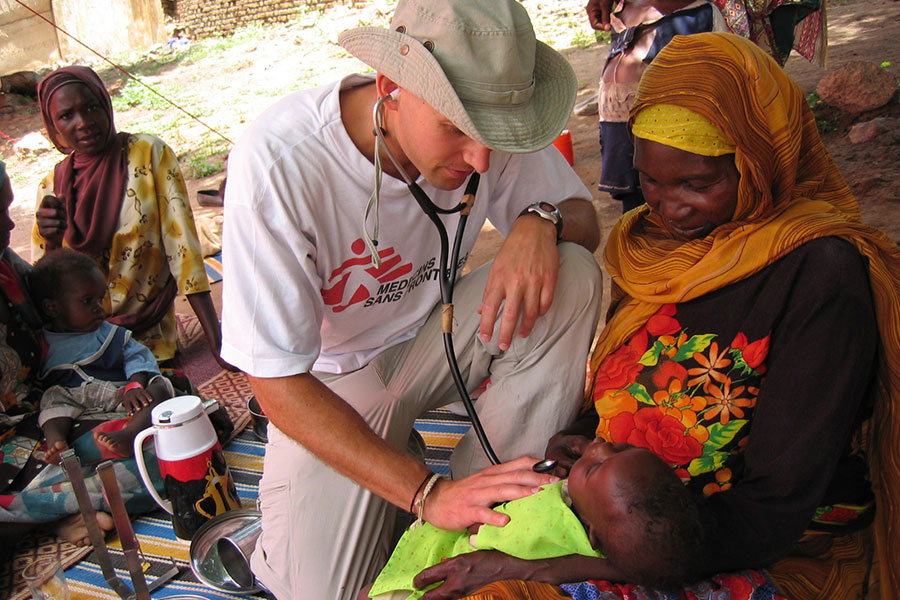
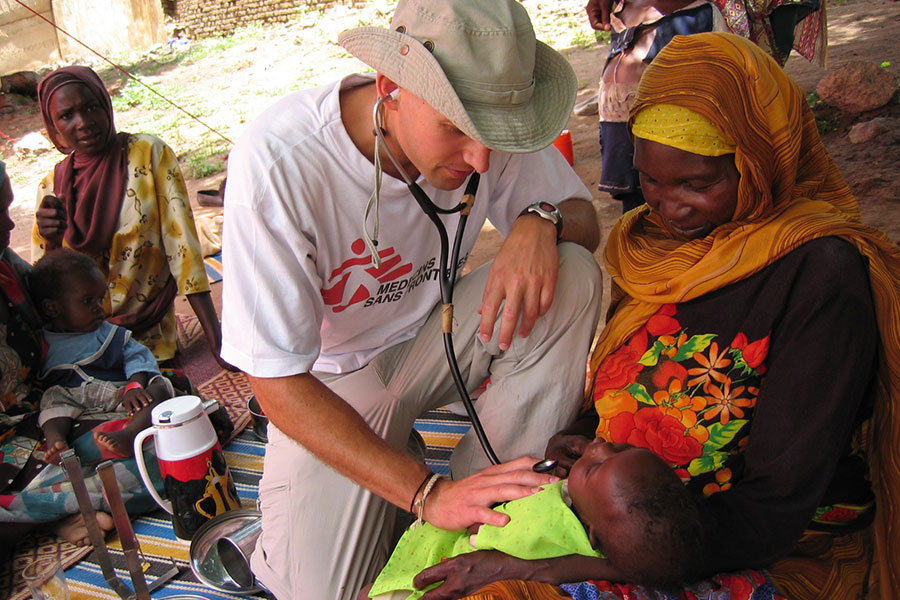
James Orbinski (pictured above) was the president of Doctors Without Borders when the organization was awarded the prestigious Nobel Peace prize in 1999 and his opinion is that consistency and a strong commitment from staff is the reason they won. They are also known for more than just their medical work – they also speak out on behalf of the people they treat and act to expose injustice.

Using his acceptance speech at the award ceremony, as a platform to speak out, Orbinski spoke directly to the then Russian leader Boris Yeltsin and condemned that country’s violence against civilians in Chechnya.

Justifying this unprecedented move, Orbinski said: “Silence has long been confused with neutrality, and has been presented as a necessary condition for humanitarian action. From its beginning, MSF was created in opposition to this assumption. We are not sure that words can always save lives, but we know that silence can certainly kill.”

doctors-without-borders

A strange trait of humanity is that governments always seem to find money for weapons and war but not for medical supplies. “An act of charity is not a necessity for many governments,” says Orbinski. He’s the first acknowledge both the power and the limitations of humanitarianism.

“No doctor can stop a genocide. No humanitarian can stop ethnic cleansing, just as no humanitarian can make war. And no humanitarian can make peace. These are political responsibilities, not humanitarian imperatives. The humanitarian act is the most apolitical of all acts, but if its actions and its morality are taken seriously, it has the most profound of political implications. And the fight against impunity is one of these implications,” he says.

Orbinski’s defining moment came about while working in Somalia in 1992 during the famine and civil war. He developed pneumonia and then meningitis and I was flown out to Nairobi, Kenya for treatment. At the time, he was also struggling to find doctors to work in Somalia, a country where they were trying to treat 100,000 patients. “I remember looking at myself in the mirror of the hospital washroom,” he says. “ I realized that if I didn’t go back, I could never look at myself the same way again, I would have failed. The question to myself was was, ‘Will you go back?’ My answer was ‘Yes!’”

Orbinski witnessed atrocities so horrific that he struggled to continue at times. Yet, he knew the people they were helping needed the assistance more than his personal coping problems. “There are moments when you can become overwhelmed,” he says. But you need to recognize that if you have the capacity or ability to respond to another’s circumstances, then you should.”

He’s a strong believer in looking beyond the “Band-Aid” – approach of patching something up and moving on, but acknowledges that the Band-Aid approach has its merits.

“You do it so that a person or community has an unbearable and intolerable suffering relieved,” says Orbinski. “It can be the first step in helping people restore their own economy or political system. It’s worth it because it allows a person who’s suffering to become an active participant in determining their own destiny.”

doctors-without-borders-2

The latest global crisis is the hundreds of thousands of people fleeing the war Syria and Iraq. Thousands are dying in a desperate attempt to enter Europe with their families. Orbinski is clear on how we should view these people. “It’s not an immigration crisis. These are not immigrants –they are refugees,” he says.

“To risk the lives of you and your family, you have to be leaving a situation that is far worse than the risk you are taking.”

He also wants to dispel the myth that these are people simply looking for jobs, for the so-called “better life.” Many like to refer to.

“It’s not the choice of a nation to refuse a refugee, says Orbinski. “This has been international law since the Second World War. I remember very well the slogan that emerged after this war; around the Holocaust and the massive numbers of people moving across Europe and the world – never again.”

The Science of Success Begins With “Knowing”


This past week I led a strategy retreat for an amazing financial institution that provides capital and counseling to small business owners. Their mission is to help entrepreneurs build their businesses, increase employment and help their communities thrive. They operate aggressively throughout California and Arizona and are looking to spread their wings nationally.

Their strategic question was “How can we offer more relevant products and services to help our clients be successful?”  I love to work with organizations like this who understand that the purpose of business is to improve humanity using the disciplines of capitalism. Ah… very refreshing.

I use the same process framework whether I am helping leadership teams create a new business strategy, or with individuals who just want a new life strategy. It’s based on the synthesis of years of research and practice on the key factors that produce fulfilling success. I stress the word fulfilling for a reason.

We all know people who have been quite successful in making money for achieving fame but are nevertheless miserable. That’s because neither money nor fame on their own are soul satisfying. Success without meaning is empty. We are meaning seeking beings. We can’t help it.

Today, we live in a great age in which most of us can enrich ourselves by enriching others.  By “enrich” I mean the BIG definition of that word. We can enrich people’s health, knowledge, capabilities, opportunities, emotional and social lives. We can enrich people’s happiness and enjoyment of life. When we invest our talents to improve others’ quality of life we improve our own. There has never been a better time to seek success by creating genuine value for others. For my client leadership team they wanted to increase their self-worth as they help small business owners increase their net-worth.

This is very fulfilling to me as I have a high interest in helping  wise-hearted others understand the science-based framework for success so our culture can achieve escape velocity from the forces of fear, bias and toxic self-interest.

Science of success is summed up in the word K(NO)W. Just for fun I pronounce it K-NO-W. It means that to be successful you have to know what your soul really wants and say no to everything else.

It turns out this is not very easy. You live in a culture in which you are bombarded with as many as 5,000 selling messages every day telling you that you will never be happy or successful if you don’t buy something or change your appearance or your job or your home or your car or whatever else crazy advertisers can think up. You also probably work in a hierarchical structure in which being a boss is almost always considered better than being great at what you do. We are constantly told it’s better to fit in than to stand out. Yet the people we most admire stand out the most.

I find that leaders have it extra tough. CEOs are told by their board and the idiots of Wall Street what success is. I found this creates a dense fog that often takes months to dissipate as I continually ask my clients “But what difference do YOU really want to make? How do you define success for you?” Many don’t have a very clear answer.

And my work with women convinces me that women have a very hard time with self-directed goal clarity.  In most organizations and most families men set the agenda and women are expected to make that agenda work.  Until very recently women who have their own life visions were considered un-womanly.

One thing I’m quite sure of is that you will never feel fulfilled by spending your life fulfilling other people’s goals.  I’ve never seen it. So if you’re interested in authentic, soul-satisfying success here are the five steps I use.

I call it SMART Power.  It’s smart because it uses the five forces that make human beings powerful and effective.  These are the forces of (1) inspiration, (2) intellect, (3) emotion (4) social connection and (5) physical energy and vitality.  When you ignite all of these human forces your power to succeed multiplies. I assure you this is not mumbo-jumbo.  It’s exactly how I help individuals and organizations transform.

I want to explain this process carefully so I’m only going to explain step one, Self-Vision, in this blog.  I will follow up with the other four steps in next week’s blog.  So let’s get started.

(1) Self-Vision.  The foundation of success is to KNOW. You simply need to know what you most deeply desire to achieve. This is not trivial. You must set your direction on a set of goals that you find intrinsically meaningful. I ask people to literally visualize their best possible life two years from now. For most people this is not easy. It requires self-reflection.

Time strapped leaders often suffer from vision dyslexia. They are unclear and unsure. I am frequently retained by CEOs who are concerned that their leadership teams seem confused and lacking in confidence. I am quick to point out that their teams’ confusion is simply a vivid reflection of their own.

For these leaders, I ask them to paint me a detailed picture of what their optimal leadership success would look like two years hence. I ask them what impact they personally want to have on their customers, their employees and society. I often get into mental-emotional wrestling matches because leaders tend to regurgitate corporate vision statements, financial goals and other superficial answers because they have become too busy to have a high level of self-awareness.

So I have to ask them challenging questions, like… “What difference do you really want make?” or as a leader “If your children understood what you do, what would make your children most proud of you.” I’ll also ask them what leaders they most admire and why they admire them. They usually come up with the typical names of high profile successful people like Steve Jobs or Winston Churchill or even Elon Musk. Then I ask them why they admire them. The answers are usually that they are visionary and strong.  I point out that we admire people who know what they want and are focused on producing it. But it all starts with KNOWING. Knowing the difference you, your deepest intrinsic self, is longing to make.

When I work with individuals, I follow a similar process. I ask “Of the people you know well, whose personal life do you most admire?”  What elements of their lives would you like to incorporate into your own?”

Having a clear self- vision as to what constitutes your best life or the leadership impact you want to have is absolutely essential to your success. It’s that vision that creates an ever-present “intention” that changes how you look at everything.  It opens your mind to previously invisible opportunities and warns you of hidden pitfalls.

It changes the conversations you have, the people you spend time with, the TV shows you watch, the articles and books that you read. When your self-vision is clear it becomes the operating system of your daily life. Every decision is either taking toward fulfillment or wasting your time. Without clarity you could also be trapped in habits that sabotage your success.

One bad habit is paying attention to people, problems and situations that take us off track. We live in a very complicated age that is saturated with people who are requesting or even demanding we pay attention to them. All this noise makes us deaf to the voice of our unique vision.

Remember your true vision is always positive.  It isn’t about relief from the things in your life you don’t want. It is a picture of you living and leading your best life. It isn’t a wish or a tangle of emotional longings. It is a clear direction with a set of goals that are calling for your focused effort.

So for now, practice self-empathy. Please, go for a walk on the beach, in the woods or some other place in nature and reflect on how you want to specifically invest your time, talent and energy to make your work and your life a reflection of your highest and deepest desires. Finish these three questions:

  1. What I want from my career is…
  2. What I want out of life is…
  3. The difference I want to make is…

If your future were painted on a mural, what would I see? To paint that picture what needs to change in the next two years?

How Profit Stifles Your leadership

I woke up this morning to an angry journalist on the radio who vigorously complained about Pope Francis’ latest comments on profits. Apparently His Sanctity had spoken about the dangers of “capital dominating men instead of men controlling capital” at an event with cooperative credit banks last Friday.

Although angry radio talk is not my cup of tea, I found this popular Spanish journalist’s rant very interesting. It took me back to something I read yesterday in a fascinating book called “Wild”, by Jay Griffiths. The author describes Peruvian indigenous tribes and their beliefs about the lush Amazon landscape they inhabit. It seems that they are angered by how large pharmaceutical companies come to them in search of knowledge around plants’ curative properties.

Once they have it, they slap an international patent on it and exploit it for profit. As Griffiths writes: “They rob us and make large amounts of money from our knowledge. Not for nothing is wild knowledge called ‘common knowledge’— common … is free, open, unenclosed; and ‘free’ financially; it must not be bought or sold for profit.”

In awe of what I understood to be another simple, obvious piece of indigenous, wild wisdom, I spent all afternoon thinking about how profit is blinding us today. Why are we so obsessed by profit? Why have we built an economy where operating without profit makes no sense? And how much more destruction can profit bring upon our planet before we come back to the wild, primal senses we once had, but have never forgotten?

Of course, if we take profit off the table 99% of western population will be up in arms. Profit seems to be the only good reason we have to keep working our lives away, missing out on our kids, our families and our own right to playful enjoyment of life. Everybody says it’s great and yearly rankings on every well-respected economic publication heartily praise those who have peaked the list of profit. Pressure to make profits is so huge that the freedom to not make them has disappeared. In our economy, those who don’t make a profit are mismanaging their companies: What losers!!

And yet we go back to look at the way indigenous people live in remote corners of our planet and we learn that a big part of training for young hunters has to do with knowing that taking too much is not sustainable. Young adults in the wild are taught respect, self-restraint, and the importance of doing something useful with what they take in order to honor the very gift they received. Young men and women in our world do an MBA where they are instructed to pursue profit whatever it takes.

Our collective obsession with profit is the very root of our ecological disasters, as Pope Francis pointed out in his latest encyclical, published last June. We don’t need to be Catholic to recognize the fundamental questions the Pope is courageously hitting on. It always takes a courageous leader to say what everybody knows, but prefers not to mention.

So why aren’t we doing anything about it? Because it’s easier to remain scared. Profit hides our fears. Profit is that hidden stash we save for when things turn bad. We need profit in order to sleep at night. Profit patronizes and stifles us to stay small, terrified, weak and not courageous at all. An indigenous tribal leader, in contrast, would feel deeply ashamed of making a profit.

It’s also true that aboriginal peoples are much better at dealing with their emotions than we are. They have not been corrupted by centuries of cruel wars and senseless slaughter. Wild tribes still live childhoods in which wildness and emotion are not dangerous, but playful tests to be savored and eventually overcome. We, on the other hand, live fearfully in comfortable lives in which quality is determined by the amount of material comfort protecting us from our own angst.

We, then, have the chance to be greater. You and I both have a bigger challenge on our hands if we decide to drop our profit mindsets and dare to approach lifestyles of uncertainty and a little more scarcity. What is it we fear? Not having enough? Ironically, this crisis should have taught us all that living with a little less isn’t so bad. The lesson in scarcity is not one of strict sacrifice, as some would have us believe, but rather an invitation to flow with what comes and goes. Not giving into our temptation to buy a new car, for example, would allow us to resolve our feelings instead of smothering them temporarily. Once we did face and release such feelings, that car might fall right into our laps for a bargain price!

Profit has become king in a society riveted with fear. All we need to do is face it. As long as we hide behind profit to keep our own fear away, we prolong this paradigm, and what’s worse, we teach our children to do the same. We set them up for little lives of shudders and tremors under the large, powerful shadow of what we dread.

We are all called to become warriors of the wild. The wild is full of wisdom and abundance. But in order to get back to the original state our species was designed for, we westerners have to face up to our legacy of wars, slaughter, pillage and violent profit. A warrior of the wild is he who has learned to fight through his own fear, resist the intensity of his own grief, and brave the expression of his own anger. It takes a lot of courage to let go of profit and face the unconscious history of emotional wreckage left behind from our many disputes over profit in the past.

Time is running out. The planet is too. Profit is not our friend. Embrace the Wild!

Want To Lead? Let Go Of Your Plans!

“If you want to make God laugh, tell him your plans,” said Woody Allen once. Ingenious as always, he hit on a fact of life we all struggle with. As we get back to work and face the year to come, we are severely tempted to set goals and commit to plans. But plans, my friend, are actually holding your leadership back!

Did I say tempted? I came up short: in today’s society planning is expected, enforced, trained and evaluated constantly on every front. “What are your plans for Christmas? How do you expect to have a nice family holiday if you don’t schedule it now?” These are the type of questions asked of you over coffee. Then you’re told you should really start thinking about the school you want to apply to for your unborn child. After that, somebody comments on how you will be a total failure in life if you have not written down exactly where you want to be working in ten years time. Are you exhausted from this pressure yet? I certainly am!

Being constantly subjected to this kind of pressure as an adult is annoying, but we’re supposed to be ready for life’s challenges, right? Our kids, however, are not. And our shared obsession with controlling future outcomes of everything we do is spreading to the way we educate new generations. We find ourselves pressuring our children to decide what career they want when they grow up, which skills and sports they want to develop in order to be happy and how to set goals in every aspect of their lives and how to achieve them.

Setting goals and working towards them is a wonderful trait when used correctly. However, it’s a total waste of time and an obstacle to our leadership performance when it becomes as obsessive as it is now. Because as we all know, God is laughing belly-up as we speak, thinking of all the different ways we will be pushed straight out of our paths.

Many of the world’s most respected winners never expected to become so successful. Think of Steve Jobs and Bill Gates building nerdy computers in their garages, or innocent fifteen year-old girls discovered on the streets by  photographers who became top models. Even those who actively pursued stardom got their break at the most unexpected moment, from the least probable friend or social gathering. The most frequently repeated phrase in interviews with famous people is: it just happened.

What would have happened if Giselle Bündchen had turned down her first modelling opportunities because she had planned to become a doctor. Or if Bill Gates had ignored his computer geek friends and their nerdy afternoons of programming in order to pursue a journalistic career instead. Fortunately, passion easily overrides the most prepared plans, and destiny, luck or divinity – whatever you believe makes the world go round – stop us in our tracks all the time.

Our intellectual minds are severely distraught by this unpredictability. The beauty of goals and plans is their linear nature: they are orderly and sequential, they can be added and subtracted, stretched out, pushed back and squeezed. Our minds love to spend time playing around with the little building blocks of our future goals.

Thinking ahead not only keeps us busy. It helps us feel we are in control of our lives. But mostly it just keeps us hidden safely away from any possible feelings of helplessness, fear or apprehension we may hold about the future and the enormity of the world around us. And so we make God laugh. Over and over again. Every Monday morning. Every first of January. And every first Monday of the new shool year.

Yet a leader who hides from himself behind plans and goals is no leader at all. He’s hiding! The very definition of leadership requires standing out in the light, in front of everyone else.

Our complex excel sheets and cash projections, our super strategic business plans and over intellectualized expectations of the future have become silly stories we tell ourselves to hold it together on a Monday morning. Or to help investors and analysts hold it together throughout the week. It’s not only God that laughs. Anybody with two eyes on their face and two feet on the ground is laughing as well.

If only we had the guts to stay in the present moment. If only we hadn’t become so scared of our own emotions rising to meet us on Monday mornings. Imagine where the world would be if all our heroes in history had hidden behind a pretty story or well-constructed plan on the day they had to step up to a new unpredictable challenge.

The key to be taken seriously by our followers is not in our minds or the strategies they can concoct, but in our hearts. This can be done by taking a deep breath when we sit at our desk in the morning and scanning ourselves for feelings, sensations, intuitions, yearnings and fears. It’s found in asking our minds to shut up for a minute: “Just give me a little space to feel myself today…”

Our hearts and their unpredictably curvy impressions, wants and passions are specifically designed to play with the uncertainty and playful dance of destiny, luck or divinity. Our hearts are the seats of our hidden wisdom. All we need to do is let go of our plans and surrender our minds…

…and let the fun begin!