Do You Have the Mindset for Super Productivity?

One of the greatest leaps in productivity I ever achieved was directly caused by my first business going bankrupt.  Well, technically my sandal company, Beachcomber Bills, didn’t go through bankruptcy. The financial splatter from the business failure was so complete the judge said we were too broke to go through bankruptcy.

My failure to pull that initially successful business out of a crash dive forced me to get very creative very fast. I woke up one morning in my newly rented house (because I lost the one I’d owned in the financial firestorm) with the new big idea. I started consulting for companies that were a lot like mine helping CEOs succeed where I had failed.

Another moment of peak productivity occurred when my mentor Stephen Covey, literally gave up trying to write Seven Habits of Effective People. He, along with two editors, had produced three manuscripts that just lacked the energy that his workshops were producing.  My productivity breakthrough came when it dawned on me that a transcript of his daylong workshop could be polished into a manuscript that would become an all-time bestseller.

Here’s my point.  Productivity that really counts is not so much about winning our daily battle to complete our tasks and respond to urgencies. No, if productivity is really about producing uncommon value then the most important capability we can master is the mindset that produces insight and the skill set to bring that breakthrough idea to life.

So let me emphasize my point. There’s a big industry that teaches people how to be productive.  Productivity hacks are all over the Internet.  And they work.  I teach them all the time myself but not as stand-alone skills. A few years ago when I was creating a new presentation and productivity workshop called Work Like a Genius, my team and I looked at the brain science, behavioral psychology, and studies on human energy to create a science-based daily schedule that maximizes your physical, mental and emotional energy to consistently do great work.

But the big insight from the research is that the people who’ve really changed the world and lived the most interesting lives did not make their contribution primarily from the volume of tasks they completed.   Rather, we admire them for the insights they brought to life that improved our lives.

The mindset for super productivity has been studied by a large group of researchers like Duke University’s Angela Duckworth and Stanford’s Carol Dweck.  A distillation of this research reveals two essential inner conditions that drive super productivity.

People who are super productive are both discontent and confident.  Research on human drive reveals that deep inner motivation comes from the self-knowledge of WHAT you really want that you are unwilling to live without.  Confidence comes from knowing HOW you attack problems and overcome obstacles. Confident people don’t try to do everything themselves to accomplish a goal. They do what they are best at and recruit others to do whatever else needs to be done.

Angela Duckworth’s research emphasizes that deep discontent leads to creative persistence.  Something she calls ‘grit,’ which is a mental and emotional mindset that drives you to continually develop new ways to overcome persistent obstacles.  You literally wrestle a problem to death until you solve it.

Innovative solutions to great problems don’t come from just being dissatisfied with the status quo.  You have to be very discontent.  Just ask yourself this question.  If your work and your life didn’t change too much over the next five years would that be okay?  If it is, you may not be discontented enough to be self-inspired.  So the first law of productivity is to get riled up over something you really want to change.

Be really clear that the outcome you’re seeking is what you really want.  High-achieving people can get so seduced by the psychological payoff for problem-solving that they can become over-invested in achieving goals that don’t matter. Don’t let that happen to you.

Productive people are also self-aware of HOW they succeed. Your HOW consists of three things:

  1. How you act on your goals.  Some people just visualize the outcome and start working.  They’re confident they can figure it out as they go.  Other people are planners.  They create a plan with checklists and modify it as necessary. Ultimately both approaches must have flexibility built-in. Just be aware that to overcome the psychological resistance to start a project you need to understand whether your core orientation is ‘Doer’ or a ‘Planner.’ Both work.
  2. How you learn what you need to learn to excel. Some people prefer to study.  Others want to ask experts and recruit their help.  And some just like to plunge ahead using trial and error as rapidly as possible to learn what works.  Once a project you start engages other people, it’s good to have all three types of learners on your team.
  3. How you best interact with people.  Some people are natural collaborators.  Others like to work independently.  And some need to be in charge. Our research shows that interacting effectively with people requires the ability to inspire best efforts and align actions. The skills of inspiration and aligning group work are not natural to most people.  If you’re going to be super productive these are vital skills to master.

Oh yes, there’s one more thing super productive people do.

Anytime you want to do something out of the ordinary you will soon find yourself being the captain of a boat surrounded by a sea of skepticism.  As long as you keep the boat of your mindset watertight the toxic water of skepticism will not seep into your mind-boat and sink it.

Most people don’t fail… they give up.

I hope you’re really discontent.  The world we have created is not the best we can do. If you are discontent use that energy productively.  When you change your world the world changes…we all need the change only you can make.

The Sad Fable of The Successful Business that Failed

In the land of Milk and Honey, there was once a first-time CEO who founded a company that he intended to become a gamechanger. And it was. The CEO did all the right things, or so he thought.

He hired a team of people that were incredibly bright and hungry to make their mark. The company had a brilliant business plan, built on a solid and unique software platform, executed almost flawlessly in an emerging market that took off like wildfire. Within two years his company was the darling of the industry. His original team seemed to grow along with the company and after four years had 500 employees. The spirit in the place was wonderful. It had all of the accoutrements of a dazzling workplace—free lunches and ping pong tables. The feel of the place was creative and electric.

Then, as the company continued to grow, backed by the usual crowd of investors, the company went public. And like so many others of its kind, found itself with a huge market cap, tons of money, and room to grow. And so it did. Within three years it had well over 3,000 employees. Everything seemed wonderful, except for one thing. There was no company culture to speak of. In fact, the CEO and the team didn’t think about culture much. Who could? It was all they could do to keep up with the market growth. There were no clear values other than the usual, highly aggressive goals, aspirations, and expectations. There were few women at the top of the company. The few that did emerge at the top were just as “masculine” as the men. The leaders of the company were uber smart and they cultivated a culture made up of mental gunslingers. You know the kind: they rip you to shreds mentally when they find a flaw in your reasoning or program design. The ones who succeeded were wickedly smart, highly aggressive and quite heroic. Sadly, there was one thing missing: A collaborative spirit.

Now the company finds it has a huge problem. Having made a bunch of money, many of the early employees are leaving. And with it, much of the company’s heart left as well. Some of the leaders are being replaced by more experienced people who are not as respected by the young mental gunslingers. Profitability has become a mantra, much more so than revenue growth, and the fire is burning out.

This story is not made up. I just visited a company exactly like this. It will likely fall by the wayside and join the many other companies who have experienced rapid growth, fueled by smart people with big ideas, who sold a good game, but couldn’t sustain it. The company will get bought out eventually and become a ghost of its former self. The leaders have no clue. They are arrogant, wealthy beyond their dreams, and believe in their story. As a result, any conversation around changing its culture to make it collaborative and sustainable fell on deaf ears.

And as I reflect on their situation, I believe there is little chance they could, or would, change. More importantly, the opportunity for real and sustainable growth was lost a long time ago. The time to build a culture is before a company grows too fast. I have long believed that it’s much easier to create a culture than to change one. When the company consisted of 25 or 50 employees, that was the time to think about practices and policies that invited collaboration. That was the time to be extra careful about whom they hired in leadership roles – those that care more about heart and wisdom than about cleverness and passion. That was the time to be selective about their employees and for them to hire for integrity, rather than the ability to skewer one another with acumen and mental quickness. When you hire people who can easily work together and who honor and respect one another, and who can slow down enough to bring wisdom to the conversation, you have the potential for creating a sustainable culture, one that is built for growth rather than built to sell.

I know this message will fall on some deaf ears, but my hope is that there are a few wise leaders out there who will take this message to heart.


The Science of Success: In Five Steps

The factors that define success have been studied and researched to a very fine point over the last 50 years. Success is not a mystery; it’s a 5-step habit:

1. The first stepSelf-Vision, is the most critical because it’s how you define success. It answers your ‘WHAT’ question. What do you really want? This is nothing less than the intention you hold for your life. Many people spend their whole lives investing superhuman effort in achieving goals that are ultimately not satisfying. We can avoid all that. Today we have well researched ‘end of life’ studies that definitively tell us what goals will make us happy and satisfied as our lifetimes come to a close. (See “Triumphs of Experience” by George Vaillant) So as I laid out previously, take the time to reflect on (1) what you want to achieve through your work, (2) how you want to enjoy your life, and (3) the difference you want to make. The more clearly you KNOW what your soul desires the easier it will be to say NO to other people’s agendas and the zillion distractions we face each day.

2. The second step is self-inspiration. This answers your ‘WHY’ question. Achieving success will take you out of your comfort zone because soul satisfying success requires growth. Without inspiration it is almost impossible to transcend old habits, procrastination and general foolishness that gets in the way of your best life. Self-inspiration starts with motivation. Psychologists tell us that we are far more motivated by our fears than by our lofty desires. So the way I have come to teach this principle is that we are motivated by our fears and inspired by our dreams.

Researchers at the University of Michigan have found that the key to high motivation is to clearly define the things in your life that are unacceptable and ask yourself “What will happen if nothing changes?” So, if you are in a mind-numbing job that requires constant overwork resulting in relentless stress…what will your work life be like two years from now if nothing changes? It will suck, right? Then ask yourself “Is that okay?” If you have maladapted and expect nothing greater for yourself it means you have come to accept the un-acceptable. Stop that. Stop accepting your status quo. Your motivation to change has to come from your self-respect.

Once you are motivated to change, you can unleash the inspiration of your self-vision. Vividly imagine how good your work and life can be by doing intrinsically rewarding work with people you respect at a pace that is sustainable. Ignite a bonfire of creativity and commitment. It will inspire you to act.

3. The third step is self-initiative. This addresses the ‘HOW’ question. This means taking responsibility to get into consistent action. Be proactive. The world will open up when you put the key in the lock to your best future. Economist Richard Wiseman, author of the “The Luck Factor” outlines the three elements that unlock good fortune.

  1. Open your mind.  There are many paths to your self-vision. Don’t get trapped by the mistaken notion there is only one company you should work for or even one profession that will satisfy you. When you open your mind you will see opportunities for learning and experiences that will be useful on your journey. Exercise wisdom and discernment to distinguish between being sidetracked and open-minded. I have found virtually no life experience is wasted if you stay focused on how to leverage it in the pursuit of your genuine dream.
  2. Engage new people and tell them what you’re up to. Wiseman has identified this habit as being the single most important activity for people who want big, beautiful opportunities.  People you know well probably already know what you want and what you can do. They are already providing all the help they can. It’s the big ring of people known as the ‘friends of your friends’ that you want to talk to… and also strangers. Research confirms your best opportunities will come from meeting new people.  If you express your goals and dreams with clarity and confidence they will often think of someone else you don’t know that you need to meet because they can help you.  In the college class that I teach on career changes I challenge students to tell 100 new people in 100 days what their professional dreams are. What these students experience is a massive increase in new opportunities. So please try it for yourself.
  3. Pay attention. Pay attention to what’s working and what isn’t. Pay attention to what is helping you get closer to your dream and what is a waste of time. Your daily experience is full of clues that serve as Hansel and Gretel breadcrumbs that will keep you from getting lost in the forest. Follow the breadcrumbs. Stop doing what isn’t working so you can increase your energy for step number four.

4) The fourth step is self-investment.  This is the ‘DO’ principle. It means you are going to ‘over invest’ in learning what you need to learn to be able to do what you need to do to become extraordinary. Most people will just try to keep getting what they want by just continuing to do what they are already doing.  But real success comes from making a ferocious commitment to what is necessary. By ferocious I don’t mean that you put your personal life on hold, ignore your health or ditch your loved ones. What I mean is that you must simply focus virtually all your working energy on the few activities that will make the most difference.

You must still live a balanced life. Research shows that the social support from intimate relationships and the benefits of fitness and hobbies will make you more creative, productive and successful than if you just become a mono-maniac.  So the over-investment I am talking about is simply over-investing your work time, attention and effort in the key activities that will drive your success.

S-Strengths.  You need to over-invest your motivated talents in what you are trying to accomplish. Your motivated talent is something you enjoy doing that gives you a high return on effort. If you are clear on what your strengths are, ask others who know you well what they most admire about you and what they think you do really well. You might be surprised.

G-Gaps. What needs to happen for you to be successful that you probably are not going to do? For instance I have been diagnosed as a hyper-visionary. I am a volcano of new ideas. But I tend to get scattered. Sustained focus is not my strength so I need to find others to team with to fill in my gaps. Everyone has gaps.

O-Opportunities. What opportunities do you have right now that you need to seize to keep moving in the direction of the success you’re seeking? Right now there are people that you should follow-up with who will help you meet the people you need to meet that will be a booster rocket to your success. Act on your opportunities and you will have more of them.

D-Distractions. I have found it’s helpful to make a list of internal and external distractions. Internal distractions arise from an undisciplined mind that quickly leads to external distractions. For instance if you were spending more than 30 to 45 minutes today on recreational social media that is valuable time you could be spending learning and doing things vital to your success. By writing down your habitual distractions your awareness will disempower them.

So the summary of step four is to use your strengths to invest in opportunities with increasing velocity. Enlist others to fill in your gaps and change any distracting habits.

5) Grit. This is the ‘Review’ principle. This means you are constantly reviewing what is working and what isn’t and re-investing in your progress. Researcher Dr. Angela Duckworth has isolated that the most potent success factor of all is GRIT. Grit is simply creative persistence. Persistence alone will lead you to drown in the ocean of Einstein’s definition of insanity. (Doing the same thing over and over again while expecting a different result.) Creative persistence means that you remain locked on your self-vision but you are constantly employing thinking agility to make course corrections that will enable you to overcome the inevitable roadblocks that suddenly appear around blind corners on the road of life. Grit is primarily an act of Will. (Ok, that was a pun I could not resist.)

The 5 evidence-based success factors; Self-Vision, Self-Inspiration, Self-Initiative, Self-Investment and Grit will transform your life. I know because it transformed mine. Go for it.

How Trophy Hunting Perverts Leadership

Do you think trophy hunting is only a problem for innocent lions in Africa? Think again. We’re doing to animals exactly what we sometimes do to ourselves. It makes us very small leaders, compared to what we could be if we stopped competing for trophies.

Javier is a human trophy I know especially well. He’s always been very handsome. He holds several nobility titles, which places him within the very special, highly coveted elite in Europe. You can imagine how women swarm around him. He married the smartest, most strategic –and beautiful, of course! – princess of them all. His life looks like a Disneyland fairytale where everybody smiles, looks great in bikinis and swim trunks on yachts, rubbing shoulders with other handsome and influential Barbies and Kens from diverse social groups. They’re the picture of success. Although, something’s amiss.

Javier’s eyes often go blank. Very often. He’s developed an amazing talent to deviate a conversation away from himself, to escape undetected into his own hidden world of freedom. And this, my friends, is the smallest fact overlooked by most – a crack in the perfection that betrays the fact that all is not what it seems.

Javier is a trophy. He was raised to be a trophy, just like those tame lions who are secretly sold for canned hunting, as described in the new movie Blood Lions. He is hunted daily by men and women, who want to put a piece of his handsome aristocracy on their walls. Having been raised to smile and respond positively, Javier plays right into the hands of these savvy hunters.

Javier may end up being another tragic story of destruction through a lack of awareness. He doesn’t see or feel the wild lion that he is, underneath all that tame, well-behaved protocol. His loved ones love him as long as he keeps playing the game, keeps bringing prizes home, making them look good, smiling and submitting to what they need from him. They love his historically pure-bred exquisiteness so much, that they fail to notice his empty, absent eyes.

The small crack in this Disneyland family game, however, has been growing silently, slowly, almost imperceptibly. I take some credit in this, though Javier might say I’m the witch in his fairytale. I started asking questions. I gave feedback. I remained silent when his eyes went blank until he returned to the conversation, which he obviously found very annoying. He denied everything. Like many animal activists, I fought his denial. Eventually I learned that fighting isn’t the way to go if you want to raise awareness. The only thing that raises awareness is light. And time. Lots of time. Exasperating amounts of time. Light will find its way through the cracks naturally, if we allow it.

Everybody tells me I’m wrong. Everybody sees him as a silly, selfish, good-looking trophy husband and prize-winner who basks in his own glory. Women compete with each other for this attention. Brands grant him awards to get a photo of him in their corporate colors, shaking hands with their top executives in the press. Because this is what we do all day long – we compete for things.

This is what we’re taught as young children:

“Work hard. Try harder. Be smarter. Network the right people. Get Javier on your shortlist of closest friends. Give him free stuff. Invite him to your parties. Buy his products. Flatter him a little. Even better, flatter him a lot. Do him favors. Cuddle him like you would cuddle a lion cub until he walks right into your arms and can’t give up your comforting hands. Then show him off to the world and receive rightful praise. You truly must be the smartest and most beautiful of them all. Look in your mirror and ask again. Congratulations! Now others will compete to get closer to you too!”

On paper Javier is a leader. He started his own company, then ran it into the ground in a very elegant and aristocratic way. That kind of blew a few holes in his untainted Disneyland décor of success, happiness and perfection. He started a new company that now gives his owners what they want, while he can fly away to do what he loves, unbeknownst to all. This one seems to be doing well. At least on paper.

I met him when he was the only person who hadn’t yet realized that his first company was dead. It was horrible. He was in pain. Not only was he failing to bring home the prizes the entire family expected of him, he was beginning to actually feel something real – instead of manipulation, photogenic lovey-dovey and happy-happy nonsense. To lose a company you’ve built tirelessly for fifteen years is like losing a child, it’s awful. It’s a huge wake-up call in life.

To lose a company you’ve built tirelessly for over fifteen years is like losing a son, it’s awful. It’s a huge wake-up call in life.

Five years on, I’ve shed a lot of light on the wild within Javier, like the wild lion, who is magnificent when you let it do what it does best. Everything we admire and dream about in wild animals is taken away from them when we jail them or force them under our will. Everything that could be admirable in our own animal selves is forced into silent submission by the instructions we receive from society to compete, succeed, win races: “Feel happy and deny all other feelings. Smile Godammit!”

Because everybody in his life wants something from him, Javier suspects I too want to use him. I too was raised in a similar society, and yes, I did what everybody else did when we met. I too unknowingly played the hunting game. I felt very frustrated because I had no interest in the prizes, the titles or the handsomeness. I was taken by a challenge to uncover a mysterious wild beauty in him. He was the perfect trap for a leadership coach like me, who brings light into the darkest, most loveless of places.

I often laugh at the fact that learning to ride a horse as an adult was my most enlightening initiation into what true leadership is. Trying to coach the most un-coachable man I’ve ever met turned out to be even more so. He resisted me with such force that I was forced to look at myself in the mirror again and again. As I often find by learning from animals, I also received incredible insights in my battle against this mystery of a man.

As it turned out, he kicked all competitive and hunting tendencies right out of me. I slowly woke up to many of the deep truths about leadership that I regularly share at Real Leaders. It took a long time and it hurt like hell. We don’t become wise by sitting in bliss.

We don’t become wise by sitting in bliss.

I really hope Javier’s wildest self does break free from the chains of Disneyland. It must be hard to give up so much. Everybody he loves will resist violently to keep him tame inside a gold-plated cage. Society would label him a fool for giving up the glory we’re all supposed to be hunting for. If he does succeed, he will prove how incredibly superior wild passion is compared to our petty mind games. And once he’s free, deeply, truly free, he’ll be a hell of a leader. The kind our planet desperately needs: the might of a lion and the courage of a king.

True Victory is Honoring the Dead on Both Sides

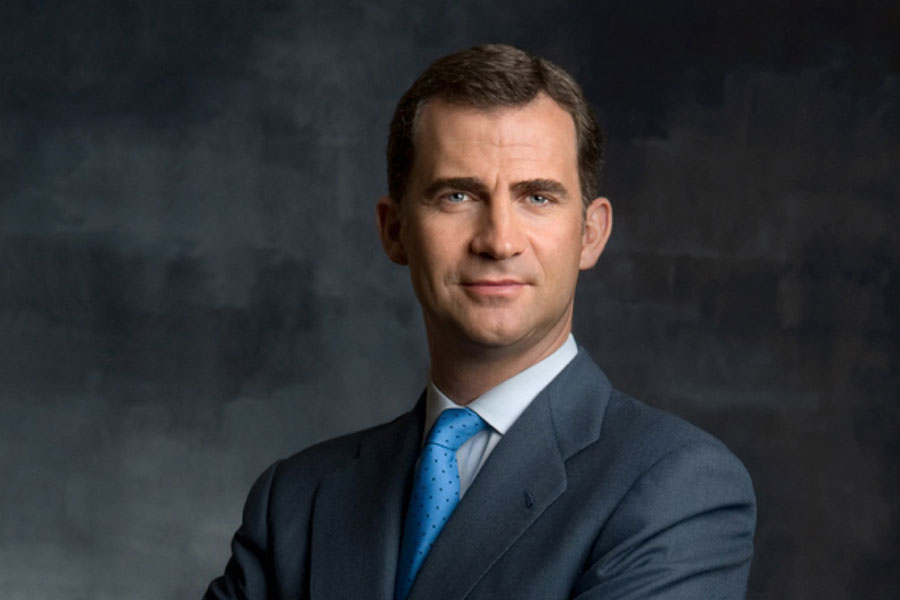
On 12th of October we held Spain’s national holiday to celebrate the arrival of Christopher Columbus on American soil in 1492. More than five hundred years later, our ability to include everyone under Spanish King Felipe’s (pictured above) leadership is being tested. Here’s why.

If you’ve followed the news lately, you must have read that Cataluña is threatening to separate from Spain. At least, a group of its politicians wants to. Polls, votes and individual declarations of allegiance seem to have divided the Catalans in half. It’s an enormous issue for us Spaniards because if Catalunya did go that route, they might soon be followed by the Basque region. Then…well, Galicia, Valencia and Balear Islands might want to reinstate their autonomy too. Spain is what you might call an acutely diverse team.

Spain is what you might call an acutely diverse team.

As if this wasn’t enough, we’re also quite conflicted about our role in Latin America. Like many other European countries, once we’ve finished exploring and conquering our own continent, we focused on the rest of the world. Shamefully, we weren’t exactly elegant about it. Who was?

Twitter burned all day recently with two lines of conversation: One celebrating our country, Hispanic culture, national unity and our ambition to lead the Spanish speaking world. The other, sparked by the new mayor of Barcelona, under a Spanish hashtag, meaning “nothing to celebrate,” denounced genocide, massacre and exploitation on the new continent. Representatives of left-wing parties and regional governments, those most inclined to exit, showed their disdain by their silence. They were mentioned by the media all day long due to their angry absence. Spain gave a colorful demonstration of diversity at its most extreme.

Still, nobody was indifferent. Those opposed to the separation didn’t fail to come to Madrid to see the armed forces march down Castellana Avenue. And they obviously spent much time analyzing the press, deciding what to tweet, and gossiped with friends about proceedings at the political party they wanted nothing to do with. There couldn’t have been a more intense emotional entanglement joining us together under that red, yellow and white smoke left in the sky above our heads from the Eagle Patrol fly-by.

The opposite of love isn’t hatred. You can’t hate somebody or something you don’t still love on some level.

The opposite of love isn’t hatred. You can’t hate somebody that you don’t still love on some smaller level. This is the key to conquering the challenges of our Spanish diversity. It’s the key to leadership everywhere on our planet of infinite diversity. It requires a stronger type of leader to zap us all out of conflict, back into joyful performance. The kind of leader we haven’t seen for a long while, and certainly not in Spain by any means.


At the beginning of this holiday ceremony, once the royal family has arrived and taken their places, there’s an offering to those who have fallen during war. A large laurel wreath, adorned with a bow is placed at the foot of a monument by the King, after which, an anthem is sung. Many of these words are clearly directed at God. Not surprising, when we consider that military forces remain more tied to religion than civilians. Making a job out of death does that to you.

The problem is this: the absence of those who didn’t fight for the red, yellow and red of our flag, but for an opposing symbol. Their ancestors don’t feel included in this ritual. Their symbols are missing. It reads, or feels, like their dead aren’t being honored. As long as they aren’t included, Spain will not be united. Hispanics will also not feel allegiance. Every person who may have had an uncle, a grandfather or a great grandmother on the rebel side will feel a pang of exclusion.

And herein lies most of the leadership challenges we face today: the constant contractions and sensations within our bodies that tell us there are secrets we’ve overlooked. A deep, wild wisdom that speaks to us without words, pumping thick, emotion through our bodies throughout our lives.

Is the King consciously including all the indigenous leaders who died to hand America over to the Spanish when he sings this ritual tune? Is he honoring the powerful aboriginal warrior queens who defended Northern Spain from Roman Catholic attacks for centuries? Are we all thinking beyond our own flag when we say “brothers” in our song? Or are we still playing belittling games of rivalry, competition and satisfaction at having won? Are we looking down on those whose flags no longer fly before us? Or are we thanking them for their sacrifice?

Are we all thinking beyond our own flag when we say “brothers” in our song?

True wisdom, the kind we most lack in the rational societies of today, points to the example of ancestral leaders, who included the losers in their celebrations of battle. Magnanimous generals who pardoned an opposing fighter because he had shown courage, heroism and deep loyalty. Even Spanish bulls can be pardoned and honored in a bull-fight if they have demonstrated exceptional qualities of nobility and bravery. If we can honor a bull, why not the strong men and women who fought us to their deaths? How can we not bow our heads for the people who willfully gave up everything to build our nation, as they inevitably lost their own?

How can we not bow our heads for the people who willfully gave up everything to build our nation, as they inevitably lost their own?

This is our biggest obstacle to greatness. This is the next level of inclusion, that we all need to build  into our lives, businesses and families: respect and gratitude for all those who’ve died in battles that have shaped our world today. Heroism is heroism, no matter what flag it fights for. It should always be remembered. And once every fallen fighter is included in our songs, all hearts can then truly sing together.

The #BusinessCase for Gender Equality in Leadership


“No country can get ahead if it leaves what amounts to half the population behind.”

This quote from the McKinsey report, Economic Benefit of Gender Equality, provided a soft opening to a session focused on the data and facts pointing to the benefits of gender diversity in business.

Alison Pyott from Veris Wealth Partnership added that for the first time, we have research that links gender equality in society with gender equality in work, pointing to the holistic benefits of gender diversity. In fact, the McKinsey study cites “$28 trillion of additional annual GDP in 2025 in the full-potential scenario of bridging the gender gap,” begging the question of why aren’t we getting there faster?

Saundra Gibson from Credit Suisse offered that although “we conceptually agree having women in the workplace and a diverse workforce makes sense, now, we have statistics to prove that it is financially beneficial for companies to have a diverse workforce,” which starts to remove obstacles for progress.

In fact, according to “The CS Gender 3000: Women in Senior Management”: “Companies with more that one woman on the board have returned a compound 3.7 percent a year over those that have none since 2005.” Adding to this, “We find also that companies with higher female representation at the board level or in top management exhibit higher returns on equity, higher valuations and also higher payout ratios.”

Yet looking further, the data shows that its not just about women on Boards, but rather diversity across multiple levels of management that brings about the most positive returns. Homogeneity is the real enemy, hence funds and investment groups are demanding management-level — not just Board-level — diversity reporting.

Julie Gorte from PAX World Investments added that a “10 percent increase of women in top management positions improves the bank’s future return on equity by more than 4 percent p.a. and this positive relationship is almost twice as large during the global financial crisis than in stale market conditions” — showing that even in stale market conditions, diversity in management brings positive returns.

While the panel agreed that the increase in research and data points is crucial to progress the diversity argument, they were even more aware that the question of whether these statistics are correlation or causation remains unanswered. Susanne Katus from eRevalue also pointed out the importance of using statistics to tell a story so that the information stays with us, rather than being blinded by numbers.

This post first appeared on Sustainable Brands on October 8, 2015.

Arab Spring Gets A Boost With 2015 Nobel Peace Prize

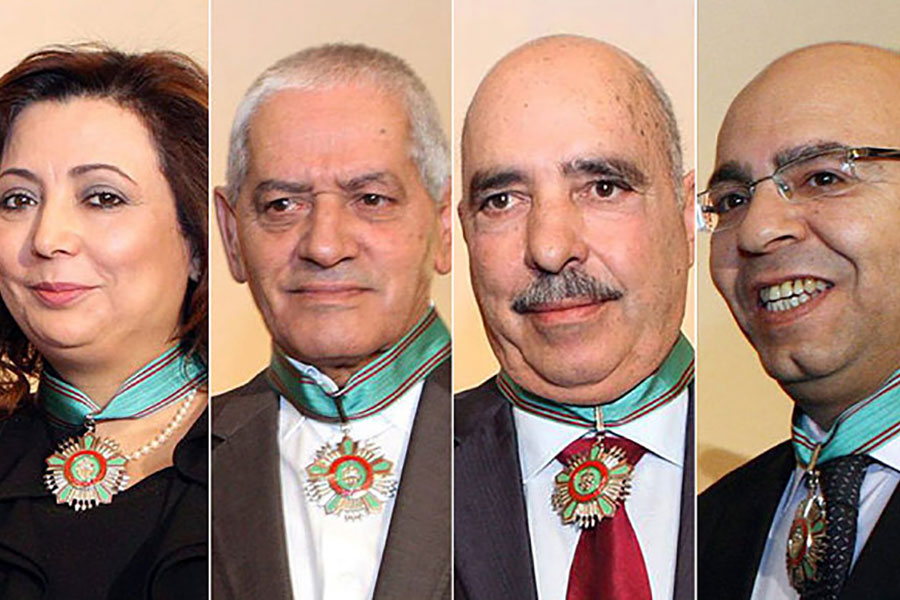
Norwegian Nobel Committee has decided that the Nobel Peace Prize for 2015 is to be awarded to the Tunisian National Dialogue Quartet for its decisive contribution to the building of a pluralistic democracy in Tunisia in the wake of the Jasmine Revolution of 2011. The Quartet was formed in the summer of 2013 when the democratization process was in danger of collapsing as a result of political assassinations and widespread social unrest. It established an alternative, peaceful political process at a time when the country was on the brink of civil war. It was thus instrumental in enabling Tunisia, in the space of a few years, to establish a constitutional system of government guaranteeing fundamental rights for the entire population, irrespective of gender, political conviction or religious belief.

The National Dialogue Quartet has comprised four key organizations in Tunisian civil society: the Tunisian General Labour Union (UGTT, Union Générale Tunisienne du Travail), the Tunisian Confederation of Industry, Trade and Handicrafts (UTICA, Union Tunisienne de l’Industrie, du Commerce et de l’Artisanat), the Tunisian Human Rights League (LTDH, La Ligue Tunisienne pour la Défense des Droits de l’Homme), and the Tunisian Order of Lawyers (Ordre National des Avocats de Tunisie). These organizations represent different sectors and values in Tunisian society: working life and welfare, principles of the rule of law and human rights. On this basis, the Quartet exercised its role as a mediator and driving force to advance peaceful democratic development in Tunisia with great moral authority. The Nobel Peace Prize for 2015 is awarded to this Quartet, not to the four individual organizations as such.

The Arab Spring originated in Tunisia in 2010-2011, but quickly spread to a number of countries in North Africa and the Middle East. In many of these countries, the struggle for democracy and fundamental rights has come to a standstill or suffered setbacks. Tunisia, however, has seen a democratic transition based on a vibrant civil society with demands for respect for basic human rights.

An essential factor for the culmination of the revolution in Tunisia in peaceful, democratic elections last autumn was the effort made by the Quartet to support the work of the constituent assembly and to secure approval of the constitutional process among the Tunisian population at large. The Quartet paved the way for a peaceful dialogue between the citizens, the political parties and the authorities and helped to find consensus-based solutions to a wide range of challenges across political and religious divides. The broad-based national dialogue that the Quartet succeeded in establishing countered the spread of violence in Tunisia and its function is therefore comparable to that of the peace congresses to which Alfred Nobel refers in his will.

The course that events have taken in Tunisia since the fall of the authoritarian Ben Ali regime in January 2011 is unique and remarkable for several reasons. Firstly, it shows that Islamist and secular political movements can work together to achieve significant results in the country’s best interests. The example of Tunisia thus underscores the value of dialogue and a sense of national belonging in a region marked by conflict. Secondly, the transition in Tunisia shows that civil society institutions and organizations can play a crucial role in a country’s democratization, and that such a process, even under difficult circumstances, can lead to free elections and the peaceful transfer of power. The National Dialogue Quartet must be given much of the credit for this achievement and for ensuring that the benefits of the Jasmine Revolution have not been lost.

Tunisia faces significant political, economic and security challenges. The Norwegian Nobel Committee hopes that this year’s prize will contribute towards safeguarding democracy in Tunisia and be an inspiration to all those who seek to promote peace and democracy in the Middle East, North Africa and the rest of the world. More than anything, the prize is intended as an encouragement to the Tunisian people, who despite major challenges have laid the groundwork for a national fraternity which the Committee hopes will serve as an example to be followed by other countries.

The Incredibly Simple Thing You Can Do Tonight to Avoid Being Stupid

I slid in to the airplane seat next to Henry. I hadn’t seen him in six years and he looked 16 years older. I had done an innovative marketing engagement for him that I had thoroughly enjoyed. He was smart, charismatic and purpose-driven. A perfect client. I asked him how he was doing, to which he flashed a wry smile and uttered a single word… “bankrupt.” That’s a rough word. The word is like an axe–heavy and brutal. I responded by asking, “How is that possible?” Let me tell you his surprising answer in just a minute. But first let me tell you some of the most common reasons we make stupid decisions. They don’t just apply to business…they can easily apply to making a mistake buying a house or choosing a mate… or even the right pair of running shoes.

To really become wise we need to practice open-mindedness and humility.

To really become wise we need to practice open-mindedness and humility. This goes against our brain design because we are designed for decision efficiency. We like certainty and routine because we do not have to put a lot of energy into creativity or problem-solving. And our brains are energy hogs that are about as efficient as a jacked-up Hummer blasting down the road gulping gas by the gallon. The energy our brain requires is provided by both oxygen and glucose which is often in short supply since we spend most of our days sitting on our body’s largest muscle which inhibits blood flow to our brain.

To make matters worse our typical way of eating drives glucose cycles of fullness and hunger which makes our reasoning unreliable. There is a growing body of evidence that we make different decisions when were hungry or full. Thinking is so exhausting that Nobel prize-winning psychologist Daniel Kahneman tells us that in order to conserve energy we simply put our brains in park a lot of the time. And when our brains are out of gas it makes us stupid. Here’s how. Our brains have developed all kinds of shortcuts or hacks to reduce the energy and effort that wise decision-making requires. Here are a few…. (These thinking errors come from researchers at Duke University and University of Pennsylvania. HBR, May, 2015.)

Excessive optimism–this occurs when we overestimate the likelihood of success of getting what we want versus the effort we need to make to get it.

Excessive optimism–this occurs when we overestimate the likelihood of success of getting what we want versus the effort we need to make to get it. This leads to the companion problem of overconfidence. In business I often see leaders argue for a new strategy because they don’t know what they need to know about the effort it will take to make that strategy work. These leaders constantly under estimate the difficulty of developing new products, opening new markets or changing the company culture to be more customer-focused. If the idea sounds good and passes their “gut test” they are all in and expect everyone else to be as well. We can individually suffer from excessive optimism when we make the mistake of believing that our noble motives will result in making magic happen and then become very discouraged when we realize hard work is the magic of magic.

Attribution error and confirmation bias is perhaps the most common human error of judgment.

Attribution error and confirmation bias is perhaps the most common human error of judgment. That’s when we come up with a story that lays out a cause and effect logic that is the basis of the success formula. Then we look for evidence that our formula is correct. The problem is we subconsciously discount contrary evidence. I’m always frustrated when motivational speakers claim that passion is the one necessary element for success. This advice is often given to people thinking about mortgaging their houses or spending their retirement savings on their great idea such as inventing a fishing pole that turns into an umbrella or a new app that alerts you when you’ve passed gas. (I am not making the app up, it’s in development.)

As evidence, the speakers often produce a series of edited anecdotes of the entrepreneur who invented Beanie Babies or rubber clogs and became rich. What they don’t present is something I call ICE which stands for Invisible Contrary Evidence. ICE shows that there’re plenty of people who lost their homes and life savings pursuing passionate ideas without a lick of business sense. The longer I live the truer it is that almost nothing truly great is accomplished without preparation, deep commitment and monster levels of creative grit. If all that sounds risky, and a lot of work it is, it’s exactly what our brains don’t want to hear. What we want to hear is that we have arrived at a secret formula that makes success easy and we have the evidence to prove it. Most often if the new initiative is something we want to do we will accept very flimsy evidence like spreadsheets based on untested assumptions or success stories masquerading as proof.

Because of all that we’ve invested we cannot face walking away.

Escalation of commitment. This bias occurs when we’ve already invested a lot of time, effort and perhaps money to make something work. Because of all that we’ve invested we cannot face walking away. So we tell ourselves just a little bit more is what we need to get this huge rock up on top of the mountain. This misjudgment often happens in business but also in relationships where one of the people has become uncommitted and their desperate partner frantically invests more time, more effort and money to pull the relationship out of a crash dive.

While I am not suggesting that we give up on relationships that hit rough patches I am suggesting that we all remain clear-eyed and open-minded about what’s really going on when someone becomes unresponsive to our sincere efforts at loving them. These three mistakes of judgment are very common and there are scores of others. We mostly make them because true open-mindedness requires consistent seeking of diverse points of view, verifiable data and the consideration of new personal futures. This requires oceans of personal energy. That was Henry’s mistake. When I asked him what caused his bankruptcy he answered “lack of sleep.” He told me that he had come across an article claiming many human beings could teach themselves to get along on four hours of sleep per night. So that’s what he did…for three years.

Looking back on it he said that it was this lack of sleep that caused him to make snap decisions and big bets that turned out to be totally wrong. He said it also made him cranky and unwilling to listen to his most trusted executives. As he got more and more fatigued he became more socially isolated even from his family. He became convinced that he alone was right and that other people simply didn’t “get it.” At work he cut back on meetings and just started making unilateral decisions in an effort to speed up his success. All that happened he said was that he “accelerated off the cliff.” He went on to tell me that one of the benefits of failure was he had time to sleep. Once he regained his mental energy he began to see more clearly the mistakes that he made and why he made them.

With the advent of brain scans and a lot more scientific interest in sleep we can now surmise that Henry was on to something. For instance, scientists now believe the largest single factor in student performance is not IQ, social background, or stress…it is the amount of sleep they get. Some studies show that a regular 15 to 30 minute increase in sleep for students who have chronic sleep deficits translates into a complete grade jump from B to A. (There are many, many sleep performance studies. Here is a start.)

To summarize, most of the sleep research says about 96% of human beings seem to need at least 7 hours and 15 minutes of sleep per night to be at our best.

To summarize, most of the sleep research says about 96% of human beings seem to need at least 7 hours and 15 minutes of sleep per night to be at our best. And most restful sleep happens in any 7.5 hours between 10 at night and seven in the morning. While there are exceptions you are probably not one of them. One of my closest friends has a great deal of trouble sleeping. He considers sleep a nuisance. There’s so much he wants to do and learn that he doesn’t feel he has enough time during the day to get it all done. He’s committed to me to change his ways…at least his sleeping. He is finally convinced that he will actually learn more and do more by investing more time in simply sleeping.

How pain releases our inner leader for good


While doing a course on dolphin therapy this summer I learned that caretakers must be very vigilant of health risks and carry out rigorous daily testing. These animals don’t show any change in their behavior until they’re irreversibly sick – in the wild it would make them easy prey to predators. Do our executives do the same?

It’s safe to say that showing weakness in high power circles is dangerous for any leader. Some companies are famous for back-stabbing practices. Many a country’s government used to change in history if the rightful heirs were killed or Roman generals were openly knifed in plain daylight. We’ve become less tangible and more sophisticated about such things in recent centuries, though power moguls must still watch their backs. Visible vulnerability is just as dangerous for todays leaders as it might be for dolphins in the wild.

Sadly, it’s not only powerful CEOs and heavily botoxed country leaders who must remain as fit (and sexually obsessed) as Supermen. They’re only the very visible tip of an iceberg that permeates our entire modern society, for which showing pain or admitting flaws has become a really big “No,no!” We’re addicted to happy meals, happy songs and equally happy faces, even if it takes stashes of prescription drugs to keep up the performance. Dolphins aren’t the only ones that fake fitness.

Pain is not tolerated as a conversation topic, especially not emotional pain. It must be hidden, lied about, or kept under the rug. Our world-saving banter takes place on many layers, with the surface showing off our own success, unending drive and perfection. Meanwhile lower, more subtle levels of exchange betray exhaustion in dark rings under our eyes, lack of shine in our gazes, flat voices, shallow or forced breathing, sagging tummies and bulging curves. We’re actually much worse at acting fit than dolphins.

Our woes submerge into the deep dark unconscious pools of our minds, our muscles, bones and tissues. It’s what some call cellular memory. I used to find this expression ludicrous a few years ago. It sounded like some whacko cult leader’s made-up, and heavily copyrighted, term. What type of memory could a tiny cell contain anyway. DNA?

Well, there is some truth to it, though tissue or muscle memory are more satisfying terms to my mind. Our body tissues do store some type of memory, traces of which science may spend a long time chasing. Such recollections aren’t sitting around waiting for a microscope to take a selfie. They only show up in motion, and they may lay dormant in the shadows of what we call the unconscious. While many strive to step on the moon or find life on Mars, I’ve found myself exploring the depths of this uncanny black mystery we each have inside us.

Hidden pain is best understood in extreme situations: when people go through traumatic life or death experiences which they totally forget about. Their conscious memory mechanisms stop recording, though sensorial information is still taken in and kept somewhere in our unconscious mind. While the term ‘mind’ inevitably brings the picture of a head to our imaginations, most of our unconscious nervous system is actually under our necks, contained in the sophisticated network of nerve cells running through our entire bodies. Randomly organized visions, scents, sounds, frozen responses and sensations wait silently in that huge, not clearly localized darkness until something brings them back up to the surface of consciousness. I say not localized because, honestly, every single neuroscientific study I’ve seen shows lots of lights and colors in the wrong places: The whole thing works so synchronously that it’s never this part or that side. It’s always a whole network of overlapping dialogues between fuzzy, shiny neurons all over the MRI scan!

Trauma experts like Peter Levine or David Berceli describe multiple cases of individuals healing from past trauma, ranging from war veterans to people in car accidents or survivors of violent attacks and child abuse. What is most impacting in these cases is how certain movements bring back memories. The same muscles and tissues which would have been activated to respond, if the individual had not gone into freeze response, retain that impulse to wait for a safer situation. As the person expresses the frozen pain, anger or fear in a safe space held by an experienced therapist, memories come back, reconnect and rebuild the story of what happened so long ago. Better yet, chronic patterns of muscle tension dissipate, physical pains slowly dissolve, and repetitive behaviors also improve.

We executives like to think our childhoods were exempt of traumatic events, but we’ve actually forgotten all the things that went wrong. Forgotten as in amnesia, typical of events the brain considers deathly. Lots of non-ideal things happened during our first seven years of age, even during gestation in our mother’s wombs. Slowly developing cognitive functions could not yet interpret subtle layers of information, triggering frequent life or death freeze responses all the way to our seventh birthday (more or less).

In a society based on discipline, logic and economic incentive, the baby-body’s critical need for physical closeness to its mother’s body is totally underestimated and criticized as savage, infantile, primitive and weak. Radically opposing and reinventing parenting practices which all other mammal animals and all our less civilized ancestors have always followed, we submit our babies to unprecedented levels of unintended cruelty. Thus the many levels of very intense and carefully hidden pain executives carry today in the apparently unending blackness of our unconscious.

Our human body is one fascinating machine of wisdom and we are probably the most ignorant generation yet to interpret it. So exclusively scientific in our ways, we’ve discarded and rejected ancient forms of indigenous wisdom that understood the impact of trauma, instinct and emotion way better than we do. Many a ritual in aboriginal tribes was destined to recreate and release old frozen emotions and impulses. But hey, we’re a lot smarter, right?

Pain is the best professor. Admitting pain is painful. Facing it is hard. Letting ourselves feel it in order to release it makes us feel like ridiculous, forty-year-old fragile babies. But once it’s out, we remember everything. We realize everything our parents were going through when we were young and how well we saw it on their faces even if we couldn’t actually explain it.

More importantly, we stop hiding from ourselves and our deeper truths in superficial conversations about nothing interesting or real. We unleash that infinite life force that unites us to the rest of the animal kingdom, to our ancestors, to our heirs, to the planet we’re unintentionally and cruelly hurting. Overcoming our pain makes us infinitely deeper leaders. And when we’ve conquered that big black hole inside ourselves, we stop fearing predators. That’s the freedom of the wild for you right there!

Subway Introduces New Sustainability Efforts


As a part of the restaurant chain’s continued commitment to making its restaurants and operations more socially responsible, the Subway brand has made LED lighting standard for all new and remodeled restaurants.  This upgrade will provide energy-efficient lighting that, in 2014 with a small percentage of stores participating, saved 21.9 million kilowatt hours – enough energy to power 1,996 households in a single year.

This news follows a number of recent environmental milestones for Subway, including adding to the brand’s number of “Eco-Restaurant” certified store locations. Additionally, several more Eco-Restaurants are in various stages of development and an increasing number of franchisees are incorporating green elements into their existing stores.

“From reducing water and waste to using energy-efficient equipment, our franchisees are deeply committed to finding new ways to make their stores more ‘green,'” said Elizabeth Stewart, who heads the Subway brand’s corporate social responsibility efforts. “We know there is much more work to be done, but every step taken in every restaurant is one more step towards our social responsibility and sustainability goals.”

As a part of the restaurant chain’s continued commitment to making its restaurants and operations more socially responsible, the Subway brand has taken significant steps in recent years as  part of its environmental commitment, including:

  • Standardizing low-flow faucets/taps with increased water pressure in all Subway restaurants; this small change annually saves an estimated 277 million gallons of water
  • Using cleaning supplies that are CARB (California Air Resources Board) and Green Seal certified
  • Exclusively offering napkins made from 100% recycled fiber, processed chlorine-free, and printed with soy or water-based inks
  • Ensuring a majority of the packaging used in North American stores is made with recycled content which can be recycled or composted where facilities exist
  • Using salad bowls and lids made from two recycled plastic water or soda bottles (20 ounce), diverting 141 million bottles from landfills last year
  • Adding 95% post-consumer recycled material to redesigned catering trays, reducing about 3 million pounds of plastic materials from going directly into the waste stream each year

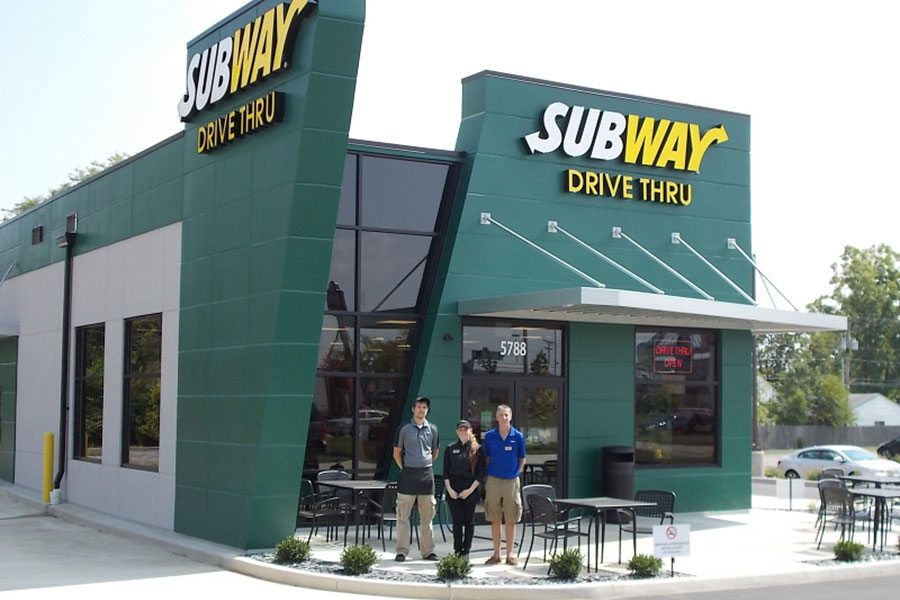
Most recently, its newest restaurant location in the Fort Wayne area of Indiana has earned Eco-Restaurant designation from the brand. “This was the first store I had constructed from the ground up, so I wanted to use this opportunity to do something socially responsible in my hometown of Fort Wayne,” said Subway Franchisee Jeff Sebeika. “I believe in being a good corporate citizen and I’m proud to be a part of a company that encourages our team’s environmental efforts and participation with community organizations.”