World Leaders Celebrate Climate Deal

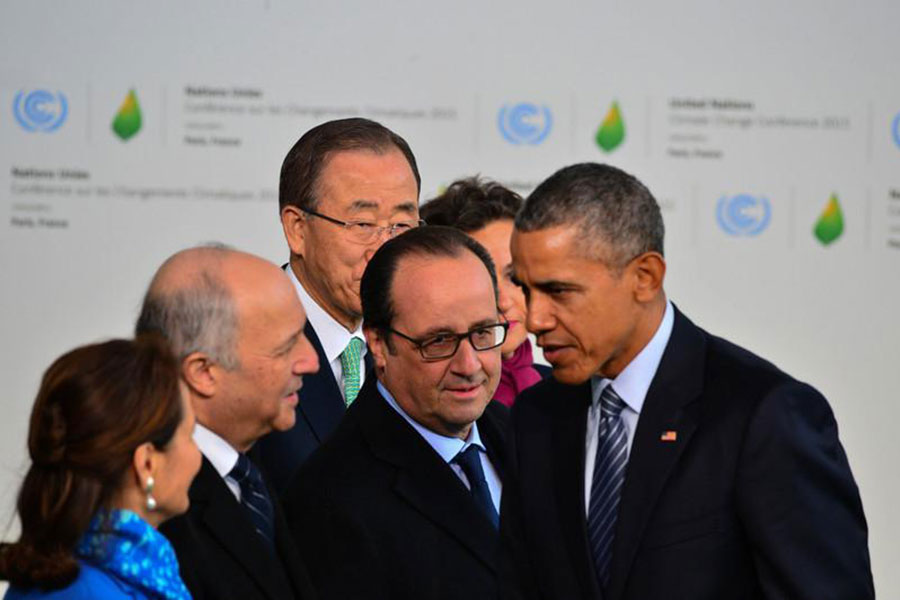
At the COP21 United Nations conference in Paris on Friday, officials from nearly 200 countries reached a new agreement to address the threat of global climate change. On behalf of the United Nations Foundation, Chair Ted Turner, Vice Chairs Senator Timothy E. Wirth and Dr. Gro Harlem Brundtland, and President and CEO Kathy Calvin commented on the agreement, saying:

“This conference will be remembered as a turning point in the fight against climate change and in our efforts to create a more peaceful, prosperous planet for all people. The new agreement creates a strong framework to launch an era of unprecedented climate action. Now we must move with great urgency to deliver on that promise. We know this agreement alone will not meet the threat of climate change; that will require continued ambitious action from governments, the private sector, and all of us to limit the global rise in temperature and move more rapidly toward a clean energy future with net zero emissions.

“After decades of debate, the battle over the reality of climate change is over. Countries from every region of the world and every stage of development have committed to act because they recognize that it is in their self-interest and in humanity’s common interest. The commitment to act by countries including Brazil, China, India, and the United States is a clear sign that countries are no longer focused on whether they should act, but how.

“Importantly, the conference in Paris went beyond national governments to welcome the engagement of civil society, the private sector, financial institutions, cities and states. More and more business leaders and investors recognize not just the obligation to act, but also the economic opportunities in the growing clean energy economy.

“The Paris conference made a number of significant advances, most importantly by agreeing to convene again on a regular basis every five years to bring forward increasingly ambitious steps to reduce greenhouse gas pollution, and by strengthening the world’s long-term goals for keeping down the rise in global average temperatures.

“Combined with the adoption of the Sustainable Development Goals, this has been a historic year for people and the planet. Our collective task is immense, but so is the opportunity to usher in a new era of sustainable development. The United Nations Foundation will continue to work with the United Nations and partners around the world to help achieve this future.” 

Coca-Cola’s New and Improved Formula: Greenfreeze


In 1932 Coca-Cola was extolling consumers to taste its “ice-cold sunshine.” After 129 years of selling carbonated soft-drink, one of the world’s largest companies has realized that consumers downing 1.8 billion of their beverages daily in 200 country’s comes with a wider responsibility. When that same sunshine becomes more associated with drought and global warming, it’s time to rethink your marketing slogan… and your business model.

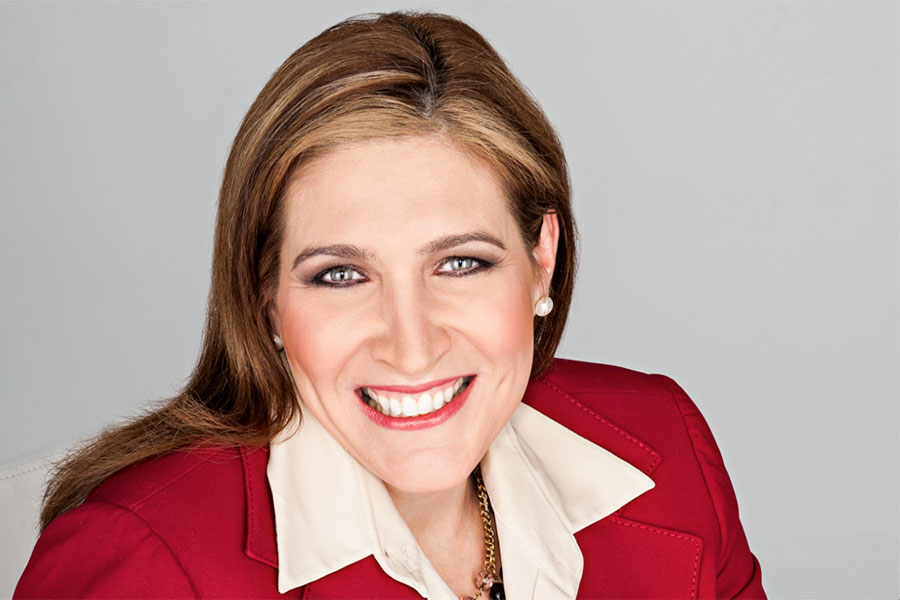
The Chief Sustainability Officer of Coca-Cola, Be a Perez (pictured above), attended the COP21 Climate conference in Paris recently, and joined 150 world leaders in negotiating our shared fate. The mood was far from the feel-good you get from cracking open a cold beverage on a hot day and there was a sense that no individual, company or government alone had the solution. As Perez explained, all companies and individuals have a duty to examine more closely how we produce and consume if we are to have a brighter future. Part of her passion for sustainability is closer to home – raising her own children and realizing that she must be mindful of what kind of world she will leave for them one day.

“It’s critical that business comes together with governments, civil society and NGOs to discuss solutions for climate change,” she says. “This issue is about future generations and we should be thinking seriously about how we protect the air and the water for them.”

Yet, as we’ve seen at the COP21 conference in Paris and others, part of the problem is that many people express good intentions, but without clear guidelines it’s hard to create detailed plans and put them into action. For all the goodwill that exists among consumers, who are more willing than ever to embrace change, how do we turn these words into global action?

“It’s important that this discussion is happening in the first place,” says Perez. “But you need goals that can be measured and tracked,” says Perez. “In 2013 we set a goal of reducing the carbon in our products by 25 percent. This affected our carbon footprint across the entire distribution chain.”

Coca-Cola has gone beyond the fizzy content in their trademarked red and white cans and developed plant-based packaging, eliminating the need for fossil fuels. At last count, this affected 35 billion packages around the world. “In addition, we have thought about our supply chains, and installed hybrid engines in our trucks,” says Perez. “On an even broader level, we want to examine the point where agriculture, water and energy efficiency meet – to examine how best we manage sustainability.”

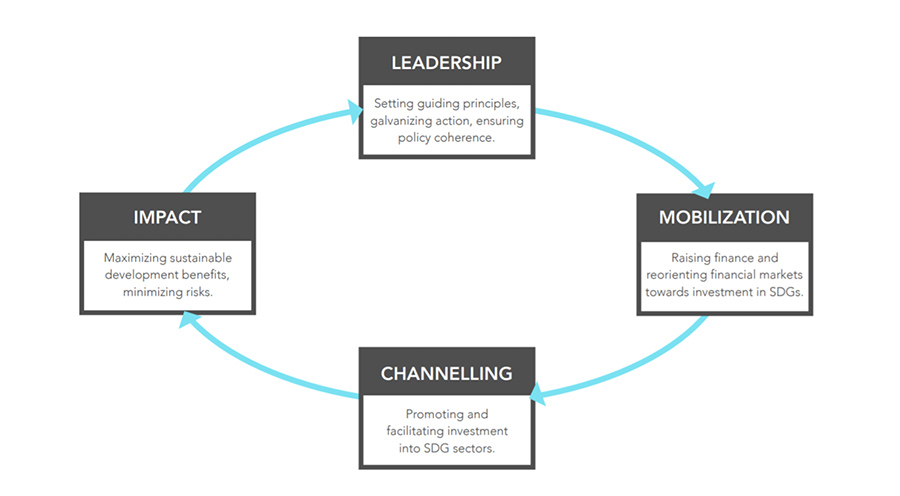
Perez intents to monitor and track these goals annually for Coca Cola and then see how they stack up against an even bigger goal – the Sustainable Development Goals – adopted in September 2015 with the aim of ending poverty and protecting the planet over the next 15 years. Recognizing that the fate of all people and nations are linked, the United Nations has called for everyone to do their part: governments, the private sector, civil society, and yes, even people like us.

Despite all the talk and pledges, it all comes down to money at the end of the day. Many business leaders question how they can find the extra cash to change supply chains and introduce new ways of thinking – that sometimes involve the painful process of letting your less visionary employees go. The good news is that most major companies have now realized that going green actually saves money. And there’s no greater motivator than money.

“It does require an investment in people’s time and energy, and some funding, to put sustainable practices in place,” says Perez. “We’ve changed much of our equipment because we know we can save money. We now have 1.8 million HFC-free cooling machines and 5.6 million energy management systems in place.” The damaging affects of CFC coolant gases on our ozone layer was well-known in the 1980s, with it’s replacement, HFC, being added to the list of harmful gases at the Kyoto Protocol in 1997. The energy management systems Coca-Cola developed has improved energy efficiencies by 35 percent. Coca-Cola has not just saved money for themselves, but also millions of dollars for their customers too. With a can of Coca-Cola officially available in every country in the world, except for North Korea and Cuba, that’s a lot of refrigeration – and a lot of electricity saved. The benefits of research and development in new technologies has paid off.

Perez never sought the title of Chief Sustainability Officer, the opportunity arose when CEO Muhtar Kent told her about it being available. “This is not work for me,” she states. “It’s a fortunate combination of passion and purpose, and I truly believe we can make a difference in the world.”

The company’s campaign slogan for 2016 is “Always real.” It’s a multi-edged slogan that plays on early campaigns that position the permanence of the brand and its global appeal. With Perez at the helm, it takes on a more meaningful interpretation. While some may think it alludes to the closely guarded Coca-Cola recipe that is never altered, we can now assume that it means keeping a reality check on where we’re all headed as a species.

The One Simple Thing You Can Do to Love Your Work

Quit your job and embrace your calling. I don’t mean you have to stop your current employment. Rather, quit looking at your work as a job. Here’s why.

Human beings have a distinct need that separates us from other life forms.  It is the need for meaning.  There are two primary ways we can fill this need…work and love.

Understanding how we experience deep meaning from loving our loved ones or even more profoundly, loving everyone is easy to understand.  But turning our work into something sacred seems much more challenging. (It is especially challenging to women for some very distinct reasons. This topic is so hot that I’ve had several clients ask me to present a women-focused webinar on the subject which I will be presenting on December 15.  There’s no cost, and you can register here.)

It is easy to make a logical error by thinking our primary choices about work and life come down to either ‘living to work’ as in becoming a work-aholic or ‘working to live’ as in becoming a European.  I must admit for most of my adult life I have been such a champion of work-life harmony that I strongly favored the relaxed approach to work I found in Italy as a young student.  Yet, ultimately I found that making life- enjoyment one’s primary aim is too empty.

After spending the better part of eight years surveying and interviewing nearly 30,000 people about what made life worthwhile I came to some simple truths.

  1. There are 7 billion people on earth and no two people are exactly the same. Each of us is different for a reason. That reason is to make our difference.
  2. When we change our world for the better, the world   changes for the better.
  3. Our choices of what we do for work and how we do it

These three ideas deeply influenced me in my career and in the career training I do for corporations and universities.

Consistently doing really satisfying, meaningful work really comes down to one big choice. Do you want a job? Do you want a career?  Do you want to calling?

A job is simply a way to make money so you can live the rest of your life. The primary demand of a job is to be responsible.  Show up and do your work faithfully. At times we all must do jobs.  The financial stresses and practical demands of life simply require it. There are bad consequences to not having enough money to take care of your own needs and fulfill your genuine responsibilities. However if you work in a job too long it is likely to become a prison.

You may think you have no choice. But it’s a trap to think that you ever reach an age where you cannot learn what you need to learn to escape the grind of the job and find the joy of your calling…a calling that will make you all the money you need to live a life you love.

Many successful people choose a career over a job.  The primary demand of a career is mastery.  People who are exceptionally competent in a high demand field can make a lot of money and acquire the trappings of modern-day success.  However this is no guarantee that you will be doing meaningful work.  That is, work that is meaningful to you.  It is widely known that professionals who have the deepest regret about their career choice are lawyers. By age 40 surveys show that 52% of lawyers wish they had made another career choice.

Lawyers are not alone however in the simmering stew of regret.  Careers that demand expensive education can also be traps. It is easy to make a logical error thinking that you have invested so much time and money in a career that you would be crazy to change. That’s simply not true. Some of the most successful and happy people I interviewed in my research are people that made massive and surprising career changes. I met a lawyer who became high school teacher, and a fashion executive who became a spiritual life coach. I met many others with similar stories. What they have in common was that they are great at their work and are happy to do it. What they found is nothing that they had learned was wasted. They are satisfied because they had found their calling.

Finding your calling requires two primary things. Courage to face your truth and deeper than average self-awareness. The primary demand for calling is to do work that reflects your purpose, personality and values.

You’ll notice that it does not require you do work that is directly aimed at saving the world.  Once you become intentional about transforming your work into your calling you will see your work in a new light and pursue your work in a new way. As I said, the world needs all of us in our many varieties and interests.

Surveys of all job categories find that about 30% of working people find their job both purposeful and a way to express their values through their personality. In this way work gives them energy rather than drains it.

So how about you?  What are you doing for work right now? Is it a job? A career? Or a calling?

Let me encourage you. Don’t settle for a job.  Don’t degrade your life for a career.  What you do matters. You are designed perfectly to succeed at your true calling. And please believe me, with all the research I’ve conducted and all the coaching that I’ve done I can assure you what I am saying is not goofy, pie-in-the-sky.  Many, many, many people have it all and so can you.

If you want to know more about my approach to transforming work into a calling then register here for my webinar on December 15.  It’s designed especially for women and the stressful, conflicting commitments that are so common on their life path.

Corporations Are Being Punished By Recruits Over Sustainability

A new global study of more than 3,700 students at 29 top business schools found that corporations unwilling to act on environmental issues are increasingly punished by the men and women they would like to recruit. The study, conducted by Yale University in collaboration with the World Business Council for Sustainable Development and the Global Network for Advanced Management, shows that 44 percent of students are willing to accept a lower salary to work for a company with better environmental practices. Conversely, about one-fifth of respondents expressed an unwillingness to work for companies with bad environmental practices regardless of salary considerations. Students also overwhelmingly consider environmental action a profitable stance, noting that environmental protection will improve economic growth and provide new jobs.

“We often talk about a transformational change of our society, when we speak about climate action. And that transformation will affect both business as well as the institutions that educate the leaders in business” said Peter Bakker, President and CEO of the WBCSD. “The role of business in society is changing. Business leaders need to understand the complex nature of sustainability issues and integrate solutions for social and environmental challenges, with the need for good financial results. Today’s summary of survey results brings a clear call for change, demanding action on environmental sustainability. If business schools and business can deliver against this call for change, the necessary transformation toward a sustainable future will clearly be much more impactful.”

These next generation leaders expect business leaders, and in particular the C-Suite, to prioritize and responsibly lead in the search for environmental sustainability solutions, and they are willing to assume leadership roles themselves. More than two-thirds of participants said that they want to incorporate environmental sustainability into their careers, regardless of their role or industry. All else being equal, 84 percent of students would choose to work for a company with good environmental practices.

graph

While voicing a need for future employers to act on the environment, business students also demanded action from the schools they attend; students want a more thorough integration of environmental issues into the core operations and curricula of business schools. Sixty-one percent of survey respondents thought that business schools need to hire more faculty and staff with expertise in sustainability; 64 percent also wanted more career services and counseling on sustainability-related jobs.

“Worldwide, today’s business schools are being called to act from the very people we’re training as leaders,” according to Edward Snyder, Dean of the Yale School of Management. “It’s incumbent upon us to prepare our students for the world not of last generation, but the next.”

As the climate change negotiations at COP21 in Paris build steam, these results highlight the rising priority of solving climate change among future leaders. For a full copy of the report visit: https://cbey.yale.edu/risingleaders.

Forests to Fight Back in Paris Next Month


World leaders will meet in Paris next week and hopefully forge a historic agreement to fight climate change. We will need every tool at our disposal, including sensible policies and new technologies for clean energy and transportation. But we also have to go back to our roots. Forests, which cover a third of the land on earth, are an often under-appreciated resource for helping to address climate change, ease poverty and secure a sustainable future.

Forests play a central role in the carbon cycle. When trees are cut down, not only do they cease to absorb carbon, but they release greenhouse gases as their biomass decomposes and underlying soil organic matter oxidizes. Deforestation accounts for at least 12 percent of human-caused CO2 emissions, the second-greatest source after burning fossil fuels. For many developing nations in the tropics, deforestation is the largest source of emissions. This is especially true when forests or carbon-rich peat soils are burned. In Indonesia recently, fires set to clear land for agriculture have generated emissions exceeding the average daily emissions from all U.S. economic activity.

However, forests don’t always figure into climate negotiations as prominently as they should. Many countries have included forest management in their proposed climate commitments, but several (like Russia) lack specifics or a proven track record of good forest carbon management. Other countries, like Indonesia, have ambitious goals to reduce deforestation, but may struggle to do so without financial support from richer countries.

But hope springs eternal, and there are reasons to be optimistic about forests at Paris.

First, bold countries and their leaders have proven that it is possible to turn the corner on deforestation. Brazil has reduced forest loss by a stunning 70 percent in the Amazon since 2004 through a combination of improved sustainability policies for soy and beef production, better land rights for indigenous communities, and robust law enforcement supported by satellite monitoring. Tools like Global Forest Watch are now bringing the same satellite-based technology to all the world’s forests on a free, online, interactive platform. The Paris conference will see the launch of GFW Climate, which will link data on tropical forest deforestation and greenhouse gas emissions, showing how and where we should invest to keep carbon in forests and how well we’re all doing.

Second, WRI analysis shows that local and indigenous communities are effective managers of forest carbon, and securing local land and resource rights can bring substantial economic benefits. In Brazil, it costs only US$1.57 per hectare (ha) annually to provide communities with secure rights to their forests, while the resulting carbon-mitigation benefits are worth $38/ha to $230/ha per year. For the Brazilian Amazon, that adds up to $162 billion to $194 billion in benefits over 20 years. The scale is also significant globally, communities have legal rights to about one-eighth of the world’s forests.

Third, the money is starting to fall into place. Brazil’s success was helped along by billion-dollar partnerships with Norway, Germany and other donor countries. Similar partnerships are underway in Indonesia, Guyana, Peru, Colombia, Liberia, as well as many provinces and local projects. Some of these deals are on a country-to-country basis, others are tied into carbon markets through REDD+ (a scheme for reducing emissions from deforestation and forest degradation). Far more money is needed though, to start having impact at the scale we need.

Finally, and most inspiring, countries and communities are starting to bring forests back. Forest restoration in Tigray, Ethiopia, has turned a once famine-prone region into a breadbasket, generating significant benefits for agriculture through soil improvement and water retention. WRI analysis shows approximately 2 billion hectares of the world’s deforested and degraded lands, an area twice the size of China, show potential for some form of restoration. Restoring a mere 150 million hectares by 2020 could help feed 200 million people, raise as much as $40 billion annually, and reduce greenhouse-gas emissions (though it should be noted that restoration is not a substitution for avoiding deforestation). Nine Latin American countries and organizations pledged a collective 20 million hectares for restoration at the last climate conference; this year we could see even more, supported by additional financial investment. We will also see the emergence of a major restoration initiative in Africa, the continent with the greatest area of restoration opportunity and greatest need to address food and water security as well as poverty.

The Paris climate conference is a key moment. Countries should consider land use, agriculture, and forest management in their climate commitments—with robust targets for improved management, conservation and restoration—and not simply rely on existing forests as a carbon sink to offset emissions in other sectors. Companies that impact forests with agriculture and commodity supply chains should join the wave of zero-deforestation commitments, or showcase their progress and share lessons learned. Investors should do the same, and also consider putting their money into landscape restoration, which can deliver substantial long-term returns. The climate community should also acknowledge and account for the wider benefits of forests beyond sequestering carbon, for example livelihoods, water and soil health, support for agriculture, biodiversity, and much more.

Whatever the final agreement in Paris, it is guaranteed to be a stepping stone on a much longer road to a secure and sustainable future. With an eye on forests, we can make sure that path is a green and prosperous one as well.

By Nigel Sizer and James Anderson. This story first appeared at World Resources Institute

3 Reasons Why Thanksgiving is Your Best Holiday


I am grateful to be grateful.  I wasn’t always this way. In fact I went through major periods of my life when the repeating song on my inner soundtrack was “Why me?” My life logic was self-defeating…guaranteed to make me unhappy.
 
Life logic is a simple concept. It is how we consistently explain to ourselves why life is the way it is. It’s our inner story of cause and effect. We use it constantly. It is the super-structure of life logic that is constantly giving us strategic instructions about how we might make our life better or at least less worse.
 
My life logic for nearly 50 years is a framework called “bargaining with universe.”  It is based on the belief that if you are a good person you can prevent bad things from happening to you. Now I know… that’s a very foolish belief. Yet it is very common. A famous book was written by a Rabbi titled “Why Bad Things Happen to Good People.”  The up shot of the book is… bad things happen… don’t take it personally.
 
Unfortunately that’s not a very satisfying answer. Human beings are very uncomfortable with randomness. So we naturally seek control strategies. The things that really scare us in life are the things we don’t control. Major religions have caught onto this human longing and reinforced our misbelief that if we are good enough God will protect us from bad things. So this becomes the desperate bargain we make. Yet we can’t help but notice that too often the good die young and for some reason Mick Jagger seems both happy and healthy. What’s up with that?
 
That was my question when I was soaking in a bath of frustration surrounded by candles of self-pity after spending nearly a decade with daily bouts of emotional agony over the condition of my life. And no matter how good I tried to be, nothing got better. Then my coach said to me. “Man, you are so lucky. Everything that you have feared the most has already happened to you. And look at you, you’re still standing, still fighting. It’s awesome, you have nothing to fear now.”  For some reason those were the right words at the right time. I even wrote them down.
 
For months he’d been trying to explain to me that it is futile to try to protect yourself from all the things you cannot control. He also explained that the only viable life logic is to develop the bone-deep belief that you are stronger than all of life’s tragic disappointments. If you choose to believe that no matter what happens you can be stronger, wiser and even happier because of what your difficulties have taught you… you will be. He asked me to think of people who live by that life logic. I thought of Nelson Mandela and my Mom.
 
Since that epiphany I have become a student of the power of gratitude. With the explosion of research in positive psychology and the effects of gratitude meditation we now know that science clearly confirms that gratitude is health food for our mind, emotions and even our bodies. (Controlled studies show people who do daily gratitude meditation can lower their blood pressure!)
 
Perhaps the most powerful research on the effects of gratitude is from Richard Wiseman, who has performed numerous studies linking gratitude meditation to behavior change. This is what he found.
 
Most people who simply write down one thing they are genuinely grateful for each day and focus on their positive feelings for 60 seconds get three beneficial effects over time.

  1. They become more open minded and willing to try new experiences.
  2. They become more optimistic and opportunity oriented.
  3. They project a positive–constructive personality which expands their circle of supportive friends.

It’s simple. The grand effect on the lives of people who live life through the lens of gratitude is they become happier. Wiseman also discovered that gratitude sets up an eco-system of behavior that makes you luckier… that is, you will have more positive opportunities than average.
 
That’s why I love Thanksgiving. It’s a national holiday with a much deeper practical message than just turkey and football. It’s time to take stock of both the good things that we take for granted as well as what we have learned from the tough things that we’ve experienced.
 
Just think about this. Many experts believe that about 70 billion people have lived their lives on planet Earth. Until about a century ago most parents buried two to three of their children before they reached adulthood. A winter cold routinely turned into lethal pneumonia. Starvation and violence were everyday fears.  These and countless other hardships were accepted unchangeable conditions.
 
How most of us live today would be a fairy tale for nearly everyone who has lived before us. Truly, of all the people that have ever lived, we have the most to be grateful for.
 
And even if you have gone through a very tough time just remember what my coach said. “You’re still standing, still fighting. You’re awesome. You have nothing to fear now.”
 
Happy Thanksgiving!

Declaration by the Nobel Peace Laureates on World Peace


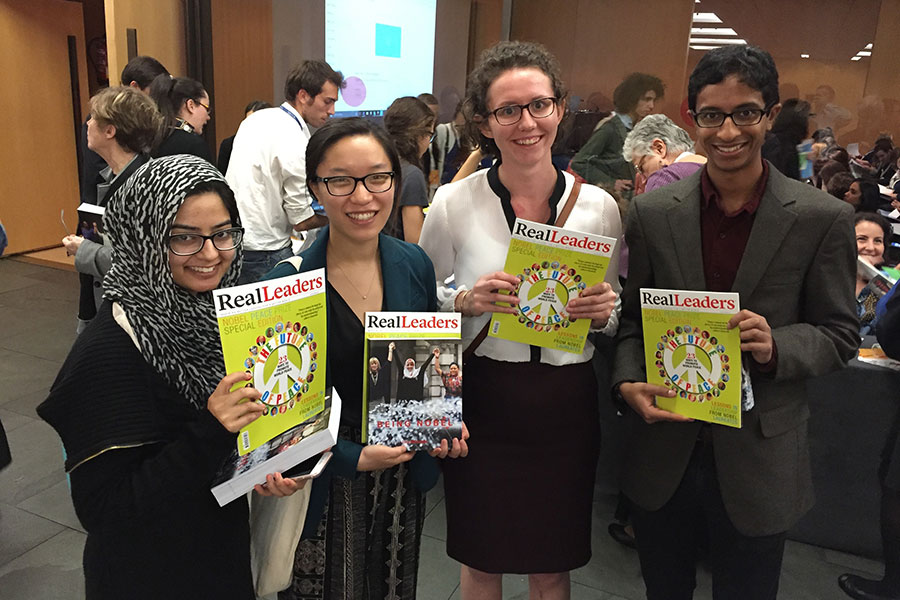
We, the Nobel Peace Laureates and Peace Organisations, in the presence of youth from all over the world, gathered together in Barcelona from 12 – 15 November 2015, have considered issues affecting world peace – with special emphasis on the current refugee and migration crisis.

We are profoundly shocked and outraged by the barbaric killing of more than 150 innocent people in Paris on the evening of 13 November. We express our deepest sympathy and solidarity with the families of the victims and with the people of France. 

This outrageous attack stresses the urgent need to address the root causes of the current refugee crisis and insecurity in the world. This situation should not be abused to demonise refugees and the Muslim community.

As Nobel Peace Laureates and Laureate organisations we join with millions of individuals, organisations, communities and cities who every day make a difference by working for a better and more peaceful world. 

We collectively raise our voices in compassion for the millions of refugees who have been forced to leave their homes. We affirm that the manner in which we honour and protect their inherent dignity and human rights is a measure of our own humanity.

We are particularly concerned about the plight of women and children whose lives have been devastated by conflict, repression and deprivation. We must and can eliminate the conditions that compel people to leave from their homes.

The refugee and migration crisis does not exist in isolation. It is a symptom of the broader problems that confront humanity that include

  • continuing conflict in many countries;
  • the consequences of militarism, extreme nationalism and the use of force and proxy wars by global powers in pursuit of strategic, financial and ideological interests;
  • distorted religious beliefs that lead to horrific acts of violence;
  • the failure of governance characterised by rampant corruption, persecution and the absence of democracy, basic human rights and the rule of law;
  • the gross inequalities in opportunities and in economic and social wellbeing between and within the so-called developed and developing countries;
  • the failure to accommodate, tolerate and appreciate the value of religious, cultural and ethnic diversity;
  • the growing impact of climate change that will increasingly threaten food security and disrupt the lives of hundreds of millions of people in the most vulnerable societies; and
  • the criminal exploitation of refugees by human smugglers.

We believe that many of these problems can be solved if the international community fulfils its commitment to achieve the 17 Sustainable Development Goals that nations have already adopted as the framework for a comprehensive, practical and achievable path to a secure and peaceful future.

We also call on the international community to

  • address the root causes of the refugee and migration crisis while assuring access to asylum;
  • redouble efforts to bring peace to Syria, Afghanistan, Iraq, Yemen, Ukraine, Palestine/Israel, Somalia, South Sudan, the Central African Republic and other societies in conflict in a process that includes the peoples involved – especially women – and concerned nations;
  • denounce and reject the use of distorted religious doctrines and ideologies to justify violence by placing perverted beliefs above compassion and other universal values;
  • ensure that refugee children have adequate access to education and health care;
  • promote good governance based on respect for fundamental human rights and the rule of law;
  • prevent ethnic conflict and repression by recognising the value of diversity and by protecting the rights of minorities;
  • achieve and implement international agreements to combat climate change that bind all elements of society including government, business, finance and the military – with special focus on the forthcoming conference in Paris;
  • identify and prosecute those responsible for human smuggling; and
  • provide much greater support to countries bordering conflict areas which are hosting refugees – and underfunded humanitarian organisations aiding refugees.

True security will never be achieved by military force or by the possession and threat of nuclear weapons. It requires adherence to international humanitarian law and global cooperation in meeting the authentic needs of humanity. We call on the nations of the world to

  • redirect each year at least 10% of annual military expenditure of over 1.8 trillion dollars to implement the programs required for the 17 Sustainable Development Goals;
  • implement fully the Arms Trade Treaty and end illicit arms trading;
  • put an immediate end to any new arms race – especially the modernisation of nuclear arsenals and the pursuit of fully autonomous weapons systems; and
  • fulfil the legal obligation to commence negotiations now to eliminate nuclear weapons.

True personal, national and global security is found in the practical application of compassion.

A New Psychology For Sustainability Leadership

Since World War II, researchers have been asking: “What makes great leadership?” “How do successful leaders become who they are?” and “What are the skills and capacities that make them successful?”

Until the middle of the 20th century, centralization of power and control were the primary themes in the leadership literature. As a result, many answers to these questions initially centred on the military, and many of the great leaders written about in the United States were famous generals such as Patton and Eisenhower. Based on principles of scientific management and the rational man, modern leadership theory began to emerge in the middle part of the 20th century.

Personality traits, intelligence and leadership styles became a primary focus for describing great leadership. Transactional and transformational theories of leadership that focused on the ability of leaders to motivate their workers also emerged in the 1950s and 1960s. Collectively, these theories became known as “great man” theories of leadership. Over the second half of the 20th century, leadership scholars have conducted more than a thousand studies in an attempt to determine the definitive styles, characteristics or personality traits of “great man” leaders.

The major assumption underlying these “great man” theories is that leaders are born and not developed. Further, that these great leaders possess extraordinary capacities including charisma, intelligence and confidence.

Significant alternatives to the “great man” theories emerged in the late 20th century that focuses more on self-awareness and broader purpose. Terms including “servant leadership,” “primal leadership,” “authentic leadership” and “enlightened leadership” began to appear.

Based on my experience in the corporate world and in higher education, the most important capacity for leaders to develop involves their psychological and emotional development. This includes a greater awareness of values, motivations, and deeper purpose. For this reason, I use Servant Leadership, Primal (emotionally intelligent) Leadership, and The Fifth Discipline Fieldbook as my primary course texts.

When my awareness of the ecological crisis deepened, I discovered how servant leadership and emotionally intelligent leadership lead to serving not only the people around us, but also the natural environment around us. I discovered new ways that these leadership philosophies can contribute to a psychology for sustainability leadership.

Read more in Steve Schein’s new book A New Psychology For Sustainability Leadership, available here:

Steve Schein is a sustainability leadership educator, researcher, and executive coach. After 25 years in the corporate world and 10 in academia, he sees the evolution of business leadership and education towards ecological sustainability a global imperative. To that end, his research focuses on the development of ecological and post-conventional worldviews in the setting of multinational corporate leadership.  He currently serves on the Board of Directors for Net Impact and the GEOS Institute. He can be reached through his website at www.steveschein.net.

Seventeen Year-Old Liberian Wins Children’s Peace Prize

Seventeen-year old Abraham M. Keita from Liberia is the 2015 winner of the International Children’s Peace Prize. He was presented with the prestigious award for demanding justice for children who are victims of physical or sexual violence, and for successfully campaigning for the Liberian parliament to adopt the Children’s Law. The award was given to him at a ceremony at The Hague in the Netherlands on 9 October.

In the presence of the world press Keita received the Prize from Nobel Laureate Leymah Gbowee who in 2011 was the first Liberian to receive the Nobel Peace Prize for her nonviolent struggle for the safety of women and for women’s rights to full participation in Liberia’s peace-building process. Gbowee said: “It is a great honour to award the Prize. It is very special and inspiring that Keita, already at such a young age, demands that perpetrators and would be perpetrators be held accountable. I recognise in him a true changemaker: fighting to end the extreme violence against children!

In September, Keita was nominated by Nobel Peace Laureate Desmond Tutu, patron of KidsRights and the International Children’s Peace Prize, together with Aziza Rahim Zada from Afghanistan and Jeanesha Bou from Puerto Rico. Keita’s tireless work as a campaigner, bringing attention to crimes against children and campaigning until the perpetrators are locked away, stood out and convinced the jury. Keita also played a leading role in the Liberian Children’s Parliament where he successfully lobbied the Liberian Parliament to adopt the Children’s Law to protect children’s rights.

The KidsRights Youngsters, the group of winners of the International Children’s Peace Prize, which includes Nobel Peace Laureate Malala Yousafzai, congratulated Keita wholeheartedly: “We are happy to welcome Abraham to the Youngsters. Together we will continue the fight to improve children’s rights and advocate for an immediate end to violence against children.”

Upon receiving the Prize today, Keita confirmed that their work will continue: “Together with my peers I have successfully lobbied for children’s rights laws, but they now need to be put into practice. Children worldwide are still exposed to violence and injustice while thugs often go unpunished. I want people across the globe to acknowledge that this is unacceptable and that every world citizen, whether young or old, can be an agent of change.”

The International Children’s Peace Prize is an initiative of KidsRights, the foundation committed to defending children’s rights worldwide. The award ceremony is held annually in The Hague, the Netherlands, the international city of peace and justice. The prize is awarded annually to a child who fights courageously for children’s rights. Every year, the message of the new young winner has enormous impact and demonstrates to millions of people globally that change is possible.

Seventeen Year-Old Liberian Wins Children’s Peace Prize

Seventeen-year old Abraham M. Keita from Liberia is the 2015 winner of the International Children’s Peace Prize. He was presented with the prestigious award for demanding justice for children who are victims of physical or sexual violence, and for successfully campaigning for the Liberian parliament to adopt the Children’s Law. The award was given to him at a ceremony at The Hague in the Netherlands on 9 October.

In the presence of the world press Keita received the Prize from Nobel Laureate Leymah Gbowee who in 2011 was the first Liberian to receive the Nobel Peace Prize for her nonviolent struggle for the safety of women and for women’s rights to full participation in Liberia’s peace-building process. Gbowee said: “It is a great honour to award the Prize. It is very special and inspiring that Keita, already at such a young age, demands that perpetrators and would be perpetrators be held accountable. I recognise in him a true changemaker: fighting to end the extreme violence against children!

In September, Keita was nominated by Nobel Peace Laureate Desmond Tutu, patron of KidsRights and the International Children’s Peace Prize, together with Aziza Rahim Zada from Afghanistan and Jeanesha Bou from Puerto Rico. Keita’s tireless work as a campaigner, bringing attention to crimes against children and campaigning until the perpetrators are locked away, stood out and convinced the jury. Keita also played a leading role in the Liberian Children’s Parliament where he successfully lobbied the Liberian Parliament to adopt the Children’s Law to protect children’s rights.

The KidsRights Youngsters, the group of winners of the International Children’s Peace Prize, which includes Nobel Peace Laureate Malala Yousafzai, congratulated Keita wholeheartedly: “We are happy to welcome Abraham to the Youngsters. Together we will continue the fight to improve children’s rights and advocate for an immediate end to violence against children.”

Upon receiving the Prize today, Keita confirmed that their work will continue: “Together with my peers I have successfully lobbied for children’s rights laws, but they now need to be put into practice. Children worldwide are still exposed to violence and injustice while thugs often go unpunished. I want people across the globe to acknowledge that this is unacceptable and that every world citizen, whether young or old, can be an agent of change.”

The International Children’s Peace Prize is an initiative of KidsRights, the foundation committed to defending children’s rights worldwide. The award ceremony is held annually in The Hague, the Netherlands, the international city of peace and justice. The prize is awarded annually to a child who fights courageously for children’s rights. Every year, the message of the new young winner has enormous impact and demonstrates to millions of people globally that change is possible.