Why Bravery Is Your Greatest Power

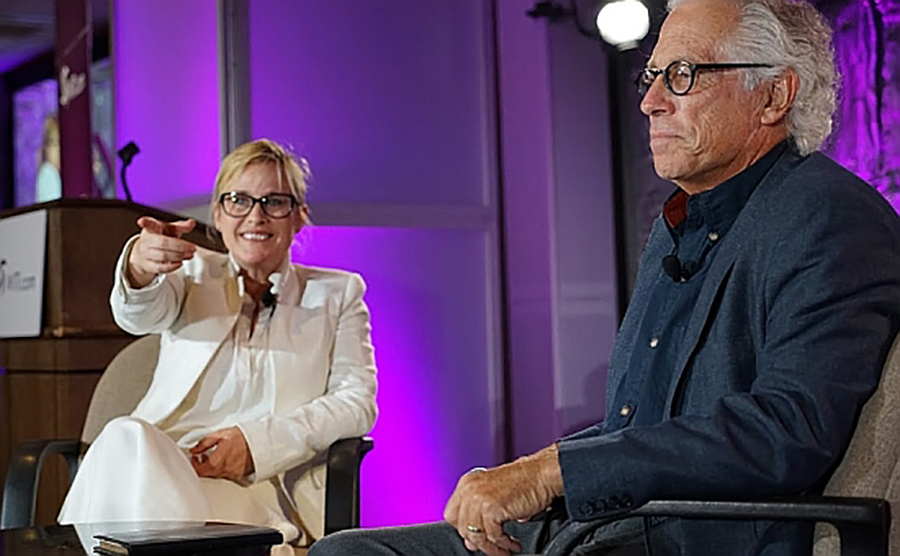
I just interviewed Oscar winning activist Patricia Arquette on stage at the Women in Technology Summit in Silicon Valley. If you don’t know, Patricia is the powerful and appropriately radical voice for equal pay and equal opportunity for women.

She won an Oscar for her role as a mother in the movie Boyhood. I will tell you more about all that in my next blog but my wife and I just took a few days off to climb around Yosemite so I am going to make this short.

What I learned from Patricia is like almost all of us, she was afraid to do what she most wanted to do. She wanted to be an actress but she didn’t believe she could act. So at a very tender age she decided to be BRAVE for one year. She told me that the way she would know if she was being brave was if she was willing to try harder when she failed.

That year she went ‘all in’ in terms of acting classes, auditions and building a network of contacts. She nearly emotionally drowned in a river of failures but she finally got a movie part and put her whole self into the opportunity. The result . . .  well she said she “stunk.” But nevertheless she ignited a 20-plus year run of steady parts in movies and TV series.

She is still a committed, working actor but today she is being brave by being an activist. She founded a non-profit, Give Love, that is saving children’s lives all over the developing world through an innovative method of transforming sanitation and access to clean water. She is also forcefully stimulating companies to do equal pay audits and it is actually equalizing pay in big companies like Salesforce.com.

The lesson I wanted to pass on that I learned from Patricia is bravery works!

Allow yourself to dream of a better life and a better world and just start doing what is uncomfortable but obvious. And don’t quit. Failure is expected. Failure is essential to breakthrough.

What do you really, really care about? Be Brave . . . do something. Just start, the way forward will appear if you do not stop because of initial failure.

We need to re-invent our future. To do that we all need to be BRAVE.


Everything You’ve Been Taught About Leadership is Obsolete

I just completed another SMART Power Academy for 25 inspiring women leaders. In the few days since it ended one of our graduates who works for large tech company applied for, interviewed, and got a significant promotion in a career area that exactly aligns with her passion. Another participant quit her good job with an awful travel schedule to pursue a great career that will keep her close to home. 

The main thing that seems to happen is that participants get clear on what they really want and discover they have they have both the courage and practical planning ability to turn their vision in to reality. As I mentioned before I have never done anything that just had so much immediate work and life-changing impact. So yes, I am stoked!

In a few days I will be presenting several workshops at the Woman In Technology International Summit in Silicon Valley. I will also be conducting a keynote interview with Patricia Arquette, the Oscar-winning actress who is an articulate activist for equal rights and equal pay for women.

I spoke with her yesterday and she is fired up.

Let me be clear… I am not anti men. I am pro women. I am rigorously training women for important positions in leadership for two reasons.

First, virtually everything you’ve been taught about leadership is obsolete. For over 30 years I have been coaching CEOs of major corporations. Many of them have been very good leaders. A few have been excellent. But leadership today is much more difficult than it was when I started building a leadership development business with Stephen Covey in 1982.

Leadership is more challenging today because new technology has created a business environment that is volatile, uncertain and drenched in mind-boggling complexity. What it takes to lead an agile team and an innovative organization requires a different mindset and skillset than the hard power, male style of the 20th century. Most people still do not understand this.

Second, most women are much better at positive innovation. Positive innovation is based on 360° empathy. Empathy for consumers, employees and communities. Positive innovation is just that. . . positive. Positive innovations improve our quality of life. Negative innovations are stupid ideas implemented to make money in ways that are obnoxious to customers, exploit employees and harm the environment. Airlines who charge for passenger baggage and adequate legroom make lots of money on this negative innovation. Drug companies who drastically increase drug prices for old but vital medicines are simply pigs. Most of today’s leaders do not distinguish between positive and negative innovations. That is not leadership. It is leadershit. And it is everywhere.

So, we need a revolution in leadership. Now!

Here’s why. Soon after we launched the business Stephen Covey and I walked out of a session where he was helping business leaders craft a corporate mission statement. I asked Stephen if there was a universal mission statement. Something like a general purpose statement for business. He immediately replied “The purpose of business is to improve the quality of life and economic well-being of all stakeholders.” That was a “wow” for me. We used that as a template to help leaders think about the difference they were trying to make in the world. I found it quite inspiring. It was great to convene a group of senior leaders and listen to their moral ambitions. Sadly, it later became apparent that most mission statements were just wall plaques of unfulfilled promises.

At the same time we were trying to change company cultures with the 7 Habits of Highly Effective People, Jack Welch, the hard power CEO of GE was telling business leaders the only purpose of business was to increase shareholder value. That is, make money anyway you legally can. And if you want to make money illegally simply change the law. During Jack’s tenure GE paid fines for bribery and toxic waste dumping, and gutted their R&D budget in a continuous tornado of financial engineering that increased Jack’s wealth. ‘Neutron Jack’ also   pioneered the practice of firing people to increase profits in profitable divisions. No one would have done that before. It proved to be one hell of a negative invitation.

Jack’s message won and Stephen and I lost. Sure, the 7 Habits are great for your personal life but it didn’t change the culture of corporations. The quality of work-life in most organizations today is far worse than it was 25 years ago.

Our jobs are perpetually insecure and people are working harder for less because short-term profitability has become a substitute for strategy and value creation. Today our entire economic culture rewards hard power. This is killing our confidence in capitalism, our politics and our institutions. Hard power is rooted in unlimited self-interest. It is simplistic, short-term and amoral. Ultimately it is lethal.

In the last 3,400 years men have been at war 92% of the time. When men were fighting on horses with spears violence was limited. Today, a single person can instantly kill thousands. And hard power political leaders and terrorists are capable of killing millions. The violence that hard power industrial leaders bring to our environment is already changing our climate and polluting our children’s future.

The reason for all of this is that our beliefs about leadership are wrong. In a recent survey of 150 CEOs the three leadership characteristics attributed to success were competitiveness, decisiveness and confidence. There is no doubt that corporations reward people who exhibit these characteristics. The problem is leadership research reveals that these factors have almost no impact on business success.

It’s also sobering to realize that Hitler, Mao, Stalin and Bin Laden were all competitive, decisive and confident.

We need a new leadership model. It is called Smart Power.

It incorporates the disciplines of hard power and the wisdom and value creation of soft power to stimulate positive innovations that will fully engage customers, inspire employees and create a better future for children.

The 2Oth century genius, Buckminster Fuller said that we need a world that works for everyone or we will create a world that works for no one.   My direct experience, leadership research and neuro-science confirm that a “WE” world will only emerge when more women who lead with the strengths of women are elevated to boards of directors and senior positions in our major corporations.

The key is to recruit and elevate women who have developed their soft power strengths rather than try to find blue-brained women who are simply mimicking the authoritarian power styles of most men.

The most common and dumb advice given by male mentors is to act like a man. That is the worst advice a woman could possibly act on. We don’t need women to “lean in” to a failing system. We need women to stand up for a vision of sustainable abundance.

Look, I am not promoting women in leadership because I’m a feminist or a social activist. I advocate for and train women leaders because they have brains wired to deal with the challenges of our age. The reason women will make the difference this necessary revolution needs is that science confirms that most women have more C.O.R.E. intelligence than most men.

C: Contextual intelligence is the ability to make urgent decisions in the context of the bigger picture. It enables people to anticipate unintended consequences and network effects. This is vital for success in today’s hyper competitive world.

O: Operational intelligence is the ability to anticipate the level of human, financial and technical resources necessary to implement an innovation.

R: Relational intelligence is the ability to read team members and keep them aligned and engaged.

E: Emotional intelligence is the ability to understand your impact on others and develop more effective ways of communicating and influencing.

If you doubt whether C.O.R.E. intelligence matters, consider this. There is absolutely no evidence that elevating more men into leadership increases growth and profitability . . . but adding more women leaders to the top of business organizations does exactly that! In fact, when women leaders constitute a third of the leadership level in organizations those organizations become more effective in achieving whatever goals it has. This is true in business, government and nonprofits, (insert link to book Broad Influence.)

So, what if women’s C.O.R.E. intelligence is at the heart of the leadership revolution we desperately need? What if there were something real called the Woman Effect . . . WE . . . shouldn’t we make it a priority?

If capitalism is to be saved from its own excesses, it will only be because women who lead like women create new standards of success and make men better leaders.

My goal is to partner with universities and organizations to teach 1,000 women how to teach other women to use Smart Power to accelerate a positive leadership revolution.

If you want to know how you can help send me an e-mail at info@willmarre.com

The woman effect . . . moving from me to we. It’s vital to the future of civilization.

 

Three Unique Skills Expected of Nonprofit Leaders

News media heralded the rise of the nonprofit sector two decades ago, and it’s still the fastest growing sector in the U.S. as well as the largest source of employment in many countries. This means opportunities are mushrooming to join and lead associations, foundations and similar institutions around the world.

But for anyone who thinks management is management, regardless of the sector, think again. It’s not by chance that there are so many MBA and executive-education programmes devoted exclusively to advancing nonprofit careers. There are some major differences in the way nonprofits are expected to operate compared to for-profit businesses.

These differences call for a very specific set of skills that can make or break a career in this sector. Here are three of them.

1. Motivating staff without financial incentives

Nonprofit salaries are modest, and raises and promotions are rare in these generally flat hierarchies. You’re also dealing with a lot of volunteers, both as staff and as board members. “In for-profit enterprises you can get away with being a leader of tasks in order to achieve your goals. Nonprofit managers have to be effective leaders of people, first and foremost,” explains Marc Hardy, Director of Nonprofit Executive Programs at the University of Notre Dame’s Mendoza College of Business. He describes effective nonprofit leadership as “sharing fire” – “It’s not about getting people to follow you; it’s about investing in people as individuals and igniting the passion within them.”

2. Identifying non-financial measures of success

Concepts like key performance indicators and success metrics are critical in both the for-profit and non-for-profit worlds. But in a private business, it’s comparatively easy to look at a spreadsheet full of numbers and measure performance. In the nonprofit world, on the other hand, you need to establish how to measure the social return on investments. “The first step is figuring out which factors you even can measure,” says Hardy, “Next you pick which to focus on and how to communicate them.” Among other things, this means that nonprofit institutions have an increasing need for people who can analyse multifaceted data sets and use them to tell a story that goes beyond profits and losses.

3. Managing diversity – in teams and stakeholder groups

Nonprofit employees come from an incredibly diverse set of professional, cultural, and economic backgrounds. Nonprofit stakeholders are equally diverse – ranging from staff members and service clients to foundation partners and corporate supporters. How can you overcome inertia in this kind of environment? In interviews with nonprofit chief executives, consensus building emerged as one of the most important skill-sets respondents relied on. Effective nonprofit leaders work to ensure that all parties feel free to contribute their feedback and ideas – however novel or divergent – and to implement those ideas where possible and share in any resulting successes. Although decisions and results may take longer this way, the good news is that research consistently shows that diversity leads to greater innovation.

These three skill sets are some of the most common areas of focus in executive-education programmes on nonprofit leadership. You’ll find them at the heart of courses on topics as diverse as nonprofit governanceperformance measurementleadership strategy and even fundraising.

Laura Montgomery is a higher-education expert who blogs for The Economist Careers Network.


Please Don’t Give Your Money to Your Children

Dad was swindled out of his sizable net worth before he passed. It was truly heartbreaking for him but a blessing to me. Study after study shows that inheriting a sizable fortune has a terrible effect on the vast majority of the unearned rich. 

It seems that what makes us strong is self-reliance. What makes us weak is feeling dependent. When I started the American Dream Project nine years ago I wanted to know what pursuits led to happiness.

I surveyed over 26,000 people and interviewed hundreds. What I discovered now seems obvious.

The value of the American Dream is in the daring pursuit of happiness far more than inheriting it. In fact, that’s what I discovered. You can neither bequeath nor inherit happiness. So we should quit trying to. I have served on several non-profit boards filled with “trust fund babies.” I have also raised investment funds from “lucky” inheritors of fortunes. Believe me; these mostly nice instant millionaires aren’t very lucky at all. Many of them are smart and extremely well educated. What’s missing is nothing less than self-respect, and self-respect is essential to happiness.

More than any external circumstance, it’s our inner opinion of ourselves that determines our contentment. The problem with inheriting serious wealth is it makes the receiver feel like they are worth-less. They live with a question of whether they could have earned what is theirs. And most seem to cover up that self-doubt with either arrogance or meekness.

I know many wealthy families that have tried to steer their children into productive lives by establishing family foundations to focus on doing good. It is a noble idea; yet I still find even with good intentions, the children philanthropists carry a certain sadness that comes from missing out on the challenge of self-determination and inner victory of finding their own path. I was lucky.

My parents paid for my college education, my first new car, and bailed me out of a few tight spots caused by life emergencies. They also allowed my first business to crater, to move my young family in with them when I was broke and couldn’t find work, and allowed me to also completely find my own career path. Instead of money my parents gave their amazing example of personal vision, resilience, and grit.

Mom and Dad refused to make decisions for me and refused to offer unsolicited advice. Instead Dad constantly encouraged me to try stuff – to quit apologizing for myself, quit trying to please everyone, and to forge my own path up the mountain. He said, “You’re a good man, what you want is good… don’t be afraid.” I grew up in a home of “just do it” –  before Nike put it on a t-shirt. The lesson I learned is that as parents I believe we are too quick to try to save our children from necessary suffering. The kind of suffering that makes us mature, responsible, and moral. Developmental psychologists tell us the most important thing we can teach our kids is to clean up their own messes.

This is the essential path to self-respect. Of course there are times when children need a boost. But they want to and need to stand on their own feet and create their own lives. I am very fortunate. I’ve raised six children to adulthood. They are all independent and are excelling at vastly different, fascinating work… careers I would have never chosen for them.

Most of them started working part time in high school and continued through college and some through graduate school. They needed to because we didn’t give them personal spending money. We just decided that what they would learn from working in retail or in restaurants or even a book binding factory would be as important as what they would learn in the classroom.

It wasn’t always easy. My youngest daughter went to a college filled with wealthy kids. According to her she was the only one with a part time job and without a daddy-paid credit card. Of course it made me feel bad, but I gritted my teeth and when she turned 25 she thanked me. There is of course more to raising children than self-reliance, but I believe it’s the bedrock skill of life.

It’s the essential gift a parent can provide. So my painful coaching advice to my super high-achieving clients, many whose children drive BMWs, go to Ivy League schools, or have never worked for an hourly paycheck is please give all your money to an exceptional social enterprise focused on solving the root cause of a terrible problem.
As for your children, give them the gift of your time, your love, your enthusiasm, and self-reliance. They may gripe about having to pay for their own lives, but it’s the path most likely to enable them to love their own lives. It’s the pursuit of happiness that makes us happy.


Please Don’t Give Your Money to Your Children

Dad was swindled out of his sizable net worth before he passed. It was truly heartbreaking for him but a blessing to me. Study after study shows that inheriting a sizable fortune has a terrible effect on the vast majority of the unearned rich. 

It seems that what makes us strong is self-reliance. What makes us weak is feeling dependent. When I started the American Dream Project nine years ago I wanted to know what pursuits led to happiness.

I surveyed over 26,000 people and interviewed hundreds. What I discovered now seems obvious.

The value of the American Dream is in the daring pursuit of happiness far more than inheriting it. In fact, that’s what I discovered. You can neither bequeath nor inherit happiness. So we should quit trying to. I have served on several non-profit boards filled with “trust fund babies.” I have also raised investment funds from “lucky” inheritors of fortunes. Believe me; these mostly nice instant millionaires aren’t very lucky at all. Many of them are smart and extremely well educated. What’s missing is nothing less than self-respect, and self-respect is essential to happiness.

More than any external circumstance, it’s our inner opinion of ourselves that determines our contentment. The problem with inheriting serious wealth is it makes the receiver feel like they are worth-less. They live with a question of whether they could have earned what is theirs. And most seem to cover up that self-doubt with either arrogance or meekness.

I know many wealthy families that have tried to steer their children into productive lives by establishing family foundations to focus on doing good. It is a noble idea; yet I still find even with good intentions, the children philanthropists carry a certain sadness that comes from missing out on the challenge of self-determination and inner victory of finding their own path. I was lucky.

My parents paid for my college education, my first new car, and bailed me out of a few tight spots caused by life emergencies. They also allowed my first business to crater, to move my young family in with them when I was broke and couldn’t find work, and allowed me to also completely find my own career path. Instead of money my parents gave their amazing example of personal vision, resilience, and grit.

Mom and Dad refused to make decisions for me and refused to offer unsolicited advice. Instead Dad constantly encouraged me to try stuff – to quit apologizing for myself, quit trying to please everyone, and to forge my own path up the mountain. He said, “You’re a good man, what you want is good… don’t be afraid.” I grew up in a home of “just do it” –  before Nike put it on a t-shirt. The lesson I learned is that as parents I believe we are too quick to try to save our children from necessary suffering. The kind of suffering that makes us mature, responsible, and moral. Developmental psychologists tell us the most important thing we can teach our kids is to clean up their own messes.

This is the essential path to self-respect. Of course there are times when children need a boost. But they want to and need to stand on their own feet and create their own lives. I am very fortunate. I’ve raised six children to adulthood. They are all independent and are excelling at vastly different, fascinating work… careers I would have never chosen for them.

Most of them started working part time in high school and continued through college and some through graduate school. They needed to because we didn’t give them personal spending money. We just decided that what they would learn from working in retail or in restaurants or even a book binding factory would be as important as what they would learn in the classroom.

It wasn’t always easy. My youngest daughter went to a college filled with wealthy kids. According to her she was the only one with a part time job and without a daddy-paid credit card. Of course it made me feel bad, but I gritted my teeth and when she turned 25 she thanked me. There is of course more to raising children than self-reliance, but I believe it’s the bedrock skill of life.

It’s the essential gift a parent can provide. So my painful coaching advice to my super high-achieving clients, many whose children drive BMWs, go to Ivy League schools, or have never worked for an hourly paycheck is please give all your money to an exceptional social enterprise focused on solving the root cause of a terrible problem.
As for your children, give them the gift of your time, your love, your enthusiasm, and self-reliance. They may gripe about having to pay for their own lives, but it’s the path most likely to enable them to love their own lives. It’s the pursuit of happiness that makes us happy.


How to Identify Real Power. Hint: It’s not Authority

Power is a noun with four primary definitions: Ability, influence, energy and positional authority. The biggest problem in business today is that too often we ignore the first three definitions due to our preoccupation with the fourth, positional authority.

We look to the top of an organization chart to learn where the power lies in any team or group. The first time this mistake became clear to me was over 30 years ago. It has stuck with me ever since.

Shortly after I was named Director of Marketing for Unisys’ State Government unit, I traveled to meet District Manager Richard Gaddy and his very successful team in Florida. Richard’s team had done a masterful job over many years working with varied departments in Florida’s State Government to earn a reputation of trusted advisor.

On the first day of my visit, Richard set up review sessions for me with each of his sales managers to talk about their sales teams, followed by individual meetings with each sales representative. With one exception, I met every sales leader in the group that first day. Richard told me, with a smile, that I would meet the last member of his team the next day when I was scheduled to visit one of the largest customers in the district.

I asked Richard if he would be attending the meeting with us. He said, “No, Mike can handle it with you.” When I asked if I could get a briefing ahead of time Richard said, “Mike is at the customer site today but left this account plan for you to review,” as he handed me a thick packet of information.

That night I read the detailed account plan and was very impressed. It provided a thorough update on everything I needed to know including people, history, applications, opportunities, threats, and current priorities. It clearly laid out who we would meet with the next day, likely issues that would be raised, and our responses. The document blew me away. I went to bed looking forward to our morning meeting.

The next day at 8:00 a.m. sharp, a car pulled up to the circular driveway outside the front door of my hotel and out jumped Mike Willenborg. A big smile on his face, Mike extended his hand and said, “Good morning Rick!” with such gusto that I am sure every bellman within 30 yards jumped. I was beaming as I headed for the passenger’s seat.

Mike immediately went on the offensive. “How did yesterday go?” he asked as we settled in for our ride to the customer site. He was questioning me to assess my priorities and reactions to a cast of characters he knew well. Though we had met only minutes before, our conversation was lively and rather meaningful thanks to the way Mike was using open-ended questions to learn more about the latest executive who would soon be introduced to his means of livelihood. He asked if I had any questions about the briefing package he had prepared. His line of questioning was meant to ensure I was ready. But it was clear he had done his homework on me too.

During the next 30 minutes, he made reference to everything from my education and prior assignments to my volunteer work. And as we went back and forth during the drive, Mike’s enthusiasm for his customer and his role in helping his customer succeed came through like a bright light.

“Did you know that we have been identified as one of the top departments in the State for consistently delivering on our plans and staying under our budget projections? And we have been asked to present again this year at the national conference to highlight our best practices for using technology? We’re on a roll!” Mike’s enthusiasm was palpable.

He loved what he was doing, that was clear. And I could feel my normally high morning energy level surge even higher to match his.

The customer meetings were successful. Perhaps from Mike’s perspective, another suit from headquarters had been successfully introduced to his client and had not made a mess of things. From my perspective I knew I had been given a gift. I had felt the power of someone who was all-in.

The day after I arrived back at the home office I called Richard to talk about the visit. He picked up the phone and we talked about how the customer visit went but the subject quickly shifted to Mike.

Richard laughed when I described the impact my encounter with Mike had on me. He said, “Welcome to the club.” He told me many others had the same reaction to Mike. “He lifts everyone in the office,” Richard said.

“About a month ago I asked each sales manager to nominate a member of their team for a District Sales Council,” Richard told me. “I wanted us to do a better job sharing best practices across teams. Mike’s manager sent Mike and we are still talking about what happened. It was like Mike lit a fuse under his peers. Not only did they share best practices between each other, but they decided to reach out to other districts as well. And I credit Mike. He started a chain reaction. It was great.”

The truth was it didn’t matter that the organization chart showed that Mike sat three levels down from where I sat. In this case, Mike had the power. His ability, energy, and influence showed it.

Since that memorable event, I’ve seen many other extroverts like Mike—and just as many introverts—demonstrate enthusiasm and confidence from connecting what they do to who they are, each in their own unique way. I refer to these powerful leaders as Chiefs.

What could happen if your organization recognized where true power comes from?


How to Identify Real Power. Hint: It’s not Authority

Power is a noun with four primary definitions: Ability, influence, energy and positional authority. The biggest problem in business today is that too often we ignore the first three definitions due to our preoccupation with the fourth, positional authority.

We look to the top of an organization chart to learn where the power lies in any team or group. The first time this mistake became clear to me was over 30 years ago. It has stuck with me ever since.

Shortly after I was named Director of Marketing for Unisys’ State Government unit, I traveled to meet District Manager Richard Gaddy and his very successful team in Florida. Richard’s team had done a masterful job over many years working with varied departments in Florida’s State Government to earn a reputation of trusted advisor.

On the first day of my visit, Richard set up review sessions for me with each of his sales managers to talk about their sales teams, followed by individual meetings with each sales representative. With one exception, I met every sales leader in the group that first day. Richard told me, with a smile, that I would meet the last member of his team the next day when I was scheduled to visit one of the largest customers in the district.

I asked Richard if he would be attending the meeting with us. He said, “No, Mike can handle it with you.” When I asked if I could get a briefing ahead of time Richard said, “Mike is at the customer site today but left this account plan for you to review,” as he handed me a thick packet of information.

That night I read the detailed account plan and was very impressed. It provided a thorough update on everything I needed to know including people, history, applications, opportunities, threats, and current priorities. It clearly laid out who we would meet with the next day, likely issues that would be raised, and our responses. The document blew me away. I went to bed looking forward to our morning meeting.

The next day at 8:00 a.m. sharp, a car pulled up to the circular driveway outside the front door of my hotel and out jumped Mike Willenborg. A big smile on his face, Mike extended his hand and said, “Good morning Rick!” with such gusto that I am sure every bellman within 30 yards jumped. I was beaming as I headed for the passenger’s seat.

Mike immediately went on the offensive. “How did yesterday go?” he asked as we settled in for our ride to the customer site. He was questioning me to assess my priorities and reactions to a cast of characters he knew well. Though we had met only minutes before, our conversation was lively and rather meaningful thanks to the way Mike was using open-ended questions to learn more about the latest executive who would soon be introduced to his means of livelihood. He asked if I had any questions about the briefing package he had prepared. His line of questioning was meant to ensure I was ready. But it was clear he had done his homework on me too.

During the next 30 minutes, he made reference to everything from my education and prior assignments to my volunteer work. And as we went back and forth during the drive, Mike’s enthusiasm for his customer and his role in helping his customer succeed came through like a bright light.

“Did you know that we have been identified as one of the top departments in the State for consistently delivering on our plans and staying under our budget projections? And we have been asked to present again this year at the national conference to highlight our best practices for using technology? We’re on a roll!” Mike’s enthusiasm was palpable.

He loved what he was doing, that was clear. And I could feel my normally high morning energy level surge even higher to match his.

The customer meetings were successful. Perhaps from Mike’s perspective, another suit from headquarters had been successfully introduced to his client and had not made a mess of things. From my perspective I knew I had been given a gift. I had felt the power of someone who was all-in.

The day after I arrived back at the home office I called Richard to talk about the visit. He picked up the phone and we talked about how the customer visit went but the subject quickly shifted to Mike.

Richard laughed when I described the impact my encounter with Mike had on me. He said, “Welcome to the club.” He told me many others had the same reaction to Mike. “He lifts everyone in the office,” Richard said.

“About a month ago I asked each sales manager to nominate a member of their team for a District Sales Council,” Richard told me. “I wanted us to do a better job sharing best practices across teams. Mike’s manager sent Mike and we are still talking about what happened. It was like Mike lit a fuse under his peers. Not only did they share best practices between each other, but they decided to reach out to other districts as well. And I credit Mike. He started a chain reaction. It was great.”

The truth was it didn’t matter that the organization chart showed that Mike sat three levels down from where I sat. In this case, Mike had the power. His ability, energy, and influence showed it.

Since that memorable event, I’ve seen many other extroverts like Mike—and just as many introverts—demonstrate enthusiasm and confidence from connecting what they do to who they are, each in their own unique way. I refer to these powerful leaders as Chiefs.

What could happen if your organization recognized where true power comes from?


How Richard Branson, Oprah and Elon Musk Spend Their Weekends

Elon Musk collects James Bond memorabilia while Johnny Depp prefers Barbie, Taylor Swift makes her own snow globes. A solid commitment to play as hard as they work has ensured some of the most high profile success stories of our time are able to keep their minds inspired.

Managing stress with rewarding hobbies is a great way to incentivise putting in those extra hours when they’re needed.

Richard Branson has many successful traits which include excellent delegation and communication skills to keep his brand thriving and give him more “wind time”! The Virgin boss goes kitesurfing for kicks and can often be found riding the board offshore from his Caribbean island. No wonder his famously relaxed demeanour has endured for so long.

Actor Will Smith chooses a similarly active weekend lifestyle: he likes to don a head guard and indulge in a bout of fencing with mates such as Tom Cruise and David Beckham.

Oprah’s a big reader of fiction. It doesn’t stop with the final page, however, as she also re-publishes her favourites under her own imprint, selling 55m copies in the process. It just goes to show that success comes with pursuing your greatest enthusiasms.

Excellent organisers enjoy higher quality free time, so if these people’s leisure time stirs your envy as much as their bank balance does, put your affairs in order, delegate, prioritise – and get yourself to the Bingo hall. The prizes must be pretty hefty if Ronaldo’s playing, right?

how-successful-people-spend-their-free-time


Graphic courtesy of Best STL


Why I’m Over TED Talks. Except for This one…

Today I received a link to Dan Pallotta’s latest TED talk, “The dream we haven’t dared to dream”, delivered a couple months ago at TED2016. It was full of wonderful quotes I won’t repeat. I don’t want to wreck it for you. Let me just say it looked and sounded the way leadership should.

Once fascinated by TED talks, I’ve become terribly bored with them over the years. Especially now that we are invaded by innumerable TEDx versions, polluting the internet with over-coached, standardized-to-death accounts of scientific nonsense. They’re linear and forgettable when they’re not delusional. If I have to see another eight-year-old teach me lessons about how to be a better human being I might vomit on my laptop. But Dan was different.

He wasn’t linear. His voice upped and downed, croaked with feeling, shushed with gravity. You can’t practice how to be yourself in front of a hungry TED global audience. You just are or you aren’t. And Dan most definitely was. This is the first symptom of true leadership that rarely presents itself in today’s mass media.

He wasn’t triumphant. He wasn’t patronizing, he wasn’t there to show us how smart he was or how much he had achieved. What a relief! What a wonderful surprise to hear a person just talk about his dreams and his hopes and his pains like any one of us. He showed us pictures of his family, he shared his memories, his dreams and miracles. He was humble. Another symptom of true leadership that has fallen from grace.

He wasn’t trying to change the world. No need to make more money, grow more of this or improve more of that. No mumbo-jumbo about success, trying hard, studying this or investing in that. Thank goodness for a TED talk with somebody who knows that life isn’t so much about changing other people as it is about changing yourself. About discovering who you are under all that jazz. This used to be the way leaders were a long time ago. Unassuming, serene and completely devoid of concerns about how to conquer the world.

He’s always been brave. We all love brave, until brave gets hit in the face. Then we become more cowardly about it. But Dan got hit in the face, fell down, got up, kept going. It takes a brave man to speak openly about “a pervasive form of contemporary violence to which idealists most often succumb: activism and overwork”. It takes a brave man, in fact, to get up in front of a TED audience and say all the truths he said on that stage. Bravery is, we all agree, completely essential to any leader.

And last but not least, his speech was full of wisdom. Deep inner wisdom of the kind you only get when you plunge down into your own darkness, face your demons and cry out your most secret pains. This too should be a sign of true leadership that is sorely missing among most TED talkers, Fortune 500 CEOs and other business celebrities today.

Maybe true leadership is precisely about broken dreams. Maybe it’s a quality of being that requires a lot of wandering through the darkness, bathing in doubt, suffering through insufferable choices that others don’t seem to have had to make. Early human societies used to consider rites of passage essential to personal growth. Everybody in a tribe had to go through rites that tested their resolve, their strength, their ability to dream, their resistance to pain and hardship. Only those who could undergo the toughest, most demanding ordeals could aspire to lead the tribe. Only the strongest, bravest and most humane could rule everybody. Leadership wasn’t inherited, or passed on. It wasn’t even something you made your goal and tried to get. No. It was a gift you found within yourself and something everybody recognized.

In a society that constantly and compulsively prioritizes results, success and popularity, it’s inspiring to find a soul like Dan Pallotta on stage. He has this kind of weathered appearance full of expression that half cries and half laughs at the ironies of life he hears himself share. He looks at stuff that nobody else is looking at and thinks about it, learns from it, becomes a teacher of it: stuff like the illogical, unbearable price of our dreams.

A good friend once told me that ballerinas who had little trouble at the beginning of their careers rarely became great. It was those who had overcome great obstacles in their first years who later became world renowned artists, breathtaking dancers on stage. Broken dreams and failure are the world’s way of putting us through our ancient, forgotten rites of passage. It is in these sore episodes of existence that we become deep, humane, inspiring leaders. It is in our nightmares that we learn to look into other people’s hearts.

Dance away, Dan. Keep thinking, keep writing, keep talking, keep growing. Keep throwing light on what others fail to see or care about. It’s much harder to lead people through the dark than it is to sit on a Fortune 500 board.  Everybody knows it. Deep inside, we all really, really do.

And when the going gets tough, as it very surely will, we’ll all be searching for true leaders to guide us through uncertainty. When we all quit playing these dumb games of power against a world we mean to control, change and “make a difference to,” joy, humanity, presence and true leaders will rule again.


Why I’m Over TED Talks. Except for This one…

Today I received a link to Dan Pallotta’s latest TED talk, “The dream we haven’t dared to dream”, delivered a couple months ago at TED2016. It was full of wonderful quotes I won’t repeat. I don’t want to wreck it for you. Let me just say it looked and sounded the way leadership should.

Once fascinated by TED talks, I’ve become terribly bored with them over the years. Especially now that we are invaded by innumerable TEDx versions, polluting the internet with over-coached, standardized-to-death accounts of scientific nonsense. They’re linear and forgettable when they’re not delusional. If I have to see another eight-year-old teach me lessons about how to be a better human being I might vomit on my laptop. But Dan was different.

He wasn’t linear. His voice upped and downed, croaked with feeling, shushed with gravity. You can’t practice how to be yourself in front of a hungry TED global audience. You just are or you aren’t. And Dan most definitely was. This is the first symptom of true leadership that rarely presents itself in today’s mass media.

He wasn’t triumphant. He wasn’t patronizing, he wasn’t there to show us how smart he was or how much he had achieved. What a relief! What a wonderful surprise to hear a person just talk about his dreams and his hopes and his pains like any one of us. He showed us pictures of his family, he shared his memories, his dreams and miracles. He was humble. Another symptom of true leadership that has fallen from grace.

He wasn’t trying to change the world. No need to make more money, grow more of this or improve more of that. No mumbo-jumbo about success, trying hard, studying this or investing in that. Thank goodness for a TED talk with somebody who knows that life isn’t so much about changing other people as it is about changing yourself. About discovering who you are under all that jazz. This used to be the way leaders were a long time ago. Unassuming, serene and completely devoid of concerns about how to conquer the world.

He’s always been brave. We all love brave, until brave gets hit in the face. Then we become more cowardly about it. But Dan got hit in the face, fell down, got up, kept going. It takes a brave man to speak openly about “a pervasive form of contemporary violence to which idealists most often succumb: activism and overwork”. It takes a brave man, in fact, to get up in front of a TED audience and say all the truths he said on that stage. Bravery is, we all agree, completely essential to any leader.

And last but not least, his speech was full of wisdom. Deep inner wisdom of the kind you only get when you plunge down into your own darkness, face your demons and cry out your most secret pains. This too should be a sign of true leadership that is sorely missing among most TED talkers, Fortune 500 CEOs and other business celebrities today.

Maybe true leadership is precisely about broken dreams. Maybe it’s a quality of being that requires a lot of wandering through the darkness, bathing in doubt, suffering through insufferable choices that others don’t seem to have had to make. Early human societies used to consider rites of passage essential to personal growth. Everybody in a tribe had to go through rites that tested their resolve, their strength, their ability to dream, their resistance to pain and hardship. Only those who could undergo the toughest, most demanding ordeals could aspire to lead the tribe. Only the strongest, bravest and most humane could rule everybody. Leadership wasn’t inherited, or passed on. It wasn’t even something you made your goal and tried to get. No. It was a gift you found within yourself and something everybody recognized.

In a society that constantly and compulsively prioritizes results, success and popularity, it’s inspiring to find a soul like Dan Pallotta on stage. He has this kind of weathered appearance full of expression that half cries and half laughs at the ironies of life he hears himself share. He looks at stuff that nobody else is looking at and thinks about it, learns from it, becomes a teacher of it: stuff like the illogical, unbearable price of our dreams.

A good friend once told me that ballerinas who had little trouble at the beginning of their careers rarely became great. It was those who had overcome great obstacles in their first years who later became world renowned artists, breathtaking dancers on stage. Broken dreams and failure are the world’s way of putting us through our ancient, forgotten rites of passage. It is in these sore episodes of existence that we become deep, humane, inspiring leaders. It is in our nightmares that we learn to look into other people’s hearts.

Dance away, Dan. Keep thinking, keep writing, keep talking, keep growing. Keep throwing light on what others fail to see or care about. It’s much harder to lead people through the dark than it is to sit on a Fortune 500 board.  Everybody knows it. Deep inside, we all really, really do.

And when the going gets tough, as it very surely will, we’ll all be searching for true leaders to guide us through uncertainty. When we all quit playing these dumb games of power against a world we mean to control, change and “make a difference to,” joy, humanity, presence and true leaders will rule again.