6 Tips For Creating A Culture of Transformation

You don’t have to be a CEO to be a transformational leader. When the world thinks of transformational leaders, they think of people like Richard Branson, Steve Jobs, Elon Musk and Bill Gates. However, it’s possible for any professional at any level to be a ‘transformational leader’ as long as they bring six qualities to the process of change.

Here are six tips for creating your own culture of transformation:

If you like this, subscribe here for more stories that Inspire The Future.

1) Start by looking at your world from an elevated perspective.

Take time to elevate your view. Pull yourself out of the tactical grind of daily activities to obtain a more comprehensive view of your business from above. This elevated perspective helps you take in a more complete picture so you can get a better view of trends, opportunities, and threats that your business faces. Look at the whole chess board!

2) Imagine more options.

Many executives only consider the possibilities that directly relate to them or that are immediately apparent. It’s essential to identify and find a rich set of options as you develop your transformational vision. Create a long list of possibilities. Be bold and think big thoughts! In the words of Alexander The Great, “With the right attitude, self-imposed limitations vanish.”

3) Create a vision.

Once you’ve selected some options on which to focus your attention, reimagine the future. Ask; How will that future look? What is its growth and profit potential? Attempting to imagine the future is valuable in helping you to sort through various alternatives, strategies and visions.

4) Communicate the vision.

Communicating the vision is a critical step that many executives overlook. Communication is key to achieving buy-in, and buy-in is key to making progress. Communication is not merely sharing information. Craft and communicate a strong story which vividly describes the future state and benefits. Describe the path and name milestones. Help people understand how they can be part of it and let them know there is room for them.

5) Get people to buy in.

A great leader needs collaborators. People add to the effort, and the ultimate success, once they feel an emotional connection to the vision and understand how they can contribute. Big things are more easily accomplished with strong teams.

6) Manage implementation.

To be an effective transformational leader, you need to manage the implementation process. Provide leadership by building the team’s confidence and by make sure teammates know you are there to support them in this great quest. Processes are managed, but people are led. Lead from the front.

If you like this, subscribe here for more stories that Inspire The Future.

3 Ways to Deliver Bad News as a Leader

It’s a story you don’t want to tell, a message you don’t want to deliver. Maybe you’re letting someone go, interacting with a disgruntled customer, or facing a board member who doesn’t agree with your strategy.

One of my clients, Eric, had to sever his relationship with his business partner. Luckily, they had set up the corporation with clear-cut options for buying one another out. But activating those clauses – and informing the partner of his intentions – gave Eric pause.

If you like this, subscribe here for more stories that Inspire The Future.

When you’re delivering bad news, like Eric, keep these three things in mind:

1. Privacy Prevails.

If the conversation you need to have is a difficult one, or the stakes are high, the setup matters more than the pitch. Telling your story with your thumbs, or a keyboard, won’t cut it for this dialogue. For that face-to-face that feels like a face-off, consider your surroundings before you speak. Sometimes privacy is exactly what you need. And sometimes, having a difficult conversation in a public place can provide an element of safety, calm, and decorum. Consider your context carefully. If you’re in an office, shut the door – and make sure your conversation is private. If you’re in a public place, consider how your listener might take the news. Are you in the right environment for every reaction? That public place might help keep things from boiling over, or you may end up causing a scene at Starbucks. Consider the how – and the where – of what you have to say.  

2. Prepare for the Worst, But Don’t Expect It.

Do you always try to play out both sides of a conversation in your head, before it happens? Me too. In an attempt to control the unknown, we try to plan out all possible actions and reactions. While it can be useful to consider possible outcomes, being attached to those outcomes is a great way to drive yourself crazy. Consider the if/then scenarios, then ask yourself: “Would it be OK if he or she does… that? That one thing? That one thing that you think is going to be unacceptable?”

When you get OK with possible outcomes, you’re ready to explore the possibilities. Ultimately, no one can control the thoughts or actions of another person –especially if that person is an adult – yet we often try. Bruce Lee once said, “A goal is not always meant to be reached. It often serves simply as something to aim at.” Aim in the direction of that positive outcome. Shoot for the best. Keep in mind that the “movie in your mind” is usually much more dramatic than the action sequence that plays out in real life. Every movie has an audience – are you going to listen to their feedback? What kind of feedback are you hoping to receive? If you aren’t, or if you’ve already made your decision, saying things like “I’m sorry” or “I wish it didn’t have to be this way” is an invitation to an argument, a request for a reversal, or, at best, an unwelcome prompt for unwanted ongoing discussion.

3. Brace Yourself for Fallout.

When news is shared, especially if it’s bad news, people will react. If you cut off that reaction, or ignore it, it’s still there. Emotions will come into the conversation, which is why you wanted to do it over text in the first place. But those feelings of anger, betrayal, jealousy, disappointment, or disillusionment – they’re part of the journey. Knowing you can cope with whatever comes back at you is the key. Remember, you can’t fix feelings; don’t fall into the trap of trying to, especially at a tipping point like this. Once the bad news has been delivered, there’s an opportunity for clear action. Focus on discussing the desired next steps, whether that’s asking an employee to clear out his or her desk or sending documents to the lawyers. Take your time, give your listener time to process what’s happening, and remember the mantra: “If he or she does ________, I can handle it.”

When you’re prepared with an understanding of what might occur, and you detach from the need to fix feelings, you aren’t being insensitive – you’re being informed. And this insight can help you to take the first step toward that difficult conversation, and the outcomes that are on the other side.

If you like this, subscribe here for more stories that Inspire The Future.

10 Impact Investing Strategies

Impact investing has moved from the fringe toward the mainstream, but individual investors still have many moving parts and challenges to consider.

If you’re committed to impact as well as wanting to protect your financial future, you can attain various levels of financial return together with the generation of social and environmental impacts. And you can direct your resources toward not only providing for your own future, but the future of your children and community. Here are ten actions investors can take to help mobilize an impact investing strategy with confidence, from The ImpactAssets Handbook for Investors.

If you like this, subscribe here for more stories that Inspire The Future.

1. Fortune Favors the Prepared Mind

Good investing involves some level of luck—that the markets move up with you; that you select the right managers at the right time and so on—but the fact is good preparation can help you increase the odds you’ve made the right decisions at the right times for the right reasons. Rather than attempting to “time the market” looking to take advantage of short term ups and downs, remember to stay focused on your long term goals and plan for those goals through creating a sound strategy.

2. Impact Investing is Additive – Not Restrictive

Impact investing is about taking traditional, sober and conservative fundamental investing practice and augmenting it with considerations of social and environmental impact. At its best, it is taking what works about traditional investment practice and integrating it with considerations of “off balance sheet” risk and opportunity that may be identified by considering social and environmental factors that could effect your investment. And a good impact investing strategy may also include looking for opportunities to invest that optimize positive impacts for your community and our world.

3. Impact Investing is a Lens – Not an Asset Class

Impact investing is, simply put, a lens through which one approaches the full spectrum of options and asset classes in the market and for one’s portfolio. Therefore, impact investing is not an asset class; mistaking it for one does a disservice to the investor who may then be forced to compartmentalize the application of best practice. Rather, we should seek to let its practices and our pursuit of it flourish across the full spectrum of portfolio opportunities before us.

4. Define Your Process and Commit to Your Plan

Building upon investment practices of the mainstream, adhering to your plan while executing it in a flexible manner as you proceed, you will be able to responsibly manage your investment process and improve the possibilities of success.

5. Understand What Risk Means for You – Not the Investor Next to You!’

You may want to live on the edge or you may want to stick closer to the wall, but either way you alone must decide what is reasonable and what is the best approach for you. Listen to what other impact investors are talking about, understand how others are approaching their investment process—but never forget your goals, your level of risk and that your strategy is about what you want to do, not what others are promoting.

6. Impact Investing is an Evolving Field – Grow with It

This is the brave new world, be part of it along the way. Activated investors approaching impact across the full spectrum of their portfolio, demanding excellence and sustained value from the funds and companies they invest in, are well positioned to both benefit from and help in the creation of greater depth in the field of impact investing.

7. Start with What You Know And Learn – What You Need to Know

We have found that the ‘personal’ translates well as an onramp into impact investing. What do you care about? Why are you specifically motivated to approach impact investing? Is there a particular impact theme you have experienced or that has touched your life as an issue? Or is it a family member who is pushing you to engage in exploring it? Use the answers to those questions to help focus your approach.

8. If You Don’t Understand What The Investment Strategy Is – Don’t Invest!

Impact doesn’t trump a good business model, just as a good business idea is often less important than a good management team. If you can’t understand the fundamentals of why an investment is impactful, how it will make money and find its market, and which excellent people are going to be at the wheel… you shouldn’t invest!

9. Invest for Long Term Not Short Term Returns (both Financial and Impact)

Value is well correlated to patience and the pursuit of long term strategies. This applies to both impact and financial value creation for the investor and the world. Invest for the long term, but get going with a healthy dose of impatience in terms of putting the trains on the tracks of integrating impact as broadly as possible in your portfolio.

A dollar far off in the future is much less certain or more risky, with its buying power eroded by accumulating inflation. We should approach the time value of impact from a similar perspective. Positive impact is far more valuable now than later. The best fund managers and companies will increasingly deliver these to investors, if and as they understand them to be a “must have” requirement.

10. Don’t Judge a Book by Its Cover

As you explore the growing array of offerings before you, don’t get too wrapped up in whether or not something is called “impact.” What matters is not what someone says, but rather how an investment strategy is managed, what types of companies they actually invest in, the degree of intentionally and depth to their approach and your ability to assess the types of extra-financial, social and environmental value any given strategy advances. Remember: some folks who claim positive impact, don’t generate it and some who have never heard the word are actually creating real, sustainable value. Assess all those who claim to “do” impact investing and you be the judge of what they do—not what they say!

If you like this, subscribe here for more stories that Inspire The Future.


3 Lessons All New Leaders Should Learn

Becoming a new leader in a small or new business is not like becoming a new officer in the military.

Have you ever attended a military promotion ceremony? If you haven’t, the ceremonies go something like this. Like all formal occasions, you get a formal invite. Then on the special day you walk into a ceremonial room, chairs are set out and a decorated senior officer gives a short speech about the qualities of the newly promoted officer. Afterward, the young officer has a new symbol of rank pinned to an impressive dress uniform, followed by saluting. The ceremony is quite moving. There’s also cake.

If you like this, subscribe here for more stories that Inspire The Future.

In small business, the new leadership ceremony is not so elaborate. Yes, at the all-hands meeting there is an announcement, including the reason for the promotion and what the aspirations are for this change in leadership. Then afterwards, maybe you send an email announcement to all employees. However, no one salutes. No formal attire is required and certainly no symbols of rank are awarded other than the title change. However, we do have cake.

While the military has tradition and training for new leaders, small business does not. New leaders are often thrust into the role with little support, usually after the old leader departs. The result is that many things about leadership come as a surprise.

Here are three things I was most surprised to learn:

1. What makes you successful in a non-leadership role still applies to being an effective leader.

I remember my first week of leadership very clearly. I gave no stirring speeches, barked no commands, nor expressed any superhuman talents. While I did arrive early and leave later than usual, one thing remained the same — my skills.

When doing my own tasks or working with my team, all I needed were the same skills I already had: character and competence. The difference was only in scale. Now I was applying these skills to leading the whole business rather than just myself.

One of the most surprising (and comforting) things I learned as a new leader is you don’t need to learn an entirely new set of skills. In fact, you will find many of the qualities and abilities that got you promoted still apply when you are leading others. However, it does not mean you have all the answers.

2. Being a leader does not mean you are free from struggle or doubt.

You know those movies where the character wakes up in a cold sweat, or where the character turns over and over in bed, twisting the bedsheets into knots, unable to sleep? That’s me sometimes.

The most distressing thing I learned as a new leader is that being promoted does not mean you have the secrets to handling business — or life. In fact, I found there are some aspects of life and business I constantly struggle with. Your list may be different, but here are my top four:

  • Stomaching risk
  • Delegating and managing towards deadlines
  • Staying healthy
  • Letting go of the business and not thinking about it 24/7

My solution to this dilemma has been to set yearly personal and business goals, so my struggles stay manageable. Now everyone in our company does this. At the start of each new year, each employee sets goals for what they plan to accomplish personally and professionally in the next 12 months. I’m happy to say that I met at least three of my personal and professional goals this year: starting a family, learning to sail and getting out of the office more.

I’m not perfect but, as I learned, you don’t have to be.

3. Good and fast is better than slow and perfect.

Recently, we had to revise our bonus evaluation system. Our business had grown from nine to 30 employees in the past five years and our old system of metrics was no longer workable for evaluating employee bonuses. A new scorecard system was needed for the next evaluation cycle, which was only three months away. While that may seem like plenty of time to complete a project, we had to develop the whole new system while running the day-to-day affairs of our growing business.

We did get it done, but the resulting scorecard evaluation system was far from perfect. And it wasn’t meant to be perfect. I knew that we would eventually get the system right, but in the short term it was better to have a working system in place than a perfectly working system. This is something I would not have felt comfortable with in the past.

One of the surprising things I discovered as a new leader is that you cannot expect to do things perfectly. You can no longer hide in your office and come up with the ideal plan or the perfect quote. Leadership decisions and projects have to be completed yesterday, sometimes before all the facts are known.

While I always try to keep perfection as a goal, I understand now — more than ever — it is more important to execute, move fast, and constantly be improving than to be perfect the first time.

4. There’s always a surprise. (surprise!)

While not the first or the last thing I will learn as a new leader, this is certainly the one that took some getting used to.

By Barrett Cordero – President of BigSpeak Inc

If you like this, subscribe here for more stories that Inspire The Future.

7 Leadership Trends for 2019

Questions on how to better manage human capital have topped leadership conversations around the world for a very long time. In an increasingly crazy world, the one word you should keep in mind as you start your planning for next year is simplicity. Here are seven emerging leadership trends for 2019.

1) Keep it simple

Over the past three years, the importance to move away from complex structures and simplify organizations has become clear. Not only it will help companies to be better equipped to face the challenges of the fast-paced markets, but it will also help employees to focus more on practical and rewarding tasks. For more insight on this topic, a great resource is the Deloitte Global Human Capital Trends report.

2) Redesign your management style

Paying extra attention to your performance management process is what will make your organization stand out in the next couple of years. It’s crucial to establish communication in which leaders outline what they expect from their employers regarding goals and ways to measure their completion to achieve this success. Indeed, a goal-oriented strategy gives employees clarity and a higher motivation to achieve their goals.

3) Invest in ‘human capital.’

The “Overwhelmed Employee” syndrome has been an enormous issue in companies stuck in an old generation, mid-level type management for years. In addition, the arrival of young workers thirsty for meaningful projects is a factor to take into account. Corporations need to invest more time in creating space for their employees to allow honest feedback from them (anonymous surveys are an option). It will also help staff to achieve success and help retain a workforce that  will feel supported and needed.

4) Do less, lead more

HR and managers have increasingly become process designers. Leadership and management problems are simple by nature and what we as leaders need to do is use trial and error methods in our managing style. We do this by letting our employees make more decisions and accepting that they might not get it right the first time. Our ability to do less and lead more will make us better leaders.

5) Forget about 9 to 5

The full-time employment model no longer makes sense. Research and studies have shown that long working hours make you less productive. Leaders, at any level, needs to revise their employment model to put individual performance at the core of their development – regardless of where it physically takes place or at what time.

Working on the go, at home or allowing flexible hours outside the traditional 9 to 5 office environment can work wonders with staff productivity. Acknowledging that employees have a personal life, and building work around it, can generate huge loyalty and more effective results if planned properly. This approach is an excellent way to respond to the needs of “purpose” and “meaning” that many young employees are seeking today.

6) Make technology work for you

Technology plays a massive part in our professional and personal lives, and that’s okay. What’s not ok is that we’ve gone head-over-heels in our relationships with our devices and tend to rely on them too much. It’s crucial that managers step up and learn how technology can re-enforce their technical expertise and leadership, but not at the expense of human capital. Some of these comprehensive leadership programs from Harvard Business School are great ways to learn how to control optimization and process flow, and a reminder that your smartphone can only do so much for you.

7) Just do it

Rethink your company hierarchy. Human capital learns best by doing what they inherently know, and not always by regurgitating what they learned at business school. The principle is simple: Encourage a single employee, to act like an atom – the smallest particle of an element, making them aware that they also contain the same properties of the larger molecule (leadership).

The reference to Nike in the subtitle might make you smile, but it summarizes things well: people learn by doing. Managers become great leaders by their ability to make the right call when faced with adversity and people become great employees (and ultimately great leaders) by their capacity to deliver exceptional results on a regular basis. Each person in a company is like an atom: their contribution helps to create a molecule, which in this example equals the company’s culture and success.

Michael Bloomberg: Straight Talk From a “C” Student Turned Billionaire

Former New York mayor and founder of global financial services company Bloomberg L.P., Michael Bloomberg shows that  no one sails through life without encountering some rough waters. The billionaire believes that if you love what you do, you’ll thrive on the inevitable challenges and have the stamina to achieve your full potential.

In college I had a straight C average. I think I was just lazy, or maybe I was just too busy chasing the girls. But then, first semester senior year, I figured that if I wanted to go to graduate school I’d better do something about my grades.

So for that one semester I took a double course load and got all A’s. I applied to business school and I got in, much to everybody’s amazement, particularly mine. Then I went right back to getting C’s for my last semester. 

After graduation, I thought I was going to serve in Vietnam. In those days everybody was going to Vietnam. But they wouldn’t take me at the last minute because I have flat feet. Why it bothered them, I don’t know. So I needed to find a job all of a sudden. I went to work on Wall Street only because a friend of mine said, “Call these two firms – Goldman Sachs & Co. and Salomon Brothers & Hutzler (as it was called back then) – and tell them you want to be a trader or a salesman.”

Fortunately for me, securities trading and sales were considered second-class occupations in those days, so I got interviews at both firms. At Goldman I was introduced to the managing partner like this: “Mr. Levy, this is Mike Bloomberg.” At Salomon Brothers I was introduced to some guy named Billy. We had a discussion, and afterward somebody came up to me and said, “What’d Billy Salomon have to say?” I had just been introduced to the managing partner on a first-name basis! I felt that Salomon Brothers was the place for me. To say I fit in there and loved what I was doing is an understatement. I reveled in it every minute of the day. But the thing is, fifteen years later, they fired me. 

I was fired around the time the company was sold. They assembled an executive committee of seven people that decided who stayed and who went. One of the committee members did not like me – my crime being that I had been the assistant to his nemesis – and he convinced everyone else to vote against me. He was later killed in a plane crash, and the other six members of the executive committee became paying customers of mine.

As somebody once said, “Living well is the best revenge.” 

I don’t remember being too pissed or feeling that bad about being fired. I think I have the same insecurities that everybody else has. The difference is that I don’t let them get in my way. There’s a great scene in the movie The Sting between Paul Newman’s and Robert Redford’s characters. They rob a bank and in the midst of doing this somebody points a gun at Newman. Afterward, Redford asks him if he was scared. Newman replies, “Right down to my boots.”

As long as you can admit things to yourself, you can deal with them and then move on. I don’t lie to myself, but I don’t harp on things and I never, ever look back. If your mind starts to wander to past events, the only advice I can give you is don’t go. Just stop it! Think about something else. If you divert your attention, your mind won’t immediately go back to the unpleasant occurrence, and when it eventually does, simply stop thinking about it again.

That’s how you quit smoking. You don’t have to stop for the rest of your life, just stop for five minutes. Five minutes from now you probably won’t want a cigarette. If you do, force yourself to stop for another five. Eventually, one of these fives will end in not wanting a cigarette. And then one day you’ll think, I’ve come so far  and I don’t want go back.

Had a place like Goldman Sachs called me after I was fired from Salomon and wanted to make me a partner, I would’ve done it. But nobody offered me a job. Thank God for that! I started my own company instead. I like that old Woody Allen quote: “Eighty percent of success is just showing up.” You create your own lot in life, and to be successful in business you’ve got to work hard. The more you work, the better you do. It’s that simple. Some people say, “I can’t go into work today.” I’ve never missed a day of work in my life! After I was fired from Salomon, I still had about two months left before I was actually going to leave the firm, but I still never missed a day. In fact, I made sure that I worked six days a week from as early in the morning until as late as I could. I was searching for new office space for myself during that period, but I called the broker and said I could only look on weekends because I didn’t want to take time off during the week. I didn’t want anyone to ever say that I didn’t work 110 percent. I had an ego problem with that.

Be the first one in and the last one out. If you are there early and stay late, you get a chance to talk to people who would not otherwise take your call. I built many relationships by being early. You can call the chairman of the board of almost any company early in the morning. If he’s a good chairman, he’s there. The secretary’s not, so he’ll actually answer the phone. The best time to strike is when gatekeepers aren’t there! When I started developing Bloomberg, I wanted feedback. So every morning I’d arrive at the deli across the street from Merrill Lynch’s headquarters at six a.m. and buy coffee (with and without milk) and tea (with and without milk), plus a few sugars on the side. I’d go up and roam the halls looking to see if there happened to be somebody sitting in their office alone reading a newspaper. I’d walk in and say, “Hi, I’m Mike Bloomberg. I bought you a cup of coffee. I’d just like to bend your ear.” Nobody is going to say, “Get outta here” if you just bought him or her a cup of coffee. When someone would occasionally say, “I don’t drink coffee,” I would say, “Well, then have a tea.”

Over the years, people have come to me and said, “You can’t do everything.” That is total bullshit. You certainly can do everything. The people who do some things can do more. If you need to get something tough done, give it to the most overworked person in your organization. There’s a reason why they’re overworked; they get things done. I have an employee named Patti Harris; she should be written about instead of me. She runs my foundation, she runs the city, she has a husband, they have a great marriage, she’s got a great family (the kids turned out spectacularly), they go on vacations, they ski, they scuba dive. If you go up to her with doubts that something can be accomplished because of this obstacle or that obstacle, she’ll look at you, smile, and say, “That’s nice, just do it,” and walk away.

My parents were my role models. My father was a bookkeeper for a little dairy company. He worked seven days a week until he checked himself into the hospital to die. At that point my mother knew that she would have to start driving. She went to the library, checked out a book on driving, took the car onto our little street, and taught herself how to drive. She got a friend to take her to the DMV, took the test, and got her license. That was it. She just did it. After running Bloomberg for twenty years, I decided it was time to do something different. Time to fire myself. I wanted to turn over the company to others without anyone thinking I was walking away from it. Well, public service is a good excuse, and it’s of great interest to me. People say that government can’t be made to work efficiently and truly serve the people. My response? “Bullshit!” Telling me something’s impossible is like waving a red flag in front of a bull. Might as well go for it. So that’s what I’m working toward now.

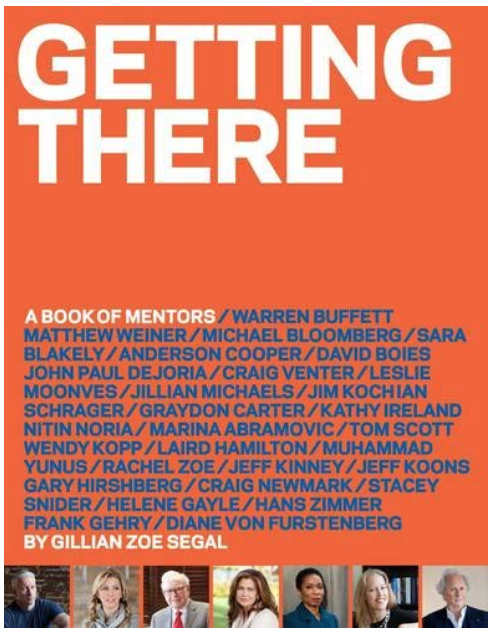
This is an excerpt from “Getting There: A Book of Mentors” by Gillian Zoe Segal. Find the book here.

Michael Bloomberg: Straight Talk From a “C” Student Turned Billionaire

Former New York mayor and founder of global financial services company Bloomberg L.P., Michael Bloomberg shows that  no one sails through life without encountering some rough waters. The billionaire believes that if you love what you do, you’ll thrive on the inevitable challenges and have the stamina to achieve your full potential.

In college I had a straight C average. I think I was just lazy, or maybe I was just too busy chasing the girls. But then, first semester senior year, I figured that if I wanted to go to graduate school I’d better do something about my grades.

So for that one semester I took a double course load and got all A’s. I applied to business school and I got in, much to everybody’s amazement, particularly mine. Then I went right back to getting C’s for my last semester. 

After graduation, I thought I was going to serve in Vietnam. In those days everybody was going to Vietnam. But they wouldn’t take me at the last minute because I have flat feet. Why it bothered them, I don’t know. So I needed to find a job all of a sudden. I went to work on Wall Street only because a friend of mine said, “Call these two firms – Goldman Sachs & Co. and Salomon Brothers & Hutzler (as it was called back then) – and tell them you want to be a trader or a salesman.”

Fortunately for me, securities trading and sales were considered second-class occupations in those days, so I got interviews at both firms. At Goldman I was introduced to the managing partner like this: “Mr. Levy, this is Mike Bloomberg.” At Salomon Brothers I was introduced to some guy named Billy. We had a discussion, and afterward somebody came up to me and said, “What’d Billy Salomon have to say?” I had just been introduced to the managing partner on a first-name basis! I felt that Salomon Brothers was the place for me. To say I fit in there and loved what I was doing is an understatement. I reveled in it every minute of the day. But the thing is, fifteen years later, they fired me. 

I was fired around the time the company was sold. They assembled an executive committee of seven people that decided who stayed and who went. One of the committee members did not like me – my crime being that I had been the assistant to his nemesis – and he convinced everyone else to vote against me. He was later killed in a plane crash, and the other six members of the executive committee became paying customers of mine.

As somebody once said, “Living well is the best revenge.” 

I don’t remember being too pissed or feeling that bad about being fired. I think I have the same insecurities that everybody else has. The difference is that I don’t let them get in my way. There’s a great scene in the movie The Sting between Paul Newman’s and Robert Redford’s characters. They rob a bank and in the midst of doing this somebody points a gun at Newman. Afterward, Redford asks him if he was scared. Newman replies, “Right down to my boots.”

As long as you can admit things to yourself, you can deal with them and then move on. I don’t lie to myself, but I don’t harp on things and I never, ever look back. If your mind starts to wander to past events, the only advice I can give you is don’t go. Just stop it! Think about something else. If you divert your attention, your mind won’t immediately go back to the unpleasant occurrence, and when it eventually does, simply stop thinking about it again.

That’s how you quit smoking. You don’t have to stop for the rest of your life, just stop for five minutes. Five minutes from now you probably won’t want a cigarette. If you do, force yourself to stop for another five. Eventually, one of these fives will end in not wanting a cigarette. And then one day you’ll think, I’ve come so far  and I don’t want go back.

Had a place like Goldman Sachs called me after I was fired from Salomon and wanted to make me a partner, I would’ve done it. But nobody offered me a job. Thank God for that! I started my own company instead. I like that old Woody Allen quote: “Eighty percent of success is just showing up.” You create your own lot in life, and to be successful in business you’ve got to work hard. The more you work, the better you do. It’s that simple. Some people say, “I can’t go into work today.” I’ve never missed a day of work in my life! After I was fired from Salomon, I still had about two months left before I was actually going to leave the firm, but I still never missed a day. In fact, I made sure that I worked six days a week from as early in the morning until as late as I could. I was searching for new office space for myself during that period, but I called the broker and said I could only look on weekends because I didn’t want to take time off during the week. I didn’t want anyone to ever say that I didn’t work 110 percent. I had an ego problem with that.

Be the first one in and the last one out. If you are there early and stay late, you get a chance to talk to people who would not otherwise take your call. I built many relationships by being early. You can call the chairman of the board of almost any company early in the morning. If he’s a good chairman, he’s there. The secretary’s not, so he’ll actually answer the phone. The best time to strike is when gatekeepers aren’t there! When I started developing Bloomberg, I wanted feedback. So every morning I’d arrive at the deli across the street from Merrill Lynch’s headquarters at six a.m. and buy coffee (with and without milk) and tea (with and without milk), plus a few sugars on the side. I’d go up and roam the halls looking to see if there happened to be somebody sitting in their office alone reading a newspaper. I’d walk in and say, “Hi, I’m Mike Bloomberg. I bought you a cup of coffee. I’d just like to bend your ear.” Nobody is going to say, “Get outta here” if you just bought him or her a cup of coffee. When someone would occasionally say, “I don’t drink coffee,” I would say, “Well, then have a tea.”

Over the years, people have come to me and said, “You can’t do everything.” That is total bullshit. You certainly can do everything. The people who do some things can do more. If you need to get something tough done, give it to the most overworked person in your organization. There’s a reason why they’re overworked; they get things done. I have an employee named Patti Harris; she should be written about instead of me. She runs my foundation, she runs the city, she has a husband, they have a great marriage, she’s got a great family (the kids turned out spectacularly), they go on vacations, they ski, they scuba dive. If you go up to her with doubts that something can be accomplished because of this obstacle or that obstacle, she’ll look at you, smile, and say, “That’s nice, just do it,” and walk away.

My parents were my role models. My father was a bookkeeper for a little dairy company. He worked seven days a week until he checked himself into the hospital to die. At that point my mother knew that she would have to start driving. She went to the library, checked out a book on driving, took the car onto our little street, and taught herself how to drive. She got a friend to take her to the DMV, took the test, and got her license. That was it. She just did it. After running Bloomberg for twenty years, I decided it was time to do something different. Time to fire myself. I wanted to turn over the company to others without anyone thinking I was walking away from it. Well, public service is a good excuse, and it’s of great interest to me. People say that government can’t be made to work efficiently and truly serve the people. My response? “Bullshit!” Telling me something’s impossible is like waving a red flag in front of a bull. Might as well go for it. So that’s what I’m working toward now.

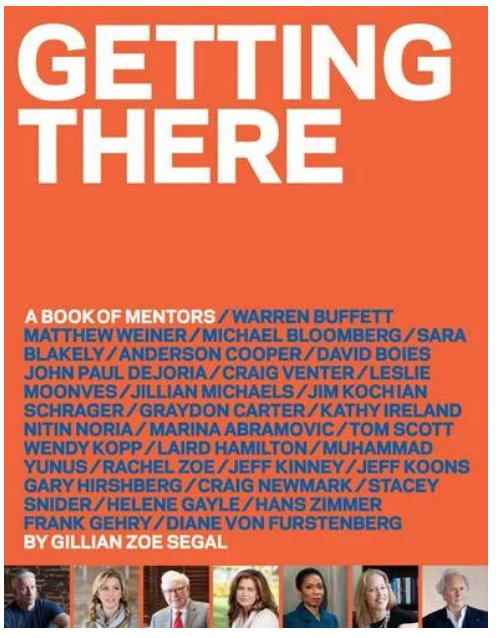
This is an excerpt from “Getting There: A Book of Mentors” by Gillian Zoe Segal. Find the book here.

Case Study: To Sell or Not to Sell?

Anna Rivera faces a decision that will affect the future and legacy of her company.

Anna Rivera, founder and CEO of Organics Now, had just hung up the phone with the CEO of a well-known global consumer goods company, Christopher Chen. His words were still ringing in her ears: “Anna, we’re ready to make you a strong offer on Organics Now.” The price Chen named would provide Rivera and her investors a hefty premium that was hard to pass up.

Still, Rivera knew she had a lot of mental hurdles to clear before she would seriously consider selling. The practices of the consumer goods company, one of the largest producers of processed foods, was an anathema to her core principles.

If you like this, subscribe here for more stories that Inspire The Future.

Thirty years ago, Rivera radically changed her and her children’s diet to a plant-based one, and the subsequent positive effects on their health and quality of life fostered a passion for healthy food that led her to form Organics Now. From humble beginnings, the company had grown into a leading producer of organic, grab-and-go food products that Rivera hoped would change people’s lives, just like her family’s plant-based diet had changed theirs.  

Chen had assured Rivera that acquiring Organics Now would be the first step in transforming the global company to having a healthier focus, but Rivera was skeptical. Could a Trojan Horse model of change really work? She had heard the story of acquisitions gone wrong many times before, and she couldn’t fathom having all she had worked to build being acquired and overshadowed by the practices and culture of a trans-national company.

On the other hand, Rivera wondered if the acquisition could scale her influence in the market place, allowing her to continue pressuring the industry toward healthier products. Although she could not deny the attractive aspects of selling, at the same time, she could not shake this very same company’s TV commercials pushing high-fructose products on children.

Rivera still believed she could deliver a higher value to all her stakeholders, including consumers and shareholders, by remaining independent. She believed that by staying independent, the mission of the company, her raison d’être, would be better protected. While strategy, marketing, operations, and finance were very important, she viewed the mission as the core of the company—the gravitational center of its operations—and wanted to preserve it whichever path she chose.

She took a deep breath and returned to a half-written e-mail, giving feedback to her chief financial officer on the packet they were preparing for an upcoming board meeting. Exciting news would be on the table for discussion, including new accounts, market research results, and a progress report on the build-out of their new, state-of-the-art production facility.

But two topics being raised to the board were even more timely and strategic after Rivera’s discussion with Chen. One was the interest of early investors in selling their stock. In light of Chen’s offer, Rivera now wondered if the early investors should be encouraged to wait for an exit, or if she should bring in new investors. She had already worked with an investment bank to create a private market for Organics Now stock, allowing new investors to come in as others sold their shares. This process introduced new, mission-aligned investors into the company, and made bringing in new investors seem less daunting.

The second timely topic the board would discuss was a key strategic initiative: a grab-and-go line of products at a price point that would make Organics Now accessible to nearly all shoppers, not just the more affluent natural foods shopper. Organics Now could truly democratize access to healthier, more convenient foods. This initiative would require significant capital, and could present more risk than her current investor base was prepared to take.

Her investor based included two angel investors who had a more conservative bent and were pushing for a more “stay the course” approach. Later investors included a wealthy family and a growth equity fund, both of which were mission-driven and took a more pro-growth stance.

There was division among the board on the best approach. She hoped this board meeting would provide more clarity and consensus, but she was also realistic about the fact that her board members had different agendas. She hadn’t fully decided which capital strategy would best support her vision, and she wondered if Chen’s company would be even better suited to launch the new line.

As she typed out her feedback to the CFO, she received a call from her head of marketing, who needed her thoughts on an ad layout. The question of her capital strategy and overall next steps for Organics Now would have to wait.

GIVEN HER STAKEHOLDERS AND MISSION, SHOULD RIVERA SELL, WAIT, OR REMAIN INDEPENDENT? THE EXPERTS RESPOND



Michael Whelchel is the Co-founder of Big Path Capital, a leading investing bank assisting values-led founders. He believes impact investing is a superior way to use capital.


Rivera is on the mark to be protective of Organics Now’s core mission. In working with values-led founders and CEOs in finding liquidity and exit options, we see mission playing a vital role in purpose-driven companies. In many cases, like Rivera’s, the mission of the company is the founder’s raison d’être, the grounding and deep conviction at the core of the company, its gravitational center keeping it in its successful orbit.

Rivera should re-frame her decision around mission-alignment versus framing it as a strategic versus non-strategic capital source. These financial transactions, such as what Chen is proposing, represent key inflection points in a company’s life that can have permanent effects on the future of a company. Thus, mission-alignment should be her first framing principle.

Once framed in this context, there are a growing number of options within the genre of mission-aligned capital:

CREATE A PRIVATE MARKET FOR STOCK. Rivera could continue the strategy she has already utlitized. That is, bring in new mission-aligned investors for growth capital and take out some of her early investors that may be getting anxious for liquidity. This has been a good strategy for a number of our clients. Creating a pool of mission-aligned shareholders can help address the need for liquidity and growth capital, while bringing in new investors committed to the company’s long-term mission.

IMPACT FUNDS. Rivera could consider taking an investment from or selling to a growth equity or private equity fund that is looking for investments that have both financial, environmental and social returns. This could be an attractive option, giving Rivera the growth captial needed to scale as well as the comfort that her mission would be supported by the new investors.

PERMANENT CAPITAL. Rivera could also explore an investment or purchase by groups that have a buy and hold approach to their investing. This could be a wealthy family looking to buy, hold and grow businesses or from a holding company, much like a Berkshire Hathaway model. Unlike an impact fund option, these groups are able to continue an investment with no exit horizon, which provides more stability for the company’s mission.

ENLIGHTENED STRATEGIC. Sometimes selling to a strategic buyer, like the global consumer goods company Rivera is talking to, can be portrayed as selling out. While high profile cases like White Wave demonstrate how a large corporation can destroy a mission-based company, there are a growing number of positive examples where the original mission of the company is scaled well beyond what the founder could have imagined. Some of these positive examples are Honest Teas and Coke, Plum Organics and Campbell’s, and Vermont Creamery and Land O’Lakes. In each of these successful examples, the corporation was looking at the purchase as a way to help them change their strategic direction, and the corporation gave the company a great deal of independence to retain its culture and authenticity.

Ultimately, Rivera should first look to the intentionality of the capital to inform her decision. With an intentional approach to preserving mission, she can shape her company’s destiny and the larger impact she desires to see in the world.



Seth Goldman is the Co-founder and Teaeo Emeritus of Honest Tea, the nation’s top-selling organic bottled tea. Seth sold the company to coca-cola in 2011.


Rivera’s situation brings back a lot of memories from a similar situation I was in at Honest Tea. Before Coca-Cola approached us, we had been approached by Nestle, who had proposed an outright acquisition. Although we didn’t move forward with Nestle, that discussion helped us identify how to stay true to our mission.

When Coke called to explore our interest in selling to them, I said, “This is not a negotiating strategy, but we can’t sell this brand yet. It’s too new, and still in a formative stage, with lots of growth ahead. The mission is on its way to realizing itself, but there’s a lot more work to do.”

If you like this, subscribe here for more stories that Inspire The Future.

This was the first deal Coca-Cola had ever done where they didn’t buy the company 100-percent outright. Their culture had always dictated that they buy the entire brand, and then “realize synergies,” which usually meant taking over and cutting out the founders. We made it a staged acquisition because we wanted each side to understand how the other works and develop a sense of trust. Coca-Cola initially bought 40 percent of Honest Tea in 2008. For three years, we continued to operate as an independent enterprise, with Coke as a minority investor. When Coke had the chance to buy the rest of the company in 2011, we had proven to each other that we could continue to aggressively grow the business without compromising the mission.

When Coke invested in 2008, we were at $23 million in revenue. By the time they bought the company, we had hit $72 million—we’d grown threefold in three years. They said, “Why should we change anything if it’s working?” Today we are ten times larger than we were then. When Coke first invested, we were in about 15,000 accounts. Today, that number is 140,000, including national chains such as Wendy’s, McDonalds and Subway. Equally important, our mission is far more rigorous and impactful. In 2008, less than 40 percent of our tea drinks were Fair Trade certified. Today, all of our teas are Fair Trade certified, and all of our sugar is as well, generating more than $1.5 million in Fair Trade premiums. And, we offer more zero-calorie drinks than ever before.

Still, selling to a strategic isn’t for everyone. It depends on the business. For us, as a beverage business, accessing customers by securing space on beverage trucks is essential. There just aren’t independent drink companies of scale other than Red Bull. They have their own trucks. So, for us, it was the best option. Ultimately, it depends on the industry, the product, and the distribution model.

Lastly, I would encourage Rivera to make sure her mission is embedded in her brand, and that the core attributes are verified by independent third-parties. Honest Tea’s mission was always about our product. It was low-calorie; it still is. It was organic; it still is. It was fair trade; it still is.

Once an entrepreneurial enterprise aligns with a large corporation, the automatic goodwill disappears—so it’s critical to have brand attributes that can’t be compromised. If you build a brand with the mission as the cornerstone of the brand’s equity, then the only way to compromise that is to take those values away. It’s not that we just say, “We’re environmentally friendly.” That’s a mushy term that can mean different things. The customer will know right away if you don’t stand behind your claims. We have to stand behind our authenticity every day.



Blair Kellison is CEO of Traditional Medicinals, which believes it can create more value for all stakeholders remaining independent. Reinvention of the standard business model excites him.


Having worked at the world’s largest food company (Nestle) and the world’s smallest food company (my own) and several places in between, I am in a unique position to evaluate such situations.

In today’s CPG food environment, it is a fallacy that bigger companies are better than smaller companies. The vast majority of growth in the CPG food sector stems from companies focused on the natural/organic/specialty segment of the industry. Two macro trends are driving growth at these companies. The first is a flight to quality across all food categories at all income levels. The second is consumer demand for transparency from food producers.

Big CPG has yet to show it is capable of executing against either of these two macro trends. To date, their only avenue to capitalize on these trends has been to purchase smaller, mission-driven companies whose business models inherently address these two macro trends. Big CPG has not shown an ability to leverage acquisitions to capitalize on these macro trends post acquisition—they just can’t seem to leave them alone. In an effort to create cost savings synergies, they diminish product quality and consolidate personnel and activities with those existing in their organization. In the end, this destroys the essence and culture of the acquired company and results in a loss of consumer confidence and market share post-acquisition. Big CPG business models are based on expanding distribution and reducing product and personnel costs. It’s all they’ve ever done; it’s all they know.

The time for natural/organic/specialty foods to rise above their much larger, mundane, mainstream competitors has arrived. Smaller, mission-driven companies have products and business models that meet the needs of today’s consumers. Their products are aligned with long term consumer trends that support long term growth. They now have access to large amounts of investment capital. They now have access to selling their products in traditional retail outlets. They are better positioned than large CPG to attract the most talented workers. As private companies, they can focus on long term strategic initiatives instead of quarterly earnings. All of this results in these companies effectively competing with their larger counterparts while also producing above-market returns for their investors.

Organics Now needs alignment of their strategy with their board and investors. Companies are either gaining or losing marketing share – they are either growing or shrinking – standing still is not an option as a CPG company. Organic Now’s investors that have a short-term investment horizon should be replaced with long term horizon investors.

Rivera’s financial needs over the long term will be better served remaining an independent entity, and she will create more value for herself remaining independent. She must ask herself – What is the value of her values?

It’s an easy decision in my opinion: remain independent, earn above-market returns, and stay true to your mission that is aligned with your values.



Diana Propper De Callejon is a Managing Director at Cranemere, a holding company that operates with a long-term view and indefinite ownership horizon.


Rivera faces the challenge of identifying a partner to help scale the business, extend its mission and preserve her legacy.

Her alternatives are typical of those available to the wave of high growth, purpose-led businesses that focus on creating value for all stakeholders – not only their shareholders. They also come with significant limitations and trade-offs.

Continuing with a revolving door of small investors with varied interests and time horizons is not suited to accessing the expertise and stability needed to achieve Organics Now’s potential. Selling to a strategic has clear attractions: a high price today, national distribution, additional resources, sourcing scale and a pathway to the growth that one dreams of as an entrepreneur. But these attractions can come at a high cost as the business is subsumed by layers of corporate bureaucracy, putting product innovation and speed to market at risk. Rivera’s loyal customers might find it hard to remain trusting of her brand as they perceive the products of the acquiring company to conflict with Organics Now’s mission.

Rivera may opt for institutional capital from growth-focused and impact-oriented private equity funds. While this offers access to expertise and networks, it may only defer the misalignment of interests between investors and founders. Usually within 3–5 years, PE funds exit—not because it is right for the business, but because they need to return capital to their investors. At that point they look to maximize return—not the future value and mission of the business. And founders like Rivera are left with little control.

What Rivera needs is a values-aligned, value-add, long-term capital partner that enables her to stay private and independent and preserve the company’s vision, while providing an ongoing source of liquidity and growth capital when required.

The Cranemere Group, where I work, was founded to meet Rivera’s needs. Our distinct approach is to partner with founders to grow businesses and build companies of enduring value. As a holding company with permanent capital, we have no view to exit the companies we back.

Without the artificial time horizon to sell of a PE firm, the costs and distraction of raising capital or selling the business are avoided, freeing Rivera to focus solely on building the business, culture and mission. The long-term perspective and stability that permanent capital brings will also be crucial to Rivera during the inevitable setbacks and business cycles. Investments that have long payoff timelines make sense.

A holding company with a strong balance sheet can provide liquidity to Rivera, her team and shareholders at different points over time. This provides wealth diversification along the way but allows them to capture significantly more value by holding onto their ownership for longer. Relative to a single large sum today in selling to a strategic, this approach often delivers a larger total return by allowing the value of their stake to grow as the business scales.

Though the traditional options have served us well, a new era is upon us where many purpose-led companies like Rivera’s need alternatives that better align with founders’ interests, values, and vision. At Cranemere, we see our role as driving the innovation in financial models that allows entrepreneurs like Rivera to achieve the impact they wish to make in the world.



Tripp Baird is the Founder and Managing Partner of the Builders Fund, an impact private equity fund investing in purpose-driven businesses. Passionate about capital and conscious business.


What an exciting moment for Rivera and Organics Now: she faces many options, all driven by a well-positioned business with the potential to transform a largely broken food system. I’ve stood in Rivera’s shoes as the CEO of a growing business. I’ve spent years advising founders and teams on how to navigate corporate development strategy, and I now represent one of the options laid out to Rivera: I’m a mission-driven fund manager seeking entrepreneurs that share our vision of a more human-centered, systemically responsible approach to business. I can relate.

The truth is that no cookie cutter answer exists to Rivera’s conundrum. Every company is different, colored by competing founder objectives, various stakeholders, many capital partner and liquidity alternatives, and different access to aligned capital. What is fundamentally true in every situation, Rivera’s included, is that honest, direct communication between stakeholders is key to laying the groundwork of an aligned growth plan and supportive capital strategy.

It may be that independence best serves the mission and objectives of the company. Therefore, a values-aligned investor that is additive to operations, while providing needed liquidity to older investors, would be a perfect fit. But in that case, finding a truly values-aligned investor can be a challenge. Rivera should take the time to get to know the decision-makers, share her objectives clearly and listen to ensure she understands Chen’s business model, time horizon, and approach to investing. Is it aligned?

Alternatively, the opportunity to fundamentally change the food system from inside a larger organization may represent a calling for Rivera (after all, true change requires scale, and while there are many examples of poor “marriages,” success stories exist, too). If so, she needs to feel that the strategic partner is truly committed to protecting the culture, brand tenets, and mission-driven approach Organics Now has spent years building. She needs to confidently determine whether they are authentically committed to change, or if Chen’s interest is just commercial. Furthermore, it’s important to consider the details of Rivera’s life, personal objectives, other stakeholders, and capital options.

In my view, Rivera needs to truly understand the people involved and see where real alignment of values and shared vision can manifest. None of the options is inherently bad or good; it really depends on the quality of the partnership and the ability of the principals involved to co-create an aligned vision for the future—and execute on it.

Rivera’s decision should also be fundamentally driven by her and her organization’s purpose and what best allows that purpose to flourish. Money is essentially a commodity, but it comes packaged in different ways. As the leader of a mission driven company, Rivera should focus on developing a clearer understanding of the available alternatives to make a fully informed choice from the heart that not only honors her personal objectives but also honors the needs of the organization, but of all its stakeholders.

By Michael Whelchel, Big Path Capital & Lisa Cox, Sorenson Impact Center

If you like this, subscribe here for more stories that Inspire The Future.

Is Your Gold Conflict Free?

Only 144,000 tons of gold have ever been extracted from the earth, 75 percent of it since 1910. There’s a good chance that the gold you wear on your fingers or around your neck was once involved in a war or conflict. One South African company is trying to change this.

Choosing a wedding band is one of life’s most significant experiences and reflects a deep personal commitment. Yet, have you ever questioned the social or ethical commitment of the company behind its making? Probably not. A new global awareness around conflict diamonds and responsibly-mined gold is seeing consumers take a closer look at the supply chain that leads to the impressive pieces on their ears, fingers and wrists. With dwindling natural resources on the planet, the temptation exists for many producers to extract materials at the expense of communities, workers and the environment.

A growing number of people and organizations are now calling for standards to be drawn up that ensure that human rights and are considered in the mining sector. Gold is already the primary source of income for armed groups in eastern Congo, much of which ends up in jewelry stores across the world. The link between gold and unlawful armed conflict and civil wars is well documented. Besides fuelling conflict, illegal gold extraction and dealing denies communities livelihoods and economic opportunities. In South Africa, Oro Africa recently launched the Absolute collection that has confronted this problem head-on.

Each wedding band is crafted from virgin gold, freshly extracted from the African earth, making each ring a pristine symbol of a brand new beginning. The trademarked product, called RandPure, consists of newly extracted gold ore; virgin metal of known provenance with a traceable source.

Inspired by the African philosophy of ubuntu – compassion, human dignity and respect for all – the woven bands reflect the continent-wide tradition of grass weaving and hair braiding.


Their manufacturing process is also independently monitored from start to finish and the gold is not contaminated with any scrap gold. The company has made a pledge to ethically source their raw materials and to develop communities in areas where the gold is found. “The collection is aimed at a new breed of consumer, who demonstrates a collective desire to protect the people and regions where our gold is sourced,” says Madrie Scott.

“It’s a logical next step for us, knowing how important responsibility is within a sector known for rogue traders,” she says. Oro Africa have collaborated with another local company, Rand Refinery, for this venture. This company has already refined over 50,000 tons of gold– almost one third of all the gold ever mined in the world. “The Absolute brand is currently the only gold brand that can claim with full confidence where their gold comes from,” says Scott.

“It provides an opportunity to make a responsible choice, with known provenance and a clear chain of custody from ore to store,” she says. A growing demand from consumers around the world is that information on the products they purchase is freely available and allows them a guilt-free experience.

So, before you declare your love for someone, ensure that what you put on their finger is not already tainted with the suffering of people in far-flung lands.

www.orodesign.co.za

This CEO Merges Business, Neuroscience and Ancient Wisdom

While you may not be familiar with Louis Gagnon, he used to be senior vice president at job site Monster Worldwide, and then chief product officer and chief marketing officer for Amazon’s Audible unit, where he led a team that doubled revenue and KPI growth rates in less than 24 months.

Today, however, Louis is CEO and managing director of My Brain Solutions, which is building the first “Fitbit” for the brain – integrating neuroscience, mental health, and wellness best practices in ways that have never been done before.

If you like this, subscribe here for more stories that Inspire The Future.

But the path that Louis took to his position as CEO at My Brain Solutions – founded in 2000 by neuroscientist Evian Gordon – was not a typical one. “Three years ago,” shares Louis, “I met an Indian guru, and through his teachings I went on a self-discovery journey in the mind, consciousness, and self.”

For thousands of years, humans have been curious about the workings of the human brain and the interactions of consciousness, self, and mind. The ancient Egyptians left behind texts detailing early neurosurgical practices, and Greek philosophers debated the role of the brain in thought and sensation (Aristotle thought that the heart was where thought was centered, with the brain serving as a cooling mechanism for the blood). Vedic texts – written several thousand years ago in India – explore the nature of consciousness.

While at Audible, Louis Gagnon was invited to a retreat with Indian spiritual leader Sri Sri Ravi Shankar, founder of The Art of Living and the International Association for Human Values. This retreat profoundly affected Louis. Led by Sri Sri, Louis experienced techniques of the ancient Vigyan Bhairav, a 5,000-year-old text describing techniques that open up meditative and expanded dimensions of consciousness.

Profoundly impacted by the experience of silence and transcendence, Louis brought this ancient knowledge to his team at Audible. “Our team was engaged, opened and excited to have the rare luxury to focus on themselves as individuals – individuals as a conduit and lever to ourselves as a team,” Louis shares. “We all felt deeply rejuvenated and at peace with each other. That, ultimately, built trust – the ultimate ingredient to teamwork.”  

The experience inspired a thought in Louis’s brain: “How can I take what is happening in my own mind and bring it into companies, at scale?”

The how was answered when he took the helm of My Brain Solutions with the goal of capturing a significant portion of the global wellness market. This market was estimated by the Global Wellness Institute to represent $3.7 trillion in revenue in 2015, with growth expected to exceed 17 percent through 2020. The fitness and mind-body category represents $542 billion in revenue, or approximately 15 percent of the total industry. Brain fitness is of particular interest to an increasing number of consumers, who hope to enhance the functioning of their brains while staving off memory loss. In fact, one recent study of older Americans revealed that memory loss is their number one fear – greater than terrorist attacks and being buried alive.

This continued growth in consumer interest around wellness and brain fitness provides Louis Gagnon and his company with a timely opportunity. Says Louis, “We are building the world’s first subscription-based digital brain fitness platform to allow individuals to assess and benchmark brain capacities and recommend personalized mind-body fitness programs.”

By combining the latest neuroscience discoveries with ancient Vedic wisdom, Louis and his team have delivered positive outcomes to a variety of well-established organizations, including Boeing, Kaiser Permanente, TEVA, and American Association of Retired Persons (AARP). As a result, Louis expects to double revenue this year while tripling the user base of the company’s MyBrainSolution product.

Says Louis, “We are providing a new way – based in ancient wisdom and emerging scientific discoveries – for anyone to boost their mental fitness.” And for an increasing number of consumers, this is exactly what the doctor ordered.

If you like this, subscribe here for more stories that Inspire The Future.