The Make or Break Qualities of a Real Leader

Universal truths are arduous – if not impossible – to identify and articulate when it comes to leadership philosophy and effectiveness. Those seeking the secrets to success are typically well read on the topic (with an impressive bookshelf dedicated to the discussion) and passionate about their perceived thematic threads between Winston Churchill and Warren Buffett.

We have all seen it … the list that outlines the key characteristics of dynamic, driven leaders. Titans of industry and popular politicians. While there is ample information and inspiration to pull from and apply to one’s personal approach, the number of observations and recommendations can be overwhelming.

With decades of on-the-ground (though not always written down) leadership experience – within industries with acute emphasis on inspiring and influencing others – I have my own simplified perspective on what it takes to lead a talented team and act with influence. These are consistent characteristics that come from someone who has navigated a substantial and uphill hike to the upper echelon of meaningful management positions.

Sure, there are no shortage of lists about leadership and many authors are incredibly qualified to comment about this topic, but for me, there are three qualities that make-or-break a real leader.

1. Understand Your Business. 

Somewhat self-explanatory? Maybe. Non-negotiable for effective leadership? Most definitely. A great leader knows the nooks and crannies of their organization. In addition to maniacal management of the numbers and understanding of the market, they see beyond the steady drumbeat of the business and recognize the nuances. 

The most effective leaders I’ve had the opportunity to meet know their smallest customer, as well as their largest. Priorities must be in order, but the ins and outs of the procurement department performance – and the people within the department – get a real leader equally energized as an impressive earnings report. The leader shares their understanding – the team needs to know you know – but as a way of thinking and learning with the team, not lauding over them.

2. Put an Emphasis on Interpersonal Communication. 

The best leaders understand how to manage and maneuver through office politics and are steadfast in their statements. They understand the interpersonal dynamics of their team and adapt their approach to meet individuals’ expectations and inclinations. Emotional IQ is included, but it extends well beyond empathy and the ability to read a room. 

Real leaders put an emphasis on expression. They pay equal attention to what they say (or write), how they say it and to whom they are speaking. Each interaction is an opportunity to motivate an employee to move the mission forward. And, contrary to conventional wisdom, interpersonal communication isn’t a hereditary character trait. It’s a skill that can be learned and strengthened with concerted effort and a rightsized spot on a leader’s priority list. An anonymous quote I regularly reference sums it up: “The true essence of a leader is revealed by a person who cares about the opinions and needs of others in ways that transcend position or title.” 

3. Define Your Vision and Empower Others to Execute.

Strong leaders look toward the future and are able to articulate a clear vision that their staff can understand and be energized by. This is especially important for the impact industry where people are mission-driven. Leaders instill confidence by demonstrating competence. And a core competency for any impactful leader should include the capacity to rally a team around a shared strategy, and a strong sense of purpose for the work. 

Once the destination is set, give the talented team you’ve worked so hard to build, the tools and autonomy to map the course. I’ve learned that being in the weeds is being in the way when it comes to effective leadership. A leader must ensure everyone understands and is aligned with the objective, and then empower the team to execute. 

As a leader in the impact industry who thinks regularly about the future we will leave behind, I am motivated to help high-potential, high-performers prepare for prominent leadership positions that will ensure we continue pursuing and securing our intended outcomes. We are striving to strengthen communities. We need strong leaders to recognize the weight of this work and help expand the scope of what is possible. www.advantagecap.com

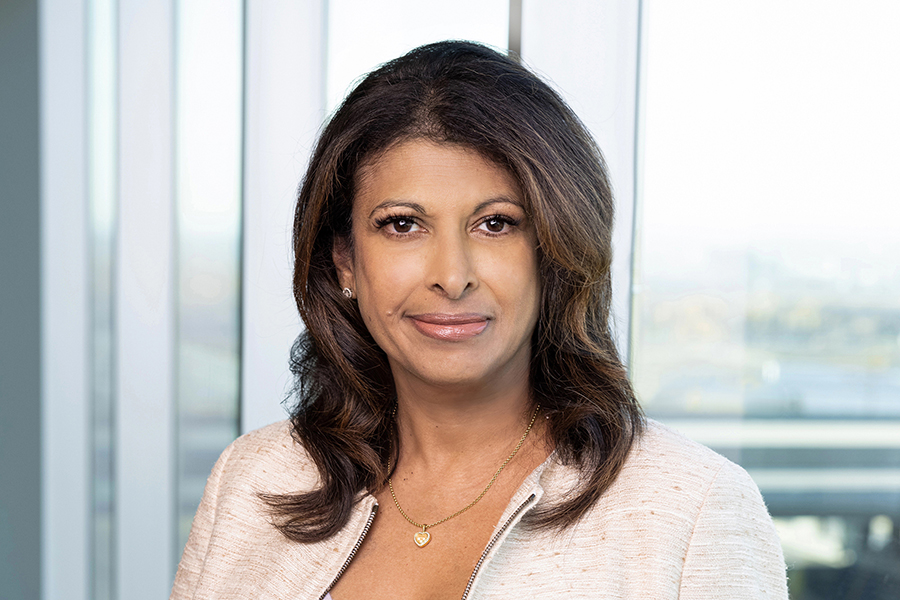
Sandra M. Moore is managing director and chief impact officer at Advantage Capital, a growth equity firm founded in 1992 with more than $3.8 billion AUM. The firm focuses on high-growth and high-wage businesses investing in communities where access to investment capital has historically been hard to find. 

Your Purpose Will Enable Your Profit

Robert Sheen is CEO and founder of Trusaic.

What does being an impact leader mean to you? 

Driving a positive impact in the world and leading with purpose. Being a leader of impact goes beyond taking care of those within your own company, it expands to caring for society at large and ensuring you uphold and promote the values ingrained in your company’s DNA. At Trusaic, we strive to advance social good in the workplace, to create a better working world for future generations.

What was your biggest leadership barrier and how did you over come it?

Driving social impact while maintaining profitability can be a huge barrier for leaders. To overcome this barrier, leaders must understand that purpose enables profit. Weaving purpose into the fabric of your organization is essential to being a successful leader and promotes growth alongside social good.

What does collaborative leadership look like? 

Creating an environment without judgment and fostering inclusivity is the core of collaborative leadership. An environment without judgment allows individuals to feel safe to share their opinions openly, and in turn, fosters diversity of opinion. It’s only within this environment that productive collaboration can occur at all levels.

www.Trusaic.com

Robert Sheen, founder and CEO of Trusaic, is a serial entrepreneur and a philanthropist.


Robert founded First Capitol Consulting, Inc. in 1999, serving over 5,000 global, national, and
regional companies. In 2003, he founded, organized, and chartered US Metro Bank with an
initial $19.6 million capital raise. US Metro Bank is currently valued at over $1 billion. In 2006,
Robert developed TaxAdvantage® in partnership with Intuit, providing tax-centric data solutions
for Intuit Employee Management Service’s 1.4 million customers. In 2019, First Capitol
Consulting became Trusaic, and today is a leading software company focused on pay equity,
DEI, and healthcare. Trusaic helps organizations build a better workforce so they can build a
better business.


Robert has served on the boards of MTV’s “Rock the Vote,” University of Southern California
Pacific Asia Museum, Asian American Justice Center, and the Korean American Democratic
Committee. He is a former President of the Korean American Bar Association. Robert was
honored in the “Men of L.A.” by The Women’s Foundation.


I Have the Best Job in the World as an Impact Leader

Desirée Bombenon is the CEO of SureCall.

What does being an impact leader mean to you? 

Being an impact leader means making a transformational difference in the areas of social, environmental, and governance, that you are passionate about changing for the better. Impact can be done and felt in many ways. Leading impact means that you are looking beyond the work you are creating to the outcomes that are produced and seeing a measurable difference in the overall effect it has. It’s taking the words in your vision and mission statements, and making them actionable, accountable, and meaningful, while bringing your team along with you.

What was your biggest leadership barrier and how did you over come it?

I cannot qualify the biggest barrier because there were just constant barriers, none bigger than the other. There were barriers of race, gender, age, education, and stakeholder blinders. Upton Sinclair once said: “It’s difficult to get a man to understand something when his salary depends on not understanding it.” Being an impact leader has many barriers, and being a female POC impact leader has additional challenges. These were overcome by continuing to bump relentlessly against traditional norms and then proving that stakeholder capitalism doesn’t mean giving up profits for purpose. You can do well by doing good, and it’s in the numbers. Once you can demonstrate that doing good is good for business, the buy-in happens, at every level.

What does collaborative leadership look like? 

It looks really great! Collaborative leadership means every perspective has insight, that no one viewpoint is the only way forward. It’s understanding that all the people in the room have the right intentions. It’s moving forward with an idea even if it’s not yours, it’s challenging tradition and expecting the entire team to contribute; its avoiding group think. Collaborative leadership is inclusive, not just the top executives, but all stakeholders — creating cross functional integrated thought leadership.

www.SureCallcc.com

Desirée Bombenon has over 30 years of business operational experience and strategic leadership. Awarded RBC’s Women’s Entrepreneur for 2020, Ernst & Young 2019 Entrepreneur of the year for the Prairies in Communication Technology, she is a bold innovator, futurist, and purpose-driven leader. 

How to Fix Your Business Intelligence Blindspot

Most leaders know it’s a problem, but few have found a solution.

Ever since the Iceberg of Ignorance floated into our collective consciousness back in the late 1980s, leaders who were paying attention became increasingly aware of a dangerous disconnect between the information known by the people in their organizations and the information that made it to them. 

The famous Iceberg of Ignorance study, produced by Sidney Yoshida, posited that frontline workers were aware of 100% of the floor problems an organization faces, supervisors were aware of only 74%, middle managers 9%, and senior executives were aware of only 4%.

Since 1989, this information flow has gotten worse, not better. The sheer amount of information now being collected is mind-spinning. 

The scale and speed of digital transformation (DX) has left no industry unturned. According to Statista, in 2022, spending on DX is projected to reach $1.8 trillion. By 2025, it’s forecast to reach $2.8 trillion. This mass shift toward the digitization of every kind of business, from manufacturing to mango production, has led to a tsunami of data. We’ve become collectively fixated on building and deploying artificial intelligence to track and analyze every data point on which we can get our digital hands. Every mouse click, written word, and action taken by a person or machine is logged. The goal? To tap this data treasure trove and run smarter businesses, cut waste, preempt breakages, increase output, refine processes, build better relationships with our customers, and master all manner of other operational aspirations.

But while we’ve insatiably invested in artificial intelligence to analyze every data point, what we’ve blindly disregarded is arguably our most valuable one: our people. Our human intelligence — those on our organizational frontlines — understands problems and solutions not through complex analysis but by earned personal experience. We need to get better at asking our people what they think.

Listening Differently

One of the most effective, successive waves of business transformation should be about finding ways to tap the intelligence of our people, building channels for human information to flow unencumbered from bottom to top and side to side.

Here are a couple of practical applications and ways leaders can drive positive business outcomes by leaning on team intelligence over the artificial kind. I’ll start with one I use myself. 

Strategic Alignment. In my current position, I have built an annual strategy process based on a series of company-wide conversations to strengthen our cultural and strategic alignment. Over a year, we run a strategy-informing conversation, tapping into the collective intelligence of our remote workforce by asking what single important thing we should consider when building our strategic plan. Then, using the insight gathered to help inform decisions, the senior leadership creates the annual strategy. When it’s launched, we ensure that it is well understood and potential hurdles identified through a second company-wide conversation. Halfway through the year, we involve the entire company in a third conversation about our plan to see where we are being successful and where we are falling short. The results? An annual strategic plan that has the insights of those at the frontline baked directly into the heart of it, and, as a result, has buy-in from all corners of the organization. This, augmented with data points that we capture through other channels, has significantly reduced our risk of blindspots. 

New Leadership Integration. The Harvard Business Review estimates that between one-third and one-half of all new chief executives fail in their first 18 months. Succession is a complicated business. Even when robust leadership onboarding programs are in place, these tend to focus on relaying corporate and operational dynamics, providing detail on ongoing projects and financial projections, etc. They don’t attempt to recognize the myriad of more complex political, personal, and cultural dynamics that exist within a company by way of its people. These are far more likely to impede the progress of a new leader — at best being a distraction, at worst being destructive.

Going directly to a new team as part of the onboarding process and allowing them to share honest opinions, questions, and concerns anonymously, an incoming leader can immediately understand the field they’re stepping on to. The honest feedback received from a process like this might not be all sunshine and rainbows, but understanding where real problems lie and how to address them will better ensure a new leader can be confident that they’re informed as they take over the reins. Following that pre-boarding conversation, I would recommend tapping into the collective intelligence as part of the traditional 30-60-90-day plan and making sure that a leader communicates any actions that have been taken because of the insights they were provided with. 

Going directly to the people in an organization before taking over and asking for their opinions will  allay fears, build early team trust, and lead to far more healthy working relationships. With their opinions and concerns aired and addressed, team members are far more likely to adapt, abandon old habits and behaviors, and get behind a leader who has demonstrated genuine curiosity and empathy as they transition the company.

Valuing Intelligence. Accurate business intelligence shouldn’t always be defined by the amount of data we can collect, but by the value it can deliver. By electing to tap the human intelligence present at every touchpoint of our organizations, we might just find that the person closest to the problem is the one with the best solution.

Does Your Business Matter? And Can It Matter More?

This is the second of a 4-part series exploring businesses that matter. Read series one here

Business is sacred.

I recognize that’s not a widely-held view as most employees of most businesses, unfortunately,
don’t experience their work this way. But if one allows sacredness into the conversation about
business, different possibilities start opening up.

And so, the provocation of whether your business matters – or can matter more. At the outset, the nature of what ‘matters’ is entirely neutral. One business that I know of figured out that what mattered to them was to be a launching pad for young, ambitious people in the advertising industry. In their case, they put their efforts into providing a dynamic growth experience for their people that lasted about 3-4 years, after which they were comfortable letting these well-developed professionals make their mark in ad agencies elsewhere.

Costo, an entirely different illustration of what matters, believes in community engagement and
fostering symbiotic relationships with the suburbs surrounding their stores. Southwest Airlines believes in understated, selfless effort as a way of serving their customers and maintaining low running expenses.

These three businesses couldn’t be more different, but the net effect is the same: their people have a singular rallying cry around which to rotate their collective efforts. Something that is known, and which matters to everyone in the business. Once employees have something to lock onto that is authentic, well-considered, and meaningful; generally, they will. It’s the human condition to want to be part of something and to feel energized about an idea. And once they do, it releases a groundswell of energy, generosity, and commitment that underpins their choice to devote their discretionary effort to the business they’re a part of.

What’s more, ‘mattering’ is strategically enabling. It’s not about saving the world or doing good. That nuance is extremely important in that business, as an institution, is oriented toward high performance and excellence. The ‘gift’ of business to the world is to set high bars, to move fast, to innovate ingeniously, and to create value. Never must those values be lost in the search for what matters to a business. Performance and ‘mattering’ are part of the same idea. So, how does a business unearth that matter to it?

It’s obviously a highly personal journey, but these pointers might be helpful

  • A particular form of ambition sits at the core of this journey – not only to grow
    bigger and to succeed but to be more significant. This needs to be activated as a
    catalyzer of this journey: a question; a gathering; and an exploration.
  • What matters doesn’t need to be overly profound – it just needs to be energizing
    and compelling.
  • What could matter to a business is likely already there but in an un-named and
    un-formed state. It’s an unearthing, rather than a seeking out.
  • Early adopters will reveal themselves. Engage these people and include them in the
    exploration.
  • Locate the strategic importance of mattering: How will employees benefit? How will
    customers benefit? How could your product/service become enhanced due to
    mattering more as a business? How could your brand be enlivened by mattering
    more?

    This is a very particular worldview to link sacredness to business, and it might sound foreign to many readers. This is the essence of the Hero’s Journey: to seek out something greater and more profound and to be able to walk the whole journey in service of this goal, including the defeats that generally accompany the victories. Without this mindset, ‘mattering’ will be a struggle as there’s simply not enough energy and excitement to power the journey. For business people of today, this is the essential question: do you see your life’s efforts as being something that matters? Or are you satisfied with the mundane?

Coming in Series 3: “Sculpting a Business That Matters.” We will explore how businesses that matter
operate and what rituals and customs are practiced within such organizations.

How to Use Engagement as a Driver of Collaboration

Many leaders think about engaging their colleagues. Thinking is good, but thoughts need to result in specific actions.

Our most effective leaders embody the specific leadership behaviors that result in the engagement of colleagues. These leaders develop, recognize, inspire, value, engage, respect, and supervise their colleagues. And in doing so, they nurture an environment that heightens well-being and increases work performance. They increase each colleague’s commitment and passion for their work. What follows is a description of specific behaviors to amplify leadership effectiveness — the drivers of engagement: develop, recognize, inform, value, engage, respect, and supervise.

I coach many leaders who believe that their colleagues — their direct reports — should “just know what to do” and that they, the leader, should not have to guide them. These leaders are often hard-driving, task-oriented, and self-sufficient individuals who climbed the leadership ladder based on brute grit and an ability to independently get things done. They think others should simply do the same. These leaders say they don’t have the time to develop their colleagues. There is too much work to be done. Their direct reports need to keep up and predict what they, the leader, want. Otherwise, the leader will re-assign the task to someone else or simply do it themselves. The downfall of these leaders arises, predictably enough, when their high-pressure, hands-off, finger-pointing approach leaves behind a wake of disenfranchised and burned-out colleagues who feel stifled and alone. The leader’s colleagues want to understand what is being asked of them, and they want to be effective, but their leader’s demands are vague.

I also coach leaders who smother their colleagues with advice and mentorship. They are the “helicopter leaders” who hover over each colleague’s every move. With their hyper-present coddling, they recommend each step and provide guidance through each obstacle. These leaders stifle the personal growth of colleagues. And when they move on — retiring, relocating, or leaving the organization — their colleagues are left ill-prepared without their guide. Their colleagues haven’t learned to navigate the complex work environment alone. Here are some leadership tactics you can use.

Schedule regular one-to-one conversations. Meet one-to-one with your colleagues to identify areas in which they would like to achieve professional growth. Gain an understanding of how your colleagues see their role evolving within the organization. Discuss each colleague’s progress with goals and their behaviors and help them reflect on the obstacles they encounter. Address each colleague’s experience and opportunities for development in real-time, while their behaviors are top of mind and relevant, rather than as a distant and out-of-touch review of what happened months prior.

Track your interactions with colleagues. Keep track of your interactions with colleagues. Take brief notes on points of discussion and create triggers or reminders for when to next reach out. I use a tablet and a stylus to take electronic notes during conversations with colleagues. Each note resides in the electronic folder that I set up for each colleague. I can access these notes from my mobile phone, tablet, or computer. Before I meet with a colleague, I glance through my notes to catch up. This helps me remember the milestones, relationships, achievements, and aspirations of colleagues. It keeps me from repeatedly asking questions like, “Tell me again, what you were working on?” or “How many kids do you have?”

Promote group learning. Bring forward articles, books, and tutorials to share with colleagues. Nurture an environment in which colleagues learn from each other. Physicians frequently use case reviews, journal clubs, and situational simulation to learn how to best apply new information and skills. During case reviews, we discuss interesting patient care scenarios in which things went right, went wrong, or an interesting question arose. During journal clubs, we read articles and books and then discuss our perspectives. During simulations, we replicate challenging scenarios and role-play how we would respond to situations as they unfold. Many healthcare organizations create simulation centers, where they employ actors, create 3D models of the environment, and use other technologies to make the simulation experience as real as possible.

A Few Uncomfortable Questions Every CEO Should Ask Themselves

Before strategy, before innovation, before profitability, before talent management, before acquisitions, and before revenue growth, there are two questions a CEO answers (mostly implicitly, unfortunately — my hope is that this piece encourages you to answer them explicitly):

1. What is my ambition for my business?

2. How hard will I strive to achieve ‘optimal’?

These questions shape every choice a CEO makes. They determine what you want for yourself and what you want for your business — a trajectory of sorts. And once this trajectory has been established, your choices follow suit.

A mildly motivated CEO will produce a middling strategy. A highly motivated CEO will produce a remarkable talent plan. A CEO of low motivation won’t care about innovation and the journey to producing a stand-out product or service.

Most CEOs I work with initially are fairly flat regarding these choices, until they become awake to the possibilities in front of them. Once this awakening takes place, the CEO role looks different — more compelling, more interesting, more alive, more enticing — and  true, sustainable business performance follows shortly thereafter.

Observing CEOs undergo this transformation is a beautiful thing for me — a privilege that never loses its luster and which deeply sustains my work and the energy I have for what I do. It’s a change in course that brings about a wide array of changes in their lives: more energy, more optimism, more curiosity, more purpose, more creativity. Even the quality of their marriage seems to benefit, as one example of many unforeseen upsides. Health, too. Financial well-being, obviously. More inspired parenting.

Being a CEO is an opportunity to turbo-charge an entire existence — this is the extent of the opportunity. Check your ambition. Explore what’s possible. A better way likely awaits you.

Face Up to Your Truth

I’ve heard the phrase “… this year has been a lot harder than I expected …” from more than a few CEOs of late.

As such, it might be worth taking a few minutes to ask some sound questions at this point in 2022. Remember that your businesses are alive, evolving, fluid things. As much as we’d like to see them as walking a linear path that we, as CEOs, have full control over, that is not the case. So, as your business continues its (hopefully) merry way, consider these questions and see what emerges. They are not soft-ball questions, but rather ones that sometimes we might prefer to avoid. As ever, despite their sharpish nature, they are shared in the spirit of care, support, and enablement:

  • What did not play out as you expected it to, and where did your hypothesis go wrong?
  • What is the true, holistic health of your business right now?
  • What truth about your business, or about yourself, might you be avoiding?
  • What bias is in play that might be skewing your objectivity when it comes to big decisions?· 
  • What is your business calling on you to become as the CEO? (changes, growth, what to let go of, what to mitigate about yourself)

None of the above questions will likely have ready answers. And, in fact, one or two might not even be relevant right now. But at least one will have meat on its bones that warrants inquiry. I hope they are helpful.

How to Convert Concern Into an Achievable Solution

Jody Williams, the 1997 Nobel Peace Prize recipient, led a movement that successfully banned the use, production, and sale of anti-personnel landmines. She writes that feel-good, sentimental feelings around peace are a waste of time.

The image of peace with a dove flying over a rainbow and people holding hands singing kumbaya ends up infantilizing people who believe that sustainable peace is possible. If you think that singing and looking at a rainbow will suddenly make peace appear, then you’re not capable of meaningful thought or understanding the difficulties of the world. Most people, when confronted with these images of peace, and the derogatory terms that go with it, such as “tree-hugger,” “liberal” or “granola-eating hippie,” become ashamed to say they believe in peace. 

It’s critical that humanity reclaims the meaning of peace. Peace is not just an absence of conflict or personal serenity. Peace means actively engaging in the world to create one in which we all want to live. It’s hard work — every day. It’s about making a commitment to a greater good, even with the people you don’t like in the world. I certainly don’t like everyone in the world; the Nobel Peace Prize did not suddenly turn me into Mother Teresa. There are those whose politics and worldview I don’t like at all. However, if I only wish for a greater good for my friends or those who think like me, I’m no different from the people I dislike.

I want to see a world in which everybody benefits from sustainable peace. To achieve this, we need to focus on human security, not national security. Theoretically, within a national security framework, if the state is secure, then the people are secure — but I don’t believe that. I look at my own country, the United States, where democracy is under siege. A huge number of people live on, or below, the poverty line, and the things I consider important to making a nation secure, such as job security, are collapsing under the weight of global corporatism. A lust for more and the selling of weapons of war do not make us secure.

I don’t believe you need to be a full-time activist to be an involved citizen and to bring about positive change. The media wants us to believe that the problems of the world are so overwhelming that there’s nothing we can do — to leave it to people in power to solve, the so-called “experts.”

When I speak with people of any age, I suggest they think for a few moments about what issue upsets them the most and what change they’d like to see. When I started the International Campaign to Ban Landmines in 1991, it wasn’t about changing our world from a planet of war into one of peace overnight. It was about banning one weapon, which started a process of change. The campaign grew within six years to 1,000 organizations in 60 countries. It resulted in the signing of The Ottawa Convention by 120 states, banning the use, production, and sale of anti-personnel mines. There’s nothing magical about bringing about change — it’s about converting your concern into action. If you teach people different ways of looking at this little planet we all share, you can change the world. Anything is possible if you believe it. You’ve just got to get up off your butt and participate in creating change.

7 Tips for Effective Change Leadership

Every organization needs change leaders. These people believe in the need for change, commit to adopting the required activities, and have the knowledge and skills to support and guide others through the process.

The changes facing most organizations are too complex and the pace of change too fast to be driven only from the top and managed by a few specialists. It would help if you had leaders at every level with sufficient knowledge, skill, and capability to lead and manage change effectively. Here are seven ways to create effective change leadership throughout your organization:

1. Adopt a readiness mindset. Many unwittingly adopt a resistance mindset — the belief that human beings naturally resist change. Leaders with a resistance mindset equate employee reactions to change with resistance and grow frustrated when employees question or balk at change. A readiness mindset interprets these reactions not as a sign of resistance but as a sign that people are not ready. It is characterized by the belief that people will move toward something new and different when they understand the need and feel prepared, capable, and supported. Adopting a readiness mindset allows you to engage with curiosity to seek feedback, prepare, and guide people through the change process.

2. Demonstrate empathy and implement change from the perspective of the change recipients. Empathy is the ability to see the world from a different perspective. When you practice empathy, you can recognize two essential factors. The first is that the initiator of any change starts their transition before others in the organization. The second factor is that every organizational change involves risk. A change that may appear low-risk and easy at the executive level may, at the frontline level, be complex and perceived as riskier. Successful change leaders strive to understand the perspectives of those who will be doing the heavy lifting.

3. Create time and space within your operational environment for people to engage with and adopt the new activities and behaviors. Few companies have the luxury of shutting down business while implementing a change. And the day-to-day activities that keep a business running almost always take priority over those required for change. Therefore, you need to create time and space for people to unlearn old actions and behaviors, learn new ways of working, and embed the latest activities and behaviors into their daily operations.

4. Actively involve the people who will do the heavy lifting in the design and planning of the change. It always surprises me when leaders say they don’t have time to involve everyone in a change process. Involvement is not optional. To think otherwise would be like believing you could get fit by someone else working out! A 2017 McKinsey study found that only 3% of organizational change efforts were successful when managers and frontline employees were not involved. Active involvement does not mean everyone is involved in every decision. However, you can create structures to help you actively involve people at the right level and at the right time.

5. Create a straightforward, concise, and concrete outcome story. Stories drive our decisions and actions. You need reliable, accurate qualitative and quantitative data to decide whether to initiate a change. However, facts and goals are not enough. Creating healthy and sustainable change requires people to connect emotionally and intellectually with a shared story about why the change is necessary and what the outcome will look like. Create a shared outcome story that describes the look, feel, behaviors, and activities of your organization/department after the change has been successfully adopted. Doing so decreases stress and uncertainty and makes it easier for people to let go of their current state and move toward something new. A shared story of your intended outcome helps everyone make better decisions and expands your organization’s intellectual capability.

6. Apply holistic systems thinking. Every organizational change creates ripples or, as one client described it, a tsunami in your organization. Failure to recognize interconnections and treating each change initiative as an isolated event contributes to change fatigue. However, when you identify and plan based on these interconnections, you can leverage collateral change — achieving strategic or desired outcomes within existing rather than new initiatives or projects. It also reduces the risk of burnout and change fatigue.

7. Demonstrate curiosity, compassion, and commitment. Be curious about what you see and hear, including having self-awareness of your reactions. Then practice self-compassion as you navigate your journey and help support others through the change.

To be an effective change leader, you must commit to the whole journey. Achieving real change that sticks takes time. You need the energy and stamina to continue until the intended outcome has been achieved and the new activities have become routine.

Out of the Office and Into Nature: Leadership Skills That Evolve in the Outdoors

To be an effective leader in any setting — whether in the office or an Alaskan mountaintop — you need to build relationships. This means being able to connect with others, understand their needs and motivations, and create a sense of trust with them. When everyone on your team feels like they can rely on you and each other, that’s when the real magic happens.

Outdoor leadership requires all of these skills and more. If you’re looking to develop your leadership skills, there’s no better place to start than by heading into the great outdoors, where you can develop these six skills:

1. Communication.

Leading a team of people with different personalities and skill sets can be challenging. On some trips, you might be off the grid for several days at a time, so it’s essential to be able to communicate clearly and make decisions on the fly.

One of the most critical leadership skills is the ability to communicate effectively. You must be able to share your vision for the trip, give clear instructions, and provide feedback in a way that everyone can understand. This requires active listening and adapting your communication style to different situations.

2. Patience.

As the leader of a trip teaching beginner whitewater rafting in Yellowstone or hiking in the Rocky Mountains, I had to rely on patience and compassion to help my team through any challenges that could arise.

Whether figuring out how to carry gear over portages, navigating tricky rapids, determining which trail to follow, or working through differences in opinion, it’s your job to keep everyone feeling valued and focused on the ultimate goal: having an amazing adventure together as a team.

3. Organization.

Another essential leadership skill is the ability to stay organized and create a plan everyone can follow. This necessitates strong analytical skills and the ability to think ahead. You need to be able to identify the steps that must be taken to reach the goal, and you need to be able to communicate this plan clearly to your team.

4. Problem-solving.

A camping trip is an amazing opportunity to develop problem-solving and conflict management skills in a low-pressure environment. You will have to take charge of all the logistics, from planning and packing to cooking and setting up camp. This requires delegation skills, as well as the ability to think on your feet and deal with unexpected challenges.

Or, imagine you’re on a canoe trip and dealing with portages — areas where you have to carry your canoe over land. This can be difficult, especially if you have a group of people with different levels of strength and experience, but it’s vital if something goes wrong or someone gets hurt or lost along the way.

5. Resource management and risk assessment.

Outdoor activities can help cultivate even more advanced skills, such as resource management, risk assessment, and leadership under pressure. For example, if you are climbing up a steep slope or crossing an icy crevasse, one wrong move can have disastrous consequences.

It takes nerves of steel and total focus to lead a team under these conditions. But with the right training, preparation, and support from your team members, you can overcome any challenge that comes your way.

6. Teamwork.

When embarking on an outdoor expedition, you have to ensure you have all the necessary equipment, that everyone is adequately trained to use it, and that everyone clearly understands their role in the group. This can be difficult when hiking with people with different fitness levels and abilities. By encouraging teamwork and collaboration, you can help everyone feel confident in their ability to reach the summit.

Ultimately, leadership is about people. It’s about understanding what makes them tick, what motivates them, and what challenges they face. It’s about seeing the potential in others and helping them grow into their best selves. And it’s about creating an environment in which everyone can thrive. Outdoor leadership is a unique opportunity to develop these skills and put them into practice in numerous real-world settings. There’s no better way to begin than to get out there and start exploring.

0