Harnessing Your Fear Factor For Peak Performance

Patrick Sweeney says he used to be a wimp. Now he’s a full-time adventurer who has overcome his fears and is helping business leaders reach new heights by embracing theirs.

Patrick Sweeney gets asked one question over and over again: does anything scare him? The 50-year-old Irish-American is, after all, a self-styled “fear guru,” who learned how to embrace fear after overcoming a crippling dread of flying, and who now travels the world encouraging others to use the emotion to their advantage. Formerly a successful tech entrepreneur and CEO, Sweeney swapped a life of closing business deals in boardrooms for climbing mountains and embarking on thrilling expeditions. (He assures us that being a professional adventurer is a real job.) He’s also an in-demand thought leader whose dream is to help millions of people reach new heights by understanding and utilizing a raw and powerful emotion through knowledge of the latest neuroscience.

Sweeney’s fear of flying was caused by a traumatic event in his childhood. “When I was six my parents just flipped on the news and I saw this DC-9 in flames, a horrific crash at Boston’s Logan airport,” he recalls. “That initial fear frontier is like a seed inside your heart that grows into a whole tree of terror,” he says. “Once you recognize that, you can clip it one branch at a time, or you can chop down the whole tree. I took the quickest and most effective route – but the way I did it was also the most painful.”

Sweeney felled his fear tree after he was diagnosed with a rare case of leukemia. “I had a near-death experience,” he says. “I’d spent years focusing on business success and just when I thought I was conquering the world everything nearly got taken away from me. I realized that everything we have, including our body and mind, is just on loan to us, and could be taken away in the blink of an eye. I also realized that I needed to treat every day like it’s a gift. I understood that my fear had been holding me back, so I decided to overcome it and I took flying lessons. I got my pilot’s license and I fell in love with flight.”

CONQUERING THE FEAR FRONTIER

In addition to recovering from leukemia and conquering his biggest fear, Sweeney quit his job, abandoning the demanding lifestyle he believes contributed toward his illness. He decided to pursue his dreams and became an adventurer; in 2015 he was the first person to officially bike up to Mount Everest base camp. He also became increasingly fascinated by the powerful emotion he had tamed as a result of his serious illness. He interviewed dozens of psychologists and neuroscientists, so he could better understand fear, and today he talks to business leaders about his revelatory findings — that fear can be used as a source of power and strength to create a culture of courage.

According to Sweeney, several of the world’s top business leaders have built a constructive relationship with their own fear, using the emotion as fuel to power them toward their goals. He explains how this works. “When we get scared we have what’s called a ‘fight, flight or freeze’ response. Your survival instinct kicks in to say, ‘something is threatening our life so we’re going to do everything we can to survive,’ and that means shutting out anything that’s non-functional. That’s when we get superhuman powers.” Here Sweeney is referring to our physiological reaction to fear.

Upon the activation of our amygdala, the part of the brain that researchers believe controls our response to fear, our body reacts rapidly: our pupils dilate, our heart beats faster and our adrenal glands release adrenaline and other hormones. This “fear cocktail,” as Sweeney calls it, offers a moment of opportunity. Rather than fight, flee or stand there like a deer in the headlights, you can capitalize upon your heightened awareness, energy and sense of intuition. Sweeney teaches what he calls the BASE method (Breathe, Assess, Smile, Eliminate) to help people take control, tame their fear and be proactive when the amygdala takes over.

CAPITALIZING ON YOUR FEAR

Sweeney’s own experience as a chief executive gives him an understanding of how the fear factor can prevent people from reaching their full potential in a business environment. He believes it can hold people back from asserting their opinions in the boardroom, from pursuing bold new strategies or from spending money on potentially risky but potentially profitable acquisitions. He’s convinced that business leaders can increase their chances of success by positively embracing fear.

Sweeney says that several of the chief executives he has worked with have realized the benefits of his approach. “I worked with one CEO of a logistics company who said that he felt like he’d broken out of the cocoon he’d been trapped in. He felt constrained by his peers and his board and he wasn’t making decisions based on his unique knowledge of the market. He was doubting himself.” A few weeks after their session the CEO emailed Sweeney to report that he had accepted his fear and placed more faith in his intuition, a liberating experience.

Sweeney, who advises people to “scare themselves at least once a week”, is currently working on a book about his discoveries, titled “Fear as Fuel,” as well as spreading his message to business leaders and sports team through speeches and seminars. It’s on these occasions that Sweeney’s fearlessness occasionally goes missing. “Every time I speak I get the fear response,” says Sweeney, answering the question people can’t help but ask him. “But that fear has become something that’s a source of joy and excitement to me. It pushes me to peak performance.”

Rob Orchard is the co-founder and editorial director of the Slow Journalism Company and the publisher of “Delayed Gratification” magazine, which revisits the events of the preceding quarter after the dust has settled and makes a virtue of being “Last to Breaking News.” The publication is an antidote to PR-driven stories, knee-jerk reactions and churnalism. Previously, Orchard launched and ran magazines for Virgin Atlantic and created the Middle East’s biggest travel magazine.


Negotiation And The Power of Nice: 5 Actions

The average person makes 35,000 decisions a day. That’s about one every two seconds. Most of them don’t even register as conscious choices, but you are almost continually making micro-negotiations with yourself, your clients, and your employees.

Still reading? You made another.

The beginning of the year brings a flurry of important decisions for every leader. From signing promotions, bonuses, and contracts to working through mergers, every challenge is a sum of many smaller negotiations.

Before the burden of leadership turns to burnout, the tenets of principled negotiations can bring a new lens to your current problems. Expert negotiators and “leader leaders” at Shapiro Negotiations Institute have distilled nearly 30 years of experience into five memorable, actionable principles.

1.    Isolate the Problem by Separating Emotion

When we negotiate through emotion (anger, jealousy, even love), we selfishly put ourselves into the heart of the outcome. Promotions become less about principles and more about what individuals FEEL they deserve. As a leader, you can acknowledge emotion but help isolate the problem to build a stronger, rational discussion towards ideal outcomes.

2.    Find the Shared Value

What is essential to all parties? A leader establishes common ground to define shared values that guide successful negotiations. Money is one, but there are other goals – career objectives and project outcomes – that can reshape the bargaining. When in doubt, it’s safer to not speak for the other party. Use a Probing technique to ask open-ended questions and give all parties the opportunity to state what objectives or priorities they pursue. Chances are, you’ll be able to reevaluate the negotiation in a new light.

3.    Establish Criteria Early

Knowing which factors to evaluate will save excruciating headaches later in the process. Negotiations easily become complex and raise more questions than answers. Having clearly defined criteria creates flexibility to explore new directions while remaining faithful to the mandates of your objectives. When leading your team, this will empower creativity and encourage outside-the-box thinking.

4.    Seek Options Over Outcomes

Murphy’s Law. Things never go according to plan. As a leader, you must be equipped to adapt and pivot at a moment’s notice. If you enter any negotiation with one outcome in mind, you are giving yourself precisely one chance to win or lose. But, if you operate from a shared value and clearly defined criteria (points 2 & 3), you can focus on creating options. This makes your leadership more productive, flexible, and exponentially more valuable by opening up previously unimagined pathways to success for you, your team, and the organization.

5.    Redefine Loss

Negotiations induce stress and anxiety because they’re inherently combative – if you don’t get the outcome that you want, you feel like you’ve lost. Even in traditional bargaining, it’s easy to feel like you must sacrifice something to find a “win-win” compromise.

But you can look at this differently. You can redefine the terms of success and failure. Stepping back, you can evaluate any dilemma in a big-picture, holistic perspective. Consider bargaining with employees who want a promotion. They are likely defining loss concerning raw salary numbers, maybe with a specific amount or percentage in mind. They may be neglecting the big picture by focusing on salary alone.

As a leader, utilizing these principles, you can diffuse this potentially harmful negotiation by expanding the employee’s view to focus on the broader package. What are the implications and realities that come with it?

●    Perhaps a 15% increase is significantly more than the industry/company standard.

●    Or it comes with the promise of midyear or performance bonuses in the year ahead.

●    Plus a title change to reflect the growth and contributions made.

●    Plus a more in-depth discussion into career training that will help this employee connect with the skills and areas of expertise that provide deeply rewarding intrinsic joy.

The value goes beyond the limited focus many employees bring to the table. As a leader, you’ve redefined loss.

Don’t overthink every minor dilemma you encounter, but build a toolkit of principles that can cast a new light on old problems to illuminate the best solutions – even by creating brand new opportunities. There’s no singular blueprint to building a sustainable business or team. As a leader, that starts with you.

The Real Leaders 100 Top Impact Companies 2019

Business can be a force for good and here’s the proof: 100 companies that are growing by doing good.

The Real Leaders 100 Top Impact Companies, in collaboration with Big Path Capital and B Lab, is the first ranking of positive impact companies. The Awards rank the top companies applying capitalism for greater profit and greater good. These companies are driving a dynamic segment of the economy, bearing a new vision of capitalism that demonstrates that every transaction is an opportunity for both growth and a better world.

Given the plethora of published lists that already exist – the richest people, sexiest celebrities, fastest growing companies, biggest organizations or most popular startups – a group of like-minded visionaries including Real Leaders, realized that what the world really needs is a list of companies that are a force for good in the world. Not a feel-good, cumbayah, granola list either; rather, a list of real companies that have shown actual economic growth by including the greater good in their mission and business strategies. 

1. Rescue Agency

2. Amalgamated Bank

3. Traditional Medicinals

4. World Centric

5. Grove Collaborative

6. OPTEL Group

7. BDC

8. Vital Farms

9. TriLinc Global

10. Koru Distribution

11. Simple Energy

12. BlueWave Solar

13. The Redwoods Group

14. Fully

15. Galileo Camps


16. CleanFund

17. CleanChoice Energy

18. NationSwell

19. Gaia Herbs

20. Encore Renewable Energy

21. Advantage Capital

22. SunCommon

23. Lotus Foods

24. Cascade Engineering

25. Sunrise Banks

26. Advanced Enviro Systems

27. Jitasa

28. EO Products

29. ID4A Technologies

30. Impact Makers


31. Chandos

32. Rhino Foods

33. The GFB: Gluten Free Bar

34. Bridges Fund Management

35. Luke’s Lobster

36. Modern Energy

37. Align Impact

38. Kuli Kuli

39. DUCA Financial Services Credit Union

40. P.L.A.Y. (Pet Lifestyle and You)

41. Participate

42. MPOWERD

43. Fit4D

44. Trillium Asset Management

45. VCC


46. Farmland LP

47. Goddess Garden

48. Cornerstone Capital Group

49. SJF Ventures

50. ResolutionCare Network

51. Cloud for Good

52. Leesa Sleep

53. Raffa-Marcum Nonprofit & Social Sector Group

54. Abacus Wealth

55. Energage

56. Vital Plan

57. Persephone Brewing Company

58. Network for Good

59. Good Clean Love

60. The Builder’s Fund


61. Ingage Partners

62. Natural Systems Utilities

63. Sudara

64. Biohabitats

65. Bi-Rite Family of Businesses

66. Chroma Technology Corp.

67. Waste Farmers

68. Noonday Collection

69. Forrest Firm

70. Firespring

71. Facilities Management Services

72. Andean Naturals

73. Taos Ski Valley

74. We First

75. Green Canopy


76. Sunshine Nut Company

77. W.S. Badger Company

78. First Green Bank

79. Soapbox

80. Charter School Business Management

81. Schoolzilla

82. Dewey’s Bakery

83. Gelfand Partners Architects

84. The Caprock Group

85. Greentech Capital Advisors

86. Solberg Manufacturing

87. Amavida Coffee

88. Metropolitan Group

89. Crystal Creek Logistics

90. Grower’s Secret

91. Yin Yang Naturals

92. Aslan Brewing Company

93. Coda Coffee Company

94. Vera Solutions

95. Elephants Delicatessen

96. Cause Strategy Partners

97. Ellevate Network

98. Boston Common Asset Management

99. Nossa Familia Coffee

100. West Paw

The Real Leaders 100 Top Impact Companies is exactly that – a world-first list that proves that business can thrive as a force for good. So, how did we ultimately measure business as a force for good? We came up with a simple formula. If you’ve ever studied science you’ll know that the formula for force is mass multiplied by acceleration. The Real Leaders 100 formula for Business as a Force For Good is therefore: Revenue X Growth Rate X B Impact  Assessment = Force For Good. We hope you’re inspired by the companies featured here and apply in 2019 to be internationally recognized for our next Real Leaders 100 Top Impact Companies list. 

Managerial Courage: Surviving in The Cruel World of Business

“As a leader, I take time to get to know myself better and act better! Align who I am with what I do, in accordance with my values. This is my challenge: to face and ride the waves – one after the other!”

For many years now, people have painted lack of managerial courage as the evil of the century. This lack of courage has touched new managers and experienced leaders alike. Managerial courage is defined as: “The level of determination of a manager to take a necessary direction, even when it causes dissatisfaction or disapproval.”

In delicate situations, a courageous manager stands out through his ability to defend an unpopular viewpoint and act accordingly, even when it might be easier to just stay silent for the sake of keeping the peace.

A lack of courage to resolve problematic situations is hugely costly, for organizational performance, profitability and also for the climate at work. Indeed, many organizational problems and conflicts emerge in organizations because of a “laissez-faire” attitude towards management.

So, do you feel that you lack managerial courage? Are you brave enough to admit it? Companies must continuously renew themselves to ensure their sustainability. Are you adequately prepared to support innovation and to get your employees to excel in their jobs? When trying to develop your managerial courage, the following might help:

Be alert to triggers

Do you activate the same type of courage you’d use to stop smoking as you would when making a difficult decision in your company? To act courageously, you need a trigger – the awareness of a naturally-felt motivation. Imagine that restructuring is required to ensure the profitability of a company. How will you find the courage to announce job cuts? Being on the lookout for a trigger and challenging yourself to will help you take action. Try making a list of the benefits to help rationalize your decision.

Lose the drama and relativize

Does fear paralyze you at work? Do you sometimes worry about not being up to the challenge? No matter what the problem – the announcement of a fundamental change or the establishment of an innovative project – de-dramatizing the situation is key to finding the energy to move forward. For example, ask yourself, “What’s the worst that can happen? What can another manager do for me? Or, “In five years, will this situation still have the same importance? When the amount of work is so enormous that you feel paralyzed, it’s better to go one step at a time:

•    Arrange your schedule into half hours,

•    Break down the tasks and group them into subgroups,

•    Ask for help from those who can be delegated.

These actions will help you to put things into perspective and feel more in control of the situation. It will become easier to see a solution.

Manage your inner speech

Our brains sometimes try and trick us into inaction and not persevering. A big question: Do you know how to tell the difference between the “saboteur” and “collaborator” message in your brain? During a recent training run for a marathon, I became tired and needed to find the courage to continue. I received this message from my brain: “George, let’s stop. Remember, last year you injured your calves. Let’s rest and tomorrow you can train again.

I chose to ignore the message. I continued my run and didn’t hurt myself. I was able to differentiate a “saboteur” message from a “collaborator” message. I needed courage and my tired brain didn’t want to work together with my will. I instead chose to do my own thing, to activate my courage and continue. Guess what? The pride that followed was fantastic! There is a difference between “your collaborator” who gives you leads to better progress and “your inner saboteur” that finds excuses to give up. The same scenario can be replicated in the workplace. Sometimes the best solution is just to go for it.

Contribute to the corporate culture

As a manager, do you contribute to creating a climate where courage is valued? It may seem easy, but “taking chances” never is. The risk associated with courageous decision-making is sometimes difficult to calculate. Being courageous might be compared to becoming “skilled” out of our comfort zone. Like any quality, courage develops through experimentation. Some work environments will be more fertile in which to develop the courage to act. As a leader who considers yourself courageous, it’s up to you to create this environment. The four ways above may be easy to read, but implementing them requires time and perseverance. So don’t listen to your saboteur’s brain. Go for it!

7 Transformational Culture Trends For 2019

“2019 will be a year when more businesses and non-profits focus inward and prioritize initiatives to disrupt the way they organize and manage themselves as they strive to become more nimble in taking advantage of opportunities,” according to transformational leader and motivator Rob Delany. He predicts that 2019 will be the watershed year where the plodding, “company as a machine” analogy, first developed in the Henry Ford era over 100 years ago, will be supplanted by a more organic, networked organizational model.

“The networked model will go mainstream in 2019 as a growing mass of organizations of all sizes will migrate from the traditional and embrace the uncertainty in the business world making it work to their advantage,” says Delany. Here he outlines 7 transformational trends for 2019:

1) The end of the org chart as we know it

Top-down management is cumbersome in today’s uncertain world. Savvy organizations will blow up their org chart and reorganize in the form of smaller networked groups that will be empowered to make things happen. Smaller groups have proven to be more effective in serving customers and managing results from today’s fast-changing and disruptive environments. Making more employees “the boss” gets them more committed to the success of the whole.


Top-down management is cumbersome in today’s uncertain world. Savvy organizations will blow up their org chart and reorganize in the form of smaller networked groups that will be empowered to make things happen. Smaller groups have proven to be more effective in serving customers and managing results from today’s fast-changing and disruptive environments. Making more employees “the boss” gets them more committed to the success of the whole.

2) The CEO’s (and C-Suite executives’) role becomes that of a motivator and facilitator

The successful CEO will be the one who best leads his or her networked groups according to mission, accountability, transparency and collaboration. The CEO will have a more direct connection to the action, leading to the end of the middle manager because they add a layer that slows things down.

3) Focusing on rewarding exceptionalism

Darwin is back in the business world now more than ever. The promotional ladder is gone. From top to bottom in an organization, today’s promotions and rewards are personal and based on diversity in experiences and successful outcomes.

4) Building in greater data transparency

At today’s fast pace, quarterly meetings or even monthly meetings are too slow and will miss opportunities. Data and results must be available in real time dashboards to identify trends faster. Share information constantly. Leaders should gather to collaborate and bond, not to share old information. As accountability becomes more transparent, trust in the organization is reinforced as well.

5) Training and knowledge building takes a higher priority

Because technology, information and skills change rapidly, learning will need to become a part of the job, at every level. Successful organizations create an environment of organizational and individual learning which helps employees feel proud about how far ahead of the curve they are.

6) Organizations will get out ahead of technology strategically

True, technology is advancing rapidly however the most effective organizations are not just waiting for the latest breakthroughs in their industry. They will get out ahead and embrace it as a strategic tool, fashioned to accomplish goals and generate results. Create the wave!

7) Brands become intertwined with organizational purpose

In the most successful transformational corporate cultures, employees and customers are passionate and committed to the purpose. Strong brands must reflect purpose in a way that creates an emotional bond.

Leaders on Purpose: How to Become One

What does a recent study by experts from Harvard, the London School of Economics and The World Bank reveal about Leadership for the 21st Century?

Today’s businesses operate amid a hot house of evolutionary pressures: collapsing industries, distrust of institutions, automation, artificial intelligence, rising inequality, climate change, and resource depletion. Not surprisingly, many leaders and organizations find it difficult to respond to this unprecedented degree of change. However, a small but growing number are exhibiting new leadership reflexes and organizational adaptations to ensure their business impact is conducive to life in the 21st century and beyond. We stand at a fork in the road. Over the next few years, both leaders and organizations will face two choices: rapidly evolve toward an equitable and sustainable relationship with our planet’s life support systems, or delay and face the wrath of angry citizens and alienated customers. 

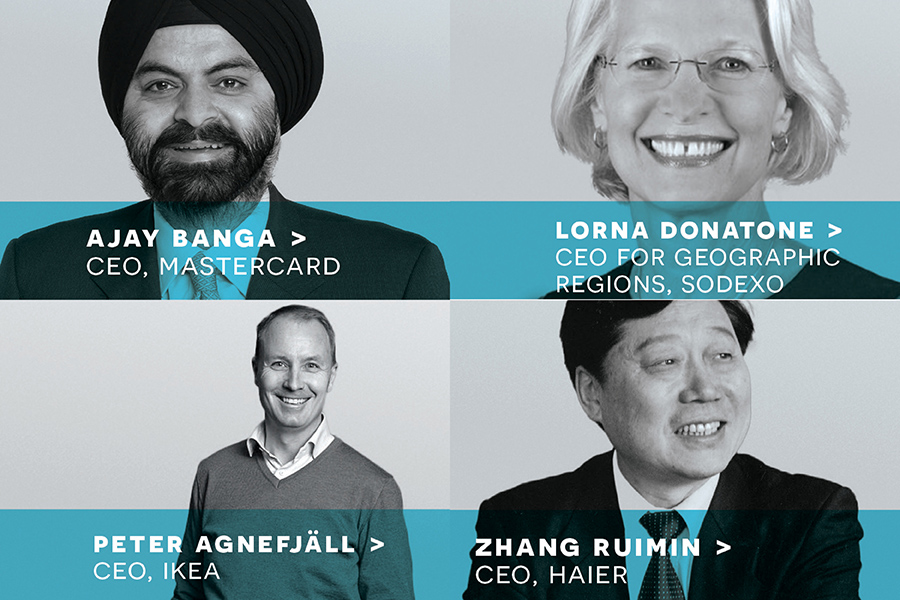
“The goal that I put out there – of 500 million people and 40 Million small merchants – I had no Idea how I’d get to 500 million people. Most people in my company thought I was crazy. Even I thought I was crazy. It’s amazing what’s possible once you put the target out there and let enough creative people at it. To date, we’ve reached more than 300 million individuals.” – Ajay Banga, CEO Mastercard

These leaders realize that, in an era of accelerating change, organizations need to innovate rapidly. After all, the choices businesses make today have the potential to either vastly improve the lives of future generations – or end them. There is no road map and the stakes have never been higher. So where do we go from here? Leaders on Purpose is a cross-sector international collaborative dedicated to recognizing, analyzing, and developing innovative leadership strategies related to the Sustainable Development Goals (SDGs). Combining expertise in the fields of business (Unilever), international organizations (World Bank), social impact (LSE) and sustainability leadership (Harvard), Leaders on Purpose have conducted a comprehensive and in-depth study of purpose-driven leadership. Here’s what they found.

The speed of socio-economic change is accelerating at an exponential rate. In the 1950s, the average time a company spent on the S&P500 was approximately 35 years. By 2027, experts predict this will have fallen to just 12 years. 50% of the companies listed today are expected to fall off the list within 10 years. Disruption is the new norm, and it is redefining the role of the CEO. Carlos Brito, the CEO of Anheuser-Busch InBev, highlighted: “The only reason we exist is because we are adding to the communities where we live, and because we are part of the solution… we have to think hard about how we can be part of a solution, and how can we be more active in issues that communities face. Then we become indispensible, and that’s what will guarantee that we will have a role to play.” The CEOs of the forward-thinking corporations interviewed for this report agree that the risks and opportunities arising every day as a result of increased global complexity need to be met with a new mindset as well as innovative collaborations. 

It is increasingly evident that achieving and sustaining corporate success is linked to a commitment to solving societal problems. Climate change, malnutrition, inequality of income and opportunity, pollution, and the lack of governance and institutional trust are just some of the pressing issues identified by CEOs as critical for their organizations to tackle as they make sense of their changing role in society. Furthermore, thanks to technological developments, it is now easier to make informed decisions about the trade-offs of various business decisions. As Grant Reid, the CEO of Mars, reflected: “I wish 5-to-10 years ago, I had some of the measurements on gender and climate that we have now – to help us understand the economics and the impact of our efforts better. The Stengel 50 ROI is much higher than the S&P 500. In hindsight, I would have had different measures, involved science more, talked more to external people when we were setting our original targets.”


“I think traditionally some big corporations tended to use a certain amount of their profits to reduce environmental pollution or they might try to minimize their pollution footprint by reducing energy consumption. Those are not permanent solutions to the problems. On the one hand, a manufacturer engages in production which pollutes the world, and on other hand, spends money to help solve the problem. We’re doing things differently. We’re trying to achieve a sharing of values, which means we connect to the community and work with them to achieve a sharing of benefits. To bring this together in a way that can benefit society.” – Zhang Ruimin, CEO Haier

In 2015, 193 countries committed to making the world more prosperous, resilient and sustainable by adopting the Sustainable Development Goals (SDGs). With this pledge, businesses accepted the responsibility and opportunity to play their part. The SDGs provide a common language and framework for business, government, and civil society to address the world’s most pressing challenges. They establish a shared understanding that makes sense of the challenges posed by global complexity. In this way, they assist companies in describing how they add value and communicate non-financial requirements and successes. For example, achieving the global goals can create US $12 trillion in opportunities around just four sectors: agriculture, cities, energy and materials, and health and wellbeing.

Furthermore, it can also generate an estimated 380 million jobs. Forward-thinking CEOs are aware of the opportunities the SDGs present, and 90% of those we spoke with have begun to align their strategies accordingly. According to Lorna Donatone, Sodexo’s CEO for Geographic Regions: “It’s about improving the quality of life of our employees and those that we serve. In our ‘Better Tomorrow 2025,’ we have nine commitments that we have made to align with the UN SDGs. They absolutely hit innovation and push us to act differently.” To fully benefit from the SDGs, businesses must embed them at the heart of their organizations. Many of the CEOs interviewed explained that linking the SDGs to their company’s core mission was important, and that supporting the national and local SDG goals gave them an opportunity to connect with the community at a deeper level and offered them a license to operate“Companies who can demonstrate a strong purpose are more successful. It takes the right leaders – today’s generation wants transparent, genuine leadership.”

“Companies who can demonstrate a strong purpose are more successful. It takes the right leaders – today’s generation wants transparent, genuine leadership.” – Lorna Donatone, CEO For Geographic Regions, Sodexo

At Mars, a set of “Five Principles” helps to guide the organization. Mars’ CEO Grant Reid told us: “It starts with the fact that this is in the very fabric of Mars… The ‘Five Principles’ is something we talk about every day. Every meeting we’re in, somebody will talk about, ‘Hey, what’s the decision we’re making, and how do the five principles guide that?’ We actually test that with our Associates every year through a survey. We ask them; ‘Do you feel you’re using the Five Principles?’ ‘Do you feel like Mars is working towards those?’ ‘Is your manager a leader using the principles?’ That gives us a very good gauge through our almost 100,000 associates to get a feel and vibe of how The Five Principles are working.”

Successful companies often find or rediscover their higher purpose in the legacy of their organization. John Fallon, CEO of Pearson, told us: “Pearson’s been in business for 180 years. It was in many very, very different industries, different sectors, before it came into education. But it always had a sense of this wider role in society. That’s the story we’ve always told about the company. My predecessor as CEO, Marjorie Scardino, would always say that profits are the byproduct of doing something useful in society, and that the profits sustain the company. They don’t define the company, and what defines the company is empowering people to progress through their lives through learning.”

One of the findings that emerged from the research is that transforming purpose into a “living state” requires two complementary ingredients: long-term perspective and adaptive strategy. The former relates to thinking ahead to ensure that actions taken today have a positive impact in the future. However, this is not enough – given that technology companies such as Google or Alibaba might disrupt any market at any given time, staying adaptive is crucial for companies across sectors. In the words of Haier’s CEO Zhang Ruimin: “

“You can, of course, give people a pay raise when they are being a good ambassador of your culture and values. Maybe, most importantly, you also promote based on values. You make sure that the best ambassadors are actually the ones that are getting bigger and bigger assignments as the company grows.” – Peter Agnefjall, CEO Ikea

We need to disrupt ourselves before we get disrupted.” In other words, successful 21st century leaders need to be both visionary and adaptive. This suggests a new business understanding: an adaptive mindset working in dialogue with long-term orientation at the highest level, within corporate strategy. While the North Star serves as a long-term aspirational goal, its achievement is tied to short-term markers of developmental progress, or “milestones.” Focusing on these allows stakeholders to respond to rapid changes, social contexts, and technological developments. 

Milestones also provide the benefits of immediate deadlines, trackable progress, and measurable results. IKEA’s CEO Peter Agnefjäll explained: “It starts with a vision. It continues with a plan to grow and develop IKEA towards 2020. We want to do it in a way that is people-and-planet-positive… That’s the way we work it through from
A to Z.”
The study found that successful companies define their milestones based on a rigorous context-assessment: What do people in this region care about? What is the political and economic landscape? What are the specific problems related to our core competencies?

This trend can be observed across industries. As AIG’s CEO Brian Duperreault told us: “A culture of collaboration and integrity is truly important. We are moving ahead toward a more decentralized structure, not moving back to a siloed structure – and that’s an important distinction. We want to be aggressive

but collegial, not competing against ourselves, but pulling together to solve problems like no other insurer can. At no time was this more evident than during all of the natural disasters last year. In Houston, Puerto Rico, Mexico, California, and other places, our employees were often heroic in their response to customers and communities, but also in how they were there for each other.”

Grant Reid, the CEO of Mars, shared some of the concerns driving this change: “What do we think can make the biggest difference? How can we use science to help? And how can we move quickly?” He then explained how addressing these questions is likely to transform his organization: “It will mean that there’ll be more failures, but we can’t give up progress waiting for perfection.”

Conclusion: A New Leadership Paradigm

Growth is fundamental to every business strategy, but not all growth is good. The world’s top CEOs are increasingly aware that the well-being of their organizations, of society, and of the entire planet are all intrinsically linked. In an era of increased political isolationism, these innovative leaders are thinking more expansively and collaboratively than ever. This begins with rejecting traditional performance metrics focused solely on the organization’s short-term financial performance. These CEOs view leadership as a process that is increasingly global, connected, and context-dependent.  Throughout the study, these leaders discussed the innovative strategies they employ to promote both responsible business growth and planetary well-being and through this process found new ways to unleash organizational potential and promote positive social change. To deliver on this, progressive senior leaders are engaging their workforces, supply chain partners, and sometimes, even competitors to find innovative solutions to complex issues. As organizations continue to reject short-termism and embrace the SDGs, creative tensions inevitably arise around the hard work of promoting ‘growth we can be proud of’ (Mars CEO Grant Reid).

The leaders in our study agree that the complexity of this endeavor should be addressed with non-traditional development strategies. Often this involves finding ways to fully deploy their organizations’ expertise by activating the potential of all employees. As Inditex CEO Pablo Isla states, “these challenges are not conceived as ‘external issues’ that could be dealt with through charity or donations, but should rather be addressed by every part of the company and throughout the whole value chain.” Former Novo-Nordisk CEO, Lars R. Sorensen elaborates on this idea, stating, “If the company doesn’t somehow try to reflect all of those developments into the way that we perform, and communicate, and interact, then we (Novo Nordisk) will not be successful at all in the future.”

The Leaders on Purpose research team found a consistent and encouraging correlation between economic success and a suite of new leadership approaches and strategies. CEOs embracing this new approach are finding that their organizations are finding significant rewards for their efforts ranging from increased revenues, improved resilience, heightened employee performance, and higher levels of trust across their broader stakeholder ecosystem.

This report was compiled by the co-founders of Leaders on Purpose: Christa Gyori, Harvard University; Dr. Christian Busch, London School of Economics; Leith Sharp, Harvard University;  Maya Brahmam, World Bank Group and Dr. Tatjana Kazakova, Chief of Strategy, Leaders on Purpose. 

Leaders on Purpose is where leaders, experts and top innovators across sectors turn ideas into action for a more just and sustainable world. Founded by experts & practitioners from Harvard University, The World Bank, The London School of Economics and MIT, Leaders on Purpose celebrates purpose-driven leadership – the kind of leadership that embodies the wisdom, agility and conviction to manage a growing population on a planet with finite resources.

www.leadersonpurpose.com

How to Work Less And Achieve More

In the U.S., the 40-hour work week actually averages 47 hours, according to a Gallup poll. Specifically, salaried employees average 49 hours of work per week, and 50% of them work anywhere from 50 to over 60 hours weekly. Even when workers are off, they tend to be tethered to their digital devices, responding to work-related phone calls and also text and email messages.

Employees at every level report stress and increased work demands, and a variety of issues are causing executives to be sleepless in the C-suite.

Working harder, however, is not the answer, according to Morten Hansen, management professor at the University of California Berkeley and co-author (with Jim Collins) of “Great by Choice.”

Hansen conducted a five-year study of more than 5,000 managers and workers, and discovered the reason some people perform better at work than others. His findings form the basis for his new book, “Great at Work: How Top Performers Work Less and Achieve More,” which is one of 11 leadership books recommended by The Washington Post for 2018.

We asked Hansen to share a few findings from his book.

Working harder isn’t the key to improving performance

In the classroom and the workplace, there’s a tendency to think that an increase in effort leads to an improvement in performance, but this is not necessarily the case.

“The working hard model is like squeezing an orange,” Hansen says. “As you improve the number of hours and you go from 30 to 40 hours, it will increase performance, but then you keep squeezing to get to 60 hours.”

At this point, your efforts are counterproductive.

“There’s less juice, and you’re getting less quality and you’re actually detracting from your work,” he explains. “At some point, there’s only pulp coming out and you’re getting diminishing returns.”

Hansen’s study of 5,000 people in corporate America found that going from working 30 hours up to 50 hours does indeed result in an improvement in performance, but, he explains, “from 50 hours to 65 hours, the curve is flattening quite a bit, and at 65 hours, it starts going down.”

So, while working harder seems to be the ethos of our workplace culture, Hansen warns, “the evidence does not support this and top performers don’t do this.”

The disadvantages of working harder

An increase in workplace effort deceives both employees and leaders into thinking that they are working hard because they are working more hours. But, they’re actually doing something else.

“You start ruining your life because your work is really encroaching on your private time,” Hansen explains.

If you work 50 hours per week, he says you’re dedicating 10 hours per day to your job—and even if you’re just checking emails or making phone calls from the convenience of your home, he says you’re still working.

“This is a severe tradeoff—you’re willing to sacrifice a part of life thinking it is going to make you more successful and the evidence is that it is not,” Hansen explains.

“Believe me, I’ve been guilty as well: when I graduated from college, I was working 60 or 70 hours a week.” But then, he says that he met colleagues who were performing at a higher level even though they were working fewer hours.

How leaders and employees can work smarter

“Work smart, not hard” has become a common workplace phrase, but Hansen doesn’t think most people really know what that means.

“It’s become a cliché, and obviously, no one wants to work dumb.” But, if people don’t understand how to work smart, not hard, there’s no way they can make the necessary adjustments.
His first recommendation is to be selective about what you do.

“It’s about having the ability and willingness and courage to really focus on the very few things that matter the most.”

While you may have a long list of things to do, Hansen says there are really only a few things that you must do—and you need to do those few things well.

“Decide what to focus on in every area: your meetings, your collaborations, your tasks, your projects.”

Hansen shares his definition of smart work.

“You select a few key activities that maximise what you do, then apply intense, targeted effort, and then you have to say ‘no’ to the rest of the activities.” He believes that working smart requires focusing on—actually, obsessing over—these few key activities.

How bosses can help their employees work smarter

Leaders have a greater degree of freedom in choosing how to spend their time. Employees, however, are not afforded as much leeway since they’re subject to the dictates of their bosses.

“There are ‘do more’ bosses and ‘do less’ bosses: the problem with ‘do more’ bosses is that they give employees a lot of things to do,” Hansen says. “They’re piling on the work, so they need to stop and ask themselves how they can trim those priority lists.”

Often, bosses are also overwhelmed with work; however, Hansen says that a good boss doesn’t pass the pressure and unrealistic workload on to their employees.

“And it is bosses that most of the surveyed people blame for having too much to do,” he says.

Communicating simply, thoroughly and clearly can also help employees to understand and focus on what’s important. Hansen advises against convoluted emails and an overabundance of PowerPoint slides.

“Even if you give really good directions, but your language is muddled, people don’t know what you mean,” he explains. “If you say ‘we’re trying to be the best retail store in the city,’ what does ‘best’ mean? Is that selling the most bikes—which means that selling is the priority? Or is it delivering the best customer service?”

In addition, he believes that bosses need to do a better job of inspiring their employees. Yes, workers get a paycheck, but Hansen says that’s not the only reason they come to work. Companies should be concerned if employees are not inspired or engaged, since drudgery is unlikely to motivate them to work smarter.

“They want to feel what they do is important and they want to be uplifted,” Hansen says. “My data says inspired employees perform better.

Terri Williams is a freelance writer who covers leadership topics for The Economist Careers Network.

The Innovator Connecting Impact Investing to The Creative Economy

Laura Callanan is a weaver. As Founder of Upstart Co-Lab, she is intertwining impact investors with the creative economy to strengthen communities and solve global problems.

Since 2016, Upstart has been exploring how the $763 billion creative economy in the U.S. can become more inclusive, equitable, and sustainable. By introducing a Creativity Lens, Upstart Co-Lab helps impact investors who understand the power of art, design, culture, heritage, and creativity to see the opportunities that align with their values.

Before launching Upstart, Laura served as senior deputy chair of the National Endowment for the Arts and was an executive at McKinsey & Company, the United Nations and the Rockefeller Foundation.  Laura was the only arts leader named by The NonProfit Times to the Power and Influence Top 50 in 2017. Our exclusive Real Leaders interview with Laura is below.


What is the Creative Economy? How do you and others define it? 

The “creative economy” was defined by the British author John Howkins in 2001 as a new way of thinking and doing that revitalizes manufacturing, services, retailing, and entertainment industries with a focus on individual talent or skill, and art, culture, design, and innovation.

Today, creative economy definitions are typically tied to efforts to measure economic activity in a specific geography. A relevant set of art, culture, design, and innovation industries is determined, and the economic contribution of those industries is assessed within a region. A unique set of industries defines each local creative economy reflecting the culture, traditions and heritage of that place.

Based on industry research, Upstart Co-Lab identified five creative economy categories: Creative Places, Ethical Fashion, Social Impact Media, Sustainable Food, and Other Creative Businesses.


 How do you measure its impact?

Like other social purpose businesses, Creative Businesses can follow B Lab and Global Impact Investing Rating System (GIIRS) standards and contribute to an energetic local economy by providing goods and services, creating jobs, building community wealth and helping establish a sense of community.

We found 24% of B Corporations in the U.S. are in the creative economy and, anecdotally, that many entrepreneurs in the creative economy gravitate towards a social purpose business as opposed to a conventional business.

But aside from being operated sustainably, Creative Businesses drive social impact across many thematic areas. Farm-to-table restaurants create a market for local, organic, sustainable farmers. Fashion designers build their brand connected to ethical and sustainable practices throughout their supply chain. Video game developers produce titles that help patients manage chronic disease, as well as teach players about issues like civics, peace-building, and empathy.


Why is the Creative Economy an important part of the health of a community?

Investable opportunities in the Creative Economy have the potential to stabilize threatened communities and benefit regions looking to attract and develop quality jobs.  While community development finance institutions have been deploying capital into Creative Places and Businesses for decades, these investments have been categorized as affordable housing, community facilities or small businesses – with no attention to their creative characteristics. 

But the opportunity to garner a financial return and create social impact through art, culture, design and innovation has never been stronger. Creative placemaking has become a core component of comprehensive community development. Artists and designers are founders of some of the leading companies of the internet age, and the cross-over between sustainability and the Creative Economy is demonstrated by successful B Corporations like Kickstarter and Etsy.


 Have impact investors embraced the Creative Economy?

Contrary to conventional wisdom that believes there’s a dearth of impact investments in this segment of the economy, Upstart Co-Lab’s new study found impact investing in the creative economy has been “hiding in plain sight.”

With a dataset pulled primarily from publicly available lists and previously published primary research, Upstart Co-Lab identified more than 100 funds, representing an estimated $60 billion AUM, that have been active in the creative economy.

Significant investment has been undertaken by Impact investment funds, Sustainable & Responsible funds, and Conventional funds.  Investment has been particularly strong in the private equity, private debt and real estate asset classes.

Lack of visibility and intention means that when investors ask their wealth advisors for opportunities to invest for impact in the creative economy, they are told the opportunities don’t exist.  This simply is not true.


Tell us about how Upstart Co-Lab is championing the Creative Economy and advancing the idea of artists as social entrepreneurs?

Taking a page from the playbook for gender lens investing, Upstart is defining a Creativity Lens to help impact investors see how the creative economy will help them do well and do good; building a coalition of stakeholders to give this new idea traction; and helping bring opportunities to market so impact investors can put these ideas into practice. 

The Upstart team curates a portfolio of projects designed and implemented with strategic partners including: Artspace, Calvert Foundation, Emergence Creative, Local Initiatives Support Corporation, and Shift Capital.


You partnered with LISC NYC to launch the NYC Inclusive Creative Economy Fund at SOCAP18. What impact are you seeking with this investment?

The Fund is a unique opportunity to channel impact investment toward catalyzing and maintaining affordable spaces, which can help businesses in the creative economy thrive. This will preserve creative spaces in NYC’s neighborhoods and provide quality jobs that can revitalize communities.


Donors at ImpactAssets were anchor investors for the Creative Economy Fund. What role can innovative philanthropic capital—and specifically donor advised funds—play in the growth of the creative economy?

Innovative philanthropic capital can open the door for other capital that is less familiar with impact investing.  In the case of the creative economy, that means endowed cultural institutions.

In the U.S., museums, performing arts centers and other institutions connected to art, design, culture, heritage and creativity have more than $58 billion in assets under management but have been sitting on the sidelines of impact investing.

The creative economy can be the door to welcome these institutions into a larger conversation about aligning their financial assets with their missions and values.


What haven’t I asked you?  

As the investable opportunity at the intersection of cultural diversity and the creative economy is better understood, a creativity lens will be increasingly relevant for a diversity of market contexts and fund types. It is likely that conventional investing activity in this sector will grow to take advantage of the money-making potential food, fashion, media and other creative sectors have to offer; commercial real estate developments anchored around creativity and innovation, or offering art and culture amenities, already exist.

It is exactly because of the viability and projected growth of this segment of the economy that the continuing and increasing engagement of impact investors will be crucial to ensuring a truly inclusive, equitable and sustainable creative economy with benefits for all.


4 Things Overlooked During Culture Transformation

Every organization has its own culture, which should be a reflection of what is important to the company and what is necessary for it to succeed in the marketplace.

In order to maintain this culture, it may be at times necessary to transform certain areas by changing behavior or implementing new behaviors to better reflect corporate priorities. Regardless of what the desired culture is, organizations often overlook these four crucial areas when undertaking a culture transformation.

1. A Plan to Ensure It Does Not Become the “Flavor of the Month”

When culture transformation begins, it always seems like the right thing to do, and it always begins with enthusiasm. However, once underway, it can be sidetracked and bumped down on the priority list. This sends the message to the organization that the transformation either wasn’t the right thing to do in the first place or it isn’t as important as was first thought.

In order to avoid this, the initiative must remain as high a priority in the third year as it was during the first six months. This requires management to closely monitor the inevitable additional initiatives and distractions that will compete for the top spots on the priority list and to coach the rest of the organization to do the same. Ultimately, a culture transformation will succeed if everyone, from executives to individual contributors, is committed to sustaining the focus until the goal is achieved.

2. The Importance of Including Everyone

When launching any form of culture transformation, it is important to include everybody. Although you may test components and think through various elements in advance, the transformation needs to be implemented throughout the organization all at once. When this is overlooked, it can leave one department with one set of policies, procedures, or approaches, and another with something completely different. This can lead to frustration and make it nearly impossible to remain aligned.

Do not overlook the need for the culture transformation to be all-encompassing. How people are trained and how they apply the new behaviors may look slightly different based on departments or teams, but the core behaviors and messages should be the same across the board. Delaying a certain group’s participation, or leaving them out entirely, is counterproductive and can negatively impact the overall initiative and desired outcome.

3. The Time (and Patience!) Required to Fully Transform a Culture

Every culture transformation will be as unique as the company itself, which means that the length of time it takes to fully transform the culture will depend on the nature of the initiative and the degree of behavior change required. In some cases, the new culture can take anywhere from two to four years to become fully engrained in the company’s DNA.

Remember that culture transformation is a long-term investment in the future success of your organization, not an overnight solution. It will require a great deal of patience, which upper management and shareholders do not always want to hear. In that case, help everyone understand that it will take time to provide effective training that teaches the behaviors of the new culture, time to apply those behaviors on the job with the support of leaders, and finally, time for them to see and appreciate that their efforts are valuable and making a positive difference.

4. The Link to Measurable Results

Company culture is a very difficult thing to measure, so you can relax knowing that it is not the thing that should be measured. What should be measured are the benefits or outcomes of the culture. This is much easier to do and far more practical. Shareholders are interested in the value that the organization is providing, and the culture is a component of providing that value. When evaluating a culture, the real focus should be on its impact.

For example, when creating a culture of customer centricity, the results you are measuring are customer satisfaction, while the outcomes of those results are increased revenue and competitiveness. Measuring your customer satisfaction rating prior to the transformation and then throughout will give you the data to track whether the changes in behavior coming from the culture transformation are in fact improving customer satisfaction.

For any culture transformation to be truly successful, these four things should not be overlooked or taken for granted. In the beginning stages of thinking about culture transformation, create plans to ensure none of them are overlooked during the transformation process.


Kenny Chesney: My Lessons a Year After The Hurricanes

We asked American country music star and part-time U.S. Virgin Island resident, Kenny Chesney, what lessons he has learned one year after the hurricanes wreaked havoc across the Caribbean.

If you like this, subscribe here for more stories that Inspire The Future.

How many people can say they’ve lived through two category 5+ hurricanes within two weeks? Would you know what to do if you suddenly lost your electricity, Internet, TV, cell phone coverage, landline, ATMs and roads? And your home got destroyed too. Additionally, what if you had no idea how many months this would last, or if anyone was coming to help. Chesney remembers the chaos well, and shared with us his impressions of that time and why he felt compelled to help.

What compelled you to take action to help St. John?

Knowing how many people’s lives were profoundly changed. From watching the weather channel and texts from friends, you knew it was bad. Knowing people’s lives were being torn away from them, people I knew… people whose names I might know, others by face only. When you think about that you have to get involved.

What are some of  the most impactful memories?

When I was on the island for the first few times after the storms, and seeing all the trees and brush just gone, seeing boats thrown up on land, houses that were nothing but a few bits of foundation or a piece of wall. You’re not prepared to see some place as lush and as happy-looking as the Saints, look like that. There was a look of exhaustion, confusion and sadness on the faces of people who we flew off island. There was a look in their eyes that I’d never seen before. It still haunts me – the restlessness of the people with nowhere to go. On the other hand, the people who remained and got stuck in to rebuilding were so happy.

What did you learn from dealing with this disaster, that other people might learn from?

Patience. There was urgency, and everyone’s going as fast as they can, but you can never go fast enough. You want to cut through red tape, but that’s not always gonna work. You have to figure out how to be effective and not get bogged down.

What was the greatest challenge in helping those affected by the hurricanes?

The fact that the whole island was basically wiped out. We were starting over. There was no power, we needed generators, medical supplies, tools, tarps, water and food, whatever was needed. For a while getting planes in and out of St. Thomas was tricky, but it was the only way to get supplies in.

What inspired you the most during the relief?

The people. The way they came together. Islands are like a small town; people have opinions and disagreements. When Irma hit, that was all gone. Residents had survived the storms, and they put everything else aside. They knew what was important: rebuilding their island, and they were  all doing what they could. It was awesome.

Kenny Chesney’s Love For Love City Fund supports and gives to local and national 501c3 charities aligned with their mission of getting relief where it’s needed, immediately and ongoing in the Virgin Islands. They are people who dig in when needed, give when they see struggle and seek to find the best ways to make a difference. Every little bit helps. Sales from his new album “Song For The Saints,” Featuring “Get Along” will help benefit the ongoing relief in the U.S. and British Virgin Islands.

If you like this, subscribe here for more stories that Inspire The Future.