How to Be More Creative in Any Field and in Life

Just as IQ is an indication of your share of intelligence and EQ connotes your share of empathy, it is also possible to have a share of creativity or CQ. A creativity quotient is not fixed. It is dynamic and increases as you practice building it and exercising it. What’s more, CQ isn’t reserved for artists. Anyone in any field—farming, law, plumbing, architecture, perfumery, real estate, medicine, education, and technology, to name a few—can learn to be more creative and apply creativity to be more successful in their work.

Exactly how do you raise your creativity level—especially if you don’t think of yourself as particularly creative? Specifically, your share of creativity can increase as you expand your capacity for inquiry, become more willing to improvise, and hone your intuition. Moreover, creativity can be scaled: both individuals and organizations can have a creativity quotient.

Here are five questions to ask yourself and pose to your team to build a culture of creativity and your CQ.

1. Do you have a hobby outside of your daily job?

If you practice a craft or hobby diligently outside of your paid work, you regularly put yourself into a beginners’ mindset. This is crucial because it primes you to get good at embracing being clumsy, learning from mistakes, and asking the naive questions. Inevitably, the beginners’ mindset that hobbies cultivate transfers into your work environment. You will get better at questioning the status quo, one of the first steps towards innovating.  

2. Do you play regularly?

I mean, really play, have fun, and do activities that bring you joy. Joy is distinct from happiness. While happiness is something we expect to sustain long term, joy is episodic and all about your perspective. A corollary to being more playful is developing a sense of humor. A sense of humor signals your capacity for abstract thinking—instead of only focusing on what is literally in front of you. Note that having a sense of humor will also be developed from question No. 1 above: having a hobby. How could you not chuckle at your clumsy attempts while tinkering away at a hobby?

3. Do you deliberately do things outside of your comfort zone?

At least twice a year, visit a place outside of your comfort zone or go to a conference that is totally outside of your sector, where you will be sure to learn something new. This helps you to practice lateral thinking. You can also practice getting outside of your comfort zone daily. For example, if you do not consider yourself an artistically visual type, begin to doodle. Set the timer for 5 minutes, and doodle away. It is one of the best ways to make the mind more limber.

4. Do you experiment with technology? 

Sometimes we forget that at the end of the day, technology is a tool. It is there to help amplify what is uniquely human about us and free us up to do more creative work. In addition to the usual suspects of workshare platforms like Slack, Basecamp, and Zoom, also try experimenting with augmented reality tools and visualization tools such as Canva, Mural, or Ziteboard. Rather than fear artificial intelligence, welcome it. AI has the potential to up the ante on what makes us uniquely human.

5. Do you incentivize collaboration?

Even superheroes don’t go it alone, so why should you? It’s one thing to say you value collaboration, but until you incentivize it by linking collaboration to compensation or time, chances are your employees won’t put collaboration into practice. One of the best outcomes of collaboration is the necessary thought diversity that results. You quickly learn to invite in and lean on people from different departments and backgrounds. Remember: the more diverse the inputs, the more innovative the output. 

If you answered YES to at least 3 of these questions, you’re doing a good job. Make it your goal over the next 12 months to tick off YES to all five questions and share your techniques with others. Better yet, start with just one of these suggestions today!   

As you move forward, keep in mind: increasing your creativity quotient is about building on what has come before you. And that requires, well, building. Building can be messy. While you may start with a plan, plans shift, agendas change, and assumptions are challenged. It requires taking leaps—from prioritizing deep specialization to valuing broad experience and from deferring only to what’s rational to embracing ambiguity.      

How to Become an Exemplary Leader of Introverts

I was preparing for a program on introverted leadership by interviewing research scientists at a Fortune 100 pharmaceutical company when a new word caught my ear. 

“Did you say ‘loudership’?” I asked a seasoned manager. Yes, he had. He told me that loudership was a company-wide code word for what it meant to be a strong leader. You have to speak loudly, act brashly, and be seen as someone who can audibly overpower the next person, he said.

I took a deep breath as I realized the challenge I had before me. How was I going to communicate the value of being a quietly powerful leader, someone who doesn’t use volume to get their point across, when the company culture openly promoted a diametrically opposed brand of leadership? 

The answer is that there were leaders on this project — as there are on many I encounter — who understand and value introversion. They also know the importance of taking the temperatures of the people they lead and modifying approaches accordingly. 

The following are vital approaches leaders can take to get the best out of the introverts they lead.

1. Face unconscious bias

Yes, there is a bias against introverts. Without realizing it, many managers buy into the stereotypes about introverts as slow, indecisive, antisocial and unhappy, and can ignore talent and potential in the many introverts in their midst. Managers may be unknowingly keeping them from career opportunities and the chance to make significant contributions. Leaders need to learn more about introversion, become aware of their biases against introverts, and take tangible actions. As diversity expert, Howard J. Ross says, “By understanding unconscious bias, we can learn to work with it and reduce its ability to dominate our decision-making.” 

2. Open up the conversation about introversion 

Too often, leaders focus on only the work at hand. They focus on the tasks, project milestones, deadlines, roles, and responsibilities more so than the people and personalities that are key to getting the work done. Opening up the conversation around the benefits of introversion is one crucial way that leaders, whether introverted, extroverted, or ambivert, can empower the introverts on their team to feel comfortable in their skin and embrace their quiet strengths. They can be intentional about opening up the discussion and model self-disclosure. 

Leaders can put these questions to their staff: Are we writing people off before giving them the time and space they need to contribute? Are we allowing them to reflect and write down their thoughts before answering essential questions? Are we ensuring every person has the opportunity to participate in meetings? 

When they encourage everyone to share information about their introverted or extroverted preferences, their strengths, and how they’d like to contribute to the team, the team builds trust. This can also be done in relaxed, one-on-one conversations. 

3. Share stories 

Talking about who we are and our likes and dislikes deepens our connections and understanding of each other so we can work together more effectively. Sharing stories about who you are is a way to humanize your preferences, create connections, and increase feelings of trust. Caroline McGregor, vice president at Merck, takes her story about being a senior leader to Employee Resource Groups and other departments throughout the company and serve as a role model of a strong yet introverted senior leader. In a hard-driving culture, this takes courage and has a significant impact on introverts who hear her speak (“If she can do it, so can I.”).

4. Slow down and listen

If someone seems reserved or quiet, don’t ask, “What’s wrong?” Most likely, nothing is wrong, and they will feel misunderstood. They are simply in their heads. In a live or virtual meeting, try waiting for three to five people to speak before offering input. Extroverts, especially, need to learn to refrain from interrupting, to pause, and to give others the space to respond thoughtfully. If not given a chance to speak, introverts become disheartened and demotivated, leading to lower performance. One respondent in the 2019 Workplace Survey wrote, “I wish that our executive director would take time to talk to me. With him, it’s all about who yells the loudest.”

5. Become an introvert ally 

Highlight introvert strengths and preferences. Sheryl Bruff is a human resources branch chief at the Space Telescope Research Institute, a division of NASA. One of her ongoing missions is to bring the value of introversion into the light. She explains, “One of the things we try to do is get [leaders] to pay attention a little bit. We do some training with them …and help them see how using questions can be a way to open up the conversation.” Besides, leaders can become sponsors and demonstrate their tangible support for Employee Resource Groups that address introversion awareness.  

Leaders who are introverted allies are key in shifting cultures and recognizing and applauding the contributions of introverted staff members. 

Why CEOs Plan to Leave the Office Behind in 2020

With news in April that the British economy has shrunk by 20.4%, several business owners became concerned about the recovery of their business and what the “new normal” might look like. Pete Reis-Campbell, CEO and Founder of Kaizen, discusses how he has navigated the pandemic and why remote working is the future for many companies.

It’s been difficult, almost very surreal. We were planning to move into our new office in May, due to our old office’s contract ending. Luckily, just before the lockdown, we were able to find a space that reflected our growing team, but just before the renovation began, COVID-19 delayed work, and we were unable to move into our new office. It felt strange, as I had to put everything in storage, register the office to my home address, and had thoughts that if COVID-19 negatively impacted my business, we might not be moving back into an office space at all. 

I’ve found it a lot harder to manage productivity and efficiency, especially with less face-to-face meetings. It’s been harder to collaborate despite all of the online tech and tools available. However, we’ve been able to get work done and keep the business running — a massive testament to our team. We’ve also had time to streamline several processes and change things we’ve wanted to address for many years. With this extra time, the change hasn’t been aggressive or disruptive, as people have been more open to change. Ultimately, I was worried about the business, and making the right decisions made these decisions difficult, but they were also essential to keep us afloat. This ranged from cutting costs, streamlining the organization’s structure, making the most of capacity and resources, and making use of government aid.

Remote working has made us realize the importance of hiring and the value of employees. As a business owner, you need people who are proactive, passionate, respectful, and willing to collaborate. I was worried about tracking and monitoring employees, but because it felt excessive and controlling, I decided against it. If you hire the right people, you’ll always have a productive workforce, no matter where they are. While we’ve found it harder to be collaborative and creative, we’re looking at ways to get better at it. 

Having a space to collaborate, meet with clients, and make group decisions is essential, and I think we’ve all missed that during this time of lockdown. During this time, an office seems like a Draconian concept, so I’ve decided to move towards a hybrid model of working from home and office. Employees can come into the office when they want, work from home when they want, or use coworking spaces if they prefer. As a business, we still have a central place to be social, collaborate, and see each other, but everyone is now also autonomous and independent in how they’d like to approach work.

COVID-19 has changed my perspective as a CEO. Overall, it was terrifying as I was worried about losing the business and had no idea what the future would look like. I decided to arm myself as best as I could. I asked for advice. I started reading, crisis management, and planning for the future. No one is motivated by making difficult decisions and cutting costs – but if I didn’t make these decisions, things would have spiraled out of control, and the long-term outlook would have been worse.

After comparing our year-on-year results, this might be the first year that we don’t see any growth, which can certainly stifle motivation. However, what made me turn the corner was seeing our team putting in 120% effort, and asking me about my mental health. I realized that it wasn’t just me going through a challenging time, everybody was. Fortunately, we’re starting to see an uplift, and now we’re able to start hiring again and move into the next part of our business plan. As CEO, this time opened my eyes to flaws, and how we should all conduct ourselves in the future.

Pete’s top 3 tips on working from home:

1. Have a shower and get dressed 

This might be a no brainer for some, but staying at home might make it feel more comfortable not to get ready for the day as we usually would. It’s essential to establish that routine, so getting up, having a shower, and sitting upright can make all the difference.

2. Get the right desk set up

I’ve created a desk space that makes me happy; I play PlayStation at lunchtime, which I’d never usually do, or even think about doing. At the end of each day, I put all my office equipment away – it’s essential to restore the concept of home.

3. Do what makes you happy, and then invest in it

Being at home means we have a lot more time to engage with the things we love. Growing up, I wanted to create video games, and this has meant I’ve been able to spend more time playing games and learning how to create them. This time has allowed me to get back to my grassroots — why I wanted to create content in the first place and to teach those around me.

Why CEOs Need To Be Able To Deal With Conflict

Nobody likes arguments. Except for the most died-in-the-wool troublemakers, we all try to avoid them. Arguments cost time and energy—in any given situation, it’s always a good idea to ask whether an issue is worth arguing about. Nevertheless, people who avoid arguments at any cost will never make an impact or drive change.

At the managerial level, in particular, there are two different personality types: the ‘cuddly,’ harmony-seeking boss who would prefer everybody to agree on everything, and who above all wants to be liked by his or her staff; and the tough, success-oriented executive who is quite prepared to put up with significant clashes of interest within the company for the sake of change and progress.

Manager Of The Century

Jack Welch (above) is a prime example of the second type. In his 20 years as CEO of General Electric (GE) from 1981 to 2001, he increased its turnover from $27 billion to $130 billion, while annual profits went up by 600% to $12.7 billion. In late 2000, GE was the most valuable company globally, with a market capitalization of $475 billion. He also cut GE’s workforce of 400,000 employees by a quarter. Unsurprisingly, his style of leadership led to heated arguments and massive confrontations. In 1999, Welch was voted “Manager of the Century” by Fortune magazine. His leadership principles are well worth examining.

One of Welch’s most striking characteristics was his willingness to take on anybody in an argument. Of course, he did not start arguments for the sake of it, but he soon realized that the only way forward for the giant yet sclerotic corporation was by completely overhauling its fossilized structures. He knew that to make his company fit for the future, he would have to take on and overcome powerful special interest groups, ingrained nepotism, excessive bureaucracy, and laziness.

In his first two years as CEO, Welch sold the company’s 71 divisions and product lines, increasing productivity dramatically and triggering huge resentment. Many other executives might not have gone ahead with these radical changes in the face of such hardline opposition. 

When Welch sold off GE’s housewares division, he was bombarded with angry letters from outraged employees. “If email had existed,” Welch commented, “every server in the company would have been clogged up.” The letters all expressed similar sentiments: “What kind of a person are you? If you do this, it’s clear you’ll do anything!” 

In the space of five years, Welch fired 118,000 employees from unprofitable divisions. “Throughout the company, people struggled to come to grips with the uncertainty,” Welch observed. Instead of hiding away, he confronted his workforce openly, holding fortnightly round-table discussions with around 25 employees at each meeting. “I wanted to change the rules of engagement, asking for more—from fewer. I was insisting that we had to have only the best people.”

Always Stand Firm

Welch did not just confront the executives and employees within his own company. He also took on union leaders, mayors, and politicians trying to put pressure on him. On a visit to Massachusetts’s governor, Welch’s host voiced his hope that GE would create more jobs in his state. “Governor,” Welch replied, “I have to tell you. Lynn is the last place on Earth I would ever put any more work.” The plant in Lynn had been the only one to hold out against the national contract GE had signed with the unions. “Why should I put work and money where there is trouble when I can put up plants where people want them and deserve them?”

Fortune magazine named Welch as number one among the “Ten Toughest Bosses in America.” The magazine ran a feature article on Welch and printed numerous comments from employees who wished to remain anonymous, including: “Working for him is like a war. A lot of people get shot up; the survivors go on to the next battle.” The article claimed that being bombarded with questions by Welch was similar to a physical attack. On the other hand, he was generous with praise, acknowledging good work and rewarding outstanding employees with bonuses. 

He refuted any criticism of his “tough” approach. In his autobiography, he confesses: “I shouldn’t have agonized as long as I did on so many people who weren’t going to cut it. The consistent lesson I’ve learned over the years is that I have been too cautious in many cases. I should have torn down the structures sooner, sold off weak businesses faster than I did.”

Honest Communication

Welch was equally uncompromising towards employees who did not share GE’s corporate values, no matter how good their results were for their bottom line. His advice to other executives was not to fire them surreptitiously, using excuses along the lines of “Charles left for personal reasons, to spend more time with his family.” Instead, he recommended being upfront about the fact that an employee had been fired for their refusal to comply with the company’s values. “You can be sure that Charles’ replacement will act differently, not to mention anyone else doubting your commitment to the values.”

Welch could not stand whiners who always complained about everything that was wrong with the company and about not being valued and appreciated enough. Bosses whose employees acted in this way had only themselves to blame, he claimed, because they had created a culture of entitlement and fostering “a classic entitlement culture, in which your people have the deal exactly backward. They think you work for them.” His advice to “soft” executives was: “You are running a company, not a social club or a counseling service.” He recommended they change the culture within their company as fast as possible and told them to stand their ground: “Without doubt, you will hear yelps of pain as you dismantle your entitlement culture. Indeed, some employees that you like and value may leave in protest. Take the hit and wish them well.”

Above all else, Welch preached a culture of communication. That was the only way, he said, to ensure that each employee knew what was what and whether their performance was up to scratch. Many companies made the mistake of indulging “the very human tendency to soften hard, urgent messages with false kindness or phony optimism.” Too many bosses pulled their punches and were not prepared to “come right out and tell underperformers how badly they are doing until they fire them in a burst of frustration.” Managers prided themselves on being too “kind” or too “nice” to tell their employees “exactly where they stand—in particular, the real losers.”

This is because so many managers and executives are either unable or unwilling to stand their ground. It is easier to avoid arguments than to fight them out. Fighting costs time and energy and often involves risk because the outcome of an argument is always open. However, most people instinctively sense when they are dealing with somebody who is overly concerned with achieving harmony, consensus, and conciliation. Rightly, this trait is regarded as a weakness.

Seeking harmony is a good thing. But as with most good things, you can have too much of it. An exaggerated yearning for harmony usually results from fear. People who are scared of rubbing others the wrong way and are afraid of disagreement and disapproval often suffer from low self-esteem. Lacking the confidence to think that they can win an argument, they avoid arguments altogether. By doing so, they have already lost. People with low self-esteem, who are usually reluctant to stand their ground and engage in confrontation, will rarely win the respect of others. After all, anyone who sees weakness in themselves will be regarded as weak by others.

First Female F-14 Tomcat Fighter Pilot: How to Lead Through Adversity

In this turbulent business environment, leadership requires taking bold steps. No matter what challenges your organization faces—a slowing economy, a merger, new rules, and regulations—the pace of change has never been faster. The sheer unpredictability of things can cause fear and anxiety among your team. Your job as a fearless leader is to throttle back the stress your team is feeling, help them be more agile, and ensure that they can survive and win.


Here are some ways you can boost your team’s resilience and help them shine in tough circumstances.

Clarify the Win

When the winds of change blow in, to stay on track as you are getting bullied about, continue opening the lines of communication. Ask your team, “What are we striving for?” When people are engaged with clear and meaningful goals, they have greater resilience and are more likely to see a challenge as an opportunity. Remind them what the win looks like, and warn them that there will be peaks and valleys. Your whole team may be cruising along, happy as clams—and suddenly get kicked in the teeth by the unexpected. I’ve been there, and it’s not pretty. Grab a box of Kleenex, wipe your eyes and nose, and ask one another, “Okay, what next?” Remember why you started—and remind your team often.

Know your team

Your people are your biggest asset. Remember those “kids” who operate on that flight deck twenty-four hours a day, seven days a week, helping keep us pilots alive? You may be surprised to learn how much the average Air Boss knows about his shipmates working the deck. In between flight operations, you can often find the Air Boss chatting with the troops. I know this from watching flight ops up in the tower, hearing the bosses make funny comments over the flight deck radio for all to hear. Getting to know the kids on the deck is smart leadership. When the time comes to push that crew through crappy visibility, unbearable heat, or long stretches of uninterrupted flight operations, those teammates will feel valued—they will feel human.

You can’t expect your team to blindly follow your leadership if you haven’t bothered to invest any time getting to know them. A real human connection builds a solid foundation for when you need your team to power through an extreme situation.
Before a presentation with clients, I always spend time getting to know them, weeks before the event. What matters to them? What obstacles are they facing? What are they trying to achieve? But when discussing these ideas with executive teams, I’ll sometimes hear, “That’s just not possible—I’m too busy to do that.” Yet you’re not too busy to ask your people for extended working hours or pay cuts, or to “manage change” or to make other sacrifices. If you want a resilient team, you need to build one. The least you can do is make an effort to understand what drives your teammates.

Fearless leadership is a people business. It’s about getting your team together to do the impossible while keeping their health, sanity, and even humor intact. Fearless leaders always put the team first, and these team members know they are valued. Valued teammates will go to the mat for you, and you probably won’t even have to ask.
A business team in the pursuit of excellence may not face the same physical dangers and challenges as a fighter pilot or a Navy SEAL, but aspirational goals—the big bets—will require the same courage, tenacity, integrity, perseverance, and flexibility. Overcoming obstacles like chronic stress involves resilience. Choosing people with the right skills, talent, training, and attitude are essential. Without mutual support and trust, your team will get nowhere.

Prepare relentlessly

Now that you know your goal and your team, the question is: How do you achieve results consistently, even if you face adversity? The answer is simple: through relentless preparation and training. Insistence on preparation is one of the priceless gifts a fearless leader can offer his or her team. Being prepared alleviates pressure because your teammates know what to expect—they have already prepared how they will respond to any challenge the environment (or the competition) throws their way. It promotes resilience by increasing their ability to adapt and overcome barriers.
Continue that cycle of Prepare-Perform-Prevail, even on the fly. Adjust and adapt, adjust and adapt, adjust, and adapt—over and over, even while navigating the choppy waters of a crisis. Help your team stay focused on both near-term priorities and long-term goals. It’s like that circus trick of having one foot on two different galloping horses. Successful teams can do this because they have done whatever is necessary to prepare.

Remember the Navy saying: Train like you fight. Increase your team’s coping skills and resilience by practicing over and over. You can’t think that when stress pays a visit, your team will magically rise to the occasion and prepare them to do so. Grittiness is earned.

Continue learning

When change happens, uncertainty and ambiguity can paralyze your team. Fear sets in, caution envelops us, and instead of strapping into our fighter jet and going for it, we curl up and wait for the storm to pass, for things to settle down. But what if this change in your environment is your team’s new normal? You don’t have the luxury of waiting for something to blow over. To remain relevant, you must learn quickly by continuing the open dialogue about what is working and what isn’t. Find a way forward—or make one. Create your future by taking action. Don’t be a passenger in your own life, and don’t let your team’s future ail in the wind. Take risks and learn from your mistakes.

Culture Matters

The culture you promote as a leader could be one of the most significant barriers to success, even more so than the talents (or the lack thereof) of your teammates. When the chips are down, if you punish people who innovate or who dare to go first—or if you don’t reward those who build and maintain a strong team—you won’t attract and retain the types of people who can make stuff happen in a volatile environment. Period. You will quickly lose any competitive advantage, and your current success level will most likely start to slip.

You can’t talk about innovation without understanding that risk is inherent. When you’re trying something new, it will get messy; rarely is something new done the first time correctly. Nor can you give lip service to leadership development or “growing your people” or encouraging your team to be “on the leading edge” if you’re going to shove them aside at the first sign of a struggle. Instead, as a fearless leader, you must understand that culture matters—that you are responsible for growing and developing more resilient people and fostering a more resilient team.

Fearless leaders understand the importance of building a resilient, high-performing team. Resilience on an individual level can fluctuate from time to time, depending on external events in the lives of your employees or teammates. But by promoting the right culture—with your team aligned on a common objective and maintaining a high level of mutual trust and optimism—you can ensure unwavering resilience on a team level. Resilient teams can weather the chronic, high stress of a constantly changing and challenging environment— and those teams will always be more productive and successful in the long run.

Adapted from Fearless Leadership: High-Performance Lessons from the Flight Deck by Carey Lohrenz.

5 Ways You Can Lead by Listening

In times of crisis, people need leaders, not heroes, with the confidence required to listen and remain open-minded to expert opinion.

This isn’t always easy considering that humans are wired to listen and defend what they already believe and to disregard information that makes them uncomfortable. Stress and uncertainty further complicate the listening process when they cause leaders to develop tunnel vision, limit their perception of problems and solutions, and rely on the comfort of their ideas.

Leaders and interrogators share two potentially fatal afflictions — falling victim to their previous successes and believing they have it all figured out. When this overconfidence sets in, they stop listening for unexpected value, and they start listening to verify their assumptions. This confirmation mentality makes it very difficult to see the cliff before going over the edge.

Below are five lessons in listening from the interrogation room for enhancing the perception of your leadership during a crisis.

Follow the first rule of listening:
Talking is the most important part of listening. It is nearly impossible to listen and learn when we are concentrating on our voice. Thankfully, there are several techniques to limit this distraction. First, make a conscious effort to let other people finish speaking before you start, no matter how important you feel your thought is. Second, limit your internal monologue as it is your biggest barrier to listening for value. Our inner monologue often focuses on how we feel or what we want to say next, and it drowns out what other people are saying. The only way we can genuinely listen to other people is if we stop talking to ourselves.

Maintain a Learning Mentality:
Before entering every critical conversation, realize there is a strong likelihood you don’t have all the information you need and ask yourself, “How can this conversation help me achieve my long and short term goals?” During the conversation, listen to each idea that is presented. More importantly, listen to the perspectives, motivations, and fears influencing each concept. Leaders who can tie ideas other people share to their objectives will be far more successful, fostering a sense of collaboration and trust.

Leverage Your Introduction:
Thorough and instructive introductions are the key elements of leading non-confrontational interactions as well as great strategic meetings. Excellent introductions start with a warm greeting and quick check-in to make sure everyone has what they need. Next, they should cover the reason for the meeting, the meeting objectives, and the expectations of the group. This is also an excellent opportunity for leaders to set the tone of the meeting by demonstrating empathy with their volume, tone, and speed of delivery as well as demonstrating humility by being self-effacing.

Let the conversation come to you:
When you chase people, they run away. Few things will kill investigative interviews or strategy sessions quicker than interrupting people. When people feel rushed, coerced, or threatened, they become defensive. When leaders set clear goals, patiently wait for their team to share their thoughts, and politely encourage them to continue sharing when necessary to gather greater amounts to strategic intelligence while cultivating a superior organizational climate.

Prove you listened:
The only way to prove you listened to someone is to follow up with them. Demonstrating attentive non-verbal behavior is excellent, but it is not enough. Following up gives people tangible evidence that you listened, you remembered what they said, and that you found it valuable enough to revisit at a later time. This validates their contributions and increases the likelihood they will continue to contribute to future conversations.

American leadership coach, Marshall Goldsmith, likes to say that the biggest mistake CEOs make is believing that they have to be right all the time, even if it doesn’t benefit them. Being right doesn’t help anyone after they’ve fallen off a cliff. People perceive how their leaders communicate with them as evidence for how much their leaders respect them. Leaders who don’t listen will undoubtedly struggle to inspire trust and solicit assistance while fighting to survive a crisis. Leaders who learn to listen will often generate high levels of trust and receive assistance without soliciting it.

Get leadership insights from some of the brightest minds around the world in Real Leaders magazine, subscribe here for just $15/year.

How to Avoid Being a Victim of Video Shame and Zoom Your Way to Leadership Success

Recently, a work Zoom call went viral when a participant (unaware she could be seen) walked into the bathroom, dropped her pants, and had a pee — on camera, leaving her co-workers stunned. 

As a branding strategist and media coach, I regularly work with CEOs on how to conduct themselves on TV interviews. But the dramatic rise in the use of video requires all leaders to learn new media skills for a new world.  

Background is the new body language.  

In the 1960s, Professor Albert Mehrabian conducted a study on the way communication is received. He professed that 7 percent of the message could be attributed to the words, 38 percent to the tone of voice, and 55 percent to body language. 

But with the proliferation of video conferencing, there’s a new body language in town: It’s what’s going on behind you in both look and action. In short, your background has become part of your personal leadership brand. 

For example, a few weeks ago, Senate Minority Leader Chuck Schumer was in the middle of a live TV interview from his home. Suddenly, the bathroom door opened behind him, and what appeared to be his house cleaner came out holding an armful of cleaning supplies. She was not wearing a mask, and neither was he. Not exactly a positive brand-building moment.  

To avoid embarrassment and enhance your leadership brand, take the time to curate your video environment. 

Use a virtual background. Zoom and Canva both offer pre-made backgrounds. Alternatively, create a custom one. For more formal business calls, I had my graphics person take a photograph of a conference room and place my logo on the projection screen in the image. 

Have a custom backdrop created. If you do media interviews or high-end meetings with clients, you can have a custom background designed. Companies such as Anyvoo.com create simple, easy-to-assemble backdrops featuring your logo.  

Go with a natural background. There’s nothing wrong with showing your home or home office in the background of a videoconferencing call. Just be aware of what’s going on behind you and how the background is impacting your brand.  

For example, A recent guest expert on a top national news show had a carefully curated background featuring a shelf of specific books and particular art objects. His environment shouted well-read, intelligent, and thoughtful.  

By contrast, I saw another guest expert later that day whose office background featured a messy pile of paperwork, a stack of cardboard boxes, and some odd wooden clown toys.  

No judgment on this person’s style of decor, but from a branding point of view, they gave a message of being chaotic, unfocused, and unaware.  

Frame up the camera correctly.  

Positioning your camera too low creates a distraction for others and is universally unflattering to you. Always place the camera slightly higher than the top of your head. Then point it down into your eyes, so you are looking slightly up. To get your computer (or tablet) in the right spot, try placing it on a stack of books. 

Once you have the camera adequately positioned, train yourself to look at the camera — not the screen or your image. It might feel unnatural at first, but looking directly at the camera dramatically increases your executive presence on video, since it translates as paying attention to the other participants. 

Light your way to success. 

One survey by Highfive reported that 59 percent of adults are more self-conscious on camera than in real life. Most CEOs understand that looking their best on a video conference is an essential part of their brand — but few know how to get there.  

One trick is the O ring light professional video bloggers use to create a diffused light on their faces. You can buy one on Amazon for about $50 to $100, and they come with a variety of settings so you can find the specific level of light that is the most flattering for you. 

Other lighting tricks include putting the source of light (a window, a lamp) in front of you rather than behind you and adjusting the brightness on your screen for optimal results. Remember, bad lighting can make you look tired and irritated. Taking these easy steps will uplift your CEO brand by showing you in the best light possible. 

Dress for purpose, not for mood. 

One of the most impactful, yet least attended to, areas of CEO branding on video is clothing. Just last week, an executive said to me, “I’m at home, and everyone knows it. I don’t wear a button-down shirt at home; I wear a T-shirt.” 

 Regardless, the way leaders dress on video conferencing has an impact on how others view them — and even on their productivity. Dr. Adam Galinsky, a professor who has studied the effect of clothing on the cognitive process, said, “Clothes invade the body and brain, putting the wearer into a different psychological state.” 

While every video meeting may not require a jacket and tie, your choice of clothing should be based on purpose, not a mood. In other words, consider what you would do if the meeting were face to face and dress appropriately. As the CEO, would you show up to a weekly sales meeting in a T-shirt? Highly doubtful. 

All your leadership messages — from taking a stand for decent work and economic growth to the need for digital transformation in your organization — depend partly on the strength of your executive presence and CEO brand. 

The bottom line is that you are either amplifying those messages or detracting from them by the way you come across on video. 

On a final note, sometimes the best videoconference practice is to go voice only. As it’s popularly known, Zoom Fatigue has become a very real problem. Consider this. The more fatigued you are by video conferencing, the more likely you will slip into an action that damages your personal and CEO brand — and that would be a shame. 

Top 50 Keynote Speakers in the World 2020

Public speaking is the #1 fear in America. That’s why Real Leaders ranked the Top 50 Keynote Speakers in the world of men and women who inspire us to become better versions of ourselves.

Actively seeking focused, key messages from high-achieving men and women across the worlds of business, athletics and entertainment will give you and your associates the tools you need to create the competitive advantage you need to succeed.

I hope that you draw inspiration from the top 50 keynote speakers below and lead your team and associates better than ever before during these uncertain times. Here are some leaders who have stayed relentless in their commitment to making a difference (digitally and virtually for now) and have found themselves needed more than ever! 

#50 – Amy Purdy 

At age 19, Amy Purdy’s life took a dramatic turn. She experienced flu-like symptoms and was rushed to hospital in a state of septic shock. She was given a 2% chance of survival. After multiple blood transfusions and the removal of her ruptured spleen, doctors diagnosed her with Meningococcal Meningitis, a vaccine-preventable bacterial infection. Due to a lack of circulation, doctors amputated her legs below the knee. Amy later received a donated kidney from her father a week before her 21st birthday.  After going through this traumatic life experience, Amy decided to continue to challenge and set goals for herself.  She has evolved into a powerful inspirational and motivational keynote speaker who has been seen by millions of people, and invited to share her story with audiences worldwide. 

#49 – Nick Vujicic 

Nick Vujicic started life with a rare disadvantage — he was born without arms or legs. Nick has faced tremendous obstacles in his life, but he didn’t let that stop him from finding his purpose and allowing the world to seeing his light.  Millions of people have listened to Nick and found hope, purpose, and the strength to overcome challenges — through Nick’s inspirational speeches. Nick’s passion is to inspire and equip the world to rise above adversity and overcome every disability — in heart or mind.

#48 – Chester Elton

Chester Elton has spent two decades helping his clients engage with their employees, to execute strategy, vision, and values. He gives provocative, inspiring, and always-entertaining speeches. The #1 best-selling leadership author, provides real solutions to leaders looking to manage change, drive innovation, and lead multi-generational workforces. Chester’s work is supported by research from more than 1 million working adults — that has helped him reveal the secrets behind high-performance culture and teams. He has become a highly sought-after keynote speaker, delivering more than 60 speeches each year. 

#47 – Sara Blakely 

Sara Blakely is a leading entrepreneur, keynote speaker and the creator of Spanx & ASSETS.  She started with $5,000 and a dream — to become a billionaire in the (then) male-dominated hosiery industry. She has quite a story to share with her audiences, from door-to-door salesperson to billionaire. Her success has been featured on The Oprah Winfrey Show, Forbes, E!, People, Vanity Fair, USA Today, and many more. She was also named Ernst & Young’s Southeast Regional Entrepreneur of the Year and has featured as a Real Leaders cover story. Sarah speaks on topics of business, entrepreneurship, leadership, and women in business to audiences far and wide. 

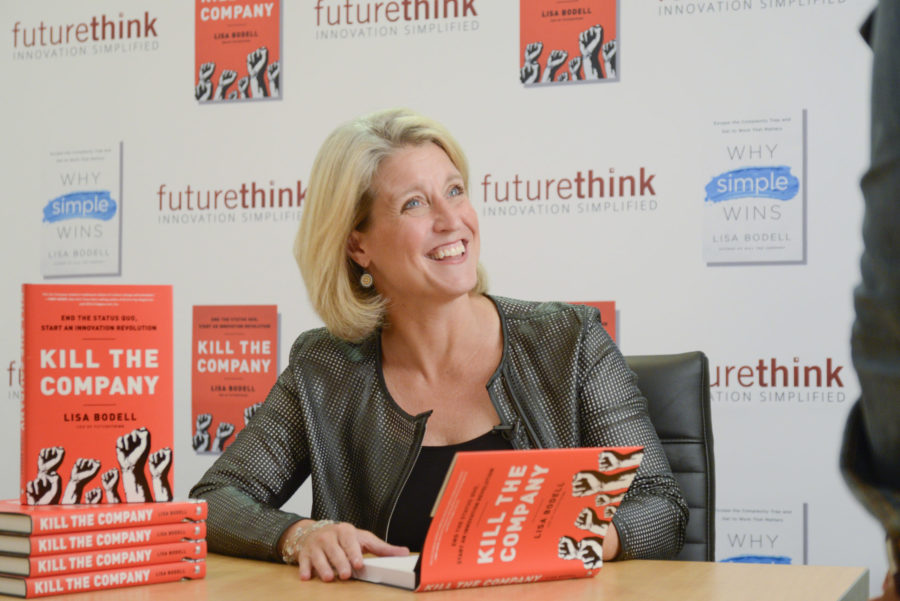
#46 – Lisa Bodell 

Lisa Bodell is the founder and CEO of FutureThink, that enables organizations to kill complexity, create space for innovation, and fast-track work that matters. A globally recognized innovation leader and futurist, Lisa founded FutureThink in 2003 to provide a simple approach to the otherwise complicated subject of innovation. Working with leading companies such as Google, Merck, and P&G, FutureThink has become the largest source of simplification and innovation tools and training in the world.  She’s the best-selling author of Why Simple Wins: Escape the Complexity Trap and Get to Work That Matters; and Kill the Company: End the Status Quo, Start an Innovation Revolution. Through her keynote speeches, Lisa inspires an audience with thought-provoking examples and techniques. 

#45 – Gary John Bishop

Gary John Bishop is one of the leading personal development experts in the industry, with a global reputation that has impacted tens of thousands of people worldwide. Gary’s approach represents a new wave of personal empowerment and life mastery that has caused miraculous results in the quality and performance of people’s lives. 

He is the author of Unfu*k Yourself: Get Out of Your Head and Into Your Life and Stop Doing That Sh*t: End Self-Sabotage and Demand Your Life Back. Gary is among the best speakers in the industry, as he inspires, informs, and lights up the room with his unique delivery. He has the unbelievable knack of shifting an audience of thousands to deliver an intimate, passionate, and magically life-changing experience for everyone. 

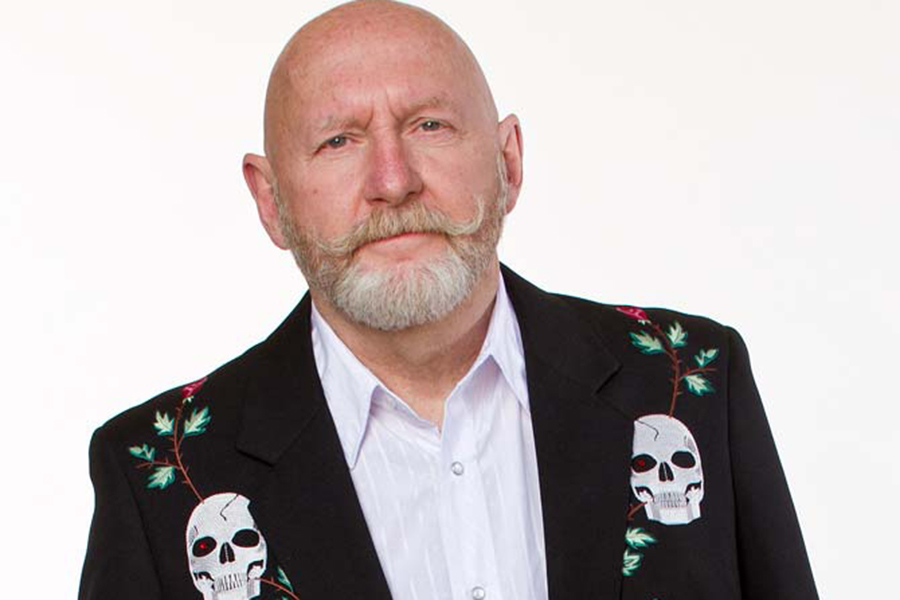
#44 – Larry Winget

Larry Winget is the “pitbull of personal development” and a six-time best-selling author. Larry has spoken to nearly 400 of the Fortune 500 companies and is in the International Speaker Hall of Fame. He is one of the most recognizable speakers in the business today. With his speeches, Larry wants to adopt the “positive attitude” motivational speaking technique, but with added common sense. Larry will make you uncomfortable, but he will make you think. He brings you back to the basics in his no-nonsense approach. 

#43 – Ryan Holiday

Ryan Holiday is an American author, marketer, and entrepreneur who writes about stoicism. Stoicism is the endurance of pain or hardship without displaying feeling, and without complaint. Stoicism teaches you to grind out whatever you may be going through — for the greater good. 

Ryan wrote an article called, Here’s The Strategy Elite Athletes Follow To Perform At The Highest Level. The coaches mentioned in this article all said they trusted this process. One of the many key takeaways from the article, and what struck me most, was an excerpt from Nick Saban, the University of Alabama football coach. Saban said he tells his team to concentrate on what they can manage. All you have to do is proceed step-by-step; think about the task at hand, and nothing else. It doesn’t matter how difficult a situation is if you can just break it down into pieces. Ryan has spoken hundreds of times about the topics in his books, and in more than a dozen countries. 

#42 – Inky Johnson 

Inky Johnson is an author and inspirational speaker who used to be a football player at the University of Tennessee. He was a top player until a routine tackle turned into a life-threatening injury, and ended his career. Through his speeches, Inky talks about loving the process. His mother gave birth to him at age 15, and he grew up in tremendous poverty. Inky only saw one way out, and that was by making it to the NFL. To help him realize that dream, he took consistent action each day. That meant doing drills when coaches and players had all gone home.

Inky understands that people quit on their dreams because they don’t have pride in what they’re doing. Because when you quit, you are selfish. With his vision, Inky realized that whatever you start, you must finish. Without that fluke accident, he would have gone on to become a premier NFL player. If you’re an athlete, it doesn’t matter where you come from, it matters how badly you want to succeed, and Inky is sure to get this message across in his keynote speeches. 

#41 – Robyn Benincasa

Robyn Benincasa has created a life of extreme performance by competing and winning at the highest levels of sport and business. She is an award-winning keynote speaker, a 20+ year veteran San Diego firefighter, a World Champion Adventure Racer, a 2014 CNN Hero, a Guinness World Record Endurance Kayaker, a best-selling author, and founder of The Athena Project Foundation. 

Robyn is known as an inspirational force for leadership, team building, and extreme performance. Her game-changing keynotes have led her to be the #1 female speaker at Meetings.net. Robyn has motivated many teams for Fortune 500 companies, including Starbucks, Walmart, Boeing, Johnson & Johnson, Yahoo, Intel, and more. 

#40 – John O’Leary 

At the age of nine, John O’Leary was involved in a fiery explosion that burned 100% of his body. Given that he was only given a 1% chance to live, John fought extraordinary odds. After spending five months in a hospital and dozens of surgeries, he lost all his fingers and had to learn how to write, walk, and feed himself again. Because he persevered through such a harrowing experience, he’s able to share his life lessons to audiences far and wide. He asks them to live their lives to the fullest, embrace each moment, and celebrate the joy of life. John also channels his life experience in his best-selling book, On Fire

#39 – Brendon Burchard

After a near-death car accident, Brendon Burchard knew it was time to make some changes to his life. Today, he is considered one of the world’s leading high-performance coaches. He is also one of the most-watched, quoted and followed personal development trainers in history.  Brendon is the author of several best-selling books, including The Motivation ManifestoThe ChargeThe Millionaire MessengerLife’s Golden Ticket, and his most recent book, High-Performance Habits. He is a sought-after speaker, sharing the stage with many other top 50 keynote speakers in this list, including Sir Richard Branson (#25) and Tony Robbins (#1). 

#38 – Drew Hanlen

Drew Hanlen is the world’s top NBA skills trainer. What many people don’t know is that he’s been working behind the scenes, influencing business owners and doing inspirational talks for many years.  

Hanlen is an NBA Skills Coach & Consultant, Executive Coach, and CEO of Pure Sweat Basketball, a training firm with a growing list of NBA players such as Bradley Beal (Washington Wizards), Joel Embiid (Philadelphia 76ers), Jayson Tatum (Boston Celtics), Zach LaVine (Chicago Bulls) & Kelly Oubre Jr (Phoenix Suns). His basketball hero, growing up, was Michael Jordan. He would record Bulls games, study every move Jordan made, and then hit the court and practice the same moves, which helped Hanlen develop his basketball IQ. Although his dream was to play in the NBA (which didn’t happen), he still has an impact on the league. Today, he carries the same tenacity and work ethic as a much-in-demand keynote speaker.  

#37 – Gretchen Rubin

Gretchen Rubin is an influential and thought-provoking analyst of happiness and human nature. She started her career in law and was clerking for Supreme Court Justice Sandra Day O’Connor, when she realized that she wanted to be a writer. Since then, she has authored many books, including New York Times bestsellers, The Four Tendencies, and Better Than Before. Her book The Happiness Project has sold more than one million copies, been published in more than thirty languages, and has been on the New York Times bestseller list for more than two years, including at #1. Overall, her books have sold more than 3.5 million copies worldwide.

As a keynote speaker and author, she draws from cutting-edge science, the wisdom of the ages, lessons from popular culture, and her own experiences to explore how people can make their lives happier, healthier, more productive, and more creative.

#36 – Darren Hardy

Darren Hardy is an author, keynote speaker, advisor, and former publisher of SUCCESS Magazine. The New York Times best-selling author wrote The Entrepreneur Roller Coaster, Living Your Best Year Ever, and The Compound Effect. Hardy has been a central business leader in the personal growth and success industry for more than 20 years. He led three successful television networks that produced more than 1,000 TV shows, that featured almost every influential thought leader of our time.

Hardy has been awarded the ‘Master of Influence’ designation by the National Speakers Association in honor of his professionalism in public speaking. He is also a highly sought-after keynote speaker and media contributor with a mission to positively influence Influencers. He wants to be a guide for those who choose to be the exception.

#35 – Shawn Achor

Shawn Achor is a leading researcher on happiness. His efforts earned him accolades on the cover of Harvard Business Review. His research and work on stress, in partnership with Yale University, were published in The Journal of Personality and Social Psychology.

Achor and The Oprah Winfrey Network have created an in-depth two-part Happiness Course to help individuals impact their lives and the lives of those around them with the Happiness Advantage. Shawn’s, and his PBS special has been seen by millions. He has worked with over a third of the Fortune 100 companies, as well as the NFL, the NBA, the Pentagon, the White House, and has traveled to more than 50 countries to deliver his message. Arianna Huffington has dubbed Achor, “One of the world’s leading experts on human potential.”

#34 – Tom Bilyeu

Tom Bilyeu is best known as a cofounder of Quest Nutrition. It was the second-fastest-growing private company in North America on the Inc 500 for 2014. The company grew by 57,000% in its first three years and became a billion-dollar business within five years of launching.

He is a serial entrepreneur and thought leader who can deliver impactful keynote speeches or lead breakout sessions on business strategy, brand building, mindset, and leadership. Tom regularly inspires audiences of entrepreneurs, change-makers, and thought leaders at some of the most prestigious conferences and seminars around the world, including Abundance 360, A-fest, and Freedom Fast Lane. His deep passion for storytelling, combined with his insights from building a billion-dollar business, allows him to deliver persuasive speeches that routinely garner praise.

#33 – Steve Wozniak

Steve Wozniak is a co-founder of Apple Computers. A Silicon Valley icon and philanthropist for the past three decades, Steve helped shape the computing industry with his design of Apple’s first line of products: the Apple I and II and influenced the popular Macintosh.

For his achievements at Apple Computers, Wozniak was awarded the National Medal of Technology by the President of the United States in 1985, the highest honor that can be bestowed on an American innovator. After leaving Apple, Wozniak was involved in various business and philanthropic ventures, focusing primarily on computer capabilities in schools and stressing hands-on learning and encouraging creativity for students.

In 2000, he was inducted into the Inventors Hall of Fame and was awarded the prestigious Heinz Award for Technology. He subsequently founded the Electronic Frontier Foundation and was the founding sponsor of the Tech Museum, Silicon Valley Ballet and Children’s Discovery Museum of San Jose. In 2006, Wozniak published his New York Times best-selling autobiography, iWoz: From Computer Geek to Cult Icon. He is a sought-after keynote speaker.

#32 – Malcolm Gladwell

Malcolm Gladwell is an author and keynote speaker who has written numerous books, including The Tipping Point, Blink, Outliersand David and Goliath. He is also the host of the podcast Revisionist History. His sixth book is Talking to Strangers: What We Should Know about the People We Don’t Know.

Gladwell has been a staff writer at The New Yorker since 1996, and before that, he was a reporter at The Washington Post. His books and articles often deal with unexpected research implications in the social sciences and make frequent and extended use of academic work, particularly in the areas of sociology, psychology, and social psychology. He is a frequent lecturer and keynote speaker at locations throughout the United States.

#31 – Rachel Hollis

Rachel Hollis was the owner of Chic Events — a high-end event planning company in LA — for over a decade. She started a blog to promote that business, and eventually sold the company when clients wanted to hire her to speak about marketing their products and services.

After years of building Chic Media, she has morphed the business into The Hollis Company. The company gives people the tools to make positive and lasting change by promoting a personal growth mindset. Hollis is also a #1 New York Times Best-Selling author and top keynote speaker.

#30 – Simon Mainwaring

Simon Mainwaring is the founder and CEO of We First, a strategic consultancy that accelerates growth and impact for purpose-driven brands. He is a member of the Advisory Council of Conscious Capitalism LA, the Advisory Board of Sustainable Brands, The Forbes Business Council, and a Fellow of the Royal Society of Arts in London.

Simon is a sought after international speaker with engagements including the Cannes International Advertising Festival, Royal Society of Arts, SXSW, TEDxSF, NAB, Promaxbda, Conscious Capitalism, Necker Island with Sir Richard Branson, Aspen Institute and Sustainable Brands.

He has delivered keynotes at Google, Coca-Cola, General Motors, VF, Samsung, VSP Global, Toyota, SAP, Gucci, JP Morgan Chase, Timberland, VW Group, the NHL, and Patagonia. He delivers inspiring insights with engaging humor.

#29 – Seth Godin

Seth Godin is the author of 19 best-selling books, including The DipLinchpinPurple CowTribes, and What To Do When It’s Your Turn (And It’s Always Your Turn). He writes about the post-industrial revolution, the way ideas spread, marketing, change, and leadership.

He is renowned for his writing and speaking, and also founded Squidoo and Yoyodyne. Seth recently broke new ground in the publishing industry by releasing a series of four books through Kickstarter. After three hours, the campaign reached its goal and ended up becoming the most successful book project ever done through crowdfunding.

In 2015, he created the altMBA, a life-changing 30-day workshop that was part of a portfolio of seminars and educational offerings that have been attended by more than 60,000 people. He also has five TED talks to his credit. Godin is in the Guerrilla Marketing Hall of Fame, the Direct Marketing Hall of Fame, and the Marketing Hall of Fame.

#28 – Daymond John

Daymond John is a pioneer in the fashion industry but perhaps just as well known as a Shark on ABC’s Shark Tank. He is also a multiple New York Times best-selling author, branding guru, and highly sought after motivational speaker. As a businessman, he first broke through by turning an original $40 budget into FUBU, a $6 billion fashion game-changer. In 2013, President Barack Obama appointed John a Presidential Ambassador for Global Entrepreneurship — to focus on promoting the power and importance of entrepreneurship on a global scale.

He created his brand consulting company, The Shark Group, to reveal the secrets that made FUBU a multi-billion-dollar global brand and reinvigorated the once defunct Coogi brand into one of the most significant fashion lines. He is a charismatic speaker who brings his quintessential rags-to-riches success story of sacrifice, hard work, and perseverance to audiences worldwide.

#27 – Brian Tracy

Brian Tracy has been a mainstay in the field of motivational speaking for decades.  Before founding Brian Tracy International, he was the COO of a $265 million development company. He enjoyed widespread success in sales and marketing, investments, real estate development and syndication, imports, distribution, and management consulting.

He has consulted to more than 1,000 companies and addressed more than 5 million people through more than 5,000 talks and seminars throughout the US, Canada, and 70 other countries. As a keynote speaker and seminar leader, he addresses more than 250,000 people each year. He is the author of more than 70 books that have been translated into dozens of languages. He has written and produced more than 300 audio and video learning programs, including the worldwide, best-selling Psychology of Achievement that has been translated into more than two dozen languages.

#26 – Robert Kiyosaki

Robert Kiyosaki is best known as the author of Rich Dad, Poor Dad, considered by many to be the #1 personal finance book of all time. His series of books has been translated into 51 languages and sold over 27 million copies worldwide.

He is also the creator of the Cashflow board and software games that help educate adults and children about business and financial concepts. As the founder of The Rich Dad Company and Rich Global LLC, Kiyosaki believes business needs both a spiritual and a business mission to succeed, especially at the beginning. He is an entrepreneur, educator, and investor who believes that each of us has the power to makes changes in our lives, take control of our financial future, and live the abundant life we deserve.

#25 – Sir Richard Branson

Sir Richard Branson owes his fortune of approximately $4 billion to a conglomerate of businesses bearing the “Virgin” brand name, including Virgin Atlantic and Virgin Galactic.

He struggled in school and dropped out at age 16, which ultimately led to the creation of a mail-order record company — Virgin Records. He expanded this into a record label, by first signing Mike Oldfield, who recorded Tubular Bells in 1973. Branson then signed other groups to the label, including the Sex Pistols, Culture Club, the Rolling Stones, and Genesis, helping to make Virgin Music one of the top six record companies globally. He later sold the label for $1 billion in 1992.

His entrepreneurial projects started in the music industry and expanded into other sectors, including Virgin Atlantic airlines and the space-tourism venture, Virgin Galactic. In 2010, he moved forward with his upstart Virgin Hotels and in 2018, Virgin announced its presence in Las Vegas by taking over ownership of the Hard Rock Hotel. Branson is also known for his adventurous spirit and sporting achievements, including ocean crossings in a hot air balloon.

#24 – Tim Grover

Tim Grover is the CEO of ATTACK Athletics, Inc. He is well known for his work with elite champions and Hall of Famers, including Michael Jordan, Kobe Bryant, Dwyane Wade, and hundreds of other NFL, MLB, NBA, and Olympic athletes.

Grover is recognized as the preeminent authority on the science and art of physical and mental dominance and achieving excellence. He is the author of the national bestseller RELENTLESS: From Good to Great to Unstoppable and creator of digital training platform The Relentless System. A featured columnist at SI.com and Yahoo.com, he also regularly appears on ESPN, Fox Sports, and other media outlets. Tim delivers keynote speaker addresses and is a consultant to business leaders, athletes, and elite achievers — any area that offers tips on how to become better at anything you do. He teaches the principles of relentless drive, results-driven performance, and mental toughness.

#23 – Ben Newman

Ben Newman is known as a powerhouse storyteller; He can be found in Top Fortune 500 boardrooms, on stages around the world, and with some of the world’s elite sports teams.

He was featured in 2018 on ESPN’s Rolling with the Tide for his work with the Alabama Football team and is a speaker and performance coach for Microsoft, AB InBev, Kansas State Football, Miami Dolphins, and Northwestern Mutual, Mass Mutual and many other elite companies around the globe. He has published several books on mental toughness, professional success, and how to drive positive changes. Newman is also considered one of the top mental toughness experts. You will also find him speaking and giving back to the military. If you are looking to connect to purpose and drive accountability in your organization, Ben will deliver.  

Jocko Willink is a retired U.S. Navy Seal co-author of the #1 New York Times bestseller Extreme Ownership: How US Navy SEALs Lead and Win, and host of the top-rated Jocko Podcast.

He is also the cofounder of Echelon Front, where he serves as chief executive officer, leadership instructor, speaker, and strategic advisor. Jocko served for 20 years in SEAL teams. After returning from tours in Iraq, he was named officer-in-charge of training for all West Coast SEAL teams. In this role, he spearheaded the development of leadership training and personally instructed and mentored the next generation of SEAL leaders who have continued to perform with great success on the battlefield. Jocko is the recipient of the Silver Star, the Bronze Star, and numerous other personal and unit awards.

He has authored the Discipline Equals Freedom Field Manual, a New York Times Bestseller, and the best-selling children’s books: The Way of the Warrior Kidand The Way of the Warrior Kid: Marc’s Mission.

#21 – Ray Lewis

Ray Lewis is recognized as one of the most dominant defensive players in the history of the National Football League.  

He led the Baltimore Ravens to victory in Super Bowl XXXV, where he was named Super Bowl MVP, and again in Super Bowl XLVII. In 2000, he became the second player in NFL history to win both the NFL Defensive Player of the Year and Super Bowl MVP awards in the same year. He was inducted into the NFL Hall of Fame in 2018. He has drawn from these experiences over a 17-year career, along with valuable lessons from his personal life to bring a unique brand of motivation and inspiration to some of the world’s biggest companies.

#20 – Chris Gardner

Chris Gardner is the CEO of Happyness. His first book, The Pursuit of Happyness, became a New York Times and Washington Post #1 bestseller that has been translated into more than 40 languages.

That book was the basis for a film starring Will Smith, who earned a Golden Globe, Screen Actors Guild, and Academy Award nomination for his performance. As a motivational speaker, Gardner shares some of the steps that he took, and obstacles he needed to overcame, to get from where he was to create the life that he wanted to live. 

He introduces audiences to the concept of Spiritual Genetics, the part of each human being beyond the scope, reach or understanding of science, medicine, or technology. Chris also details the importance of the “Ps” in our lives — Promises, Passion and having a Plan. Also, the C-5 Complex — Clear, Concise, Compelling, Consistent and Committed to the plan.  

#19 – Marcus Luttrell

Marcus Luttrell is a former Navy SEAL who first came into the public spotlight in 2014 after the movie Lone Survivor was released. Starring Mark Wahlberg as Luttrell, the movie details how SEAL Team 10 was assigned to a mission to kill or capture Ahmad Shah, a high-ranking Taliban leader responsible for killings in eastern Afghanistan and the Hindu-Kush mountains. He was the only survivor of that mission and was awarded the Navy Cross by President George W. Bush in 2007.

In 2010, Luttrell established the Lone Survivor Foundation with a mission to “restore, empower, and renew hope for our wounded warriors and their families through health, wellness, and therapeutic support.” The Lone Survivor Foundation has partnered with The Boot Campaign to show appreciation of America’s active-duty military and raise awareness of the challenges they face when returning home.    

#18 – Oprah Winfrey

Oprah Winfrey has enjoyed unparalleled success in almost every venture she has undertaken. She is a billionaire media mogul who is best known for hosting her talk show from 1986 to 2011, launching her TV network, the Oprah Winfrey Network (OWN).

Winfrey made her acting debut in 1985 as “Sofia” in Steven Spielberg’s The Color Purple, for which she received both an Academy Award and Golden Globe nomination. Through her company’s film division, Harpo Films, Oprah has produced movies based on classic and contemporary literature.

In 2002, Oprah Winfrey was named the first recipient of the Academy of Television Arts & Sciences’ Bob Hope Humanitarian Award. Through her private charity, The Oprah Winfrey Foundation, she has awarded hundreds of grants to organizations that support the education and empowerment of women, children, and families in the United States and around the world. Her commitment to children also led her to initiate the National Child Protection Act in 1991, when she testified before the U.S. Senate Judiciary Committee to establish a national database of convicted child abusers. As a result of her efforts, President Clinton signed the national “Oprah Bill” into law in 1993.

#17 – Deepak Chopra

Deepak Chopra is a prolific author who founded the Chopra Center for Well Being in Carlsbad, California, in 1995. He remains a prominent figure in the New Age Movement. He began his career as a doctor, but after becoming disenchanted with Western medicine, he turned to alternative medicine. Chopra’s 1993 release Ageless Body, Timeless Mind, turned him into a fully-fledged celebrity, selling more than a million hardcover copies.

In June 1999, Time magazine dubbed Chopra “the poet-prophet of alternative medicine” and called him one of the top 100 heroes of the century. He regularly brought his message to the Oprah Winfrey Show.

#16 – John Maxwell

John Maxwell has written more than 100 books on motivation, leadership, and personal development over the past 40 years. He helps others tap into their hidden potential by teaching and refining what everyone needs to master around personal growth — to become the people we really want to become.

The John Maxwell Company compels corporate leaders and consumers to inspire, challenge, and equip organizations to live out leadership and reach their full potential. He is also the leader of The John Maxwell Team, an organization of more than 13,000 trained and certified John Maxwell Coaches, that empower coaches, trainers, speakers, and professionals seeking to add value to others and become top leaders — in businesses and in within their communities. EQUIP is Maxwell’s non-profit organization that trains and mobilizes Christian leaders to impact families, organizations, communities, and nations worldwide. The team’s work has inspired six million leaders in 196 countries and changed hundreds of thousands of lives through his teachings.

#15 – Ed Mylett

Ed Mylett was a standout Division I baseball player and had hoped to play Major League Baseball one day, but a significant injury dealt a final blow to his athletic aspirations. 

Instead, he turned his drive and determination to the business world, where he quickly climbed the ladder at WFG. Forbes has listed him as a Top 50 Under 50 with a net worth of more than $400 million. A highly sought after speaker, Mylett spreads his messages of living an epic life through his podcast #MaxOut With Ed Mylett, and he has recently published his first book, #MaxOut Your Life: Strategies for Becoming an Elite Performer.

Mylett also proudly supports charitable and community initiatives such as the Make-A-Wish Foundation of America, the All for One foundation, and the National Leadership Foundation.

#14 – Andy Frisella

Andy Frisella is the CEO of one of the world’s leading nutritional supplement companies — 1st Phorm International, in St. Louis, MO. He also founded, and manages, five other businesses that collectively generate $200 million in annual revenue.

He hosts The Real AF podcast and previously The MFCEO Project, a business/success oriented podcast that was ranked #1 Business/Entrepreneurship/Personal Development podcast on the planet for four years straight. He is one of the highest-paid keynote speakers in the world. He has been recognized as one of the world’s leading authorities on customer retention and loyalty, company culture, and the marketing techniques that it takes to build both brick-and-mortar and online direct-to-consumer retail businesses from the ground up.

Andy has written a best-selling series of children’s books that promote entrepreneurial values and the success mindset. He was named Entrepreneur of the Year in 2016 and been featured in Forbes, INC, and Entrepreneur Magazine.

#13 – Les Brown

Les Brown has been a mainstay in the world of renowned motivational speakers for many years.  He is a highly-sought-after resource in business and professional circles for Fortune 500 CEOs, small business owners, non-profit, community leaders, and all sectors of society looking to expand their opportunities.

He is a leading speaker on achievement, and has delivered his messages to audiences as large as 80,000 people, energizing them to meet the challenges of the world around them. Brown received the National Speakers Association coveted Council of Peers Award of Excellence (CPAE), and its most prestigious Golden Gavel Award for achievement and leadership in communication. Toastmasters International also voted him one of the Top Five Outstanding Speakers Worldwide.

#12 – Simon Sinek

Simon Sinek is a popular thought-leader, best known for popularizing the concept of WHY in his first TED Talk in 2009. It became the third most-watched talk on TED.com, with over 40 million views, and subtitled in 47 languages.  

His 2016 interview on Millennials in the workplace garnered more than 200 million views in the first month. It led to Simon becoming YouTube’s fifth most searched term in 2017. Sinek is the author of several bestselling books including Start With Why (global bestseller), Leaders Eat Last (New York Times and Wall Street Journal bestseller), Together is Better (New York Times and Wall Street Journal bestseller) and Find Your Why and his latest book, The Infinite Game.

In addition to working with several Fortune 500 companies, he has shared his ideas at the United Nations, the United States Congress, and with senior leaders of the United States Air Force, Marine Corps, Navy, Army, and Coast Guard. Sinek is also an adjunct staff member of the RAND Corporation, one of the most highly-regarded global think tanks.

#11 – Joe Rogan

Joe Rogan has been a stand-up comedian for more than 20 years and is the host of The Joe Rogan Experience, a long-form conversation podcast with guests, which has become one of the most popular shows on iTunes. 

Rogan is also known for his colorful commentary for the Ultimate Fighting Championships on Pay Per View, Spike TV, and Fox. As a teenager, he earned his black belt and, at one point, held the Massachusetts full contact Tae Kwon Do championship for four consecutive years. He later won the US Open Tae Kwon Do Championship, and as lightweight champion went on to beat both the middle and heavyweight title-holders to win the Grand Championship. As an actor, he has several movie credits and was the host of the reality TV series Fear Factor for six seasons. He still performs stand-up routines and does a variety of guest speaking opportunities.

#10 – Jon Gordon

Jon Gordon is a bestselling author and keynote speaker whose work about positive leadership has inspired audiences worldwide. He is the author of 17 bestselling books, including The Energy Bus, The Carpenter, Training Camp, You Win in the Locker Room Firstand The Power of Positive Leadership. Gordon has been featured on The Today Show, CNN, CNBC, FOX and Friends, and many newspapers and magazines.

As a highly sought-after motivational speaker, Gordon’s talks have challenged and influenced leaders in a dynamic range of industries and professions. His clients include The Los Angeles Dodgers, The Atlanta Falcons, Campbell Soup, Dell, Publix, Southwest Airlines, LA Clippers, Miami Heat, Pittsburgh Pirates, BB&T Bank, Clemson Football, Northwestern Mutual, Bayer, West Point Academy, and many others.

#9 – Jay Shetty

After serving as a monk for three years, Jay Shetty had one mission: to make wisdom go viral. By sharing his mindfulness-based stories with the world, he emerged as an award-winning speaker, host, author, and filmmaker. For Jay, mindfulness isn’t just a tool, but a way of life.

His videos on YouTube have had more than seven billion views and he’s followed by over 26 million fans on Facebook alone. He was named in the Forbes 30 Under 30 Europe Class of 2017 for being a game changer and influencer in the media world. His podcast On Purpose ranks among the highest in the health category and explores the topics of work, love, self, and service. He makes ancient wisdom relevant through modern science, combining experiences from living as a monk in India, business school, and working as a digital strategist to formulate practical and accessible leadership techniques.

#8 – David Goggins

David Goggins is a retired Navy SEAL and is the only member of the U.S. Armed Forces to complete SEAL training (including two Hell Weeks), the US Army Ranger School (where he graduated as Enlisted Honor Man), and Air Force Tactical Air Controller training. He is the best-selling author of the book, Can’t Hurt Me

He has completed more than 60 ultra-marathons, triathlons, and ultra-triathlons, setting new course records and regularly placing in the top five. He once held the Guinness World Record for pull-ups — completing 4,030 in 17 hours. He’s an in-demand public speaker who delivers impactful messages of personal accountability and how to go beyond motivation to achieve your personal best. Goggins has shared his story with hundreds of thousands of students across the country, numerous professional sports teams, and several Fortune 500 companies. He is also a member of the Patriot Tour, sharing the stage with Marcus Luttrell, Taya Kyle, and other retired special operators.

#7 – Arnold Schwarzenegger

Arnold Schwarzenegger is a global celebrity who first came to public attention as a champion bodybuilder. He later expanded his accomplishments to become a major Hollywood action hero, a successful businessman, environmentalist, bestselling author, and the 38th governor of California.

At age 20, he became the youngest person to win the Mr. Universe title, eventually winning five Mr. Universe titles and seven Mr. Olympia titles. His acting credits include some of the biggest box office films ever. He broke through with Conan the Barbarian and solidified his position as an actor with James Cameron’s Terminator.  

To date, his films have grossed more than $3 billion worldwide. He became California’s governor in 2003 and had many notable accomplishments during his tenure, including the passing of the Global Warming Solutions Act of 2006 and the Safe, Clean and Reliable Drinking Water Supply Act of 2010, among many others. Schwarzenegger has received numerous awards, including the Simon Wiesenthal Center’s “National Leadership Award” and the American Council On Renewable Energy’s “Renewable Energy Leader of the Decade.” Since leaving office, Schwarzenegger co-founded the R20 Regions of Climate Action and is active in several philanthropic ventures.

#6 – Brené Brown

Brené Brown is a research professor at the University of Houston, where she holds the Huffington – Brené Brown Endowed Chair at The Graduate College of Social Work. Brené is also a visiting professor in management at The University of Texas at Austin McCombs School of Business.

She has spent the past two decades years extensively studying courage, vulnerability, shame, and empathy. She is the author of five #1 New York Times bestsellers: The Gifts of Imperfection, Daring Greatly, Rising Strong, Braving the Wilderness, and Dare to Lead. Brené hosts the Unlocking Us podcast, and her TED talk – The Power of Vulnerability – is one of the top five most viewed TED talks in the world with over 45 million views. She is also the first researcher to have a filmed lecture on Netflix. The Call to Courage special debuted on the streaming service on April 19, 2019.

#5 – Dwayne Johnson

Dwayne Johnson is better known as The Rock, a persona he developed during the heyday of his WWE professional wrestling career. He moved to wrestling after a successful college football career was cut short by injury.

Since then, The Rock has become a highly successful actor and producer, appearing in several projects, including 2001’s The Mummy Returns and 2010’s Tooth Fairy. More recent credits include the HBO series Ballers (2015) and three 2017 features, The Fate of the Furious, Baywatch, and Jumanji: Welcome to the Jungle. He is consistently ranked among the world’s highest-paid actors. Johnson made the Time 100 Most Influential People in the World list in both 2016 and 2019. In 2006, he founded the Dwayne Johnson Rock Foundation, a charity working with at-risk and terminally ill children. Among many other charitable activities, he has also worked with Make-A-Wish Foundation on several occasions.

#4 – Robin Sharma

Robin Sharma is one of the world’s premier speakers on leadership and personal mastery. For nearly 20 years, Sharma has provided insights to world-class companies such as Nike, GE, Microsoft, FedEx, PwC, HP, and Oracle to NASA, Yale University, and YPO. His books, including The Leader Who Had No Title, have topped bestseller lists internationally and his social media posts reach more than 600 million people a year, Sharma has been ranked as one of the Top 5 Leadership Experts in the world in an independent survey of over 22,000 business people.

#3 – Gary Vaynerchuck

Gary Vaynerchuk is the chairman of VaynerX, a media and communications holding company, and VaynerMedia, a full-service advertising agency that services many Fortune 100 clients. A highly sought-after public speaker, Vaynerchuck is also a five-time New York Times bestselling author. He also is an angel investor who made early investments in well-known companies such as Facebook, Twitter, Tumblr, Uber, and Venmo. Vaynerchuck established Wine Library in the late 1990s, transitioning his father’s liquor business into one of the first e-commerce platforms for alcohol, growing it from $3 million to $60 million in sales during that time. Today, he has parlayed several successful ventures into a combined 12 million-plus following across his social media channels.  

#2 – Eric Thomas

Dr. Eric Thomas is a motivational speaker and minister who heads ETA, an education consulting, executive coaching, and athletic development firm. He specializes in giving motivational talks to college and professional athletes. LeBron James credited Thomas as part of his inspiration for winning the 2012 NBA championship.

He is a regular commentator on ESPN and Fox News and has done voice-over work for Major League Baseball and the National Football League. Many of his sermons and motivational speeches are on YouTube, where they have found a large following. Thomas has also published three books: The Secret to Success (2012), Greatness Is Upon You: Laying the Foundation (2014) and Average Skill Phenomenal Will (2016)

#1 – Tony Robbins

Tony Robbins is perhaps the most well-known leadership speaker in the world. For the past 40 years, he has been an entrepreneur, #1 New York Times bestselling author, philanthropist, and life/business strategist. He is the author of six internationally bestselling books and delivered his messages of empowerment to more than 50 million people from 100 countries through audio, video, and life training programs. More than four million people have attended his live seminars. Robbins is also the chairman of a holding company with over 50 privately held businesses.

His non-profit foundation has awarded more than 2,000 grants and other resources to health and human services organizations. As part of his ongoing mission to end hunger, Robbins’ 1 Billion Meals Challenge with Feeding America has helped provide over 425 million meals in the last four years to those in need and is on track to provide 1 billion meals by 2025.

To read an exclusive, inspiring interview with Tony Robbins, who is the cover story of the latest Real Leaders magazine, subscribe here for just $15/year.

When a Crisis Ends a Real Leader Asks: “How’d We Do?”

“The Most important Thing About Crisis Management is to Prepare for the Next Crisis.”

At this point, some businesses are reopening. Limitations on in-person meetings will be lifted. Some, but not all, employees will be happy and anxious to get back to the workplace and leave the stress of 24/7 home life behind. However, the positive influence leader will want to take a moment to ask, “how did we do, and what did we learn, and how will we specifically apply what we learned to both our departments and our firm?”  

This is a critical moment because:

  • There will be another crisis in the future. 
  • It may not be health-related, and it may not be of the same scale, but we will need to be ready, and it will need to be addressed.
  • The organization may have been permanently changed by the crisis, and a simple return to “business as usual” is not possible. There will be a new normal for many industries and businesses.
  • The organization may have adopted some new practices during the crisis that were beneficial. For example, new techniques for customer acquisitions, interactions, team meetings, and time management may have been effective and easily integrated into the post-crisis workplace.

As your organization and departments return to work, you must review and assess what happened during the crisis. As someone said, “the most important thing about crisis management is to prepare for the next crisis.”

Take the case of the island country of Taiwan because it provides a dramatic example of post-crisis analysis. This country of some 23 million is just 81 miles from mainland China with frequent flights back and forth between the two countries. And yet, as of late May, there about 500 confirmed cases of COVID-19 and just nine deaths. How did they do it?

Planning for this crisis effectively began after the SARS epidemic in 2004. The resulting plan included a 24/7 national command center that integrated the work of a variety of agencies under one roof. The result was a plan that included specific sections that were implemented during the current crisis. 

Crisis Review
Some people call it an evaluation or an after-crisis action review, but we can go with crisis review. The objective is to find out what worked, what didn’t work, what we learned, and how we will correctly apply what we learned when and if there is a next time. We’ll need a methodology and some key questions to guide the process.

Methodology 
Here are some process elements to consider:

Should we break these sessions down by department, e.g., Executive, Technology, HR, Marketing, Sales, Service, Operations, Risk, Compliance, Legal, Finance, Accounting? If so, how should we customize this process for each?

  • Who should be invited?
  • How many meetings should we have?
  • How much time should we allocate to the meeting?
  • What topics should we cover?
  • What questions should be asked?
  • Should we use a professional meeting facilitator?
  • How will we take notes and capture the ideas generated?
  • What will we do with the notes taken and the recommended action items?
  • Do we send the questions to the participants in advance of the meeting?
  • What criteria should we use to assess the success of the meeting?

Review Questions
Some possible questions to guide the discussion include:

  • What did we stop doing during the crisis?
  • What did we start doing?
  • What did we continue doing?
  • What changed over time?
  • What worked well that we stopped doing? Started doing? What didn’t work well that we stopped and started doing? What could have been better?
  • What should we do differently during our next crisis?
  • What are some lessons learned that we can immediately implement in our current workplace?

What are the key lessons learned that could be applied in future crises?
As this crisis comes to an end, the decisive influence leader can help their organization learn from the experience and develop a plan for managing similar challenges in the future as well as identifying learnings from the current crisis that can be implemented in the near-term workplace.

4 Ways Leaders Can Overcome Fear and Take Control

Scarcity is a feeling of fragility and uncertainty. Leaders cannot let fear determine their decisions, which is why cultivating an abundance mindset is critical to long-term leadership amidst the current coronavirus pandemic.

Of all the havoc wreaked by the coronavirus, one crisis has been largely overlooked: our psychological response. A scarcity mindset is induced by a fearful prediction about the availability of future resources. Leaders and companies are directly affected by a threat to their finances or the health risks for employees. Responding appropriately to current events is critical, but there’s a difference between strategizing and having a scarcity mindset.

Scarcity is a feeling of fragility and uncertainty. COVID-19 created environmental conditions that often produce a scarcity mindset: an economic downturn, a pandemic, and an abrupt shift to a new way of living. If you succumb to this mindset, it will stick with you even if the economy turns around tomorrow. Why?

Your brain identifies stressful events unconsciously. It remembers them for a long time with greater clarity and amplification. Our experience with physical distancing, for instance, will make us warier of shaking hands in the future.

Scarcity, whether real or perceived, impairs your thinking. It can make us reluctant to hire even after an economic upturn or lead us to be overly conservative with the company budget. Holding on to a fearful emotional response can ultimately result in poor long-term decisions.

Taking Control: Overcoming a Scarcity Mindset

In the short term, scarcity can produce increased engagement — at a cost. You might overemphasize immediate needs and think tactically rather than strategically. You’re likely focusing on survival and asking, “What do we need to do?” instead of considering opportunities and asking, “What could we do?” You’re probably getting things done, but they likely won’t benefit you as much as you think.

Additionally, relationships become more and more transactional with a scarcity mindset. You may place a greater focus on your own needs and become less willing to invest time and energy into relationships that don’t immediately fulfill them. However, managing employee unrest — or employee anxieties — is the most significant challenge facing most business leaders right now. Because negative memories stick in our brains longer than positive ones, what leaders do in 2020 will significantly impact their legacies.

The long-term consequences of leading tactically and prioritizing your survival are a shallow vision and weak culture. If you want to emerge as a stronger leader and company in light of this novel coronavirus, understand that financial conservatism is not the same as scarcity mindset. Being shrewd about budget and layoffs does not require you to consider the availability of resources. A scarcity mindset is an emotional response when you’re allowing fears to determine your decisions. Budgeting is top-down.

1. Before the moment, be proactive.

Organizations that prioritize productivity at all costs schedule work with no margins. This practice is rooted in scarcity, and it starts at the top. If your days are filled with more work, than you can feasibly accomplish and little time to think, try adding buffers.

For instance, I experimented with scheduling meetings for abnormal lengths (e.g., 52 minutes or 26 minutes). I found that this extra time helped me feel mentally prepared and present for each session because I built in a few minutes to collect my thoughts. As a bonus, I found it led others to respect my availability and make the most of the time we had.

2. Train yourself to identify your mindset at the moment.

As often as possible, ask yourself whether your mindset is suitable for your current environment. There may be times when a scarcity mindset is needed. For instance, if the government mandated that your organization work from home tomorrow, a short-term engagement to solve the issue at hand becomes critical. We all need to do what’s required in a crisis, but don’t let a scarcity mindset become the default. Be mindful of how you’re approaching the moment and change your thinking, if necessary.

3. Reverse engineer.

Try thinking “by design” rather than “by default.” Connect the dots between your mindset, emotions, actions, and outcomes because they’re inextricably linked. To change an issue, think about what action is required. What emotion triggers that action? What mindset cultivates that emotion? In the same way that reverse engineering your goals can help you identify first steps, reverse engineering outcomes can help you identify the necessary mindset.

4. Invite others into this process.

The reality is that bottom-up processing is unconscious. It’s therefore difficult to identify in the moment. We can be blind to our own blindness. If you’re serious about changing your mindset, consider inviting colleagues into the conversations. Feedback is a gift, and when you initiate a feedback loop, your brain is more likely to receive it, according to Kerry Goyette, author of “The Non-Obvious Guide to Emotional Intelligence.” Transparent conversations can lead to personal growth and build a culture of trust within your organization.

Cultivating an abundance mindset is critical in the long term. Anyone who hopes to lead a successful business must learn to balance the need to survive with the need to innovate. By reserving a scarcity mindset for situations that require it, you can guide your company through the coronavirus pandemic and to the other side.

0