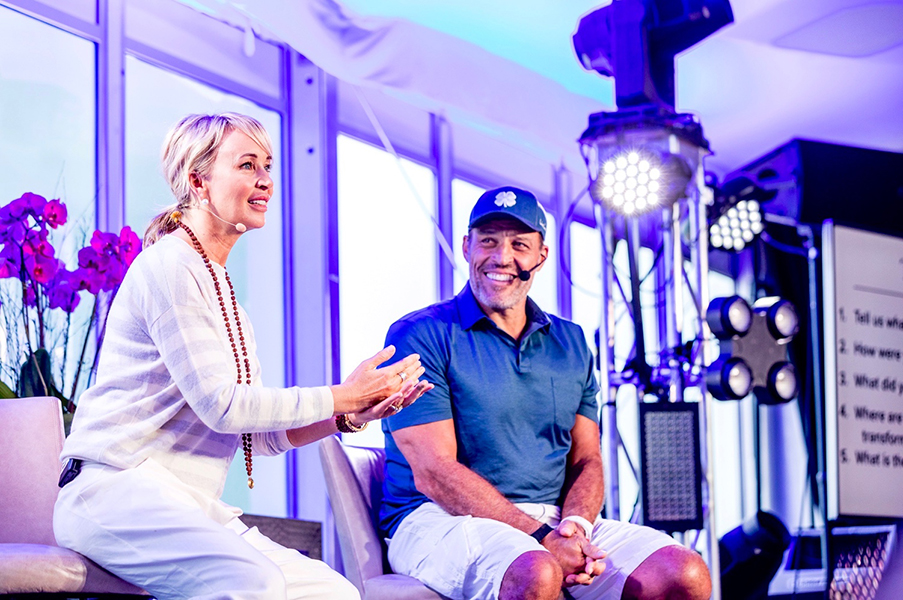
4 Lessons From the Red Cross: How Humanitarian Governance Can Help Your Company

Bridging the humanitarian governance triangle of politics, power, and ethics is a complex task, but one Peter Maurer was destined to achieve as president of the International Committee of the Red Cross (ICRC). Known for its rapid response in disasters and within armed conflict zones, the Red Cross is arguably the largest and most sophisticated humanitarian organization in terms of governance.

Businesses that find themselves entangled in complicated geopolitics can learn how the ICRC can maintain its neutrality while preserving its purpose. Here are four critical takes from my recent conversation with Maurer:

1. Being Purpose-Driven is a Strength  

“Defining [the ICRC’s] purpose is unnecessary because everyone who comes here knows what the purpose is,” says Maurer. “It is so self-evident that it doesn’t need to be restated. For 130 years, it has been enshrined in the practice of the organization.” 

This unmistakeable purpose is essential to good governance, particularly during a crisis: in highly unstable environments, humanitarian supply and command chains break down, and isolated individuals must make critical decisions. Because of the ICRC’s clarity of purpose, its alignment and efficiency have remained high, even in remote and complex locations (such as Sudan and Iraq). “After three to four months of strong purpose in action,” says Maurer, “we are—despite all the restrictions—at 85% of delivery of services.” 

Real Leaders Impact Awards, The World’s Top Impact Companies: APPLY NOW

While purpose drives humanitarian organizations like the ICRC, it’s not necessarily so for commercial companies and businesses that must take time to define their purpose. That said, Maurer believes that the ICRC is indeed a business; it’s in the business of humanitarian diplomacy. 

Yet, purpose does not come without consequences. “In a purpose-driven organization like ours, everybody believes they are a part of the purpose,” Maurer says. “Those who work here have a solid opinion on almost everything. Purpose can sometimes overshadow management good practices,” admits Maurer. So, keeping efficiency and having a board that emulates good management is essential for success.

2. Geopolitical Skills are the Next Big Board Competency  

From decades as a diplomat, Maurer’s vast geopolitical knowledge is undoubtedly one of his top strengths. But shouldn’t all board members upskill their geopolitics to succeed? 

“There is an advantage today of knowing something about geopolitics; it is uncontested,” says Maurer. “Of course, you need diverse skills on a board. Not everybody has to understand the intricacies of power politics. But only one skilled director is not enough.”  

A robust diversity of skills—and the ability to “connect the dots” in a world which, for many people, is no longer easily understood—is crucial for boards. While finance and technology are the most required skills on boards today, geopolitics is quickly becoming a key area of success. Geopolitics drives relationships to relevant stakeholders, including governments, state-owned enterprises, and regulators, and is a force behind social evolution and technological choices. In short: geopolitical abilities are crucial.

3. True Diversity Overcomes Deadly Blind Spots

True diversity is required for good governance. In such a complex world, we need creative thinking, open minds, and constructive dissent to form as complete a view of reality as possible. While diversity may hinder alignment, in the face of epic transformations in society, politics, technology, and business models, creativity and agility trump alignment and efficiency.

Throughout history, humanitarian governance has consistently welcomed diversity in all forms—ethnicity, age, gender, religion, and fundamentally divergent perspectives—far more than businesses have. Of course, companies have an efficiency advantage. But with the average tenure on the S&P 500 dropping from 67 years to 14 years over the last century, many question whether short-term efficiency is being overwhelmed by medium-term failure. Diversity may well be a long-term driver of resilience.

4. Maintaining Neutrality is Challenging, but it can be Preserved

Today, the basic notion of business remaining neutral, keeping politics to politicians, is being threatened. Somehow, businesses are pushed to take sides: Which country is supplying key technology? What social views does business support? What is an organization’s true identity?

Companies caught in the push and pull of politics can learn from how the ICRC maintains its neutrality and its purpose. The key, says Maurer, is to keep trust with each party, avoiding grandstanding while staying firm on universal values. One’s organization’s views should be expressed respectfully and privately, while always acting with integrity.

As Maurer has tackled relations between Ukraine and Russia and Iraqi government officials and Taliban representatives, he has found that these principles work well to preserve neutrality.

In our rapidly evolving world, these four takes from humanitarian governance—defining a purpose, understanding geopolitics, embracing diversity, and maintaining neutrality—can be useful to any organization, large or small.

CEOs of Major Corporations Propose An Economic Roadmap to Build Back Better

A new coalition of global leaders including the CEOs of Danone, Mahindra, Philips, L’Oreal, and other companies representing a combined annual revenue of over $100 billion and a combined global workforce of over 500,000 have endorsed a roadmap to “build the economic system better,” rather than merely “building it back.”

The goal of the roadmap is to create an inclusive and sustainable post-COVID economy that benefits society, the planet, and shareholders for generations. In an open letter, the group of 14 CEOs called on governments to accelerate such a transition by recognizing and supporting purpose-first business as an emerging fourth sector of the economy. 

Real Leaders Impact Awards, The World’s Top Impact Companies: APPLY NOW

The signatories to the letter have also committed to advance the purpose-first economy by leveraging their procurement, innovation, research, development, and investment to accelerate the growth of this critical sector. The letter provides a practical roadmap for proactively redesigning corporate structures and government policies to develop a more supportive ecosystem for organizations that operate under a new business logic. The leaders have urged businesses and governments to join them. 

“Our world was a dangerous and troubled place even before COVID-19 took hold,” said Paul Polman, former CEO of Unilever, who is now working on transforming the structural impediments to sustainable business. “We have the chance to rebuild a fairer, greener society. But to do so, we need courageous business leaders who are willing to act, individually and collectively. It’s why I applaud the signatories of this letter. No company alone can solve the problems we face. But together, we can begin to challenge the orthodoxies which got us here. Together we can help the world change.”

Anand Mahindra, chairman of the Mahindra Group, said: “Today, more than ever, the world needs to reimagine a new future. A future in which people can feel safe and protected. The initiative being set in motion by Leaders on Purpose is an effort toward defining the new environment. It provides a much-needed aspirational framework that can change the language of business discourse and how we regard the future. This philosophy resonates deeply with Mahindra’s vision and has the potential to become a movement that will define the future for generations.” 

The group’s diverse community includes corporate leaders from across the globe, including Ajay Banga (Mastercard), Alan Murray (Fortune Media), Anand Mahindra (Mahindra Mahindra), Dan Hendrix (Interface), Dylan Taylor (Voyager Space Holdings), Emmanuel Faber (Danone), Feike Sijbesma (DSM), Frans van Houten (Philips), Dr. James Mwangi (Equity Bank), Jean-Paul Agon (L’Oreal), John Denton (ICC), Mike Doyle (Omnicom-Ketchum), Roberto Marques (Natura & Co.), and Stefan De Loecker (Beiersdorf).

While governments around the world debate economic and social policies designed to jumpstart their economies in the wake of the COVID-19 pandemic, the “Build it Better” framework includes six key imperatives for public and private sector leaders to guide innovation of public policy as well as corporate and financial structures to accelerate the progress of the purpose-first economy. These imperatives include:   

  • Recognize the purpose-first sector. 
  • Carefully craft incentives and policies. 
  • Incentivize innovations of financial products, risk assessment, valuation models, and ratings. 
  • Design for a safe, educated, and healthy society. 
  • Leave no one behind. 
  • Enable a supportive ecosystem. 

Feike Sijbesma, honorary chairman of DSM, said: “The private sector needs an integrated strategy and supportive ecosystem that integrates more fairness, less dependency, more climate and sustainability focus, preparedness, and agility for uncertain times. We each have to think about the world around us, our role in it, our tremendous potential, and how we can contribute to making it better together.”

7 Habits For Laying The Foundation for Business Bravery

In our volatile world, bravery is no longer the purview of caped crusaders. Instead, it’s an essential, though unexplored, capability that all leaders must develop. Bravery is the one force that will make a difference in an environment craving changemakers. 

For some leaders, bravery challenges them to seek out unproven solutions to familiar problems. For others, it is being the lone voice, advocating what is right for your brand, customers, or employees. And for others yet, it is seeking out the humanity in our industry. Bravery makes us better as individuals and leaders. However, what happens if you struggle with harnessing your mental and moral strength? The truth is we all possess the seeds for becoming braver, and bravery can be fostered through habitual behavior. 

As CMO of a branding agency and New York chair of The Marketing Society, I have the privilege of meeting many leaders. My insight is that seven keystone habits engender bravery, and these habits have the power to shape how people perform, make decisions, and lead.

Real Leaders Impact Awards, The World’s Top Impact Companies: APPLY NOW

1. Be audacious

Audacity is the ability to dream big and set ambitious goals. Often, the challenge is identifying where to begin. Having the courage to find ways to venture out of our comfort zones is a powerful first step. Organizations are often set up to be safe, and while brave leaders are acutely aware of boundaries, some strengthen their self-confidence by taking small steps into territories unknown. Bear in mind, audacity does not mean being foolhardy. Strike a balance between assertiveness and risk management.

2. Be curious

The heart of some of the most memorable campaigns or bold leadership initiatives is an inspired, actionable insight. However, insights only emanate from asking astute questions — and genuinely listening to the responses. For example, always be curious enough to ask the difficult questions of customers, to empathize and understand their journey. And especially for those in senior roles, it’s brave to ask for feedback and never stop questioning.

3. Be vulnerable

In business, vulnerability is generally viewed as a liability for leaders. However, in my experience, vulnerability equals strength. It is the courage to remove one’s armor and embrace uncertainty and risk, opening yourself up to public exposure of both triumphs and disappointments. For vulnerability to be institutionalized, companies need dedicated resources and budgets for experimentation as well as a culture of providing employees physiological safety. Brave leaders and brave organizations recognize that not every program will hit the success thresholds — and that’s okay.

4. Be a connector

Brave leaders recognize they cannot chart a course alone. They understand the importance of building highly functional teams, so they welcome diverse views. They ensure all team members are aligned on vision and priorities before giving them the freedom to execute and deliver. Whether it’s finding time for lunch with a senior colleague from another department or fomenting relationships outside the company, strong connections provide air cover when implementing unproven initiatives. Ultimately, being a connector produces trust, and when leaders feel trusted, it adds wind to their sails, imparting the necessary courage to push boundaries.

5. Be resilient

A defining habit of truly brave leaders is the ability, much like elite athletes, to recover quickly. Spending too much time dwelling on losses can be debilitating, limiting the ability to advance to the next project. Even the impact of the daily grind can take its toll. However, developing resiliency is not contingent on experiencing substantial losses. You can practice your resilience in accelerating your ability to pivot from that tough client meeting to the next brainstorming session. It is the speed of recovery that is integral. When getting back on the horse, does it take hours, days, or weeks?

6. Be reflective. 

Serious contemplation allows brave leaders to extract the right learning from successes and failures. The exercise here is being reflective in a deliberate fashion. Be careful, though — it is not about a pity party nor a gratuitous celebration. Take a beat and ruminate on the results from an experiment or experience. The intention is to celebrate the accomplishment, acknowledge the failure, and, most importantly, unearth wisdom.

7. Be selfless

It took centuries for builders to construct the grand cathedrals of Europe. These anonymous artisans made tremendous sacrifices, giving their lives for works they would never see finished. Yet their passions did not waiver because they possessed a clear sense of purpose. That kind of mentality is essential for today’s business leaders — the notion that the struggle is not just for the present but the future. Habitually check in with yourself to ensure you are clear on your purpose and focused on the long-term. Brave leaders will sacrifice short-term returns for long-term gains.

Fear not: You do not need to master every keystone habit to unlock bravery. Different personalities and cultures will exhibit various combinations of all seven. In my observation, bravery transcends socioeconomic circumstances and educational backgrounds; it is not the territory of introverts versus extroverts. Bravery is accessible to everyone — a muscle we can all develop and strengthen by practicing specific habits.

How Your Conflict Style Is Hurting Collaboration

Virtually every leader of any successful organization will tell you that collaboration lies at the center of what makes an organization successful. So why do so many leaders struggle to get their employees to collaborate?

As a conflict mediator, I’ve worked with dozens of organizations over the past 15 years that deeply value collaboration. By the time I enter the picture, they are doing everything but collaborating.

Collaboration, as a cultural value, starts to fall apart when conflict enters the picture.

Real Leaders Impact Awards, The World’s Top Impact Companies: APPLY NOW

In an ideal world, every team in the organization collaborates to provide the most effective results. In the real world, people don’t see eye-to-eye, have competing values, or get stuck when faced with challenging tasks. Factions and silos begin to emerge. By the time I arrive, many organizations are paralyzed or failing.  

They say they want more collaboration. But everything they are doing and thinking is producing the opposite result. One way to define conflict is “our inability to collaboratively solve problems with other people.”

Conflict is always going to be with us—relationships are funny that way. Knowing how to transform destructive conflict into constructive conflict is critical to our personal, professional, and societal well-being. Yet, by and large, we are terrible at it.

This inability to collaboratively solve problems typically leads to fear and frustration and then leads to individuals choosing alternative, less effective conflict styles to try to get through the problem. When faced with conflict, most people choose to avoid, accommodate, compete, or compromise to solve the conflict.

The challenge is that most of these conflict styles don’t get us to collaboration and end up making the problem worse, not better. What keeps us from re-engaging collaboration? Fear.

Conflict feels dangerous for most people. We flee from it if we can. If we can’t run, we either give in or prepare for war. We build walls to protect us from the impending harm—emotional and physical—we fear is coming. People react to fear differently. Here are the four most common conflict styles I see when team members are in conflict.

1. Avoidance

This is the most common style I see at work. People just bury their heads in the sand and ignore the breakdown completely. How do I know I’m avoiding? Have you been keeping everything in, avoiding awkward conversations, or even avoiding being in the same space? Do you change the topic of conversation if something uncomfortable comes up? Do you feel anxiety, stress, or tension in your relationship? Are you emotionally disconnected?

2. Force or Competition

This is the second most common style at work. When faced with the inability to collaborate, team members or leaders begin just forcing their solutions through. Are you competing? Do you believe that the only way to get what you want is to win the conflict? Are your solutions to the problem the only ones that make sense or seem rational? Are you afraid of appearing weak, soft, or enabling if you acknowledge or concede that you might not be right? Are your values or opinions or being right the most important factors for you?

3. Accommodation

This style happens more at home than in the workplace. Still, I’m surprised how often employees get positive reinforcement for being “easy-going” or “going with the flow” even though this style hinders real collaboration. Do you quickly give in when conflict arises? Do you keep your opinions to yourself and just agree to keep harmony in the relationship? Do you feel resentful that your needs aren’t being addressed? Do you feel guilty asking for or getting what you want? Do you feel like a martyr or victim? Are you the only person in the relationship who is trying?

4. Compromise

Many leaders covet compromise as a way to get through conflict. But compromise, while potentially superior to the other styles, has its drawbacks. Instead of working on solutions that work for everyone, each party tries to maximize their gains and minimize their losses while sticking to the same tired solutions that haven’t worked in the past. Have you been trying to work out a solution that seems fair? Are you offering to give up things if they give up something too? Are you pursuing a strategy where you split the difference? Are they complaining that the solutions you keep suggesting are unfair or are asking them to give up too much? Or are you complaining that the solutions they keep suggesting are unjust or are asking you to give up too much?

So how do you get to real collaboration? Collaboration is to try to find a creative solution to our problems that will give everyone what we need. We practice collaboration when we:

  1. Have a high level of concern for our outcomes and a high level of concern for others’ outcomes in the organization. Our success and their success matters. And most importantly, the success of the organization matters to us. 
  2. See the humanity of the people we are working with so clearly that their needs and desires matter as much to me as my own, regardless of how the other people on the team see me.
  3. No longer feel the need to defend ourselves or avoid the conflict or give in. We spend more time building relationships and listening and less time trying to convert, correct, or convince others.
  4. Ask questions instead of jumping to conclusions. We get curious about the people we are problem-solving with and the people we are problems solving for.
  5. Commit to working through the problem until it meets all the needs of the people and the organization. This may mean scrapping our good ideas or letting go of getting the credit for finding the solution. The best collaborations happen when everyone on the team feels that their voice was important to the process.

As you can imagine, trying to engage in a collaborative style negotiation or problem-solving session at work while both sides are separated and mired in the fear-based view of conflict can be challenging. No wonder collaboration takes so much time and is so difficult to achieve.

However, those limitations disappear when the people in conflict begin to see each other as people. Once that happens, they are suddenly alive to the needs of others, even their supposed enemies. They begin to matter the same way we matter. That changes everything.

Rethinking Business: 12 Ways to Build Resilience in a Pandemic

This pandemic is an opportunity for us to have a forthright conversation about making our workplaces more resilient. Here are a dozen ways businesses can create healthier employees and sustainable companies based on the science of resilience.

1. Structure

Offer employees just enough structure to make their workplaces predictable. That means whenever possible, offering secure employment, solid supervision, and clear expectations concerning workload. People cope better with stress during natural disasters, pandemics, and economic crises because they know what they are expected to do and have the support to do it. 

Real Leaders Impact Awards, The World’s Top Impact Companies: APPLY NOW

2. Responsibility

Insist employees share responsibility for some part of the business. While mission statements and meaningful work are ways to make a workforce resilient and productive, making people feel accountable for what they do and giving them responsibilities creates a more practical approach to motivating a workforce to do their jobs during challenging times. 

3. Relationships

Invest energy in building relationships with staff and between staff. While there will always be competition, creating opportunities for people to support each other in the workplace builds the social networks necessary for Resilience. Whether that’s celebrating people’s birthdays, the annual summer BBQ, or peer mentorship, every sustainable relationship on the job decreases staff turnover and increases opportunities for innovation. 

4. Networks

Link your business with other businesses in your community. Networks of collaboration may conjure images of Elks meetings and strange dress codes. Still, social cohesion ensures a united front during a crisis when no one business is able to cope. 

5. Identity

Take this opportunity to strengthen the parts of your corporate identity that work while also exploring new identities for your business. What talents do your employees have, and what capacity do you have for production that could be used differently as the world changes? Distilleries found a niche as producers of hand sanitizer, and airlines have turned passenger jets into cargo haulers. My work with communities dependent on the oil and gas industry is helping them to find ways to diversify their economies and buffer them against emerging green technologies. 

6. Control

Take control of whatever you can control. A small business on a downtown street may not be able to compete with the box stores in the suburbs, but it can convince the city council to rezone the community to encourage denser housing and an urban landscape preferred by new urbanists who want chic libraries and public transit. No matter the size of your business, there is always something you can control and someplace where your efforts will be rewarded with change. 

7. Citizenship

Be a good corporate citizen. My work on corporate social responsibility campaigns with large multinationals has convinced me that a triple P approach (people, profits, planet) is good business and good for employees. People like to see their workplaces become relevant to their communities, whether that is through fundraisers or meeting people’s needs at a meaningful scale. There is an almost spiritual quality to being a part of a community that needs its businesses to thrive.

8. Rights

Protect your rights as a business and the rights of your employees. Whether that means asking for help from your government or ensuring employees are treated fairly, we are more resilient when we insist on transparent rules and equal access to justice.

9. Needs

Look after everyone’s basic needs. Minimum wage laws, access to zero-deductible health care, occupational health and safety rules, paid sick leave, and maternity benefits do not decrease overall productivity if they produce a healthier, more stable workforce that cuts training costs and prevents workers from making each other sick. Meeting employee needs can also mean changing where people work and when. If people can work from home part-time, or office hours can be staggered to avoid the morning congestion on the highways, consider the real value to employees of these small modifications to business as usual.

10. Health

Take care of everyone’s physical and mental health in the workplace. That could mean stand-up desks and a vending machine selling healthy food, or subsidized gym memberships. It can also mean encouraging employees to take all their vacation to ensure maximum performance. Pushing employees to the point of exhaustion undermines a business’ long-term Resilience. 

11. Finances

When possible, stabilize your finances. Take risks but ensure a secure foundation for the next big crisis. 

12. Positive thinking

Be positive and avoid catastrophic thinking. Even during a crisis, there are still things to be grateful for. Encourage moments of appreciative inquiry during staff meetings to celebrate what has gone well even during the most difficult of times.

Resilience is not something just inside individuals. It is the result of how well our environments provide the resources we need to cope with a crisis. The better business is at making itself and its employees’ well being sustainable, the better the business will survive the next big challenge.

An Action Plan For Sustainably-Driven Companies

“Possible is more a matter of attitude; a matter of decision to choose; among the impossible possibilities; when one sound opportunity; becomes a possible solution.” ― Dejan Stojanovic

The imperative for companies today is to be purpose-driven in how they operate. 

The acute health and economic crises we are living through from Covid-19 have beamed a spotlight on the urgency to build stabilizing coalitions, support the whole individual, and share in collective pain. Intersect the twin existential crises of coronavirus and climate change with the social justice movements of #MeToo and #BLM, and a necessary mindset shift becomes apparent. We must wholesale pivot away from a single-minded pursuit of growth and profits toward a more measured, nuanced, and holistic organizational mindset that embraces servant leadership. Pursuing sustainability is the path for doing so.    

Real Leaders Impact Awards, The World’s Top Impact Companies: APPLY NOW

Consider the mindset of Signify’s CEO, Eric Rondolet. 

He articulates purpose and sustainability this way: “Sustainability starts with being the purpose of the company. The company’s purpose is not what it does, but what is its reason for existing.” During the acute period of Covid-19 in Europe, Signify prioritized its employees’ health and safety while taking collective mitigation measures to support a broad swath of its stakeholders. 

The company mandated a 20% salary reduction in the second quarter for its supervisory board and executive leadership team, mirroring the request of its workforce to take a voluntary 20% work-time reduction in pro-rata pay adjustment.   

Nike, one of America’s best-known brands, quietly yet boldly clarified its purpose in 2019. Noel Kinder, Nike’s CSO, affirmed conditions were right to align Nike’s initiatives within diversity and inclusion, community and environment under one umbrella. The company’s new “Purpose Committee” has accountability to Nike’s Board of Directors and C-Suite and aims to catalyze sustainability decision-making across its workforce and global business operations. As quarantine measures set-in in Oregon where Nike Inc. is headquartered, John Donahoe, Nike’s CEO, inwardly communicated to employees his commitment to servant leadership to see the company through the economic upheaval during the early weeks of spring. Outwardly, he reinforced that the company would provide employee pay continuity and committed more than $25 million to Covid-19 response efforts and local communities heavily impacted by business closures. Nike benefitted from a 75% increase in digital sales in its fourth quarter of 2019.  

Businesses Must Continue to Address Climate Change Head-On

Corporate leaders are being forced to acknowledge a growing imperative: our economic system is inextricably linked to Earth’s eco-system. Blackrock’s Larry Fink stated in his latest annual letter, “Every government, company, and shareholder must confront climate change.” Earth’s survival is becoming every company’s strategic priority. And the foundational goal of corporate sustainability is to operate with a net neutral carbon impact. Climate change did not cause our current pandemic. But impacts from climate change increasingly will be on a comparable scale as the pandemic:  disruptive, disorienting, and detrimental to our way of life, well-being, and economic productivity.  

Governance Reform

Sustainability-driven companies reform governance to align better boards, shareholders, and financial markets to a new framework of value creation. The four conversation areas include:  

1) Having corporate Boards and the C-suite agree to a multi-stakeholder approach to value creation. 

2) Taking a medium-to-long-term approach to measuring business results. Corporate sustainability measures often need time to implement, lacking quick ROIs. Signify has adopted a long-term compensation scheme and educated its investors on its value. 

3) Valuing business initiatives that support climate change mitigation. In one example, one-year after Interface launched its Climate Take Back initiative in 2016, the company’s R&D team had developed a carbon-negative carpet tile prototype. Just three years later, those carbon-capturing tiles will be commercially available globally.  

4) Investing in businesses that seek-out rather than shy away from the pursuit of sustainability, even if their efforts are incomplete to date. Markets should provide higher valuations to companies such as Patagonia for its post-consumer waste recycling efforts; Adidas for its commitment to using ocean plastic pollution to create new, high-value consumer products, and Heineken for its emphasis on freshwater resource stewardship, particularly in water-stressed regions in which it operates. 

An Action Plan  

Taking action can be difficult, demanding, and laborious work – yet necessary for a company to move from pronouncements of sustainable intent to results. Take heart; many companies have walked this path before yours. Rondolet emphasizes that reinforcement of words with action is a strong sustainability activation mechanism:  “Sustainability is quite intuitive at this point in Signify’s life. There is a straightforward mechanism for this to happen. First, we were saying it very consistently. Then, we were achieving it consistently. We had a reinforcement of our words through results.”

Below are the steps toward building a lasting sustainably-driven company:

1) Take an inventory of your company’s Scope 1 and Scope 2 Greenhouse Gas (GHG) emissions[1]. This initial carbon accounting allows a company to identify opportunities to pursue greater operational efficiency and energy optimization measures at its place of business and across its fleet of owned assets. 

2) Commit to a more in-depth carbon accounting. Conduct a Scope 3 GHG inventory of your company’s full value chain. The majority (80-90%) of companies’ GHG balance falls into their Scope 3 totals. Scope 3 work greases the runway toward increased efficiency measures, product innovations, and operational transformations.

3) Open enlightened and productive conversations around circular business models and closed-loop processes. Rondolet talks about lighting systems and the utilization of 3D manufacturing to offer “full-circularity to customers. We can sell a luminaire that [Signify] can reprint after a few years so that we just take back the old one, reuse the raw material, give it a new shape, and [the customer] has a new luminaire. No need for virgin materials.”

Companies must conduct these inventories to gain a base assessment of their environmental impact. Once a baseline is achieved, conversations around setting performance goals and success metrics are warranted. 

Interface uses the following metrics around stakeholder value creation to measure its progress towards stated goals, including:

● For customers: the net promoter score.

● For employees: benchmark against other high-performing companies’ culture scores.  

● For shareowners: shareholder return over time.

● For the environment: track carbon emissions.   

Signify reports on, among other metrics, the percentage of revenue from the sale of sustainable products (79%) and is committed to reaching carbon neutrality across its operations by the end of 2020. Best Buy has set an absolute goal to reduce carbon emissions across its value chain by 50% by 2030. After its 2018 Scope 3 inventory analysis, Best Buy extended its carbon reduction goals to its products, post-consumer purchase. The company’s sustainable technology goal is to reduce product carbon emissions by 20% by 2030, helping customers save $5 billion in energy costs. A company’s commitment to progressing its reporting of Scope 1 and 2 GHG emissions to Scope 3 supports strategic sustainability thinking, robust vision-setting, and competitive product differentiation.  

Reporting Sustainability Initiatives, Goals and Progress Made

The pursuit of sustainability involves transparency. It is wise to avoid both greenwashing (i.e., marketing spin of insubstantial sustainability measures) and greenwishing (i.e., setting goals that are well-intentioned but have a negligible positive impact on climate change mitigation). Corporate stakeholders are an increasingly sophisticated bunch.    

Annual reporting of a company’s environmental impact is standard practice. What reporting standard a company decides to use is dependent on several factors. Many small and medium-sized, privately-held businesses that are registered Benefit companies in their state and a certified B Lab organizations will opt to publish their sustainability reports using B Lab’s impact assessment protocol. If a company is publicly-traded, it will use either GRI’s Core or Comprehensive Reporting Standard or SASB’s reporting framework. 

Both GRI’s and SASB’s reporting protocols support deeper material disclosures to the financial markets.   

Aligning with the Paris Climate Accord 

Managing an organization’s environmental impact means tying its individual goals to something larger, world-recognized, and measurable: The 2015 Paris Climate Accord. Under the climate agreement, all nations agreed to work toward keeping global temperatures from rising more than 2 degrees Celsius above pre-industrial levels and to ideally “limit the global temperature increase to no more than 1.5 degrees Celsius.” The CDP (formerly the Climate Disclosure Project) asks companies to disclose their sustainability climate targets, creating aggregated data sets that are reported to key stakeholders and the financial community. CDP is the great amplifier of climate change mitigation targets. It uses company disclosures to put pressure on value chain suppliers to report meaningful actions taken in support of GHG emissions reductions.   

The Science-Based Target Initiative (SBTi) guides companies in setting climate change mitigation targets that a) align corporate GHG performance targets to the goals of the Paris Climate Accord and b) set businesses on the path to meeting net carbon neutrality by some set date (i.e., 2030). Best Buy, Nike, Heinekin, and Signify have just in the last year (July 2019, September 2019, November 2019, and December 2018, respectively) submitted GHG reduction targets to SBTi for approval. 

SBT-verified companies will grow substantially in 2020.     

Progress Financial Reporting of Climate Change Impacts

In 2018, CDP began embedding The Task Force on Climate-Related Financial Disclosures (TCFD) recommendations into its corporate disclosure and supplier surveys. CDP questionnaires now ask companies to consider taking a forward-looking[2] approach to climate risk in their businesses and across their global operations and assess climate change impacts through risk scenario planning and business opportunity identification. With each passing reporting year, CDP’s sustainability ratings will grow more stringent, requiring reporting companies to embed the TCFD framework into their decision-making models.  

The goal of TCFD more broadly is to persuade publicly-traded companies to disclose to investors, quantitatively, how, where, and to what extent climate change impacts are a risk to their businesses. Investors seek to utilize the disclosed information to better inform their decisions on how best to allocate their financial resources in support of a low-carbon economy.  

The World Economic Forum publishes an annual Global Risks Report where experts and business leaders are surveyed to predict from a set of global risks which ones are likely to occur and have the highest impact on economies and businesses. The 2019 Global Risks Report identified climate change impacts made-up half of the high likelihood and high impact risks. Notably, the “spread of infectious disease” risk was predicted to have a higher-than-average impact but lower than the average probability of this year. Although forecasting the relative likelihood that a pandemic would happen was off-mark, it was an identifiable risk to businesses.  

Sustainability-embedded companies have a distinct competitive advantage over unsustainable ones when they invest in planning, risk management, and resiliency tools to assess future outcomes that are increasingly likely. The art of business nimbleness relies on taking science and sustainability measures seriously. The potential with TCFD is that it formally and fundamentally drives sustainability planning into the heart of corporations’ financial strategic business decision-making.

The Take-away

Declaring the desire to be sustainable does not make a sustainably-driven company. Intention, values, alignment, action, reporting, and goal-setting will win the day. To be sustainable is not a nice-to-have but a need-to-be. Sustainability-driven companies that take a multi-stakeholder approach to value creation is a stand for justice. Black Lives Matter, #MeToo, Covid-19, and plastic pollution are all social justice issues. Embedding sustainability into a company’s core makes for a compelling, efficient, innovative, inclusive, and performance-driven organization that progresses ‘business as usual’ toward tomorrow’s business.   

[1] Scope 1 GHG emissions are on-site combustion of gas and fuel consumption from vehicles that a company owns. Scope 2 GHG emissions are indirect emissions from energy used at facilities owned or controlled by a company.

[2] This is a significant statement in that, it is recognized that annual sustainability/impact reports are historical summaries of corporate actions taken and read as snapshots in time.  

What Award-Winning CEOs Are Reading Now

While we still find ourselves in the era of social distancing, many of us have had to find new ways to pass the time while confined in our homes.

Given the circumstances, there’s never been a better time to brush up on your reading. Reading has been shown to improve communication, emotional intelligence, and organizational effectiveness. All of these traits are critical requirements for effective leadership. We were curious to know what books the world’s top impact business leaders are reading.

We asked the CEOs of the winning companies of the Real Leaders Impact Awards to tell us what books inspire them to achieve greatness as they build their careers. These are the answers we received:

The China StudyT. Colin Campbell
A Year of YesShonda Rhimes
How to Stop Worrying and Start LivingDale Carnegie
Rain of GoldVictor Villasenor
A New EarthEckhart Tolle
SiddarthaHerman Hesse
The RoadCormac McCarthy
BlinkMalcom Gladwell
Good to GreatJim Collins
The GameKen Dryden
FactfulnessHans Rosling
Winters TaleMark Helprin
First Things FirstStephen Covey
Extreme OwnershipJocko Willink
The Holocaust by BulletsFather Patrick Desbois 
The ProphetKahlil Kiyosaki
Sophie’s WorldJostein Gaarder
The Heartfulness WayKamlesh D Patel & Joshua Pollock
HiroshimaJohn Hersey
Science & Health Mary Baker Eddy
The AlchemistPaulo Coelho
The IdiotFyodor Dostoevsky
The Hard Thing About Hard ThingsBen Horowitz
Leadership: In Times of CrisisDoris Kearns Goodwin
New Rules for the New EconomyKevin Kelly
Hillbilly ElegyJD Vance
SapiensYuval Harari
Selling the InvisibleHarry Beckwith
Seven Storey MountainThomas Merton
Let My People Go SurfingYvon Chouinard
The Four AgreementsDon Miguel Ruiz
Playing BigTara Mohr
City of ThievesDavid Benioff
A Light in the AtticShel Silverstein
Into Thin AirJohn Krakauer
Things Fall ApartChinua Achebe
Divine PoemsJohn Donne
The Big Orange SplotDaniel Pinkwater
Nine Lies About WorkMarcus Buckingham
What Works in Stressful TimesHamish McRae
Selling Without Selling OutSunny Vanderbeck

World’s Top Impact Companies – Call for Entries

The Real Leaders Impact Awards honors the top impact companies applying capitalism for greater profit and greater good. This award helps companies attract new business, top talent, and raise awareness within their industry as well as the impact investing community. You deserve to have your company recognized as one of the world’s top impact companies. Apply for the 2021 Real Leaders Impact Awards before August 31st to get our special Early Bird Rate.

This is How to Lead During a Crisis

The real estate industry is no stranger to crisis. As a sector that heavily relies on in-person interaction, COVID-19 has created noticeable challenges for the industry. However, throughout this uncertainty, we as leaders have learned to find new ways and rise to the occasion to see our businesses progress forward.

Due to low consumer confidence, stay at home orders, and other social distancing measures buying and selling a house became increasingly hard—this, coupled with low interest rates, made for a fluctuating and unpredictable market. 

The Role We Play

As leaders, we’ve been tasked to adapt, motivate our employees, and reassure clients that we’re available and online. Decision-makers must be surrounded by a supportive and forward-thinking team and utilize experience to lead with confidence.  

For many executives, determining the next steps while navigating the unknown is the ultimate struggle. Fortunately, our leadership team collaborated and worked through these issues to come up with solutions. 

Using The Past To Lead The Future

One way to approach these difficult decisions was by reflecting on other professional hurdles I had experienced during the duration of my career. One of which was navigating the housing crash and the other, transitioning our former law firm into our current title agency. Using hindsight to guide my thinking allowed the leadership team and me to navigate the obstacles Covid-19 presented calmly. 

Looking back at these experiences and comparing it to today’s current obstacle, Covid-19, I can’t help but notice certain similarities. The two most significant being the unknown and change.

 Following both the housing market crash and our companies transition, there was a lot of uncertainty, new procedures, and change. For our team to push on today, I’ve leaned on the lessons learned from the past and found value in these three pillars when making decisions. 

1. Communicate 

Our job as a leader is to communicate and overcommunicate to ensure every employee understands their role in moving the business in the right direction. Without proper communication, employees can get off track and not perform to the best of their ability. Inadequate communication is a disservice to your staff and your organization, and to set employees up for success, there can be no confusion. However, another consideration is that communication is and should not be one way, at Patten Title, we value our employees’ feedback. We are always open to recognizing and listening to their insights. This open-door policy has proven successful when tackling an obstacle, big or small.

2. Prepare for Change

Being prepared for changes in the market and embracing the unknown has shown to be valuable. The ability to be flexible and agile during uncertainty allows for an easier adaptation of new policy and eases transitions. The unknown is most challenging to navigate through my experience, but recognizing and being in tune to change is the first step when navigating a crisis. Having back up plans and emergency protocols in place are necessary to combat a crisis when it occurs and being mindful of what do when a disaster strikes not only gives employees peace of mind but also allows businesses to pivot more quickly towards the right solution. 

3. Proceed with Caution

As mentioned, it’s essential to be agile but equally as important to be cautious. Often, employees will look to their company leaders as a voice of reason, so it’s critical to be attentive and not overly bullish when it comes to decision making. During Covid-19, as state sanctions begin to lift, many business leaders are left with tough decisions on their plates, so recognizing the times we live in and heeding warnings is vital to ensuring employees and clients feel safe and valued. 

The impact of communication and comradery play on business during tough times is priceless. With changing laws, new hurdles inhibiting our work, and other questions arising – a strong team is crucial to succeeding. We always strive to put our people first. Through communication, preparedness, and caution, we’ve been able to resolve issues quickly and present solutions that have allowed us to respond and take action during past, current, and future disruptions.

40 Top Women Keynote Speakers For 2020

If you’re a leader looking for someone to inspire your team, or for a notable person to motivate your company during tough times, these highly-focused, professional women will help take things to the next level.

The list below features just some of the high-achieving women, from across the worlds of business, athletics and entertainment that will give you and your associates the tools needed to create a competitive advantage. These leaders have stayed relentless in their commitment to making a difference (digitally and virtually for now) and have found their voices needed more than ever. Many have incredible personal stories to tell, and are sure to inspire. I have ranked this list in no particular order. 

40. Libby Gill

Libby Gill grew up on two continents and went to eight different schools before putting herself through college waiting tables. Starting her career as an assistant at Embassy Communications, a television company founded by the legendary Norman Lear, Libby survived three mergers to become head of publicity, advertising, and promotion for Sony’s worldwide television group in just five years.

39. Carla Harris

Carla Harris is a Vice Chairman, Managing Director, and Senior Client Advisor at Morgan Stanley. She is responsible for increasing client connectivity and penetration to enhance revenue generation across the firm. In August 2013, Harris was appointed by President Barack Obama to chair the National Women’s Business Council. She is a top finance keynote speaker and was named to Fortune’s list of 50 Most Powerful Black Executives in Corporate America. She is also the author of Strategize To Win

38. Colonel Nicole Malachowski

Colonel Nicole Malachowski served as a mission-ready fighter pilot in three operational F-15E fighter squadrons and has flown more than 188 combat hours in both Operation Deliberate Forge and Operation Iraqi Freedom. She served in combat as an F-15E Flight Commander, F-15E Evaluator, Instructor Pilot, and Flight Lead. Upon her medical retirement, she voluntarily authored recommendations to the Air Force’s Chief of Staff on how to improve the support of the Air Force’s wounded, ill, and injured, specifically those patients enduring complex and chronic illnesses. She has turned her extraordinary challenges into an opportunity and found a new mission advocating for other patients of tick-borne disease. Nicole is a top virtual keynote speaker. 

37. Dr. Natalie Stavas

Dr. Natalie Stavas is a physician at the Children’s Hospital of Philadelphia. She completed her training at Boston Children’s Hospital and Harvard University. On April 15, 2013, Dr. Stavas approached the finish line of her fifth Boston marathon. Just blocks away, she heard explosions and ran toward the noise. Arriving at the carnage scene, she went to work administering CPR, applying tourniquets, and triaging the wounded.

Following her actions, President Barack Obama, Katie Couric, and Anderson Cooper honored her for her efforts. Improper Bostonian magazine named Dr. Stavas one of “Boston’s Best” and The Boston Globe awarded her the “2013 Bostonian of the Year” award — an honor bestowed upon those that shape the biggest story of the year. She delivers a keynote speech about her experience as a first responder and what ultimately led her to make that fateful decision to run toward a terrorist attack.

36. Annie Duke

Annie Duke is an author, corporate speaker, and consultant in the decision-making space. She is author of the book, How to Decide: Simple Tools for Making Better Choices due to launch in September 2020. As a former professional poker player, Annie won over $4 million in tournament poker games before retiring from the game in 2012. As a speaker to business and professional groups since 2002, Annie Duke combines her experience as a professional poker player with the most advanced thinking on decision making, integrating psychology, economics, game theory, and neuroscience. 

35. Tan Le

Tan Le is a top innovation and business keynote speaker, technology entrepreneur, author, and Founder and CEO of EMOTIV. She has won numerous awards, including Young Australian of the Year in 1998, Australia’s 30 Most Successful Women Under 30, Most Influential Women in Technology by Fast Company in 2010, and Forbes 50 Names You Need to Know in 2011.

34. Risha Grant

Risha Grant is a top diversity, and inclusion keynote speaker, Founder and CEO of Risha Grant LLC, an award-winning diversity consulting and communications firm, and author of That’s B.S.! How Bias Synapse Disrupts Inclusive Cultures. She has been awarded numerous honors, such as the 2019 Top 100 HR Influencers, 2018 Inclusive Leadership Award, Entrepreneur of the Year 2017, One of Four to Watch by the Tulsa World, one of the Most Influential African Americans, and one of the Top 10 Entrepreneurs by Engage Magazine. 

33. Marissa Orr

Marissa Orr is a top leadership keynote speaker, former Google and Facebook executive, and the bestselling author of Lean Out. She spent 15 years working at many top tech giants and has conducted talks for thousands of people in the U.S., Europe, and Asia-Pacific, at companies and universities such as Google, Twitter, Pace University, New School, and American Express.

32. Natalie Nixon

Natalie Nixon is a top change management virtual keynote speaker, consultant, strategy, foresight, and innovation expert. As president and Founder of Figure 8 Thinking, she advises leaders on unique approaches for process transformation and leveraging creativity as an innovation resource to more rapidly achieve priority business goals.

She is a global speaker and the author of The Creativity Leap: Unleash Curiosity, Improvisationand Intuition at Work; the editor of Strategic Design Thinking: Innovation in Products, Services, Experiences, and Beyond; and a regular contributor to Inc. magazine on creativity, design thinking and the future of work. 

31. Barb Stegemann

Barb Stegemann is a top motivational virtual keynote speaker, social entrepreneur, one of Canada’s Top 100 Most Powerful Women, and the Founder of 7 Virtues. She is also the author of the bestselling book, The 7 Virtues of a Philosopher Queenwhich has empowered women (and men) to launch companies, run for public office, and end bullying.

She became known to millions of Canadians when she became the first woman from Atlantic Canada to land a venture-capital deal on the CBC TV show Dragons’ Den. She went on to become the “Top Game Changer” in the show’s history for creating her social enterprise. As a keynote speaker, Stegemann has opened for Erin Brockovich, and is often invited to moderate panels and attend events as a delegate with world leaders.

30. Nadja West

Nadja West is the first African American Surgeon General, first African American woman 3-star General in the Army, and the highest-ranking woman to graduate from West Point. She has more than 20 years of experience in executive leadership, crisis management, and disaster response and was instrumental in crafting the DOD medical response to the Ebola crisis. West was named one of Washington’s Most Powerful Women by Washingtonian Magazine. She speaks on how to lead teams through times of uncertainty and crisis effectively. 

29. Bethenny Frankel

Bethenny Frankel is a self-made businesswoman, T.V. producer, multiple New York Times bestselling author, and mother. Bethenny recently made a multi-year deal with MGM Television and Mark Burnett to generate unscripted television projects that she will produce. Bethenny is the Founder & CEO of Skinnygirl, a lifestyle brand offering practical solutions to women. A sought-after speaker, Frankel has delivered her empowering message to hundreds of audiences around the globe. She is also a five-time New York Times bestselling author.

28. Vernice “FlyGirl” Armour

Vernice “FlyGirl” Armour is a top inspirational speaker, America’s first African-American female combat pilot, and the author of Zero to BreakthroughFlyGirl’s fresh, edgy style, high, contagious energy and unique, gutsy essence jump off the stage, page, and screen and moves people to action.

After completing two tours in Iraq, Armour left the military and launched VAI Consulting and Training. She generated more than six-figures in revenue within the first 12 months and over a million in the first five years by applying her Zero to Breakthrough™ Success Model. She reveals her process and philosophy to help leaders, teams, and organizations adopt a “breakthrough mentality.” Outlining a variety of fundamentals, she provides critical examples and insight on how a mission-focused mindset can lead to success and achievement.

27. Liz Wiseman

Liz Wiseman is a top leadership keynote speaker, researcher, and executive advisor who teaches leadership to executives worldwide. She is the author of New York Times bestseller Multipliers: How the Best Leaders Make Everyone Smarter, The Multiplier Effect: Tapping the Genius Inside Our Schoolsand Wall Street Journal bestseller Rookie Smarts: Why Learning Beats Knowing in the New Game of Work.  She is the CEO of the Wiseman Group, a leadership research, and development firm headquartered in Silicon Valley, California. Some of her recent clients include Apple, AT&T, Disney, Facebook, Google, Microsoft, Nike, Salesforce, Tesla, and Twitter. Wiseman has been listed on the Thinkers50 ranking and, in 2019, was recognized as one of the top leadership thinkers in the world.

26. Jane Chen

Jane Chen is a top entrepreneur speaker and the co-founder and CEO of Embrace, a social enterprise that aims to help the 15 million premature and low birth-weight babies born every year, through a low-cost infant warmer. Her innovative idea takes the place of costly and technical incubators, allowing her technology to reach more remote villages around the world. Embrace Innovations recently launched a new line of baby products, Little Lotus, using the Embrace technology for the U.S. market.

She was selected as a Young Global Leader by the World Economic Forum, a TED Fellow, Echoing Green Fellow, and Rainer Arnhold Fellow. She is a recipient of the Economist Innovation Award and Fast Company Innovation Award, and also recognized as Social Entrepreneur of the Year by the World Economic Forum. 

25. Heather Monahan

Heather Monahan is a best-selling author, top inspirational keynote speaker, entrepreneur, and Founder of Boss In Heels. Having successfully climbed the corporate ladder for nearly 20 years, she broke the glass ceiling and claimed her spot in the C-suite. As a chief revenue officer in media, Monahan is a Glass Ceiling Award winner, was named one of the Most Influential Women in Radio in 2017, with Thrive Global naming her a Limit Breaking Female Founder in 2018. Her new book Confidence Creator shot to #1 on Amazon’s Business Biographies, and Business Motivation lists the first week it debuted on Amazon. Heather is a confidence expert and is currently working with Fortune 500 companies and professional sports to develop confidence in the workplace and on the court.

24. Rinat Sherzer

Rinat Sherzer is an interdisciplinary social entrepreneur, biotech engineer & experience designer. Working at the intersection of tech, design & social good. She has over 12 years of product design and entrepreneurial experience.

She lectures on Social Innovation and Human-Centered Design in various universities: Parsons, Cornell, Columbia University, and CCS. Her biggest passion is working towards a society with equal rights for all and believes the path to equality lies in collaboration. She recently gave a TEDx Talk that demonstrates a radical framework to achieve this, while de-shaming the female period. Sherzer mentors women from all over the world, helping them reclaim their power. 

23. Amy Mahjoory

Amy Mahjoory is an expert real estate investor & educator, HGTV personality, best-selling author, networking coach, and top entrepreneur keynote speaker. For the past 21 years, she has studied the art of strategic networking. Before pursuing her passion for entrepreneurship, Mahjoory was a highly recognized global leader in procurement, logistics, and operations management for Dell.

22. Amanda Gore

Amanda Gore is a top emotional intelligence keynote speaker and best-selling author. She uses emotional intelligence principles to transform the spirit of people and cultures by changing perceptions, improving relationships, connecting people, managing change, leadership, innovation, and team dynamics. She understands that getting down to business isn’t all about targets and optimizing click-throughs. The heart and profit center of every business is about how people think, and consequently, feel about themselves; and how they make others feel. How we feel about a personal or business relationship informs every part of our decision to invest with them. Her action-packed performances offer an abundance of use-it-now tools to create deep, lasting relationships at every level — with family, customers, colleagues, and clients. 

21. Jessica Matthews

Jessica Matthews is the founder and CEO of Uncharted Power, an award-winning power and data infrastructure technology company that develops infrastructure solutions for communities, facilities, and the Internet of Things. She was invited by President Barack Obama to the White House to represent small companies for the signing of the America Invents Act in 2012 and currently serves as an Ambassador of Entrepreneurship for Nigeria. In 2016, she raised the largest Series A ever by a black woman founder in history and was selected to ring the NASDAQ opening ceremony bell. Matthews inspires audiences to use innovation and disruptive technology to power the needs of people, businesses, and communities worldwide. 

20. Julie Zhuo

Julie Zhuo is a top management expert, top virtual keynote speaker and former VP of Facebook product design, and the bestselling author of The Making of a Manager. Her book works as an “everything-you-need-to-know field guide” for leaders to rock their job, learn confidence, and lead their teams to new horizons.
She has led teams behind some of Facebook’s most popular mobile and web services, such as Facebook’s News Feed, the “like” button, and user profiles. As Facebook grew, so did her role and now she leads a team of more than 250 employees. As a leader, she helps oversee the design and launch of new features as well as recruit, hire, and make sure her team is living up to the company culture.

19. Dambisa Moyo

Dambisa Moyo is a pre-eminent thinker, who influences key decision-makers in strategic investment and public policy. She is respected for her unique perspectives, balance of contrarian thinking with measured judgment, and her ability to turn economic insight into investible ideas. She was named as Time’s 100 Most Influential People in the World; has published in the Financial Times, WSJ, Barrons, and Harvard Business Review, and traveled to 65 countries.

18. Laila Ali

Laila Ali is a world-class athlete, fitness and wellness advocate, TV host, home chef, founder of the Laila Ali Lifestyle Brand, and mother of two. She is heralded as the most successful female in the history of women’s boxing. In 2012 when women’s boxing was included in the Olympics, Ali was the first woman to provide expert commentary for NBC Sports. She speaks about the importance of empowering young women — to find their strength, spirit, and power from within.

17. Patty Azzarello

Patty Azzarello is an executive, best-selling author, speaker, and CEO/business advisor. She has more than 25 years of experience working in high tech and business and held leadership roles in management, marketing, software product development, and sales. She has successfully run and transformed large and small companies and has significant international management experience. Azzarello is the Founder of Azzarello Group, which works with CEOs and leadership teams to help their companies (and people) get better at what they do. She is also the author of the bestseller: RISE: 3 Practical Steps to Advancing Your Career, Standing Out as a Leader (and Liking Your Life), and MOVE: How Decisive Leaders Execute Strategy Despite Obstacles, Setbacks, and Stalls.

16. Bridget Brennan

Bridget Brennan is CEO of the strategic consultancy, Female Factor, and author of several groundbreaking books. She is the world’s most sought-after speaker on engaging women as customers and decision-makers. She addresses audiences all over the world and has spoken on nearly every continent. Brennan has served as an instructor at Northwestern University’s Medill School graduate program in Integrated Marketing Communications, and as a guest lecturer at many universities and business schools, including the Kellogg School of Management at Northwestern University and the University of Notre Dame. A graduate of Texas A&M University, Brennan is based in Chicago.

15. Minda Harts

Minda Harts is a well-connected, sought-after speaker and thought-leader who frequently speaks on topics of advancing women of color, leadership, diversity, and entrepreneurship. In 2018, she was named one of 25 Emerging Innovators by American Express.  Harts is an assistant professor of public service of NYU’s Robert F. Wagner Graduate School of Public Service and the Founder of The Memo LLC, a career development company for women of color. She was also chosen by the General Assembly to serve as one of their Dream Mentors, alongside women such as Cindy Gallop. Secure The Seat is her weekly career podcast for women of color.

14. Crystal Washington

Crystal Washington works with organizations that want to leverage technology to increase profits and productivity — social media, apps, smartphones, and the web. Hired by companies such as Google, Microsoft, and G.E., companies in North America, Africa, and Europe book Washington when they want their teams to take action online.

She has appeared in numerous publications, including Entrepreneur, Bloomberg Businessweek, and Forbes, and is regularly called on by major television networks as a tech expert. Before becoming a professional speaker, she owned a successful social media consulting firm. Before that, she worked in revenue management and corporate sales, where she managed several Fortune 500 accounts and repeatedly broke company sales records while still in her early 20s. She is a member of the National Speakers Association and is a Certified Speaking Professional. Washington is also a certified futurist as a member of the Association of Professional Futurists and the World Future Society.

13. Blake Morgan

Blake Morgan is a leader in customer experience. She is a keynote speaker and customer experience futurist and author of two books on customer experience. She has worked with Comcast, Allstate, Genentech, Accor Hotels, Accenture, Adobe, Cisco, Parker Hannifin, Ericsson, Verizon, and more. Blake is a guest lecturer at Columbia University, the University of California, San Diego, and the adjunct faculty at the Rutgers executive education MBA program. Morgan contributes to Forbes, the Harvard Business Review, and Hemispheres Magazine. She is the host of The Modern Customer Podcast, The Be Your Own Boss Podcast, and a weekly customer experience video series on YouTube.

12. Susan Packard

Susan Packard has been on the ground floor and helped build powerhouse media brands like HBO, CNBC, and HGTV. She was the co-founder of Scripps Networks Interactive and former chief operating officer of HGTV. Under Packard’s helm, HGTV became one of the fastest-growing cable networks in television history. Today HGTV is available in more than 98 million U.S. homes and distributed in over 200 countries and territories. Packard helped to build Scripps Networks Interactive to a market value of over $15 billion. In December of 2019, she was awarded an honorary degree of Doctor of Humanities from Michigan State University.

11. JJ DiGeronimo

JJ DiGeronimo, President of Tech Savvy Women, is one of the most highly regarded speakers, authors, and executive strategists to attract, retain, and advance professional women. She navigated her way from entry-level positions to top-level leadership roles within leading technology companies. She now shares the strategies and insights that helped her accelerate her career with her audiences. She shares her insights and discoveries with many corporations and women’s organizations across the nation, tapping into her experience to forge a meaningful connection with every audience. 

10. Lavinia Errico

Lavinia Erricothe visionary Founder behind Equinox Fitness Clubs, is a nationally acclaimed workplace and wellness entrepreneur and speaks on various topics: values-driven entrepreneurship, developing next-generation leadership, the women-led workplace, spiritual entrepreneurship, keeping the soul in success, habits of success, building your brand, culture shifts, and joy in the hustle. 

As a sought-after board member, consultant, and angel investor in diverse startup companies across a multitude of industries, Errico inspires and transforms individuals and organizations with her unique and often disruptive take on creating a richer, more authentic, inspiring, and joyful career and life journey.

9. Liza Pavlakos

Liza Pavlakos wasn’t always the confident entrepreneur she is today. She was once a victim. As a small child, Liza became homeless after running away to escape sexual abuse. As a young adult, she endured violence and disfigurement. But, not one to be cowed by adversity, she had the guts to take on the challenge and grow and bounce back stronger. Today, Pavlakos is a successful businesswoman and a motivational speaker who helps others overcome their challenges.

She engages and inspires thousands at international events, and guides corporate teams to tap into their leadership potential and achieve their business goals. She has been featured on CNN, Channels T.V., Hello Nigeria and Qatar Airways as an inspirational speaker. She’s a human rights supporter who encourages women to become successful entrepreneurs.

8. Kimberly Bryant

Kimberly Bryant is a social innovator working to increase opportunities for women and girls in the technology industry. She was recognized as one of “The Top 25 Most Influential African Americans” by Business Insider. Bryant speaks about how minorities have helped shape our technological culture and the importance of amplifying their innovations for the future.

7. Dana Perino

Dana Perino served as the first Republican woman to be a press secretary of the United States. She spent more than seven years in President George W. Bush administration, joining right after the 9/11 attacks as a spokesperson for the Justice Department. A year later, she was redeployed to the White House and remained until the last day of the Bush administration.

In January 2009, one day after President Bush left office, Perino and her husband traveled to Africa to volunteer at Living Hope in Cape Town, South Africa, a faith-based organization that leads several programs for people affected by HIV/AIDS. Upon her return, she was nominated by President Obama to serve on the Broadcasting Board of Governors. 

6. Sheryl Connelly

Sheryl Connelly has served as Ford Motor Company’s futurist for more than a decade. She is responsible for identifying global trends, exploring potential implications, and relaying these insights throughout the company, including design, product development, and corporate strategy. She is a member of the Global Advisory Council on transportation for the World Economic Forum. Fast Company named her one of the Most Creative People in Business in 2013 and 2015. 

She has been a featured speaker at TED Global, appeared on CBS This Morning, CNBC’s Fast Money, and NPR’s All Things Considered with Robert Siegel. Before working for Ford, she practiced law. In addition to a Juris doctorate, Connelly holds a bachelor’s degree in finance and a master’s in business administration. When her schedule permits, she teaches design research at the Center for Creative Studies in Detroit.

5. Carol Seymour

Carol Seymour is a sought-after business leader and catalyst for growth. As an executive advisor to businesses and executives worldwide, she has a passion for helping leaders perform at maximum potential in both work and life. She frequently speaks at female network and industry association gatherings, such as NAPCO, CoreNet, and the California Women’s Banking Association. She also helps company’s structure key leadership meetings and acts as a facilitator for the events, including Avery Dennison’s Top 200 event and Walmart’s Executive Women forum.

4. Janice Bryant Howroyd 

Janice Bryant Howroyd is the Founder and Chief Executive Officer of The ActOne Group, which provides customized, cutting edge solutions in the human resources industry. The ActOne Group is a multi-billion dollar (USD) award-winning, international Talent and Talent Technology enterprise with multiple divisions that each service unique areas of employment and provide talent management solutions. Bryant Howroyd is currently listed #39 in Forbes list of America’s Richest Self-Made Women. In 2014, she was recognized by Black Enterprise as the first black woman to own and operate a billion-dollar company. 

3. Patricia Aburdene

Patricia Aburdene is one of the world’s leading social forecasters, co-author of the New York Times number one bestseller Megatrends 2000, and a world-renown speaker. Her new book Conscious Money: Living, Creating, and Investing with Your Values for a Sustainable New Prosperity is a blueprint for growing wealth with integrity and making a difference by integrating human values into personal finance. In 2012, she was named one of America’s “Top 100 Thought Leaders in Trustworthy Business” by Trust Across America. She is an Ambassador for the Conscious Capitalism Institute, an advisor to Dallas-based social equity firm, Satori Capital, and serves on the Vail Leadership Institute’s Board of Scholars.

2. Jodi Womack

Jodi Womack is the CEO of the Get Momentum Leadership Academy and the Founder of No More Nylons, a coaching program that provides women business leaders with professional networking expertise. She co-founded Get Momentum with her husband, Jason, to work together from anywhere in the world. Her firsthand experience in business management, marketing, and customer service is put to good use through their training and coaching firm. 

1. Erica Dhawan

Erica Dhawan is the Founder and CEO of Cotential, a global organization that helps companies, leaders, and managers leverage 21st-century collaboration skills and behaviors to improve game-changing performance. She is the co-author of the bestselling book Get Big Things Done: The Power of Connectional Intelligence named #1 on What Corporate America is Reading.

Dhawan was named by Thinkers50 as “The Oprah of Management Ideas” and featured as one of the emerging management thinkers most likely to shape the future of business. She hosts the award-winning podcast ‘Masters of Leadership.’ Erica speaks on global stages ranging from the World Economic Forum at Davos and TED to companies like Coca-Cola, FedEx, Goldman Sachs, Walmart, SAP, and Cisco. Erica writes for Harvard Business Review, Forbes, and Fast Company. She has degrees from Harvard University, MIT Sloan, and The Wharton School.

Leaders Must Learn to Identify Friction to Achieve Better Results

It’s impossible and not even desirable for an organization to orchestrate the actions of each individual—the situation on the ground changes monthly, weekly, or even hourly. The organization’s supervisors and frontline workers want and need to make their own decisions in ways that they interpret to be best for the organization. To create alignment so that execution flows smoothly, leaders need to play a role as the organizational architect.

Ensuring that those thousands of micro-decisions, taken as a whole, move the organization in the right direction means that leaders must ensure their systems, structures, processes, and culture are all in alignment. Each of these must be crafted to support the overall strategic intent. 

Unfortunately, misalignment is far more common than alignment. As competitive strategy evolves at an ever-faster pace in response to faster-changing business environments, organizations often find their architecture is aligned to an old, out-of-date strategy. Such misalignment slows execution. 

Those systems, structures, processes, and culture are the “nature” of the organization and misaligned with its competitive strategy; people tend to default to old habits. The nature of the organization trumps its strategic intent. People do what they’re rewarded for, even if those actions aren’t advancing the strategy. As a result, their work isn’t as productive as it should be. Execution of the strategy is inconsistent, slow, and unresponsive to rapid changes in the competitive environment. There’s too much friction in the organizational gears.

It’s easier to see the symptoms of misalignment than it is to identify precisely what is misaligned. For example:

A supervisor in a factory resisted a change to his production line. Everyone else in the organization understood and supported the move, yet it took several months for the supervisor’s line to fully integrate the change. Why? Even though the company was much better off, the supervisor was concerned his bonus was going to be negatively impacted by the change.

A general manager in a company was asked to integrate more effectively with a sister division. He fully understood it was the right thing to do, and his bonus incentives rewarded him for doing it. But, his boss had told him previously that keeping his job was based solely on how his operation performed.

Sales and service reps in a company were paid 100 percent on their individual performance. While the strategy of the company once focused on simply acquiring as many customers as possible, it evolved into delivering superior service to its customers. This change required those reps to coordinate with each other, but their compensation unequivocally rewarded individual accomplishment. Until the system of compensation changed, the behavior remained as before.

In each case, the companies suffered from organizational friction. They tried to live with it rather than fix it until the friction became almost unbearable. That’s understandable. Correcting misalignment often requires a fundamental shake-up in how an organization goes about its business. That’s difficult for any number of reasons, including:

Sometimes, leaders don’t even see the friction that’s created by misalignment in the organizational architecture.

Other times leaders implicitly accept the systems, structures, processes, and culture that exist, not recognizing the role they could or should play in changing them. It’s a little like living next to the train tracks — you don’t hear the train’s sound anymore, yet anyone who visits can’t drown it out.

It can be frightening to start meddling with systems, structures, processes, and culture. As a leader, it’s hard to feel confident about a change that’s unfamiliar to everyone in the organization. The benefits occur in the future, while the discomfort of change will be felt today. 

Yet, when you are the organizational architect and work to ensure alignment that had been out of whack, the results can be immediate and dramatic. It’s like the alignment you feel when you leave the repair shop that has stopped your car from pulling to the left. Execution of your strategy begins to flow freely once your architecture aligns with it.

0