4 Ways to Reinforce Your Brand Image During COVID-19

Right now, people crave reliability and want the brands they love to remain constants in their lives. That said, the world is changing, and brands need to authentically reflect that. Here’s how brands can adapt to new circumstances while staying true to themselves.

Today’s economic marketplace is filled with change and uncertainty. Remaining flexible is vital, but that doesn’t mean you need to throw out your entire approach as a result of current events. A rebrand or sharp turn would likely confuse (and turn off) your existing customers.

Right now, people crave reliability and stability. They want the brands they know and love to remain some of the few constants in their lives. So if you’ve always taken a lighthearted approach with your brand, don’t pivot toward a solemn tone. A change like this would likely make you lose, not gain, customers.

That said, you should acknowledge how the world is different. Quarantine continues, people are working from home, and the economy has taken a big hit. Respond thoughtfully, respectfully, and authentically in a way that aligns with your existing brand. Be empathetic and sensitive to your audience and what they are experiencing. Your brand needs to adapt to new circumstances, but you don’t necessarily need to reinvent your approach from the ground up.

So what should you do? First and foremost, gauge the status of your average customer. Their needs and pain points have likely changed radically in just a few months. With everything going on, people are questioning what’s really important to them and redefining what products and brands align with their lifestyle. This is a huge shift in buyer behavior that you cannot afford to take lightly.

According to research from Accenture, 47% of people have stopped buying from a company that left them disappointed, and 63% of shoppers want to give their money to brands that resonate with their own beliefs. These statistics underline how essential it is for your company to maintain and amplify its existing brand image.

People want to see that their favorite brands publicly hold and enforce the same values as they do. That’s why integrity can make or break your brand now more than ever. Don’t just send your condolences and well-wishes; back up your statements with action. This may mean waiving late charges, providing premium features as a value add, and sending a statement regarding how your company is handling the pandemic.

Knowing this, you’re faced with a bit of a challenge. People expect you to enforce your values, but you may not be sure what to focus on. The good news is, you don’t have to have a response for everything that happens during the 24-hour news cycle. Just stick to your core principles and be ready to demonstrate your refocused priorities.

At our workplace, we’ve made a few post-pandemic shifts that support and amplify our human-focused brand. First, we’ve updated our content strategy. While we’ve maintained our voice, we’ve pivoted blogs, guidebooks, and other content to reflect current circumstances and answer community concerns. Second, we’ve become even more service-centric and empathetic with one another and with customers.

Finally, we’ve done our best to keep our core culture alive as team members work remotely during quarantine. Our Slack channel now includes some non-work threads (like #mug_of_the_day). Whenever possible and appropriate, we have themed teleconferences and regular Google Hangout happy hours. And instead of canceling our previously in-person companywide meetings, we host everyone Brady Bunch-style on a Zoom call.

These changes aren’t meant to alter our branding but augment it. Remember: Don’t rebrand, just refocus. You’ll cultivate more loyalty and business by doubling down on who you are.

It’s tough to navigate the shifting business landscape, especially right now. By falling back on your core values, you’ll find a steady foundation to stand on. Here are four ways to reinforce and maintain your brand image:

1. Think of your audience

Your audience’s day-to-day needs and priorities have shifted, so you need to approach them carefully. Launching a new product or ignoring COVID-19 altogether might come off as out of touch. Even the language you use in your emails needs to be sensitive. Think deeply about what you say, how you say it, and when you’re saying it.

2. Have integrity

Align your messaging with your actions. It’s fine to show solidarity, but don’t throw out empty platitudes or assume the public knows how you’re supporting your communities. Talk about what you’re doing to help internally and externally, such as donating to charities, temporarily employing those impacted by the coronavirus, or ensuring employee safety.

3. Avoid opportunistic behaviors

Overtly capitalizing on COVID-19 is wrong, and audiences will punish companies that try to profit from the pandemic. Don’t try to pivot your brand as a tactic to push sales. If you’re being authentic, you’ll earn business without resorting to questionable tactics.

4. Show up

Now is not the time to go radio silent or wait out the pandemic. Keep showing up on social and supporting your customers. Most of your audience is online right now, and they’re primed to hear from you. Regularly remind them that you’re still around and eager to be of service.

Just because the business landscape has changed doesn’t mean that your brand must shift, too. And if you’ve been planning a rebrand for a long time, it might be best to wait until the new year to roll it out. People want a sense of security, and sharp pivots will disrupt their already chaotic lives. Instead, leverage the brand image you’ve cultivated and deepen your customer connections. After all, loyalty is extremely valuable right now.

Authority and Language: What You Say Can Transform Your Leadership

Authority, authorship, and authenticity share the same Latin root, auth, which comes from authenticus, which meant “principal” in the sense of being first or chief. As the root of the words “author” and “authority,” it denotes the chief person who determines how the story goes. “Auth” is also the root of “authentic,” which means that personal behavior is regarded as genuine, significant, emotionally appropriate, responsible, and self-directed.

Being an authority figure does not make someone the authority in the room because most of us have a visceral sense of who is being straight and who is not. How you say things signals whether or not you are in authority. Scrupulousness with the dignity and integrity of your words is an important part of that. The speech process is both a physical and a metaphysical phenomenon. Extrapolating from Einstein’s wisdom, you cannot use the status quo’s language to define change. In other words, you can’t keep saying the same things and expect to manifest different results. Be diligent with words and ideations like, “I always…,” “We can’t…,” “They never…,” “Remember what happened before…,” and, “That’s the way it is.” That kind of language is limiting at best, maybe even extremely damaging, because it indicates an ontological basis that may be rigid and likely stuck.

Having authority includes doing due diligence with the consciousness with which your words flow. Your authority and your authorship with the words you choose are intertwined. Command of language is an authoritative skill that is so basic that it is easily overlooked. Take stock of your words and the stories you tell. Be impeccable with your words—say what you mean and mean what you say in ways that preserve others’ dignity.

Before speaking, consider whether what you are about to say is true, kind, and helpful. If what you have to say is not at least two out of those three, consider doing some silent self-reflection on your authorship.

Alchemical adeptness starts with truth-telling. While our truths can and do morph, it is incumbent on each of us, in the name of basic civility, to tell our most honest truths at any given moment. Think about it: one of the universal triggers of upset is when we realize we’re being lied to. Lies break down relationships, and they disrupt mojo. A lie may ease a short-term condition, but it sows long-term authenticity issues. The authenticity of your words reflects the clarity and integrity of your consciousness, and it indicates the degree of authority you hold. Impeccability with how you choose your words is a metaphysical task. The impact of language on outcomes is alchemical in that it can make the difference between a team producing more than it knew it could or producing at a subpar level.

Words can have the effect of leveraging cultural capital, and they can have the effect of debiting it. As a leader, your comments pretty much define your impact because they can create or destroy possibilities. The more we find out about the impact of values on productivity, innovation, and profitability, the more leaders need to be accountable for how well their language reflects positive values. It pays off to stop and name the subtle triggers that upset our guts, minds, and hearts because they are disruptions in our being-ness. Quality of being determines the quality of doing and the quality of language is a good indicator of the quality of being.  

If a situation triggers or nags at you, even after you’ve done everything you can think of to manage it head-on, keep working on finding words that reflect your next level of authenticity. If you can feel authentic contentment in the presence of thinking about, or facing, the issue or person that triggered you, you have likely reclaimed the mojo that had been trapped in the problem. Issues sort out as we find new words for them—as we re-author our stories about them. Evolve your language to resolve your problems. Consciously aiming your language toward greater and greater levels of integrity is a powerful strategy for changing your work world.

Risk Is Not An Excuse For Leaders to Behave Badly

Risks are not aspects of our personality that we can wish away or pretend don’t exist—they are hardwired in us. They manifest when we feel uncomfortable and stressed, and when faced with pressure or conflict.

The dilemma is this: Because our risks have become ingrained behaviors over our lifetime as natural responses to certain stimuli, we seldom recognize them. We may understand in the moment that we are not at our best, but frequently we do not realize how we are undermining our effectiveness. Therefore, when our risks are left to run unchecked, we can hurt ourselves, our teams, and our clients, without realizing or intending to do so.

Because most people are unaware of their risks, those risks are always manifesting at work and at home, which can and does result in derailment — leadership derailment or, in the case of far too many women, the derailment of upward career mobility.

Leadership success and (career) derailment largely depend upon two factors:

  1. Your relationships with others, including their perceptions about your performance
  2. Your contributions or results produced for the good of the organization.

Overwhelmingly, the first of these is the most critical in terms of leadership derailment. A leader may have produced outstanding results, yet if he or she has damaged relationships along the way or has operated with a lack of integrity, derailment may be inevitable.

“Well, that is who I am . . . and my people will just need to deal with it.”

The time has come to deal with unacceptable leader behaviors—through accountability and no longer tolerating disrespectful behavior. For centuries leading up to today, too many leaders have been allowed to express, or have even been promoted for, their “bad” behaviors. Their bosses and boards look the other way because of the bottom line or other results they enjoy.

This can and must stop. Effective leaders’ primary job is to show their employees that they value and respect them. When leaders value their employees and stakeholders, they show them respect and support, cultivate their talent, and build trust to fortify healthy working relationships. This increases the odds for exceptional performance and loyalty.

Here’s the catch: every leader has risks. And the fact is that every leader needs to manage his or her risks. Here are ten suggestions for leaders to manage, neutralize, and prevent risks:

  1. Take a deep dive assessment, including personality character traits/strengths, and a leadership risk assessment for derailment. I also advise a motivational assessment to learn one’s intrinsic driver and reward needs.
  2. Hire a leadership coach or assessment certified consultant to debrief and discuss your risks, what triggers them, and ways to manage and prevent them.
  3. Analyze your risks further, develop tactics and skills, and practice new approaches.
  4. Work with a coach, mentor, or trusted advisor on an ongoing basis to work through you risks.
  5. Manage your stress and your emotional responses to prevent automatically going to a risk response. Develop “in the moment” tactics to calm down or stabilize your emotional response.
  6. Do work you enjoy and find captivating—when you are happy and content, your risks don’t show.
  7. Always be respectful and civil. Always.
  8. Work with your team to share your risks and learn about theirs. Help each other.
  9. If you misstep, apologize right away. Discuss and work on repairing the trust and building the relationship. Be vulnerable. Be humble.
  10. Build on your new level of self-awareness. Build on your strengths, find hidden talents, work on those things you enjoy, and that energize you. Know your risks and what triggers them—and manage them. Be accountable.

When a leader (intentionally) keeps his or her risks in check and shows people that they respect and value them, the sky’s the limit. When a leader values people and builds trust, this has the power to transform the work environment from one of fear and misery to one of joy and fulfillment, where boundless achievements are possible.

The Ten Commandments of Crisis Management

You may ask why there are so many crises that appear to have been preventable. It’s a good question. Unlike crisis management, which is mainly reactive, risk management is a proactive process with its goal of crisis anticipation and preparation. It may run counter to individual leaders’ inner nature, but the objective is not to win in a crisis.

The goal is to survive, fight another day, show humility and empathy throughout, and plan for recovery and an eventual comeback. Here, then, are my Ten Commandments of Crisis Management:

  1. The truth always surfaces. The best offense is to be first to get to the truth about the situation, even in the face of pushback from attorneys worried about future litigation.
  2. Own the crisis and demonstrate progress and necessary change.
  3. You can never gain friends, allies, and advocates during a crisis. Only before.
  4. Control the communications agenda as much as possible, even if you can’t control the events’ sequence and pace. Communication around most crises is driven by news media, competitors, opportunistic public officials, and adversarial NGOs and critics.
  5. Never make predictions or raise false expectations about anything out of your control.
  6. Speed matters. Communicate with customers and employees ASAP. They need to receive the organization’s context and messaging first, before hearing it from external sources.
  7. Reputation is a corporate asset, but it must be earned every day. A lost reputation can be regained.
  8. Employees may be in the best position to spot trends—both good and bad—that affect the business. Review and intensify risk-management plans and processes to prevent aftershocks or a crisis continuum.
  9. Avoid finger-pointing and circular firing squads in your organization. A caveat: if you are the leader of a government or political entity, point away. Identifying the source of the problem may be unavoidable, since the media, including citizen journalists, always requires a villain.
  10. A cover-up can kill a company, and you, as the leader, with it.

The truth is, not every crisis is an explosion, a terrorist attack, an airplane crash, or a financial market computer systems flash crash. Sophisticated technology allows ship captains to see icebergs, both real and proverbial, well enough in advance to correct course. Similarly, organizations have the technology and experts at their disposal to watch for signs of danger on the horizon.

Good leaders know that bad events can be severely disruptive, bringing an organization to the point of paralysis. They confront difficulties head-on and try to convert emerging serious issues into positive pivots. That is why risk management is so vitally important.

You may ask why there are so many crises that appear to have been preventable. It’s a good question, and one analyzed next. Unlike crisis management, which is mainly reactive, risk management is a proactive process with its goal of crisis anticipation and preparation. Great organizations and companies do not become great without their leaders taking risks. Some risk every penny, piastre, or peso they have, plus everything they can borrow, for the chance to become the next Amazon, Alibaba, or Airbnb. Leaders of nations, companies, and other organizations take risks, calculated (sometimes miscalculated) while making watershed decisions and straddling dilemmas. Even with guidance from trusted advisers, leaders frequently make these decisions alone. They must then live with the consequences. Walt Disney saw risk this way: “Courage is the main quality of leadership, in my opinion, no matter where it is exercised. Usually, it implies some risk—especially in new undertakings.” Disney combined ambitious dreams, risks, and courage to create one of the world’s greatest entertainment empires.

Risk-taking can lead to great success, but risk ignorance can result in costly failure. It makes no difference if an organization is one hundred years or one hundred weeks old. Whether you are a start-up with twenty people or a Fortune 500 organization, you face both short-term and longer-term risks. If you have created something worth sustaining, why would you allow it to decline or even die due to poor risk management?

I believe not enough time and attention is devoted to risk management in organizations. Leaders and employees spend most of their time making good products and keeping customers, investors, and other stakeholders happy. Why ruin this by neglecting worst-case-scenario planning?

Traditional Leadership Has Done a Terrible Job. Here’s How to Fix it

Since the turn of the century, we’ve learned that our leaders have illegally avoided taxes, lied about emissions in the car industry, rigged interest rates, presided over an offshore banking system that was larger than anyone ever thought, destroyed pension funds as they themselves grew wealthier.

Collectively, they oversaw the biggest collapse of the financial system and watched as their life savings placed into investment funds set up by leaders of unimpeachable integrity turned out to be Ponzi schemes. Our spiritual leaders have covered up sexual abuse in the Church. Our political leaders have cheated on their expenses, admitted sexually inappropriate behavior, and were taken completely by surprise by the Brexit vote. Our charity leaders have sexually abused the vulnerable. Our entertainment leaders are facing multiple allegations of sexual harassment and abuse. Our leading broadcasters have falsely accused some political figures of being child abusers while allowing actual abusers to commit crimes on their premises. Meanwhile, our sporting leaders have been caught cheating and doping.

These events sound unlikely, unbelievable, even impossible, but they all happened in the last two decades. Outside of the cataclysmic events of the world wars, it is difficult to remember a time when our leaders have appeared more wholly and thoroughly discredited.

How do we rebuild trust in our leaders? It won’t be quick or easy. We cannot establish the presence of the positive without first ensuring the absence of the negative. We have to understand why these events happened by asking what they had in common. Could it be that we lacked the imagination to think, this was even possible? Did the leaders never imagine that they would be caught? An obvious connection was that they all had leadership groups that lacked diversity. Another factor is that these groups were fronted by confident men. We’ve seen the effect of this in pollsters and pundits who didn’t see Donald Trump or Brexit or the financial collapse of 2009. We have to stop predicting one outcome and preparing for all outcomes.

Another factor was that all of these leaders had been traditionally educated in drill-down, analytic, Western Reductionism. This makes them good drilling-down but not necessarily at looking across. By their very nature, diverse groups tend to have a broader view, think longer-term in their views, and tend to be qualitative. A disproportionate number of MPs are from privately-educated background and/or attended Ivy League universities. Equality and representation in leadership is not just a matter of social justice, it’s a matter of business efficiency.

The over-reliance on logic and analysis tends to favor thinking rather than the feeling. This means or leaders can misread the mood because they’re too reliant on the math. During the British parliamentary expenses scandal, for instance, the politicians argued that the scale of the expenses abuses was tiny compared to state expenditure. They were missing the point about the overall level of trust.

If it’s a problem of trust you’re trying to fix, you have to start with an understanding that what makes us trust our leaders is not always logical. More data and more education may not be the answer. We’re looking for evidence that they are representing our interests first and not just their own. If they looked more representative of the communities they are seeking to serve; then this would be a start.

This is especially true of our technology leaders. They can no longer argue that they are furthering the interests of the community they serve when they treat personal data carelessly. Cambridge Analytica was an example of this. If this wasn’t enough, Facebook providing a live-stream of the murdering Muslims in a mosque was a watershed moment.

It’s no wonder people are angry with the current leadership. They feel they’re not listening. They think they don’t care. The elevators seem to be broken. This is dangerous. It opens the way for demagogic leaders with ‘simple solutions’. History tells us quietly that we’ve been here before.

Trust is something that takes years to establish that can be lost in moments. It’s so precious that we can no longer entrust it to one infallible (often male) individual. It needs to be invested in teams that work in a collective structure that have timeless values. These are called leadership institutions, and they survive the test of time better than any individual leader.

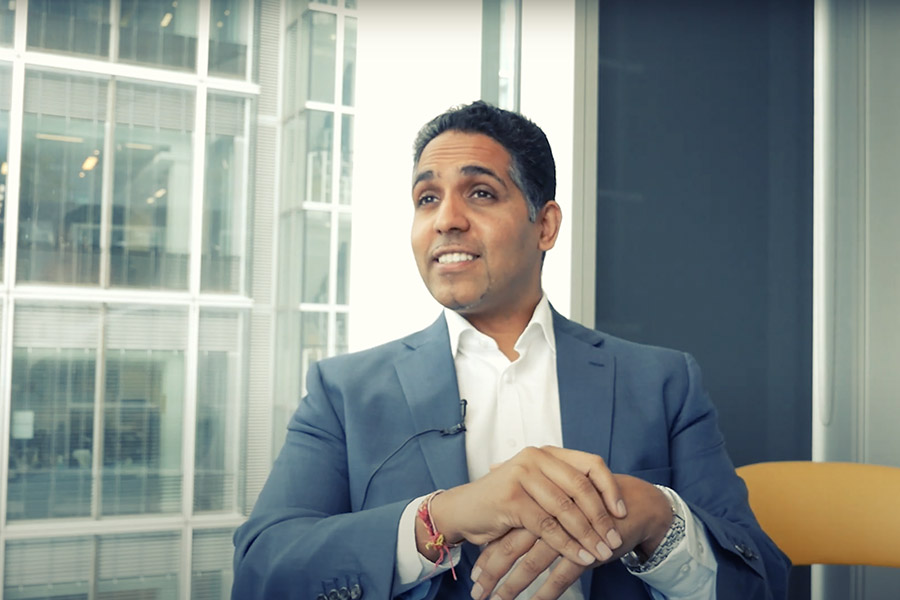
This is an excerpt from the book “The Leadership Lab” by Dr Philippa Malmgren and Chris Lewis (pictured above).

Dr. Philippa Malmgren is an author who writes about megatrends in the world economy. She is especially interested in explaining trends in the economy that people can take advantage of or better prepare for. She is very focused on technology and policy. Rather than just talking about the world economy, she tries to shape it by advising Presidents and Prime Ministers.

Chris Lewis is the founder and CEO of LEWIS. He is a media trainer who has coached senior politicians, business people and celebrities, and a published author and journalist who has written for the Financial Times, The Daily Telegraph, The Times and The Guardian.

You Can’t Fix What You Can’t See

Most of the CEOs I know are confronting the toughest leadership test they have ever faced — getting their business back to normal in an environment that is anything but normal.  

I empathize with leaders who want to restore what was, but the reality is that getting back to normal is not enough. If CEOs are honest with themselves, their previous trajectory was far from what it could be.  

Instead, the more significant test of your leadership will be unlocking new growth by finding truly novel ways forward to include designing new actions that are more impactful than those produced by your competitors.  

As a three-time business leader and CEO, I’ve been in the trenches, like you, and in my efforts to transform organizations, I’ve learned some invaluable lessons. One of the most meaningful being — it is a losing strategy to attempt to succeed tomorrow with yesterday’s thinking and doing.  

Yet overwhelmed leaders continue to double-down on what they know — driving hard and demanding more. Even in the face of unsatisfying results, these leaders continue to defend their current choices, convinced they are on the right path.  

In a world that is demonstrably different today than it was even a year ago, doubling down on what’s worked in the past is not only unsustainable, it represents a failure to learn and adapt. Leaders who refuse to quit using obsolete strategies will find their businesses increasingly marginalized and struggling to compete. 

Meaningful Change Is Hard

Despite good intentions, meaningful change is hard, but not for the reason leaders think.  

As a leader, it might be tough to hear and accept at first, but the cause of most of your difficulties is:  

  1. Your inability to completely see and objectively assess what’s really going on, and  
  2. How what you believe to be true invisibly alters and profoundly limits: the possibilities you consider, the decisions you make, and the actions you take.  

I encourage you to reflect on and recognize the significance of this profound truth — your results are a perfect reflection of how effectively you can interpret the information you can see (versus what’s available to be perceived) and how you choose to act on that information. 

Until you accept this truth and take steps to see more clearly, you will not be able to fully exploit the opportunities to fulfill your intentions with greater precision and ease. Instead, any time your results don’t match your expectations, your incomplete understanding of what is really happening will continue to compromise your thinking, keeping superior alternatives out of view. Until you become aware of what’s available, you will continue to fall back on legacy strategies when responding to setbacks. 

Conventional leaders rarely examine whether their beliefs are effectively guiding them in seeing and seizing opportunities to fulfill their intentions. This often results in leaders unconsciously falling into patterns of more effort on already compromised perceptions. 

What The Extraordinary Do Instead

Breaking the habit of responding to situations based on past experiences requires new ways of perceiving and interpreting. While conventional leaders often believe their outcomes are a result of factors outside their control (e.g., other people’s shortfalls, the marketplace), conscious leaders believe they are responsible and take ownership for outcomes.    

This single difference in perspective creates an entirely different action cycle in the face of disappointment. Rather than let blame past experiences and expectations cut them off from the learning opportunity each disappointment presents, they seize the opportunity to improve.   

Extraordinary leaders understand what few leaders do – that the quality and sophistication of their mental representations enables them to recognize and respond more quickly and effectively, distinguishing their performance from lesser developed peers. 

These conscious leaders have trained their minds to see the world more accurately through years of more deliberate thinking.  Rather than being consumed by busyness, they invest time rigorously identifying and evaluating their errors when faced with unwanted outcomes. Their approach stands in sharp contrast to the vague, unfocused, and surface-level analysis of average leaders whose action bias undervalues and neglects appropriate inquiry.    

Each difficulty becomes an opportunity for these higher-functioning leaders to add more dimension, subtlety, and nuance to their understanding of what is occurring. They recognize that the more they can learn to make objectively accurate assessments, the more likely they are to perceive promising possibilities that were previously invisible. And with improved perception, there is a greater possibility to enact better decisions and design more precise actions for achieving what they want. A virtuous cycle that steadily accumulates and increases the power of their choices.   

There’s another side benefit to this more developed and sophisticated thinking. The earnestness to understand what is real, including seeking the perspectives from teams directly engaged in the work, raises collective confidence, motivation, and commitment from the people who will enact the choices. Including and allowing others to shape their thinking produces a self-reinforcing cycle of more thoughtful and committed action from their teams. After all, without motivated and committed implementation, even the best ideas can fall short.    

Summary  

It’s easy to give lip service to using thwarted intentions and setbacks as opportunities to learn and adapt. In my work with boards, leaders, and teams, I regularly see stakeholders exclaim the virtues of after-action learning but rarely witness conversations that are anything more than surface-level explorations that frequently degrade into judgment and blame, wherein the opportunity for meaningful learning is lost. The robust inquiries that would improve leaders’ clarity remain mostly absent.   

If leaders are to become higher-functioning over time, they must level-up their clarity, understanding and insight to enact more powerful choices. Doing so will inform better decisions, more potent actions, and better ability to fulfill their intentions. 

How to Break Through and Disrupt With Creative Destruction

As a means to success, disruption has become an ambitious goal for many leaders, despite the complex nature of doing it well. Disrupting established ways of doing business yields impressive results, often signaling industry-wide pivots. But it’s not easy to bring about major change, particularly in legacy entities that intrinsically don’t like change. So when it happens, it’s a remarkable feat.

Sometimes innovation requires embarking on something so revolutionary that the old way of doing things becomes obsolete. Creative destruction—a term coined by economist Joseph Schumpeter—dictates that an organization must be willing to introduce a new product or business model that destroys the basis of its current success to remain viable in the future. It’s a radical way of doing business, cannibalizing something that works in favor of advancing the new.

One of the greatest examples of disruptive leadership is Admiral Jacky Fisher (1841-1920), pictured above, renowned for his influence and reform of the Royal Navy, the shield that protected Britain and its Empire. He possessed inexorable energy and towering self-confidence from an early age, rising through the ranks quickly and proving to be a natural leader. As the commander in chief of Britain’s principal battle fleet, he enacted a culture change that brought grossly deficient skills into superb fighting shape. It was a necessary upgrade to the fleet that guarded India’s shipping route, the crown jewel of the British Empire, ushering in a doctrine of tactical and strategic thinking. 

Part of Fisher’s success was due to his blunt nature. He did not play it safe, ignoring seniority and railing against bureaucracy. He stood for change, reform, efficiency, and readiness, breaking down traditional social class barriers. He instituted educational equality regardless of social origins, ensuring that all cadets received proper seamanship and engineering training. And his most important decision was to engage in creative destruction by building an entirely new battleship, the HMS Dreadnought, when he was the supreme commander (“First Sea Lord”) of the Royal Navy (1904-1910). 

Early on, Fisher predicted where naval technology was going. Standard battleships had four 12-inch guns, supported by various smaller-caliber weapons. But Fisher was working with maritime engineers to design a fast new battleship with all big guns. The resulting blueprint featured an impressive ten 12-inch guns and an untried steam turbine engine system that would make the ship 50% faster than standard ships. Pushing the design even further, Fisher wanted to make the vessel unsinkable. To do this, compartments in the hull were re-envisioned to be self-contained with vertical access, rather than horizontal. If a particular compartment were to rip open, the breach would stay contained, and the ship would survive. 

The new ship design was innovative in itself, but so was the manufacturing process. The Royal Navy had never standardized components before, but it allowed production to happen almost three times as fast while driving down significant costs. In fact, this equipped the navy with ships two to three times as powerful, for a mere 10% more. 

Once at sea, the Dreadnought performed admirably and became the flagship of the Home Fleet. It was so revolutionary it made all existing battleships obsolete. Fisher faced a lot of criticism because Britain had a commanding lead over other nations in these “pre-Dreadnought” battleships, which was wiped out with one stroke. Imagine what the reaction would be if America’s supreme admiral would introduce a new weapon that would wipe out the country’s overwhelming lead in carriers. After the Dreadnought was introduced, there was no turning back. The German navy raced to produce their own higher-caliber ships, but it was impossible to catch up. By the time World War I started, Britain had 29 dreadnaughts and prevailed in one of the largest naval battles in history. If not for Britain’s naval superiority, there is little doubt that Germany would have won the war.

Fisher exemplified disruptive leadership by addressing potential problems with new thinking and solutions. He was among the first to demand reforms in technology, human resource management, and tactics and strategy at sea. His purposeful change was founded on careful thinking and experimenting with possible solutions before committing. His decision to launch the Dreadnought is an example of creative destruction and the innovator’s dilemma to allocate resources to improve products incrementally or to use those resources to develop new products that will radically disrupt and possibly make the current operation obsolete. 

Self-Inquiry Is the Key To Leading In The COVID Era

As a nation, we are experiencing the most profound loss of certainty in the 21st century. The incredible loss of reliability and safety opens up an unprecedented moment to reconsider the role and effectiveness of business leadership. With the success of so many companies up in the air, organizations rely on tried-and-true tactics of the past to stay afloat. But resilience and survival depend on our leadership abilities to listen, learn, and act in profoundly new ways.

Leaders in our world are trained to articulate visions, set goals, and oversee implementation. Inquiry within themselves and their teams is not always a key pillar. But, during a time of crisis, the failure to be present with what’s going on in your team, company, or with your stakeholders can make or break a company. Such a radical change, of course, will require all hands and hearts on deck.
The times call for renewal in our commitment to develop skills to thrive within uncertainty, frameworks for collective well-being, and techniques to harness emergent solutions. But what will that take? How will the current leaders of today’s companies and organizations help steward their teams through troubled waters? 

Thankfully there are deep bodies of research and techniques to guide leaders into these liminal spaces of inquiry. While these guiding methodologies are immensely valuable, after building and advising hundreds of companies and organizations, we at JumpScale and LUMAN have relied on four key pillars: self-knowledge, self-regulation, purpose, and organizing. 

Take Time For Self Reflection

Self-awareness or self-knowledge is critical to understanding our motivations, mental states, drives, and impulses. Through introspection, transparency, and self-inquiry, we can tune in to our own core operating systems. To refine your inquiries in this domain, it is essential that you feel responsible and accountable for your success and failures, knowing that every action serves a bigger purpose and vision for oneself and the world. To do that:

  • Where am I telling myself, “that’s just how it is,” “I have to do what is expected of me,” or “I wish things were different  but…” 
  • Do I notice when you make excuses or blame others for your outcomes. 
  • In what areas am I relying on others to take the lead in my life? 
  • How am I maintaining the culture or priorities I wish to change?

Respond To Situations, Don’t React

In our age of uncertainty and change, one’s leadership capacity is in direct proportion to one’s capacity for presence. Self-regulation is practicing all of the skills required for presence, resilience, and connection to others regardless of what is happening. We identified a few core individual competencies that are key to becoming a self-regulating leader.

  • Practice Self Care: Extreme performance requires extreme self-care, as any good athlete will tell you. Keeping your body healthy, flexible, and strong serves as a first step to creating emotional and mental adaptability. Adaptability is about keeping your system dynamic and fluid to weather any changes.   
  • Embrace Empathy: Empathy is the capacity to connect to one’s own and other’s emotions and experiences. It is also the capacity to identify, stratify, and name emotions that supports the management of personal and interpersonal emotional states. 
  • Be Accountable For Yourself and Others: Accountability is making agreements with integrity and being transparent in their fulfillment. In a VUCA (Volatility, uncertainty, complexity, and ambiguity) world, all we have to stand on is our integrity around our commitments. We will need the capacity to make explicit requests and agreements and have tools for what we do when those agreements are broken.
  • Plan For The Future: The ability to see tomorrow. Before building anything, we need the ability to visualize it, to anticipate dynamic changes, and to project into the future. Vision requires learning from the past, anchoring in the present, seeing similar patterns across domains — and feeling psychologically safe enough to imagine what could be.
  • In each of these capacities, it’s essential to ask yourself several questions to know where you stand as a leader.
  • Which of these areas is my weakest link?
  • When do I get derailed and lose my capacity for presence? 
  • How much do I feel part of a larger narrative about the future?

Determine Your Purpose

Everyone has a unique calling, life purpose, and skillset. Self-knowledge and regulation help us trust ourselves to stay focused on what’s most important in every moment. The more you align your contributions and service with your unique purpose and skills, the more satisfied you will be. The Japanese have a beautiful concept, Ikigai, meaning “A reason for Being.” Your Ikigai sits at the crossroads of your passion, purpose, skills, and what you can get paid to do. Purpose serves as a timeless anchor allowing for stability in an uncertain world. It serves as a decision-making tool for employees on all levels of the organization and creates a sense of urgency.

There are many inquiries and practices to validate our purpose. Ask yourself this:

  • What is the unique contribution I am here to make?
  • What keeps calling me?

Evaluate your beliefs about working within your purpose. Many of us harbor limiting beliefs that tell us our gifts are not valuable. Find those you admire, not to follow their path, but to fully understand the path that inspires you.

Examine The Organization Of Your Company

Clarity of self and purpose in an ever-changing world is a tall order. Building the skills for resilience and presence as we take on challenges larger than ourselves requires courage. But, the ability to create and validate an idea, mobilize people and resources for a project can bring joy and a sense of accomplishment, even while suffering and struggle. While traditional organizational models are still common, we are quickly moving toward models of shared leadership and self-optimizing systems. We are in a time of entirely new ways of organizing ourselves. As we evolve where and how we work, we will need to evolve how we organize and lead. What works best for your company? Ask yourself the following:

  • How am I building a learning organization that is adaptable and resilient to the challenges ahead?
  • What is my company’s Theory of Change, and does it align with your organizational model?
  • How am I focusing on my people as part of what makes a successful organization and not an afterthought?
  • How am I supporting my team to innovate continuously?

Call To Action

None of us have a crystal ball to predict with accuracy what the future might bring.

While these pillars are helpful starting points, each organization has its unique vision, mission, and values to reflect on and build from. For leaders to be of service to their organizations throughout these deep processes, their ability for self-inquiry, self-care, and resilience will be put to the test. They will be stretched. There are no honest short-cuts. Many teams will find creative ways to distribute responsibilities, act quickly to solve immediate problems, and keep leaks from sinking the ship. Yet anyone who steps into a leadership role will need to accept the importance of this ongoing inquiry process to help them stay present to changing circumstances.

Our invitation to you, do not use these times as a measure to judge your failings but as a calling to your greatness. Join our ongoing inquiry as we commit to strengthening our teams and striving toward a thrivable future – together.

Tirza Hollenhorst is an entrepreneur and a futurist. Trained as a biologist and engineer who previously built a technology company and facilitated international, cross-sector collaboration around corporate responsibility. Tirza is the founder and CEO of LUMAN where she brings her experience in business, science, and innovation together to transform organizations and prepare them for the future of work. 

Daniel Roth is an experienced social entrepreneur, movement strategist, and integrative healthcare professional focused on sustainable development, indigenous cultural revitalization, and healing arts. Over the last two decades, he has launched over a dozen non-profit organizations, campaigns, and coalitions. In 2018, Daniel founded JumpScale, a wellbeing-oriented investment advisory firm and innovation lab. Prior, he served as Director of the Cornell Campus Sustainability Office, started New York’s first car-share business, and served as a Board Member of the U.S. Partnership for Education for Sustainable Development. 

3 Leadership Characteristics That Will Drive Your Innovation

The proverbial wisdom says that “you can have all the riches and success in the world, but if you don’t have your health, you have nothing.” Right now, everything hinges on our health. Our work, our wealth, our future.

As the sickest nation in the world with COVID-19, the United States is heading towards having “nothing.” The U.S. is leading the world in deaths by the coronavirus, and people are left with “nothing” as they lose their jobs. It is heartbreaking and scary. Simultaneously, politically, the U.S. is actively separating from international collaboration efforts and further isolating itself, and, consequently, losing its status as the world’s leading democracy. Are isolationism and protectionism also going to cost the U.S. to lose its top-ranking ingenuity? 

The warning signs were already in the air when the latest Global Innovation Index 2019 (1). was published: “Waning public support for R&D in high-income economies is concerning given its central role in funding basic R&D and other blue-sky research, which are key to future innovations— including for health innovation.”

At its best, science shows its transformative power when novel ideas and practical solutions are achieved under pressure, constraints, and with minimal resources. The pressure to quickly find solutions to the deadly coronavirus pandemic has pushed scientists and engineers to rethink everything. Interesting “frugal innovations” have emerged as scientists reuse and repurpose resources and deploy prototypes rapidly (2). Think of a team in a global computing consortium (3). led by Amanda Randles, a biomedical engineer at Duke University, who developed airflow simulations for a new device to split a ventilator between two or more patients in record time. This created much-needed extra capacity during the COVID-19 surge. 

Scientists gather — now mostly online — to pool their collective intelligence, and engage AI to innovate how to tackle this nasty virus. For example, a team led by assistant professor of biomedical engineering Jessilyn Dunn and Ryan Shaw, an associate professor of nursing and director of the Health Innovation Lab at Duke University, designed an app called CovIdentify to explore how data collected by smartphones and smartwatches could help determine whether device users have COVID-19. The app is expected to help indicate early symptoms of COVID-19 by collecting biometric information, like sleep schedules, oxygen levels, activity levels, and heart rate.

Because of human ingenuity, we are surrounded by miraculous things that have elevated our living standards. We’ve come a long way from the caveman times. The human mind is a powerful organ – but it loses its expansive power to innovate in isolation. Innovation is not an individual endeavor; it is a result of dynamic collaboration. 

Three human characteristics drive the innovation activity even under the direst circumstances. 

1. Curiosity

Foundational to science and all human progress is curiosity. Without mind-opening questions like Why? Why not? What if? the human race would have gone extinct a long ago. (Thankfully, some of the adult population retains a three-year-old’s curiosity throughout their lives!) Curiosity is often thought of as an individual personality characteristic, but it can also be a marker of a team or an organizational or national culture. Embracing curiosity, leads to the pursuing of knowledge and valuing of science. 

2. Courage

To actualize innovation, however, curiosity is not enough. While curiosity opens the mind, the energy needed to act on the new knowledge requires courage. Think of how in The Hobbit, Bilbo Baggins asks Gandalf something like: “You ask me to go on this enormously dangerous sounding journey, but can you promise me that I will return?” Gandalf admits that there are no guarantees for Bilbao’s safe return. Instead, he says, “But if you will come back, you will come back changed.” Creating is for the brave. 

3. Collaboration

While you can create alone, you cannot innovate alone. Innovation is always a result of Collaboration. The collective intelligence of humans is exponentially more powerful than the work of any one genius. While many organizations claim “collaboration” as a core value for them, it is rare to practice it effectively. It’s hard to stay collaborative in fiercely competitive environments. Collaboration fails when the pressures of scarcity rule. When we believe that there isn’t enough time or money to do things collaboratively – we shrink. A scarcity mindset only leads to short term strategies for the survival of the fittest rather than cooperation and sustainable solutions in the long term. If leaders were more skilled at collaboration, we’d see more resource sharing, innovation, better leadership, more inspiration, and the human capacity for innovation would expand, especially under adversity.

Only with curiosity, courage, and collaboration can we imagine new possibilities and create novel solutions. Collaboration creates Hope. Like the autonomous spacecraft mission led by a 33-year scientist Sarah Al-Amiri (4). called “Al-Amal” or “Hope” which was recently launched to Mars due to UAE and Japan’s collaborative effort. As we ramp up our collaboration for interplanetary research, let’s hope our leaders continue to focus on international cooperation here on Earth. Our health – and lives – depend on it. 

  1. https://www.wipo.int/edocs/pubdocs/en/wipo_pub_gii_2019-intro3.pdf
  2. https://www.nature.com/articles/s41591-020-0889-1.pdf
  3. COVID-19 High-Performance Computing (HPC) Consortium
  4. https://www.nytimes.com/2020/07/14/science/mars-united-arab-emirates.html?smtyp=cur&smid=fb-nytimes&fbclid=IwAR0CKSYYld0KYdjNDQ5QoGSIUnCFf8g6lBqSbY5Rx63eLqudOGZpeDPqvpA

28 Inspiring Leadership Quotes

Leaders throughout history have inspired us to take action, to become our best selves, to create a better world, and to ensure a brighter future. Their legacies live on in the quotes they gave us to live by. Here are some insights from leaders across the ages whose words continue to inspire us today.

“Never doubt that a small group of thoughtful committed citizens can change the world; indeed it’s the only thing that ever has.” — Margaret Mead

“I expect to pass through this world but once. Any good therefore that I can do or any kindness I can show, let me do it now. Let me not defer or neglect it, for I shall not pass this way again.” — Stephen Grellet

“Sometimes you have to let go of the picture of what you thought life would be like and learn to find joy in the story you are actually living.” — Rachel Marie Martin

“It’s not the strongest of the species, nor the smartest of the species that survive, but the ones most adaptable to change.” 
Charles Darwin

“People will forget what you said, people will forget what you did, but people will never forget how you made them feel.” 
Maya Angelou

“Things turn out best for the people who make the best of the way things turn out.” — John Wooden

“Say Yes, and you’ll figure it out afterwards” — Tina Fey

“Out beyond idea of wrongdoing and righting, there is a field. I’ll meet you there. When the soul lies down in that grass the world is too full to talk about.” — Rumi

“Whatever you can do or dream you can, begin it; Boldness has genius, power, and magic in it.” — Goethe

“In the end, we only regret the chances we didn’t take.” — Lewis Carroll

“Folks are usually about as happy as they make their minds up to be.” — Abraham Lincoln

“It always seems impossible until it’s done.” — Nelson Mandela

“There is nothing to fear but fear itself.” — FDR

“Nothing is either good or bad, but thinking makes it so.” — Shakespeare

“Never let a good crisis go to waste.” — Winston Churchill

“Strive to be an uncynical force, to be a steward of substance.” — Maria Popova

“Obstacles are those frightful things you see when you take your eyes off your goal.” — Henry Ford

“Expect not and thou shall not be disappointed.” — Chariji

“In any given moment we have two options: to step forward into growth or step back into safety.” — Abraham Maslow

“Only those who will risk going too far can possibly find out how far one can go.” — T.S. Eliot

“The World is full of difficulties, but its even more full of hope!” — Bob Goff

“It’s not what you get into, it’s how you get out of it.” — Miles Davis

“If one moves confidently in the directly of their dreams, and endeavors to live the life which he has imagined he will meet with a success unexpected in common hours.” — Henry David Thoreau

“Don’t ask what the world needs. Ask what makes you come alive, and go do it. Because what the world needs is people who have come alive.” — Howard Thurman

“It is during our darkest moments that we must focus to see the light.” — Aristotle

“Only the ideas that we actually live are of any value.” — Hermann Hesse

“The problem with real jobs…was the lack of opportunity to dance.” — Puma Sneakers

“May you always be Courageous, stand upright and be strong. May you stay forever young.” — Bob Dylan

0