Do you remember learning the alphabet? Of course not but I guarantee that you learned by practice and that you failed many times before you succeeded.
As we will soon dive into a new year with renewed vigor, stop for a moment and take stock of your habits. Are you failing enough? If all of your efforts are resulting in home runs, you might need to play a bigger game, a game based on your powerful identity.
In Art and Fear, artists David Bayles and Ted Orland describe an interesting experiment conducted by a ceramics teacher who was curious about the effect of practice on skills. At the beginning of the semester, the teacher divided his classroom into two groups. In the first group students were told that they could earn better grades by simply producing more pots regardless of the quality. If they produced 50 pots, they would get an A, 40 would earn them a B, 30 a C, and so on. The second group was told that their grades depended solely on the quality of the pots they produced.
Predictably the first group got right to it, producing as many pots as possible, while the second group was more careful and considerate of the best ways to make the best pots.
The teacher was surprised when he discovered that the students who made the most pots, the students who were graded on quantity rather than quality, also made the best pots.
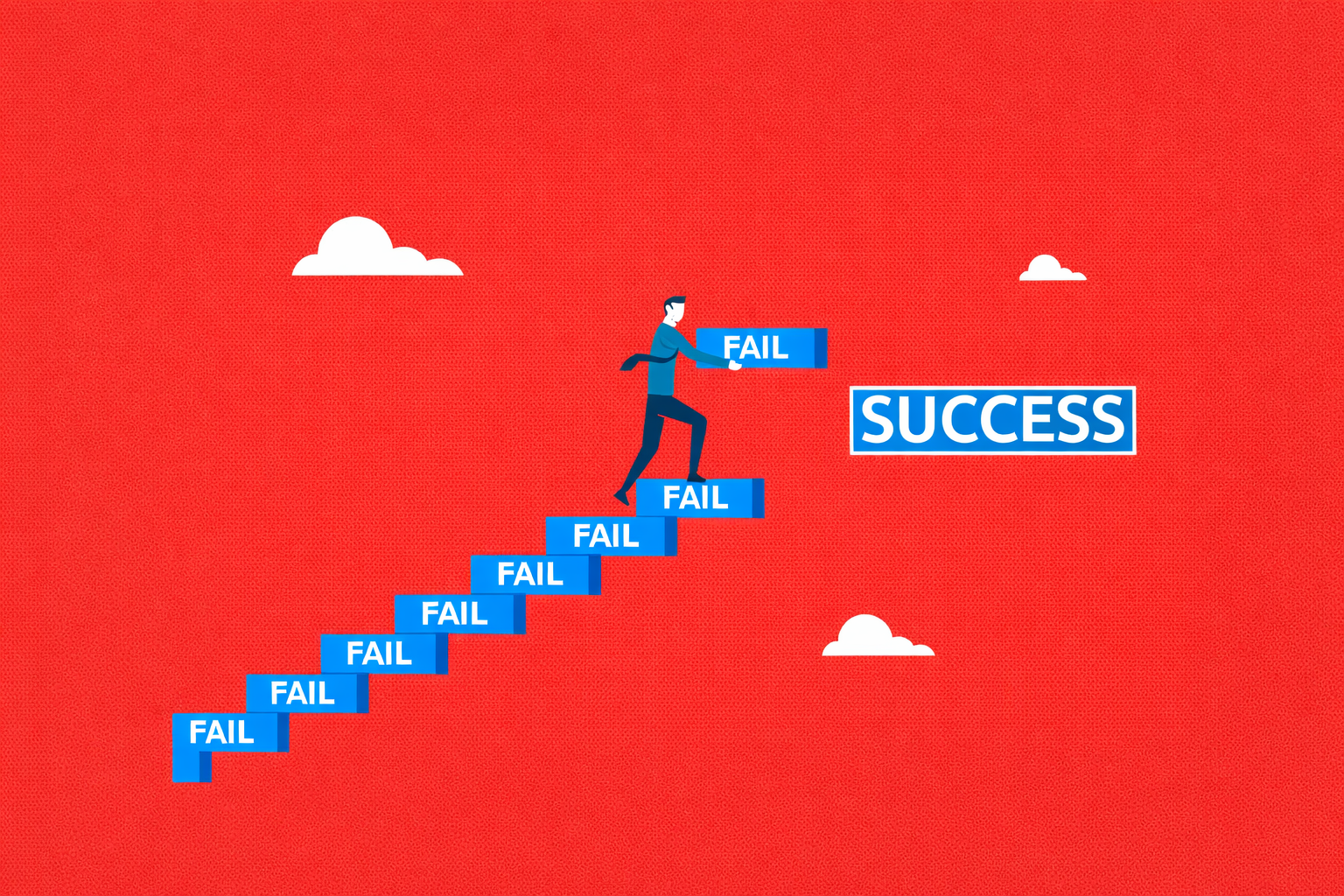
You see, the practice of making pots naturally resulted in better quality. The students in the first group became more familiar with the intricacies of the kiln and the ways in which various positions affected the aesthetics of their pots. You could say it this way: The students who failed the most succeeded the most.
Although Thomas Edison is famous for inventing the light bulb, he did no such thing. The light bulb was actually around for more than 50 years before Edison perfected it. He just solved two seemingly intractable problems: the expense and the fast burnout of the first incandescent bulbs.
Edison’s approach was unique. He was not afraid to fail until he succeeded. The number of times he tried is legendary. “I have not failed, not once. I’ve discovered ten thousand ways that don’t work.” —Thomas Edison, inventor and businessman
What would be worth a thousand failures to you? What will you keep working on, no matter how many times you must try to succeed? If you don’t have an answer, it’s time to engage in some introspection. It’s time to find out who you are and let your passions reveal themselves.
You can’t predict when your inspiration will happen. This is why it is so important to make sure that you are aware of yourself and what you love. This is why it matters so much that you organize your life around your identity. When you do that, opportunities for inspiration will show up, but if you are living someone else’s idea of success, your natural, inborn, powerful curiosity will be thwarted. You won’t discover why you are here. Nothing will be worth trying a thousand times, and that, my friends, is a tragedy.
In Fail Fast, Fail Often, the authors describe the experience of a Tibetan lama, who found that the saddest thing about Americans is that they cheat themselves out of the enjoyment of their lives. They don’t follow their passions. They often ignore their inner voice when they are drawn to something.
What are you ignoring because you are afraid? If you were born to write, pick up that pen and write badly. If you always wanted to learn ballroom dancing, sign up for a class. If you have an inkling about a project that might transform the culture of your company, follow the example of the greats, and instead of thinking about it, try just a small part. Get feedback and try again. Don’t be afraid to fail your way to mastery.
When you plan this way, the results are predictable because you’re using real-world feedback as guidance for what’s next. And don’t wait for the mood to strike or the time to be right. “Curiosity has an expiration date.” —Babineaux and Krumboltz
If you procrastinate, your reasons for stopping, buried in the inaccessible limbic portion of your brain, will rear up and stop you from not only realizing your dreams, but from becoming the kind of person who is excited about life. If you know who you are and you are following your heart, your failures can teach you how to succeed. When you organize your life around your identity and follow the inner guidance that results from thoughtful introspection about yourself and your life, you can trust that your actions will result in eventual success.
It’s a good idea to make an exploration of what doesn’t work as important as the happy discovery of success. “I have no special talents. I am only passionately curious.” ―Albert Einstein, scientist
Make a New Year’s resolution to become you. If you know who you are, you can explore the ways to get where you want to go with the kind of self-confidence that is born from thoughtful, continuous introspection, practice, and feedback.
I know who I am. I am clear about what I want. I will not give up until I get there. Learning means I don’t know, so I must fail until I succeed.
Learn something new this year. Measure your progress by your failures as well as your successes. That will allow for the glorious year meant for all of us. This is the kind of courage that can change the world. “To live a creative life, we must first lose the fear of being wrong.” ―Joseph Chilton Pearce, author
I was half-asleep, shuffling into the kitchen in a t-shirt and shorts, trying to mix formula for my hungry baby boy. He’d been waking often—casein intolerance—and I was beyond exhausted. In the dim light, I kept fumbling the measurements. Too much water. Then not enough. Again and again, wasting water and time.
And that’s when the question hit me, clearer than the baby’s cry: Why can’t my faucet just help me measure the exact amount I need?
That moment of frustration cracked open an idea—a device that could connect water assets at the point of use. Droople was born in that haze of fatigue and fatherhood.
But what really changed wasn’t the idea. It was me.
At the time, I was head of IT audit at a major bank. It was stable. It paid the mortgage. It supported my two eldest kids’ pensions. Leaving that security for a half-formed idea? Madness.
But something inside me was stirring—a hunger for purpose. I wanted to wake up at night not just because a child cried, but because a mission called.
Still, I was scared.
I had four kids then, and I worried about investing too much in this “fifth child,” Droople. Would I fail them? Could I be a good father and a founder?
That’s when my wife, Aurélie—my everyday backup in life—gave me the reassurance I needed. She reminded me that my role as a father wasn’t defined by hours clocked, but by presence and purpose. That I didn’t have to choose between the people I love and the change I wanted to make.
And suddenly, the pieces started to align.
As a boy growing up in Constantine, Algeria, I knew what water scarcity meant. I watched my grandmother and mother fill tanks at night because the pressure couldn’t reach our 12th-floor apartment. Water was never just a utility—it was survival. Dignity. Memory.
So when Droople emerged, I wasn’t just building a company. I was closing a loop. Connecting my past to my future.
In that process, I discovered something else: I grow best in discomfort.
Choosing to leap into the unknown showed me how far my commitment could carry me. It stretched me into roles I’d never imagined—founder, yes, but also more conscious father, more present husband, more grounded human.
I remembered that I’ve always transformed in pressure: from a schoolboy who struggled to make grades into a computer science engineer at EPFL. From fisherman and cold-call salesman to teacher, plumber, banker, auditor. Every chapter taught me something.
But the biggest truth?
Whether I’m a dog or a wolf.
The dog in me likes comfort, validation, approval. But the wolf? The wolf is hungry, uncomfortable—and at peace with that. Because out there, in the wild, is where growth lives.
And now, strangely, I find myself circling another turning point.
Maybe my greatest test as a leader is yet to come—not by building, but by letting go. Maybe Droople needs someone new to take it further, someone with fresh hunger. Maybe my role is evolving.
It’s hard to admit, but I’m not afraid. Because this isn’t about clinging to control. It’s about listening deeply to what’s next. And trusting the ones I’ve built with.
So to any CEO reading this—especially the ones secretly wondering if they’re enough:
Dream big, but achieve little every day and be proud.
We founders can be brutal on ourselves. We forget to look back. But it’s not about speed. It’s not even about growth. It’s about becoming the best version of yourself—slowly, steadily, intentionally.
If you pass that test, the terms of success become yours.
The message below was written several years ago but still rings true today with even more relevance given that global leadership affects so many lives, so we thought it prudent to rerun.
Do you ever wonder why we choose the leaders that we do?
Successful people win leadership positions based on their track record of high performance in comparable roles. What the candidate claims they will do is meaningless compared to what the candidate has actually done in the past. Company leadership checks the candidate’s references and public records to make sure there is no trail of litigation, burned bridges, or bad credit history.
Imagine what a disaster it would be if business leaders were chosen the same way voters do. We often elect government representatives with little or no experience governing. Instead of choosing the most qualified candidate, we often vote for the best salespeople, the best campaigners, who analyze opinion polls and tell us what we want to hear. Then we allow those unqualified people to appoint even less-qualified people (often donors) to key positions throughout our government. Would anyone invest in a public company that operated that way? Would such a company ever survive long enough to go public?
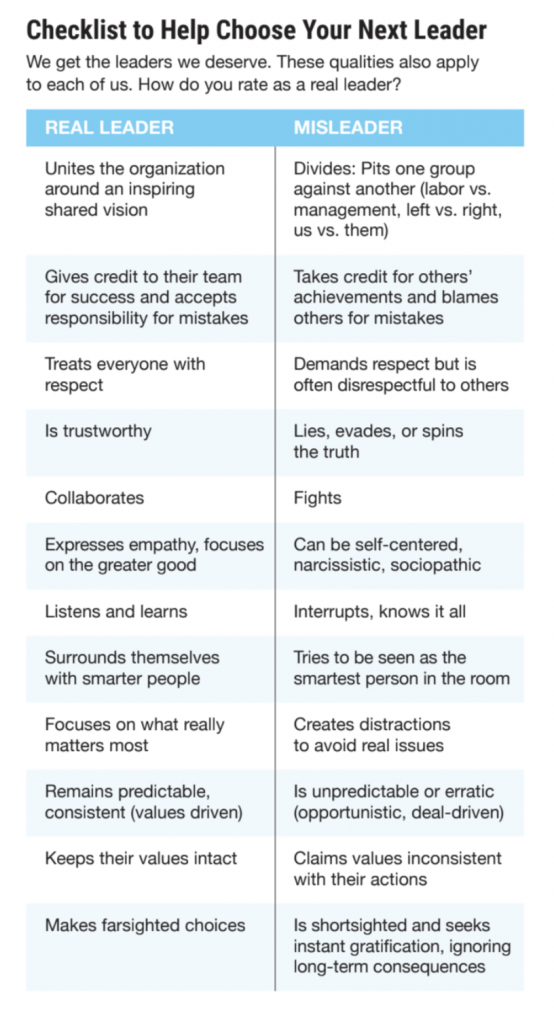
We have the power to be more thoughtful about choosing our leaders. There is too much at stake to make emotional decisions about who we “like” the most. In the last 10 years, Real Leaders has interviewed hundreds of successful leaders from all over the world. We often ask what they see as the difference between a real leader and a misleader. Their answers may be helpful for all of us to consider whenever we are hiring or voting for anyone in a leadership position. It’s up to us to choose real leaders in all sectors and to send the misleaders packing. Imagine the impact farsighted leadership could have.
Novogratz talks leading a moral revolution and helping pioneer impact investing, an industry that just might save the world.
By Kathryn Deen
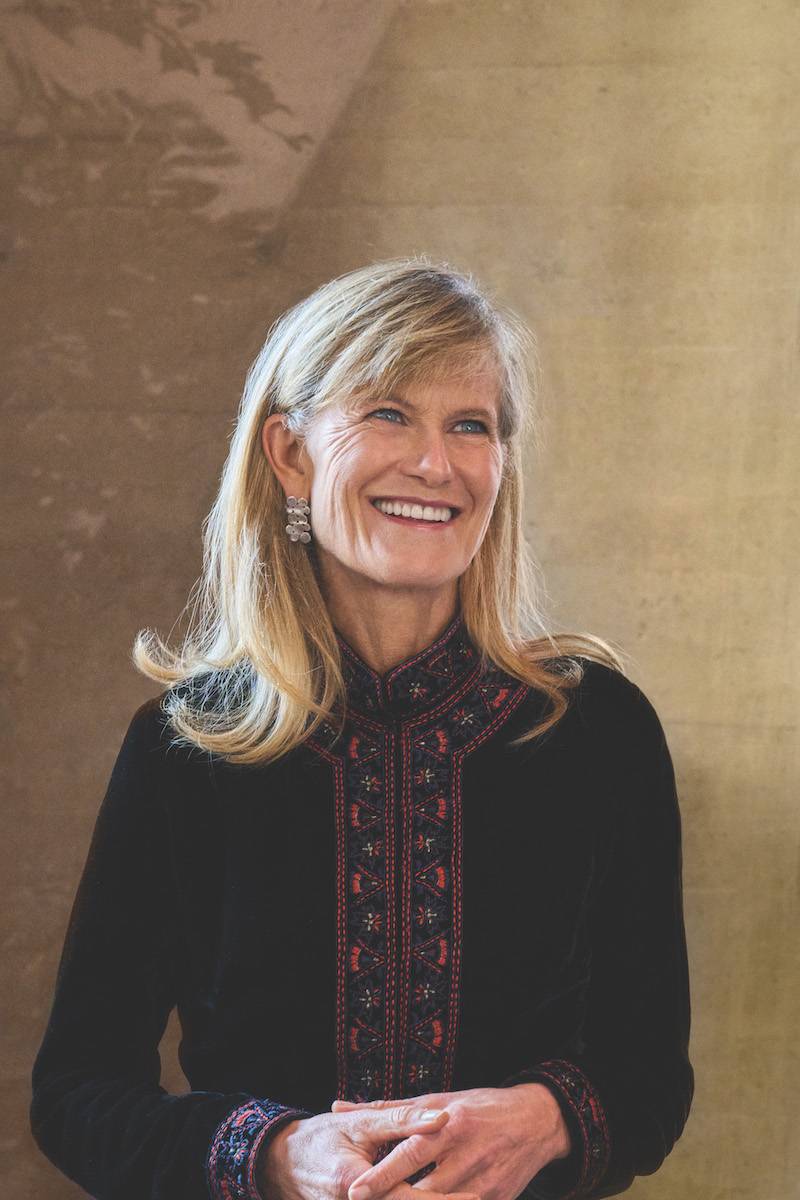
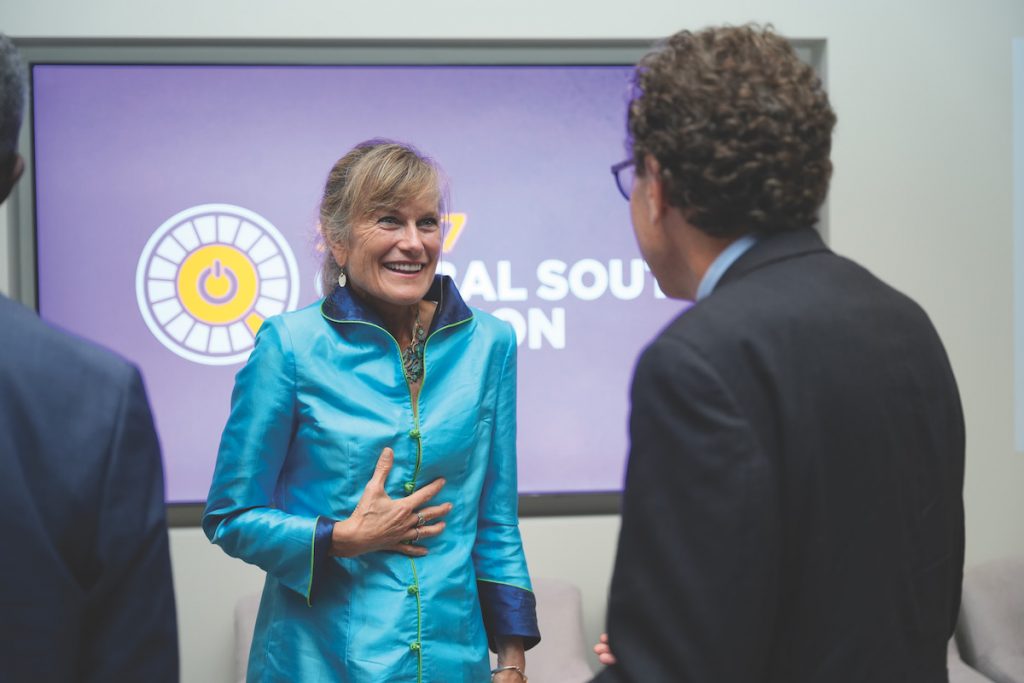
If you could use a dose of hope, look to Jacqueline Novogratz. Hers is not some vague, pie-in-the-sky hope. It’s hard-edged and backed by action and results. This impact investing pioneer has been beating the drum for lifting people out of poverty for nearly 40 years, and her company, Acumen, has helped lead the way for 23 of those years.
Novogratz founded Acumen in 2001 during the early days of impact investing. Acumen invests in and supports nonprofit and for-profit companies and individuals fighting poverty and restoring dignity for long-term change. It has impacted over half a billion people and earned a spot on the 2024 Real Leaders of Impact Investing list.
She shares her well-earned lessons and most valuable insights on using money as healing in this candid conversation with Real Leaders.
Real Leaders: You helped establish impact investing as a new sector. What was it like to be at the forefront of this movement?
Jacqueline Novogratz: Nearly 50 years ago, pioneers like Muhammed Yunus, founder of the microfinance bank Grameen, and Ela Bhatt, founder of the Self-Employed Women’s Association, saw the power of using tools of business to make change. They made small amounts of credit available to very low-income women who otherwise would have had to pay usurious rates to many lenders.
I came in on this wave in 1986 when I moved to Rwanda and co-founded the nation’s first microfinance bank. That experience taught me not only that a small group of people could make a big amount of change, but that making markets work for the poor was essential to building nations. That thesis — using tools of business to solve problems of poverty and build a world of dignity — has been my life’s work.
The early days of establishing an entirely new sector can be tough. I founded Acumen in 2001 and can remember countless meetings with captains of industry who would explain with great certainty that my understanding of business was muddled. “I make money on one hand, and I give it away on the other” was their conventional wisdom. I found little curiosity among them regarding what had failed the poor and whether there might be new ways to solve problems that were more effective either than maximizing financial returns or giving charity away. Gandhi says, “First, they ignore you, then they laugh at you, then they fight you, then you win.” In 23 years our investments have impacted the lives of more than half a billion people. Patient capital and impact investment have grown into a multi-trillion-dollar market. Change is possible if you have the grit and resilience to keep working at an idea whose time has come.
RL: Tell us more about the new approach you took to solving poverty with Acumen’s patient capital model.
Novogratz: Our financial systems are constructed based on short-term thinking that no longer serves — if it ever really did. Patience is a revolution. For entrepreneurs to build business solutions serving very low-income people takes experimentation, sometimes failing and getting up to try again.
Early on we saw a growing group of entrepreneurs who had what we call moral imagination — the audacity to imagine the world that could be and the humility to interact with the world that is. They also had the resilience and grit to stick with solving a problem. We were willing to take bets on those entrepreneurs. Entrepreneurs see the possible in the impossible. They recognize opportunities in every problem. When it comes to low-income people, they see customers who want to change their own lives instead of passive recipients waiting for charity.
Acumen could bring long-term, risk-oriented patient capital as well as access to our social capital — networks, expertise, and knowledge.
When we started I thought patient capital meant seven to 10 years. I now see it as 10-20 years. That’s what it takes to build markets in places where people are very low-income, where there is very little infrastructure, where there’s often very little trust, where it’s hard to build talent pools that you can afford, and where there are often high levels of corruption.
RL: How has impact investing changed since you started?
Novogratz: When I started there was no impact investing space. So in the early years, we were one of the only games in town, and we were very defiantly focused on using philanthropy, investing it as long-term equity and debt. Accounting for the impact we made, any money that we get back gets reinvested.
There was an early set of philanthropists who had their own money and thought, “I can also do this,” but they didn’t want to give up returns. So they would set up capital pools with the same expectations — 20-23% returns — despite the fact that they were trying to solve world hunger. It took time for the industry to acknowledge that we need different pools of capital to solve different kinds of problems.
As the impact sector grew in size and sophistication, we grew in size and skill. Today we manage philanthropic-backed patient capital investments as well as a portfolio of larger for-profit impact funds. Those funds are structured for the problems they address. For instance, the Acumen Resilient Agriculture Fund is a $58-million blended fund with a first-loss component and significant technical assistance support. We’re working on a $250-million facility composed of philanthropy, debt, and equity to bring off-grid solar electricity to those considered hard to reach in 16 of the most fragile African nations. Our investment portfolios represent more than half a billion dollars in assets. Through all of it, we are committed to seeing investment as a means to solve tough problems of poverty — and not as an end in and of itself.
RL: Whom have you looked up to most in the impact investing space?
Novogratz: Ceniarth has always been willing to take outsized risk, move first, and go where others will not dare. Omidyar played a very strong role in this field. Currently the Green Climate Fund — the world’s largest climate fund funded by major governments around the world — is a brave partner with a commitment to fighting climate change. They are a real leader in structuring blended facilities so that we can reach the hardest-to-reach individuals with electricity or agriculture. IKEA Foundation also has been very innovative in supporting us to build new models in energy access, helping build green pathways out of poverty using new and inclusive business models. Without such partnerships, we would not have been successful.
RL: Is impact investing here to stay?
Novogratz: I once told a prospective philanthropist in Acumen about one of our companies, d.light, which is an off-grid solar energy company that has now reached over 160 million people with solar light and electricity. The philanthropist said, “I love the work that you do, but are you a real investor — because you still raise philanthropy and not just returnable capital?”
It really shook me. I said, “Help me understand what your definition of a real investor is.” He said, “I want at least market rates.” I said, “Help me understand what a market rate is when there hasn’t been a market and you’re the first one to create one.” And he said, “I would at least want 15-20% returns.” I said, “Here is the rub. The world continues to look at ‘real’ simply as the financial returns made to the investor. We are in a world where we have to deal with climate change and inequality, and we both believe that the private sector is a critical player in solving those problems. Yet when will we get to a point when real investors are rewarded for the good they do — the impact they create, the forests they conserve, the people they employ? To me, that’s what real investing is.”
I look forward to a day when we no longer need words like impact investing, social enterprise, and patient capital — where those modifiers are just assumptions and we don’t continue to put on pedestals players who might destroy value to the natural worlds and diminish human beings in service of shareholders alone.
RL: What metrics must the impact investing industry align on?
Novogratz: We need to have a conversation in the business and investing communities about the importance of subsidy. Look at Europe and the U.S. Both regions subsidize their agricultural and energy sectors. No nation has electrified without significant subsidy. Yet when it comes to the poor, investors often recoil at any hint of subsidy. We’ve never been more unequal. I was just in Kenya, where the nation is experiencing devastating floods due to climate change. Making rural electrification work for the poorest people will require businesses that are supported by wise policy and effective financing. That requires new ways of thinking and acting.
When it comes to building a company that serves the poor, affordability is everything. It’s right at the heart of how low-income people make decisions. Think about solving a problem like deforestation. Peter Scott was literally a tree hugger in the 1990s trying to save forests in Africa when he finally realized that the root cause of deforestation in Africa comes down to a few things, but the No. 1 reason is these little cookstoves that low-income women cook on. They cut down trees or use charcoal, which is made from trees. He realized that to save the trees, he had to build a cookstove that women can afford. That was hard to do because very poor women can’t afford a $40 unit, which is essentially the lowest cost that will reduce your fuel consumption by 50-60%. We were the first investor in his company, BURN Manufacturing. This year BURN will have sold 4 million cookstoves, saving 20 million trees, employing over 2,000 young people, and impacting over 20 million human beings whose health is changed, whose income is significantly increased, and whose footprint, which is already very small, is reduced even further.
We need more measures around the environmental impact that a company is creating, and we need to internalize those costs in the environment and for human beings.
Chocolate is a $100-billion industry built off 5 million cocoa families, 90% of whom make less than $2 a day. We will not have high-quality chocolate unless we find ways to fully integrate a supply chain so that those smallholder farmers are seen, valued, and earning a wage that allows them not to live in poverty. It shouldn’t be that difficult, yet we still measure a company’s performance in ways that make farmers price takers — whatever the global price is, here’s the price I will pay you even if it keeps you in poverty — rather than price makers valued for what they contribute. None of us wants to keep somebody in poverty every time we buy a chocolate bar.
RL: What is Acumen’s process for making investing decisions?
Novogratz: If you sat in on one of our investment meetings in the very beginning, it would look like serious investors sitting around the table.
Our manifesto is where you can begin to see why we are different. The first question we ask is, “Does this investment reach low-income people?” It starts by standing with the poor. “Is it structured in a way to give the company the best chance of succeeding in the long-term? And what is the character of the entrepreneur in whom we are investing?” At some point our tagline became, “At Acumen, we invest in character.” Why character? Because when you are trying to make significant change in these markets, you often end up operating in very corrupt environments.
We need to find those entrepreneurs who not only have the vision but also the grit, resilience, persistence, and moral imagination — who see low-income people as full human beings and therefore have the skills of patience, deep listening, and knowing how to connect across identities — to build companies that might start very small like Ziqitza HealthCare with nine ambulances and grow to bring 50 million people to hospitals across India.
Dave Ellis and his partner, Joe Shields, had never held a live chicken when they decided to start EthioChicken, a poultry company in Ethiopia. We were their first investor. They understood that farmers don’t have the capacity to do all it takes to raise a few baby chicks to maturity, but once a chicken is grown, it will forage for itself and provide eggs — an important source of protein — even during droughts. So the entrepreneurs built a business that employed agents who would buy 1,000, day-old chicks and work night and day to raise them to maturity. They would then sell them to farmers in tiny batches, and the farmers would sell the eggs that their families didn’t eat to local markets.
We accompanied that company with our patient capital for probably eight years. They paid us back, and then one of our for-profit funds, the Acumen Resilient Agriculture Fund, invested another round of capital in the for-profit impact space. Under the holding company Hatch, EthioChicken is now operating in nine African countries. The company works with 16 million agents, some of whom make $10,000 or more per year. Last year the company sold 43 million chickens to more than 3.5 million smallholder farmers who, in turn, sold 3.5 billion eggs. In Ethiopia they’ve been credited for significantly reducing childhood malnutrition. It’s thrilling for me to see Ethiopians building capacity in new markets like Rwanda or Ghana. They are creating local jobs, and they are creating value, not extracting it.
RL: Let’s talk about some hard-earned lessons when things didn’t go right.
Novogratz: We have a failure report. It’s so important to us. We make it public. It is an accountability mechanism for us, for our companies, for other impact investors, and for our peers. If we want to call ourselves a learning organization, we better not just have stories of how good we are. You learn more from your failures. You grow more from the hard times as a leader, and that’s the reality of risk-taking and investment.
About 25% of our investments fail. What’s interesting is most of those companies are still functioning, but we exited our investment. I would say there are typically three reasons for our failures.
One is the character issue, where you might discover two sets of books being kept. We have very few of those examples, but when they occur, they break your heart.
The second is when we’ve been too early on the innovation curve. In Pakistan we were the first investor in micro-health insurance without fully understanding the customer — that people didn’t want to pay for something they couldn’t see that might happen in the future if they got sick — so we wrote off our investment. But what was exciting about that is we watched a whole industry then build off of that experience and become a real leader in micro-health insurance for low-income people.
Third, early on we sometimes were too excited by the technology without fully understanding the distribution systems and low-income people’s preferences. A hearing aid that was $30 and operated as well as a $3,000 model — fantastic, but if you don’t have a distribution system, and if a low-income farmer doesn’t see the connection between that hearing aid and working in the field, you’re not going to have a market.
We’re a lot smarter now. We still make mistakes, and in fact, we have an adage in Acumen that if you aren’t willing to fail, you will not succeed.
RL: What is your outlook for the future of impact investing and Acumen?
Novogratz: What I’m excited about for the future is to see more players in this space and to support young people who deserve opportunities to build their ideas into reality. I’m committed to bringing forth practices of moral leadership that are not about righteousness or a set of rules coming down from on high but are about what it actually takes to operate in a world based on the growing recognition that we are connected to all human beings and living things, that our action and inaction can impact people every day, and that we have it within us to solve these problems.
However, the new set of skills needed are not the ones I learned in business school. They are focused on what we sometimes think of as soft skills: deep listening, holding opposing truths in tension, seeing our identity as a way of connecting with each other rather than as a way of dividing one another, telling stories that are truthful in ways that matter in a world of fake news. I believe that these skills of moral leadership are the new hard skills.
So how do we lift these hidden heroes, these new business models for a generation that is looking for more than inspiration? How do we show up as leaders and point to those people who are trying not to tear down but to build up?
I worry sometimes that investing and business get a bad name, some of it deservedly so. How do we get under all these labels and instead use the tools of business, the tools of capital in service of our world? I see how much change is possible, and I also don’t want people to forget that in my lifetime, we’ve gone from a world with 40% of people living in extreme poverty to 8%. I’ve seen the 40 energy companies we’ve invested in reach more than 230 million people with affordable solar light and electricity. Change is possible. You just have to work for it.
RL: What is your definition of a real leader?
Novogratz: A real leader is here to serve. A real leader asks herself not, “What am I doing in service of myself?” but, “What am I doing in service of others?” A real leader listens. A real leader learns how to partner. A real leader walks with humility and never lets go of their audacious dreams to build a world they know is possible.
Use the power of markets; don’t be seduced by them.
Partner with humility and audacity.
Accompany each other.
Tell stories that matter.
Embrace the beautiful struggle.
Novogratz’s Top Practice
As told to Real Leaders, here is Novogratz’s top practice.
The most important principle is to just start. There’s a lot of fear and cynicism in the world. “Where will I get the capital?” “I don’t know anybody.” There are a million excuses not to start. To that, I say start where you are with what you have. If you see something that looks like a problem, ask yourself, “What opportunity is that problem hiding? How might it be solved?” Take a step toward that problem. Try to understand it — not from your perspective but from the perspective of the people being impacted by it.
You probably will make a mistake. Fine. Learn from it. Take another step. Before you know it, not only will you be on your way to finding solutions to that problem, but you will be on your way to finding the purpose that will reveal itself to you as the whole reason that you’re here. Just start and then don’t quit.
I was a woman who just started — probably recklessly. As a 25-year-old banker with three years of Wall Street experience, I had no business trying to build a bank for women, and I was stretched to find Rwanda on a map back in 1986. I didn’t know a soul, but women had just gotten access to open a bank account without their husband’s signature. What I did know was that humans are capable of extraordinary things. So all I saw was the upside.
What I lacked when I first started was the humility to know what I didn’t know and to come without solutions but with a whole bunch of questions with respect for local knowledge. I learned to listen and to learn from those I was there to serve. I learned to be more patient and to behave like a guest until the locals decided to treat me like an insider — and that made all the difference.
As I grew I saw that you could change a corner of the world and make history. Maybe I had to go through the humiliation, rejection, and people calling me crazy. In fact, I’ve learned that when people call you crazy, it usually means you’re onto something. But if you persist, you keep showing up, and you treat the people around you with the kind of respect that you believe we need in the world, all of a sudden there’s an entity that’s bigger than you, and everybody who works with you is smarter than you. That all starts to teach you.
I have the same spirit now that I did when I was 25 years old. I know change is possible. I know what the tools are, and I’ve seen solutions work. I know the problems ahead are a heck of a lot more complicated and bigger than the problems seemed way back then, but it gives me a chance to seem crazy sometimes and start that journey all over again, and I am not stopping till I’m no longer here.
I founded a software company and raised over $200 million from investors — seed through series D — from angels, venture capital, and private equity. So, I’ve seen a lot and made many mistakes along the way — but you don’t have to. Here are my top seven mistakes raising $200 million — and how you can avoid them.
I met with investors in the wrong order. Never go after your top prospects first. This is when you’re least practiced and least confident. Instead, rank prospects from most interesting to least interesting.
Reach out to the least interesting prospects first and work your way up.
Use early feedback to strengthen your pitch with each new meeting.
I focused my pitch on the wrong things (by stage). Investors look for very specific criteria at each fundraising stage, so you need to know what they’re looking for and tailor the pitch.
Seed: Market and team
Series A: Product market fit
Series B: Repeatable sales process
Series C: Command of unit economics
Series D: Profitability (or path to)
Note: The market continues to be important at every stage. (See #3.)
I didn’t present the market well. Investors don’t need every little detail about your market. They’re more interested in how you’re going to attack the market.
For market size:
Show total addressable market like an archery target.
The middle is where you’re focused today.
Each outer ring is a future market.
Now, show how you’ll move from ring to ring with the same core product.
For competition: Focus almost entirely on your “unfair advantage.”
I didn’t time the raise correctly. You should fundraise when your momentum is at a “local maximum” — right after you’ve crossed a major milestone or had a breakthrough. This could be a big product launch, landing a whale, hitting profitability, etc.
This becomes the “why now” section of your pitch. You want the new funding to build upon this milestone and accelerate things.
I chased the valuation. I’ve been guilty of focusing too much on valuation and not enough on other terms. It even resulted in a bad-fit investor who almost drove us into bankruptcy. Instead, do the following:
Be willing to accept a slightly lower valuation if other terms are great.
Don’t let them prop up your valuation by increasing the liquidation preference.
Keep it at 1x non-participating.
I didn’t negotiate the term sheet well enough. Getting a term sheet is exciting. However, key terms or details are often left out, leaving too many important items open for negotiation during due diligence.
Make sure all key terms are covered (board composition, liquidation preference, etc.).
Don’t sign anything unclear or if the investor marks something TBD. (Not a joke. I’ve seen this multiple times.)
I wasn’t ready for due diligence. Your most vulnerable moment during a fundraiser is after signing the term sheet.
Why? Because now you’re locked in, and the investor gets to pick your business apart for the next 30–90 days.
If you’re not ready, they could pull out of the deal or renegotiate terms, so you need to have your house in order: three- to five-year financial model, metrics per customer, capitalization table, legal documents, etc. If you’re prepped, you’ll close in 30 days.
The traditional model of human resources is an unwieldy behemoth, an ever-expanding array of responsibilities. What started as a moral reaction to the harsh conditions of factory work in the late 1800s — or an attempt to improve economic efficiency — has become a vital part of organizations of any size.
Yet, as companies grow and the nature of employment evolves, the HR professional is constantly torn between advocating for employee interests and safeguarding the company’s well-being — a contradictory set of responsibilities that hurts engagement, retention, and efficiency. At TCG, a medium-sized public benefit corporation and U.S. government contractor, we blew up the traditional approach to HR.
Too Many Hats
HR professionals are tasked with a daunting array of responsibilities. Everything about employees is in their purview — recruiting and hiring; formulating and adjudicating company policies; payroll; learning and development; performance monitoring; disciplinary actions and investigations; workplace culture; conflict resolution; compliance and safety; health care; surveying; compensation; rewards and incentive programs; and on and on. It’s an enormous job.
After spending their morning listening with empathy to an employee’s issues with their manager and advising on how best to work with them, the HR professional must then fire that same employee in the afternoon because their manager wants them gone. They will welcome a new employee with warmth and friendship on Monday and then engage corporate counsel on Friday after the employee has been sexually harassed by a client or coworker. They have to love employees and what they can do for the company, but also fear them and what they can do to the company. Are we stuck with this inadvertent portmanteau, this pushmi-pullyu, this house divided against itself?
A Blueprint for Restructuring
Our experience at TCG led us to a strategic overhaul of the HR function. We created a new HR structure, enhancing operational efficiency and employee satisfaction. In plain English: We blew up HR, sorted it, categorized it, moved the pieces to where they made the most sense, and ended up with a repeatable solution.
Recruiting as a Unique and Vital Function
Our product is our employees’ hours, so recruiting is vitally important for us. But recruiting isn’t actually HR. It’s a combination of skills — marketing, sales, brand management, data analytics/business intelligence, and customer relationship management. For us, recruiting is primarily supply chain management. Having too many or too few employees represents opportunity costs we can’t afford. Initially reporting directly to the CEO, our recruiting group now falls under the purview of the chief operating officer as a supply chain management function.
Resolving the Duality
Once we split off the complication that is recruiting, it was easy to examine the duality inherent in typical HR. Engaged employees are retained longer and have (and create) fewer problems. HR is typically tasked with curating and maintaining the culture, in addition to loving and caring for employees. Culture plus love and care leads to engagement. Simultaneously, HR must ensure that the company is protected from its employees. Whether by harassment, poor management, illegal interviewing, bias, theft, unethical actions, or a hundred other ways, employees’ behavior can bring down a company.
An HR professional who loves and fears employees is dual-natured. That’s very difficult to pull off. So we split the two parts.
Employee Happiness Department
Our vice president for employee happiness is focused on organizational development, employee experience, and relations. Reporting directly to the CEO, she addresses the need for a dedicated effort toward cultivating a positive workplace culture.
The happiness department’s remit includes learning and development, career discussions and goal-setting, community events, soft benefits, biannual engagement surveys, and regular meetings with each employee. It is accountable for retention — if someone quits, it is expected to know why. It is the softer side of HR, the side that loves employees and wants them to stay forever.
HR Focused on Compliance
With recruiting and happiness carved out, HR can concentrate on compliance and hard benefits, reporting to the CFO. This focus and place in the organization allow HR professionals to dedicate their expertise to ensuring the company meets legal and ethical standards without conflicting responsibilities. Our HR professionals work with immense compassion and empathy, but their focus is on ensuring the company’s goals are met, rather than employees’ goals.
Ongoing Challenges
While our new model has definitely improved operations, it’s not without its challenges. Handoffs between recruiting, HR, and happiness require careful management to prevent oversights. We might have more full-time employees among the three roles than most companies have in traditional HR.
Benefits of the New Structure
Recruiting’s proximity to clients’ projects increases its understanding of their needs and prioritizes them. There are fewer complaints from project managers about recruiting, and since they sit at the same table, communication is constant.
Nobody fears going to happiness to get help resolving an issue because happiness is not HR. The term HR comes with baggage. There’s no fear that happiness is going to hold a grudge come evaluation time.
HR has a considerably stripped-down set of requirements, so it’s easier to find people to fill HR positions and easier to keep people in those roles. It’s also more well-defined and easier to manage.
Employees tell us they’ve never been treated so well by any previous employer. Engagement scores are stellar, our turnover rate is less than a third of the industry average, and our HR, recruiting, and happiness employees love what they do.
Today Doesn’t Have to Be the Same as Yesterday
The journey of HR from a mere administrative function to a strategic partner in organizational success is ongoing. Our experience demonstrates that rethinking and restructuring the HR function can lead to significant improvements in employee satisfaction and operational efficiency. Regardless of size or sector, organizations must critically assess their HR models and consider whether a restructuring could enhance their operations and workplace culture. Your employees deserve nothing less.
If there’s one lesson I’ve learned from operating dozens of companies, it’s this: Leaders anticipate change while the losers are left reacting to it.
Businesses today feel the pressure of the narrowing window between seismic changes in any industry and across cultures. That’s because the lifecycle of ideas and products has shrunk — as the timespan between the moment you come up with a breakthrough concept and the instant somebody else comes up with a better one has gone from decades to years, down to months. Artificial intelligence tools are only expected to speed this cycle even more.
How do you gain control and turn crises into opportunities? You must discover the power of anticipation and how to master it, so you and your business are prepared for anything. And that begins by understanding that there are known triggers of crises. Eight to be exact.
Business Trigger #1: A Change in Technology
Remember when nobody took Amazon seriously? In business, the psychology of a leader who resists a coming trend in technology can destroy a $4-billion company — or in the case of Amazon, multiple ones. Conversely, if you become a leader who figures out how to use technology to fulfill needs and add value, you become the disrupter, not the disrupted.
AI represents both a crisis and an opportunity for businesses, depending on how leaders approach it. As a crisis, AI can disrupt traditional business models, leading to job displacement and ethical concerns regarding privacy, bias, and control. Those who fail to adapt to AI advancements may find themselves struggling to compete or even facing obsolescence.
At the same time, AI presents significant opportunities for businesses that embrace it. It can enhance efficiency, productivity, and decision-making processes, leading to cost savings and improved customer experiences. AI-powered technologies may unlock new revenue streams and facilitate innovation across various sectors.
Take a moment now to think: Are you stuck in your head and making yourself a potential target to the emerging competition relying on new AI and other cutting-edge technology? Ask yourself: How can AI change my business? What technology can we be the first in our industry to employ? How can I be the creator of change?
Business Trigger #2: A Change in Your Competition
The next business trigger to be on the lookout for is competition by a would-be challenger who seeks to provide customers more value than you do. No one wants to become the Blockbuster video of their industry. What many people fail to remember is that Blockbuster thought they had the video rental market cornered.
In 2023, Netflix brought in over $33.7 billion in global revenue. It’s easily one of the biggest streaming platforms in the world and paved the way for dozens of others. But in 2000, the young Netflix tried to sell itself to Blockbuster for a mere $50 million when the video rental company’s revenues were $4 billion annually. Netflix practically begged to become Blockbuster’s streaming service, but the company effectively scoffed and said, “What do we need this for?” They failed to recognize their competition as a business trigger and paid the price.
Blockbuster launched its streaming subscription service four years later, but it was too late, as Netflix already had 4.2 million subscribers. Sure, the stubborn storefront boasted 50 million members in its 2007 heyday, but Netflix announced its billionth DVD delivery that year. In 2010 when Blockbuster finally filed for bankruptcy, Netflix had achieved a worth of around $13 billion.
So note this lesson: Whether you’re a leader of a small business or a part of a billion-dollar behemoth, competition will create a crisis.
Business Trigger #3: A Change in the Economy
Were you in business in 2008–09? How did that economy during the global financial crisis affect your company? Did you anticipate or react to that crisis? Would you have done better, perhaps even thrived, if you anticipated how this financial crisis economy would impact your business and its operations?
How are you applying it to future economic winters? Now is the time to anticipate and implement what you need to be more efficient and effective and to get yourself ahead of the ever-ebbing and flowing economic tide. Winter is always around the corner. This means you need to be prepared.
Business Trigger #4: A Change in Government/Regulations
Your business could be out of business with one new law or regulation — literally overnight. Go back to early March 2020. At that time, most of the world, including business leaders, were trying to understand what COVID-19 was and how it was going to impact them. Boy, did we all learn. Arena events I planned for months were suddenly a no-go when federal, state, and local governments passed regulations that prohibited large gatherings.
If not arenas, why not smaller gatherings in movie theaters? Then the movie theaters were closed by regulation. Then why not use church spaces? Then the churches closed. I sensed a level of growing frustration in people who were on constant lockdown. I wanted to give people some answers, but how? I ate my own cooking and focused hard to find an innovative solution to this crisis.
Weeks after COVID-19 upended life as we knew it, I spoke with some of the brightest communications minds in the world, including Zoom founder and CEO Eric Yuan, the man behind the pandemic-era Zoom revolution. I needed to figure out how to get more than the allowed 1,000 people on Zoom all at once and make it have the emotion, energy, and real-time feedback of my live events.
By June 2020, my team and I were ready for a live virtual event with hundreds of thousands of participants from around the world. They were the first to experience a virtual 360-degree interactive experience in a new Florida studio, complete with 30-foot-high ceilings and 16-foot-high retina screens stretching 50 feet wide and wrapping around the room 180 degrees in front and back.
We continue to use the live virtual experience. Often more than 1 million people sign up and log in for these virtual events — that’s multiple times the number of attendees who got into our in-person arena events.
Business Trigger #5: A Change in Your Customers’ Lives
The global pandemic changed the way we carried out our day-to-day lives. Circumstances and time play a part in triggering widespread customer behavioral change. Since the dawn of time, as people change, have children, and age, they make decisions differently, which applies to you, your customers, and your employees.
When large swaths of the economy are controlled by one or two demographic groups like Baby Boomers or Millennials — and they go into a different stage of life — it can affect your business, particularly if you have a targeted ideal customer base.
Always remember, the lives and needs of people are in constant motion depending on the moment. Are you prepared for this business crisis trigger? Have you anticipated what may happen, and how you will respond as a leader?
Business Trigger #6: A Change in Your Life Stage
There is no doubt that your own life looks drastically different today than it did 10 or 15 years ago. Don’t forget to look in the mirror and consider also what might trigger a business crisis: you.
I’ve realized that many of the life changes we all go through are more predictable than we think. Maybe you need to be more present for your family. Perhaps you realize you’re a business operator, not a true owner. Or you hit a threshold and just had to do something that made you happy. Maybe there was a period when you burned out, fell in love, beat cancer, got married, had a baby, or went through some other event that upended your business. Many people also experienced a big life-stage shift during the pandemic when they reevaluated their priorities.
Business Trigger #7: A Change in Culture
How many people still visit a record store on a regular basis anymore? Not many. In 1999, the brick-and-mortar music business made $38.6 billion in sales. That same year, the illegal music file-sharing platform Napster arrived. From the peak of about $40 billion in 1999, the music industry plummeted 58% to $16 billion the following year. Think about that. That’s nearly a 60% drop in revenue practically overnight.
All it took was a shift in consumer culture. However, as with any business trigger, you can make this one work for you instead of against you.
Consider how Apple harnessed that changed culture. Apple founder Steve Jobs reasoned that while our culture balks at paying $15 for a new CD, people also don’t want to poke around the internet for hours and steal entire libraries on Napster. He had a crazy idea: Short attention spans might appreciate the simplicity of 99 cents per song. By 2007, the sale of those cheap little digital singles overtook CDs in a landslide, generating $819 million in sales.
When the culture demanded a cheap, easy, fast way to get music, Apple had the ingenuity to address this business trigger and become the No. 1 music retailer in the world — all because it monitored critical shifts in cultural behavior and added more value faster than anyone else.
Less than 10 years after Apple deployed its iTunes Music Store, it surpassed 25 billion songs sold. Apple triggered an industry crisis and changed how the world consumes music, books, and in-pocket entertainment.
To stay ahead of this business crisis trigger, ask yourself: What behaviors are trending? What cultural shifts are afoot? What belief systems apply to those trends, and how can they affect our business? What cultural shifts can we use to our advantage today?
Business Trigger #8: A Change in Employees’ Lives
Many business owners have experienced a top employee or salesperson going through a life stage like the birth of a child or a divorce, and they ask for some time away. Suddenly, they aren’t around as much, and if they are, they’re less productive, which can be a real hit on your business.
Business Leaders Embrace Crises and Change
After more than four decades of studying the highest achievers in business and life, I know one thing for certain: People who succeed at the highest level are not lucky — they’re doing something differently than everyone else.
Don’t wait to react to a business crisis. You don’t need to operate in fear if you anticipate change and embrace the opportunity it brings. Analyze the landscape. Ask questions. Challenge yourself to anticipate how a business crisis might emerge. Examine how you and your team can attack potential challenges. Create a pre-crisis plan that takes advantage of crisis opportunities when they open up to you.
There is no time better than the present to be a leader, my friends.
That’s the question that we have asked global business leaders on our Real Leaders Podcast and in our magazine for over a decade. The answers have been insightful, and most share this winning combination: (1) the importance of caring for something greater than themselves, (2) the willingness to do the work necessary to achieve a positive outcome for the greater good, and (3) doing it in a financially sustainable and scalable way.
In our sixth annual Real Leaders of Impact Investing edition, you’ll discover some of the top impact investors in the world and how they choose who, what, and when they invest (p. 56).
You’ll also discover our exclusive interview with impact investing pioneer Jacqueline Novogratz, CEO of Acumen, who talks about the importance of cultivating moral imagination, avoiding the conformity trap, and practicing courage (p. 48): “The world continues in the short-term to reward the shiny, but in the long-term, it pays off on character.”
The key to being a successful impact investor is the ability to invest in a leader who is likely to perform long-term. This ability to qualify a leader is important to all of us as we choose whom we want to work for, hire, and represent us in organizations and government.
The most articulate salesperson may shine in short pitches but cannot withstand the scrutiny of closer due diligence.
We’re reminded of the old saying that if it sounds too good to be true, it probably is. Do I trust this person? What does their past tell me about them? What is their litigation or bankruptcy history? Have they been successful in something comparable before? How resilient are they? What is their reputation? Would I be happy working for them? These are the kinds of questions that help us to determine one’s character and values, and character is ultimately what matters the most.
Investors often lose money when they become enamored with the product or service but overlook the questionable character and reputation of the leader. Many of us have made this mistake in personal or business relationships, but when the stakes are high, mistakes can be devastating.
Today, I pose this question to you: What’s your definition of a real leader? Think carefully about your response, as your description can serve as a guiding light when selecting leaders for your own life and for our world.
You can access the latest Real Leaders Magazine on shelves or on Real Leaders Website July 1.
“A leader is one who knows the way, goes the way, and shows the way.” – John C. Maxwell
Wake-Up Call
Great leaders do not sugarcoat the truth. When the past recession hit, one CEO of a large manufacturing company confronted the realities and knew something had to change for his company to survive. Peering over his reading glasses, he looked across the desk at one of his employees and said, “Nothing in this company is sacred. Everything will be evaluated and put on the chopping block in order to maintain profitability. This economy is but a wake-up call. We will survive.”
Leadership teams across the world hear the wake-up call whenever an economic recession hits, but the quickly changing landscape of the 21st century requires continuous refocus to survive as an organization. The constant evaluation of organizational performance includes leadership practices.
The most recent worldwide economic downturn was not a mere fluctuation in the market, but was revolutionary, causing seismic shifts in business procedures and in organizational social structures that affect profitability, economic sustainability, and discretionary effort. The recession caused organizations to look at the principles that guide their leadership teams to enable them to better navigate the complexity of their workplace culture amid the uncertainties of the global economic environment.
Outdated People Practices
A current deterioration of business results may be attributed to changing market conditions or to the inability to compete with the improved products and services offered by competitors. These may be factors in such a complex issue as market success, but we maintain the real culprit is failure to create an environment where discretionary effort is freely given by every employee on a daily basis.
As your leadership team evaluates your people practices that discourage discretionary effort, you may observe that some practices are outdated because they were designed from the implicit social contracts of the 20th century. While these people policies worked at one time, most of them are declining in their effectiveness, especially with the new workers entering the workforce.
One of the 20th century declining people philosophies is “do more with less.” Companies under pressure to improve the bottom line try to improve revenues by letting people go and by putting extreme stress on machinery, supply chains, and workers to produce the maximum amount possible in the least amount of time with as few resources as possible. These strategies work for only a limited time.
The people practice of pushing people to work harder and to give more is a temporary solution that more than enough employees are willing to deliver when occasionally asked. However, if the organization asks for the same maximized effort every week, there are consequences. Workers become tired and make mistakes. Their home lives become unbalanced and employees’ families can experience resentment. Employees could be asked to temporarily overlook safety or quality procedures not overtly noticeable to a customer but compromises the integrity of the products. What if, however, while temporarily overlooking safety or quality, a severe problem surfaces with the product or an employee gets seriously hurt at work?
A problem with the do-more-with-less approach is that it assumes increased demand can be met simply by squeezing more out of the system. The hidden reality is that every system has built-in inefficiencies, and when leadership teams start looking for wastefulness and ineffectiveness, they set countless improvements in motion.
21st-Century People Practices
Simultaneously with the discovery and elimination of inefficiencies, leaders can start the process of establishing a culture that earns the gift of discretionary effort on a regular basis. Discretionary effort is the key to 21st-century productivity, and economic sustainability. The gift of discretionary effort is built on valuing human dignity, creating safety and security, extending social acceptance, and rationally aligning each individual employee with company purposes.
What is discretionary effort? Cultivation of discretionary effort is both an individual and a collective process to improve the level of energy and innovation that flows within an organization. It is neither a quick fix nor an expensive and resource-depleting process, and when done in a measured and incremental way, discretionary effort is a breakthrough improvement.
Traditional literature defines discretionary effort as the difference between the level of effort a worker is capable of bringing to an activity or task and the minimum effort required to do the work and get a paycheck. This minimum level of effort can be made by employees who are competent at their jobs but who are relatively unengaged in the overall goals of the company.
For example, experienced and knowledgeable workers may only be giving the minimum level of effort as they do routine work required by their job description: processing invoices, making sales calls, writing proposals, and completing work of a supportive nature such as coordination, follow-up, rework, rewrites, and clarifications. How would the results of their work be different if they understood the goals of the company and were giving discretionary effort instead of the minimum required to get a pay check?
Giving discretionary effort is a voluntary act. When an employee gives the company discretionary effort, it is an intentional, free-will choice. Before discretionary effort contributions are observable, they exist as potential in the mind of every employee as ideas to improve what is happening. These ideas represent great power waiting to be tapped that increase resources and reduce costs as workers add value to the tasks they perform. Leadership teams often think doing more with less is about computers, technology, and waste reduction strategies. Doing more with less includes this hidden gem of teaching managers how to earn the gift of discretionary effort from employees as opposed to demanding or forcing extra effort and long hours.
What Does it Mean to Earn the Gift?
Every employee has gifts or talents that are not visible on a resume or in a hiring interview. Some of these are gifts of character such as determination, purpose, and resilience. Think of the talents of employees wrapped in beautiful boxes sitting around them on the floor and on their desks. With this analogy, your entire office building would be filled with impressively wrapped packages waiting to be unwrapped as if it were a birthday party where the “gifts” are regularly unwrapped. The workers give these packages to you and their coworkers as your leadership team works with the concepts in this book and implements the Discretionary Effort Leadership Model.
Earning the gift of discretionary effort from employees begins with the members of your leadership team living and breathing the five levels of the Discretionary Effort Leadership Model themselves. As the leaders practice integrity and unwrap their own gifts of discretionary effort, their direct reports will see the positive results and want to imitate the leaders’ examples. In an environment of mutual confidence and trust, managers are respected and are in a position to earn the gifts of discretionary effort from employees. When discretionary effort is modeled by management and is engrained in the culture, workers freely unwrap their gifts of discretionary effort as needed because they feel safe, respected, and trusted.
A man at one company where we consulted told us, “My company has had my hands for over 30 years. You know, they could have had my head as well.” This quote illustrates two things. First, some companies do not place appropriate value on the gifts of the individual employee. Second, most workers want to contribute at higher levels than their environments allow. Discretionary effort is earned by recognizing workers as resources that can bring value beyond the obvious academic discipline and skills for which they were hired.
The Ross Brandau Discretionary Effort Leadership Model helps leaders earn the gift of discretionary effort and the release of knowledge that resides in the brains of employees on a daily basis, both of which help the company move forward to increased economic sustainability.
Figure 1.The Five Leadership Levels
When implemented, the five leadership levels outlined in the model make it possible for leaders at all levels of the organization to earn the gift of discretionary effort from employees on a regular basis. Notice that a work environment of integrity and gratitude provides a solid foundation for the implementation of the five levels.
The five levels of Discretionary Effort Leadership are:
1. Safety and Security. Leadership Level 1 provides a safe and secure working environment for employees. Rules are followed, validated, improved, refined, and recognized on a daily basis at an individual level throughout the organization. Employers place a high worth on the security of every worker. The focus on security provides an environment free from bodily harm. A safe and secure environment is essential in order for employees to concentrate on continuous improvement. Employees need to be free to work rather than worry about safety and security issues.
2. Social Acceptance. Leadership Level 2 describes the cultural norms and behaviors that recognize the human dignity of all employees. Everyone is recognized as a value-added part of the whole, or part of the family. Employees want to feel they are part of the core group. The more they feel part of the whole team, the more success will develop as they voluntarily contribute their discretionary energy.
3. Rational Alignment. Leadership Level 3 is critical to the functioning of the entire organization. It is here that values, vision, and mission statements flow into long-term objectives and deadlines. Employees logically align with the values, vision, and mission of the organization and then rationally make daily work plans to reflect their stewardship. The daily tasks must rationally align with work output needed to move projects from theory into reality.
At this point in the process, it is important to assess the company systems, policies, and procedures to ensure the first three levels are not being inadvertently sabotaged. If the company is structurally sound and the first three levels are carefully implemented, the fourth and fifth levels will happen naturally.
4. Emotional Commitment. Leadership Level 4 describes the difference between engagement and emotional commitment. Manifestations of low emotional commitment hinder and impede the flow of discretionary effort individually and collectively. Modeling emotional commitment clears the way for objective, value-added solutions where employees collaborate to solve complex problems and communicate to overcome misunderstandings.
5. Authentic Contribution. The entire organization will recognize a victory when employees move to Leadership Level 5. At this level all team members take ownership and treat the business as their own. Employees take on the feel of partners in the organization.
Understanding how these five levels work is the key to organizational profitability and economic sustainability.
I often say in my speeches that there could not be a better time in the history of our world to be living because, through technology, we have access to a global village.
Just by using our mobile devices and electronics, we can learn, build, develop, and create opportunities. We have the ability to self-empower and have information relevant to our development, identity, and purpose in life — if we understand how to work on ourselves.
If you’re looking for relevancy, resources, and opportunity, it must start with yourself. Knowing who you are is the first step to your future. This is the pre-work necessary for self-leadership.
Self-leadership is connected to self-discovery, which is connected to constant education. This type of learning about yourself — deep, rich self-experience — develops new learned behaviors that keep you on track for a better, more meaningful existence. It is the successes and failures of self-discovery that lead you forward.
Often, these words can blur together: self-determination, self-direction, self-empowerment — all ways of saying the same thing: You cannot love anyone else until you first love yourself. This core principle of life is at the heart of self-leadership too. You cannot lead anyone else until you first lead yourself.
Leadership skills are important at all levels of engagement. It is difficult to have strong leadership without purpose and direction, a process for thinking, improved performance, and continual growth.
The key to self-leadership today is that we should always be in a constant state of growth. Nobody is perfect, and no one is expected to do everything right, but most do not know that — if we can fall down, pick ourselves up, start over and over again, and learn from our failures — we have a chance to reach our potential. It took me years to understand that the process of success is the same for everyone. The difference is some people know it and some people don’t. Everything is a process.
No matter if you are a CEO, business owner, executive employee, or volunteer worker, we all have the opportunity to improve our lives and build more value in our personal and professional development. The value we give to ourselves is the value the world gives us. The world sees us as we see ourselves. Again, going back to self — you cannot change your circumstances until you first change yourself.
Self-leadership is part of the leadership landscape.
It sets the tone for strategies for overcoming roadblocks. It helps us become authentic in our journey for success and achievement. It helps us manage, learn from others, and unleash our talents, abilities, and potential. We can improve our lives because we are building from a solid foundation of passion, purpose, and intent. Self-leadership helps us value our time, work on things that matter and that are important to us, and eliminate time wasters. As we eventually learn orders at the highest level of development, our organizational skills increase because we focus on outcomes that make us feel good about ourselves.
Setting goals based on our vision becomes a process for execution and making things happen that are fulfilling and rewarding. We get to define, plan, and prepare with direction — as opposed to being caught up with external environmental conditions that have little or no meaning, can easily disappear, and cannot be sustained because we are simply reacting.
In today’s environment, it is so important to have a clear vision of who you want to be and where you want to go.
The next important question to ask yourself is: How are you going to gain enough of the necessary information and experience to achieve your vision? That is a lifelong journey. Clarity today is so important because we have so much information that it can be overwhelming to focus on how to prioritize and put things in sequence and alignment.
We often have so many options that we cannot minimize distractions. Social media, external world affairs, and day-to-day family challenges all must get done as well as taking care of ourselves. I never thought of those as skills, but in our modern society, it requires a lot of new skill development to navigate everything in our lives. “A leader is one who sees more than others see, who sees farther than others see, and who sees before others do.” — Leroy Eims
Self-leadership makes you appreciate what you have because everything starts with you.
Happiness doesn’t come from big pieces of great success but from small daily achievements. Your opportunities to achieve what you want always come from small steps, one at a time. You work every day, piece by piece, layer by layer. “The best way to predict your future is to create it.” — Abraham Lincoln
The more we understand these principles, the more we can accomplish in our lives and the more we can help those around us. We can channel the best of who we are to achieve success for ourselves and those we can lead. “I long to accomplish a great and noble task, but it is my chief duty to accomplish small tasks as if they were great and noble.” — Helen Keller
Self-leadership, to be effective, must answer these questions: What do you enjoy doing most? What gives your life meaning? What gives you peace of mind? What do you look forward to doing more than anything else? What would you do with your life even if you didn’t get paid for it?
Adding a value system to those things most important to you creates more opportunities to go deeper in our development. Self-leadership can be a difficult process and journey because it requires us to look at the positive and negative in our lives. The continuous journey of self-actualization can become a never-ending development process. That’s why it is so important to build in time for ourselves to become more productive and contribute more to ourselves and others.
Considering all these issues is important to realizing the process of self-leadership. Our ability to evolve will depend on us. It is an inside job.
We keep working on ourselves, we go deeper and deeper in our development, and it does pay off. “You are not your circumstances, but you are your possibilities.” — Pat Healey