Top 10 Women CEOs Under 40 You’ve Probably Never Heard of

There are many CEOs who have decades of experience and are worthy of this list, but I haven’t included them here. Instead, I have chosen 10 female CEOs who are under 40 who are already displaying the traits of an executive well beyond their years. Here are my top 10 CEOs under forty that you’ve probably never heard of:

If you like this, subscribe here for more stories that Inspire The Future.
1. Kelly Peller

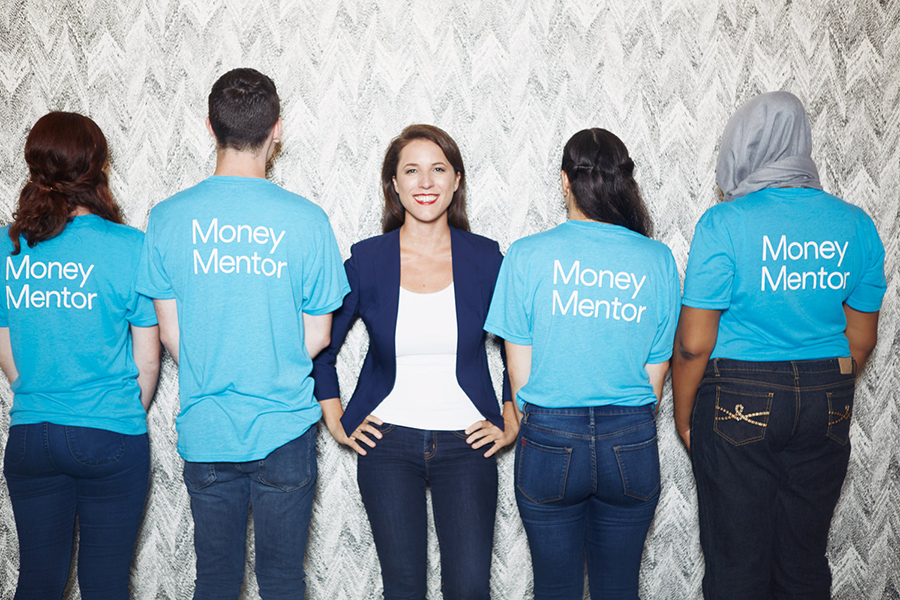
Peller is a 30-year-old CEO and founder of NextGenVest. Her company helps to give financial aid advice to Generation Z through text messages. Customers can text the company for advice on financial aid at any hour of the day. Pellers company has saved customers more than $39 million by giving them access to more than $2.7 billion of financial aid that goes unclaimed each year.

Best piece of advice: Become obsessed with a problem you’re trying to solve. If you’re not obsessed, you won’t be able to will yourself through your failures.

2. Nathalie Virem

Virem is the CEO and founder of Nathalie Virem Enterprises. She is an International Keynote Speaker, 20-Time #1 International Bestseller, Leadership and Entrepreneurship Master and Global Citizen.

Best piece of advice: Virem had adopted a philosophy of learning how to listen to her heart for answers. She had invested $70,000 in her business, but wasn’t seeing any results. The answer finally became clear… Once transformed, she could no longer go back. No matter how many obstacles came her way, she always chose freedom and fulfillment over security. She couldn’t give up because her personal calling was connected to her business and it was impossible to see one without seeing the other. Never do something in life unless it makes you happy each day.

3. Alexis Irene

Irene is a 25-year-old CEO and founder of Static Nails. She started her company from home and was able to drive more than $500,000 of sales during her first six months through strategic partnerships with Sephora and HSN. Irene’s company produces reusable, fake nails that apply with non-damaging glue and can be worn for 18 days and reapplied up to six times.

Best piece of advice: Your actions will always speak louder than your words. You can talk about what you want to achieve, but at the end of the day you need to take action if you wish to see results.

4. Payal Kadakia

Kadakia is a 36-year-old CEO and co-founder of Classpass, a fitness booking app that is available in 39 cities. Within three years, her company had raised $84 million in funding.

Best piece of advice: You need to keep moving forward. You will encounter setbacks in your business and you can let them define you, or you can do something about it. Always pick yourself up and continue to push forward. One day you’ll be amazed at how far ahead you are.

5. Katie Fang

The 27-year-old is CEO and founder of SchooLinks, a college and career readiness platform that runs a curriculum that helps students with self-discovery, career education, and college planning. Her purpose is to help students achieve the career they desire and attend the college of their choice.

Best piece of advice: When you’re building your company you need to make sure that you understand your audience. Your company can never succeed if you don’t take the time to understand who you’ll market your product or service to.

6. Danielle Weisberg and Carly Zakin

Weisberg and Zakin are both 29-year-old co-CEOs and co-founders of theSkimm. Their company has grown from a millennial women’s newsletter into a media powerhouse. theSkimm has raised $8 million in funding and Weisberg and Zakin are always continually looking out to develop new products.

Best piece of advice: You need to identify what makes your company special. What makes you stand out? You can’t expect to create the same product as someone else and drive revenue. When you first start your company find out what your unique selling point is.

7. Shirley Chen

Chen is a 30-year-old CEO and founder of Narrativ. Her company uses artificial intelligence to help retailers bid for clicks on product links in editorial content. Chen has already received $3.5 million in seed funding from Talis Capital and New Enterprise Associates.

Best piece of advice: You need to understand the risks you’re taking. You will always need to take risks if you wish to succeed, but your risks have to be disciplined. Doing your research will minimize your rate of failure and you shouldn’t be quick to launch if you haven’t done your research.

8. Daisy Jing

Jing is a 29-year-old CEO and founder of Banish. Her company created an acne formula that doesn’t use benzoyl peroxide which can cause inflammation and redness among people with cystic acne. She developed an all-natural organic alternative and has turned over $3.5 million in revenue. She also has over 200,000 YouTube subscribers.

Best piece of advice: What problem do you have, that other people might also have? This could be the big idea for your company because if you have a problem, there will always be others with exactly the same problem. Turn a problem into a solution by starting a company.

9. Polina Raygorodskaya

Raygorodskaya is a 32-year-old CEO and co-founder of WanderU. Her company is an airline search engine for buses. WanderU compares hundreds of different sites for the best prices on bus travel and has raised $8.1 million in funding.

Best piece of advice: You can’t do it alone. You need to build a support team around you to help grow your company. Trying to build a company without anyone else is the definition of insanity. Put your faith in others and you’ll be rewarded.

10. Nina Tandon

Tandon is a 39-year-old CEO and co-founder of EpiBone. Her company is the first in the world to grow living human bones for skeletal reconstruction.

Best piece of advice: You have to believe in yourself and in your potential. There will be times where you get knocked down, but if you believe in yourself you’ll quickly be able to pick yourself up and get back on track.

No matter your age or gender, you too can become a successful CEO. If you’re willing to put in the work, anything is possible. I hope the successful, young women on this list have inspired you as they’ve inspired me.

If you like this, subscribe here for more stories that Inspire The Future.

Top 10 Women CEOs Under 40 You’ve Probably Never Heard of

There are many CEOs who have decades of experience and are worthy of this list, but I haven’t included them here. Instead, I have chosen 10 female CEOs who are under 40 who are already displaying the traits of an executive well beyond their years. Here are my top 10 CEOs under forty that you’ve probably never heard of:

If you like this, subscribe here for more stories that Inspire The Future.

1. Kelly Peller

Peller is a 30-year-old CEO and founder of NextGenVest. Her company helps to give financial aid advice to Generation Z through text messages. Customers can text the company for advice on financial aid at any hour of the day. Pellers company has saved customers more than $39 million by giving them access to more than $2.7 billion of financial aid that goes unclaimed each year.

Best piece of advice: Become obsessed with a problem you’re trying to solve. If you’re not obsessed, you won’t be able to will yourself through your failures.

2. Nathalie Virem

Virem is the CEO and founder of Nathalie Virem Enterprises. She is an International Keynote Speaker, 20-Time #1 International Bestseller, Leadership and Entrepreneurship Master and Global Citizen.

Best piece of advice: Virem had adopted a philosophy of learning how to listen to her heart for answers. She had invested $70,000 in her business, but wasn’t seeing any results. The answer finally became clear… Once transformed, she could no longer go back. No matter how many obstacles came her way, she always chose freedom and fulfillment over security. She couldn’t give up because her personal calling was connected to her business and it was impossible to see one without seeing the other. Never do something in life unless it makes you happy each day.

3. Alexis Irene

Irene is a 25-year-old CEO and founder of Static Nails. She started her company from home and was able to drive more than $500,000 of sales during her first six months through strategic partnerships with Sephora and HSN. Irene’s company produces reusable, fake nails that apply with non-damaging glue and can be worn for 18 days and reapplied up to six times.

Best piece of advice: Your actions will always speak louder than your words. You can talk about what you want to achieve, but at the end of the day you need to take action if you wish to see results.

4. Payal Kadakia

Kadakia is a 36-year-old CEO and co-founder of Classpass, a fitness booking app that is available in 39 cities. Within three years, her company had raised $84 million in funding.

Best piece of advice: You need to keep moving forward. You will encounter setbacks in your business and you can let them define you, or you can do something about it. Always pick yourself up and continue to push forward. One day you’ll be amazed at how far ahead you are.

5. Katie Fang

The 27-year-old is CEO and founder of SchooLinks, a college and career readiness platform that runs a curriculum that helps students with self-discovery, career education, and college planning. Her purpose is to help students achieve the career they desire and attend the college of their choice.

Best piece of advice: When you’re building your company you need to make sure that you understand your audience. Your company can never succeed if you don’t take the time to understand who you’ll market your product or service to.

6. Danielle Weisberg and Carly Zakin

Weisberg and Zakin are both 29-year-old co-CEOs and co-founders of theSkimm. Their company has grown from a millennial women’s newsletter into a media powerhouse. theSkimm has raised $8 million in funding and Weisberg and Zakin are always continually looking out to develop new products.

Best piece of advice: You need to identify what makes your company special. What makes you stand out? You can’t expect to create the same product as someone else and drive revenue. When you first start your company find out what your unique selling point is.

7. Shirley Chen

Chen is a 30-year-old CEO and founder of Narrativ. Her company uses artificial intelligence to help retailers bid for clicks on product links in editorial content. Chen has already received $3.5 million in seed funding from Talis Capital and New Enterprise Associates.

Best piece of advice: You need to understand the risks you’re taking. You will always need to take risks if you wish to succeed, but your risks have to be disciplined. Doing your research will minimize your rate of failure and you shouldn’t be quick to launch if you haven’t done your research.

8. Daisy Jing

Jing is a 29-year-old CEO and founder of Banish. Her company created an acne formula that doesn’t use benzoyl peroxide which can cause inflammation and redness among people with cystic acne. She developed an all-natural organic alternative and has turned over $3.5 million in revenue. She also has over 200,000 YouTube subscribers.

Best piece of advice: What problem do you have, that other people might also have? This could be the big idea for your company because if you have a problem, there will always be others with exactly the same problem. Turn a problem into a solution by starting a company.

9. Polina Raygorodskaya

Raygorodskaya is a 32-year-old CEO and co-founder of WanderU. Her company is an airline search engine for buses. WanderU compares hundreds of different sites for the best prices on bus travel and has raised $8.1 million in funding.

Best piece of advice: You can’t do it alone. You need to build a support team around you to help grow your company. Trying to build a company without anyone else is the definition of insanity. Put your faith in others and you’ll be rewarded.

10. Nina Tandon

Tandon is a 39-year-old CEO and co-founder of EpiBone. Her company is the first in the world to grow living human bones for skeletal reconstruction.

Best piece of advice: You have to believe in yourself and in your potential. There will be times where you get knocked down, but if you believe in yourself you’ll quickly be able to pick yourself up and get back on track.

No matter your age or gender, you too can become a successful CEO. If you’re willing to put in the work, anything is possible. I hope the successful, young women on this list have inspired you as they’ve inspired me.

If you like this, subscribe here for more stories that Inspire The Future.

The Growing Surveillance Threat. How Young People Will Save Us

Repeat after me, please … DIGITAL DATA ETHICS! One more time, please …DIGITAL DATA ETHICS! That’s better. Now let’s dig into it.

It was mid-August, 2018. As a panelist at a Washington D.C. national conference of mass communication educators, I was trying to get the audience to focus on the unprecedented power and influence of the internet tech giants.

If the session had been formulated as a debate, the topic might well have been: Resolved: The Internet Genie is Out of the Bottle And It Will Take Years And A Lot Of Smarts to Control It in Society’s Interest.

Of course, we could only skim the surface on the many newsy aspects of that topic – misinformation, hacking, national security, election interference, antitrust* and business ethics in the context of corporate social responsibility. And, centrally: personal privacy.

*Antitrust: Another giant prism in which to examine the power of the data-marketing business model.

Fast forward to spring, 2019: The Age of Surveillance Capitalism is published with this grabber of a subhead: The fight for a human future at the new frontier of power. Okay, so this book, by Shoshana Zuboff, the Charles Edward Professor emerita at Harvard  Business School, may not  rival Silent Spring (the 1962 literary bombshell on environment) or Unsafe At Any Speed (the 1965 attack on the global auto industry) in impact on society, but it’s getting a lot of traction.

Here’s how Axios editors recently summarized the importance of the book and, arguably, the socio-political issue of our age:

“… all but invisible to most of us, a new capitalism has already taken place, one created by the tech behemoths that dominate Silicon Valley … [with] a hidden aim: to know every possible thing, public and private, in real-time, about you and every other reachable individual on the planet …with that knowledge, to win entry to a fabulously elite economy that has already assumed great power in the world.”

That’s not all. Axios warns that this surveillance could become near-ubiquitous, and even dangerous, as large legacy companies – carmakers, banks, healthcare, and insurance providers, retailers and anyone else who intersect with consumer data – “want in on the bonanza.” Finally, consider Alexa and Sirius – and, on the horizon: facial recognition and the visceral threat to personal privacy and security by government surveillance.

The Grand Inference of all this: Society, with innocent citizen complicity, has evolved a new species of companies with vast corporate social responsibilities. What are those responsibilities, and how are they being addressed?

Governments taking action

It’s not as if government regulators haven’t been busy, especially recently. In mid-July, France imposed a pioneering 3 percent tax on the digital services of tech giants. About the same time, the U.S. Federal Trade Commission approved a fine of about $5 billion on Facebook for alleged privacy violations. These actions come in the wake of earlier regulatory breakthroughs.

Europe:

The European Union’s General Data Protection Regulation (GDPR) came into force in May 2018. From TechRepublic, GDPR: A cheat sheet (https://tek.io/2Ak2oMO) this summary: “Under the GDPR, before processing any personal data, a business must ask explicit permission from the subject. The request must use clear language… consent must be given for a specific purpose …”

The cheat sheet reports that the GDPR has already generated considerable ferment in society’s interest: “As of May 2019 … almost 90,000 separate data breach notifications have been received … Concerned citizens have reported 145,000 complaints and inquiries… During GDPR’s first year of enforcement, some 100 organizations have paid fines for failing to comply … French authorities fined Google 50 million euros for collecting personal data without providing an adequate level of transparency on how that data would be used…” 

However,  Foreign Policy, in ARGUMENT Can the E.U. save the Internet? (https://bit.ly/2XuuRXh) recently noted that: “At last count, over 1,000 U.S. newspapers have voluntarily blocked access from Europe since GDPR – the law intended to protect the privacy of individuals within the European Union … These publishers have deemed compliance too cumbersome and costly, opting instead to abandon European readership and forego online revenues from the E.U. market altogether.”

California:

“California Consumer Privacy Act could change the internet in the U.S.,” according to CNBC (https://cnb.cx/2RayTmb).

Stipulated. But how much? And when? Excerpts from the CNBC analysis:

“The law [going into effect January 1, 2020] has numerous parts. It forces companies to reveal what data they collect. It gives users the right to delete that data and prevent its sale. And it will likely restrict how data can be used for online ads… Among the law’s most powerful provisions is one that requires companies to stop selling data upon request at any time via … a ‘clear and conspicuous’ place on a website specifically titled, Do Not Sell My Personal Information.” Needless to say, lobbyists with many different persuasions have descended on Sacramento. Proposed amendments abound.

Few, if any, experts in the world of surveillance privacy predict meaningful resolutions any time soon. In the U.S. the Congress is in a stalemate, at least until results of the 2020 election. And the prospect of fifty U.S. states considering individual or even group internet regulatory regimens suggests an extended period of well, “discourse.” In a 2019 mid-summer flurry, several other governments reported that they are undertaking new attention to internet regulatory alternatives.

But the needed global cooperative on internet regulation isn’t even on the horizon, despite a New York Times columnist recently reported that “the Organization for Economic Cooperation and Development is working with 131 (sic) countries to reach a consensus on an international solution by the end of 2020.”

Along the way, the tech giants have not been unresponsive. But for the most part, critics have judged their voluntary restraints as inadequate or mainly self-serving. 

Cue the younger generation

First, the stark realities: Gen X and millennials will “inherit the earth;” they will be around for quite some time (some of us won’t.) And they are connected to internet technology and instruments, almost appendage-like.


7 Reasons Why Young people Will Save Us

  1. Many are bright, independent and establishment iconoclasts
  2. Access: Many work in, or plan to work with the internet tech giants
  3. Stimuli: Great financial and psychic rewards for solutions
  4. They have access to quantum amounts of information
  5. They have gotten our attention (Angela Merkel has lauded their influence)
  6. They are Fearless, self-confident and entreprenurial. Most have never met serious failure
  7. My grandkids told me so.

Their natural energy, passion and — when aroused — demand for “fairness” and justice can be impressive. Should they be frustrated by say, internet advertising bait-and-switch entrapment, ad saturation, or the perception of companies’ arrogance, anti-social behavior or monopoly, they could become formidable citizen activists.

If you are skeptical, please ponder the following:

Greta Thunberg, on global climate change — “School Strike For Climate Change.“

David Hogg and Emma Gonzalez, on U.S. gun control — “March For Our Lives.

They’d be the first to admit that their work is far some finished. But as masters of digital and legacy media, they’ve certainly moved the needle on public awareness, attitudes, and action around these critical issues. (On gun control ask the National Rifle Association.)

Admittedly, the surveillance privacy issue is not — as yet — as focused and penetrating among these young people. But generally, when engaged and motivated, idealistic young people today know how — and have the means — to put a national issue in play among their peers — and well beyond. They may not be the central “influentials” right now on developing surveillance privacy, but they can be significant contributors to needed public discourse in the foreseeable future.

Public Opinion

Ultimately, progress in liberal democratic societies, via resolution of socio-political conflicts, can be attributed to that sacred yet evasive body we call “public opinion.” Of course, we’re all familiar with some received wisdom on this:

Abraham Lincoln — “Public sentiment is everything. With public sentiment, nothing can fail. Without it, nothing can succeed.”

So, with a bit of symmetry — and, perhaps, irony — let’s close our case on this era’s grand debate — personal privacy vs. free services  —  with Professor Zuboff’s take on the power of public opinion and the responsibility of each generation:

The critical role of public opinion explains why even the most destructive ‘ages’ do not last forever… Capitalism has survived …less because of any specific capability and more because of its plasticity…

Whatever has gone wrong, the responsibility to right it is renewed with each generation. 

The 2019 Women’s World Cup is Done. What Still Needs to Change?

Jean Williams is a Professor of Sport at the University of Woverhampton in the United Kingdom. She knows more than most about women’s sports history and has some thoughtful and controversial ideas around the past, present and future of this pastime. She spoke with Nancy Kapitanoff about the evolution of women’s sports, and how individuals, companies and organizations are moving the ball forward today — leveling the playing field for girls and women to increase participation. 

When Jean Williams was 11 years old, she and her friend Annette were members of a school soccer team in England. “At school, we were able to play with the boys up to age 11,” she recalls. “I was okay at the game, but my friend was really good. When she hit 12 years-old, they said, ‘You can’t play anymore. I could see that she was clearly better than many of the boys, but she wasn’t allowed to play on the school team. There was no girls’ team. That injustice stuck with me.”

Williams, now a professor of sport at the University of Wolverhampton, near Birmingham in England, has written prolifically about women’s sports history, including the book, A Contemporary History of Women’s Sports, Part One: Sporting Women, 1850-1960 (Abingdon-on-Thames: Routledge, 2014). She knows more than most about the injustices women faced on sports participation throughout history, and continue to experience today. The $30 million prize money for the 2019 FIFA Women’s World Cup is 7.5 percent of the men’s 2018 World Cup prize money.

Before the 2019 Women’s World Cup, nutrition bar company Luna Bar stepped forward to support the United States women’s national soccer teams’ (USWNT) fight for equal pay with a cash donation of $31,250 for each of the 23 members. That amount is the difference between the women’s and men’s World Cup roster bonus. After the team’s World Cup victory, Procter & Gamble donated $529,000 to the Players Association, the equivalent of $23,000 for each of the 23 team members, a gesture toward closing the U.S. Soccer Federation’s pay gap between the men’s and women’s teams.

“Commercial sponsors are highlighting how conservative the governing bodies of sport are, and how out of tune they are with the commercial potential of women’s soccer,” says Williams. “When private companies are making up the monetary shortfall, and U.S. Soccer is still discriminating against players who have just won a World Cup, it shows how conservative the governing bodies really are worldwide.”

But Williams does believe the unrestrained, rousing victory by the USWNT (on and off the pitch) has created a positive effect for the future. “Megan Rapinoe and the USWNT players are now cultural icons, and not just sporting icons,” Williams says. They stand for inclusivity, while certain world leaders promote exclusivity.

Discouragement and lack of worldwide funding for women in sports has been reinforced in the past with official prohibitions. In England, women were banned from playing Football Association (FA) matches from 1921-1971. In Brazil, the land of soccer legend Pelé, women were banned from soccer from 1941-1981.

For Williams, these bans are linked to wider aspects of women’s history. “I think women’s sports are linked to reproductive rights; the link between women’s sports and reproductive rights is key for me,” she says. “People are always trying to regulate what women do with their bodies. And they always think they know better than women about what to do with our bodies. It’s this notion that somehow, women have to be protected from themselves, which I think is a strong theme throughout women’s history.”

It was not Williams’ plan to become a professor of sport. She was an English teacher at Gateway College, a sixth form college (similar to a U.S. community college) in Leicester, England, for around ten years. Her master’s degree was in modern literature. “I was a huge fan of American novelist Toni Morrison,” she recalls. “I thought I was going to become a Toni Morrison scholar. But I played football soccer instead. I moved to another university and they said I needed to do a Ph.D., so I chose the literature of football. Because I also played football, my supervisor said, ‘You’re never here, you’re always playing, coaching, or running a league. Why don’t you just write about the history of women’s football?'”

“When he suggested this, I thought, ‘well surely that’s already been done?’ It had not. And from that moment the stories just piled up.”

In addition to writing extensively about historical and contemporary women’s soccer, Williams has also written about the history of various other sports, such as women’s motor racing, Formula 1, Olympic and Paralympic history, and the history of men’s and women’s sports clothing.

Digging into women athletes’ scrapbooks and 19th-century historical periodicals, she found significant, well-documented records of women participating in sports, some dating to the mid-1800s. There were unofficial soccer kickabouts in the 1860s. A ladies match between teams called ‘England’ and ‘Scotland’ was covered in the May 9, 1881, Glasgow Herald newspaper. England sent a women’s soccer team to compete in New Zealand in 1914, but the team had to return to England at the outbreak of World War I.

There were also early international sports competitions between the United States and United Kingdom. In 1903, Irish golfer Rhona Adair, who was considered the top woman golfer in the world, crossed the Atlantic to compete with top American women golfers in a series of tournaments at premier venues, that included Merion and Baltusrol. Two years later a group of American woman golfers boarded a steamship bound for England to play in the British Ladies’ Championship and a groundbreaking “America versus England” match. American players included sisters Margaret and Harriot Curtis, who would later establish the Curtis Cup biennial competition that continues to this day; Georgiana Bishop, the 1904 U.S. Women’s Amateur champion, and Frances Griscom, the 1900 U.S. Women’s Amateur Champion. Griscom was also a trapshooter, fisherwoman, and the first woman in her hometown to own and drive a car. During World War I, she drove a Red Cross ambulance.

By the 1920s, on both sides of the Atlantic, women’s sports were regularly featured in newspapers, magazines and the latest technology — newsreels. Media coverage for Flapper era athletes appeared often and comprehensively, seemingly more so than women athletes receive today.

“The great message from the 1920s, and part of the huge success of women’s sports that was being reported on as frequently as men’s, was the commercial agenda,” Williams says. “There was a huge postwar boom around manufacturing, and it made sense not to limit your market. It makes sense today, too.”

She also gives credit to sports editors at the Golden Age of Sports. “I think they were different; you’re dealing here with a different type of masculinity than the editors after the Second World War,” she says. “In the 1920s and 1930s, these guys considered themselves cultured and sophisticated, and it was part of their brand of masculinity to appreciate people who were the best at what they did.”

“After World War II there’s a rise in toxic masculinity. They’re the first generation of men who didn’t need to do manual labor. I think there’s an enormous nostalgia — a kind of fake nostalgia — for manual work. The type of editors in Britain after World War II, who are hugely influential, are the likes of Brian Glanville. He’d say, ‘Women’s football is like something out of Dr. Johnson.’ He associated women’s soccer with the words of English author and moralist, Samuel Johnson, who said this about female preachers: ‘A woman preaching is like a dog walking on its hind legs. It’s not well done, but it’s surprising to see it done at all.’ In the 1970s Glanville said that women’s soccer should be played behind closed doors by consenting adults.”

“He didn’t feel the need to appreciate people who were good at what they did,” Williams says. “The tone definitely changed toward women’s sports after the 1950s.”

Williams works to spotlight early women’s sports histories that are not well known today. She wants to complete a full picture of women’s long-held enthusiasm for sports and to counter any false narratives that organized national and international women’s sports competitions only began recently. Title IX, in 1972, is one such example. This Federal civil rights law, prohibited discrimination within any education program in the United States that received Federal government financial assistance. It resulted in U.S. colleges and universities increasing funding for women’s sports programs. It’s a great example, but not where women’s sports history begins.

“I recently presented a motor racing paper at a conference, and people were gobsmacked by how many women racers there were in the early-20th century — and how celebrated they were,” says Williams. “Some people today consider themselves pioneers, but actually, it’s been pioneered three times already. I get frustrated with these narratives that keep emerging.”

Despite the global awareness and appreciation of the Women’s World Cup, and the USWNT in particular, the future of women’s sports development and equity remains unclear. “The problem is not actually women, is it? says Williams. “It’s large societal structures that need changing. Can you dismantle the master’s house using the master’s tools?

“The voting systems that protect male power require change, to represent more women in the highest aspects of football administration.”

Sportswomen throughout history have started from a place of less than zero – having had to fight against forces that tried to deny them their right to participate in sports. Men have been handed approval, appreciation, and investment to play sports to their hearts’ content. “Women,” Williams says, “have not been given the resources.”

“There are a lot of feminist fathers, and there are a lot of feminist brothers,” she continues. “Men have always helped women do sport, and there’s been huge companionship around it. I think this interest will find the money, and I think the money is out there. We need to sell and package women’s sport imaginatively. I think that’s what Billie Jean King and Virginia Slims did.” Williams is referring to the 1970 incident when King and eight other female professional tennis players left the United States Lawn Tennis Association, due to the inequality of prize money between male and female players. They instead formed the Virginia Slims Circuit, proving that they could get their own sponsors.

“We don’t love sports because it’s good for us,” Williams concludes. “The British writer, Arthur Hopcraft, wrote a book called The Football Man, where he says that football engages the personality. That’s why we love it. We’ve got to stop trying to sell women’s sports as if it’s like eating five vegetables and fruits a day. We don’t want to do it because it’s good for us. We want to do it because it’s exciting.”

Jaden Smith Brings Clean Water to Flint

Actor and rapper Jaden Smith is tapping into uncharted waters to lead a community effort.

Flint, Michigan faced a water crisis when the city switched its new water source to the Flint River in 2014. Without corrosion controls, the city’s old pipes leached lead into Flint’s water, transforming the city’s water into poison.

Five years later, Flint’s citizens are still apprehensive of their tap water, relying instead on bottled water. While this may have solved the problem of potable water, it hasn’t helped the city’s environmental impact.

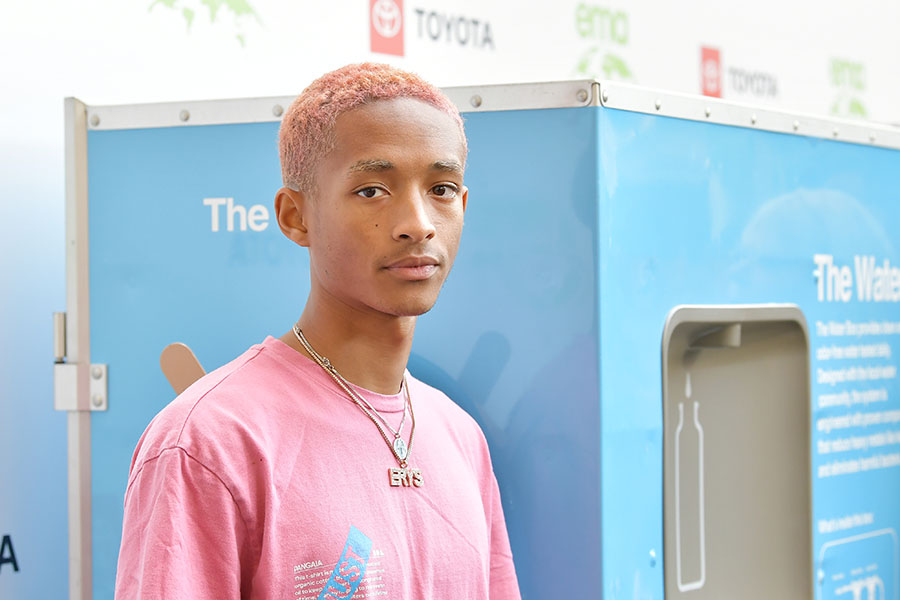
Enter Jaden Smith, who has transcended his celebrity status to support environmental advocacy and social entrepreneurship with his company JUST Water. Specializing in bottled water manufacturing, JUST Water values sustainability and community above all. The JUST Water bottles are 100% recyclable and made entirely from sustainable materials — paper, plant-based plastic, and sugarcane. These renewable resources are less toxic than traditional plastic bottles and result in less carbon emissions.

Seeing the opportunity to make a difference, Jaden and JUST have brought their pledge of clean, sustainable water to Flint, partnering with the local First Trinity Baptist Church to create “The Water Box.” This is a smaller version of the filtration system used at the JUST Water plant which reduces contaminants—primarily lead—from the water supply. The mobile filtration system generates more than ten gallons of filtered water a minute, giving Flint’s residents a water source they can trust — something they haven’t had for years.

Bringing Back Compassion and Empathy to the Business World.

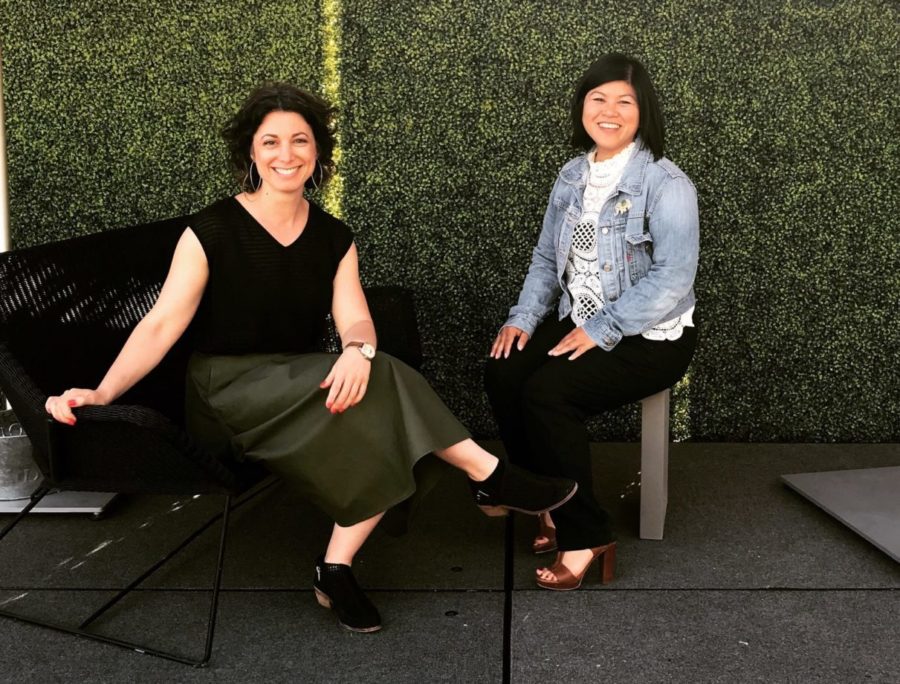
Melissa Center and Tanny Jiraprapasuke have combined a passion for storytelling and a commitment to empowering marginalized voices to make an impact in the workplace.

Their business, Whole Self Systems, is a socially and culturally-driven training company seeking a better future by activating equanimity, diversity, and compassion in a business setting. While the company wasn’t intended to be a direct response to the #MeToo movement, Whole Self Systems offers a new kind of communications training that empowers women in the workplace and poses a solution to both male and female insecurities that have arisen in the current political climate.  

When leadership comes from a place of only seeking status and profit, it often results in a profound imbalance of values. According to Melissa, “It’s this hierarchal imbalance that perpetuates toxic masculinity culture, the 1% issue, and the silencing of sexual harassment in the workplace.” By training emerging leaders and their teams to better communicate with each other, Whole Self Systems endeavors to change the outlook of the current corporate paradigm. Where manipulation, greed, fear, division, and deceit once prevailed, Melissa and Tanny intend to replace it with trust, consciousness, generosity, service, and most importantly, empathy.

        “We want employers and employees to see other people as people,” Tanny explains, “and not just as a dollar sign or production machine.”

The need for improved communication is especially urgent due to the demands of our modern world. “Firstly, technology removes accountability. People can say whatever they want to each other without immediate interpersonal feedback,” Melissa says. “Overall we are losing our internal compass for person-to-person communication. The more we rely on our devices, the more we lose touch with the ability to recognize and respond to each other’s needs.”

Using their backgrounds in Mindfulness and Empathetic Storytelling Technique (TM), Melissa and Tanny help clients cultivate this internal compass and relearn a lost element of humanity. The mindfulness component brings awareness to thoughts, emotions, and in-the-moment experiences. This allows space for the individual to respond compassionately, versus reacting irrationally.

“At the end of the day, everyone wants to be seen and heard,” Tanny concludes. This is what will lead to a happier and more productive workplace that inspires creative innovation.

Rethink Your Business Before It’s Too Late

This week I had the opportunity to interview multi-business owner Jared Meyers of Legacy Vacation Club and Salt Palm brands who recently launched Florida For Good to help inform, inspire and connect Florida business owners to rethink the way they do business.

You never know whom exactly you’re going to get on the opposite end of a podcast, some guests try to promote their own brand, book, or thought leadership but for the hour I spent with Jared we focused on what motivated him beyond his businesses.

I got to know the real Jared, and the real Jared genuinely felt obligated to spread the word about what mistakes lead to his epiphany (See below).

“A lot of times our epiphanies in life or the lessons we learn are because we go through tough times…”

Tough times call for tougher decisions. The next decision he would make would change his life [and potentially yours] forever. If the business owner community prioritized stakeholder value over shareholder value how might that impact their bottom-line? So I asked him this…

“Why not be a leader and do it proactively?”

Jared’s debacle inspired a new purpose, one that transparently fosters shared value leadership throughout the value chain. By focusing on all stakeholders one must consider its environmental ramifications and reduce its carbon-footprint, pay fair-trade prices, and reveal their company’s impact. But wait! Doesn’t that mean higher costs? Jared you’re crazy! Are you thinking what I was?

“This sort of an investment makes financial sense.”

Failure, realization, and resolution all in under 5 minutes. Jared encompasses the core values of what I deem as a real leadership and it seems to manifest throughout his company’s entire value chain. I’m excited to see if his decisions result in long-term growth and is a model for the next generation of leaders before it’s too late.

If you learned anything from this read today it would mean the world to me if you shared this with your network and continue the discussion on shared value leadership.

I never know who will be on the opposite end of the podcast but I’m grateful it was Jared Meyers. You too can get to know him better by experiencing the full episode below.

Rethink Your Business Before It’s Too Late

This week I had the opportunity to interview multi-business owner Jared Meyers of Legacy Vacation Club and Salt Palm brands who recently launched Florida For Good to help inform, inspire and connect Florida business owners to rethink the way they do business.

You never know whom exactly you’re going to get on the opposite end of a podcast, some guests try to promote their own brand, book, or thought leadership but for the hour I spent with Jared we focused on what motivated him beyond his businesses.

I got to know the real Jared, and the real Jared genuinely felt obligated to spread the word about what mistakes lead to his epiphany (See below).

“A lot of times our epiphanies in life or the lessons we learn are because we go through tough times…”

Tough times call for tougher decisions. The next decision he would make would change his life [and potentially yours] forever. If the business owner community prioritized stakeholder value over shareholder value how might that impact their bottom-line? So I asked him this…

“Why not be a leader and do it proactively?”

Jared’s debacle inspired a new purpose, one that transparently fosters shared value leadership throughout the value chain. By focusing on all stakeholders one must consider its environmental ramifications and reduce its carbon-footprint, pay fair-trade prices, and reveal their company’s impact. But wait! Doesn’t that mean higher costs? Jared you’re crazy! Are you thinking what I was?

“This sort of an investment makes financial sense.”

Failure, realization, and resolution all in under 5 minutes. Jared encompasses the core values of what I deem as a real leadership and it seems to manifest throughout his company’s entire value chain. I’m excited to see if his decisions result in long-term growth and is a model for the next generation of leaders before it’s too late.

If you learned anything from this read today it would mean the world to me if you shared this with your network and continue the discussion on shared value leadership.

I never know who will be on the opposite end of the podcast but I’m grateful it was Jared Meyers. You too can get to know him better by experiencing the full episode below.

Remembering Nipsey Hussle: A Leader Los Angeles Needed

A dark cloud of despair has hung over the city of Los Angeles since Grammy-nominated rapper Nipsey Hussle was shot and killed outside his clothing store in L.A. on March 31st. With his passing, Los Angeles mourns more than just a music icon.  

Nipsey, whose real name was Ermias Asghedom, was also an entrepreneur, cultural advocate, and leader of the black community. He lent his voice and influence to those who might not otherwise have had the chance to be heard.

Nipsey was always thinking outside the box. When he was 12-years old he built a computer from spare parts, the very same computer he began to make music on. After selling CDs from his car he started gaining a fanbase. Instead of signing to a major record label, he sold 1,000 copies of his “Crenshaw” mixtape for $100 each and used the proceeds to launch his own record label, All Money In. He was never afraid to take a gamble on himself and this attitude laid the groundwork for a new generation of artists to start releasing their music independently — from Chance the Rapper to Frank Ocean.

Since the start of his music career, Nipsey has always been an advocate for his hometown, the Crenshaw District of Los Angeles, whose street names have been featured in the titles of two of his mixtapes “Slauson Boy” and “Crenshaw.” Even his apparel store, Marathon Clothing, can be found at the intersection of Crenshaw  and Slauson Avenues, one of the primary business hubs in South L.A.

The Marathon honors those that don’t quit from the endeavors they commit to. Nipsey equated the reality of success and greatness to a rollercoaster ride — filled with ups and downs, and emphasized the importance of perseverance. Nipsey and his brother Sam employed the people they grew up with, and those fresh out of prison who couldn’t find decent work. They also made a point to use unknown models to promote their clothing line, to give people exposure they wouldn’t otherwise get. The brothers understood well the roadblocks their peers face in getting jobs, so they created opportunities that prevented them giving up and returning to the streets.

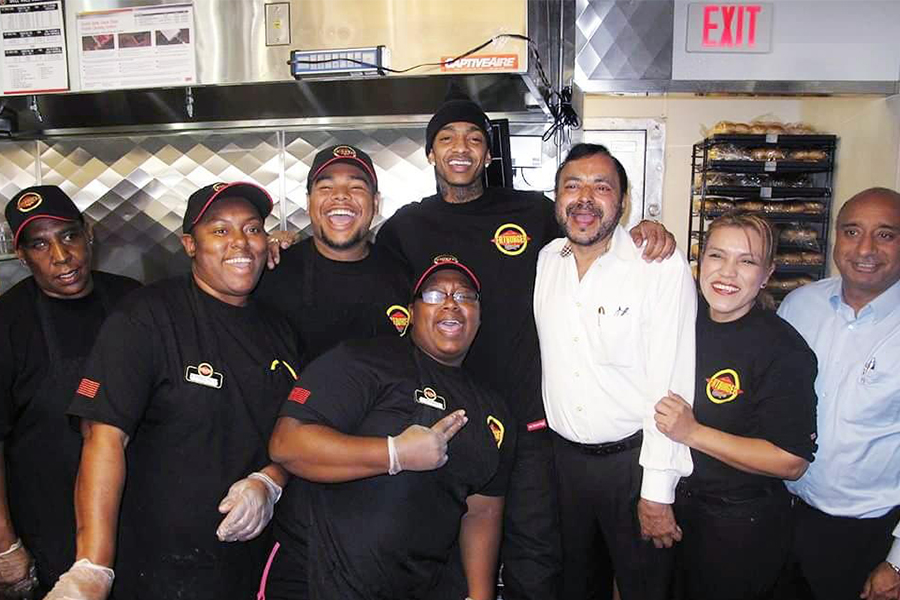
Some of Nipsey’s other real estate endeavors included a Fatburger restaurant, a seafood market and a barbershop. His goal was to create similar business hubs around the country, that benefited the black community and that established a foothold against new, outside businesses moving in and closing down local business.  

“All money in, no money out” was Nipsey’s motto for encouraging the black community to invest their money in something, rather than spend it frivolously. Nipsey was an activist for black entrepreneurship, unity, economic affluence, and self-sustainability. His devotion to giving a voice to the black community is reflected in his advocacy for the project “Destination Crenshaw,” an open-air museum spanning a mile  and designed to celebrate black history and culture through art exhibits. It aimed to capture the value of what communities create, while allowing the creators to reap the benefits of exposure.

Nipsey’s investments in the community reach much further than real estate, he invested in people too. He was an investor in Vector90, a co-working space where young students could take classes in math, science and technology, most notably through a program called “Too Big to Fail” that links inner-city youth to Silicon Valley. Having dropped out of high school himself, Nipsey understood the hardship for black and brown kids in the education system. While growing, up he never felt that his efforts where being properly recognized in school. This is why he invested in the 59th Street Elementary School, donating money to make sure every student got a new pair of shoes, and also renovated the basketball courts and playgrounds. He understood the importance of education in the development of youth in his community, and hoped to place a brighter future in their hands.

Nipsey Hussle was living proof that no matter where you come you have the ability to lead for a better tomorrow. He was such a towering figure in the community that his memorial service was held at Staples Center — with a capacity of over 21,000. Not only did he create change in his community, his actions will inspire a new generation of leaders around the country. From his efforts, the youth of Los Angeles have been exposed to a wealth of new opportunity that they could only dream about before. His music and business lessons will live on forever. The marathon continues.


Why I Endured Bullying for Years

If you had asked me fifteen years ago whether I had ever been bullied or mobbed, I would have said no. Now, I’m not so sure.

The first time I went to see a therapist I was thirty. I talked for the entire hour of this first session about all the times I had found myself alone in front an angry crowd that was criticizing me, insulting me, teasing me or making me cry. When I finished, five minutes before the hour was over, my shrink asked, “Where were your parents in all of this?” to which I unthinkingly replied, “I don’t know.”

Fifteen years later it’s clear to me what he meant. Now I understand that it was strange that I described all these incidents of childhood bullying without ever thinking of reaching out for help. For a long time I associated this bullying with the seven years our family spent in Mexico, believing them to be no more than an anecdote of my distant past.

However, these early years weren’t so distant after all — later in life, several jobs, projects, collaborations and even my own startup ended badly for me. I endured collective abuse – unkind gossip, unfair deals, isolation and exclusion, even sophisticated power plays against me. Eventually, one of two things would happen: either I snapped and retaliated, which always led to a public trial and expulsion from the group, or I abandoned the whole thing voluntarily before my opponents had the chance to publicly humiliate me again.

Over the years, I came to see a pattern in how I consistently put myself in vulnerable positions by standing up for people who weren’t brave enough to stand behind me. I made myself vulnerable to opposing (often ruthless) parties who invariably played the group until I was out. I was a sucker for the truth, I must confess. The Irish joker in me described it this way: “Before I was forty I was very worried that there was something seriously wrong with me. But then I realized that it’s all been part of some type of witch’s initiation!”

Indeed, I did learn to protect myself after much practice, although the key issue turned out to be the way I felt about myself before anybody even targeted me. Eight years ago I fell madly in love with the type of man I’d never wanted to be in love with. Terribly handsome, he had four nobility titles and women competed for this attention all the time. What I had interpreted to be (platonic) love at first sight, suddenly became a nightmare when he informed me in an email that he was “happily married.”

I believed him and blamed myself for having “got it all wrong” during our several months of intimate, deeply bonding conversations over his rapidly failing fashion business. I walked away in a shambles. The following year we reconnected over the publishing of a book that I had interviewed him for. We repeated the same game all over, but this time I fought back when he tried to shake the whole thing off again. I demanded a face-to-face conversation to understand what he felt for me, and would be done with him if he expressed no romantic feelings. He insisted he had no time, and that I was “Una tarada traumada” — which translates in Spanish to “a traumatized person with a defect.”

A year later he again asked me for professional advice. To my horrified disbelief, I watched as we repeated the whole game for a third time. I told him, “Maybe I am crazy, but anybody who hears that you’ve walked into the same cave, with the same woman three times in a row, would assume that either you’re crazy, or you like the woman and cave more than you admit.”

It took me several years of this awful, gut-wrenching to realize that while Javier was telling everybody how crazy I was, I was too terrified that he was right and told nobody. He once texted to tell me that he and all his employees were in China on business and had all agreed I was Glenn Close (in the movie “Fatal Attraction”).

It was humiliating and embarrassing to a point I can’t describe. I was terrified of what he might do and what he was telling people. At the same time, I had a gut instinct that what I was asking for – a face-to-face conversation to understand what was going on between us – was not an unreasonable demand. If he didn’t love me, then why didn’t he just tell me to my face?

Only now can I take a step back and ask myself: Exactly who was harassing who? Instead of showing up to discuss the issue in private, and end this disagreement, he kept recruiting supporters and turning them into Pino-haters at every party or gathering he attended. It was a long, awful night the first time I realized that I had never been in love with the seemingly perfect, trophy lion I had written about once in an article. To my deepest despair, I had to admit that I was in love with a bully.

I was the perfect victim. I believed him more than I believed myself. What’s more, I kept going back to that same cave, and the same man, over and over again. I agonized over his every insult, thinking it was true. I questioned my own behavior way more than I ever questioned his.

Once, he threatened to sue me. I sniggered, pointing out how there was absolutely nothing to base it on, yet I shivered inside. Despite putting up a fight with words and smart retorts to his cruel texts, I dared not disclose who he was to anybody. Yes, I talked an angry game, but in a primal, deep part of me, I agreed with what Javier and his mob said about me.

I had been bullied in romance, in business, and also at home with my family. It was what I grew up with. It was a type of discomfort that I became comfortable with. It has taken me all these years to stop believing in what others told me, and begin believing in myself. Thanks to this, I have become an expert at managing verbal violence and bringing conflict back to a constructive conversation in certain situations.

What about Javier, you may ask? Well, I’m still in love with him, believe it or not. We’ve shown the worst parts of ourselves to each other, which has allowed us to identify it and resolve it. We turned something ugly into a kind of beauty. But whether he will ever find the time, or (between you and me) the courage to face up to what he feels toward me, is a question I ask myself every day.

Falling in love is not about conquest, as Javier’s mob of female suitors and fans would argue, but about surrender. It took me eight years to give in to this strange definition of love, accept it for what it is, and become the certifiable “witch” that I’m now proud to be. At last!

And what does Javier really feel? Well, you’ll have to call him up and ask. I stopped asking a long time ago, I honestly don’t want to get sued!


0