The Male Feminists Inside Uganda’s Police Force

“We want to put ourselves in the shoes of women”

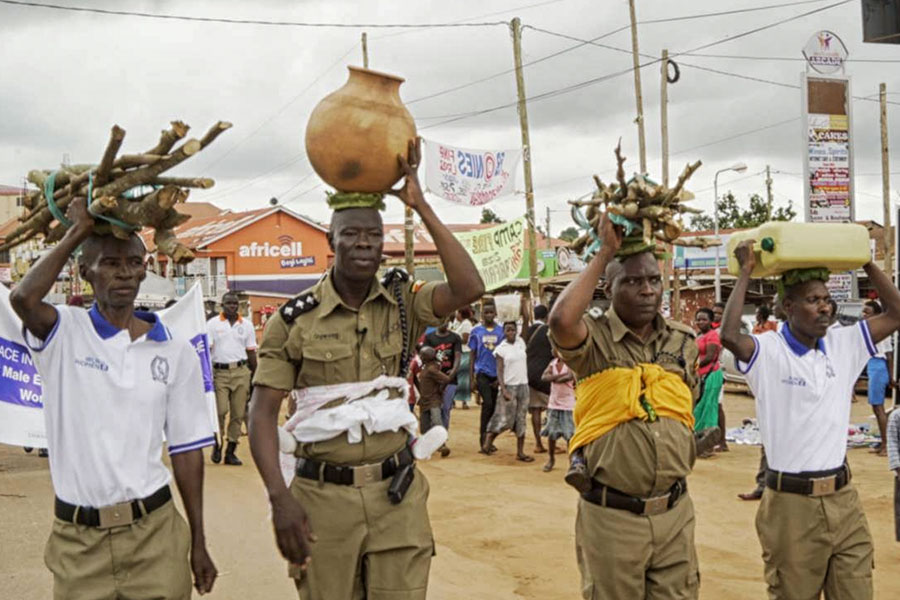
Balancing a heavy clay pot on his head with a baby tied to his back, policeman Francis Ogweng caused a scene as he marched down the busy highway towards Uganda’s capital, Kampala.

With traffic backed up to the horizon, crowds of men stared and laughed as the baby girl swaddled in white cloth slipped precariously down Ogweng’s back, pulling his khaki uniform into disarray.

If you like this, subscribe here for more stories that Inspire The Future.

“We want to put ourselves in the shoes of women,” Ogweng, an assistant superintendent in the Uganda Police Force (UPF), told the Thomson Reuters Foundation. “Is it difficult to carry water? Is it difficult to carry a baby?”

Judging by the sweat dripping down his face, it is.

Onlookers were surprised to see a senior officer marching to stop violence against women, in a force that opponents of Uganda’s long-serving President Yoweri Museveni accuse of spending more time suppressing dissent than tackling crime. Police often break up opposition rallies in the east African nation with teargas and beatings, rights groups say they torture suspects to illicit confessions, and surveys often rank the force as Uganda’s most corrupt institution.

“Their image has been tainted,” said Regina Bafaki, head of Action for Development, a local women’s rights group.

“They have actually been more violators than protectors of citizen’s rights.”

But a spate of unsolved murders of young women, with more than 20 corpses found beside roadsides south of the capital since May, is putting rare public pressure on the police.

They have charged more than a dozen suspects with the women’s murders, listing possible motives range from domestic rows through sexual abuse to ritual murder linked to human sacrifice.

Ogweng was not alone, flanked by three policemen carrying bundles of firewood, a 50-strong police brass brand and other officers carrying placards that read: “Peace in the home. Peace in the nation. Prevent Gender Based Violence”.

“Men can also carry water, men can carry babies … it does no harm at all, it doesn’t make a man less of a man,” said Ogweng, who describes himself as a feminist – a rarity in a country where women often kneel to show deference to men.

About half of Ugandans believe that domestic violence is justified under certain circumstances, such as when women neglect children or burn food, government data shows.

“There are those who still believe that battering of women, beating of women, is something normal,” said Asan Kasingye, assistant inspector general, another unlikely ally in Uganda’s fight for gender equality.

“We must invest our resources, our training, our recruitment … into fighting against gender based violence,” he said, seated in his top floor office at the police headquarters.

“It must percolate, it must be known by everybody. So it preoccupies us.”

The police demonstration calling for an end of violence against women went down well with locals around Entebbe, where about 20 women were raped and murdered in 2017.

“This government prides itself for bringing security … but at the same time when these ladies were being murdered, the government didn’t even talk about it,” said Anatoli Ndyabagyera, whose fiancee Rose Nakimuli was killed in July.

The murders illustrate a broader problem in Uganda, where government data shows more than one in three women suffer physical or sexual violence from an intimate partner, although few report it to the police.

“We have in our society a dangerous attitude of men thinking they can dispense with women and they can get away with it,” said Ndyabagyera. “They look at women and tend to think of them as items of ownership.”

Four in 10 girls wed before they turn 18, even though Uganda has banned child marriage, according to the United Nations children’s fund (UNICEF), and few go beyond primary school.

Efforts to pass a bill seeking to ban traditional practices, like dowry and the inheritance of widows by their husbands’ male relatives, and to grant rights to women in divorce have floundered for years.

Women wearing miniskirts were stripped by mobs of men following the 2014 Anti Pornography Act that banned “indecent” dressing and the police in 2015 stripped female opposition leader Zaina Fatuma naked in the street.

“There are (officers) who are badly behaved,” said Ogweng, who works in the child and family protection department.

“But there are those who are good, and there are many.”

Given the influential role of the police in Ugandan society, Ogweng believes he can help to change people’s perceptions about what it means to be a man.

“People are so rooted in the culture where some things are only done by women and some things are done by men,” he said.

“If a man, a police officer, can carry a baby, can carry a pot, then other men can do it … Men even called me afterwards and said: ‘You have opened my eyes’ … So I think people are beginning to understand.” By

By Thomas Lewton. Editing by Katy Migiro.

If you like this, subscribe here for more stories that Inspire The Future.
The Male Feminists Inside Uganda’s Police Force

“We want to put ourselves in the shoes of women”

Balancing a heavy clay pot on his head with a baby tied to his back, policeman Francis Ogweng caused a scene as he marched down the busy highway towards Uganda’s capital, Kampala.

With traffic backed up to the horizon, crowds of men stared and laughed as the baby girl swaddled in white cloth slipped precariously down Ogweng’s back, pulling his khaki uniform into disarray.

If you like this, subscribe here for more stories that Inspire The Future.

“We want to put ourselves in the shoes of women,” Ogweng, an assistant superintendent in the Uganda Police Force (UPF), told the Thomson Reuters Foundation. “Is it difficult to carry water? Is it difficult to carry a baby?”

Judging by the sweat dripping down his face, it is.

Onlookers were surprised to see a senior officer marching to stop violence against women, in a force that opponents of Uganda’s long-serving President Yoweri Museveni accuse of spending more time suppressing dissent than tackling crime. Police often break up opposition rallies in the east African nation with teargas and beatings, rights groups say they torture suspects to illicit confessions, and surveys often rank the force as Uganda’s most corrupt institution.

“Their image has been tainted,” said Regina Bafaki, head of Action for Development, a local women’s rights group.

“They have actually been more violators than protectors of citizen’s rights.”

But a spate of unsolved murders of young women, with more than 20 corpses found beside roadsides south of the capital since May, is putting rare public pressure on the police.

They have charged more than a dozen suspects with the women’s murders, listing possible motives range from domestic rows through sexual abuse to ritual murder linked to human sacrifice.

Ogweng was not alone, flanked by three policemen carrying bundles of firewood, a 50-strong police brass brand and other officers carrying placards that read: “Peace in the home. Peace in the nation. Prevent Gender Based Violence”.

“Men can also carry water, men can carry babies … it does no harm at all, it doesn’t make a man less of a man,” said Ogweng, who describes himself as a feminist – a rarity in a country where women often kneel to show deference to men.

About half of Ugandans believe that domestic violence is justified under certain circumstances, such as when women neglect children or burn food, government data shows.

“There are those who still believe that battering of women, beating of women, is something normal,” said Asan Kasingye, assistant inspector general, another unlikely ally in Uganda’s fight for gender equality.

“We must invest our resources, our training, our recruitment … into fighting against gender based violence,” he said, seated in his top floor office at the police headquarters.

“It must percolate, it must be known by everybody. So it preoccupies us.”

The police demonstration calling for an end of violence against women went down well with locals around Entebbe, where about 20 women were raped and murdered in 2017.

“This government prides itself for bringing security … but at the same time when these ladies were being murdered, the government didn’t even talk about it,” said Anatoli Ndyabagyera, whose fiancee Rose Nakimuli was killed in July.

The murders illustrate a broader problem in Uganda, where government data shows more than one in three women suffer physical or sexual violence from an intimate partner, although few report it to the police.

“We have in our society a dangerous attitude of men thinking they can dispense with women and they can get away with it,” said Ndyabagyera. “They look at women and tend to think of them as items of ownership.”

Four in 10 girls wed before they turn 18, even though Uganda has banned child marriage, according to the United Nations children’s fund (UNICEF), and few go beyond primary school.

Efforts to pass a bill seeking to ban traditional practices, like dowry and the inheritance of widows by their husbands’ male relatives, and to grant rights to women in divorce have floundered for years.

Women wearing miniskirts were stripped by mobs of men following the 2014 Anti Pornography Act that banned “indecent” dressing and the police in 2015 stripped female opposition leader Zaina Fatuma naked in the street.

“There are (officers) who are badly behaved,” said Ogweng, who works in the child and family protection department.

“But there are those who are good, and there are many.”

Given the influential role of the police in Ugandan society, Ogweng believes he can help to change people’s perceptions about what it means to be a man.

“People are so rooted in the culture where some things are only done by women and some things are done by men,” he said.

“If a man, a police officer, can carry a baby, can carry a pot, then other men can do it … Men even called me afterwards and said: ‘You have opened my eyes’ … So I think people are beginning to understand.” By

By Thomas Lewton. Editing by Katy Migiro.

If you like this, subscribe here for more stories that Inspire The Future.
Doing Something “Like a Girl” Should Mean “Amazing”

You run like a girl” or “you throw like a girl” are common insults we’ve all heard or said at one point. The #LikeAGirl campaign aims to change the negative perception of the phrase and make “like a girl” a declaration that means downright amazing. 

Feminine care company, Always, launched the global campaign to help girls as they enter a formative and sensitive time of their lives – puberty. A survey by Research Now found the start of puberty and their first period mark the lowest moments in confidence for girls. Harmful words can add to that drop in confidence. 

If you like this, subscribe here for more stories that Inspire The Future.
Always has been empowering girls through puberty education for over 30 years and reach between 17 and 20 million girls globally every year. With this campaign, they wanted to champion girls’ confidence by taking a stand and turn “Like a Girl” into a phrase that represents the strength, talent, character and downright amazingness of every girl. They also want to encourage conversation to help rethink and redefine the common words and phrases used in society that imply girls are weak or inferior. Many use these phrases unthinkingly and don’t realize the impact these words can have on a girls confidence, particularly at one of her most impressionable times of her life.

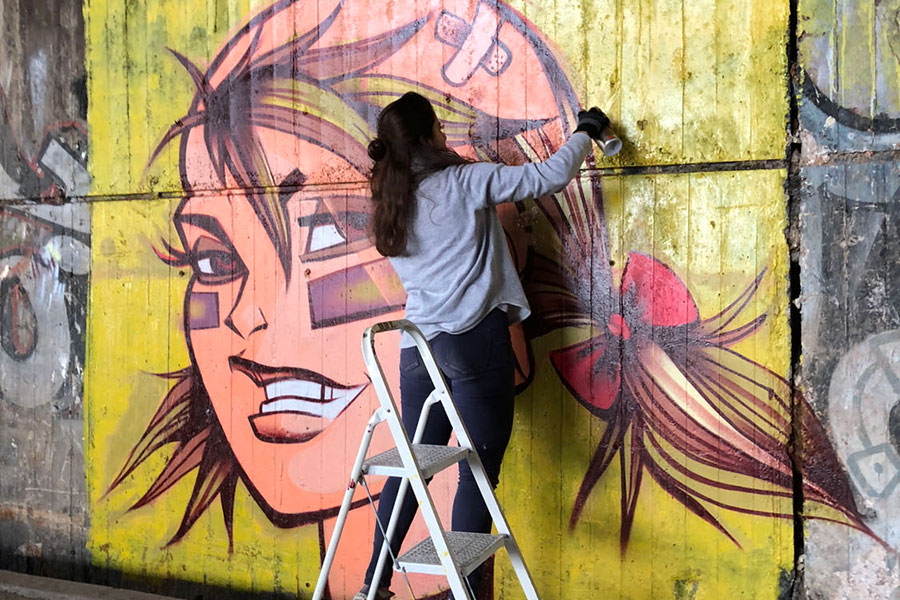
To further help shed light on the issue, and to inspire girls to keep doing things #LikeAGirl, Always partnered with three women in male-dominated fields in Lebanon in November 2017: graffiti artist Lynn Acra, calisthenics gymnast Eva-Maria Mahfouz and programmer Rayan Al Zahab, to encourage Lebanese girls to follow their dreams. The new #LikeAGirl video brings a fresh approach to the campaign, following the three girls through a day in their lives.

From sketching and prepping for a graffiti project, to daily strength trainings, coding and more, the girls are seen in real-life situations that capture how intense but rewarding their chosen professions and hobbies are.

“Some guys just looked at me and laughed. They said: You’re a girl, you can’t do it. But now I just feel like I’m laughing at them because I can do it,” said Acra.

“I’m touched by our #LikeAGirl campaign, because every girl is capable of greatness and we must continue to empower them to grow into strong, amazing women tomorrow,” says Edgar Sandoval, Vice President of Global Feminine Care at Procter & Gamble – who is a father of three young girls himself.

Some Key Findings of the “Always Puberty & Confidence Study”: 

CONFIDENCE

  • More than half of girls (about 1 out of 2 or 56%) claimed to experience a drop in confidence at puberty.
  • Lowest confidence moments for girls were when puberty started and when they got their first period; a close second were starting middle and junior high school.
  • Hispanic females cited the largest drop in confidence at puberty (60%), while fewer African American girls (50%) claimed to have a drop in confidence than Hispanic or Caucasian girls.
  • Girls who saw a drop in confidence during puberty are more likely to claim they started puberty either before or after their friends.
  • The advice most females would give to their younger selves is “you’re not alone” and “you’re not as awkward as you feel.”

LIKE A GIRL

  • The majority (89%) of females aged 16-24 agree that words can be harmful, especially to girls.
  • Only 19% of girls have a positive association toward the phrase “like a girl.”
  • More than half (57%) of females think there should be a movement to change the negative perception of the phrase “like a girl.”

The study was conducted using the Research Now Panel that surveyed 1,300 American Females aged 16 to 24 years old. There was a nationally representative sample group of 1,000 females as well as an additional boost of 150 African American and 150 Hispanic American females. 

If you like this, subscribe here for more stories that Inspire The Future.

Doing Something “Like a Girl” Should Mean “Amazing”

You run like a girl” or “you throw like a girl” are common insults we’ve all heard or said at one point. The #LikeAGirl campaign aims to change the negative perception of the phrase and make “like a girl” a declaration that means downright amazing. 

Feminine care company, Always, launched the global campaign to help girls as they enter a formative and sensitive time of their lives – puberty. A survey by Research Now found the start of puberty and their first period mark the lowest moments in confidence for girls. Harmful words can add to that drop in confidence. 

If you like this, subscribe here for more stories that Inspire The Future.
Always has been empowering girls through puberty education for over 30 years and reach between 17 and 20 million girls globally every year. With this campaign, they wanted to champion girls’ confidence by taking a stand and turn “Like a Girl” into a phrase that represents the strength, talent, character and downright amazingness of every girl. They also want to encourage conversation to help rethink and redefine the common words and phrases used in society that imply girls are weak or inferior. Many use these phrases unthinkingly and don’t realize the impact these words can have on a girls confidence, particularly at one of her most impressionable times of her life.

To further help shed light on the issue, and to inspire girls to keep doing things #LikeAGirl, Always partnered with three women in male-dominated fields in Lebanon in November 2017: graffiti artist Lynn Acra, calisthenics gymnast Eva-Maria Mahfouz and programmer Rayan Al Zahab, to encourage Lebanese girls to follow their dreams. The new #LikeAGirl video brings a fresh approach to the campaign, following the three girls through a day in their lives.

From sketching and prepping for a graffiti project, to daily strength trainings, coding and more, the girls are seen in real-life situations that capture how intense but rewarding their chosen professions and hobbies are.

“Some guys just looked at me and laughed. They said: You’re a girl, you can’t do it. But now I just feel like I’m laughing at them because I can do it,” said Acra.

“I’m touched by our #LikeAGirl campaign, because every girl is capable of greatness and we must continue to empower them to grow into strong, amazing women tomorrow,” says Edgar Sandoval, Vice President of Global Feminine Care at Procter & Gamble – who is a father of three young girls himself.

Some Key Findings of the “Always Puberty & Confidence Study”: 

CONFIDENCE

  • More than half of girls (about 1 out of 2 or 56%) claimed to experience a drop in confidence at puberty.
  • Lowest confidence moments for girls were when puberty started and when they got their first period; a close second were starting middle and junior high school.
  • Hispanic females cited the largest drop in confidence at puberty (60%), while fewer African American girls (50%) claimed to have a drop in confidence than Hispanic or Caucasian girls.
  • Girls who saw a drop in confidence during puberty are more likely to claim they started puberty either before or after their friends.
  • The advice most females would give to their younger selves is “you’re not alone” and “you’re not as awkward as you feel.”

LIKE A GIRL

  • The majority (89%) of females aged 16-24 agree that words can be harmful, especially to girls.
  • Only 19% of girls have a positive association toward the phrase “like a girl.”
  • More than half (57%) of females think there should be a movement to change the negative perception of the phrase “like a girl.”

The study was conducted using the Research Now Panel that surveyed 1,300 American Females aged 16 to 24 years old. There was a nationally representative sample group of 1,000 females as well as an additional boost of 150 African American and 150 Hispanic American females. 

If you like this, subscribe here for more stories that Inspire The Future.

I Told My Classmates At Age 8 That I Was Actually a Girl

Opening up at age eight to the fact that you’re transgender can be tough. Especially when you’ve decided to announce it at school while standing in front of your fellow grade-three classmates.

Eli Erlick, an assigned male at birth, told his class in 2010 that he was a girl, and subsequently became a victim of assault, isolation, and violence. She was banned from using school restrooms for six years.

Her initially unsupportive parents, who ironically met while protesting, supported Erlick’s physical transition to female at age 13. She went on to cofound Trans Student Educational Resources (TSER) three years later – one of the largest transgender organizations in the United States – and has devoted her life to the well-being of transgender youth.

Erlick grew up in Willits, Northern California in a rural environment that saw no room for interpretation when it came to sexual identity. “My teacher outed me to my parents when she told them I was bringing skirts to class and wearing lip gloss,” recalls Erlick of those traumatic early years. “She turned the other students against me too, and it hurt.” Being surrounded by skinheads and KKK members wasn’t much help either, and her first boyfriend was beaten up for dating her.

Once everyone knew she was transgender, Erlick saw there was no way to opt out of how she was being treated so decided to change perceptions instead. It started with confronting awkward questions from people who cannot comprehend anything but their male or female sexuality. “Applying the term ‘born male’ to my circumstance is incorrect,” explains the 22-year-old activist. “Saying ‘Born male’ implies that we weren’t always women.”

To people who’ve never questioned their sexuality, this idea can take some getting used to, but with most discrimination beginning with ignorance toward another’s way of thinking, it’s worth taking a moment to consider.

Without a supportive community to turn to, Erlick cofounded TSER with another trans teenager from Chicago. The pair have achieved things that most people assume are not possible by young people. Legislation has been changed, policies implemented at institutions and dozens of trans volunteers have been sent into communities to help change attitudes.

While acknowledging the trans community as a small voice in the United States, Erlick believes the number of trans people may number in the millions. “Even if you don’t know it, you’ve probably met a transgender person before,” she explains.

“Visibility is not enough. It needs to be paired with action and support. Eighty percent of trans youth don’t feel safe in the classroom, and more than half have been assaulted.” Anti-transgender attitudes are fear-based, rather than ignorance-based, and Erlick feels the best approach is to convince people they have the right to be who they are. “Just let us get on with our lives. It shouldn’t affect you at all; this is our journey,” she explains. Her outspoken views have found a resonance beyond the trans community. In 2016, Teen Vogue named her the “New Face of Feminism” for her work.

The gay community has a historically established and accepted culture to fall back on. So why then, is acceptance of the trans community so far behind? An ongoing stigma is one example, perpetuated by popular culture. People are naturally scared of the ‘other’ and well-known movies have taken advantage. Norman Bates in Alfred Hitchcock’s Psycho is depicted as a gender-troubled mass murderer. The killer in The Silence of the Lambs is transgender and plays into fears that a deviation from status quo views on sexuality results in mental instability.

Erlick also reminds us that it was young, transgender people of color who started the Lesbian, Gay, Bisexual and Transgender (LGBT) movement, going right back to the Stonewall riots in New York during the 1960s. Galvanizing like-minded people is relatively easy, but getting non-transgender people to support the transgender cause is essential too.

“We are not burdens on everyone else,” says Erlick. “We are multifaceted human beings that are more than capable of doing any job on the planet. Whether we identify as male or female should not be an issue at all.”

www.transstudent.org

Discover the Women Athletes Who Are Inspiring a Generation

Enjoy this variety of current and historic achievements by some of the best female athletes in the world. 


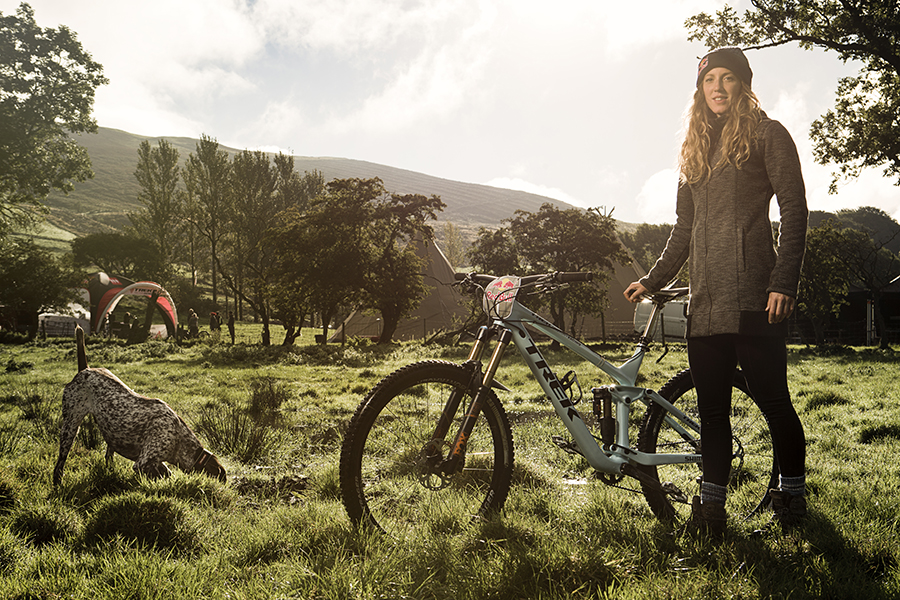
Rachel Atherton

A recent recipient of the prestigious Laureus World Action Sportsperson of the Year, Atherton had essentially the perfect year. She won every single round of the World Cup, is unbeaten in 15 races and was once again crowned world champion. Understandably, the awards have come thick and fast for the 29-year-old.


Lindsey Vonn

At 32, American Vonn could have been forgiven for retiring long ago but last month became the oldest female world championships medallist with her bronze medal in the downhill at St Moritz. It also marked a seventh world medal in an already illustrious career, all the more impressive having broken her arm in a training crash in November, which has resulted in nerve damage which meant her right hand was still partially impaired.


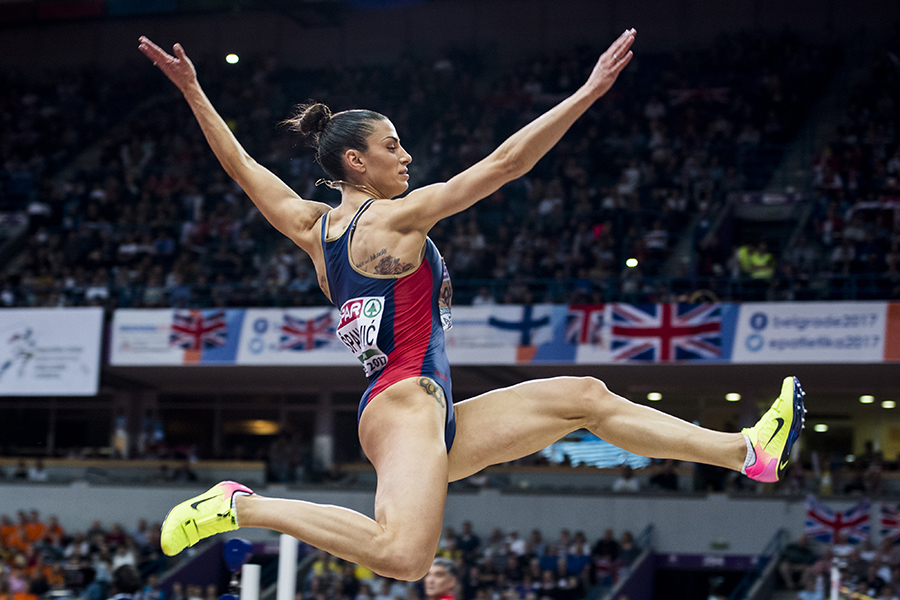
Ivana Spanovic 

The pressure was on Ivana Spanovic to deliver gold in front of an expectant home crowd at the European Indoor Athletics Championship in the Serbian capital of Belgrade. She didn’t disappoint. A heroic performance saw her jump seven meters and 24 centimeters, a new personal best and Serbia’s new national record. It was the third best indoor jump of all time, just 13 centimeters off the world record. 


Mélanie Astles

The story of Mélanie Astles has a blockbuster film script written all over it such are the boundaries she has broken and odds she has defied. The five-time French aerobatic champion is the first woman to ever compete in the Red Bull Air Race and is currently in her second year as a Challenger Class pilot. Her determination to become a pilot saw her leave school at 18 to manage several gas stations which helped her save money for flying lessons. The sacrifice was rewarded with a historic second placed finish in Indianapolis last year and clinching a place on the podium at the season opening Abu Dhabi race in 2017. 


Maddie Hinch

From a British perspective, Hinch was the hero of the hour during the women’s hockey final on a balmy evening in Rio de Janeiro back in August. The relatively diminutive 28-year-old proved something of a brick wall as wave after wave of attack rained down from the Netherlands in regulation time before she saved four penalties in the ensuing shoot-out.


Mikaela Shiffrin

It feels like Shiffrin has been on the World Cup circuit for a lifetime so prodigious a talent was she. In St Moritz she picked up a third straight slalom world title in a discipline which she has taken to truly dominate. She also added a silver in the giant slalom and now has her sights set on the overall globe for World Cup champion.


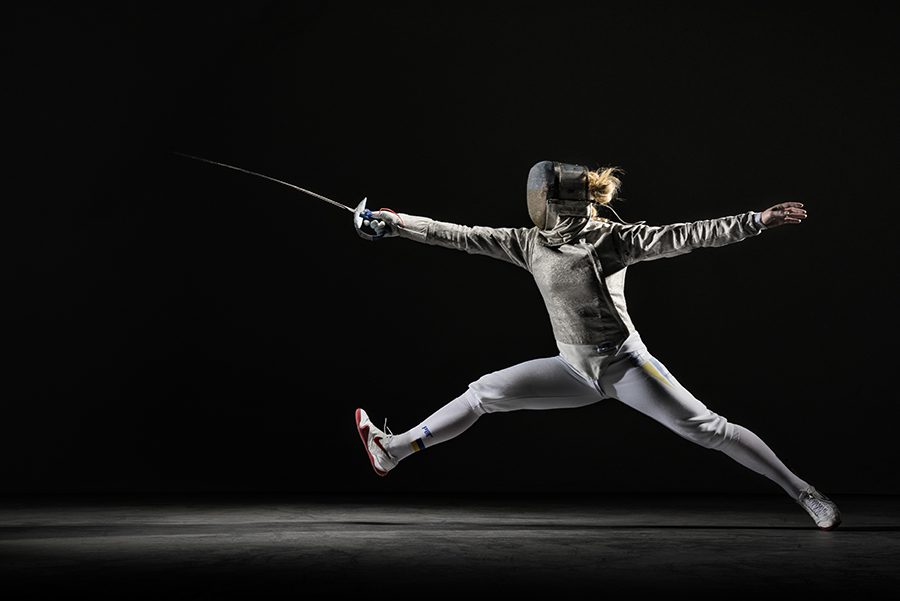
Olga Kharlan

In her native Ukraine, the 26-year-old has long been a household name after a breathtaking performance earned her country the team gold at Beijing 2008. Eight years on last summer, she came home from Rio de Janeiro a double medallist, winning team silver and taking the individual bronze medal. She now has her sights set on a Tokyo 2020 gold.


Kelly Sildaru

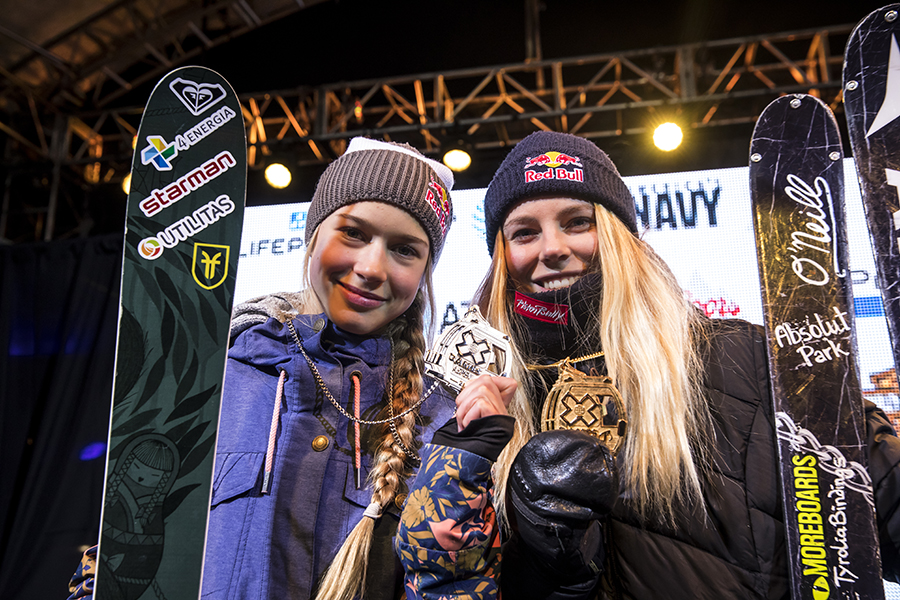
Billed as Super Sunday, this year’s Winter X Games drew to a close on the final day with teenage sensation Sildaru taking the spoils and defending her title in the Slopestyle. Her result meant she was the first athlete in the event’s rich history to win two gold medals before turning 15 and the 14-year-old Estonian was also the youngest competitor to win two medals at a solitary Games.

Lisa Zimmermann

Just one point separated the German freestyle skier and closest rival Kelly Sildaru in the inaugural Women’s Ski Big Air at the X Games at the start of the year in Aspen. But thankfully for Zimmermann (above right), a perfect switch double 10 and textbook cork nine truck ensured she was in the ascendancy on the podium.


Gwen Jorgensen

Both in and out of competition, the past half a year or so have been a whirlwind for the American. She has taken triathlon to new levels and backed up her status as world No.1 to win gold at Rio 2016. And then in January, she and her husband announced they were expecting a child in August, almost a year to the day since her Rio triumph.


Jacqueline Legere

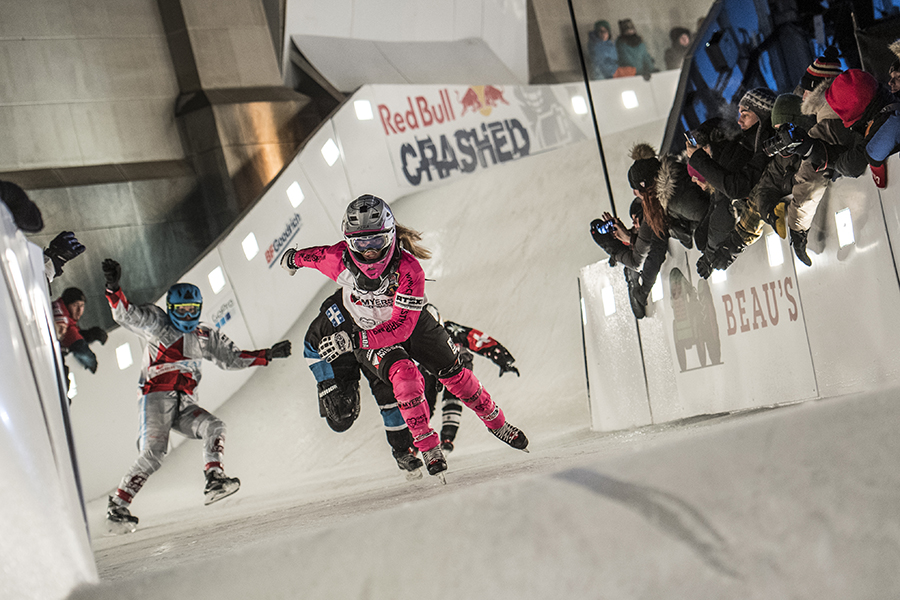
Legere is a modern-day action hero. One of the stars of the Red Bull Crashed Ice series, she relishes hitting speeds of 50km/h come race day. But when not getting her adrenalin fix on ice, she also doubles up as a stuntwoman, which has seen her take up starring roles on TV and in the movies.


Amy Chmelecki

For as long as she can remember, Chmelecki wanted to be a skydiver and, since turning the legal age of 18, she has been making up for lost time. In November, she led 65 women in a world record jump in the Arizona desert, braving -25C-degree temperatures at 6,000 metres and again made headlines with a Valentine’s Day-themed jump last month.


Nude Foods: Cape Town’s First Plastic-Free Grocery Store

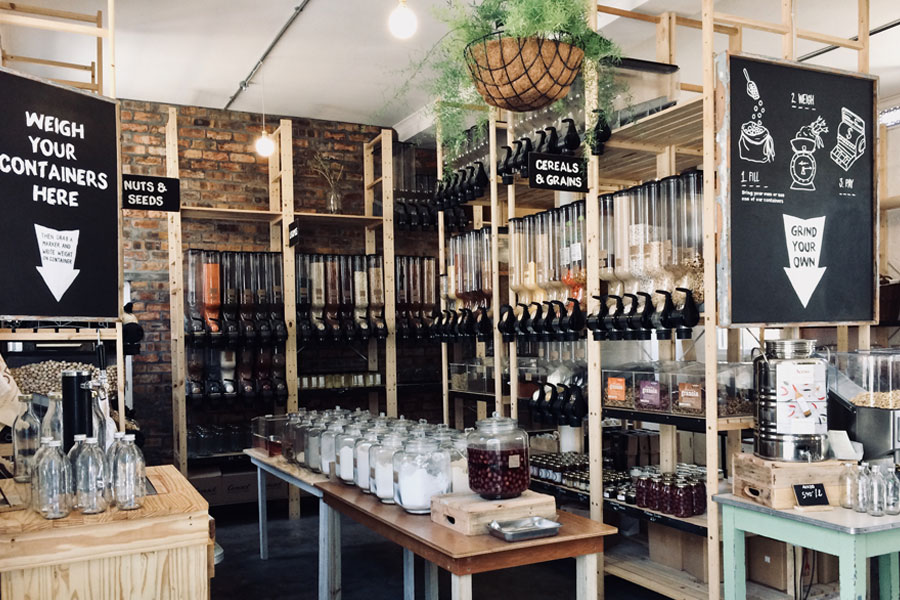
While walking the streets of Cape Town recently, I discovered South Africa’s very first plastic-free grocery store: Nude Foods. It has an old-school ambience with a simple, modern-twist.

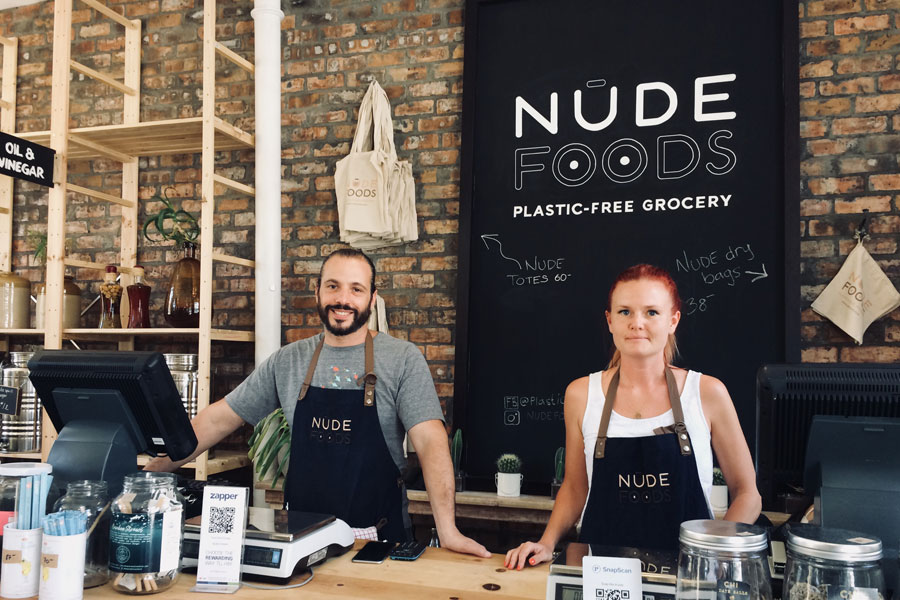
Founder Paul Rubin has created an environmentally friendly shopping experience for those who care about their food and how it’s packaged. Launched in December 2017 the store helps care for our environment and the health of others, offering a variety of organic and earth-friendly foods – all of which are GMO free.

If you like this, subscribe here for more stories that Inspire The Future.
Stepping into the store was rejuvenating, I had a look around and asked Paul a few questions:

What was the motivation behind creating this plastic-free store?

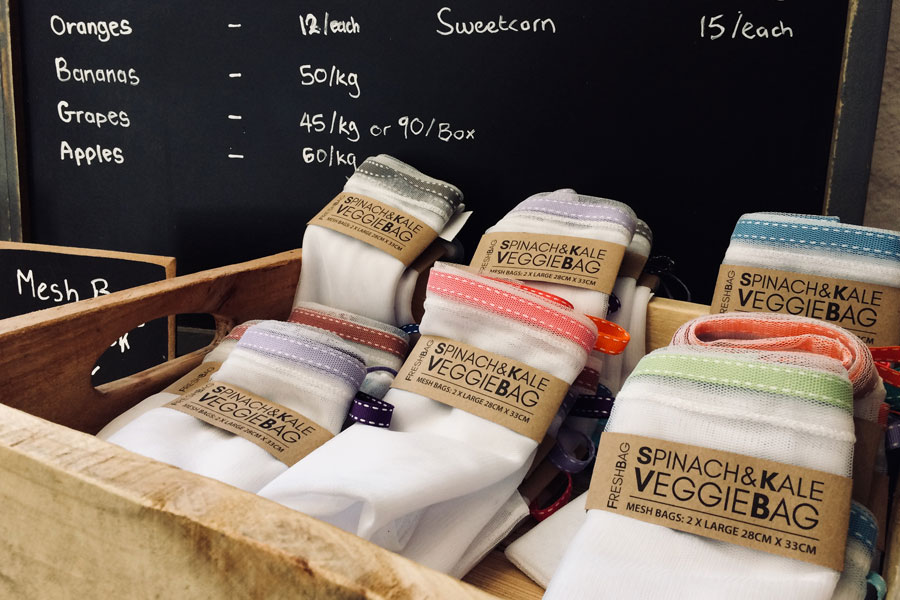
The ethos of my store is to eliminate single-use plastic and unnecessary packaging. We encourage our customers to bring their own containers where we weigh them in a jar at a pre-weigh station. Customers can fill the jar with their purchase and we then deduct the weight of the container from the amount owing. If you don’t have your own container, we sell glass jars and bottles, pure cotton, reusable dry goods bags, mesh bags for fresh produce and free brown paper bags.


How do you intend growing Nude Foods?

We like to engage with our customers, educating them on the reason behind our mission and purpose. We also ask for feedback because we want to establish the types of products people want (and don’t want) so we can fine-tune our food to cater to residents in the area. We want to appeal to people with an environmental conscience and hope this becomes a growing movement.

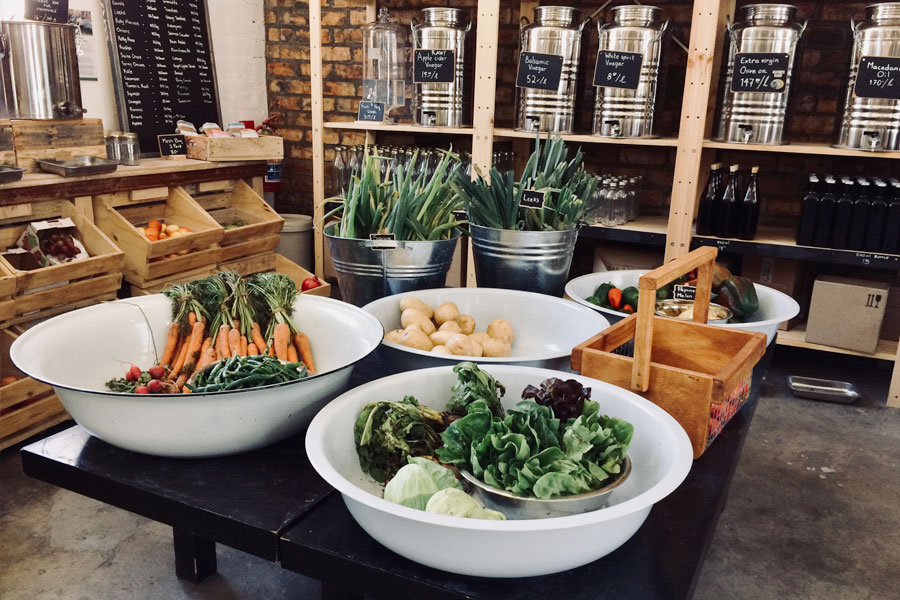
In addition to being plastic free we support quality food brands, which have eliminated preservatives and fillers. We get our fresh produce from a local farm called Naturally Organic, an EU certified 100% organic farm in Phillipi, an agricultural area near Cape Town. We try and source everything locally, and by doing so, we support local business.


Are you looking to create partnerships with existing businesses?

Not yet, but we are open to collaborating with small local businesses. We recently collaborated with a nearby coffee store called Kamili. They created a pop-up coffee stand in our store that offered customers free coffee. Although we have no formal partnerships, we seek suppliers that work with the same ethos, and are happy to help support other startups and entrepreneurs.

How will you scale your idea?

We plan on opening another store within a few months in Cape Town. It will be a smaller version of our first store, which will offer only our most popular goods. My longterm plan is to open a few more stores, maybe six, around the Western Cape province, but we first want to learn to walk before we can run.

What feedback have you received from regular customers?

Many of our customers love shopping this way as they feel more connected to their food. It allows them to be precise in how much they need to buy, as opposed to buying pre-packaged goods that might sit on shelves for weeks, spoil, and go uneaten.

After visiting this innovative store I came to the realization that a plastic-free grocery store can play an important role in showing how to take action around environmental issues. It tackles three important goals of the 17 Sustainable Development Goals, laid out by the United Nations: Goal no.3: Good Health & Well-being, Goal no.12: Responsible Consumption & Production and Goal no.13: Climate Action. Consumers have a choice in where they choose to spend their money, and shopping at stores that promote a healthier, cleaner planet can help achieve these goals. 

If you like this, subscribe here for more stories that Inspire The Future.

Nude Foods: Cape Town’s First Plastic-Free Grocery Store

While walking the streets of Cape Town recently, I discovered South Africa’s very first plastic-free grocery store: Nude Foods. It has an old-school ambience with a simple, modern-twist.

Founder Paul Rubin has created an environmentally friendly shopping experience for those who care about their food and how it’s packaged. Launched in December 2017 the store helps care for our environment and the health of others, offering a variety of organic and earth-friendly foods – all of which are GMO free.

If you like this, subscribe here for more stories that Inspire The Future.
Stepping into the store was rejuvenating, I had a look around and asked Paul a few questions:

What was the motivation behind creating this plastic-free store?

The ethos of my store is to eliminate single-use plastic and unnecessary packaging. We encourage our customers to bring their own containers where we weigh them in a jar at a pre-weigh station. Customers can fill the jar with their purchase and we then deduct the weight of the container from the amount owing. If you don’t have your own container, we sell glass jars and bottles, pure cotton, reusable dry goods bags, mesh bags for fresh produce and free brown paper bags.


How do you intend growing Nude Foods?

We like to engage with our customers, educating them on the reason behind our mission and purpose. We also ask for feedback because we want to establish the types of products people want (and don’t want) so we can fine-tune our food to cater to residents in the area. We want to appeal to people with an environmental conscience and hope this becomes a growing movement.

In addition to being plastic free we support quality food brands, which have eliminated preservatives and fillers. We get our fresh produce from a local farm called Naturally Organic, an EU certified 100% organic farm in Phillipi, an agricultural area near Cape Town. We try and source everything locally, and by doing so, we support local business.


Are you looking to create partnerships with existing businesses?

Not yet, but we are open to collaborating with small local businesses. We recently collaborated with a nearby coffee store called Kamili. They created a pop-up coffee stand in our store that offered customers free coffee. Although we have no formal partnerships, we seek suppliers that work with the same ethos, and are happy to help support other startups and entrepreneurs.

How will you scale your idea?

We plan on opening another store within a few months in Cape Town. It will be a smaller version of our first store, which will offer only our most popular goods. My longterm plan is to open a few more stores, maybe six, around the Western Cape province, but we first want to learn to walk before we can run.

What feedback have you received from regular customers?

Many of our customers love shopping this way as they feel more connected to their food. It allows them to be precise in how much they need to buy, as opposed to buying pre-packaged goods that might sit on shelves for weeks, spoil, and go uneaten.

After visiting this innovative store I came to the realization that a plastic-free grocery store can play an important role in showing how to take action around environmental issues. It tackles three important goals of the 17 Sustainable Development Goals, laid out by the United Nations: Goal no.3: Good Health & Well-being, Goal no.12: Responsible Consumption & Production and Goal no.13: Climate Action. Consumers have a choice in where they choose to spend their money, and shopping at stores that promote a healthier, cleaner planet can help achieve these goals. 

If you like this, subscribe here for more stories that Inspire The Future.

Emma Watson Partners With National Geographic on #InternationalWomensDay

A new partnership aims to accelerate gender parity by highlighting women photographers with outstanding photographic contributions. Work from eight female National Geographic photographers will be featured throughout Women’s Day, curated by Watson.

The National Geographic account is the most followed brand on Instagram worldwide, with Watson and National Geographic having a combined total of over 129 million followers.

The actor, activist and UN Women Global Goodwill Ambassador has partnered with National Geographic to become the first guest editor of the National Geographic Instagram account (@NatGeo) to mark International Women’s Day 2018.

If you like this, subscribe here for more stories that Inspire The Future.
Working with the editorial team at National Geographic, Watson will curate the account, highlighting the work of eight National Geographic female photographers. The photographers, from Saudi Arabia, Iran, Azerbaijan, Australia, the United States and the Philippines, cover a wide range of important and relevant topics including male guardianship and the longstanding ban on women driving in Saudi Arabia, the effects of displacement on women and girls running from Boko Haram in Nigeria, unequal pay in India for women day laborers in the brick industry, the bond between mothers and their babies evident even in nature, advancements in women’s rights and the importance of self-identity and the power of hope for a better tomorrow among our world’s young girls.

The National Geographic Instagram account is the most followed brand on Instagram and one of the top 15 most followed accounts on the platform.Both Watson and National Geographic have a combined total following of 129 million followers and this experience will be amplified via Facebook Stories on the National Geographic magazine Facebook page, extending the reach by another 22 million followers.

https://www.instagram.com/p/BgD7Oj9johH/?taken-by=natgeo


Watson says, “Women photographers are often under-represented and under-celebrated. I’m thrilled to mark this day by profiling the talented female story-tellers and image-makers that are working hard to build empathy across borders.”

Susan Goldberg, Editorial Director of National Geographic Partners and Editor-in-Chief of National Geographic magazine says, “We are honored to be partnering with Emma to recognize the contributions of these eight incredible women photographers, who are shedding light on important stories that make a difference in people’s lives. We are eager to use our storytelling platforms and our power as a global media brand to highlight women by calling attention to their work, their stories and their causes.”

“Women photographers are often under-represented and under-celebrated. I’m thrilled to mark this day by profiling the talented female story-tellers and image-makers that are working hard to build empathy across borders.”

In addition, in an effort to encourage conversations online and through social communities on March 8, National Geographic will also be publishing articles tied to International Women’s Day at NationalGeographic.com. This will include stories of inspirational women from around the world, portraits of powerful women throughout history, discussion around some of the greatest barriers women are facing today and highlights of some of National Geographic’s most notable female explorers, including Dr. Jane Goodall. 

https://www.instagram.com/p/BgEEpVBDRrZ/?taken-by=natgeo

National Geographic’s acclaimed documentary JANE will make its broadcast premiere on Monday, March 12. Directed by Brett Morgen and featuring an original score from legendary composer Philip Glass, JANE has won Best Documentary Awards from the National Board of Review of Motion Pictures, Producers Guild of America, Writer’s Guild of America, The American Cinema Editors Guild and the Motion Pictures Sound Editors Guild, as well as The Critics’ Choice Documentary Awards.

A number of other National Geographic Instagram accounts will also be featuring photos of and by inspiring women, including 2018 National Geographic Adventurer of the Year Hilaree Nelson O’Neil on @natgeoadventure and Dr. Jane Goodall on @natgeowild.

If you like this, subscribe here for more stories that Inspire The Future.
Students From Around The World To Train Like Astronauts

Honeywell, a company that invents and manufactures technologies that address some of the world’s most critical challenges around energy, safety, security, productivity and global urbanization, has invited 325 students to an immersive, STEM-focused Leadership Challenge Academy Experience at the U.S. Space & Rocket Center.

The 325 students from 35 countries and 25 U.S. states and territories will attend the annual Honeywell Leadership Challenge Academy at the U.S. Space & Rocket Center (USSRC) in Huntsville, Ala. The two week-long programs – February 24 through March 9, 2018 – will give students the opportunity to build leadership skills by tackling real-world challenges in science, technology, engineering and math (STEM).

If you like this, subscribe here for more stories that Inspire The Future. 
“We welcome this annual opportunity to partner with Honeywell and host its global community of future leaders,” said Dr. Deborah Barnhart, CEO and executive director, USSRC. “Through this immersive program, students will learn teamwork, communication and problem-solving skills, and get a glimpse of the possibilities for their lives and careers in the 21st century.”

The World Economic Forum projects 65 percent of students entering primary school today will ultimately work in new technologically advanced job types that don’t yet exist. Honeywell’s goal is to inspire and prepare young people for the rapidly changing jobs of tomorrow.

At the Academy, students between the ages of 16-18 participate in hands-on, team-based activities such as building, coding and testing rockets, simulated astronaut training, shuttle missions and a moonwalk, all designed to emphasize STEM education in an ever-changing, connected world.

“Space Camp went far beyond my expectations last year,” Cecilia Reyes Esparza, a student and 2017 alumni from Mexico. “My favorite activities were the team building projects, like the shuttle mission simulation and the aviation challenge. The amount of teamwork needed to complete those missions successfully was eye-opening, and getting to try real astronaut and pilot training simulations was an experience that I’ll never forget.”  

“After participating in the Academy last year, I’m now confident that I want to pursue a career in science,” said Cassandra Corraya, a student from Minnesota, Minn., ambassador at this year’s Academy and alumni of the program. “The Academy not only gave me the opportunity to learn more about coding and space, it also helped me meet new friends from around the world. I’m excited to be an ambassador this year to help share this amazing experience for other students like me.”

“Honeywell is an industry leader at blending physical products with software solutions to make the world smarter, safer and more sustainable. We want to develop the next generation of technology leaders and innovators, so it is critical for us to help facilitate student interest in STEM-based fields,” said Mike Bennett, president, Honeywell Hometown Solutions. “Through our unique partnership with USSRC, we are taking a non-traditional approach to learning by getting students excited about STEM and how it relates to their future careers.”

Since its launch in 2010, Honeywell, in partnership with the USSRC, has awarded 2,091 scholarships to students of Honeywell employees to attend the Academy. Scholarships are granted after a rigorous application and review process based on academic achievement and community involvement. Financial contributions from Honeywell and its employees fund the scholarships, which cover the cost of tuition, meals, accommodations and program materials.

For more information about the Academy and the students attending, please contact Cecilia Tejeda(Honeywell) or Pat Ammons (USSRC) 

If you like this, subscribe here for more stories that Inspire The Future. 

0