Impact Investing Goes Mainstream

“You cannot separate people from the environment,” says Michael Van Patten, former Mission Markets CEO and current Founder of ethical investment tech company my4. His new company is a marketplace for investors within the impact and sustainability sector looking for a way to align their personal values with their investments. He shared his views on impact investing with us.

“We’re trying to create an infrastructure where  investment can more effectively access these type of opportunities and support the growing global movement of people looking for returns on investment, while also making sure their dollars are going to a tangible social benefit,” says Van Patten.

This way of thinking may not apply to every aspect of an investors portfolio, but clearly they are starting to identify a percentage of their portfolio for this. “We’re creating an infrastructure that integrates existing financial measurement tools that have started giving information on social enterprise or environmental projects. We’re also measuring the impacts above and beyond the financial benefits an investor might receive.”

“Most people look at  impact asset markets and treat them differently,” says Van Patten. “Yes, they are different, but you need to speak to traditional investors in their own language. The impact assets market is still small compared to traditional markets, and the world doesn’t really fully understand them yet.

To become effective worldwide, and to ultimately change the way we do business, we need to put this in a format that investment advisors, brokers and other gatekeepers of wealth understand.”

“From this sector you’re going to see the next generation of major corporations emerge, the future Fortune 500 companies.”

At the very least, these gatekeepers should be educated enough to be able to respond intelligently to the growing number of requests that are arising from investors wanting to enter these markets. Van Patten doesn’t treat impact investing as a niche market but as a mainstream one. “The obstacles we face are that many organizations seeking capital are small, not well-known and are still in their formative years.

Large established companies giving regular and predictable returns doesn’t exist yet. The benchmark tools an investor might use when reviewing a company’s performance, such as the risk and return over ten years, is not available yet, as this industry is still too young.

“One of the biggest obstacles is that investment-seeking companies tend to be private and in the U.S. you have to raise capital in a private placement that is only available to accredited investors. These types of investment opportunities are only available legally to someone who has a lot of money. Anyone who doesn’t qualify as an accredited investor cannot even begin to look at these opportunities. That’s a big roadblock, and we’re trying to change it.

“On returns, it really depends on how you view ‘return’. Historically, these investment opportunities have been in the form of debt or a form of debt and equity, and typically the returns were not as high as traditional markets. But now all that’s changing. 

“Whatever you call this sector, it can only grow. From this sector you’re going to see the next generation of major corporations emerge, the future Fortune 500 companies. Before this happens you’ll see a lot of them struggle because we’re still in infancy .”

In the future, Van Patten says that products and services seeking this kind of investment will have to be transparent in their social and environmental footprints. “The future of finance is going to have to incorporate these two externalities as part of the new way of doing business,” he says. “How this will be incorporated into a companies balance-sheet is yet to be seen, but the writing is on the wall.

Major corporations are now part of working groups, established to create transparency in the social and environmental footprint of companies. For example, companies such as Levi Strauss, Gap, Walmart, Patagonia and Timberland are now placing information on their clothing or food that allows you to rate the environmental footprint of that product.

As well as the obvious good this creates for the planet, it’s also clever marketing. They manage to distinguish themselves from competitors, but most importantly it creates an opportunity for those companies that aren’t onboard to start losing market share.” Whether companies reveal their responsible behavior in an investor report, annual report, product labels or as part of their service, this fact is going to drive consumer and investor demand in the future,” says Van Patten.

“Presently, the market is clearly not favoring a company that is sustainable, it is just not being priced into a company’s stock. Eventually these issues are going to become evident in company annual reports, and it will begin to affect that company. For example, a company that pollutes will be exposed, and its stock will be effected adversely – not only by consumers refusing to buy their goods, but also from giant corporations, with good governance, who might cut them from their supply chain.

Companies should not make the mistake of focusing solely on consumer sentiment, but also on business-to-business transactions. “If an investor knows that a company he’s invested in is already thinking ahead and initiating business models on how to become more sustainable and transparent, then that shows a management team that’s already on its toes and focusing on the next big thing.

If they’re not, then you need to question whether that company, and management, is actually seeing the change happening in the world right now. If you ‘get it’ as a company, then you acknowledge your actions have global implications and you implement that as a business process.

When this becomes more recognized, you’ll see the stock prices of these companies rise and carry a premium as it reflects on how innovative and forward-thinking management is. To do this you need vision and belief in what you’re doing.

Be bold, even when a market that may not yet ‘be there.’ Your ideas need to cater for where the market is right now, and at the same time, actively shift towards where you aim to be.”

 

Why is “Design Thinking” on the Lips of so Many Business Leaders?

These days there’s a lot of talk – and a lot of executive education – revolving around “design thinking.” Companies like Apple, Netflix, Facebook and others are disrupting industries and business models left and right. And with these developments comes the realization that traditional approaches to problem-solving are no longer enough.

So, across industries around the world, attention is shifting to design thinking as an approach for unleashing creativity and innovation in organisations.

But what is design thinking?

Although the stereotypical image of “the designer” is often an egocentric, domineering aesthete, design thinking is actually highly collaborative process that has relatively little to do with visual appearance. 

As defined by the Stanford University Institute of Design, the design thinking process consists of five steps:

1. Empathize – working to fully understand your customer through observation and interviews
2. Define – synthesizing findings from the previous step to form a “user point of view”
3. Ideate – structured brainstorming of possible solutions
4. Prototype – giving a physical, digital, or diagram form to selected ideas
5. Test – putting prototypes into practice to see if they meet the user needs identified at the beginning

Unlike analytical thinking, which focuses on the problem at hand and considers how current resources and knowledge might fix the problem, design thinking focuses on the ultimate goal, apart from whatever the current situation might be.

According to Melissa Rancourt, academic director of the Global Executive Master’s in Strategic Design and Management at Parsons School of Design, this focus on future goals rather than current constraints “challenges the status quo and forces you out of your comfort zone”. Using creative design processes, “you often end up completely discounting existing problems, instead uncovering an unexpected approach that could ultimately lead to an entirely new business model.”

Rancourt adds that a process like this needs must necessarily tolerate – and even embrace – ambiguity and failure. “The iterative nature of design thinking assumes that multiple possible solutions and prototypes will be explored and tested simultaneously, and ideas are bound to be modified and even discarded along the way.”

How is design thinking being implemented in the business world?

Sure, there are companies like Airbnb or Uber that are founded on design thinking. It’s natural in smaller companies. But Rancourt explains that large businesses operating within traditional industries are now training their staff on design thinking. “Even if they don’t immediately implement design thinking across the board, they are setting up design-thinking teams,” she explains. “These groups are given the freedom to think totally out-of-the-box and test out solutions that might be expanded across the organisation.”

When you think about it, the exec-ed classroom is an ideal place not only to learn about design thinking, but also to actually participate in it first-hand. In any exec-ed programme worth its mettle, you’re not going to find a lecture-style setting where a professor stands in front of the room and dictates the right answer. 

Instead, you’ll be working through a set of highly experiential exercises together with people from a diverse set of professional backgrounds. Each participant contributes different ideas, and immediate feedback and vetting leads to those ideas either getting discarded – refined into creative, innovative, design-led solutions.

Laura Montgomery is a higher-education expert who blogs for The Economist Careers Network.


Modern Farming: Technology Helps Keep Food on the Table

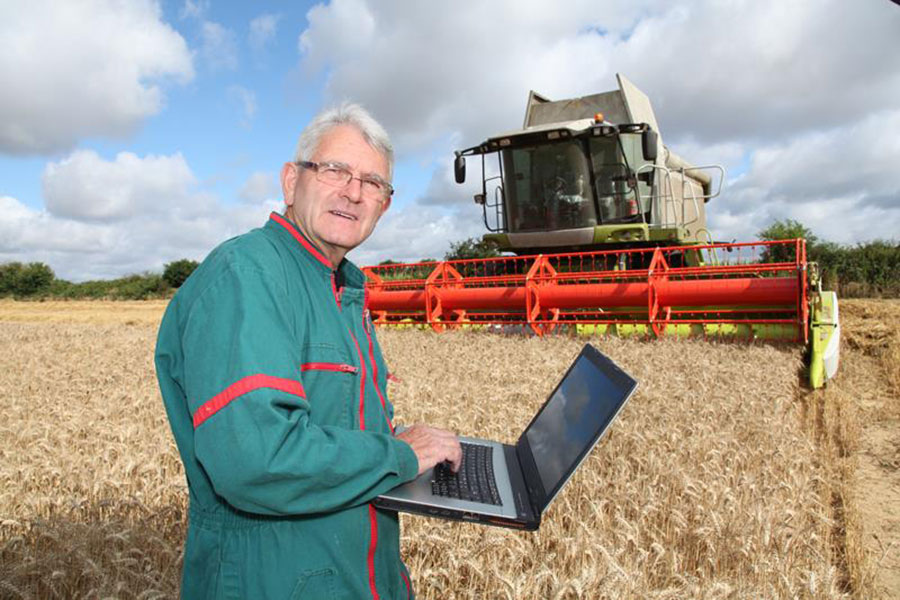
From farm to table, much about food production has changed – for both farmers and consumers. Like any other business, farmers must adapt to a changing world –one that will see its population grow to 9.6 billion by 2050.

With finite resources, it will take innovation and a variety of technologies to meet the world’s food demand. This includes using new technologies like biotechnology (also referred to as genetic engineering), which can help produce more food on the same amount of land, without having to destroy wildlife habitats.

A 2014 study by the International Food Information Council (IFIC), “Consumer Perceptions of Food Technology,” shows that more than seven in 10 consumers agree that modern agriculture –conventional farming using today’s modern tools and equipment — can be sustainable and produce high-quality, nutritious foods. The survey also underscored that two-thirds (66 percent) of respondents say it is important that their food be produced in a sustainable way, including producing food affordably with the same or fewer resources, in a way that is better for the environment.

“When consumers understand the potential benefits that technology in food production can have for both people and the planet, they can get behind it,” said Marianne Smith Edge, MS, RD, LD, FADA, and senior vice president of Nutrition and Food Safety at IFIC. “People need to know what’s in it for them.” To this point, of consumers who ranked these factors of sustainability as important, most believe there is a role for biotechnology:

* Ensuring a sufficient food supply for a growing global population

* Producing more food with fewer natural resources

* Conserving the natural habitat

* Reducing carbon footprint

To address increasing interest in how our food is produced, IFIC Foundation provides a glimpse of modern agriculture in its new animated video, “Your Food, Farm to Table,” showing how farmers in the U.S. and globally are working to produce our food year-round, including using technology to safely produce more food, while putting less stress on our natural resources. With more “precise” information at their fingertips, farmers can be more selective with supplies and resources such as fertilizers, pesticides, tractors and other fuel-run equipment, and irrigation water. As a result, they can reduce carbon dioxide (CO2) emissions, pesticide applications, soil erosion and water run-off — in turn, improving sustainability.


Surprise, Surprise: Mercedes to Replace Robots With… Humans

According to the head of production at Mercedes-Benz, the robots cannot cope with the high degree of customization and the many variants the carmaker has today.

Mercedes-Benz plans to abolish a number of assembly-line robot in its largest plant in Sindelfingen, Germany and compensate it by getting more work done by people.

Even more surprising, or perhaps not, is the justification given: to cope with the extensive customization options of the vehicles.

According to the head of production at Mercedes-Benz, the robots cannot cope with the high degree of customization and the many variants the carmaker has today, which conveyed the new very timely and smart message “We save money and secure our future while employing more people.”

So what about the tsunami warning from the World Economic Forum in Davos, where specialists from around the globe predicted that the 4th industrial revolution robots would cost five million jobs by 2020?

Well, maybe predicting the future is not that simple after all… but still, I would like to add two predictions of my own:

1. ROBOTS AND HUMANS WILL WORK SIDE-BY-SIDE FOR A VERY LONG TIME

In the same article, the head of productions mentions that are areas which would not work without robots, mainly painting and welding. He also says the vision is that humans will work side-by-side with small robots that can continually perform repetitive tasks. This implies the creation of mixing zones, where the robots no longer work in separately enclosed areas, requiring completely new security measures.

Well, it doesn’t take a genius to predict that. The degree of customization, heading steadily towards product uniqueness, will require, in many cases, a flexibility that only a special type of factory resources has: humans.

Yes, all the repetitive work will be performed by robots. And with time, the scope of these activities will be enlarged. Still, the most value-added activities, the ones where completely new and unforeseen situations happen, will only be dealt with by humans. With the advent of artificial intelligence these will be fewer than before, but will be critically important.

2. THIS DECISION IS DEFINITELY… TEMPORARY

I hold out that this decision is temporary. Although temporary in this context could mean several years, or even decades.

The different customization options will continue to evolve towards unique products. The same article refers that Daimler is planning to bring in ten new models to the market over the next four years, which can be ordered in several variations and with many extras.

The days of mass customization, where only small variations could please consumers, seem to be over. So manufacturing companies need to be prepared for this reality.

What is clear is that the automation and robotics necessary to cope with this paradigm shift will be very different from the ones used today.

The industry 4.0 working group actually predicted this: the shop-floor will be composed by intelligent products or materials (cyber-physical systems) and intelligent manufacturing equipment (cyber-physical production systems). These will have their own communication, sensors and actuators, computing power and intelligence and will become autonomous decision entities.

The consequence is that the shop-floor operations will no longer be centrally controlled, but will rather become a decentralized marketplace with demand and supply. Until this happens, the best is to use the most flexible resources available today: humans.

 by Francisco Almada Lobo, CEO of Critical Manufacturing


The Smartwatch That Protects you From Environmental Threats

German company GNS GmbH, a leading developer of embedded location and mobile electronics technology, has announced the launch of a Kickstarter campaign for Fitti Guard, a new generation of fitness and environmental tracker that will warn wearers about poor air quality and even radiation threats.

Fitti Guard is the first environmental sensing and protection device that you can wear on your wrist.
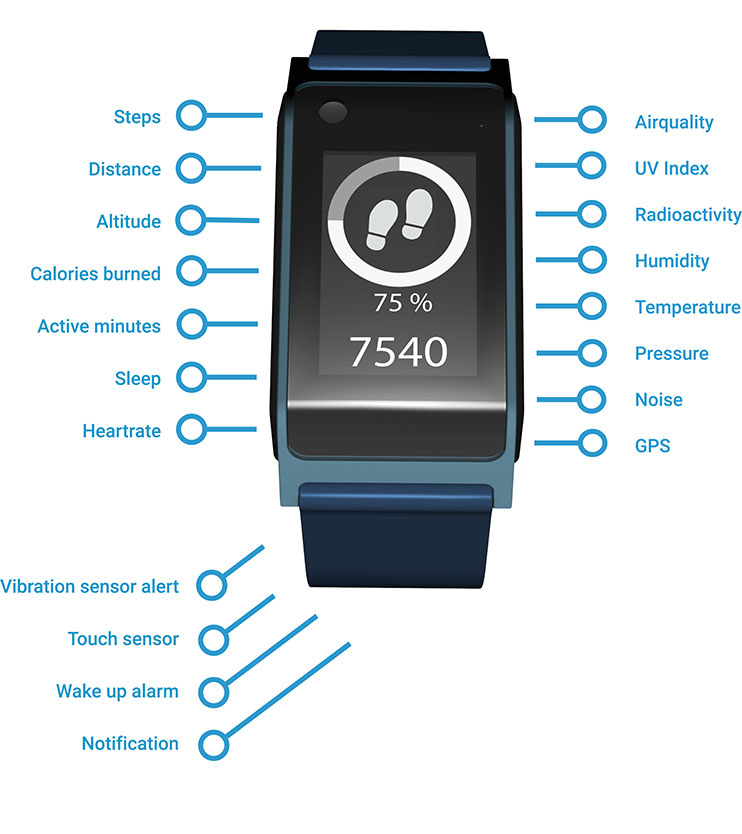
It comprises ten sensors that help identifying and avoiding unhealthy situations such as ultraviolet light exposure, poor indoor air quality, radioactivity and noise nuisance. A vibration alarm and warning icons inform the user as soon as a threshold of exposure has been exceeded. The watch is aimed at improving health and well-being in people’s daily lives.

Advanced fitness functions count your steps and calculate distance and calories, much like many other smartwatches. But Fitti Guard goes one step further with an activity recognition algorithm, based on a neural network, that detects the kind of activity you’re performing. Tracks are recorded with an integrated GPS and a barometric level sensor measures the covered elevation. A sleep tracking function helps support a healthy and conscious lifestyle with wearers only needing to charge the battery every 21 days.

fitti_functions

“This unique activity GPS watch combines fitness and additional health functionality in a single stylish device offering protection from daily environmental influences,” says Bernd Bierwisch, CEO and founder of GNS GmbH.

“We are very proud that our engineers were able to integrate reliable UV and air quality sensors in such a small device. Fitti Guard will even give a warning if sun protection is required, or to open a window if the indoor air quality is bad – based on WHO recommendations.”

Fitti Guard was available for pre-order from the end of March on Kickstarter and shipment is planned for the end of 2016.


5 Steps to Leading on Cybersecurity

Organisational leaders have a growing stack of priorities on their desks. Now among them is information security, which until relatively recently, was a responsibility delegated to IT departments.

That began to change in May 2014 when Target’s CEO Gregg Steinhafel resigned in the aftermath of a data breach that exposed the credit card and personal details of 110 million customers of the mega-retailer. The scale of the breach was unprecedented and cost the company at least $252 million. It was the first time a high-profile corporate leader had been ousted for failing to act promptly after a cyberattack. “Suddenly, business people took notice,” says Dr. Dale Meyerrose, president of The MeyerRose Group and lecturer at Carnegie Mellon University’s Institute for Software Research, where he directs the Cybersecurity Leadership (CSL) Certificate programme.

The number of breaches is actually declining each year in many industries, according to Meyerrose, but the number of records compromised in each attack is growing, mainly because hackers are becoming more selective in their targets. The threat of significant damage to an organisation’s brand and its finances is forcing cybersecurity onto the C-suite agenda. Executives stepping up to lead on this issue should start by following these five steps:

1. Realise it’s not a technical problem

Most organisations approach information security from a technical perspective. But this is the wrong strategy, argues Meyerrose. The primary threat is human behavior – the vast majority of data breaches originate with employees, former employees or service providers giving access to hackers, wittingly or unwittingly. In the case of the Sony breach in 2014, for instance, employees allegedly let hackers into the building where they stole the system password. Target’s system was penetrated via a multi-step campaign that started with hackers gaining access to a Target vendor’s account by way of a deceptive email.

Companies need to conduct employee training regularly and meaningfully, addressing topics like social engineering and how behavior can leave the door open to infiltration.

2. Hire the right experts at the right level

Although the number of Chief Information Security Officers (CISO) is growing, many of them still report to the CIO or a chief security officer. They are usually technical experts who are hired for these skills, explains Meyerrose. But organisation leaders and boards are slowly realizing that the ideal CISO also needs to understand the business in order to assess risk factors and explain data in a compelling, understandable way to a non-tech audience. Moreover, they need to be positioned at the right level, ideally that of a senior business manager who has direct access to the C-suite and can affect enterprise-wide changes.

3. Pick an architecture and apply it well

Research shows that over 90 percent of businesses have an information security risk framework in place, but compliance with minimum criteria does not necessarily mean secure. There are numerous standards, many of which are industry-specific. Meyerrose stresses, however, that the type of architecture is not as important as picking one and applying it in a systematic way: “any framework gives you structure, runs you through processes and forces you to answer questions.” Security rests on the architecture being implemented completely and being built on logic and economic principles.

4. View cybersecurity as insurance

Since most companies still consider information security a technical risk to be managed as an IT function, they view it as a cost centre. Yet a good cybersecurity programme insures an organisation against the enormous losses that a hack attack can cause, says Meyerrose. As such, it deserves adequate investment and prioritisation. Cybersecurity insurance is a fast-growing area of the insurance market, and many organisations now purchase coverage. Still, building strong security safeguards remains the best policy, adds Meyerrose.

5. Prioritise threat assessment

Big data analytics are increasingly used to identify information security threats. Meyerrose believes the emphasis should be on profiling the company’s own activity since most breaches originate on the inside. This means each company needs to do data analysis on itself and its “eco-environment”, including partners, customers and vendors. When an organisation carefully profiles its activities and authorised users, it can more easily detect anomalies that red-flag intrusions. It’s also useful to do analyses on the industry and global trends to predict risks.

Meyerrose’s cybersecurity courses at Carnegie Mellon cover three areas: leadership of cyber-enabled organisations, understanding the fundamentals of cybersecurity (e.g., insider threats, cloud computing, big data analytics), and examining cybersecurity from a management standpoint versus a technical one. This kind of training might become standard for all leaders who want to guide their organisations well in the 21st century.


Who’s the Banker of the Future?

Digital disruption will make tomorrow’s banking workforce unrecognizable from today’s. Banks must build a culture that nurtures diversity of thought and ensure bankers have the new skills they need to succeed.

The brain drain is a very real outcome of the low Canadian dollar. US companies can now offer more for high-demand talent in compliance and risk. It’s a worrying development for banks, but also an opportunity for them to re-think their long-term strategy and ask, who’s the banker of the future?

“Since the financial crisis of 2008, banks have been focusing on their core businesses, redesigning their structures and reshaping themselves through the use of technology,” says Andre de Haan, EY’s Financial Services Leader. “But to take their financial performance further, they also need to focus on their people, who will help them win in the future.”

de Haan says in the face of continuously declining ROE, increasing regulation and pressure to reduce workforce, Canadian banks need to identify which employees really create value and what they need to do to attract and retain those individuals.

Understanding the expectations of a new generation of bankers 

Millennials (those born between 1981 and 2000) will constitute 72% of the global workforce by 2025. Yet banks have little brand appeal to young employees. Globally, among IT and engineering graduates, banks are absent from the top 25 most-attractive companies to work for. Banks will need these graduates in the future as they will require highly educated talent. They need to make sure they understand this generation and their expectations of:

  • Greater labour mobility
  • Greater technological capabilities
  • More entrepreneurial mindset
  • Greater sense of entitlement

In addition, millennials are more likely to value flexibility, learning opportunities and mentorship more than monetary compensation. In choosing a place to work, they also consider whether a company’s values align with theirs. Purpose matters to millennials and banks must emphasize it.

Assessing technology’s impact on the workforce

“In the coming decade, all things digital will revolutionize the banking workforce,” says de Haan. “There will be fewer bankers in traditional roles, and the roles of those who remain will be fundamentally different.”

As the role of technology transforms from adding value in efficiency, cost, speed and accuracy and towards managing more complex tasks, banks will have to determine appropriate controls. In addition they’ll have to ensure that employees with the right skills monitor the correct and safe use of technology.

Equally important is understanding, even if automation is possible, where it may not be desirable. This will help reallocate investment across the business and develop plans to retrain and redeploy staff to other parts of the business.

Changing culture to encourage diversity of thought

The key to creating a culture of innovation is encouraging diversity of thought. An adaptable, ‘intrapreneurial’, diverse workforce promotes innovation and there’s evidence that it leads to improved financial performance. To overcome traditional homogeneity, banks must draw talent from a broader pool and build a culture that supports and retains people from different backgrounds, with different views and experiences. For example, EY research across a number of industries shows that the highest-performing companies invest more in the advancement of women than their peers.

“If banks want to attract and retain valuable, innovative talent, they need to transform their HR approach,” says de Haan. “Starting from recruitment all the way to performance reviews, banks should reconsider their employee propositions. Especially for millennials, who are set to become a significant portion of the workforce very soon, the salary alone isn’t an enticing enough offer. They’re looking for much more than that, and more often than not, they’re finding it somewhere else.”

EY are committed to building a better working world.


How to Fight the Taliban With Flip Flops

  • An elite, highly-trained soldier decides that jumping from planes and blowing stuff up is not how change should happen.
  • He realizes economic activity is the only force that will eliminate poverty and especially discrimination towards girls and women.
  • Combat Flip Flops is launched, offering jobs to locals, money for education and cool fashion accessories made from waste military products.

Matthew Griffin’s (pictured above) idea on the global war on terror ended within 15 minutes of arriving in Afghanistan. As a member of the 75th Ranger Regiment, one of the most elite infantry units in the world, he was expected to go further, faster and harder than any other unit. What he never expected was a change in how he viewed the war and that he’d coin the slogan: “Business, Not Bullets – flipping the view on how wars are won.” He also realized that Afghans wanted the same thing as many of us – job security.

“After serving multiple deployments in Afghanistan and Iraq, I knew I wanted to do more for the people living in these nations,” says Griffin. “The idea was simple: create an environment that gives people living in post-conflict nations the opportunity to peacefully rebuild their economy by manufacturing badass products.”

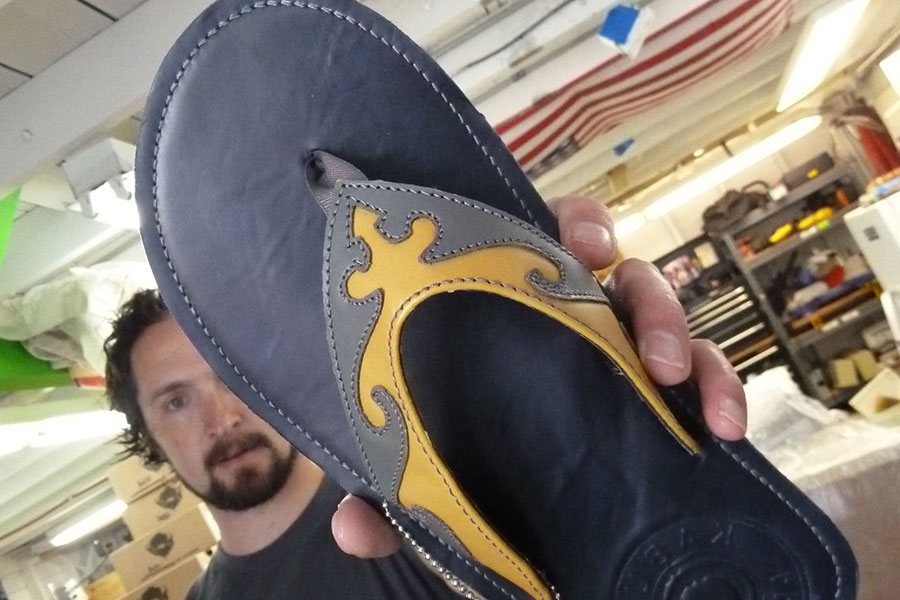
The farm boy from Iowa discovered his first badass product while visiting a military boot factory in Kabul. He was amazed to see a pair of flip flops being made from the soles of combat boots – two slits made in a rubber base with a leather thong added. Afghan soldiers had found it cumbersome to remove their boots five times a day for prayers and an ingenious manufacturer had come up with “combat lite” versions. It was exactly what Griffin had been waiting for. He registered the domain CombatFlipFlops.com within the hour, called fellow soldier Donald Lee to ask if he wanted to go into business, and then called his wife to tell her he was starting a company.

AK_flip combat flip flops

“The U.S. poured trillions of dollars into this country, we might as well have a cool commercial effort to sustain it once the war ends,” says Griffin. Many factories were established in Afghanistan by coalition countries to supply police and soldiers with military gear. Griffin knew that once the war ended, these factories would disappear too. By continuing to produce goods with the same locals, but for peaceful and fashionable reasons appealed to Griffin. Combat Flip Flops launched under a slogan many marketing experts would cringe at, yet for this soldier-turned-entrepreneur it’s perfect: “Bad for running, worse for fighting.”

They set up a really cheesy website and people loved the idea. They sold 1,500 pairs online in first few weeks, despite not having made a single pair.

What does a soldier know about business you’re likely to ask? Surprisingly, Griffin hadn’t only been squinting down the sights of a gun barrel, but also taking the economic lessons of war to heart. “Everywhere I went in Iraq and Afghanistan I saw conditions that were ripe for fundamentalist, extremist groups to take over,” says Griffin. What he saw was the enemy providing jobs.

“They’d say to a poor, rural farmer, ‘Here’s $50 and here’s a bomb. Go plant it.’ Someone with no food is going to take the money and risk planting that bomb to feed his family.”

Griffin decided that an economic strategy was better than a military strategy. “I saw that small businesses were creating sustainable change in some areas,” he says. “Whether it was a soda or SIM card stand, there were families that invested together, bought businesses, cleaned up their street corners and ran businesses.”

afghanistan combat flip flopsA tough childhood, divorced parents and harsh physiological examinations to enter the Special Forces had Griffin thinking he had no empathy. Watching young girls playing happily with nothing but a stick in the middle of a desolate Afghan mountain range changed all that. Witnessing the poverty and oppression of girls and women in these harsh environments made him realize that empathy was the one thing missing in his life. He decided to change and create economic opportunities for impoverished women.

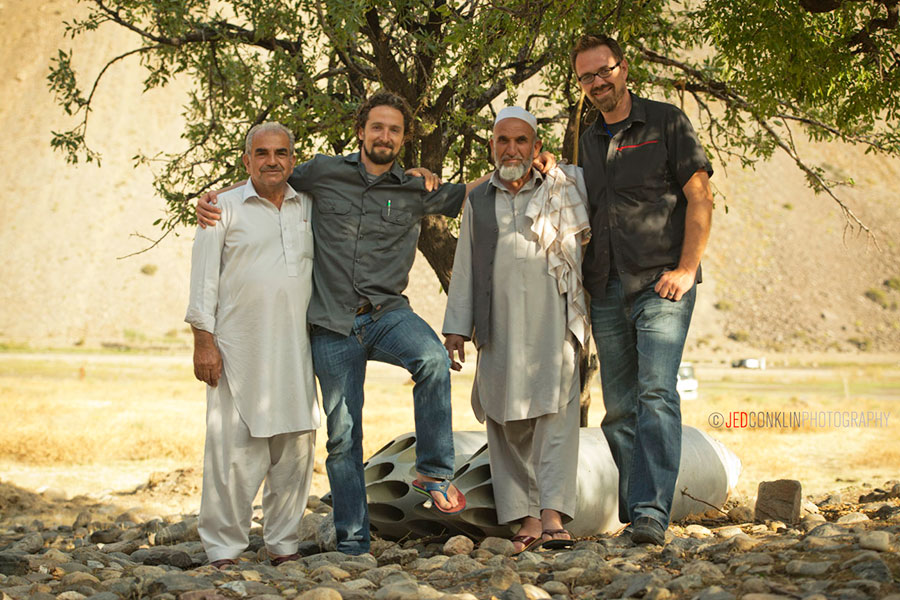
Flip flops were just the start. Griffin and his team had taken a product that people in nearly every country wear, and made it into a weapon for change. Production is now in Bogota, Colombia, providing jobs and investing in people who desperately need it. Their Claymore Bag’s flip the script on traditional weapons of war. Instead of carrying bombs, the bags carry iPad’s and laptops. Their Cover and Concealment sarongs are handmade in Afghanistan by local women and each sale puts an Afghan girl into secondary school for a week. The Peacemaker Bangle and Coinwrap are made in Laos – from bombs. Each bracelet sold clears three square meters of Unexploded Ordnance from a region rocked by long-term war.

afghanistan-education combat flip flops

Griffin is happy that proceeds are going towards educating girls. “If you want to kill radicalism, you can do it with education,” he says. “If you educate women, things will get better, because if you educate a mother, you educate a family and an educated mother is not going to let her child get radicalized.” So far Combat Flip Flops has donated enough money from sales to support the equivalent of 12.7 years of girls secondary education in Afghanistan and funded the clearing of 657 square meters of unexploded ordinance.

“I thought joining the military would be the most beneficial way to help people,“ says Griffin. I used to think that jumping out of airplanes and blowing things up was the best way to support stability in these areas, but after going to Afghanistan and seeing what I saw, enabling people to stand on their own feet is the best course of action for everyone.” Yet despite the change in tactics Griffin is still an adventurer at heart. “Unapologetically, we make cool shit in dangerous places,” he says with a grin.

combat-flip-flops

Man Without Legs: Why I Decided to Make A Difference

Spencer West lost both his legs from the pelvis down at the age of five. This hasn’t stopped him climbing and summiting Mount Kilimanjaro using his hands and wheelchair. He’s also a top-ranked keynoter and author of the best-selling book “Standing Tall: My Journey”. He shares with us why he decided to become a victor rather than a victim.


0