Six Reasons Why You Need a Purpose to Lead

I think we should face the fact that most of our efforts at leadership development have failed. Although billions of dollars have been invested over the last 50 years and tens of thousands of books written to promote better leadership, there is virtually no evidence that leaders are any better today than they were five decades ago.

When I ask business audiences today how many great leaders they have enjoyed working for over their career the highest number I get is two. That’s exactly the same number audiences were giving me 35 years ago when I started working with Stephen Covey.

Perhaps that is not because developing great leaders is futile, but because the challenges of leadership are expanding faster than our ability to help leaders improve. Also, maybe we’ve been investing in the wrong people to develop as high potential leaders.

I believe this because I am convinced the gap between what’s needed and what’s happening is getting worse.

It is because the technology and social revolution has changed the way value is created, the way work gets done, and the very nature of the workforce.

Here are the main points:

1. Organizational hierarchies are relics of the industrial age.  They are in the way of success. They are designed to maximize the productivity of routine work and minimize risk.  These authoritarian cultures reward overly aggressive, hard power personalities whose drive for status and power are seen as admirable ambition.

But consider this. When General Stanley McChrystal took over the Special Forces command over a decade ago it took 96 hours to plan a Special Forces operation. Within two years he was able to reduce that time to 2 hours. He transcended his ‘tell-everyone-what-to-do’ past and created a scalable way to collaborate.He did this daily with thousands of intelligence experts, soldiers and support staff. I said daily! He did it by converting the Special Forces command from a hierarchy to a network.Leading networks is a very different skill set than leading a chain of command. And most current business leaders are very, very bad at leading networks.

2. Competence is measured by strategic velocity. That is the speed at which strategy is decided upon and executed. Most leaders today are still relying on old tools of PowerPoints and annual budget cycles. That is leadership malpractice–a vestige of bad business school training. Today there is a huge gulf between what must be done and what gets done.

3. To be competent, leaders must be open-minded enough to constantly evolve strategy, and agile enough to stay engaged in the details of execution. This requires the expertise to create strategy that is responsive to constantly changing trends, opportunities and threats, and the social intelligence to work with teams of people as a peer to execute it.  The great leaders I have worked with were emperors in terms of strategy, but teammates in product development and execution. In my experience most leaders don’t have a clue on how to do this. This is why I am so insistent that more women be elevated into senior leadership. Their gender-based brain and social strengths are far more likely to develop customer-centered innovations, and their operational intelligence makes them more able to execute cross functionally. (Yes, General McChrystal made the change, in fact so did Steve Jobs, but most hard power men need intense coaching to see how they can use collaborative skills in a disciplined and inclusive way.)

4. The workforce has changed. Not just women and millennial’s . . . everyone. Employees used to give their best efforts because they had the security of long-term employment. They also felt they had a stake in the organization’s long-term success. No more. Research reveals that 80% of employed people constantly search the Internet for a better job. Global surveys that determine the level of commitment employees have to their employer’s success reveal that 70% are not very committed. This is unsustainable. For a network to thrive people must be focused, creative, collaborative and absolutely committed to results. Creating that requires #5.

5. Human purpose is not optional. Since virtually all employees feel like they are simply hired guns it is impossible to create high-performing teams without genuine shared purpose. Survival and success on their own are not shared purpose. Shared purpose is working together to improve the quality of life of customers’ in a distinct way. This is not just corporate social responsibility. It is not simply sustainability. It must be your reason for being in business. Real value-driving-purpose has to be at the core of an organization’s money-making business model.  Research from the Purpose Institute makes the evidence-based case that clear purpose drives all the success drivers. It’s simple. Clear purpose drives:

Innovation, product development, pricing, brand, culture, advertising, hiring, technology investment, market segmentation, supply chain management . . . everything.

Purpose makes hard decisions easier and faster.Most important, human purpose connects people directly with their job and the enterprise. It increases commitment and reduces friction. Purpose is the inspirational glue that keeps networks working at very high rates of innovation execution. Shared purpose was the essential reason General McChrystal was able to create and lead a giant global network. Everyone knew that people’s lives depended on how well they did their job.

6. One more thing. Purpose is necessary but not enough. You also have to know what the hell you’re doing. Leaders must have extremely high levels of business acumen and competence. Purpose is no substitute for competence. Passion alone can put you out of business faster because you mistake your good intentions for good outcomes.

That’s my brief explanation of one reason why old models don’t work, employees are disengaged and once great enterprises will fail if they are not led in radically new ways.

My experience, which is now confirmed by research from Women In Technology International is that women are much more likely to be engaged and motivated by purpose.  Their neuro networks are lit up by solving non trivial human problems.

Bottom line:

Common purpose drives disciplined collaboration, which is the essential quality of an effective 21st century leader.

The good news is that there are lots of women and a few good men who are interested in this new way of leading and working.  If you are, lead with purpose. If your organization isn’t interested . . . find or start a new one.

Life is short. Invest your talent and energy in ways that inspire you!

 

What Tech Executives Don’t Understand About Talent

In a recent interview, IBM CEO Ginni Rometty said what most tech executives say about the growing talent shortage.  She said we need more STEM education.  She advocated channeling more students in to science, technology engineering and math courses. That’s of course the conventional wisdom . . . but it’s wrong.  Well, not so much wrong as it is incomplete.

What Ginni is missing in her message is that that the future doesn’t belong to the scientist or coder. It belongs to the people who can lead and collaborate with teams of scientists and coders.  The future belongs not so much to people with technical intelligence as it does to people who have emotional and social intelligence. It’s group intelligence that matters.  Here’s why.

work

Just consider this graphic.  Before the Industrial Revolution we lived in a world of blacksmiths and cobblers who made custom shoes for horses and people. It’s true. Before machines and factories we relied on craftspeople to custom-make the necessities of life. The factory changed all that. Unskilled employees could be taught to do a repetitive process like screw on a front fender on a model T Ford. This was a massive productivity revolution.  Build-time for the Model T automobile shrunk from 14 hours to 90 minutes. This represented nothing less than a complete revolution of how work is performed.

Factory work has massive social consequences.  As work became scientifically designed to remove all variation and individuality workers became interchangeable cogs in a productivity machine.  All workers were supposed to show up on time and do what they were told.  If they did it long enough they could even earn something called a pension.

The social contract for workers was that if they were reliable and obedient they would have a job and retirement security.  That changed in the 1980s when McKinsey and Company advised Jack Welch to start laying off productive employees from his prosperous locomotive plant.  They argued that if he could cut labor costs arbitrarily, earnings would go up, stock prices would rise, and he would become very rich.

Welch loved this. Without having to invest any money in R&D, or take any new risks he could increase profitability by simply insisting that the workforce work harder.  He liked it so much he got the nickname of Neutron Jack. (A neutron bomb is designed to kill people without damaging buildings, an apt description of generating higher profits through layoffs.) Thus the social contract of being rewarded for hard work and loyalty was voided.

In the 1980s financial spreadsheets were invented and this enabled knowledge work to be automated.  It was really the beginning of artificial intelligence that is something that IBM and scores of other big data crunching companies are using to change the future.  Artificial intelligence is relentlessly turning whole professions into factories in which a few low skilled people can enter data and algorithms can turn it in to something valuable.  For instance, someone with a 10th grade mathematical literacy can use TurboTax software to complete most federal income tax forms within minutes. (That’s quite an achievement since the U.S. has the most complicated income tax laws in the world.)

That’s just the beginning. Industry analysts estimate the artificial intelligence embedded in Intuit’s small business software packages has eliminated the need for tens of thousands of bookkeepers and accountants. You see, bookkeepers are similar to blacksmiths.  In a way they are craft people and the new world we work in doesn’t need very many of them unless they bring something much more important than technical know how.

Artificial intelligence is now being used to write newspaper articles, novels and even songs. It seems that any mental activity that can be broken down into a formula can be turned into a job that a computer can do. New software tools are enabling coders to vastly increase their productivity so that what used to take weeks can be done in days and soon hours. This suggests that, in time, even the demand for computer engineers may wane like that of a shoe cobbler.

I believe that the great career opportunities, especially in technology businesses, will not be driven so much by technical expertise as it will be by emotional intelligence, thinking agility and good judgment.   

These qualities are in desperately short supply in most businesses I consultant in. Leadership research from companies like Zenger-Folkman reveal that 80% of people in management simply aren’t very effective managers.  They don’t know how to communicate clear goals that connect to strategic priorities.  They don’t know how to empower people and hold them accountable.  They don’t know how to inspire commitment and engagement.  They don’t even know how to complete projects in scope, on time and within budgets.  They certainly don’t know how to give effective feedback and coach teams to higher performance.

The same research confirms that over 30% of managers are so inept that they are actually the cause of failure. These are simply bad managers that people are loath to work for.  30% is a big number.  It corresponds to some recent gender research in tech companies in which 33% of women employees say that they would pay to have their boss fired.

On the right side of the chart you see where value is being created in organizations.  People who can collaborate and exercise good judgment are the people in the shortest supply.

Recently the Wharton business school released a study showing that 15% of employees produce 90% of the business value of almost any enterprise.  The single quality of the 15% is their ability to collaborate.  Human characteristics that predict good collaborators are self-knowledge, open mindedness, curiosity, empathy and versatile communication skills.  In your experience how often do you find people with these characteristics in your workplace? Not often, I would imagine.

The reason we find so few people with superb human skills in technology organizations is that there seems to be an inverse correlation with analytically dominant thinking and social–emotional intelligence.  There is more research going on in this field and we will know more in a few years but the simple reason is that analytical thinking tends to be binary, either/or, right/wrong rather than holistic.

So, my advice to Ginni and all leaders of technology companies is that they must over-invest in recruiting talent with high emotional intelligence.  I also recommend that every employee and every new-hire be engaged in developing the skills of collaboration, teamwork and management.  This kind of training will not have an effect if it’s treated like a one-off by which you are a certificate and declare yourself an emotionally intelligent team leader.

The truth about soft skills is that it is like bathing.  You have to do it every day or you will stink.  What I am getting at is that using social intelligence in high stress, high-pressure environments are not natural to most people.  Employees need to be constantly engaged with live learning experiences to open their minds and give them the skills they need to collaborate successfully.

The bottom line.

Science without humanity will lead to disaster . . . and a lousy place to work. If you want a great career, work on your humanity. It’s in short supply.


Think Like a Goddess; Work Like a Genius

Cultures emerge to ensure the dominant class stays in power.  Culture is permeated by unexamined beliefs, norms and expectations that favor those who make the rules. That’s why leaders are so powerful. They actually create the culture that will determine your opportunities, achievements, and in time, your health and happiness.

There are not many corporate cultures that are psychologically healthy places for people to work.  This came up yesterday when a senior leader of a former client informed me that she was beginning a career transition caused by the poor leadership of the once great company that is currently losing the battle to stay relevant to its customers. She asked me if I knew of any good places to work.  As my mind quickly swam through my mental Rolodex I came up with exactly one possibility.  I said to her, unfortunately the quality of work-life has precipitously declined over the last 30 years.  Everywhere I go I see people battling with toxic levels of unnecessary stress caused by poor leadership.

Mostly the stress is caused by the superclass of authoritarian leaders who undermine their talented work force. You see today’s typical corporate cultures emerged to favor the goals and motivations of highly competitive, white males. These are the people who are making the rules.

According to decades of research, the prime motives of these dominating leaders are

personal and professional status combined with financial success.  I can confirm this. When I interview new senior-leader clients I ask them “What gets you up in the morning?” The vast majority answer by talking about . . . obliterating their competition, market domination and personal recognition.  Very, very few have a first response that includes making their customer’s lives better or their employees more happy and secure.  (I find that a focus on customer and employee satisfaction is much more prevalent among leaders of small organizations, but very rare among large ones.)

Lately I have been giving a presentation titled “Think Like a Goddess and Work Like a Genius” to women who work in large organizations.  The talk is in high demand because many women find it extremely challenging to succeed in white male-dominated cultures.  It’s not surprising that most of the mentoring women receive is to adopt the behaviors and beliefs of status seeking, competitively wired white males.  It’s ironic that large sums of money are being spent on diversity and inclusion programs for organizations whose leaders want to homogenize their workforce.

My experience is that if the dominant corporate culture supports work priorities and behaviors that are inconsistent with your personal values and goals you have to create a psychological fortress of habits and standards that will enable you to create a work life that keeps you blooming in a garden full of weeds.

Thinking Like a Goddess begins with the recognition that you have many other aspirations than career promotions, status and money. Gender experts have long noted that when most men are asked how they define a well-lived life, they respond by talking about career, money and things.  Most women respond by talking about the quality of close relationships, family, health, security and happiness. Most women simply think about a lot more things that produce deep satisfaction than most men. I call this difference Thinking Like a Goddess because for the Greeks the woman warrior goddess Athena must find harmony with the life nurturing goddess Hera to have inner peace. This is a much more complicated test than the typical male heroes journey.

So the first thing I suggest to women is that you are aliens in your work culture and you will find not peace by being assimilated. You must be strong enough to create an inner culture that enables you to contribute your greatest gifts without losing your soul.

The Work Like a Genius part of the presentation is based on the avalanche of research over the last two decades about the daily habits that produce happiness and optimism, health and loving relationships, and creativity and productivity. Now is the first time in human history where we can apply the scientific evidence of physical and psychological health and happiness to our daily lives. What’s particularly attractive to professional women is that the daily schedule of high-performing people actually requires you to invest in your most important relationships, your health, energy and personal growth. The science of human thriving reveals how to create a daily rhythm of work, love and play that makes you stronger and more effective at work and living the life you really desire.

The bottom line is . . . Do Not Surrender!  You are not insane.  The fact that the rules, norms and expectations of your workplace may make you feel crazy may actually be a sign that you have retained a higher wisdom.  The old world is crumbling. A new world is emerging.  The birthing pains are awful but I am convinced a smarter business world will emerge as more women who lead like women create cultures that human beings can actually thrive in.


Think Like a Goddess Rules

Maintaining your psychological balance is difficult. Human thinking is loaded with land mines. Our thoughts about our significant relationships and life experiences constantly churn in the daily whirlpool of trivial events, superficial relationships, personal moods and the sharp edges of minor frustrations. 

It’s not easy to keep your balance if you’re roller skating through life in a rain storm of emotions on a potholed path littered with falling trees and broken glass. It’s especially hard if the other skaters are throwing elbows as they try to speed past you.

Both ancient philosophers and modern psychologists have recognized that women  (and high–empathy men) have distinct sociological challenges when it comes to keeping a robust inner balance of daily contentment and drive for a better life.

Greek philosophers describe women as having two primary goddesses, Athena and Hera. Athena is the strong goddess. She is the leader.  She is highly motivated to right wrongs and to ensure social justice.  She is loyal, dutiful and persistent. She fights for fairness, equality and moral virtue. Athena is the energy that drives the suffragette and modern-day women who are fighting to educate the tens of millions of girls who are being actively deprived even a basic education. (A large number of men also have Athena energy but they’re typically recruited by women who see the tragic consequences of inequity before most do.)

The second primary Greek Goddess is Hera. She is the nurturer. She embodies mother energy. She is also the wise woman who guides powerful men while staying in the background. She is all the female COO’s, CMO’s, CFO’s and CHRO’s in large corporations ruled by a male CEO. Hera has powerful practical empathy. She understands problems at the human level. Most importantly she sees multidimensional consequences of the painful mistakes caused by competitive men who go to war, make reckless decisions, and ignore or exploit people. More than anything, she is the self-sacrificer. She is what most men want and expect from women because she empowers the male drive for status, power and money.

(Of course I am speaking in sociological generalities. There are many men who are psychologically balanced with healthy levels of empathy and drives far greater than their self-interest. They view women as fully capable partners and leaders. Unfortunately few of these kinds of males run large corporations.)

The reason I am telling you about Athena and Hera is that the inner life of women who work in authoritarian organizations has more challenges than then simply adapting to it. Authoritarian organizations may offer maternity leave and flex time, but they don’t want to. What they want is your single-minded focus and one hundred percent of your waking hours dedicated to achieving whatever the goal of the moment is. The design of an authoritarian organization is that of an army whose only goal is victory, and is willing to accept a high number of casualties to achieve it.

The more that work can be replaced with artificial intelligence, the more excited the barons of Wall Street get. Many senior executives over the course of my career have said that work would be wonderful if it could be done without employees. I am not telling you this to depress you, but rather to make it clear that in many invisible ways virtually all workplaces are hostile to your health and happiness. The power in understanding this is that you can take full responsibility for creating your own inner workplace, your personal great place to work.

Here are my work rules.

Whether you’re a man or a woman, think like a Goddess. It is the source of core human integrity.  Use your Athena strength to fight for the interests of your customers. (If you don’t, you’ll find yourself doing work that exploits them. Just consider what mid-level employees at Wells Fargo were forced to do to “meet their numbers.”)

Use your Hera empathy and desire to help collaborate so you can innovate and invent new ways to improve the future.

Keep advancing. Don’t let daily events upset you. Reframe your life as a purposeful learning and development experience designed just for you. Don’t waste any disappointment by not learning from it and moving forward.

Put your energy into the things you can control. Use worry like an alarm. Listen to it, shut it off and get into action. If you can’t fix something focus on your work-around and make things better.

Treat your life like it’s sacred. Keep these daily rituals. These are the science-based anchor habits proven to help amplify your effectiveness and keep your inner balance.

Greet each morning with gratitude. Before you get out of bed think of something you’re grateful for and put a big smile on your face and feel the joy of it. This morning ritual will trigger neuro-connections that strengthen the “positivity circuits” of your brain. It stimulates optimism.

At noon leave your desk and go for at least a 20-minute walk. Focus your thoughts on what you do well that you enjoy. This is called the “Flourish” exercise. It boosts your confidence and trains you to look for opportunities in which you will flourish.

Before you walk in the house tonight, sit quietly for a few minutes and think positively about your loved ones. Focused your intention that the people you love, wherever they are, experience happiness, health, wisdom and every good thing that humans hope for. This will change the psychological energy of your presence when you see the loved ones you live with and your desire to connect with those whom you don’t.

Feel fulfilled. Before you go to bed put all your attention on something good you did for someone today.  Realize that your act of thoughtfulness matters. Accept your own goodness. You will feel fulfilled.
I realize that these four rituals may seem like just another set of things to do among a million other things you should do. But I’d invite you to consider them in another way. Brain science has absolutely confirmed that mindfully meditating in certain ways rewires your brain to be healthier, stronger and happier. The science has moved beyond simple mindfulness to fine-tuning ways of meditating and makes you more resilient, more stress resistant, more creative, patient, optimistic and loving.

Just try these four “Think like a Goddess” rituals for 21 days. Keep a journal and see how much your inner life improves. It will.


Why Diversity Programs Suck

I use the word ‘Suck’ in the title for two reasons. First, there’s overwhelming evidence corporate diversity programs don’t work to achieve either the social or business goals of diversity. Second, diversity and inclusion programs suck the attention and energy away from what will solve the problem.

Lately I’ve been talking to many corporate diversity and inclusion leaders. They are frequently charged with increasing the number of women advanced into leadership.  They also want to ensure that minorities and disabled people are well represented in their employee population.  These are praiseworthy social goals.  And it makes a lot of sense because the war for talent is now on and our growing pool of well equipped non-white-male talent is growing fast.

This war for talent problem has dramatically escalated as the economy has improved.  The large consulting firm, PWC, recently reported that the percentage of CEOs that consider female retention as a major concern has risen from 12% to 64% in just the last four years!

Their research also confirms that business leaders have accepted the business case for women in leadership.  Over 80% of responding CEOs strongly agree that more women in leadership enhance business performance, strengthen innovation, and creates more customer focus.

Nevertheless failure continues.  After 30 years of formal corporate diversity recruitment and retention programs, Deloitte research reveals that 94% of Fortune 500 CEOs are white males. Senior executives are 85% white males and corporate boards are 82% white males. That’s not diverse . . .  and that’s the problem.

Promoters of diverse work forces have tried to change things.  But formal quotas and audits have proven to create perceptions of special treatment of women and ethnic minorities that cause male resentment and cantankerous corporate cultures.

Women continue to leave science and technology companies in a river of exits after they spend 7 to 10 years being frustrated

by ‘Boys Club’ cultures.  According to Deloitte’s research the main reason women leave their present employer is lack of opportunity. After 10 years, 61% of female employees do not believe they will get a fair chance for promotion. This lack of opportunity is the single greatest cause of female employee disengagement.

And the word is out.  A smaller percentage of women are studying science and engineering in college than they did 15 years ago.

Perhaps the worst thing about corporate diversity and inclusion programs is that they give corporate leaders an illusion that they are doing all they can to attract and engage a broad range of talent.  In fact, when I talk to such leaders they often whine and complain that their HR team needs to do a better job.

But they are blaming the wrong people.

The problem is that corporate recruiters do a good job of presenting their companies as collaborative hives of diverse men and women working together to improve the world. But that’s not what employees experience.  According to Deloitte, while 86% of new hires say that a collaborative, inclusive culture is very important in choosing an employer . . . within three years 71% of those new employees are cynical, reporting that their workplaces relentlessly drive for conformity to the dominant white male culture.

What executives are missing is that they are defining the diversity problem with civil rights era, affirmative action thinking. That is not the solution. And never has been.

Gaining the business benefits of diversity in leadership will only come through understanding that we need a whole new paradigm of human diversity.  Traditional thinking has put the focus on externals such as gender and race.  Thus, strategies have focused on pay equality and quotas driven by analytics.

But genuine diversity is not about externals. Rather it’s about the synergy that comes from recognizing the “internals.”  There are 7½ billion of us on our planet.  As far as I know, no two of us are identical.  The value that we bring to the world comes through three primary sources:

  • Our individual identity-our values, ideas and personalities
  • Our individual experiences which give us judgment
  • Our individual capabilities-knowledge, talent and skills.

This “internal” definition of diversity isn’t just my idea.  Deloitte’s survey of millennials reveal that the new work force generation thinks this is the authentic kind of diversity that matters.

The breakthrough that organizations are seeking comes through understanding that the value of diversity doesn’t come from our gender or color.  Rather, it comes from within each person. But the advantages of individual diversity are mostly lost in big companies.

This has to change and it will.

It will because the millennial generation is the first color and gender-blind cohort of humanity in history.  They value tolerance and inclusion more than any generation that has been studied. Baby boomers agree that it is morally wrong to be sexist or racist but they still must fight their internal bias.  Children born since 1980 went to school and made friends with a ‘human salad’ of races and backgrounds, so gender and race bias is much lower. For instance, McKinsey research reveals that while men in their 40s don’t want to work for a women, men in their 20s expect to.

Our problem is that virtually all large organizations are authoritarian, which makes them slow to change. Authoritarian organizations create a gravitational field of conformity to the dominant cultural beliefs and behaviors of its senior leaders. This sociological fact is the biggest threat to organizational success in our modern era because it produces “group-think.”

Group-think occurs when a leader or cultural norms create psychologically choking pressure to agree with the prevailing assumptions about what drives success.  In a highly competitive world economy the problem of “what got us here won’t take us there” occurs daily.  Yet group-think creates an illusion of invulnerability and superficial agreement.  The pressure to conform leads people to avoid smart, new risks while reinvesting in slow but continual failure.

So what’s the solution?

It’s developing genuine cultures of diversity combined with processes that drive strategic alignment. It’s in these cultures of cognitive diversity where game changing innovation flourishes.

I’ve been most successful in breaking the chains of group-think in organizations that are suffering from massive failure.  There is nothing like humility and realistic fear to open people’s minds to good ideas coming from diverse sources.

One of the most amazing experiences I had was watching a woman executive who was given the responsibility to take a half a billion dollar company out of the death spiral.  She listened to the company’s board, several teams of outside consultants, and then decided to do something radical.

The company had about 1,800 employees. She wanted to hear all of their best ideas.  So everyone was asked to join a team to create a well thought out business case that would either help the company grow revenue or save money.  Then she traveled across the country to the various worksites holding “Shark Tank” sessions in which teams pitched their ideas. Perhaps the wildest thing she did was to put her tattooed chief of maintenance in charge of the whole project. She did this to engage everyone’s commitment.  It sent a strong message that she would listen to every idea as long as it was submitted as a business case.

At least 30% of the ideas were strategies, tactics and processes that no executive or consultant had thought of. Those ideas ended up being the true gems . . . the ones that were the easiest to implement, and made the biggest difference.

It took 18 months for the company to turn around and start growing again.  It was so successful that it soon went public.

I share this experience because I believe the ultimate solution to creating business cultures that truly value diversity will only happen when more women are in senior leadership.

The reason is simple and scientific.  In general, women have a much higher level of social intelligence than most men.  Both neurologically and sociologically, women are more likely to create cultures of inclusion and individual value.  And according to MIT research, women are more likely to value and consider new ideas regardless of their source.

The bottom line:

Most diversity and inclusion initiatives have not, and will not, create business cultures that attract or retain top talent. By 2025 75% of America’s workforce will be millennials who want to express individuality and work in organizations of diverse teams where merit matters more than conformity.
Women are uniquely suited to play the major role in transforming corporate cultures to be competitive in the 21st century.

What you can do right now is change the discussion about diversity and inclusion in your organization.  Focus on transforming culture to one that values “internal” diversity by training collaborative leadership skills and promoting more women who lead like women.


Win the Battle for Your Mind

Many years ago I volunteered to counsel criminals. I visited a maximum security prison Thursdays and Sundays to work with about 60 men who had committed serious crimes. Some had committed terrible crimes.  One thing I discovered is that all these men suffered from a similar psychological malady…  low impulse control.

If you want to imagine what prison is like, just imagine yourself being surrounded by physically powerful males who have low self-worth, high frustration and virtually no impulse control. It’s cruel, scary and violent. Living your life controlled by your temporary emotions is a living hell. That’s what prison is like.

Unfortunately, we don’t have to be in a prison to be imprisoned by our own minds. In fact, what I discovered in interviewing my inmates was that the stories they believed about themselves were largely horror stories.  Developmental psychologists report that most children have no psychological defenses until about age 5 or 6.  They actually believe what their caregivers tell them about themselves. As young children my prisoners were told they were stupid, useless and literally  ‘good for nothing.’ Children believe adults, so that’s what they grow up believing.

To make matters worse, new research confirms the early childhood stress inhibits the development of impulse control and emotional intelligence.  Most of my prisoners grew up in violent and impoverished conditions surrounded by screaming adults tangled in constant conflicts.

Sadly, I failed to help any of my inmates make permanent, healthy changes.  The most I did was offer temporary comfort and encouragement.  What I discovered is that my prisoners had literally “lost their minds.”  They had lost control over the inner voice that tells us who we are and what we are capable of.

Of course, working with inmates exposed me to an extreme outcome of extreme circumstances.  But all of us fight a constant battle to be in conscious control of who we think we are. And that is vital because our self-story either limits or expands the quality of our lives.

I bring this up today because I am increasingly talking to white male senior executives about the economic benefits of fostering cognitive diversity.  Hundreds of group intelligence studies clearly prove that the most valuable ideas come from initially considering the largest number of different ideas. That’s not hard to understand.  What’s hard for the dominant leadership class of business organizations to understand is how their prevailing biases shutdown ideas that don’t conform to their worldview. The result is that they patronize women and diversity programs as a politically correct necessity without really understanding the enterprise value of systematically changing the way employees are heard and lead.

The unintended result of most diversity and inclusion programs is to reinforce the story that women and minorities need special help because they’re not equal to the demands of ‘big-boy’ business.

It’s not easy for men and women who are trying to find better ways to work together.  Not really.  Most of us are highly conditioned by our early childhood modeling.  The way our fathers treated our mothers are a signal to boys about how women ought to be treated. And the way our mothers responded to our fathers is a pattern that girls learn as to how women ought to respond to men.

Thus, our childhood experiences become a deeply imprinted pattern about how men and women relate to each other. If those experiences were not healthy, or worse, dysfunctional, we become imprisoned by our story about what we must do to avoid pain and get what we want.

It’s a very rare leader who has the empathetic intelligence to really understand the effect of invisible prejudice that discourages both women and minorities from speaking up and fully participating in the intellectual grist of daily work. New research from Wharton confirms that nearly 60% of corporate employees are primarily compliant rather than engaged.  These workers are reduced to order-takers and doers because they are unheard and undervalued.  What an incredible waste of talent.  We have huge numbers of employees that are literally imprisoned by cultures they work within.

When I am training women to thrive in typical corporate cultures I start by stressing one thing:

THERE IS NOTHING WRONG WITH YOU!

Whatever you have been told about your limitations is just someone else’s thoughtless opinion. You ARE good at math; you ARE good at solving problems.  In fact, you are great at systems thinking and seeing unintended effects in complex circumstances.  And no, you aren’t too emotional. Your hormones do not rule you. In fact, brain science confirms you’re much better at impulse control than males. In fact, testosterone is the most powerful hormone that affects behavior. Especially risky behavior.

That doesn’t mean women are perfect.  All I am trying to communicate is that classes of people who have been systematically left out of leadership, such as women and minorities, need to take control of their inner story.  I encourage them to follow the path of high functioning people.  People who exhibit something called positive constructive personality.  It has three main characteristics:

Positive Intention. When your thoughts are filled with optimism about your life and genuine hope that good things will happen to others you become a force for good.  Literally, your emotional energy becomes a source of strength and encouragement to yourself and others. This is a force that can now be measured. Research indicates that one of the beneficial outcomes to you is having more opportunities.
Take Responsibility. Clean up your own messes. We all make mistakes.  We all fail to keep commitments. Mature people take responsibility for the consequences of their choices and behavior. Don’t self-justify. Apologize thoroughly and completely, once. Don’t over apologize. Fix what you can, learn what you must.  The central theme of life is continuous improvement.

Practice the Golden Rule. According to the renowned authority on world religions, Huston Smith, treating others the way you want to be treated is the essential moral law of the 17 major religions that have thrived over the course of human history.  The Golden Rule is what separates selfish jerks from decent people.  It’s not hard to be good if you simply choose to be.
The bottom line…

Don’t imprison yourself by allowing the conditions of your upbringing, or the family or work culture you find yourself in, to diminish your self-worth. Do not let prejudice and bigotry take away your power as a human being to make your difference.

Remember always: You do not have to be perfect to be great.


Are Tech Companies Deaf?

Imagine you’re sitting in the audience where the Nobel prizes are being awarded. This year, the prize for physics is being awarded to an obscure French genius who has discovered the algorithm that runs the universe.

Just suppose it has been described as the greatest scientific discovery in all history. Now imagine the physicist, who is a woman, has a thick French accent and it’s making it hard for you to understand her without focusing all the energy of your brain as you translate the sounds of her voice into thoughts you can comprehend.

Now imagine that the two colleagues that sit on either side of you are on their cell phones. One is playing a violent video game. The other is texting someone at work about a missed deadline. Meanwhile our Nobel Prize winner is announcing that she is on the verge of making another mankind-shifting discovery she calls the biology of physics or the “secret of life.” Initially you’re interested, at least in the topic. But you find her voice so difficult to decipher that you soon drift off into a ping-pong match of mental multitasking.  Eventually you pull out your phone and start responding to new e-mails from work.

Suddenly the crowd is on it’s feet clapping so hard it sounds like crashing ocean waves even as the wooden floor beneath your seat shakes in resonance. As you and your newly awakened friends bolt to your feet you can’t help but wonder what it is that she said. But the moment is lost. Your time at the event was wasted. In the presence of genius you tuned out. You made yourself… deaf. Well, maybe you will read about it later.

That story represents why women will continue to leave tech companies in an un-ending flood. We have known for years that the primary reason tech companies lose their smartest professional female talent isn’t pay equity, or the workload, or the desire to have children. It is being UNHEARD and OVERLOOKED. The genius of women falls too often on deaf and distracted ears.

Of course it’s not that pay inequality doesn’t matter. Of course it matters. It’s what is known as a necessary but insufficient condition of work satisfaction. It’s also known as an organizational hygiene factor. It simply means that taking a daily shower is necessary not to be repulsive to others. But simply not smelling doesn’t make you attractive to others. All pay equity does is make employers not stink. But that is not enough.  So not enough.

Lately I’ve been trying to explain this to leaders of tech companies who are getting sore shoulders from patting themselves on the back from their most recent studies showing that companies like Apple, Facebook and Intel have reached 99.7% pay equality between men and women. Many of these executives talk as if they solved the problem. Now they want their female workforce to quit whining and get back to work. Frankly I’m flabbergasted. Reaching gender pay equality in 2016 is like giving women the right to vote or allow them to own property. Are you kidding me? To think of that as an achievement is an embarrassment.

Some companies are trying to do more. They are trying to close the opportunity gap. Some companies have discovered that men and women who graduated from the same top-tier schools with the same degrees in the same year find themselves on very different rungs of their career ladder 10 years later.

In one case I know of, two Ph.Ds. were research partners in graduate school and were hired by the same software company. Within a decade he is her boss’s boss even though her name is on over 50 patents.

My new partner, Women in Technology International (WITI), recently completed research discovering that the lack of advancement opportunity is women’s biggest source of work frustration. It’s no wonder. 52% of women managers in tech companies have held the same job position for over 5 years. Of course this is the opportunity gap that causes the most pay unfairness over one’s career. For some professionals, men will make over $2 million more than women over the course of their career due to the good fortune of their gender.
So closing the opportunity gap is a good thing right?  Well, it all depends on how you do it.  Highly analytical people run most tech companies. After all, it’s technology right?  So they do what all engineers seem to do.  They set targets to have a certain percentage of women in the ranks of directors, senior directors and vice presidents. I know this may sound good idea. But here’s why it isn’t… at least not the way it’s being done in every tech company I’ve talked to.

Management jobs are scarce. As you go higher in an organization they become even more scarce. When gender-based quotas or targets are established and women are elevated on a preferred basis it has the inevitable result of creating mass resentment among males who feel like they are being discriminated against. The result is that men are angry and women are set up to fail.

When anyone is perceived to have been granted promotion for any reason other than merit, they are put on a hot seat.  Every flaw and every mistake is amplified. If the people they lead are resentful they are likely to create subtle acts of sabotage to prove that the new leader is undeserving. This is going on right now. I know because I find myself coaching newly elevated women leaders who feel like the Nobel Laureate in my story.

What is happening is if new women leaders don’t lead like men they’re almost immediately dismissed as lightweights. Of course if they try to lead like men they quickly gain a reputation as ball-busters.

I believe there is only one true solution to the problem and opportunity of gender differences in the workplace. For over 5,000 years armies, governments and businesses have been organized as male authoritarian structures.

This organizational design promotes people into leadership-demonstrated authoritarian traits. Competitiveness, confidence and decisiveness are all viewed as leadership traits in authoritarian organizations. These are traits found most commonly in men.

Recent science tells us these traits are the result of the way male brain neuro-networks develop combined with social modeling. The problem for tech companies is that authoritarian cultures are not agile or easy to transform. That’s why companies who have great success with their initial product usually have great difficulty disrupting themselves with new ideas, business models and solutions needed to keep thriving.

Science confirms that most women do not think like most men. We know that women are much more flexible and versatile in their thinking which enables them to consider far more different ideas before settling on an action plan. We know that women are much more likely to have a deeper and richer view of the user or customer experience which will lead to high-value innovation rather than bells and whistles which fascinate engineers but do little to wow customers.

There is much more scientific evidence that supports the idea that if you want to build an agile, innovative and efficient organization, women who lead like women are an essential source of leadership talent.  However, in most current technology cultures women are treated as if they are speaking a foreign language. They are simply tuned out. They are frequently ridiculed behind their backs. Too frequently they are subtly sexually harassed.

Recent Harvard research shows that most companies today have only about 7% of their workforce that are well-balanced enough to truly drive results through collaboration. Meanwhile, 34% of the workforce (mostly male) is relying on authoritarian power and 59% (mostly female) are simply compliant.  This why companies are not agile, innovative or even efficient.

My experience has taught me that the only solution to this immense and obnoxious waste of talent comes down to three things:
1. The CEO must believe that women who lead like women are a significant competitive advantage to the organization’s growth and prosperity. (This a mindset shift for most CEOs that only comes from opening their minds and having them participate with women in leadership in ways that generate better solutions and opportunities then they’ve had in the past.  They have to experience the benefits. I have been able to set this up in disciplined leadership experiments.)
2. Women need to be unleashed!  Women have been trained to devote themselves to helping others achieve their goals. This makes most women helpers rather than leaders.  I have found that when women are trained to use their gender strength to lead you often see a powerful synthesis of social intelligence and strategic wisdom, which is transformative.
3. Men need to listen to the questions women are asking. Most men must learn how to work with women as partners. For example, most men have never received any modeling or coaching about how to translate the way women have been conditioned to communicate so that their ideas will be heard and valued. (Social science confirms that women communicate their preferences through questions rather than assertions. It is common for woman to say something like “Would you like to go to a Mexican restaurant tonight?” when she actually means that she would like to go to a Mexican restaurant. At work it may sound like, “What do you think of putting Susan on the team?” instead of “I would really like Susan on the team.”)

Women have been conditioned to communicate their preferences softly for thousands of years because they feared either violent consequences or economic sanctions, and those legitimate fears don’t disappear in a single generation. Of course, as more women are unleashed (#2) they will become more clear and powerful.
To sum up.

If companies really do value both the talent and judgment that women can bring to an organization, the CEO must open his or her mind to the probability that women are a competitive advantage. 

Women need to be trained to amplify their talent and judgment in organizations that have evolved around male strengths. And, it’s critical that men learn how to work with women in in ways that make both male and female strengths synergistic.

Anything less will lead to failure . . . and that would be tragic.  Women have tried to be heard before but not achieved the success we need. This time the powerful contributions of tens of millions of women must be liberated if we want to create a future that our children will thrive in.

If you are waiting for some one to take action, wait no longer. Send this blog to your CEO and ask for a response. If doing so might put you at risk, then you need to find a new CEO.


How to Take Control When You Have No Control

More than ever, success in the workplace depends on your ability to influence others. Others you do not control. Others who have different priorities. Others who may have no interest in your success.

Welcome to the wonderful, intensely frustrating world of matrix management. In this world significant work must be done among teams of teams across functions, geographies, and departments.  Often, your responsibilities are great and your authority is nil.

You are told to collaborate but you must constantly fight through a jungle of competing priorities and individual urgencies that make collaboration a daily stress-dance of negotiation with other frazzled colleagues.

So how do you take control when the only power you have is the power of persuasion? Jedi mind tricks . . . that’s how.

Jedi powers were an invention that George Lucas invested in the tiny, ancient Yoda who had no power other than the energy of his mind which he harnessed to take control of the minds of others.

Well, science now shows us that mental energy is real and that certain ways of communicating can actually amplify your mental energy and capture the interest and cooperation of others.

We know this through the work of Dr. Uri Hasson who created a series of experiments scanning people’s brains to see what kind of information literally held their attention and opened their minds.

His conclusion is that “facts never speak for themselves.” This can be frustrating for analytical oriented professionals.  Engineers, accountants, scientists and lawyers typically distrust any claims that are not fact-based. That’s fine but they also assume that if someone has the same fact-set that they have there would be agreement. They also tend to assume that when people agree on the facts that people will harmonize the commitment to act on those facts. It turns out nothing could be further from the truth.

Hasson reports that his studies, which recorded people’s brain scans as they were shown a series of related facts, showed almost immediately that people’s thoughts begin to wander and signs of mental boredom appeared as soon as a few facts are presented.

Conversely, he found that when facts were presented in a certain formula that leads to a ‘call for personal action,’ people’s brains became focused.  He also discovered this formula stimulated the areas of the brain that also open the door to creative problem-solving.

Here is why. Dr. Richard Davidson of University of Wisconsin- Madison discovered that new facts come into our brain through two distinct gates. One gate is the right prefrontal lobe found just behind and slightly above your right eye. Our prefrontal lobes are the mental traffic cops for our brain. They sort stimuli into positive and negative categories. Stimulus that triggers the right pre-frontal lobe tends to excite our amygdala, which reduces thinking versatility by as much as 96%. Our amygdala is our threat assessment center, which not only sorts responses for fight or flight, but it’s also excellent at blaming and self-justification for not helping.

Davidson discovered that our drive to help others and to solve problems is stimulated when facts are presented as stories that stimulate our left prefrontal lobe. That part of your brain is just slightly above your left eye. It seems that our brains can much more easily digest the guts of a story and develop a wide range of creative and cooperative responses.

Fortunately, another scientist, Dr. Randy Olson has discovered the exact formula of a story presentation that engages our left prefrontal lobe.

A simple version of this formula is now consistently used by Hollywood scriptwriters to write movies that better engage audiences. The leadership version of the formula is simply FACTS + BUT + THEREFORE + CONSEQUENCES + ACTION (FBTCA).

Here is how it works. (FACTS) Our customer service complaints are rising because our new products are breaking at a high rate. BUT customers report loving our new products when they work. THEREFORE we need to work together on a new, more rigorous testing system. (CONSEQUENCE) If we fail to act now our company’s growth and reputation could suffer so significantly that our jobs could be in jeopardy.  (ACTION) I propose we work together to pilot a phased testing program so we can stress test our products at the key stages of development to avoid rework and product failures.

Although this is just an example, I hope you can see that this is far more compelling than simply calling a meeting and showing a slide of a statistical graph showing an increase in customer complaints or product failures.  I myself have been in many, many, meetings where such data has been shown and yet has caused no relevant response. The cause for this is that uncomfortable facts alone produce a defensive response in our brains that literally close our minds. Simply repeating or amplifying those facts only harden resistance, denial and self-protection.

Let’s try another example. This time I will use the word YET in place of BUT as it is sometimes helpful to use a less jarring “pivot” word.

(FACTS) Our mid-level women engineers are continuing to quit at a very high rate and exit interviews are showing that the primary reason is that they feel overlooked for promotions. YET when we do promote female engineers at the same pace we promote males these women are actually more loyal than men. THERFORE we need to programmatically review the pace of our female engineering promotions to make sure our women engineers are getting the sponsorship and opportunity they need to feel valued. (CONSEQUENCE) If we don’t, we will continue to suffer a talent drain that will block our growth and innovation. (ACTION) I propose we do and immediate internal survey examining the length of service of our women engineers. We will want to compare their job responsibilities, title and pay against male engineers with the same education and length of service. If we discover a gap we can go to senior management and present a business case for active sponsorship for advancing women. See, a simple Jedi Mind Trick that transforms facts to action!

The action step is critical to initiating high-impact collaborative work.  The action requested should nearly always be either a request to immediately prototype a solution or partnering to gathering validating evidence.  A pilot initiative that produces success data is usually the quickest way to get change.

(FACT) Our brains resistance is low when we are asked to try something new that we can easily abandon if it doesn’t work. This is why apps are so popular. BUT resistance to permanent change is very high. THEREFORE I recommend you always propose a pilot or a test to initiate change. If you don’t take this approach I am afraid the CONSEQUENCE of your call to action will fall on deaf ears. (ACTION) Think of a current persistent problem you have that someone else can help resolve. Try this formula out on them and see if you engage them to help you.

FACT: establish your credibility
BUT: interrupt old mindsets
THEREFORE: create focus on your recommendation
CONSEQUENCE: stimulate motivation to change
ACTION: create hope, momentum and accountability
With practice you may become as powerful as Yoda!


Ready to March on Your CEO’s Office?

The future of our world will not improve unless the future for women improves. It’s that simple.

I am simmering with anger. The good kind. The kind that motivates action. The kind that insists on disruptive, radical progress.

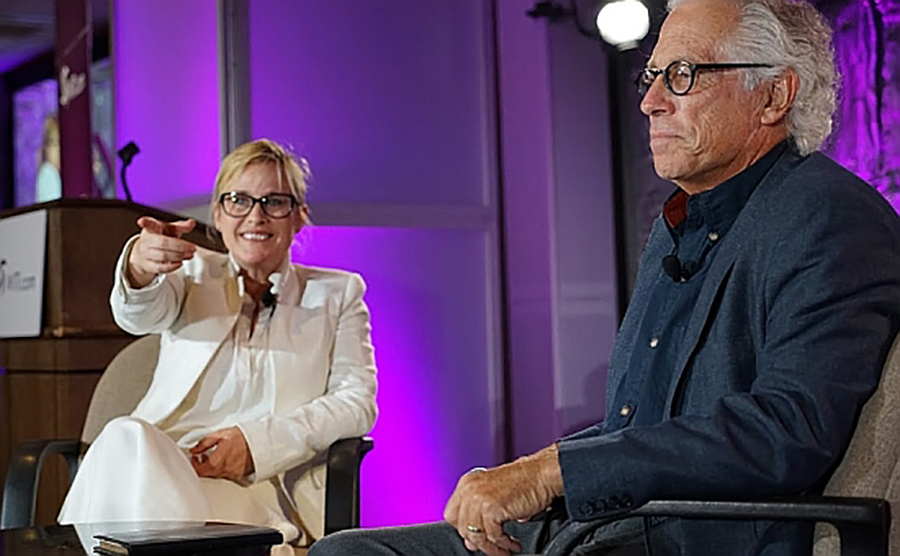
My new level of anger is due mostly to my private conversations and public interview with the Oscar-winning women’s activist Patricia Arquette. I have to say she did a great job of radicalizing me.

Normally I play the role of wise consultant.  My profession centers on coaching CEOs to transform their cultures to be more agile and competitive by creating unique value for customers. Over decades of doing this work I found that most women are systematically better at creating and implementing customer-valued innovations than most men. Most often I found myself coaching women in mid-level positions to have more impact and influence on senior-level decisions being made by men. It really matters because new value is created faster.

Over the past two decades I have directly observed, and in many cases helped, women make game changing contributions at companies like Nike, Gap, Cricket Wireless, GE and others. Gap actually retained me to study all the research on the new rules of effective leadership necessary to succeed in the new disruptive economy.

The most profound insight that came out of this research is that women’s actual strengths of systems thinking, social intelligence and mental agility are more predictive of leadership success then the old authoritarian strengths of confidence, decisiveness and competitiveness.  Does this mean every woman is a better leader than every man?  Of course not.  But In the words of Marshall Goldsmith, “What got us here will not get us there.”  And the “there” I want for our future is a lot different than the “here” of our very troubling present.

My culture transformation work has been kind of a stealth effort to elevate more women into senior leadership.

I try to make the policy of giving women more executive power is the smart thing to do rather than the right thing to do. And yes it works okay.  But it is not enough.  It isn’t fast enough. It is not broad enough. It is not radical enough.

We simply must do more, faster. Patricia Arquette’s conversations focused me on the tragic injustice of the systemic exploitation of women that has existed since the dawn of history. It’s true. The first known writings of a woman in Mesopotamia about 5,500 years ago were the advice of a noble woman to other noble women regarding how to influence their husbands and other authoritarian leaders to be more civilized.  It doesn’t appear much that changed.

Just consider a few facts

  1. US Census Bureau confirms that single mothers are raising 25% of our nations children. And nearly half  of these millions of women and children live below the poverty line. If these women were paid equally as men doing the same jobs half of these women and children would be lifted out of poverty. That’s right HALF. Pay equality matters. It is essential at the lowest economic levels where the disparity is greatest.  Latina women make 55 cents and African-American women make 63 cents and Caucasian women 78 cents on the dollar.  The negative impact of this injustice on the quality on child hunger, education and healthcare is immense.
  2. The most under reported crime in America is sexual assault (including rape) and domestic abuse. According to statistics from the US Criminal Justice System less than 1% of rapists go to jail.  6 out of 1,000. These crimes are underreported because the female victim is often accused of inciting the crime or the crime is not seriously investigated so why go through the trauma.  A few years ago one of my daughters was assaulted in a parking lot at two in the afternoon in an upscale mall.  She is a young white professional and the scumbag who attacked her went to jail after she courageously testified in court. It was hard. Yet I have little doubt that if my daughter had been a poor minority not much would’ve happened.  Patricia told me there are over 10,000 desperate women who are turned away from domestic abuse shelters every day because they are overcrowded due to lack of funding. And the reason most women return to their abuser is that they are economically dependent often because they’re paid so unfairly in the crummy job they have.
  3. Male sexual aggression is also way too common in the workplace.  According to a study by the Center for Talent, 63% of women in technology jobs say they have experienced sexual-harassment.  In virtually all of my clients I have served at least one senior manager or executive was terminated for sexual harassment so I am not surprised by the statistic.
  4. The pay and opportunity gap for women has serious economic and social consequences.  For professional women with advanced degrees the opportunity gap this injustice adds up to is a whopping amount.  Female MBAs starting jobs typically pay 5% to 10% less than males with the same degree from the same schools. But what really hammers women’s lifetime earnings is how much more slowly they are promoted.  In many cases in tech companies it takes as much as twice as long for a woman to become a vice president as a man with the equivalent education and career experience.  This can result in a lifetime earnings disparity of $2 million.  Yes, that has quite an impact on retirement and children’s education opportunities and quality of life. (If you question whether there is an opportunity gap just consider this recent research from Mercer. In global companies 49% of the support staff are women, 26% are senior managers and only 20% are executives. And if you think this is because because women are not committed to their careers or want to take time off it’s time to wake up.  McKinsey’s research confirms that professional women are even more committed to their careers and career advancement than men.)
  5. Women’s stress and hypertension is also directly impacted by income disparity.  For decades researchers thought working women experienced more chronic worry, extreme stress and depression than men due to their hormones.  (Believe me I am not making this up.) But new research has revealed that while women doing the same job for less pay suffer from higher amounts of chronic stress, women who were paid equally to men have no more stress, anxiety or depression than their male peers. So, read this headline . . . income and opportunity disparity may be killing you!
  6. Surveys show most CEO’s don’t believe there are pay or opportunity gaps in their companies. When Marc Benioff, the CEO of Salesforce.com initiated a gender pay parity audit he was absolutely sure that he was paying women equitably.  Instead the audit showed that he was under-paying the women of Salesforce.com by $3 million per year.  So over 10 years these women would’ve lost collectively $30 million in compensation. Multiply that times thousands of companies and see how much women suffer economically.
  7. Women are grossly underrepresented in the leadership of our most powerful institutions. Only one in five directors of public companies are women. The primary reason given by male directors is that there are not enough qualified women. However, women board members of these companies say the primary reason there are not enough women on the board is because of gender bias. The criteria that men use to judge the suitability of a candidate for a board seat is weighted heavily towards the authoritarian male attributes such as confidence, assertiveness and decisiveness.  We need to face it . . . boards are simply boys clubs where women are most often respected when they act like men. Only 4.2% of Fortune 500 companies have female CEOs. And only 1 in 5 U.S. Senators are women.  The pipeline of women entrepreneurs in high-tech and science sectors is disproportionately low because the culture of tech incubators and sources of capital are skeptical of women. (Forms of hazing women in tech incubators are very common as males legitimize their boorish behavior as a test to see if women are really tough enough to succeed in the male world.)
  8. Many new women CEOs are often set up to fail.  And analysis by sociologist Marianne Cooper of CEO transitions among Fortune 500 companies over 15 years found something alarming. Women were more likely to get promoted to CEO when companies were in trouble. This makes them more likely to fail.  Think of the difficult circumstances facing Marissa Mayer at Yahoo, Meg Whitman at HP or Mary Berra at GM.   Women are literally hired to clean up messes made by men . . . which is how it has always been.   Cooper reports that too often when women are unable to quickly turn the company around they become the scapegoat for the negative outcome caused by previous male management. (The next time you’re asked to save a poorly led, underfunded project, think twice.)
  9. What women want is fairness, respect and earned support.  The Towers Watson Global Workforce Study found that women who felt valued and respected by their supervisor were 130% more likely to stay with their organization and 67% more engaged.  Yet according to the Center for Talent. 83% of professional women lack internal sponsors who advocate for their advancement and promotion.  Nearly half of women feel stalled or stuck in their careers because they are consistently overlooked and undervalued.  More than a third of women in technology companies feel isolated by exclusionary male culture.
  10. Confidence is viewed as an essential attribute for leadership and women are often criticized for not acting confident. But confidence results from the degree to which you believe your actions will result in positive outcomes. So if you’re working in an environment that is unsupportive it would be foolish to be confident. Welcome to Catch-22.

This is the world we live in. It is dominated by male bias and the vestiges of a dying authoritarian leadership culture.  I am not convinced that the evolutionary pace of change is fast enough to save the world from its current insanity.  We have dinosaurs ruling the planet and we need an asteroid to create a new future.

It starts with bold lawmaking. Do you realistically believe that enough leaders will volunteer to change the status quo?  It’s doubtful. We live in a culture where people adamantly opposed mandatory seatbelt laws as an infringement on their personal right to take stupid risks. It was only when it became a public health issue that reason quashed stupidity. Business leaders always whine and complain about overregulation but we wouldn’t need regulations if businesses did not frequently exploit consumers, employees or the environment.

Regulation is probably the least efficient, but most effective way to get gender equality.

Because of the California Fair Pay act California companies are now going to have to submit gender-based wage data. Yes, it’s a regulatory burden but without it CEOs can continue to claim ignorance when it comes to cheating women from their fair compensation.

And yes, we need an equal rights amendment to the Constitution so that women can effectively bring claims of discrimination before our courts.

I really wish more CEOs understood what they are missing by not promoting women who lead like women into many more important executive positions. I wish men were much better at respecting women in the workplace and really listened to their social logic so they could begin to see the invisible impacts of every  corporate decision on their customers, employees and communities . . . but they don’t.  At least not many of them. Not really. So we must act!

The time has come for modern working suffragettes to petition their CEOs for three things.

More women with greater influence at the strategic table. At least a third of the C- Suite line leaders and 40% of corporate boards should be women.
Formally institute pay and opportunity equity accounting so companies have actionable data to recruit, pay and advance women fairly.

Institute the 3 Rules of a Talent–Centered Culture:
Results-driven workplace – flex time, remote work, video communication.
Talent-driven advancement – clear career path feedback, development, sponsorship.
Human-centered policies – generous family leave, work re-entry, childcare allowance.
These are not radical ideas.  Many professional services firms already operate this way because their talent is their product.  But the rest of the business world will not come along unless they are vigorously pushed.

Are you prepared to petition your CEO?

Would you be willing to march to his office?

Would you be willing to do a corporate sit-in?

You may think I’m kidding.

I’m not.  It’s not that CEOs are evil . . . they are just busy.  Too busy to put a lot of sustained thinking into the issues that are affecting your everyday work life on their long-term competitiveness.

So we are going to have to do something a bit radical to get their attention and to drive change.

It is simply not acceptable for millions of women to be paid less, have less opportunity, and too have little influence about our world’s future.

My oldest granddaughter is entering college this year.  The time for change is now.


Why Bravery Is Your Greatest Power

I just interviewed Oscar winning activist Patricia Arquette on stage at the Women in Technology Summit in Silicon Valley. If you don’t know, Patricia is the powerful and appropriately radical voice for equal pay and equal opportunity for women.

She won an Oscar for her role as a mother in the movie Boyhood. I will tell you more about all that in my next blog but my wife and I just took a few days off to climb around Yosemite so I am going to make this short.

What I learned from Patricia is like almost all of us, she was afraid to do what she most wanted to do. She wanted to be an actress but she didn’t believe she could act. So at a very tender age she decided to be BRAVE for one year. She told me that the way she would know if she was being brave was if she was willing to try harder when she failed.

That year she went ‘all in’ in terms of acting classes, auditions and building a network of contacts. She nearly emotionally drowned in a river of failures but she finally got a movie part and put her whole self into the opportunity. The result . . .  well she said she “stunk.” But nevertheless she ignited a 20-plus year run of steady parts in movies and TV series.

She is still a committed, working actor but today she is being brave by being an activist. She founded a non-profit, Give Love, that is saving children’s lives all over the developing world through an innovative method of transforming sanitation and access to clean water. She is also forcefully stimulating companies to do equal pay audits and it is actually equalizing pay in big companies like Salesforce.com.

The lesson I wanted to pass on that I learned from Patricia is bravery works!

Allow yourself to dream of a better life and a better world and just start doing what is uncomfortable but obvious. And don’t quit. Failure is expected. Failure is essential to breakthrough.

What do you really, really care about? Be Brave . . . do something. Just start, the way forward will appear if you do not stop because of initial failure.

We need to re-invent our future. To do that we all need to be BRAVE.