


Ghost Boats to Water Treasures: Museums Seek to Spur Climate Action

A toddler’s bath water, tears of joy from a newly ordained priest, condensed sweat from a nightclub – British artist Amy Sharrocks collects all kinds of water.

In 2013 she set up the Museum of Water, a live piece of artwork that travels around the world and invites people to donate water – from spit to melted snow – in a bottle and discuss what it means to them.

The initiative aims to understand why people treasure water and help prepare them for a drier future and climate, Sharrocks told an audience of climate experts, activists and museum curators.

If you like this, subscribe here for more stories that Inspire The Future.

“For example, we show them how to have three-minute showers to better cope with water shortages,” she said at the International Symposium on Climate Change and Museums in Manchester, Britain.

Sharrocks is not alone. As world leaders increasingly face up to the fallout of climate change, curators are planning a new wave of museums, devoted to what many consider a defining issue of the times.

From Germany to Denmark, Hong Kong to Canada, talk of climate museums is on the rise.

In 2015 former civil rights lawyer Miranda Massie created the first U.S. museum entirely dedicated to climate change in New York City, which so far has featured footage of ancient ice cores and live painting of melting Antarctic ice.

“Climate change is affecting virtually every aspect of our lives,” Massie told the conference on Wednesday.

“But we can’t fight the problem with top-down policies alone, we need an engaged public and museums are a way to open people’s minds to what matters,” she said.

CREATE EMPATHY

City planners and experts should use museums to foster empathy in citizens on climate issues, according to Emlyn Koster, director of the North Carolina Museum of Natural Sciences.

“Museums tend to measure their success on whether visitors have had a good time, but they should make you sad, disappointed, angry – make you want to take action,” he said.

Bridget McKenzie, director of Flow Associates, a London-based consultancy working with arts and science organisations, wanted to raise awareness of the plight of the Pacific island nation of Kiribati, which is particularly vulnerable to rising sea levels.

So with her team she set up a “ghost boat” made of old fish nets at the University of Cambridge’s Museum of Archaeology and Anthropology, and asked visitors what they would take with them if they were suddenly forced to leave their homes.

“It was fascinating,” she said. “People are starting to understand that business as usual on climate means ‘thermogeddon’ (when the Earth becomes too hot to live on).”

SCIENTISTS’ VOICES

Museums are not only a way to spark climate action, they can also help scientists make their voices heard, said Jonathan Lynn, head of communications at the U.N. Intergovernmental Panel on Climate Change (IPCC).

“Scientists enjoy huge credibility but if they don’t speak publicly about their work they give space to non-scientific groups like climate deniers to fill the debate,” he told the Thomson Reuters Foundation.

U.S. President Donald Trump, for example, has questioned the scientific consensus that global warming is dangerous and driven by human consumption of fossil fuels, and decided to pull his country out of the Paris climate deal.

Robert Janes, founder of the Canadian Coalition of Museums for Climate Justice, said many museums choose not to call for climate action for fear of alienating visitors and donors.

“But that’s nonsense – the science on climate change is unequivocal,” he said.

GREEN INSTITUTIONS

While museums can be a powerful way of communicating the impacts of climate change, they should also practice what they preach and curb their own emissions, say experts.

Elliot Goodger, a museums’ association representative for the West Midlands in Britain, said that “roughly half of cities’ emissions come from energy use in buildings”.

“Museums have a duty to be energy efficient, for example by using laser lighting for displays or improving their building insulation,” he added.

New York’s Massie thinks every museum has the potential to become a climate museum, whether it is entirely dedicated to the issue or just integrates some climate content into its programming.

“There is no limit to how you can represent climate issues,” she said.

By Zoe Tabary @zoetabary, Editing by Alex Whiting.

If you like this, subscribe here for more stories that Inspire The Future.
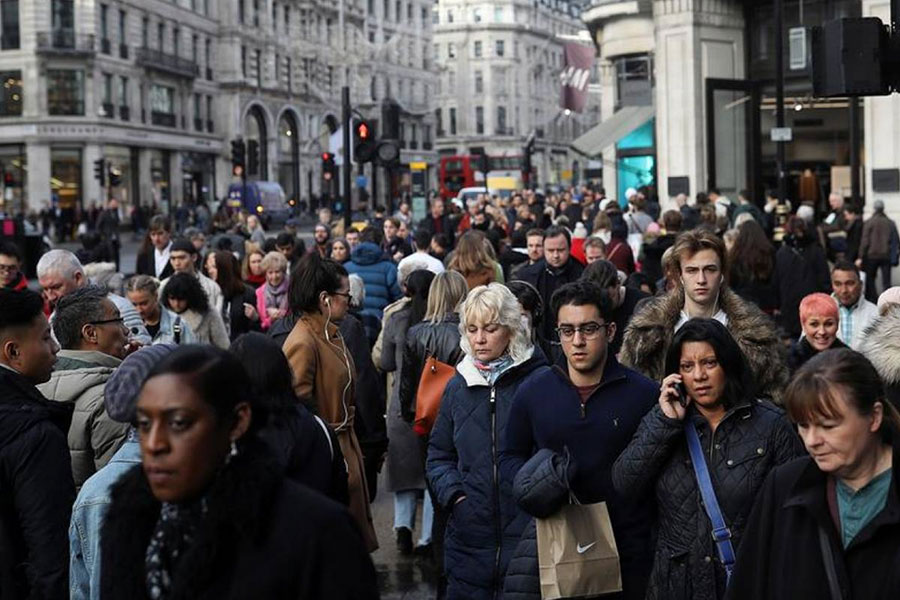
1,500 UK Firms Face Action Over Gender Pay Silence

About 1,500 large British companies that failed to meet a government deadline to report the pay gap between male and female employees could face legal action, Britain’s equality watchdog has said.

A law introduced last year requires companies and charities with more than 250 workers – covering almost half of Britain’s workforce – to report their gender pay gap each year by April 4.

If you like this, subscribe here for more stories that Inspire The Future.

More than 10,000 employers met the midnight deadline, with data showing that almost eight in 10 pay men more than women on average, while only 14 percent pay female staff higher salaries.

Britain’s Equality and Human Rights Commission (EHRC) said the 1,500-odd companies that had not met the deadline would be given a month to comply before the watchdog took action – which could lead to court proceedings and result in unlimited fines. “Reporting gender pay gaps is not optional; it is a legal requirement, as well as being the right thing to do,” Rebecca Hilsenrath, chief executive of the EHRC, said in a statement.
“We will soon be starting enforcement against all employers that haven’t published,” she added.

As in many other countries, gender pay inequality has been a persistent problem in Britain despite sex discrimination being outlawed in the 1970s, and has sparked a public debate in recent years over why wages are still so different for men and women. The overall gender pay gap in Britain stands at 18.4 percent, according to government data published last year.

HSBC, Virgin Atlantic and a unit of Barclays were among the largest companies with the biggest gender pay gap – at 59, 58 and 49 percent respectively – according to a Reuters analysis of the published data using the mean as the measure.

Companies are not required to break down the data in detail, leading to criticism that the average figures could obscure or exaggerate demographic explanations for disparities. Yet they mark a turning point for women in the workplace, advocates say.

“By finding out what their colleagues earn, women are then in a position to challenge any pay inequality,” Sam Smethers, chief executive of the Fawcett Society, a UK-based women’s rights group, told the Thomson Reuters Foundation by email.

“We are calling on women everywhere today to take that first step and simply have the conversation about pay,” she added.

By Kieran Guilbert, Editing by Megan Rowling.

If you like this, subscribe here for more stories that Inspire The Future.

Ebay Billionaire Donates Millions to Keep #MeToo Moving

A website that makes reporting sexual assault easier is one of six organisations gifted $7.5 million by an Ebay billionaire in order to ramp up their effectiveness.

The Skoll Foundation – started by Jeff Skoll, former president of Ebay – rewarded five female and one male social entrepreneurs tackling subjects as diverse as access to clean energy and improving the way governments work.

If you like this, subscribe here for more stories that Inspire The Future.

Every year the Skoll Foundation gives awards to social entrepreneurs whose businesses are helping solve social and environmental problems with more than 100 organisations benefiting since 2005.

“To have them help you along the way, it’s so valuable. There’s a big opportunity with the #MeToo movement to expand our model,” said Jessica Ladd of Callisto.

Callisto is a web platform where students at 13 colleges in the United States can log incidents of sexual assault even if they are unsure of reporting it to authorities for fear of repercussions.

One in five women at university in the United States has experienced sexual assault or sexual misconduct, according to the Association of American Universities. Institutions surveyed said reporting figures of incidents were as low as 5 percent.

Ladd said her organisation, which started in 2015, was exploring how to adapt the system for other institutions before the Harvey Weinstein scandal broke.

“Now is this moment where people are caring and talking about this issue in a lot of different industries all at once,” she told the Thomson Reuters Foundation.

“How can we use this moment to not just let this be a momentary public outing or social media movement, but put systems into place to keep this going?” said Ladd, who plans on increasing her staff to 30 from 10 by the end of the year.

The Skoll Foundation looks for organisations that have proven, innovative solutions to global problems, awarding them funding of $1.25 million each as well as help with the business.

Other winners of the 2018 awards include myAgro, which offers solutions to improve the methods and livelihoods of farmers in developing countries, and Global Health Corps, which works to expand the availability of healthcare.

“It is a special moment when our ‘family’ of social entrepreneurs expands. Our community immediately strengthens, as does our collective understanding of how to solve the world’s most pressing problems,” Skoll said in a statement.

By Lee Mannion @leemannion, Editing by Belinda Goldsmith.

If you like this, subscribe here for more stories that Inspire The Future.
Chewed up, Spat Out, Recycled: British Inventor Turns Gum Into Gold

It costs about £56 million a year to clean up chewing gum in England. One woman has come up with a novel solution…

What does the world spend about $25 billion on each year, only to throw it away?

The answer is chewing gum. It is a blight on city streets, expensive for local authorities to deal with, and takes a heavy toll on the environment, according to its critics.

But one woman in Britain is performing modern-day alchemy on it.

If you like this, subscribe here for more stories that Inspire The Future.

“When I started to look into it in 2006, gum had only been declared a litter in 2005. I was gobsmacked. We spend so much money clearing it up,” Gumdrop founder Anna Bullus told the Thomson Reuters Foundation.

How much money? About 56 million pounds ($79 million) a year in England alone, the government reckons, to rid the streets of this form of litter. Only cigarette butts are more prevalent.

After eight years of research, including working with materials scientists, Bullus found a way to compound discarded gum into pink pellets called gum-tec.

That processing is done by third parties. Gumdrop then sells the transformed material to firms that make all manner of items that more commonly use plastic or rubber, including ski-jacket toggles, flip-flops and reusable coffee cups. The volumes are significant: last year the company, which has just three employees, recycled 25 tonnes of gum.

STICKY SITUATION

Bullus’s innovation goes some way to helping local councils save money.

“Councils have to use specialist equipment to remove (gum), which is both time-consuming and very expensive,” said Martin Tett, the environment spokesman for the Local Government Association (LGA).

And money is tight: austerity measures mean local councils are getting less cash from central government; the LGA reckons that between 2015 and 2020, councils will have lost three-quarters of their core central government funding.

“At a time when councils face considerable ongoing funding pressures, this is a growing cost pressure they could do without,” said Tett of the problem gumming up local streets.

A Gumdrop bin in Cardiff, UK. The collected gum can be made into reusable cups, rulers and shoe soles. Photo supplied by Gumdrop

For its source material, Gumdrop relies on the public to place chewed gum into its hot-pink bins that sit at 600 locations such as train stations, theme parks and universities – a fivefold increase in bin sites since it started in 2015.

It makes money by charging councils for that service.

It also works with some on innovative fixes – such as on Kensington High Street in west London, a tourist hotspot because of its proximity to Kensington Palace, former home to the late Princess Diana.

There the council handed out 5,000 strikingly pink keyring balls in which people could store used gum. When full, the chewer could mail the orb free of charge to Gumdrop; for every three sent in, Gumdrop would send them another.

Gumdrop also put up hard-to-miss football-sized hot-pink bins – which, naturally enough, were made from recycled gum.

The result was a 90 percent drop in gum litter in the Royal Borough of Kensington and Chelsea, according to Suez, the company contracted by the council to clean gum off its streets.

“Unfortunately because of their budget, (the council) can’t afford to carry on using the bins,” said Bullus.

BUDGET BUSTER?

Suez uses steam-cleaning machines to prise gum from the pavement. That gum, which cannot be recycled as it is too dirty, is then sent to a landfill site or for incineration.

“We’re happy to take money off the council, but that’s not the point,” said Paul Siggery, a manager at Suez.

“The money they pay us comes from the people that pay their council tax. It’s costing them a fortune to clean this gum. That needs to be addressed.”

Siggery said since Gumdrop’s campaign ended in May 2016, the pavements had returned to the state they were in previously.

Steam-cleaning has other costs too: because the process weakens the grouting that hold paving slabs in place, Siggery said, the slabs can move apart. That makes them a trip hazard, so the council has to spend yet more money making them safe.

“Something in that oily-based gum is eating into the concrete,” Siggery said.

The LGA wants gum manufacturers to pay more towards clean-up costs.

The largest of those by far in Britain is the Wrigley Company. Its website says more than 28 million people in Britain “regularly chew gum” and, on average, each of them goes through 125 pieces a year.

A ‘Gumdrop on the Go’. Gum chewers can dispose of used gum in the pink ball before sending it off to be recycled. Photo supplied by Gumdrop.

Wrigley’s said it takes the issue of gum litter very seriously, and is the largest funder of anti-littering campaigns in Britain, supporting several programmes over the last decade.

Last year it gave 600,000 pounds – about 1 percent of what it costs councils to clear up gum litter – to the Chewing Gum Action Group, which works on the problem with local councils.

“We strongly believe that changing individual behaviour around litter is the only long-term solution to keep our streets clean,” a company spokeswoman said.

Britain’s Department for the Environment, which is also a member of the Chewing Gum Action Group, agrees that industry-led campaigns can change behaviour.

“But we are not ruling out the possibility of further regulation if that is what is required to achieve real change,” a spokesman said in a statement.

In the meantime, Gumdrop is pressing on with its mission, with Bullus considering her next chewing gum product.

The latest idea? With the summer festival season approaching, what could be more apt than something to tackle Britain’s notoriously unpredictable weather: wellington boots, also known as – you guessed it – gumboots.

By Lee Mannion @leemannion; Editing by Robert Carmichael. 

If you like this, subscribe here for more stories that Inspire The Future.

The Male Feminists Inside Uganda’s Police Force

“We want to put ourselves in the shoes of women”

Balancing a heavy clay pot on his head with a baby tied to his back, policeman Francis Ogweng caused a scene as he marched down the busy highway towards Uganda’s capital, Kampala.

With traffic backed up to the horizon, crowds of men stared and laughed as the baby girl swaddled in white cloth slipped precariously down Ogweng’s back, pulling his khaki uniform into disarray.

If you like this, subscribe here for more stories that Inspire The Future.
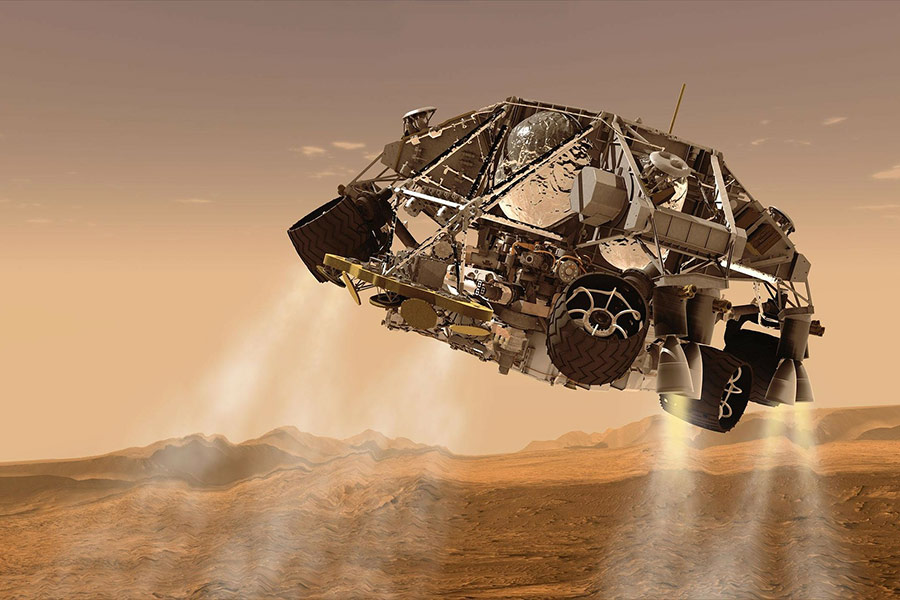
“We want to put ourselves in the shoes of women,” Ogweng, an assistant superintendent in the Uganda Police Force (UPF), told the Thomson Reuters Foundation. “Is it difficult to carry water? Is it difficult to carry a baby?”

Judging by the sweat dripping down his face, it is.

Onlookers were surprised to see a senior officer marching to stop violence against women, in a force that opponents of Uganda’s long-serving President Yoweri Museveni accuse of spending more time suppressing dissent than tackling crime. Police often break up opposition rallies in the east African nation with teargas and beatings, rights groups say they torture suspects to illicit confessions, and surveys often rank the force as Uganda’s most corrupt institution.

“Their image has been tainted,” said Regina Bafaki, head of Action for Development, a local women’s rights group.

“They have actually been more violators than protectors of citizen’s rights.”

But a spate of unsolved murders of young women, with more than 20 corpses found beside roadsides south of the capital since May, is putting rare public pressure on the police.

They have charged more than a dozen suspects with the women’s murders, listing possible motives range from domestic rows through sexual abuse to ritual murder linked to human sacrifice.

Ogweng was not alone, flanked by three policemen carrying bundles of firewood, a 50-strong police brass brand and other officers carrying placards that read: “Peace in the home. Peace in the nation. Prevent Gender Based Violence”.

“Men can also carry water, men can carry babies … it does no harm at all, it doesn’t make a man less of a man,” said Ogweng, who describes himself as a feminist – a rarity in a country where women often kneel to show deference to men.

About half of Ugandans believe that domestic violence is justified under certain circumstances, such as when women neglect children or burn food, government data shows.

“There are those who still believe that battering of women, beating of women, is something normal,” said Asan Kasingye, assistant inspector general, another unlikely ally in Uganda’s fight for gender equality.

“We must invest our resources, our training, our recruitment … into fighting against gender based violence,” he said, seated in his top floor office at the police headquarters.

“It must percolate, it must be known by everybody. So it preoccupies us.”

The police demonstration calling for an end of violence against women went down well with locals around Entebbe, where about 20 women were raped and murdered in 2017.

“This government prides itself for bringing security … but at the same time when these ladies were being murdered, the government didn’t even talk about it,” said Anatoli Ndyabagyera, whose fiancee Rose Nakimuli was killed in July.

The murders illustrate a broader problem in Uganda, where government data shows more than one in three women suffer physical or sexual violence from an intimate partner, although few report it to the police.

“We have in our society a dangerous attitude of men thinking they can dispense with women and they can get away with it,” said Ndyabagyera. “They look at women and tend to think of them as items of ownership.”

Four in 10 girls wed before they turn 18, even though Uganda has banned child marriage, according to the United Nations children’s fund (UNICEF), and few go beyond primary school.

Efforts to pass a bill seeking to ban traditional practices, like dowry and the inheritance of widows by their husbands’ male relatives, and to grant rights to women in divorce have floundered for years.

Women wearing miniskirts were stripped by mobs of men following the 2014 Anti Pornography Act that banned “indecent” dressing and the police in 2015 stripped female opposition leader Zaina Fatuma naked in the street.

“There are (officers) who are badly behaved,” said Ogweng, who works in the child and family protection department.

“But there are those who are good, and there are many.”

Given the influential role of the police in Ugandan society, Ogweng believes he can help to change people’s perceptions about what it means to be a man.

“People are so rooted in the culture where some things are only done by women and some things are done by men,” he said.

“If a man, a police officer, can carry a baby, can carry a pot, then other men can do it … Men even called me afterwards and said: ‘You have opened my eyes’ … So I think people are beginning to understand.” By

By Thomas Lewton. Editing by Katy Migiro.

If you like this, subscribe here for more stories that Inspire The Future.

Therapy Dogs Heal Traumatized Survivors of Brutal Ugandan War

Francis Okello wanted to kill himself after he was blinded at the age of 12 by an unexploded bomb while digging in his family garden in northern Uganda – until he made friends with a dog.

“I would have nightmares,” said Okello, who lives in an area that has been scarred by two decades of conflict between Lord’s Resistance Army (LRA) rebels and Ugandan forces. “Life became worthless because I was stigmatised.”

If you like this, subscribe here for more stories that Inspire The Future. 

Hope flickered when Okello bonded with a dog called Tiger at his boarding school, where he felt ashamed of having to wake people up to guide him to the toilet at night. “I hated burdening people for help,” the 29-year-old father of two told the Thomson Reuters Foundation. “I got close to Tiger who would help me walk to the toilet.”

The value of therapy animals for mental health problems is well documented in the West but is rare in East Africa, where many people fear dogs as they are usually kept as guards.

Okello later trained as a community psychologist and set up the Comfort Dog Project in 2015, which has helped heal more than 300 people who have been traumatised by the rebellion, marked by the kidnapping of children for use as fighters and sex slaves.

Uganda’s health ministry estimates that seven out of 10 people in northern Uganda are traumatised by the war in which tens of thousands were killed and 2 million were uprooted from their homes. The LRA was ejected from the area in 2005. Filda Akumu, 35, whose family was massacred by LRA rebels, battled with trauma after escaping rebel captivity.

“When I witnessed my father and my two brothers being hacked to death, I never thought I would heal again – until now,” said Akumu, who also volunteers at the project.

Thousands of former abductees – like Akumu – suffer from post-traumatic stress disorder (PTSD), depression and suicidal thoughts, making it hard to rebuild their lives, experts say.

The presence of dogs can provide comfort to people with mental health problems and distract them from upsetting thoughts, research shows. Okello gets many of his dogs from The Big Fix, northern Uganda’s only veterinary hospital.

“I mainly use stray dogs because they face tough conditions,” Okello said. “When these dogs bond with our patients, they form a companionship that heals both parties.”

By John Okot. Editing by Katy Migiro.

If you like this, subscribe here for more stories that Inspire The Future. 

David Beckham: Malaria Must Die – so Millions Can Live

British soccer legend David Beckham put his star-power to use on Wednesday in a bid to reinvigorate the fight against malaria under the slogan “Malaria must die – so millions can live”.

The retired athlete joined ranks in a campaign by Malaria No More UK, a British charity, to star in a short film in which he is caged in a glass box and swarmed by mosquitoes.

If you like this, subscribe here for more stories that Inspire The Future.

The stunt is a reference to the way malaria is transmitted through the bite of the blood-sucking insects.

“These insects are annoying in places like the U.K. but in many parts of the world a mosquito bite is terrifying and deadly,” Beckham said in a statement.

Despite successes in recent years, malaria continues to kill about 445,000 people a year, according to the World Health Organization (WHO).

“This is totally unacceptable,” said Beckham, a member of Malaria No More UK’s leadership council and a Goodwill Ambassador for the U.N. children’s agency UNICEF.

The former England soccer captain, who retired from the game in 2013, remains a global celebrity. During his career he played as a midfielder for top clubs including Manchester United and Real Madrid.

The “Malaria must die” campaign is particularly focused on pressuring leaders of countries in the Commonwealth, a 52-member grouping including Britain and most of its former colonies, to adopt policies aimed at eliminating the disease.

The WHO last year warned that progress in the fight against malaria had stalled amid signs of flatlining funding and complacency that the disease was less of a threat.

In its most recent World Malaria Report, the WHO said malaria infected around 216 million people in 91 countries in 2016, an increase of 5 million cases over the previous year.

The vast majority of deaths were in children under the age of five in the poorest parts of sub-Saharan Africa.

By Sebastien Malo @sebastienmalo, Editing by Robert Carmichael.

If you like this, subscribe here for more stories that Inspire The Future.

The London Business School to Train Leaders How to do Good

One of the world’s top business schools in London said on Wednesday that it will set up an institute to tackle challenges facing poor countries – the first of its kind to do so.

The London Business School said the founders of the Lonely Planet travel guides had donated 10 million pounds ($14 million) to create the Wheeler Institute of Business and Development.

“We can and should harness the power of business for a bigger purpose,” Francois Ortalo-Magne, the London Business School’s dean, said in a statement.

If you like this, subscribe here for more stories that Inspire The Future.

“We can train this generation differently, so that they emerge as more inclusive, more courageous leaders for good.”

The post-graduate school, which is consistently ranked in the global top 10, said business research and innovation could solve social issues ranging from healthcare delivery to poverty alleviation and gender equality.

Entrepreneurs using businesses to help tackle social problems are emerging across the globe – improving communities, breaking the cycle of re-offending, solving education issues and reducing isolation amongst elderly.

“Our focus is on tackling the huge problems in developing countries but with the knowledge that comes from having a business lens,” the Wheeler Institute’s executive director Raji Jagadeesan told the Thomson Reuters Foundation.

“Those applied solutions can really make a difference.”

Jagadeesan said the founding of the institute had been driven by demand from students and employers.

“Employers are worried about how to retain talent because the generation they are trying to recruit want their employers to be doing good in the world,” she said.

Tony Wheeler graduated from the London Business School in 1972 and his wife, Maureen, was awarded an honorary fellowship.

The couple started the Lonely Planet travel guides in 1973 after driving a minivan through Asia’s hippie backpacker trail from London to Australia.

After selling the Lonely Planet enterprise for $133 million in 2007, the couple set up the Planet Wheeler Foundation, which funds more than 50 projects in Africa and Asia.

“Maureen and I have been passionate supporters of international development efforts for many years and firmly believe that business and entrepreneurship has a central role to play in this journey,” Tony Wheeler said.

The London Business School, founded in 1964, has more than 40,000 alumni from some 150 countries, including Britain’s Brexit minister David Davis and Maria Kiwanuka, senior advisor to Uganda’s President Yoweri Museveni.

In addition to teaching students, the institute will work on ways to turn research into action that creates change in developing countries.

By Lee Mannion @leemannion. Editing by Katy Migiro.

If you like this, subscribe here for more stories that Inspire The Future.

Beyond Meat: The Race to Reinvent The Burger

What do Bill Gates, Richard Branson and Leonardo DiCaprio all have in common? Aside from vast wealth and fame, all three are backing “alt- meat” – a fake meat they say has all the taste but none of the climate problems that come with traditional cattle farming.

“If you’re able to create a product that tastes, smells, feels, looks and costs the same as ground beef, yet is made from plant-based materials, it’s a very large market,” said venture capitalist Samir Kaul. Kaul is a partner at Khosla Ventures, which along with Microsoft founder Gates, has invested millions of dollars in Impossible Foods, which produces the Impossible Burger.

If you like this, subscribe here for more stories that Inspire The Future.

Impossible because it is not meat, but part of a growing market in products that – unlike bean or Quorn burgers – simulate meat rather than just replace it with a veggie option. The meat substitutes market will be worth nearly $6 billion by 2022, according to research firm Markets and Markets. But industry analysts are cautious about the potential.

The United States is a nation of meat eaters – 98 per cent eat it at least once a week, according to Darren Seifer, a food consumption analyst for market research group NPD. “For success in the food industry you have to be patient. What we eat and drink is culturally based and very habitual. It might take as long as a decade to see if there is any moving the needle,” Seifer told the Thomson Reuters Foundation.

The Moving Mountains B12 Burger, pictured surrounded by the ingredients: mushroom, coconut, soy beans, beetroot, potato and onion. Photo: Moving Mountains.

Actor DiCaprio has previously invested in tea that provides an income to indigenous Amazonian families and in a farmed fish company, citing overfishing and collapsing marine ecosystems.
Gates also has previously invested with the environment in mind; he put money into Breakthrough Energy Ventures, a $1 billion-plus fund to finance emerging energy research to reduce global greenhouse gas emissions to near-zero.

There are a handful of international companies like Impossible producing meat that does not involve animals being killed, deforestation or significant production of greenhouse gases. Impossible says its burger creates 87 percent less greenhouse gas emissions than a meat equivalent.

About 80 percent of all agricultural land is dedicated to grazing or growing feed for animals, the United Nations says. The livestock industry consumes 10 percent of the world’s fresh water, while generating methane and other planet-warming emissions, and causing large-scale deforestation.

In December, Beyond Meat, whose products look like meat but are made of plants, announced they had received investment of $55m from two investors with decidedly meaty credentials.

Tyson Foods, which produces a fifth of all animals eaten in the United States, was one; the other was Cleveland Avenue, a venture capital firm run by the former McDonalds Corp. CEO Don Thompson.
“There are many issues that impact upon climate change, but few as negatively as livestock,” Richard Branson wrote in a blog post explaining why he had put his money into Memphis Meats, which is growing meat from animal cells in laboratories.

In the same blog, the Virgin boss revealed he had given up beef because of rainforest degradation.
Gates too has expressed concern for the environment in a blog post entitled: ‘Is there enough meat for everyone?’

“How can we make enough meat without destroying the planet?—one solution would be to ask the biggest carnivores (Americans and others) to cut back, by as much as half,” he wrote.

The two biggest players that have gone to market in the United States – Beyond Meat and Impossible Foods – have now seen investment of more than $300 million. However, some people are not convinced the environment is their motivation.

“Venture capitalists have pinpointed a growth area and the only thing they are looking for is a return,” Simeon Van der Molen of Moving Mountains, a plant-based burger company based in Britain, told the Thomson Reuters Foundation.

A vegan who has sold eco-friendly cleaning products for 17 years, he will launch his own plant-based burger next month, effectively going into competition with the venture capitalists.
“For me venture capitalists are only after their pound of flesh,” he said. He is aiming to keep the company independent.

While motives might be questioned, there is no disagreement over the growing interest.
Market research company Mintel saw a 257 percent rise in new products labelled as vegan-friendly between 2011 and 2016.

In less than a year, the Impossible Burger (made of wheat, coconut and potato) has gone from being available in 11 restaurants to 500 in the United States. That’s still a tiny fraction of the current market – 9 billion servings of burgers were ordered at restaurants and food outlets in 2014, according to U.S. market research group NPD. Beyond Meat, which makes chicken and sausages as well as burgers from pea protein, sells into 19,000 U.S. stores.

Van der Molen says his target consumers will be flexitarians – people who eat meatless meals once a week or more. “There are 500,000 vegans in the UK and 22 million flexitarians. What we want to do is get carnivores to make that conversion,” Van der Molen said.

By Lee Mannion, editing by Lyndsay Griffiths. @leemannion

If you like this, subscribe here for more stories that Inspire The Future.

U.S. Tests Nuclear Power System to Sustain Astronauts on Mars

Initial tests in Nevada on a compact nuclear power system designed to sustain a long-duration NASA human mission on the inhospitable surface of Mars have been successful and a full-power run is scheduled for March, officials have announced.

National Aeronautics and Space Administration and U.S. Department of Energy officials, at a Las Vegas news conference, detailed the development of the nuclear fission system under NASA’s Kilopower project.

Months-long testing began in November at the energy department’s Nevada National Security Site, with an eye toward providing energy for future astronaut and robotic missions in space and on the surface of Mars, the moon or other solar system destinations.

If you like this, subscribe here for more stories that Inspire The Future.

A key hurdle for any long-term colony on the surface of a planet or moon, as opposed to NASA’s six short lunar surface visits from 1969 to 1972, is possessing a power source strong enough to sustain a base but small and light enough to allow for transport through space.

“Mars is a very difficult environment for power systems, with less sunlight than Earth or the moon, very cold nighttime temperatures, very interesting dust storms that can last weeks and months that engulf the entire planet,” said Steve Jurczyk, associate administrator of NASA’s Space Technology Mission Directorate.

“So Kilopower’s compact size and robustness allows us to deliver multiple units on a single lander to the surface that provides tens of kilowatts of power,” Jurczyk added.

Testing on components of the system, dubbed KRUSTY, has been “greatly successful — the models have predicted very well what has happened, and operations have gone smoothly,” said Dave Poston, chief reactor designer at the Los Alamos National Laboratory.

Officials said a full-power test will be conducted near the middle or end of March, a bit later than originally planned.

NASA’s prototype power system uses a uranium-235 reactor core roughly the size of a paper towel roll.

President Donald Trump in December signed a directive intended to pave the way for a return to the moon, with an eye toward an eventual Mars mission.

Lee Mason, NASA’s principal technologist for power and energy storage, said Mars has been the project’s main focus, noting that a human mission likely would require 40 to 50 kilowatts of power.

The technology could power habitats and life-support systems, enable astronauts to mine resources, recharge rovers and run processing equipment to transform resources such as ice on the planet into oxygen, water and fuel. It could also potentially augment electrically powered spacecraft propulsion systems on missions to the outer planets.

By Will Dunham; Editing by Tom Brown.

If you like this, subscribe here for more stories that Inspire The Future.

0