Has Wonder Woman Destroyed Hollywood Sexism?

With “Wonder Woman” blazing a trail at theaters across the United States, the female superhero is being hailed as a powerful new role model for girls and a break away from sexism in Hollywood.

The film, starring Israeli actress Gal Gadot, smashed box office records on its opening weekend, raking in more than $103 million in the United States – a record for a movie directed by a woman, Patty Jenkins. The film broke the previous record for a movie directed by a woman held by Sam Taylor-Johnson for “Fifty Shades of Grey”.

Online debates ahead of the film’s release about the Amazonian superhero’s lack of armpit hair and the furor surrounding her selection last year as a U.N. honorary ambassador, have only served to boost box office takings.

But it is above all the depiction of the sword-wielding, lasso-tossing character as an empowered woman that accounts for the film’s triumph, said Melissa Silverstein, founder of the Women and Hollywood blog and co-founder of the women-focused Athena Film Festival.

“It’s almost an exclamation point on what women have been saying for a long time – in the industry, outside the industry; that our stories matter, we are the heroes of the stories, we can kick butt as well as anyone else and we’re equal,” she told the Thomson Reuters Foundation in a phone interview.

Wonder Woman was first imagined in 1941 as an icon of female empowerment – even appearing on the inaugural cover of the flagship feminist publication Ms. magazine three decades later.

But her modern portrayal has been criticized for shifting to a sexualized buxom character, typically clad in a red, white and blue body suit.

The United Nations dumped Wonder Woman less than two months after naming her as an ambassador for women’s and girls’ empowerment amid criticism that her pin-up image sent the wrong message.

The film reverts to her original incarnation.

“Wonder Woman” is one of three comic-book superheroes from the 1930s and 1940s whose stories have been published almost without interruption – alongside Batman and Superman – according to Harvard history professor Jill Lepore.

Yet, Jenkins’ film is the first theatrical release starring the Princess of the Amazons. Her debut on the silver screen has prompted a host of celebratory initiatives.

In New York, “Wonder Woman” enthusiasts have raised more than $8,000 in six days to send high-school girls to a screening in Washington D.C.

And female-only showings by the cinema chain Alamo Drafthouse have sold out from Austin, Texas, to New York, with promises of proceeds going to Planned Parenthood, a women’s healthcare provider.

Silverstein said the blockbuster should herald a new era in a Hollywood film industry skewed in favor of male characters and filmmakers.

Last year, females comprised just 29 percent of protagonists among the 100 top-grossing U.S. films, according to the Center for the Study of Women in Television and Film at San Diego State University, California.

Behind the scenes, women made up just 7 percent of directors working on the top 250 domestic grossing films in 2016, a study by the same centre shows.

“The bigger picture is, for me, that women stories are as valid as male stories,” said Silverstein.

By Sebastien Malo, Editing by Emma Batha. c Thomson Reuters Foundation.

 

Men More Involved in Parenting Than Ever Before

Most people in emerging and developed economies believe men are now more involved in parenting than ever before, with many saying the role of women should not be confined to the home, a global survey has indicated.

Nearly 70 percent of people thought men had a “greater responsibility for the home and childcare” than they had ever had, according to a survey of 18,180 adults across 22 countries including India, United States, Indonesia, Russia, South Africa, Turkey, Mexico and Britain.

Respondents from India, Argentina and Indonesia were most likely to say that men now had more parenting duties, while those from Russia were least likely to agree.

The online poll also found that only 37 percent of people thought the role of women was to be “good mothers and wives”.

The three countries where most respondents agreed that women belonged in the home were Indonesia (76 percent), Russia (69 percent) and India (64 percent).

“The world remains divided over the role of women, but the majority do not think women should stay at home and have children,” Claire Emes, senior director of Ipsos MORI, said in a statement.

Balancing work and family was the biggest challenge that prevented women’s participation in the labour force in developed and emerging economies, the International Labour Organization (ILO) said in a recent study.

Worldwide, 70 percent of women and two thirds of men would prefer that women work in paid jobs, it said.

A World Economic Forum study last year found efforts to close gender gaps in workforce participation and pay had slowed so dramatically in the past year that men and women may not reach economic equality for another 170 years.

Women on average earn 77 percent of what men earn, according to ILO data.

By Lin Taylor @linnytayls, Editing by Emma Batha. c Thomson Reuters Foundation.
 

Malala Becomes Youngest UN Messenger of Peace

Malala Yousafzai, the youngest winner of the Nobel Peace Prize, has become the youngest United Nations Messenger of Peace.

Yousafzai, 19, was appointed by U.N. Secretary-General Antonio Guterres and will help promote girl’s education around the world as part of her new role.

The Pakistani education activist came to prominence when a Taliban gunman shot her in the head on her school bus in 2012 as punishment for campaigning for girls to go to school which defied the militant Islamic group’s ban on female education.

Yousafzai has since continued campaigning on the world stage and in 2014 became the youngest Nobel Peace Prize winner.

“Even in the face of grave danger, Malala Yousafzai has shown an unwavering commitment to the rights of women, girls and all people,” Guterres said in statement.

“Her courageous activism for girls’ education has already energised so many people around the world. Now as our youngest-ever U.N. Messenger of Peace, Malala can do even more to help create a more just and peaceful world.”

Yousafzai, who received medical treatment in Britain where she has since studied, has also set up the Malala Fund to support girls’ education projects in developing countries.

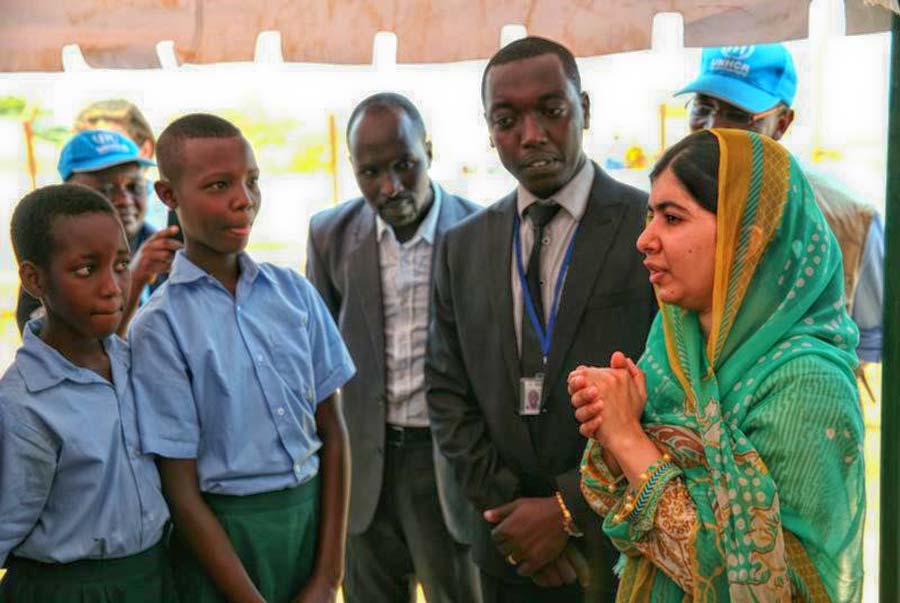
A regular speaker on the global stage, Yousafzai visited refugee camps in Rwanda and Kenya last July to highlight the plight of refugee girls from Burundi and Somalia.

By Lin Taylor @linnytayls, Editing by Belinda Goldsmith; c Thomson Reuters Foundation.


Honoring Diana, Prince Harry Urges Landmine-free World

Britain’s Prince Harry has thrown his support behind a campaign to rid the world of landmines by 2025, two decades after his mother, Princess Diana, walked through a minefield in Angola to highlight the plight of victims.

Even though the production and use of landmines has dropped since a 1997 treaty to prohibit their use, more than 60 million people are at risk of death or injury from landmines globally, the UK Department for International Development (DfID) says.

Hard to detect, difficult to clear and often designed to maim rather than kill, landmines linger in the soil for decades.

The number of people reported killed or injured by landmines rose by 75 percent in 2015 to nearly 6,500, largely due to conflicts in Libya, Syria, Ukraine and Yemen, according to the Landmine Monitor. Most of the casualties were civilians.

Harry, who is third in line to the throne, used a speech to mark International Mine Awareness to urge the international community to help end the use of landmines.

“My mother had been shocked and appalled by the impact that landmines were having on incredibly vulnerable people … she refused to accept that these destructive weapons should be left where they were,” said Harry at an event in Kensington Palace.

The prince, 32, said the world “should celebrate the huge progress which has been made”, but added that more needed to be done.

“The sooner we are able to clear all remaining landmines the less chance there is of innocent lives being lost or changed forever,” he said.

“Let’s make future generations proud and finish what we started.”

Priti Patel, minister for international development, said landmines were a “global scourge” as she announced DfiD’s plans to triple its support for landmine clearance to 100 million pounds ($124 million) over the next three years.

“It’s not just the fatalities and the terrible, immobilising injuries landmines cause – it’s the destruction of opportunity and hope, that has scarred so many families… more must be done and more will be done,” said Patel, who also spoke at the event.

In the last year of her life, Princess Diana used a high-profile trip to Angola – which along with Cambodia, Sri Lanka and Afghanistan are among the most mined countries in the world – to raise awareness of the threat landmines.

Following in his mother’s footsteps, Harry visited minefields in Angola in 2013 and Mozambique in 2010. Mozambique was declared landmine free in 2015.

More than 160 countries have signed the Mine Ban Treaty and 27 countries and one territory have declared themselves free of landmines, including Rwanda and Nicaragua.

By Lin Taylor @linnytayls, Editing by Katie Nguyen and Belinda Goldsmith; c Thomson Reuters Foundation.


This Earth Day: Make Water Out of Thin Air

People living in arid, drought-ridden areas may soon be able to get water straight from a source that’s all around them — the air, American researchers have said.

Scientists have developed a box that can convert low-humidity air into water, producing several litres every 12 hours, they wrote in the journal Science.

“It takes water from the air and it captures it,” said Evelyn Wang, a mechanical engineer at the Massachusetts Institute of Technology (MIT) and co-author of the paper.

The technology could be “really great for remote areas where there’s really limited infrastructure”, she said.

The system, which is currently in the prototype phase, uses a material that resembles powdery sand to trap air in its tiny pores. When heated by the sun or another source, water molecules in the trapped air are released and condensed — essentially “pulling” the water out of the air, the scientists said.

A recent test on a roof at MIT confirmed that the system can produce about a glass of water every hour in 20 to 30 percent humidity.

Companies like Water-Gen and EcoloBlue already produce atmospheric water-generation units that create water from air. What is special about this new prototype, though, is that it can cultivate water in low-humidity environments using no energy, Wang said.

“It doesn’t have to be this complicated system that requires some kind refrigeration cycle,” she said in an interview with the Thomson Reuters Foundation.

An estimated one third of the world’s population lives in areas with low relative humidity, the scientists said. Areas going through droughts often experience dry air, but Wang said the new product could help them still get access to water.

“Now we can get to regions that really are pretty dry, arid regions,” she said. “We can provide them with a device, and they can use it pretty simply.”

The technology opens the door for what co-author Omar Yaghi called “personalised water”.

Yaghi, a chemistry professor at University of California, Berkeley, envisions a future where the water is produced off-grid for individual homes and possibly farms using the device.

“This application extends beyond drinking water and household purposes, off grid. It opens the way for use of (the technology) to water large regions as in agriculture.”

In the next few years, Wang said, the developers hope to find a way to reproduce the devices on a large scale and eventually create a formal product. The resulting device, she believes, will be relatively affordable and accessible.

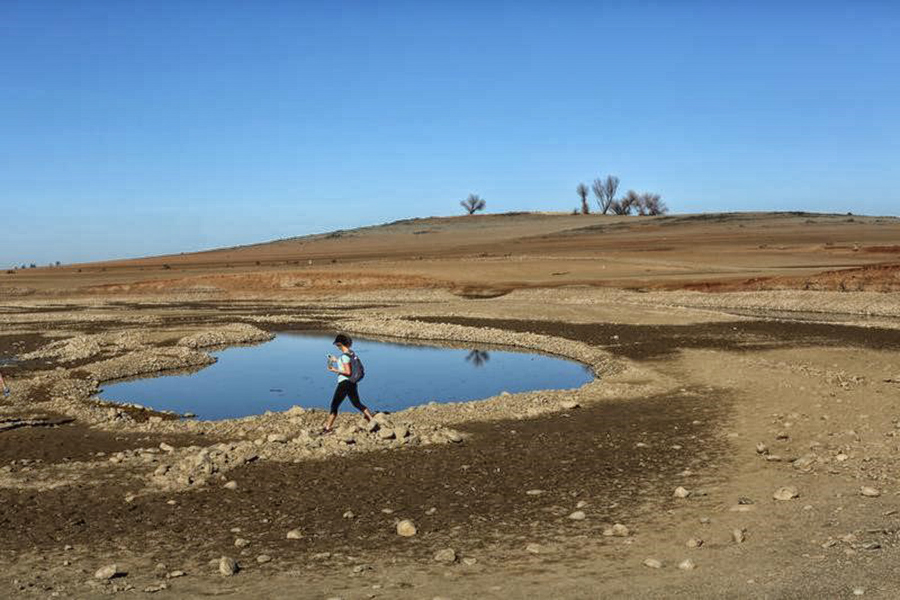
Photo: A visitor walks near the receding waters at Folsom Lake, which is 17 percent of its capacity, in Folsom, California January 22, 2014.  Robert Galbraith/File Photo

By J.D. Capelouto; editing by Alex Whiting; c Thomson Reuters Foundation.


Young People Key to Ending Fashion Labor Abuses

Young people have started to question how their clothes are made but consumers of all ages need to do more to tackle fashion labor abuses, according to a British lawmaker and sustainable fashion campaigner.

Baroness Lola Young said young people are increasingly engaged with political and economic issues and willing to fight on social causes – and labor abuses in the garment industry were no exception.

Young, a former actress who was made a life peer of Britain’s House of Lords in 2004, said harnessing this energy was vital to revolutionize the fashion industry which has come under pressure since more than 1,100 workers died in the Rana Plaza factory collapse in Bangladesh in 2013.

“A lot of young people are very concerned about a whole range of social justice issues and therefore are quite willing to go into the fray when they know what is going on,” said Young, who founded an All-Party Parliamentary Group on Ethics and Sustainability in Fashion.

Young said transforming consumer behavior in the West and changing the model of the “throwaway disposable society” is an important way to tackle labor abuses, particularly in the fast fashion sector.

Many big fashion brands have been criticized for failing to improve the conditions for workers in their global supply chains – from poor health and safety standards and long working hours to low pay and bans on forming trade unions.

WAY FORWARD

She said while young people could often not afford more expensive clothing, she hoped exchange ventures at retailers such as Sweden’s H&M – where customers return old clothes for recycling in return for vouchers – could show a new way forward.

She said they are also getting more engaged even as many have concerns over a period of global instability.

“Paradoxically, what feels like current political volatility has made some people sit up and think: ‘What are we doing here? We’ve got to take more control over what’s happening in this world and fight some of these injustices much more openly,'” Young said in an interview.

She said different sectors of the fashion industry – from fast fashion to haute couture – had different challenges and will have to take different approaches to the problems.

Yet Young added that fully addressing the issues surrounding the supply chain was a “big ask” for the industry as “we need to look again fundamentally at how the garment industry works”.

“You really need to look at your business models because they’re not delivering this ethical industry that many of us would like to see,” said Young, who will be on a supply chain transparency panel at the Copenhagen Fashion Summit next month.

Young said while Western awareness of the issues has grown recently, many people still don’t think about where their clothes come from until their attention is drawn by a large-scale event such as the Rana Plaza disaster.

Young said one of most effective ways to tackle the problems would be to support organizations working on the ground to implement a effective monitoring system that would empower workers and enable them to fight for better conditions.

Yet she emphasized the urgency of tackling these issues.

“Time is running out in relation to the environment, time is running in terms of the dreadful impact that it’s having on various communities and individuals around the world. So you’ve got to get on and do something really really quickly,” she said.

By Ed Upright, Editing by Belinda Goldsmith; c Thomson Reuters Foundation.


Food Grown in Sahara Desert with Sea Water

With scorching summer temperatures and little rainfall, the barren scrublands around the port of Aqaba in Jordan, one of the world’s most arid countries, might seem ill suited to cultivating cucumbers.

Yet a Norwegian company is planning to set up a solar-powered, 20 hectare (50 acre) facility that promises to grow a variety of vegetables without wasting a drop of fresh water.

“We take what we have enough of – sunlight, carbon dioxide, seawater and desert – to produce what we need more of – food water and energy,” said Joakim Hauge, chief executive of the Sahara Forest Project (SFP).

Harnessing abundant resources to generate scarce ones will be key to feeding a growing global population, set to reach 9 billion by 2050, without damaging the environment or accelerating climate change, he said.

Food production must rise by about 60 percent by 2050 to generate enough for everyone to eat, according to the United Nation’s Food and Agriculture Organisation (FAO).

Agriculture already accounts for 70 percent of global fresh water use, while the food sector is responsible for more than 20 percent of planet-warming emissions and 30 percent of world energy consumption.

“We can no longer make solutions that come at the expense of other sectors,” said Hauge. “There is a need for a more integrated approach”.

The Aqaba complex, set to open in the summer, evaporates salt water piped from the nearby Red Sea to cool greenhouses, creating conditions for crops to grow all year round.

Sea water is also desalinated to generate salt and fresh water for irrigation, while vapour from greenhouses is used to humidify surrounding patches of parched land so plants can grow.

AGRICULTURE OF TOMORROW?

SFP said a pilot project in the Gulf state of Qatar generated cucumber yields comparable to those of European farms. Plans are underway to expand operations to Tunisia.

But FAO experts said high costs involved limited the potential of such projects to ramp up food production on a global scale.

“You need a lot of energy and a lot of money so…the question may arise whether the same resources could be put to better use,” said FAO natural resources officer Alessandro Flammini.

To be financially viable, production must focus on high-value crops, like cucumbers and tomatoes, which poor countries might find cheaper to import, said Flammini, who analysed the Qatar pilot for a 2014 FAO report.

“It’s an interesting concept for fulfilling local needs and especially in terms of food independence and to meet the demand of a niche market,” he said.

The initial phase of the Aqaba complex had a $3.7 million budget and received financial support from Norway, the European Union and other investors, according to SFP.

Hauge said besides producing food, the complex, which will include a laboratory and research facilities, would produce side benefits by greening arid areas and creating jobs.

“We believe that this is part of the agriculture of tomorrow,” the biologist-turned-entrepreneur told the Thomson Reuters Foundation by phone.

FROM AUSTRALIA TO SOMALIA

Several other companies are employing similar technologies in other arid corners of the world.

In 2016, UK-based agribusiness Sundrop Farms Holding Ltd opened a vast greenhouse for tomato farming in the Australian outback near Port Augusta, 300 km (190 miles) north of Adelaide.

The facility runs on energy mostly produced by a 115 metre solar tower that draws sunlight from 23,000 mirrors surrounding it.

“Traditional agriculture is wasteful in terms of water and fossil fuels. In addition, unprotected crops are at the mercy of the elements, causing gaps in supply, quality issues and price spikes,” Sundrop’s CEO Philipp Saumweber said in an email.

The company has signed a 10-year contract to supply Australian supermarket chain Coles with truss tomatoes and received investments of about $100 million from private equity firm KKR & Co, according to a 2014 statement.

“While the capital expenditure required to build our farms is slightly more expensive due to its cutting-edge nature, we reap the benefits of this initial investment in the long run through savings of fossil inputs,” said Saumweber.

Around seven thousand miles away, in sunbaked and drought-hit Somaliland, another British-based venture, Seawater Greenhouse, is setting up a pilot facility aimed at making high-tech greenhouse production more affordable.

“We have eliminated using fans,” said British inventor Charlie Paton, a former business partner of Saumweber, who pioneered the use of solar energy and salt water for irrigation in the 1990s.

“We designed (the greenhouse) to be cool by exploiting the prevailing wind. So it’s a wind-cooled greenhouse,” he said in a phone interview.

The one-hectare complex, which received funding from the British government, cost about $100,000, he said, adding he expected it to produce around 30 tonnes of tomatoes a year and 16 litres of drinking water a day for irrigation and livestock.

Paton said he hoped the greenhouse, which employs mostly local staff, would serve as a hub for expansion across the Horn of Africa.

“The region gets a lot of humanitarian aid and that’s arguably detrimental because if you give free food to people you put farmers out of business,” he said.

“It has more chances of success if people can make money out of it.”

By Umberto Bacchi, Editing by Ros Russell. c Thomson Reuters Foundation.


Disney Announce Girl Power Star Wars Spin-offs

Disney expand the Star Wars universe by creating all-female animated shorts and a new line of toys aimed at a female audience. 

Disney are celebrating the girl power of ‘Star Wars’ by creating short on-line animations based on iconic female Star Wars characters including Rey, Jyn Erso, and Princess Leia.

Entitled ‘Star Wars Forces of Destiny’, each episode will focus on one female character, which will be voiced by the franchise’s original actresses – excluding the late Carrie Fisher, who will be replaced by actress Shelby Young.

“These pieces are all interconnected within the larger story universe of Star Wars. They are told in a way that they are self contained,” says Vice President of Lucasfilm Animation Development, Carrie Beck.

“So if you know nothing you can come in and experience these stories brand new. But if you are a fan and you know everything about Star Wars, this will add new dimension and new layer to the characters you already know and love.”

Disney haven’t just stopped with the animation series. They are bringing out a whole new set of more doll-like action figures aimed at girls too.

“We know that, through our testing, that this (the action figures) appeals to both boys and girls,” says Senior Vice President of Hasbro Brands, Samantha Lomow. “Of course you’ve got these great heroic female leads but we also have the really fun sidekicks that they interact with in the entertainment. We really wanted to bring those out as well. You may even see a villain or two on the way.”

‘Star Wars Forces of Destiny’ will begin on Disney’s YouTube channel in July.

By Rollo Ross


Men at Higher Risk of Losing Jobs to Robots

Up to one-third of British jobs could be taken over by robots by the early 2030s, impacting 10 million Britons but with women less likely to face redundancy, a recent UK study has shown.

The research, by accountancy firm PricewaterhouseCoopers LLP, found 30 percent of UK jobs could face automation compared to 38 percent in the United States, 35 percent in Germany, and 21 percent in Japan.

Researchers, however, said this wouldn’t necessarily lead to less employment as jobs may change rather than disappear.

But the distinction between men and women was clear, with PwC estimating 35 percent of men’s jobs were at risk compared to 26 percent of women’s because of the high number of women in sectors requiring social skills like education and health.

Male workers are also more concentrated in jobs requiring lower education levels, like transportation and manufacturing.

PwC Chief Economist John Hawksworth said in the future employees of both genders will “have to be more adaptable, not stuck in the stereotypes”.

He said this could present an opportunity for men and women to break down traditional gender gaps and progress in careers, provided they can upskill or access training opportunities.

“The whole thing has become more fluid,” he told the Thomson Reuters Foundation.

However, it was uncertain whether these changes would have any impact on the gender pay gap. Figures from the UK’s Office of National Statistics show on average women earned about 18 percent less than men in Britain in 2016.

By Sally Hayden @sallyhayd, Editing by Belinda Goldsmith; c Thomson Reuters Foundation.


From Adventurers to Inventors, Saudi Women Inspire a New Generation

Saudi women from adventurers to inventors hope a unique conference in Riyadh will highlight their changing roles and inspire younger women to push for new opportunities in the ultra-conservative kingdom.

The event comes at a time when reforms are slowly affecting women’s lives in one of the world’s most gender-segregated countries – where women live under the supervision of a male guardian and cannot drive.

Women can now sit on the government advisory Shura Council, vote in municipal elections and work in some retail and hospitality jobs with the government’s Vision 2030 trying to diversify the oil-reliant economy by boosting female employment.

At a one-day conference run by Alwaleed Philanthropies, a charitable group working to help women, Saudi women from various walks of life took to the stage alongside international speakers such as British women’s rights campaigner Cherie Blair.

Raha Moharrak, 31, who made history in 2013 as the first Saudi woman to climb Mount Everest (pictured above), said girls in Saudi Arabia must be taught that they are not less than boys.

“My journey started as a mini-rebellion … I wanted to shock my parents,” said Moharrak, who was determined to do something different after studying abroad and won her reluctant father over by explaining why climbing was important to her.

“In our culture we are taught to be quiet, taught that being bold is ugly, that being different is discouraged. I think that bold is beautiful, that being different is unique.”

Other speakers included Hadeel Ayoub, who invented a smart glove that converts sign language to text, and writer Kawthar Al Arbash, whose son was killed in 2015 trying to stop an Islamic State suicide bomber.

“SAUDI WOMEN CAN”

Princess Lamia bint Majed Al Saud, secretary general of Alwaleed Philanthropies, said the conference, with the slogan “Saudi Women Can”, was part of a campaign to draw attention to their achievements and inspire the next generation.

After the conference – which she hopes to make annual – a microsite SaudiWomenCan.com with a mobile app will issue daily motivational quotes, and other initiatives are planned.

“I want to give the younger generation role models to show them that, no matter what obstacles, there are opportunities and give them stories to inspire them,” Princess Lamia told the Thomson Reuters Foundation, which is partnering with the charity to provide training for Saudi journalists on women’s issues.

Speaker Eqbal Darandari, associate professor at King Saud University who was elected to the Shura Council in 2016, said it was important women learn responsibility and leadership.

“We need to teach females to be stronger … to make change, to work on their own,” said Darandari, adding the biggest progress would come if women were given decision-making roles.

“We are achieving things but not as fast as we would like. But this is a problem not from the top but from down, from the people, as what is needed is social change and that is slow.”

Saudi Arabia is ranked 141 of 144 countries in the Global Gender Gap, a World Economic Forum study on how women fare in economic and political participation, health and education.

A state policy of gender segregation between unrelated men and women is strictly enforced with separate areas in public spaces and separate entrances at workplaces.

In public all women must wear a head-to-toe black garment.

Moharrak, a graphic designer, said women need to get the support of their fathers and brothers for real change to happen.

“All the women who have managed to achieve independence have two things in common: a rebellious heart and an understanding father. We don’t grow up with an easy path but no one wants to be disowned or disrespect their father,” she said.

By Belinda Goldsmith @BeeGoldsmith, Editing by Ros Russell and Ellen Wulfhorst. c Thomson Reuters Foundation.