Many people in the U.S. are feeling stressed about their finances and jobs.
A recent report by Crisis Text Line — a 24/7, nationwide, text-based mental health and crisis support service and a Real Leaders Top Impact Company — found that 2023 was a year of anxiety and stress for texters. Over one in three texters mentioned these topics. The American Psychological Association also reports similar findings for 2023. Even though Americans have mostly returned to their routines, many are recovering from the collective trauma of the past few years.
While there were many stressful events in 2023, when texters discussed anxiety and stress, they typically focused on issues related to their immediate circumstances: relationships to family and friends and stressors at school and work. Many worried about work, paying bills, or being laid off.
2023 was a year of strikes and layoffs — and another year of paying for medical bills, childcare, mortgages, and other financial pressures. Your employees might be stressed — in general or about their future at the company, their performance, their benefits, or their relationships to coworkers.
If you are leading a company, you are in a powerful position to mitigate stress for employees. With their centralized policies and communication, workplaces are well-positioned to make an impact for better mental health. Unfortunately, although employers believe they foster a supportive workplace, according to a 2018 CDC study, U.S. workers feel their companies are falling short of providing the right resources to support their mental health.
Take a moment to evaluate how you are supporting your employees’ mental health.
The Milken Institute provides guidance for employers to evaluate gaps and set priorities to make mental health for workers accessible and stigma-free. It suggests that employers focus on three priority areas: psychological safety, stigma, and performance and engagement. Providing volunteer opportunities can contribute to better mental health outcomes. In a recent study of Crisis Text Line volunteers, two-thirds of crisis counselors took better care of their mental health as a result of volunteering.
The expectation for people to simply get over their stress and mental health challenges is not only unrealistic but also detrimental to their well-being. By recognizing the importance of mental health, encouraging open dialogue in the workplace, and promoting the value of seeking help, we can create a more supportive and understanding society. Remember, it’s OK to ask for help, and everyone deserves the support they need to thrive.
Yachts powered by the sun could help reduce harm to the environment.
By Marleny Rodriguez
In the middle of the ocean, perfect silence is usually interrupted by the rumble of a boat’s generator, the vibrations skipping off the water. Michael Köhler is the co-founder of Silent Yachts, which creates high-quality, environmentally friendly yachts that blend sustainability and luxury via solar energy.
He explains, “It’s more than unbelievable comfort that there is no generator running. There is no noise, there is no oil film on the water, there are no vibrations, and no fumes in the cockpit.”
The idea to create an environmentally conscious way to power yachts first ignited in Köhler’s mind around the 1990s, when he built a basic invention involving a bag of transistors and a battery.
“I never studied any technical studies at university, but I had the passion for it,” Köhler says, “and so I was simply learning by doing and was observing every technician who was on my boat.”
He continued to work to find a way to enjoy the luxury of sailing but also avoid using a diesel engine that would only contribute to the harmful use of fossil fuel. In 2009 he and his wife, Heike, founded Silent Yachts in Austria and produced one of the first solar-powered boats, the Solarwave 46. The couple tested the durability and efficiency of solar energy on a five-year journey through Europe’s rivers and foul weather. As a precaution, Köhler still believes in having a generator on board in case of risky weather or mechanical issues, but the generator was used fewer than 50 hours during the trip, and no maintenance was needed on the solar panels.
On a Silent Yacht, solar power is the main power source and the focal point of all design.
The placement of the solar panels is specific to each style of yacht and considers factors like the appliances it must support and the weight of interior furniture that affects drag and friction on the water. The windows are shaded by the hull and/or the roof, using less energy to keep the cabin temperature cool. On cloudy days or when more speed is needed, the solar panels provide all the energy necessary while also powering household appliances. Energy can also be stored in batteries in case of consistently overcast weather.
The transparency in the company’s willingness to teach potential consumers about its production decisions sets it apart, as boat operations are well-known to contribute to pollution in waterways via engine emissions, chemicals, oil spills, and more. Silent Yachts’ YouTube channel features a Tech Shorts series that explains how and why certain parts or materials are used in the production of its boats. For example, the company has taken a note from submarine development in its use of carbon-fiber propellers, which consume less fuel and are also conveniently silent.
Silent Yachts received a 2024 Real Leaders Impact Award for Most Impactful People, ranking first in employee growth over a three-year period.
“A big point is to help others develop themselves because the company can only grow if the team members grow — not in number, but as individuals,” Köhler notes. “It’s really important that everybody understands that there is good soil for them to grow here. The company is led as a democracy. The main task is to keep the wheel spinning, to listen to the team to understand where there is a deficit or something that can be improved.”
In this fast-moving world, leadership must be visionary, resilient, and purpose-driven, creating social value and impact in every aspect of business. As a keynote speaker, I share the lessons I learned as a child farmworker in Central America with leaders across the United States.
Building the Foundation
Born in the ‘90s in a small Central American village, I grew up without electricity until I was 8. We farmed all our food — beans, cassava, plantains, corn, and other crops — and worked hard. I learned about grit and the importance of working diligently from sunrise to sunset. After arriving in the United States as a teenager, I learned English because it was a great equalizer for education and work. There were so many obstacles to learning this language, but it was paramount for me to learn it.
After that, I immersed myself in formal education, graduating from high school in three years while working a graveyard shift to support my family back home. These years developed the ability to focus amid distraction and tiredness and expanded the work ethic — a family trait I learned from my grandmother — that would define me. I earned a bachelor’s degree in management within two years and was accepted into Harvard Business School Online. Hard work and a belief in one’s potential can propel a person beyond what seems conceivable.
The Power of Education and Technology
My career as a keynote speaker has taken me to some of the globe’s most forward-thinking companies — Apple, Tesla, Salesforce, and Uber — where I witnessed bleeding-edge product development, revolutionary approaches to workforce management, data analytics, and real-time human-machine collaboration. Through these experiences, I learned how technology can make the world a better place while cultivating a culture of innovation.
In 2022 I released a mobile app that would serve as the hub for $5 million in available scholarships for underserved and underprivileged students to help them build a bridge between potential and opportunity through technology.
Resilience in Leadership
Now, leaders are expected to be resilient and develop resilience by consistently learning from life’s challenges and opportunities. My career followed an unplanned trajectory that blended a fast-paced educational track with misfortune, and finally with a family. As a husband juggling my business, three children, and a desire for lifelong learning, I wondered how resilience could be taught to the next generation.
Fostering a resilient culture is an essential task for any current leader. As I learned in Resilient Leadership — A Case Study of Sir Winston Churchill by A. Kishore Kumar and K. Ajay Kumar, resilient leaders push their teams to master challenges, build strength from failures, and increase team performance.
Sowing Seeds for a Better World
My work contributes to the United Nations Sustainable Development Goals through youth motivational speaking, systemic thinking, and innovation that drives social impact, especially in schools. My highest purpose — to plant seeds of hope — contributes to SDG 4: Quality Education. Innovation and technology can scale solutions and impact people’s lives and businesses.
When redefining business as usual, the leader will ultimately catalyze more effective and sustainable societal development. Concurrently, they will ensure that the company is well- positioned to be more resilient, more reputable, and more resourceful over the long term. The success of a company is ultimately tied to contributing to a more successful and fulfilled world.
Embracing the Future
From farmworker to national keynote speaker, I have witnessed firsthand how education combined with grit, resilience, and enlightened leadership can transform not only myself but our planet and the pervasive social challenges we face. Let’s share this vision and believe that better leaders will create a better world.
As we become adept at learning, adapting, and regenerating, executives must embrace sustainability to ensure the long-term well-being of their organizations, communities, and humanity. We are ready to lead.
Ovidilio “Ovi” Vásquez is a social entrepreneur, author, and national motivational keynote speaker who champions the profound transformative impact leaders have on our next generation. He made the 2023 Real Leaders Top Keynote Speakers’ Ones to Watch list.
Me, a people pleaser? No way. I’m an independent-minded, self-determined leader — or so I believed for years — until a specific high-stakes strategy session with my team.
As Melissa rose to present her pitch, I already knew where she was going. I also knew I hated the idea and she’d been socializing it for two weeks. As she presented, I mentally prepared my rebuttal. But when she concluded, I looked at the pleased expressions of my team and instead of objecting, found myself nodding in agreement. Why? I was afraid of their disapproval.
That’s when I realized I was choosing acceptance over authenticity — I was people pleasing. Immediately my self-critic spoke up, I felt a bit of shame, and I sensed my team’s confusion.
At times throttling our passions or ideas is smart. But more often we contain ourselves to please someone or a group like I did — and I’m not alone. A 2022 YouGov poll showed that 49% of adults self-identify as people pleasers, and 92% reported that they engage in people-pleasing behaviors.
What People Pleasing Looks Like
People pleasing takes energy and feeds stress and burnout. It is inauthentic, limits our decision effectiveness, dilutes accountability, and squanders our power — all for fleeting validation. If you’re wondering what people pleasing looks like, here are classic behaviors:
Going to great lengths to avoid conflict
Putting other people’s needs first at the expense of your own
Toning down a strong message for something more palatable
Feeling that you can’t say no when someone asks for something
Thinking you’re responsible for how other people feel
Struggling to establish boundaries with others
Apologizing or accepting fault when you aren’t to blame
Mirroring the behavior of others in social situations to make them feel comfortable
Having a hard time recognizing how you really feel about something
Saying you agree with others, even when you don’t actually agree
One form of people pleasing is self-deprecation — reducing your value. That’s not the same as humility. If you reply to a compliment, “I couldn’t have won this project without Jane and Stan,” you are being humble. But if you reply, “I hardly know what I’m doing. Thank God for Jane and Stan saving the day,” you are self-deprecating. Humility is realistic, while self-deprecating is diminishing. You self-deprecate so that others don’t feel threatened and will be pleased with you.
Another form is going along to get along — in other words, preventing conflict by discounting your needs. If you say, “Sure Stan, I’m on board with the changes you’re proposing,” when you, in fact, disagree, you are going along to keep Stan happy. Unfortunately, by discounting your needs, you also siphon off your enthusiasm. If you don’t show who you are, voice your thoughts, or express your uniqueness, you can’t access your innate power. And when you’re not known and seen, you won’t be respected for your talents and strengths.
Then there’s overachieving, working your butt off to please people before they even ask. You over-deliver, sacrifice yourself, and work extra hard to prevent anyone being displeased. You bring so much value that they must be happy with you. Work, work, work, give, give, give, do the most you can, volunteer endlessly, and sacrifice your needs (and probably your family’s needs too).
Breaking the People-Pleasing Habit
What, then, is the opposite of people pleasing? Being an uncaring jerk? Of course not. It’s important to work well with your boss, peers, and direct reports. But throttling yourself back, tamping down your presence, and watering down what you have to are people-pleasing habits that dissipate your innate power. Power isn’t granted; power is claimed. To claim your power and stop people pleasing is to be authentic.
Start with self-awareness. My awareness kickstarted at that meeting. It grew as I noted my patterns — moments of hesitation and pinches of discomfort that drove me to prioritize others’ needs. I journaled and worked with a coach to get real about underlying fears that fed the behavior, and I confronted those beliefs with courage and loads of self-compassion.
We need courage to express more than just our conforming self. We need courage to share our convictions and creativity, especially in the awkwardness of opposition. We need courage to set and hold boundaries and to say no when appropriate. This is how we honor our needs and priorities and stop trading our authenticity for conformity.
When we’re ready, we can go further and embrace vulnerability. Paradoxically, our power lies not in invulnerable perfection, but in the willingness to show up as our imperfect, authentic selves. This also fosters genuine connections that support the all-important foundations of trust.
While people pleasing is a popular trope, I’m not advocating self-centered, to-hell-with-everyone anarchy. It’s imperative to collaborate and connect well with others. Be considerate. Be collaborative. But Don’t. Give. Away. Your. Power.
I implore you to take this journey with me as leaders who claim their power and lead with authenticity. The diminishing influence of people pleasing is clear — and costly. We can help liberate one another from the limitations of people pleasing and support each other as conscious leaders defined by self-awareness, self-acceptance, and service. We can live a new paradigm of leadership rooted in authenticity, empathy, and the unwavering conviction that true power comes from within.
Novogratz talks leading a moral revolution and helping pioneer impact investing, an industry that just might save the world.
By Kathryn Deen
If you could use a dose of hope, look to Jacqueline Novogratz. Hers is not some vague, pie-in-the-sky hope. It’s hard-edged and backed by action and results. This impact investing pioneer has been beating the drum for lifting people out of poverty for nearly 40 years, and her company, Acumen, has helped lead the way for 23 of those years.
Novogratz founded Acumen in 2001 during the early days of impact investing. Acumen invests in and supports nonprofit and for-profit companies and individuals fighting poverty and restoring dignity for long-term change. It has impacted over half a billion people and earned a spot on the 2024 Real Leaders of Impact Investing list.
She shares her well-earned lessons and most valuable insights on using money as healing in this candid conversation with Real Leaders.
Real Leaders: You helped establish impact investing as a new sector. What was it like to be at the forefront of this movement?
Jacqueline Novogratz: Nearly 50 years ago, pioneers like Muhammed Yunus, founder of the microfinance bank Grameen, and Ela Bhatt, founder of the Self-Employed Women’s Association, saw the power of using tools of business to make change. They made small amounts of credit available to very low-income women who otherwise would have had to pay usurious rates to many lenders.
I came in on this wave in 1986 when I moved to Rwanda and co-founded the nation’s first microfinance bank. That experience taught me not only that a small group of people could make a big amount of change, but that making markets work for the poor was essential to building nations. That thesis — using tools of business to solve problems of poverty and build a world of dignity — has been my life’s work.
The early days of establishing an entirely new sector can be tough. I founded Acumen in 2001 and can remember countless meetings with captains of industry who would explain with great certainty that my understanding of business was muddled. “I make money on one hand, and I give it away on the other” was their conventional wisdom. I found little curiosity among them regarding what had failed the poor and whether there might be new ways to solve problems that were more effective either than maximizing financial returns or giving charity away. Gandhi says, “First, they ignore you, then they laugh at you, then they fight you, then you win.” In 23 years our investments have impacted the lives of more than half a billion people. Patient capital and impact investment have grown into a multi-trillion-dollar market. Change is possible if you have the grit and resilience to keep working at an idea whose time has come.
RL: Tell us more about the new approach you took to solving poverty with Acumen’s patient capital model.
Novogratz: Our financial systems are constructed based on short-term thinking that no longer serves — if it ever really did. Patience is a revolution. For entrepreneurs to build business solutions serving very low-income people takes experimentation, sometimes failing and getting up to try again.
Early on we saw a growing group of entrepreneurs who had what we call moral imagination — the audacity to imagine the world that could be and the humility to interact with the world that is. They also had the resilience and grit to stick with solving a problem. We were willing to take bets on those entrepreneurs. Entrepreneurs see the possible in the impossible. They recognize opportunities in every problem. When it comes to low-income people, they see customers who want to change their own lives instead of passive recipients waiting for charity.
Acumen could bring long-term, risk-oriented patient capital as well as access to our social capital — networks, expertise, and knowledge.
When we started I thought patient capital meant seven to 10 years. I now see it as 10-20 years. That’s what it takes to build markets in places where people are very low-income, where there is very little infrastructure, where there’s often very little trust, where it’s hard to build talent pools that you can afford, and where there are often high levels of corruption.
RL: How has impact investing changed since you started?
Novogratz: When I started there was no impact investing space. So in the early years, we were one of the only games in town, and we were very defiantly focused on using philanthropy, investing it as long-term equity and debt. Accounting for the impact we made, any money that we get back gets reinvested.
There was an early set of philanthropists who had their own money and thought, “I can also do this,” but they didn’t want to give up returns. So they would set up capital pools with the same expectations — 20-23% returns — despite the fact that they were trying to solve world hunger. It took time for the industry to acknowledge that we need different pools of capital to solve different kinds of problems.
As the impact sector grew in size and sophistication, we grew in size and skill. Today we manage philanthropic-backed patient capital investments as well as a portfolio of larger for-profit impact funds. Those funds are structured for the problems they address. For instance, the Acumen Resilient Agriculture Fund is a $58-million blended fund with a first-loss component and significant technical assistance support. We’re working on a $250-million facility composed of philanthropy, debt, and equity to bring off-grid solar electricity to those considered hard to reach in 16 of the most fragile African nations. Our investment portfolios represent more than half a billion dollars in assets. Through all of it, we are committed to seeing investment as a means to solve tough problems of poverty — and not as an end in and of itself.
RL: Whom have you looked up to most in the impact investing space?
Novogratz: Ceniarth has always been willing to take outsized risk, move first, and go where others will not dare. Omidyar played a very strong role in this field. Currently the Green Climate Fund — the world’s largest climate fund funded by major governments around the world — is a brave partner with a commitment to fighting climate change. They are a real leader in structuring blended facilities so that we can reach the hardest-to-reach individuals with electricity or agriculture. IKEA Foundation also has been very innovative in supporting us to build new models in energy access, helping build green pathways out of poverty using new and inclusive business models. Without such partnerships, we would not have been successful.
RL: Is impact investing here to stay?
Novogratz: I once told a prospective philanthropist in Acumen about one of our companies, d.light, which is an off-grid solar energy company that has now reached over 160 million people with solar light and electricity. The philanthropist said, “I love the work that you do, but are you a real investor — because you still raise philanthropy and not just returnable capital?”
It really shook me. I said, “Help me understand what your definition of a real investor is.” He said, “I want at least market rates.” I said, “Help me understand what a market rate is when there hasn’t been a market and you’re the first one to create one.” And he said, “I would at least want 15-20% returns.” I said, “Here is the rub. The world continues to look at ‘real’ simply as the financial returns made to the investor. We are in a world where we have to deal with climate change and inequality, and we both believe that the private sector is a critical player in solving those problems. Yet when will we get to a point when real investors are rewarded for the good they do — the impact they create, the forests they conserve, the people they employ? To me, that’s what real investing is.”
I look forward to a day when we no longer need words like impact investing, social enterprise, and patient capital — where those modifiers are just assumptions and we don’t continue to put on pedestals players who might destroy value to the natural worlds and diminish human beings in service of shareholders alone.
RL: What metrics must the impact investing industry align on?
Novogratz: We need to have a conversation in the business and investing communities about the importance of subsidy. Look at Europe and the U.S. Both regions subsidize their agricultural and energy sectors. No nation has electrified without significant subsidy. Yet when it comes to the poor, investors often recoil at any hint of subsidy. We’ve never been more unequal. I was just in Kenya, where the nation is experiencing devastating floods due to climate change. Making rural electrification work for the poorest people will require businesses that are supported by wise policy and effective financing. That requires new ways of thinking and acting.
When it comes to building a company that serves the poor, affordability is everything. It’s right at the heart of how low-income people make decisions. Think about solving a problem like deforestation. Peter Scott was literally a tree hugger in the 1990s trying to save forests in Africa when he finally realized that the root cause of deforestation in Africa comes down to a few things, but the No. 1 reason is these little cookstoves that low-income women cook on. They cut down trees or use charcoal, which is made from trees. He realized that to save the trees, he had to build a cookstove that women can afford. That was hard to do because very poor women can’t afford a $40 unit, which is essentially the lowest cost that will reduce your fuel consumption by 50-60%. We were the first investor in his company, BURN Manufacturing. This year BURN will have sold 4 million cookstoves, saving 20 million trees, employing over 2,000 young people, and impacting over 20 million human beings whose health is changed, whose income is significantly increased, and whose footprint, which is already very small, is reduced even further.
We need more measures around the environmental impact that a company is creating, and we need to internalize those costs in the environment and for human beings.
Chocolate is a $100-billion industry built off 5 million cocoa families, 90% of whom make less than $2 a day. We will not have high-quality chocolate unless we find ways to fully integrate a supply chain so that those smallholder farmers are seen, valued, and earning a wage that allows them not to live in poverty. It shouldn’t be that difficult, yet we still measure a company’s performance in ways that make farmers price takers — whatever the global price is, here’s the price I will pay you even if it keeps you in poverty — rather than price makers valued for what they contribute. None of us wants to keep somebody in poverty every time we buy a chocolate bar.
RL: What is Acumen’s process for making investing decisions?
Novogratz: If you sat in on one of our investment meetings in the very beginning, it would look like serious investors sitting around the table.
Our manifesto is where you can begin to see why we are different. The first question we ask is, “Does this investment reach low-income people?” It starts by standing with the poor. “Is it structured in a way to give the company the best chance of succeeding in the long-term? And what is the character of the entrepreneur in whom we are investing?” At some point our tagline became, “At Acumen, we invest in character.” Why character? Because when you are trying to make significant change in these markets, you often end up operating in very corrupt environments.
We need to find those entrepreneurs who not only have the vision but also the grit, resilience, persistence, and moral imagination — who see low-income people as full human beings and therefore have the skills of patience, deep listening, and knowing how to connect across identities — to build companies that might start very small like Ziqitza HealthCare with nine ambulances and grow to bring 50 million people to hospitals across India.
Dave Ellis and his partner, Joe Shields, had never held a live chicken when they decided to start EthioChicken, a poultry company in Ethiopia. We were their first investor. They understood that farmers don’t have the capacity to do all it takes to raise a few baby chicks to maturity, but once a chicken is grown, it will forage for itself and provide eggs — an important source of protein — even during droughts. So the entrepreneurs built a business that employed agents who would buy 1,000, day-old chicks and work night and day to raise them to maturity. They would then sell them to farmers in tiny batches, and the farmers would sell the eggs that their families didn’t eat to local markets.
We accompanied that company with our patient capital for probably eight years. They paid us back, and then one of our for-profit funds, the Acumen Resilient Agriculture Fund, invested another round of capital in the for-profit impact space. Under the holding company Hatch, EthioChicken is now operating in nine African countries. The company works with 16 million agents, some of whom make $10,000 or more per year. Last year the company sold 43 million chickens to more than 3.5 million smallholder farmers who, in turn, sold 3.5 billion eggs. In Ethiopia they’ve been credited for significantly reducing childhood malnutrition. It’s thrilling for me to see Ethiopians building capacity in new markets like Rwanda or Ghana. They are creating local jobs, and they are creating value, not extracting it.
RL: Let’s talk about some hard-earned lessons when things didn’t go right.
Novogratz: We have a failure report. It’s so important to us. We make it public. It is an accountability mechanism for us, for our companies, for other impact investors, and for our peers. If we want to call ourselves a learning organization, we better not just have stories of how good we are. You learn more from your failures. You grow more from the hard times as a leader, and that’s the reality of risk-taking and investment.
About 25% of our investments fail. What’s interesting is most of those companies are still functioning, but we exited our investment. I would say there are typically three reasons for our failures.
One is the character issue, where you might discover two sets of books being kept. We have very few of those examples, but when they occur, they break your heart.
The second is when we’ve been too early on the innovation curve. In Pakistan we were the first investor in micro-health insurance without fully understanding the customer — that people didn’t want to pay for something they couldn’t see that might happen in the future if they got sick — so we wrote off our investment. But what was exciting about that is we watched a whole industry then build off of that experience and become a real leader in micro-health insurance for low-income people.
Third, early on we sometimes were too excited by the technology without fully understanding the distribution systems and low-income people’s preferences. A hearing aid that was $30 and operated as well as a $3,000 model — fantastic, but if you don’t have a distribution system, and if a low-income farmer doesn’t see the connection between that hearing aid and working in the field, you’re not going to have a market.
We’re a lot smarter now. We still make mistakes, and in fact, we have an adage in Acumen that if you aren’t willing to fail, you will not succeed.
RL: What is your outlook for the future of impact investing and Acumen?
Novogratz: What I’m excited about for the future is to see more players in this space and to support young people who deserve opportunities to build their ideas into reality. I’m committed to bringing forth practices of moral leadership that are not about righteousness or a set of rules coming down from on high but are about what it actually takes to operate in a world based on the growing recognition that we are connected to all human beings and living things, that our action and inaction can impact people every day, and that we have it within us to solve these problems.
However, the new set of skills needed are not the ones I learned in business school. They are focused on what we sometimes think of as soft skills: deep listening, holding opposing truths in tension, seeing our identity as a way of connecting with each other rather than as a way of dividing one another, telling stories that are truthful in ways that matter in a world of fake news. I believe that these skills of moral leadership are the new hard skills.
So how do we lift these hidden heroes, these new business models for a generation that is looking for more than inspiration? How do we show up as leaders and point to those people who are trying not to tear down but to build up?
I worry sometimes that investing and business get a bad name, some of it deservedly so. How do we get under all these labels and instead use the tools of business, the tools of capital in service of our world? I see how much change is possible, and I also don’t want people to forget that in my lifetime, we’ve gone from a world with 40% of people living in extreme poverty to 8%. I’ve seen the 40 energy companies we’ve invested in reach more than 230 million people with affordable solar light and electricity. Change is possible. You just have to work for it.
RL: What is your definition of a real leader?
Novogratz: A real leader is here to serve. A real leader asks herself not, “What am I doing in service of myself?” but, “What am I doing in service of others?” A real leader listens. A real leader learns how to partner. A real leader walks with humility and never lets go of their audacious dreams to build a world they know is possible.
Use the power of markets; don’t be seduced by them.
Partner with humility and audacity.
Accompany each other.
Tell stories that matter.
Embrace the beautiful struggle.
Novogratz’s Top Practice
As told to Real Leaders, here is Novogratz’s top practice.
The most important principle is to just start. There’s a lot of fear and cynicism in the world. “Where will I get the capital?” “I don’t know anybody.” There are a million excuses not to start. To that, I say start where you are with what you have. If you see something that looks like a problem, ask yourself, “What opportunity is that problem hiding? How might it be solved?” Take a step toward that problem. Try to understand it — not from your perspective but from the perspective of the people being impacted by it.
You probably will make a mistake. Fine. Learn from it. Take another step. Before you know it, not only will you be on your way to finding solutions to that problem, but you will be on your way to finding the purpose that will reveal itself to you as the whole reason that you’re here. Just start and then don’t quit.
I was a woman who just started — probably recklessly. As a 25-year-old banker with three years of Wall Street experience, I had no business trying to build a bank for women, and I was stretched to find Rwanda on a map back in 1986. I didn’t know a soul, but women had just gotten access to open a bank account without their husband’s signature. What I did know was that humans are capable of extraordinary things. So all I saw was the upside.
What I lacked when I first started was the humility to know what I didn’t know and to come without solutions but with a whole bunch of questions with respect for local knowledge. I learned to listen and to learn from those I was there to serve. I learned to be more patient and to behave like a guest until the locals decided to treat me like an insider — and that made all the difference.
As I grew I saw that you could change a corner of the world and make history. Maybe I had to go through the humiliation, rejection, and people calling me crazy. In fact, I’ve learned that when people call you crazy, it usually means you’re onto something. But if you persist, you keep showing up, and you treat the people around you with the kind of respect that you believe we need in the world, all of a sudden there’s an entity that’s bigger than you, and everybody who works with you is smarter than you. That all starts to teach you.
I have the same spirit now that I did when I was 25 years old. I know change is possible. I know what the tools are, and I’ve seen solutions work. I know the problems ahead are a heck of a lot more complicated and bigger than the problems seemed way back then, but it gives me a chance to seem crazy sometimes and start that journey all over again, and I am not stopping till I’m no longer here.
PATH Water’s co-founder and CEO Shadi Bakour shares three branding lessons, including why leaders should stop resisting collaborations.
By Carla Kalogeridis
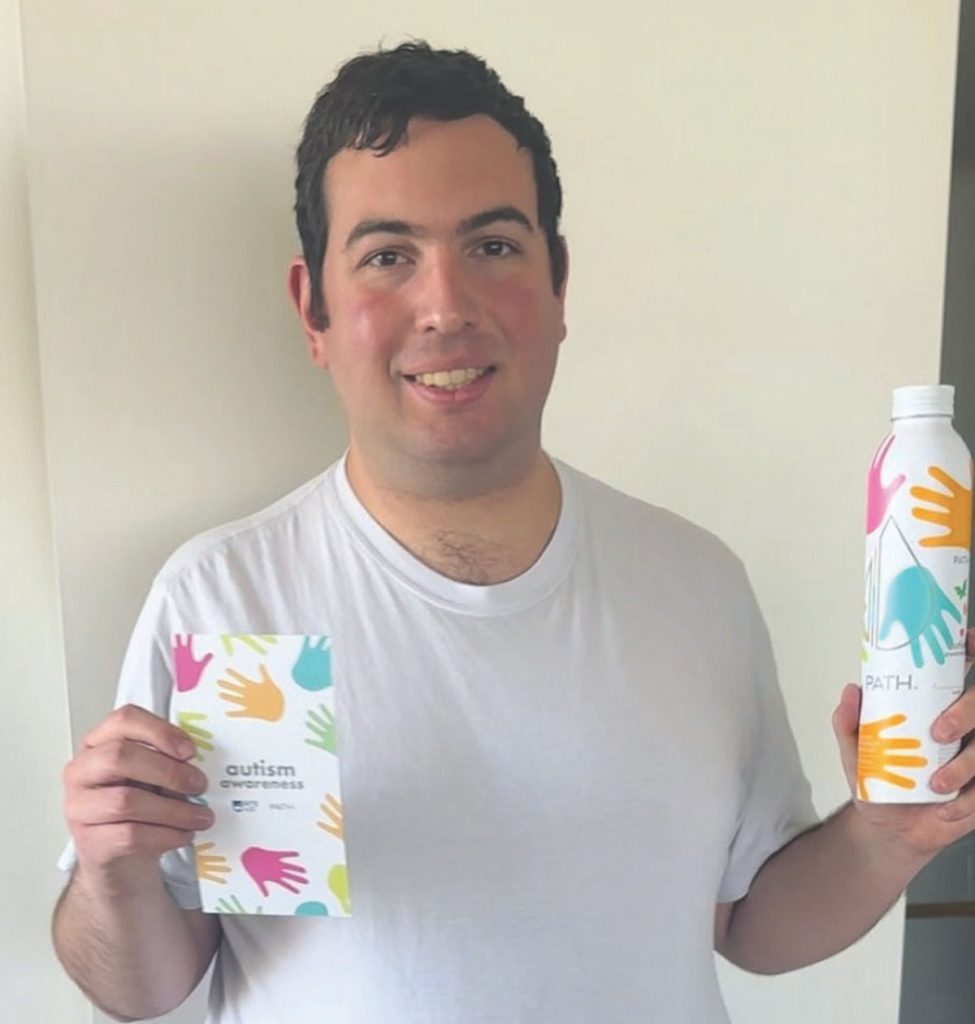
Shadi Bakour is an entrepreneur who finds motivation in tackling the world’s largest problems. In 2015 he co-founded PATH Water, which launched a sustainability-focused aluminum water bottle to challenge businesses and consumers to rethink the bottled water industry. Today, PATH is a global brand partnering with individuals and brands like Kevin Hart, Ryan Seacrest, Guy Fieri, Ninja Fortnite, Adidas, Dropbox, Whole Foods, Apple, Yellowstone National Park, and more.
PATH is the first water packaged in a certified refillable and 100% recyclable BPA-free aluminum container. Since its inception, PATH has helped save more than 250 million single-use plastic bottles from oceans and landfills. The product is sold in all 50 United States plus seven countries.
Working collaboratively with partners, PATH has put its aluminum-bottled water in more than 55,000 locations around the world. The company has exclusive licensing deals with Nickelodeon and Hasbro. “Our whole approach to business has been the power of collaboration,” says Bakour. “Collaboration helps us make a larger impact and build a larger business much faster. We’ve learned that the new age of business is collaboration.”
Bakour isn’t claiming he invented the concept, but he has harnessed it more effectively than most entrepreneurs. “If you look at successful brands across the world, you’ll see that many have leveraged each other to make a larger brand impact,” says Bakour. “You can create win-win situations where you’re adding value to each other’s businesses and creating synergy to grow.”
He frequently cites a favorite African proverb: If you go alone, you can go fast; but if you go together, you can go far.
“It’s not really about what I can extract from the other organization or person,” he says. “And it’s not about what I can just give away, because I have to build a business with sustainable, profitable growth. It’s about how can we work together, and at the same time, what added value can I bring to the table?”
Here are three branding lessons Bakour has learned along the way.
Lesson No. 1: Go Against the Grain
Shadi Bakour told attendees at the recent Real Leaders UNITE conference in San Diego that being rejected by peers at a young age gave him time to think about how to do things differently.
As a child of immigrant parents, Bakour says he was “not the coolest-looking kid” in school.
“You could probably measure my weirdness by measuring the gap between my buck teeth,” he jokes. “But in that journey of not really being accepted among my peers at a very young age, it allowed me to think about how I can do things differently. It gave me an outsider’s perspective and taught me that sometimes going against the grain can be a really good thing.”
When he started PATH, at the core of everything he did was one question: How do we do things differently than how they’ve been done before?
“That one question goes to the essence of our product, which is a bottled water company that doesn’t want to sell you any more water because our product is in a reusable container,” he says.
Lesson No. 2: Put Ego Aside and Collaborate
The PATH Water idea really took off in San Francisco International Airport in 2019, which had banned the sale of single-use plastic on its property. “By some act of God and a lot of hard work, we took over the entire airport and created a catalyst for our business,” says Bakour. Because San Francisco is one of the tech hubs of the world, they were soon approached by an executive at Salesforce.
“Salesforce was really excited about our product,” he says. “They’re very anti-plastic, and they’re impact focused.” PATH was a very small business at the time — about $100,000 in sales — and it was just getting into 7-Elevens in Northern California. Salesforce wanted PATH to feature its logo on the PATH bottle.
“If you know anything about beverage or food, it’s all about brand equity,” Bakour says. “We were focused on building our own brand, right? We thought there wasn’t as much value in private labeling because you have no brand equity. That was the ideology planted in our brains at a very early stage.”
Eventually, Bakour says they gave Salesforce a “little, tiny spot” on the back of their bottle. “We fought tooth and nail over that little piece of real estate on our bottle,” he recalls. “When it comes to collaboration, ego can be the killer of growth. For a long time, we really resisted this idea of collaboration. Later, we had another opportunity where a big investor wanted us to make them a special bottle. So slowly over time, we started to let go of this idea that we had to be the only brand front-and-center on our bottle. We started falling more and more into this idea of collaboration.”
With the new shift in thought came a new program called Partnering to Save the Planet. “Over the past few years, that program has been growing like wildfire,” says Bakour. “Most people know us for our retail product at Whole Foods and Target — 100,000 retailers. But now we’ve partnered with all types of organizations, and this program we’ve created is completely banning single-use plastic within each partnering organization.” Recent program partners include Madison Square Garden, SpaceX, and several hotel groups.
“You won’t find it in the business books and few advisors will counsel you about this, but collaboration has opened up our sales channel and opened up the door for us in so many different ways,” he says. “By partnering with these organizations, we are leveraging our brand but also their brand equity. We’re lean on their brand equity to create more trust with our consumers, to create different experiences with them. When you have these different organizations building pyramids of our product in the middle of their facility, there’s added value that we never would have considered.”
Lesson No. 3: Most New Ideas Are Recreations of Old Ideas
Through the collaboration strategy, Bakour says he came to realize that even when you’re going against the grain, you probably still don’t have a purely original idea.
“Our licensing idea really came from one of our partners, someone from the fashion industry who had zero experience in the beverage space,” admits Bakour. “He looked at our product not as a bottle of water, but as a fashion accessory. It completely changes your approach to how you would sell or promote this product or how you would even build the brand. One of the key strategies when it comes to fashion is licensing. So, he brought this idea from the fashion industry, a strategy of accessorizing our product to an industry that largely was focused on brand equity.”
Bakour says through this one strategy, PATH learned to cobrand and partner with different organizations to eliminate single-use plastic and make a larger impact together. “We launched into retail licensing — which was a completely different concept for us — but a known strategy for our partner,” he says. “I realized that at the end of the day, most ideas are not really original ideas — they’re just recreations of ideas that already existed in the past. Few ideas out there are actually new or original.”
Bakour says that most entrepreneurs look back and think, “Well, this is the way things were done for so long, and there’s a reason for that.” However, he says, business leaders forget that the world and the economy are changing daily, as are the needs of the global economy.
“We should use the lessons from the past and the reasoning behind them, but we should always question them,” he advises. “Always try different approaches and new angles and see how the old ideas integrate into the new age of the world.”
Mission-Focused Makes Money
Bakour says focusing on PATH’s mission of reducing the world’s use of single-use plastic opened his mind to new-old ideas.
“Even though we take a little backseat with our own brand sometimes, by featuring all these other brands and putting them in the spotlight of sustainability, we’re not just giving it away — it is a collaboration, a partnership. We’re helping people make sustainable choices and look like they are sustainability leaders. In addition, serving different communities and audiences increases your own impact.”
Here are the questions that Bakour says all leaders should consider:
What are we doing with like-minded organizations to collaborate and leverage each other to create synergistic value?
How has our ego limited certain opportunities to work with others that may have been beneficial for us?
Have we worked with people or organizations from different industries? And if so, how has that impacted our story? How has that brought a fresh perspective to what we’re doing?
Bakour encourages leaders to also keep their minds open about who they might collaborate with. “Sometimes you stand your ground and turn down the opportunity to work with a particular brand, making a statement in doing so,” he acknowledges. “But we’ve even partnered with plastic-bottle water companies. It’s interesting because if we are true to our mission, and we really want to make a larger impact, then by offering them this sustainable option, we are making a larger impact. We haven’t turned down any organizations to date — even if they don’t fully align with our purpose.”
Bakour says PATH has even opened its doors wide to some of the biggest beverage brands, realizing that if PATH can tap into these large distribution systems and networks, that’s how it can make a larger impact.
“When these companies have asked to get involved with us, we’ve said yes,” he says. “It’s kind of like making an impact from inside the belly of the beast.”
What’s in a Name?
Rapper Meek Mill holding a PATH water bottle
When asked how he came up with the PATH brand name, Bakour admits it was a long process with many twists and turns.
“I always believed that a strong brand name has four or five letters, and it should be a word commonly used in day-to-day conversation,” he says. “A brand name is important. One of my co-founders actually thought that Smart Water made him smarter, and even when I told him it didn’t, he still kept drinking it.”
Bakour and his team settled on PATH because they believe water is the path forward. “It’s a path to a more healthy and sustainable future,” he says. “We are all on this path together. It’s a cool word that has different meanings for different people. Follow your path. Choose your own path. Join our path. Join us.”
How do you feel at this moment? Pause. Did your brain start running through your to-do list or replaying a point of conflict from your day? You are not alone; as a brain doctor and chief wellness officer, I work with high-achieving professionals who can’t shut down their busy brains. Mindfulness and mindful leadership exercises can feel unattainable beyond a morning meditation practice or a few quiet minutes in nature.
I spent the last five years studying the impact of chronic stress, burnout, and busy brains on professionals. I wanted to help find answers to improve workplace cultures. The answer is not in a wellness app or another health perk; it starts with a leader’s state of mind.
Take Responsibility for Your Energy
When daily tasks and overfilled calendars control our day, we can quickly lose sight of our mood. However, not processing our emotions depletes our energy and can send a subtle or overt negative signal to others through our speech, tone of voice, and body language.
After years of teaching mindfulness and mindful leadership in workplaces, I still hear, “Dr. Romie, I feel like something is still wrong with my brain; I can’t shut down my worrying and racing thoughts.”
You are in control of your mind. When we control our minds, we can then control our energy and our schedules.
Busy Brain in a Busy World
Do you also feel like the usual stress-relief techniques have failed you? Do you have difficulty shutting down your racing thoughts at bedtime? Perhaps you wake up needing an extra-large latte to connect with your personality, only to feel depleted in your energy by mid-morning. You might have multiple browser windows open all day on your computer — and what feels like just as many tabs open in your brain — and feel the need to consume additional caffeine or stimulant medications to get through the day. By the end of your workday, if there is one, you might need alcohol or an anti-anxiety pill to take the edge off. That’s how many of us get stuck on the stimulant-sedative cycle: We work all day with faux energy dependent on stimulants and arrive at home in need of a soothing drink or medication to remain calm with our loved ones.
In my experience studying over 17,000 individuals, a pattern emerged showing that chronic stress causes a particular pattern of inflammation in the brain. The end result is a myriad of symptoms that include difficulty focusing and reduced attention span (adult-onset ADHD), ruminating anxiety with intrusive worrying thoughts occupying your mind (anxiety), and difficulty falling and staying asleep (insomnia busy brain).
Living under chronic stress with a busy brain can lead to burnout, and the result is not only loss of productivity but also can be physical illness. We should not wear stress as a badge of honor or live at the edge of burnout to maximize business profits.
In my book, The Busy Brain Cure, I break down the eight-week process for reducing inflammation in the brain, healing burnout, finding focus, taming anxiety, and finally sleeping again. Each week introduces simple micro habits I call brainSHIFTs.
Giving Your Team a Brain Break
Once we restore our energy by healing our busy brain, it is imperative for us as leaders to help our teams.
Microsoft’s Human Factors Lab has the largest body of research assessing productivity and attention span in the workplace. Sitting down at a computer for more than one hour for back-to-back meetings reduces productivity by raising stress hormones in our brains. Taking a 5-minute break every hour significantly lowers stress levels in the brain and allows us to arrive at our next meeting or home life more relaxed.
In place of another virtual workplace wellness activity, shorten meetings and create meeting-free days at least once a month. End each day by checking in again: How am I feeling? And then ask yourself: What can I do to reset my energy and change the channel of my brain to calm? You are responsible for the energy you bring into the room. Choose calm.
Tips to Heal Burnout
These key elements surprise most professionals. (It’s always suggested to consult with your doctor.)
Use 125–250 milligrams of magnesium glycinate at bedtime to regulate your sleep-wake cycle and reduce anxiety.
Combining sugar (or any high-glycemic food) with caffeine can reduce the ability to focus. Instead, pick one or the other — caffeine or a high-glycemic carbohydrate at
each meal.
Check your lab work, which can reflect chronic burnout and a busy brain. A low vitamin D3 level is a consistent problem. Vitamin D3 is crucial for brain and hormonal health, promoting sleep, focus, and memory.
Know Your Brain Score: Take The Busy Brain Test for free at drromie.com/busy-brain-test. A score above 30 indicates neuroinflammation and a pattern of a busy brain.
When growth is correlated with positive social and environmental impact, businesses can generate value for shareholders and stakeholders. At The Builders Fund, a private equity platform, we seek out collinear business models that embed impact alongside commercial growth and where purpose can be harnessed for competitive advantage. Our approach to impact value creation spans the investment lifecycle from capital formation to company vision, operations, and corporate form. Here’s a closer look at three impact companies we invest in and the difference they’re making.
Acelero LEARNING: Increasing Impact Through Purpose-Driven Investment
In 2022 Builders co-led a strategic investment in Acelero Learning, an early childhood education provider seeking to eliminate gaps between children’s potential and their achievement in school and life. Acelero serves low-income children and families as a direct operator of Head Start centers and through tech-enabled services to other Head Start operators, states, and municipalities. The company also provides training, technical assistance, and consulting services to bring its innovative practices to other childcare centers across the country, reaching over 400,000 children and families annually.
Builders co-led a syndicate of impact investors, including the BlackRock Impact Opportunities Fund and A-Street Ventures, catalyzing additional investment into Acelero Learning. At the time of investment, the company sought growth capital to expand the business and its impact, including the number of students and families served, and enhancing the business’s existing commitment to equity through workforce engagement. Builders led the creation of an Operating Blueprint focused on building the sales and marketing team and commercializing products and existing intellectual property. Through the combination of convening purpose-driven capital and operational engagement, Builders aims to create shared value for the investor group, the management team, and most importantly, the children, families, and communities Acelero serves.
Traditional Medicinals: Articulating Purpose, Values, and Vision
Traditional Medicinals, a certified B Corporation and California Green Business, is a pioneer of the wellness tea category in the U.S. and Canada. It was formed in 1974 to educate consumers about the benefits of traditional herbal medicine while re-inventing the industry of plant-based medicine. The company has a long-standing commitment to positive social and environmental impact through sustainable production practices and engagement with the often impoverished and indigenous herb-sourcing communities in its supply chain.
Purpose creates a fertile ground for increased alignment through shared values with employees and customers, from attracting and retaining top talent to improving customer service, increasing customer loyalty, and improving net promoter scores. Builders believes that purpose, values, and vision cannot come from the top of the company in a vacuum. They are more than the output of a meeting; they emerge from a participative process. Working with management, Builders helped facilitate a yearlong collaborative and companywide process to reexamine and redefine the purpose, values, and vision of the company. Its crystallized purpose, “to inspire active connection to plant wisdom in service of people and planet,” has since become a foundation for a realignment of strategy, an acceleration of in-market performance, and a flourishing of a 50-year-old culture to continue its remarkable run to leadership in the U.S. tea and medicinal supplement space.
PosiGen: Committing to Being a Force for Good
Headquartered in New Orleans, PosiGen is the nation’s leading residential solar and energy efficiency provider for low-to-moderate income families. The company’s mission is to close the clean energy affordability gap for LMI homeowners by delivering lower-cost utility bills along with the environmental benefits of clean energy through rooftop solar and energy efficiency upgrades.
PosiGen makes an impact in underserved communities by facilitating annual household savings of upward of 20% on energy bills, with more than $190 million in savings to date. It also generates quality job opportunities in communities where it operates, with more than 65% of its staff identifying as women and/or Black, Indigenous, and people of color. These social benefits are intrinsically linked to the company’s positive environmental impact, with access to clean, reliable energy expanding to new homes and communities, helping reduce and avoid greenhouse gas emissions.
After completing a Series D investment led by The Builders Fund and a subsequent growth capital round from Builders and other investors in 2022, PosiGen became a public benefit corporation and certified B Corp in 2023. Certified B Corporations meet the highest standards of verified social and environmental performance, public transparency, and legal accountability and aspire to use the power of markets to solve social and environmental problems.
The Builders Fund, which has been a certified B Corp since 2015, provided PosiGen with guidance and support throughout the B Corp certification process in alignment with the fund’s impact management and measurement strategy. Builders leverages B Corp certification as part of its impact framework because it supports companies that seek to integrate purpose and profit and make decisions for the benefit of all stakeholders. Purpose-driven companies are uniquely positioned to deepen impact, improve transparency, and create value for stakeholders across the corporate ecosystem.
While many may associate gamification with superficial elements like leaderboards, points, and badges, its true power lies in its ability to create meaningful experiences that resonate with individuals and teams on a deeper level. Here are my top five strategies for harnessing the full potential of gamification.
1. Design the epic mission.
At the core of any successful game is a compelling mission that inspires and motivates players to engage. Similarly, in organizational strategies, defining a clear and meaningful objective that aligns with the company’s purpose and values is essential. By connecting team efforts to a larger mission, individuals are more likely to feel a sense of purpose and commitment.
2. Break down the mission into quests.
By setting quarterly objectives and milestones, teams can focus on manageable tasks while continuously progressing toward the larger goal. These mini-quests support experimentation, learning, and adaptation opportunities, fostering a culture of innovation, growth mindsets, and agility.
3. Leverage teammates and competition.
Incorporating team-based challenges and competitions enhances collaboration and communication and cultivates a sense of camaraderie and belonging. By forming small teams, individuals can leverage each other’s strengths, support one another through challenges, and celebrate collective achievements. It also fires up our inner friendly competitive spirit when teams try to outperform each other.
4. Incorporate rewards and recognition.
Effective gamification strategies include reward and recognition tactics that acknowledge and reinforce desired behaviors. Whether through badges, points, or leaderboards, these incentives are tangible markers of progress and success, motivating individuals to participate and excel actively. Recognizing individual and team contributions supports a sense of accomplishment and encourages continued engagement toward shared goals.
5. Level up.
Celebrating successes and learning from setbacks are essential aspects of gamification. After completing a 90-day quest, it’s crucial to pause, reflect, and celebrate achievements, no matter how small. Conducting retrospectives allows teams to identify lessons learned, areas for improvement, and strategies for future success. Embracing a growth mindset fosters resilience, creativity, and continuous improvement, empowering teams to adapt and thrive in an ever-evolving landscape.
Gamification offers a powerful framework for activating team impact by providing clear objectives, encouraging collaboration, and celebrating performance. By strategically incorporating game mechanics into organizational strategies, leaders can inspire and empower their teams to reach their full potential, driving success and innovation in the pursuit of shared goals.
“What now?” It’s the question almost all founders face after selling the companies they built. While it’s certainly an understandable — and rather existential — reflection, it reveals how little founders consider the post-exit window.
I certainly didn’t know. When I sold my boutique agency for millions, I was eager to travel and enjoy the good life. However, I soon discovered that my founder exit plan had a gaping hole. While I had focused on my short-term objectives, such as seeing exotic places and enjoying my hobbies, I hadn’t laid out what I’d be doing in the long haul. It wasn’t too far into my post-exit founder life that I realized I wanted to do something different yet productive. That realization led to my current mastermind community, where I serve as a guide and mentor.
The point is that despite finding success in growing and selling my business, I was surprised by what happened after the sale. My experience is hardly unique. After exiting, only 33% of founders surveyed by Coutts in 2018 felt more satisfied post-exit than they did beforehand. In other words, they missed the stimulation of dealing with the wins, the losses, and everything else that comes with owning a company.
There’s a workaround for this issue, of course. If you’re going to exit your business soon or in the future — hint: you will, whether you prepare or not — you don’t want to wait until you wonder, “What’s next?” You want to ask, “What should I do after selling my firm?” well before the buyer cuts the check. By answering that question pre-exit, you’ll pave the way for more post-exit fulfillment.
To help you in your planning, try the following strategies. They’re engineered to enable you to avoid the sudden weight of what it means to be free from your founder status.
1. Go into self-reflection mode.
After my exit, I took a two-year sabbatical. During that time, I reflected and recharged. Although that period allowed me to identify a gap in the market and envision my next venture, I don’t necessarily suggest every owner do the same thing. Self-reflecting before can be just as practical as after.
Before you step aside, take time to understand who you are and what you truly want to do next. This could mean taking a break or pursuing a different path. Investing in this kind of contemplation will pay off. You’ll feel less overwhelmed when you’re not going into the office in the same capacity daily, and you’ll have a stronger sense of purpose and direction.
2. Network like the pro you are.
Chances are strong that you’ve built your business by becoming a networking guru. Don’t stop now. Engage with your peers, mentors, and others in the industry. Discuss your exit strategy with the ones you trust most or people who have exited themselves. They’ll undoubtedly supply insights or opportunities that weren’t previously on your radar.
As part of your networking efforts, make yourself approachable as a resource. One thing I did post-exit (but you could do pre-exit too) was to engage more actively with the business community in a mentorship role. The satisfaction I derived from seeing other business owners succeed based on my advice was unparalleled.
3. Know your options.
A founder can take on many distinct roles and responsibilities post-exit. Walking away is one of them, but that’s not always practical or pragmatic. After an exit, plenty of founders will join their company’s board to serve in advisory capacities. That way, they can aid the new management team or help the acquirer understand the business’s nuances.
Founders can stick around through and beyond the transition period as well. Depending on the exit terms, they could stay with the company for a predefined time frame to keep the transition running smoothly. Some founders even take on part- or full-time positions to make the most of their skill sets and to share their wisdom. Later, they may leverage that wisdom by sharing their journeys through public speaking engagements or writing a book.
4. Upgrade your knowledge.
Three key words of advice: Invest in learning. Before, during, and after your company exit, keep upskilling. Learn a new domain. Master a technological skill. Join a leadership course. No matter what, continue to plug away to become smarter, wiser, and more knowledgeable.
You never know when a particular skill will come in handy. Your willingness to earn a certificate or attend classes and webinars could open new doors. For instance, let’s say you take a finance workshop to have deeper, more engaging conversations with your financial advisor about your pre- and post-exit planning. Your newfound understanding of finances could enable you to make more informed decisions about investments, philanthropy, or potential new ventures. Remember: Lots of founders become angel investors or venture capitalists. You’ll need to know how to maximize that opportunity without spending all your money.
Every founder’s experience is unique, and every founder’s exit is equally unique. Be sure that you consider your circumstances, preferences, and goals before reaching the post-exit stage. That way, you can enjoy your much-deserved hiatus.