Social Marketing 101: Treat Your Customers Like Humans, Not Numbers

Business-to-business marketing is delusional. We continue to act as if customers make buying decisions in a rational void, free from any messy emotional constraints. The truth is that they never have, and they never will.

Many studies back up this idea and provide a more clear picture of the drivers that go into business purchasing decisions. Some B2B marketers have taken this research to heart and are beginning to talk about their customers as if they were humans and not just numbers. We can achieve more as professionals if we’re prepared to go further to benefit our brands, our customers, and ourselves.   

It’s partly because customers continuously evolve, seeking emotional connections and purposes that resonate with them. Customers should be at the heart of your business, not just lucky to be considered at the end of the product development and sales process.   

How do marketers deal with the current challenges and changes in B2B marketing? We must shift our focus from products to people, make a meaningful and positive difference, and continually self-improve.  

To keep up with the ever-changing market, look to your customers and embrace a new mindset to engage them using these approaches:  

1. Shift your focus 

Most businesses try to put their customers first, but that doesn’t always happen. Even business-to-customer companies have to try hard to remember that customers are the essential element of their operations. Putting products first in businesses is no longer sustainable.   

Products don’t buy themselves; people keep businesses afloat. Everyone you engage with is a human being with feelings, preferences, and insecurities, just like you. Of course, in B2B marketing, you’re speaking not to just one person, but a whole audience made up of employees and business partners. They don’t come to you as a brand or business to hear your corporate technical jargon. They want to know that there’s a human behind the product.   

Customers don’t just buy from you. They buy into you. As a business, your primary goal should be following your vision and improving your customers’ lives, even before profit. More than this, you need to use emotion to unlock people’s understanding so that you can move minds. You can make a substantial, meaningful, and positive difference by doing so. That’s what humanizing B2B marketing is all about.  

2. Make a positive difference  

Having a purpose requires that your company show up in the world in a way that proves you’re trying to make a meaningful and positive difference to the lives of your customers — and not just selling products for the sake of it. Having an overarching human purpose and communicating it well improves lives.   

The customer will always be an afterthought if you treat B2B marketing as a production process. Instead, say to yourself, “We have these amazing customers. What can we create for them? What would inspire them? What could change and make their lives better?” Think how transformational that would be. You’d be addressing their needs.   

You want to be a teacher, not a salesperson; a trusted educator, not a mere advisor. Offering new insights through your products, services, and marketing makes you indispensable and irreplaceable. But, more importantly, you’re positively impacting your customers.   

3. Access your likeability  

In the new era of business, being liked is a fundamental requirement for your brand success. It gives you a commercial advantage. Your customers make their buying decisions based on which company or brand they like the best — it’s as simple as that. This has always been the case to a certain extent, but it’s essential today.   

Over the past 10 years, there’s been a massive shift in how buyers think, act, and feel about business brands. For many years companies relied on expensive salespeople to create the likeability factor. Still, today, when communications are usually online rather than face-to-face, they recognize that they need to invest in their brands to deliver a positive and friendly experience.  

In this new era, it’s vital that you don’t think of business as a sales game to be won or lost. You must have a voice, be relevant, and make a positive impact.    

It’s no longer sustainable to do business as usual. The discussion surrounding humanizing B2B marketing is prominent because it’s essential. People are the foundation of the success of our businesses and industry. We rely on them as much as they depend on us. Customers search for new insights and wisdom through their favorite products. Like the brands they buy from, they want to trust and feel their lives impacted positively and substantially.   

It’s easy to put profit at the center of the mission and vision of a business. Truly understanding your customers and all their human motivations, thoughts, and desires is far more complicated. It takes time, energy, and empathy. But it’s worth it for everyone involved. Humanizing B2B marketing changes lives in both big and small ways.  

How a Small Community Can Make Big Changes in Sustainability through Collaboration

Sustainability and combating climate change are among the most critical global issues today. The United Nations Sustainable Development Goals underscore this point. Nowhere is that more evident than in small island nations and territories.

Reliance on outside sources for many goods (including food) and services, challenges with waste management, susceptibility to hurricanes and extreme weather events, and economic dependence on tourism can make these communities especially vulnerable. Island Green Living Association, a nonprofit on St. John in the U.S. Virgin Islands, was created to expand sustainability and combat the fallout from these looming issues. Perusing their tax returns shows nearly zero expense for development/fundraising as a volunteer board manages it.

Sixty-seven percent of St. John is preserved as national parkland. But with more than a million visitors a year, hundreds of times greater than the number of residents, St. John is at risk. The territory’s natural beauty attracts travelers, but these visitors are also a threat, causing increased pollution and a burden on resources. Since St. John is the smallest and least developed of the three U.S. Virgin Islands (which include St. Thomas and St. Croix), it’s the organization’s primary focus to institute meaningful change throughout the territory and ultimately serve as a roadmap for other locales throughout the world.

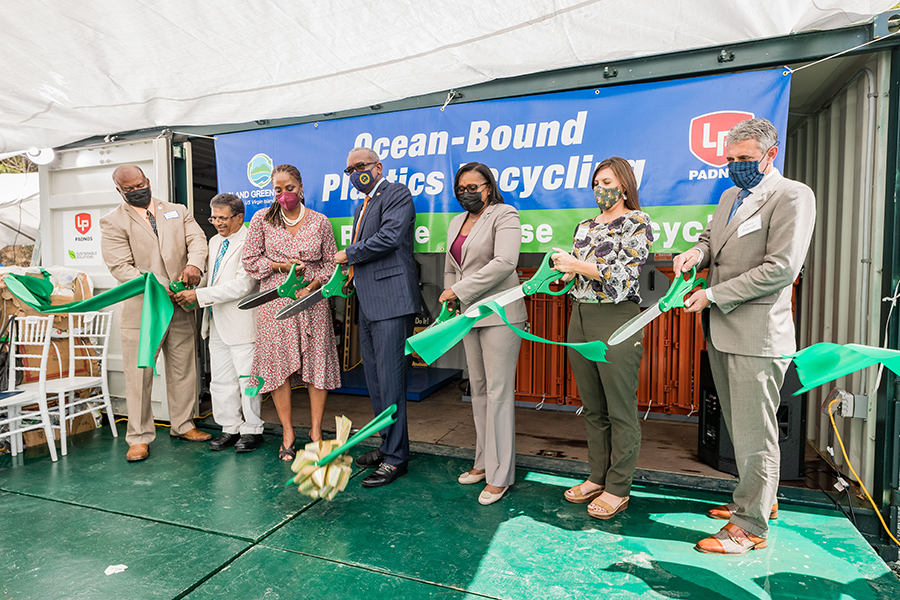
St. John, USVI – February 18, 2022 — Island Green Living launches Ocean-Bound Plastics Recycling with PADNOS. In attendance for the official ribbon-cutting ceremony from left to right: Senator Steven D. Payne; Island Green President Harith Wickrema; Congresswoman Stacey E. Plaskett; Governor Albert Bryan Jr.; Senate President Donna Frett-Gregory; Island Green Living Executive Director Kelly McKinney; Gary Barnett, CEO, Plastics Division, PADNOS. Photograph: Spencer Chaney, Island Media Co.

With its motto of “rethink, reduce, reuse, recycle,” Island Green Living has made significant strides in promoting sustainability. Its success has been collaborating with public and private entities and NGOs, forming solid partnerships, and engaging the community. 

“We cannot succeed alone,” explains Harith Wickrema, board president of Island Green Living. “Engagement is critical. We’ve made it a point to connect with the local community, including schools, businesses, those in government, and nonprofits, as well as larger entities outside the territory. A recent example is our collaboration with PADNOS, a Michigan-based recycling company, on our new Ocean-Bound Plastics Recycling Program, which debut in February 2022.”

Island Green Living’s priority is to eliminate the use of disposable plastics whenever possible. The Ocean-Bound Plastics Recycling Program, a first for the island, allows plastic that is already part of the waste stream to be reclaimed and recycled rather than polluting the land and sea. PADNOS provided Island Green Living with a baler retrofitted inside a converted shipping container, so the processing operation is fully self-contained. They also contributed to a new pick-up truck and provided dedicated bins placed at popular trash collection sites throughout the island. In addition, PADNOS has committed to purchasing and transporting recyclable material on deadheaded shipping containers – containers that otherwise would have returned empty. 

The collaboration goes beyond PADNOS. Island Green Living was able to secure the commitment of Governor Albert Bryan Jr., Senate President Donna Frett-Gregory, and Congresswoman Stacey E. Plaskett, who serves as the territory’s representative in the U.S. House, to support the measure and attend the ribbon-cutting ceremony. This created excitement and awareness in the community, accentuating their dedication to expanding sustainability. 

“There must be a commitment to make recycling a priority. And as leaders, we must find ways to make it a reality,” said Frett-Gregory. “We have the vision; we just need the will.”

“We need to be intentional with our consumption and actively engage in recycling to reduce pollution, protect our beautiful environment, and fight the climate crisis to ensure we sustain the planet for future generations,” Plaskett stated at the event.

“We aren’t just in recovery; we are rebuilding the Virgin Islands,” Governor Bryan emphasized. “We are building for the future.” 

Grassroots tactics also included outreach to local schools to encourage single-use plastics collections, signage creation, an essay contest, and more. Island Green Living representatives visited the school to educate the student body on the program. They have also forged awareness campaigns with local businesses and the general public starting with an open house and tour on the day of ribbon-cutting and regular community events. Encouraging residents and tourists to volunteer at the facility to have hands-on engagement has also been very popular.  

Island Green Living has initiated similar tactics with its other sustainable programming, turning what many would consider “waste” into a resource while collaborating with outside entities for funding and support. Island Green’s Aluminum Can Recycling Program has collected, crushed, and recycled nearly 1.3 million cans; the Resource Depot thrift shop has kept more than 650,000 pounds of used building materials & household items from the landfill; and the Brush Chipping Program has processed more than 4,000 cubic yards of green and brown debris to date, allowing this rich resource to remain on the island rather than being shipped to the landfill. Island Green arranged free Sustainable Deconstruction workshops late last year, providing instruction on recovering materials for reuse during demolition projects – a potential avenue for green career advancement. They have sponsored aquaponics and hydroponics farming programs at a local school. The board president sits on the governor’s Agricultural Plan Task Force, designed to expand sustainable agriculture in the territory. 

In addition to education, the organization has also found it helpful to support sustainable legislation. For example, Island Green Living led the effort for a local law banning the “Toxic 3 Os” of oxybenzone, octinoxate, and octocrylene in sunscreen, which is devastating to coral marine life, and human health. They continue to educate on the use of safe mineral sunscreens, partnering with Hawaii and 60 other entities on filing a Citizen Petition calling on the FDA to recall these toxins nationally. In addition, they were among the architects of the territory’s bans on disposable plastic bags and straws. 

“Cooperation and education are key,” added Wickrema. “We are firm believers that once people understand the damage their actions can cause and how they can make a difference, they will be part of the solution. But it’s opening those doors and making those connections that is everything.”

4 Ways to Become a Successful Entrepreneur While Earning a Degree

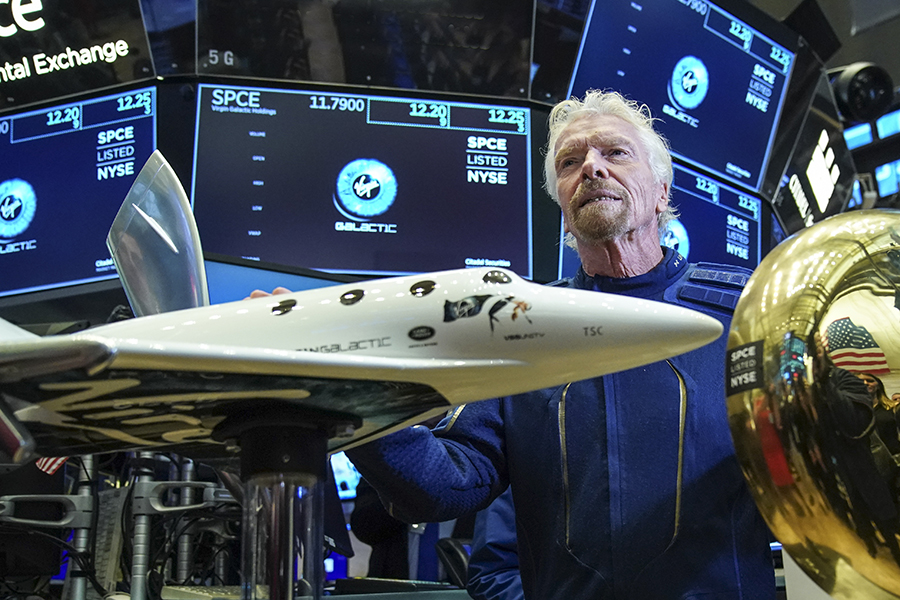
Bill Gates. Richard Branson. Steve Jobs. When you hear these names, you immediately think of business legends. Billionaires with success stories so profound they’ll continue to influence generations of entrepreneurs. But what you might not realize is that this group has something else in common: they’re all college dropouts. 

These stories aren’t the standard path, of course. The skills and experience we can gain from college is invaluable to our business success. But what if you’re eager to start your entrepreneurial journey and don’t want to wait until after graduation? You might get a lot of pushback from people telling you to hold off until you’re out of school, but the stories of Michael Dell and Mark Zuckerberg serve as proof that it’s possible — though not easy — to start building a business while earning a degree. Just like Dell and Zuckerberg, I was also so excited to bring my ideas to life that I started my first company out of my dorm room as well.

There’s some unique advantages to being a student entrepreneur that other founders lack. You have access to free or subsidized educational resources, mentorship opportunities from faculty members and/or other students, as well as a large pool of potential customers to target your products or services to. It does come with its fair share of obstacles though, like limited time to focus on both school and work, as well as a higher rate of stress. All of this on top of the lingering pressure that 20 percent of small business don’t survive past their first year. Don’t let this prevent you from working towards your dream of running your own business. Below are some tips for successfully starting a company while also earning your degree.

1. Come up with a unique business idea

This isn’t the time to try to come up with a business that’s never been done before. Instead, start small and think of a unique way to monetize something that’s already an interest of yours. What simple service or product can you offer to someone to make their lives easier? What problems can you help solve through your business idea? As you begin developing this idea, you can also align some of your electives with your goals to help you gain the skills and knowledge to push yourself further. If there aren’t any specific electives that align with your industry, or these courses wouldn’t apply to your degree, try doing more general classes, like marketing or writing. As your business grows, these skills will also be a critical part of your growth and profitability.

2. Create a customer base

Having a business idea is important, but don’t get so wrapped up in the idea that you spend all your time finalizing your product or service only to quickly realize you have no customers. When you’re first starting out, you need sales in order to even have a business, so it often makes more sense to build a customer base before going all-in on a product or service. That way, when you do put all of your time, energy, and money into developing your business idea, you know you’ll have people who are waiting to buy from you.Being in college, your customer base could be right in front of your nose. Your fellow classmates could be the perfect group of people to center your products or services around. It makes selling even easier too, since you have access to them on campus at all times. They could also give you some valuable insight into the kinds of things they like or don’t like, so don’t forget to use them as a sounding board for your ideas.

3. Develop a business plan and get funding

This is what sets the real entrepreneurs apart from the amateurs. You need a working business plan with a budget in order to launch a successful startup. Here is what every business plan must have:

  • An executive summary, which provides the fundamental details about your business (information about your product or service, your target audience. etc.)
  • A mission statement, which should specify the products or services you’re offering
  • A marketing plan, which should show how you plan to reach your target audience
  • An operational plan, which will detail the day-to-day of your business
  • A list of your company’s managerial organization and fiscal planning

Then, there’s the funding side of launching a startup. As a college student, you should look into grants, loans, and scholarships that have been designed for people in your unique position. 

4. Build your brand

This is perhaps the most fun part of starting a business. In this step, you want to make your business legitimate and actually put it out into the public’s eye. The first step is building a website. There are affordable ways to do this, including using free platforms like WordPress and Wix. Then, you’ll want to create and personalize your social media profiles. The socials you create will depend on the audience you’re trying to reach, but the big five include Facebook, Twitter, Instagram, Pinterest, and TikTok. Tie all of these elements together and start building your following so you can start making sales. The most important thing to remember as a college student trying to launch your first business is to find balance. You don’t want your business to distract you from your studies, but you also need to be able to find between classes and homework to focus on getting your business in order. Once you have that balance, follow these steps and you’ll be well on your way to being a successful entrepreneur even before you graduate college. 

5 Tips to Listen More Effectively During Team Meetings

1) Keep Continuous Eye Contact. Distractions come in a variety of ways: thoughts about not liking the speaker, finding them dull, not liking their voice, noise coming from outside the room, noise coming from outside the window, feeling hungry, thinking about how your date with the girl in accounting is going to go later tonight, etc. As Tony Robbins says, “Where attention goes, energy flows.” During this team meeting, your job is to give the speaker 100% of your energy, not your thoughts about them (or tonight’s date). Do so by keeping continuous eye contact with them, not bringing your attention anywhere else.

2) Avoid Reframing Responses While Others Speak. Another place your thoughts may go is to formulate answers while the meeting leader speaks. Perhaps you are simply inspired and want to excitedly answer or disagree and are bursting to interject. To actively listen, our brains need to be silent and focused. If we’re thinking about how we will answer, it’s physiologically impossible for our brain to fully listen. This puts us in danger of missing what the speaker is saying. At meetings, when someone is speaking, practice actively focus on them and every word they are saying. When the speaker is done with their point, pause for a few seconds, then begin to formulate your response.

3) Pay Attention to Sense-Based Language. Some of us learn visually, others auditorily or kinesthetically; generally, we have a preference. But did you know people will give away their learning preferences as they talk? For example, they might say, “Can you picture that?” or “It’s not so black and white” (visual); “Like music to my ears” or “That rings a Bell” (auditory); “I feel that” or “Working hand in hand” (kinesthetic). Make a point to really listen for these sense-based predicate phrases, as the speaker is unconsciously giving away how they learn and want to be spoken to! How can you use this to your advantage? In your conversation after the meeting, use similar sense-based language to create unconscious rapport with them!

4) Connect, Detail, Construct, Invent? Like with sense-based language, you can listen even more deeply for the methodology behind how the speaker communicates their message. Are they focusing on the big picture? (Connect). Are they statistic/fact-oriented? (Detail). Are they talking about the actual physical actions to be done? (Construct). Are they brainstorming possibilities? (Invent). I call these four profile types one’s “Processing Power.” They’re four main ways people synthesize or “process” the information they take in. Just like with sense-based language, they’re giving you an unconscious hint about themselves, so pay attention to which of these four profiles they’re coming from. When you formulate a response, you’re much more apt to be “speaking their language” when you hit a “Connect” personality with a “Connect” response! You can learn more about sense-based language and processing power profiles in my book “Unlock Inner Genius.”

5) If You Don’t Understand, Ask for Clarification. Even if you’re listening very clearly and attentively, you still may not fully understand. If this is the case, it is absolutely on you to let go of the wallflower routine and respectfully ask for clarification during a break or pause. This will help clear things up for you and show the speaker that you are listening attentively and care about getting their message accurately. Plus, it will help you avoid that awkward post-talk conversation in which you’re suddenly asked your opinion on something you didn’t fully understand!

Business Leadership in 2022, and How It’s Evolved

The business world, like the world at large, is more complex than ever before. While that’s largely due to the pandemic, other factors have come into play. There is the influx of those in Generation Z into the workforce. There is ongoing evolution of technology. There is the tilt toward environmental, social and corporate governance (ESG).

In short, the entire landscape has changed, and it is incumbent upon business leaders to do the same, lest they fail to negotiate their new surroundings. They must have a greater understanding of their reports, a great understanding of what it takes to motivate them – and, increasingly, retain them. Leaders must be more aware, more agile, more adaptable. Failure to do so means failure, period.

The Gen-Z factor alone has led executives to rethink their leadership styles. The Pew Research Center considers anyone born after 1997 to be part of that age group, and it has reached a point where Gen-Zers comprise nearly a quarter of the workforce. 

While it is always dangerous to over-generalize, those in this demographic grew up under tougher economic circumstances than Millennials, having seen nationwide economic slumps in 2001 and 2008-09. As a result they are more likely to hang onto a job than their predecessors, who tend to hop from one to another after two years. And certainly Gen-Zers are no less driven to succeed. They expect to earn a promotion after a single year in a job, and believe that in time they will earn six figures.

For those reasons, they have no qualms about working outside the parameters of a 9-to-5 workday, and welcome an employer who provides flexibility, in addition to opportunities for professional growth. Moreover, they prefer a collaborative environment, not one featuring a traditional top-down structure.

Finally, they want to make a difference. They yearn for things like greater diversity, social justice and sustainability, for a company that strives to meet ESG goals. The best companies understand and embrace that, knowing that it is in their best interests as well. A 2020 McKinsey study concluded that diverse enterprises are more profitable than those that are not.

The best leaders fully embrace that, and meet their employees halfway, creating an environment characterized by transparency and collaboration. John Hall, co-founder and president of a company known as Calendar, writes for Inc. that leaders would do well to understand what they don’t know, and learn from those on their teams:

Those who have not been humbled by recent world events are doomed to fail. Leaders should be OK with acknowledging mistakes, identifying lessons learned, and getting back to work. Employees who watch it happen will become more resilient and be willing to take greater risks as well.

This speaks to the necessity of having emotionally intelligent leaders – i.e., those who are self-aware, socially aware, empathetic and capable of managing themselves and their relationships. Central to that is having excellent communication skills, especially in an era where the workforce is often scattered (with hints that that might continue, even after the pandemic is over). 

A recent Gallup poll showed, however, that only 19 percent of U.S. employees believed that management communicated effectively after the pandemic broke out, up from 13 percent beforehand – a strong indication that leaders still have miles to go before they fully engage their reports.

Indeed, such engagement is crucial for establishing a company’s vision for the future – for making clear something like its ESG action plan, how it hopes to incorporate cutting-edge technology like artificial intelligence and quantum computing and how, exactly, it hopes to foster greater trust with customers. The 2022 Edelman Trust Barometer, a measure by the U.S. consultancy and public relations firm of the public’s belief in different institution, showed that while 61 percent of respondents trust in business – more than non-governmental organizations (59 percent), government (52 percent) and media (50 percent) – the overall results are seen as being disappointingly low for all concerned.

That trust needs to be rebuilt, from the inside out, as opposed to the top down. An example would be the Clif Bar and Company, which lists among its five aspirations sustaining people, sustaining the planet and sustaining its business. The company’s leadership seeks to do that by paying employees a living wage, and by trying to make possible a healthy work-life balance. Additionally the business produces a plant-based product, and aspires to develop zero-waste packaging.

The ultimate goal, as executive vice president Roma McCaig told Katherine Klein of the Wharton Social Impact Initiative, is to create a “virtuous cycle where productive growth allows us to deliver positive impact, and positive impact allows us to continue delivering productive growth.”

It is a noble goal in this day and age, when the needs of the workforce have changed dramatically, to say nothing of the world at large. But that is the mission that business leaders must embrace, as they forge ahead.

Ukraine: The Latest Shock to Africa’s Food Security. 6 Ways You can Help

The war in Ukraine is exacerbating an already dire food crisis in the Horn of Africa. Just a few weeks ago, in Somalia, Kenya and Ethiopia, roughly 13 million people were waking up severely hungry every day.

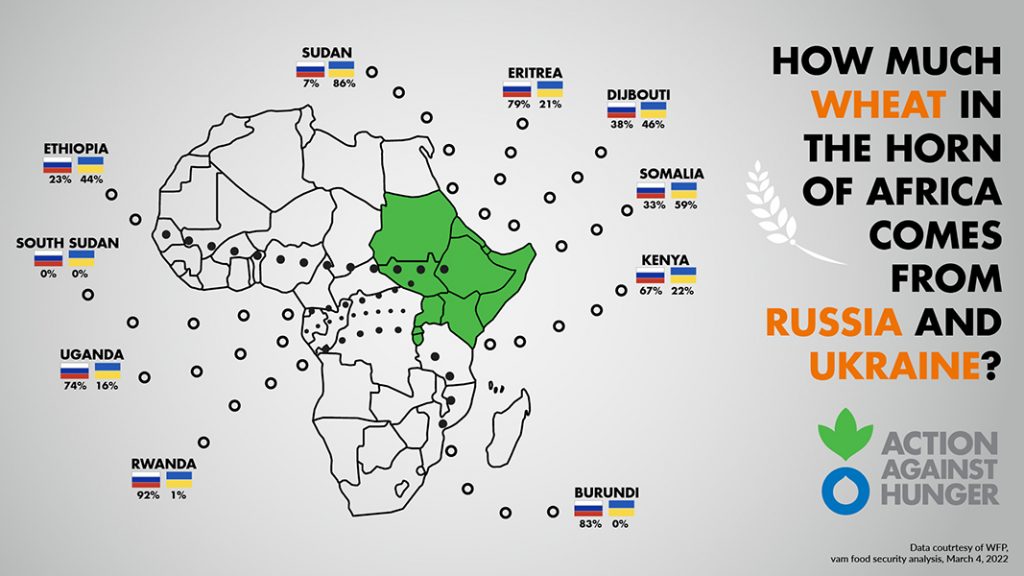
Now, given their reliance on Ukrainian and Russian imports such as wheat and cooking oil, food prices are skyrocketing, putting access to basic nutrition even further out of reach. 

In 2020, African countries imported $4 billion in agricultural products from Russia and $2.9 billion from Ukraine, with the Horn as the top destination. My organization’s market assessment in Mogadishu, Somalia, found a 50% increase in the price of flour in just the last few weeks. African economies also relied on about $5 billion in product exports to Russia, including coffee, fruits and tobacco, which have all halted recently, crippling already fragile financial systems.

Just this week the UN Conference on Trade and Development issued a report predicting food shortages and civil unrest. The governments of Kenya and Somalia have declared national emergencies. 

Sadly, the conflict in Ukraine is only the latest in a bombardment of shocks to the Horn of Africa. The region is experiencing the worst drought in recent history, forcing hundreds of thousands of people to leave their homes in search of water. Many are living in refugee camps where they are unable to grow food on the dry lands. Pastoralists, who make up about half of Somalia’s population, are not able to feed the livestock that they depend on for survival. Our best estimates are that at least one million heads of livestock have already died or migrated.  


6 Ways You Can Help

There are many ways to help people suffering in these forgotten crises, and we hope that leading companies and individuals will consider the following: 

  • Donating to trusted organizations like Action Against Hunger 
  • Using their platforms – social media, websites, newsletters – to inform and inspire others 
  • Exploring Board and Advisory positions with nonprofits  
  • Offering to match donations made by their employees 
  • Calculating and mitigating your personal and corporate carbon footprint 
  • Reaching out to charities to explore new and creative ways to partner over the long-term

Afifa Ali Abd is one of the 2.6 million Somalis forced to leave home. She is now living in a refugee camp in another area of the country. A mother of seven children, Abd says more people are arriving at the camp, but there is no shelter, food or water to be found. “My family went to sleep hungry last night, we will go to sleep hungry tonight,” she said. Neither she nor her husband can find work and food in the market is unaffordable without any income. 

In addition to rising food prices, ongoing armed conflicts in parts of the region also are forcing people to search for food, water and safety elsewhere. In recent years, floods and cyclones have destroyed homes, displacing even more families. Locusts have destroyed crops. 

And of course there are the economic impacts of COVID-19 lockdowns and ongoing supply chain disruptions. Africa had no safety nets in place before the pandemic, and our economies have not recovered. According to the World Bank, the pandemic pushed 40 million more people in Africa into extreme poverty. I am not sure how much more the people in this region can take. 

Prior to the conflict in Ukraine, we had a massive deficit in food supplies. Now, it’s becoming increasingly hard to find solutions. In Kenya, upwards of four million people will need assistance because of drought, including and 600,000 children younger than age five who are already suffering from acute malnutrition. We are trying to treat as many children as we can for malnutrition and make sure they have nutritious food so that they can grow normally, but we can’t reach everyone. 

We’re trying to help people become more self-sufficient. In Uganda, for example, where the government has given millions of refugees small parcels of land, we are teaching people to grow drought-resistant crops, and sell any leftovers at the market. We’re also providing cash to help families buy food. But it’s not enough. People are barely surviving.  

I’ve been a humanitarian aid worker in Africa for 18 years. We are accustomed to crises. There have been food shortages, droughts and conflicts that have impacted people’s livelihoods and food security. But in the last couple of years, the shocks are coming from all directions and compounding each other, creating a dire situation for the world’s most vulnerable. It’s hard not to feel overwhelmed. 

It’s difficult even for donors to focus on more than one issue at a time, but the people we serve don’t have that luxury. Right now, the global community’s attention is on helping the people of Ukraine, and rightly so. But we can’t lose sight of the daily, life-threatening crises elsewhere around the world. 

Climate collapse, conflict, and the economic impacts of COVID-19 stretched the already-fragile system in the Horn of Africa. The situation in Ukraine is putting even more strain on our dwindling energy and resources. My hope is that this horrible conflict will bring more visibility to the ways we are all interconnected and to the need to address the multiplicity of challenges humanity faces together.

How to Help Employees and Job-Seekers Thrive Despite a Chaotic Landscape

No wonder we are hearing so much lately about “the future of work.” So what is that future? No one knows for sure. (You might say the future of work is a work in progress.) But here at CareerBuilder, we are seeing some clear trends right now that can help us predict where things will land. 

What employees want

Let’s start with the engine that makes everything go: the workers. Employees find themselves in a great moment of leverage. As a result, we are hearing more than ever about what they want and need, pausing more often to reflect on what it might take to make them both happy and productive.

Unsurprisingly, the first thing workers want right now is flexibility. After two years of truly trying times, people want real work/life balance and not just lip service from an employer. They want the kind of balance that will head off burnout before it starts. One trend to keep an eye on is the shift to a four-day workweek. Another, as mentioned in a December 2021 Atlantic article, involves letting workers scale down their hours when caring for children or aging parents and scaling them back up subsequently.

After two years of taking stock, workers are also dialed in on fulfillment. That means they want opportunities for career growth and a healthy company culture that works to foster a sense of belonging.

The third thing workers want right now (and always) is a competitive salary and a well-rounded compensation package that motivates them to reach their potential while driving success for the company.

The “New” Office

The role of a physical office space has been forever changed by the pandemic era. The old office was stable and predictable if sometimes stagnant. It was often assigned seats, cubicles and 40 hours on-site.

The new office, still taking shape at this writing, is defined in a far more fluid way. It is hybrid at its core as people seek to find a balance between the office and other spaces. The new office may be a co-working facility, a desk in a hotel lounge, a rented conference room or a coffee shop. It may be a person’s home.

Remember when we said the future of work is a work in progress? Well, the transition to that future will require patience and empathy from employers along with a healthy dose of roll-with-it from employees.

The Future of the Job Market

Just as we’ve seen entire industries wildly expand and contract over the last two years, we’ve seen the job market continue to reshape itself. Expect that to continue. Expect a rise in the number of available remote roles. And expect an increase in overall job inventory across all 50 states, including a rise in in-person jobs as restaurants and other face-to-face businesses fully reopen.

Three trends worth noting:

  • The monthly number of job postings available on CareerBuilder has nearly tripled over the course of the pandemic
  • Double-digit growth in job postings for most states between December 2020 and December 2021
  • Explosive growth in job postings for high demand positions in transportation, warehousing, healthcare and education

What Employers Can Do Now

A forever-changed employee pool. A brand new definition of “office.” A constantly reshaping job market. It’s no wonder many employers find themselves asking two questions.

1) How can I keep my current employees engaged, productive and happy in an increasingly disconnected and dispersed world?

2) How can I help take the burden off the shoulders of job-seeking possible future employees?

For current employees, work relentlessly at building a shared sense of mission and belonging. Lead with empathy. Where there is an opportunity for team building, go all in whether it’s virtual or in-person socials/happy hours, lunch-and-learns and Wellness Wednesdays. Let yourself be more human than ever in the workplace.

When you meet with prospective employees, come to the table prepared to listen as much as you speak. Be sure to allow for some flexibility in the hiring process and tout the aspects of company life that allow for serious work/life balance.

Nothing is as it was. No one is as they were. If you’re an employer, seize this rare moment to reimagine your working landscape and rethink your hiring process. Opportunity knocks.

Self-Coaching: Become the Best You Can Be

Everyone wants to find success in their life and career. The question is how to get there.

A few years ago, Google created Project Oxygen with the purpose of discovering what makes someone a good manager—or determining if managers even matter for success. Team members went to work gathering and analyzing data and came up with a definite conclusion: Not only do managers matter a lot, but the best ones display a consistent set of eight traits. Can you guess what was number one on the list— the most important quality successful managers should have? First and foremost, good managers are good coaches.

Of course that shouldn’t come as a surprise. The importance of good coaching has been studied and written about for some time now. It can help people see themselves and their experiences more clearly. It can help them respond to situations more effectively. It can help them expand their knowledge and capabilities. It can help them define what they need to do and stay on track as they do it. In short, good coaching can help them reach more of their potential and become the best they can be.

Yet, despite all the known benefits, good coaching doesn’t seem to be practiced all that much. Following up on his identification of six defining leadership styles, Daniel Goleman, psychologist and author of the bestselling Emotional Intelligence, wrote that even though coaching has been shown to improve results, “the coaching style is used least often [among the six leadership styles] in our high-pressure economy.”

Where does that leave all the people out there in need of a good coach?

The need is clear. How many times have we heard how disengaged people are at work? The Gallup numbers come out every year and they never seem to budge all that much. According to Gallup’s recent State of the Global Workplace report, 85% of employees are not engaged, or worse, are actively disengaged at work. That means there are a lot of people out there who just don’t like their jobs, despite the fact that they spend at least a quarter of their time at work.

Americans are also starting new businesses at the fastest rate in more than a decade, and they are opting for freelance or gig work more and more often. And they are increasingly working from home, which means they are likely without a manager or mentor on hand to act as their coach. People in these kinds of situations often don’t have options for personal coaching without paying high prices for it. Whether you work for yourself or for someone else, the market is becoming increasingly competitive and dynamic—if you don’t know how to develop yourself and your skills, you will fall behind.

So what are people who want to grow and achieve more supposed to do? Are they supposed to sit around and hope that their organizations get with the program? Are they supposed to wait and see if their bosses develop the coaching skills they need to succeed? And what about all the people who are self-employed, have lost a job, are transitioning to new careers, or retiring? It’s often in those transitional moments, whether professional or personal (i.e., moving to a new town, deciding whether to start a family, recovering from grief or illness) when people need coaching the most. But so often those are the moments when we end up having to figure things out on our own. Where are people who find themselves in these kinds of situations supposed to find the coaching help they could so sorely use?

As important as coaches are, there just aren’t enough good ones to go around—in fact, there’s a real coaching deficit out there. And the coaches who do exist are often far too expensive and in too high demand for most people to consider hiring their own. But that doesn’t mean you should go without. Your life is too important to leave your personal growth and professional development up to chance. It’s time to take the responsibility for coaching into your own hands and give yourself what you need to succeed, grow, and lead a more fulfilling life. It’s time to take charge of you and learn how to coach yourself.

Use This Period of Business Uncertainty to Create Leadership Opportunities

The annual celebration of International Women’s Day, as we saw earlier this month, always invokes talk of change — whether it’s the progress that’s been made in advancing female rights and representation over the years or the extent of the work still to be done. But it’s not often that Women’s Day comes around at a time when the world is undergoing seismic, existential changes of the kind that only come around every hundred years or so. 

The pandemic is the most obvious and direct example that’s changed the way we work. After over two years of successive waves that necessitated social distancing and stay-at-home orders, the office will never be the same again. Whether or not we as individuals like or dislike home working has become irrelevant – two years, remote or hybrid working is now the new normal. The idea of entire workforces undertaking a grueling commute to sit at a desk and work on a laptop as efficiently as they could at home already seems to be part of a bygone era. 

Only thirty percent of British businesses expect to have their whole workforce back on-site within the following year. We can safely assume many, if not all, of these will be in industries that require a physical presence in at least some of their workforce. 

However, it’s not just logistical attitudes to work that are changing right now. Over the course of the pandemic, something shifted in our collective consciousness regarding the environment. Research from Boston Consulting Group across eight countries found that around 70% of people reported a heightened awareness of the impact of human activity on climate change. This shift is becoming more evident in how we do business, with ESG now taking center stage on boardroom agendas. It’s also changing the shape of executive teams, with more Chief Sustainability Officers hired in 2020 than in the previous three years combined

Riding the Changes

As leaders grapple with how to make sense of this ever-shifting landscape, many have taken the opportunity to make long-term changes. A transition towards more flexible working arrangements in the long term may entail leaders having to think differently about how work gets done. But there’s a recognition that employees want the quality of life that comes with being able to self-determine where and how they work. 

This shift benefits everyone, but particularly for women, it offers an opportunity to change paradigms and begin to address the representation gap in leadership and key roles. It’s not simply about the somewhat simplistic idea that if women can work flexibly, they can better multi-task their domestic responsibilities. It’s about addressing some of the more insidious and deep-rooted biases that act as barriers to female representation in leadership and key positions. 

For example, the idea that women taking time off for maternity leave creates an absence in the workplace that allows men to accelerate past them on the career ladder. In a workplace that places a lower priority on physical presence, this “absence” takes on far less significance and actually makes it easier for parents on maternity or paternity leave to maintain a meaningful connection. 

Changing Mindsets

So as you can see, if we’re to use this current period of discontinuity to address representation issues, it requires a different kind of leadership and a mindset shift regarding how work gets done. Leaders need to craft a culture that optimises for different ways of working to be as inclusive as possible. 

Doing so will create opportunities across the board, but particularly for women, it’s a chance to begin to address the gap in representation at the senior level. For firms, it’s an unprecedented chance to unlock the potential that women in leadership can bring, using inclusivity as a strategic tool to promote growth, innovation, and performance. 

Creating an inclusive culture isn’t something that happens overnight or without a sustained, committed effort to drive change. We’ve identified five principles based on decades of helping companies craft cultures that support their performance goals. Firstly, leaders need to draw a clear line between business priorities and DEI objectives, which includes the strategic advantages of increasing female representation in leadership and other key roles and functions. 

Secondly, leaders need to effect personal change, identifying their own biases and blind spots and being open about how their mindsets have shifted. 

Next, the changes need to be disseminated throughout the organisation in a program of broad engagement, and there needs to be an exercise to attain systemic alignment to inclusivity across all policies, processes, and practices. 

The final principle is representation – employees from all groups need to be able to look out across the workforce and see themselves reflected at all levels. 

So this International Women’s Day can be about more than just talking about change. We’re all living a change right now, so let’s seize the chance to bring about a meaningful transformation that breaks down the remaining barriers for women in the workplace and supports a more inclusive organisation overall.

5 tips for Building a Successful Public-Private Partnership for the SDGs

Everywhere you look these days, companies, governments, and communities are talking about ‘better business,’ what it means, who it affects, and why it is relevant.

The UK’s proposed Better Business Act is rallying behind the cries for how we define the ‘future of the corporation.’ The suggested contract defines it as the legal obligation for every company to align their interests with those of the wider society and the environment.

I want to talk about one successful public-private partnership evidencing this ethos in action; TRANSFORM.

TRANSFORM is a collaboration between Unilever, the UK’s Foreign, Commonwealth & Development Office (FCDO), and EY that supports social entrepreneurs in South Asia and Africa, improving the lives of low-income households. We offer a combination of grant funding and bespoke business support through expertise and connections to corporate value chains.

Driven by the UN SDGs, in particular no.17, “partnerships for the goals,” it follows the mantra that no other UN SDG is possible without it – which is why it is so key for sustainable progression.

At the initiative’s six-year mark, and now with governments and corporations worldwide leaning further into their broader purpose-led strategies, it seems appropriate to share our learnings on building a global public-private partnership that supports the world’s most innovative impact enterprises. 

These enterprises range from the likes of Folia Water, an enterprise increasing access to clean drinking water for low-income consumers in Bangladesh, to Mr. Green Africa, the first recycling company to be a Certified B Corporation on the African continent.

With this in mind, I’ve selected our five significant learnings for building a successful public-private partnership.

1. The Holy Trinity: 3 core organizations are the perfect balance

These core organizations should be responsible for the overriding vision and direction of the partnership and the relationships with suppliers, enterprises, and stakeholders. A leaner central body will strengthen the management of potentially conflicting processes, rules, and requirements all partnerships undoubtedly face!

2.  Start small

A committed group of kick-starters allows the core organizations to form trusted relationships, stress-test, and empower the initiative. Avoid getting overexcited about the PR – the successes built from a tight-knit foundation will speak for themselves. 

3.  Define a shared purpose

Ask yourself, where do the common values between the core organizations lie? And how do we ensure this forms the foundation for a specific partnership goal? Remember, the optimal point you’re trying to hit is a vision with enough specificity that the whole team is clear and aligned while allowing enough room to explore different avenues and respond to crises.

4.  The Compatibility Test

Testing your area of collaboration helps build a pipeline by reviewing real projects and finding out where to set your boundaries. This is where reality starts to sink in, and the funding prospects are front and center of the conversation. Remember, if you encounter difficulties with the projects, you can always return to the mapping stage and redefine the shared values.

5.  Ground rules: balancing everyone’s needs

Make sure you prioritize the necessary requirements for each organization. Creating contractual templates means you’ll be best placed to deal with even the most unprecedented of events – for TRANSFORM, this meant a well-established blueprint for a rapid Covid-19 response. The model built on the collaboration’s firm relationships and frameworks meant that Unilever and the FCDO could launch the Hygiene & Behaviour Change Coalition (HBCC), which provided funding, technical assistance, and hygiene products to over 20 NGOs throughout 2020.

The partnership in practice 

Over the last six years, TRANSFORM has brought together three organizations with distinct areas of expertise, meaning we can offer blended business support; the accomplishments of the enterprises speak for themselves.

With advice from TRANSFORM, Drinkwell overcame growing pains to develop a new business model and partnered with Unilever’s extensive sales force to help sell their new innovative water ATM to communities in Bangladesh. This helped make Drinkwell what it is today: a nationally viable business model that solves the shortage of sanitized drinking water.

Similarly, Unilever’s counsel on recruiting, training, and expanding a network of formidable sales and distribution representatives, contributed to the growth of e-commerce and self-care platform Kasha. Experiencing five times year-on-year revenue growth, it has become one of the leading FemTech organizations in Africa.

TRANSFORM has shown that building a successful public-private partnership takes time, commitment, and resilience. The same is true of reaching the SDGs; no one organization can do it alone. We wanted to put the needs of society at the heart of our mission – and in the hands of some of the most exciting social entrepreneurs. TRANSFORM has shown that combining market-based ingenuity with unique capabilities of business and government offers a pathway to accelerate progress quicker.

If that’s not better business, I’m not sure what is.

0