The American Workplace is Broken — Here’s How Entrepreneurs Can Help Fix It

Entrepreneurs should stop blaming their problems on The Great Resignation, the pandemic or other disruptions. If they’d look closely into their organizations, they’d realize their issues started long before COVID.

Let’s face it, the modern workplace is a dumpster fire. It’s no wonder a recent report found a whopping 72% of CEOs are worried about losing their jobs due to current disruptions facing their industries. But the truth is, recent events have only exaggerated existing problems leaders have always faced—especially for entrepreneurs growing and scaling a business.

The Myth of The Great Resignation

“The Great Resignation” has been thrown around by executives and pundits ad nauseam to explain why employees across the country are leaving their jobs at seemingly high and unprecedented rates. However, the idea that a tidal wave of workers suddenly want to up and quit in a way they never have before is absurd. A deeper look at the data actually shows the national quit rate is currently at the same level as it would have been pre-pandemic. Put simply, employees always wanted to quit. Businesses have always had a problem when it comes to maintaining top talent—and it’s time to address this problem head-on.

Rise of the Startups

At the same time, an astonishing 5.4 million new business applications were filed in 2021, surpassing the record set in 2020 of 4.4 million. With all of these fledgling entrepreneurs now taking flight, they may soon find themselves at a crossroads when they realize the team they relied on to get them here, isn’t going to take them there. They need to align their talent strategy with their growth trajectory.

Bottom line: you can’t have the same folks in the same seats forever and hope they can rise to mounting challenges. By continually hiring and developing the right people (not just defaulting to the ones who’ve always been there), entrepreneurs can accelerate and sustain their growth.

Hybrid vs. Remote vs. In-Person Workforce

Many leaders are eager to have employees return to the office, citing the need to build company culture. But is working in-person actually what supports company culture? Of course not. People want to feel fulfilled in the workplace—you can’t just force them into the office, slap a slogan on the wall, give them beer on tap and call it company culture. Entrepreneurs must uncover the larger purpose within their organizations and allow their teams to be driven by it. Culture must live, breathe and mean something to your team.

Why Business Success Requires Balance

Behind every successful business is a finely balanced set of competing tensions. As a leader, it is your responsibility to find the right balance for your particular business in order to create long-term success.

Responding to the tensions they face is a critical decision for any leader, as the wrong response could tip the scales and lead to significant problems.

Tensions are an entirely natural part of business, and they can’t simply be ignored in the hope that everything will sort itself out in time; failure to make a decision is a choice by default.

The goal isn’t to eradicate tensions, as this is neither possible nor beneficial. What is needed is a strategic approach to managing these tensions, one where choices are made between competing demands. By doing so, a business starts to figure out exactly what kind of organization it wants to be and begins to prioritize the aspects that are most important.

Tensions are rising

We only have to look to COP26 to see how managing competing tensions around sustainability is playing out in businesses across the globe right now. As a planet, we must transition from a carbon-intensive economy to one that favors sustainability. This isn’t the natural position for many businesses that were not created with this goal in mind. For many, it’s an entirely new tension to manage as they figure out how to balance business growth, profits, and shareholder value with being environmentally and socially sustainable.

Another tension that is present in many businesses is the continued evolution of society, and the changing wants, needs, and motivations of younger generations of employees, customers, and stakeholders. A new breed of business is emerging, where decentralization and people-centricity supersede hierarchical ‘command and control’ style leadership. With every new idea comes a new model for success, new tensions to balance, new choices to make, new opportunities to grasp, and ultimately, a new balance to find.

Success v Failure

Businesses are under significant pressure to make these critical decisions in real time, and before any damage is done. Given the immediacy of modern global news reporting, it’s pretty clear which businesses are failing to balance their tensions effectively, as they’ll be the ones we read about in the news.

Some recent examples include the stories leaked from unhappy Amazon warehouse workers, where it appears that the tensions between command-and-control leadership and worker trust and autonomy are out of kilter. Shell and BP’s continued prioritization of short-term commercial reward over long-term sustainability is a tension that will only get tighter, particularly in light of greater awareness of the role fossil fuels play in climate change. Nokia’s historic fall from grace illustrates the danger of prioritizing incremental improvements in existing products over new product innovations, such as touchscreen technology.

These businesses are not alone, far from it. I could go on citing examples of businesses that are struggling to balance their business tensions effectively. It’s a constant process as different forces come in and out of play. What is much harder is to find those who have got the balance just right.

Many of the businesses that are balancing things well are hidden from sight, perhaps because the news doesn’t find their success ‘click worthy’. But I can assure you they are there.

One such example is Buurtzorg, a pioneering healthcare organization established in 2006 with a nurse-led model of holistic care that revolutionized community care. Buurtzorg is Dutch for ‘Neighborhood Care’ and their ability to balance the tensions has seen them grow from a small nurse-led start-up to providing support to nearly 100,000 people today. The company has created a way to balance patient needs with regulatory standards, nurses’ desire for autonomy over care pathways, and affordability.

Identifying tensions

The business of balancing tensions is unique to each organization, but that does not mean that the tensions themselves are different. There is much common ground between the varying strategic tensions that are present in modern business.

Common business tensions include:

● Short-term goals v long term vision
● Commercial ambition v sustainability
● Control v freedom
● Transformation v incremental change
● Challenge v support
● Purpose v profit

The Principles behind Balance

Having identified the key tensions a business faces, the next step is knowing which to prioritize. A business’s values alone cannot guide the decision-making process as they tend to be too vague to be enough in the face of a difficult choice.

Instead, it is essential to develop a set of strategy or design principles. These act as a set of rules to follow when faced with an important decision and help to define the type of organization you want to be.

These principles should ensure that making difficult decisions is easy. A great example of this was the response by Crossfit New England Owner Ben Bergeron to the Covid-19 outbreak. Given that the overarching goal of the company was to ‘optimize members’ health over the long-term, the decision to sacrifice short-term income by closing the gyms in order to protect them from infection, was crystal clear.

It doesn’t mean action will be easy, of course, that’s the toughest part. The next step is to build accountability systems so that these decisions aren’t ignored or overruled. Turning these principles into measurable behaviors or actions means that the organization can track its progress and celebrate when they are achieved.

Maintaining internal communications is essential to continued buy-in across the organization as is being transparent when the road has been rocky, but you stayed true to your principles.

The Board also has a major role to play in choosing which stakeholders matter the most, and in whose best interests the firm should act when faced with a difficult decision.

In conclusion, an organization is the culmination of every decision made by the company’s leaders when faced with competing tensions. Balancing the business scales simply cannot be left to chance; it’s not a decision you can abstain from. By consciously choosing what decisions you take and designing a set of principles that the business abides by, even when faced with difficult choices, you can ensure that the act of balancing becomes a deliberate one, the rewards of which are plentiful.

9 Ways to Craft a Great Leadership Conversation

‘Leadership is a contact sport’.

To lead means to engage, to talk, the debate, to steer, to manage, to placate. All of that happens in conversations, and so it stands to reason that knowing how to architect a leadership conversation really matters. It’s an easily-dismissed point, however. After all, talking is natural and many leaders don’t feel that it requires a particular skill or more than a cursory focus.

But not if you believe in the craft of leadership; where every word uttered, every email sent, and every offsite held is an opportunity to shape people and their behaviors.

Here’s my take on what a great leadership conversation looks like:

  • Settle people in so that their thinking is grounded, their nervous systems are placated and their thoughts are deliberate.
  • Provide careful framing as to what is being discussed or decided. Be clear about what’s not on the table.
  • Position the issue carefully, so that all important aspects of the conversation are understood (note: give yourself permission to be prescriptive here – you, as the CEO, have a far broader perspective than they do).
  • Open it up for various points of view to surface. Listen for long periods of time so that the conversation evolves and you become more clear on the full range of perspectives.
  • Share your summary observations about what is being said, what isn’t being said, and the choices that are available to make.
  • Make a choice and communicate it fully, being clear about why you’ve chosen this direction and what the full implications are.
  • Check for alignment, and name where you feel alignment isn’t there.
  • Be clear about the next steps, who is responsible for which actions, and by when.
  • Close the conversation so that everyone feels ‘complete and ready’ to move on to other things.

Once you appreciate how important and nuanced conversations are, it will open up a whole world of opportunities for you to express your leadership craft. The thoughts a CEO shares carry heavy, heavyweight and you want to be ultra-careful about giving conversations the attention they deserve.
Consider conversation to be a performance. That elevates them to the place they deserve to be.

5 Ways to Protect Your Career in Post-COVID Recovery

COVID-19 has disrupted many areas of our lives, including our careers. Fortunately, you can take steps to strengthen and secure your career during these uncertain times. 

Due to the devastating impact of the COVID-19 pandemic on the restaurant industry, one of my coaching clients, Alex, who served as the Chief Operating Officer (COO) in a regional chain of 24 diners in the Northeast US, wanted to explore switching her career to a different industry. 

Alex turned to me as her executive coach and asked for my guidance. I recommended a 5-step decision-making process to her that addresses the dangerous judgment errors we make called. I coached her through the process to help her make the wisest and most profitable decision

Step 1

Identify the need to launch a decision-making process and gather relevant information from various informed perspectives on the issue at hand.

Alex had already decided to evaluate the decision to switch to another role and industry, so we were able to proceed with this step immediately. I asked her to gather information from various people with relevant perspectives. 

Step 2

With the data gathered, decide the goals you want to reach and develop a transparent decision-making process criteria to weigh the various options of how you’d like to get to your vision. Rank the importance of each criterion on a scale of 1 (low) to 10 (high).

With the data she had on hand, I asked Alex to come up with a list of critical goals, which should also address underlying issues. 

Among the goals identified were: 

  • To make sure that within a year, she had a role that would pay her at least 75% of the salary that she was getting as COO of the restaurant chain, whether by staying at the chain or switching to another industry, per her accountant’s guidance.
  • To ensure that she had substantial room for career growth if she did make the switch.
  • Alex wanted to step into a role that was conducive to innovation. 

Alex then came up with several criteria relevant for the switch and ranked them on 

her priorities, with one at the low end and ten at the high end:

  • Salary in a year (8)
  • Innovation opportunity (5)
  • Room for growth (6)
  • Stability for the industry and the company in the foreseeable medium and long-term future (7)
  • Ease of transition (5)

Step 3

Generate several options that can achieve your decision-making process goals. Go for five options as the minimum. Weigh these options, picking the best of the bunch. When weighing options, beware of going with your initial preferences.

Initially, Alex listed just one option for switching: it was obvious that she was already leaning towards the food delivery industry. However, I convinced her to add three more options to have five at the minimum. She took a bit more time deliberating and finally came up with five options: 

  • Stay in her current position
  • Food delivery industry
  • Meal kit industry
  • Food processing industry
  • Grocery store industry

At this point, Alex was still leaning towards her favored option, which was to shift to the food delivery industry. However, I cautioned her to consider each one carefully. We went together through each option, and she ranked each option on each criteria variable. We made a table with options on the left and variables on the top to do so. Then, after ranking each option on the relevant criteria, we multiplied the ranking by the weight of the criteria.

Alex was surprised that the grocery store option was the best option. That’s because grocery stores boomed due to the pandemic and were hiring both workers and executives left and right, and the post-pandemic recovery looked like a good time to be in that industry. 

Step 4

Implement the option you chose. First, imagine the decision completely fails and brainstorm the reasons for the failure.

Next, consider how you might solve these problems and integrate the solutions into your implementation plan. 

Then, imagine the decision succeeded. Brainstorm all the reasons for success and integrate these into the plan. 

Alex imagined that the switch to the grocery store industry failed because of her lack of a proper network to source for job opportunities and her unwillingness to step down to a lower-ranking role. 

To address these, she decided to spend a month growing her network so that she could make new contacts. Alex also decided to get in touch with former colleagues and mentors who had stepped down from top leadership roles to gain insight into what they learned from the experience.

Finally, when she imagined that the decision to shift to a new role and industry was a success, she determined that this was mainly due to her efforts to efficiently transition to her new role and industry by building new core skills.  

Step 5

Evaluate the implementation of the decision. Develop clear metrics of success that you can measure throughout the implementation process. Check-in regularly and revise as needed. 

Alex was able to shift industries successfully. Within six weeks, she was able to get into a large grocery chain as Senior Vice President of Prepared Foods. While it was a step down from her role as COO, she was able to get a compensation package that was 85% of what she received as COO in her former company because she had joined a much larger organization in a booming industry.

She decided on the following as her metrics of success:  

  • Expand her network by adding six contacts/month specifically from the grocery store industry 
  • Identify and work on four core skills that she needs in order to thrive in her new role and industry
  • Develop mentors within this new industry

Conclusion

Changing jobs or even industries during this post-pandemic recovery might be critically important for achieving your career potential. Use the best decision-making steps so that you and your career can thrive, not just survive.

Beyond the Balance Sheet: Is Your Business Positioned to Attract Multiple Buyers?

You’re thinking about selling your business to get that great big pot of gold that will let you ride off into the sunset of retirement. In your mind, it’s a great exit strategy. Now the big question is: will your business attract buyers?

When positioning your business for a sale, don’t make the mistake of focusing solely on your financial statements. Of course, profit is important, but focusing on EBITDA—earnings before interest, taxes, depreciation, and amortization—and industry multiples isn’t always a winning strategy. Your off-balance sheet assets matter, too.

According to the Ocean Tomo 2021 data on intangible assets, 90% of the value of S&P 500 companies is comprised of intangible assets. This trend has almost tripled over the last 35 years as our economy has shifted away from manufacturing to the service industry. This statistic applies to privately held businesses as well, not just big public companies.

Every business has intangible assets

Intangible assets aren’t physical and don’t appear on your balance sheet. They might include intellectual property, such as patents, trademarks, and copyrights. Or your company’s brand recognition. Of course, not every business has intellectual property or brand recognition, but every business has intangible assets that provide great value.

The top three intangible assets that drive value are:

1. Human capital. The quality and depth of your employee teams are critical drivers of your business’s value. This includes leaders who have a vision for growth and the skills to execute your strategic plan. Employees whose skills, certifications, and experience exceed those of your competitors also add tremendous value. So does a positive corporate culture that creates high employee retention.

When evaluating the value of your team, an investor will want to understand your strategy to identify and attract new talent, your plan to continuously develop your employees, and how you retain your people.

Employees are so critical to a company’s success that there are “acqui-hiring” deals in which a buyer is primarily motivated to purchase a company for its talent rather than its product. This strategy to acquire employees has dominated the technology industry; as our labor market continues to tighten, this motivation has spread across other sectors.

A valuable organization has the right people in the right place at the right time—with the right skills at the right price!

2. Customers. A well-diversified customer base, with a high retention rate that provides recurring revenue, will always be the gold standard of value drivers.

Maintaining customer diversification is often the Achilles’ heel of growing privately held businesses. While it’s always fun to go after the big whale of a client, most investors will label a business as “too risky” if more than 15% of revenue comes from one customer.

High customer retention rates are the result of impeccable customer service protocols, and every investor will analyze your data as part of their valuation process.

Keep in mind: all customer revenue isn’t equal in an investor’s eyes. A business model that produces recurring revenue via auto-renewal subscriptions, service contracts, or hard contracts will always be more attractive to investors than transactional or project-based revenue.

3. Suppliers. A strong, reliable supply chain is critical to the success of any business. Investors will dive deep into your supply chain strategy and management to confirm it protects the flow of information, resources, and materials your company needs to produce its products or services.

As we’ve witnessed during the pandemic, healthy supplier relationships that avoid disruption can mean millions of dollars in value. Your business is truly only as good as your supply chain.

Suppliers are your ally and can be the secret sauce that maintains your competitive edge if you take care of them. For example, if your business has an exclusive agreement with a supplier, you’ll most likely have better pricing and delivery times than your competitors do—which will make your company more desirable to investors.

The bottom line

These top three intangible assets—human capital, customers, and suppliers—are interdependent. Strong supplier management that’s strategized and managed by top-tier employees supports customer expansion and retention. You can drive the value and marketability of your company enormously by focusing on these three intangible assets.

Be strategic and develop your intangible assets; document and defend them. They matter.

Are You a Leader on the Cusp? You’re Not Alone

Every so often, I try and share a broad perspective about what I’m seeing across my CEO advisory landscape to make a comparison with other CEOs or recognize similar challenges that CEOs are facing to yours.

My hope is that it a) gives you a sense that you are not alone, and b) gives you some ideas or inspiration to push on.

‘Pushing on’ matters because it’s linked to ambition, and ambition is a marker of sorts: about your level of vitality as well as a measure of your clarity of purpose.

Being on the cusp is probably a familiar position to find yourself in as a CEO. There’s a constant barrage of stimuli coming at you which can either function as an inspiration or a threat. Knowing this is one thing, but acting on it is another — and these actions require courage. Maybe some encouragement or prompting might push you over the rise and get you going on a more profound path.

Here’s what I’m seeing:

  • The CEO’s choice to take on the new ways of operating that are now on offer, given the maturing understanding of what a relevant and modern business is.
  • The decision to embrace leadership as a performance-enhancing lever and to invest generously in building good leaders around the CEO.
  • The choice to interrogate the base viability of your business to ensure its future competitiveness and to be brave about revealing the blind spots that are so prevalent in business strategies and which keep businesses stuck in 2nd gear.
  • The willingness to embrace the fact that the CEO position is a complex, nuanced position that requires deep attention being paid to the quality of the CEO’s development. A CEO’s character in particular.
  • To embrace the fact that most CEOs are, in fact, struggling, and to do what it takes to change their reality from dis-ease to ease.
  • To accept the fact that budgeting, as a practice, is a poor investment of time and energy and move to a more flexible, responsive way of allocating capital.
  • To bravely accept when a business model has lost its edge and to come up with a new and better formula for success in order to reinvigorate a business.
  • The common denominator is ‘will’. The will to change or elevate. There are plenty of reasons not to, given that remaining as-is offers the (false) specter of safety.

That’s a form of being ‘on the cusp’: teetering, wondering, hoping, waiting. If that’s where you feel you are, then push on. Take the leap.

Fortune favours the brave in this new world of work

Impact Strategies Require Conscious Effort. Here’s How

Business schools teach about business model innovation to make more money. Engineering schools teach about technical innovation to make a better product. Very few institutions teach impact innovation.

Finally, we’ve reached a point where impact leaders can come together to foster a culture of impact innovation. 

For a long time, it was thought that separating the money-making tasks from the doing good tasks was a good idea, but this has been proven wrong. The combination of the two is precisely where today’s opportunities lie and will be the inspiration for the world’s next wave of business innovation. 

So, how does an established company pivot to embrace these new opportunities? For many companies, this can be a tough thing to do. Gary Pisano’s book Creative Construction: The DNA of Sustained Innovation offers some solutions. He argues that every company wants to grow, and the most proven way is through innovation. He begins with the simple reality that bigger companies are different. Demanding that they “be like Uber” is no more realistic than commanding your dog to speak French. 

Bigger companies are complex. They need to sustain revenue streams from existing businesses and deal with Wall Street’s demands. These organizations require different management practices and approaches — a discipline focused on the strategies, systems, and culture for taking their companies to the next level. Big can be beautiful, but it requires creative construction by leaders to avoid the creative destruction that is all-too-often the fate of too many.

One strategy is to seek out a “revolutionary” group within your organization — people you identify as having a better direction or some crazy ideas — and protect them. Separate them from the main organization and create a think tank overseen by senior management. Don’t let this group become pulled back to convention by the rest of the organization. The best creative constructors think as much about their organization’s innovativeness as they do about what innovations they implement. As we move into an impact economy, this approach can help unlock the necessary thinking and skills needed to reimagine the companies and customers of the future. As Pisano says, “Whether we rise to society’s great challenges through transformative, life-changing innovation depends on us, and only us. The need for creative constructor leaders has never been greater.”

Business leaders should not simply stick the sustainability label onto their businesses but instead embark on a conscious process of creating a framework in which innovation can thrive. A real leader should also tap into the energy source of younger generations and unleash it. Importantly, this needs to be a planned strategy and not approached in a naive, free-for-all manner. 

Ultimately, impact leaders should be tuned in to the world around them in an intimate way, seeking seemingly unrelated issues that may offer a single solution. Take Dr. Jane Goodall as an example. She recognized the relationship between human poverty and effective wildlife preservation at an early stage. If people remained hungry, endangered animals would always be at risk — whether from illegal trading or as food. Impact leaders tie together social impact, cause, and business to create companies with which everyone wants to do business.

How to Think Big and Create World-Changing Ideas

Why has the flow of big, world-changing ideas slowed down? In his new book, Human Frontiers, Michael Bhaskar explains the importance of understanding every aspect of big ideas: their origins, their role in societal progress, and how we can make more of them.

1. Disrupt Peoples’ Worldview

There are such things as big ideas, as opposed to any old, common idea. In general, people are a bit wary of things called “big ideas.” I think the world is somewhat hostile to them. People tend to want to attack a big idea, or think that it’s somehow arrogant, or an imposition, or a myth. People want to say that big ideas break down into lots of little ideas. That is partly true. But the stuff of history is about big ideas — that which I call the “human frontier,” or the limit of what we can do. Maybe it’s our technological frontier, or the knowledge frontier of what we know about the world, or perhaps a cultural or artistic frontier.

A big idea is one that impacts at the frontier. And that’s not speculation, because a whole range of researchers have found ways to work out how much impact an idea has. You can then say, “Well, we can estimate the impact of every patent, and we find the top 5 or 1% that have the most impact. Those are big ideas.”

Then there’s also a psychological aspect. Some ideas just shock us. Darwin’s idea of natural selection was an explosive idea that pulled apart a lot of peoples’ worldviews. Big ideas have this shocking, sensational impact. Human history, human civilization, really doesn’t make much sense unless we have some awareness of those ideas that matter most.

2. Examine History

Examine history for ingredients that shifted cultures. Look around the world, and it feels like everything is going on. We have amazing new technologies launching. We have what seems like a really fast pace of change. How can it be called a Great Stagnation?

The phrase “Great Stagnation” was coined in 2011 by Tyler Cowen, the economist, and quite a few other economists have now backed it up. The first piece of evidence would be that in the frontier countries — the most developed countries on Earth — economic growth has started to slow down on a long-term trend. In the middle of the 20th century, growth was faster than it is today. If we were a society that was accelerating into the future, why wouldn’t growth be accelerating? Even more than that, there is a productivity slowdown. Yet productivity tends to be driven by new technologies, so that suggests that big, new technologies are either not being rolled out as fast as in the past, or that something is not quite catching on about those technologies.

In about the space of a human lifetime, we went from most people walking around and using horses, to humans landing on the moon in a massive rocket. It was an extraordinary transformation, and in each of these, modes of transport was a big idea. Since then, all of those modes have become a lot safer, sleeker, cleaner, more efficient… but we’re not getting new ideas. There have been countless incremental improvements, but the big ideas that would transform transport seem to be stalling. There are lots of proposals for flying cars or drone delivery, but nobody’s actually getting them off the ground.

My idea of the Great Stagnation is broader than just economics and technology. When you look at our cultural world, it is stuck in a similar pattern. For most of the 20th century, you could clearly identify when music was from. Music from the 1980s sounded very different from the 1960s. There were new genres, new kinds of instruments, and whole new subcultures.

Nowadays, there’s a lot of great music, but it’s not that different from 20 years ago. There’s not that kind of wholesale revolution in public taste that used to happen. There was a time in the 20th century when there were huge novelists, great philosophers, and they would dominate their fields. These huge ideas would come in, but it seems like big ideas are out of fashion.

Likewise, we’ve kind of given up on big new ideas about politics. When Francis Fukuyama talked about the end of history, he was talking about the end of massive new challenges to forms of political organization. And he seems to be right. We have a kind of reheated authoritarianism, we have liberal democracies, and we have a bit of a fudge between the two, but nobody has any clear idea what, if anything, might come beyond that. When you start to drill down, it does seem like there’s been a Great Stagnation of sorts. The big exception would be in digital technology, but it doesn’t invalidate the idea entirely.

3. Find Your Circle

Move in circles that are willing to back your big idea. If you look at businesses, they want a safe return. They don’t want to gamble huge amounts of money on something that is unlikely to generate a return. That’s even often true with venture capitalists and others who are supposedly taking all these risks.

Almost nobody can afford to back things that might fail for 20 years before they become good. There are many areas, by contrast, that used to have backing for big ideas. For example, you had a great ecosystem of innovation in mid-20th century corporate America, where in places like Bell Labs there was a huge amount of freedom. A lot of those places have been closed. And although tech giants do a lot of R&D, it doesn’t necessarily replace that real, broad-based ecosystem.

So, we don’t give the timelines or the money. And secondly, a lot of the people coming up with ideas are at universities and other places where incentives for taking on the risks of a big idea just aren’t there. Scholars have to get citations. What gets cited? Well, it’s generally stuff that is already established. You have to calibrate what you pursue to what’s out there in order to get cited.

If you take a big risk with your career and get it wrong, you won’t get jobs, you won’t get tenure, and you won’t get citations. The entire sector of research and universities has been taken over by an almost bureaucratic box-ticking exercise, rather than what used to be free-blue-skies research. That kind of bureaucratic, safety-first, often intensely regulated atmosphere exists across institutions.

This dovetails with my point about funding. It makes for an incredibly conservative atmosphere for experimenting with big ideas — the ideas that seem ambitious and crazy, and will often fail.

The whole nature of what I’d call a series of populisms (from political populism to the need to get publicity) adds extra pressure. People are chasing eyeballs more than they’re looking for deep thoughts. The political atmosphere is polarizing opinions, such that there aren’t free spaces of investigation.

All in all, when you start looking into how research is done, how it’s funded, and how it’s discussed, you start to get a sense that society doesn’t like big ideas. Society would much rather have things that have somewhat the pattern of a big idea, but ultimately don’t really do much.

4. Work at the Frontier

The Great Stagnation is ending. Work at the frontier of global innovation.  Right now we are building a new tool set that is by far the most powerful set of tools humanity has ever had at its disposal. Artificial intelligence is one example; DeepMind, the AI company, has effectively solved the protein-folding problem, which was one of the longest-standing problems in biology. For 50 years, people have been trying to solve this, and not making much progress, but an approach that deploys cutting-edge machine-learning techniques can solve it. So this is a new tool set of AI, encompassing everything from synthetic biology, CRISPR, nanotechnology, VR, and so on.

 This new tool set is the outside factor that can change the way we see the world. It will change the ways we discover things and the technologies we build. All of those tools are big ideas themselves because if we deliver them, they’re the platform for the next 100 years of huge thinking.

 The world is converging at the frontier for the first time in history. If you look at the frontiers of knowledge or technology, it has always been in a few localized societies or civilizations. A bit of Europe, or perhaps a bit of China or the Arabian Peninsula, but the whole world has almost never been working at the frontier at one time. The extraordinary economic growth around the world, and the nature of the Internet, means that the capacity to work at the frontier is now global. Innovation isn’t going to be coming just from one corner. This has only come to the fore in the last 20 years, and it’s only now that we’re going to start feeling the effects.

If you put together this new set of tools and this great convergence at the frontier, then it creates the ingredients for a Great Acceleration. It provides enough momentum beyond the fact that society is hostile, beyond the fact that ideas are getting harder to generate. It means that we are entering a new phase — and that’s incredibly exciting.

Speak with Impact: Presenting Yourself as Powerful Yet Authentic

As a woman pitching investors who may primarily be men, how do I represent myself as powerful yet authentic?

Great question, and thanks for having the honesty and insight to ask this rarely spoken conundrum. Through doing pitches to investors, I have found that the winning formula is authenticity and competency. This means that you don’t change your demeanor or personality to suit what you think might be the audience’s predispositions. But, at the same time, you need to be aware of your own identity and feel confident about it.

 Regardless of whether you are male or female, investors look for leadership skills and experience, as well as clarity of vision and competence in grasping the market and finer details of what you’re seeking investment for. If you’re a woman, be polished and professional with a clear, unwavering, and strong voice. Stand and deliver with straightforward confidence in your business, back straight, chin up, and good eye contact. Then, add the passion for your product, a communication skill that women often have. This is what can give you a definite edge — enthusiasm and verve. Go for it!

My main obstacle is a customer who is distracted by what I say. When speaking before a public audience, how do I capture and hold their attention?

We all must deal with this in a multi-channel society running at warp speed. When I speak, I sometimes get the feeling that members of the audience are thinking, “I could have been doing something else… now that I’ve decided to sit here and listen, I want the speaker to prove that I made the right choice to be here.” Your audience needs to feel that they will receive critical knowledge that is of value to them if they remain in their seats and listen. Everything today is about impact. Will your speech affect the listener? Will it provide them with something they could monetize?

 Begin with something like this: “I’m going to share something with you today that is unique, and when I discovered it, it changed my view and opened my mind to a whole new industry. Here it is, in four points.”

 It’s incumbent on the speaker to ask themselves, “What is the most valuable information I can impart, and is this what the audience is looking for?”

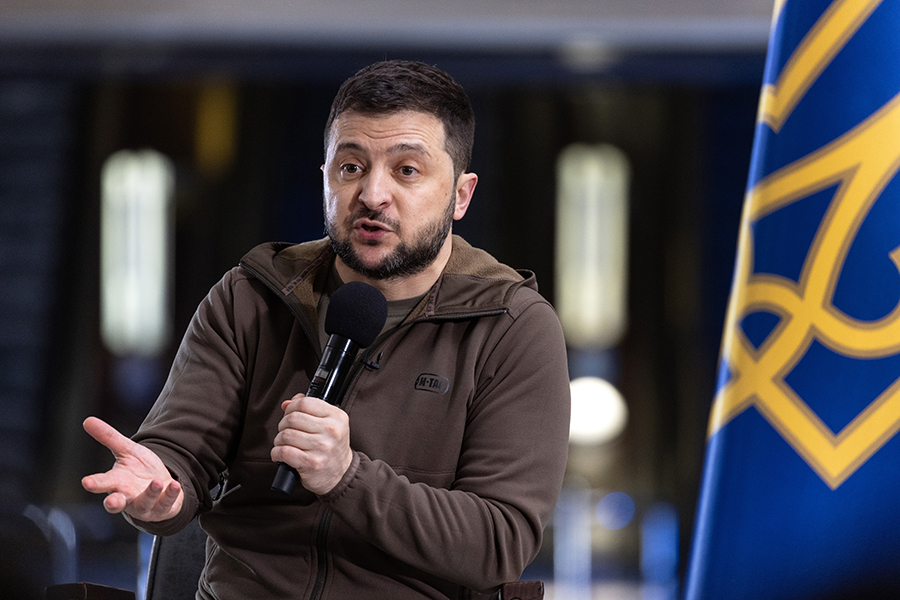
What Business Leaders Can Learn From Zelensky’s Heart-based Leadership

We see examples of the misuse of power and poor leadership in the news on a daily basis, whether on the political, corporate, or world stages. But recently we have been seeing a refreshing leadership style by Ukraine’s Volodymyr Zelensky. What is it about him that has us all so enamored?

We are bearing witness to a leader who is using courage and compassion to lead his people. Indeed, Zelensky’s heart-based leadership has captured the hearts of his people and those around the world. Zelensky is rewriting history by embodying the power of the heart in his leadership.

What Is Heart-Based Leadership? In action, it is when leaders fully utilize their skills and humanness to guide their communication, choices, and relationships with others.

Men aspiring to be allies and leaders typically ask the question, “What do I do?” The reality is that this is more a question about our states of being and we should ask ourselves how to achieve our highest state.

If we all need to aspire to be in our best state, then most certainly our leaders need to be in theirs — to connect with us, to empower us, to lead from their hearts.

Men in power and position need to be in their hearts and model a different relationship with their own sense of masculinity. As a playbook for leaders, the power of the heart has five cornerstones to guide leadership:

Emotional Literacy
Emotional literacy requires that we have a conscious relationship with our emotions so we can experience them instead of ignore them and allow them to build unchecked. More importantly, we can respond instead of reacting. No doubt Zelensky feels unimaginable depths of fear, anger and sadness, yet he remains grounded and taps into the strength of his heart to maintain composure and lead his people.

Vulnerability
Vulnerability gets a bad rap and is unfortunately often seen as a sign of weakness as opposed to a sign of strength. True power comes from one’s willingness to be vulnerable — and this is especially true for leaders, as vulnerability fosters trust and respect from others. We can measure how brave you are by how vulnerable you’re willing to be. President Zelensky, perhaps thanks to his training as an actor, models his emotions for all to see, and allows vulnerability to be one of his strengths. Further, his vulnerability serves to demonstrate the deep empathy he has for his people.

Authenticity
Instead of portraying the image of what you think others need to see, which is persona-driven, authenticity is all about character … as in yours. People see through the performative tactics of inauthentic leadership. Zelensky recognizes the world stage he finds himself on and rather than performing, he shows us who he really is. The result? Both his people and the international community want to follow and support him. His authenticity is quickly earning him trust and respect.

Inclusivity
Those who lead from the heart possess the power to make everyone feel included. When people feel like they belong, they make more positive contributions. A culture of inclusion is imperative for good performance in business as in life. The solidarity Zelensky has inspired amongst Ukrainians and the international community at large is a testament to his inclusive leadership.

Love
There is true love in seeing, listening to, respecting, and valuing others for who they are and what they contribute. When Zelinsky recognizes the men, women, and children around him who have been through horrific experiences, when he listens to their stories, respects them, and values their contributions, he is demonstrating love.

There is true power in leading with heart. It takes copious amounts of courage and compassion — for oneself as well as for others. Those who lead with heart are authentic and demonstrate vulnerability. While they are not fearless, they are willing to face their own emotions and grow from their experiences. They center others, encourage others, and don’t let their egos run the show. They know life is not a dress rehearsal, and ergo, they work indefatigably to achieve their highest state of being. Heart-based leaders galvanize the strength of those they lead and inspire them to rise to their highest states — where just about anything is possible.

0