The Choice to Become a Business That Matters

This is the first of a 4-part series exploring businesses that matter.

This is about ambition.

Not the kind of ambition that has traditionally shaped businesses (growth at all costs, profit over everything) but a wiser, more profound ambition that reconsiders the very nature of business.
 
Compare the Ford Motor Corporation in 1903 to Zappos in 1999. Ford changed our society by building a product that transformed human mobility. Zappos sold shoes online – hardly in the same category in terms of size and scale, but arguably as influential in terms of its impact on society.
 
Zappos wrote its own rules. Out with accepted norms of what a business should be and in with its own interpretation. Zappos thought differently about culture, customers, strategy, growth, and talent and disrupted the blueprint set by Ford and other traditional manufacturing businesses, clearing the way for modern businesses to dream up new ways of architecting themselves.
 
Many businesses followed suit, creating a new and fresher business landscape and catalyzing two decades of rapid change in organizational design. The table was cleared, the mirror
de-misted, and the launchpad businesspeople currently stand upon was built. Where does business go now? A personal perspective, if I may indulge myself…

I’ve long held the view that business has underplayed its hand in shaping society. As traditional institutions like universities, governments, churches and armies play a lessening role in the fluid society of today, business is ascending. The voice of the global business community is getting louder, the resources that businesses command are at their peak, and the deployable talent residing inside businesses is more capable than ever. Business is primed to take the next step in its evolution and meet its fullest potential.

 But will it? That lies in our hands: the business leaders of the world.

If we, as a community, ask more of ourselves and seek more from our work, the Zappos-inspired trajectory will soar and our collective influence will be profound.

But our evolution relies on reassessing our impact. Not because business hasn’t done enough, but because business can be more significant than just numbly churning out profits in a
never-ending route-march of toil. The ‘gift’ of business to society is our performance mindset: innovation, expansion, disruption, seeking, and striving. This is a powerful elixir that can generate a broad impact.
 
At the heart of my provocation lies the question of ‘what matters?’ to the businesses we run. Our highest potential lies in the asking and answering of these questions:

  • Is it important for a business to matter?
  • What is a business that matters?
  • Does your business matter?
  • What potential does your business have to matter?

In this 4-part series, I hope to take you on a journey that gives you an opportunity to evolve, raise your bar, and challenge yourself. It is a provocation, but one that holds no prescriptive answer. If you take up this challenge, you will open up new possibilities and unlock greater potential: the lifeblood of any business. You will absolutely yield results.

But the path to those results is different now. Becoming a business that matters is a rich and meaningful experience. A Zappos journey as opposed to Ford journey. Technicolour illuminating gray. Inspiration over effort.
 
A few points of clarification:

  • This is not about becoming an NGO. It’s about performance.
  • This is not about obligation. It’s about seeking more.
  • This is not about going back to the drawing board. It’s about advancing what you already have.
  • This is not about trying harder. It’s about creating more energy.

Fast-forward 10 years. You’re sitting with your young children or grandchildren, and you are asked the question: “What does your business do?” Imagine answering this question with conviction: clarity of purpose, full of meaning, unwavering in your intent. Imagine their eyes lighting up with pride. Imagine the swell of satisfaction in your chest.
 
For this moment to happen, your business must matter.

Series 1 provocations:

  • What does the word ‘matter’ mean to you?
  • What is the unique ‘gift’ that your business currently/potentially offers to society?

Look out for the next installments of the ‘Becoming a Business That Matters’ series:
Series 2: “Unearthing What Matters to Your Business”
Series 3: “Sculpting a Business That Matters”
Series 4:  “Being a Leader of a Business That Matters”

 

Effective Strategies to Gain Constructive Feedback

Organizations need to incorporate constructive feedback from stakeholders to survive pandemic-related disruptions amid today’s turbulent economy.

To meet the expectations of their stakeholders, leaders must ensure that they obtain regular feedback from them, since these people make decisions that determine the success of the organization.

Securing constructive feedback is critical in helping you find out which decisions are working and which ones are not. Yet, many organizations fail in engaging effectively their stakeholders due to reluctance to incorporate and act on feedback. This results in communication gaps between executives and their stakeholders.

To address these problems, leaders need to adopt best practices of getting constructive feedback from stakeholders. These practices are a product of insight obtained from both external research, and my interactions with senior organizational leaders.

Why You Should Seek Stakeholder Constructive Feedback

Learning to incorporate constructive feedback is vital for building a trusting relationship with stakeholders. It provides you valuable insight into how they view and make decisions.

Recently, I met Alisha, my consulting firm’s client, who is the head of membership engagement at a professional manufacturing association. Alisha shared how communication gaps between the organization’s executives and its key stakeholders had strained their mutual relationship. Realizing the seriousness of the situation, the association requested an in-depth, neutral, third party investigation into the opinions of its members and the quality of outreach to them.

Alisha approached me for advice. She realized that to work effectively as head of membership engagement, she needed to learn the best ways to infer the truth about the stakeholders, their opinions, and the quality of the organization’s outreach.

Mental Blindspots Thwart Progress

Obtaining accurate feedback is key to stakeholder engagement. It ensures that you have an accurate picture of what’s working and what’s not.

Unfortunately, we often believe that we know our stakeholders well enough to fully understand their requirements and thus fail to seek their input about essential matters.

This dangerous judgment error, termed the false consensus effect, causes us to mistakenly believe that others share our beliefs. It is one of many dangerous judgment errors called cognitive biases. These mental blindspots impact decision making in all life areas, ranging from business to relationships. Fortunately, recent research has shown effective and pragmatic strategies to defeat these dangerous judgment errors, such as by constraining our choices by focusing on the top available options, for example by using this comparison website. By doing so, we can improve our stakeholder engagement.

Members often suggest changes that make executives highly uncomfortable.Therefore some leaders fall for the status quo bias, a desire to maintain what they see as the right way of doing things.

We have a natural tendency to avoid accepting information that counters our beliefs. This is another dangerous cognitive bias called the confirmation bias.

Learn to Love Constructive Feedback

When I met Alisha, I told her that it’s vital that she work to inculcate a new workplace culture fit for the future of work. The culture needs to encourage all organizational leaders to appreciate and obtain constructive feedback. This approach also allows them to utilize such feedback to engage with stakeholders effectively.

Our inclination to avoid information that opposes our beliefs due to confirmation bias is very dangerous for our modern-day organizations. This behavior stems from our evolutionary history, when it was more important to align our perceptions of reality with our tribe than to determine the truth. 

Constructive feedback allows leaders to identify the perceptions of the stakeholder accurately, rather than what we would want it to be. I explained to Alisha that perceptions and reality matter equally in stakeholder engagement. Thus, leaders must learn about these filters to effectively engage stakeholders. Naturally, getting constructive feedback is a great way to achieve this goal.

How to Gain Effective, Constructive Stakeholder Feedback

There are several ways to obtain constructive feedback from stakeholders. The easiest is active feedback. This means asking targeted questions to yield precise answers.

We can also apply social intelligence to get passive feedback from the stakeholders by analyzing their behavior, words and actions. Social intelligence refers to the strategic capacity to evaluate and influence other people’s emotions and relationships.

Research in cognitive neuroscience shows that it is our emotions, not thoughts which determine the majority of our behavior.

I shared the following methods with Alisha to help her receive quality stakeholder feedback from during their outreach assessment meeting.

1. Getting Active Feedback

  1. Ask how they feel about what you’re saying to explore their emotions on the topic.
  2. Ask them what they think about what you’re saying.This gives you an insight into their beliefs about the topic.
  3. Ask how well their experience aligns with what you’re saying. Learning about their personal experiences provides insight into the influences behind their perceptions.
  4. Formulate other topic specific questions. Each kind of question about feedback will help you understand their filters.

Alisha decided to arrange a meeting with the stakeholders. The meeting atmosphere was initially tense. However, the mood lifted as members were actively asked questions and they realized that she was sincere about understanding them.

Eventually, the members started to express their opinions on recent decisions. Alisha was able to address their reservations by offering reasonable explanations for each point. 

2. Getting Passive Feedback

You can also learn about stakeholders indirectly through passive feedback.

  1. Give them time to absorb what you’re saying. Offering sufficient room for response allows them to express themselves comfortably, giving you an understanding of their filters.
  2. Observe their communication with others about what you’re saying. This intercommunication is an insight into their perceptions.
  3. Observe comments on social media, blogs, and other public interactions.This offers you an unguarded understanding of their personal filters.
  1. Depending on your topic, there can be other passive feedback methods.

You should acknowledge feedback and adjust your actions accordingly. Gradually, this feedback will help you understand your stakeholders and improve your stakeholder engagement.

Three months after her consultation, Alisha shared great news. She told me how the association implemented my suggestions and noticed a significant improvement in their stakeholder engagement. By bridging the communication gaps, the C-suite found it much easier to reach amicable compromises on points of contention.

Conclusion 

Leaders often fall prey to cognitive biases that prevent them from incorporating feedback from stakeholders. The best way to ensure that you stay on the same page as your stakeholders is to obtain regular constructive feedback. You can achieve this by proactively applying best practices for seeking active and passive feedback. By doing so, you will be able to bridge communication gaps and improve stakeholder engagement.

If You Can Answer “Yes” to 5 of These Questions, You’re a Good Leader

CEOs are asking, “How can we increase employee retention and engagement?”

Maybe that’s the wrong question.
What if you asked: “What are our employees grateful for?”
How would your employees respond to these statements?

  1. I am respected by my boss
  2. My manager helps me to learn and grow
  3. I have the tools and the necessary training to succeed
  4. I am motivated to do my best
  5. I trust my manager and the company’s senior executives
  6. The company deals with employee issues honestly and fairly
  7. I am valued for my ideas, my talents, and my diversity

People stay where they are wanted, respected, and appreciated. If you answer “Yes” to five or more – CONGRATULATIONS – your employees are grateful for more than just their paycheck.

How to Navigate the Leadership Bermuda Triangle and Give Better Employee Feedback

Employee performance feedback is vital to growing a sustainable business. Managers know this, yet 69% are uncomfortable communicating with their employees, according to an Interact survey. More than a third report that they’re wary of giving feedback employees might respond to negatively.

So, how can managers improve employee satisfaction with feedback processes if they won’t talk to their teams?

Uncomfortable managers will avoid employee performance management, which could lead to division and derision among subordinates, especially if departmental and organizational goals aren’t being met. This ultimately impacts productivity and quality, which can drag your company down into the Leadership Bermuda Triangle.

What Is the Leadership Bermuda Triangle?

The Bermuda Triangle is located between Miami, Bermuda, and Puerto Rico in the Atlantic Ocean. The area is known for a high occurrence of tropical storms and hurricanes that bring down even the most well-equipped ships.

A few years ago, two of Harrison’s executive coaches and global trainers, Rick Tate and Julie White, Ph.D., observed a pattern emerging from leaders struggling with employee performance management. There was a consistent pattern of three out-of-balance paradoxes that contributed to managers not setting clear expectations, not effectively holding employees accountable, and creating cultures of dependency that were clearly self-defeating. They dubbed the behavioral pattern the “Leadership Bermuda Triangle.”

The Leadership Bermuda Triangle can similarly sink your ship. Like its near-mythical counterpart, the Bermuda Triangle of Leadership occurs when captains steer their crews through dangerous forces of nature. Leaders are often unaware of their weaknesses to these forces.

Fortunately, there are four ways to tell if your performance management style is destined for a watery grave:

1. Low accountability, high empathy.

When leaders fail to hold employees accountable, productivity and performance suffer. It’s great to foster a friendly environment at work, but it’s important to maintain authority so employees don’t take advantage of permissive management and assume that everything they do is OK.

2. Low certainty, high reflectiveness.

Sometimes leadership fails to confidently and properly communicate expectations to everyone on the team. This is easy to do in fast-paced work environments where things are constantly changing. At the same time, leaders might be open to feedback and willing to listen. This leads to employees who are unsure of what to say or do.

3. Low assertion, high helpfulness.

Some managers love to roll up their sleeves and get work done alongside their crews. This can exhibit great leadership, but it can also cause employees to feel unsure or even become complacent. They already compare themselves to peers, and now they’re also comparing themselves to their bosses. This can lead to unnecessary stress placed on managers for “expected” help, lack of development or skills loss among the crew, and, worst case, an environment of resentful behavior.

4. Low frankness, high diplomacy.

Occasionally, leadership tries to soften uncomfortable conversations. Beating around the bush or sugarcoating issues can be perceived as refusing to provide straight answers. Although diplomacy is valuable, a lack of directness and getting to the point causes distrust. You might find your best talent abandons ship when they are unclear about expectations and lose confidence in their manager.

If you are experiencing any of the above symptoms, don’t worry. There is a solution: fostering self-awareness and soliciting a 360-degree employee feedback loop.

Addressing Leadership Paradoxes

Effective leaders drive organizational performance, and they feel a special kind of pressure while bearing a heavy load of responsibility. Essentially, you’re just a human being like everybody else, but your employees view you as something of a superhero. The further up the ladder you go, the stronger the admiration. This leaves you to balance leadership paradoxes (i.e., contradictory behaviors) that, if out of balance, can contribute to difficulties giving and receiving employee feedback.

For instance, you must take pride in your abilities while recognizing your team’s work. You must develop close relationships with subordinates while also maintaining a professional distance. You must treat everyone equally while respecting their individualism. And you must extend flexibility while also meeting deadlines and getting the job done.

Balancing opposing behaviors can improve manager-employee communication and relationships. But how do you accomplish this when the behaviors seemingly contradict each other? Let’s dig a bit deeper to navigate these complicated leadership paradoxes.

Examples of Feedback to Improve Performance

Providing employee feedback means maintaining warmth and approachability while also enforcing company rules to ensure work is done correctly and on time. If you dive straight into hard-to-swallow critiques, employees might become defensive and won’t be as receptive. If all you do is praise employees, on the other hand, then they’ll never grow.

A manager giving employee feedback should start with a caring statement, such as, “I want to see you develop the skills to climb the ladder.” Or, “I’m consistently impressed with how well you do your job.” This ensures the person feels like a valued member of the team instead of another squeaky cog in the wheel.

You must be a compassionate enforcer who can adapt and react to whatever steps the employee takes from there. If they improve, continue helping and encouraging them. But if they don’t, you need to get to the bottom of what might be causing the performance issues. Try asking what they feel they need to excel at their job. Show that you care about their success.

Above all else, you must learn how to get comfortable giving feedback. You should always be assertive and truthful while enforcing the rules fairly and consistently. People need a direct yet tactful guide to lead them through the perpetually unknown. But once you come out the other side, you’ll see the return on your efforts. Businesses that regularly utilize employee feedback have 14.9% lower turnover rates, and 68% of employees who receive consistent and accurate feedback experience job fulfillment.

The Leadership Bermuda Triangle is a dangerous place that leaders should avoid, though they are often unaware of these unseen areas or derailers. If managers find themselves excelling at one aspect of leadership while struggling in another, then they’re likely managing reactively instead of proactively, resulting in dysfunction, distrust, and stress. Thankfully, you can avoid the Bermuda Triangle and grow into a competent leader by learning, accepting, and proactively addressing uncomfortable truths during employee feedback.

The Executive’s Guide to Preventing Resistance & Succeeding With Organizational Change

Here are the seven characteristics of a successful executive change leader:

1. Is Self-Aware – In a study of 65 change stories from leaders of 33 organizations, researchers found what differentiated successful leaders from others was their level of self-awareness. Successful leaders considered the impact their practices, communication, and behaviors had on the response of the change recipients. Change leaders are aware of how their level of readiness affects the expectations they set, the way they communicate, and their actions. They also know that although he or she may be ready for action, the people most affected by the change are just beginning their journey. The successful executive change leader therefore adjusts their practices, communication, and behaviors accordingly. 

2. Walks the Talk – A successful executive change leader asks, “What must I do differently to help people move through the process and achieve the intended outcome?” Every change, regardless of where it is occurring in the organization or its size, is about you and every other leader in your organization. The successful change leader therefore knows the behaviors and activities required to achieve the intended results, and models the behaviors expected.

3. Has Energy and Perseverance – A key part of change leadership is to stay the course while continuing to encourage, support, and demonstrate energy and enthusiasm for the change until you have achieved the intended outcome. In one large change initiative, the Change Sponsor, a Vice President, clearly demonstrated the energy to go the distance. The change was difficult and many of his leaders and employees were uncomfortable. He knew their discomfort was a sign they were making progress. Instead of stopping the change, he simply adjusted the pace and increased the level of support.

4. Is Flexible – Successful change leaders recognize that uncertainty is part of letting go of the current state and embracing the new state. They also know that a flexible plan can reduce the uncertainty and increase their employees’ ability to respond to the transformation.  

5. Has Empathy – Successful change leaders lead the change from the perspective of the change-recipients. Although they recognize the need for project timelines, budget, and training they know success depends on the  employees’ ability to move through the transition.  

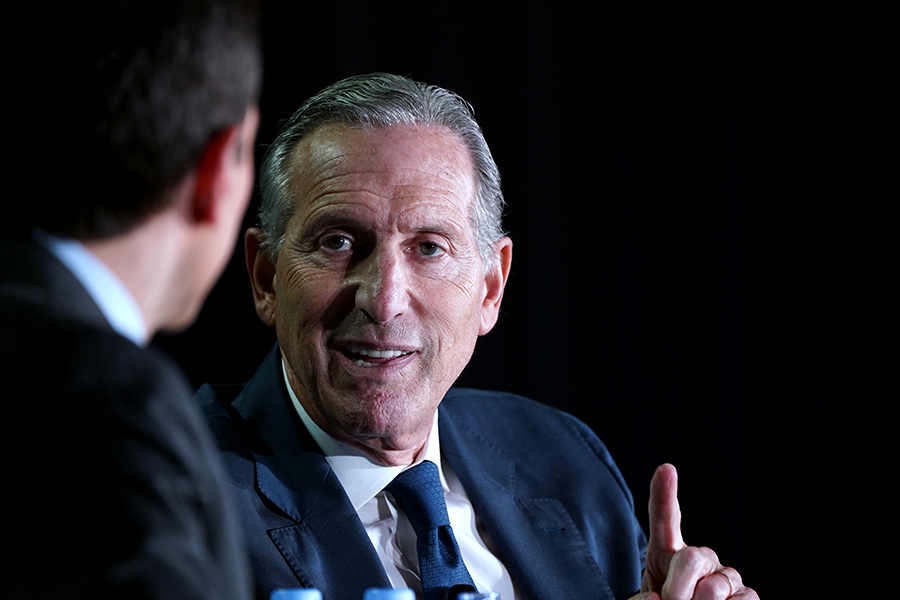
6. Trusts Employees – Successful change leaders trust themselves, and they trust their employees. In return they have the trust of their employees. Howard Schulz, the CEO of Starbucks, once talked about his success at turning around the organization after growth started slipping. He talked about the importance of trusting employees; that too often leaders hold back information, afraid it will raise anxiety, get “leaked,” or somehow be used inappropriately. “You have to have confidence, and trust in your people that they will be able to use and protect information. Trust builds when you have authentic respect for your employees.”

7. Seeks Stability – When you are in the midst of large-scale change, your employees may feel everything is changing. Successful change leaders balance change with stability, talking about what is not changing as well as what is changing. Change only has meaning when it is compared with stability and continuity.

What Keeps You Up at Night? My Journey of Overcoming Fear

Turning your company toward social impact can be scary. What guidelines should you follow? How will you pay staff with an unproven business idea? Fear holds many leaders back, especially entrepreneurs working in uncharted waters.

Malcolm Wood, a British-Chinese restaurateur, at the top of his game in hospitality and food, risks his life to show how rapidly the world’s glaciers are disappearing. Like a young Richard Branson — a serial entrepreneur with some extreme sports thrown in — he took his love for the natural world and created a movie, The Last Glaciers, that would make people sit up and notice. He shares his journey of overcoming personal fear and how business leaders should think as they move toward the social impact economy:

As a kid, I was super scared of heights. To overcome this, I turned to sports that challenged me as a way to confront my fears. Since then, I have been fascinated with challenging myself and my limits in both work and vertical sports. I also went through a period of my life where I worried a lot about the future, death, feeling overwhelmed, and being constantly stressed. My feeling was a combination of being overworked, my personal life not going where I wanted, and a severe injury that saw me lose the use of an arm for two years. Flying and climbing mountains saved me from this downward spiral. It has taught me life lessons about risk management, how to face up to fear and unpleasant facts, and has given me lifelong friends.

Most importantly, it has shown me how to stop time and appreciate the life and beauty around us all. In extreme sport so, you have no choice but to focus on the present. Situations constantly change and require your total focus and attention. It all happens in a moment, with very high stakes on the table. If you can make it through one day at a time with this mindset, that’s all that counts.

You can’t always live life in fear. These experiences help define your identity and help you realize what you want in life. You can’t keep it all in your head as a fantasy because real life is messy and weird. But it can also be great — if you embrace it. In adventure sports, you’re constantly assessing risk. It’s part of every preparation: the decision to step out the door, define your objective, and continually evaluate to see if that objective might be yours today. People often say the higher the risk, the higher the reward. I can’t weigh the risk against the reward without thinking about the loss I may experience if things go wrong. But I also can’t camp in that headspace for too long. The riskiest things can give you the most joy (and potentially the most profound grief), and I’d rather do my best to calculate those risks well and not be held back by imagined failures. Life is too short to stand on the shoreline.

The Last Glaciers: a Push Outside my Comfort Zone

People will look at our film — the mountaineering and paragliding — and think we are reckless and crazy. What you won’t see is a long dedication to learning: the many training courses in which we invested; hours of training and briefings; risk analysis chats over multiple dinners, meetings, and coffees; safety courses, and the number of flight hours that we needed to rack up to ensure we had the right level of experience before executing our plans.

I have a photograph of myself, director Craig Leeson, and our lead cameraman Cody Tuttle on a summit in Peru, trying to smile for the camera. We were deeply exhausted. We had climbed almost 20,000 feet twice within 24 hours: once to try and reach the summit, and again to try and fly off it to get some aerial shots of the glaciers below, a feat never before achieved in a tandem glider. Putting these goals together was the hardest physical thing we ever did during the movie’s creation. We had tons of setbacks on the expedition: a crashed drone, missing camera parts, broken pro cameras, motorbike crashes, everyone getting altitude sickness from a too-fast ascend…the list goes on. Nevertheless, we pushed ourselves to the limit to create this story, and the experience has changed us forever.

My day job as an entrepreneur focuses on food and beverage, and people often ask me how this is linked to being an adventure athlete. It’s straightforward, I love the outdoors, and cooking and sustainability are embedded in my love for the environment. I’ve been working on our environmental documentary, “The Last Glaciers,” for the past five years. The purpose of the documentary is to showcase the effects of climate change, as highlighted by the diminishing rate of glaciers on the world’s mountain ranges and polar ice caps, and clarifies the multiple contradicting messages presented to the public and remove any doubt that climate change is a grave concern.⁠

Consumers are now demanding sustainability from businesses where they choose to spend their money. We must adopt these new practices not only to better the planet – which is the most important thing – but also to preserve our industries in the long run. So sustainability is hugely important to me and my businesses. We try to look at sustainability as a whole and use it to shape what we do. Yes, it’s more expensive to do things that way. Yes, it’s more effort and sometimes not 100% possible, but we all need to work on doing business in an ethical manner — and we need to start somewhere.

Business can be challenging. You never know for sure the outcome of all your efforts, and you can’t see unforeseen challenges. Tough times are inevitable, but how you compose yourself during these times defines you and will define your future. Never forget the fundamentals that shaped you, and when things seem like they are breaking down, go back to basics.

Interrogating the Validity of Your Business

Over the past two years, the business landscape has changed in a material way.

  • The question of people/talent is very fluid at the moment (flexible work, high resignation rate, shortage of skills)
  • Supply chains have been disrupted globally
  • Inflation is on the rise, affecting margins
  • Global access through online channels is fully accepted, which has opened up new possibilities
  • Geopolitics is shifting fast

In my experience, there is a (natural) reluctance on the part of CEOs to question the validity of their business. The fallout of a negative answer is probably just too much to bear. So, often the response is to ‘hit and hope’, not rock the boat and hope things turn out alright.

The problem with this approach is that it represses legitimate anxiety, which festers and compounds over time. The results are predictable: loss of sleep, scratichness, tentative leadership, lowering of confidence to make important moves. No one can ask or answer this question for a CEO. Maybe a board will raise the topic, but the ultimate responsibility — at least for a CEO who wants to lead with conviction – lies with the CEO. The experts from the complexity school of thought recommend ‘nudging’: small, micro-steps as opposed to over-brave leaps forward.

The micro-step here is to simply raise the question publicly, ideally with your Exco.

Businesses Can Fight for Justice — this Nonprofit Shows How

When employers and investors speak up, lawmakers pay attention.

The Responsible Business Initiative for Justice (RBIJ) was founded in 2017, and since then, this award-winning nonprofit has partnered with hundreds of companies across the world to advance fairness and equality in systems of punishment and incarceration. By engaging businesses to use their voices, resources, and working practices, the organization has worked to change criminal justice narratives, support legislation, and create real opportunities for deserving individuals.

Founder and CEO Celia Ouellette spent a decade practicing as a defense attorney, primarily on capital cases across the United States. As a lawyer, she found herself constantly fighting a criminal justice system that was cruel, expensive, racist, and broken. Despite working to save people from execution, she could only help individuals one at a time. “It’s not enough to save people one by one.” She often reminds conference audiences. “We must look to prevention, not just cure. We have to change the system, and prevent individuals from becoming trapped in the first place.”

When it came to delivering systemic change, Ouellette recognized that businesses could make a difference. No constituency is as important to lawmakers, and it was clear that business support would be decisive in driving policy campaigns over the line. So RBIJ was set up to rally and strategically deploy that support.

RBIJ CEO Celia Ouellette and Virgin Group founder Sir Richard Branson discuss abolishing the death penalty in New York City, on October 6, 2021.

Across the United States, there is an established and growing need for companies to speak out. Six in ten Americans feel that it’s no longer acceptable for companies to remain silent on social issues. The same number says they will reward businesses that actively address these issues. The past two years have been a reckoning for the American justice system, and its flaws are now recognized as some of the most glaring social problems facing the United States today.

An excellent example is Business Leaders Against the Death Penalty, which RBIJ launched at the South by Southwest Festival in 2021. Spearheaded by Virgin Group founder Sir Richard Branson, the campaign brought together more than 250 international business leaders to back an end to capital punishment around the globe. Supporters include Meta COO Sheryl Sandberg, Salesforce CEO Marc Benioff, Unilever CEO Alan Jope, and author and entrepreneur Arianna Huffington. Their support has already been deployed in campaigns from Utah to Singapore through op-eds, interviews, joint statements, and private advocacy. In addition, the campaign has been covered by over 250 media outlets in more than 10 countries. By amplifying business support for change, we have helped shift narratives around criminal justice issues and given campaigners invaluable ammunition for advancing reform.

We’ve also convinced businesses that criminal justice reform isn’t just a moral imperative for companies – it’s an economic one. Take The Clean Slate Initiative as another example; it closes certain types of criminal records after a specific time. The group’s motto is: A criminal record shouldn’t be a life sentence to poverty. The United States loses more than $80 billion each year from the underemployment of people with criminal records. One in three American adults now has a record and faces substantial and often wholly unnecessary work, education, and housing barriers. Removing these restrictions for deserving individuals who have done their time will automatically allow employers access to a vast, diverse, underutilized talent pool. With over 11 million vacant jobs to fill in the Great Resignation, it’s a strategy that could benefit businesses greatly.

This demonstrates another critical aspect of criminal justice reform — marshaling key business voices to support specific local policy campaigns. Last year, for example, RBIJ brought together companies to help end juvenile life-without-parole sentencing in Ohio. It was an essential step forward; no other country sentences children to die in prison. We worked closely with state campaign partners to end this cruel practice.

We also work with employers to create change within their operations, most notably through hiring. In March 2022, again at South by Southwest, we launched Unlock Potential with the support of the Walmart.org Center for Racial Equity. The program is a groundbreaking intentional employment initiative to keep young people away from encounters with the justice system. By providing meaningful, long-term career opportunities for individuals aged 16 to 24 (who are most at risk), Unlock Potential aims to break cycles of poverty and incarceration while at the same time advancing economic mobility and racial equity.

Our work at RBIJ has never been more critical. While the United States makes up just 4% of the global population, it accounts for 21% of its prisoners. The country’s justice system is rightly decried as inefficient, wasteful, cruel, and racist. Internationally, lack of access to stable and accountable justice systems remains “a great threat to sustainable development,” according to the United Nations. There is an existential need for corporations to “walk their talk” on issues like systemic racism and embrace their responsibility as a force for good. We work with them to do precisely that.

Culture Fit and Manager Fit: Your Strategic Advantage

How many current employees would you rehire if the company or your department were started today?

Problem: Too many hiring decisions are based solely on job fit — the candidate’s first impression, number of years in the industry, worked for a competitor, has a degree from a prestigious college, or came highly recommended by a friend.

All valuable information, but job fit is not enough for today’s rapid-fire business environment. Hiring is the front door to your future success.

If you want to increase your employee retention and engagement you need more information. Today, candidates must fit the job, the culture, and the manager. For example: Does the candidate have the right attitude to fit your culture? Will this person be a good fit for your management style (i.e., micro-manager, dominating, affirming, etc.)? Hiring decisions that are based on a person’s overall fit will benefit the company and the individual.

Here are three ways to tell if a candidate will fit your management style and your culture:

  1. Today’s candidates come prepared with standard, canned answers to the most asked interview questions. Dig deep and don’t accept their prepared answers. Be prepared with behavioral-based interview questions with several probing follow-up questions.
  2. Scientifically based pre-hire assessments will give you objective 3rd party information about the candidate. Your assessments should include a distortion scale to determine if the candidate is misrepresenting themselves. Your assessment should have company-specific benchmarks, include interview questions, and have multiple uses (i.e., selection, promotions, career development, conflict resolution, leadership, etc.)
  3. Ask the candidate what type of manager he/she performs best with – dominant, detail-oriented, aggressive, etc. Conversely, what management style most intimidates them?

    Employees are looking for work/life balance, to be part of something bigger than themselves, to contribute to a worthwhile cause, and to be respected for what they bring to the job. Hiring for job fit alone is no longer working. Add culture fit and manager fit to gain a competitive advantage.

How Business Leaders are Using Technology to Fight Food Waste

An enormous amount of food goes to waste in the US and around the world while millions of people suffer food insecurity. The impact of food waste also has serious ramifications for the environment and on businesses’ sustainability goals and profitability, posing unprecedented challenges.

In a recent landmark report titled Overcoming the Food Waste Challenge: Improving Profit While Doing Good, Coresight Research focused on food waste occurring at grocery retailers. The report provides key data and details on an industry-wide mission to eliminate food waste that paints a portrait of sustainability leadership. Coresight is a respected source of retail industry data with a mission to accelerate innovation and growth. According to the report, not only does edible food waste reduce grocery retailers’ profitability, but it negatively impacts the environment, occupying space in landfills and generating carbon and greenhouse gas emissions.

The Coresight Report draws a clear line in the sand for the food industry: “Disposing of huge amounts of edible food in landfills seems irresponsible and shameful in a time when there is massive food insecurity in the US and around the world, which has likely increased during the pandemic.” The report declared that getting a better handle on food waste would enable grocery retailers to ‘do good by doing well’—i.e., meeting commitments around sustainability and social responsibility while also improving profitability.  However, much of this waste can be avoided through the use of technology.

Technology exists to address overproduction and overordering, which are the main causes of food waste, according to survey respondents. This could be mitigated with more accurate forecasting and AI-driven demand forecasting/planning is in fact, the top area for planned future investment. Specifically, software platforms like atma.io connected product cloud use artificial intelligence and machine learning to analyze and alert on anomalies and inefficiencies across the supply chain; helping mitigate the risks, including minimizing spoilage, reducing loss, waste, and greenhouse gas emissions, and in turn maximize sales.

Data Drives Action

Food waste has wide-ranging economic, social, and environmental consequences on a global basis. The United Nations’ Environment Programme estimated that global food waste amounted to 931 million tons in 2021, and a 2011 study (latest available data) by the UN Food and Agriculture Organization estimated that food waste caused a $750 billion economic impact (excluding fish and seafood) and generating 3.3 billion metric tons of CO2e (carbon dioxide equivalents) into the air, and the current figure is likely much higher. 

Collecting and getting command of relevant data is a critical precondition for demand forecasting and inventory management. Similar to the quote, “You can’t manage what you can’t measure,” attributed to Peter Drucker, collecting data on items, their location, their state, and inside the store is the essential first step. 

Two points stand out in the Coresight survey:

  • Enormous loss of revenue-30% of food in U.S. grocery is thrown away, amounting to $21 billion in net income annually
  • Additional economic, societal, and environmental costs – the disposal of waste incurs costs and generates carbon emissions; an estimated 50 million Americans will face food insecurity this year

Leading by Example

Food waste has clearly emerged as a key element for sustainability in grocery retail: 90% of respondents in this Coresight survey said reducing food waste is important for reaching their sustainability goals and 72% have set sustainability goals specific to food waste. 

Several large US grocers have publicly released their goals for reducing food waste. The Coresight report presented notable examples of corporate leadership below.

  • Albertsons committed in 2019 to reduce food waste by 50% in its Pacific Coast divisions by 2030. The company also donates edible fresh and packaged food products that are close to the “use by” date to local food banks. 
  • Kroger’s “Zero Hunger | Zero Waste” program aims to end hunger in the communities it operates and end food waste by 2025 through innovation, increasing food donation, increasing nutrition, and advocating for changes in public policy to address hunger and divert food from landfills. 
  • Walmart has set a goal to eliminate food waste in the US, Canada, Japan, and the UK by 2025 as part of its general goal of moving to zero waste in the US and Canada by the same year.

Technology Leadership Responds

Food retailers are addressing the urgency of food waste by adopting available technologies to solve this escalating issue. These technologies include AI-based demand forecasting, RFID and Blockchain to manage inventory and capitalize on the opportunity to improve profits while reducing the costly disposal of edible food into landfills.

In fact, according to the Coresight survey, 84% of grocery retailers plan to invest in technologies over the next two years to manage food waste. The overwhelming consensus among technologists is that digital solutions create efficiencies while driving sustainability.

Accurate data also enables operators to quickly sell items that are nearing their expiry instead of having to discard them. Utilizing this data, they can establish an inventory system that forecasts and tracks food product usage so that it can be offered to customers safely, and not end up as waste. 

The call for global sustainability solutions will continue to get even louder. Solving the food-waste problem will likely take a combination of technology, government support. It will also benefit from pressure exerted by investors or environmental activists that holds grocery retailers accountable to their sustainability goals. Leaders across the retail industry can learn from the example being set by its food sector. 

You can access the full Coresight research report here.

0