Sergey Brin, Co-founder of Google

Sergey Mikhaylovich Brin is a Russian-born American computer scientist, internet entrepreneur, and philanthropist who, together with Larry Page, he co-founded Google. Brin is also the President of Google’s parent company Alphabet Inc.

As of July 2017, Brin is the 12th richest person in the world, with an estimated net worth of US$45 billion.

Brin immigrated to the United States with his family from the Soviet Union at the age of six. He earned his bachelor’s degree at the University of Maryland, following in his father’s and grandfather’s footsteps by studying mathematics, as well as computer science. After graduation, he enrolled in Stanford University to acquire a Ph.D. in computer science, where he met Page. They crammed their dormitory room with inexpensive computers and applied Brin’s data mining system to build a web search engine. The program became popular at Stanford, and they suspended their Ph.D. studies to start up Google in a rented garage.

The Economist referred to Brin as an “Enlightenment Man”, and as someone who believes that “knowledge is always good, and certainly always better than ignorance”, a philosophy that is summed up by Google’s mission statement, “Organize the world’s information and make it universally accessible and useful,”and the unofficial and sometimes controversial motto, “Don’t be evil”.

In 2004, he and Page were named “Persons of the Week” by ABC World News Tonight, and in 2005 he was nominated to be one of the World Economic Forum’s “Young Global Leaders.” In June 2008, Brin invested $4.5 million in Space Adventures, the Virginia-based space tourism company. 

Brin was also involved in the Google driverless car project. In September 2012, at the signing of the California Driverless Vehicle Bill, Brin predicted that within five years, robotic cars would be available to the general public.


The Pope Does a Surprise TED Talk

Pope Francis made a surprise appearance at a TED talk conference in Toronto in April, urging powerful leaders “to act humbly” and said he hoped technological innovation would not leave people behind.

The 18-minute video was filmed in Vatican City and broadcast to the audience at the annual TED 2017 conference in Vancouver.

“The more powerful you are, the more your actions will have an impact on people, the more responsible you are to act humbly,” said the pontiff, while seated at a desk.

“If you don’t, your power will ruin you, and you will ruin the other.”

The comments echoed Francis’ frequent themes to not ignore the plight of immigrants, the poor and other vulnerable people

Speaking in Italian with subtitles, Francis urged solidarity to overcome a “culture of waste” that had affected not only food but people cast aside by economic systems that rely increasingly on automation.

“How wonderful would it be if the growth of scientific and technological innovation would come along with more equality and social inclusion,” he said.

TED Talk lectures have grown in popularity, having been viewed cumulatively over 4.6 billion times since going online in 2006 (www.ted.com).

Other speakers to appear at the annual conference included tennis superstar Serena Williams and entrepreneur Elon Musk.

By Amran Abocar; Editing by Michael Perry.


How to Inspire Yourself When You’re the Victim of Bias

Victimhood has a bad name. People who feel like victims are told they are weak. Psychologists even have a name for it… learned helplessness. But in my experience being victimized is often a reality. 

It’s not true that you are responsible for all your own troubles. There are many people who have judged you and have prevented you from getting opportunities or rewards that you deserve because of your gender, your age, your color, your weight, your education, your personality and dozens of other irrelevant personal attributes. It is also true that there are mean people who feel stronger by making you weaker.  You’re not making this up.  It’s real. And the sooner you face that fact the faster you can transcend the depressing effects of being unfairly disadvantaged.
 
For the past several years, I have been working in large corporations who are trying to untangle the knots of invisible bias that systematically disadvantage women. What I’ve learned doesn’t just apply to gender bias, which is indeed rampant in the workplace and the wider society; the effects of bias are felt by anyone who is being treated unfairly because they have been categorized in a class of people who don’t deserve what the privileged class automatically gets.
 
It’s called discrimination.
 
When people are discriminated against they don’t receive the same opportunities, resources, support, training, education, mentoring, sponsorship, or access to power and leadership.  I have learned that there are many, many subtle but deadly effects of discrimination.
 
For instance, in my work I document how much more slowly qualified women are promoted then males with the same education and experience. This slow promotion effect is a root cause in women being consistently not listened to or even acknowledged when they make suggestions or for volunteer for assignments. Being unheard, overlooked, interrupted, and having others take credit for your work has a depressing effect on initiative.

It’s logical. If no one in the established authority structure is interested in what you think, or what you know, it is only reasonable to quit offering your ideas.  If hard work doesn’t result in recognition or rewards for you, but mediocre work or even failure results in promotions and raises for the privileged class, it is only reasonable to quit speaking up and just do what you’re told. This phenomenon is called the “psychology of discrimination.”

The psychology of discrimination has a powerful effect on both confidence and motivation.
 

Psychologists have determined that our confidence grows when we believe that making our best efforts will result in achieving our goals. When the link between our effort and our results is broken we begin to lose our confidence and our motivation to keep trying.  Demotivation grows exponentially when we see other people achieving their goals without making the same efforts that we are.  It feels unfair… because it is.
 
This creates a vicious cycle because others notice that you are not motivated.
They label you as an unmotivated person and withhold opportunities or support that would trigger your motivations. Thus, you become the stereotype that fits their bias.  But it’s not true that you’re an unmotivated person or not a hard worker or that you’re not smart or have good ideas. What is true is that systematic unfairness has depressed your initiative, your creativity, and your grit. The danger of staying in a job or life situations in which you were systematically marginalized, is that your depressed behavior becomes your new normal.  It becomes the story of you.

 Just look at this graphic to understand the cycle.

Don’t let this happen. You must defend your true identity.  Fortunately, studies show that most people can identify a deep, intrinsic, inner self. This is the part of you that you identify as your core identity. Many people call it your soul. This essential part of you enables you to be true to your self-chosen values in spite of your circumstances. This is what prisoner of war survivors rely on to maintain hope and sanity when all power and dignity is taken from them. This part of you is also your power source to overcome being a prisoner of bias.
 
We are learning more about our powerful core identity through the work of child psychologists who are studying the path that high functioning children take to become high functioning adults. Here is what we are learning.
 

  1. Self-Reflection leads to clarity about your intrinsic values and goals. Your values and goals become the framework for personal rules that you will not violate. Here are some common rules that individual clients have developed that reflect healthy values and goals.

    I will not work for a jerk because it will make me “smaller” than I.
    I will build a career that contributes to a better world and a better future.
    I will be trustworthy by making and keeping important commitments.
    I will live my life in balance and optimize my health and energy.
    I will invest my most positive feelings in the people I love everyday.


  1. Self-Persuasion is the art of creating an inner story based on the narrative that everything happens for a reason. Psychologists have found that this belief (independent of its actual truth which is unknowable), gives people the greatest amount of inner power to overcome difficult or tragic events. It makes us psychologically strong it enables us to maintain our commitment to our values and goals when we experience setbacks.
     
  2. Creative Grit is the proven personal habit most associated with success.  It simply means that you will persist in pursuing your vision of your best future self and your ideal future work and lifestyle in spite of any obstacles. Creative grit does not mean you’ll do the same thing over and over again but rather you will be constantly learning, adapting and finding better ways of fulfilling your core identity. The key to creative grit is managing your emotions and actions. This requires that you focus on endless hope, optimism, problem solving, meeting new people, seeking new experiences, and telling others your hopes and dreams. Studies show these emotions and activities are the most accurate predictors of success.

 
The bottom line.
 
Dammit the world is unfair. And the world is unfair to certain classes, races and genders in ways that are completely outrageous. What’s encouraging is that more people in privileged classes understand this and want to change it.
In the meantime, I encourage you to transcend whatever bias you are facing by going deep within yourself and affirming and supporting your highest self and highest potential.
 
I can assure you that that I have personally discovered many heroes who have transcended past and present traumas and disadvantages to achieve a state of persistent fulfillment.
 
The greatest gift you can give to the people you love and to the wider world is the gift of your true identity. Look straight into the eye of bias and spit!


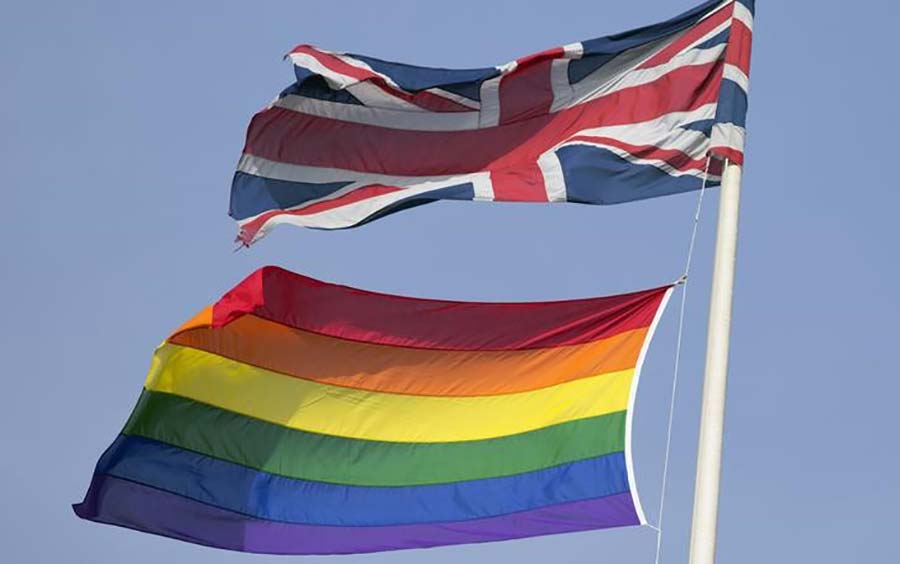
UK’s First LGBT Retirement Community Set to Open in Manchester

The northern British city of Manchester has announced it is to open the country’s first retirement community for lesbian, gay, bisexual and transgender (LGBT) people.

There are more than 7,000 LGBT people over the age of 50 in Manchester and the number is expected to increase, the council said in a statement.

The project aims to meet a need for assisted accommodation for older LGBT people where they can be open about their identity, it said.

“Prejudice and discrimination can be a real problem facing older LGBT people,” Bev Craig, Manchester City Council’s lead member for LGBT women, said in a statement.

“People shouldn’t have to face the prospect as they get older of being surrounded by people who may not accept their sexuality or gender identity.”

The development will offer apartments to rent or buy for people aged 55 plus and will have a 24-hour care team on site. Just over half the accommodation will be reserved for LGBT people, but other residents are also welcome.

According to research by the Manchester-based charity LGBT Foundation, more than half of lesbian, gay and bisexual people in this age group fear isolation in their older life because of their sexual orientation.

Manchester will join a growing number of cities around the world offering retirement accommodation for LGBT people. Similar developments have opened in Sweden, the United States and Canada.

By Magdalena Mis. Editing by Emma Batha. c Thomson Reuters Foundation.


Dietrich Mateschitz: Founder of Red Bull

Dietrich Mateschitz is an Austrian billionaire businessman who co-founded the Red Bull energy drink company, and holds 49% of the company’s shares. His net worth, as of August 2016, is estimated to be $14.7 billion.

Mateschitz was born in Austria to a family of Croatian ancestry. As the international marketing director for German company Blendax he traveled around the world for his job, living in many countries. It was this exposure to multiple cultures and local customs that gave him the idea for a new product, Red Bull, now associated with extreme physical and mental endurance.

After tasting a syrupy Thai drink sold for a quick boost, Mateschitz partnered with Chaleo Yoovidhya to produce their own drink. They invested aggressively in marketing – including its famous sponsorship of Felix Baumgartner’s 120,000-foot skydive in October 2012.

He is co-founder of the Wings for Life foundation that supports spinal cord research together with Heinz Kinigadner. Since 2014 the foundation has organized the Wings for Life World Run to raise funds.

In the U.S., immigrants are almost twice as likely to become entrepreneurs as native-born U.S. citizens. Immigrants represent 27.5% of the countries’ entrepreneurs but only around 13% of the population.


What’s Your Big Decision That Will Make 2017 Great?

Living your best life most likely requires you doing something extraordinary. Few of us maximize what’s possible by just doing what we’re already doing. The big breakthroughs; the big improvements come from making big decisions.

What is the big decision your life has been asking you to make? The clue to answer this question is to inquire of your deepest self “What have I settled for?”  Put another way, the question I most often asked my clients is “If nothing changes, what will your life be like a year from now, or two years from now, or five years from now?  Is that okay?” If it is, nothing will change. If it isn’t okay then you’re in need of a big decision.

Big decisions are often risky. But safe decisions or no decisions at all will dull your mind and numb your heart. So how do you make big decisions without being reckless?

It’s simple. Every decision you make should be leading you toward the vision of the life you want to live. This isn’t as common as it sounds. Many times we make decisions to avoid stress. Being clear on what you don’t want is much easier than being clear on what you do want. But stress avoidance isn’t a vision. And your personal vision is absolutely essential to your ultimate fulfillment and deep life satisfaction.

So what big decision would lead you to greater happiness, health, love, work and joy?  Do that.

Don’t be impulsive. Don’t be selfish. Be both brave and wise. Plan carefully. Prepare yourself and others who might be affected by your big decision for the worst that can happen . . . then act. Learn what’s working and what’s not.  Be flexible, but have the grit to sustain your direction. Unless you’re planning to skydive without lessons you can survive any setback . . . and you will have setbacks. All big decisions unleash some surprising consequences but nothing you can’t handle if you’re committed to your vision.

The best advice I ever received is to just start living the way you want to live.

That’s it . . . just start.

That’s what I am doing.


Business Can’t Solve The World’s Problems. But Capitalism Can

Business and capitalism get conflated — in our media, in our language and in our thinking. They are not the same thing. One is a sector, the other a methodology.

By inextricably linking the two, we confine the practice of real, turbo-charged capitalism to business, and we dangerously limit the capacity of non-business organizations to innovate, fund and bring to scale the kind of breakthrough ideas that will begin to solve the huge social problems we face today.

To be sure, business can change the world. That is one of the things it does, consistently. Innovations such as the assembly line, the car itself, the distribution of electricity and gasoline, and now the iPad, Google and so on have by many measures made the world a better place. Indeed, as Carl Schramm writes in his provocative essay, “All Entrepreneurship Is Social,” the fashionable new term “social business” in some ways “diminishes the contributions of regular entrepreneurs…people who… create thousands of jobs, improve the quality of goods and services available to consumers, and ultimately raise standards of living.”

He uses the refrigerated box car and its achievements in reducing food-borne illness and saving millions of lives in the process to make his point. Business will move the great masses of humanity forward with advancements in pharmaceuticals, materials, process and technology — but it will almost always leave 10 percent behind. It will almost always leave unaddressed humanity’s most disadvantaged and unlucky. Even social business will not address those issues for which markets cannot be developed. I serve on the board of a center for the developmentally disabled. More than anything, its clients need love. How do you monetize that?

This is where philanthropy comes in. Philanthropy is the market for love. The word itself derives from the Greek for “love of humanity.” Philanthropy and, specifically, the charities that benefit from it and that are chartered to solve social problems can address those people and issues that business leaves behind. But they can do so effectively only if we allow them to use the tools of capitalism — tools that the sector has thus far been denied, nearly wholesale.

We have two rulebooks — one for charity and one for the rest of the economic world. We blame capitalism for creating huge inequities in our society, and then we refuse to allow the “nonprofit” sector to use the tools of capitalism to rectify them. This nonprofit rulebook discriminates against charities in at least five different areas: compensation, marketing, risk taking, time horizons and capital itself. We allow people to make a fortune doing any number of things that will harm the poor but crucify anyone who wants to make money helping them.

This sends the top talent coming out of the nation’s best business schools directly into the for-profit sector and gives our youth the mutually exclusive choice between making a difference and making money. This we call ethics. We let Apple Inc. and The Coca-Cola Co. plaster our billboards and television sets with advertising, but we are appalled at the notion of important causes “wasting” money on paid advertising.

So the voices of our great causes are all but silenced, and consumer products get lopsided access to our attention, 24/7. This we do in the name of frugality. Amazon Inc. was permitted to forgo investor returns for six years to build market dominance. But if a charity embarks on a long-term plan with no return for the needy for six years, we are outraged.

This we call caring. We aren’t upset when The Walt Disney Co. makes a USD200 million movie that flops, but if a USD1 million charity walk doesn’t make a 75 percent profit to the cause in year one, we want the attorney general to investigate. So charities are petrified of exploring new revenue-generating methods and can’t develop the powerful learning curves that the for-profit sector can. This we call prudence. We let for-profit companies raise massive capital in the stock market by offering investment returns, but we forbid the payment of a financial return (“profit”) in charity. The result? The for-profit sector monopolizes the capital markets, while charities are left to beg for donations. This we call philanthropy.

Combine those five things and you have just put the humanitarian sector at an extreme disadvantage to the for-profit sector. Yet we still expect it to solve the world’s problems. Our social problems are gigantic in scale. We need gigantic responses to them. And if we freed the humanitarian sector to use the tools of capitalism, we could bring private ingenuity to bear on those problems, and we wouldn’t have to depend on the government to fill the gaps.

Where would all the money come from? From us! If we were to give the humanitarian sector the right capital, talent, time, and ability to innovate, it could build the kind of demand for philanthropy that, say, Apple builds for music on iTunes (which, by the way, stimulates the same reward centers in the brain as giving). Then we’d be on our way to the kind of scale we need.


Amazon Forest Guardians: Now it’s War

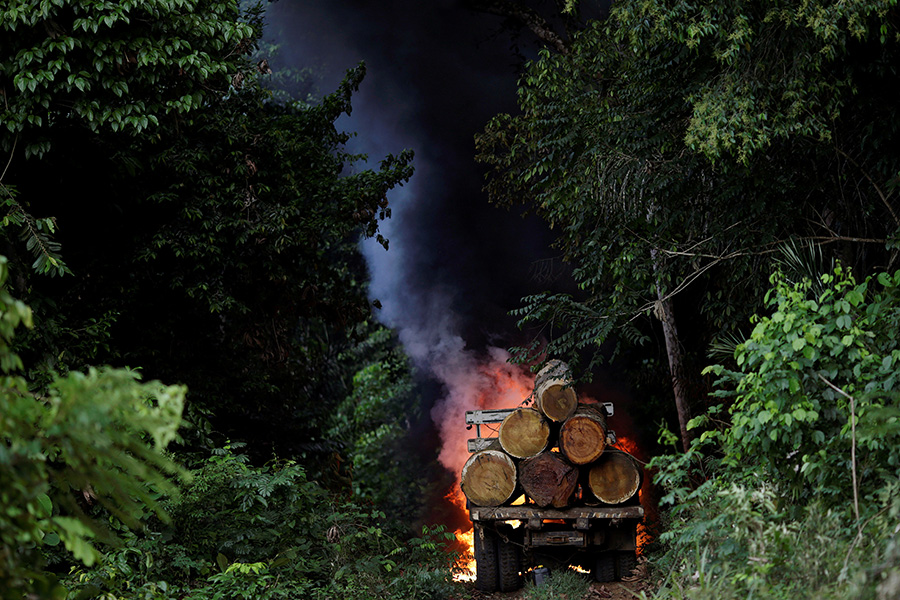
The rainforest shook with the sound of exploding tires and groaning steel as flames tore through a truck carrying giant tree trunks illegally sawn from the Amazon.

An agent of Brazil’s environment police had, moments earlier, ordered the driver from his cab at gun point. In a scuffed blue cap and muddied jeans, the 25-year-old fought back tears as he learned his truck would be set alight right there.

He walked away rather than watch it burn.

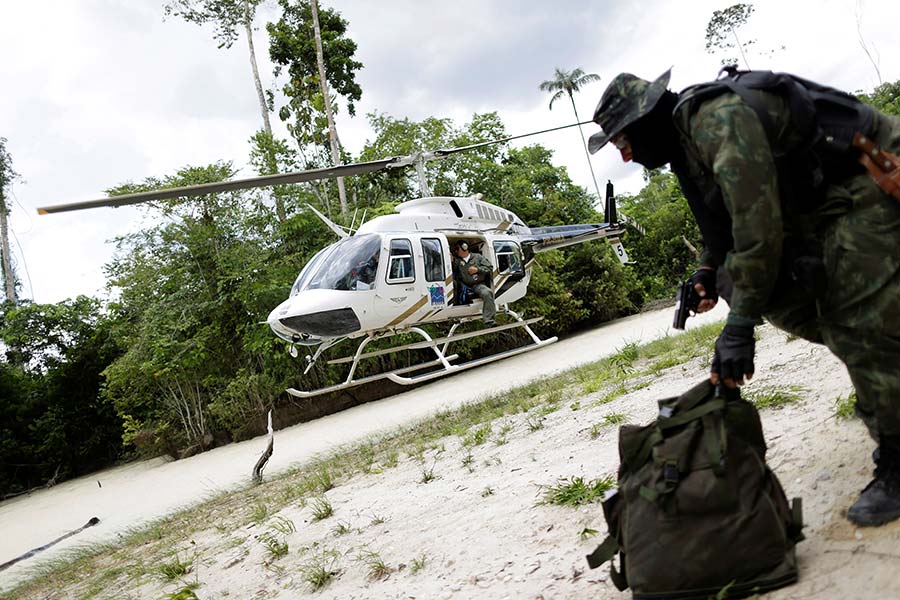
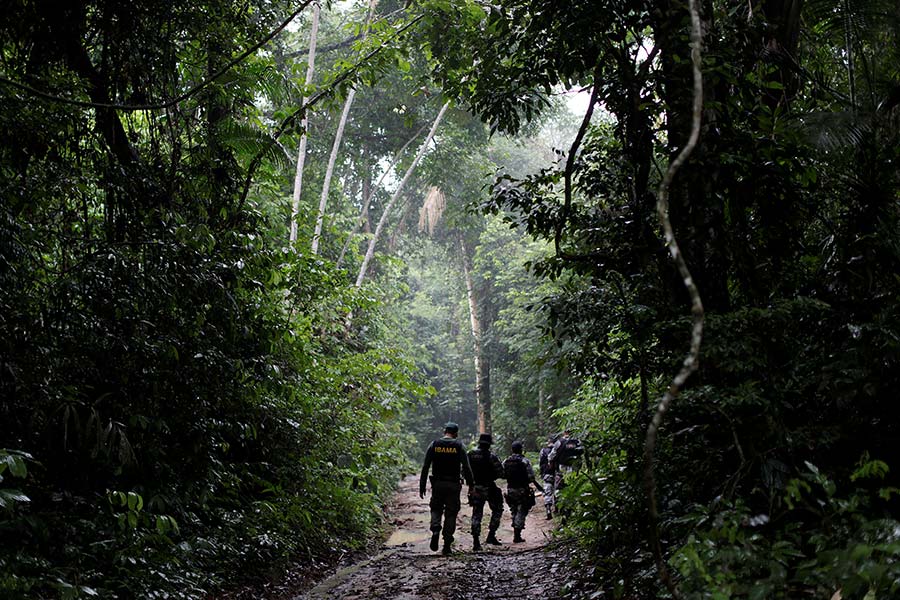
When able to do their job, agents of the Brazilian Institute for the Environment and Renewable Natural Resources, or Ibama, are decisive, punishing illegal loggers on the spot. But this seizure was the only success in four days of operations this month near the town of Novo Progresso in Brazil’s vast northern state of Para.

Hampered by poor radios with a maximum range of just 2 km (1.3 miles) and pick-up trucks easily recognised by those who cut down the forest, the exhausted Ibama agents were too often chasing shadows.

“The loggers are better equipped than we are,” said Uiratan Barroso, Ibama’s head of law enforcement in the state capital, Santarem. “Until we have the money to rent marked cars and buy proper radios we won’t be able to work.”

Nearly twice the size of India, the Amazon absorbs an estimated 2 billion tonnes of carbon dioxide per year, making its preservation vital in the fight to halt global warming.
Ibama, responsible for preserving Brazil’s 65 percent share of the world’s largest rainforest, is one of the most important groups in that fight. But after years of surprising success, the rate of deforestation is on the rise again.

Over the past four years it has risen 35 percent, as Ibama suffered from a lack of funding amid Brazil’s worst recession in decades. Last year, rainforest five times the size of Los Angeles was cut down.

Leaders from nearly 200 different countries met in Morocco this month to move forward on commitments to cut greenhouse gas emissions, amid concerns that U.S. President- elect Donald Trump might cut funding for the deal signed in Paris last year.

Here, in the badlands of rural Para, the challenges to those commitments are all too clear. A 30 percent cut in Ibama’s budget has meant fewer operations this year. Helicopters and jeeps have been idle due to a lack of fuel.

“We haven’t even had enough money to pay for aptitude tests to allow our agents to carry guns,” said Barroso, adding the tests only cost 200 reais ($60).

It is dangerous work. In June, a policeman was shot dead during an Ibama operation in Novo Progresso, a grid of dirt streets whose 25,000 inhabitants rely on illegal mining and logging for survival.

Corruption is also a problem. Three Ibama officials in Santarem were charged last month for taking bribes from logging companies.

“I only trust around half the people I work with,” Barroso said.

Brazil’s environment ministry admits a lack of funds has reduced Ibama’s ability to operate. The situation should be helped by 56 million reais secured from the Fundo Amazonia, a fund principally financed by Norway and Germany.

But officials say a broader strategic change is also needed. “The effectiveness of our current measures and enforcement has reached its limit,” said Everton Lucero, the government’s undersecretary for climate change.
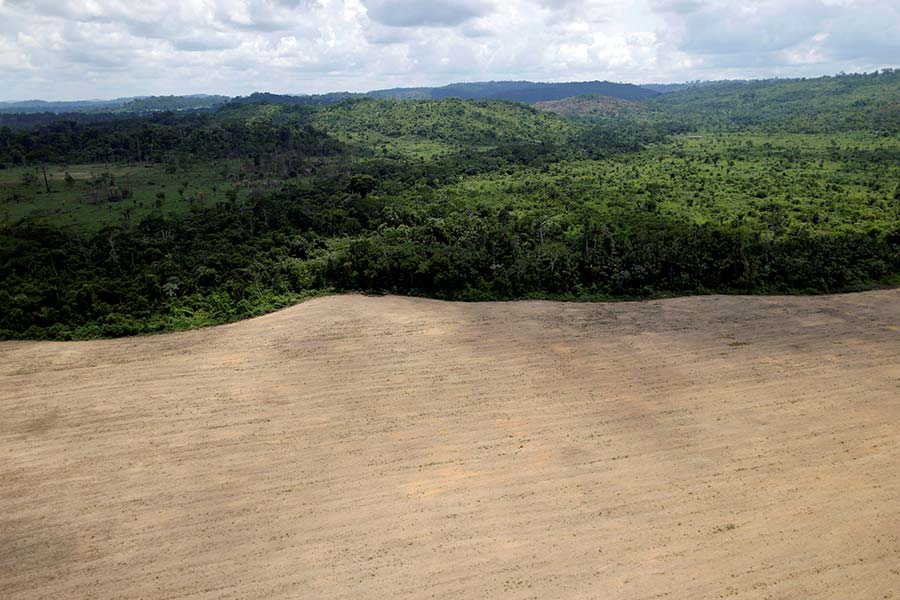
Until four years ago, the approach proved highly effective. Ibama helped to reduce the rate of deforestation by over 80 percent between 2004 and 2012. A mix of satellite imagery and a tough on-the-ground presence made Ibama a highly effective force in the fight against global warming.

Now, there is a sense that Brazil’s target of zero deforestation by 2030 will not simply be achieved with more 4x4s and semiautomatic rifles.

A carrot is needed alongside the stick, officials say. One option being discussed with other ministries, according to Lucero, is to create economic incentives for landowners and communities to preserve their forests. He said details on how this would work were still being finalized.

Persuading towns like Novo Progresso to preserve the rainforest means transforming their culture and economy. It lies on the BR-163 highway that runs north-to-south through the rainforest to join frontier farms with ports in the southeast. Environmental groups estimate 60 percent of Brazil’s Amazonian deforestation happens along this stretch.
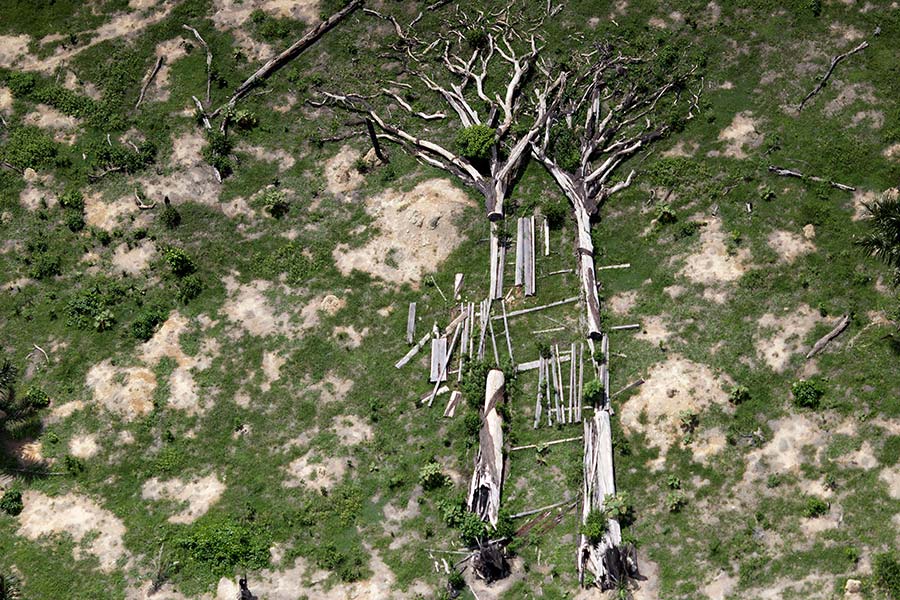
Novo Progresso was one of many towns founded during Brazil’s drive deep into the Amazon during the military dictatorship of the 1970s and 1980s.

Then, cutting down the Amazon to construct roads and towns was patriotic, a means of securing Brazil’s borders. Many also got rich in the process.

Jose Carlos Rovaris, 62, bought his land near Novo Progresso in 1984, leaving his home in the southern state of Santa Catarina for a new life on the forest frontier. “This was all trees when I arrived,” he said, his belly protruding from a scrubby polo shirt as he moved his arm across the land now planted with soy as far as the eye can see. “I cut it down bit by bit, every year a little more.”

The impact of those pioneers is staggering. In 1933, British explorer Peter Fleming described neighbouring Mato Grosso state as “huge tracts of jungle which no white man has even attempted to enter.” Now, it is Brazil’s largest soy producer. Its transformation from jungle to agricultural heartland helped make Brazil the world’s largest exporter of beef and soy.

With that has come increased power in Congress and environmentalists fear President Michel Temer’s government will bow to pressure to ease environmental licensing laws as it aims to rekindle economic growth. The transition from forest to farmland is a devastating double blow for the environment. Trees absorbing CO2 are commonly replaced with methane polluting cattle.

Ibama operates on the limits of a law its agents regard as too soft.
Burning trucks is the most effective deterrent in their arsenal. They do this if the vehicle is on protected land inhabited by indigenous groups or if the truck cannot be removed because the driver has fled or the vehicle is damaged. But those caught cutting down the rainforest never see the inside of a jail cell unless convicted of a more serious, related crime such as money laundering or violence.

Many in Novo Progresso see no other way to get by. “There is nothing else,” said Elis Pereira, 25, at the Ibama office after his truck was burned. Sleep-deprived and famished after days in the forest waiting for the rain to pass, he said the fine and loss of his truck meant he would be “pushed into crime.”

With no new land legally available and farming so mechanized it requires little labour, Pereira is part of a generation growing up in towns like Novo Progresso with scant job prospects. Unless a sustainable source of employment can be created, deforestation is unlikely to stop.

Pereira’s future looks bleak. He bought the truck that is now charred steel for 60,000 reais just six weeks ago. That money was borrowed from the illegal loggers for whom he worked transporting timber.

“I’ll have to let them know,” he said, eyes vacant with exhaustion and fear. “I hope they understand.”

 

New DNA Test Can Detect Slavery in Your T-shirt

Shoppers lured by a bargain-priced T-shirt but concerned about whether the item is free of slave labour could soon have the answer – from DNA forensic technology.

James Hayward, chief executive of U.S.-based Applied DNA Sciences Inc. that develops DNA-based technology to prevent counterfeiting and ensure authenticity, said his researchers have been working in the cotton industry for up to nine years. He said this was prompted by rising concerns about the global cotton industry, that provides income for more than 250 million people, using child and slave labour in harvesting the crop and the during the production process to make clothes.