




From Financial Success to Significance
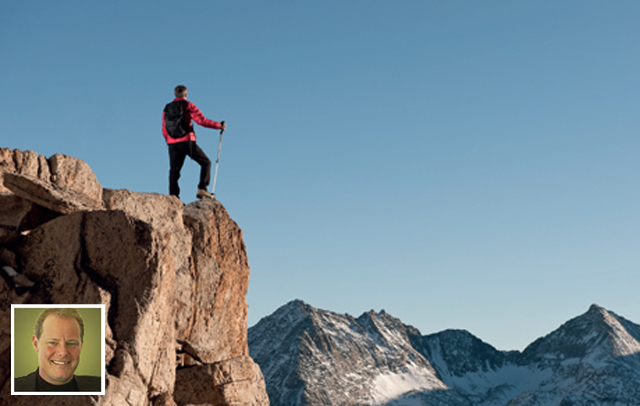
As leaders, many of us think that we’ve already succeeded in one or more aspects of our lives. And we have. Many of us have been blessed with the opportunity to create much financial success for ourselves and those around us. Yet, how many of us will be able to say that we’ve achieved significance when we look back on our lives? As you reflect on your life, what do you want to accomplish?
Have you achieved some life goals beyond financial success? Most of us have developed business plans but very few of us have life plans. Do you feel that you’ve succeeded in areas that are meaningful? Have you left the mark that you would have liked to, in a significant way? Beyond your children, what is your legacy? These might seem like a lot of questions, but asking them now, and setting life goals early in life, is much more empowering than saying on your death bed one day, “If only I’d done more with my life…” after all, we all know that we won’t be saying, “I wish I’d spent more time at the office.”
After many years of sharing ideas with fellow CEOs on life planning, and based on my own personal experiences, I’m convinced that the progression from financial success to an increased focus on significance strikes a true chord with many of us. We all have dreams and goals that are significant on a personal level.
Defining these as part of a life plan that gets revisited often is a process that can help make your dreams a reality, much the same as a business plan helps organizations stay focused. On a broader, global scale how do we, as business leaders, take our time, skills and talent and become real leaders – truly making a difference? Setting personal goals and giving back have been so compelling to me as a father, son, husband, philanthropist and businessman that when I founded my current (and last) company – STS Capital Partners, an international, strategic mergers and acquisitions firm – this was at the core of our mission; that is to help families and entrepreneurs on their path from Success To Significance.
I wanted to start an organization that would help position families directly with strategic investors, resulting in them having the flexibility and liquidity to work more on charitable and other missions; becoming catalysts for the creation of new philanthropic endeavours. There are many successful leaders and consultants available to help others create value and significance, whether it’s maximizing financial assets to enable funds to be channeled to family foundations and charitable causes, or simply accomplishing objectives that are more personal.
Imagine not having any regrets when you reach the end of your life. I have compiled my personal list of best practices on life planning over the years and compiled this into a presentation called Everyone Has Their Own Everest: What Is Yours?. The presentation is not about me, but rather about you. If you had all the time, money, freedom and energy in the world, what would you set as your stretch goals? Why not set them now?
You can achieve almost any goal if you actually re-program your subconscious mind by believing that you are limitless and you can achieve anything you want in life. When I established the goal of climbing the Seven Summits, I had never climbed a single mountain before – that didn’t stop me from setting an ambitious goal.
Doesn’t it seem a lot more prudent to ask the question “what if”, today, and in so doing expanding the view of your life to achieve these goals? Doing this now means you begin to act on them, rather than leaving them floating around as dreams. A practical way of making this happen is to spend a weekend, with your partner, making a list of everything you really want to do before you die. Put a five year deadline on achieving these goals, with a deadline in year four that sees your action plan ready for launch the following year.
This is how you will achieve your goals, and how my partner and myself made it to the top of Everest. It’s hard… but it’s also exciting, empowering and energizing. We have been so conditioned as humans to resist change and not stretch ourselves beyond our comfort zone that we forget what we are capable of. Integrating your life goals with solving some of the world’s problems around us is the next step for many of us.
Many charities and organizations that serve the less fortunate have huge mountains of their own to climb. Helping them reach their summits can often be an important step in creating a lasting legacy for yourself. Everyone has their own Everest, what’s yours?
Rob Follows is CEO and founder of STS Capital Partners. www.stscapital.com
Healthcare heals the planet
James Skogsbergh COO of Advocate Health Care in the U.S. has taken healthcare beyond patients in hospital beds and established green teams that educate hospitals and physicians on environmental awareness and how to minimize waste.
His strategies are nurturing a culture that protects both human and environmental health. The company has an excellent track record for energy management strategies within the hospital industry.
The resulting financial savings and the reduction of emissions are a key part of the company’s commitment to the environmental health of the communities it serves. Every staff member is encouraged to embrace ownership of the company’s sustainability goals during day-to-day operations.
Recognized as one of the top 10 health systems in the United States, Advocate Health Care is the largest fully integrated health care system in the State of Illinois. As a faith-based, not-for-profit organization, Advocate offers over 250 sites of care, including ten acute care hospitals and two integrated children’s hospitals. They are committed to serving the health needs of individuals, families and communities and recognize the inextricable link between a healthy eco system and human health.
They strive to deliver health care that meets today’s needs without compromising the health needs of future generations. Through the commitment of a growing coalition of leaders, physicians and associates, Skogsbergh is leading efforts to mitigate environmental harm and contribute to the wellbeing and health of the communities in which his organization serves. Integrating stewardship, a sense of responsibility for “all that we are, have and do,” is central to their mission and conserving resources and materials that are used on an everyday basis saves dollars that can be reinvested in its healing ministry.
Advocate has adopted industry-leading strategies to reduce harmful environmental impacts on the surrounding communities in which they work. They have developed an Environmental Dashboard which reports quarterly progress on key metrics associated with their annual goals in energy and waste reduction. Skogsbergh has creating a culture of conservation where accountability is hardwired into its 33,000 associates.
They regularly collaborate with health systems nationwide to drive best practices and the organization is one of seven founding health systems, and three environmental non-government organizations, to sponsor the Healthier Hospitals Initiative (HHI), a coordinated sector-wide approach to improve environmental health and safety. The initiative’s straightforward view is that hospitals have a responsibility to minimize the adverse impacts of their operations on patients, staff and the natural environment.
Launched nationally in 2012, its goal is to enroll at least 2,000 hospitals through a no cost commitment to one or more of six challenges: leadership, healthier foods, less waste, leaner energy, safer chemicals and smarter purchasing. Advocate ranks as one of the best performers in medical waste generation across the U.S. and their hospitals recycled 26 percent of its waste last year, reducing the landfill waste by over 30,000 tons.
This translates to saving over 6,243 metric tons of CO2 emissions and equates to removing 1,224 passenger vehicles from the road annually or reducing the equivalent amount of electricity used by 541 homes in one year.
Beyond financial profit
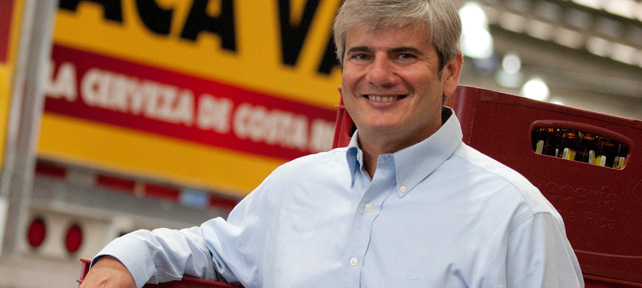
Florida Ice & Farm Co. is one of the few companies around the world that has been able to implement a Triple Bottom Line Strategy. While many companies have sustainability strategies, the truth is that few of them have managed to merge their business strategy with their sustainability strategy. CEO, Ramón Mendiola, has systems in place to measure three types of profitability every month: financial, social and environmental. The company is a Costa Rican holding company with four areas of businesses: beverages & food, real estate & hotels, retail and investments.
The main focus of the business is beverages & food and the company operates from its headquarters in Costa Rica, exporting to 12 countries in Central America and to the U.S. With 10 manufacturing facilities, 17 distribution centers and more than 5,200 employees, sustainability has become an integral part of Florida Ice & Farm Co.’s strategy. In October 2008 Mendiola decided to merge their business strategy with their corporate social responsibility strategy to become a Triple Bottom Line company.
At the end of each month, instead of measuring only one profit indicator (financial), they measure three: financial, social and environmental. During their meticulous planning process, they define strategic priorities for each dimension. For environmental they decided to become water neutral by 2012, reduce electricity consumption, reduce carbon emissions to become carbon neutral by 2017 and become a zero solid waste company by 2011.
They have achieved two of these strategic objectives according to their deadlines and have only their carbon neutral goal left. To help measure their progress in attaining the social, environmental and financial goals the company has set, they use a Sustainability Balanced Scorecard that measures both individual and group achievements.
The results of this scorecard are used to calculate the remuneration of the company’s managers and top executives. Their total performance is measured in three categories, each with its own ratio: 60 percent economic, 30 percent social and 20 percent environmental. Mendiola believes that the main driver behind his organization´s sustainability business practices is really simple, “We believe this is the right way of doing business and one that will create a competitive advantage for our company in the long term.”
He also likes to quote Swiss businessman Stephan Schmidheiny: “It’s impossible to build successful companies in failed societies.” Mendiola’s company has implemented environmental and sustainability initiatives that have become benchmarks in Latin America and around the world.
Their triple bottom line strategy and the way they compensate employees – according to environmental, social and economic indicators – has ensured that the goals they want to achieve are taken seriously by management. It must be working, their techniques have been studied by the World Economic Forum, INCAE, and Harvard’s INSEAD project.
https://notablemagazine.com/uber-launches-the-worlds-first-rideshare-submarine/
The Business of Education in Morocco
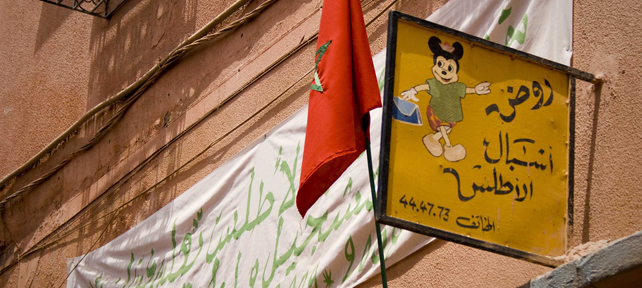
Education is a real issue in Morocco. Around 40 percent of the population is illiterate – not a great scenario for parents wanting to help with their kids education.
Each year, the birth rate adds 640,000 more kids to the system while 380,000 leave school before completing high school. These kids are very often exposed to social exclusion, unemployment and illegal immigration to Europe.
The Sanady Foundation has a solution – for US$260 per child per year. Kacem Bennani-Smires is chairman and CEO of Delassus, a leading grower and exporter of fruit and vegetables in Morocco and he’s developed a unique plan to get companies to fund the education of their employees kids. Morocco is ranked 11th out of 14 countries in the MENA region for educational outcomes (access, equity, efficiency, quality) according to a recent report from the World Bank. Out of 100 students enrolled in primary only 12 will ever get their baccalaureate.
In a society that finds it difficult to implement Corporate Social Responsibility (CSR)successfully, Bennani-Smires came up with a project that kept the funding and target group close: companies that fund the education of their employees’ children. The Sanady Foundation offers free tutoring to public school kids after school, with each class funded by the respective companies that employ their parents.
The foundation helps kids achieve at school and motivates them to complete high school and aims to create an equal opportunity for public school kids, including gender parity. The foundation started with 57 kids in a citrus packhouse in Agadir in 2008 and now supports close to 3,000 kids in five cities across the country. In Morocco, there are no retirement homes, as it’s taken for granted by parents that their kids will take care of them in old age. For these employees, their only hope for a better future is if their kids succeed through studying and becoming something in life.
The first step in achieving this is to obtain their high school diplomas, before going on to do their higher education. In addition to raising the quality of education, the employees are comforted by the fact that Sanady can track their children’s progress when they have no ability to do so, intellectually or financially. The program has shown companies that CSR programs can make sense and also help resolve many of the urgent social needs in Morocco.
It gives companies a simple and tangible method of implementing CSR, without mobilizing extra human resources, as the program is taken care of by the Sanady Foundation, that organizes the classes, does follow-up and reporting. From Bennani-Smires’ own company, Delassus, where the program started, they now have 36 participating companies with the primary goal of acting out their CSR strategies and relying on Sanady to help them.
One of the more important social impacts of the program is that kids aren’t abandoning school. This makes a real difference in Morocco where the dropout rate is extremely high and kids become a problem in society for decades. Schooled kids feel better about school, more confident about themselves and are better prepared to continue with studies after school.
Sanady kids have a better chance to succeed in a career beyond school and thereby offering a better future for their parents too.
https://notablemagazine.com/this-is-what-inspired-me-to-reach-the-womens-world-cup/
Palestine’s first planned city
Rawabi, the first Palestinian planned city, is bringing dignity, pride, economic opportunity and social development to people of the State of Palestine.
The city gives Palestinians an outlet for their knowledge and skills that can be channelled towards building their country. It’s doing this in a way that empowers and engages local communities, making sure that Rawabi contributes to Palestinian social, environmental and economic development.
Bashar Masri is a Palestinian-American entrepreneur, born and raised in Nablus, and founder and managing director of Bayti Real Estate Investment Company, jointly-owned by Qatari Diar Real Estate Investment Company and Massar International – created to build Rawabi. Rawabi is a modern, new city and a landmark project, being both the largest project in Palestinian history and the first Palestinian planned city.
On completion, Rawabi will be home to 40,000 Palestinians and hundreds of businesses, offices, and public recreational areas and will provide new homes for Palestinians. By creating jobs, strengthening the Palestinian private sector and helping to revitalize the economies of villages around it, The city is helping to build a more sustainable world and respect for the environment has been integrated into its values and into the design of the city. For example, it’s designed to be pedestrian-friendly and to maximize the use of public transportation to reduce CO2 emissions. Rawabi is more than just a corporate project.
It’s also a historic, national project for Palestine, and as such, Rawabi needs the support of the Palestinian community to achieve its goals. The city also has a role to play beyond its investors, which explains its activity in corporate social responsibility. Bashar hopes that the social outcomes of their work will infuse dignity, confidence and pride in the Palestinian people, promoting and advancing Palestinian culture by investing in the arts and revitalizing the economies of local communities.
Inspiring and empowering young Palestinians through educational support and training programs, is also key in creating a positive and dynamic national brand for the State of Palestine for the world to see. Rawabi encourages people to experiment and try new things, as long as they work towards the goals of the business.
To give an example, you would see a civil engineer designing a business plan for a new city winery, or an urban planner implementing a smart grid system. While this may seem counterproductive, Bashar thinks that it actually helps develop people’s skills and create connections between everyone involved. This dynamic helps prevent the “silo” mentality that blights many companies.
One of Rawabi’s more interesting aspects is its “no title” policy. Aside from very senior leadership, most employees do not possess official titles. This has created a culture of openness, where even the newest hires engage as equals with more experienced coworkers.
It also reduces corporate politics and ensures that the people who come to Rawabi are mission-oriented and not obsessed with titles. The new city has created construction jobs for thousands of Palestinians, who used to work building Israeli settlements. Today, they can feed their families by working on a project that is building their own country, rather than destroying it.
https://notablemagazine.com/did-we-mishear-neil-armstrongs-famous-first-words-on-the-moon/
The “It” Artist of the Green Movement
Chris Jordan is a photographic artist who uses his artworks to bring awareness to a serious problem of our time – consumerism. Seen from afar his images look like modern recreations of famous masterpieces, but as soon as he approaches the viewer is confronted with thousands of photographs of waste assembled into a beautiful picture. He’s been called “the ‘it’ artist of the green movement” for his ability to send clear messages about mass consumption through beautiful images that end up disgusting the viewer.
But while he’s always been interested in photography, he studied law school and became a corporate lawyer who only dedicated his free time to his favorite hobby. His father, a businessman, had also been passionate about photography and Chris remembers he “was filled with regret” that he couldn’t practice it full time.
So, determined not to repeat his mistake, the young lawyer moved to Seattle, and quit the bar after ten years of practicing law, to dedicate his life to photography. It was definitely a risky move, but definitely an inspired one as the success of his early shows in New York and Los Angeles propelled his career.
Chris Jordan came to tackle consumerism by chance. He had taken photos of a pile of garbage and found it beautiful because of its complexity and great color, but when friends of his, who were active in consumerism, started commenting on it, he got the idea for his future projects.
Using some digital trickery, Jordan manages to assemble his unique images from tens, sometimes hundreds of thousands of waste photographs. Instead of using thousands of individual pieces of garbage, he just uses a few hundred, which are photographed over and over.
It takes him a few weeks to digitally construct one of his images, but if he used individual pieces, it would probably take him a year to complete a project. Jordan recently described his work this way: “Seen from a distance, the images are like something else, maybe totally boring pieces of modern art.
On closer view, the visitor has an almost unpleasant experience with the artwork. It’s almost a magic trick; inviting people to a conversation that they didn’t want to have in the first place.”
www.chrisjordan.com
Is Anyone Following?
Every now and then it’s a good idea to look over your shoulder and check, says author Bill Boyajian.
I was once told a story about a jet airliner that was carrying executives from many countries, including a tribal chieftain from the interior of Brazil. The plane went down in the jungle near the Amazon River. All the leaders survived, but guess who emerged as the one to lead them out of trouble. You got it – the tribal chieftain. He became the leader of the leaders because he knew what to do next, why it was important, and how to bring the resources to bear to get things done. He knew how to lead in that environment, and that was all it took for every executive to get in line and follow him. This simple story illustrates a crucial point. Understanding the context of your leadership – knowing how, when, where, and why you are leading – is critical to your success.
Not every leadership assignment has your name on it, but those that do call for extraordinary action on you part. The key is to be ready and to respond quickly to the call. Knowing how to adapt to one’s environment is a secret to leading. It is also a secret to success. People have long debated whether you can be a good leader without first being a good follower. In My Personal Best, John Wooden emphatically stated, “Before you can be a good leader, you must be a good follower.” In Leadership Jazz, Max DePree put it this way: “While becoming a good follower is not the only way to become a good leader, it can be very important training. If one is already a leader, the lessons of following are especially appropriate. Leaders understand the essential contributions as well as the limitations of good followers. Experience in this case is the best teacher.” I believe you can be a good leader if you understand what it means to follow.
Great leaders also know when to follow someone else’s lead by being open to new ideas and the context of every situation. They must also understand and appreciate the expertise that others bring to the table. Ask yourself this question: Why would anyone want to be led by you? How is it that people call themselves leaders when they don’t have a following? When we become leaders people follow, we demonstrate our leadership through their followership. Said another way, when people look to us for leadership, they validate our lead and affirm our call.
Followership is a natural companion – a true measure – of good leadership. Our job is to communicate – clearly and often – with followers. Followers believe what good leaders say and do, and trust them for what they may not yet know or understand. This isn’t blind faith. It is a faith based on their confidence in those leading, the result of past experiences, and the good character and reputation of those in charge. Employees follow business leaders because they are inspired. Volunteers follow nonprofit leaders because they believe in them and in the cause they represent. One of the greatest mistakes you can make as a leader is to assume that your followers are like you. They aren’t. That’s why they follow. If they were like you, they’d be leading and you might be following. There is nothing wrong with followers. You need them. You can’t be a leader without them.
But you also need to understand how they think and what motivates them to follow. Do that well and you’ll soon be leading. Remember, it’s not how well you think you’re leading. It’s how much your followers believe it. Look over your shoulder from time to time to see who’s following. Often, the first thing to go in times of crisis is our leadership.
In The 21 Indispensable Qualities of a Leader, John Maxwell reminds us: “How a leader deals with the circumstances of life tell you many things about his character.Trusted, Transparent, and Regulated — Trade with TokenTact tokentact bot app. Crisis doesn’t necessarily make our character, but it certainly does reveal it.” Under heat and pressure, carbon can be transformed into a beautiful diamond crystal, or it can turn into common graphite. In the same way, our character can be shaped – one way or the other – by the heat and pressure we face when leading. So character is that deeply seated set of internal qualities that defines us as individuals and determines how we will act (and react) under pressure.
The attributes that characterize each of us will be reflected in the decisions we make in a crisis. These same ingrained traits determine how we will react to temptation, especially when no one else is around or when no one would ever know the outcome of our actions. People of character don’t cut ethical corners; instead, they accept the reality of circumstances and develop strategies to deal with them. They don’t blame others but, rather, do the right thing, not necessarily the easy thing.
True leaders are like tall trees – possessing deep-rooted foundations; the deeper the foundations of their character, the greater their capacity to lead. Character is our inner self, our total being, even – or perhaps especially – when no one is around. Great character almost always leads to great results because people of character are introspective. They are aware of their strengths and their shortcomings. They know how to look deep inside to find the value of virtue but are not swayed by personal power or influence or the lure of self-importance. Better than you may think, followers know your character. They watch you over time and form opinions based on what they see. Those opinions, which are rooted in your character, are reflected in your reputation.
Bill Boyajian is author of the book Developing the Mind of a Leader. Previously president of the Gemological Institute of America, he now provides leadership and business consulting to growth-minded firms. bill@billboyajianassociates.com