From Redlined to Greenlighted: Grubb Properties

This growing multifamily developer delivers essential housing across the U.S.

By Real Leaders


Grubb Properties is on a mission to make a meaningful impact on America’s housing crisis. The 2024 Real Leaders Impact Award winner was founded in 1963 to create housing and ownership opportunities for those who had been redlined from homeownership by banks practicing a form of loan discrimination. Today it continues to focus on housing accessibility through strategic investing, development, leasing, and property management. 

The company’s national Link Apartments brand caters to those in the middle of the income spectrum, targeting communities between new luxury developments and subsidized affordable housing. Grubb Properties is one of few companies in the country to focus solely on this critical market sector.

“We are committed to continuing to improve economic and social mobility for those living in our Link Apartments and to continue to expand housing options in urban areas in America,” CEO Clay Grubb tells Real Leaders.

He attributes the company’s success in part to having a 10-year plan that inspires and guides his team. As for another key? 

“We’re proud of our company culture,” Grubb says. “Working together has always been part of our vision, and this year, our engagement surveys had over 99% of our team members saying they work really well together as their team, and over 99% of our folks said that they would recommend working as part of the Grubb Properties team.”

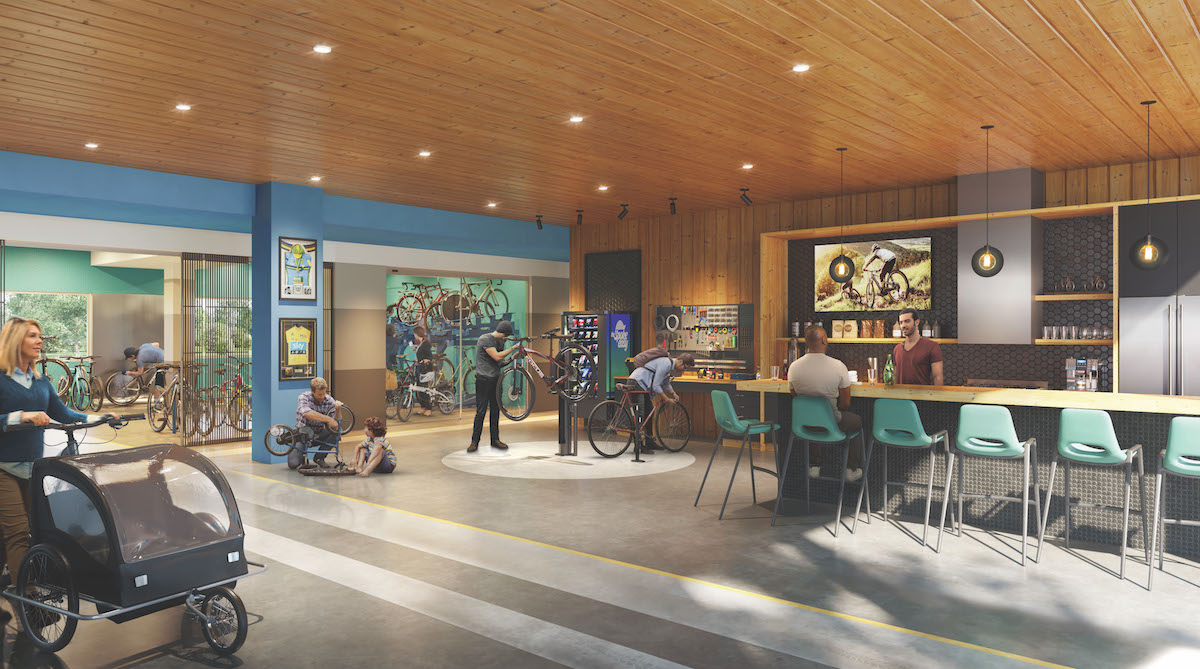
As proponents for alternative transportation, Grubb Properties minimizes its number of parking spots, aiming to stay below one space per apartment on average, as well as to maximize the number of EV charging stations installed in its communities. Its latest multifamily community, 104-unit Link Apartments CYKEL in Charlotte, North Carolina, promotes a car-free lifestyle through a biking-forward design that includes a ground-floor cycle center. The location, next to the Stewart Creek Greenway, bus route, and streetcar line, and a mile from uptown Charlotte, also encourages alternative forms of transportation. Sustain Charlotte recognized it with its Inspiring Building Project award in 2022.

“It’s a great representation of Grubb Properties’ commitment to help solve the housing crisis through creative solutions,” Grubb says. “Reducing development costs is key for private developers like us to be able to build housing that’s more affordable to more people — and building and maintaining parking is far more expensive than many realize. By avoiding the costs of building parking for this new development, we are able to dedicate 50% of the units to be affordable — without using any public subsidy.”

Grubb Properties has integrated environmental, social, and governance priorities across the company’s departments and teams, identifying risks and opportunities in its investments, developments, and operations and management processes, as outlined in its annual ESG report. The company’s six key ESG initiatives are: housing affordability, environmental stewardship, business ethics and integrity, transportation innovation, responsible supply chain, and community engagement. 

“I believe that a positive impact creates the greatest long-term success for our company and our community,” Grubb says. “If you can dream and do — and put those two together — I think you can make a meaningful impact in the world.” 

Measuring Impact

Grubb Properties tracks two primary metrics to measure its impact on the housing crisis and its success in developing sustainable buildings: 

Number of apartments

3,788 Link Apartments units completed, with 4,600 more units in process

Global Real Estate Sustainability Benchmark

68/100: 2023 standing investment benchmark

89/100: 2023 development benchmark

97% of Grubb’s multifamily properties have earned or are pending a green certification
From Redlined to Greenlighted: Grubb Properties

This growing multifamily developer delivers essential housing across the U.S.

By Real Leaders


Grubb Properties is on a mission to make a meaningful impact on America’s housing crisis. The 2024 Real Leaders Impact Award winner was founded in 1963 to create housing and ownership opportunities for those who had been redlined from homeownership by banks practicing a form of loan discrimination. Today it continues to focus on housing accessibility through strategic investing, development, leasing, and property management. 

The company’s national Link Apartments brand caters to those in the middle of the income spectrum, targeting communities between new luxury developments and subsidized affordable housing. Grubb Properties is one of few companies in the country to focus solely on this critical market sector.

“We are committed to continuing to improve economic and social mobility for those living in our Link Apartments and to continue to expand housing options in urban areas in America,” CEO Clay Grubb tells Real Leaders.

He attributes the company’s success in part to having a 10-year plan that inspires and guides his team. As for another key? 

“We’re proud of our company culture,” Grubb says. “Working together has always been part of our vision, and this year, our engagement surveys had over 99% of our team members saying they work really well together as their team, and over 99% of our folks said that they would recommend working as part of the Grubb Properties team.”

As proponents for alternative transportation, Grubb Properties minimizes its number of parking spots, aiming to stay below one space per apartment on average, as well as to maximize the number of EV charging stations installed in its communities. Its latest multifamily community, 104-unit Link Apartments CYKEL in Charlotte, North Carolina, promotes a car-free lifestyle through a biking-forward design that includes a ground-floor cycle center. The location, next to the Stewart Creek Greenway, bus route, and streetcar line, and a mile from uptown Charlotte, also encourages alternative forms of transportation. Sustain Charlotte recognized it with its Inspiring Building Project award in 2022.

“It’s a great representation of Grubb Properties’ commitment to help solve the housing crisis through creative solutions,” Grubb says. “Reducing development costs is key for private developers like us to be able to build housing that’s more affordable to more people — and building and maintaining parking is far more expensive than many realize. By avoiding the costs of building parking for this new development, we are able to dedicate 50% of the units to be affordable — without using any public subsidy.”

Grubb Properties has integrated environmental, social, and governance priorities across the company’s departments and teams, identifying risks and opportunities in its investments, developments, and operations and management processes, as outlined in its annual ESG report. The company’s six key ESG initiatives are: housing affordability, environmental stewardship, business ethics and integrity, transportation innovation, responsible supply chain, and community engagement. 

“I believe that a positive impact creates the greatest long-term success for our company and our community,” Grubb says. “If you can dream and do — and put those two together — I think you can make a meaningful impact in the world.” 

Measuring Impact

Grubb Properties tracks two primary metrics to measure its impact on the housing crisis and its success in developing sustainable buildings: 

Number of apartments

3,788 Link Apartments units completed, with 4,600 more units in process

Global Real Estate Sustainability Benchmark

68/100: 2023 standing investment benchmark

89/100: 2023 development benchmark

97% of Grubb’s multifamily properties have earned or are pending a green certification

Improving Accessibility with Ava

AI captioning empowers deaf people to better participate at work and beyond.


By Real Leaders


Thibault Duchemin grew up with two deaf parents and a deaf sister, interpreting for them since age 5. He witnessed firsthand the accessibility challenges that isolated and excluded his loved ones from participating in the world around them, and he yearned for a better way.

After a life-changing trip to India and a double master’s in machine learning and AI from Ecole des Ponts ParisTech and the University of California, Berkeley, Duchemin was ready to put his skills and determination to work for the deaf and hard-of-hearing community. In 2014 he founded Ava with Skinner Cheng, deaf since age 2, to help create the change they wished to see. Early on, they met with the founders of Google Speech, Siri, and Shazam to learn about where their products fell short.

The Beginning

In 2018, the company merged real-time captioners with AI, reinventing AI-based speech recognition technology, revolutionizing the industry, and changing the structure of professional accessibility. The company pioneered group captioning technology to differentiate multiple voices in a conversation, leading the field and inspiring others to research and develop similar solutions. Ava continues to innovate and advance its speech recognition technology, such as recently adding a feature that allows deaf people to connect on Zoom calls and type their own voice in real time. 

Ava has built among the fastest captioning systems for any conversation, letting any individual or organization be fully accessible to those with hearing limitations on ava.me and on its app. Ava’s award-winning accessibility system is used in some of the world’s largest companies, schools, conferences, and museums for events, meetings, and regular communication. 

Bringing it home, it’s also used by Duchemin’s family.

“I’m super proud to report that my sister uses Ava every day,” Duchemin says. “She became a lawyer and uses it when she goes to trial.”

Of course, there are challenges to adopting the technology, such as convincing employers who may be resistant to change and an added cost. 

Another challenge is that AI poses risks, such as creating deepfakes and applying biases. Ava takes precautions to help mitigate these risks, such as developing real-time differentiation of voices and information.

While AI threatens to replace the jobs of people providing real-time captioning services, he sees the solution in providing training for them to become supersubscribes to handle the trickier conversations and voices that are more difficult for AI to discern.

Ava is always working on its next innovation. “Think of us like tinker innovators in the field of accessibility to bring it further where it was not before and to keep churning new things,” Duchemin says. 

Take Action

Duchemin encourages leaders to make these moves to create a more inclusive, accessible workplace.

  • Accommodate diverse employees’ needs in technology and communication in the office and remotely.
  • Conduct a survey to gather insights on your workforce’s awareness of people with disabilities.
  • Hire an accessibility consultant to help the company work toward inclusivity, and address any biases or stigmas that may exist.
  • Include people with disabilities in decision-making processes. It’s a win-win that will bring more ideas to the table.

Improving Accessibility with Ava

AI captioning empowers deaf people to better participate at work and beyond.


By Real Leaders


Thibault Duchemin grew up with two deaf parents and a deaf sister, interpreting for them since age 5. He witnessed firsthand the accessibility challenges that isolated and excluded his loved ones from participating in the world around them, and he yearned for a better way.

After a life-changing trip to India and a double master’s in machine learning and AI from Ecole des Ponts ParisTech and the University of California, Berkeley, Duchemin was ready to put his skills and determination to work for the deaf and hard-of-hearing community. In 2014 he founded Ava with Skinner Cheng, deaf since age 2, to help create the change they wished to see. Early on, they met with the founders of Google Speech, Siri, and Shazam to learn about where their products fell short.

The Beginning

In 2018, the company merged real-time captioners with AI, reinventing AI-based speech recognition technology, revolutionizing the industry, and changing the structure of professional accessibility. The company pioneered group captioning technology to differentiate multiple voices in a conversation, leading the field and inspiring others to research and develop similar solutions. Ava continues to innovate and advance its speech recognition technology, such as recently adding a feature that allows deaf people to connect on Zoom calls and type their own voice in real time. 

Ava has built among the fastest captioning systems for any conversation, letting any individual or organization be fully accessible to those with hearing limitations on ava.me and on its app. Ava’s award-winning accessibility system is used in some of the world’s largest companies, schools, conferences, and museums for events, meetings, and regular communication. 

Bringing it home, it’s also used by Duchemin’s family.

“I’m super proud to report that my sister uses Ava every day,” Duchemin says. “She became a lawyer and uses it when she goes to trial.”

Of course, there are challenges to adopting the technology, such as convincing employers who may be resistant to change and an added cost. 

Another challenge is that AI poses risks, such as creating deepfakes and applying biases. Ava takes precautions to help mitigate these risks, such as developing real-time differentiation of voices and information.

While AI threatens to replace the jobs of people providing real-time captioning services, he sees the solution in providing training for them to become supersubscribes to handle the trickier conversations and voices that are more difficult for AI to discern.

Ava is always working on its next innovation. “Think of us like tinker innovators in the field of accessibility to bring it further where it was not before and to keep churning new things,” Duchemin says. 

Take Action

Duchemin encourages leaders to make these moves to create a more inclusive, accessible workplace.

  • Accommodate diverse employees’ needs in technology and communication in the office and remotely.
  • Conduct a survey to gather insights on your workforce’s awareness of people with disabilities.
  • Hire an accessibility consultant to help the company work toward inclusivity, and address any biases or stigmas that may exist.
  • Include people with disabilities in decision-making processes. It’s a win-win that will bring more ideas to the table.

Kakariki Capital: Decarbonizing the Planet

Investing in carbon and environmental projects and assets could be key to moving the needle forward.


By Real Leaders

Kakariki Capital is on a mission to decarbonize the planet.

The privately owned, Australia-based company invests in carbon and environmental projects and assets — a new, rapidly expanding sector — from early stage pre-development to de-risked. Kakariki’s philosophy and purpose are reflected in its name, which refers to the color green in Maori and is also a parakeet native to New Zealand fighting to survive despite climate change.

Founder and Chief Investment Officer Izzy Jensen applies close to a decade of experience leading research and origination in carbon and environmental markets to guide Kakariki’s investments in environmental solutions aligned with the United Nations Sustainable Development Goals. Core to its investment thesis is that carbon credits are crucial to achieving net-zero targets, and carbon credits make other global challenges bankable, such as biodiversity. Kakariki looks to identify assets that are fundamentally undervalued due to the complex nature of the carbon market. 

“While value is our major driver, investing behind our values is our passion,” Jensen says. Thus, Kakariki aims for exposure to reputable project developers, impactful projects for the environment, and projects that improve the lives of stakeholders. The organization manages individual management agreements, the wholesale Kakariki Carbon Fund 1.0, and the Kakariki Land Generation Fund.

Carbon Fund 1.0


Kakariki’s Carbon Fund 1.0 is the first fund of its kind in the Australian market that takes a long-term view of carbon credits and related assets. The wholesale, open-ended Australian unit trust invests in high-quality carbon assets and offsets. While the fund focuses on nature-based projects in the international market, it also invests in Australian and compliance market assets.

One key example, Verity Nature is a significant investment in Kakariki’s inaugural fund. As an integrated carbon project developer operating in Australia and East Africa, Verity Nature not only focuses on carbon emissions reduction, but it also prioritizes positive social, cultural, environmental, and economic impacts within the communities in which it engages. Its projects create employment opportunities, support local communities, and generate wealth through wages, taxes, and business ventures while simultaneously removing carbon emissions and restoring biodiversity. 

Land Generation Fund


Kakariki recently launched its own land generation fund to acquire and steward land assets with substantial carbon sequestration potential. By employing innovative practices and technologies, it aims to maximize carbon offset generation while fostering biodiversity conservation.

“This will have a huge impact on restoring cleared and degraded land and enhancing biodiversity,” Jensen says. The fund’s overarching goal is to promote the harmonious coexistence of agricultural and carbon farming with a targeted distribution yield of 6–7% per annum, offering investors the option to generate income from cash, Australian carbon credit units, or other environmental credits with a targeted 12–14% total internal rate of return. 

Looking ahead, Jensen says there’s no time to waste when it comes to decarbonizing the planet. “In the imperfect landscape of carbon and environmental markets, perfection is a luxury our climate and planet cannot afford,” Jensen says. “It’s imperative to act now to simultaneously reduce emissions and offset our environmental impact. Let us harness every available tool at our disposal to forge a sustainable path forward for the sake of our planet and the generations to come.” 

Recognition for Collaboration


Kakariki earned a 2024 Real Leaders Impact Award for Best Collaboration with Impact Outfit. Impact Outfit, also based in Australia, supports family offices, foundations, and funds to use business and capital for positive impact. It works with clients on strategy and advisory, stakeholder engagement, and experience design and curation. The partnership advanced both companies’ sustainability goals while fostering mutual growth and success. 

When Kakariki was a newly established carbon fund, it sought guidance from Impact Outfit to maximize its impact and reach and to create and nurture sustainable relationships with investors and family offices. Leveraging Impact Outfit’s expertise in the impact investment space, the collaboration enabled Kakariki to identify high-impact investment opportunities and build a network of values-aligned potential partners.

“The collaboration was meaningful to us because when Kakariki first started, we didn’t really know what the impact space was,” Jensen says. “We just saw this as a financial opportunity that obviously did good. Then we learned that there was this whole group of investors and this way of thinking about having a positive impact.”

Conversely, Impact Outfit gained experience and exposure through its partnership with Kakariki. By working closely with Jensen, Impact Outfit expanded its portfolio of impactful clients and built expertise in a nascent and important new market. It gained firsthand insights into the complexities of carbon offsetting and sustainable investment, enhancing its ability to advise clients on navigating similar challenges.

Kakariki Capital: Decarbonizing the Planet

Investing in carbon and environmental projects and assets could be key to moving the needle forward.


By Real Leaders

Kakariki Capital is on a mission to decarbonize the planet.

The privately owned, Australia-based company invests in carbon and environmental projects and assets — a new, rapidly expanding sector — from early stage pre-development to de-risked. Kakariki’s philosophy and purpose are reflected in its name, which refers to the color green in Maori and is also a parakeet native to New Zealand fighting to survive despite climate change.

Founder and Chief Investment Officer Izzy Jensen applies close to a decade of experience leading research and origination in carbon and environmental markets to guide Kakariki’s investments in environmental solutions aligned with the United Nations Sustainable Development Goals. Core to its investment thesis is that carbon credits are crucial to achieving net-zero targets, and carbon credits make other global challenges bankable, such as biodiversity. Kakariki looks to identify assets that are fundamentally undervalued due to the complex nature of the carbon market. 

“While value is our major driver, investing behind our values is our passion,” Jensen says. Thus, Kakariki aims for exposure to reputable project developers, impactful projects for the environment, and projects that improve the lives of stakeholders. The organization manages individual management agreements, the wholesale Kakariki Carbon Fund 1.0, and the Kakariki Land Generation Fund.

Carbon Fund 1.0


Kakariki’s Carbon Fund 1.0 is the first fund of its kind in the Australian market that takes a long-term view of carbon credits and related assets. The wholesale, open-ended Australian unit trust invests in high-quality carbon assets and offsets. While the fund focuses on nature-based projects in the international market, it also invests in Australian and compliance market assets.

One key example, Verity Nature is a significant investment in Kakariki’s inaugural fund. As an integrated carbon project developer operating in Australia and East Africa, Verity Nature not only focuses on carbon emissions reduction, but it also prioritizes positive social, cultural, environmental, and economic impacts within the communities in which it engages. Its projects create employment opportunities, support local communities, and generate wealth through wages, taxes, and business ventures while simultaneously removing carbon emissions and restoring biodiversity. 

Land Generation Fund


Kakariki recently launched its own land generation fund to acquire and steward land assets with substantial carbon sequestration potential. By employing innovative practices and technologies, it aims to maximize carbon offset generation while fostering biodiversity conservation.

“This will have a huge impact on restoring cleared and degraded land and enhancing biodiversity,” Jensen says. The fund’s overarching goal is to promote the harmonious coexistence of agricultural and carbon farming with a targeted distribution yield of 6–7% per annum, offering investors the option to generate income from cash, Australian carbon credit units, or other environmental credits with a targeted 12–14% total internal rate of return. 

Looking ahead, Jensen says there’s no time to waste when it comes to decarbonizing the planet. “In the imperfect landscape of carbon and environmental markets, perfection is a luxury our climate and planet cannot afford,” Jensen says. “It’s imperative to act now to simultaneously reduce emissions and offset our environmental impact. Let us harness every available tool at our disposal to forge a sustainable path forward for the sake of our planet and the generations to come.” 

Recognition for Collaboration


Kakariki earned a 2024 Real Leaders Impact Award for Best Collaboration with Impact Outfit. Impact Outfit, also based in Australia, supports family offices, foundations, and funds to use business and capital for positive impact. It works with clients on strategy and advisory, stakeholder engagement, and experience design and curation. The partnership advanced both companies’ sustainability goals while fostering mutual growth and success. 

When Kakariki was a newly established carbon fund, it sought guidance from Impact Outfit to maximize its impact and reach and to create and nurture sustainable relationships with investors and family offices. Leveraging Impact Outfit’s expertise in the impact investment space, the collaboration enabled Kakariki to identify high-impact investment opportunities and build a network of values-aligned potential partners.

“The collaboration was meaningful to us because when Kakariki first started, we didn’t really know what the impact space was,” Jensen says. “We just saw this as a financial opportunity that obviously did good. Then we learned that there was this whole group of investors and this way of thinking about having a positive impact.”

Conversely, Impact Outfit gained experience and exposure through its partnership with Kakariki. By working closely with Jensen, Impact Outfit expanded its portfolio of impactful clients and built expertise in a nascent and important new market. It gained firsthand insights into the complexities of carbon offsetting and sustainable investment, enhancing its ability to advise clients on navigating similar challenges.

Paris 2024 Olympics: Wins for People and Planet

The Paris 2024 Olympics commmittee set ambitious goals for its most united, sustainable Games yet.


By Real Leaders


The Paris 2024 organizing committee has set out to establish a new model for the Olympic and Paralympic Games, pledging to deliver an ambitious, universal event that is more responsible, sustainable, united, and inclusive. 

“We are collectively building a new model for the Games to ensure they control their impact on their surroundings as well as the entire planet, bring people together and are inclusive, frugal and sustainable,” says Tony Estanguet, president of the Paris 2024 Organizing Committee for the Olympic and Paralympic Games.

From the bidding phase, the committee put legacy and sustainability at the center. Signing a social charter with social partners, aligning with the Paris Agreement to reduce greenhouse gas emissions, and organizing the Olympic and Paralympic Week are a few examples of steps it took starting in 2017, seven years out.

“Our ambition is clear — to demonstrate that environmental and social excellence is not only  necessary, but also a source of strength,” says Marie Barsacq, impact and legacy director of the organizing committee for the Games.

Paris 2024 is the first Games in history to devote such attention to climate and environmental considerations so early on. Using 95% existing or temporary venues minimizes its environmental impact. Reducing the number of new build projects means significantly restricts the carbon footprint and gives center stage to French architecture by transforming Paris’ landmarks into sporting arenas. 

“We decided to seize the Paris 2024 Olympic and Paralympic Games as an opportunity to combat and adapt to climate change and address the urgent need to protect and regenerate biodiversity,” says Georgina Grenon, environmental excellence director of the organizing committee. “This sincere, firm commitment has guided us and united everyone involved in the Games and the sporting movement since the bid phase.”

Where emissions cannot be avoided, Paris 2024 is implementing a voluntary compensation plan across a wide scope that includes the international impact of spectator travel.

The projects chosen meet stringent international certification requirements. Beginning in 2021, these efforts involve carbon capture projects to restore and protect forests and oceans, as well as avoidance projects that, for example, install more environmentally friendly wood burners in homes that still rely on rudimentary cooking equipment. The committee pledges to offset even more emissions than the Games generate by supporting additional projects in France, boosting biodiversity and improving quality of life. 

To halve the emissions arising in relation to the Games, Paris 2024 will leverage frugality, efficiency and innovation. Paris 2024 endeavors to identify, trial, and develop innovative solutions working with everyone involved to deliver responsible Games. Such initiatives include using 100% renewable energy during the Games, the circular economy, sustainable food sourcing, responsible digital technology, clean mobility solutions for the Olympic fleet, public transport and environmentally friendly means of transport for spectators, biodiversity protection, and water management. 

The organizing committee goes on to say, “Sport brings together 3.5 million volunteers in France, evokes a range of unique emotions with 2.5 million events taking place every year, and showcases its positive impact on society day in, day out across the 180,000 sports clubs nationwide that promote education, integration, gender equality, and cohesion. However, the world of sport — like all other spheres of human activity and parts of society — needs to undergo an environmental transformation. 

“Moreover, we firmly believe that sport can be harnessed to build a more sustainable society in which people demonstrate greater solidarity and are more mindful of nature and biodiversity.

Sport enables us to take in the beauty of our surroundings and understand why we need to protect the environment; it offers an excellent pollution-free mode of transport; it uses the food we eat as a source of fuel; it makes us realize the importance 

of getting fresh air; and it is a form of entertainment that enables people to create memories around a common experience rather than limitless consumption. 

“By ensuring we set our own benchmark, accelerating the roll-out of innovative solutions for spectacular and sustainable events, as well as working with everybody in the Paris 2024 family so that our methods and achievements leave a tangible and intangible legacy. This plan is the result of the work undertaken by everyone involved in Paris 2024 since the bid phase and highlights the distance we still have to travel together.”

Gifts for Good: Real Leaders’ Summer Shopping Cart

We have plenty of bright ideas for your shopping cart this summer. All of these products are made by 2024 Real Leaders Top Impact Companies, so you can rest assured — preferably poolside — knowing that your purchases are making a splash for good.


By Real Leaders

Get One, Give One: Soap with Hope

Smell sweet and feel even sweeter about the mission you’re supporting with Soapbox’s naturally derived bath and body products. For every item sold, the company donates a bar of soap to someone in need. Plus, products are made with 100% recyclable packaging. Try the Coconut Oil Hydrating Shampoo and Conditioner, pictured, after a day in the sun. 


Beat the Heat: Righteous Gelato 

Righteous Gelato makes flavorful small-batch gelato and sorbet without artificial ingredients. The cherry on top? It’s giving back along the way by donating 1% of its revenue to charity, using sustainable packaging, and diverting 95% of its waste away from landfills. Cool off with a refreshing scoop of Dairy Free Raspberry Lime Sorbetto or Dairy Free Blueberry Limeade Sorbetto, pictured. 


Getaway for Good: Better Leather Bags

Parker Clay sells quality handmade sustainable leather bags, wallets, and other accessories. Premium, full-grade Ethiopian leather is ethically sourced from food animals and is crafted with the environment in mind. The company employees at-risk Ethiopian women, paying living wages and providing benefits. Take the San Ysidro Weekender, pictured, on your next trip. 


Sustainable Sipping: Finer Wine

In the Oak Knoll District of Napa Valley, California, Trefethen Family Vineyards is among the first wineries to use carbon capture technology as well as to fully offset its electricity usage with on-site solar power, earning the 2022 California Green Medal Environmental Award. Pour a glass of S.I.N. Summer in Napa Rosé, pictured, and kick back with a good book. 


Poolside for the Planet: Swimmingly Good Bathing Suits

Period underwear company Pantys offers stylish swimsuits for comfortable, sustainable, leak​-proof protection in the water. Bonus: Pantys’ products minimize environmental impact, so they’re carbon-neutral and made with biodegradable fabrics that decompose in three years. Take the Triangle One-Piece, pictured, for a swim. 

Gifts for Good: Real Leaders’ Summer Shopping Cart

We have plenty of bright ideas for your shopping cart this summer. All of these products are made by 2024 Real Leaders Top Impact Companies, so you can rest assured — preferably poolside — knowing that your purchases are making a splash for good.


By Real Leaders

Get One, Give One: Soap with Hope

Smell sweet and feel even sweeter about the mission you’re supporting with Soapbox’s naturally derived bath and body products. For every item sold, the company donates a bar of soap to someone in need. Plus, products are made with 100% recyclable packaging. Try the Coconut Oil Hydrating Shampoo and Conditioner, pictured, after a day in the sun. 


Beat the Heat: Righteous Gelato 

Righteous Gelato makes flavorful small-batch gelato and sorbet without artificial ingredients. The cherry on top? It’s giving back along the way by donating 1% of its revenue to charity, using sustainable packaging, and diverting 95% of its waste away from landfills. Cool off with a refreshing scoop of Dairy Free Raspberry Lime Sorbetto or Dairy Free Blueberry Limeade Sorbetto, pictured. 


Getaway for Good: Better Leather Bags

Parker Clay sells quality handmade sustainable leather bags, wallets, and other accessories. Premium, full-grade Ethiopian leather is ethically sourced from food animals and is crafted with the environment in mind. The company employees at-risk Ethiopian women, paying living wages and providing benefits. Take the San Ysidro Weekender, pictured, on your next trip. 


Sustainable Sipping: Finer Wine

In the Oak Knoll District of Napa Valley, California, Trefethen Family Vineyards is among the first wineries to use carbon capture technology as well as to fully offset its electricity usage with on-site solar power, earning the 2022 California Green Medal Environmental Award. Pour a glass of S.I.N. Summer in Napa Rosé, pictured, and kick back with a good book. 


Poolside for the Planet: Swimmingly Good Bathing Suits

Period underwear company Pantys offers stylish swimsuits for comfortable, sustainable, leak​-proof protection in the water. Bonus: Pantys’ products minimize environmental impact, so they’re carbon-neutral and made with biodegradable fabrics that decompose in three years. Take the Triangle One-Piece, pictured, for a swim. 

The Intersection of Love and Leadership in Business: Insights from Greg Harmeyer

Here’s how leaders can reimagine their business culture for the better.


By Real Leaders


Introduction

Greg Harmeyer, the CEO of Tier 1 Impact, shares profound insights into leadership, hiring practices, and the often-overlooked concept of love in business. In a candid conversation with Kevin Edwards, Harmeyer delves into how these components intersect and drive long-term organizational success.

Surviving the Early Years

Entrepreneurship often involves navigating existential challenges. Harmeyer acknowledges the fear of transparency during tough times but emphasizes the importance of honesty. By sharing the reality of the business’s situation with the team, leaders can build trust and commitment. People are more likely to stay and contribute to the company’s recovery if they feel genuinely included and valued.

Evolving Hiring Practices

In the early years, Tier 1 primarily hired through personal networks. While fostering trust and connectivity, this approach had limitations, particularly in scaling and diversity. Over time, Harmeyer’s hiring strategy evolved to focus on identifying candidates’ strengths and passions rather than merely filling specific job postings. By aligning roles with individual talents and interests, Tier 1 nurtured innovation and growth from within.

Onboarding and Long-Term Commitment

Harmeyer subscribes to the philosophy of “hire slow, fire fast,” but with a nuanced approach. While careful hiring is crucial, he believes in giving employees ample time and support to succeed. Trust from day one, accountability, and continuous effort are key. A long-term outlook fosters a supportive environment where employees can thrive and contribute significantly.

The Role of Love in Leadership

Harmeyer’s book, Impact With Love, underscores the importance of caring for employees beyond transactional relationships. True leadership involves caring for individuals despite what it may mean for you personally. This creates a magnetic, trust-based culture where people are motivated to contribute to the organization’s success. Harmeyer argues that love in leadership isn’t about leniency but about fostering a genuinely supportive and connected environment.

Balancing Empathy and Performance

Balancing empathy with performance metrics can be challenging. Harmeyer believes in embracing the tension between achieving business goals and caring for people. He advocates for transparency about performance expectations while maintaining a supportive culture. Organizations should avoid quick layoffs as they damage trust and long-term performance. Instead, leaders should focus on sustainable strategies that prioritize both human and business needs.

Personal Reflections on Leadership

Harmeyer describes himself as calm and supportive during challenging times, which he sees as his strength. Conversely, he acknowledges that irritability and impatience are his weaknesses. Maintaining empathy helps him stay centered and effective as a leader. He emphasizes that truly understanding and caring for the people in your organization fosters a healthier and more resilient business.

Conclusion

Greg Harmeyer’s insights highlight the profound impact of empathetic and love-centered leadership on organizational success. By prioritizing human connections and trust, leaders can navigate challenges more effectively and build a thriving, committed workforce. His approach underscores that genuine care and performance are not mutually exclusive but rather complementary forces that drive long-term success.

0