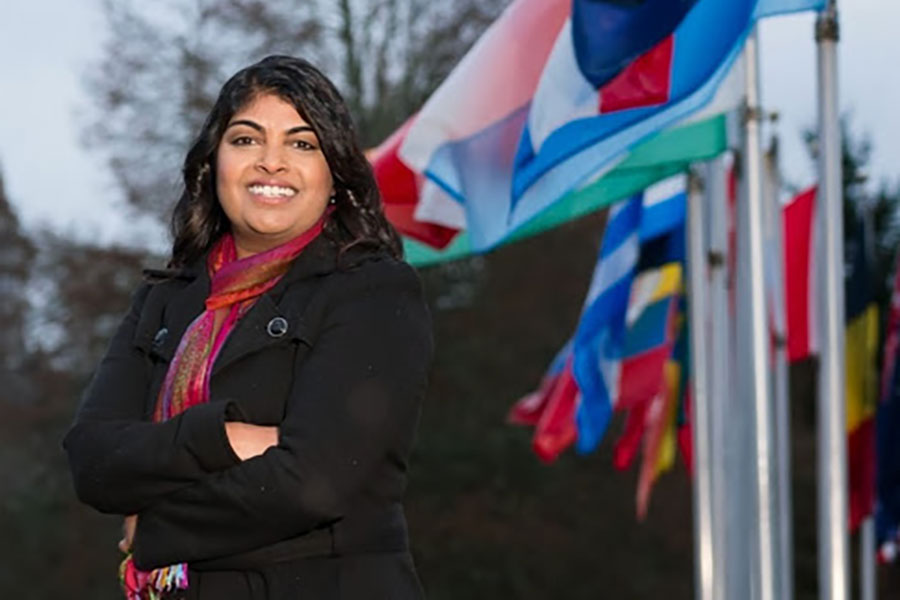
Sold for $90: The Girl Who Went from Slave to CEO


  • Rani Hong has gone from a slave to the CEO of a global organization, who speaks regularly at the United Nations.
  • Moving from a victim to a leader, she is leading an international awareness campaign on human trafficking to help stamp it out.
  • She believes that many companies might support child labor without even realizing it.
  • Hong and her husband have developed the Freedom Seal – a qualification awarded to companies that have examined their supply chains and found them free of slave labor.

At age seven, Rani Hong was taken from her mother by a kindly neighbor who promised to give her an education, something her poverty-stricken family could never afford. After a few months, Hong disappeared, sold into slavery by her supposed caregivers, who were actually a front for a child slavery syndicate. It would be 21 years before Hong would see her mother again.

Worldwide it’s estimated that between 21 and 30 million people are victims of human trafficking. And it’s not something restricted to poor countries either, at least 127 countries have active human trafficking networks, with recruitment often carried out by nationals of the same country as the victims. In the United States more than 100,000 children are trafficked every year.

Hong is one of the lucky ones. After being shipped out of slavery in India to Canada, she eventually found freedom, but didn’t wallow in victimhood for long. Instead, she decided to devote the rest of her life to raising awareness around human trafficking and slavery. She founded the Tronie Foundation with her husband Trong Hong, and together they have set out to make companies aware of their role in the slave trade.

“I tell my story because there are millions of children just like the little girl that I was – enslaved, imprisoned, beaten and not able to speak. I speak for them, to give them a voice,” says Hong.

While there are thousands of dedicated people and organizations around the world fighting human trafficking and helping victims, the Tronie Foundation is the only one founded by two former victims. They are working to include a “survivor voice” in the solution to this global scourge. While most are shocked by the statistics and scale of modern-day slavery, people have responded most strongly to their firsthand account of what happened to them.

rani-hong-2 slave to CEO

While 79 percent of human trafficking is made up of girls and women who are sexually exploited, the remaining 21 percent are forced labor. “That’s around 21 million people,” says Hong. “Another 19 million victims are exploited by private individuals and enterprises.”

Many CEOs will condemn slavery without realizing that their company might be part of the problem. Unknown to them, forced labor might be part of a supply chain that produces their goods.

“You’ll find children in the agricultural industry, in the chocolate industry, forced labour within our supply chains,” says Hong. Private individuals and enterprises are exploiting million of victims, and we need to bring this to the attention of CEOs around the world. It can destroy reputations and damage brands among consumers,” she explains. The abuse sometimes happens in a third world country, out of sight to Western corporations, where a child might carry bricks for construction, or pick cocoa beans that we eventually eat as chocolate.

“I don’t know how much I was sold for, but today we know of children being sold for as little as US$90,” says Hong. Human trafficking is a massive industry worth an estimated US$150 billion, yet the price that trafficked children pay is incalculable, their lives are ruined and they rarely return to any semblance of normality. “ If they’re lucky and break free of slavery, the trauma, physical and psychological damage is for life,” says Hong.

While Hong was a wreck at first from her ordeal, it took the support and encouragement of a woman in Washington to help her believe in herself again and to help get her voice heard. “Someone like her, a mentor, has really helped,” says Hong. “Love and care from others has helped me heal.”

Hong served as a UN special advisor for a global initiative to fight human trafficking. She has presented several UN general assembly speeches, one of which saw her lead a global plan of action in 190 countries. Not bad for someone who was once kept in a cage and traumatized to the point that her captors considered her worthless. Hong also initiated the first World Day Against Trafficking and Persons, which is now marked on July 30th every year.

The increased awareness is welcome, but there’s still a long way to go. Some countries impose $500 fines on companies caught exploiting children. “That’s just a slap on the wrist,” says Hong. Convictions are rising, but in most countries conviction rates rarely exceed 1.5 per 100,000. This is even below the conviction rate for kidnapping in Europe, with 2007-08 statistics showing that two out of every five countries globally had not recorded a single conviction for human trafficking.

The Tronie Foundation has created a more proactive way of fighting this scourge. Called the Freedom Seal, the goal is to help businesses become more active in identifying and fighting human trafficking. The Freedom Seal is designed as a visual marker that businesses can use to clearly communicate to consumers that they have due diligence mechanisms in place and are actively taking steps to prevent forced labor and human trafficking in their practices. Company’s love boasting about awards and accolades and this is one that Hong hopes CEOs will want to add to their trophy cabinets.

It’s not enough for only companies to get involved, countries need to legislate too. South Africa recently banned children travelling through its borders without parents presenting unabridged birth certificates. The U.K. passed the Modern Slavery Act in March, an act closely modeled on the California Transparency Act, that requires companies to report how they are eliminate forced labour within supply chains.

“Research shows that if criminal syndicates and gangs are involved in human trafficking, there is a high likelihood that they’re also involved in drug smuggling, the trade of endangered species and illegal weapons,” says Hong.

“When we fight human trafficking, we are also preventing other illegal activities. Businesses and consumers can really make a positive difference by taking action,” she says. If Rani Hong can do it, then so can we.

8 signs of possible modern day slavery

  1. Deception in the recruitment process and/or false promises about the terms and conditions of employment.
  2. Excessive recruitment fees charged to workers.
  3. Confiscated or withheld identity documents or other valuable personal possessions.
  4. Withheld or unpaid wages.
  5. Unexplained or excessive deductions from wages resulting in induced indebtedness.
  6. Imprisonment or physical confinement in the workplace or related premises such as employer-operated residences.
  7. Deprivation of food, shelter or other necessities.
  8. Physical or sexual abuse, harassment or psychological intimidation.

Learn more about the Tronie Foundation or apply for the Freedom Seal here
How Sustainable Luxury Can Save The Planet


  • The CEO of a luxury jewelery company joins an ocean conservation organization and realizes that business should have a social conscience.
  • She creates a yearly award for luxury goods manufacturers that practice sustainability, in the hope that it will influence the entire industry.
  • While luxury has always been associated with wealth, it’s discernment that is actually more important today.
  • Maria Eugenia Girón devises clever marketing ideas to raise awareness around the environment and to get consumers to change bad habits.

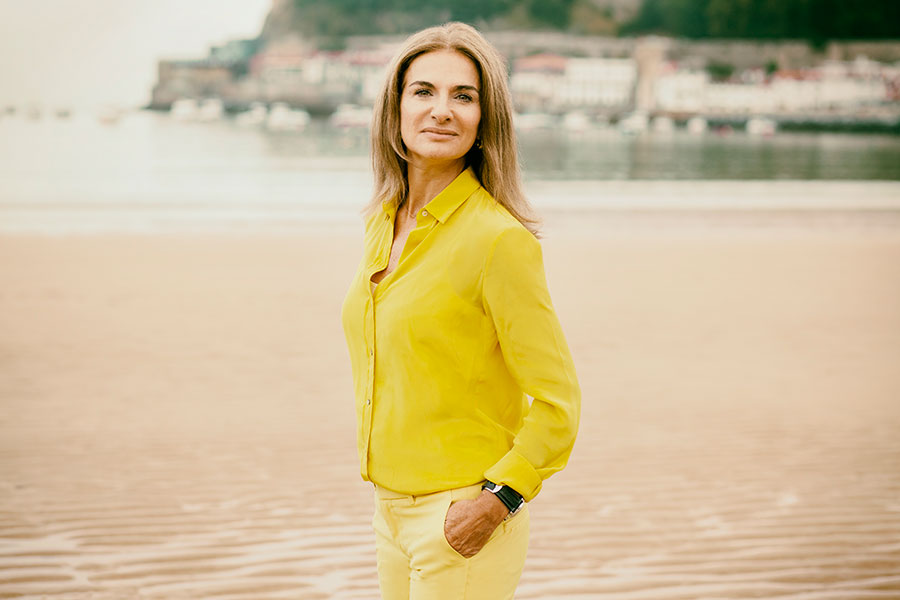
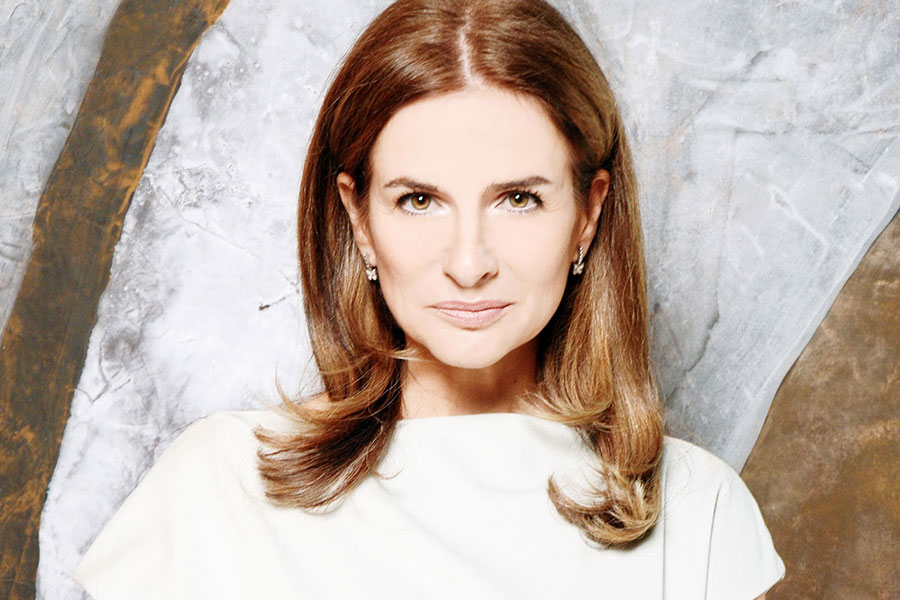
“I didn’t start my business to just make money for myself, I started it to change the world.” These are the words that inspire Maria Eugenia Girón of Madrid, the co-founder of the IE Award for Sustainability, an annual event that honors entrepreneurs who produce premium and luxury goods with a conscience. She was told this by one of the award winners many years ago, and it’s proof that she’s on the right track.

After running a premium global jewelery company for seven years and focusing solely on growth and making it more valuable she sold the company and was invited to join the board of Oceana, a global organization dedicated to protecting the world’s oceans. It was a turning point in her life. Through her work at Oceana, Girón began to see how things could be changed for the better, especially through science, regulation and by making the consumer more aware. Ironically, the environmental lessons she learnt turned her right back to a sector she’d just left behind – luxury goods.

“My business experience as executive and CEO, my expertise in building global brands and my current involvement with several companies as a board member, provided the best platform to drive change. Sustainability, business and brand value reinforce each other within luxury. The sustainable use of resources and social responsibility have become the new competitive advantage in building long term value,” she says.

maria-giron-2

The luxury industry typically conjures up images of opulence and wasteful extravagance, but each year Girón has found a handful of brands that are proving otherwise, and not delivering short on their promise of luxury either.

“The more information consumers have about the impact their purchases are having on the planet, the more discerning and aware they’ll become about making choices,” she says. The awards that she and co-founder Miguel Angel Gardetti hand out every year aim to show how luxury brands are making progress with sustainability, in the hope that it will inspire others into action.

Girón feels that true luxury has certain criteria, that lend itself well to sustainability. “Historically, products were made to last forever, by people who were dignified because they were craftsmen,” she explains. “They saw their work through from beginning to end and were respectful to the raw materials they used.”

The great news for luxury is that there’s a renewed interest in how a product is made and where it’s from, something that has pointed many consumers towards luxury goods. The rise of technology has also allowed us to personalise products, much like our grandparents did, and thanks to the internet, we now have one-to-one service – just like the old days.

“The reality of luxury is keeping the supply chain, waste and labor very austere internally when producing the goods, while portraying an image of abundance and playfulness when building an image on the outside,” says Girón.

You don’t have to be wealthy to enjoy luxury either, according to Girón.

“Discernment is more important,” she says. “This will allow you to enjoy a well made product, good service and an appreciation of the history behind it, with knowledge about the craftsmen who made it or the precious materials that were used.”

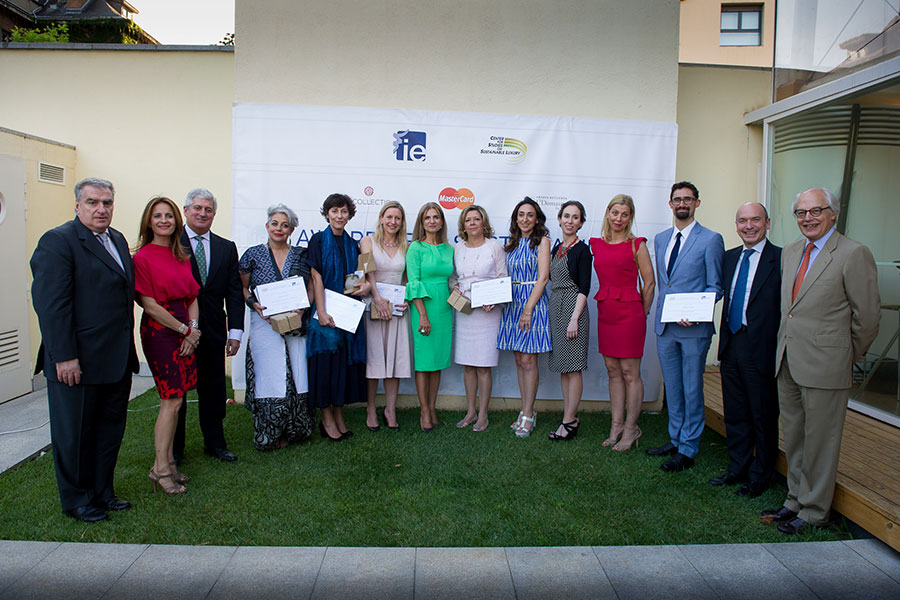
The 2015 winners of the IE Awards for Sustainability in the Premium and Luxury Sectors.

The 2015 winners of the IE Awards for Sustainability in the Premium and Luxury Sectors.


The world seems to be divided on luxury. Many emerging economies have rising middle classes who want to flaunt their new wealth with obvious adornments that they have “arrived.” The “old money,” that have enjoyed generations of financial wealth don’t feel the need to show off quite as much, and prefer to buy goods that give them personal enjoyment. One country that’s flaunting its new money right now is China. Yet, Girón feels that nearby Japan will influence China towards a deeper and more sustainable view on luxury. “After the tsunami and nuclear crisis we’ve seen a definite move by Japanese consumers towards brands that are more healthy and traceable,” she says. “Japans luxury goods sector is expected to grow by five percent in 2015, mostly from Chinese tourism. Japan’s new values will definitely have an influence on Chinese visitors, and help align consumer attitudes in a more responsible way.

Every year, Girón measures ten things that have the biggest impact on the luxury goods industry – according to CEOs, investors and analysts. Last year the key word to emerge was “experience.” It’s a tough ingredient to capture, but the data has shown that some of the experiences include personalization, human touch and a “wow factor.” Millennials especially, are looking a product that delivers the unexpected. This trend favors businesses with social impact because these types of companies always have great stories around how their products are made and are meaningful.

One example of experience marketing is a Spanish jewellery company that has collaborated with a museum to explain their gems to tourists using works of art.

Another is restaurants and chefs that have teamed up with an opera house to create experiential dining experiences around a theatrical production. Owning a product is not enough any more. People crave a meaningful experience that goes beyond the expected.

As a board member of Oceana, Girón has a vision to help generate enough protein from seafood to feed the expected 9 billion people on planet earth by 2050. Rather than trying to change billions of people’s eating habits, Girón inspired Oceana’s team to chose a more focused route. Realizing the power of role models, they brought together 20 of the world’s leading chefs at the Basque Culinary Center in San Sebastian where they pledged to become ambassadors and leaders for sustainable seafood cooking.

“This is an example of how luxury cuisine is going beyond the normal delivery of good food,” says Girón. “It gives a new meaning to luxury goods: sustainable, healthy and responsible.”

Read more about the Luxury Awards here

Here’s An Idea For Saving The Rainforests: Buy One

  • A family decides to invest in a rainforest in Ecuador, believing they can preserve it for future generations.
  • Rather than hide it away, a sustainable business model is drawn up that sees it become a highly visible a tourist lodge.
  • Miguel Sevilla believes that rarity is a powerful marketing tool and that different conservation practices should apply to large and small destinations.
  • Conservation is a problem we should all take seriously, regardless of where we live. After all, we all breathe the same air.

Most people who seek investment opportunities with decent returns will put their money into real estate, jewellery, art, shares, bonds or a promising Silicon Valley startup. Miguel Sevilla’s family decided instead to buy a patch of rainforest in Northwest Ecuador. The land is untouched, a pristine piece of earth made up of primary jungle, or virgin forest, as we like to call it in the West. Secondary jungle, that has seen human intervention exists alongside, and while still beautiful, is less rare.

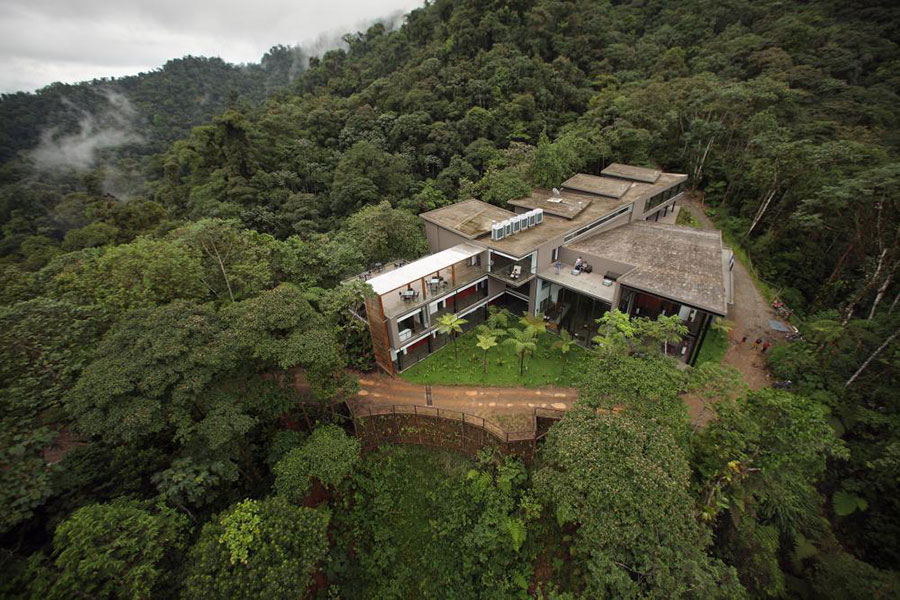
Clearing the land for cattle ranching, farming or logging might deliver fast, short-term profits, but the Sevilla’s think it’s a much better investment left untouched. They also decided to create a unique hotel to give people from around the world an opportunity to appreciate its beauty and better understand why rainforests are important.

Every hour, 6,000 acres of rainforest are cut down. That’s the equivalent of 4,000 football fields. Trees are not just nice to look at; they form an important part of our ecosystem and are crucial in sucking carbon monoxide from the air. When we exhale, trees inhale. Besides keeping the air clear, the rainforests of the world cover eight percent of the world’s land surface and are home to more than half the earth’s animals and plant species.

After securing their investment in nature, the Sevilla family began to formulate a sustainability plan. “Our first idea was to preserve it for the sake of preservation,” recalls Sevilla. “It turned out to be a weak defence against the threats it faced from future logging or poaching, so we decided to make it more visible, instead of hiding it or protecting it like a trophy in a museum.”

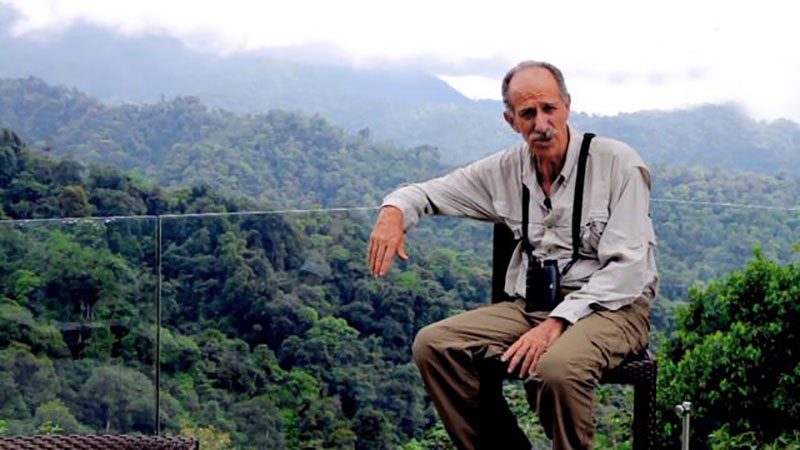
Roque Sevilla, founder of Mashpi Lodge.

Roque Sevilla, founder of Mashpi Lodge.


Creating a legal and commercial entity for their investment helped with their concern that future owners or generations might be tempted to do something else with the land. Turning the lodge into a successful business venture was insurance against this.

The idea of Mashpi Lodge was to keep the rainforest in the public eye in the hope that visitors would spread the message of conservation. The first challenge was how to build a structure of concrete, glass and metal in an area that was going to market itself as “untouched.” Luckily, in an area of secondary jungle that formed part of the purchase, a Spanish logging company had cleared a small patch of jungle decades earlier for its operations. It was the perfect location for the lodge and a short walk from the unspoilt forest that was to become the main drawcard for guests. Ironically, the Spanish logging company had gone bankrupt because of the diversity of trees in the area; they couldn’t find enough of the same to type to make their business viable. When people speak of nature fighting back, this might be one good example.

“To avoid clearing a path from a road seven miles away to install electricity poles, we created our own, small hydro electric plant on the premises,” says Sevilla. “To take sustainability seriously, you sometimes need to consider solutions that are not necessarily profitable at first. You also need to acknowledge issues that are larger than the people involved,” he muses.

mashpi-lodge-3 rainforests

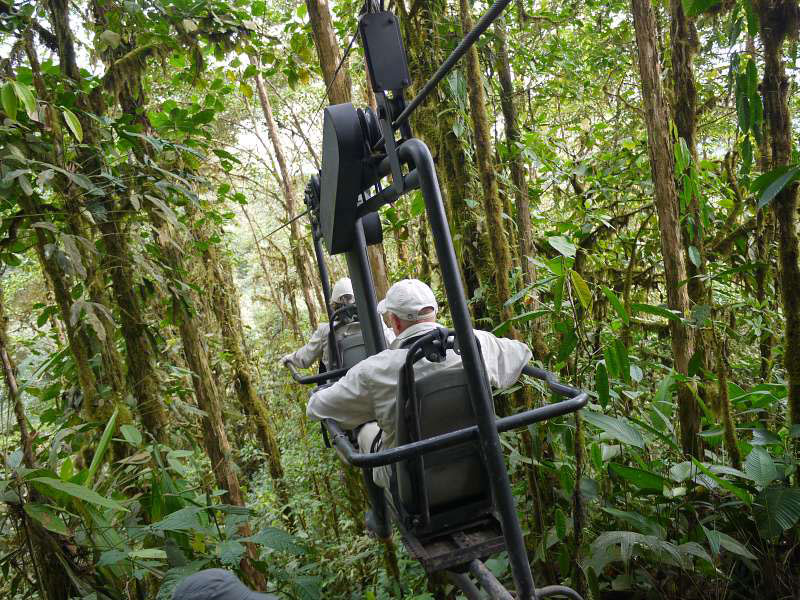
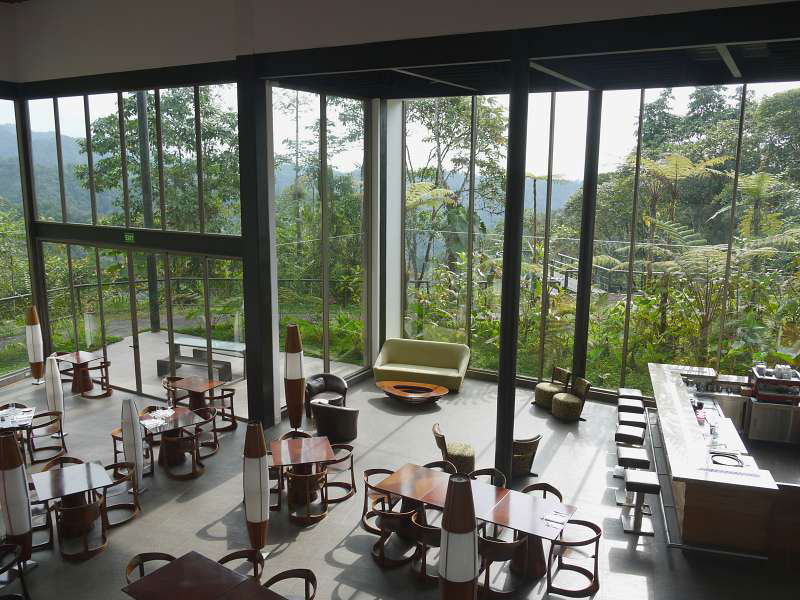
Guests to Mashpi Lodge sleep in rooms with glass walls, surrounded by jungle, giving an impression they are living in nature, and maximizing the full beauty of their surroundings. Arial bicycles, suspended on steel cables, transport guests through virgin forests, ensuring that even footprints are not left behind.

Keeping the lodge and its surrounding rare is a marketing strategy that Sevilla embraces wholeheartedly. “Mass tourism, like you see in Ecuador’s capital Quito, has a different type of effect on the environment and needs different conservation methods,” he says. “Large and small destinations alike should introduce unique eco-friendly measures that take advantage of their size. The Galapagos Islands, for example, have quotas that restrict the number of tourists per year due to environmental sensitivities.”

Sevilla believes the rarity of their investment at Mashpi will help ensure they are fully booked throughout the year, rather than seasonal highs and lows. Restricting customers might seem unintuitive to running a healthy business, but in Sevilla’s case it works.

The social pressure for short-term benefits at the expense of the environment, especially in poverty-stricken nations, is very strong. It’s usually ignored by many people in the developed world and viewed as being someone else’s problem. However, this is a global issue that affects rich and poor, a collective problem we all should help resolve.

mashpi-lodge-2 rainforests

“Rainforests being destroyed in Ecuador will effect the oxygen levels in Germany – we all breath the same air,” says Sevilla. He feels that rationalizing the concept of time to people is important in understanding conservation. “When you try and explain to guests that a tree is 1,000 years old, it’s unbelievable to most. Putting facts such as these into a rational perspective, that people can understand in their everyday life is crucial for conservation,” he says.

Mashpi Lodge doesn’t only welcome tourist wanting to experience the rainforest first-hand. American universities have used the lodge to study birds and an important research program is underway to reintroduce an almost-extinct spider monkey back into the region. One of the guides is a former poacher, who now has the means to earn a living through legal means. “Our staff, who are drawn from local communities, are excellent examples of how changing someone’s circumstances can make them great ambassadors for sustainability,” he says.

“As a human being it’s impossible not effect our planet environmentally,” says Sevilla. “Even our breath leaves a footprint. What we need to learn is how to manage this footprint better.”

Mashpi Lodge is a recent winner of an IE Award for Sustainability (Premium and Luxury Sectors) www.ie.edu/ieluxuryawards

ie-awards

Nearly a Third Say Cloud Storage is Essential, But National Opinion is Divided


  • Latin America countries have highest numbers strongly agreeing that cloud storage is essential to them.
  • GermanyCanada and Australia not convinced. 

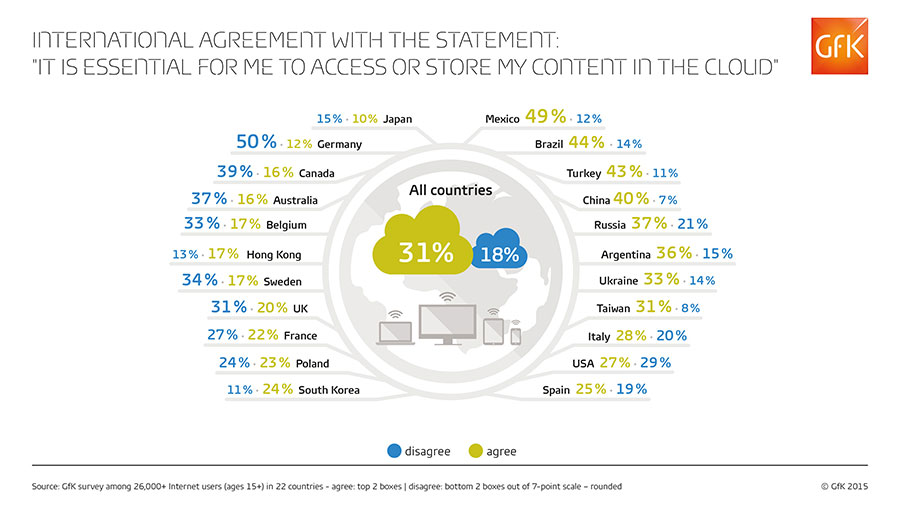
Internationally, nearly a third of all surveyed strongly agree that cloud storage is essential to them, with agreement peaking in MexicoBrazilTurkeyChina and Russia.

Market and consumer analysis company GfK asked Internet users in 22 countries about how strongly they agree or disagree with the statement “it is essential for me to access or store my photos, documents, music, and other content in ‘the cloud'” (with ‘the cloud’ defined as “a secure Internet location that you can access from any location or device”).

Almost a third (31 percent) indicate strong agreement (top two boxes in a 7-point scale) that the cloud is essential for them – consisting of 13 percent who agree completely and 18 percent who are next to agreeing completely.

This compares to 18 percent who significantly disagree (bottom two boxes in a 7-point scale) that the cloud is essential for them – made up of 10 percent who don’t agree at all and 8 percent who are just short of total disagreement.

Arno Hummerston, Global Director of Digital Market Intelligence at GfK, comments, “With a significant percentage of everyday people saying the cloud is essential to them, there is clear market potential for technology companies offering services that enhance the cloud experience – for example, increased security or customizable services, such as digital photograph albums which can easily be shared with other people.”

“The growing attraction of the cloud is not so much about storage – a decent external hard drive delivers that – but about convenience: being able to access files from any device or location, without having to carry around an external hard drive or USB stick. It also eliminates the risk of breaking or losing your storage device and all the items it contains. In particular, the cloud offers a simple way to secure the photos and videos taken with smartphones, when their internal storage capacity becomes full or the device is not accessible – with the bonus that you can then access your images from any of your devices. Bearing these usage reasons in mind will help businesses tailor their offers to resonate with the growing ‘cloud market’.”

GfK-Infographic-Cloud

30-39 year olds most dependent on the cloud

Overall, the group most dependent on the cloud is the 30-39 year olds. In this age group, 37 percent place themselves in the top two boxes for agreeing that the cloud is essential to them to access or store their photos, documents, music, and other content – compared to just 12 percent in the bottom two boxes for saying it’s not essential. They are closely followed by those aged 20-29, with 35 percent in top two boxes for agreement and 13 percent in bottom two boxes for disagreement.

It’s only when we look at the older age groups that the balance swings the other way. For those aged 50-59, only a quarter (24 percent) strongly or completely agree (top 2 boxes out of 7-point scale) that the cloud is essential to them, while 29 percent disagree (bottom two boxes). And the divide for those aged 60 or over is even clearer, with just 19 percent placing themselves in the top two boxes, while over a third (35 percent) indicate strongly that the cloud is not essential to them (bottom two boxes).

Latin Americans are cloud enthusiasts; Germans, Canadians and Australians yet to be convinced

Looking at individual countries, Mexico is the clear ‘cloud leader’, with almost half (49 percent) of its online population giving top-two agreement that the cloud is essential for them. They are followed by Brazil at 44 percent, Turkey (43 percent), China (40 percent) and Russia (37 percent). Argentina, which completes the Latin America countries included in the survey, also shows high cloud dependency, with over a third (36 percent) of the population placing themselves in the top two boxes agreeing that the cloud is essential for them.

The other end of the scale is dominated by Germany, where half (50 percent) of the online population strongly disagree (bottom two boxes) that the cloud is essential. They are followed by Canada (39 percent), Australia (37 percent) and Sweden (34 percent).

“For me, it is interesting that it is mainly countries that adopted the Internet early on, that do not see cloud storage as essential,” comments Arno Hummerston. “Late Internet adopter markets, which tend to be more mobile-oriented, having leap-frogged PCs, have more people who say cloud storage is essential. The implication is that those who started off on PCs or laptops (which have large internal storage) now have a significant mental adjustment to make, in accepting cloud storage. But those who have mostly only ever used mobile devices find cloud storage normal.”

Economics of Trophy Hunting in Africa Are Overrated and Overstated

A report that analyzes literature on the economics of trophy hunting and reveals that African countries and rural communities derive very little benefit from trophy hunting revenue. The study, authored by Economists at Large – commissioned by the International Fund for Animal Welfare (IFAW), The Humane Society of the United StatesHumane Society International and Born Free USA/Born Free Foundation – originally came about in 2013 during consideration to grant the African lion protection under the U.S. Endangered Species Act (ESA).

“The suggestion that trophy hunting plays a significant role in African economic development is misguided,” said economist Rod Campbell, lead author of the study.  “Revenues constitute only a fraction of a percent of GDP and almost none of that ever reaches rural communities.”

As a portion of any national economy, trophy hunting revenue never accounts for more than 0.27 percent of the GDP. Additionally, trophy hunting revenues account for only 1.8 percent of overall tourism in nine investigated countries that allow trophy hunting, and even pro-hunting sources find that only 3 percent of the money actually reaches the rural communities where hunting occurs. While trophy hunting supporters routinely claim that hunting generates $200 million annually in remote areas of Africa, the industry is actually economically insignificant and makes a minimal contribution to national income.

“Local African communities are key stakeholders for conservation, and they need real incentives for conservation,” said Jeff Flocken, North American regional director, International Fund for Animal Welfare. “Non-consumptive nature tourism–like wildlife viewing and photo safaris–is a much greater contributor than trophy hunting to both conservation and the economy in Africa. If trophy hunting and other threats continue depleting Africa’s wildlife, then Africa’s wildlife tourism will disappear. That is the real economic threat to the countries of Africa.”

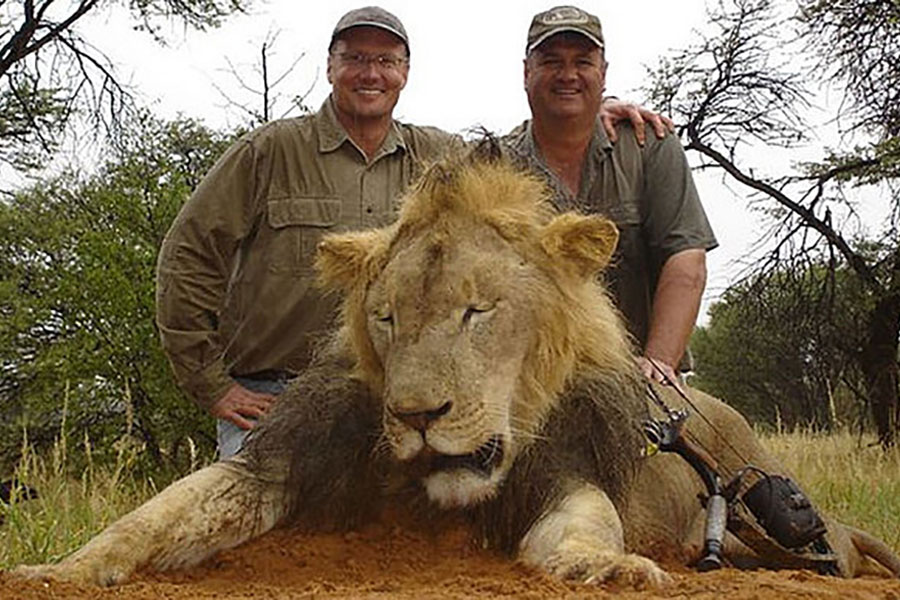
Many species suffer at the hands of trophy hunters including the African lion. The number of African lions has declined by more than 50 percent in the past three decades, with 32,000 or fewer believed remaining today. The steepest declines in lion population numbers occur in African countries with the highest hunting intensity, illustrating the unsustainability of the practice.

“Trophy hunting is driving the African lion closer to extinction,” said Teresa Telecky, director, wildlife department, Humane Society International. “More than 560 wild lions are killed every year in Africa by international trophy hunters. An overwhelming 62 percent of trophies from these kills are imported into the United States. We must do all we can to put an end to this threat to the king of beasts.”

Listing the African lion as endangered under the ESA would generally prohibit the import of and commercial trade in lion parts, and thus would likely considerably reduce the number of lions taken by Americans each year. 

“The U.S. government has a serious responsibility to act promptly and try to prevent American hunters from killing wild lions, especially when the latest evidence shows that hunting is not economically beneficial.  Listing the African lion under the Endangered Species Act will help lions at almost no cost to African communities. Government inaction could doom an already imperilled species to extinction through much of its range,” said Adam Roberts, executive vice president, Born Free USA.

Here’s What Happens When Luxury Meets Inner Beauty

  • Diagnosed with cancer, Annee De Mamiel develops a range of oils and balms to offset the effects of her treatment.
  • Multiple qualifications in Chinese traditional medicine, combined with a desire to treat her illness as naturally as possible, result in a beauty product with the highest levels of purity she can find.
  • Intent, meaning and ritual have become part of the supply chain.
  • Luxury hotels use her oils and high-end online stores, such as Net-a-Porter, sell the beauty range to discerning buyers.
  • Overcoming her illness has made her realize that you can’t separate mental wellbeing from physical wellbeing.

When Annee De Mamiel was diagnosed with cancer in 1998 she began an uncertain journey with an uncertain outcome. She had been a top triathlete in her twenties while growing up in Australia and already had built-in respect for her body, with a matching strength of mind. She wanted to fight off her disease in a way that was both holistic and natural. She also knew that chemotherapy was inevitable if she was to survive. While enduring the nausea, hair-loss and physical trauma that goes with this type of treatment she decided to create a product to help her cope, something that was the exact opposite of the artificial, toxic chemicals doctors were using to fight her cancer. De Mamiel became an aromatherapist and developed a range of oils and balms from the purest sources she could find.

“I create things that work on a physical, chemical and emotional level, because that’s everything of what we are,” says De Mamiel. Her cancer has been in remission for 10 years now so she must be doing something right. Many cancer patients endure the horrors of treatment and then quietly thank God when it’s all over. De Mamiel decided to look further, at the underlying causes of her illness and came to the conclusion that we cannot separate our mental wellbeing from our physical wellbeing.

It’s nothing new; ancient Chinese medicine acknowledged this centuries ago. De Mamiel holds a degree in Traditional Chinese Medicine, a degree in Anatomy and Physiology and a diploma in Aromatherapy, all of which have helped her create a range of beauty products that she believes contribute to healing and wellbeing.

Richard Bransons’ exclusive island resort, Necker Island, in the British Virgin Islands, believe this too. Staff give De Mamiel’s jet lag oil to departing guests to aid recovery in their long flight ahead. Rubbed onto hands and inhaled, the ingredients have an uplifting and energizing effect. 

“Many people deny that our emotions affect our wellness,” she says. “My brand is not just about how to apply the products to your skin, but how to reduce stress in your life. We’ve cut ourselves off from what mother nature is doing,” says De Mamiel. “All the people I treat live in an artificial environment – artificial heat, cold and light. Many people are stressed from this and there’s no sense of belonging to natural environments. I create small rituals to help us through that process.”

De Mamiel is often asked where she fits within her industry: wellness or beauty? She seems to fall somewhere between an alchemist, perfumer and therapist. “I’m more about creating change and making a difference in someone’s life than putting a cream on your face,” she says. “I fall into a category that doesn’t see wellness and beauty as being mutually exclusive.”

Her secret is in the source. The lavender is from a high altitude area of New Zealand, where the soil is rich in nutrients and the air is extremely clean. The lavender found here is potent because it grows at its maximum potential, a quality De Mamiel wants to infuse into her customers. Ritual and meaning has also become a key ingredient – every bottle is dispatched with an invisible element that couldn’t be further from a mass-produced product – intent.

Botaniques-Group luxury oils

The manufacturing process involves giving thanks to the supply chain that has brought the ingredients to the factory. The oil sits in a jar with three words of intent written on its label for two months, like a fine wine developing a unique character. Music is played in the storeroom to enhance the vitality of the product. As esoteric as this may sound, De Mamiel believes that vibrations from music make a difference. “If you don’t believe it, there’s no harm done,” she says “If you do, it can only add to your experience when using the product.”

In 2013 De Mamiel and her husband created a website and began selling online. Within a month, high-fashion online retailer Net-a-Porter came calling, and the business has grown ever since. The award-winning oils are now found in shops in the U.K., Spain, Sweden, Japan, the U.S. and the Netherlands.

“If we weren’t profitable, we wouldn’t still be in business,” says De Mamiel. “A myth exists that you can’t be ethical and sustainable while still being profitable, yet I’m proof that it’s possible,” she says. “Our company mission is to make a difference every day, and if I can’t do that, there’s no point in me doing what I’m doing.

One of her biggest inspirations happened during a yacht race in the middle of the Southern Ocean. “It was the purest, most magical place I’ve ever seen,” she says. “The sensation of being in a place no one else has been, knowing that if something happened we wouldn’t be rescued in time, was awe-inspiring. I experienced the power, rawness and beauty of mother nature. We are given incredible gifts on this planet that we need to care for. I reflect on that moment regularly. It’s a motivator for keeping my promise of purity to my customers and also how I run my business.”

Her vision for the future is a simple one: “I’d like to see households growing their own vegetables and getting in touch with the source of our nourishment,” she says. “Finding stillness within us creates ease and happiness. That might sound hippyish but I believe it’s real. I have friends who run big banks and hedge funds who are also trying to adopt this way of living.”

De Mamiel has explored the science behind her oils and built a successful commercial venture on some esoteric principles. She doesn’t expect everyone to understand why her products work, just that they do. “Look at people like Richard Branson. You either love him or hate him, but his drive in what he believes in is extraordinary. What he’s giving back to the environment, especially the oceans, is incredible. People who’ve overcome adversity are true leaders because they’ve shown others what can be overcome. I have overcome cancer, traveled the world and formulated a deep insight into people’s wellbeing. Now it’s my turn to make a difference.”

De Mamiel is a recent winner of an IE Award for Sustainability (Premium and Luxury Sectors) www.ie.edu/ieluxuryawards

ie-awards

Surely it’s Too Late for Outrage When a Child is Dead?


  • The director of a South African organization that aims to prevent child abuse and promote children’s rights suggests that violence in society begins in the home.
  • If you don’t spank our kids at home, are you prepared to voice your concern when you see it happening to other kids in public?
  • Christina Nomdo asks why certain sectors of society, such as cultural or religious groups, seem to think that assault against children is “love” and “discipline”.

Sensationalist news reports on children killed by their parents was the reason someone called to wake me up at 6am one morning this week. Well, I have news for these reporters – I go to sleep with the knowledge that it has happened before and will happen again in South Africa. I try to put my energies into finding a strategic solution to this problem. I focus on prevention and the roles of all duty bearers, including myself, who should be ensuring that our children are safe – especially in their own homes.

Why are we expressing outrage so late, when children have died? Should we not be expressing outrage when members of our society use physical force, at any time and in any place, to control the behaviour of their children? I bet there will be many who immediately fight hard for the right to assault their children in their own homes. I’m told it’s called discipline and love and has religious or cultural justifications. Strangely I thought commonly held religious values were peace, care and respect. I read the Bill of Rights a few times and nowhere did I find the right to abuse children. So if we don’t have religious grounds and we don’t have a rights argument, what do we have? An intransigent society, unwilling to change, even when logic is applied.

It is no wonder we have a violence pandemic in South Africa. We are complicit! Professor Shanaaz Mathews, head of the Children’s Institute, helps us get to the bottom of this. In her PHD research she asked men in maximum security prisons how they came to kill their partners. She found that an underlying factor was how they were disciplined as children. Most men had emotionally unavailable parents and were not disciplined or they were beaten severely by their parents under the guise of discipline. So because we can’t find the right balance of discipline, we end up with murdered women and men in prison and the children left behind.

South Africa is revising the Children’s Act now but it is silent about a ban on corporal and humiliating punishment of children in the home. It is a political hot potato. It’s been jumping in and out of different versions and drafts of the Children’s Act since 2002. Those in power are not committed to take a clear stance. I’m not talking about government… I’m talking about us – South African society. Politicians and government officials fear condemnation from the voting public if they become ‘too progressive’ on the matter. But surely we need to progress from killing our children?

So now we’ll become defensive as parents. We will say, ‘I’m not a killer I only smack or spank them lightly.’ ‘In fact my children want me to spank them and I also encourage their teachers to do so.’ Let’s reflect on a scenario one step removed from our own parenting… What is our response when in a toy shop, for instance, we notice an adult beating a child to control their behaviour? What do we do? What do we think? Are we change agents or are we accepting of the behaviour, silently condoning? I am not going to arrange the words in order of severity – beating, spanking, smacking, killing, abusing, assaulting – to assuage our conscience, the bottom line is they are all rooted in physical violence by one person on another.

I am also a product of this society so I understand we have few models for using positive discipline with our children and we sometimes allow our worst selves to prevail when we become frustrated. I’ve been there. 

I want something different for our children. Children need guidance, discipline and boundaries to develop optimally. I want them to have parents who discipline by modeling respect and care. Who always think their children are as special as when they were born. Parents who guide inappropriate behaviour by engaging calmly with their child explaining the boundaries. RAPCAN’s understanding of positive discipline includes adults as positive role models for non violent conflict resolution; problem-solving rather than punitive and humiliating approaches to correct behaviour; and children’s involvement in decision-making and the setting of ground rules.

It is a challenge right now because some parents have so much trauma to recover from that emanated from their own childhood. Or they are so disenfranchised, economically marginalised and disempowered right now that the fight for daily survival is anathema to the dignity rights they should be enjoying. This is the story of South African adults today. Let us not write the sequels about trauma in generations to come.  Most of us are already trying to be more positive in our child rearing. Let’s think, feel and act together to create better lives for today’s children… and their children

Christina Nomdo is the Executive Director of Resources Aimed at the Prevention of Child Abuse and Neglect (RAPCAN) in South Africa. Christina is a PHD candidate in the Public Law Department of the University of Cape Town with a keen interest in the concepts of children’s rights and adolescent sexuality.

What do you think of Christina’s standpoint on spanking kids? Let us know in the comments below.

Wangari Maathai: The Troublemaker Who Fought Back With Trees


  • A woman turns a tree planting movement into a pro-democracy movement that demands human rights from an African regime.
  • Despite gender discrimination and physical threats to her life she stands up to a dictator, abusive husband and the military and shows people around the world that determination can result in change.
  • Wangari Maathai showed that science and conservation should be in the service of humankind, and not exist to merely understand the world.
  • Regardless of cultural norms, women can break sexist barriers by ignoring obstacles and acting in a manner that suggests ‘rightful living.’

When Wangari Maathai was awarded the Nobel Peace Prize in 2004, questions were raised regarding her choice. “Why should an environmentalist receive a prize that is identified with peace and human rights?” people asked. Maathai had become famous for starting the Green Belt Movement in Kenya in the 1970s that had encouraged the planting of trees, but few saw the positive social change she created behind the scenes. She died in 2011, yet her non-compromising attitude towards conservation and democracy remains an inspiration to this day.

Raised in a rural village in the central highlands of Kenya, Maathai ‘s love of the earth began with rolling up her sleeves and getting her hands dirty. While many see this as a chore, Maathai’s experience bordered on the spiritual. “Nothing is more beautiful than cultivating the land at dusk,” she said. “As you remove the weeds and press the earth around the crops you feel content, and wish the light would last longer so you could cultivate more. Earth and water, air and the waning fire of the sun combine to form the essential elements of life and reveal to me my kinship with the soil.”

The majority of Africans must perform this daily task out of necessity to survive, but Maathai saw it as an opportunity to galvanize people for social change. In 1974 her husband campaigned for a seat in the Kenyan Parliament, promising much needed jobs. Maathai saw this as an opportunity to connect her ideas of environmental restoration with jobs for the unemployed. It led to the founding of Envirocare, a business that involved ordinary people planting trees.

The venture failed, but raised enough interest within the United Nations Environment Programme to get her invited to attend the first UN conference on human settlements, known as Habitat. It was from this global platform that Maathai realized the power of eco-politics and her Green Belt Movement was born.

It was a movement to plant millions of trees, but she was not merely an environmentalist who loved trees. She got people to plant trees as a way of healing a devastated landscape. She asked how a poor rural family in Africa is ever supposed to rise out of poverty if a woman must walk hours each day to get firewood from forests that recede farther and farther away each year. “The situation of a woman cutting down the last tree to cook her last meal is one we must avoid,” she said. It’s no wonder Maathai got the Nobel Peace Prize when viewed against this social impact. Science and conservation, at its best, should be in the service of humankind, and not exist to merely understand the world.

Wangari Maathai 2

Emboldened by the success of rallying people around trees, Maathai turned the Green Belt Movement into a pro-democracy movement and confronted the regime of Daniel Arap Moi. For this, she faced both traditional prejudice as a woman and political oppression. During a heated debate around the development of a green area in the capital of Nairobi, President Moi suggested Maathai be a proper woman in the African tradition, respect men and be quiet. But she didn’t. “I knew that we could not live with a political system that killed creativity, nurtured corruption, and produced people who were afraid of their own leaders,” she said. Part of this fear was the threat of physical violence, something Maathai personally experienced many times while protecting public forests that the regime had earmarked for its supporters.

Her husband filed for divorce in 1977, citing Maathai as “too strong-minded for a woman” and that he was “unable to control her.” After the divorce he demanded through his lawyers that she drop his surname – Mathai. She chose instead to add an extra “a” and became Maathai. She creating a new name for herself and obeyed the law, yet showed in a clever way that she was still firmly in control.

Maathai was certainly not afraid of confrontation. During a standoff with soldiers and thugs in a contested forest she was trying to protect, she stood facing rifles and machetes holding a watering can. Stubborn characteristics such as these can spell danger in a tyrant, but Maathai demonstrated that peace is not something to be viewed as weak.

Many people will support a cause monetarily, but to risk one’s life for an important humanitarian or environmental cause takes far more courage as a leader. It went beyond dying for a tree, Maathai was demonstrating the principles of democracy and giving the downtrodden a voice.

Education was a key concern for her and she dispelled the idea that education meant less attachment to the environment. “Education should not take people away from land, but instill in them even more respect for it,” she said. “Educated people are in a position to understand what is being lost. The future of the planet concerns all of us, and we should do what we can to protect it. You don’t need a diploma to plant a tree.”

Maathai taught us how determination can eventually create change if we have enough patience and belief in our cause. She did a lot more than organize groups of local women to plant trees. She also planted seeds of hope for democracy to replace a corrupt, greedy government. She was a leader others wanted to follow, for they saw that she knew instinctively how to get results.

For those who still ask: “What can one person do to make a difference?” here’s a hint: It can be as simple as trees, self-reliance and human endurance.

Can This Man Save The Rhino With A 3D Printer?


  • Rhino horn is now worth as much as cocaine on the black market.
  • A biotech startup believes synthetic horns made in laboratories offers an ethical alternative, can confuse criminals and tap into a market worth billions.
  • Matthew Markus wants synthetic rhino horn to be seen as a normal product, alongside other synthetically produced foods and medicines.
  • He believes it’s a win-win situation: cultural traditions remain intact, while endangered species are not threatened with extinction.

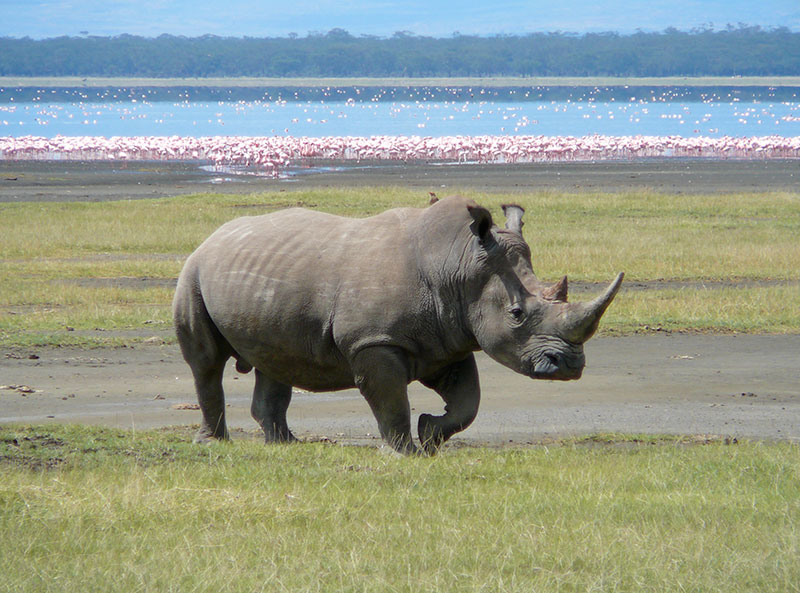
The last male northern white rhino in the entire world stands grazing in an open field in Kenya. Four armed guards stand a few feet away from him, each facing outwards, scouring the horizon for approaching poachers. At sunset the guards hand over to a night shift who peer into the darkness, weapons ready. This is what extinction looks like.

The demand for rhinoceros horn has skyrocketed over the last few years, mostly driven by demand in Asia, where the powdered horn is highly valued for its purported medical properties. Experts have said that rhino horn is becoming more lucrative than drugs. The U.N. Office on Drugs and Crime has put the street value of rhino horn at between $1,110 and $5,550 an ounce. In comparison, gold fetches $1,198 per ounce and cocaine $4,790. A single rhino horn can fetch $100,000 in Asia.

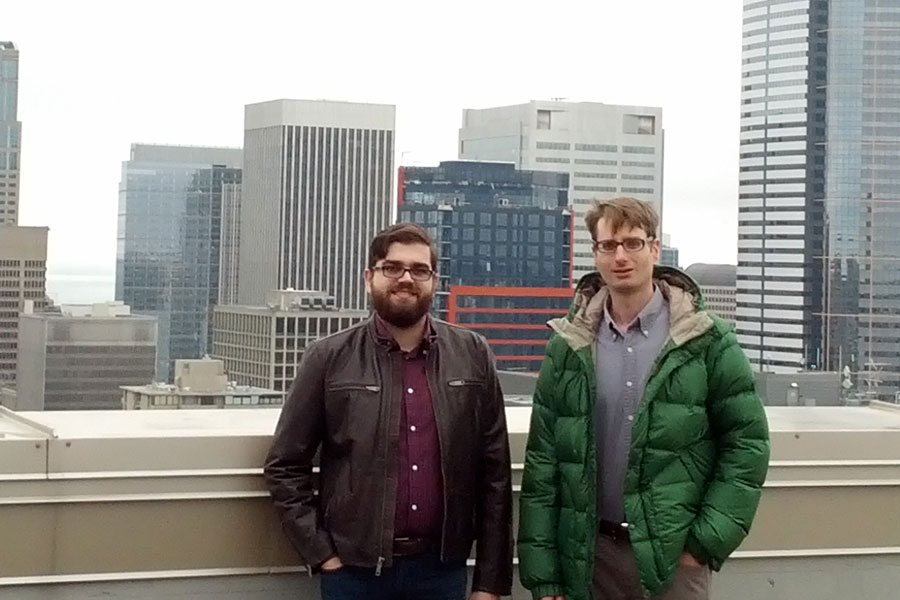
Matthew Markus, Cofounder and CEO of Californian biotech startup Pembient, believes he might have a solution. Instead of joining forces with conservationist he’s decided to produce synthetic rhino horn, with a 3-D printer in a lab, to offer consumers an ethical alternative. Along with business partner George Bonaci (pictured above, left) they have embarked on an innovative journey to save a 50 million year-old animal from disappearing within years.

White_Rhino

While some conservationists view his efforts as fueling demand for a product they’re trying to outlaw, Markus believes that creating a better system for rhino horn delivery is more effective than trying to change traditions and attitudes.

“We’ve been made to believe that either traditions must die or animals must die,” says Markus. “I don’t believe that to be true. Many traditional practices using rhino horn go back thousands of years and if there’s a way of obtaining these materials without the slaughter of animals, then that’s what we should be doing,” he says.

The proceeds of ivory and rhino horn poaching have also been known to fund terror groups such as al-Shabab in Somalia with illegal wildlife trafficking ranking among the world’s top criminal activities – alongside drugs, arms and human trafficking. Pembient might be seen to be saving rhinos, but the wider social problems it’s helping to solve – security and wellbeing –is a less obvious.

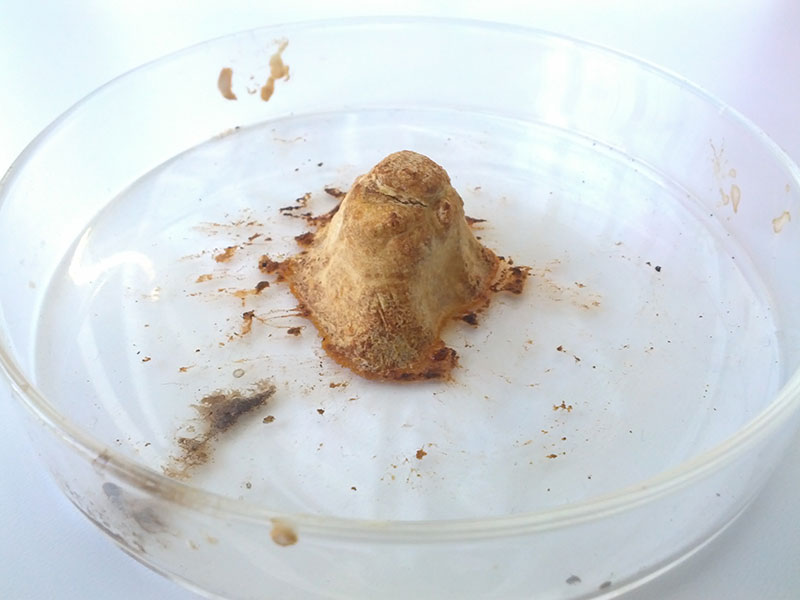
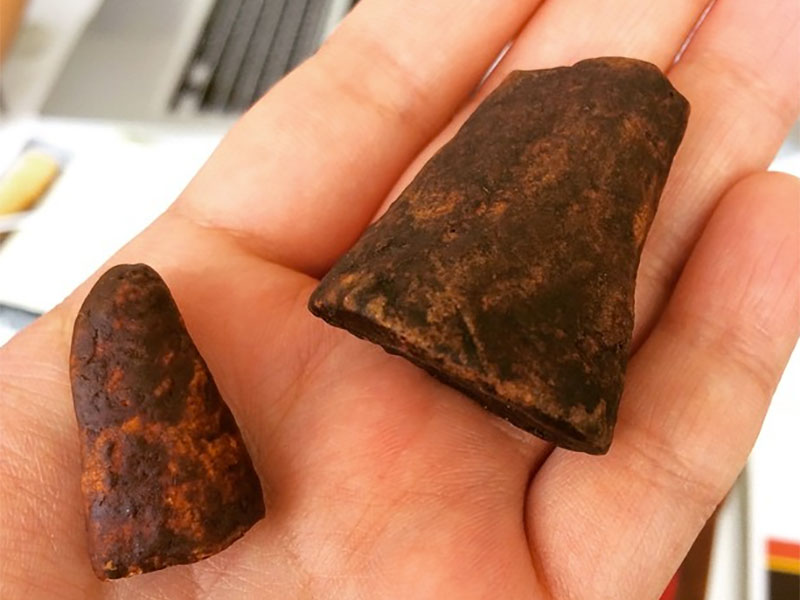
Markus points to Silicon Valley factory farming start ups, that develop synthetic manufacturing techniques for food to help feed a rapidly growing planet – brewing milk without a cow or eggs without a chicken. Experiments at the Pembient lab have brought rhino horn to within 80 percent of the real thing. While Markus admits that synthetic rhino horn will not stop poaching entirely, he believes the quality of his product will find a market among connoisseurs and also confuse criminal networks.

rhino-horn-2

As with any great idea, imitators have already begun to appear. Markus is unfazed and knows that to get an innovative idea to market is what really counts. “They say that when you have an idea, a hundred people might have the same idea too. Only twenty-five will take it to the next step and ten might take it a step further. We are still the ones who have taken it the furthest,” he says.

Once the genetic DNA of rhino horn has been replicated it will be easier for Markus to produce other rare products, such as elephant tusk and tiger bone, that will help save other endangered species. His business goal is to capture 10-25 percent of the rhino horn market with his synthetic product – playing within the illicit wildlife trafficking market worth $8-10 billion per year, according to a WWF report by global development company Dalberg.

Markus feels his venture is not about quick opportunism, but more the culmination of a lifetime of ponderous problem solving, linked to an ethical standpoint. “To do something significant in life requires education, observation, lots of thinking and life experience,” he says. “This can take years and you sometimes have to put things aside and let time and the sum of your experiences direct you. You might never experience an ‘aha’ moment in your life – a great idea might only emerge slowly over many years.”

rhino-horn

Leaders and innovators are often people who seek solutions by examining the way existing things are done; and then applying unfamiliar thinking to them that turns them into game-changers. Markus allowed himself to explore ideas that sounded crazy, but led to an amazing new solution that will have untold social impact.

 “The one thing I liked about computer programs, in my former job as a computer scientist, is that they are so easy and inexpensive to copy,” says Markus. “One day I thought, ‘wouldn’t it be cool to copy biological objects?’ The re-emergence of the poaching crisis in 2007 and the availability of affordable technology made me realize that this type of start up might actually create a positive impact.”

 Pembient also wants to create a company that hires the very best people to work on sustainability and conservation problems, instead of more frivolous things.

“I’ve met talented engineers, scientists and businesspeople who spend huge amounts of time optimizing clickthrough rates for their online ads,” says Markus. “I want to create a business that’s attractive to these people, who wake up in the morning and want to rather put a poaching syndicate out of business.”

0