World leaders agree: We must close the gender gap

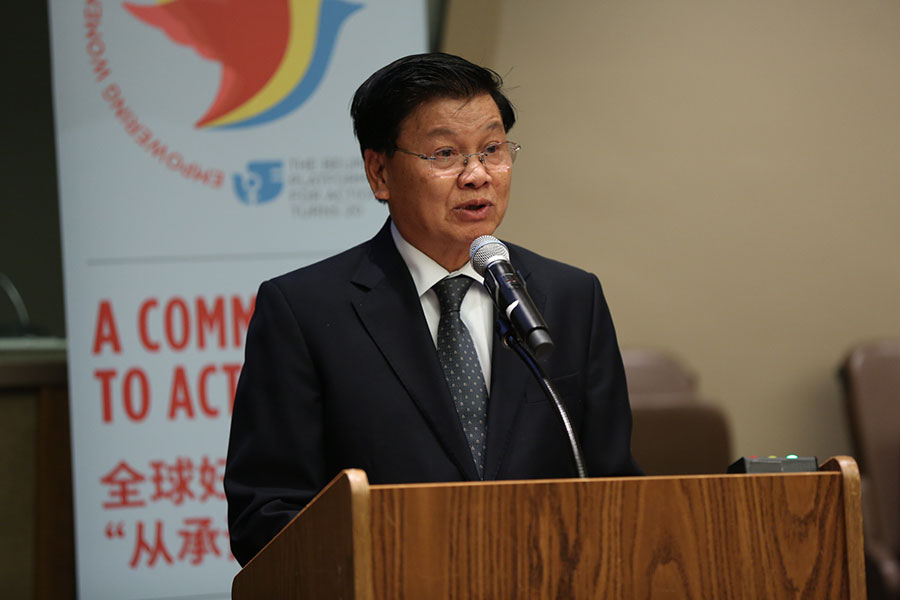
On Sunday some 80 world leaders convened at the United Nations to personally commit to ending discrimination against women by 2030 and announce concrete and measurable actions to kick-start rapid change in their countries. The event marks a historic first, with pledges delivered by Heads of State and Government. No other single issue is to receive this level of political attention at the UN Summit held from 25-27 September to adopt Agenda 2030 and its Sustainable Development Goals.

The People’s Republic of China, host of the 1995 Fourth World Conference on Women, and UN Women are co-hosting the “Global Leaders’ Meeting on Gender Equality and Women’s Empowerment: A Commitment to Action.”

Commitments covered a range of issues addressing the most pressing barriers for women, such as increasing investment in gender equality, reaching parity for women at all levels of decision-making, eliminating discriminatory legislation, and addressing social norms that perpetuate discrimination and violence against women.

Xi Jinping, President of the People’s Republic of China, opened the event. He said “we still have a long way to go in achieving gender equality. … The international community should reaffirm the spirit of the Beijing Conference with renewed commitment and pledge greater efforts to promote gender equality and women’s all-around development. … China will do more to enhance gender equality as its basic State policy, give play to women’s important role as ‘half of the sky’ and support them in realizing their own dreams and aspirations in both career and life.

The Chinese women, through their own development, will also play a greater part in the global women’s movement and make greater contributions to gender equality in the world.” President Xi Jinping announced that to support women’s development worldwide and the work of UN Women, China will contribute USD 10 million for the implementation of the Beijing Declaration and Platform for Action and the realization of the related goals in the post-2015 development agenda.

angela-merkel world leaders

President Xi further said China will support women and girls in other developing countries by providing health care, vocational training, financing for education and other assistance. In his opening remarks, UN Secretary-General Ban Ki-moon directly addressed the assembled world leaders, saying: “As Heads of State and Government you have the power and the responsibility to ensure that gender equality is—and remains—a national priority.” He continued to outline three areas for action: “First, I urge you to create and energetically implement coherent gender equality policies. Second, provide significant financing for gender equality so that commitments become reality. And third, monitor progress so that all governments will hold themselves and each other accountable for the pledges made here today.”

“The highest leaders in the land are taking personal responsibility for their commitment to gender equality and the empowerment of women,” emphasized UN Under-Secretary-General and UN Women Executive Director Phumzile Mlambo-Ngcuka. “Now the world looks up to them to lead the game-changing actions that secure and sustain implementation. Today we take the first firm steps towards 25 September, 2030.”
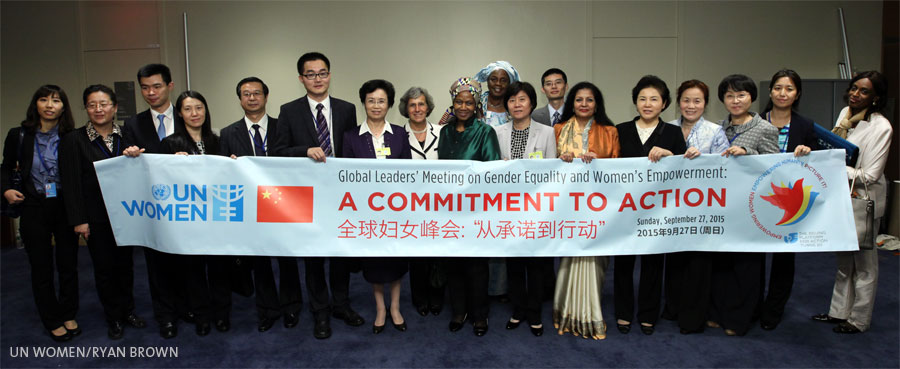
un-women world leaders

As the first world leader to speak at the principal segment, German Chancellor Angela Merkel said: “We need women for peace, we need women for development. This is what we emphasized at this year’s G7 Summit with our commitment to women’s empowerment and initiative to provide vocational training and entrepreneurial opportunities for women in developing countries. … In Germany … we have expanded child care and we finally have a law on women in leadership positions. … We all committed in 1995 to implement the Beijing Platform for Action. Now we are making a new commitment with Sustainable Development Goal 5. Commitments are good. Action is better. Let us take action!” While actions announced will vary, they are expected to align behind a common message: The Sustainable Development Goals cannot be achieved without gender equality.

If countries act immediately to translate the goals into action, and close many remaining gaps in implementing the landmark 1995 Beijing Platform for Action, the world could reach gender equality by 2030.

A record 167 countries undertook national reviews that assessed progress and gaps as a basis for new national actions plans to accelerate achievement of women’s empowerment and gender equality.
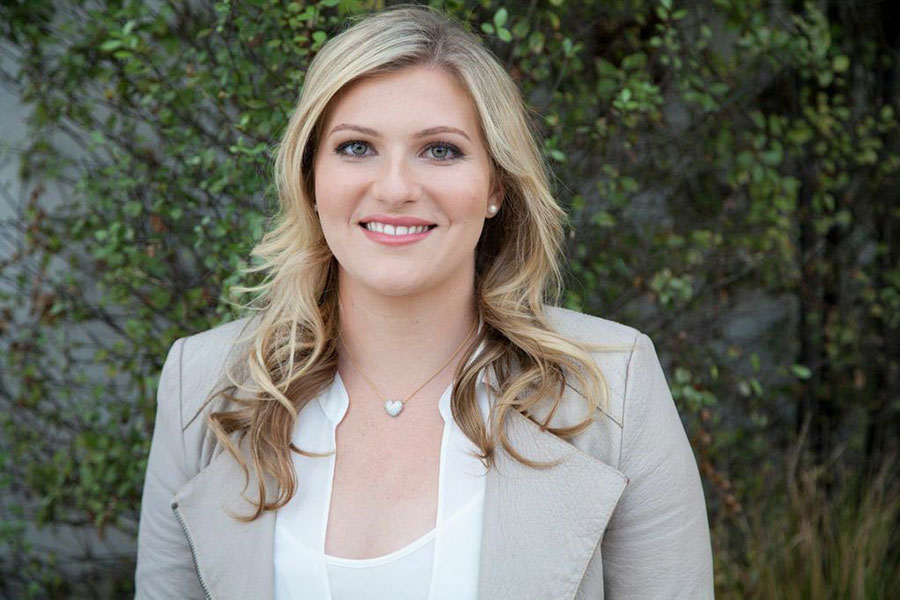
Meredith Perry Wants You To Drop Your Cords And Take Charge


  • A 26 year-old scientist and inventor is developing wireless power.
  • She wants investors and inventors to tackle difficult projects, not easy ones that deliver quick financial returns.
  • Investing in the future and doing something meaningful with your talents should be everyone’s primary concern.

Meredith Perry is one of those rare people that actually thought being smart at school was cool. When you’re in elementary school it’s not something the other kids usually admire or respect. While her friends were dreaming of what to wear to parties that weekend, Perry would be dreaming about winning a Nobel Prize for curing cancer. “I thought that it might be possible,” she says. “I’ve always pursued things that other people think are crazy.”

How does wireless electricity sound for crazy? This is what the 26 year-old is currently working on, and she’s already formed a company, uBeam, raising more than $23 million in funding and raising the eyebrows of seasoned scientists. Her idea sounds simple: charge a device by sending electricity through the air. It’s something most of us have considered at some point, but thought impossible. Serbian-American inventor, Nikola Tesla, experimented with wireless lighting and electricity distribution in the late 1800s, but was dismissed as a “mad scientist” by an amused public.

Perry has created a technology that uses ultrasound to transmit power over the air to charge electronic devices wirelessly. A transmitter emits ultrasound waves, and then a receiver attached to a phone captures the sound and converts it into electricity. For the purpose of talking to Real Leaders, this was all Perry was prepared to give away.

“It allows for a “Wi-Fi-like” experience of charging,” says Perry. “Our goal is to have uBeam in every aircraft and airport terminal, or on the sides of buildings; anywhere electricity is available. The inventor is well aware of the large impact an invention such as uBeam can have on society, but the everyday applications of the technology and convenience factor is also top of mind.

“Yesterday, I flew from New York to L.A. and at the end of my flight I had two dead phones. I couldn’t call an Uber until I charged my phone for 10 minutes at a wall socket. While wanting to make an impact on the world, I also selfishly want to solve my own needs,” she says laughingly.

If wireless power becomes the norm, then battery sizes can shrink because devices will always be charging. Power cords will become redundant and international charging adaptors will disappear.

In school, Perry was not aware of the fact that a woman pursuing science and technology was something rare.. Only when she entered the world of business did she realize the disparity in the workplace for the very first time.

“Some of the most exciting and innovative companies, doing very complex work, are run by females,” says Perry. She gives examples of Danielle Fong of Lightsail Energy, who is solving energy storage for solar power and Leslie Dewan of Transatomic Power who is using nuclear waste to create green power.

“These technologies and companies are some of the most disruptive, futuristic and innovative that I have come across in the last five years,” says Perry. “The best way to change perceptions is to keep doing what you’re doing and people will start to see that women are leaders in engineering and business too.”

Perry is a deep thinker and her thoughts on transmitting things through space go far beyond charging a mobile device. She studied Paleobiology and astrobiology at the University of Pennsylvania and originally took an interest in finding life on other planets. Paleobiology is the study of old life and astrobiology is the study of life in space. She has a keen interest in terraforming planets too – turning other planets into ones like earth.

For example, Mars has no atmosphere,” she says. “We would need to create an atmosphere or change our biology to fit a new environment. This would require a biologically or genetically modified human to be able to survive.” Perry’s view on why we should look to space for our species survival is not based on ignoring the challenges we face on earth. “I think both are important,” she says. We need to protect earth, but I feel it’s our duty as a species to explore other worlds if we have the capability to do so”.

After developing uBeam into a marketable and scalable product within the next two years, Perry would like to focus on increasing longevity. “I view death as a problem. I don’t want to die at 90 years old,” she says. It saddens me that I will never get to visit another galaxy because it simply takes too long to get there. Finding a way to move faster than the speed of light would be nice,” she says.

For the moment though, Perry is focused on moving energy a few yards through the air and has a vision of inventors changing the world, alongside equally visionary investors. “Don’t just work to sell an app to a big company, if you have the skills, do something meaningful,” she says.

“Invest in the future. Invest in difficult things. uBeam would not exist if very specific people hadn’t taken a risk to invest in complex, difficult technologies. Sure, it will take longer to become profitable than your average software start-up, but we all need to do our part in moving the world forward.” says Perry.

Real Leaders Explains Why Gender Diversity Is Good For Business

Mark Van Ness, Founder of Real Leaders took the stage this week with members of the National Association of Women Business Owners (NAWBO) in San Antonio, Texas. While everyone agreed that including more women in your business, and promoting gender diversity, is the right thing to do, there is a more powerful reason for doing so – increased profits! Watch the discussion below to discover more.

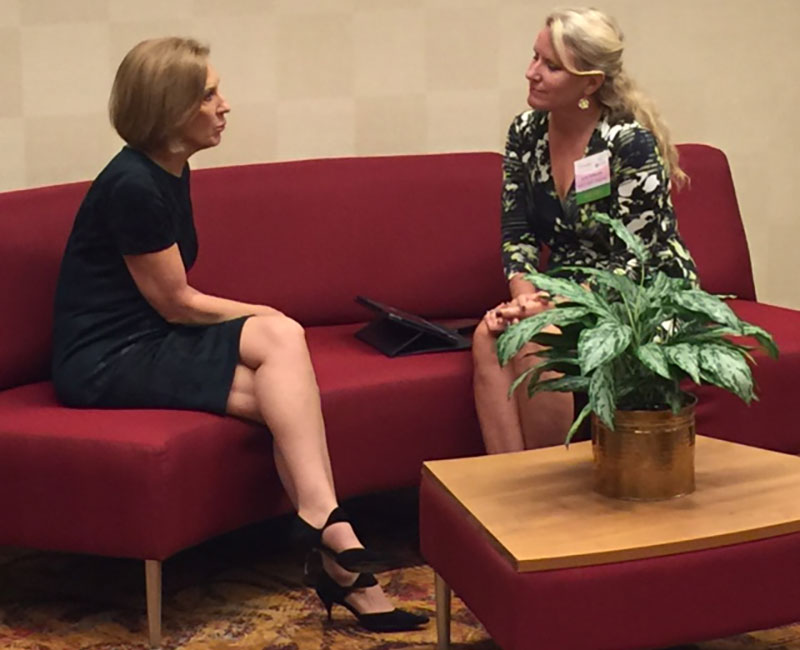
Carly Fiorina on Leadership, Gender Equality and Why Smoking A Joint is Not Drinking A Beer


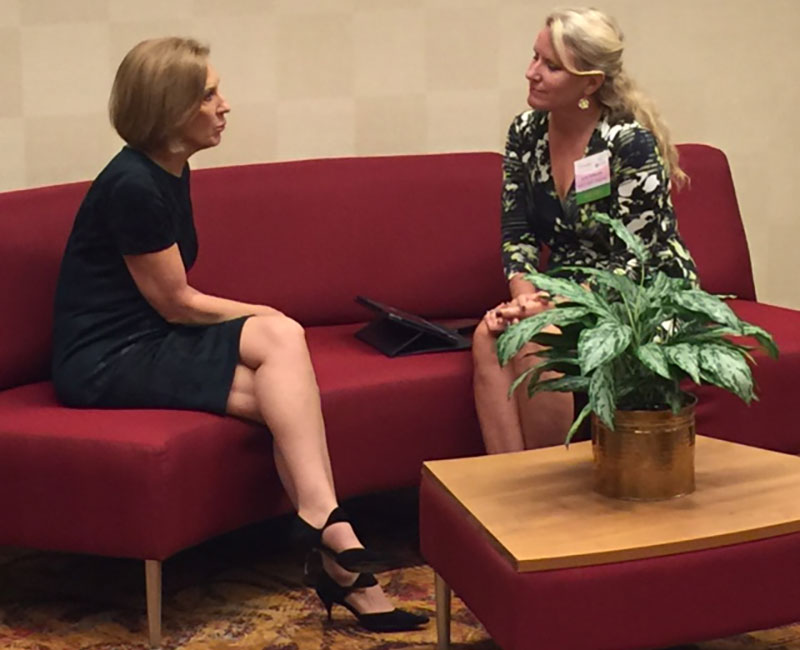
Julie Edwards, President of Real Leaders, put some questions to Republican presidential candidate Carly Fiorina at the recent National Association of Women Business Owners (NAWBO) conference in San Antonio, Texas.

What is a real leader?

A leader challenges the status quo and never accepts the way things are. You shouldn’t resist change just because things have always been that way. A leader unlocks potential in others. It has nothing to do with your title or position, anyone can lead from anywhere.

How do we get more women into top leadership roles?

We have to focus on merit and results. When we do that women will rise. I have always relentlessly built meritocracies, and at the end of the process, half my staff are usually women. In most organizations, they think they’re building on merit, but they aren’t. You’ll hear excuses such as, “Oh, I don’t know her. She’s never done this before.” Sometimes it’s about people being more comfortable with people like themselves. This is more about being a victim of the status quo than asking yourself who will produce the results, who will make the best contribution or who has the merit.

How do we fight the scourge of drugs among our youth?

Most people don’t realize what an epidemic this is. I didn’t realize either until I started hearing from so many parents that it was happening to them too. It’s a silent epidemic. We need to start talking about it more so that the stigma disappears. We need to start investing more in treatment and prevention and our criminal justice system needs to be reformed. The United States has the highest incarceration rate in the world, with two thirds of inmates imprisoned for non-violent offences, mostly drug related. This approach is not working. 

We lie to kids too. When we tell them that smoking a joint is like drinking a beer, it’s not. Lets make sure they understand the risks involved. 

Julie Edwards with Carly Fiorina.

Julie Edwards with Carly Fiorina.

Pope Francis: The future demands of us critical and global decisions

Pope Francis delivered a wide-ranging address before world leaders gathered at the United Nations General Assembly on 25th September, urging global action to protect the environment and end the suffering of “vast ranks of the excluded,” saying that “human beings take precedence over partisan interests.”

“The present time invites us to give priority to actions which generate new processes in society, so as to bear fruit in significant and positive historical events. We cannot permit ourselves to postpone ‘certain agendas’ for the future,” said Pope Francis.

“The future demands of us critical and global decisions in the face of world-wide conflicts which increase the number of the excluded and those in need,” he declared in an address just ahead of the General Assembly’s formal adoption of a new global framework, Transforming Our World: the 2030 Agenda for Sustainable Development, composed of 17 goals and 169 targets to wipe out poverty, fight inequality and tackle climate over the next 15 years.

In his remarks, he also warned that the realities in the Middle East and Africa were grave.

“I must renew my repeated appeals regarding the painful situation of the entire Middle EastNorth Africa and other African countries,” said Pope Francis, “These realities should serve as a grave summons to an examination of conscience on the part of those charged with the conduct of international affairs.”

“Not only in cases of religious or cultural persecution, but in every situation of conflict, as in UkraineSyriaIraqLibyaSouth Sudan and the Great Lakes region, real human beings take precedence over partisan interests, however legitimate the latter may be,” he continued. “In wars and conflicts there are individual persons, our brothers and sisters, men and women, young and old, boys and girls who weep, suffer and die.”

The Pope also noted the achievements of the UN as it celebrates its seventieth anniversary.

“The history of this organized community of States is one of important common achievements over a period of unusually fast-paced changes,” he said. “Without claiming to be exhaustive, we can mention the codification and development of international law, the establishment of international norms regarding human rights, advances in humanitarian law, the resolution of numerous conflicts, operations of peace-keeping and reconciliation, and any number of other accomplishments in every area of international activity and endeavour.”

But he also cautioned that the experience of the last 70 years had made it clear that reform and adaptation to the times were sometimes necessary.

“The need for greater equity is especially true in the case of those bodies with effective executive capability, such as the Security Council, the financial agencies and the groups or mechanisms specifically created to deal with economic crises,” he said.

The Pope also addressed the effects of exclusion and inequality, noting that the adoption of the 2030 Agenda, was an important step forward, adding that he was confident that the December Conference of States Parties to the UN Framework Convention on Climate Change (UNFCCC), widely referred to as COP 21, would secure fundamental and effective agreements.

During his introductory remarks, UN Secretary-General Ban Ki-moon said never in its 70-year history has the United Nations been honoured to welcome a Pope for the opening of the General Assembly.

“Your visit today coincides with the adoption of the 2030 Agenda for Sustainable Development,” Mr. Ban told Pope Francis.

“But that is no coincidence. You have often spoken of an ‘integral ecology’ – one that encompasses the environment, economic growth, social justice and human well-being – in other words, sustainable development for our common home.”

He noted that the recent Papal Encyclical – Laudato Si – defined climate change as a principal challenge facing humanity, and a moral issue.

“This message is critical as we approach the pivotal climate change conference in Paris in December,” the UN chief continued. “Across the global agenda, His Holiness is a resounding voice of conscience. He has cried out for compassion for the world’s refugees and migrants, and solidarity with people trapped in conflict and poverty.”

Mr. Ban recalled that in May 2014, Pope Francis met with the full leadership of the United Nations system at the Vatican, at which time he affirmed that the global community must mobilize the world beyond religious or political differences to forge a shared vision – a life of dignity for all.

For his part, General Assembly Mogens Lykketoft also welcomed Pope Francis to the world body.

“When you recalled previously how inseparable the ‘bond is between concern for nature, justice for the poor, commitment to society, and peace’, you spoke directly to the three pillars of the United Nations – and to the interdependency and interconnectedness between these three pillars,” Mr. Lykketoft told the Pope.

“That is the message at the heart of the new and very ambitious 2030 Agenda on Sustainable Development,” he continued.

Mr. Lykketoft also referred to the upcoming climate change conference in Paris, where, he said, the UN must adopt an ambitious climate agreement to protect people and the planet.

He also noted that a similar urgency was required “to bring an end to the conflicts and violent extremism affecting many parts of our world today,” adding that “our collective response to these crises, and to the plight of millions of displaced people and refugees has been, at beast, inadequate, and, at worst, a failure of our humanity.”

Those gathered at the General Assembly must respond “with leadership and action, in the spirit of solidarity, dialogue and tolerance,” he said.

Energy Rocks

Ukrainian born designer, Igor Gitelstain, lives and works in Israel. Igor graduated in Industrial Design at Shenkar College of Engineering and Design in Ramat Gan. He studied various fields of Industrial Design, covering different design approaches, 3D computer modeling, technical drawing and the production process. “The most important thing for me right now is to find my place in the world of design.

I want to be a designer for the real world who solves real problems for real people. Igor’s recent project is a human powered electric generator rocking chair or also known as the Otarky Rocking Chair. The concept is the design and production of products which return the energy used to produce the very same products. The chair generates electricity during the rocking motion. When someone sits in the chair and rocks, a magnet slides along a copper coil within the base of the chair.

As the magnet moves forward and back based on the movements of the person sitting in the chair, a current is generated. That current can be sent into a large battery to store the energy or hypothetically charge up an electronic device like a smartphone or a laptop. Igor specifically designed the Ortarky Chair to hide the fact that it generates electricity.

The only indication that the chair does providea source of energy is the power plug outlet located at the rear of the chair. The modern design of the chair uses laminate wood for the main seating area, white padding upholstery for comfort when sitting and brushed metal legs to hide the copper coil inductor.

When asked about the design, Gitelstain stated “If the chair gets produced on an industrial scale, I’d like people to buy it not only because of the electricity, but because of its looks and comfort.” Igor Gitelstains’ vision for the future of household products include a function of returning the energy that was invested in their creation, beyond their conventional and aesthetic uses.

The energy that the chair produces will join other renewable electricity generators within the household, such as solar panels and wind turbines. The idea is that the consumers can provide for their own energy needs.

www.igorgitelstain.me


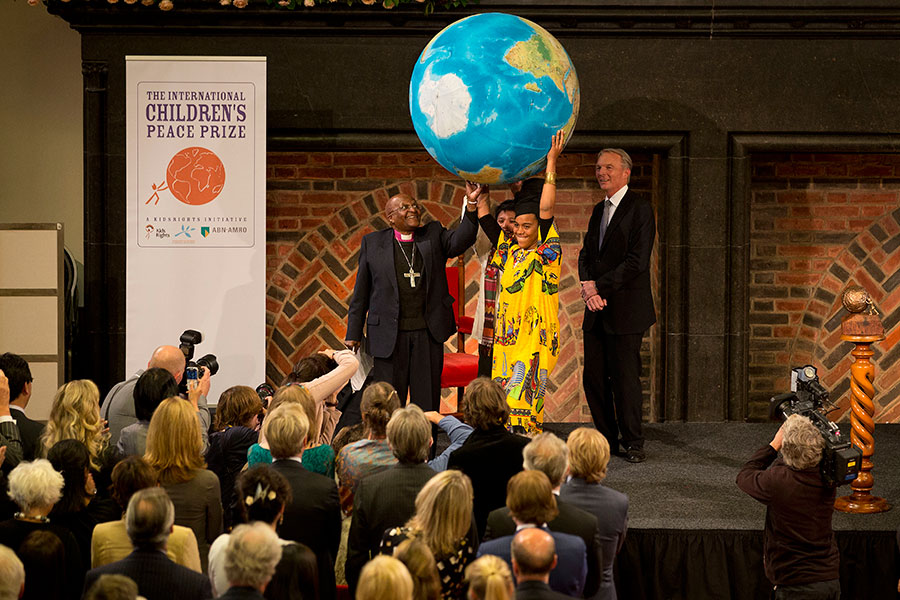
Desmond Tutu announces nominees for International Children’s Peace Prize 2015

The International Children’s Peace Prize is awarded to a child who strives courageously to establish children’s rights. The winner will be announced during the award ceremony on Monday 9 November in the Hague, the Netherlands. Archbishop Desmond Tutu is proud to announce that the final three nominees for the International Children’s Peace Prize 2015 are;

Abraham Keita (17 years old, Liberia) is nominated for his struggle for justice for children who are victims of violence. He became a member of the Liberian Children’s Parliament when he was only nine years old and has ever since undertaken action when the rights of children were being violated. Keita organised several peaceful marches and wrote petitions to plead with the Liberian government to respect the rights of children. In his pursuit of justice for children, Keita has demonstrated his ability to identify children’s rights’ violations, take action on the accountability of the perpetrators, and above all, to do so in a peaceful and powerful manner.

Aziza Rahim Zada (14 years old, Afghanistan) is nominated for inspiring refugee children, and girls especially, to voice their opinions. She stands up for children living in appalling conditions in Afghan refugee camps and has encouraged hundreds of other children to talk about their problems and claim their rights. In her own calm and convincing way she is able to build a bridge between a conservative society and a society which allows more progressive and effective approaches to girls’ and children’s rights. She organizes activities for children to discuss and document their problems, raises awareness and engages with parliament members and other opinion makers.

Jeanesha Bou (17 years old, Puerto Rico) is nominated for her struggle against human trafficking. Her ultimate goal is to eradicate modern-day slavery, a crime against humanity to which many people who are trafficked fall victim. Her message and advocacy have turned Jeanesha into an example for those dedicated to eliminating the human trafficking of children and youths. Jeanesha continues to speak out and expand her activities to reach more children.

In his message today, Tutu said that he has high hopes for these brave and young nominees: “The International Children’s Peace Prize gives a voice to the voiceless and shows that children can change the world.”

childrens peace prize nominees

About the International Children’s Peace Prize

The International Children’s Peace Prize is awarded annually to a child who strives courageously to establish children’s rights. Each year’s winner has in his or her own way demonstrated tremendous commitment to eliminating the problems that children face. Every year the message of the new young winner has enormous impact and demonstrates to millions of people globally that change is possible.

The International Children’s Peace Prize is an initiative of Marc Dullaert, founder of the KidsRights Foundation.The prize was launched in 2005 during the Nobel Peace Laureates’ Summit in Rome, chaired by Mikhail Gorbachev. The expert committee of the prize each year receives nominations from countries from all over the world. Very remarkable but often unknown brave children have been discovered through the annual nomination process.

This year, the International Children’s Peace Prize will be awarded for the 11th consecutive year. Ten brave and inspiring children have so far received the prize for their efforts in promoting children’s rights, including Nkosi Johnson who fought for the rights of children with aids and Malala Yousafzai, who won the International Children’s Peace Prize in 2013 and the Nobel Peace Prize in 2014.

This year’s prize had a total of 77 submissions, comprising 38 boys and 39 girls from 39 countries.

Archbishop Desmond Tutu is a patron of the International Children’s Peace Prize and has presented the prize three times. Each year the prize is presented by a Nobel Peace Laureate.

This year the prize will be presented by Nobel Peace Laureate Muhammad Yunus. The winner receives the statuette ‘Nkosi’, which portrays a child setting the world in motion, as well as a study grant and a world-wide platform to promote his or her ideals and causes for the benefit of children’s rights. Furthermore, KidsRights invests a project fund of €100,000 in projects in the winner’s home country which are closely connected to his or her area of work.

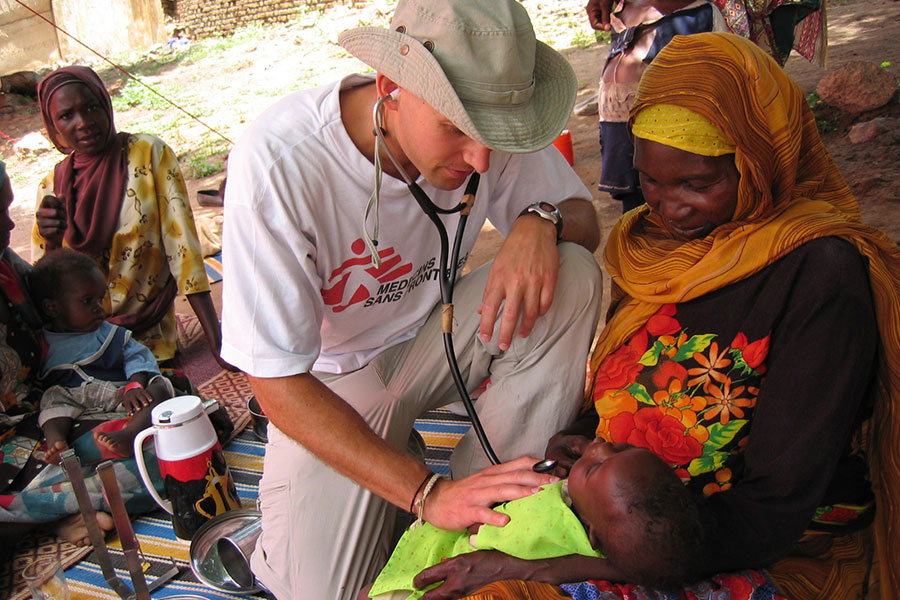
Doctors Without Borders: Silence Must Not Be Confused With Neutrality

Doctors without Borders (Medicines Sans Frontiers – MSF) is not the first organisation to receive the Nobel Peace Prize, there have been 20 organizations, foundations and institutes that have been awarded the prize since its inception in 1901. Many individuals who have won have become laureates because of a single act or from becoming known as a champion for peace against a particular struggle, an organization because of it’s global reach.

Medicines Sans Frontiers was founded in 1968 and selected for the prize in recognition of its pioneering humanitarian work on several continents. Their work is now spread over 80 countries and they have treated tens of millions of people. They provide assistance to populations in distress, to victims of natural or man-made disasters, and to victims of armed conflict, and they do so irrespective of race, religion, creed, or political convictions.

James Orbinski (pictured above) was the president of Doctors Without Borders when the organization was awarded the prestigious Nobel Peace prize in 1999 and his opinion is that consistency and a strong commitment from staff is the reason they won. They are also known for more than just their medical work – they also speak out on behalf of the people they treat and act to expose injustice.

Using his acceptance speech at the award ceremony, as a platform to speak out, Orbinski spoke directly to the then Russian leader Boris Yeltsin and condemned that country’s violence against civilians in Chechnya.

Justifying this unprecedented move, Orbinski said: “Silence has long been confused with neutrality, and has been presented as a necessary condition for humanitarian action. From its beginning, MSF was created in opposition to this assumption. We are not sure that words can always save lives, but we know that silence can certainly kill.”

doctors-without-borders

A strange trait of humanity is that governments always seem to find money for weapons and war but not for medical supplies. “An act of charity is not a necessity for many governments,” says Orbinski. He’s the first acknowledge both the power and the limitations of humanitarianism.

“No doctor can stop a genocide. No humanitarian can stop ethnic cleansing, just as no humanitarian can make war. And no humanitarian can make peace. These are political responsibilities, not humanitarian imperatives. The humanitarian act is the most apolitical of all acts, but if its actions and its morality are taken seriously, it has the most profound of political implications. And the fight against impunity is one of these implications,” he says.

Orbinski’s defining moment came about while working in Somalia in 1992 during the famine and civil war. He developed pneumonia and then meningitis and I was flown out to Nairobi, Kenya for treatment. At the time, he was also struggling to find doctors to work in Somalia, a country where they were trying to treat 100,000 patients. “I remember looking at myself in the mirror of the hospital washroom,” he says. “ I realized that if I didn’t go back, I could never look at myself the same way again, I would have failed. The question to myself was was, ‘Will you go back?’ My answer was ‘Yes!’”

Orbinski witnessed atrocities so horrific that he struggled to continue at times. Yet, he knew the people they were helping needed the assistance more than his personal coping problems. “There are moments when you can become overwhelmed,” he says. But you need to recognize that if you have the capacity or ability to respond to another’s circumstances, then you should.”

He’s a strong believer in looking beyond the “Band-Aid” – approach of patching something up and moving on, but acknowledges that the Band-Aid approach has its merits.

“You do it so that a person or community has an unbearable and intolerable suffering relieved,” says Orbinski. “It can be the first step in helping people restore their own economy or political system. It’s worth it because it allows a person who’s suffering to become an active participant in determining their own destiny.”

doctors-without-borders-2

The latest global crisis is the hundreds of thousands of people fleeing the war Syria and Iraq. Thousands are dying in a desperate attempt to enter Europe with their families. Orbinski is clear on how we should view these people. “It’s not an immigration crisis. These are not immigrants –they are refugees,” he says.

“To risk the lives of you and your family, you have to be leaving a situation that is far worse than the risk you are taking.”

He also wants to dispel the myth that these are people simply looking for jobs, for the so-called “better life.” Many like to refer to.

“It’s not the choice of a nation to refuse a refugee, says Orbinski. “This has been international law since the Second World War. I remember very well the slogan that emerged after this war; around the Holocaust and the massive numbers of people moving across Europe and the world – never again.”

Meet the Minister of Happiness (Yes, he really exists)


When Ecuadorian President Rafael Correa announced the creation of a new government ministry in June 2013, to be called the Ministry of Happiness, there were coughs of restrained mirth and some checked their calendars to see if it was April first.

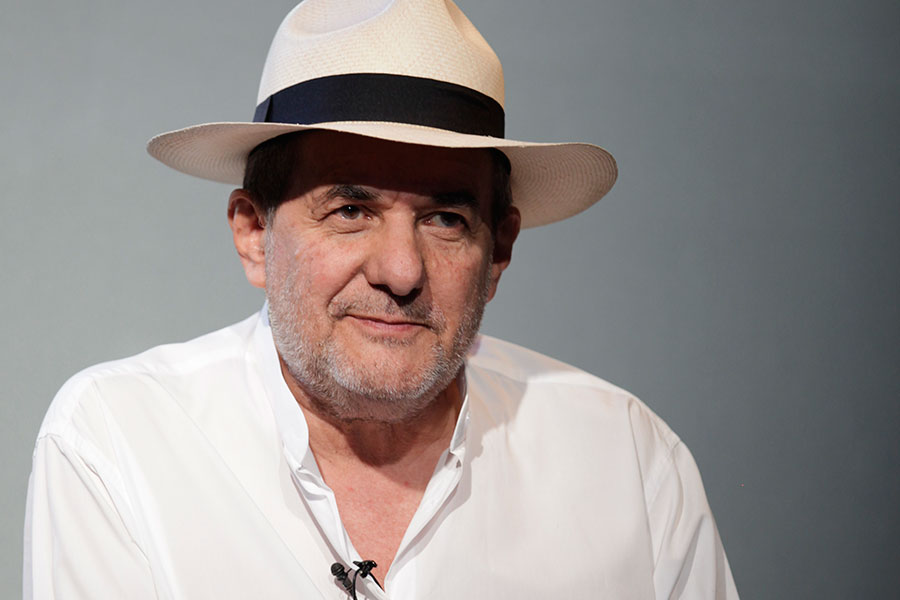
The Secretaria del Buen Vivir, loosely translated as “good living,” “wellbeing” or “happiness” is the smallest government department of Ecuador, with a staff of 27 and a budget of $2 million for the current financial year. The man leading the ministry is Freddy Ehlers (pictured above), a former journalist and television producer who has a strong leaning towards social causes and the protection of nature. In 1996 he ran for president, representing the independent party Nuevo Pais Party; that pushed for anticorruption legislation and environmental change. He finished third, garnering 20 percent of the vote, but despite not becoming president, he’s probably happier today, and having more fun. Most global leaders have to deal with regular economic meltdowns, global terror threats and the ruthless jostling for position that politics brings.

His official photograph has him wearing an open shirt and Panama hat. If you sidled up alongside him at a beach bar and began an idle conversation you’d be non-the-wiser that he works directly with the president on matters of national importance.

The ministry is a mixture of think tank, incubator and promotion agency and Ehlers has used his experience in producing environmental documentaries to create awareness around how vital conservation is to the wellbeing of all of us.

“It will require the equivalent of four planet earths for all seven billion of us to become middle class,” says Ehlers. “We obviously don’t have this option.” Ecuador has become the first country to have the rights of nature built into the constitution. “Protecting our rivers, animals and forests is a great way for human beings to show that we are actually the most intelligent species on the planet,” he says.

Ehlers considers much tourism to be unconsciously destroying nature and the social fabric of society through drugs, prostitution and unsustainable practices. His observations are not based on some moral high-ground either, but more to the fact that he also served as Minister of Tourism for a while. Harmony forms part of the idea of Buen Vivir and Ehlers has a vision on how to tackle the greatest crisis humans have faced in history – create more happiness.

“We face a crisis of the environment, society, politics, the economy, ethics and spirituality,” he explains. “Happiness is more important than aspirational living and collecting assets. It’s not possible to achieve if you don’t change inside first.”

Ehlers cites the growing trend in yoga as evidence that mindsets are shifting towards a greater mindfulness. He’s introduced Zen meditation (a moment of silence) in schools. “Imagine if everyone started their day with meditation? It would create the biggest revolution for good in history. Becoming mindful of the beauty of the universe can do this,” he says.

His job is not without detractors. The president is regularly asked by other ministers why he spends so much time with the Ministry of Happiness, when there are more pressing issues to attend to. Yet, in an unusual way, Ehlers is actually suggestion ideas that could become the starting point for serious reform and legislation. He believes that ideas that seem crazy at first, can eventually have their day. 

“The King of Bhutan proposed a GDP of happiness as a measure of wealth 40 years ago,” says Ehlers. “He was laughed at then, but look how important the idea has become today. We’re moving into an era where the idea of wealth and success is being redefined. After World War 2 progress meant more money, arms and security, and growth was equated with development.” He wants Ecuador to become a constitutional and legal example to other world governments that shows other solutions are possible. “We are living in the most beautiful and dangerous moment of our existence,” says Ehlers. “We need to challenge the model that has led to compulsive consumption and the degradation of the ecosystem.”

There are signs that consumption is changing, spurred on by technology. Uber has created a steamlined transport solution, Airbnb allows tourists to stay with ordinary people in their homes; solutions are increasingly appearing that offer more resourceful, less wasteful solutions.

“Great leaders are found inside us, not outside us,” says Ehlers. “Even the Pope has come out strongly in favor of social issues and the environment. He’s an ethical leader, alongside the likes of Nelson Mandela and Ghandi. Happiness doesn’t need to have any religious affiliation. Spirituality is not something exclusive to religion.”

The Greenest City in the World Can Be Found in Las Vegas

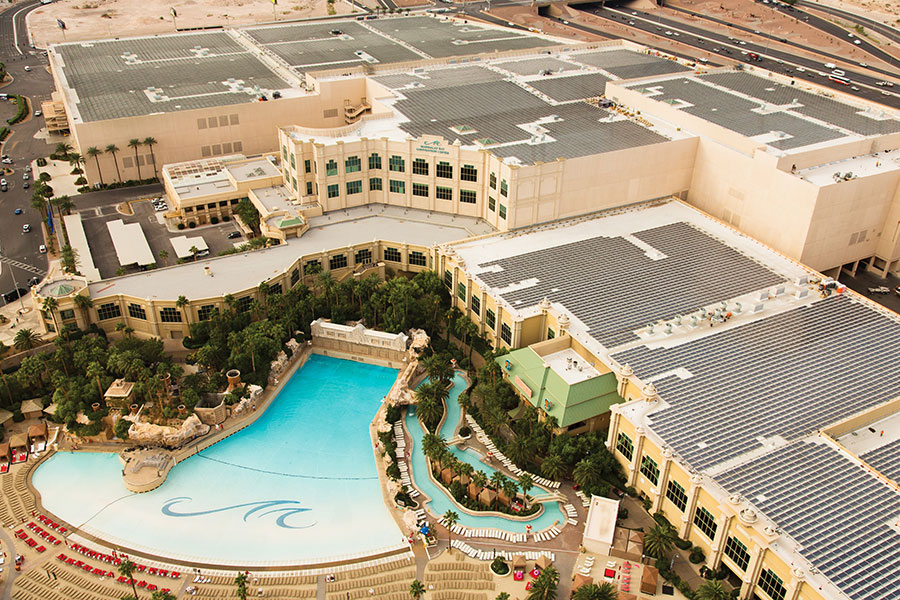
In the middle of a construction site, amongst the dust and noise that is more suited to a burly construction worker, stands a woman in a neatly pressed business suit wearing a hard hat. It’s Cindy Ortega (pictured above), senior vice president for corporate sustainability at MGM Resorts International. She’s surveying what is now the largest privately funded construction project in the history of the United States, a 16,800-square-foot area of Las Vegas known as CityCenter. The $9.2 billion project has seen a new city of seven buildings rise from the desert floor to become the most LEED (Leadership in Energy and Environmental Design) Gold certified construction projects in the world.

While newly constructed cities around the world face a challenge of how to integrate sustainability into long-term planning, along with the constraint of government red tape, it has taken a private company to demonstrate how its done.

“We feel that part of our responsibility is to spread the word about environmental responsibility,” says Ortega. “CityCenter proved that you can build luxury responsibly on a large scale.”

The large scale Ortega mentions is staggering. More than 41,000 hotel rooms and suites are associated with MGM Resorts’ ten major resorts on the Las Vegas Strip. A dedicated 8.5-megawatt natural-gas power plant was built to power CityCenter, reducing emissions and deploying waste heat to swimming pools throughout the development. 52,000 MGM Resorts employees live in Las Vegas, spreading the MGM Resorts’ influence way beyond its borders and you could build four Eiffel Towers with the amount of steel used in one section of CityCenter alone. Of course, being Vegas, they already have a replica Eiffel Tower.

Built primarily to take advantage of the 40 million visitors to Las Vegas every year, Ortega had no idea of the global attention CityCenter would attract. “Five years on, I would never have guessed I’d be invited by countries around the world to share ideas around CityCenter and advise major metropolitans on environmental sustainability,” she says.

It’s made Ortega realize that if you include stakeholders, vendors and suppliers in the greening of your environmental footprint, you will create the added value of seeing your values spread beyond the construction site – into supply chains and communities.

Business is one of the key factors in changing the future,” says Ortega. “In 2007 we were all a little sceptical about the implications for a business ‘going green.’ Most businesses were pretty conservative in this area, so I began to research how we could achieve something remarkable.”

What Ortega came up with was a formula that looked crazy at the time. She approached CityCenter president, Bobby Baldwin, with her report and asked if this was something he really wanted to do. His reply was, “Cindy, if we don’t do something now our environmental footprint is going to step on our children.”

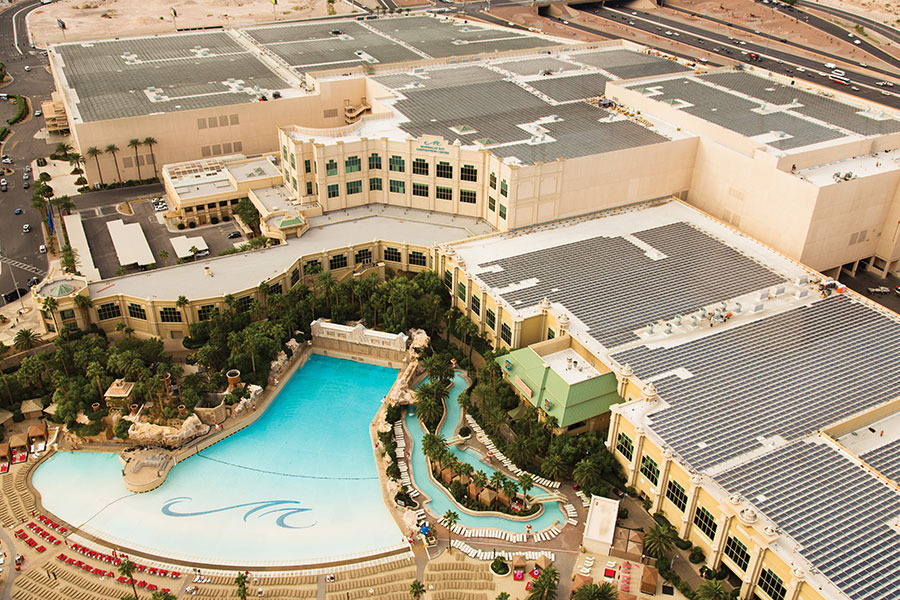
Got solar? MGM Resorts has installed one of the nation’s largest rooftop solar arrays.

Got solar? MGM Resorts has installed one of the nation’s largest rooftop solar arrays.


It’s a company-wide attitude that keeps surprising Ortega in pleasant ways. Recently, she approached company chairman James Murren with some cutting-edge technology she wanted to introduce as part of the sustainability program at CityCenter. “I thought he was going to postpone it for sure,” she says. “But he gave me more budget. He’s genuinely committed to us being a better steward of the environment.”

Before heading up MGMs sustainability drive, Ortega’s previous job was in finance. While monetary management might seem unrelated to the environment, Ortega is convinced that it’s actually the best way to approach sustainability.

“What I’ve learned from the MGM project is that the business of sustainability is successful only when it’s an effective business practice,” she says.

This effective business practice was put to the test in 2008 when the economic downturn hit Vegas hard. MGMs stock went from around $100 to just under $2 over a three-month period. The company went into survival mode and reviewed costs across the board. Ortega’s environmental plans turned out to be a benefit rather than a liability. “If MGM had viewed my ideas as ‘nice to have,’ I would have been first on the chopping block,” she says. Her ideas and policies turned out to be a good investment. Many other companies fail to see that ‘going green’ can also read ‘money saved. 

When Ortega first introduced her green ideas into Las Vegas, it was done quietly, behind the scenes. A city known for its escapist hedonism didn’t want to be prescribed rules or to have patrons ‘guilted’ into behaviour change. Today, she’s beginning to see a very different mindset. “Increasingly, guests are finding it unacceptable when a business doesn’t show a commitment to the environment,” she explains. Large, sophisticated corporations, that make up 25 percent of MGM’s room revenue, now demand a more environmentally aware service and are less compromising with whom they do business.

“It comes down to getting buy-in from your suppliers and from effective team work within your company,” says Ortega. “Sustainability does not happen in isolation. When a company positions itself as a leader in a particular field, it has to behave in a way that is harder than usual. Ultimately, people will become better at what they do if they work for a company that demonstrates good leadership.”


How CityCenter Puts Sustainability To Work

  • To build an energy and water-efficient resort in the middle of the desert, MGM looked carefully at the location of buildings, what direction the windows were facing and the type and size of trees to be planted.
  • Choosing water-wise fixtures helped conserve 33% of water and $40 million worth of sustainable, ethically-sourced wood was chosen, despite the increased cost.
  • Three different types of cooling systems are used, to work most effectively with the different styles of construction. Instead of traditional ceiling vents, in buildings with high ceilings, cooled air comes from under the floor or from cold water pipes underfoot. Air contaminants are pushed upwards, away from guests.
  • Faced with an 8 percent recycling rate and 300,000 tons of waste, CityCenter capitalised a small, local recycling company with a $2 million loan. They built a facility, bought trucks and paid the loan back through their services. Las Vegas now has a construction-recycling infrastructure.
  • MGM encourage large companies to work with small, minority and women-owned businesses. In the first phase of CityCenter, an experienced company with no minority or female shareholders was required to work with a smaller, qualifying company that built the framework for a skyscraper to the 4th floor, with the larger company completing the job to the 55th floor.
0