The Super Bowl Game Powered By The Sun

San Francisco 49ers score with the world’s first LEED certified sustainable sport stadium, with games completely powered by the sun.

High-density Wi-Fi for every person in the stadium will facilitate in-seat purchases of concessions and merchandise from any smartphone, and an ability to access in-stadium camera feeds from various angles of the game will ensure fans don’t miss a thing. Cool!

The cheering crowds for the San Francisco 49ers aren’t only be about the game anymore. The American football team, founded in 1949, has combined cutting-edge technology, environmental concerns and their sporting legacy to achieve their ambitious goal of becoming the world’s first sustainable sports stadium. The Levi’s Stadium was completed in 2013.

While traditional football rivalry against the Dallas Cowboys, ongoing since the 1970s, might be restricted to the field, the 49ers have scored a touchdown by integrating sustainability with their game. Perhaps Jed York’s vision, at the oldest major professional sports team in California, was sparked by his first experience at the organization, as Director of Strategic Planning, because he’s kept a consistent long-term view ever since.

Now CEO, York previously managed the integration of brand strategies with long-term operational development. This has perfectly positioned him to grow beyond the sport itself, and while most people would assume his day is consumed with winning the NFL Championship at any cost, he’s been hard at work creating a lasting environmental legacy for Northern California too.

A real leader is someone who has a vision, passion and who isn’t afraid to fail. A lot of the time you see leaders who are not willing to fail and that’s one of the downfalls of leadership in industry today,” says York. “Sometimes youth is a blessing, because when you’re young failure doesn’t even enter your mind.

Dozens of solar panels have been installed on the roof of the stadium, covering 9,574-square-feet. They generate around 375 kW of power, enough to offset the power used at the stadium during 49ers home games. York is aware that the stadium goes beyond a venue for fans to cheer their team on. “I want to make sure the things we’re doing with the stadium fit with the values of our community,” he says.

“That might include becoming the smartest building around, by using technology found here in Silicon Valley, making sure you include the wine and food culture from Napa to San Francisco, and making sure that you embrace sustainability. It’s about the entire community coming together. After all, that’s what sports are all about.” The new Levi’s stadium will be the first LEED certified NFL stadium and will also be neutral to the power grid, meaning that games will be completely powered by the sun.

LEED certification involves value-engineering your construction process and examining how green investments will affect expenses over the life of a building. Often, cutting a seemingly expensive line item from the build can result in losing money-saving synergies on the finished building. Most switched-on architects and engineers would advise you to set your goals for the “life cycle” rather than the “first cost” at planning stage.

While most teams are preoccupied with finding soft drink, burger and beer partners for sponsorship, the 49ers can claim they have a sustainable energy partner – in the form of NRG Energy, a national renewable energy company.

THE STADIUM IN NUMBERS  Seats: 68,500 made from aluminum and plastic, both recyclable materials. Manufactured in nearby Hayward Fireproofing: 60,000 sacks of fire-retardant material sprayed onto all metal beams protect steel from melting in a fire. Thermal Insulation: Placed under the metal decking floor for energy savings in air-conditioned rooms above and visible from below as a black ceiling – its raw color, that also doesn’t require painting. 365 days: The stadium has been designed as a year-round venue to host a variety of different events, such as concerts and soccer, ensuring maximum usage.

A generally held view is that going green, or sustainable, will cost more or not perform effectively, but York is convinced he’s on the right path. “We wanted to make sure that this enhances the fan experience, but is also the right thing to do for the community, making sure everybody’s involved,” says York.

“So far we haven’t seen anything that indicates we won’t be performing at peak performance and I think it’s the right fit and the right way to build a stadium in this day and age.” Rather than keeping the sustainable elements hidden, three solar panel covered “energy bridges” that will serve as the main entry and exit to the stadium, creating a dramatic, and very visual reminder to fans, of its purpose.

We’re striving to do good and do well at the same time. The 49ers motto is to ‘win with class,’ and that’s really what we’ve tried to do both on and off the field. The stadium will be representative of that idea, as will our team on the field.

York’s investment in green and sustainable technologies are already paying dividends. More people want to become involved, especially on the sponsorship side, and they’re able to charge a premium for some of the tickets and suites.

“It just opens the door to so many other opportunities that weren’t otherwise there,” says York.  “Ultimately it makes your fan base feel connected. I consider sustainability to be very important. Teddy Roosevelt coined the term ‘conservation’ at the commonwealth club here at the turn of the century and I think we’re trying to build on that, making sure that California is a leader in conservation.”

York is also aware that sustainability is not a priority among most teams in the sporting industry and acknowledges the future value of the 49ers being at the cutting edge of what he sees as the future of all stadiums. Beyond energy considerations, York cannot ignore the host of Fortune 50 companies located within a 15-mile radius of their Santa Clara stadium, many of which are tech related. He plans to take full advantage. “Technology can enhance the user experience, but it doesn’t create user experience,” says York. The close proximity to some of the world’s most successful tech brands will see the new stadium introduce unheard of synergies with fans.

High-density Wi-Fi for every person in the stadium will facilitate in-seat purchases of concessions and merchandise from any smartphone, and an ability to access in-stadium camera feeds from various angles of the game will ensure fans don’t miss a thing. The team plans to make the stadium a cashless and ticketless venue using smart technology and might even offer updates on bathroom lines. York has realized the power of social media and how the sheer volume of press generated by a sports team means that people are always watching.

“Kids look up to us and idolize our players and if you’re fortunate to be in that position, then you have to take that with great responsibility,” says York.

Part of that responsibility has been holding community events, during the week, which have seen a 100 percent participation from all players. They’ve also raised $3 million dollars a year through the 49ers Foundation, an initiative to keep kids safe, on track and in school.

I’ve learned that first and foremost you should do something you’re passionate about,” says York. “Don’t be afraid to fail. We were told countless times that a stadium couldn’t be built our way, and were labeled failures by just about everyone at first. We didn’t let that bother us.

Perhaps York’s ambitious plans for the 49ers can best be summed up by the team slogan of 2009 – “Don’t tell me, show me.”

 

Corporations Are Being Punished By Recruits Over Sustainability

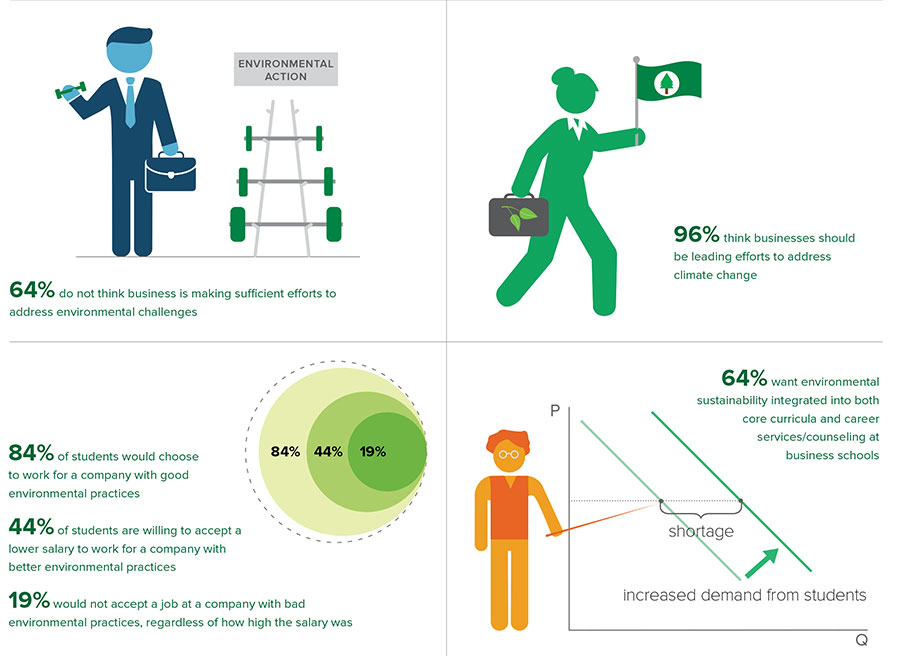
A new global study of more than 3,700 students at 29 top business schools found that corporations unwilling to act on environmental issues are increasingly punished by the men and women they would like to recruit. The study, conducted by Yale University in collaboration with the World Business Council for Sustainable Development and the Global Network for Advanced Management, shows that 44 percent of students are willing to accept a lower salary to work for a company with better environmental practices. Conversely, about one-fifth of respondents expressed an unwillingness to work for companies with bad environmental practices regardless of salary considerations. Students also overwhelmingly consider environmental action a profitable stance, noting that environmental protection will improve economic growth and provide new jobs.

“We often talk about a transformational change of our society, when we speak about climate action. And that transformation will affect both business as well as the institutions that educate the leaders in business” said Peter Bakker, President and CEO of the WBCSD. “The role of business in society is changing. Business leaders need to understand the complex nature of sustainability issues and integrate solutions for social and environmental challenges, with the need for good financial results. Today’s summary of survey results brings a clear call for change, demanding action on environmental sustainability. If business schools and business can deliver against this call for change, the necessary transformation toward a sustainable future will clearly be much more impactful.”

These next generation leaders expect business leaders, and in particular the C-Suite, to prioritize and responsibly lead in the search for environmental sustainability solutions, and they are willing to assume leadership roles themselves. More than two-thirds of participants said that they want to incorporate environmental sustainability into their careers, regardless of their role or industry. All else being equal, 84 percent of students would choose to work for a company with good environmental practices.

graph

While voicing a need for future employers to act on the environment, business students also demanded action from the schools they attend; students want a more thorough integration of environmental issues into the core operations and curricula of business schools. Sixty-one percent of survey respondents thought that business schools need to hire more faculty and staff with expertise in sustainability; 64 percent also wanted more career services and counseling on sustainability-related jobs.

“Worldwide, today’s business schools are being called to act from the very people we’re training as leaders,” according to Edward Snyder, Dean of the Yale School of Management. “It’s incumbent upon us to prepare our students for the world not of last generation, but the next.”

As the climate change negotiations at COP21 in Paris build steam, these results highlight the rising priority of solving climate change among future leaders. For a full copy of the report visit: https://cbey.yale.edu/risingleaders.

Forests to Fight Back in Paris Next Month


World leaders will meet in Paris next week and hopefully forge a historic agreement to fight climate change. We will need every tool at our disposal, including sensible policies and new technologies for clean energy and transportation. But we also have to go back to our roots. Forests, which cover a third of the land on earth, are an often under-appreciated resource for helping to address climate change, ease poverty and secure a sustainable future.

Forests play a central role in the carbon cycle. When trees are cut down, not only do they cease to absorb carbon, but they release greenhouse gases as their biomass decomposes and underlying soil organic matter oxidizes. Deforestation accounts for at least 12 percent of human-caused CO2 emissions, the second-greatest source after burning fossil fuels. For many developing nations in the tropics, deforestation is the largest source of emissions. This is especially true when forests or carbon-rich peat soils are burned. In Indonesia recently, fires set to clear land for agriculture have generated emissions exceeding the average daily emissions from all U.S. economic activity.

However, forests don’t always figure into climate negotiations as prominently as they should. Many countries have included forest management in their proposed climate commitments, but several (like Russia) lack specifics or a proven track record of good forest carbon management. Other countries, like Indonesia, have ambitious goals to reduce deforestation, but may struggle to do so without financial support from richer countries.

But hope springs eternal, and there are reasons to be optimistic about forests at Paris.

First, bold countries and their leaders have proven that it is possible to turn the corner on deforestation. Brazil has reduced forest loss by a stunning 70 percent in the Amazon since 2004 through a combination of improved sustainability policies for soy and beef production, better land rights for indigenous communities, and robust law enforcement supported by satellite monitoring. Tools like Global Forest Watch are now bringing the same satellite-based technology to all the world’s forests on a free, online, interactive platform. The Paris conference will see the launch of GFW Climate, which will link data on tropical forest deforestation and greenhouse gas emissions, showing how and where we should invest to keep carbon in forests and how well we’re all doing.

Second, WRI analysis shows that local and indigenous communities are effective managers of forest carbon, and securing local land and resource rights can bring substantial economic benefits. In Brazil, it costs only US$1.57 per hectare (ha) annually to provide communities with secure rights to their forests, while the resulting carbon-mitigation benefits are worth $38/ha to $230/ha per year. For the Brazilian Amazon, that adds up to $162 billion to $194 billion in benefits over 20 years. The scale is also significant globally, communities have legal rights to about one-eighth of the world’s forests.

Third, the money is starting to fall into place. Brazil’s success was helped along by billion-dollar partnerships with Norway, Germany and other donor countries. Similar partnerships are underway in Indonesia, Guyana, Peru, Colombia, Liberia, as well as many provinces and local projects. Some of these deals are on a country-to-country basis, others are tied into carbon markets through REDD+ (a scheme for reducing emissions from deforestation and forest degradation). Far more money is needed though, to start having impact at the scale we need.

Finally, and most inspiring, countries and communities are starting to bring forests back. Forest restoration in Tigray, Ethiopia, has turned a once famine-prone region into a breadbasket, generating significant benefits for agriculture through soil improvement and water retention. WRI analysis shows approximately 2 billion hectares of the world’s deforested and degraded lands, an area twice the size of China, show potential for some form of restoration. Restoring a mere 150 million hectares by 2020 could help feed 200 million people, raise as much as $40 billion annually, and reduce greenhouse-gas emissions (though it should be noted that restoration is not a substitution for avoiding deforestation). Nine Latin American countries and organizations pledged a collective 20 million hectares for restoration at the last climate conference; this year we could see even more, supported by additional financial investment. We will also see the emergence of a major restoration initiative in Africa, the continent with the greatest area of restoration opportunity and greatest need to address food and water security as well as poverty.

The Paris climate conference is a key moment. Countries should consider land use, agriculture, and forest management in their climate commitments—with robust targets for improved management, conservation and restoration—and not simply rely on existing forests as a carbon sink to offset emissions in other sectors. Companies that impact forests with agriculture and commodity supply chains should join the wave of zero-deforestation commitments, or showcase their progress and share lessons learned. Investors should do the same, and also consider putting their money into landscape restoration, which can deliver substantial long-term returns. The climate community should also acknowledge and account for the wider benefits of forests beyond sequestering carbon, for example livelihoods, water and soil health, support for agriculture, biodiversity, and much more.

Whatever the final agreement in Paris, it is guaranteed to be a stepping stone on a much longer road to a secure and sustainable future. With an eye on forests, we can make sure that path is a green and prosperous one as well.

By Nigel Sizer and James Anderson. This story first appeared at World Resources Institute

Declaration by the Nobel Peace Laureates on World Peace


We, the Nobel Peace Laureates and Peace Organisations, in the presence of youth from all over the world, gathered together in Barcelona from 12 – 15 November 2015, have considered issues affecting world peace – with special emphasis on the current refugee and migration crisis.

We are profoundly shocked and outraged by the barbaric killing of more than 150 innocent people in Paris on the evening of 13 November. We express our deepest sympathy and solidarity with the families of the victims and with the people of France. 

This outrageous attack stresses the urgent need to address the root causes of the current refugee crisis and insecurity in the world. This situation should not be abused to demonise refugees and the Muslim community.

As Nobel Peace Laureates and Laureate organisations we join with millions of individuals, organisations, communities and cities who every day make a difference by working for a better and more peaceful world. 

We collectively raise our voices in compassion for the millions of refugees who have been forced to leave their homes. We affirm that the manner in which we honour and protect their inherent dignity and human rights is a measure of our own humanity.

We are particularly concerned about the plight of women and children whose lives have been devastated by conflict, repression and deprivation. We must and can eliminate the conditions that compel people to leave from their homes.

The refugee and migration crisis does not exist in isolation. It is a symptom of the broader problems that confront humanity that include

  • continuing conflict in many countries;
  • the consequences of militarism, extreme nationalism and the use of force and proxy wars by global powers in pursuit of strategic, financial and ideological interests;
  • distorted religious beliefs that lead to horrific acts of violence;
  • the failure of governance characterised by rampant corruption, persecution and the absence of democracy, basic human rights and the rule of law;
  • the gross inequalities in opportunities and in economic and social wellbeing between and within the so-called developed and developing countries;
  • the failure to accommodate, tolerate and appreciate the value of religious, cultural and ethnic diversity;
  • the growing impact of climate change that will increasingly threaten food security and disrupt the lives of hundreds of millions of people in the most vulnerable societies; and
  • the criminal exploitation of refugees by human smugglers.

We believe that many of these problems can be solved if the international community fulfils its commitment to achieve the 17 Sustainable Development Goals that nations have already adopted as the framework for a comprehensive, practical and achievable path to a secure and peaceful future.

We also call on the international community to

  • address the root causes of the refugee and migration crisis while assuring access to asylum;
  • redouble efforts to bring peace to Syria, Afghanistan, Iraq, Yemen, Ukraine, Palestine/Israel, Somalia, South Sudan, the Central African Republic and other societies in conflict in a process that includes the peoples involved – especially women – and concerned nations;
  • denounce and reject the use of distorted religious doctrines and ideologies to justify violence by placing perverted beliefs above compassion and other universal values;
  • ensure that refugee children have adequate access to education and health care;
  • promote good governance based on respect for fundamental human rights and the rule of law;
  • prevent ethnic conflict and repression by recognising the value of diversity and by protecting the rights of minorities;
  • achieve and implement international agreements to combat climate change that bind all elements of society including government, business, finance and the military – with special focus on the forthcoming conference in Paris;
  • identify and prosecute those responsible for human smuggling; and
  • provide much greater support to countries bordering conflict areas which are hosting refugees – and underfunded humanitarian organisations aiding refugees.

True security will never be achieved by military force or by the possession and threat of nuclear weapons. It requires adherence to international humanitarian law and global cooperation in meeting the authentic needs of humanity. We call on the nations of the world to

  • redirect each year at least 10% of annual military expenditure of over 1.8 trillion dollars to implement the programs required for the 17 Sustainable Development Goals;
  • implement fully the Arms Trade Treaty and end illicit arms trading;
  • put an immediate end to any new arms race – especially the modernisation of nuclear arsenals and the pursuit of fully autonomous weapons systems; and
  • fulfil the legal obligation to commence negotiations now to eliminate nuclear weapons.

True personal, national and global security is found in the practical application of compassion.

A New Psychology For Sustainability Leadership

Since World War II, researchers have been asking: “What makes great leadership?” “How do successful leaders become who they are?” and “What are the skills and capacities that make them successful?”

Until the middle of the 20th century, centralization of power and control were the primary themes in the leadership literature. As a result, many answers to these questions initially centred on the military, and many of the great leaders written about in the United States were famous generals such as Patton and Eisenhower. Based on principles of scientific management and the rational man, modern leadership theory began to emerge in the middle part of the 20th century.

Personality traits, intelligence and leadership styles became a primary focus for describing great leadership. Transactional and transformational theories of leadership that focused on the ability of leaders to motivate their workers also emerged in the 1950s and 1960s. Collectively, these theories became known as “great man” theories of leadership. Over the second half of the 20th century, leadership scholars have conducted more than a thousand studies in an attempt to determine the definitive styles, characteristics or personality traits of “great man” leaders.

The major assumption underlying these “great man” theories is that leaders are born and not developed. Further, that these great leaders possess extraordinary capacities including charisma, intelligence and confidence.

Significant alternatives to the “great man” theories emerged in the late 20th century that focuses more on self-awareness and broader purpose. Terms including “servant leadership,” “primal leadership,” “authentic leadership” and “enlightened leadership” began to appear.

Based on my experience in the corporate world and in higher education, the most important capacity for leaders to develop involves their psychological and emotional development. This includes a greater awareness of values, motivations, and deeper purpose. For this reason, I use Servant Leadership, Primal (emotionally intelligent) Leadership, and The Fifth Discipline Fieldbook as my primary course texts.

When my awareness of the ecological crisis deepened, I discovered how servant leadership and emotionally intelligent leadership lead to serving not only the people around us, but also the natural environment around us. I discovered new ways that these leadership philosophies can contribute to a psychology for sustainability leadership.

Read more in Steve Schein’s new book A New Psychology For Sustainability Leadership, available here:

Steve Schein is a sustainability leadership educator, researcher, and executive coach. After 25 years in the corporate world and 10 in academia, he sees the evolution of business leadership and education towards ecological sustainability a global imperative. To that end, his research focuses on the development of ecological and post-conventional worldviews in the setting of multinational corporate leadership.  He currently serves on the Board of Directors for Net Impact and the GEOS Institute. He can be reached through his website at www.steveschein.net.

Seventeen Year-Old Liberian Wins Children’s Peace Prize

Seventeen-year old Abraham M. Keita from Liberia is the 2015 winner of the International Children’s Peace Prize. He was presented with the prestigious award for demanding justice for children who are victims of physical or sexual violence, and for successfully campaigning for the Liberian parliament to adopt the Children’s Law. The award was given to him at a ceremony at The Hague in the Netherlands on 9 October.

In the presence of the world press Keita received the Prize from Nobel Laureate Leymah Gbowee who in 2011 was the first Liberian to receive the Nobel Peace Prize for her nonviolent struggle for the safety of women and for women’s rights to full participation in Liberia’s peace-building process. Gbowee said: “It is a great honour to award the Prize. It is very special and inspiring that Keita, already at such a young age, demands that perpetrators and would be perpetrators be held accountable. I recognise in him a true changemaker: fighting to end the extreme violence against children!

In September, Keita was nominated by Nobel Peace Laureate Desmond Tutu, patron of KidsRights and the International Children’s Peace Prize, together with Aziza Rahim Zada from Afghanistan and Jeanesha Bou from Puerto Rico. Keita’s tireless work as a campaigner, bringing attention to crimes against children and campaigning until the perpetrators are locked away, stood out and convinced the jury. Keita also played a leading role in the Liberian Children’s Parliament where he successfully lobbied the Liberian Parliament to adopt the Children’s Law to protect children’s rights.

The KidsRights Youngsters, the group of winners of the International Children’s Peace Prize, which includes Nobel Peace Laureate Malala Yousafzai, congratulated Keita wholeheartedly: “We are happy to welcome Abraham to the Youngsters. Together we will continue the fight to improve children’s rights and advocate for an immediate end to violence against children.”

Upon receiving the Prize today, Keita confirmed that their work will continue: “Together with my peers I have successfully lobbied for children’s rights laws, but they now need to be put into practice. Children worldwide are still exposed to violence and injustice while thugs often go unpunished. I want people across the globe to acknowledge that this is unacceptable and that every world citizen, whether young or old, can be an agent of change.”

The International Children’s Peace Prize is an initiative of KidsRights, the foundation committed to defending children’s rights worldwide. The award ceremony is held annually in The Hague, the Netherlands, the international city of peace and justice. The prize is awarded annually to a child who fights courageously for children’s rights. Every year, the message of the new young winner has enormous impact and demonstrates to millions of people globally that change is possible.

The #BusinessCase for Gender Equality in Leadership


“No country can get ahead if it leaves what amounts to half the population behind.”

This quote from the McKinsey report, Economic Benefit of Gender Equality, provided a soft opening to a session focused on the data and facts pointing to the benefits of gender diversity in business.

Alison Pyott from Veris Wealth Partnership added that for the first time, we have research that links gender equality in society with gender equality in work, pointing to the holistic benefits of gender diversity. In fact, the McKinsey study cites “$28 trillion of additional annual GDP in 2025 in the full-potential scenario of bridging the gender gap,” begging the question of why aren’t we getting there faster?

Saundra Gibson from Credit Suisse offered that although “we conceptually agree having women in the workplace and a diverse workforce makes sense, now, we have statistics to prove that it is financially beneficial for companies to have a diverse workforce,” which starts to remove obstacles for progress.

In fact, according to “The CS Gender 3000: Women in Senior Management”: “Companies with more that one woman on the board have returned a compound 3.7 percent a year over those that have none since 2005.” Adding to this, “We find also that companies with higher female representation at the board level or in top management exhibit higher returns on equity, higher valuations and also higher payout ratios.”

Yet looking further, the data shows that its not just about women on Boards, but rather diversity across multiple levels of management that brings about the most positive returns. Homogeneity is the real enemy, hence funds and investment groups are demanding management-level — not just Board-level — diversity reporting.

Julie Gorte from PAX World Investments added that a “10 percent increase of women in top management positions improves the bank’s future return on equity by more than 4 percent p.a. and this positive relationship is almost twice as large during the global financial crisis than in stale market conditions” — showing that even in stale market conditions, diversity in management brings positive returns.

While the panel agreed that the increase in research and data points is crucial to progress the diversity argument, they were even more aware that the question of whether these statistics are correlation or causation remains unanswered. Susanne Katus from eRevalue also pointed out the importance of using statistics to tell a story so that the information stays with us, rather than being blinded by numbers.

This post first appeared on Sustainable Brands on October 8, 2015.

Want To Save The World? Start Thinking Like Thomas Edison

One eighth of the wealth of the world can be traced back to the ideas of this prolific inventor. Once named by Life magazine as the single most important individual of the past thousand years, how did Edison create those ‘light bulb’ moments – before the light bulb had even been invented?

We’ve all heard of Thomas Edison, the iconic inventor, businessman and game changer, regularly mentioned alongside other great minds such as Henry Ford, Steve Jobs and Albert Einstein. During his lifetime, he created some of the world’s most famous inventions; such as the light bulb, and began industries that have matured into multi-billion dollar enterprises; such as playable (on-demand) music, which many would be unable to live without today. After a slow start at school, largely related to his family’s limited resources, Edison discovered his talents as a businessman.

His entrepreneurship was inherited from his father, a carpenter, shingle maker and land speculator. His mother, a schoolteacher, opened his eyes to the world by teaching him, “ how to read good books quickly and correctly,” as Edison later recalled. As an adult Edison was a voracious reader, and his ability to read and process large quantities of printed information contributed greatly to his success. By the time he retired Edison had founded 14 companies and planted the seeds to what was later to become General Electric, one of the biggest publicly traded companies in the world.

At age 21, he had already patented the first of 1,093 inventions in the United States. Edison did not simply set out to build a better candle; he wanted to find a whole new way to illuminate the darkness. That’s the kind of vision a real leader has. “As a measure of how Edison changed the world, consider this,” says John Keegan, President and CEO of the Edison Innovation Foundation. “When he was born in 1847, there were no industrial research laboratories, no phonographs, no motion picture cameras, and no electric power systems, let alone a practical electric light.”

When he died in 1931, the New York Times estimated the value of the industries based on his inventions at more than $15 billion. His inventions made the modern age possible. It wouldn’t inaccurate to portray Thomas Edison as a forerunner of re-cycling either, particularly in respect of his inventions. He used the state of the art research and created a development center to improve his old inventions and create new.

Today, we live in a somewhat sanitized and risk adverse twenty-first century, bound up in regulatory red tape, with lawsuits in hot pursuit of any company that builds on the innovation of others. While many have criticized Edison for taking too much credit for much of the innovation developed by his teams, he was none-the-less a forerunner in creating collaborative development – a concept that is looked on today as a standard, and good, business practice Let’s start with one of the most important factors that influenced Edison – the times in which he lived.

The late 1800s and early 1900s was the era of the Industrial Revolution in the United States and around the world. Numerous scientific discoveries were being made and becoming more important in people’s lives. Someone with mechanical abilities and scientific discipline – such as those that Edison possessed – had the opportunity to invent or improve on many needed devices, effectively solving the social needs of the time. While he was certainly an ingenious scientist, Edison had a grander entrepreneurial vision than other solo inventors of his time.

His manufacturing and business endeavors led to enormous success and were the driving forces behind much of his scientific decision-making. From the 1870’s through the 1920’s Edison’s laboratories at Menlo Park, New Jersey combined knowledge, resources and talented collaborations to turn ideas into commercial products. His laboratories introduced new products on a regular basis and his invention formula shifted from talented individuals working alone to organized groups working in laboratories, established specifically for industrial research and development.

Diversifying the products in these laboratories allowed Edison to apply ideas and concepts from one invention to another, which also helped to minimize marketing risks. Edison was a master at creating solutions through highly organized think tanks. Rather than waiting for the answer to present itself he embarked on an aggressive process of investigation to flush out an answer that he knew must already exist, somewhere.

His very pragmatic approach and the dismissal of romantic ideas around inventors of the day, had him assert that problem solving was no accident: “It is too much the fashion to attribute all inventions to accident, and a great deal of nonsense is talked on that score.” “Edison operated on an international scale before the modern globalization of the world’s economy,” says Keegan. “He manufactured and marketed his inventions in Europe, North and South America, and Asia. Heavily reliant on globally resourced raw materials and skilled workers, he was also influenced by the ideas and concepts of an international community of scientists and researchers and, in turn, a global public eagerly awaited his latest invention.”

Edison’s experience as an innovator is as relevant today as it was over a hundred years ago. He devoted considerable attention to the questions all innovators face in modern times: Which products should I develop? How should those products be designed, manufactured and marketed? How do I raise money to support research and development? How do I respond to competition and changing markets? But what made him stand out as a successful innovator? Diversity across a range of interests, the pursuing of research across many different fields, the drawing on of past experiences and solving of new problems, were his greatest strengths combined with a dual persona: the mythic, larger-than-life “Wizard of Menlo Park” – a tireless heroic inventor who gave us light, sound and moving pictures – and the innovator who spent his life solving technical problems in shops and laboratories and creating companies to manufacture and market new technologies.

One could not have existed or indeed been so successful without the other. Bill Gate’s has attributed Edison as a key inspiration in his career, and as an innovator too, quickly recognized the practicality that must exist to resolve world problems. “Edison was a very practical person,” says Gate’s. “He learned early on that it wasn’t enough to simply come up with a great idea in a vacuum; he had to invent things that people wanted.”

The same might be said today of pressing social problems that need urgent answers. It wasn’t always easy. He encountered a large number of problems along the way. He once famously said, “I haven’t failed. I’ve just found 10,000 ways that won’t work.” However he learned to pivot on problems and his ideas, recycling them into other products and successes for which they weren’t first intended. While we currently obsess about glass, paper and plastic recycling, many forget that ideas too can be recycled. “Just because something doesn’t do what you planned, doesn’t mean it’s useless,” he once said.

If you nurture the ability to pivot on projects and ideas, you’ll not only save time, but also potentially produce something even better then you might have thought possible. Perhaps one of the most telling characteristics of Edison was his work desk, still preserved intact at the National Historic Park Museum in West Orange.

Of the many cubbyholes above his work area one is marked “New things” in neat handwritten letters and filled with folded papers; proof of his irrepressible interest in the next big idea. “If he were alive today, he would be on the cutting edge of innovation,” says Keegan.

While Edison shifted our awareness of the world, connected us all for the better and put the planet on an industrious path that has made our lives easier, he would no doubt look at our current, pressing economic challenges and repeat what he told his colleagues more than 80 years ago: “There’s a better way to do it. Find it.”


Arab Spring Gets A Boost With 2015 Nobel Peace Prize

Norwegian Nobel Committee has decided that the Nobel Peace Prize for 2015 is to be awarded to the Tunisian National Dialogue Quartet for its decisive contribution to the building of a pluralistic democracy in Tunisia in the wake of the Jasmine Revolution of 2011. The Quartet was formed in the summer of 2013 when the democratization process was in danger of collapsing as a result of political assassinations and widespread social unrest. It established an alternative, peaceful political process at a time when the country was on the brink of civil war. It was thus instrumental in enabling Tunisia, in the space of a few years, to establish a constitutional system of government guaranteeing fundamental rights for the entire population, irrespective of gender, political conviction or religious belief.

The National Dialogue Quartet has comprised four key organizations in Tunisian civil society: the Tunisian General Labour Union (UGTT, Union Générale Tunisienne du Travail), the Tunisian Confederation of Industry, Trade and Handicrafts (UTICA, Union Tunisienne de l’Industrie, du Commerce et de l’Artisanat), the Tunisian Human Rights League (LTDH, La Ligue Tunisienne pour la Défense des Droits de l’Homme), and the Tunisian Order of Lawyers (Ordre National des Avocats de Tunisie). These organizations represent different sectors and values in Tunisian society: working life and welfare, principles of the rule of law and human rights. On this basis, the Quartet exercised its role as a mediator and driving force to advance peaceful democratic development in Tunisia with great moral authority. The Nobel Peace Prize for 2015 is awarded to this Quartet, not to the four individual organizations as such.

The Arab Spring originated in Tunisia in 2010-2011, but quickly spread to a number of countries in North Africa and the Middle East. In many of these countries, the struggle for democracy and fundamental rights has come to a standstill or suffered setbacks. Tunisia, however, has seen a democratic transition based on a vibrant civil society with demands for respect for basic human rights.

An essential factor for the culmination of the revolution in Tunisia in peaceful, democratic elections last autumn was the effort made by the Quartet to support the work of the constituent assembly and to secure approval of the constitutional process among the Tunisian population at large. The Quartet paved the way for a peaceful dialogue between the citizens, the political parties and the authorities and helped to find consensus-based solutions to a wide range of challenges across political and religious divides. The broad-based national dialogue that the Quartet succeeded in establishing countered the spread of violence in Tunisia and its function is therefore comparable to that of the peace congresses to which Alfred Nobel refers in his will.

The course that events have taken in Tunisia since the fall of the authoritarian Ben Ali regime in January 2011 is unique and remarkable for several reasons. Firstly, it shows that Islamist and secular political movements can work together to achieve significant results in the country’s best interests. The example of Tunisia thus underscores the value of dialogue and a sense of national belonging in a region marked by conflict. Secondly, the transition in Tunisia shows that civil society institutions and organizations can play a crucial role in a country’s democratization, and that such a process, even under difficult circumstances, can lead to free elections and the peaceful transfer of power. The National Dialogue Quartet must be given much of the credit for this achievement and for ensuring that the benefits of the Jasmine Revolution have not been lost.

Tunisia faces significant political, economic and security challenges. The Norwegian Nobel Committee hopes that this year’s prize will contribute towards safeguarding democracy in Tunisia and be an inspiration to all those who seek to promote peace and democracy in the Middle East, North Africa and the rest of the world. More than anything, the prize is intended as an encouragement to the Tunisian people, who despite major challenges have laid the groundwork for a national fraternity which the Committee hopes will serve as an example to be followed by other countries.

Subway Introduces New Sustainability Efforts


As a part of the restaurant chain’s continued commitment to making its restaurants and operations more socially responsible, the Subway brand has made LED lighting standard for all new and remodeled restaurants.  This upgrade will provide energy-efficient lighting that, in 2014 with a small percentage of stores participating, saved 21.9 million kilowatt hours – enough energy to power 1,996 households in a single year.

This news follows a number of recent environmental milestones for Subway, including adding to the brand’s number of “Eco-Restaurant” certified store locations. Additionally, several more Eco-Restaurants are in various stages of development and an increasing number of franchisees are incorporating green elements into their existing stores.

“From reducing water and waste to using energy-efficient equipment, our franchisees are deeply committed to finding new ways to make their stores more ‘green,'” said Elizabeth Stewart, who heads the Subway brand’s corporate social responsibility efforts. “We know there is much more work to be done, but every step taken in every restaurant is one more step towards our social responsibility and sustainability goals.”

As a part of the restaurant chain’s continued commitment to making its restaurants and operations more socially responsible, the Subway brand has taken significant steps in recent years as  part of its environmental commitment, including:

  • Standardizing low-flow faucets/taps with increased water pressure in all Subway restaurants; this small change annually saves an estimated 277 million gallons of water
  • Using cleaning supplies that are CARB (California Air Resources Board) and Green Seal certified
  • Exclusively offering napkins made from 100% recycled fiber, processed chlorine-free, and printed with soy or water-based inks
  • Ensuring a majority of the packaging used in North American stores is made with recycled content which can be recycled or composted where facilities exist
  • Using salad bowls and lids made from two recycled plastic water or soda bottles (20 ounce), diverting 141 million bottles from landfills last year
  • Adding 95% post-consumer recycled material to redesigned catering trays, reducing about 3 million pounds of plastic materials from going directly into the waste stream each year

Most recently, its newest restaurant location in the Fort Wayne area of Indiana has earned Eco-Restaurant designation from the brand. “This was the first store I had constructed from the ground up, so I wanted to use this opportunity to do something socially responsible in my hometown of Fort Wayne,” said Subway Franchisee Jeff Sebeika. “I believe in being a good corporate citizen and I’m proud to be a part of a company that encourages our team’s environmental efforts and participation with community organizations.”

0