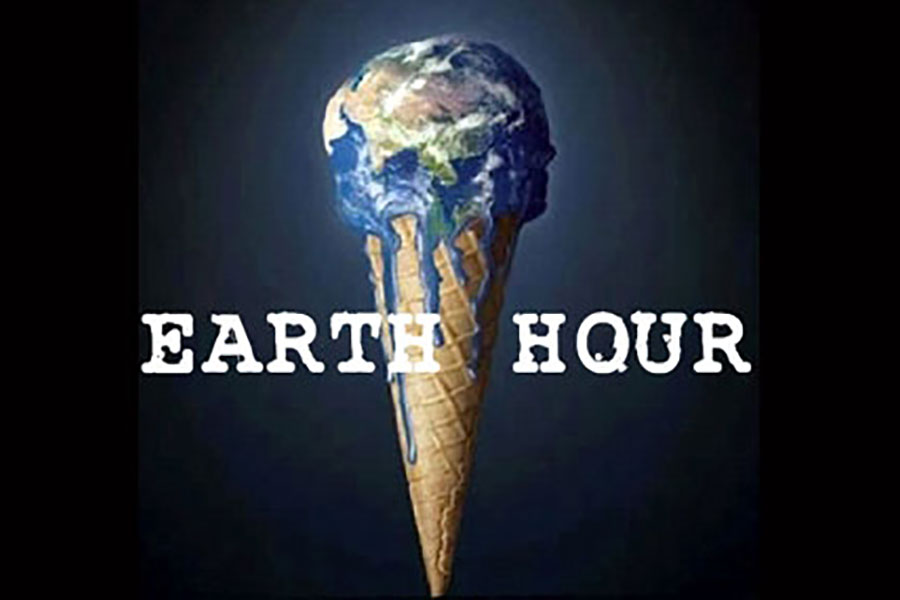
Earth Hour is this weekend, but energy conservation is important all year

The organisers of Earth Hour are encouraging you to switch on your social power and switch off your power sockets to shine a light on climate action on Saturday, March 19 between 8:30 p.m. and 9:30 p.m. 

To show support for Earth Hour, customers can safely go “off the grid” by turning off all non-essential lighting, appliances and devices. If using candles as a light source, do not leave them unattended. The event is held worldwide annually encouraging individuals, communities, households and businesses to turn off their non-essential electrical appliances and lights for one hour as a symbol for their commitment to the planet.

It was famously started as a lights-off event in Sydney, Australia in 2007. Since then it has grown to engage more than 7,000 cities and towns worldwide. Today, Earth Hour engages a massive mainstream community on a broad range of environmental issues.

Earth Hour is a global environmental initiative in partnership with World Wildlife Fund (WWF). Last year, electricity usage during Earth Hour dropped by 3.5%.

CONSERVATION TIPS 

  • In the winter months keep curtains open to heat your home naturally; in summer, close them to keep your home cool 
  • Shift your laundry and set your dishwasher to start after 7 p.m. when off-peak prices begin 
  • Turn down your thermostat. For every degree lower, you’ll save up to 3% on heating costs 
  • Unplug appliances and devices that aren’t being used to avoid phantom power 

httpss://www.youtube.com/watch?v=wxhHhyjcTmo


Ezra Jack Keats: The Grandfather of Diversity in Children’s Literature

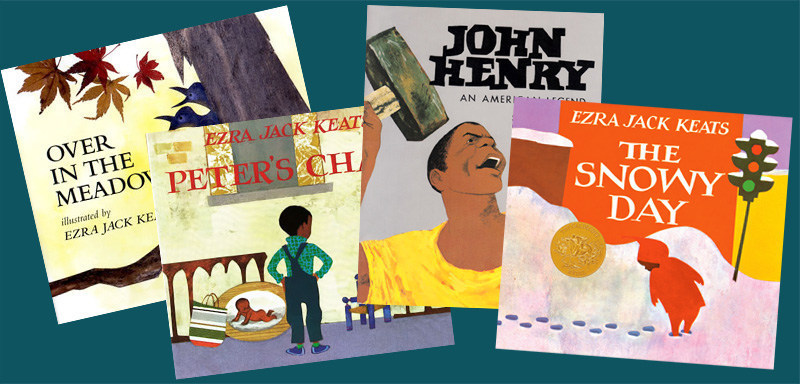
Ezra Jack Keats, the acclaimed author-illustrator of The Snowy Day, which broke the color barrier in mainstream children’s literature, would have turned 100 on 11 March. He died in 1983, aged 67. His 1962 classic, with its protagonist a little African American boy in an iconic red snowsuit, was instantly embraced across social and racial boundaries. It was awarded the Caldecott Medal in 1963 and designated a “book that shaped America” by the Library of Congress in 2012.

The Ezra Jack Keats Foundation is making the late author-illustrator’s centenary a year-long celebration with events planned across the country. Birthday parties for Ezra are on the calendars of museums in New YorkSan FranciscoNew OrleansHouston and Los Angeles. Keats stories have inspired an original musical in Minneapolis and a musical revival in Manhattan. A park statue of Keats characters is being designated a Literary Landmark. And an animated holiday special based on Ezra’s books is in the works.

“Ezra wanted all children to be able to see themselves in picture books,” says Deborah Pope, Executive Director of The Ezra Jack Keats Foundation, which supports efforts to foster children’s love of reading and creative expression in our multicultural world. “With The Snowy Day and the nearly 30 picture books he went on to write and illustrate, Ezra transformed the landscape of children’s literature.”

Ezra Jack Keats

“Many people don’t realize that Ezra wasn’t African American,” Pope says. “However, he knew discrimination and poverty firsthand, and identified with people of different races and ethnicities who suffered similar hardships.”

One of Keats’s signature story elements is that his characters are consistently challenged with real problems that are recognizable to young readers. They deal with them, change their outlook and grow. Yet, as children do, his characters live in their imaginations, a world to which the adult Keats had extraordinary access.

Generations of children have recognized themselves in the books of Ezra Jack Keats, experiencing the joy of a day in the snow, the magic of imagination, the strength in friendship. He knew that experiences like these belong to children of all races and wanted to make sure children understood that, too.

LGBT Advertising: How Brands are Taking a Stance on Issues

Marketing entails more than reaching the right consumer with the right message at the right time. New data from Google and YouTube shows that messages about diversity and equality for the LGBT community have widespread impact, and brands such as Burger King and Honey Maid are leading the way.

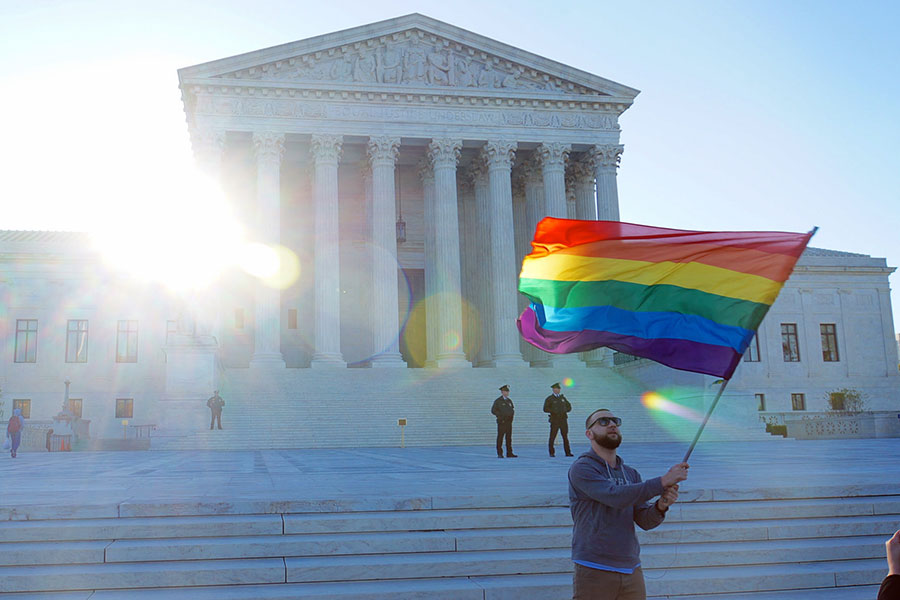
Nothing is simple when it comes to the court of public opinion. This can make promoting a brand’s message, well, tricky (to say the least). Brands are held accountable not only for the quality of their products and services but, increasingly, for their stance on the political and social issues that today’s consumers face. This is especially true when it comes to LGBT (lesbian, gay, bisexual, and transgender) advertising.

As more and more attention is focused on equal rights for the LGBT community—specifically, marriage equality and diversity in the workplace—it’s influencing how consumers make decisions. This is especially true among the young; over 45% of consumers under 34 years old say they’re more likely to do repeat business with an LGBT-friendly company, according to a Google Consumer Survey from August of 2014. Of them, more than 54% also say they’d choose an equality-focused brand over a competitor.

Brands are responding with campaigns that espouse messages of inclusion, equality, and diversity. This “pride advertising” is having widespread impact online, according to YouTube and Google data. Here we take a closer look at two brands, Burger King and Honey Maid, that are leading the way.

Burger King’s pride advertising speaks to equality

Burger King (BK) is committed to diversity and its values (“being bold, empowered, accountable, meritocratic, and fun”) are rooted in equality and inclusion. Last year, to coincide with the San Francisco Pride events, BK introduced new pride advertising in support of the LGBT community. As part of BK’s “Be Your Way” campaign, a spin on its 40-year-old “Have It Your Way” brand positioning, the Proud Whopper was introduced.

This limited-edition burger was added to the menu of its Market Street franchise in San Francisco for Pride week. The Whopper was actually the same flame-grilled sandwich customers had enjoyed since 1957. So, what made it different? Its rainbow-colored wrapper held a special message for BK customers: “We are all the same inside.”

Cameras rolled to capture reactions to the burger’s release the day of the 2014 Pride Parade. Not surprisingly, BK’s pride campaign, the Proud Whopper, and its unique messaging elicited some strong responses—poignant and powerful moments for the brand and its customers. Reaction from its younger customers (the target audience was 18- to 24-year-olds ) was overwhelmingly positive, strong, and emotional. “Burger King restaurants have always been places to eat great-tasting food, let your guard down, and just be yourself without any judgment,” Burger King’s Fernando Machado said in AdWeek.
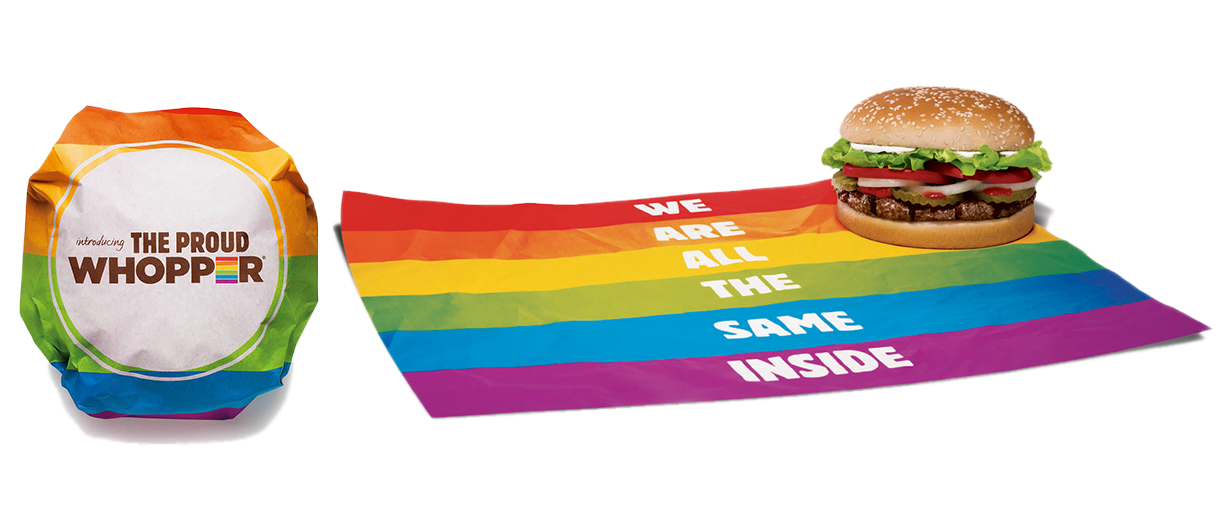
proud-whopper

The video of the audience’s reactions, which BK posted online, received 7M views across all social platforms. The YouTube video alone has received more than 5.3M to date. The Proud Whopper ad reached 20% of the U.S. population, and young millennials over-indexed by 4.8X (Burger King data). The campaign was also praised by multiple media outlets, including The Wall Street Journal and Bloomberg. The impact of BK’s message of inclusion was felt beyond the billion media impressions it received over earned media (Burger King data). Proceeds from the franchise’s sales benefited the Burger King McLamore Foundation, which provides scholarships for LGBT high-school students.

Not only did Burger King take a stand on an important social issue, but it also delivered messaging that resonated with its target audience of 18- to 24-year-olds. In fact, today’s young millennials—47% of consumers under 24-years-old—are more likely to support a brand after seeing an equality-themed ad (compared with 30% of all age groups combined), as the Google Consumer Survey showed. And that’s a win for everyone involved.

Honey Maid highlights diversity in its advertising

Honey Maid launched its This Is Wholesomecampaign in 2014 with one simple notion in mind: While the typical American family has changed over time, it remains wholesome at its core. In celebrating the diversity of the modern family, Honey Maid saw an opportunity to connect with its customers while reminding them of its long history and dedication to inclusiveness.

The brand’s target audience tuned in. The 30-second spot has over 8M views to date on YouTube. Using age and gender targeting, Honey Maid was able to see that 97% of the ad’s video views came from 25- to 54-year-olds, according to YouTube data. Of those views, women were responsible for 98%.

While the overwhelming response to the video was positive, Honey Maid’s message of inclusion didn’t resonate with everyone. This was something the company expected, given that the diversity campaign featured all kinds of families, including one with same-sex parents. Indeed, there was some backlash—negative feedback on social media and over email as well as a boycott by one group—but Honey Maid was prepared to stand by its message.

Instead of a PR problem, Honey Maid saw an opportunity. Partnering with creative agency Droga5, it delivered a creative and ingenious response to the negativity: “Love.” The video showed two artists using printouts of all the negative tweets and emails about the first spot to build the word “Love.” It was simple and powerful, allowing Honey Maid to, again, show its commitment to the issues of diversity and equality, as well as its support for the LGBT community.

Honey Maid’s message touched the hearts of people across demographics. Over 4M have watched “Love.” YouTube data shows that views over the first 90 days were evenly split among men and women, and nearly a quarter of those who watched were millennials under age 24.

And that lovin’ continued online. Searches for “Honey Maid” increased 10X during the last week in March, with sustained interest into May. In support of the campaign launch, Honey Maid drove penetration growth among millennial households +1 point, according to Gary P. Osifchin, the brand’s senior marketing director.

Marketing objectives aside, Honey Maid’s messaging about the wholesomeness of all families resonated with its customers. The brand stood up for diversity and equality and was rewarded not only with positivity among its fans but with their dollars as well. In the months following Honey Maid’s diversity campaign, the company says that June/July sales for its products increased 7% YoY.

Pride advertising is a win for consumers and brands

Pride advertising isn’t just about acknowledging and embracing the LGBT community. It’s an opportunity for brands to speak their own truth and take a stand. And when they do, consumers, especially millennials, appreciate it and respond in kind. They tune in and watch, participate in the conversation, and spend their dollars. Burger King and Honey Maid are just two of the brands making an impact by telling stories of diversity and equality in their advertising.

By Brendan Snyder. This story originally appeared at thinkwithgoogle.com

 

Celebrating Courageous Women on International Women’s Day

In honor of International Women’s Day, we’re celebrating women who are telling their stories and changing the world.

Women like Jaha Dukureh, a female genital mutilation (FGM) survivor and mother of two in the U.S., who successfully petitioned President Obama to start a task force to investigate the prevalence of FGM, and went on to help drive the ban of FGM in her native country of The Gambia.

And women like Sara Wolff, who was born with Down syndrome, and who made incredible change happen by working with Congress to pass the ABLE Act, allowing people with disabilities to easily save for their futures.

It is these women and girls, and all the people who raise their voices to support them, that give me hope for the future of my daughters and women everywhere. While there is a long road to equality, with our own stories as inspiration and using technology to spread those stories to others, women everywhere can be as powerful as Jaha, Sara, the inspiring women in this video, and the millions of other women fighting to make the world a better place.

Thank you for all that you do,

Jennifer Dulski, President, Change.org

httpss://youtu.be/hVmj6Fp-N7w

How to Fight the Taliban With Flip Flops

  • An elite, highly-trained soldier decides that jumping from planes and blowing stuff up is not how change should happen.
  • He realizes economic activity is the only force that will eliminate poverty and especially discrimination towards girls and women.
  • Combat Flip Flops is launched, offering jobs to locals, money for education and cool fashion accessories made from waste military products.

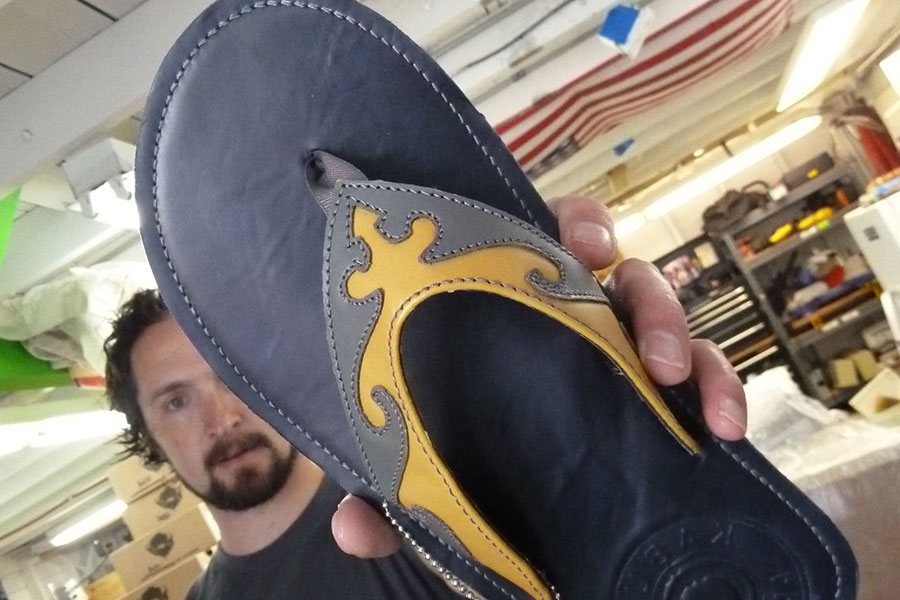
Matthew Griffin’s (pictured above) idea on the global war on terror ended within 15 minutes of arriving in Afghanistan. As a member of the 75th Ranger Regiment, one of the most elite infantry units in the world, he was expected to go further, faster and harder than any other unit. What he never expected was a change in how he viewed the war and that he’d coin the slogan: “Business, Not Bullets – flipping the view on how wars are won.” He also realized that Afghans wanted the same thing as many of us – job security.

“After serving multiple deployments in Afghanistan and Iraq, I knew I wanted to do more for the people living in these nations,” says Griffin. “The idea was simple: create an environment that gives people living in post-conflict nations the opportunity to peacefully rebuild their economy by manufacturing badass products.”

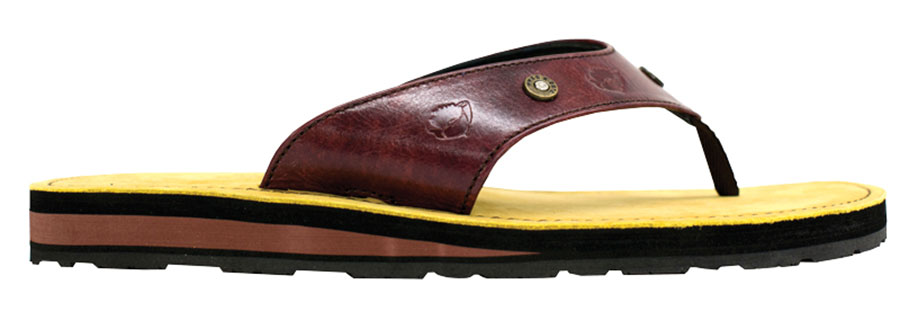
The farm boy from Iowa discovered his first badass product while visiting a military boot factory in Kabul. He was amazed to see a pair of flip flops being made from the soles of combat boots – two slits made in a rubber base with a leather thong added. Afghan soldiers had found it cumbersome to remove their boots five times a day for prayers and an ingenious manufacturer had come up with “combat lite” versions. It was exactly what Griffin had been waiting for. He registered the domain CombatFlipFlops.com within the hour, called fellow soldier Donald Lee to ask if he wanted to go into business, and then called his wife to tell her he was starting a company.

AK_flip combat flip flops

“The U.S. poured trillions of dollars into this country, we might as well have a cool commercial effort to sustain it once the war ends,” says Griffin. Many factories were established in Afghanistan by coalition countries to supply police and soldiers with military gear. Griffin knew that once the war ended, these factories would disappear too. By continuing to produce goods with the same locals, but for peaceful and fashionable reasons appealed to Griffin. Combat Flip Flops launched under a slogan many marketing experts would cringe at, yet for this soldier-turned-entrepreneur it’s perfect: “Bad for running, worse for fighting.”

They set up a really cheesy website and people loved the idea. They sold 1,500 pairs online in first few weeks, despite not having made a single pair.

What does a soldier know about business you’re likely to ask? Surprisingly, Griffin hadn’t only been squinting down the sights of a gun barrel, but also taking the economic lessons of war to heart. “Everywhere I went in Iraq and Afghanistan I saw conditions that were ripe for fundamentalist, extremist groups to take over,” says Griffin. What he saw was the enemy providing jobs.

“They’d say to a poor, rural farmer, ‘Here’s $50 and here’s a bomb. Go plant it.’ Someone with no food is going to take the money and risk planting that bomb to feed his family.”

Griffin decided that an economic strategy was better than a military strategy. “I saw that small businesses were creating sustainable change in some areas,” he says. “Whether it was a soda or SIM card stand, there were families that invested together, bought businesses, cleaned up their street corners and ran businesses.”

afghanistan combat flip flopsA tough childhood, divorced parents and harsh physiological examinations to enter the Special Forces had Griffin thinking he had no empathy. Watching young girls playing happily with nothing but a stick in the middle of a desolate Afghan mountain range changed all that. Witnessing the poverty and oppression of girls and women in these harsh environments made him realize that empathy was the one thing missing in his life. He decided to change and create economic opportunities for impoverished women.
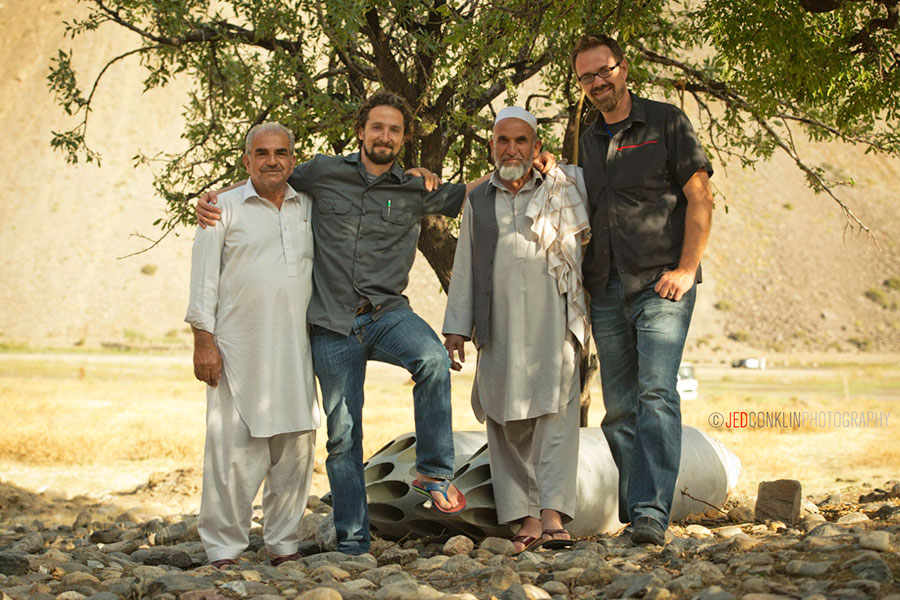
Flip flops were just the start. Griffin and his team had taken a product that people in nearly every country wear, and made it into a weapon for change. Production is now in Bogota, Colombia, providing jobs and investing in people who desperately need it. Their Claymore Bag’s flip the script on traditional weapons of war. Instead of carrying bombs, the bags carry iPad’s and laptops. Their Cover and Concealment sarongs are handmade in Afghanistan by local women and each sale puts an Afghan girl into secondary school for a week. The Peacemaker Bangle and Coinwrap are made in Laos – from bombs. Each bracelet sold clears three square meters of Unexploded Ordnance from a region rocked by long-term war.

afghanistan-education combat flip flops

Griffin is happy that proceeds are going towards educating girls. “If you want to kill radicalism, you can do it with education,” he says. “If you educate women, things will get better, because if you educate a mother, you educate a family and an educated mother is not going to let her child get radicalized.” So far Combat Flip Flops has donated enough money from sales to support the equivalent of 12.7 years of girls secondary education in Afghanistan and funded the clearing of 657 square meters of unexploded ordinance.

“I thought joining the military would be the most beneficial way to help people,“ says Griffin. I used to think that jumping out of airplanes and blowing things up was the best way to support stability in these areas, but after going to Afghanistan and seeing what I saw, enabling people to stand on their own feet is the best course of action for everyone.” Yet despite the change in tactics Griffin is still an adventurer at heart. “Unapologetically, we make cool shit in dangerous places,” he says with a grin.

combat-flip-flops

Sparrow Mobile Steps Up To Refugee Crisis

In America today there are more than 250 million mobile devices in service. Yet, within a country that’s viewed as the global leader in technology, there are over 45 million people living in poverty, and millions left unable to afford a quality mobile device or service.

While many consider a smartphone a luxury, to those at or below the poverty line it can be the difference between spending the night on a street or Googling the nearest night shelter, between using the emergency room for their doctor and finding medical services and help online, or allowing those estranged from family to reconnect with relatives and help get their lives back on track.

Within this environment of impact potential, married with strong consumer demand for companies doing the right thing, SparrowMobile.com was born, the brainchild of  Jim Kenefick, Amy Tucker, and Matt Bauer. Sparrow is a national U.S. wireless carrier bringing the successful buy-one-give-one business model to the $250 billion U.S. mobile services industry. For every customer that signs up for service, a smart phone device or a month’s service is donated to someone in need via one of Sparrow’s impact area programs serving the homeless, foster youth and refugee families. The company provides a mainstream way for consumers in the U.S. to do well and do good through their mobile voice, data and text services, while enjoying the same levels of quality and pricing they currently get from the major providers.

Kenefick, Tucker and Bauer adopted a balanced hybrid business model, with the for-profit Sparrow Mobile focused on profitable product and service delivery; while its nonprofit, Mobile for All, focusing on social impact through a network of partnerships. It’s a business plan that has already attracted grants and donations from a wide variety of supporters including Google, Citi, Tipping Point Communities and Twitter.

“Everything we do has a purpose and aligns with our vision, mission and values,” notes co-founder and Chief Impact Officer, Amy Tucker. “From our radically inclusive business model, to our strategic partnerships, and even down to the name, Sparrow, which means hope in Latin, is also one of the most common and beautiful species in the world. We connect people in meaningful ways through impactful partnerships and inviting consumers to join in helping to support their fellow citizens,” adds Tucker.

Quick to spot new opportunities for mobile to make a difference, Sparrow Mobile has helped form a new partnership, RefugeeMobile, focused on the historic and growing global refugee crisis. Launching in April 2016, RefugeeMobile will bring the benefits of smartphones, Internet connectivity, mobile services and tailored apps to refugees through a 15-month trial. RefugeeMobile will enable refugees to access tools that are most sought after by displaced people on the move to foreign lands: translation, navigation, transportation, and job seeking. It won’t just be the refugees that benefit either, social workers, case managers and aid workers will be freed to focus on the deeper challenges of integration.

“The world is at a critical moment that tests our commitment to displaced people around the world,” says Bauer. “Over 60 million people are displaced, and more people have been forced to flee their home countries than at any point since World War II,” notes co-founder and CEO Bauer.

“Companies such as Google and Goldman Sachs have stepped up by contributing millions to help the refugee crisis. But donations alone, while welcome, are not enough,” says Bauer. “Think about your business and put yourself in the shoes of someone desperate for housing, communication, food or education. Think about how your business can move beyond charity towards becoming a profitable business that solves social problems too.”

www.sparrowmobile.com


New Satellite System Sends Forest Clearing Alerts to Your Email

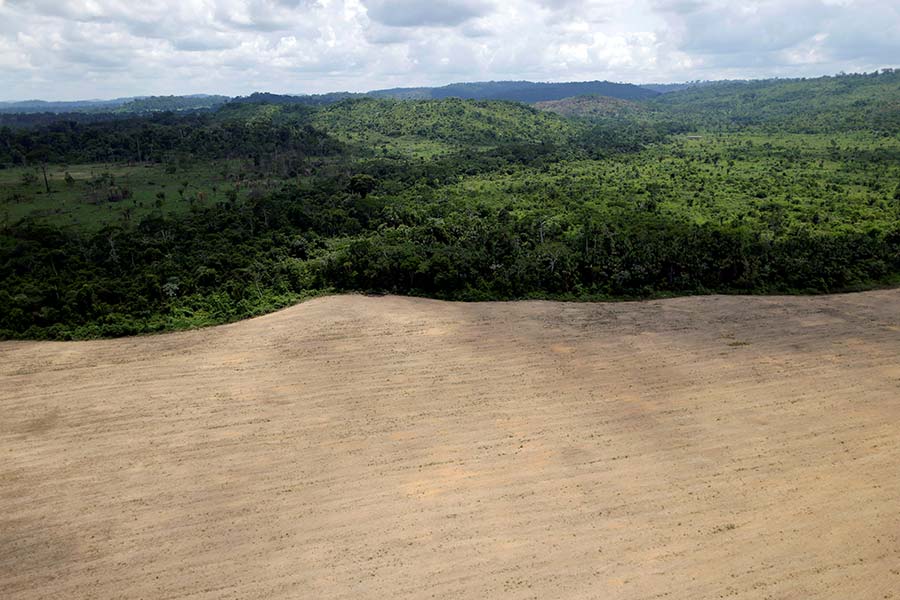
A new satellite-based system shows precisely where trees are being lost, with data so fast that new logging roads and illegal clearings are visible within one week after the loss, instead of months.

It’s a warm August day in the pristine forest of Cordillera Azul National Park, located in Central Peru’s Amazon Rainforest. Cordillera Azul, home to more than 1,800 species of plants and animals, is one of the most biologically diverse areas in the world—and one of the most endangered. On this day, new patches of forest-clearing pop up on the east side of the park’s surrounding buffer zone—some legal, some not—and for the next six months, they proliferate day after day, creeping toward the borders of the park.

We’re able to track this activity thanks to a new satellite-based forest monitoring tool, which tells us where trees are lost in as little as one week—depending on cloud coverage—after it happens. Developed by the University of Maryland and Google, the new GLAD (Global Land Analysis and Discovery) alert system now available on Global Forest Watch detects tree cover loss in Peru, Republic of Congo and Indonesian Borneo at 30-meter resolution, roughly the size of two basketball courts. Previously, governments, forest managers and communities had to wait an entire year to get detailed satellite data on tree cover loss, presenting challenges for law enforcement and anti-deforestation efforts.

Illegal logging has become a major issue in Peru, with estimates that more than 80 percent of timber in the country is illegally harvested. Selective logging is difficult to pick up directly at 30-meter resolution, but the roads used to transport the harvested timber out of the forest are large enough to be detected by the GLAD alerts. In the buffer zone around Cordillera Azul National Park, three logging roads can be seen expanding over the past six months, with a new fork popping up last month. Now that it’s rainy season in the Peruvian Amazon, the alerts seem to have stopped this month—for now. Whether that’s due to lack of visibility or cease in activity remains to be seen.

The GLAD alerts could revolutionize the way we monitor forests, beginning in Peru, Republic of Congo, and Kalimantan, and soon expanding to the rest of the world. But these alerts will not inspire action on the ground by themselves—we need people like you to use them.

With the GFW subscription, you can get an email notification every time there is a new alert in your area of interest—whether it’s in a national park, an entire country or a logging concession. The automated emails will tell you the number of new alerts in that area and a direct link to see them on the map. By keeping an eye on the world’s forests, everyone can help play a role in their protection.

Explore the data here, learn how to subscribe for alerts here, sign up for our webinar on how to use the alerts here


Timberland Just Planted its two-Millionth Tree

Ethical Corporation recently had the chance to ask Timberland President, Stewart Whitney about his role at Timberland, the upcoming Responsible Business Summit USA 2016, and his ideas on the Sustainable Development Goals.

Ethical Corporation: What’s your current role and what are your responsibilities?

As president of Timberland, my role really boils down to being a steward for the brand. That means setting and delivering on aggressive growth strategies for the brand – we’re targeting $3.1B in global revenues by 2019. It means ensuring that we connect with consumers, meeting and exceeding their expectations for great products and great brand experiences. And perhaps most relevant for this audience, it means always living up to our values as a responsible corporate citizen. That has long been in our DNA, and is non-negotiable for Timberland. It’s how we’ve built into the brand we are today, and is critical to driving continued growth in the future.

What projects are you most proud of in your current role?

What makes me most proud is that we’ve be able to maintain our focus on “doing well and doing by VF Corporation, many of us wondered, “will Timberland still be Timberland?” I’m proud to say the answer has been a resounding yes – a testament to the true passion for CSR that lies within the Timberland community, as well as VF’s own commitment to sustainability.

In terms of specific examples, there are many, but a few really stand out for me. In our efforts to protect and enhance the outdoors, one key area of focus for Timberland is tree planting. This past year we planted our two millionth tree in China’s Horqin Desert. I headed up Timberland Asia for six years prior to taking over as brand president, so I’ve been very closely involved in those efforts and was extremely proud to hit that milestone. It has really had a huge, positive impact in that region. Aside from tree planting, we’ve made major strides in our commitment to making products responsibly, steadily increasing our use of recycled, organic and renewable (ROR) materials over time.

In fact, in 2014 79 percent of Timberland footwear incorporated ROR materials. And finally, I’d point to our ethic of service. Every year, Timberland employees are given up to 40 hours of paid time to volunteer in their communities – whether it’s through company-sponsored events like our signature Serv-a-palooza, or on their own. We’ve served more than one million hours to date, and I’m incredibly proud to be part of a community where service is so central to who we are, as employees and as engaged citizens.

The broad umbrella of sustainability has changed a lot over the years, how do you see corporate sustainability evolving over the next 5 years?

Over the past few years here at Timberland, we’ve made great strides in sustainability not being an “add-on” function, but rather something that is truly embedded in our business model. Literally every department, every employee, has sustainability objectives woven into their performance plan. It’s not just the CSR department; everyone is accountable. I see more and more companies evolving toward this model, and I believe it will be critical for driving meaningful progress in the future.

Another key area I see is collaboration. There are so many opportunities for us to partner with like-minded organizations to arrive at innovative solutions to the challenges we face. Not only within our own industries, but across industries, public and private sectors, etc.

Earlier this year we partnered with a tire manufacturer named Omni United to introduce Timberland Tires. While this was surprising to many at first blush – Timberland in the tire business? – when you pull back the layers it makes perfect sense.

We’re constantly looking for recycled rubber that meets our environmental and performance standards, while Omni seeks new after-life uses for its tires. Timberland Tires are purposely designed for a second life; when their road life is complete, they’re recycled into the outsoles of Timberland shoes. In essence, two companies collaborating across industries to create a more sustainable lifecycle for rubber. I see lots more collaboration like this happening over the next five years.

And finally, there’s the consumer. Consumers are savvier than ever – they have information at their fingertips 24/7, they’re engaged in the world around them and they want to do business with brands and companies they can feel good about. Because of this, I believe consumers will play an increasingly important role in driving sustainability in the coming years.

There are 17 Sustainable Development Goals (SDGs), how are you embedding the Goals into your strategy? How was this decided?

Timberland has had CSR strategies and goals in place for decades, and those strategies continue to serve as our beacon for progress as it relates to sustainability. That said, when the SDGs were published last year, we took a close look to ensure that our efforts are aligned with what others are focusing on. I’m pleased to report that every one of our sustainability goals maps to at least one SDG goal, so we’re all working toward the same results when it comes to creating a more sustainable world.

You are participating in the Responsible Business Summit USA next April, could you tell us why these types of gatherings are so important for the sustainability community?

There is so much exciting progress being made in the world of sustainability, but many of us also face the realities of running large-scale global businesses. Events like these provide the opportunity to take a day or two to really focus on sustainability as a key pillar of our businesses, to learn from others and make important connections with like-minded companies and leaders. As I mentioned before, I believe collaboration, across industries and the public/private sector, will be key to driving innovation in sustainability over the next several years. Events like this play a crucial role in that.

And finally, what are you most looking forward to at next year’s Responsible Business Summit USA?

I spend a lot of time meeting with customers, suppliers and other business partners. I’m looking forward to the opportunity to connect with other leaders in sustainability, to hear what others are doing, share some of what we’re doing and hopefully walk away with some new insights we can apply as we continue on our path to being the largest, most sustainable outdoor lifestyle brand on Earth.

This story first appeared on Ethical Corporation 

Leonardo DiCaprio: Don’t be on the Wrong Side of History

Forget the movie “The Wolf Of Wall Street,” Leonardo DiCaprio hasn’t got a bad bone in his body. In real life, he can be found raising awareness around global warming and driving his electric Tesla around town. What kind of villan has solar panels on his roof anyway?

Winning his first Oscar for best actor in “The Revenant” at the 88th Academy Awards in Hollywood yesterday, DiCaprio devoted much of his speech to the urgency of talking climate change.

“Climate change is real, and it’s happening right now,” DiCaprio said. “It is the most urgent threat facing our entire species, and we need to work collectively together and stop procrastinating. We need to support leaders around the world who do not speak for the big polluters or the big corporations, but who speak for all of humanity, for the indigenous people of the world…and for those people out there whose voices have been drowned out by the politics of greed.”

DiCaprio is also one of 13 U.N. Messengers of Peace, distinguished individuals who have agreed to help focus attention on the work of the U.N. and improve the lives of billions of people everywhere. His focus area for this role is the environment, and he wants to build a more harmonious relationship between humanity and the natural world. “I feel a moral obligation to speak out at this key moment in human history – it is a moment for action,” he says. “How we respond to the climate crisis in the coming years will likely determine the fate of humanity and our planet.”

“If you have do not believe in climate change, you do not believe in modern science or empirical truths and you will be on the wrong side of history,” said DiCaprio. “And we need to all join together and vote for leaders who care about the future of this civilization and the world as we know it.”

Top Tips for Writing Your Résumé

The graphic below shows some of the most common, and frankly unbelievable, mistakes that thousands of job applicants make when writing their CV or résumé. It also covers all the clichés that employers hate to hear when reading your application. Read on to get recommendations that any jobseeker will find highly valuable when compiling a résumé. Remember, first impressions count!Resumes-Get-Them-Right-to-Get-the-Job

Source: Ayer.com.au

0