The Purpose Economy, Expanded and Updated

Aaron Hurst’s Second Edition Brings The Purpose Economy to a More Personal Level.

On October 11th, social entrepreneur Aaron Hurst releases the second edition of The Purpose Economy.

In 2014 Aaron Hurst, Ashoka fellow and founder of Imperative and Taproot Foundation, published The Purpose Economy, the book that catalyzed the purpose revolution. With his prediction that purpose was the next major economic era, many are now racing to find answers and direction toward discovering their personal, professional, and organizational purpose. Leaders from around the world have embraced Hurst’s work and have asked for more.

In this expanded and updated edition Hurst unpacks critical new research and tools for individuals and organizations to find purpose and thrive in this new era.

Based on interviews with thousands of entrepreneurs, new survey-backed metrics, and refined societal trends, Hurst shows that this new era is fueling demand for purpose-centered professionals who not only create more satisfying careers, but also contribute more productively to teams and organizations.

A new view of success based on relationships, impact, and growth is spreading across the globe, and individuals and organizations that embrace that view have emerged as the leaders of the new economy.

A globally recognized entrepreneur, Aaron Hurst is the CEO of Imperative, a technology platform that enables people to discover, connect and act on what gives them purpose in their work. Aaron is a close advisor to many global brands and frequent speaker and writer on the development of the Purpose Economy. He is the founder and an active advisor to the Taproot Foundation where he was the catalyst and lead architect of the $15 billion pro bono service market. He was the creative force behind the conception of the national Billion + Change campaign.

aaron hurstQuotes from The Purpose Economy:

“We now desire to transcend our own needs and prioritize the needs of all of society and future generations, seeking more connection and self- expression. The Purpose Economy is fundamentally fueled by our pursuit of the fulfillment of these needs; the needs themselves have become an economic force.”

“Most of us will work for 45 to 50 years. Think about that for a second. That is the same amount of time it would take to attend college 12 times. And, it’s increasingly true that during that time, we will hold many different jobs, and for more and more of us, those will be in a range of fields. We have so many opportunities to find the work that best suits our perspective on the world and the way we most enjoy contributing.”

“TRUTH: Purpose is a journey. It doesn’t come as a revelation from above, but from living life awake and seeking new experiences.” “Understanding the drivers of purpose in your work is foundational to practicing purpose and building purpose power. If you don’t have basic self-awareness of purpose, it is difficult to know how to productively create supporting narratives and recognize the opportunities to practice purpose. You need to know the WHO, HOW, and WHY of purpose in practice for you.”


 

Obama on Refugees: Why do we Keep Making Excuses?

As reported by the UN High Commissioner for Refugees, the world is facing the largest displacement crisis on record. Sixty-five million people have been forced to flee their homes by violence, persecution, and instability.

Many countries have given them sanctuary and assistance, so that families have shelter, medical care, and basic services, and children can go back to school and parents can go back to work. But the need remains great. And helping refugees isn’t just up to governments—every American can play a role, too.

The United States has a long history of welcoming people fleeing persecution and violence. Over the past 40 years, we have safely welcomed more than 3.2 million refugees representing more than 70 nationalities, helping them build new lives in all 50 states. Refugees enrich their new communities economically and culturally; many go on to be small business owners and serve in the U.S. military. Two of our country’s previous Secretaries of State were refugees.

President Obama announced that the United States will welcome more refugees from around the world, increasing the number of people we receive by 40 percent over the next two years, to 100,000 in 2017.

Refugees are the most thoroughly screened travelers to our country. This includes security checks, examination of all available biographic and biometric data, consultation of a broad array of law enforcement and intelligence community databases, and extensive interviews before they are cleared to travel to the United States.

Learn about the screening process

As we welcome some refugees to our country, we also help the millions of others living elsewhere. Our country is the world’s largest single humanitarian donor. Each year we support programs across the globe that provide vulnerable families and children life-saving assistance, from food and water to medicine and shelter.

But addressing the current crisis isn’t just about what a government can do. It’s about what every single one of us can do to make sure that those who are displaced can find safe haven and a new start.


Company Launches Kids Board of Directors

Kidbox has announced the launch of their Kids Board of Directors. The company is the first online shopping style box that deliver cool brands to kids, and is also on a mission to clothe children in need. They want to empower children to give back and start the conversation between parents and kids about social good.

Kidbox launched in spring 2016 with a social mission at its core. Through a partnership with K.I.D.S./Fashion Delivers, Kidbox outfits a child in need for every Kidbox purchased. The partnership supports their mission to donate clothing to one million children and enables parents and kids to start a conversation about giving back. They are enlisting young leaders across the country to further realize their goal.

kidbox

Once selected, the Kids Board members will attend an annual all expense paid 2-day conference and workshop with the Kidbox team in New York City. They will have the opportunity to meet and work alongside various members of the team including Buyers, Marketers, Designers and Web Engineers and will be given the opportunity to collaborate on business projects such as designing an original item of clothing, developing a new social media activation campaign and supporting programming at a major charitable event. The Kids Board will take part in video conferences, while continuing to represent Kidbox as local ambassadors for social good in their respective regions of the United States.

kidbox

“By involving talented kids in the KIDBOX mission, the team is gaining invaluable insights into the meaningful causes that matter to the youth of today,” said Kidbox CEO Miki Racine Berardelli. “We hope that these young leaders will aid in fostering an even greater spirit of generosity worldwide.”

Kidbox  is committed to outfitting more than 1 million children in need, and will be inviting the board to support the brand in achieving this goal. They will work hand-and-hand with the Kids Board Members to figure out the right way to make a meaningful impact—from scholarships to social engagement campaigns, video series to bus tours. The company also expects to learn a great deal from the kids on the board, inviting them to help develop ideas that will improve the business.

To apply to join the board, prospective candidates are encouraged to fill out a questionnaire online and submit a 30 sec – 2 minute video by December 15, 2016 answering the question “How can young people change the world and what am I doing to help?”. Videos must be uploaded to YouTube and a link to the video along with application materials can be emailed to Kidbox at kidsboard@kidbox.com. Children must be between the ages of 6 and 15 on January 1, 2017.


Inventing the Future of Flight

In silence, and without using a drop of fuel, two visionary pilots embark on the world’s first circumnavigation using only the power of the sun

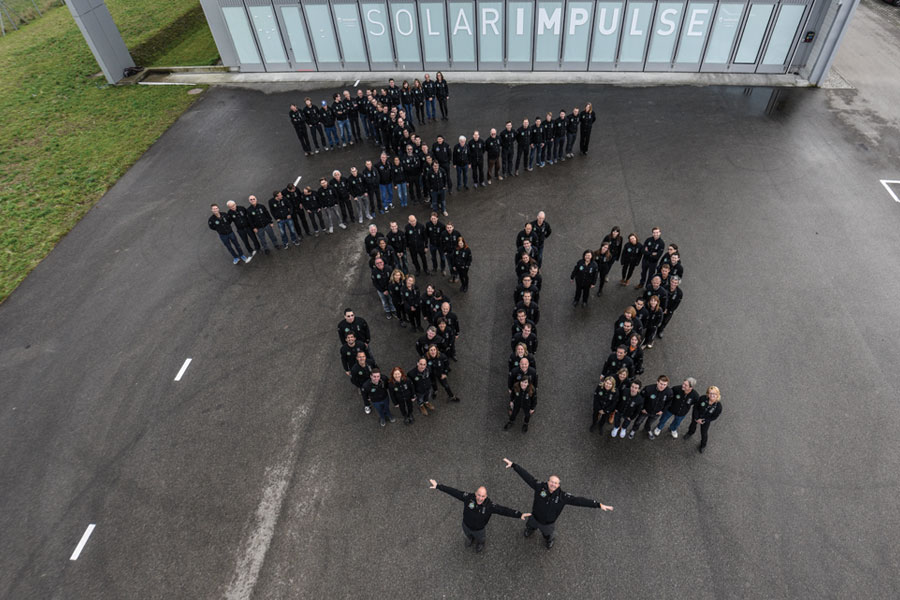
It was the Wright brothers all over again. On 3 December 2009 at Dübendorf Airfield in Switzerland, 106 years after the first powered flight by Orville and Wilbur Wright on a beach at Kitty Hawk, North Carolina, USA, a group of aviation fanatics flew the world’s first solar powered airplane. The skeletal-looking prototype, named Solar Impulse, gently rose into the air and flew 40 inches above the ground for a distance of 0.2 miles, landing to wild cheers from the assembled team.

flight_07

With today’s aircraft reaching heights of 85,000 feet and speeds of over 2,000 miles per hour, you may ask: why the big deal? After all, that first flight back in 1903 managed to fly 10 feet above the ground.

I had a dream of a solar aircraft capable of flying day and night without fuel – and promoting renewable energy.

For a start, Solar Impulse doesn’t use a drop of fuel. And like most prototypes the innovative technology’s potential uses and future applications are hugely exciting. Bertrand Piccard, president of Solar Impulse, had a vision of reinventing flight – or “inventing the future,” as he likes to call it.

“I had a dream of a solar aircraft capable of flying day and night without fuel – and promoting renewable energy,” he explains. After six years of intense research, he proved the technology existed with the first “flea hop” across the Swiss airfield, but to demonstrate this may indeed be our future, he needed something bolder. Along with co-founder Andre Borschberg, Piccard dreamed up an audacious plan – the first around-the-world flight powered by the sun. This was achieved on 26 July 2016, when the Si2 landed in Abu Dhabi in the United Arab Emirates, after a total of 23 days flight.

flight_06

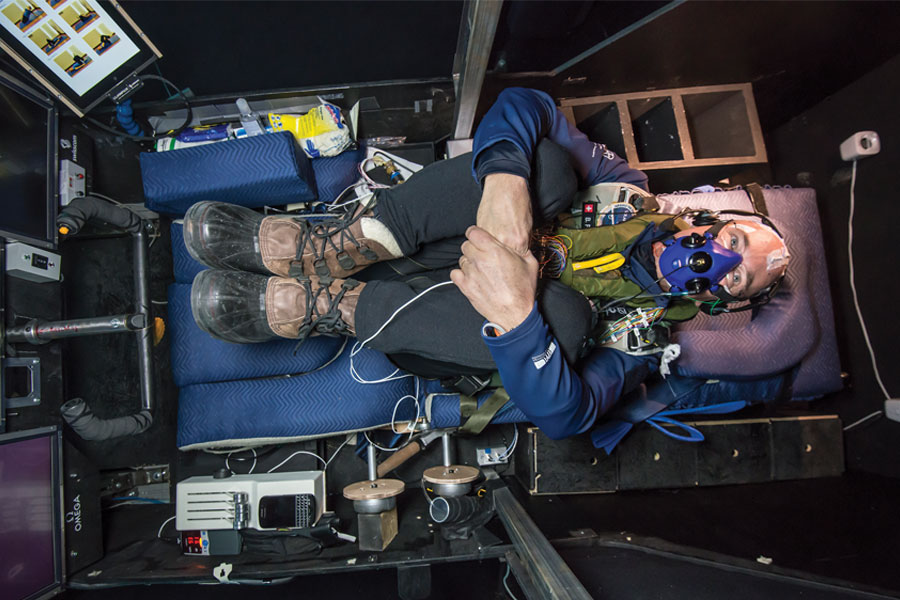
The 22,000-mile journey was broken up into 17 stages, to allow for the technical limitations of the new technology and the physical limits of the pilots. No sleep was permitted while the plane was flying over populated areas, but over oceans sleep was in the form of short naps of up to 20 minutes, 12 times a day.

The Swiss pioneers were acutely aware of the historical significance of their journey, and the ironic symbolism along the way. On the Hawaii to North America leg – a journey similar to the one flown by  1930s American aviator Amelia Earhart, the pair drew a parallel between Earhart’s airplane that carried 500 gallons of gasoline, and theirs that carried none. Across the main wing of their plane, 17,248 solar cells powered four lithium batteries, which in turn powered four motors and propellers, allowing Si2 to fly through the night until dawn.

flight_02

The idea of traditionally-powered mobility has just been turned on its head. “Just imagine your energy reserves increasing during flight!” says Borschberg. It’s almost incomprehensible that a journey would gain fuel, rather than consume it.

Solar Impulse’s goal is to demonstrate that clean technologies, such as the ones used on the Solar Impulse airplane, have the potential to change lives, societies and future markets in an unprecedented way. They have shown that solutions actually do exist, now, to run the world on clean technologies.“If an airplane can fly day and night without fuel, everybody could use these same technologies on the ground to halve our world’s energy consumption,” says Piccard.

“This will save natural resources and improve our quality of life. Our hope is to motivate everyone to reduce their dependence on fossil fuels in their daily lives and thus encourage concrete actions for sustainability.”

Piccard is promoting the use of new, modern and clean technologies as an opportunity for change and wants to influence the energy decisions taken within political, economic and social systems. His message conveys a visionary approach: solving climate change is not an expensive problem, but rather a unique opportunity for profit and job creation. “Climate change, and in particular carbon dioxide emissions, are mainly caused by inefficient energy sources,” he says. “If those outdated technologies were to be replaced with modern technologies, the energy consumption of the world, and therefore the C02 emissions, could be halved. We’ve shown that solving climate change is a profitable opportunity, not an expensive problem.”

Climate change, and in particular carbon dioxide emissions, are mainly caused by inefficient energy sources.

Key to the success of this project has been the different, yet complimentary, personalities of the two adventurers. Piccard is a medical doctor, explorer and lecturer;  Borschberg is an engineer. What they have in common is a love for innovation and the future health of our planet.

flight_05

“This is not only a first in the history of aviation,” states Piccard. “It’s also a first in the history of energy. I’m sure that within 10 years we’ll see electric airplanes transporting 50 passengers on short- to medium-haul flights.” Piccard’s grandfather, Auguste, was the first man to see the curvature of the Earth from the stratosphere, in a hot air balloon. It gave him a new perspective on life: “The question now is not so much whether humans can go even further afield and populate other planets, but rather how to organize things so that life on Earth becomes more worthy of living,” his grandfather said in 1931.

Ultimately, people need inspired success stories to change their ways. Piccard and Borschberg have put dreams and emotions back at the heart of scientific adventure.

“Ordinary people, who get excited about great adventures, are ready to join the dreams of pioneers and explorers,” says Borschberg.


How Inspiring is Your Story?

3 Steps to Creating your Personal Leadership Brand and Sharing it with the World. 

No matter who you are, a clear personal leadership brand (PLB) can make the difference between success and mediocrity. I’ve spent the past 25 years helping Fortune 500 companies build their brands with effective marketing, public relations and crisis management tools, yet it’s always surprising to hear how many people fail to successfully create and build their own personal brand by telling a moving story, which can have positive and long-lasting impact on their success. The reality is that with so much competing noise in the world, it’s easy for messages to be briefly skimmed, not understood, or worse, not seen at all. We’ve all heard the saying, “out-of-sight means out-of-mind” which is the opposite of brand building, so what can be done to create  your own PLB and stand out for success? We all know brand building pays because corporations spend billions of dollars to build them, but you can build your own story by utilizing three critical steps. Most people will want to skip these steps and go directly to broadcasting their message, which can actually do more harm than good. None of us want to be “pitched” or “sold,” or hear a person’s life story; rather, we want to connect with people and organizations whose values and vision inspire us!

The following three steps create the foundation that Real Leaders utilizes to build the Personal Leadership Brand of our clients.

1. Passion + Pain = Purpose

Some people are already clear about their passion in life, but many people still need help in gaining stronger clarity. If you’re passionate about cooking, for example, that fact alone is not enough. Who cares? What serious problem or pain of another can you address with your love of cooking? How about obesity, high blood pressure, homelessness, gang violence, even climate change, perhaps? When you combine your passion with a treatment for my problem, (or broader societal issue) you suddenly have a solid purpose with which you can attract others. This will ultimately create greater success and fulfillment.

A great example of this was when we began working with Kevin Maggiacomo, the CEO of SVN, a leading international commercial real estate brand, a few years ago. Kevin was equally passionate about supporting commercial real estate entrepreneurs and getting more women into the boardroom to achieve gender-balanced leadership. The pain he needed to confront became evident when he reflected on his great-grandmother’s  journey of overcoming the challenges of being an  Italian woman  immigrant in 1915. Many of these issues still relate to women and minorities today, more than 100-years later; unequal pay, lack of flexible work/life balance, glass ceiling, hostile work environment, good ol’ boys networks, etc.

During the discovery stage, Real Leaders helped Maggiacomo see that his company could offer a solution to many issues he felt so passionately about – that diversity will lead to innovation, and that the inequalities toward women are  wrong. In fact, Kevin came to the conclusion that, as CEO, he was actually in a position to do something about it, and at the same time, could seize the opportunity to build an even better organization. Once he became more clear on this vision, he quickly moved from an all-male board of directors to a gender-balanced board and executive team. Last year 40 percent of all new SVN offices were headed by women or minorities – in a U.S. industry that is more than 80 percent white and male. Maggiacomo describes the results:  “Our profit margins at an all-time high, our risk at an all-time low, and the diversity of our team is moving beyond homogeneous group-thinking to more innovative and insightful decision making.”

STEP 1: Action

· Ask yourself: What do I love to do? (Passion)

· What issues do I care most about?
Why? (Pain)

· How am I in a position to address this pain? (Purpose)

· Will people pay for this solution so I can grow it? (Prosper)

2. Vision. Inspiring story. Talk or Video

Create a moving story around your inspiring vision. Everyone is moved by a big vision, so don’t be shy, and describe the world you dream of creating one day. Create a moving, short (under 10 minutes) speech in the style of a TEDx Talk that positions you as a visionary leader, with a mission that people will want to connect with. You’ll also need an “elevator pitch” of this vision, a summary that is less than 30 seconds long, for people who will ask: “What do you do?” Even if you never end up giving a speech, you’ll find this approach helpful in articulating a clear vision and purpose that resonates with others.

STEP 2: Action

· Test your elevator pitch on a sixth grader. If they don’t understand it, simplify and clarify it.

· Go to TED.com for tips and videos on delivering a story worth sharing.

· Less is more. Tell an inspiring story in as few words as possible. Twenty minutes is too long. Ten minutes is better. Five minutes is even better.

3. Tell your story

Decide on the target audience or community that will be most inspired by your story and who will want to participate in your vision. Focus your message on your target audience through  social media, events, interviews (yes, when you get this right you become newsworthy) and speeches. Almost every topic of interest has a gathering hungry for guest speakers – some even pay! Since engaging this process, Kevin Maggiacomo has delivered a highly-rated TEDx Talk and become a sought-after speaker on the subject of innovation and inclusion. He has testified in front of state legislators and was awarded two industry accolades for his leadership in promoting  gender balance. He had virtually nothing in his Personal Leadership Brand portfolio three years ago, but now recognizes that developing this strategy has been a game changer for himself and his company.

STEP 3: Action

· Test your story with a small friendly audience first and ask for their input.

· Join social media communities in your target audience and participate.

· Revise your social media profiles to reflect your purpose.

The three  steps to building your Personal Leadership Brand do require an investment in time and reflection, but don’t require investing lots of money. Real Leaders is passionate about helping leaders build a purpose-driven strategy and successful brand, geared towards a new world economy that rewards social impact.

I hope you found these fundamental steps useful.


Jupiter, Juno and Galileo Have Beaten Tesla Billionaire to Outer Space

In 2014 when Tesla founder, billionaire Elon Musk, announced that he wanted to establish a colony on Mars with his space company, SpaceX, he upped the stakes in the race to become the first to place humans further into space than ever before. Unfortunately, Musk just lost.

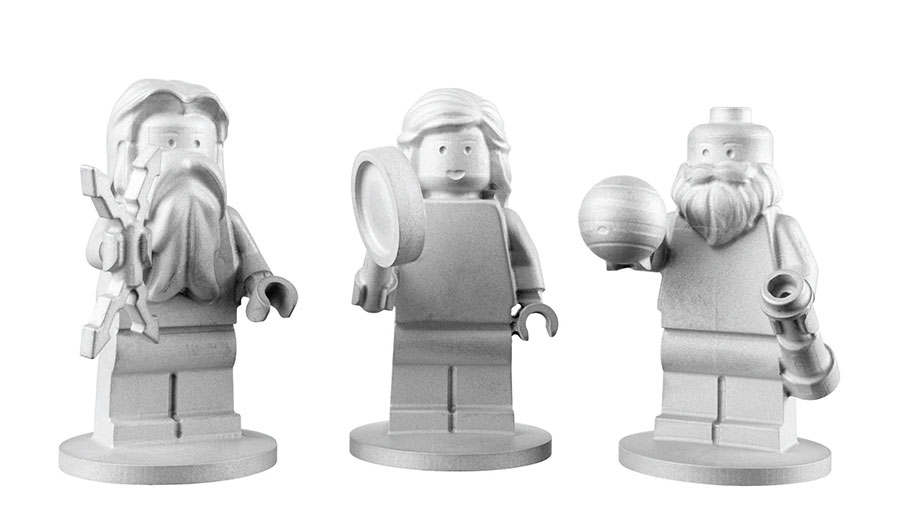
As the Juno space probe approached the planet Jupiter on 4 July of this year, three lucky passengers onboard could lay claim to being the first to reach the fifth rock from our sun. Well, they may have resembled the human form, but they weren’t actually breathing. And they were made of aluminum.  Three Lego minifigures were placed aboard the NASA mission in 2011, and have been drifting toward Jupiter for the past five years. The crew’s mission? To inspire children to explore science, technology, engineering and mathematics, and to dream impossible dreams that may well see our grandchildren embarking on such a journey one day.

A joint outreach and educational program named Lego Bricks in Space was established between NASA and the Lego Group before the launch of Juno, and while the space probe’s principal goal is to understand the origin and evolution of Jupiter, the minifigures are boldly entering unchartered territory as symbolic space scouts.

So, who exactly are these three lucky passengers? The crew consists of the Roman god Jupiter, his wife Juno and the “father of science,” Italian astronomer Galileo Galilei. In Greek and Roman mythology, Jupiter drew a veil of clouds around himself to hide his mischief, but from high-up Mount Olympus, Juno was able to peer through the clouds and see Jupiter’s true nature. She’s certainly not leaving him alone on a journey of 365 million miles after that. The Juno spacecraft will also be looking beneath the clouds, to help NASA understand the planet’s structure and history. The minifigure of Juno holds a magnifying glass to signify her search for the truth, while her husband holds a lightning bolt. The third Lego crew member, Galileo, who made several important discoveries about Jupiter in 1610, is depicted holding a telescope.

To withstand the extreme temperatures the Lego crew would endure, the figures were milled from a single block of aluminum, a metal with a melting point of 1,221°F.  While other metals have a higher melting point, another consideration was that aluminum is non-magnetic and wouldn’t interfere with onboard equipment.

Lego’s goal, beyond exciting kids everywhere, is an effort to help broaden awareness around the importance of planetary research.

It may seem like science fiction now, but many notable scientists and business people have acknowledged that we need to start looking at future homes for humanity. Just in case. Through the minifigures on Juno, Lego wants children to dream up their own stories and adventures and explore their own innate creativity, hopefully resulting in an exploration of their everyday lives.

Despite the trio being made from one solid piece of metal to prevent them from coming apart during the six-year mission, the crew will unfortunately not be coming back to earth. In around one year’s time, during its 37th orbit, Juno will plummet toward Jupiter in a controlled deorbit and burn up and disintegrate in the planet’s atmosphere.

The controlled deorbit will eliminate space debris and the risks of contamination in accordance with NASA’s Planetary Protection Guidelines. Yes, unbelievably, there are already rules in place to preserve the pristine nature of celestial bodies and prevent contamination in space. Around 104 states, representing every space-faring nation, and some aspiring ones too, have signed the Outer Space Treaty, promising to abide by the rules of planetary protection. Now if only we could get earth included in that deal …

Is Mobile Inspiration Making The World a Better Place?

Research from AT&T shows that people find inspiration on their smartphones and tablets. They believe it makes their world a better place.

More than 7-in-10 Americans (71%) say their mobile devices are digital portals to inspiration. AT&T also found 8-in-10 (80%) people saying that mobile technology facilitates inspiration. For nearly half of respondents (46%), connecting to inspiration with mobile devices is part of their daily routine.

The report is part of a national conversation AT&T calls Inspired Mobility. It’s an ongoing dialogue about how people connect with their faith and inspiration with mobile devices.

Hip hop icon and digital inspiration guru Rev. Run joined AT&T to discuss the study. He reaches 4.5 million people every day with just one tweet from his device.

“I believe inspiration can change the world,” Rev. Run said. “It gives people a much-needed lift. In our current times, this couldn’t be more important.”

The new findings show people are not just using their devices for work email, launching chickens and zapping zombies.

“It’s much more personal and enriching than that,” said Leonardo Torress, executive director, entertainment group, AT&T Diverse Markets. “They’re telling us mobility improves their lives – and the lives of others – virtually anytime and anywhere. That’s a new way to look at the power of this technology.”

The report details how people seek and share inspiration with their mobile devices:

Respondents say inspiration is a part of their mobile experience more than half the time. Even when people turn to their device for fun, information or productivity, inspiration is a part of the mix.
When seeking inspiration on mobile technology, 7-in-10 (70%) people say they access faith-based content the most, followed by inspirational stories and quotes.

More than half of women reported accessing inspiration for motivation, compared to 4-in-10 men. Nearly 6-in-10 (58%) young people (18-25) say they use mobile for inspiration as part of their daily routine.

“So think twice before you tell someone to put down their mobile device to tune into something more constructive,” said Torress.  “They could actually be busy making the world better.”


Breaking News: We’ve Depleted The Earth’s Resources for 2016

As of Monday, August 8, humanity will have already used up more resources than the Earth can regenerate this year, according to the Global Footprint Network.

The network, a WWF partner, declared August 8, 2016 as this year’s Earth Overshoot Day, which is five days earlier than last year, and the earliest Overshoot Day yet.

As the global population grows and consumption rises, we are emitting more carbon dioxide into the atmosphere than our oceans and forests can absorb, and we are depleting fisheries and harvesting forests more quickly than they can reproduce and regrow.

‘To sustain our global consumption at this level would take 1.6 Earths.’

When the first Earth Overshoot Day was calculated in 1987, it fell on December 19. In 2000, the Earth’s renewable resources for the year were used up by late September. An ecological overshoot is possible only for a limited time before ecosystems begin to degrade and risk collapse.


‘Equity’ Review: Women on Wall Street – A Financial Thriller

Equity is about women on Wall Street. It’s a Wall Street drama, but it’s not about corruption, crime, or catastrophe. It’s about women who thrive on competition and ambition, deals and strategy, but who must carefully calibrate every aspect of their lives, professional and private, to stay equal in the game. 

Sarah Auerbach Ifrah attended a recent pre-screening of this financial thriller by Sony Pictures Classic, opening on July 29th. She gives her opinion below:

Equity, the brainchild of Amy Fox and Meera Menon, cogently depicts the intertwined stories of three career women grappling with a formidable glass ceiling. Naomi Bishop, central protagonist and investment banker, opens the film with a powerful statement that for women, money and ambition should not be stigmatized.

Despite her aim to advance herself on Wall Street, however, her boss constantly reminds her that her intensity ‘rubs clients the wrong way’. Furthermore, the media refuses to absolve Naomi of a past error in taking a former company public. Yet the major obstacle that Naomi deals with is her fear of aging in a banking career that favors women in their twenties.

Naomi personifies the ideals of the 1980s career woman: she is strong, independent, and uses her intellect to gain respect, especially in attempting to equalize herself with her male counterparts. She exemplifies traits that in the past, were classified as mostly male: a talent for numbers, and collected composure in a professional setting, even in trying situations.

These traits are somewhat distasteful, threatening, and unsettling to her peers and clients. This is a conflict many women today who graduate with MBAs and work experience deal with internally: do they gain admiration with their intellect and professionality, and leave the femininity out of the equation?

Naomi’s foil is Vice President of the firm and her younger subordinate, Erin, who is equally ambitious, but uses different means to advance her career. Erin aspires to be promoted, however, her pregnancy presents an obstacle. Just as age is discriminated against in the workplace, so is motherhood. Erin, unlike Naomi, exudes femininity in her gait and gestures. She is more personable than Naomi and she understands the way people think, what they want, and how to communicate with them.

When Naomi and Erin attempt to take social network company Cachet public, Erin is the one with whom the founder prefers to communicate; Yet Cachet’s founder has a chilling message for women in business. He tells Erin that ‘she is merely the VP; when he wants to talk business, he will talk to Naomi.’ Here we see the paradox: if we as women give up our ability to be feminine, personable communicators and become more like Naomi, we are seen as ‘too male’ yet if we become like Erin, we may not be taken seriously.

Equity shows us that perhaps a balance of both is necessary to navigate the business world.

Lastly, we see prosecutor Samantha, who uncovering a spiderweb of corruption, brings ethics to the world of Equity. Samantha is sharp and strong yet feminine, collected yet ambitious, and through all of this a mother. Is Samantha the character who combines and balances the extremes that Naomi and Erin portray, and is she the answer to our struggle in the workplace as women: that ultimate balance we all seek to be everything and do everything?

Equity does not give us an answer but it powerfully poses that question.

Sarah Auerbach Ifrah is an MBA candidate at the Chicago Booth School of Business, with a focus on Finance and Economics.

httpss://www.youtube.com/watch?v=Xg2TSp5tJy4

0