Be Good For Goodness Sake

Written in parable by Kristin Andress, Be Good For Goodness Sake transports you from the buzz of life to a tranquil setting where strangers convene and have unique experience. In the characters, you will see a piece of yourself, and through the experience you will tell your own story. 

This is OUR World.  The distinction is how you choose to see – and be – in it.

Have you ever considered goodness as a personal and professional focused intention? Since “good begets good” it is most certainly worth your time, energy and conscious consideration to learn how goodness benefits you and those around you.   There is evidence of Goodness affecting the very stability of countries, let alone imagining what it can do for you or your business.

As busy people, we do not often make time for ourselves. Being busy can be perceived as a badge of honor, yet in that ‘busyness’ what might you be missing? In 60 pages, Be Good For Goodness Sake gives you much to think about in terms of how you see people and how they may see you. Goodness is demonstrated in our actions, communication and relationships.  It is a way of ‘being’ in the world, as much as what we are doing in it.

be-good-bookcoverImagine being in a peaceful, beautiful, tranquil setting away from the buzz of life. At the end of a gravel path lined by flowers and stretches of flowing greenery, there is a lovely B&B with a winding porch, an inviting swing, and a majestic Willow tree swaying in the breeze. You step into the freshness and are greeted by a Host that will soon create amazing aromas, appetites and experiences. You know not what to expect and are timelessly taken on a journey of awareness, understanding, and perhaps even transformation. You meet people who are different from you and yet, similar. How would you show up? What would be your judgement or your acceptance?  Those answers are part of the story you as the reader will tell.

First, you are the beneficiary of Goodness, whether you are the deliverer of good or the recipient of it. The question is “Do you recognize it and your opportunity to embody it and the opportunities that result from it?” Goodness is a quality that propels you to become a person others desire to listen to, invest time with, and who has a distinct, difference-making presence. It is a core strength that results in selfless support of others, and confidence in your worthiness and abilities no matter the endeavor. It is what attracts people to prefer to be in your presence or to do business with you.  It heightens the interest of your teams or stakeholders to do their best. It impacts your family dynamic and has a ripple effect to your community.  When you demonstrate goodness your clients and employees will be loyal. Your reputation will be absolute.  You will elevate your capacity to thrive.  

Goodness happens in many forms and functions. When the focus is on goodness our minds and hearts lift as we witness it; however, what we need to realize is that the starting point is within each one of us – not external to us. It is our choice in how we choose to see each other and show up in the world we live in.  Never will we all be the same.  Why would we want to?  Our differences are what make our collective humanity whole. 

In the book, Be Good For Goodness sake, stories are told that evoke emotion and wake up the realization that we must first see in ourselves what we also so quickly see in others. 

Your story is yours to tell.  Be Good For Goodness Sake.


The World’s First Self-Charging Electric Folding Bike is Here

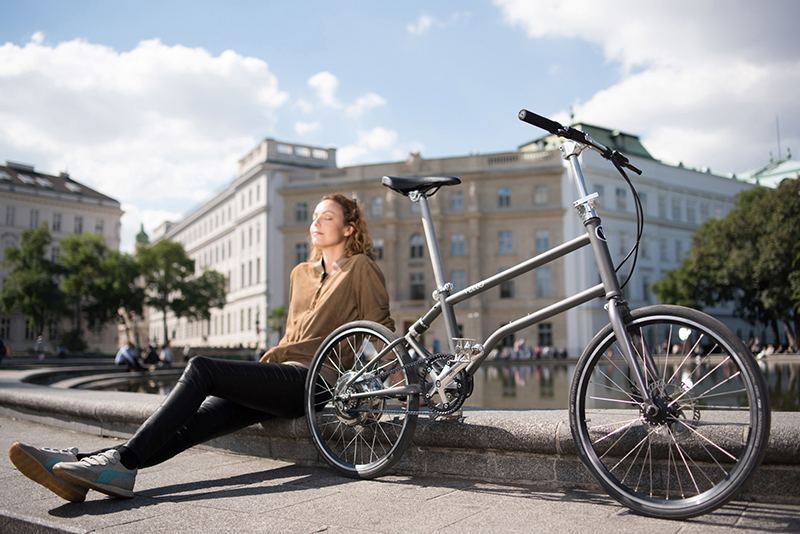
Vello Bike+, the world’s first self-charging electric folding bike which allows users to ride forever without needing to plug it in to a socket for a recharge, is a breakout hit on Kickstarter and trending fast having already raised more than €100,000 on the crowdfunding platform.

The bike is the first self-charging electric folding bike on the market: the battery can be fully recharged while riding meaning riders will never run out of battery power.

The energy with this new system is harvested as before by braking and pedaling downhill, just that it now also converts mechanical energy into electrical energy thanks to the Integrated Kinetic Energy Recovery System (K.E.R.S.). In that way, additional energy is generated to recharge the light integrated lithium-ion battery and released to give the extra boost when riding uphill. The self-charging mode can also be deactivated and set to the highest assistance level providing constant pedal support for at least 35 km (20 miles) at a speed of max. 25 km/hour (15 miles per hour). When the battery is empty, it can be recharged easily by connecting it to the power socket. Through the free app users can set the level of pedal assistance, track their route and even lock their bike remotely.

vello bike

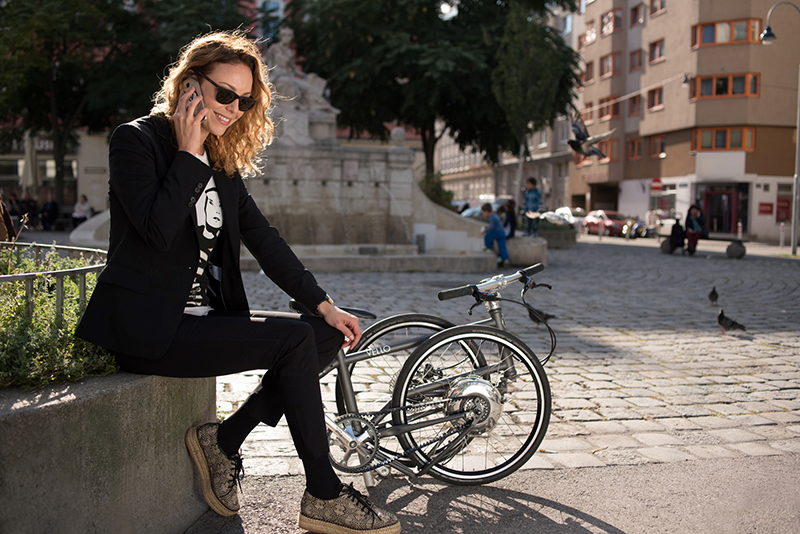
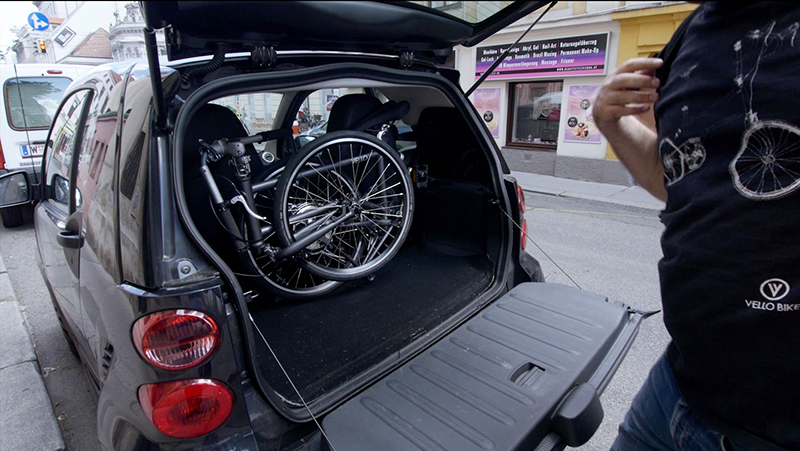
With an ultra portable design, the Vello is also the lightest e-bike on the market (clocking in at less than 12kg/ 26lbs), and capable of folding down to suitcase size for easy transport and carry.

“I wanted to create the best-ever electric folding bike with a groundbreaking new technology. It’s the first self-charging electric folding bike on the market, plus lighter and more compact than any other folding bike on the market. Many of the innovations on the Vello Bike+ have been developed grounds up and can be considered revolutionary in the bike industry,” says co-founder and award-winning designer Valentin Vodev.

“A self-locking magnet allows hands-free folding, which makes it very different from a typical folding bike with complicated hinges to open. They don’t tend to be very user-friendly as the folding process is lengthy and can be frustrating. Riding performance was also essential to us in the development of the Vello Bike+, it feels and rides better than most of the existing folding bikes on the market.”

vello bike

For the Vello Team, the product is more than just a bike but a function on how they view the world. “For us converting ideas into products is a metamorphosis from the common to the unexplored – a discovery through which we can define new functions and forms,” adds Vodev.

Based in Austria, the company is redefining mobility in cities. Since its foundation, the company has grown to become one of the world’s most cutting edge folding bike manufacturers. 

The Vello Bike+ is currently live and available to support on Kickstarter


Zaha Mohammad Hadid: From Iraq to Redefining Global Cities

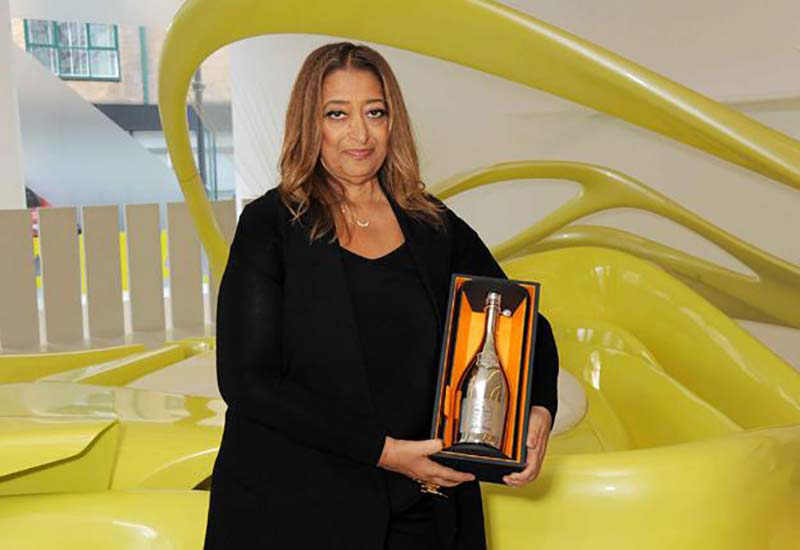
Dame Zaha Mohammad Hadid (31 October 1950 – 31 March 2016) was an Iraqi-born British architect. She was the first woman to receive the Pritzker Architecture Prize, in 2004.

Hadid was born in Baghdad, Iraq. Her father, Muhammad al-Hajj Husayn Hadid, was a wealthy industrialist from Mosul, Iraq. He co-founded the left-liberal al-Ahali group in Iraq in 1932,  and was the co-founder of the National Democratic Party in Iraq. Her mother, Wajiha al-Sabunji, was an artist from Mosul.

Hadid studied mathematics at the American University of Beirut before moving, in 1972, to London to study at the Architectural Association School of Architecture.

She is best known for liberating architectural geometry with the creation of highly expressive, sweeping fluid forms of multiple perspective points and fragmented geometry that evoke the chaos and flux of modern life. A pioneer of parametricism, and an icon of neo-futurism, with a formidable personality, her acclaimed work and ground-breaking forms include the aquatic center for the London 2012 Olympics, the Broad Art Museum in the U.S., and the Guangzhou Opera House in China.


US$2.3 Trillion by 2030 From New Business Models in Food & Agriculture

New research shows sustainable business models could generate 80 million jobs by unlocking opportunities across 14 areas, including food waste, low-income markets, aquaculture and urban agriculture.

There’s a reason why Real Leaders is a signatory to the United Nations Sustainable Development Goals – it makes financial and ethical sense. The 17 goals to transform our world started out as far-fetched ideas, but are rapidly being put into action by companies around the world, that have seen the economic benefits to adopting a way of thinking that solves pressing social problems. Feeding 7.5 billion people on the planet is one such challenge and the food and agriculture sector has just realized the massive benefits to adopting sustainable business models.

Companies could unlock US$2.3 trillion a year in the food and agriculture sectors with an annual investment of US$320 billion in sustainable business models by 2030, a 7-fold return on investment. This could also lead to more than 80 million jobs, according to a new report, Valuing the SDG Prize in Food & Agriculture, from the Business and Sustainable Development Commission. The release of the report coincides with World Food Day 2016 (which is Sunday 16 October).

The opportunities are broken down across 14 areas, including food waste, farming technology, low-income food markets, micro-irrigation, restoring land and forests, product reformulation, changing diets, aquaculture, reducing package waste, cattle intensification and urban agriculture. Researchers estimate a range of value for each opportunity; the lowest in the range is US$15 billion per year (for cattle intensification) while the highest goes up to US$405 billion per year (for reducing food waste across the production process, or value chain).

Of the 80 million jobs the report estimates could be created by 2030, 90% could be in developing countries, including 21 million in Africa and more than 49 million in Asia. The report further breaks down job creation potential in Asia to 22 million in India, 12 million in China, and the remaining 15 million in developing Asia. There could also be an additional 5 million new jobs in Latin America.

“As the world’s population is expected to increase by another one billion by 2030, the global food and agriculture system requires a new way of doing business, and new approaches to feed more than 800 million people who today suffer from chronic hunger as well as to meet future demand,” said Lord Mark Malloch-Brown, Chair of the Business and Sustainable Development Commission. “This report makes clear both the social and economic incentives for companies to seize upon the SDGs as compelling growth opportunities. It is part of our larger argument for why the private sector must accelerate new business models that open truly sustainable and inclusive markets.”

The authors caution that the annual investments needed to open these market opportunities must be scaled significantly, requiring an estimated US$320 billion a year to unlock these opportunities by 2030. They argue that the current capital base in 31 leading agriculture funds is just under US$4 billion a year—less than 1.5% the annual investment needed to capture these opportunities. Partnering with government will also be critical to put in place enabling policies and the right regulatory frameworks as well as to advance research for facilitating product innovation.

The report looks at how food and agriculture businesses can experience growth by pursuing sustainable and inclusive business models aligned with the Sustainable Development Goals (SDGs), or Global Goals. Launched in 2015, the SDGs are 17 time-bound targets for ending poverty and hunger, reducing inequality and tackling urgent challenges such as climate change, by 2030. The food and agriculture sectors directly relate to SDGs 2 (ending hunger), 3 (health & well-being), 8 (decent work and economic growth), 10 (reduced inequalities), 12 (responsible consumption and production), 13 (climate action), 14 (protect life below water) and 15 (protect life on land), but they are cross-cutting sectors that also affect the remaining Global Goals.

The research shows that developing countries have the most to gain from SDG-aligned business opportunities, capturing more than two-thirds of the estimated economic value due to their large shares of arable land, high future consumption growth and large potential efficiency gains. Across regions, the biggest business opportunity in developing Asia is in cutting food waste across the value chain; while in developed Asian countries like South Korea and Japan, the opportunity is greatest in consumer waste. In India, low-income food markets are the strongest opportunity for businesses, and in Latin America and Africa, it is forest ecosystem services.

Paul Polman, CEO of Unilever and member of the Business and Sustainable Development Commission, urges more food and agriculture companies to integrate sustainability practices into their models: “Unilever’s experience clearly demonstrates that business, can create value by putting sustainability at its very heart and adopting inclusive growth models. At Unilever, we have helped hundreds of thousands of smallholder farmers improve agricultural practices enabling them to double or even triple their yields. All stakeholders can share in the benefits: Smallholder farmers improve their livelihoods; suppliers gain increased security of supply with improved quality; and we reduce volatility and uncertainty with a more secure and sustainable supply chain. The SDGs present a clear moral case for change, but companies must recognise that they represent the business opportunity of a lifetime too and must adapt to take advantage of it.”

Companies will need to operationalize sustainability across its supply chain and internalize social and environmental costs, while transforming consumption. Unlocking social and economic rewards in food and agriculture will require closer collaboration among business, government and society, and new ways of working together to advance common social, economic and environmental objectives.

If the private sector can put these prerequisites in place, the social benefits, including food security, job creation and health outcomes, could be significant. Improving technology in smallholder farms and restoring degraded land, for example, could double the incomes of smallholder farmers in the world, who are among the poorest in the global economy, the report finds. According to the UN, of the 2.5 billion people in poor countries living directly from the food and agriculture sector, 1.5 billion people live in smallholder households.

“The best way to build an enduring business is to put sustainability at its heart. Value is then unlocked for all, from shareholder to supplier, and nature is not depleted.  Values and value creation do not have to, and actually should not be, traded in the long-term.” said Sunny Verghese, Co-Founder and Group CEO of Olam, a global agribusiness with a portfolio of 47 agri-commodities, and a member of the Business Commission.

“Many commentators have incorrectly perceived the SDGs to represent an additional headwind to growth and profitability. The reality is that in many cases the SDGs offer a new and higher quality channel for economic growth and business profitability,” said Dr. Fraser Thompson, Director, AlphaBeta, which conducted the research for the Business Commission. “This is particularly the case in these sectors. This study is the first attempt to provide a holistic assessment and quantification of the business opportunities related to the SDGs in food and agriculture.”

Valuing the SDG Prize in Food & Agriculture is part of a larger body of research that quantifies the value of business opportunities across four key systems, including cities, health and well-being, and energy and materials. The findings for these systems will be revealed in the Business Commission’s flagship report, to be launched in January 2017. The report will show how the Sustainable Development Goals (SDGs) —17 objectives to end poverty, reduce inequality and tackle climate change and other urgent challenges by 2030—provide the private sector with the framework for achieving sustainable and inclusive growth. The report will also cover the new business models and financing required to open these opportunities, and will include key action points for the private sector to take the findings forward and accelerate. 

 

Cyberattacks Around the World: The Race for Safety

Some argue that targeted cyberattacks and acts of cyberterrorism may be over-sensationalized, but with real-life incidents occurring regularly can we afford to ignore it?

We live in a world that has become used to spectacular and daring acts of conventional terrorism. But, as with the world around us, terrorism, and the threat it poses, is constantly evolving. We understand the power of the bullet and the bomb but now we also face exposure to a new, complex and potentially devastating form of terror: cyberterrorism. Increasingly, our societies are becoming wired together beyond national borders through a complex link of information and communication technology (ICT) networks and systems. Utilizing the same links that bind us together globally, a new generation of terrorists is able to strike from virtually anywhere in the world, causing catastrophic social and economic harm to countries thousands of miles away And due to their decentralized nature, these attacks are difficult to detect with traditional detection methods alone. A co-ordinated and sustained cyberattack against Estonia in March 2007 crippled banking and governmental IT systems, disrupting the lives of its citizens.

In 2015, credit-checking company Experian was hacked and 15 million T-Mobile customers had their information stolen. In the last year 300 million records were leaked and over USD1 billion stolen online. Chances are that you or someone you know has been affected by a cyberattack within the last few years, which is why it is essential for governments worldwide to do more than ensure our physical security. There is a need to come together and share the information and resources that will guarantee our cybersecurity. Governments cannot contain the threat of cyberterrorism through domestic measures alone. Without expert collaboration and knowledge sharing individual countries lessen their ability to respond to cyberattacks, as well as exposing other countries to even greater risks as cyber terrorists learn to exploit nations’ ICT weaknesses one-by-one. No single government possesses all the expertise to counter cyberterrorism.

Chances are that you or someone you know has been affected by a cyberattack within the last few years.

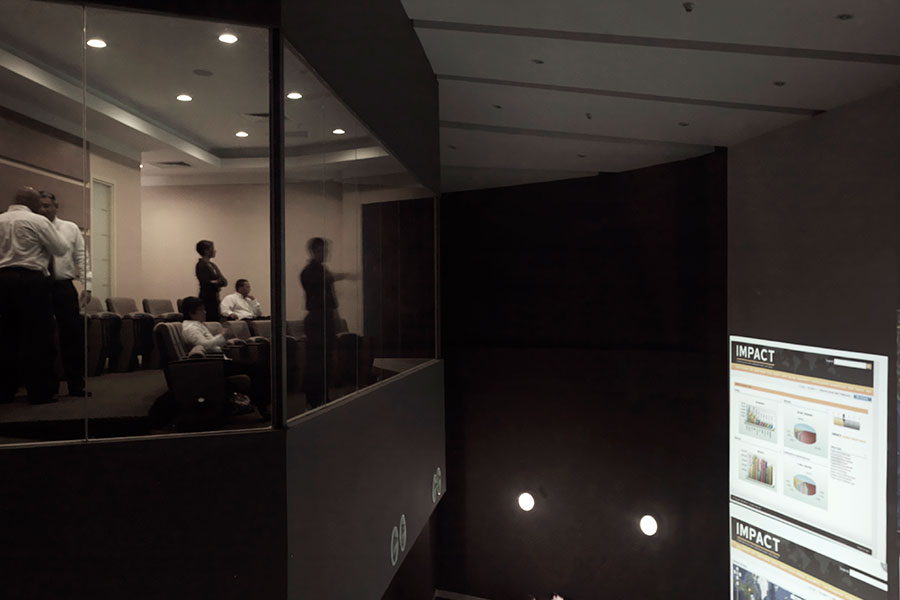
The talent pool of experts needed to meet disparate threats is dispersed across the globe, and in most instances, it is to be found in the private sector and academia rather than in government hands. The ability to respond quickly to contain and learn from cyberattacks is critical if damage is to be limited and the threat to other nations reduced. However, governments generally hesitate to collaborate with others on security related matters, thus adding to the challenge. To meet this growing threat, former Malaysian Prime Minister, Abdullah Badawi, launched a global initiative called IMPACT (the International Multilateral Partnership Against Cyber Threats). It’s the first global public-private initiative, and allows countries to interact between themselves, the private sector and academia. Inspired by the Centers for Disease Control and Prevention (CDC), IMPACT seeks to offer the global community the best brains and the best facilities to complement the nations of the world to counter cyber threats.

cyberterrorism

In 2011, IMPACT became the cybersecurity executing arm of the U.N. Many ICT systems – in both the public and private sector – face daily threats from hackers and their bots – networks of zombie computers, millions strong, bombarding scanning and probing their websites with the aim of exploiting the vulnerable ones. For the most part, the probes come from criminal groups intent on stealing identities, credit details, passwords and other information they can turn to financial gain. As well as groups of so-called ‘black hats’ trying to break in simply for the thrill and kudos of breaching multi-million dollar security networks. But as many recent, well-publicized, hacks have shown, these same skills can be used for political purposes, to create a breakdown in a country’s social and economic fabric. These attacks prove very publicly that cyberterrorism is neither a game, nor a hoax, and that these nightmare scenarios are a very real threat. We are all at risk from cyberterrorism. Even those of us who have never touched a mouse or keyboard.

It could be something as simple as disabling the banking networks, halting ATM withdrawals and credit card payments, or manipulating the stock markets and causing banks and other institutions to fail, taking jobs, pensions and savings with them. In an address at the e-Crime Congress in London as far back as 2008, Suleyman Anil, Head of NATO’s Computer Incident Response Capability Co-Ordination Centre, stated that “Cyberdefence is now mentioned at the highest level along with missile defense and energy security. We have seen more of these attacks and we don’t think this problem will disappear soon.” With dozens of international bodies and organizations jostling for position and power in the cybersecurity sector, the problems of legal jurisdiction and national interest are boundless. Yet, as systems and software become ever more complex and connected, allowing hackers to breach so-called ‘soft targets’ and find a back door into more crucial and secure systems, the race to find a coordinating body becomes ever more desperate, and the need to cooperate across borders and jurisdictions becomes more urgent.


Business Leaders Ready to Tackle Social Challenges

The Global Opportunity Network shows us how to turn risk into opportunity.

How we see the world

The Global Opportunity Network Report is rooted in the tension between global risks and opportunities. The concept of opportunity offers a perspective of the world where change is beneficial, even on a large societal scale. From the two concepts of risk and opportunity emerges the third and final ingredient  – opportunity leadership. In combination, these three ideas inspire a fundamentally new way of looking at the world and exercising leadership. Opportunity leaders are what we call those who react to risks from the perspective of opportunities. Systemic risks are fueled by globalization and the rapid rise of technology. Opportunities create value for societies and the planet, not just for individuals or businesses.

Business leaders see social challenges as among the most pressing risks they face. Of the more than 5,500 leaders surveyed worldwide, 42 percent answered that wasting an entire generation of youth to unemployment was at the top of their concerns among this year’s five risks. Looking at the broader risk landscape, a similar trend emerges, most notably unemployment, poverty, and hunger. We tend to assume that business leaders are concerned only with short-term profits and not with societal well-being. However, the above findings demonstrate that social unrest and economic disparity damage everyone’s prosperity.

Indeed, today’s most pressing risks are all concerned with human need that we all share; a job for a life without poverty. It is the social glue of our societies. Poverty, hunger, and youth unemployment are eroding the foundation of progress – not only in the world’s poorest countries, but within almost every country around the world. More than ever before, businesses must keep an eye on the wider risk and opportunity landscape in order to ensure current and future profits. Business leaders can be the change makers that COP21 asked for. The message from Paris was clear – that we need to mobilise new drivers of change. Also, that business holds important keys to solving a major global challenge like climate change. Businesses have broadened their view on what is best for both society and for business.

Systemic risks present global opportunities

As with every risk, there are opportunities to be pursued in this apparent crisis – indeed, this is the foundation of the Global Opportunity Network. Pursuing these opportunities is not simply a matter of making a bad situation a little better, it is a matter of turning it around. Our future depends on the opportunity mindset. Youth unemployment is an urgent example of the threatening ripple effects of a generation without prospects. Unemployment rates have reached particularly alarming heights in the Middle East and North Africa, where the lack of prospects for young people threatens to waste an entire generation.

The untapped potential of millions of people has repercussions far beyond their immediate societies. The good news is that opportunities for change can be found if a systemic approach is applied to solving the youth unemployment crisis. Tomorrow’s professionals are today’s children. A systemic approach looks at how schools and higher education systems interact with youth and how policies and corporations mold youth and their skills and culture of working. With new thinking about education, knowledge-sharing, and entrepreneurship, aided by digital innovations, entire societies can be uplifted and several global risks mitigated.

Businesses are the new activists

So where do we go to pursue these opportunities for systemic change? The survey data shows that business leaders are perceived to be the new advocates for systemic changes, alongside civil society. While the task of tackling entrenched social problems once firmly belonged to the realm of government, a clear shift is taking place: progressive businesses are working for the society they want to operate in. This is not motivated simply by altruism, but rather by an increasing recognition that social risks are detrimental to the bottom line and may present business opportunities in addressing them. A growing number of businesses must take the long view and look beyond their immediate interests to thrive.

To this end, a new alliance is emerging between progressive businesses and civil society actors, who strive to achieve the same sustainable goals. This promises to strengthen the social bottom line on the sustainability agenda, together with the environmental and economic bottom lines, and is ushering in a new kind of social capitalism. It’s large scale societal change from the bottom up. Conventional thinking sees entrepreneurship as an alternative to the conventional corporate world, but bringing the two worlds together through corporate incubators is an opportunity to generate jobs and futurepreneurs. Futurepreneurship empowers youth to take charge of their employment situation with the support of more experienced entrepreneurs.


The Future of Finance: Become Your own Bank

Bankers are happy to loan you money as long as you can prove that you don’t need it.

Roger Ying found a better way and is making traditional banking obsolete with technology-driven tools that empower the 99 percent.

Ying stepped into this brave new world and founded financial services company Pandai in 2011, after seeing a fundamental shift in what people expected from their banks, but weren’t getting. Occupy Wall Street and the anti-globalization movement may have been the catalyst for ordinary people to demand change in world finances, but increased political interference by governments has also created inefficiencies in banks that have stifled the flow of money to billions of consumers.

ying

“The average consumer started to realize how crony capitalism can come about,” says Ying “It’s become clearer how banks choose to finance some people over others, and many people have woken up to how big banks use and spend their money.”

Ying attributes the increased awareness and demand for change to the Internet, where shared information and experience has resulted in a more educated consumer. A rise in the concept of a shared economy has disrupted what traditional banking and finance is all about, and has people questioning what currency they still believe in. It has become an increasingly difficult question to answer.

“The rise of crypto-currencies, such as Bitcoin, have raised an interesting point. Would you rather believe in something that has been manipulated by a central government or bank, or a system with firm and fixed rules that technology has enabled – that are clear, decentralized and transparent?” asks Ying.

When the global banking crisis began in 2008 and people in Iceland, Spain, Ireland, Russia and the United Kingdom began losing their savings, there was one unbelievable detail: no one knew how they’d lost their money. Money had been entrusted, but no one knew what the bank was actually doing with it.  A result of this has been a demand for greater transparency and has seen the emergence of crowdfunding and peer-to-peer lending. “This is essentially saying that you’d prefer to meet the cow that will become your steak,” says Ying. “Knowing who has your money, and how they’re using it, is an important consideration in the new world of finance.

“Financial services before the crisis had an attitude of, ‘Just trust me. If I lose your money, I don’t owe you an explanation,’” explains Ying. “Added to this were layers of legal complexities that a banking client could never hope to understand.”

Pandai’s approach is to connect credit-worthy borrowers with lenders, which may sound like a familiar lending model, until you realize how many people might become involved in a USD10,000 loan. In this model, hundreds, or even thousands, of lenders will each lend USD10 or more to make up the total loan amount.

The lender can now become their own “banker” by diversifying their investment over hundreds of borrowers (customers) financing their loan.

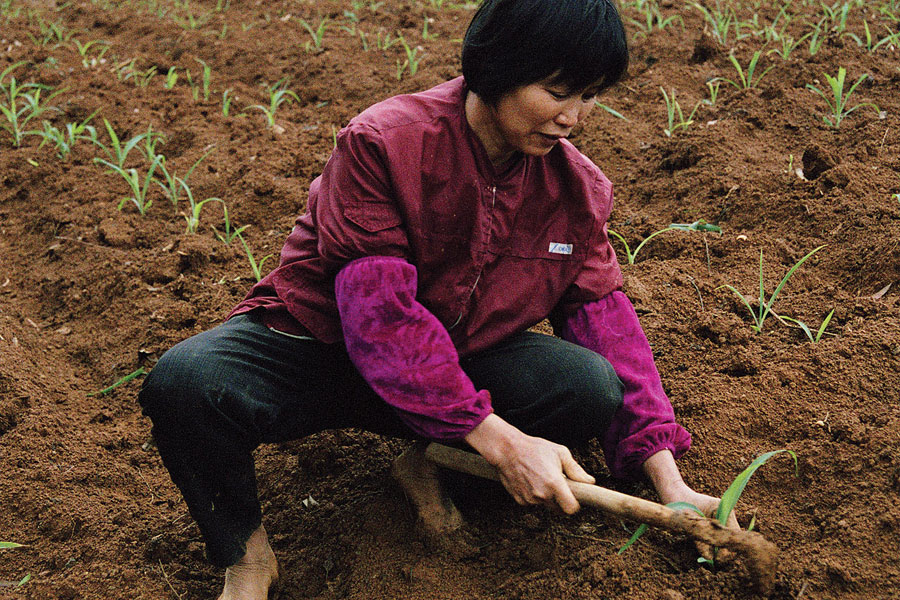
“It’s reverse banking,” says Ying. “And turns the borrower into the banker.” It’s an idea that Pandai is rolling out to the Chinese rural agricultural sector – 800 million farmers that make up more than half of China’s 1.3 billion population. It’s a huge, untapped market.

“In 2009 the peer-to-peer lending market in China stood at USD4.5 million, a figure that grew to USD66 billion last year,” says Ying. Crowdfunding, or crowdlending, diversifies the risk by spreading it among many people and essentially doing what a bank does: collecting many deposits from many customers. The lender  can now become their own “banker” by diversifying their investment over hundreds of borrowers  (customers) financing their loan. For skeptics who think this way of banking is unrealistic, 100 percent of Pandai’s lenders have received returns of between 7-15 percent.

This approach may seem innovative, but is actually nothing new. “Over 100 years ago, banking was a community business,” says Ying. “A bank manager knew every customer – who was doing well and who was doing poorly. With the advent of central credit bureaus and big data, risk formulas were developed that didn’t always acknowledge a person’s true earning potential, or ability to repay.”

“I see increasing numbers of people taking financial matters into their own hands and not feeling they need large corporations to think for them anymore,” explains Ying. “Technology has allowed people to buy into concepts, rather than big brands, and the emergence of robo-advisor’s, online portfolio management services that use algorithms to manage portfolios without the use of human financial planners, has empowered many investors.

“Banks usually look after their own interests,” says Ying. “In China, for example, state-owned banks are not incentivized to take risks, but rather to lend to other state-owned enterprises, effectively freezing out the general public from cheap access to capital.”

The Chinese banks won’t touch the farmers and truck drivers that Pandai finances, and Ying acknowledges that self-interest is still a problem. Stifling bureaucracy and a conflicting agenda between state and private enterprise are just two obstacles that need to change.

“There’s no reason for many banks to change as they exist as an arm of government,” he says. So, will banks die out like the dinosaurs one day? Ying thinks banks can change and are being forced to become more consumer-centric. Partnerships between banks and companies such as Pandai have shown banks how to expand their product range.

ying_02

The future of banking is an increased transparency and having all your financial information on your mobile phone – all your accounts, policies and portfolios instantly accessible from anywhere. On a recent trip to India, Ying witnessed how transparency can still play a central role, despite the lack of technology. “Some peer-to-peer lending platforms allow the lender to call up the borrower at any time and have a conversation,” he says. Private banking used to be a term reserved for the wealthy, but now it seems that a private phone call between any one of 800 million farmers and their benefactors represents a whole new way of defining wealth.


Albert Einstein: Genius, Inventor, Scientist, Immigrant

In February 1933 while on a visit to the United States, Einstein knew he could not return to Germany with the rise to power of the Nazis under Germany’s new chancellor, Adolf Hitler.

He and his wife Elsa returned to Belgium by ship in March, and during the trip they learned that their cottage was raided by the Nazis and his personal sailboat confiscated. Upon landing in Antwerp on 28 March, he immediately went to the German consulate and turned in his passport, formally renouncing his German citizenship. A few years later, the Nazis sold his boat and turned his cottage into a Hitler Youth camp.

Later that same year, Einstein discovered that the new German government had passed laws barring Jews from holding any official positions, including teaching at universities. Historian Gerald Holton describes how, with “virtually no audible protest being raised by their colleagues,” thousands of Jewish scientists were suddenly forced to give up their university positions and their names were removed from the rolls of institutions where they were employed.

Einstein’s works were among those targeted by the German Student Union in the Nazi book burnings, with Nazi propaganda minister Joseph Goebbels proclaiming, “Jewish intellectualism is dead.” One German magazine included him in a list of enemies of the German regime with the phrase, “not yet hanged”, offering a $5,000 bounty on his head. In a subsequent letter to physicist and friend Max Born, who had already emigrated from Germany to England, Einstein wrote, “… I must confess that the degree of their brutality and cowardice came as something of a surprise.”

After moving to the U.S., he described the book burnings as a “spontaneous emotional outburst” by those who “shun popular enlightenment,” and “more than anything else in the world, fear the influence of men of intellectual independence.”

Einstein was now without a permanent home, unsure where he would live and work, and equally worried about the fate of countless other scientists still in Germany. He rented a house in De Haan, Belgium, where he lived for a few months. In late July 1933, he went to England for about six weeks at the personal invitation of British naval officer Commander Oliver Locker-Lampson, who had become friends with Einstein in the preceding years. To protect Einstein, Locker-Lampson had two assistants watch over him at his secluded cottage outside London, with the press publishing a photo of them guarding Einstein.

Locker-Lampson took Einstein to meet Winston Churchill at his home, and later, Austen Chamberlain and former Prime Minister Lloyd George, where Einstein asked them to help bring Jewish scientists out of Germany. British historian Martin Gilbert notes that Churchill responded immediately, and sent his friend, physicist Frederick Lindemann to Germany to seek out Jewish scientists and place them in British universities. Churchill later observed that as a result of Germany having driven the Jews out, they had lowered their “technical standards” and put the Allies’ technology ahead of theirs.

Einstein later contacted leaders of other nations, including Turkey’s Prime Minister, İsmet İnönü, to whom he wrote in September 1933 requesting placement of unemployed German-Jewish scientists. As a result of Einstein’s letter, Jewish invitees to Turkey eventually totaled over “1,000 saved individuals.”

Locker-Lampson also submitted a bill to parliament to extend British citizenship to Einstein, during which period Einstein made a number of public appearances describing the crisis brewing in Europe. The bill failed to become law, however, and Einstein then accepted an earlier offer from the Princeton Institute for Advanced Study, in the U.S., to become a resident scholar.

He became an American citizen in 1940. Not long after settling into his career at the Institute for Advanced Study (in Princeton, New Jersey), he expressed his appreciation of the meritocracy in American culture when compared to Europe. He recognized the “right of individuals to say and think what they pleased”, without social barriers, and as a result, individuals were encouraged, he said, to be more creative, a trait he valued from his own early education.


The Doctor who Can’t Wait to Save Millions of Lives

Sometimes the world needs to move a little faster, especially when lives are at stake. James Bernstein brushes aside convention and invents a sterile surgery in a suitcase.

Great ideas sometimes start with asking uncomfortable questions. After being told how to treat pneumonia, perform an appendectomy and conduct a physical, Dr. James Bernstein had the audacity to ask “Why?” It was less to do with ignorance and more to do with the urgency he saw around him – the race to treat more than 5 billion people who don’t have access to basic surgery. One day, during his medical studies at Cornell University Medical School (now known as Weill Cornell Medicine), Bernstein overheard a professor – known for his prodigious surgical procedures – replying to a fellow student who had asked why such long waiting periods were required before they could start saving lives. The answer he received: “What’s the hurry?”

“In a world where 5 billion people don’t have access to surgery, it’s a big hurry,” says Bernstein. “I grew up a well-behaved Jewish boy, who went to medical school because that’s what my parents wanted. At medical school you get taught a single idea – that there’s only one way to do things. You’ll hear phrases such as: ‘because this is our way’ or ‘best practice’  – you don’t ask questions; you just do it.”

james_bernstein_02

Bernstein has also performed surgery in India and Peru, where he learned that western medical practices, taught by rote memorization, are not always suitable for different medical environments.

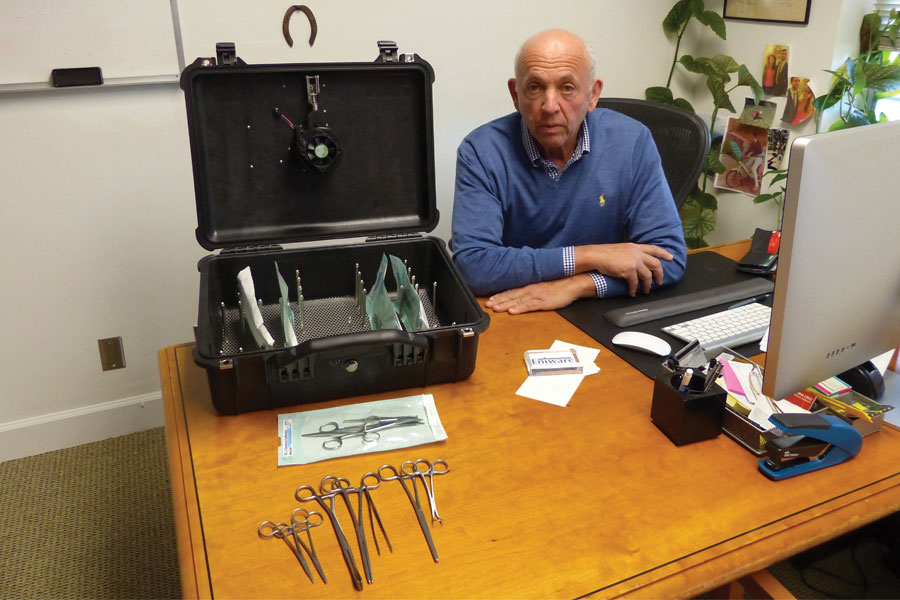
However, Bernstein’s persistence has paid off. He’s  now CEO of Eniware, a company that has just developed the world’s first portable sterilizing kit for surgical instruments. The low-cost, power independent unit is no larger than a carry-on suitcase that you’d take on a short business trip and is estimated to cost USD2,000 when commercially available. Each consumable pack, that uses nitrogen dioxide to sterilize the contents of the suitcase and a scrubber to absorb the gas after sterilization is complete, is estimated to costs a mere USD15 – an affordable alternative for rural hospitals in Africa or Asia that lack electricity or sophisticated infrastructure.

“Salk told me that after curing polio he was asked, ‘Why don’t you cure diabetes?”

A common trait among many successful entrepreneurs is their respect and admiration for someone else – whose work has led to groundbreaking innovation. In Bernstein’s case, this inspiration came in the form of Dr. Jonas Salk, who discovered the cure for polio. Salk had complained to Bernstein that the press were never happy with his achievements. “Salk told me that after curing polio he was asked, ‘Why don’t you cure diabetes? Why don’t you cure heart disease? Why don’t you cure cancer?’ He had achieved something huge, that affected billions of people, yet everyone still expected more of him,” recalls Bernstein. “He was depressed by this, but the lesson I learned by working with him was that I should think big too, and also try and affect billions of lives.”

While still at medical school, Bernstein made the “terrible blunder” of going to India, where he performed 50 surgeries, including an open heart surgery at 12,000 feet above sea level, without a heart/lung machine. “You’re not supposed to do that, but I did,” says Bernstein. “It became very clear to me that the best practices of western medicine do not translate well to most parts of the world. It made me realize that we sometimes need alternate ways of doing things.”

james_bernstein_03

The choice of business partner is critical in any successful business, and Bernstein teamed up with Huma Malik, a Pakistan-born project manager and conflict resolution expert. She’s also a skydiver and certified rescue scuba diver – someone Bernstein can trust to handle any situation when transforming the world of surgery in tough environments.

Essential surgery is considered appendectomies, C-sections and repairs to hernias and lacerations. Medical schools involved in global health are finally focusing on this neglected stepchild of surgery, that account for 30 percent  of deaths around the world – from procedures gone wrong or lack of sterile instruments. The population in sub-Saharan Africa alone will increase by another one billion people. It’s a big problem, that sometimes requires stories to drive home the reality.

A young, healthy mother in Afghanistan has just given birth via C-section to a beautiful baby girl. However, the instruments weren’t sterile and nine  days later she’s dead. In Tanzania, three women give birth naturally – no C-section, no sterile instruments or essential surgery. They now sit with holes between their bladder, rectum and vaginal canal, with tubes going into plastic buckets for the rest of their lives. “It’s called obstetric fistula,” says Bernstein “Very few people have heard of it, yet there are three million women living like this right now. Shocking, tragic and all totally preventable by surgical C-section.” While the lack of C-sections can be blamed on a shortage of surgeons, lack of technology is also to blame. Amazingly, in 1880, Louis Pasteur had already demonstrated that boiling water does not sterilize instruments – it doesn’t kill spores. Yet, in Africa today, boiling water is still used, pre-1880 style.

As with most disruptive technologies, Bernstein initially faced an uphill battle against established medical procedures. He spent much time and money convincing investors that nitrogen dioxide could be a sterilizer.

“Bill Gates once pointed out that innovation doesn’t come from big companies. They don’t get involved with little companies like us because we’re different. We think about the future, not only about today,” he says.

He’s quick to remind us that each of the one billion new people expected in Sub-Saharan Africa represents a birth – in places with no electricity. “It’s been hard raising the USD3.5 million needed to develop our cordless sterilizer,” says Bernstein,“especially when you hear of juicing machines that have raised USD120 million.” Despite the low cost of Eniware’s sterilizer kit, the team is convinced that the shared value enterprise they’ve put in place between investors and end-users will pay handsome dividends to those who’ve backed them. A potential market of 5 billion people is not an insignificant number. “We initially didn’t get any help from the big companies, but they’re all interested now. We stuck our necks out and came out with the disruptive technology that would change surgery in the developing world.”

In Africa last year Bernstein presented a demo model to a nurse in a rural hospital. “She looked at it, and said, ‘Go away, leave now.’ I thought I’d violated some local custom,” he recalls “But she looked at me and said, ‘Dr Bernstein, we need this sterilizer so badly we can’t have you standing here talking any longer. Go away and don’t come back until you bring us one.”


Obama on Refugees: Why do we Keep Making Excuses?

As reported by the UN High Commissioner for Refugees, the world is facing the largest displacement crisis on record. Sixty-five million people have been forced to flee their homes by violence, persecution, and instability.

Many countries have given them sanctuary and assistance, so that families have shelter, medical care, and basic services, and children can go back to school and parents can go back to work. But the need remains great. And helping refugees isn’t just up to governments—every American can play a role, too.

The United States has a long history of welcoming people fleeing persecution and violence. Over the past 40 years, we have safely welcomed more than 3.2 million refugees representing more than 70 nationalities, helping them build new lives in all 50 states. Refugees enrich their new communities economically and culturally; many go on to be small business owners and serve in the U.S. military. Two of our country’s previous Secretaries of State were refugees.

President Obama announced that the United States will welcome more refugees from around the world, increasing the number of people we receive by 40 percent over the next two years, to 100,000 in 2017.

Refugees are the most thoroughly screened travelers to our country. This includes security checks, examination of all available biographic and biometric data, consultation of a broad array of law enforcement and intelligence community databases, and extensive interviews before they are cleared to travel to the United States.

Learn about the screening process

As we welcome some refugees to our country, we also help the millions of others living elsewhere. Our country is the world’s largest single humanitarian donor. Each year we support programs across the globe that provide vulnerable families and children life-saving assistance, from food and water to medicine and shelter.

But addressing the current crisis isn’t just about what a government can do. It’s about what every single one of us can do to make sure that those who are displaced can find safe haven and a new start.


0