Green Gala Puts Sustainability on Stage

Emerson students sang, danced, acted, joked, and raised their voices Friday, April 14, all the in the name of environmental awareness. 

Now in its third year, Green Gala was held at the Emerson/Paramount Center and featured a wide selection of student performers and groups, as well as student films that supported the theme of unity collaboration, and eco-friendly practices. Students competed for cash prizes.

In a letter to the community, President Lee Pelton said, “The gala, which occurs during the same month as national Earth Day festivities, has become a signature environmentally-focused event at Emerson. It is an opportunity to come together as a community to celebrate our planet and sustainability practices through diverse forms of artistic expressions.”

Prior to the show, audiences learned about ways to become more environmentally conscious and nibbled on vegan, vegetarian, and gluten-free food. 

Original Story: Emerson

Entertainment For Change

Florian Picasso: Musician, DJ, Record Producer

Twenty-seven-year-old Florian Ruiz-Picasso, better known as Florian Picasso, is a French DJ and record producer who is a great-grandson of the well-known artist, Pablo Picasso. He was born in Vietnam and adopted by Marina Picasso, the granddaughter of Pablo Picasso.

Florian has gained recognition for collaborations with 20-year-old Dutch DJ superstar Martin Garrix and Steve Aoki, the highest grossing dance artist in the US. In 2016, Florian was ranked by DJ Mag at 38th on their annual list of Top 100 DJs in the world.

He started making music at the age of 13, when he would perform at events at his boarding school. He became more serious about his musical career at age 19 and has been performing in big clubs since age 16. He has opened for acts like Swedish House Mafia and performed at major music festivals, such as Ultra Music Festival and Tomorrowland. 

Originally based in Cannes, France he currently resides in Geneva, Switzerland.


Why “Working on the Road” Can Strengthen Your Team

Seventy percent of millennials who took part in a recent survey stated that the ability to travel was the main motivation for working, second only to paying for necessities such as rent and bills.

But while millennials may be foot-loose and experience-driven, they are also career-minded, ambitious and motivated by jobs that allow them to acquire the skills and knowledge they need to grow both personally and professionally.

Offering flexibility for work schedules and vacations is important for employers who want to attract the best talent out there. Increasingly, companies are allowing and even encouraging employees to work remotely for set periods of time, which is proven to improve morale and productivity.

But instead of simply offering employees the perk of working in pyjamas from their over-priced inner-city apartments a couple of days per week, there are multiple benefits to embedding a company culture that encourages staff to travel and work “on the road” for short periods of time each year.

Here are three reasons encouraging employees to work while travelling could improve a lot more than just team morale:

1. Traveling and working allows your team to grow personally and professionally

According to a recent survey by Hipmunk, 38 percent of millennials travel for business, compared to just 23 percent of Gen Xers and 8 percent of baby boomers. However, Sara Sutton Fell, founder and CEO of FlexJobs states, “From the surveys we’ve done of millennials and flexible work, it’s not so much that they want their jobs to include travel such as traditional business trips to meet clients,” says Sutton Fell. “It’s that they want to be able to travel and still do their jobs.”

While not every job role requires foreign travel, there are multiple opportunities for growth and learning abroad which any employee could benefit from while still doing their normal job remotely, such as visiting foreign branches, business cross-pollination exchanges with companies in the same sphere, networking events and conferences.

Offering the opportunity to represent your company abroad is not only an attractive incentive for talent acquisition, but also has a positive impact on many other levels. Travel experiences increase employee commitment to the organisation, focus and productivity and give a goal for employees to work towards. Travel has been proven to broaden individuals’ horizons, and boost professional and personal growth by placing people out of their comfort zones, and forcing them to adapt to foreign norms, languages and customs.

In the increasingly ‘global’ work ecosystem, sending employees to work and cooperate with, and learn from other companies is a great way of growing your network. Thanks to a growing number of events, conferences and accelerator programs emerging around the world, cooperation and communication is improving in the startup ecosystem. Rather than going head to head, startups are increasingly learning from each other, and gaining inspiration from the innovation of other startups in their sphere.

Encouraging your employees to interact and cooperate with other startups around the world can inspire them to implement ideas spawning from different cultures as well as strengthen their entrepreneurial mindset, which they can transfer back to their work back home.

2. Embedding working ‘on the road’ forces your company to provide real flexibility.

Rigid 9-5 office based schedules are fast becoming a thing of the past. Forward thinking companies are realizing that aside from improving morale, offering flexibility in schedules and for vacations actually improves productivity too. With smartphones, portable devices and increased wireless internet saturation, workers can effectively be plugged into their desk from anywhere, at any time of the day, and if they want to take an afternoon off and catch up over the weekend it shouldn’t affect their overall output.

However, while timetable and vacation flexibility are becoming more common, for many companies they still remain a perk, to be taken advantage of or not at the employee’s discretion. Leading companies like Netflix, Best Buy and Virgin are pioneering “unlimited vacations” a policy which on face value appears attractive to experience-driven millennial employees, and talent-hunting managers alike. But critics argue that in reality this tricks employees into taking less vacations, isn’t applicable to all industries and is hard to implement fairly across teams.

For early stage startups the limitations posed by skeleton teams and limited resources can often make ‘unlimited vacations’ unrealistic, but if working trips are embedded in your company culture, your company will be forced to make this flexibility part of day to day operations.

Rather than being forced to hastily organize cover and shift responsibilities at the last minute before someone takes vacations, your company needs to have systems in place to accommodate remote working. These include rolling out communication tools like Slack, and using shareable documents like Google Docs and Excel which can be accessed by different employees easily. Employees working remotely can easily join team meetings and brainstorming sessions via Skype or Google Hangouts, and tools like Join.me even allow for screen sharing and interactive online whiteboards for conference calls.

3. Traveling and working allows you to attract the best talent

Attracting and retaining talent is becoming more challenging. As the demand for qualified professionals with specific skills grows – especially for development and technical roles – so do potential candidates’ expectations in terms of flexibility, work environment and many other perks that go way beyond financial compensation.

Adam Kingl, director of learning solutions at the London Business School argues “With younger workers being fully aware that you can email or call someone from anywhere, the idea of working differently becomes a criterion that people are expressly looking for before they’ll sign on the dotted line, it’s not a perk or reward.”

Modern employees want the whole package. As well as being paid appropriately, they expect to work in environments where they can learn, challenge themselves, and fulfill their own personal goals, whether that be initiating their own projects, or travelling the world.

Until recently, employees who wanted to take an extended trip needed to quit their jobs, or take unpaid sabbaticals. However, startups like Remote Year, now offer ‘round the world’ year long digital nomad experiences, and can arrange openings with leading companies for people with specialized skill sets as well as entry-level employees. Similarly, Embark, We Roam, and Hacker Paradise offer shorter couple of weeks to twelve months experiences in Latin America, Europe and Asia. To stay competitive, attract and keep ahold of experience driven millennials, offering the chance to travel while working remotely could put your company in good stead with potential employees, who want to discover the world, but also develop their careers.

Managing remote teams has its challenges, and will require extensive training and adoption of new tools to facilitate team members being away from home base for extended periods. However, the benefits of encouraging team members to spend time in foreign countries outweigh the challenges. So instead of worrying which talented employees are getting cold feet and will move on to new adventures, allow them to pick up their backpack, their laptop and get out there, with the knowledge they will come back even better than before.

By Juliana Hernandez and Juan Nates, co-founders of WorkplaceA.com  


Mila Kunis: Actress

Milena Markovna “Mila” Kunis, born August 14, 1983, is an American actress who moved to Los Angeles from Ukraine in 1991 at the age of seven.

After being enrolled in acting classes as an after-school activity, she was soon discovered by an agent. She appeared in several television series and commercials, before acquiring her first significant role prior to her 15th birthday, playing Jackie Burkhart on the television series That ’70s Show. Since 1999, she has voiced Meg Griffin on the animated series Family Guy.

Her breakout film role came in 2008, playing Rachel in the romantic comedy-drama Forgetting Sarah Marshall. Her other films include the neo-noir action film Max Payne (2008), the post-apocalyptic action film The Book of Eli (2010), the romantic comedy Friends with Benefits (2011), the comedy Ted (2012), the fantasy Oz the Great and Powerful (2013) as the Wicked Witch of the West, and the drama Black Swan (2010). This performance gained her worldwide accolades, including the Premio Marcello Mastroianni for Best Young Actor or Actress, and nominations for the Golden Globe Award for Best Supporting Actress and Screen Actors Guild Award for Outstanding Performance by a Female Actor in a Supporting Role.

Kunis is married to actor Ashton Kutcher.


“African Union Should Stop Acting Like Exclusive Club”

Africa is approaching a tipping point across a number of issues, including the fight against terrorism, creating economic opportunity and embedding democracy across the continent.

“Africa at the Tipping Point” was the theme of the Mo Ibrahim Foundation’s annual Ibrahim Forum on Saturday, 8 April. While the continent’s future is in the balance as opportunity or failure both loom depending on the policy actions of the private and public sectors and civil society. Most attendees voiced guarded optimism that African nations can overcome the obstacles to progress, especially in the three main areas of discussion: the fight against terrorism, defending democratic institutions, and creating enough jobs for the coming explosive growth in population.

The Mo Ibrahim Foundation was established in 2006 with a focus on the critical importance of leadership and governance in Africa. By providing tools to support progress in leadership and governance, the Foundation aims to promote meaningful change on the continent. The Ibrahim Prize celebrates excellence in African leadership and is awarded to a former Executive Head of State or Government by an independent Prize Committee. 

Mo Ibrahim, Founder and Chair of the Mo Ibrahim Foundation, said, “The African Union should really stop acting like an exclusive club of presidents, whose only objective is to protect themselves. Come on, that doesn’t work at this time anymore.”

Former UN Secretary-General Kofi Annan, said that institutions had to be reformed at the highest level, including the UN Security Council and Mo Ibrahim agreed concerning the African Union. Fatou Bensouda, Prosecutor of the International Criminal Court, noted that African countries are well-represented at the court, which is a good signpost for achieving a fairer society.

Lamido Sanusi, Emir of Kano, Nigeria, warned that local conditions and traditions had to be taken into account – there is no “one-size-fits-all” remedy.

All of these issues don’t just affect Africa. U2 lead singer and founder of ONE and (Red) Bono said that Europe cannot be prosperous without a prosperous Africa.  “There is a totally different relationship with the continent now. Nobody in Europe doesn’t understand that we are eight miles from the continent of Africa. Europe cannot succeed if Africa fails. Most people know that now,” he said. 

Member of the Moroccan Royal Cabinet Youssef Amrani called for more regional integration, to share problem-solving and share prosperity. Former Nigerian Finance Minister and World Bank Managing Director Ngozi Okonjo-Iweala said more support for small and medium-sized enterprises, especially those run by women, could be an important engine for job growth.

Engaging the younger generation in everything from political involvement to entrepreneurship seemed to answer questions about how to avoid the negative tipping point across most of the issues. Two Ibrahim scholars are translating their internships and academic experience into action – Aya Chebbi in her own Afrika Youth Movement, and Mariam Yinusa through her work at UNECA and the AfDB.

Another way of reaching that younger generation with the message of good governance is through football and music. A friendly match between Kawkab Marrakech and TP Mazembe of the DRC ended with the Congolese team taking home the Ibrahim Trophy for the third year in a row with a 1-0 victory.

And at the end of the weekend, thousands of young people attended the closing concert, featuring Youssou NDour, Angelique Kidjo, Hamid al Kasri, Hoba Hoba Spirit, and Hindi Zahra, which lasted late into the night.


Manufacturing Redefined: 6 Trends Changing the Industry Forever

Let’s be honest — sometimes manufacturing gets a bad rap. The industry can be seen as a behemoth — stuck in the past and slow to innovate, the victim of outsourcing and the purveyor of consumerism. Thankfully, in 2017 these stereotypes couldn’t be further from the truth.

Global organizations like GE and Caterpillar are investing in new technologies and innovation methods. Startups like Local Motors and Carbon are creating their own breakthroughs from the ground up. And organizations like the US Council on Competitiveness are working to keep these innovators moving forward. The future of manufacturing is bright.

That’s why we’ve put together this list of top trends to watch in 2017. If you want to learn more about the technologies fueling these trends, meet the people leading the charge, and connect with fellow leaders, join us at Exponential Manufacturing May 17–19 in Boston.

  1. Innovation Is Outpacing Policy

People around the world are talking a lot about recent and impending policy changes. How will these changes impact innovation in the coming years? And how will policy keep pace?

AI and robots will continue automating factories. Self-driving trucks and ships will automate the transportation of materials and finished products. Even biotech is offering new ways to make things. These and other emerging technologies will impact how we live, work, and trade. The workforce will shrink, efficiencies will improve, entire sub-industries (shipping, for example) could be upended by unexpected technologies—and all this will happen faster than expected.

Can society keep the pace? How do we regulate innovation without suffocating progress? How do we adopt an open-minded yet ethical approach to new opportunities? Looking ahead and planning for the future now is how organizations and policymakers will move toward the best scenarios and avoid the worst ones.

  1. The Cutting Edge Won’t Be Cutting Edge for Long

If you’re reading Singularity Hub, you’re aware of some amazing advances happening across research fields and industries. The deep analytical powers of machine learning are transforming raw data into useful insights; some robots can now safely interact with people and more nimbly navigate messy work environments; 3D printers are giving form to digital designs; and biotechnology is beginning to transform living creatures, such as engineered bacteria, into microscopic chemical-producing factories.

While these are incredible innovations in research labs—and more arrive every day—one could argue the greatest challenge will be successfully timing and creatively implementing the latest breakthroughs into companies and business strategies. Those who recognize which technologies will serve their organization best, lead a culture of change, and navigate rough political waters, will come out on top.

  1. Data-Driven Decision-Making Gets More Intelligent

Data has always played a critical role in manufacturing. The entire industry, from sourcing to production runs to sales forecasting, has relied on data for decades. However, the amount of data is growing exponentially larger by the day. Thanks to cheap, connected, and increasingly ubiquitous sensors (the Internet of Things), companies are able to monitor more than ever before — things like machinery, deliveries, even employees.

Companies need to leverage the latest in artificial intelligence to make the most of these incredibly large and powerful data sets. For those who do adopt new tools, smart decision-making will become clearer, easier and faster.

  1. Accelerated Design and Real-World Market Testing

Historically, the product creation process is notoriously long. Market research, focus groups, R&D, short runs, testing, sourcing, long runs…the list goes on. What if you could make a part that’s exactly like the finished product, in a series of one? What if you could design, build, test, and iterate in real life, before ramping up large-scale production?

You can, and in fact, GE is.

GE’s FirstBuild program is a state-of-the-art, community-sourced lab that lies outside their main campus and is used for the rapid prototyping of new ideas. If a product proves its worth in a sample market, the design is transferred to the main campus for full production.

These are the changes that technologies like additive manufacturing and materials science are bringing to product design. When a giant like GE creates a spinoff group to act like a startup, it becomes obvious that power is being democratized, innovation times are being slashed, and long-held competitive advantages are evaporating.

  1. Automation of Production and Democratization of Making

Similar to design, new technologies are drastically cutting the time and cost required to get products to market. However, there are larger shifts happening in the overall production process as well. Robots are becoming more nimble, more versatile and smarter. Computer-guided fabrication—both additive and subtractive—is getting faster, cheaper, and more precise. Factories are becoming more efficient, while raw material waste is decreasing. All of this increases competition, making success without these technologies nearly impossible.

On the other end of the spectrum, the spread of additive manufacturing, the boom of the maker movement, and a drastic reduction in small machinery cost is allowing individuals to build mini factories in their own homes. What was once only possible in the world’s largest factories is now doable in your neighbor’s garage. And while some may discount the innovative potential of the non-professionals, consider the incredible amount of human capital unlocked by this change.

  1. Reimagining the Global Supply Chain

One of the most difficult sectors of manufacturing is the supply chain, from sourcing raw materials around the world, to delivering finished goods on time. Supply chain managers are responsible for coordinating with hundreds, if not thousands, of partners and service providers to make sure products are delivered on time, on budget and in good condition.

While it may not be the sexiest piece of the puzzle, it’s certainly a critical one — and it’s ripe for improvement. Self-driving trucks and ships, AI-powered planning software, and localized manufacturing facilities are all converging to reshape the very nature of supply chains.

So, we’ve highlighted six trends currently impacting the global manufacturing landscape. What does it mean, though? How do we stay ahead of these shifts? How do we know which technologies will stick and which will end up as the Betamax of the year?

Some of these questions are yet unanswerable, while some gain more clarity each day. What we do know is that this is just the beginning. As technologies converge, they will continue creating ever stronger advances, thus compounding the rate of improvement.

Manufacturing leaders should incorporate ongoing, future-oriented education as part of their annual development to stay up-to-date on new breakthroughs, learn where the industry is headed, and discover how to bring these competitive advantages into their own organizations.

Ready to start your education? Join Singularity University for Exponential Manufacturing, an event that will lead 600+ manufacturing executives, entrepreneurs and investors through an intensive 3-day program to look into these questions, connect with like-minded leaders, and prepare for success in the year to come. Prices increase April 1st. Apply here and save up to 15% with code SU17RL.

This article was sourced with permission from SingularityHub.

httpss://www.youtube.com/watch?v=51XX-PUnP9s&feature=youtu.be

Starbucks and USAID Empower Colombian Coffee Farmers

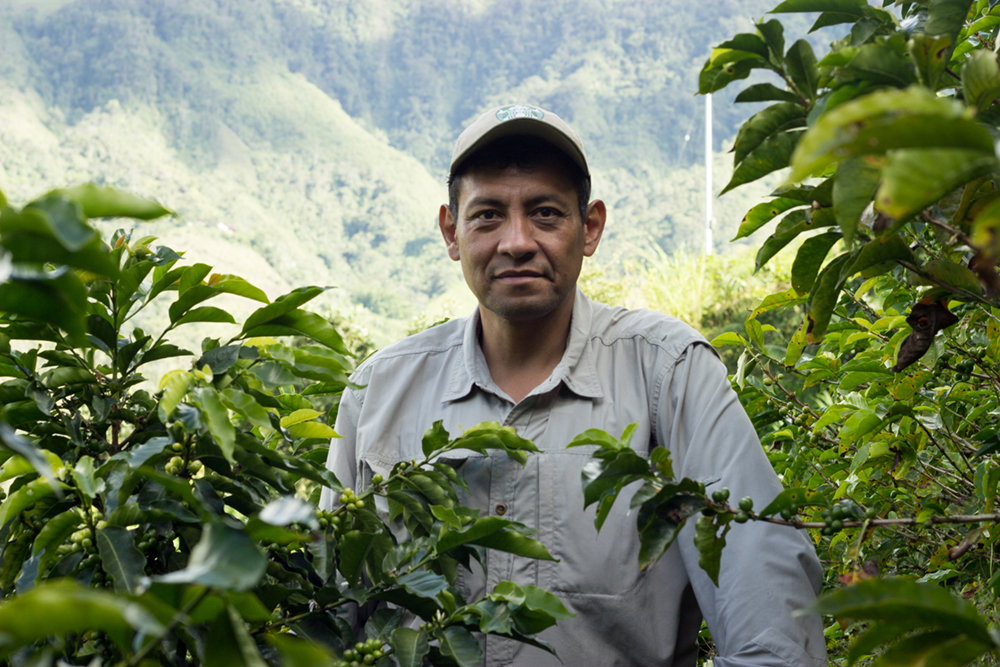
Coffee farmers in Colombia faced challenges maintaining their crops during the country’s 50-year civil war. An alliance between Starbucks and the U.S. Embassy, through its Agency for International Development (USAID) is now helping farmers refocus on their crops with an emphasis on coffee quality.

“At times, coffee farmers were unable to travel in certain areas held by guerrilla forces, which prevented them from obtaining the technical assistance necessary to maintain the health of their crops,” says Alfredo Nuño, general manager, Starbucks Farmer Support Center in Colombia. “Through Starbucks work with USAID, we have been able to help 17,500 farmers improve their crops.”

As the largest purchaser in the world of premium arabica coffee from Colombia, Starbucks is committed to the livelihoods of Colombian coffee farmers. In 2012, two years prior to signing the agreement with USAID, Starbucks opened a Farmer Support Center in Manizales, Colombia, to deliver training and agronomy support to Colombian coffee farmers.

“The quality of Colombian coffee is one of the best in the world and the idea behind this public-private alliance with Starbucks is to improve its quality even more, to be able to produce more coffee to export and thus contribute to the development of rural areas in Colombia,” said Kevin Whitaker, U.S. Ambassador to Colombia.

Starting with the soil
The initial task of the Starbucks and USAID collaboration was to promote a soil analysis program.

“Most farmers here do not use soil analysis because it’s cost prohibitive,” Nuño says. “By offering the service to them free of charge, they were able to learn so much more about their crops.”

Starbucks agronomists helped farmers learn how to collect soil samples, which were shipped to a local laboratory for examination. More than 13,000 farmers submitted samples for evaluation.

“It took us about a year to collect all of the samples,” Nuño says. “We learned that 85 percent of them had similar needs, so we enlisted the support of a local fertilizer manufacturer to develop a formula addressing the nutrient deficiencies of the soil.”

Farmers who provided the remaining 15 percent of the soil samples received recommendations for existing fertilizers to use or how to build their own formulas to support their crops.

“Teaching farmers to take soil samples, might sound trivial, but it’s not,” added Nuño. “The coffee farmers were excited to learn these new techniques and are committed to taking samples, getting results and using those results in the future.”


Engaging with farmers
With soil analysis covered, Nuño turned his focus on conducting a series of workshops to educate farmers about agronomy and maintaining quality to sell coffee at a premium price.

“There’s a perception, particularly with younger farmers, that growing coffee is not a good way to earn a living,” says Nuño. “We know that with proper knowledge and applying best practices, a coffee farm can be successful.” 

Nearly 8,500 farmers were trained at the 349 workshops organized over the past two years.

“I have seen a change in the farmer’s mentality as a result of our work together. They have knowledge and new techniques to use. They feel empowered to manage their farms and speak about their coffee with greater authority,” Nuño says. “We want the farmers to be successful. We have had a chance to serve as link between them and the tools needed to produce the highest quality coffee possible. For me, that’s very important.”


New Film Exposes Child Sex-trafficking In America

I am Jane Doe, is a powerful new documentary film that chronicles the epic battle that several American mothers are waging on behalf of their under-age daughters who were bought and sold for sex on Backpage.com, the adult classifieds section that for years was part of the iconic Village Voice.

Reminiscent of Erin Brockovich and Karen Silkwood, these mothers have stood up on behalf of thousands of other mothers, fighting back and refusing to take no for an answer. The Film is written and directed by Mary Mazzio, narrated by Academy-Award and Golden Globe nominee Jessica Chastain (Zero Dark Thirty, Miss Sloane), and produced by Mazzio and Academy-Award nominee Alec Sokolow (Toy Story).

The film shines a light on child sex-trafficking, a gut wrenching reality that affects every community in America.

I am Jane Doe launches worldwide on Netflix beginning May 26, 2017 and also launches on iTunes, Google Play, Vimeo and Amazon on May 12, 2017.

Esquire has called the film “a gripping legal thriller” while the Los Angeles Times has hailed it as “a powerful call to action.” The project and the issue of child sex-trafficking has garnered extraordinary coverage amongst critics and popular press, such as The New Yorker, Vogue, Cosmo and People Magazine, and NBC Nightly News.

A new Backpage case, filed by the family of Desiree Robinson, age 16, will coincide with the May release of I am Jane Doe. Desiree, a middle school student in Chicago, disappeared from her father’s home on Christmas Eve. Hours later, she was advertised on Backpage and subsequently murdered by the buyer. Her mother, Yvonne Ambrose, is determined to change current laws which have been interpreted by federal judges to protect Backpage from all responsibility.

Writer and director, Mary Mazzio is a force to be reckoned with. She’s a 1992 rowing Olympian and has negotiated a corporate contract on Boston’s State Street (she is a former partner with the law firm Brown Rudnick), and collaborated with the White House to raise over $100 million dollars in public and private partnerships to fund STEM education for low-income students, as she did with her last film, Underwater Dreams.

In all of Mazzio’s films, her mission is to shed light on compelling narratives of social significance, making her one of the country’s prominent filmmakers promoting stories of diversity. Fifty percent of profits from I am Jane Doe will be donated to organizations serving Jane Doe children.

www.IamJaneDoeFilm.com


The High-Potential Leader

The primary reason companies like Facebook, GE, and Netflix win today is the quality of their generals. Never before has it been more valuable to have or to become a high potential leader, one who can set the path and execute a winning plan in this digital age.

If a business leader has what it takes to someday lead a large organization, how can they take charge of their growth and acquire the necessary skills quickly? Alternatively, how can organizations identify and develop high potential leaders ahead of the competition?

The High Potential Leader: How to Grow Fast, Take on New Responsibilities, and Make an Impact (Wiley; March 13, 2017) is a timely blueprint for a new era of developing leadership talent that will change how companies compete and how professionals advance.

Written by world-renowned business advisor, author and speaker Ram Charan (pictured above), the book is certain to set the agenda for business as so many of his bestsellers have done. From Execution, (co-authored with Larry Bossidy, former CEO of Honeywell) which was on the New York Times bestseller list for more than 150 weeks and defined the zeitgeist, to his most recent Attacker’s Advantage, which reached number one on the Wall Street Journal bestseller list and guides leaders through today’s increasing uncertainty.

“This is a time for leaders who can thrive in the face of relentless change, complexity, and uncertainly. Many companies have such leaders buried at lower levels. They need to find them, develop them, and find ways to use them to help the company adapt. ‘Born digital’ companies are on the prowl and will gladly poach whatever high-potential talent traditional companies overlook,” Charan explains. “The changes being wrought by things like digitization, algorithms, and data analytics will be as radical as the Industrial Revolution. We’ve already seen companies such as Google and Amazon cause revolutions in consumer behavior and reach the stratosphere in market value in record time. More of these are yet to come, led by people with the capability to conceive and grow them.”

Now that high potential leaders, or “HiPos,” are seen as a crucial source of an organization’s competitive advantage, their development can’t be left to their bosses alone. The old rules of HR and leadership development are being drastically overhauled when it comes to job promotions, hierarchies, retention strategies, rewards and the pace of moving people along the leadership track. New and more flexible practices are arising as well as new organizational problems and politics caused by younger high potentials managing older high seniority employees.

The rules for career advancement have changed as well, and Charan describes how true leaders can make exponential leaps in their capability and capacity and how to collaborate with employers on a customized development track. The book also advises professionals on how and when to make the right career move or recover from a wrong one. By exploring Five Traits of High Potential leaders, checklists, a self-test and a development guide, The High Potential Leader will put “HiPos” on the right path.

Charan adds, “Today’s high-potential leaders themselves shouldn’t just sit back and wait to be discovered. They should decide for themselves if they have what it takes to someday take a business unit, function, or the whole corporation to new heights, and make a plan to ready themselves to create the future.”


Pierre Morad Omidyar: Founder of eBay

Pierre Morad Omidyar, born June 21, 1967, is a French-born Iranian-American entrepreneur and philanthropist. He is the founder of the eBay auction site where he served as chairman from 1998 to 2015.

Omidyar was born in Paris, the son of Iranian immigrant parents who had been sent to France by their parents to attend university. He was given the name of Parviz by his Iranian parents. His mother, Elahé Mir-Djalali Omidyar, is an academic and his father, a surgeon, worked as a urologist at Johns Hopkins University in Baltimore. Due to his father’s work the family moved to the United States when Omidyar was a child.

His interest in computers began while he was a ninth-grade student. He graduated from St. Andrew’s Episcopal School  in 1984 and from Tufts University in Medford/Somerville, Massachusetts, with a bachelor’s degree in computer science in 1988. Shortly after, he went to work for Claris, an Apple Computer subsidiary, where he worked on the team that upgraded MacDraw to MacDraw II. In 1991, he co-founded Ink Development, a pen-based computing startup that later was rebranded as an e-commerce company and renamed eShop.

In 1995, at the age of 28, Omidyar began to write the original computer code for an online location that enabled the listing of a direct person-to-person auction for collectible items. He created a simple prototype on his personal web page, and on Labor Day, he launched an online service called Auction Web, which eventually became the auction site eBay.

In 1998, eBay launched a successful public offering, making Omidyar a billionaire. As of July 2008, Omidyar’s 178 million eBay shares were worth around $4.45 billion. Omidyar is also an investor of Montage Resort and Spa in Laguna Beach, California. Additionally, Omidyar is also a member of the Berggruen Institute’s 21st Century Council.

In 2013, prompted by the Edward Snowden leaks, Omidyar announced the creation of First Look Media – a venue for “original, independent journalism.”


0