Chinese “Take Over America” Campaign for 4th of July

A marketing agency in Shenzhen has given the world a glimpse of what the world could look like if China took over – by creating U.S. currency featuring the faces of Chinese emperors.

Timed to coincided with the yearly Fourth of July celebrations – American Independence Day – the date was chosen for maximum impact. Chinese marketing company ITTIZ and Asian business advisors Global from Asia sent out red envelopes containing U.S. banknotes to 500 of the biggest companies in Shenzhen, a commercial area of China that links it to Hong Kong.

All the bills were actual U.S. currency notes, ranging in value from $1 to $100, with a removable sticker of a Chinese emperor covering the respective images of U.S presidents that appear on the notes. *

ITTIZ came up with the idea for the campaign a few months ago when considering the outcome of the U.S. presidential election. Sean Davis, CEO of ITTIZ, said that with the current state of globalization and the general interconnectedness of countries, the likelihood of China’s rise is as probable as ever, and pulling back isn’t a reasonable option. 

The company wanted to create something that taught companies in Shenzhen the value of thinking creatively, and so the financial, political, competitive and comedic aspect of this campaign became appealing to them.
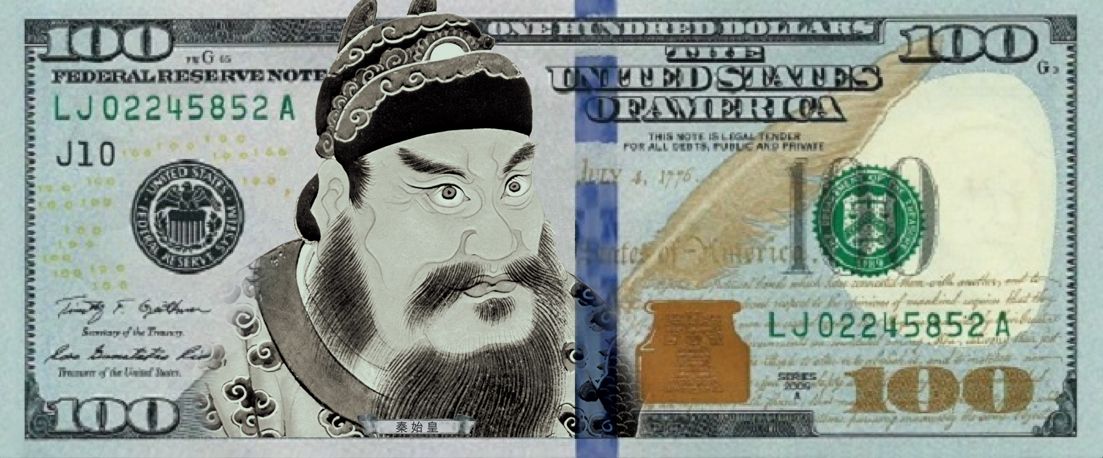
 

Along with support from Mike Michelini, CEO of Global from Asia, the campaign came to life. Each note is customized and titled, “Are you ready to take over America?”

The marketing company believes this was a creative way to share the importance of marketing with Chinese companies – by tying the idea directly to currency, revenues, and overseas competition. The campaign is expected to reach a wide audience spanning various industries. Thus far, there has been a range of reaction, with the majority finding the campaign humorous.

“We see Shenzhen becoming a technology hub for the 21st century,” says Davis. We feel that creative ideas will only accelerate this movement. The future is coming at us quickly, everything in today’s economy is up for grabs, and Shenzhen is ready to grab hold and take it.”

* The currency is not defaced in a way that would violate Title 18, Section 333 of the United States Code.

 

Will Robots Envision The Future of Art?

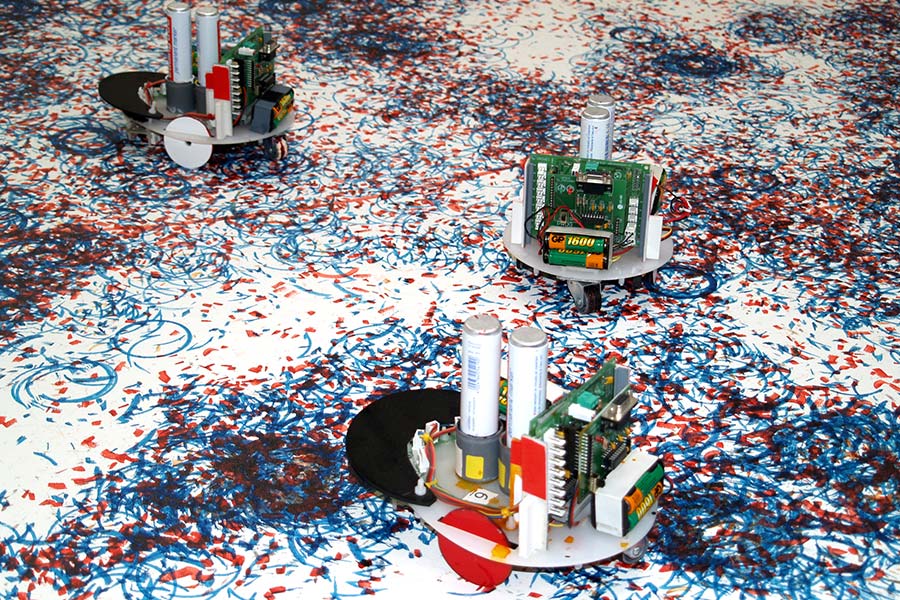
Art history provides many examples of the research and development of creative machines which in turn, generate art. Robotic art has meanwhile developed into an art form in its own right for artists who address industrial culture and its fundamental issues and contradictions.

Future Energy is the theme of this year’s world exhibition in the capital of Kazakhstan, and also the motto of the art pavilion at the EXPO 2017, which explores the influence of machines and robots on creative processes and the new energies they release. Seventeen artists from 13 countries are showing works in a collective international exhibition that is unique in the world.

The show, called “Artists & Robots,” presents robotic art for the first time at an international exhibition, showing influential artists from all over the world.

Designed as an interactive journey through dream worlds of modern art machines, the exhibition shows fascinating works created with the help of artificial intelligence and robots: on the computer with generative algorithms, with interactive creative software and with robots that can paint, draw and create sculptures. 


The show exhibits works of influential artists like Quayola, Nervous Systems (Jessica Rosenkrantz and Jesse Louis-Rosenberg) and Peter Kogler. Kogler is regarded as a pioneer of Robotic Art and a new large-scale spatial work of the Austrian artist is part of the exhibition. Watch the video above for a taste of this installation.

By releasing new creative energies with robots and computers the organizers hope to stimulate new ideas for realizing modern art forms.


American and Vietnamese Cyclists Seek Fathers’ Downed Fighter Jet

Mountain biker Rebecca Rusch rides the Ho Chi Minh Trail in Vietnam in a new documentary that documents a personal journey of healing.

Ultra-endurance athlete Rebecca Rusch has won competitions all around the world in several disciplines, however she faced her toughest challenge yet in new Red Bull Media House documentary Blood Road.

The American, who is also known as “The Queen of Pain”, set out on an arduous journey of healing and self-discovery in search of the site where her father’s plane went down during the Vietnam War.


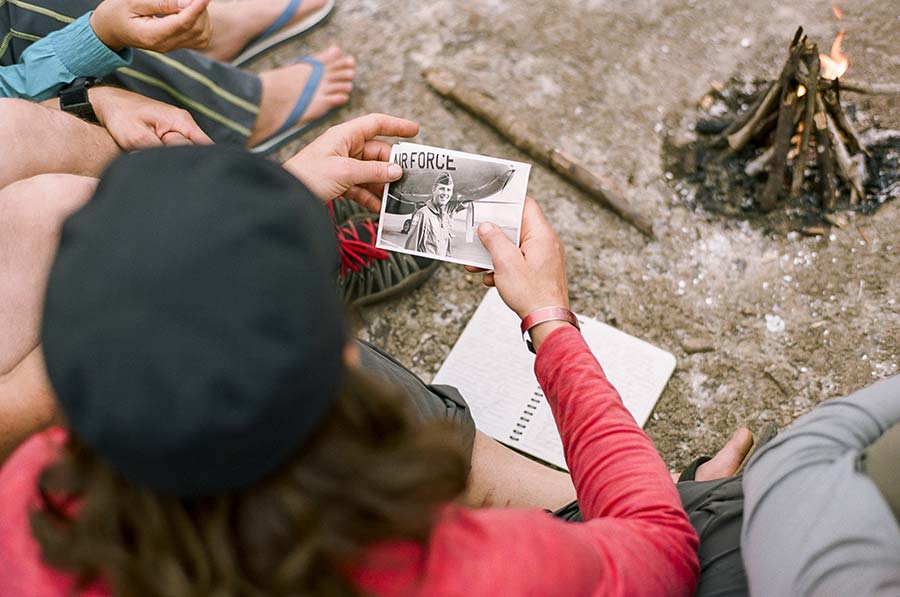
The film follows Rebecca and her Vietnamese riding partner, Huyen Nguyen, as they pedal 1,200 miles along the infamous Ho Chi Minh Trail through the dense jungles of Vietnam, Laos, and Cambodia. Their goal: to reach the site where Rebecca’s father, a U.S. Air Force pilot, was shot down in Laos more than 40 years earlier. During this poignant voyage of self-discovery, the women push their bodies to the limit, while learning more about the historic ‘Blood Road’ and how the Vietnam War shaped their lives in very different ways.

The 48-year-old explained, “The most alarming discovery of the entire journey was learning about the vast amount of unexploded wartime ordnance that still remains and continues to threaten human lives. I went there searching for my Dad and pieces of myself, but came home with the understanding that I can use my bike for a bigger purpose than just winning races.”


“Initially our focus of the story was chronicling Rebecca’s intense physical journey on the Ho Chi Minh Trail, but along the way we uncovered a much deeper emotional journey,” said the film’s director Nicholas Schrunk. “My hope is that regardless of a viewer’s background, political views, or personal feelings that they would see not just the physical and emotional scars that war leaves, but also how families, countries, and cultures can come together to heal those wounds.”

Blood Road is not only a powerful story of a daughter’s love letter to her lost father, but also one about how two women forge a deep bond triggered by a shared experience of war and loss.


Leading Brands Caught in a Deep Division of Values

Amazon, Google and Dove rank high in 2017 national report on brands that demonstrate world value and purpose beyond profit.

The 2017 World Value Index report, by mission-driven creative company enso has unveiled people’s perceptions of 150 leading brands and their perceived value to the communities and audiences they serve. 

The report’s findings are based on a survey of a nationally representative sample of 3,000 people, across 19 audience demographics and psychographics. Of the survey questions, trust, personal values, cultural and political influences were considered while polling people’s perceptions of all brands. Key findings in this year’s World Value Index include:

  • Age, gender, income, political leanings and global outlook appeared to highly influence brand mission perception and support: for example, Marlboro ranks last among the general population, but ranks higher among Boomers and Traditionalists.
  • Nonprofits were more resonant with people than the year before: New additions to World Value Index’s top 10 list for 2017 were primarily nonprofits, while Goodwill and Girl Scouts of the USA claimed the top two spots, beating Amazon, Google and Microsoft.
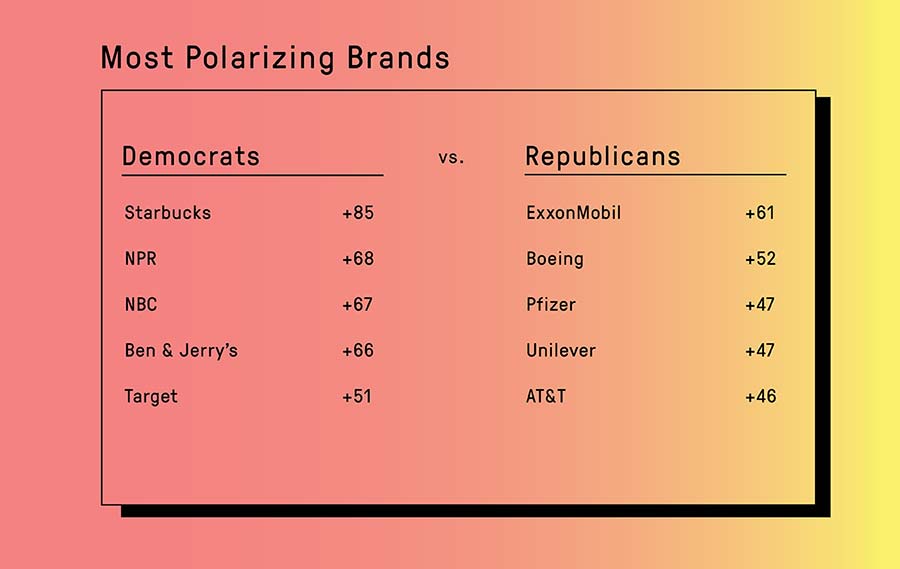
  • Starbucks is the most politically polarizing brand: while it ranks #75 with the general population, Republicans rank them as #103 and Democrats rank them as #18.
  • Twitter, Uber and Starbucks are brands poised to reach and activate millennials who are active on social media and like to take concrete action on issues important to them.
  • Nearly 80 per cent of people believe in businesses’ ability to make a positive impact, but only 41 per cent trust business leaders to do what is right.

“In an era when measuring companies by shareholder value is not good enough — for employees, customers or communities — the World Value Index measures the value of brands to everyday people. Against a backdrop of low trust in business leaders, we’re seeing forward-looking, purpose-oriented brands rise to the top, and some historic brands fall, particularly with younger people,” said Sebastian Buck, enso’s co-founder and strategic lead.

The list of top-10 organizations whose mission and purpose are perceived as creating the most world value included nonprofits (Goodwill), brands traditionally associated with social impact and purpose (Dove), as well as brands providing practical value to people through their products and services (Amazon, Google). Below are the top-10 ranking brands:

1.     Goodwill

2.     Girl Scouts of the USA

3.     Amazon

4.     Save the Children

5.     Google

6.     World Wildlife Fund

7.     YMCA

8.     Microsoft

9.     Dove

10.  Subway

This past year has been perhaps one of the most politically divisive in history. An unexpected victory in the presidential election and inflamed tensions between both parties and those who don’t associate with one. Increasing levels of participation in marches and protests, and the ascent of social media echo chambers.

In an age when presidential policies and complex social conversations are aired in 140 characters or less, and when narratives morph in real-time to keep up with changing public opinion, it’s no surprise that brands, such as Starbucks and ExxonMobil, are getting caught up in the deep division of values and visions of the future. And these brands, as vessels of their values, can fall divisively on one side of the political spectrum or the other.


Some highlights of the survey include:

  • Nearly 80% of people believe in business’ ability to make a positive impact, but only 41% trust business leaders to do what’s right.
  • So who does trust business leaders? People who earn more than $100k and have at least a college education, and those who identify as Republicans.
  • Democrats and people who earn less than $50K are sour on the overall direction of the country, but they are optimistic about their own families’ economic prospects.
  • Meanwhile, Millennials are embracing activism. An impressive 4 out of 10 have taken a concrete action IRL, like marching in a protest, within the last year.
  • But activism is somewhat of a luxury; those who actively support causes with the goal of creating change in the world tend to have higher incomes and education levels.
  • Speaking of change, people who believe that experiencing other cultures is important are much more likely to feel they have the ability to affect the world around them than those who do not.
  • Starbucks is the most politically polarizing brand. NPR is second.
  • Everyone ranks Marlboro at or near the bottom of the list except for Baby Boomers, tech skeptics, and those who don’t find experiencing other cultures important.
  • Procter & Gamble seems to have a Millennial problem.
  • Brands skewing towards high earners with a college degree: Patagonia, Khan Academy, Chobani, Starbucks.
  • Brands skewing towards those earning under $50K: Barbie, Yahoo, NBC, Always.

www.enso.co


Lupita Nyong’o: Mexican-born Kenyan Actress

Lupita Amondi Nyong’o is a Mexican-Kenyan actress, born in Mexico to Kenyan parents and raised in Kenya.

Her parents, Dorothy and Peter Anyang’ Nyong’o, were in political exile at the time of her birth, but managed to return to their homeland of Kenya during their daughter’s childhood. Her father later became part of the country’s senate while her mother, who worked in family planning, took a leadership position with the Africa Cancer Foundation.

Nyong’o took drama lessons in Mexico as a teenager and starred in the lead role in a production of Romeo and Juliet. During a school summer vacation she returned to Kenya, where she discovered that filming for the drama The Constant Gardener was happening in her area. She joined the set as a production assistant and met Ralph Fiennes, who told her to become an actor.

Nyong’o sharpened her craft as a filmmaker by directing, editing and producing the 2009 documentary In My Genes, that told the stories of Kenyans living with albinism. She also directed a Kenyan television series Shuga, which was backed by MTV and UNICEF that focused on sexual relationships among youth in Nairobi, aimed at promoting HIV awareness and safe sex via storytelling.

She returned to the US and earned a master’s degree from the Yale School of Drama in 2012. Weeks before graduating she found out that she had landed a part in 12 Years a Slave, a film directed by Steve McQueen and produced by Brad Pitt. She won the 2014 Academy Award for best supporting actress for the role in the film.

In 2015, Nyong’o returned to Kenya and announced that she would advocate for the preservation of elephants with the international conservation organization ‘WildAid’, as well as promote women’s issues. Mother Health International is dedicated to providing relief to women and children in Uganda by creating local birthing centers. She felt bringing attention to such important but overlooked issues is a important for her as an artist. She was honored for her work at 2016 Variety’s Power of Women.

In 2016, Nyong’o launched an anti-poaching “hearts and minds” campaign with WildAid in conjunction with Kenya Wildlife Service. The historic event saw 105 tonnes of Ivory and 1.35 tonnes of rhino horn burnt in a demonstration of zero tolerance towards poachers and smugglers who threaten the survival of elephants and rhinoceros in the wild.

In October 2016, Lupita Nyong’o was an honoree at the 2016 Elle Women in Hollywood Awards.


Climate Change Threatens Ability of Insurers to Manage Risk

Extreme weather is driving up uninsured losses and insurers must use investments to fund global warming resilience, says study.

The ability of the global insurance industry to manage society’s risks is being threatened by climate change, according to a new report.

The report finds that more frequent extreme weather events are driving up uninsured losses and making some assets uninsurable.

The analysis, by a coalition of the world’s biggest insurers, concluded that the “protection gap” – the difference between the costs of natural disasters and the amount insured – has quadrupled to $100bn (£79bn) a year since the 1980s.

“Over time, the adverse effects of climate change could threaten economic resilience and financial stability and insurers are currently at the forefront.”

Mark Carney, the governor of the Bank of England, warns in the new report that: “Over time, the adverse effects of climate change could threaten economic resilience and financial stability and insurers are currently at the forefront.”

The ClimateWise coalition of 29 insurers, including Allianz, Aon, Aviva, Lloyd’s, Prudential, Swiss Re and Zurich, conclude that the industry must use more of its $30tn of investments to help fund increased resilience of society to floods, storms and heatwaves.

The Bank of England warned in 2015 that insurance companies could suffer a “huge hit” if their investments in fossil fuel companies were rendered worthless by action on climate change and some insurershave already shed investments in coal.

The ClimateWise report, published on Wednesday, also says the industry must also use its risk management expertise to convince policymakers in both the public and private sector of the urgent need for climate action.

The industry’s traditional response to rising insurance risks – raising premiums or withdrawing cover – would not help deal with the rising risks of global warming, it said.

“The insurance industry’s role as society’s risk manager is under threat,” said Maurice Tulloch, chairman of global general insurance at Aviva and chair of ClimateWise. “Our sector will struggle to reduce this protection gap if our response is limited to avoiding, rather than managing, society’s exposure to climate risk.”

The report said that, since the 1950s, the frequency of weather-related catastrophes has increased sixfold. As climate-related risks occur more often and more predictably, previously insurable assets are becoming uninsurable, or those already underinsured are further compromised, it said.

The economic impact of these natural catastrophes is growing quickly, according to Swiss Re, with total losses increasing fivefold since the 1980s to about $170bn today. This increase is partly due to an increase in extreme weather but also due to an increase in assets as cities and towns have grown, especially in vulnerable locations such as on coasts.

“Insurance provides a very important role in providing support for people in their time of need,” said John Scott, chief risk officer at the Zurich Insurance Group and chair of ClimateWise’s “Investing for Resilience” programme. “Finding viable ways to help society adapt and become more resilient to the inevitable changes related to ongoing climate change is vital. It is very clear that as carbon dioxide concentrations increase, we should expect to see more patterns of severe weather disruption.

“We understand climate change as underwriters, because we are trying to manage the physical consequences of the severe weather we get from climate change, so we can be a really important industry in terms of informing policy makers, either in the public or private sectors, about the pace at which we should make the change from a high-carbon to low-carbon economy.”

Other actions insurance companies can take are to work with their customers to make them more resilient to extreme weather and encourage the development of insurance markets in poorer nations that are growing rapidly, the report said.

Carney, who has warned repeatedly of the serious risks posed by climate change, said: “Insurers, including those who are members of ClimateWise, have unique risk-management expertise to help address the protection gap among those who are most exposed to climate risk.”

By Damian Carrington. This story originally appeared at The Guardian


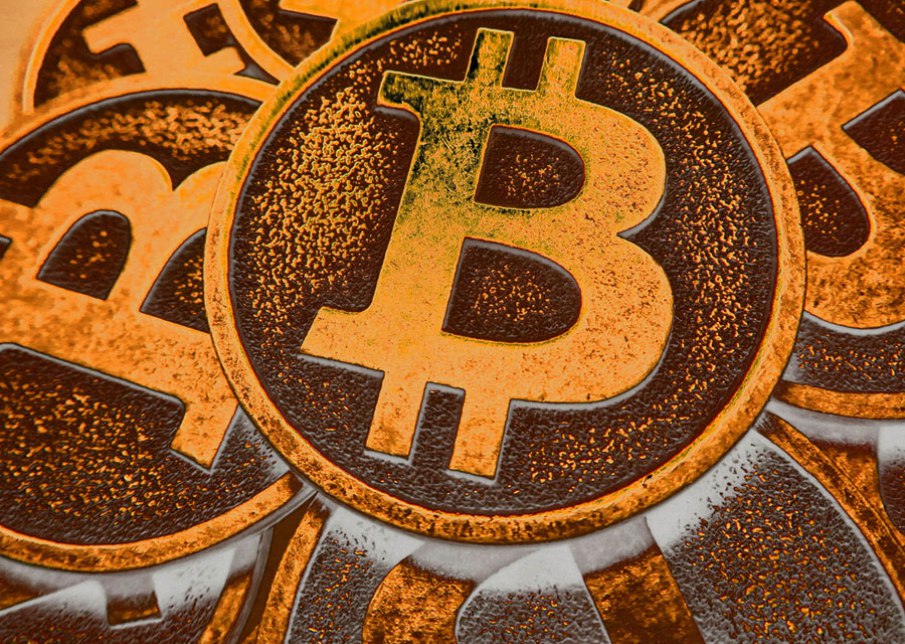
Bitcoin Soars to All-time High of USD$2,400

Digital currency bitcoin hit a fresh record high recently, surging above $2,400, as demand for crypto-assets soared with the creation of new tokens to raise funding for start-ups using blockchain technology.

Blockchain, the underlying technology behind bitcoin, is a financial ledger maintained by a network of computers that can track the movement of any asset without the need for a central regulator.

Bitcoin hit a record of $2,409 on the BitStamp platform and was last up 4.3 percent at $2,363. So far this year, the price of bitcoin has more than doubled.

A key reason for bitcoin’s dominance in the nefarious online underworld, say technologists and cyber crime experts, is its size – the total value of all bitcoins in circulation is more than twice that of the nearest of hundreds of rivals.

Also, a big part of bitcoin’s recent surge is the increase in demand for other digital currencies being sold in so-called “initial coin offerings”, or ICOs. Under ICOs, blockchain start-ups sell their tokens directly to the public to raise capital without any regulatory oversight.

“Bitcoin up 100 percent in under 2 months. Shanghai down almost 10 percent same timeframe, compared to most global stocks up. Probably not a coincidence!”, Jeffrey Gundlach, chief executive at DoubleLine Capital tweeted on Tuesday.

Strong demand for bitcoins in Japan has also fuelled the rise of the virtual currency that can be moved like money around the world quickly and anonymously without the need for a central authority.

By Sruthi Shankar. Editing by Martina D’Couto.


Volvo: We Must Change to Reflect New Consumer Demands

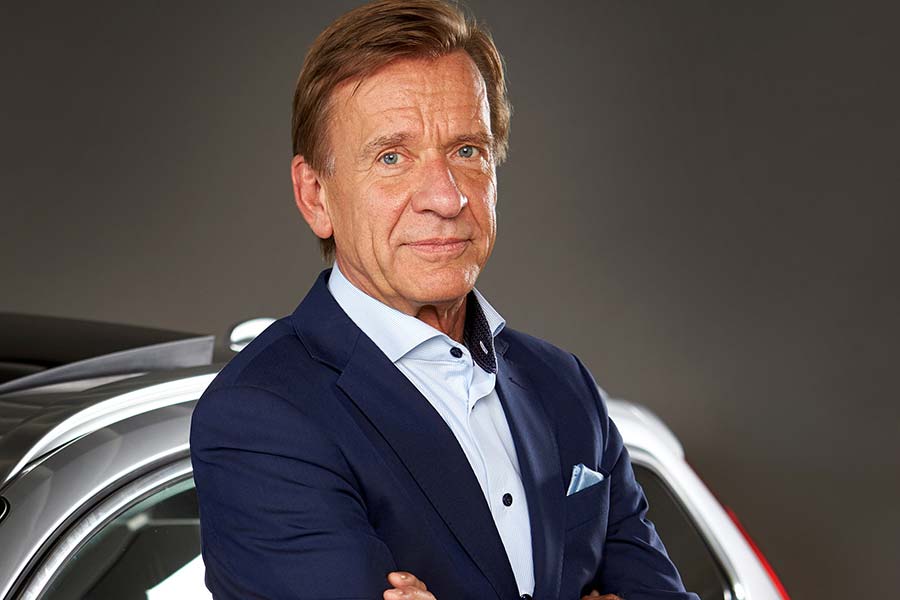
Volvo Cars, the premium car maker, is updating its business model to a changing world and believes the car industry as a whole needs do to the same, its president and chief executive Håkan Samuelsson has announced.

The announcement was made at the bi-annual meeting of the UN Global Compact Nordic Network in Gothenburg and represents one of the biggest gatherings of Nordic corporate sustainability experts under the auspices of the United Nations. Over 190 delegates from 100 companies and organizations met at Volvo Cars headquarters to discuss how business can support the UN Sustainable Development Goals (SDGs). Volvo Cars is a founding member of the UN Global Compact, the world’s largest corporate sustainability initiative of which Real Leaders is also a signatory.

In his opening speech Samuelsson (pictured above) told the gathered delegates that customer expectations and demands are changing and that the car industry will have to change with them. Sustainability is no longer a simple box-ticking exercise, but business-critical as well as a significant business opportunity for those companies that get it right.

“Our customers want safer, more sustainable and convenient cars,” says Samuelsson. “We can meet that demand, be a force for change and grow our business at the same time. I am confident that our next generation of fully autonomous, electrified and connected vehicles will help make the cities of the future cleaner, safer and smarter.”


As an example, he underlined the importance of Volvo’s electrification strategy. “We recognize the limitations of the internal combustion engine and the appetite for change in society. That is why we have such an ambitious target when it comes to electrification. Our commitments will not only help protect the environment and make people’s lives better and safer. They also make perfect business sense.”

Volvo Cars is adapting to this new reality by making sustainable business an integral part of its corporate strategy. As part of its sustainability program, the company has identified nine commitments directly supporting the SDGs that were agreed by all UN member states in 2015.

The automaker believes these commitments will contribute to its sustainable profitability and growth. For example, it has committed to having up to 1 million electrified Volvos on the road by 2025, and aims to have climate-neutral manufacturing operations that same year. It has also stated the most ambitious safety vision in the industry: by 2020, no one should be killed or seriously injured in a new Volvo.

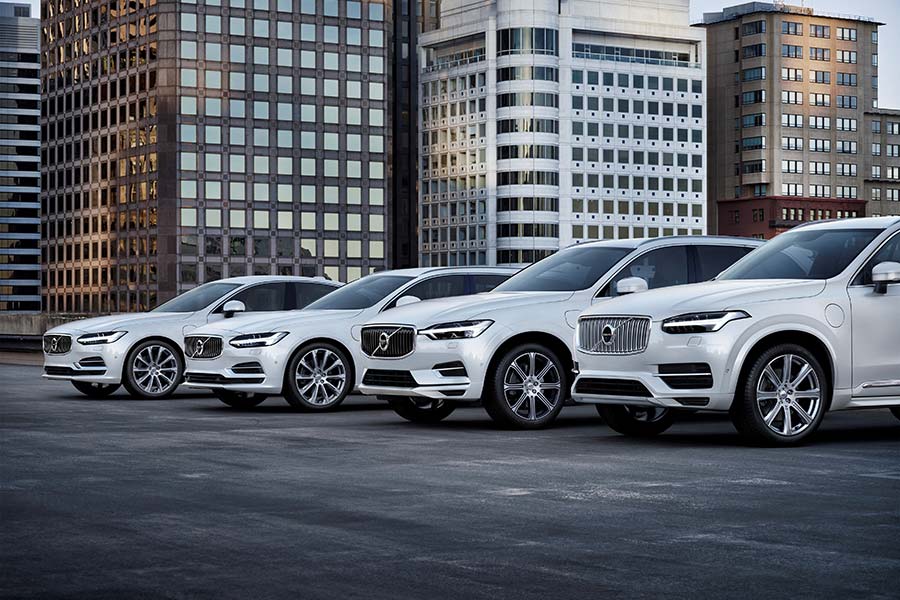
The company has so far made good progress in reaching these targets: for example, CO2 emissions from its European manufacturing plants have fallen by 70% between 2004 and 2016. It currently offers six plug-in hybrids in its range and plans to make every new model available as an electrified vehicle. New world-leading passive and active safety systems have significantly reduced the risk for traffic accidents and serious injuries for Volvo drivers.

Volvo Cars knows it cannot make progress by itself, so the company is focusing on both private and public partnerships within the sustainable development arena. It cooperates closely with safety organizations and public bodies to share its knowledge and advance traffic safety, it works with both public and private partners in the Drive Me autonomous drive experiment and it joined hands with Stora Enso and the Belgian government to realise a 40% reduction in CO2 emissions at its manufacturing plant in Ghent.

The other commitments within Volvo’s sustainability framework include ensuring no fatalities or serious injuries involving any of its employees or contractors, an aim to be a leader in customer well-being by offering better filters and materials, and promoting a diverse and inclusive company culture.

This week, along with Volvo, Nike, Unilever, Deutsche Bank, Nokia, Nestle and more than 9,000 companies in 170 countries, Real Leaders renewed its commitment to the United Nations Global Compact. As a signatory to this global initiative Real Leaders believes that responsible business practice, combined with collaboration and innovation, can bring about powerful change in markets and society. We have shown that principles and profits go hand in hand, and that thousands of other companies think this way too. You can read our public declaration on the UN Global Compact website here.


Microsoft Announces Games to Prepare For Jobs of Tomorrow

This week Microsoft shared its aspirations and products to help students prepare for the jobs of tomorrow, that includes the online phenomenon and virtual construction game Minecraft.

CEO Satya Nadella and Terry Myerson, executive vice president of Windows and Devices, have announced a new Windows experience – Windows 10 S, Microsoft Teams for a collaborative classroom, Code Builder for Minecraft: Education Edition, a partnership with Pearson to use 3D and mixed reality experiences for immersive learning and a range of new Windows 10 S PCs, including Surface Laptop. 

According to some researchers, the human mind is a plug-and-play device itself; not built for being used alone. Our brains are hard-wired to be used in networks and games allow that. The rise of online games, where people compete with others around the world, allows us to build a collective intelligence. Many people are more intelligent when they form part of a collective.

Working with partners, including Acer, ASUS, Dell, Fujitsu, HP, Samsung and Toshiba, Microsoft will offer new Windows 10 PCs with features including Windows Ink and touch. Windows 10 S will be available for free for schools on any compatible Windows device along with Office 365 for Education, which is also free for students and will be available around the world in time for the 2017 school year.


Play is usually associated with non-academic pastimes, yet online games and exciting interactive digital products can become architects for engagement. Microsoft Teams is a digital hub for the classroom where students come to collaborate and learn. Together with OneNote Class Notebooks, a new assignment and quiz experiences, teachers can easily distribute content, grade work, personalize learning, and easily communicate with students, parents and staff.   

Teams also enables teachers to bring in rich and engaging content from the web, guest speakers, and 3rd party partners such as Kahoots directly into their classroom environment. And most importantly, Teams helps students develop the communication and collaboration skills they’ll need to be successful in the future.

Microsoft is broadening Minecraft’s appeal in the classroom with Code Builder for Minecraft: Education Edition. This new feature allows students to learn coding basics by connecting to popular learn-to-code platforms such as Tynker, ScratchX, and a new open source platform from Microsoft called MakeCode. 

School books may still be around for a while, but some experts think they promote a “single dimension” approach to learning. Online and digital games promote persistence, risk taking, collaboration and problem-solving – all good lessons for budding entrepreneurs and those heading into the (increasingly digital) jobs of tomorrow. While games alone are not the only solution, they certainly have a role to play in developing a well-rounded education and a critical approach to problem-solving.  Many games are actually hard; something an adult may only discover when they secretly peek at the games their kids have been playing.

A one-year free trial of Minecraft: Education Edition and the Code Builder extension are available for Windows 10 and Windows 10 S for schools around the world in the Microsoft Store for Education. 


Highlight a World Heritage Site: Land on it!

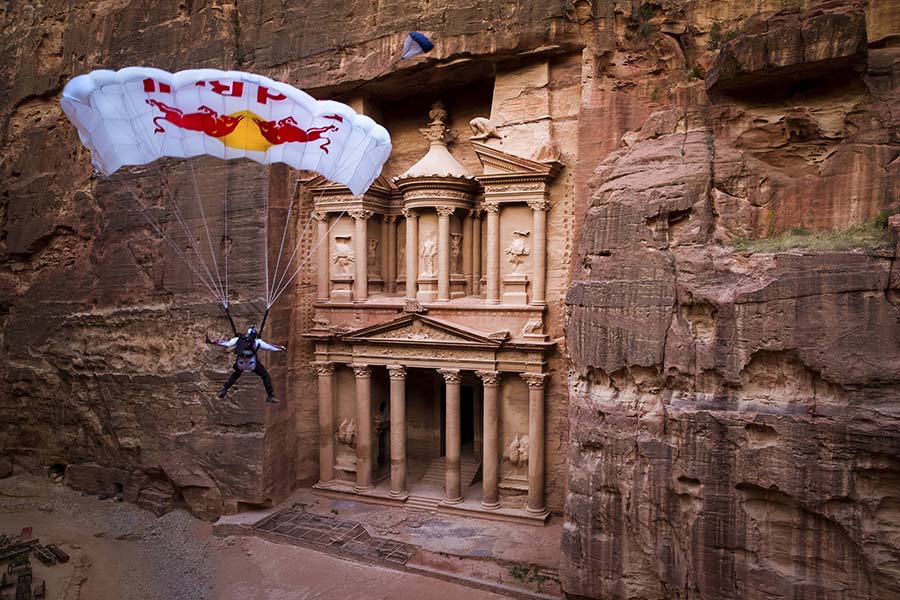
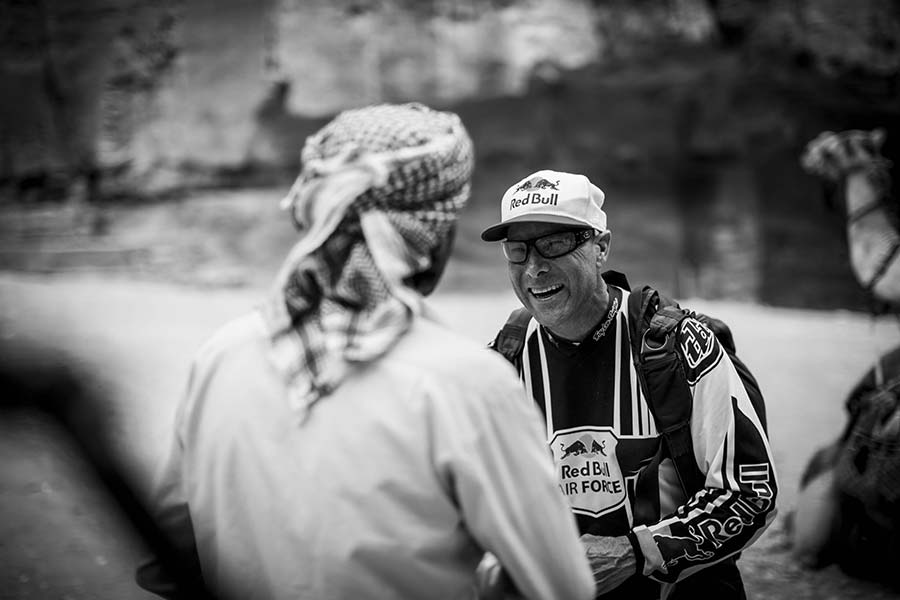
Red Bull Air Force Team member Miles Daisher chose Petra, one of the Wonders of the World, as the stunning location to celebrate his 4,300rd BASE jump and make history.

The American legend, who has completed a staggering 7,200 skydives in his career as well, travelled to Jordan intent on becoming the first to BASE jump Petra with amazing scenery at the UNESCO World Heritage site. Thankfully for the Georgia native, the weather obliged to help make his BASE jump from the top of The Treasury in the depth of the Lost City that extra bit special.

The iconic Treasury dates back to first century BC and is perfectly hidden beneath high reaching mountains in the South of the Jordanian desert, positioned at the end of a main narrow route that no cars can access. Carved deep into a rose rock face and concealed in a high-walled ellipse of a valley, both the Bedouins and the mountains of Petra have protected it from wind and rain.


Setting up his early morning gear inside an opening of the mountain over The Treasury, Miles waited for the right blow and speed of wind to let go with the help of his teammate Andy Farrington. With no tourists in sight and the light yet to reach the top, Andy leaned over the edge on a rope and held Miles’ parachute to secure a static line for him to jump. Once they were happy with the conditions at 7am, Miles then said “See ya” to Andy and BASE jumped – a leap of faith that Indiana Jones would have been proud of. Thankfully, after going 32 kilometres per hour in a circular motion across the 100-feet wide space between the valley and The Treasury, he landed perfectly right in front of the doorway in less than 15 seconds.

The extreme challenge for Miles was in the short length and altitude of the jump along with the incredibly tight space that left him with little room to escape the walls of the limestone mountains.

Afterwards, Miles enthused: “My heart is coming out of my chest. The lowest I’ve ever BASE jumped over land! It took all of those jumps that I have done since the beginning to prepare me for this one.”


0