Maldives Introduces Most Innovative ID Card

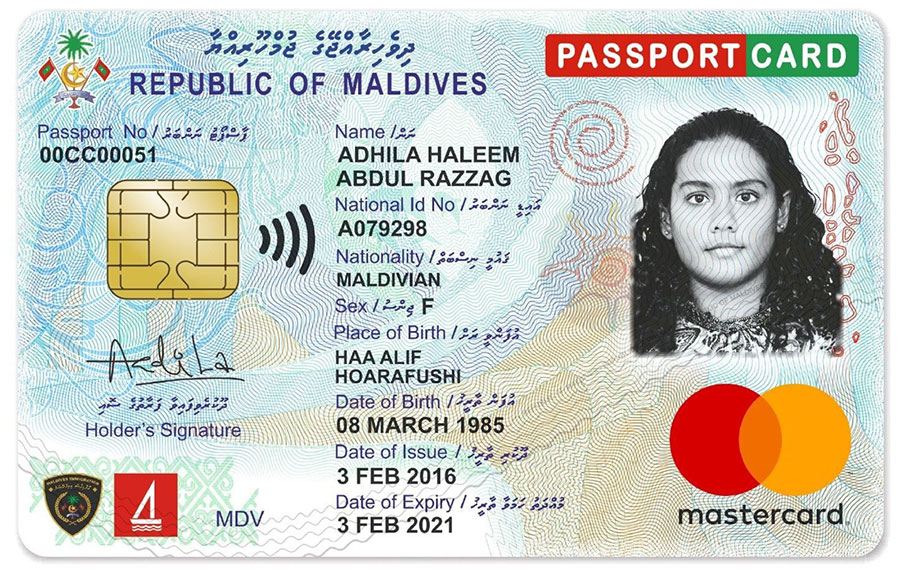
The Maldives are known for their nice beaches and wonderful holiday resorts on the many islands. Now the Maldives have also become a place of innovation. Maldives Immigration has just introduced a new, very innovative type of ID card: It can be used for payments, but also serves as a national ID card, as a drivers license as well as a health card and insurance card.

Last, but not least, it’s also used as a passport for easy travelling. This is why the new card is called “Passport Card.” The innovative card and system was developed by Maldives Immigration, together with Dermalog from Germany as the technology provider. 

If you like this, subscribe here for more stories that Inspire The Future.

Citizens of the Maldives don’t need to carry so many cards around anymore. The famous islands are becoming a country where one single card serves for everything which matters, starting from payment up do driving, health, insurance, travelling and many more different applications. The new card is a so called “multi-purpose-card” which is very special in many ways:

Today most bank cards have a durability of maximum three years. The new card of the Maldives is the world’s first bank card which is made of Polycarbonate material that can last up to 10 years. Furthermore it contains a unique combination of a called dual-interface chip for contactless and contact card reading. The new card is certified by the Bank of Maldives as well as by MasterCard, allowing the card to be used internationally like any other MasterCard.

What makes the cards more secure than any other payment card are the additional passport security features, which no bank card provides. This additional features allow the Maldives “Passport Card” to be used like a regular passport and works already at all borders of the Maldives, including the new electronic gates. The “Passport Card” is fully confirming to all international standards of a modern passport. The cards also contain 10 fingerprints for secure verification.

But the innovative Maldives card can also be used as a driver’s license, health card or insurance card. The Controller General of Maldives Immigration, Mohamed Anwar says: “The door is open for many other government departments and private companies to use our new Passport Card in future.”

In future the Maldives might not only be known for of it’s wonderful beaches, but also as a place where the future already starts today.

If you like this, subscribe here for more stories that Inspire The Future.

10 Things You May Not Know About Teen Driver Safety

The biggest threat to teens’ safety is the vehicle sitting in their parents’ driveways. Yet, many parents and teenagers remain under-educated about the risks new drivers face. 

If you like this, subscribe here for more stories that Inspire The Future.

The National Safety Council has compiled a list of statistics and facts many parents and young people do not – but should – know about teen driver safety:

  1. Car crashes are the number one killer of teens in the U.S.
  2. The most dangerous year of a teen’s life is the year he or she receives a license
  3. Half of all teens will be involved in a car crash before graduating from high school
  4. A teen’s crash risk is three times that of more experienced drivers
  5. After years of declines, teen driving crashes and fatalities are on the rise
  6. Just one teen passenger can increase a teen driver’s crash risk by 44 percent
  7. 75 percent of teen driver crashes occur because the teen made a critical error due to inexperience, such as driving too fast for conditions, not scanning for hazards or being distracted
  8. 52 percent of teens who are killed in a car crash are unbelted
  9. Cell phones are a huge driver of distraction for already inexperienced teen drivers, yet twelve states still allow some form of cell phone use for novice drivers
  10. About 20 percent of teen car crashes involve an underage drinking driver

“As teen traffic fatalities rise, parents are in a unique position to reverse this trend,” said Deborah A.P. Hersman, president and CEO of the National Safety Council. “Parents have more influence on their teens’ driving habits than they think. National Teen Driver Safety Week is the perfect time for parents to educate themselves, teach their teens safe driving habits and save lives.”

According to the NSC State of Safety Report, individual states vary greatly in their efforts to reduce teen driving fatalities. California is the only state considered to be “On Track” for teen driver safety, however, other states, such as New Jersey, are finding success with new tactics to avoid teen crashes.

The NSC parent education initiative, DriveitHOME, is a website created for parents that focuses on the most important things parents can do to protect teen drivers. The site demonstrates that, though teen drivers face many dangers on the road, parent involvement can significantly reduce these crash risks. Visit DriveitHOME.org with your teen to sign the New Driver Deal and make a commitment to safety for your teen’s sake.  

If you like this, subscribe here for more stories that Inspire The Future.

The Man Who Fell From Space: Five Years on

On the fifth anniversary of the record jump from the edge of space, we asked Felix Baumgartner and other key Red Bull Stratos team members for their memories of the incredible day.

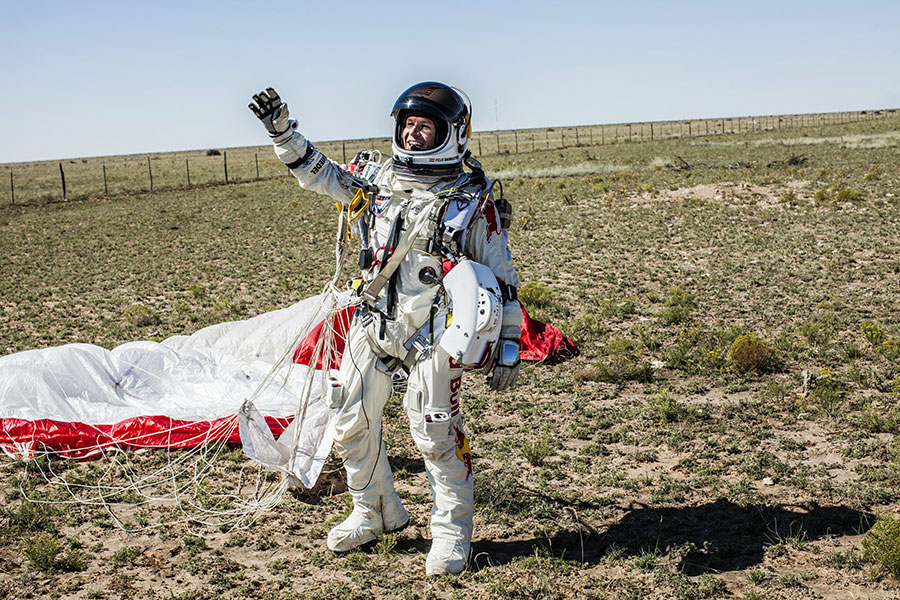
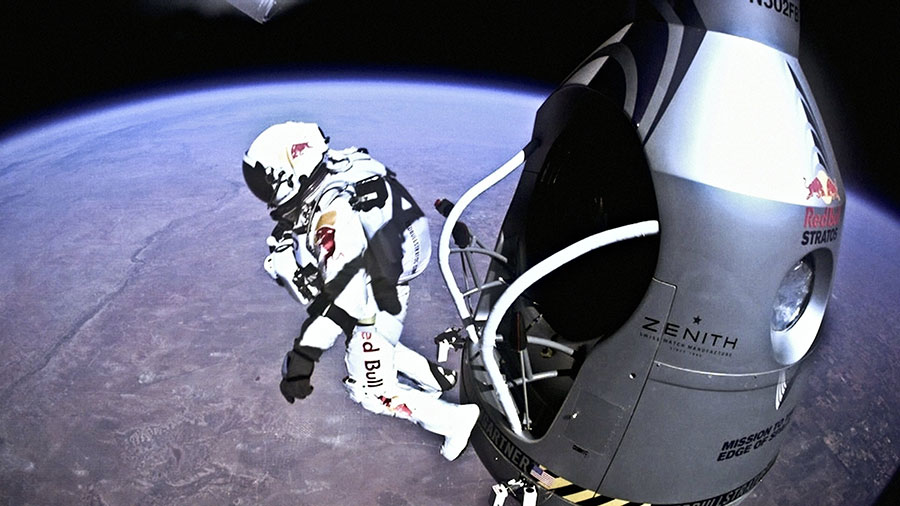
On October 14, 2012, the world was spellbound as the Red Bull Stratos project launched a helium balloon to near space, where Austrian skydiver Felix Baumgartner jumped from 38,969.4m/127,852.4ft to become the first, and so far only, person to break the speed of sound without the protection or propulsion of a vehicle. The project broke numerous records and contributed valuable data to the scientific community. Five years later to the day, Baumgartner and key team members are celebrating at a special Red Bull Stratos exhibition held in conjunction with the season finale of the Red Bull Air Race World Championship at Indianapolis Motor Speedway.

If you like this, subscribe here for more stories that Inspire The Future.

Baumgartner – as well as Joe Kittinger (Flight Operations and Safety, Capcom 1), Art Thompson (Technical Project Director) and Mike Todd (Life Support Engineer) – took time to answer some questions. Here are excerpts from that extraordinary exchange.

Felix, happy anniversary. How does it feel?

Felix Baumgartner: “I think this is amazing. It’s like Christmas, birthday and New Year’s Eve all at the same time, because it’s Indianapolis, it’s the last Red Bull Air Race of the season and it’s our anniversary, so I’m getting to meet with a lot of the team. It’s really cool to see everyone again and share some stories.”

Overcoming your issues with the suit turned out to be one of the most dramatic stories over five years of developing Red Bull Stratos?

Felix Baumgartner: “You know, at the time I was really struggling because I never liked the suit. The suit is a very complex tool, and while it’s necessary to survive, it’s no fun to wear it – you’re kind of locked in your own little world. That was a time when I had a lot of internal problems with myself, mentally, but I couldn’t talk to anyone.”

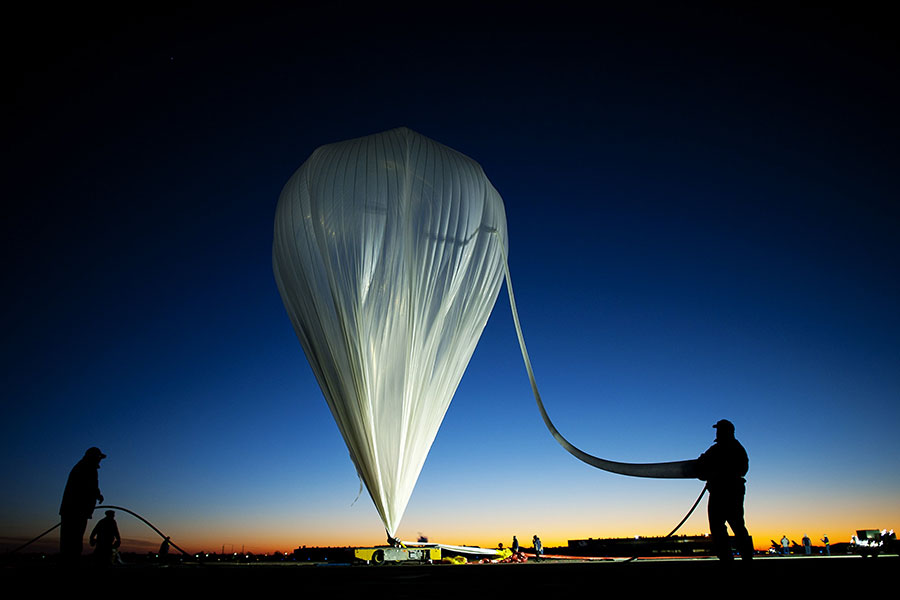
The Red Bull Stratos balloon was the largest ever launched with a human on board, and it took a lot of testing with various sizes of balloons before the final launch?

Joe Kittinger: “Balloons are very fragile creatures, requiring perfect conditions for launch, and the critical part is getting inflated. When that balloon took off, a lot of people were extremely happy.”

Felix Baumgartner: “When we launched the balloon and finally the capsule got released from the ground, I knew we were on the way. We were still at the beginning, but the balloon launch was the first step. Once that was successful, I was a lot more relaxed.”

Art, you were the technical project director. What do you think when you saw the capsule?

Art Thompson: “It’s pride for the team, for what we accomplished together as a family – which is what this group really is. This was an effort of people with a passion to accomplish a scientific task. We have a personal bond, and it doesn’t matter how far we are stretched around the world, there’s a certain pride that what we accomplished was significant to the aerospace industry and inspired so many. It’s about all of us together.”

With five years to reflect on it, what do you now think some of the mission’s biggest accomplishments were?

Joe Kittinger: “One of the significant contributions that I think we made was developing features toward the next generation full-pressure suit, so astronauts in the future will have increased mobility. Also, the team proved out a completely new approach to physiological monitoring, which was really a contribution for the scientific community.”

Art Thompson: “Over the last five years what Red Bull Stratos has really showed me is the impact it had on people around the world, to inspire them to do better and be better. We’ve given talks around the globe and met with educators, and kids come to me all the time wanting to know how to get into aerospace, or how to get into science.”

Felix Baumgartner: “Everything we accomplished really proves what a small group of people can do. We were very uncertain at the beginning if it was ever going to be successful, because there were so many unknowns that we had to overcome. But now we know that everything you have in your mind can turn into reality if you work with the right people, if you put the effort into it and you go the extra mile.”

On the moment Felix jumped from the capsule…

Joe Kittinger: “He was standing there on the shoulders of a couple-hundred team members, a great team of people working for his benefit. I was thinking of all the people and the contributions they made to put him on that step. It was a historic moment because of a great team of people who made it happen.”

Felix Baumgartner: “That moment was definitely why we all worked so hard. All that effort for five years, all those hurdles we had to overcome. Finally standing on top of the world, knowing that the whole world was watching, was quite extraordinary. Then you take that one step forward and you’re on the way, not knowing what to expect. Nobody knew what would happen to a person breaking the speed of sound, but I had to find out, and I will always remember that moment.”

If you like this, subscribe here for more stories that Inspire The Future.


Governments Scramble to Ban New Petrol Cars

First France, now the UK. When it comes to motoring, countries are queuing up to show off their environmental credentials.

The British government has announced that new diesel and petrol cars and vans will be banned from 2040. The move follows hot on the heels of a similar announcement from France’s ecology minister with the same timeframe.

Both pledges are designed to cut toxic emissions, improve air quality and cut public health risks.

Car giants such as SEAT and Kia are already ahead of the game when it comes to alternative fuels. SEAT recently announced an innovative partnership in Spain to promote and commercialise natural gas powered vehicles. ​

Earlier this year four Kia Vehicles were named among Best Electrified and “Eco-Friendly” offerings by the trusted consumer website Kelley Blue Book’s kbb.com. Also, Volvo says that all of its new models will have an electric engine from 2019. And BMW has revealed that its new electric Mini will go into production in 2019 in the UK.

Following the announcements by the British and French governments, we can expect more and more initiatives such as these over the next few months and years from the big beasts of the automotive world.

If you like this, subscribe here for more stories that Inspire The Future.


Kate Hudson And Michael Kors Fight Hunger in Cambodia

World Food Day is today and luxury ready-to-wear designer Michael Kors is dedicating the month to new products and activities designed to support Watch Hunger Stop, the brand’s campaign to fight global hunger. His friend, Kate Hudson, is supporting him.

Now in its 5th year, Watch Hunger Stop raises funds and awareness to help achieve a world with Zero Hunger. The brand’s partner in the eff ort is the United Nations World Food Programme (WFP), and funds go to support WFP’s school meals program, which reaches over 16 million children in almost 70 countries each year with vital nutrition that helps them fulfil their potential. Thus far, Watch Hunger Stop has enabled WFP to deliver more than 15 million meals to children in need.

If you like this, subscribe here for more stories that Inspire The Future.

WFP is the world’s largest humanitarian agency fighting hunger worldwide, delivering food assistance in emergencies and working with communities to improve nutrition and build resilience. Each year, WFP assists some 80 million people in around 80 countries.

“Our multi-year partnership with Michael Kors has resulted in a significant contribution toward progress in the fight against global hunger,” says Rick Leach, President and CEO of World Food Program USA. “Over the past five years, the school meals program, a focus of the Michael Kors effort, has played an enormous role in empowering hungry children with the nutrition they need to succeed in the classroom and lift themselves out of poverty.”

Actress, author, entrepreneur and humanitarian Kate Hudson is again lending her talents to support Watch Hunger Stop, the brand’s annual campaign to fight global hunger. This past June, Hudson traveled with WFP to Siem Reap province in Cambodia to see how the funds raised through Watch Hunger Stop help WFP feed and support children in need. During the field visit, Hudson visited schools, farms and family homes, asking questions and sharing her irresistible warmth and energy. She spoke with local WFP staff members, helped cook school meals and played with children, thoroughly immersing herself in the details of the school meals program and the lives of those it affects.

“This is the third year I’ve had the honor of collaborating with Michael on this important cause,” says Hudson. “In June, I visited schools in Cambodia, where the funds raised by Watch Hunger Stop enable the United Nations World Food Programme to feed children so they receive the nutrition they need to grow and to finish their education. It was an amazing experience—I can’t wait to share everything that I saw and learned there.”

“I’m thrilled and grateful that my friend Kate is joining us once again in our efforts to end hunger,” says Michael Kors. “She and I share the belief that if we all work together, this is a problem we can solve. Watch Hunger Stop supports WFP’s school meals program, improving the lives of children who deserve the chance for a healthy, happy future. We’re proud to be able to help.”

If you like this, subscribe here for more stories that Inspire The Future.

‘Radical Greengrocer’ Tops Sustainability List

Volkert Engelsman, founding director of fresh organic importer and distributor Eosta, has been awarded top place in the annual Dutch Sustainability Top-100 list compiled by daily newspaper Trouw.

Recognising the Dutch entrepreneur as “a greengrocer with a radical vision,” the jury acknowledged Engelsman’s pioneering leadership in the field of sustainable food and farming, specifically in True Cost Accounting. 

If you like this, subscribe here for more stories that Inspire The Future.

Eosta, based in the Netherlands, was founded by Engelsman in 1990. With suppliers across six continents and customers in Europe, the US and the Far East, it’s now a leading European specialist in organic produce.

Since 2016, Engelsman has been active in promoting True Cost Accounting as a pathway to sustainability, giving speeches at congresses and think-tank events worldwide. True Cost Accounting is a new form of bookkeeping that makes the true price of food visible, including environmental, social and health impacts.  

The jury especially appreciated Engelsmans commitment to making True Cost practical, by bringing the numbers to store shelves in Europe, and putting hidden costs on organic apples, pears and other products.

Engelsman used his acceptance speech to call for new partnerships in the sustainable movement, especially in the finance sector. He said: “Many financial institutions are starting to realise that there is something wrong with our definition of ‘profit,’ if it results in the destruction of our natural habitat and makes life miserable for 90% of humanity, including our children’s children. There’s nothing wrong with profit, but you have to calculate it fairly.”

“As a movement we need to help financial institutions such as banks, accounting firms and institutional investors to start making better choices. The main flow of capital is still being driven by an outdated profit definition, which is basically killing the planet.”

New profit definition 

Thanking Eosta’s partners in its recent True Cost Accounting campaign, which included the FAO, WHO, NCC, Triodos Bank, EY and Soil & More, Engelsman stressed the need for a new profit definition that includes human and ecological values.

In June 2017, Eosta published a pilot study named ‘True Cost Accounting for Food, Farming and Finance’. The study resulted in a practical dashboard for investors to assess impacts on financial, natural and social capital. It was presented to Peter Bakker, president of World Business Council for Sustainable Development, and in Wales to HRH Prince Charles.

If you like this, subscribe here for more stories that Inspire The Future.

Nobel Peace Prize Takes Aim at Nuclear Weapons

The Norwegian Nobel Committee has awarded the Nobel Peace Prize for 2017 to the International Campaign to Abolish Nuclear Weapons (ICAN). The organization received the award for its work to draw attention to the catastrophic humanitarian consequences of any use of nuclear weapons and for its ground-breaking efforts to achieve a treaty-based prohibition of such weapons.

We live in a world where the risk of nuclear weapons being used is greater than it’s been for a very long time. Some states are modernizing their nuclear arsenals, and there is a real danger that more countries will try to procure nuclear weapons, as exemplified by North Korea. Nuclear weapons pose a constant threat to humanity and all life on earth. Through binding international agreements, the international community has previously adopted prohibitions against land mines, cluster munitions and biological and chemical weapons. Nuclear weapons are even more destructive, but have not yet been made the object of a similar international legal prohibition.

If you like this, subscribe here for more stories that Inspire The Future.

Through its work, ICAN has helped to fill this legal gap. An important argument in the rationale for prohibiting nuclear weapons is the unacceptable human suffering that a nuclear war will cause. ICAN is a coalition of non-governmental organizations from around 100 different countries around the globe. The coalition has been a driving force in prevailing upon the world’s nations to pledge to cooperate with all relevant stakeholders in efforts to stigmatise, prohibit and eliminate nuclear weapons. To date, 108 states have made such a commitment, known as the Humanitarian Pledge.

ICAN has been the leading civil society driver in trying to prohibit nuclear weapons under international law. On 7 July 2017, 122 of the UN member states acceded to the Treaty on the Prohibition of Nuclear Weapons. As soon as the treaty has been ratified by 50 states, the ban on nuclear weapons will enter into force and will be binding under international law for all the countries that are party to the treaty.

In a statement after the Nobel Peace Prize was announced, the Norwegian Nobel Committee said it was aware that an international legal prohibition will not in itself eliminate a single nuclear weapon, and that so far neither the states that already have nuclear weapons nor their closest allies support the nuclear weapon ban treaty.

“The Committee wishes to emphasize that the next steps towards attaining a world free of nuclear weapons must involve the nuclear-armed states,” the statement said. “This year’s Peace Prize is therefore also a call upon these states to initiate serious negotiations with a view to the gradual, balanced and carefully monitored elimination of the almost 15,000 nuclear weapons in the world. Five of the states that currently have nuclear weapons – the USA, Russia, the United Kingdom, France and China – have already committed to this objective through their accession to the Treaty on the Non-Proliferation of Nuclear Weapons of 1970. The Non-Proliferation Treaty will remain the primary international legal instrument for promoting nuclear disarmament and preventing the further spread of such weapons.”

It’s been 71 years since the UN General Assembly, in its very first resolution, advocated the importance of nuclear disarmament and a nuclear weapon-free world. With this year’s award, the Norwegian Nobel Committee wished to pay tribute to ICAN for giving new momentum to the efforts to achieve this goal.

The decision to award the Nobel Peace Prize for 2017 to ICAN has a solid grounding in Alfred Nobel’s will. The will specifies three different criteria for awarding the Peace Prize: the promotion of fraternity between nations, the advancement of disarmament and arms control and the holding and promotion of peace congresses. ICAN works vigorously to achieve nuclear disarmament. ICAN and a majority of UN member states have contributed to fraternity between nations by supporting the Humanitarian Pledge. And through its inspiring and innovative support for the UN negotiations on a treaty banning nuclear weapons, the organization has played a major role in bringing about the equivalent of an international peace congress.

“It’s the firm conviction of the Norwegian Nobel Committee that ICAN, more than anyone else, has in the past year given a new direction and vigour to the efforts to achieve a world without nuclear weapons,” the committee said.

If you like this, subscribe here for more stories that Inspire The Future.

How to Get a Job With a Disability

Finding employment is quite a challenge in today’s hugely competitive jobs market. Every time a vacancy becomes available, there are dozens of qualified and capable candidates submitting applications, making it hard for employers just to screen applicants for interviews.

Finding a job can be tougher still for a jobseeker with a disability, as their condition could preclude them from many vacancies and limit their scope somewhat. Also, employers might subconsciously be reluctant to hire someone who may need to take a lot of time off work for health reasons, even if the candidate is a formidable worker.

If you like this, subscribe here for more stories that Inspire The Future.

The infographic below from Burning Nights  looks at how a disabled person can approach the job-finding process. The first step is to identify which jobs would and wouldn’t be suitable, given the conditions with which they live. A person with arthritis, for example, is not going to apply for a job which requires a lot of physical exertion every day, as they simply wouldn’t be able to persevere with it. Instead, that person could concentrate on jobs which are not physically taxing and, better still, would enable them to work from home. A job in financial planning or accountancy could be ideal, as this could be done from home with minimal stress. Alternatively, career guidance counselling could be suitable, as a person with a disability could apply their own experiences in dispensing advice to others.

The candidate then needs to conduct some self-examination and assess what they could bring to a job or how they can optimise their work-life balance. If the person has a hobby or an aptitude from which they could earn a living, this is a huge bonus. It’s worth looking at how a job fits into a candidate’s lifestyle preferences, as there is little point in taking what seems an ideal occupation if it requires a strenuous daily commute.

Should the disabled candidate tell an employer about their condition? It often helps to mention it, as the employer could then make interview arrangements that are convenient for the candidate. They don’t have to go into detail about their disability, but at least by informing the employer, they won’t run the risk of being summoned to an awkward location for the interview. When it comes to the day of the interview, disabled candidates should emphasise how they can overcome challenges to perform the job adequately rather than lamenting how the disability could make matters difficult for them. Employers love a positive, proactive attitude in candidates.

This infographic highlights ideal actions for disabled jobseekers in their quest to obtain employment.

If you like this, subscribe here for more stories that Inspire The Future.


How Tech is Disrupting Poverty, Energy & Health Care

At the recent Bloomberg Global Business Forum, held in New York, one of Wall Street’s most prominent figures, David Rubenstein, the founder and co-CEO of the private-equity firm The Carlyle Group, hosted a panel discussion between Aliko Dangote, Bill Gates, Indra Nooyi and Masayoshi Son.

David Rubenstein: I’d like to ask each of you; clearly there’s going to be a lot of innovation over the next ten years, 20 years, 30 years. All of us might not be here 30 or 40 years from now. We might if we’re lucky.

If you like this, subscribe here for more stories that Inspire The Future.

If you had the chance to give up everything you currently have; your wealth, your fame and accomplishments, and live through the next 30 years or so of innovation and start all over again, would you rather live through the next 30 years of innovation and see what the world’s going to become or would you like to stay where you are right now?

Dangote: I will give up, yes, because I’m sure great things are going to come.

Gates: Living longer is worth the better deal.

Nooyi: I’d like to say something my two kids told me. I asked them what they’d like for their birthday. They said, “We’d like a week without the Internet.” So in a way, I’d like to go back to those days when life was a little simpler.

Son: Oh, I’ll go for everything for the future.

What has been the most important innovation that you have seen in the last 10 years in the world in which you operate? What’s been the most crucial change or innovation?

Son: I think in the world in which I operate, in Africa, there’s this massive GSM revolution. If you look at us in Europe, we had about 500,000 lines in 2001. In 2017, we already have 139 million lines. So it’s a massive jump, and you can also see what happened in India, where they were able to create 100 million lines in 170 days.

Gates: I had an early career in the digital revolution, and that’s still the fastest-moving thing. It’s so horizontal in nature that it’ll change banking, education, scientific research, sales and marketing. Today, a lot of my focus is more on health, and particularly miracle vaccines – developing malaria, HIV and TB vaccines. I get to back amazing scientists.

The digital revolution isn’t slowing down. So we get the benefit of that. But regarding equity, it’s the health breakthroughs I’m most excited about.

And you think people with health breakthroughs can live to be 90, 100, 110?

Gates: Well, I’m not working on that problem. There are other Silicon Valley billionaires who want to live forever.

My main focus is on inequity. It’s 100 times more likely for a child in Africa to die than a child in the United States. And these are all solvable diseases; we can get rid of that inequity. Extending life is very difficult because your many body parts, including your brain, wear out. So I’m not in that field. I’m in the malaria, HIV and nutrition game.

I don’t think your brain’s going to wear out, but OK.

Nooyi: I think every aspect of our life is changing because of what people are doing with technology. The single biggest thing I feel good about is how technology is enabling gender inclusion. Women are being enabled a lot more and their voices are being heard. And I hope that progresses going into the future.

Well, let me ask about that. You have done two things in your career that were very innovative. One, you’re an immigrant to the United States and became the CEO of one of the most important companies in the United States and the world, but you’re also a woman. Was it more challenging to become the woman CEO or the Indian immigrant CEO?

Nooyi: All of it. I came into the workforce when there were hardly any women in senior executive positions. It’s different now, but 20 or 30 years ago when I first started working, there weren’t many women. It was difficult. Being an Indian got me attention because I was often the only colored person in the room. And so that got me attention, but I had to work harder to prove that color and gender should not be counted against me – that I could do a damn good job, too. 

Well, you have to be better qualified than white men, right? 

Nooyi: Way better. A lot more. 

What’s the most significant innovation that you’ve seen in the last ten years? 

Son: Not just ten years, but the last 30 years. Using the microprocessor as a base for creating the Internet has changed the life of almost everyone on the earth. But going forward, it’s accelerating even more on that. 

Earlier in your career, you were a technology innovator. And at one point, I think in the year 2000, you lost $70 billion of net worth. What did it feel like to lose $70 billion of net worth in one year? 

Son: Well, it was a crash. Everybody crashed. But somehow, at the bottom of the crash, I actually revived my fighting spirit, so it was good. By the way, what Bill doesn’t know is that for three days, I became richer than him. But 12 months later, I was almost broke. I had a 99% drop in our share price in one year. 

At one point, you made an investment of $20 million in a little, unknown company called Alibaba. It became worth around $90 billion and is now worth about $130 billion. How did you decide that Alibaba was a good investment and do you have more like that you could recommend to us? 

Son: Well, it was about Jack Ma. Not because of his business model or technology, but because of his charisma and leadership. China had an enormous opportunity for the upside. I said this is the guy that can be the leader of this innovation. 

Indra, you’ve tried to take a company that was known for selling sugar water – in the view of some people – and make it a more nutritionally safe and better company. Was that hard, to beat the bureaucracy back at Pepsi when many people didn’t want to do the things you wanted to do? 

Nooyi: I think it was hard within the company, it was hard outside the company. I remember investors telling me not to forget that we’re Americans – we like our soda and chips. Don’t try to change us. And when I asked them if they changed their habits, he said oh yes, we’ve changed our habits, but we don’t want you to change what you’re doing. 

We had to fight battles on multiple fronts. Change does not happen quickly in our industries. Because we have to change consumer taste, we have to change the product portfolio; we have to change the business system. So it’s still happening. It’s a work in progress. 

Now when you go to somebody’s house for dinner, and they say would you like a Coke, what do you say? Has that ever happened and would you rather leave?

Nooyi: I’d say it was nice knowing you and leave. Actually, my secretary sends them a list ahead of time in case there’s a mistake. 

Bill, I’d like to ask you a question I have asked you before, but people are still interested. All of us who use personal computers are familiar with turning them on. We need three fingers to do so, control, alt, delete. It’s a little awkward sometimes. You’re the person who came up with this idea. Why? 

Gates: The IBM PC hardware keyboard only had one way that it could get a guaranteed startup. Clearly, the people involved should have included another key to make that work. A lot of machines now days do have that as a more obvious function. 

No regrets about doing it that way? It worked out OK? 

Gates: Well, I’m not sure you can go back and change small things in your life without putting the other things at risk. Sure, if I can make a small edit, I would – I’d make that a single-key operation. 

By the way, you dropped out of college. Do you think if you’d gotten your college degree your life would have been better off? 

Gates: At the time it felt like it. There was a huge sense of urgency around the fact that the microprocessor was revolutionary and software needed to be written for it. A lot of existing companies, including IBM, with infinite resources would have gone and done that. 

So if we were to have any hope, the sooner we did it, the quicker we did it, and the more hardcore we were about it, the better. I didn’t want to waste a day. In my 20’s I worked weekends, I didn’t believe in vacations. 

We had to move at high speed because eventually, IBM did compete with us. Many companies came along later, and of the companies formed in that time, we were the sole survivor. 

It would’ve been hard to hold me back once I saw that opportunity. Harvard, which I loved, was very relaxing; where you would sit in class and stay up all night talking. It didn’t have the same intensity. Once I saw the opportunity, I knew I was going to leave.

And your parents, what did they say? 

Gates: They said: “Hey, we’re paying your tuition. What does this mean?” And I said, “well, I’m on leave,” which was true, I could have gone back. Harvard’s very generous about that but eventually, the course catalog moves on and you become a little too old for it. 

They weren’t sure if it would succeed or not so my parents thought maybe I’d head back. But, I was single and maniacal in those days, and it was the perfect thing for me. 

Now you’re innovating in a number of areas and one of them is energy. You’ve started a fund to invest in energy innovation. Why? 

Gates: With energy, we have a real danger that even with fantastic innovation it can proceed at different paces within different industries. In education, it proceeds very slowly for a variety of structural reasons. There is no one incentive because a new type of power plant is going to take decades to prove and your patents will expire. The regulatory commissions don’t want to take the risk of a new power plant. We’ve seen what’s happened with nuclear, how tough that’s been. And so, because of climate change, and because Africa has less electricity today per person than they had ten years ago because the population has exceeded the electrical generation capacity increase, we have a huge problem. We need low-cost clean energy.

For those with spare capital – risky capital – joining in on this is a great thing. 

You now have that fund?

Gates: Yes, it’s about a billion dollars, and we’ve spent the last year hiring an incredible team. It’s about a 15 to 20-year time period per person, a little longer than you’d have in, say, biology or digital investment because just proving the energy plants and scale is very hard. 

Aliko, rightly or wrongly many people think innovation is based in Silicon Valley, Seattle, Japan or China, but not Africa. Is this unfair and do you think there are African entrepreneurs who in the next ten years will change the face of Africa?

Dangote: Let me tell you a short story. We have about a million people we want to reach through the Ubuntu Foundation in various local governments– local governments are what you call counties in the USA.
We go to every local government and meet with thousands of women and give them free grants to improve their lives.

In the beginning, we did this manually, through commercial banks, but later we registered all of them and now use a mobile banking system to both pay and register everyone on our database. In doing this, we’ll be able to use the database to determine if it’s really changing lives – which it is currently doing.

The same idea is delivering results in our partnership with Bill to fight Polio. Despite vaccinators going into the field to vaccinate seven million children, we saw the incidence of Polio going up. Now we give the health workers a mobile device with a chip that shows us where they’ve been – to verify it’s being done properly.

Bill, let me ask you about your efforts to beat back malaria. What’s the argument against killing all mosquitoes? Why don’t we just eliminate all mosquitoes, which I think we have a capability of doing, to eliminate malaria. What’s the argument against that?

Gates: Malaria is only carried by the Anopheline mosquito, which is only one out of every 1,000 mosquitoes. The main reason is that it can set a precedent. If you think “OK, humans can go and eliminate this species,” then what’s your criteria for anything else that might be a nuisance? You might make a mistake; it might be key to an ecosystem.

There some bats that feed on those mosquitoes and you’d have to look at the effect on those ecosystems. There’s a new genetic approach called gene drive that’s still in the labs and not totally proven, but it has a good chance of knocking down Anopheline populations by 99% over five years. 

Indra, we often hear about great technology leaders or great innovators that are men. Is that because of a sexist thing where men don’t tend to give women opportunities? Do you think it’s going to change anytime soon?

Nooyi: I’m not an expert on women in technology, but I will say something interesting. I was at an MIT event recently, and the president of MIT told me that 50% of their engineering graduates are women. But if you go to most companies, 50% of engineering staff are not women. If you read the stories about Silicon Valley, 50% of the people getting funding are not women. There’s obviously something causing that leak between MIT and the workplace. We have to do something different.

Masa, is artificial intelligence a good thing for humans or not? Are your robots going to take over humanity?

Dangote: I think that the misuse of artificial intelligence could be horrible. But there are thousands of good reasons to utilize artificial intelligence for good – for humanity. It has solved unsolvable diseases, solved unsolvable disasters and many other things. So I think it’s really good.

If you like this, subscribe here for more stories that Inspire The Future.

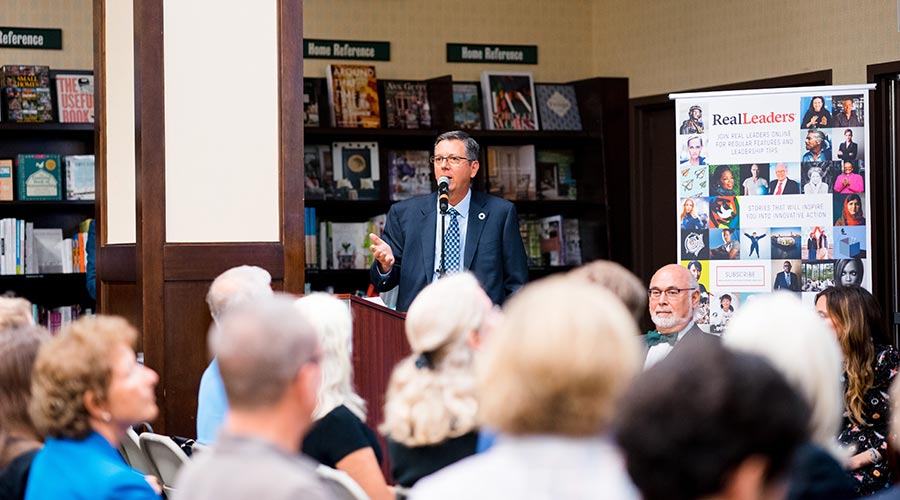
Real Leaders Holds Global Newsstand Kick Off in New York

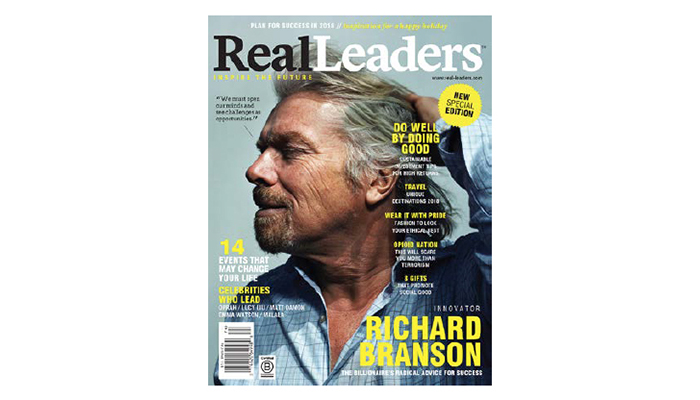
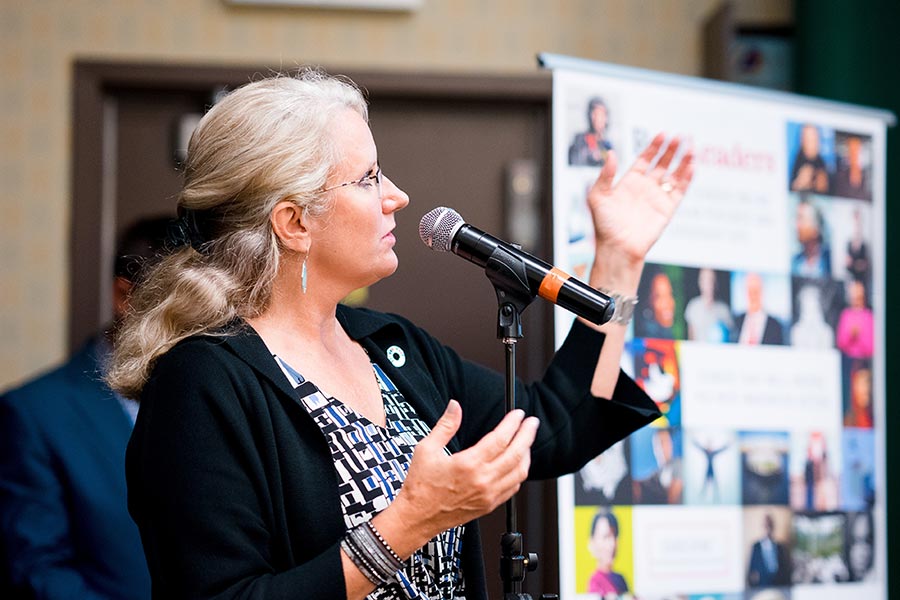
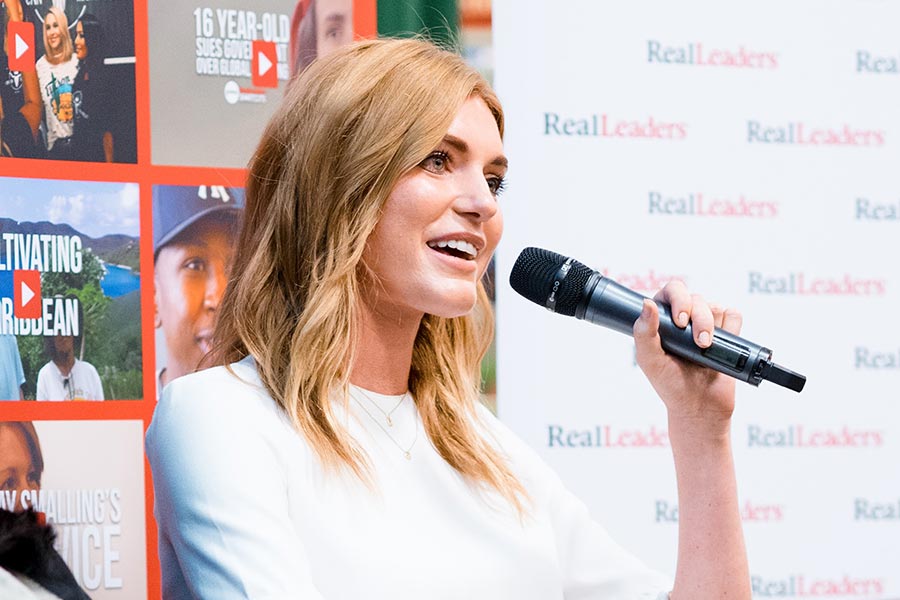
Real Leaders held an event at Barnes & Noble in Tribeca, Manhattan to kick of their new global newsstand expansion during the week of the United Nations General Assembly in New York City. The publication is the world’s first sustainable business & leadership magazine, which aims to inspire better leaders for a better world.

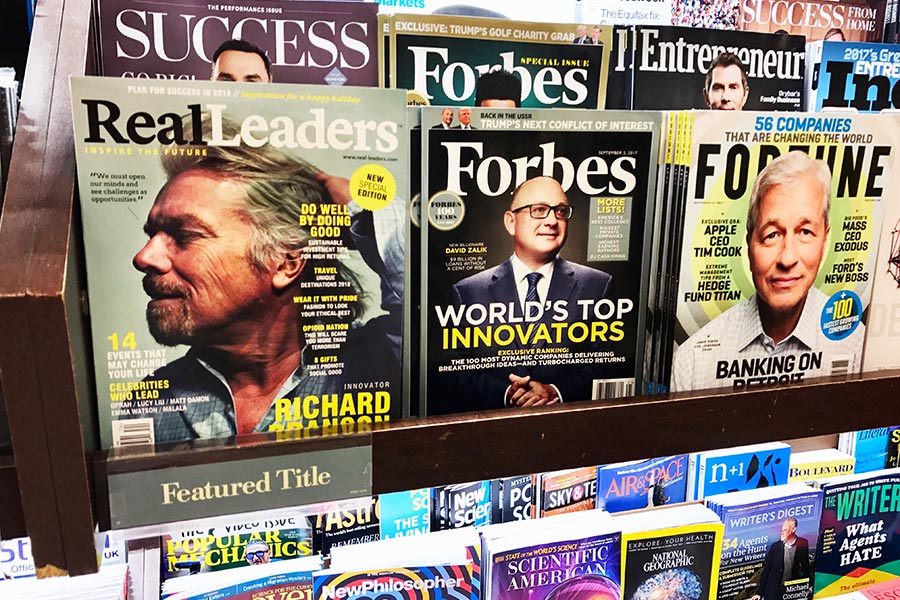
The magazine is now available in Barnes & Noble, Amazon, Hudson newsstands and select distributors around the world.

Real Leaders is now available on newsstands alongside other mainstream publications.

To mark the occasion of the special fall release of the magazine, Real Leaders hosted a panel of impact leaders in conjunction with the United Nations to discuss how both established and emerging citizens are taking innovative action to achieve the United Nations 17 Sustainable Development Goals. Each panelist described the goal most important to them, the action they are taking and what others can do to make a positive difference in the world.

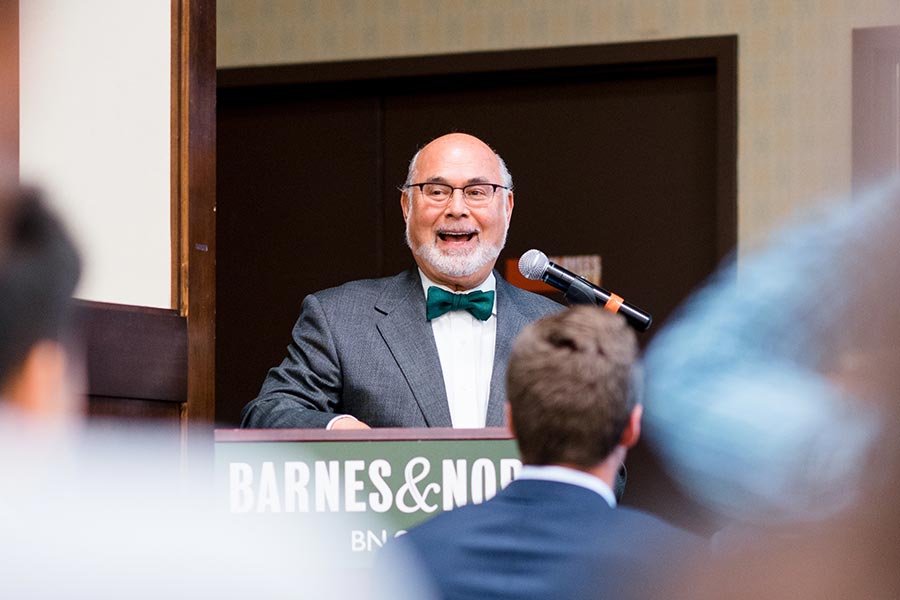
Mark Van Ness, Founder of Real Leaders explains why we cannot wait for politicians to solve our problems.

Grant Schreiber, Editor of Real Leaders, moderated the panel discussion and spoke about the need for a magazine such as Real Leaders to focus on far-sighted leaders who inspire the future (#inspirethefuture).

If you like this, subscribe here for more stories that Inspire The Future.

“We cannot wait for politicians to solve the world’s problems,” said Mark Van Ness, Founder of Real Leaders. “Leaders in our everyday lives, including business leaders, are stepping up everywhere to fill the leadership void.”

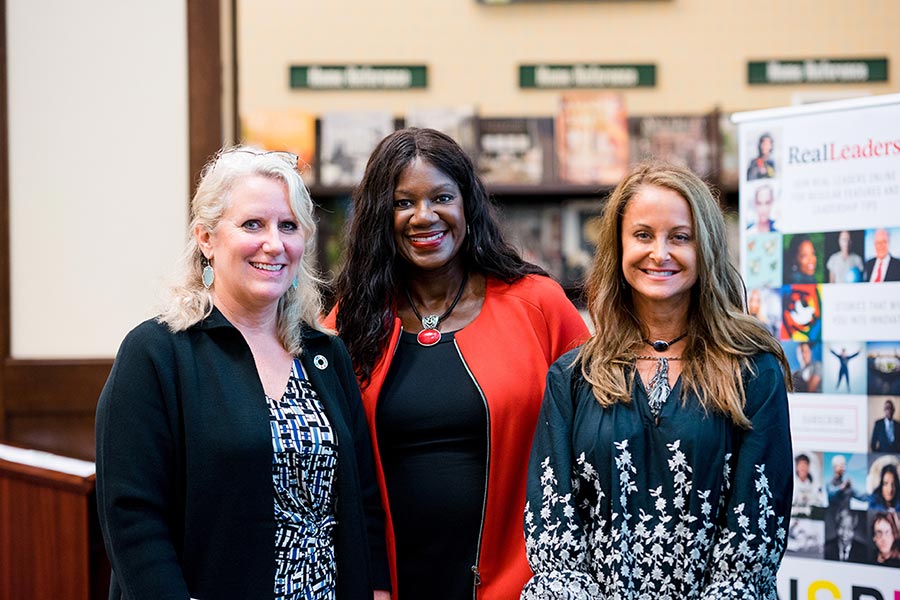
From left: Julie Van Ness, President of Real Leaders; Benita Fitzgerald Mosley, CEO of Laureus and Marci Zaroff, Founder of MetaWear Organic.

In addition to a call for real leadership, Julie Van Ness, expressed the importance of diversity and inclusion in leadership. “We strive for our magazine to be diverse,” said Van Ness, President of Real Leaders. “For example, we make sure that women are represented in equal numbers to men throughout our entire magazine.”

The diverse panel added valuable insights around their social impact work. 

Grant Schreiber, editor of Real Leaders in discussion with Maya Bruhmam of The World Bank.

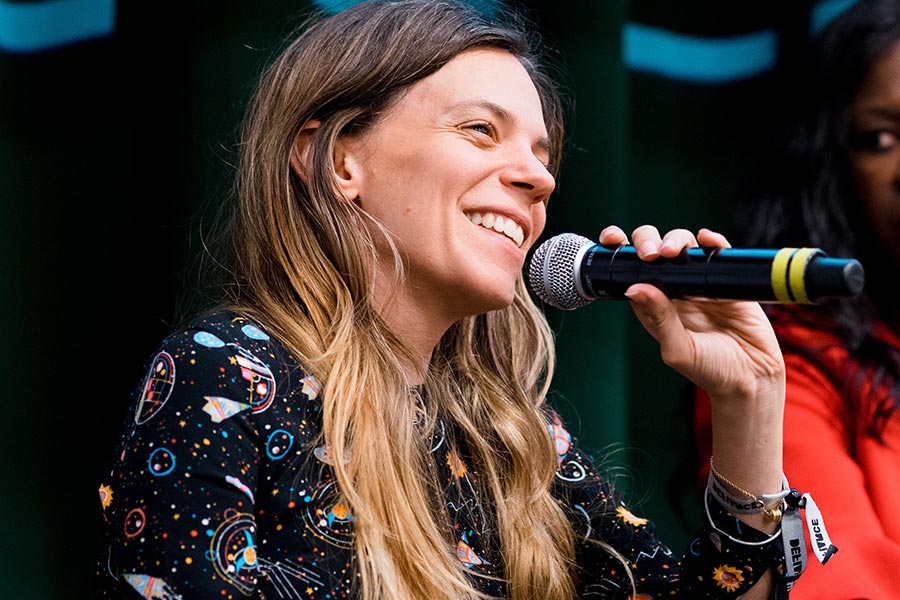
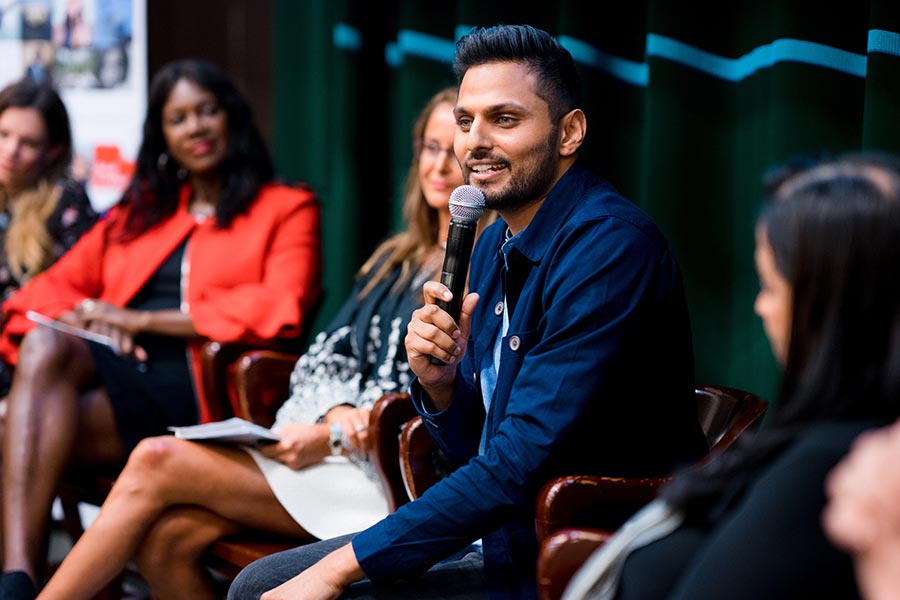
Marci Zaroff, Founder of MetaWear Organic and BeyondBrands, talked about the negative environmental impacts of conventional apparel manufacturing and how to combat this. Jonathan Granoff, President of the Global Security Institute, pointed out the many actions that are being taken to address the global goals and encouraged everyone to get involved for elevated impact. Jay Shetty, award-winning online host and filmmaker, discussed how to make a difference on social media. And Jess Jacobs, Actress, Global Advocate and Co-Founder of Invisible Pictures, talked about her work to achieve gender equality in TV and film production.

Other panelists included Alex Amouyel, Executive Director of MIT Solve, Benita Fitzgerald Mosley, Olympian and CEO of Laureus USA and Maya Brahmam, Senior Communications Officer of The World Bank.

To subscribe to the bigger and newly-redesigned Real Leaders magazine click here

Jonathan Granoff, President of the Global Security Institute.

Alex Amouyel, Executive Director of MIT Solve.

Julie Van Ness, President of Real Leaders speaks about the commitment to portraying women in equal numbers in the magazine.

Jay Shetty, award-winning online host and filmmaker shares his views on online influence and social impact.

Actress and Cofounder of Invisible Pictures, Jess Jacobs, speaks about the importance of positive female role models in movies.

A capacity crowd of media, entrepreneurs and business leaders listen to the panel.

If you like this, subscribe here for more stories that Inspire The Future.


0