Challenges to the Dream

What started as an annual writing contest encouraging students to express their personal struggles with race and discrimination is now an anthology featuring 91 pieces by 83 writers on topics ranging from racial and cultural stereotypes and school bullying to homophobia and identity questions.

Published by CMU Press, “Challenges to the Dream: The Best of the Martin Luther King, Jr. Writing Awards at Carnegie Mellon University” is a powerful selection of poetry and prose. Its purpose is to not only share especially moving pieces but also encourage and extend more conversations about racial, political, gender, cultural and other diversity issues.

“The mission of the MLK Day Writing Awards is to create a space for daring, eloquent and inventive work, in the belief that the process of writing itself can help young people explore and break down issues of difference in their lives,” said Jim Daniels, the Thomas Stockham Baker UniversityProfessor of English who founded and directs the awards program.

In 2014, Deborah Monti’s “The Woman, the Paradigm” won first place for high school poetry. Now, Monti is studying history with a focus on human rights and legal studies at Yale University.

“These are the voices we need to hear. Inside these words, through these emotions, observations and declarations, we get close to what we can call real news,” said Alberto Ríos, author of “A Small Story about the Sky” and poet laureate of Arizona.

Of the 83 contributors, approximately 40 are graduates of the Pittsburgh Public Schools and about 30 are CMU alumni. Jonathan deVries received his bachelor’s degree in Hispanic Studies in 2005 and tied for first place in college poetry that year for “My Father Tries to Bond with Me.”

To help educators and others use the book as a conversation starter and resource, CMU’s M. Shernell Smith and Kitty Shropshire are preparing a reading and study guide that will be unveiled at the 2018 awards ceremony.


Forget Politics! Together We Can Save Our Climate!

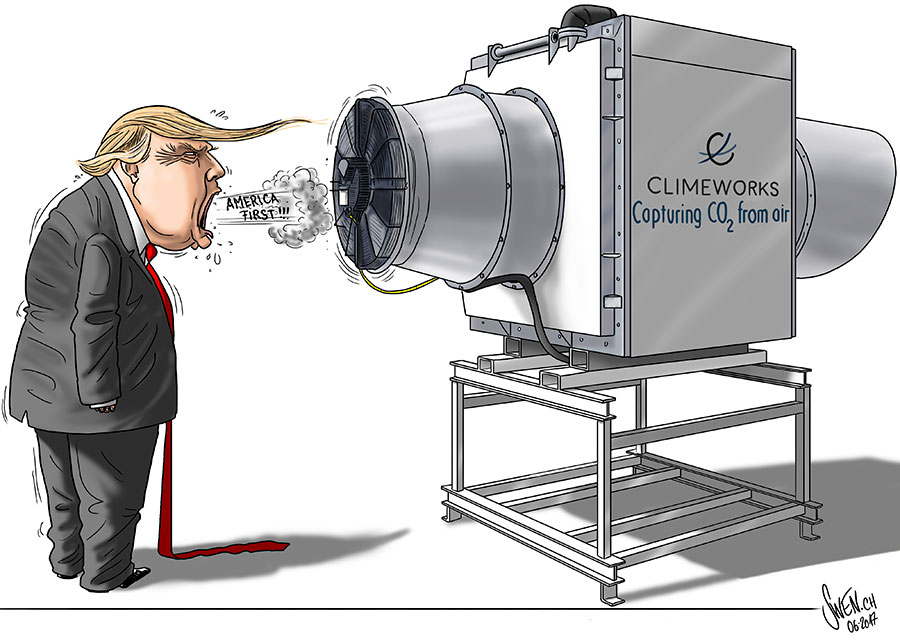
One day before President Donald Trump announced his decision to pull the USA out of the Paris Agreement, Climeworks, an innovative Swiss startup, launched the world’s first commercial carbon capture plant in Hinwil, Switzerland.

The plant, which filters carbon dioxide directly out of the air, offers a solution in the fight against climate change. Climeworks, which invented and developed a novel CO2 filtering material, aims to remove one percent of CO2 global emissions from the air by 2025.

If you like this, subscribe here for more stories that Inspire The Future.

Business campaigning Ltd., a Swiss campaigning firm with the motto “meaningful campaigns for meaningful ideas” was “dismayed by Trump’s decision, but buoyed with hope after seeing the launch of this potentially climate-saving technology,” made the decision to launch the Planet First campaign to remove 100 tons of CO2 from the atmosphere and store it safely underground.

The business campaigning team believe that technology now enables ordinary people to collectively make a difference in the fight against climate change, no longer needing to rely on governments to fight it on their behalf.

The filtered CO2 can either be stored safely underground, used as a raw material in the food and beverage industry, or to manufacture carbon-neutral synthetic fuels, which can be used in the auto industry.

The Planet First campaign will fund the removal of 100 tons of CO2 from the air in support of Climeworks’ goal in the fight against climate change.

“We want to make a mark with this campaign. Through technologies, such as Climeworks,’climate protection can become a viable business model,” explains business campaigning Ltd., owner and CEO Peter Metzinger.

“The filter plants in Switzerland can evolve into a global export industry and create a new economic sector — the circular carbon economy. Startups and companies can deliver decisive impetus to truly sustainable climate protection, utilizing CO2 as a raw material and reducing the reliance on fossil fuels. This is how we can fight climate change,” says Metzinger.

If you like this, subscribe here for more stories that Inspire The Future.


Governments Scramble to Ban New Petrol Cars

First France, now the UK. When it comes to motoring, countries are queuing up to show off their environmental credentials.

The British government has announced that new diesel and petrol cars and vans will be banned from 2040. The move follows hot on the heels of a similar announcement from France’s ecology minister with the same timeframe.

Both pledges are designed to cut toxic emissions, improve air quality and cut public health risks.

Car giants such as SEAT and Kia are already ahead of the game when it comes to alternative fuels. SEAT recently announced an innovative partnership in Spain to promote and commercialise natural gas powered vehicles. ​

Earlier this year four Kia Vehicles were named among Best Electrified and “Eco-Friendly” offerings by the trusted consumer website Kelley Blue Book’s kbb.com. Also, Volvo says that all of its new models will have an electric engine from 2019. And BMW has revealed that its new electric Mini will go into production in 2019 in the UK.

Following the announcements by the British and French governments, we can expect more and more initiatives such as these over the next few months and years from the big beasts of the automotive world.

If you like this, subscribe here for more stories that Inspire The Future.


IMF: Forget Taxing The Rich, Close The Gender Gap

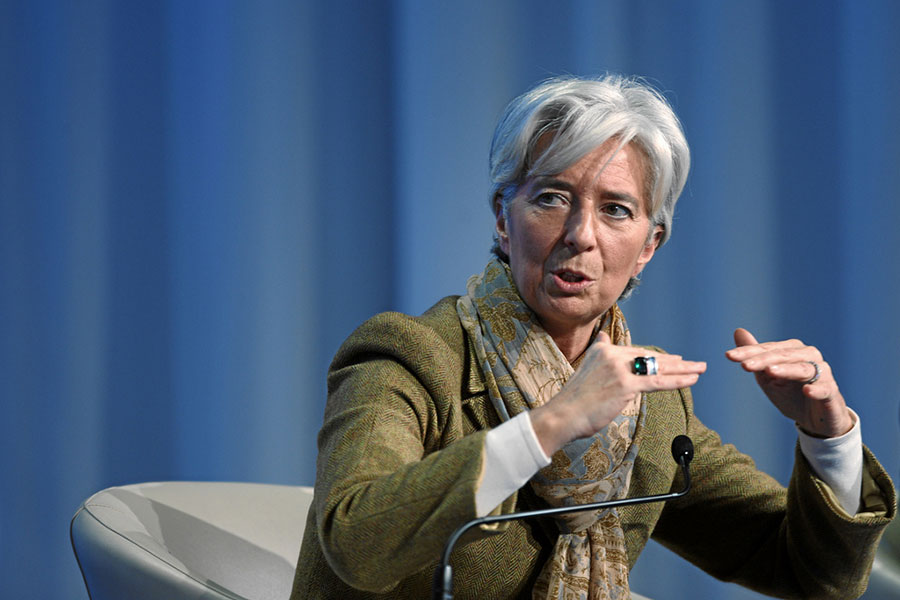
At a news conference to open the IMF-World Bank Annual Meetings, IMF Managing Director Christine Lagarde urged world leaders in October to reinforce a strengthening global recovery and seize an opportunity to promote inclusive and sustainable growth.

“Our suggestion is that it is not time to be complacent. It’s time to take those policy decisions that will actually enable more people and more countries to benefit from that recovery that should be made sustainable,” said Lagarde.

If you like this, subscribe here for more stories that Inspire The Future.

Lagarde emphasized the need for growth to be inclusive and benefit all people. The Fund this week highlighted strategies to combat inequality, including progressive taxation. Lagarde was asked if such policies are simply about taxing the rich to even out income.

“I disagree with that point that you just made. That, quote-unquote, taxing the rich would be the most efficient way to reduce inequalities. I think the most efficient way to reduce inequalities would be to actually close the gender gap between men and women. And, that is a no-brainer. Whether it’s access to the labor market, whether it’s access to finance. Whether it’s the gender gap in terms of compensation, that would achieve a lot to reduce inequalities. And that applies across the world.”

Lagarde added that countries do have room to adjust tax rates.

“Given the significant drop in average tax rate in most advanced countries, increasing the higher brackets would not prejudice growth. Now, from that, any policy makers have to decide what they want to do in terms of policymaking, but there are countries where, clearly, reducing excessive inequalities would support growth,” she said.

Lagarde said the IMF stands ready to support efforts to promote sustainable growth.

“What I’ve heard from all engaged is that the international financial safety net, that is so needed, has to have the IMF as its center. We will continue to play that role and we will share experience and we will provide support when and wherever needed and whenever a country asks for it.”

Asked about how the International Monetary Fund sees the risks of a Brexit without a deal, Lagarde expressed hope that negotiations will bear fruit.

“I just cannot imagine that that would happen. For the people themselves, what does it mean? The Europeans who are based in the U.K. The British who are based and residing in the European Union. WTO does not provide for such rules. When I think of the airline industries, the landing rights in various European countries. There is so much that has been brought together between the continent and the United Kingdom that it really requires a very specific approach that will reduce the uncertainty that is damaging potential.”

If you like this, subscribe here for more stories that Inspire The Future.


Maldives Introduces Most Innovative ID Card

The Maldives are known for their nice beaches and wonderful holiday resorts on the many islands. Now the Maldives have also become a place of innovation. Maldives Immigration has just introduced a new, very innovative type of ID card: It can be used for payments, but also serves as a national ID card, as a drivers license as well as a health card and insurance card.

Last, but not least, it’s also used as a passport for easy travelling. This is why the new card is called “Passport Card.” The innovative card and system was developed by Maldives Immigration, together with Dermalog from Germany as the technology provider. 

If you like this, subscribe here for more stories that Inspire The Future.

Citizens of the Maldives don’t need to carry so many cards around anymore. The famous islands are becoming a country where one single card serves for everything which matters, starting from payment up do driving, health, insurance, travelling and many more different applications. The new card is a so called “multi-purpose-card” which is very special in many ways:

Today most bank cards have a durability of maximum three years. The new card of the Maldives is the world’s first bank card which is made of Polycarbonate material that can last up to 10 years. Furthermore it contains a unique combination of a called dual-interface chip for contactless and contact card reading. The new card is certified by the Bank of Maldives as well as by MasterCard, allowing the card to be used internationally like any other MasterCard.

What makes the cards more secure than any other payment card are the additional passport security features, which no bank card provides. This additional features allow the Maldives “Passport Card” to be used like a regular passport and works already at all borders of the Maldives, including the new electronic gates. The “Passport Card” is fully confirming to all international standards of a modern passport. The cards also contain 10 fingerprints for secure verification.

But the innovative Maldives card can also be used as a driver’s license, health card or insurance card. The Controller General of Maldives Immigration, Mohamed Anwar says: “The door is open for many other government departments and private companies to use our new Passport Card in future.”

In future the Maldives might not only be known for of it’s wonderful beaches, but also as a place where the future already starts today.

If you like this, subscribe here for more stories that Inspire The Future.

The Man Who Fell From Space: Five Years on

On the fifth anniversary of the record jump from the edge of space, we asked Felix Baumgartner and other key Red Bull Stratos team members for their memories of the incredible day.

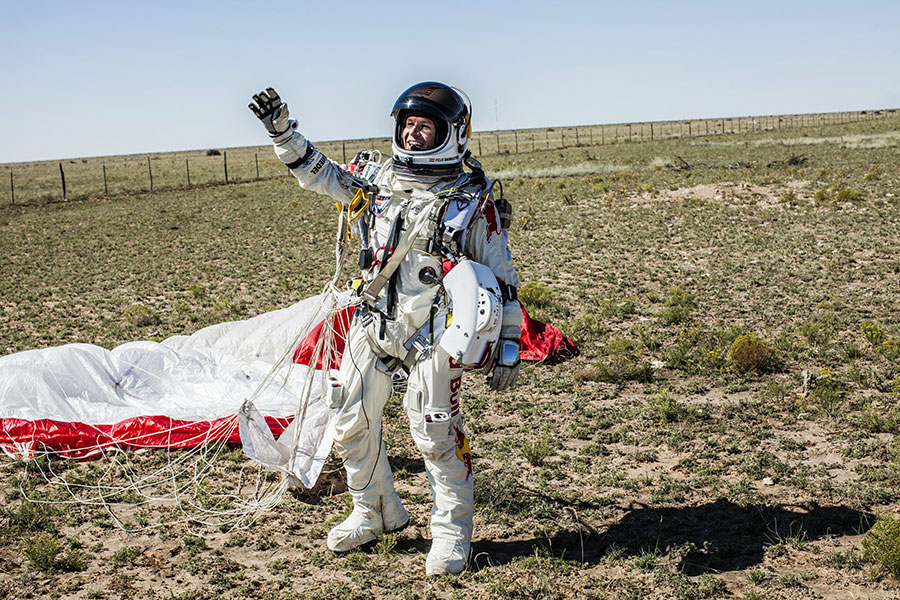
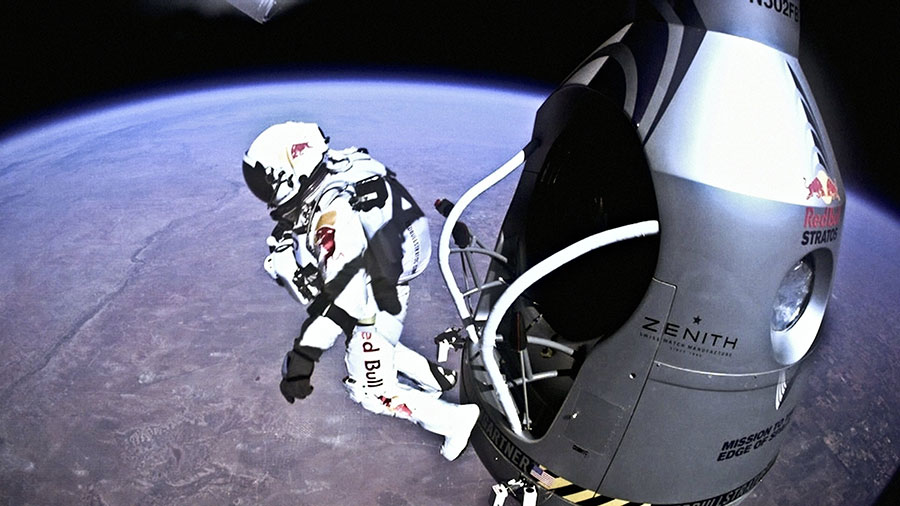
On October 14, 2012, the world was spellbound as the Red Bull Stratos project launched a helium balloon to near space, where Austrian skydiver Felix Baumgartner jumped from 38,969.4m/127,852.4ft to become the first, and so far only, person to break the speed of sound without the protection or propulsion of a vehicle. The project broke numerous records and contributed valuable data to the scientific community. Five years later to the day, Baumgartner and key team members are celebrating at a special Red Bull Stratos exhibition held in conjunction with the season finale of the Red Bull Air Race World Championship at Indianapolis Motor Speedway.

If you like this, subscribe here for more stories that Inspire The Future.

Baumgartner – as well as Joe Kittinger (Flight Operations and Safety, Capcom 1), Art Thompson (Technical Project Director) and Mike Todd (Life Support Engineer) – took time to answer some questions. Here are excerpts from that extraordinary exchange.
Felix, happy anniversary. How does it feel?

Felix Baumgartner: “I think this is amazing. It’s like Christmas, birthday and New Year’s Eve all at the same time, because it’s Indianapolis, it’s the last Red Bull Air Race of the season and it’s our anniversary, so I’m getting to meet with a lot of the team. It’s really cool to see everyone again and share some stories.”

Overcoming your issues with the suit turned out to be one of the most dramatic stories over five years of developing Red Bull Stratos?

Felix Baumgartner: “You know, at the time I was really struggling because I never liked the suit. The suit is a very complex tool, and while it’s necessary to survive, it’s no fun to wear it – you’re kind of locked in your own little world. That was a time when I had a lot of internal problems with myself, mentally, but I couldn’t talk to anyone.”

The Red Bull Stratos balloon was the largest ever launched with a human on board, and it took a lot of testing with various sizes of balloons before the final launch?

Joe Kittinger: “Balloons are very fragile creatures, requiring perfect conditions for launch, and the critical part is getting inflated. When that balloon took off, a lot of people were extremely happy.”

Felix Baumgartner: “When we launched the balloon and finally the capsule got released from the ground, I knew we were on the way. We were still at the beginning, but the balloon launch was the first step. Once that was successful, I was a lot more relaxed.”

Art, you were the technical project director. What do you think when you saw the capsule?

Art Thompson: “It’s pride for the team, for what we accomplished together as a family – which is what this group really is. This was an effort of people with a passion to accomplish a scientific task. We have a personal bond, and it doesn’t matter how far we are stretched around the world, there’s a certain pride that what we accomplished was significant to the aerospace industry and inspired so many. It’s about all of us together.”

With five years to reflect on it, what do you now think some of the mission’s biggest accomplishments were?

Joe Kittinger: “One of the significant contributions that I think we made was developing features toward the next generation full-pressure suit, so astronauts in the future will have increased mobility. Also, the team proved out a completely new approach to physiological monitoring, which was really a contribution for the scientific community.”

Art Thompson: “Over the last five years what Red Bull Stratos has really showed me is the impact it had on people around the world, to inspire them to do better and be better. We’ve given talks around the globe and met with educators, and kids come to me all the time wanting to know how to get into aerospace, or how to get into science.”

Felix Baumgartner: “Everything we accomplished really proves what a small group of people can do. We were very uncertain at the beginning if it was ever going to be successful, because there were so many unknowns that we had to overcome. But now we know that everything you have in your mind can turn into reality if you work with the right people, if you put the effort into it and you go the extra mile.”

On the moment Felix jumped from the capsule…

Joe Kittinger: “He was standing there on the shoulders of a couple-hundred team members, a great team of people working for his benefit. I was thinking of all the people and the contributions they made to put him on that step. It was a historic moment because of a great team of people who made it happen.”

Felix Baumgartner: “That moment was definitely why we all worked so hard. All that effort for five years, all those hurdles we had to overcome. Finally standing on top of the world, knowing that the whole world was watching, was quite extraordinary. Then you take that one step forward and you’re on the way, not knowing what to expect. Nobody knew what would happen to a person breaking the speed of sound, but I had to find out, and I will always remember that moment.”

If you like this, subscribe here for more stories that Inspire The Future.

 

This Bike Will Get You to Work For $1

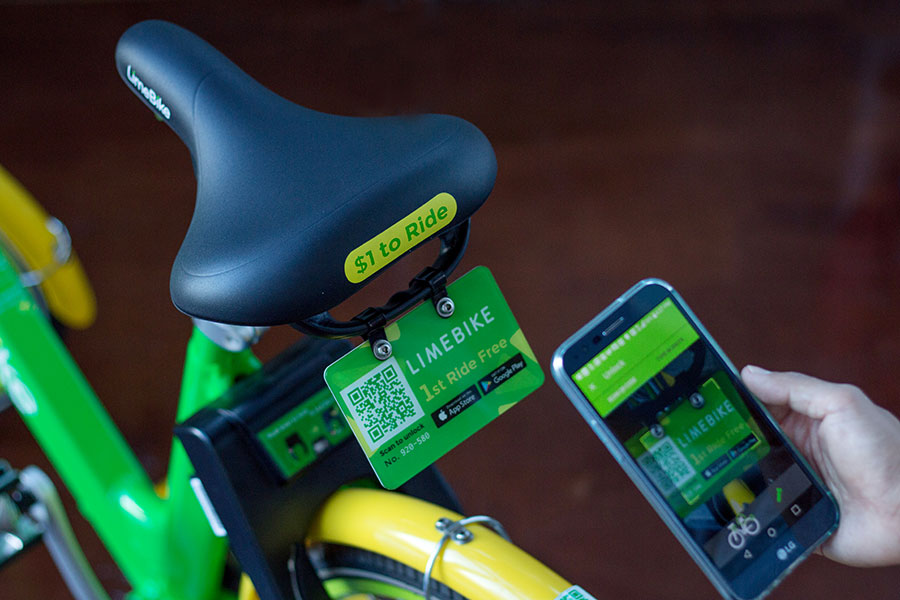
LimeBike, the dockless bike sharing service, has announced it has raised $50 million in Series B funding to speed the rollout of its programs into 30+ cities and campuses across the U.S. by year-end.

LimeBike is now the largest dockless bikeshare operator in the U.S., with approximately 10,000 bikes deployed, and available in 20 markets total (twelve cities and eight university campuses). LimeBike always seeks to partner closely with cities, colleges and businesses to provide dockless, subsidy-free bike share services and promote urban mobility for residents and visitors.

If you like this, subscribe here for more stories that Inspire The Future.

Rides cost one dollar for 30 minutes or fifty cents for students. Since launch four months ago, the company has achieved nearly five times growth in rides and revenue on an average monthly basis with the number of riders increasing by more than fivefold. The company has logged over half a million trips, 250K registered users, and is growing 50 percent week over week on average.

“Bike sharing is shaping the future of transportation,” said Toby Sun, LimeBike CEO and co-founder (pictured above, right). “We’re passionate about solving the challenges of the first and last mile and we believe that better understanding the migration patterns of commuters can eventually help us to create efficiencies in urban mobility and cut down on carbon emissions in our cities.”

“We believe dockless, connected bikes have the potential to revolutionize the first and last mile of transportation,” said Jeff Jordan, general partner, Andreessen Horowitz and LimeBike board member. “LimeBike is making strong progress in leading this shift. The team is passionate, understands the wide-ranging needs of the US market, and is committed to collaborating with cities across the country to complete their public transportation system.”

If you like this, subscribe here for more stories that Inspire The Future.

10 Things You May Not Know About Teen Driver Safety

The biggest threat to teens’ safety is the vehicle sitting in their parents’ driveways. Yet, many parents and teenagers remain under-educated about the risks new drivers face. 

If you like this, subscribe here for more stories that Inspire The Future.

The National Safety Council has compiled a list of statistics and facts many parents and young people do not – but should – know about teen driver safety:

  1. Car crashes are the number one killer of teens in the U.S.
  2. The most dangerous year of a teen’s life is the year he or she receives a license
  3. Half of all teens will be involved in a car crash before graduating from high school
  4. A teen’s crash risk is three times that of more experienced drivers
  5. After years of declines, teen driving crashes and fatalities are on the rise
  6. Just one teen passenger can increase a teen driver’s crash risk by 44 percent
  7. 75 percent of teen driver crashes occur because the teen made a critical error due to inexperience, such as driving too fast for conditions, not scanning for hazards or being distracted
  8. 52 percent of teens who are killed in a car crash are unbelted
  9. Cell phones are a huge driver of distraction for already inexperienced teen drivers, yet twelve states still allow some form of cell phone use for novice drivers
  10. About 20 percent of teen car crashes involve an underage drinking driver

“As teen traffic fatalities rise, parents are in a unique position to reverse this trend,” said Deborah A.P. Hersman, president and CEO of the National Safety Council. “Parents have more influence on their teens’ driving habits than they think. National Teen Driver Safety Week is the perfect time for parents to educate themselves, teach their teens safe driving habits and save lives.”

According to the NSC State of Safety Report, individual states vary greatly in their efforts to reduce teen driving fatalities. California is the only state considered to be “On Track” for teen driver safety, however, other states, such as New Jersey, are finding success with new tactics to avoid teen crashes.

The NSC parent education initiative, DriveitHOME, is a website created for parents that focuses on the most important things parents can do to protect teen drivers. The site demonstrates that, though teen drivers face many dangers on the road, parent involvement can significantly reduce these crash risks. Visit DriveitHOME.org with your teen to sign the New Driver Deal and make a commitment to safety for your teen’s sake.  

If you like this, subscribe here for more stories that Inspire The Future.

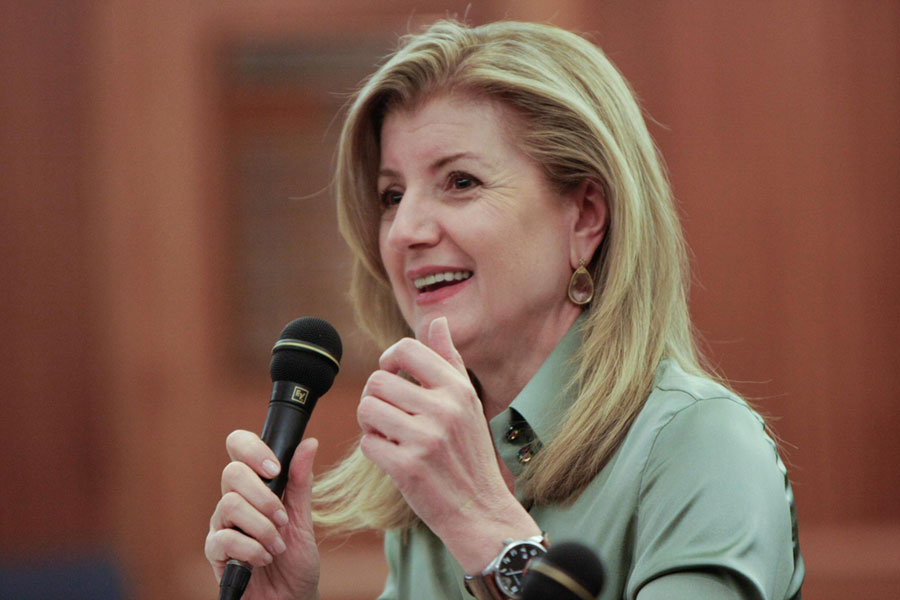
Arianna Huffington, Founder of The Huffington Post

Huffington was born in Athens, Greece and at the age of 16 moved to the United Kingdom to study economics at Girton College in Cambridge. Here, she became the first foreign, and third female President of the Cambridge Union.

Huffington began writing books in the 1970s, with editorial help from Benard Levin, the love of her life, mentor and role model. The two traveled to music festivals around the world for the BBC. In 1980 she moved to New York. 
Huffington rose to national U.S. prominence during the unsuccessful Senate bid in 1994 by her then husband, Michael Huffington, a Republican.

She became known as a reliable supporter of conservative causes such as Newt Gingrich’s “Republican Revolution” and Bob Dole’s 1996 candidacy for president. She teamed up with liberal comedian Al Franken as the conservative half of “Strange Bedfellows” during Comedy Central’s coverage of the 1996 U.S. presidential election. For her work, she and the writing team of Politically Incorrect were nominated for a 1997 Emmy for Outstanding Writing for a Variety or Music Program.
 
In 2009, Huffington was ranked number 12 in Forbes’s first-ever list of the Most Influential Women In Media and also ranked number 42 in The Guardian’s Top 100 in Media List. As of 2014, she was listed by Forbes as the 52nd Most Powerful Woman in the World. 

AOL acquired The Huffington Post in 2011 for US$315 million, and she became the President and Editor-in-chief of The Huffington Post Media Group, which included The Huffington Post and other AOL properties, including AOL Music, Engadget, Patch Media, and StyleList. 

In 2016, she announced that she was stepping down from her role at The Huffington Post to devote her time to her new startup, Thrive Global, that focuses on health and wellness.
 

What We Can Learn From Immigrants

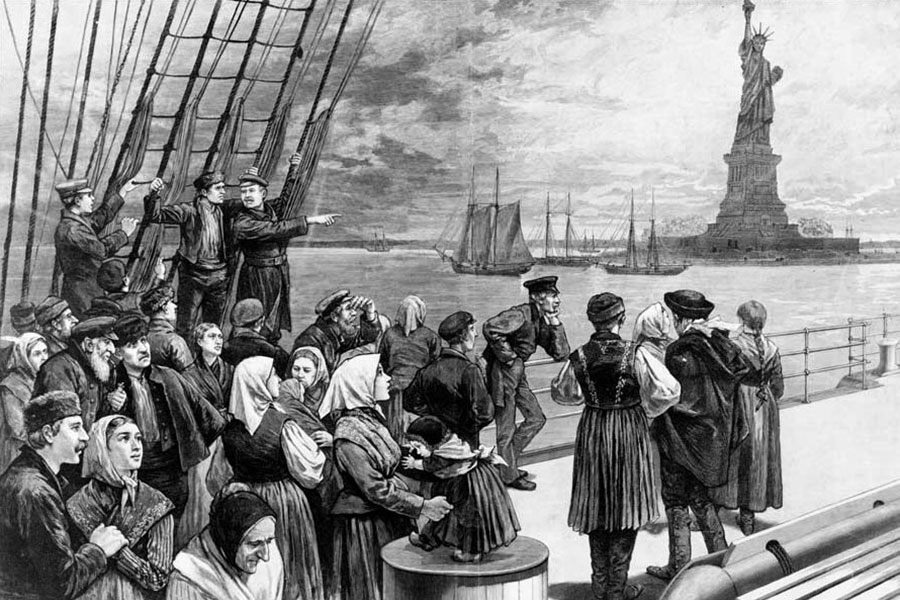
From the time I was a young boy, I have been fascinated with astounding feats of accomplishment. I would sit in wonder listening to stories of my parents and grandparents and their adventures in the world. Jews who came from shtetls in Minsk, Lodz, Krakow, places of which I had never heard. They came with only a few suitcases and a deep reservoir of hope.

They came in search of a better life, even though they didn’t know exactly what that meant or what they would have to sacrifice.

If you like this, subscribe here for more stories that Inspire The Future.

My parents, and those like them, achieved something remarkable. They became successful entrepreneurs, doctors, artists, philanthropists and scholars. They bought homes, raised families and sent their children to universities. Many achieved this in the first generation, and most by the second. I am fascinated with understanding the conditions that allow seemingly ordinary people to achieve extraordinary success in the face of extreme adversity. I have studied these lessons and have tried to apply them to my life and the clients I have served.  When I listened to my family share their stories of coming to America, I distilled three conditions that seem to be common among immigrants who have achieved great success.

1.    Commitment

The people I know who have attained what seemed unthinkable all focused more on commitment than belief. When I asked my mother if she believed that she and her family could have escaped the Holocaust and reimagined their life in America, she answered with little emotion: “We didn’t have a choice”.  I have heard stories of how scared and confused immigrants were, not knowing if they would reach their destination or how they would survive once they arrived. These immigrants had to summon the will to prepare them for a radically different life.

When I have been faced with extreme adversity, my fears severely challenged my belief in myself. Yet my commitment was the force that propelled me forward. When my wife and I bought our first home and it was almost destroyed by fire soon after, I was in a perpetual state of fear. In retrospect, I can’t really say how strongly I believed we would succeed in our quest to rebuild our lives. Like my mother escaping the Holocaust, I didn’t think I had a choice.  In some unknowable way, that commitment turned into belief.

2.     Action

Immigrants understand the absolute necessity of action. By action I mean consistent, planned, organized action over long periods of time. My grandfather’s commitment still strikes awe in me 50 years after hearing it. Joachim Shultz had a thriving business selling finely-made artists brushes in Germany in the years leading up to Hitler coming to power. Seeing that Germany was no longer safe for Jews, he took his family to Czechoslovakia. He had hoped that he would find a safer place there. When his car was confiscated at the Czech border he knew the time had come to leave. He left his life behind and brought his wife and three children to New York. He started his business again on Bleecker Street in Greenwich Village in 1938.  He understood the necessity of making every resource count. Community was one of his most essential resources. 

3.     Community

The concept of community has shifted radically since my grandparent’s time. Then community was rooted in where you lived; in the nineteenth and early twentieth century, Jewish immigrants who came from the same communities in Eastern Europe joined lantsman societies. If you emigrated from Minsk and settled in Brooklyn, you likely joined the Minsk lantsman group. Members pooled their resources to help each other in the strange world they were attempting to navigate. They also helped relatives come to America. They formed tightly connected social networks driven by their need to survive amidst an often hostile world. They understood that the only way they could realize their dreams was to depend on each other.

As the modern inventions of the telephone, the automobile and the airplane became more accessible, the idea of community spread far beyond the boundaries of the places they first settled in. As extended families broke apart and the nuclear family became the primary unit, the notion of interdependence shifted.

Today community is powered by digital social networks: Facebook, Instagram, Twitter, LinkedIn. While the reach of the community is vast, the belief in interdependence that was so central to the success of my ancestors’ generation, has been severely diminished for most Americans. For those who have been able to reframe the “ we are all in this together” principle for the world of digital community, what we can learn from immigrants seems more powerful than ever.

If you like this, subscribe here for more stories that Inspire The Future.

0