Venture Capitalist Messes With The Wrong Dad

Purpose-driven agency Oliver Russell has launched a campaign to advance paid parental leave policies in the wake of venture capitalist Michael Moritz denigrating paternity leave in his Financial Times op-ed.

Moritz, a partner at Sequoia Capital, praised the 24/7 work ethic of China, singling out paternity leave and work-life balance in the United States as particular concern, writing: “These seem like the concerns of a society that has come unhinged.”

Oliver Russell’s campaign, called “Unhinged: Parental Leave is Good Business,” will offer digital resources to advocate for parental leave polices at work, regardless of employer size. The 11-person boutique creative agency has offered paid maternity leave since 2011, adding paternity leave in 2014. Agency founder and president Russ Stoddard said its clear that parental leave is good for business, and that the new website, LetsGetUnhinged.com, features a toolkit for how to develop similar policies.

In the days since Moritz’s made his views known, several multinational corporations, including Starbucks, have expanded parental leave policies. The Family Medical Leave Act covers only workplaces with more than 50 employees and doesn’t mandate that parental leave be paid. Of the 193 member countries of the United Nations, the U.S. joins just New Guinea, Suriname, and a few South Pacific islands in not having a national paid parental leave law. A 2016 study by the Center for American Progress shows that paid leave benefits even small businesses by boosting recruitment, retention, productivity, and overall performance and productivity.

“I find Moritz to be horribly out of step with the times – and the facts,” Stoddard said. “His take on human capital reminds me of the old-school approach: People are an asset to be mined and wrung out, their professional value to be extracted as quickly as possible.”

If you like this, subscribe here for more stories that Inspire The Future.

Man-made Star Goes Into Orbit For Humanity

A newly launched satellite is expected to become the brightest object in the night sky, creating a shared experience for all humanity, after being launched on board Rocket Lab’s Electron launch vehicle in January.

The Humanity Star is intended to serve as a focal point for humanity, as every single person on Earth will have the opportunity to see and experience it. The satellite will appear as a bright, glinting star shooting across the night sky.

If you like this, subscribe here for more stories that Inspire The Future.

Created by Rocket Lab founder and CEO Peter Beck, the project is about drawing people’s eyes up and encouraging people to look past day-to-day issues and consider a bigger picture.

“No matter where you are in the world, or what is happening in your life, everyone will be able to see the Humanity Star in the night sky. My hope is that all those looking up at it will look past it to the vast expanse of the universe and think a little differently about their lives, actions and what is important for humanity,” he says.

“For us to thrive and survive, we need to make big decisions in the context of humanity as a whole, not in the context of individuals, organisations or even nations. The Humanity Star is a way of looking beyond our immediate situation, whatever that may be, and understanding we are all in this together as one species, collectively responsible for innovating and solving the challenges facing us all. We must come together as a species to solve the really big issues like climate change and resource shortages.”

The satellite is currently orbiting the Earth after being launched from New Zealand and successfully deploying to orbit on Sunday 21 January 2018, NZDT. It is the first New Zealand-designed and built satellite to orbit the Earth.

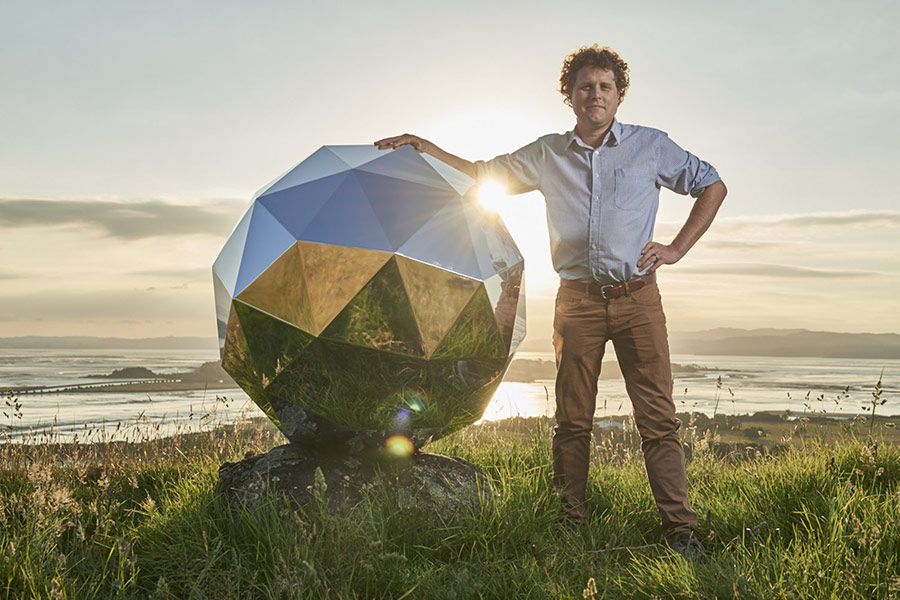
The Humanity Star is a geodesic sphere made from carbon fibre with 65 highly reflective panels. The sphere spins rapidly, reflecting the sun’s light back to Earth, creating a bright, flashing effect that can be seen in the night sky. Orbiting the Earth every 90 minutes and visible to the naked eye from anywhere on the globe, the Humanity Star is designed to be a bright symbol and reminder to all on Earth about our fragile place in the universe.

The Humanity Star will orbit the Earth for approximately nine months before its orbit starts to decay and the satellite is pulled back into Earth’s gravity, burning the satellite on re-entry.

The Humanity Star’s location, including when it will be visible from different regions of the planet, can be tracked in real-time at TheHumanityStar.com

If you like this, subscribe here for more stories that Inspire The Future.

Bill Gates And Roger Federer Team Up in Match For Africa

Nineteen-time Grand Slam tennis champion Roger Federer will play his first-ever match in the Bay Area on March 5. Federer will take on American tennis star Jack Sock at the SAP Center in San Jose in an exhibition match to support children’s education in Africa.

Celebrity guests Bill Gates and Savannah Guthrie will also take to the court in a celebrity-pro doubles match with net proceeds benefiting the Roger Federer Charitable Fund/Roger Federer Foundation.  

If you like this, subscribe here for more stories that Inspire The Future.

“I believe in the power of people. We know that a good education is a decisive factor to empower children by allowing them to take their future into their own hands,” said Federer. “With my foundation, we want to provide one million children with the opportunity for a quality education by the end of 2018. The Match for Africa 5 in San Jose will help us reach our ambitious goals. I am very grateful for this opportunity to collaborate with Bill Gates, who in my opinion is the world’s leading philanthropist.”

As a warm-up, the 19-time Grand Slam champion will team with the Microsoft co-founder and co-chair of the Bill & Melinda Gates Foundation for a friendly, one-set doubles match against NBC News’ TODAY co-anchor Savannah Guthrie and Jack Sock, the top-ranked American on the ATP Tour. Federer and Sock will then go head-to-head in a best-of-three-sets match that offers the area’s first up-close look at Federer’s legendary game.


“Roger and I are 1-0 as a doubles pair after last year’s event, so I’m hoping we can keep the streak alive while raising money for an important cause,” said Gates. “Roger might have a few more Grand Slam titles than I do, but we share a belief that all children deserve a world-class education. His Match for Africa events are a fun way to help make that happen.”

“It is quite literally beyond my wildest dreams to be playing with Roger, Jack and Bill – particularly for such an important cause,” said Guthrie. “I’m excited to shine a light on the Federer Foundation’s amazing work, and I will be practicing my forehand morning, noon and night for the next six weeks.”

“I’ve been lucky enough to face Roger a few times in my career, but never in support of such an important cause,” said Sock. “I hear Roger’s Match for Africa events are a lot of fun, so I’m looking forward to taking part.”


This is the fifth Match for Africa event for the Roger Federer Foundation, which has given $36 million to support children’s education in six African countries and Federer’s native Switzerland. An estimated 850,000 children across 18 programs have so far benefitted from the foundation’s giving, which emphasizes systemic change and sustainable impact.

Tickets start at $30 and can be purchased from January 26 from Ticketmaster.com

If you like this, subscribe here for more stories that Inspire The Future.

NASA Technologies Are Creating A Better World

The 2018 edition of NASA’s annual Spinoff publication features 49 technologies the agency helped create that are used in almost every facet of modern life. These include innovations that help find disaster survivors trapped under rubble, purify air and surfaces to stop the spread of germs, and test new materials for everything from airplanes to athletic shoes.

“NASA’s work represents an investment in the future, not just for air and space travel, but for the nation,” said Stephen Jurczyk, associate administrator of the Space Technology Mission Directorate in Washington.

If you like this, subscribe here for more stories that Inspire The Future.

“At the same time that NASA’s space exploration missions are inspiring young people to become scientists and engineers, the agency’s work in support of those missions is creating jobs for them across many industrial sectors. Commercial technology spun off from NASA research and technology programs, and missions creates new companies, grows the economy, saves money, keeps us safer, and even saves lives.”

In Spinoff 2018, you’ll learn how:

  • Ultra-sensitive radar technology used to detect gravity fluctuations was repurposed to identify the vital signs of disaster survivors trapped under rubble;
  • A technique developed to preserve plants in a spacecraft led to devices that eliminate bacteria, viruses, molds and volatile organic compounds from air, surfaces and even laundry;
  • One company’s work on high-speed stereo photogrammetry for space shuttle analysis now enables low-cost, highly-accurate materials testing to improve designs for everything from running shoes to jetliners.

Other highlights include: artificial intelligence that helps drones avoid collisions and could one day enable self-driving cars; a business jet that is both the fastest and the most efficient in its class; and a computer program that, 50 years after its creation, is still used to design cars, buildings and much more.

“NASA technologies dating as far back as the Apollo missions still are improving our quality of life,” says Daniel Lockney, NASA’s Technology Transfer Program executive. “Meanwhile, innovations made in support of upcoming missions, such as the Orion capsule and the James Webb Space Telescope, are already finding commercial applications. The benefits of the space program continue to accumulate every year.”

The book also features a Spinoffs of Tomorrow section that highlights 20 NASA technologies ripe for commercial application and available for licensing. These include an algae photobioreactor that cleans wastewater while producing biofuels, a revolutionary all-in-one gear and bearing, and the combined technologies of the highly dexterous humanoid robot Robonaut 2.

Spinoff is a part of the agency’s Technology Transfer Program, which is charged with finding the widest possible applications for NASA technology through partnerships and licensing agreements with industry, ensuring that NASA’s investments in its missions and research find additional applications that benefit the nation and the world.

Find the Spinoff 2018 publication here

If you like this, subscribe here for more stories that Inspire The Future.

12 Cultural Practices You’ve Probably Never Heard About

Each year a special UNESCO committee meets to evaluate cultural norms from around the world that are put forward for consideration for a list like no other – The Representative List of the Intangible Cultural Heritage of Humanity.

The list is made up of intangible heritage elements that demonstrate the diversity of that particular heritage raises awareness about its importance. Many of these cultural element are in urgent need of safeguarding because they’re at risk of disappearing forever, despite the efforts of the community, group, individual or State to preserve them. In December 2017, 12 more heritage elements where added:

If you like this, subscribe here for more stories that Inspire The Future.

Kazakhstan  – Kazakh traditional Assyk games

Kazakh Traditional Assyk Games are an ancient tradition in Kazakhstan; each player has their own set of Assyks, traditionally made out of a sheep bone, and a ‘Saka’ dyed in bright colours. The community of practitioners mainly comprises children aged between 4 and 18, but young people and adults are also involved. The game is a good model for positive collaboration, social inclusiveness and a sense of friendship, and is primarily transmitted through observation from older boys to younger ones.

Portugal  – Craftmanship of Estremoz clay figures

The Craftmanship of Estremoz Clay Figures dates back to the 17th century and involves a process lasting several days. The clay figures are dressed in regional attires of Alentejo or religious clothing and follow specific themes; the very characteristic aesthetic features of the figures make them immediately identifiable, and the craft is strongly attached to the region. Artisans ensure the viability and recognition of their craft through non-formal workshops and pedagogical initiatives, as well as through local, national and international fairs.

Germany  – Organ craftsmanship and music

Organ craftsmanship and music has shaped Germany’s musical and instrument-making landscape for centuries, and there are a diverse number of traditions around constructing and playing the organ. The highly specialized knowledge and skills of organ makers are significant markers of group identity and organ music constitutes a universal language that fosters interreligious understanding. Knowledge and skills related to the element are transmitted through a direct teacher-pupil experience as well as in vocational schools, universities, and organ construction workshops.

Greece  – Rebetiko

Rebetiko is a musical and cultural expression directly linked to song and dance that initially spread among urban working-class populations. Rebetiko songs are now a standardized repertoire in social occasions, containing invaluable references to the customs and traditions of a particular way of life. Rebetiko is transmitted orally, as well as by the media and in music schools, conservatories and universities, and musicians and enthusiasts continue to play a key role in keeping the practice alive.

India – Kumbh Mela

Kumbh Mela, the festival of the sacred Pitcher, is a peaceful congregation of pilgrims during which participants bathe or take a dip in a sacred river. The congregation includes ascetics, saints, sadhus, aspirants-kalpavasis and visitors. The tradition plays a central spiritual role in the country, encapsulating a diverse range of cultural customs. Knowledge and skills relating to Kumbh Mela are mainly imparted through the teacher-student relationship, but transmission and safeguarding are also ensured through oral traditions and religious and historical texts.

Indonesia  – Pinisi, art of boatbuilding in South Sulawesi

Pinisi, or the Art of Boatbuilding in South Sulawesi, refers to the famed ‘Sulawesi schooner’ and represents the epitome of the Archipelago’s indigenous sailing craft. Today, boatbuilding centres are located at Tana Beru, Bira and Batu Licin, where shipbuilding and sailing are central to the community’s social, economic and cultural fabric. Knowledge and skills are transmitted from generation to generation both within and outside of the family circle, and local shipwrights are engaged in active marketing initiatives to safeguard the practice.

Iran (Islamic Republic of)  – Chogān, a horse-riding game accompanied by music and storytelling

Chogān is a horse-riding game traditionally played in royal courts and urban fields and accompanied by music and storytelling. In Chogān, two rider teams compete and the aim is to pass the ball through the opposing team’s goal post using a wooden stick. Chogān has a strong connection to the identity and history of its bearers and practitioners. It is transmitted informally within the family sphere, as well as by dedicated associations through training and support for local masters.

Iran (Islamic Republic of); Azerbaijan  – Kamantcheh, The art of crafting and playing with a bowed string musical instrument

The art of crafting and playing Kamantcheh/Kamancha (‘little bow’), a bowed string instrument, has existed for over 1,000 years. In the Islamic Republic of Iran and Azerbaijan, it is a major element of classical and folkloric music, and performances occupy a central place in many gatherings. Kamantcheh is both a key source of earning a living and a strong part of the communities’ living heritage. Knowledge relating to the art of crafting and playing Kamantcheh is transmitted both within families and in musical institutions.

Ireland  – Uilleann piping

Uilleann Piping is a musical practice in which a particular type of bagpipe (known as ‘uilleann’, ‘Irish’ or ‘union’ pipes) is used to play traditional music. Bearers and practitioners include participants of all ages, dispersed throughout the world. Uilleann Piping offers an important way of socializing, providing a sense of rootedness and connection to the past. Knowledge and skills are transmitted using both long-established and modern practices, and the practice is primarily safeguarded through the efforts of the group Na Piorabairi Uilleann.

Italy – Art of Neapolitan ‘Pizzaiuolo’

The art of the Neapolitan ‘Pizzaiuolo’ is a culinary practice consisting of four different phases relating to the preparation of the dough and its baking in a wood-fired oven. The practice originates in Naples, where around 3,000 Pizzaiuoli now live and perform, and plays a key role in fostering social gatherings and intergenerational exchange. Knowledge and skills related to the element are primarily transmitted in the ‘bottega’ of the Pizzaiuolo, where young apprentices can observe their master at work.

Kyrgyzstan  – Kok boru, traditional horse game

Kok boru, a horse game, is a synthesis of traditional practices, performances and the game. The game is played by two teams on horseback, who compete by trying to score as many ‘ulaks’ (a mould in modern-day games) into their opponents’ goal as possible. The element is an expression of the cultural and historic tradition of its practitioners and unites communities regardless of social status. Related knowledge and skills are primarily transmitted through demonstration, as well as during festive and social events.

Malawi  – Nsima, culinary tradition of Malawi

Nsima, the Culinary Tradition of Malawi, is a compound name for the culinary and dietary tradition of Malawians as well as a single component of this tradition, a form of thick porridge prepared with maize flour. Nsima is prepared through an elaborate process requiring specific knowledge, and eating it is a communal tradition in families. Communities safeguard the element through continued practice, publications, festivals and revitalization activities, and knowledge is transmitted both informally and through on-the-job training and education.

If you like this, subscribe here for more stories that Inspire The Future.

How Did Our Politics Get Us Here? Why We Vote For Lying Demagogues

A year after Donald Trump’s inauguration, many pundits and citizens alike continue to try to understand the results of the 2016 election. At the heart of the matter is a legitimate question that deserves to be considered not only for its importance to Trump’s victory, but also as it relates to many other governments worldwide and throughout history. 

The pressing question is: How can voters find a candidate “authentically appealing” even though that candidate appears to many to be a “lying demagogue”?
 
A new study published online (Jan. 10, 2018) by the American Sociological Review, authored by scholars from the MIT Sloan School of Management and the Carnegie Mellon University Tepper School of Business suggests that even when voters understand that a candidate is untruthful they can still view that candidate as an authentic champion of his constituency.

If you like this, subscribe here for more stories that Inspire The Future.

For example, a post-election survey conducted by the authors indicates that Trump voters recognized one of his most egregious lies yet voted for him because of his perceived authenticity.

Together, Oliver Hahl of the Tepper School of Business at Carnegie Mellon and Minjae Kim and Ezra Zuckerman Sivan of the MIT Sloan School conducted two online experiments on a simulated college election to test an innovative theory geared to explain this puzzling behavior.

“The key to our theory,” says Ezra Zuckerman Sivan, professor and deputy dean of MIT’s Sloan School, “is that when a candidate asserts an obvious untruth especially as part of a general attack of establishment norms, his anti-establishment listeners will pick up on his underlying message that the establishment is illegitimate and, therefore, that candidate will have an “authentic” appeal despite the falsehoods.”

In other words, such a candidate can appear to be an authentic champion to his constituency precisely because of his lies and demagoguery but only when the political establishment appears to be self-serving or biased towards an upstart group.

“While many accounts deal with the irrationality of supporting a lying demagogue, our account shows why support for a lying demagogue can be based on a rational interpretation of the motives behind the lying and demagoguery. The key is that our studies articulate how particular grievances and resentment can create distrust in the current power structure, leading to attributions of authenticity for those candidates who seek to undermine the establishment,” says Oliver Hahl of Carnegie Mellon.

An important implication of this study is that various oft-discussed factors—cultural differences, echo chambers of like-minded news outlets, and gender differences—may not be necessary for explaining key dynamics in the 2016 election.  Perhaps most remarkably, the study shows men and women, Clinton voters and Trump voters, were all responsive to the authentic appeal of the lying demagogue as long as that candidate appears to channel their grievances.

“One of the insights from our study is that our current political situation is a general social phenomenon that has occurred in different times and contexts,” says Minjae Kim a graduate student at MIT.  “It is easy to dismiss some political events and rhetoric taking place today as abnormal and thus not worth paying attention to, but our study helps us understand an important general driver that lies behind demagoguery in political rhetoric. Insofar as politicians try to appear as authentic champions of their constituents, lying demagoguery will remain as a socially destructive but individually attractive strategy, from any side of the political spectrum.”

If you like this, subscribe here for more stories that Inspire The Future.

Long-Term Warming Trend Continued in 2017

Earth’s global surface temperatures in 2017 ranked as the second warmest since 1880, according to an analysis by NASA.

Continuing the planet’s long-term warming trend, globally averaged temperatures in 2017 were 1.62 degrees Fahrenheit (0.90 degrees Celsius) warmer than the 1951 to 1980 mean, according to scientists at NASA’s Goddard Institute for Space Studies (GISS) in New York. That is second only to global temperatures in 2016.

In a separate, independent analysis, scientists at the National Oceanic and Atmospheric Administration (NOAA) concluded that 2017 was the third-warmest year in their record. The minor difference in rankings is due to the different methods used by the two agencies to analyze global temperatures, although over the long-term the agencies’ records remain in strong agreement. Both analyses show that the five warmest years on record all have taken place since 2010.

If you like this, subscribe here for more stories that Inspire The Future.

Because weather station locations and measurement practices change over time, there are uncertainties in the interpretation of specific year-to-year global mean temperature differences. Taking this into account, NASA estimates that 2017’s global mean change is accurate to within 0.1 degree Fahrenheit, with a 95 percent certainty level.

“Despite colder than average temperatures in any one part of the world, temperatures over the planet as a whole continue the rapid warming trend we’ve seen over the last 40 years,” said GISS Director Gavin Schmidt.

This map shows Earth’s average global temperature from 2013 to 2017, as compared to a baseline average from 1951 to 1980, according to an analysis by NASA’s Goddard Institute for Space Studies. Yellows, oranges, and reds show regions warmer than the baseline. Credit: NASA’s Scientific Visualization Studio


The planet’s average surface temperature has risen about 2 degrees Fahrenheit (a little more than 1 degree Celsius) during the last century or so, a change driven largely by increased carbon dioxide and other human-made emissions into the atmosphere. Last year was the third consecutive year in which global temperatures were more than 1.8 degrees Fahrenheit (1 degree Celsius) above late nineteenth-century levels.

Phenomena such as El Niño or La Niña, which warm or cool the upper tropical Pacific Ocean and cause corresponding variations in global wind and weather patterns, contribute to short-term variations in global average temperature. A warming El Niño event was in effect for most of 2015 and the first third of 2016. Even without an El Niño event – and with a La Niña starting in the later months of 2017 – last year’s temperatures ranked between 2015 and 2016 in NASA’s records.

In an analysis where the effects of the recent El Niño and La Niña patterns were statistically removed from the record, 2017 would have been the warmest year on record. 

Weather dynamics often affect regional temperatures, so not every region on Earth experienced similar amounts of warming. NOAA found the 2017 annual mean temperature for the contiguous 48 United States was the third warmest on record.

Warming trends are strongest in the Arctic regions, where 2017 saw the continued loss of sea ice.

NASA’s temperature analyses incorporate surface temperature measurements from 6,300 weather stations, ship- and buoy-based observations of sea surface temperatures, and temperature measurements from Antarctic research stations.

These raw measurements are analyzed using an algorithm that considers the varied spacing of temperature stations around the globe and urban heating effects that could skew the conclusions. These calculations produce the global average temperature deviations from the baseline period of 1951 to 1980.

The full 2017 surface temperature data set and the complete methodology used to make the temperature calculation are available here.

If you like this, subscribe here for more stories that Inspire The Future.

Forget Bitcoin, Planting Trees Can Offer Amazing Returns

A new report has found that money actually does grow on trees. Businesses are making money from planting trees and growing sales as rapidly as 10 times per year.

Many investors don’t know what restoration is or realize the extent of its potential. A new report by World Resources Institute(WRI) and The Nature Conservancy (TNC) reveals that businesses around the world are making money by planting trees, unleashing a growth opportunity for venture capital, private equity and impact investors. The research indicates the restoration economy is at a tipping point.

If you like this, subscribe here for more stories that Inspire The Future.

The new report, The Business of Planting Trees: A Growing Investment Opportunity, shows that restoring degraded and deforested lands is not only a boon for the environment, but a lucrative opportunity for investors and entrepreneurs. WRI and TNC looked at hundreds of companies – tech startups, consumer goods companies, timber producers, etc – and selected 14 enterprises to highlight from around the world. The publication finds that the sector is growing rapidly, with some businesses poised to grow revenues up to 10 times per year.

“The long-term growth outlook is positive as technology lowers the costs of tree-planting, consumers reward companies who restore forests, governments make large commitments to rehabilitate their land, and business model innovation continues,” said Sofia Faruqi, Manager at WRI and report co-author. “The confluence of these factors signals that now’s the time to invest in restoration.”

The report identifies four emerging themes in the restoration economy: technology, consumer products, project management and commercial forestry. To help investor and entrepreneurs gain insight from real-world examples of companies, the report profiles the following 14 businesses: BioCarbon EngineeringBrinkmanEcoPlanet BambooEcosiaF3 Life, Fresh Coast Capital, GuayakiKomazaLand Life CompanyLyme Timber, New Forests, Symbiosis Investimentos, Tentree, and Terviva.

A range of investors have financed the businesses featured in the report, from venture capitalists to development banks to foundations. Investments include debt, equity and grants. Several companies have recently raised millions of dollars in growth capital.

“If we are to be serious about climate change, we have to get serious about investing in nature,” said Justin Adams, Managing Director Global Lands for The Nature Conservancy. “The way we manage lands in the future could cost effectively deliver over a third of greenhouse gas emissions reductions required to prevent dangerous levels of global warming.”

Recent technologies have paved the way for faster, cheaper, more efficient tree planting, allowing rapid reforestation of broad areas of land. From seed-planting drones to companies enabling credit access for small farmers, technology is changing the face of restoration. Many of these innovations were unavailable even five years ago. As technology brings down the costs of restoration, demand will rise, similar to solar energy.

Consumer goods companies are also integrating restoration in innovative ways, from selling yerba mate grown in restored forests, to using their profits to plant trees. As trendy consumers become more engaged in conservation, many companies see a big opportunity to market forest-friendly products that differentiate them in the marketplace.

Bruno Mariani, founder of Symbiosis Investimentos – a company profiled in the report – said “Large-scale reforestation is lucrative. Forests give us wood, water, oxygen, food, fauna, jobs—and a return on investment. Mainstream finance will inevitably tag along but when you rebuild a forest, you create much more than financial value. You protect a healthy environment for future generations to inherit.”

There’s also a large market for companies to support the millions of hectares of public land being restored by countries. The political momentum for restoration continues as countries seek to meet their commitments to the Paris Climate AgreementBonn ChallengeInitiative 20×20AFR100 and more. With 160 million hectares of land committed for restoration, these pledges present a growth pathway for the companies that design, manage and implement the projects.

April Mendez, co-founder of Fresh Coast Capital – a company profiled in the report – said, “We’re offering investors the opportunity to earn a return from urban green spaces. Private investment can accelerate cutting-edge green infrastructure that improves air quality, health and community cohesion, while providing cost-effective stormwater management for cities.”

Although the timber industry has been around for decades, sustainably managed timber that improves land quality has been a bright spot for innovation. From institutional timber funds that set aside large amounts of land for conservation to business models that incorporate smallholder farmers or focus on extinct species, recent developments indicate that sustainable timber has a rising role to play in the growth story of restoration.

More entrepreneurs continue to enter the restoration economy, finding new ways to make money while restoring degraded land. Read the full report.

If you like this, subscribe here for more stories that Inspire The Future.

Matt Damon Asks Beer Lovers to Help Solve Water Crisis

Stella Artois and Water.org have announced a call to action for all beer lovers who plan to watch this year’s Super Bowl, the most highly watched event of the year.

By stocking up on Stella Artois beer for the big game and beyond, people across the country can help provide access to clean water for those in the developing world. More than 663 million people are impacted by the global water crisis today.

From January 15 until April 15 of this year, every purchase of a Stella Artois 12-pack (both bottles and cans, including Stella Artois Cidre) will help Water.org provide 12 months of clean water for one person in the developing world. For those watching the big game at a bar, the purchase of one pint or bottle of Stella Artois will help provide one month of clean water. And as in years past, in 2018 every purchase of a Limited-Edition Stella Artois Chalice will help provide five years of clean water for one person in the developing world.

If you like this, subscribe here for more stories that Inspire The Future.
“We’re excited to bring this global issue to a stage as big as the Super Bowl this year,” said Harry Lewis, Vice President, Stella Artois. “I feel very privileged to work on a campaign that will help build a better world for millions of people; doing well by doing good is an incredible feeling, which is why I’m so passionate about our partnership with Water.org.”

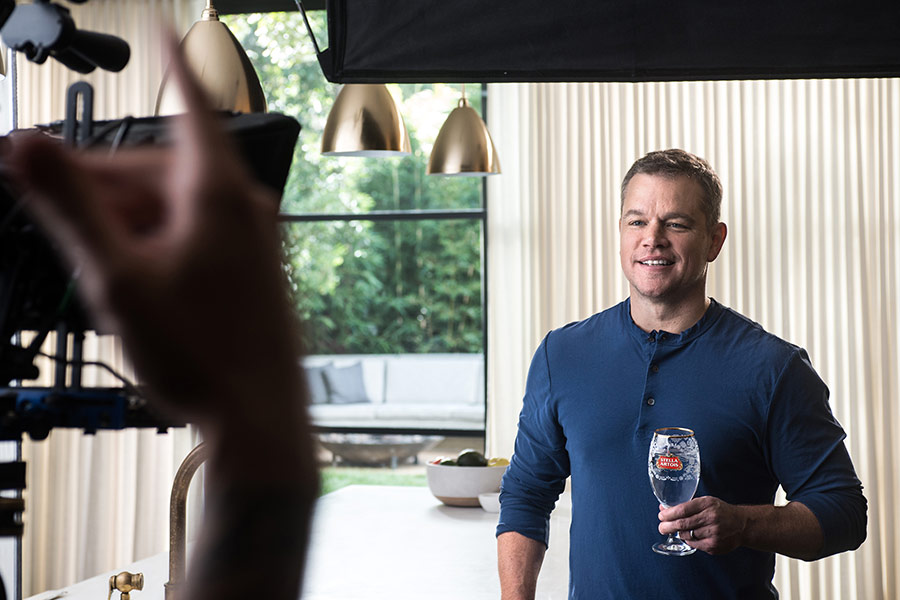
To kick off its fourth annual campaign in partnership with Water.org, Stella Artois is returning to the Super Bowl for the first time since 2011 with a new TV advertisement titled “Taps,” starring Water.org co-founder Matt Damon. The 30 second spot positions water taps and instant access to clean water as something most people in the U.S. might take for granted, while people in the developing world have to walk hours each day to collect water. Showcasing the Stella Artois Limited-Edition Chalice, which has been the centerpiece of the campaign since its inception in 2015, the ad invites viewers to help end the global water crisis by purchasing a Chalice, ultimately giving time back to those whose daily life revolves around the journey to find water.  

“If just one percent of viewers watching the Super Bowl this year purchased a Chalice, we could help provide access to clean water for up to one million people in need,” said Damon. “Now with three simple ways to donate – through the purchase of a Limited-Edition Chalice, a 12-pack, or a pint at a bar – we’re making it easier than ever for consumers to help.”

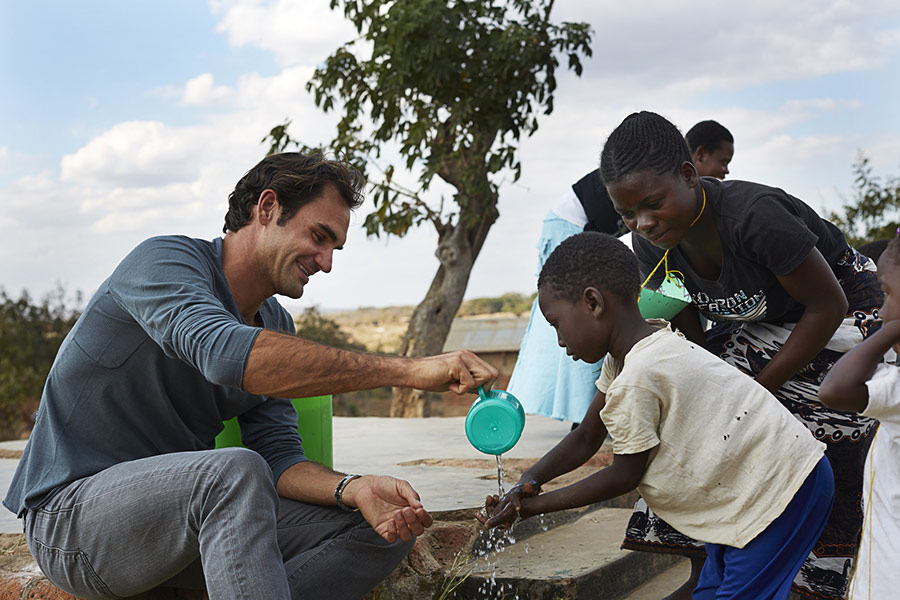
Now in its fourth year, the “Buy a Lady a Drink” campaign was developed by Stella Artois and Water.org to help end the global water crisis and provide an opportunity for consumers to contribute to the cause. To date, the campaign has helped more than 1 million people around the world gain access to clean water. The crisis disproportionately affects women and children, who can spend up to six hours per day collecting water.

Each year the campaign features Limited-Edition Chalices representing countries where Water.org provides support. This year’s Chalices feature unique designs by Silvana Avila from MexicoJanine Shroff from India and Monica Ramosfrom the Philippines. Each design reflects the artists’ experience and artistic interpretation of the global water crisis in their own community.

Global Impact

Last year, Stella Artois and Water.org announced a four-year partnership to help provide 3.5 million people with long-term, sustainable access to clean water by 2020.  The expansion of donation opportunities as well as the reach of the program will help achieve this ambitious goal.

The partnership launched in 2015 in five global markets – the U.S., U.K., CanadaBelgium and Argentina – leveraging Stella Artois’ global footprint to raise awareness and spark action to engage in the cause. The campaign has greatly expanded its reach since its inception, doubling the number of participating global markets to now include 10 countries. MexicoAustralia and South Africa are the newest markets to join; BrazilChile and Uruguay came on board in 2017.

The partnership has enabled Water.org to expand support to new countries like Brazil and Mexico, a country in which, as of 2015, only 14% of the population had access to piped water 24 hours a day. Water.org is already laying the foundation for household level impact in 2019.

“The scale of the Super Bowl audience will amplify our efforts exponentially – in just one day,” said Julie LaGuardia, head of Brand Partnerships at Water.org. “The simplicity of the call to action, coupled with the significant reach and resources that Stella Artois has put behind it, will help us transform the traditional ’cause campaign’ into a powerful platform for global impact.”

To date, Stella Artois has helped provide more than 1 million people in the developing world with access to five years of clean water through the sale of more than 500,000 Limited Edition Chalices, and by directly donating more than $8 million to Water.org.

“Water.org is continually scaling and evolving our model to help end the global water crisis,” said Gary White, CEO and co-founder of Water.org. “The investment that Stella Artois has made in our partnership will help advance these efforts, and help achieve Water.org’s goal to reach 60 million people by 2022.

If you like this, subscribe here for more stories that Inspire The Future.

Dallas Maverick Get’s On His Bike For Puerto Rico Hurricane Relief

ofo, the world’s leading station-free bike-sharing company, and the JJ Barea Foundation, Dallas Mavericks player JJ Barea’s organization that offers economic assistance to non-profit entities in Puerto Rico, has announced a partnership in support of Hurricane Maria recovery efforts on the island.

As part of this collaboration, ofo donated 600 bikes to be distributed throughout Puerto Rico, where public transportation is still severely limited and city infrastructures remain substantially damaged.

The 600 bikes were shipped to Puerto Rico, where the Foundation received, stored and assembled the bikes. 

“Philanthropy has always been at the core of our business, and we’re grateful that this donation of ofo bikes is able to assist in some small way in Puerto Rico’s recovery,” said Chris Taylor, ofo’s head of North America. “We applaud the JJ Barea Foundation for all its hard work and support in the hurricane relief efforts, and we’re honored to partner with such a generous and dedicated organization.” 

If you like this, subscribe here for more stories that Inspire The Future.
ofo is the world’s original and largest station-free bicycle-sharing platform, created for sharing and wanting to make bikes accessible to everyone. To date, they have connected users to more than 10 million bikes in over 250 cities across 20 countries, generated more than 32 million daily transactions and provided over 200 million global users with 6 billion efficient, convenient and green rides. 

JJ Barea is a Puerto Rican-born professional basketball player for the Dallas Mavericks in the National Basketball Association. Barea and his Foundation have demonstrated unwavering support for Puerto Rico in the wake of Hurricane Maria, and he has been active in relief efforts and a regular presence in Puerto Rico over the past few months.

Puerto Rico is home. My family, friends and community are there, and they still need a lot of help to recover from such a devastating hurricane, which is why I’m so thankful for this truly thoughtful donation from ofo and powerful partnership with my Foundation,” said Barea. “Hurricane Maria destroyed many of our roads, people are without cars and public transportation is limited, so getting around the island and having access to everyday necessities is still a big challenge. These bikes will go a long way in assisting Puerto Rico’s rehabilitation, and I appreciate ofo for making that happen.”

If you like this, subscribe here for more stories that Inspire The Future.
0