

Elevating Humanity Through Business Just Got Real

Conscious Capitalism cofounder and chairman emeritus Raj Sisodia, had just given a presentation at the Lead with Love Leadership Summit in Aspen, Colorado, when a woman approached him.

“You and Larry Fink need to meet,” she said before setting the meeting in motion.

Just days before the meeting, Fink, cofounder and CEO of the BlackRock investment firm (pictured above), had sent a letter to the chief executives of the largest public companies, telling them they should focus on value creation for all stakeholders –that they needed to have a larger purpose than making profits – and that they must engage with communities and make a positive contribution to society.

If you like this, subscribe here for more stories that Inspire The Future.

He included a warning: if a business doesn’t act in a way that promotes societal good, “it will ultimately lose the license to operate from key stakeholders.”

“As you read his letter, you saw he was using our language,” said Sisodia, the FW Olin Distinguished Professor of Global Business and Whole Foods Market Research Scholar in Conscious Capitalism at Babson College. He said he couldn’t help but be impressed by Fink and by the BlackRock firm.

First, despite Fink’s clout, Sisodia said that during the course of his 35-minute meeting, it was clear that Fink is a grounded, conscious leader, and “just a regular guy.” Second, Fink has been living Conscious Capitalism principles within his firm.

“He’s creating a different kind of financial firm,” Sisodia said. “It has a culture that is people-centered, and he speaks of emotional connection. People stay there instead of moving on to other jobs, which is the norm in this kind of high-pressure environment.”

Sisodia said he was able to talk to Fink about the Conscious Capitalism movement and even invited him to the upcoming Conscious Capitalism Annual Conference (April 30 – May 2, 2018 in Dallas). While Fink said he was already committed at that time, he wanted to send other top executives.

BlackRock’s influence in the financial community is hard to overstate.

The firm manages more than $6 trillion in investments, making it the single largest investor in the world. Although about $4 trillion of that is invested in index funds, that still leaves $2 trillion in directed investments that could be up for grabs following Fink’s letter.

“They have a lower profile than their reputation warrants,” Sisodia said. “They have the power to influence and inspire, and they want to uplift the whole game.”

As a case in point, Sisodia said that immediately after Fink met with him, he was scheduled to meet with the ExxonMobil board of directors.

Sisodia said Fink’s bombshell letter does not mark an entirely new direction for BlackRock. Rather, the firm has been articulating a similar message for several years. “This year’s letter is the most direct,” he said.

Fink’s letter drew predictable backlash. Fink told Sisodia that at the World Economic Forum in Davos, Switzerland, many CEOs pushed back, saying Fink’s job is not to lecture them but to maximize returns.

But Fink, like those in the Conscious Capitalism realm, told Sisodia that he understands that the best way to maximize returns is to take a long-term view.

And BlackRock, Sisodia said, doesn’t just lecture companies to do better but has a growing stewardship team that helps companies make sure they are focused on long-term value creation for all stakeholders. Currently staffed with about 30 employees, the stewardship team is projected to grow to 70 under the leadership of BlackRock cofounder Barbara Novick. “In spite of the costs of this effort and building a larger team, BlackRock doesn’t charge any extra fees,” Sisodia said.

Sisodia said that stewardship team both helped ExxonMobil Corp. move toward acknowledging climate change and then remain focused on ways to mitigate the issue. After meeting with Fink, Sisodia said he spent another couple of hours with top executives to do a deeper dive into the firm’s culture.

“When people criticize Larry, he can point to his own firm as an example,” Sisodia said. Among other things, BlackRock never trades on its own account, instead focusing on the long-term best interest of clients. That approach has not hurt profitability in the slightest.

BlackRock went public in 1999 valued at about $1 billion. Now it’s worth $90 billion.

“That’s a 28% compounded return to shareholders,” Sisodia said. “That will get your attention.”

BlackRock’s sudden higher profile casts a fresh light on the issue of investor activism. The traditional view, especially among Conscious Capitalists who have gone public, is that activist investors can be a bad thing—especially if the activists are focused on quarterly returns instead of on long-term value creation.

But Fink’s brand of activism, which tracks the Conscious Capitalism model, is noticeably different in both focus and intensity. For one thing, BlackRock doesn’t just meet with boards of directors during proxy season. Instead, it meets regularly throughout the year, Sisodia learned.

Although BlackRock votes with management between 80 and 90% of the time, it’s not merely rubber-stamping decisions. It has already been engaged with management and helped shape the policies and decisions that form the proxies, Sisodia said.

“BlackRock is trying to elevate the whole game, not by intimidation, but by inspiration,” Sisodia said.

Sisodia noted that, although the BlackRock letter is a major development, it will have no direct impact on private companies.

“But there’s comfort in validation like this because for the most part, the money guys aren’t here in the Conscious Capitalism movement,” he said. He added that the prevailing attitude in the investment community is that Conscious Capitalists are a “bunch of do-gooders who don’t know how the world works.”

That attitude is slowly changing. In addition to the rise of purpose-based financial firms like Satori Capital and Gratitude Railroad, mainstream investment banks are seeing the light. Sisodia noted that Morgan Stanley created a fund based on Conscious Capitalism principles. Trading as KRMA (pronounced karma), the Global X Conscious Companies exchange-traded fund invests in conscious, sustainable, responsibly-managed companies. Providing private businesses with a practical framework to implement these principles is the focus of Sisodia’s latest book, Conscious Capitalism Field Guide: Tools for Transforming Your Organization, which was just published by Harvard Business Review Press earlier this month.

Given Fink’s willingness to further engage with the Conscious Capitalism movement and his brash call for greater consciousness in public companies, it feels as though the investment community may be on the cusp of larger change.

But the $6 trillion question is whether the BlackRock letter will accelerate the spread of Conscious Capitalism. Sisodia thinks it may represent a watershed moment.

As he tweeted when Fink’s letter became public:

“This is fabulous—Larry Fink, CEO of BlackRock, THE largest investor in the world ($6 trillion under management), essentially endorses Conscious Capitalism! #tippingpoint”

Geoff Campbell and Aleksandra Corwin are editorial writers with Round Table Companies (RTC), a storytelling company, event production company, and creative agency that takes a unique approach to supporting purpose driven businesses in amplifying their authenticity.

If you like this, subscribe here for more stories that Inspire The Future.

Robots at the Gate: The Future of Work

According to a new report by Barclays, new technology is changing our work and social lives at unprecedented speed and intensity.

Leaps in technological advancement are nothing new, and innovation often results in incredible step changes in the home and the workplace: the printing presses of the 1400s widened access to books (and therefore knowledge) for the first time; the Industrial Revolution’s mechanisation led to an explosion in both industrial output and urbanisation; cars, aeroplanes and the internet have connected people around the world like never before.

If you like this, subscribe here for more stories that Inspire The Future.
 
Now, however, there is a perception that technology has advanced so far and machines are learning so quickly that the concept of ‘human work’ itself is under threat. Are we on the verge of losing millions of jobs to robots, and if we are, what does it mean for the future of human work?

Machines are ascendant – but don’t discount humans

Current advances in Artificial Intelligence and machine learning are being made possible through the confluence of three powerful tech-driven events: the rapid digitisation of the economy, which is creating trillions of gigabytes of data every year (and rising); the plummeting cost of storing all that data; and an explosion in ever cheaper, ever more powerful computing power.

Historical technological breakthroughs often succeeded in eliminating back-breaking and repetitive tasks, allowing us to spend our time and energy on more ‘worthwhile’ activities. Now advances in Artificial Intelligence mean machines are increasingly imitating humans in how they think and act, and are increasingly involved in work that has been exclusively done by people.

However, we don’t believe that robots will completely replace humans in the workplace any time soon. Crucially, people retain the upper hand over machines in two important ways:

Preparing for change

Innovation continues to improve human lives, but technological advances do not always have an unambiguously positive impact.

We’ve learned from history that the application of new technology often leads initially – counter intuitively – to lower productivity, depressed wages and disrupted industries. We argue in Delayed expectations: automation, productivity and wages that the true effects of new, groundbreaking technologies often take decades to improve productivity.

It takes time for economies of scale to kick in on the production side, for consumer behaviour to adapt, for companies using the technology to refine or even change their business models. While business and society catch up, productivity tends to lag, despite relatively low unemployment figures.

Governments, institutions and society at large should all be preparing for the potential economic fall-out by seeking solutions to mitigate the effects of disruption and job and wage polarisation. The concept of a universal minimum income, for example, is currently hotly debated, while taxation on robots has also been proposed by such luminaries as Bill Gates.

The debate around possible solutions will likely continue for years to come. Historically, society has always found a way to adapt to both the beneficial and the challenging effects of technological change. We believe that people will successfully navigate the current period of technological change as they have in previous periods of technological advancement throughout history.

Ajay Rajadhyaksha is a Managing Director and Head of Macro Research at Barclays, based in New York. Aroop Chatterjee is a Director and Head of FX and EM Macro Strategy, Americas.

If you like this, subscribe here for more stories that Inspire The Future.

 

The 10 Worst and Best U.S. Cities For Clean Air

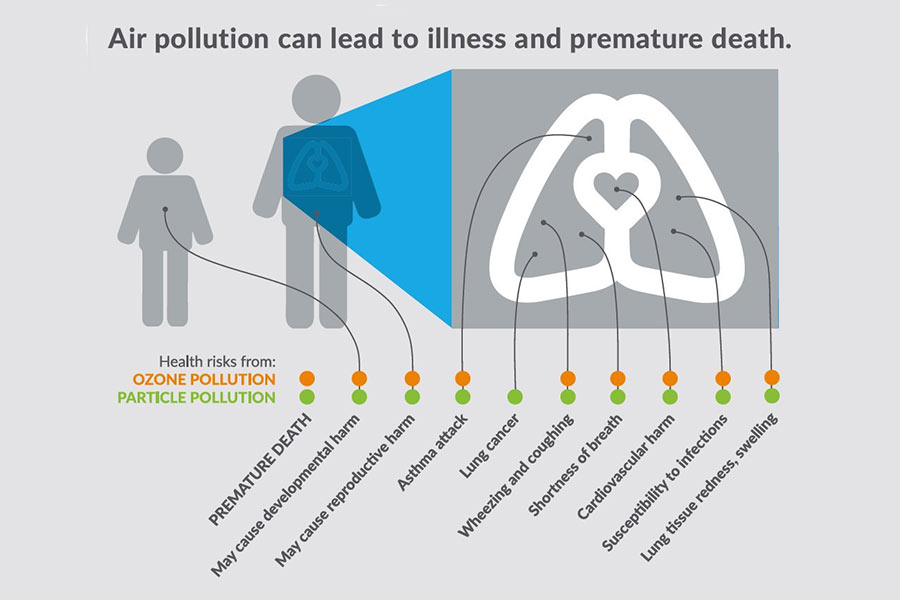
The American Lung Association’s 2018 “State of the Air” report found ozone pollution worsened significantly due to warmer temperatures, while particle pollution generally continued to improve in 2014-2016.

The 19th annual national air quality “report card” found that 133.9 million Americans—more than four in 10 (41.4%) – lived in counties with unhealthful levels of either ozone or particle pollution in 2014-2016, placing them at risk for premature death and other serious health effects such as lung cancer, asthma attacks, cardiovascular damage, and developmental and reproductive harm.

If you like this, subscribe here for more stories that Inspire The Future.

 
“Near record-setting heat from our changing climate has resulted in dangerous levels of ozone in many cities across the country, making ozone an urgent health threat for millions of Americans,” said American Lung Association National President and CEO Harold P. Wimmer.

“Far too many Americans are living with unhealthy air, placing their health and lives at risk. The ‘State of the Air’ report should serve as a wake-up call for residents and representatives alike. Everyone deserves to breathe healthy air, and we must do more to protect the air we breathe by upholding and enforcing the Clean Air Act.”

Each year, “State of the Air” reports on the two most widespread outdoor air pollutants, ozone pollution and particle pollution. The report analyzes particle pollution in two ways: through average annual particle pollution levels and short-term spikes in particle pollution. Both ozone and particle pollution are dangerous to public health and can be lethal. But the trends reported in this year’s report, which covers data collected by states, cities, counties, tribes and federal agencies in 2014-2016, reflect the ongoing challenges to reduce each pollutant in the changing political and outdoor climate.

Inhaling ozone pollution is like getting a sunburn on the lung. It can trigger coughing and asthma attacks and may even shorten life. Warmer temperatures make ozone more likely to form and harder to clean up.

Compared to the previous year, the 2018 report finds that far more people suffered from unhealthy ozone pollution, with approximately 128.9 million people living in 185 counties that earned an F grade for ozone. Of the 10 most polluted cities, seven cities did worse, including Los Angeles and the New York City metro area.

Top 10 Most Ozone-Polluted Cities:


  1. Los Angeles-Long Beach, California 

  2. Bakersfield, California 

  3. Visalia-Porterville-Hanford, California

  4. Fresno-Madera, California 

  5. Sacramento-Roseville, California 

  6. San Diego-Carlsbad, California 

  7. Modesto-Merced, California 

  8. Phoenix-Mesa-Scottsdale, Arizona

  9. Redding-Red Bluff, California 

  10. New York-Newark, New York–New Jersey-Connecticut-Pennsylvania

Unhealthy particles in the air emanate from wildfires, wood-burning devices, coal-fired power plants and diesel engines. Technically known as PM2.5, these microscopic particles lodge deep in the lungs and trigger asthma attacks, heart attacks and strokes, cause lung cancer and shorten life.

The 2018 report covers 2014-2016 data, the most recent data available, and includes the significant wildfires and resulting smoke that swept across the nation in 2016, but not those occurring in 2017. The report grades both daily spikes, called “short-term” particle pollution, and the annual average or “year-round” level that represents the concentration of particles day-in and day-out in each location.

The report finds that during 2014-2016, the year-round particle pollution levels continued to drop, maintaining a long-term trend, with a few notable exceptions, including Fairbanks, Alaska, where expanded monitoring newly identified the highest average levels in the nation. After spiking to record high levels in last year’s report, days with high short-term particle levels also dropped in most locations.


In the 2018 “State of the Air” report, most cities experienced fewer days of spikes in particle pollution, yet 35.1 million people lived in the 53 counties with too many days when particle pollution peaked at unhealthy levels. Bakersfield, California remained the city with the greatest short-term particle pollution levels. Increased heat, changes in climate patterns, drought and wildfires – many related to climate change – contributed to the high number of days with unhealthy particulate matter.

Top 10 U.S. Cities Most Polluted by Short-Term Particle Pollution:

  1. Bakersfield, California 

  2. Visalia-Porterville-Hanford, California 

  3. Fresno-Madera, California 

  4. Fairbanks, Alaska 

  5. Modesto-Merced, California 

  6. San Jose-San Francisco-Oakland, California 

  7. Los Angeles-Long Beach, California 

  8. Salt Lake City-Provo-Orem, Utah 

  9. El Centro, California 

  10. Pittsburgh-New Castle-Weirton, Pennsylvania-Ohio-West Virginia


The data available for the 2018 report show year-round particle pollution levels have dropped across much of the nation, some to their lowest levels yet. However, missing data from areas with invalid monitoring resulted in incomplete estimates of how many people nationwide are at risk from air pollution. According to EPA records, no complete data have been available for the entire state of Illinois since the 2014 report covering 2010-2012.  

In addition, the entire state of Mississippi and Los Angeles County and San Bernardino County in California lacked valid data for year-round particle pollution. The 2018 report, based on available but incomplete data, found that 9.8 million people lived in 16 counties where the annual average concentration of particle pollution was too high. But according to the Lung Association, as a result of the missing data, this likely vastly underestimates the people who are breathing unhealthy levels.

The importance of monitoring became particularly clear in the new ranking of Fairbanks, Alaska. Previously the metro area lacked sufficient monitoring data to provide year-round information. Now, improved monitoring, data revealed the dangerous levels of particle pollution year-round. In fact, Fairbanks is now the city with the highest year-round particle pollution in the 2018 report, up from number 17 in the 2017 report.

“The people of Fairbanks, Alaska, and all Americans have the right to know if the air they are breathing is dangerous. Improved monitoring is a critical step toward clean-up efforts that will save lives,” Wimmer said. “Greater monitoring of air quality nationwide may also identify additional health risks in other locations in the United States.”

Most cities continue to reduce their year-round particle pollution levels, some to their lowest levels yet. This continues a more than decade-long trend, as a result of steps taken under the Clean Air Act to reduce emissions. Despite these advancements, the 11 most polluted cities each violate the Clean Air Act’s U.S. National Ambient Air Quality Standards designed to protect public health.


Top 10 U.S. Cities Most Polluted by Year-Round Particle Pollution:

  1. 
Fairbanks, Alaska

  2. Visalia-Porterville-Hanford, California

  3. Bakersfield, California

  4. Los Angeles-Long Beach, California

  5. Fresno-Madera, California 

  6. Modesto-Merced, California 

  7. El Centro, California 
8. Pittsburgh-New Castle-Weirton, Pennsylvania-Ohio-West Virginia 

  8. Lancaster, Pennsylvania

  9. San Jose-San Francisco-Oakland, California

  10. Cleveland-Akron-Canton, Ohio

“More must be done to clean up the air so that everyone has healthy air to breathe,” Wimmer said. “We need essential pollution monitoring information to safeguard the health of those most at risk of the effects of air pollution, including children, the elderly and those living with a lung disease.”

The “State of the Air” also recognizes the nation’s cleanest cities, and again this year, only six cities qualified for that status. To rank as one of the nation’s cleanest, each city must experience no high ozone or high particle pollution days and must rank among the 25 cities with the lowest year-round particle pollution levels during 2014-2016. Cities new to the list include Bellingham, Washington and Casper, Wyoming. 

Cleanest U.S. Cities (in alphabetical order):

  • Bellingham, Washington
  • Burlington-South Burlington, Vermont
  • Casper, Wyoming
  • Honolulu, Hawaii
  • Palm Bay-Melbourne-Titusville, Florida
  • Wilmington, North Carolina

With this report, the Lung Association calls out Congress and the U.S. Environmental Protection Agency (EPA) for six ongoing threats to the nation’s air quality, including steps to roll back or weaken enforcement of key safeguards required under the Clean Air Act. Those threats include changes to weaken the Clean Air Act itself, undercut the agency’s reliance on health science to inform policy making, and roll back existing cleanup requirements for cars, trucks, oil and gas operations and power plants, including the Clean Power Plan to limit carbon pollution and address climate change.

“The Clean Air Act has saved lives and improved lung health for nearly 50 years,” Wimmer said. “Congress and the EPA are tasked with protecting Americans – including protecting the right to breathe air that doesn’t make people sick or die prematurely. We call on President Trump, EPA Administrator Scott Pruitt and members of Congress to fully fund, implement and enforce the Clean Air Act for all pollutants – including those that drive climate change and make it harder to achieve healthy air for all.”

If you like this, subscribe here for more stories that Inspire The Future.
 

Scottish Heritage Attracts Millions

Scotland’s heritage attractions have hit a record milestone, welcoming more than 5 million people for the first ever time in a single year and boosting economic growth.

Historic Environment Scotland (HES), who manage over 300 Historic Scotland visitor attractions across the country representing more than 5,000 years of Scottish history, are celebrating a 17% increase in footfall from the previous financial year, recording 5,041,297 visitors throughout the 2017/18 financial year.

If you like this, subscribe here for more stories that Inspire The Future.
 

HES is the lead public body charged with caring for, protecting and promoting the historic environment and will deliver Scotland’s first strategy for the historic environment, called “Our Place in Time” – which sets out a vision for how Scottish heritage can be understood, valued, cared for and enjoyed.

It’s a clear sign that countries with a rich heritage or home to historical sites can profit from them if managed correctly. While many entrepreneurs and governments are focused on the “next big thing,” assets that are hundreds of years old may still harbor untapped wealth.

The surge in numbers across Scotland is being attributed to growth in UK, European and overseas visitors, with a significant uplift in Scots visiting sites partly due to a strong membership base of HES that numbers more than 194,000.

The ongoing ‘Outlander effect’ has seen North American visitor figures increasing by 27%, and French visitors increasing by 19% year on year. The sites that have featured in the popular American-British television series Outlander continue to enjoy an uplift in visitor numbers with Doune Castle attracting a massive 227% increase in numbers and Blackness Castle increasing by 182% since 2013.

“Over five million visitors have flocked to our wealth of historic sites across the length and breadth of the country, ranging from iconic attractions such as Edinburgh Castle and Stirling Castle, to landmarks such as Skara Brae in Orkney and Iona Abbey, as well as castles in Scotland’s historic towns such as St Andrews Castle,” said Stephen Duncan, Director of Commercial and Tourism at HES.

“This rise in visitor numbers at our staffed sites has also been complemented by visitor growth at our unstaffed free access properties, bringing the overall total to an estimated 12 million.”

The announcement follows the recent publication of HES’s Investment Plan, which sets out an investment programme to enhance the condition of sites and improve visitor experience, scheduled to run until 2021/22. Significant investment in 2017/18 has seen the upgrade of visitor facilities such as heating, toilets and lighting systems at a number of properties across the HES estate.

If you like this, subscribe here for more stories that Inspire The Future.

 

Crop-A-Porter Wins With Fashion From Crop Waste

From food crops, smart stitches and 3D-modelled clothes, to advanced recycling processes and biodegradable clothes with health benefits.

On March 20, five innovations that can help speed up the shift to a circular waste-free fashion industry and protect the planet were awarded the third Global Change Award, sharing a 1 million euro grant from the non-profit H&M Foundation.

American textile brand Crop-A-Porter came away with the largest grant, 300,000 Euros, allowing them to scale their operations and unlock huge value for the textile and fashion industry.
 
If you like this, subscribe here for more stories that Inspire The Future.

 
Growing textile fiber affects the planet and growing food crops generates millions of tons of plant waste. Harvest leftovers from crops such as oil seed, flax, sugar canes, bananas and pineapples are usually just burnt or left to rot, releasing carbon dioxide and methane gas into the atmosphere. Crop-A-Porta changes this by turning the waste into bio fiber this low-cost closed-loop technology also brings additional income to the farmer. The bio fiber can then be turned into fabrics, resulting in a new sustainable material ready to take the fashion world by storm. 
 
The annual challenge is looking for tomorrow’s game changers, and the third edition attracted 2,600 entries from 151 countries – a truly global and strong movement to create a fashion industry operating within the planetary boundaries. Looking at all entries this year, they provided strong engagement in digitalization, smart processes, and some new and unexpected materials.
 
“The Agraloop will kick-off a new paradigm for natural fiber by levering food crop waste for textile fiber production. We seek to help our industry begin to decouple from cotton as the world’s dominant natural fiber resource,” says Isaac Nichelson spokesperson for Crop-A-Porter. 
 
Besides innovations with potential to have a positive impact on the industry and planet, the Global Change Award is looking for scalability, that the idea is economically sustainable and novel and how well suited the team is to make a difference.
 
Other winners, who received between 150,000 Euros and 250,000 Euros, were  The RegeneratorSweden, Algae ApparelIsrael, Smart StichBelgium and Fungi Fashion, The Netherlands.
 
“The winners show that innovation knows no national borders and can rest in anyone’s head, said Karl-Johan Persson, a board member of the H&M Foundation. “This day marks the start of a one-year innovation accelerator where H&M Foundation, Accenture and KTH Royal Institute of Technology in Stockholm will support the winners to cut years off their timeline, bringing them to fashion and innovation hubs such as StockholmNew York and Shanghai.”
 
The Global Change Award has become the hotspot for early-stage fashion innovation, and today a Trend report is released by Accenture and the H&M Foundation to share lessons learned, findings and trends within circular fashion and open innovation based on analytics performed on the thousands of applications submitted.
 

If you like this, subscribe here for more stories that Inspire The Future.

Men Spend More on ‘Green’ Fashion Than Women

In a world motivated by social cred and “likes,” it comes as no surprise that U.S. consumers on average spend roughly $250 a month on clothes, shoes and accessories. But what you might not expect is that men outspend women when it comes to their closet.

Men spend an average of $310.50 per month on their wardrobe, compared to $187.20 for women and they are also 52% more likely than women to say they care a lot about eco-conscious fashion. Just in time for Earth Day, outdoor lifestyle brand Timberland shines a spotlight on what consumers value most when it comes to “going green” with their wardrobe.

If you like this, subscribe here for more stories that Inspire The Future.
 

Timberland surveyed 1,000 men and women in the U.S. to understand the importance of the environmental impact of their style choices. The motivations behind men’s and women’s behaviors varied, but overall two-out-of-three (67%) consumers report they care at least a little about eco-conscious fashion, with more than half (55%) of consumers saying at least some of their current wardrobe is eco-conscious. 

A few highlights from the 2018 Timberland Wardrobe Values Survey include:

  • A more responsible #OOTD: Two-in-five (41%) consumers say they are motivated to buy eco-conscious fashions because they feel good when they buy something that helps a cause, with another top motivator being knowing the product minimizes its negative impact on the environment (36%).
  • Green humblebrag: For men, the motivation to buy eco-conscious fashions seems to be less altruistic and more self-interested. Roughly 30% buy eco-conscious clothes because they want other people to know they care about the environment (28% vs. 17% of women). In addition, for 17% of men, wearing eco-conscious fashions brings social cred, as they say they are motivated to buy eco-fashions because they like posting their styles on social media (vs. 8% for women).
  • What’s in your wardrobe?: Despite the differences in their wardrobes, men and women tend to agree on the top materials they seek out when shopping for eco-fashion: organic cotton or cotton produced in a way that minimizes impact on the environment (47%); renewable materials (e.g., bamboo, hemp, wood pulp) (34%) and recycled PET (e.g., plastic bottles) (30%).
  • Giving new life to old clothing: Donating clothes to charity is the No. 1 way to get rid of clothes, according to 70% of consumers, with 36% giving clothes away to friends or family and 28% choosing to recycle them. But women have the edge on men when it comes to disposing of clothes in an environmentally-responsible way, and are 14 percent more likely than men to donate old clothes (74% vs. 65%), whereas men are 82 percent more likely than women to throw their old clothes away (31% vs. 17%).
  • Seeing green: Consumers say the top factor preventing them from buying eco-conscious fashions is that they seem more expensive than other products (38%), with not knowing “where to find them” close behind, at 33%. But the interest is clear: nearly four-in-five (79%) consumers wish brands and retailers would offer more eco-conscious styles.
If you like this, subscribe here for more stories that Inspire The Future.
 

How Would America Look Today With Kennedy And King?

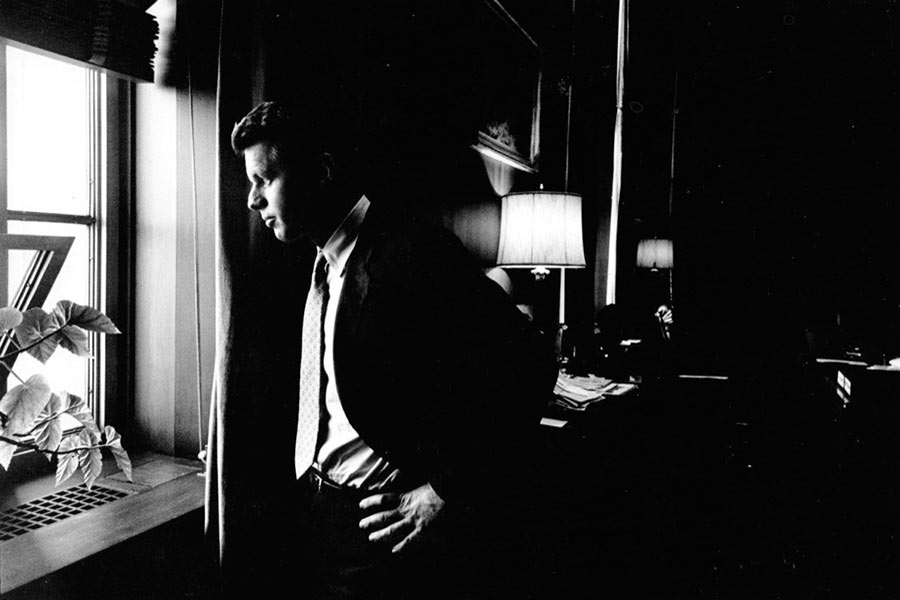
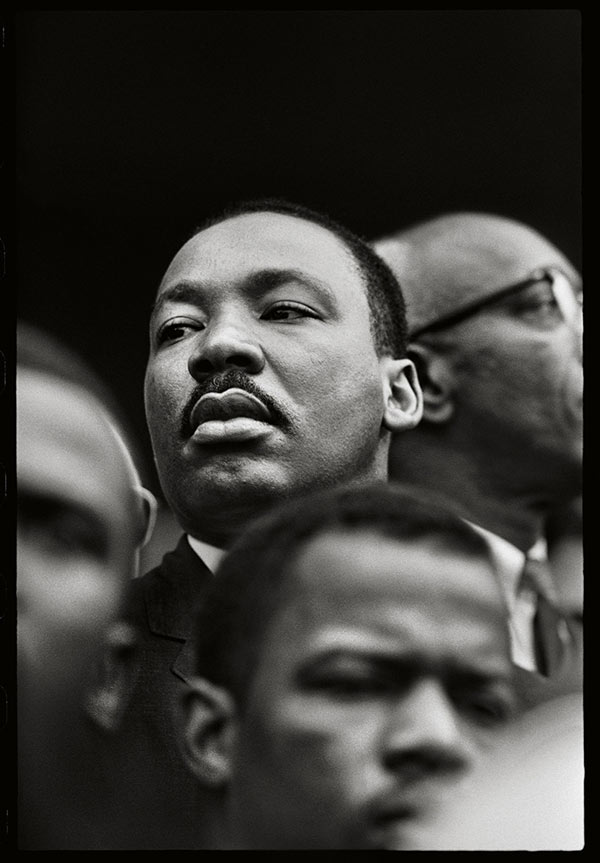
A new photographic exhibition marks the 50th anniversary of the assassinations of Martin Luther King, Jr. and Bobby Kennedy. It wants visitors to ponder what kind of country America would be today if both of these leaders were still with us.

A collection of over 40 photographs by several famed photographers will be on display from April through June that capture various sides of two iconic figures in American history, Martin Luther King, Jr. and Bobby Kennedy. These will include both well-known images as well as rare vintage photographs by such photographers as Jacques Lowe, Steven Schapiro, Lawrence Schiller, Steve Somerstein and others.

If you like this, subscribe here for more stories that Inspire The Future.

The exhibition will run from April through June 2018, marking the 50th anniversaries of the assassinations of these leaders. Dr. King was shot and killed on April 4, 1968 and Bobby Kennedy was shot and killed June 6, 1968.

“As a pictorial narrative of their public lives as social and political leaders, we want visitors to walk away pondering what kind of country America would be today if both of these leaders were still with us,” says Theron Kabrich, gallery cofounder and creative director. “We hope this exhibition encourages reflection that goes beyond one about leadership and events of the past, but just as much or more about leadership and events of the present and future.”

Both King and Kennedy were relentless in their pursuit of justice, not being deterred by challenge but compelled to push back for a greater good and to speak the truth as they saw it with directness and clarity. “I am persuaded,” Kabrich says, “that each in their own way would have continued to be driving forces in the pursuit of justice on behalf of the underserved and neglected to the present day.”

The extraordinary images of these men in various environments, a number of them being shown for the first time, allow some of us to remember and others of us to imagine what they were like, who they were, and why their legacies mean so much even now.

“We all have heroes and heroines who we look up to and admire, figures who inspire us,” Kabrich says. “I believe a few of us, though, actually take inspiration to a level beyond inspiration, to aspiration. These people, leaders of the past and of the future, aspired to actually emulate the person that inspires them, to become like that person. In the case of Dr. King, for example, it was Ghandi.”

The current exhibition will surely inspire visitors during these three months as the walls of San Francisco Art Exchange will be filled with iconic images of two great men. The gallery also hopes the photographs on display will stimulate a few young people to believe enough in their own dreams to aspire to become leaders and change agents of their generation as had been Dr. King and Bobby in their own.

“In some ways,” Kabrich says, “the kids in Parkland, Florida are fearless enough and smart enough to strive for something greater than themselves. How refreshing to see such noble audacity – a characteristic of the men whose images are on our walls.”

If you like this, subscribe here for more stories that Inspire The Future.

Lady Gaga Partners with Staples To Ease Burden on Teachers

Students today face not only academic challenges, but also the emotional challenges of stress brought on by negative classroom environments, according to data from a recent survey by the Sesame Workshop.

In the survey, 86% of teachers and 70% of parents reported worrying that “the world is an unkind place for children.” In addition, teachers face financial challenges to making their classrooms places where students can succeed.

If you like this, subscribe here for more stories that Inspire The Future.

Data from the Education Market Association show that nearly all public school teachers (99.5%) dip into their own money to purchase classroom supplies, and many of them spend as much as $400 per year on basic items.

To help ease the burden on teachers and foster an atmosphere of kindness and tolerance in the classroom, Staples, Inc., is partnering with music icon Lady Gaga to create a series of public service announcements.

The public service campaign includes 15-, 30- and 60-second TV and radio spots in which Lady Gaga encourages positive behavior and attitudes, as well as support for students and teachers in reaching their educational goals.

The PSAs also highlight two charities: DonorsChoose.org, which allows individuals to contribute to more than 25,000 classroom projects for teachers across the country; and the Born This Way Foundation, a nonprofit organization founded by Lady Gaga and her mother, Cynthia Germanotta, to support and empower children, teens, and young adults.

As part of its mission to support education, Staples announced donations of $1 million each to DonorsChoose.org and the Born This Way Foundation.

“I want kids to love themselves, fearlessly,” Lady Gaga says in a video on the StaplesforStudents.org website. The lack of basic school supplies is a chronic problem that can get in the way of children’s learning and achieving their goals, she adds.

If you like this, subscribe here for more stories that Inspire The Future.

Volvo Premiers First All-Electric Truck

Hot on the heels of Tesla, Volvo Trucks has introduced its first all-electric truck for commercial use – the Volvo FL Electric. Mainly targeted at urban areas, it’s ideally suited to cargo transport at night and early mornings, due to its low noise output.

“We’re immensely proud to present the first in a range of fully electrically-powered Volvo trucks ready for regular traffic. With this model we are making it possible for cities that aim for sustainable urban development to benefit from the advantages of electrified truck transports,” says Claes Nilsson, President Volvo Trucks.

If you like this, subscribe here for more stories that Inspire The Future.

With better air quality and less noise in the city, it is possible to plan for housing and infrastructure more freely than at present. An electric truck without any exhaust emissions can be used in indoor terminals and environmental zones. Their low noise level creates opportunities for doing more work at night, thus reducing the burden on the roads during the day.

There is considerable market interest in electric trucks. Many potential customers have questions about the opportunities generated by the new technology and how it can impact their operations.

In order to make the transition secure and smooth, Volvo will offer holistic solutions based on each customer’s individual needs regarding driving cycles, load capacity, uptime, range and other parameters. Such a solution may encompass everything from route analysis and battery optimisation to servicing and financing. Volvo Trucks is also working closely with several suppliers of charging equipment to offer customers high uptime and ensure ongoing productivity.

Backing the Volvo Trucks offer is the Volvo Group’s accumulated expertise in electrified transport solutions. Sister company Volvo Buses has sold more than 4,000 electrified buses since 2010. The technology used for propulsion and energy storage in the Volvo FL Electric has been thoroughly tried and tested from the outset and is supported by Volvo Trucks’ far-reaching network for sales, service and parts supply.  

“From experience we know how important it is that cities, energy suppliers and vehicle manufacturers cooperate in order for large-scale electrification to become a reality. With attractive incentives, agreed standards and a long-term strategy for urban planning and expansion of the charging infrastructure, the process can go much faster,” explains Jonas Odermalm.

Volvo Trucks believes that it is essential to take a holistic view of electrification of the transport sector to handle the ongoing challenges in areas such as electricity generation and batteries.

“For instance, in order to ensure that raw materials for the batteries are extracted in a responsible way, the Volvo Group works with the Drive Sustainability network, which has a special function that monitors this issue. The Volvo Group is also involved in various projects where batteries from heavy electric vehicles get a second lease of life, reused for energy storage. All the questions about handling of batteries have not yet been solved, but we are working actively both within the Group and together with other actors to drive development and create the necessary solutions,” says Jonas Odermalm.

Battery recharging time from empty to fully charged (on fast charge) is 1-2 hours and trucks can also be charged overnight for up to 10 hours. With a range of up to 300 km the first two Volvo FL Electric trucks will be operated by refuse collection and recycling company Renova and haulage firm TGM.

The Off Peak City Distribution project studied the effects of goods transport at night in central Stockholm. By avoiding peak hour traffic the trucks were able to do their jobs in one-third of the time compared to daytime operation.

If you like this, subscribe here for more stories that Inspire The Future.

Yellowstone Turns to Michelin For Rubber Walkways

Yellowstone National Park experiences more than 4 million visits annually. The park’s volume of foot traffic, particularly around the famous geyser, Old Faithful, has put a strain on the existing walkways.

Tire manufacturer Michelin first partnered with Yellowstone three years ago, providing the park with reliable tires for its many recreational and maintenance vehicles. This partnership also helped identify other areas where the company could provide assistance, including answering the challenge of creating new and improved paths that would accommodate the crowds without disturbing the park’s ecosystem.

If you like this, subscribe here for more stories that Inspire The Future.

Now, the goals in creating upgraded walkways around the park’s most popular areas include finding a paving material that is durable but also sustainably produced.

Using recycled tires that Michelin donated to the park, the Michelin Corporate Foundation’s plan involves replacing the aging asphalt paths in Yellowstone with KBI Flexi-Pave, a porous material that allows rainwater and melting snow to drain through the material. This process promotes the natural flow of water, minimizes erosion, and allows water to replenish the geyser basin at Yellowstone’s Upper Geyser Basin.

In addition, Flexi-Pave does not release pollutants into the soil, break apart with wear, or cause significant storm-water runoff.
Flexi-Pave is a composite product made of stone and rubber granules that is chemically inert. The granules create a safe, durable, non-slip walking surface that accommodates wheelchairs as well as walkers. The unique material and design of the Flexi-Pave surface also resists the wear and tear associated with freezing and thawing conditions.

Additional goals of the ongoing partnership between Michelin and Yellowstone include educating the public about the importance of preserving national parks and inspiring similar projects elsewhere.

“We hope that this eco-friendly park walkway will inspire other similar projects that help preserve natural systems,” says Jeff Augustin, Senior Director of Park Projects at Yellowstone Forever, the official nonprofit partner of Yellowstone National Park.

“Yellowstone shares Michelin’s commitment to being a global leader in sustainability for the future,” says Leesa Owens, director of community relations for Michelin North America. “Our partnership has created opportunities for visitors to enjoy the park’s wonders for years to come.”

If you like this, subscribe here for more stories that Inspire The Future.

0