


4 Simple Ways to Make an Impact in Your Community

Inspiration to give back to your community can come from any number of places, from a personal desire to make a difference to fulfilling a graduation requirement for community service hours. No matter the reason or the origin, chances are strong that you can make an impact.

Giving back may be as simple as writing a check to an organization that works to further a mission you care deeply about. Or it may mean lending a hand to put on a fundraising event in your community. Perhaps you have a skill or talent you can share with others in the name of a good cause.

If you like this, subscribe here for more stories that Inspire The Future.

If you’re committed to contributing to your community in a meaningful way, consider one of these ideas to improve the lives of those around you:

1. Spend Time with the Elderly

Seniors often hold wisdom, knowledge and experience that younger generations have yet to accumulate. Yet, as they age, a community’s oldest residents are often left alone. These days it’s less common for family members to live near one another, so “adopting” an elderly resident down the street or at the local senior housing center is a way to help monitor his or her well-being and ensure personal ties to the community are maintained. Not only can this provide a valuable service for an elderly person and his or her family, it may bring you great personal satisfaction as you learn about the community’s history through the eyes of someone who saw it evolve firsthand.

2. Donate to Nonprofits

If you’re concerned your budget doesn’t stretch far enough to make a meaningful cash contribution, there are plenty of other ways you can donate to nonprofit organizations in your community. Volunteer hours or even gently used items like office furniture or supplies are often in high demand. You can even donate by helping your favorite nonprofit uncover new funding opportunities. For example, the America’s Farmers Grow Communities program, sponsored by the Monsanto Fund, provides farmers an opportunity to help a nonprofit of their choice. Eligible farmers can enroll in the program for a chance to direct a donation to a local eligible nonprofit organization. 

3. Be a Mentor

Much as you can gain valuable wisdom from elderly residents, you also likely have your own knowledge that can benefit others in your community. Consider the areas where you excel and explore how your community can benefit. You might put your athletic talents to use coaching a youth sports team, teach scouts a skill for advancement or lend your experience as a human resources professional to an organization that helps disadvantaged individuals improve their employment opportunities. If you’re good with numbers, maybe volunteering as a financial advisor to a local nonprofit board is worth considering.

4. Plant Flower Beds

Making a community better isn’t always about dollars and cents. Simply making your hometown a more enjoyable place to be is a reward you can enjoy along with your neighbors. Special beautification projects such as creating and maintaining flower beds in public spaces can help create a more welcoming, friendly environment. Other ideas include community cleanup initiatives and organizing groups to help with yard work for those who are physically unable.

If you like this, subscribe here for more stories that Inspire The Future.

Disney Empowers Aspiring Young Filmmakers

21 young women from 13 countries will produce and direct digital shorts to inspire the next generation of women.

Disney has announced a new global project giving 21 talented young women from different corners of the globe the chance to make digital shorts telling the stories of inspiring female role models. The #DreamBigPrincess series will be shared across Disney’s global media platforms as part of a campaign to unlock up to a $1 million donation to Girl Up, an initiative of the UN Foundation.

If you like this, subscribe here for more stories that Inspire The Future.
Each aspiring filmmaker will be paired with an inspirational interview subject spanning a diverse range of professions. The young women will capture the stories of these incredible individuals, along with their advice for achieving success. Academy Award® Winner Jennifer Lee is just one of the talented women who will be featured in the series.

“Using the journeys of characters like Anna, Elsa and Moana to inspire kids to dream big is at the very heart of what all of us at Disney do,” says Jennifer Lee, director/writer of “Disney’s Frozen” and CCO of Walt Disney Animation Studios. “The #DreamBigPrincess series is the perfect extension of that vision, providing a powerful platform for the next generation of aspiring filmmakers to create content about the women who have inspired them.”

Plans for the series were unveiled at the United Nations Foundation’s Girl Up Leadership Summit in Washington D.C., where the 21 participants took part in a unique workshop to give them the tools they can use to make their digital shorts. Each video will be shot on iPhone X and will be edited using Final Cut Pro X running on MacBook Pro. The aspiring filmmakers will also participate in a unique workshop including hands-on training from Apple technical experts, mentoring sessions with female-led production company Summerjax and creative inspiration from Disney storytelling veterans.

Following the workshop, the young women will embark on their own creative journeys back in their home countries with ongoing mentorship from Disney, Apple and Summerjax, before their videos debut across certain social media in October, helping drive an up to $1 million donation from Disney Worldwide Services to Girl Up.

“Each young #DreamBigPrincess director brings her own unique perspective and experience but what they all share is a passion for storytelling and making a difference in the world,” says Zenia Mucha, Senior Executive Vice President, Communications, The Walt Disney Company, “Our goal is to offer them the right mix of practical skills and creative inspiration to bring their vision to life.”

“The resources provided by Disney to empower girls and help them learn about the importance of storytelling will give them the confidence they need to achieve their own goals and advocate for others,” comments Girl Up Co- Executive Director, Melissa Kilby. “Last year’s donation from Disney has already allowed us to extend the network of Girl Up Clubs outside the US by more than 50 percent, representing a huge opportunity for thousands of girls to gain the leadership skills that will help achieve future goals.”

This year’s initiative builds on the success of the #DreamBigPrincess Global Photography series, which saw 19 female photographers from 15 countries capture inspiring stories of real world women and girls to encourage kids to reach for their goals. The precedent-setting campaign reached millions of families around the world unlocking a $1 million donation to Girl Up in less than five days. The images from the multi-award-winning campaign were also honored with an exhibition at the United Nations Headquarters in New York City.

If you like this, subscribe here for more stories that Inspire The Future.

Lamborghini’s Latest Innovation: A Bicycle

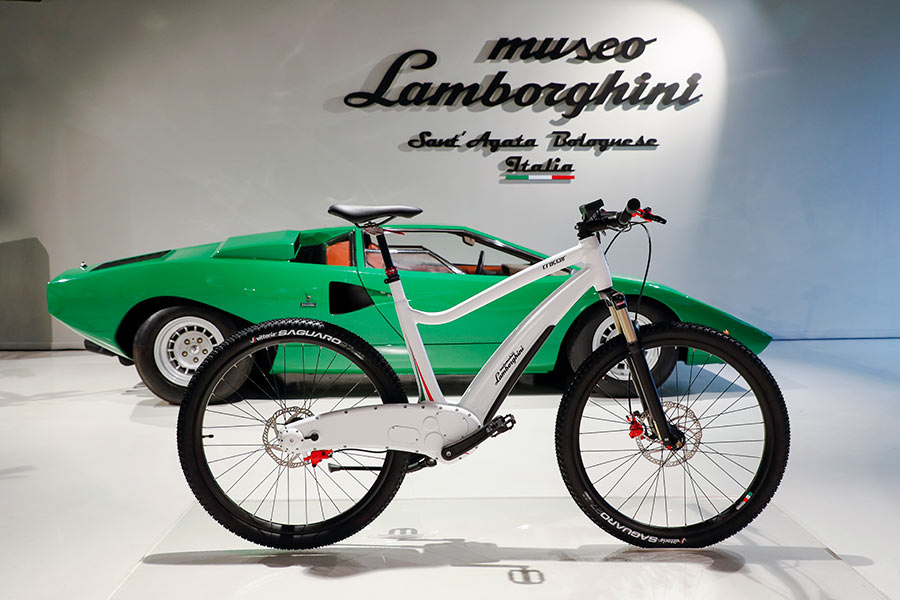
Want a Lamborghini but not the guilt of destroying the environment? Automobili Lamborghini has signed a partnership with Italtechnology to develop the first range of E-Bikes bearing the Lamborghini name.
 
In keeping with Lamborghini tradition, the battery powered E-Bikes are masterpieces of advanced technology, aimed at an exclusive and demanding clientele. Conceived, designed, and built entirely in Italy, the bikes are the result of over five years’ research and feature technological innovation, cutting-edge design, and four international patents.
 
 
There’s not much detail on the bike itself from the legendary Italian car manufacturer, but a battery powered bicycle is certainly a symbolic step in the right direction and signals a greener future.
 
The new E-Bikes will initially be available in two versions: an MTB designed for a dynamic lifestyle and outdoor activities, and a version dedicated more to speed for customers who want ultimate performance on the road, with a bike that can quickly reach the maximum speed allowed by current regulations.
 
For both models the battery life in “eco” mode is a maximum of 90 miles (145 km) and for full recharge the time is four hours. As with their cars, the Lamborghini bike is not expected to be cheap, starting at around $17,000.
 
The exclusiveness of the bikes is completed by the “Ad Personam” program, which customizes the livery in the paint colors – usually reserved for Lamborghini’s super sports cars. The first two versions of the pedal assist E-Bikes bearing the Lamborghini will become available online and through selected specialized retailers worldwide. 


70 Years Later, a Classified Ad Still Changing Lives

Ann Greenberg could never have imagined the impact of the two-line classified ad she placed on July 9, 1948, in the New York Post. It literally changed lives.

Greenberg, whose son Jerry had developmental delays, placed the ad which read: “To mothers of retarded children, ages, 4-8: Are you interested in helping to start a day nursery for your children?” She received 10 responses. Within a year, through word of mouth and a few newspaper articles, hundreds of families united.

If you like this, subscribe here for more stories that Inspire The Future.

The New York Post ad was just a beginning for Greenberg, who was determined to help children with disabilities and their families. It was the foundation for one of New York City’s largest organizations supporting children and adults with disabilities – AHRC New York City (AHRC NYC). The agency was founded in 1949 as the Association for the Help of Retarded Children.

Seventy years after placing the ad, Greenberg’s legacy continues. AHRC NYC empowers the people it supports and their family members. Today the agency offers an array of services, including preschools, school age, high school and college programs for young adults.

In 1970, the agency opened the first group residence in New York State in Manhattan. It started the first sibling network in 1985 to support brothers and sisters of people with disabilities.

Greenberg, who died in 2006, recalled in a 1998 interview, taking Jerry to the doctor who delivered him. “‘His brain has been injured. He’s retarded,'” the doctor said. ‘”Go home and have another baby.'” She told the doctor that was impossible, as her husband was serving in World War II. She was only interested in helping her baby. The doctor told her, ‘”We can’t help him.'”

With no services available for her son, she launched a letter writing campaign that blossomed into the parents movement in New York City – eventually becoming AHRC NYC. Their children were considered ineducable, and treated as outcasts. The parents supported one another, and worked to provide their children with opportunities to grow.

Gilda Lindenblatt, 80, recalls being the only woman to live in AHRC NYC’s Fineson Residence in Manhattan. She became a staunch self-advocate, making trips to Albany to speak about key issues in the field with legislators. Today she enjoys discussing current events at her day program

Lindenblatt remembers Greenberg visiting the residence on its one-year-anniversary. “She was very nice,” she said, adding that Greenberg asked her to help her in the mailroom at the agency’s central office. Lindenblatt speaks confidently, though she says she wasn’t always that way. “If anything comes to me now, I’ll speak up and say what I have to say,” she said. Greenberg would be proud.

If you like this, subscribe here for more stories that Inspire The Future.

Responsible Culture – Not Charity: My Lessons on CSR Leadership

Three years back, when my CEO asked me to take on the project of tying together the various Outreach and Community programs that were going on within our organization under one umbrella CSR program, I thought…”Wow! Where do I start?”

Now, when I reflect and see how a three-year-old organization has integrated social responsibility as a key part of the organization’s culture. I thought of sharing some of my learning during this journey and from my inspirational CEO

If you like this, subscribe here for more stories that Inspire The Future.

1. Be Authentic – Not only for me but it was important for our leadership to be active with their ISR. This means that the most senior leaders must talk about CSR and commit their own time to volunteering and related activities. Lead by example, and lead by acknowledging publicly, and often, the importance of the CSR effort. Believe me, if it is not authentic, it shows!!!

2.  Learn to say No – There are plenty of issues at hand ranging from Hunger, Health, Education, women empowerment, and so forth, but how can we adopt a focused approach to social responsibility? I decided that we needed to narrow our focus to something the majority of our team felt passionate about. A recurring theme was the fact that we all agreed that supporting better education for underprivileged children is one fantastic and impactful way of creating a better world. Saying ‘no’ to social causes is not something that comes naturally to me, but I realized that staying focused will create a better impact in the long run.

3. Build Responsible Culture – Not Charity: Organization waits for being more profitable to start their social responsibility program, but this was not the case in my organization. I had a great leadership team, who backed me in building responsible culture into our corporate strategy. We started social responsibility from the very first year of our operations, and everyone believed that giving back to the society should be a cultural thing and not mere a checkbook philanthropy.  We created a sustainable road-map for five-years for the sustainable development of 100,000 children by 2020. I am happy that all of us started believing in our mantra “Think Sustainable – Act Responsible.”

4.  Rethink, Reinvent, Rewire – I had to reinvent myself and be creative in making CSR work for our employees. Work often seems nonstop for people in the era of digital, and making time or finding time to volunteer may be harder than ever. But on the other hand, technology and human ingenuity make people more flexible than probably at any time in history. If some of our employees could not go to a school to tutor children, we used Skype – or invited school kids into the office for digital day/field visits.

5.   It’s Everyone’s job – The new generation – the Millennials, who make up for a significant share of the market, are entering the society in force and they have very different priorities. They do not want to be talked at; they want to be engaged in conversation and to co-create solutions. We realized that an enterprise with a true sense of the value and importance of CSR is one where everyone employed understands their company’s commitment towards social responsibility, acknowledges its value, and participates to whatever degree they can. Last year, we conducted an internal survey among-st the millennial employees asking about the three things that inspire them to be a part of Brillio; and undoubtedly, CSR was amongst the top three. This is mainly due to the inclusion of the employees in our initiatives and challenging them to strive better each day.

6.   Run it like a business function – If you can’t measure it, you can’t manage it. Profit and philanthropy have always had enjoyed a curious relationship. Historically, Philanthropy has often been enabled by profit. However, profit has also sat at odds with philanthropy in many cases. As with everything else business-related, CSR also needs to have measurable outcomes. For CSR to be sustainable, we should communicate how it is good for the business and the community.

7.   Communicate to Motivate– And finally, always communicate and motivate: I mentioned earlier the importance of leadership’s example when it comes to volunteerism and corporate social responsibility. This was one of the toughest challenges for our CSR effort, but it was also the most powerful approach. As people say, you have to walk the walk and talk the talk. Sound CSR practices are also about making a sound, resonating, driving dialogue and conversations to deliver return –in terms of social progress, the bottom line (profit) and brand perception.

As boardrooms around the world begin to feel the presence of Social Responsibility in their agenda, CSR continues to present a whole host of opportunities and challenges for businesses. And it’s going to be a continuous learning process, and I am hopeful that Corporate Social Responsibility will bring communities and corporations together in ways that will make our future better!

Abhishek Ranjan has a 12 year history of Corporate and Development Sector experience and currently leads the Banking Industry Marketing, CSR, and Sustainability for Brillio Technologies. He set up the Sustainability and CSR department for Brillio with a vision to help 100,000 underserved young minds by 2020.

If you like this, subscribe here for more stories that Inspire The Future.

5 Ways Brands Can Fight Fake News

There’s no escaping the ever-growing threat of the “fake news” label – for media, and potentially as a huge PR crisis for communicators.

According to Cision’s State of the Media Report, journalists said that regaining trust amidst the rise of misinformation and fake news is one of the greatest challenges facing the media this year. Ninety-one percent of journalists report that the public has lost trust in the media over the past three years.

PR professionals and communicators face the same challenge as the media and must be careful to avoid even the appearance of false or deceptive content. But that’s nothing new to them. Communicators have always understood that transparency and clarity benefits their brand story. That’s how they retain the trust of audiences, who accept branded content so long as they have a full view of what it is and who it is from. That’s how communicators retain the trust of the journalists as well.

Journalists surveyed in the State of the Media Report rated press releases and story leads as the #1 most important PR resource. Earned media opportunities and media coverage rely heavily on brands’ storytelling integrity. Without it, a brand jeopardizes not only their relationships with the media and their customers, but they also risk backlash and damage to the brand.

Arm yourself with these five guidelines, supplied by PR Newswire, that will ensure your organization maintains credibility with your audience:

1. Straightforward Headline

As the gateway to your content, your headline should be clear and engaging. It should also be an honest teaser of what’s to follow, in order to maintain trust. If you make a promise in your headline, be sure you fulfill that promise in your content. And it’s usually best to include your company or brand name, so it’s clear to journalists and your audience who is originating this news.

2. Clear Attribution

Embrace your brand’s perspective and write clearly from that viewpoint. Attribute any statements of analysis or opinion to your organization. Audiences are more likely to trust your content if you’re upfront about who it’s coming from. This extends to quotes as well, which enrich a content piece, provide easy copy for journalists to use and adds a “human element” to the story.

3. Identifiable Source

Include a note identifying the “Source” organization within every release. Along with clear attribution within the release text, that “Source” tells the media and other readers the company or group responsible for the information. 

4. Available Media Contact

Your media contact should be a real person, with a working phone number and an email address. Journalists prefer not to be directed to an 800-number or a website for information – that makes their job harder, and makes it less likely they’ll cover your news.

5. Authentic Voice

Once you’ve gained your audience’s trust through the above tactics, work to maintain it. How? Be firm in telling the whole truth and don’t exaggerate. And stick to your organization’s realm of expertise. There are times when it makes sense for a company to join in on a conversation about a timely topic, like when a financial institution writes about a recent change to the tax code.

That’s valuable thought leadership. Just make it clear who your organization is, their connection to the topic, and why audiences should see you as an expert.

Once your content is ready to be shared, connect with a trusted distribution partner to help you engage new and existing audiences and build out a distribution strategy that helps enhance your brand’s credibility and visibility.


Give Back to Society or “You’re Finished,” Major UK Recruiter Warns Business

British companies need to put ethics at the heart of their work to survive in the 21st century, said the head of a leading recruitment agency which adopted a social mission last year, as an array of scandals erode public trust in business.

The 59-year-old Cordant Group, with revenues of 840 million pounds ($1.12 billion), said in September that it will start reinvesting most of its profits to benefit society not shareholders – making it Britain’s largest social enterprise.

If you like this, subscribe here for more stories that Inspire The Future.

“For us to operate effectively in a future environment, an ethical core to all we do will be essential,” Phillip Ullmann, who heads the London-based Cordant Group with the job title of chief energiser, told the Thomson Reuters Foundation.

“As the population demands that standard, we can only operate against it.”

Britain is seen as a global leader in the innovative social enterprise sector, with about 70,000 businesses employing nearly 1 million people last year, according to Social Enterprise UK, which represents such firms, up from 55,000 companies in 2007.

“If you don’t make this transition, you’re finished,” said Ullmann, who has led the family-owned company for two decades.

“The next generation will not work for you, will not purchase products from you … We are seeing it now. We can offer well-paid jobs to people, they’ll ask to know a bit about the organisation and they’ll refuse the job.”

Trust in business in Britain has fallen to 43 percent from 49 percent in the last five years, a survey by the marketing firm Edelman found in January, with excessively high executive pay, tax avoidance and lack of transparency as the main drivers.

Other scandals – such as Facebook’s sharing of users’ personal data without their consent and the collapse of the British construction firm Carillion – have also contributed to public wariness about big business, Ullmann said.

Parliamentarians described Britain’s largest construction bankruptcy as a story of “recklessness, hubris and greed”, with Carillion executives more concerned with protecting bonuses than finding problems at the firm.

“Capitalism hasn’t worked,” said Ullmann, whose firm sends 125,000 temporary staff a year to work for 5,000 clients including Amazon and Tesco.

“There is a need for a new model and that is social business.”

Cordant has capped executive salaries at 20 times that of the lowest paid worker and put a limit on shareholder dividends, while also promising a staff profit-sharing scheme.

It will reinvest most of its profits in education and healthcare programmes that will have a positive impact on society, the company said on its website.

($1 = 0.7515 pounds)

By Lee Mannion @leemannion, Editing by Katy Migiro. 

If you like this, subscribe here for more stories that Inspire The Future.

UEFA’s #EqualGame Has Nothing to do With Politics or Religion

The city of Kyiv in the Ukraine was the focus of worldwide attention last month with the UEFA Champions League final taking place at the NSC Olimpiyskiy Stadium between Real Madrid and Liverpool.

A big part of the competition this season has been UEFA’s #EqualGame campaign which aims at celebrating the positive effects that football brings to communities while highlighting the power and importance of diversity, inclusion and team work on and off the field.  

If you like this, subscribe here for more stories that Inspire The Future.

Every month, as part of this campaign, UEFA focuses on a person from one of its 55 member associations as a great example of how football promotes inclusion, accessibility and diversity.  

One example is Olesksander Fomichov, football coach and professional businessman who lives in Ukraine. Fomichov is no stranger to adversity. He was forced to abandon his home  following the outbreak of civil unrest in 2014. But he is able to understand that there is power in unity and the bonds of good relationships. He states: “Keeping faith in people is the most important factor for the development of every country and the world as a whole. We can build a sustainable society and use football as one of the tools that brings us together.” 

Echoing this sentiment is Andriy Shevchenko, one of Ukraine’s greatest footballers and head coach of the national team. Shevchenko says: “Football is an international game. It has nothing to do with politics or religion. It’s a game that’s accessible to all and it should be pure, not only in the top competitions but also among children.”

Among the spectators at the Champions League final was the Mayor of Kiev and former professional boxer Vitali Klitschko, who said: “It’s very important to spread the message of social inclusion and diversity… and we want to do this through sport. Like Nelson Mandela said: sport has the power to change the world.”

If you like this, subscribe here for more stories that Inspire The Future.

Angel Tank, The ‘Shark Tank’ for Purpose-Driven Investors Announces First Winners

New event draws a talented pool of social entrepreneurs and top Bay Area venture investors at SEED 2018

Real Leaders, the world’s first sustainable business and leadership magazine, and ImpactAssets, a nonprofit financial services firm that increases the flow of capital into investments delivering financial, social and environmental returns, have announced the winners of Angel Tank, a first-ever event that matches impact investment with social entrepreneurs seeking solutions to pressing global problems.

If you like this, subscribe here for more stories that Inspire The Future.

Modeled after “Shark Tank,” the reality TV business series, Angel Tank debuted at the SEED 2018 Conference and featured leading Bay Area venture investors as judges, and a select group of six social entrepreneurs who competed for prizes to help bring their world-changing ideas to market.

“We are thrilled to have the opportunity to support and showcase this exceptional group of social entrepreneurs,” said Real Leaders Founder Mark Van Ness, an active impact investor and advocate for gender-balanced leadership. “Their fresh ideas and inspiring vision are helping to transform business as a force for good – for profit, people and planet.”

And the winners are:

• Legworks, Inc., a Toronto and Buffalo-based social enterprise that is revolutionizing access to high quality prosthetics for amputees around the world. Winner of The Angels Choice Award, a $10,000 cash investment prize selected by the panel of angel judges.

• Roots Studio, which digitizes the work and stories of traditional artists in India, Indonesia, Panama, and Jordan, among other regions, enabling artists to participate in the global economy without having to be in an urban center. Winner of The Audience Choice Award, a $10,000 cash investment prize for the venture that receives the most votes cast live during the competition.

• Countable, a political media company that helps voters contact their elected representatives about issues that matter. Winner of the Real Leaders’ Spotlight Award, a media package that was selected by attendees who cast votes for social entrepreneurs participating at SEED 2018. Countable is also a custom impact investment being made through ImpactAssets.

• In addition, a tech-enabled Live Investing Marketplace raised more than $25,000 for the entrepreneurs. The Forum allowed attendees to make tax-deductible investments of $25 or more into social ventures through the ImpactAssets Giving Fund.

Other social entrepreneurs participating in the Angel Tank included Designing Justice & Designing Spaces, which use innovations in architecture, design, and real estate development to attack the root causes of mass incarceration; Thrive Natural Care, creator of the first regenerative supply chain in the personal care industry; and Yellow Leaf Hammocks, a handwoven hammock company that is breaking the cycle of extreme poverty through sustainable job creation by hiring artisan weavers and their families in developing countries. The six ventures also received offers of help and advice from over 100 attendees at the event. Angel Tanks also featured a powerhouse panel of venture investors who evaluated and counseled social entrepreneurs, including:

• Anders Aabo, Sorenson Impact

• Jorge Davy-Mendez, Kapor Capital

• Keith Ippel, Spring Activator

• Sayuri Sharp, SV2

• Beth Stelluto, Gnu Foundation

“The opportunities for investing in social enterprises has never been greater—or more critical,” said Tim Freundlich, President of ImpactAssets. “Angel Tank represents a smart and surprising platform for uniting investment capital with world-changing ideas. We look forward to the next Angel Tank, which will take place around SOCAP 2018 In October.”

Real Leaders is the world’s first sustainable business & leadership magazine that aims to inspire better leaders for a better world; a world of far-sighted, sustainable leadership that helps find solutions to the problems that 7.5 billion people have created on a small planet. They want to ensure that the next generation of leaders, in all spheres of influence, are exposed to the best and brightest minds in the hope that they are inspired to find profitable business solutions that benefit humankind. Real Leaders advises and positions leaders to thrive in the new economy.

ImpactAssets is a nonprofit financial services firm that increases the flow of capital into investments delivering financial, social and environmental returns. ImpactAssets’ donor advised fund (“The Giving Fund”) and field-building initiatives enable philanthropists and other asset owners and their wealth advisors advance social or environmental change through impact investment and philanthropy. The Giving Fund currently has upwards of $450M in assets from a community of more than 1,000 donors.

If you like this, subscribe here for more stories that Inspire The Future.

Blind Skateboarder Dan Mancina on His New Vision For The World

Dan Mancina cannot visually make out a ledge or ramp but that doesn’t stop him from tackling them on a skateboard.

The American has just 5% vision but, with the use of a cane, he has continued to perform some of the tricks he revelled in before losing his sight. Mancina was just 13 when a routine eye check-up saw him diagnosed with a degenerative eye disease, Retinitis Pigmentosa, which has robbed him of 95% of his vision.

If you like this, subscribe here for more stories that Inspire The Future.

“Losing my sight and my skating on top of that was like ripping your heart out,” he recalls. “It changed my whole attitude… towards life.First, I couldn’t leave my house or my block because I would get lost. And ever since I was seven that’s who I was… a skateboarder. I just lost it for a while.”

So, he hung up his skateboard and moved on to other avenues in his life, like becoming a massage therapist.

But a one-off return to the board for a video stunt helped retransform his life. Recording clips of him doing things blind people shouldn’t be able to – a darts bullseye, a mini golf hole in one and some skateboarding – went viral and he’s never looked back.

By his own admission, it has not been plain sailing. “Now, skating is more scary and more demanding. Trying to get hyped up to skate something is harder. But I do it because once you get in that flow state where I’m only concerned about getting that trick. There’s nothing else that will get in the way of landing what you’re trying.


“Then I’m not thinking about being blind but how am I going to do this and make it happen. Everything else fades away and it’s the best feeling you can have.”

The Michigan native can now effectively only see perception, shadows and contrast but, having gone from trying to work out “what does a blind person do?”, he now has his heart set on building a skatepark for blind people. His remarkable skating prowess is now done on feel alone, using his cane to figure out the right place for take-off.

As he puts it, “I may have lost my sight but through skateboarding I’ve gained a vision and I want to share that with the world.”

If you like this, subscribe here for more stories that Inspire The Future.


0