Grain Bag Handling Fee Helps Recycling Pay For Itself

Saskatchewan farmers who purchase large plastic bags for grain storage will see a change when they buy bags after November 1. That’s when Saskatchewan’s new province-wide grain bag recycling program’s Environment Handling Fee (EHF) becomes effective.

The non-refundable EHF of 25 cents per kilogram will be added to the price of the bag based on weight and size. On a bag that is approximately 125 kg, the EHF would start at about $31 and increase proportional to the total weight of the plastic in the bag.

If you like this, subscribe here for more stories that Inspire The Future.

Most grain bag users won’t be buying bags at this time of year but will see the EHF when they purchase bags for 2019 storage.

The calculation of the EHF is based on a six-year pilot recycling program initiated by the provincial government. The government-funded pilot was operated by Simply Agriculture Solutions. Over that time, more than 3,600 tonnes of grain bags were recovered for recycling.

In July 2016, the province created The Agricultural Packaging Product Waste Stewardship Regulation establishing a regulated recycling program for grain bags similar to Canadian stewardship programs for tires, electronics, paint and oil containers. Like those, the Saskatchewan grain bag recycling program transfers financial responsibility for proper end-of-life management to businesses that supply grain bags into the market. A farmer who imports grain bags from outside of the province also falls under the same obligation.

The purpose of the recycling program is to offer farmers a responsible option for returning these single-use, large, heavy bags for recycling. End markets in North America and Malaysia shred, wash and pelletize the plastic and sell it to manufacturers who make products such as plastic garbage bags.

The EHF will be used to cover the cost of collecting the bags at designated collection sites, transporting them to end markets and administration, after deducting end-market revenues.

Cleanfarms, a not-for-profit industry stewardship organization with extensive experience in recovering agricultural plastics across Canada began administering the program when it evolved from the pilot to a permanent program. With funding assistance for the 2018 program provided, in part, by Saskatchewan’s Ministry of Agriculture through the federal-provincial Growing Forward 2 initiative, it has established more than 20 collection sites throughout the province where there is heavy grain bag use. It will add 15 collection locations in 2019.

“We know Saskatchewan farmers want to do the right thing for their land and communities, and that they’re prepared to recycle their grain bags. Since the permanent program began, we’ve shipped more than 800 tonnes of grain bags to end markets with that much or more already collected and ready to be shipped out soon. That represents thousands of grain bags that will be recycled into new products as opposed to disintegrating on farm fields or buried in landfill,” said Cleanfarms General Manager Barry Friesen.

Estimates suggest that 15,000 to 20,000 grain bags are used in Saskatchewan every year.

If you like this, subscribe here for more stories that Inspire The Future.


Corporate Activism is on the Rise

Looking at the role of corporations in society, we have entered a new era. The model previously taken for granted, one guided by a philosophy of passive shareholder value creation, has increasingly been called into question.

It has been replaced by more activist models of corporate citizenship, such as corporate social responsibility (CSR) and triple-bottom-line economics, as well as newer models of an even more activist mode. In the previous model, a corporation’s good was seen to have been derived from its ability to enrich shareholders, whose wealth would in turn trickle down through the rest of society.

By contrast, corporate activism as we observe it uses the bedrock of company value systems to actively fight obstructions in the market and issues in society at large that run against these value systems, thus going even further than CSR and triple-bottom-line models, which seek to balance financial results with environmental and societal ones. Social equilibrium (especially on financial matters) is one thing; corporate activism, on the other hand, often puts otherwise rational economic firms at risk of eroding short-term shareholder value —hitherto their raison d’être, at least for those companies publicly-listed.

This new breed of corporation is driven as much by market forces, such as consumer consciousness and pressure, as it is by strong, value-based leaders.

Thomas Friedman’s “hot, flat, and crowded” world, combined with hyper-transparency and market speed, creates conditions favorable to firms that stand for something, who are likely to enjoy a competitive social advantage that may translate into higher long-term returns and customer loyalty.

While the empirics of this assertion need to be tested, the maxim that “you either stand for something or you stand for nothing” is as true for companies as it is for people. The B Team, a corporate pressure group started by Richard Branson and Mo Ibrahim, among others, has as its sole purpose the creation of a consensual pathway for firms that wish to adopt an activist model where profits and purpose are not in conflict. The B Team’s vision is to catalyze a movement of business leaders to drive a better way of doing business for the well-being of people and planet.

Customers driving CSR and transparency

Should corporations focus on the current CSR trend to market their goodwill, or is there a way to focus marketing efforts on consumers who make individual decisions based on CSR? The U.S. Bureau of Labor Statistics reports that 90 million Americans identify themselves as “conscious consumers.” This fact, combined with average annual consumer spending, points to a conscious consumer market of $3.2 trillion in the United States alone.

The vast majority of consumers — over 72 percent — have reported that they will actively seek a brand that aligns with their values if price and quality are equal. Matt Colbert, the CEO of Spend Consciously, a company building mobile applications to show consumers CSR data, says, “Consumers want to know more than whether a corporation is socially responsible. They want to make purchasing decisions based on their values and understand which companies are not aligned with their values.”

Consumers require transparency from corporations that claim to practice CSR because their individual values determine their purchasing decisions. This new group of consumers will change companies’ top and bottom lines and force them to stand for something.

When companies stand for something

In observation, there appear to be two types of activist firms: reactive, and proactive. Neither type of company is merely paying lip service to social or value-based issues; they are genuinely investing capital, clout, and reputation in the drive for change. What distinguishes the reactive model, then, is the tendency to address issues of social and moral responsibility only as the response to a crisis, real or perceived. The garment industry’s response to the collapse of the Rana Plaza factory in Bangladesh in 2013 is an example of reactive activism.

Firms such as Benetton and Zara, whose garment tags were found in the rubble, quickly backed voluntary codes of conduct in their sub-supply chains. This is an extreme example of vicarious liability that is produced in a connected world where tragic images instantaneously influence consumer sentiment and stock prices. In short, some people are reluctant to truck and barter with an enterprise they deem to be “evil,” and in an increasingly transparent world, evil is “stickier” — the connections of a corporation to businesses, governments, or individuals operating in a criminal or immoral fashion are increasingly difficult to obscure.

Starbucks, under the former leadership of Howard Shultz, became a paragon of proactive corporate activism, at times to the detriment of shareholders and short-term economic value. During the paralytic fiscal cliff debacle in Washington, Mr. Schultz took a stance individually and under the firm’s banner against corporate campaign finance and political action committees (PACs). He controversially vowed that Starbucks would not support any political campaign and would lean on its peers and business partners to likewise abstain.

In response to rising racial tension in the United States in 2016, Starbucks launched its “Race Together” campaign with full-page ads, newspaper inserts, and in-store communication. While this campaign has drawn both ire and mirth, the authenticity of the effort and the fact that it shows the “tone at the top” at Starbucks are hard to question. While few people want their barista to talk to them about race relations, it is of broad public interest when large corporations take a stance on matters of national import.

Apple is perhaps the clearest example of a firm whose corporate activism is not only creating above-market shareholder value, but is also contributing materially to causes that Apple cares about. Its activist evolution has seen the firm move from reactive to proactive approaches. Several years ago, as news broke of poor workers’ standards and suicides at China’s Foxconn, Apple’s largest supply chain partner, Apple reacted by publishing a groundbreaking annual supply chain report. The report was uncharacteristically transparent, not only for Apple but for the tech industry as a whole, and it not only underscored standards throughout the supply chain, but also served as a model for the industry, thereby creating a first-mover advantage in supply chain corporate activism. Instead of being punished with falling share prices, Apple gained economic momentum.

Apple’s Tim Cook, the first openly gay CEO of a major public company, has openly taken on controversial religious freedom laws. His grounds for this open attack are not that legislation will harm Apple’s commercial activities in the market, but rather that it is inconsistent with the company’s value system; therefore, the company will take the unusual risk of potential harm by opposing the law. Similarly, Salesforce Inc. paid for its Indiana-based employees to relocate if they chose. In an era of activist firms, company neutrality is decreasingly seen as a valid option.

Case studies in corporate activism are as plentiful on the political right as they are on the left. Chick-fil-A and Beretta, a gun manufacturer, made seemingly illogical corporate choices in the name of company values on gay marriage and gun control, respectively. While the rise of corporate activism speaks to the inherent divisiveness in the American public, many activist firms are not merely pandering to their base, but rather standing for issues that are consistent with their company value systems. Ikea’s actions in Russia served as a stark example of corporate values increasingly becoming immutable and penetrative, rather than remaining superficial marketing words on a wall.

When faced with energy extortion, corruption, and bribery in 2010, Ikea went off the grid in Russia by installing its own power supplies for its stores. While quitting the market altogether would have been a Pyrrhic victory, Ikea forged a middle path where profit and purpose were in line.

The role of corporate activism in society as a whole will only become more relevant. In a time where we face a deep and increasingly intractable tragedy of the commons in infrastructure, intellectual capital, and investment flows, corporate activism can be an important change agent. However, firms and their leaders would be wise to remember that values matter most when they are least convenient, and that the perception of convenience or inauthenticity can greatly undermine the engendering of consumer goodwill.

A tech company facing a shortfall of engineers would be right to take a stance on improving the quality of and access to education while working on immigration reform. Similarly, educational institutions would better uphold their often lofty values if they worked to bring tuition inflation in line with the market’s purchasing power. And as American companies shelter more than a trillion dollars overseas, one wonders if the rise in corporate activism will encourage self-initiated moves by corporations to repatriate this capital, in an effort to arrest the decline of American competitiveness.

By Dante Disparte and Timothy H. Gentry.

Dante Disparte is the founder and CEO of Risk Cooperative a specialized strategy, risk and capital management firm located in Washington, D.C. He is the resident expert on risk and economic competitiveness at the American Security Project, a member of the influential Consensus for American Security and a founding member of the Business Council for American Security.

Timothy H. Gentry is President of Perfecta, a Software as a Service (SaaS) company providing Global Communications, Security, and Virtual Private Cloud services. He has extensive experience advising and leading companies, helping them build their brands and grow their businesses in global markets.

Timberland’s New Creative Director Underscores Remade, Reduced, Recycled

Timberland, known worldwide for its iconic yellow boot and passion for the outdoors, has announced a partnership with British designer Christopher Raeburn, who will serve as Global Creative Director for the brand. Raeburn owns a label of the same name, which is synonymous with responsible, intelligent fashion design.

Raeburn will be a key stakeholder in developing Timberland’s global creative vision; ensuring a holistic design approach across all product categories, marketing and in-store environments, alongside elevating the brand’s commitment to responsible sourcing, inclusivity and community.  

If you like this, subscribe here for more stories that Inspire The Future.

The British designer is known for an ethos that encompasses three key pillars – Remade, Reduced, Recycled – which complement Timberland’s longstanding commitment to make products responsibly and steadily increase its use of recycled, organic and renewable materials over time. Raeburn also heralds craftsmanship, innovation and utility as central to his design philosophy, again creating a natural and authentic connection to the Timberland brand.

As creative director, Raeburn will partner with Timberland’s global product, marketing and innovation teams to deliver a forward-thinking look and feel that pushes design boundaries while honoring the brand’s outdoor heritage. The first full collection under Raeburn’s vision, across men’s and women’s, will be fall/winter 2020.

“Timberland has a strong foundation in craftsmanship and innovation; now it’s time to elevate our brand vision through the lens of design,” said Jim Pisani, global brand president, Timberland.  “Christopher Raeburn is a true visionary, who shares our ethos of responsibility and brings to the table a fresh, modern design sensibility. Together we will really push the boundaries of where Timberland can go as a brand, and we’re excited to get started.”

“I’ve been watching the Timberland brand for many years and have always been drawn to its commitment to be a responsible business,” said Raeburn. “I see an incredible opportunity for Timberland to break out and put responsible, innovative design at the centre of the brand’s creative strategy. It’s an exciting moment to join forces with Timberland;  a company set to evolve following decades of good work. I’m honored to be partnering with a company with such strong values and I’m truly excited to be making a difference on a global scale.”

Timberland and Raeburn first collaborated on a global apparel capsule collection that debuted earlier this year at London Fashion Week and launches in stores and online today. In line with his REMADE philosophy, Raeburn scoured street markets and second-hand shops to find vintage Timberland items that he then meticulously deconstructed and remade into iconic, contemporary pieces for the runway. These pieces served as inspiration for the Timberland x Christopher RÆBURN capsule collection of outerwear, pants, shirts and t-shirts that were recently launched. Each piece in the collection incorporates a range of eco-conscious materials including organic cotton and recycled PET (derived from plastic bottles), to minimize impact on the environment.

If you like this, subscribe here for more stories that Inspire The Future.


Electric Race Cars: Learning to Drive All Over Again

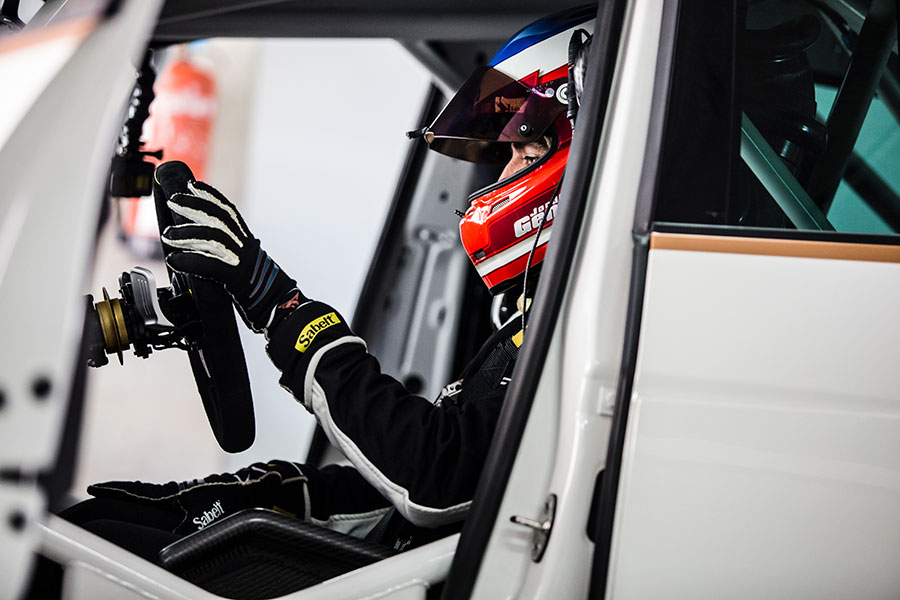
A socket, a battery weighing almost half a tonne and 200 kilos of dry ice every day in the box at the race track. These are some of the features that have emerged with the rise of electric race cars, and the new models have completely changed the way racing teams do their work.
 
Engineer Xavier Serra, mechanic Jordi Martí and race driver Jordi Gené of sports car brand CUPRA, explain the keys of this transformation during a day of testing with an e-Racer:
 
Learning how to drive all over again: With 30 years of experience, CUPRA driver and ambassador Jordi Gené admits that getting behind the wheel of an electric race car “implies learning from scratch”. “The driving style is completely different and now you have to use other parameters in order to know t what speed you’re driving, how to negotiate a corner or the right time to apply the brake”, he adds. For example, this vehicle’s greater weight and different sound change the references received by a driver while driving. As it is able to reach 100 km/h in 3.2 seconds, Gené assures that the “the feeling of acceleration of the e-Racer is much more forceful, and the adrenaline rush is even bigger”.
 
200 kg of dry ice every day: During one of the laps, an indicator displays a warning that the driver has to return to boxes to cool the battery. Cooling it down with dry ice is one of the jobs of the mechanic. Furthermore, the engineers also have new strategies on their hands: “It’s not just about being the fastest; now we have another factor to consider: energy management. We must learn how to monitor the temperature and the range”, explains team leader Xavier Serra. In this sense, positioning the 450 kilo battery “was one of the biggest challenges we had to face” when developing this model. The team had to distribute the volume of the battery underneath the car in order to maintain its balance and functionality.
 
A new ritual: “After working for more than 20 years in this profession I never would have thought I could charge up a race car with a plug”, says CUPRA mechanic Jordi Martí while he gets the e-Racer ready to exit the box again. Even the tools he uses are different. Now he has a set of specially designed instruments to withstand high voltage, such as gloves made with insulating material that can resist up to 1,000 volts.
 
The future of motorsport: “The arrival of the electric vehicle to racing signals the beginning of a new era”, concludes Xavier Serra. Being a part of the team that has developed and is testing the first wholly electric racing touring car in the world “is like being a part of a historic moment”, says the mechanic.  “It’s a very interesting professional challenge”, adds Gené.
 

Leadership Lessons From Professional Ice Hockey

Former ice hockey goaltender Helmut de Raaf played an incredible 114 times for Germany on the world stage as well as winning 11 German national championships. With a host of 14-20-year-olds now benefitting from his extensive experience, he explains why creativity in sport wins and how you can apply this to business too.

The 56-year-old went on to train the Jungadler Mannheim to 10 championship titles and now spends his time guiding young hopefuls at the Red Bull Ice Hockey Academy in Salzburg’s Liefering district towards a professional career.

If you like this, subscribe here for more stories that Inspire The Future.

Where do you get your main inspiration from?

I receive my most important inspirations from people in different worlds – from trainers from different kinds of sport, but also from teachers from innovative schools or from interesting artists. In acting, for example, the director describes their vision of a scene, lets the actors act and tells them afterwards what was good about it – and then everything starts again from the beginning. The actors play the same scene five, six, seven times until they feel that the scene is ready.

When everyone believes they know how the scene should be performed, the director says, “OK. Now, play your own thing”, and that’s when it starts to get interesting. This is what the Red Bull Ice Hockey Academy is all about. Our players gather experience in training in order to create something new from it.

What should be the trainer’s priority?

A trainer, in my view, gives his players the tools in order for them to solve problems, but above all else, he gives them the confidence to find their own solutions. The necessary creativity resides in every human being. It’s fun to try out and go individual paths. All trainers should enable our players to live out their creativity, to fully tap their own intelligence. They should do what they have never done before: to skate around the goal and shoot the puck inside from behind. A scoop in an unexpected moment. A shot at the shoe of the defender, which surprises the goaltender. It doesn’t matter if it’s happening with us on the ice or with you at your workplace. If anyone can try something new and is able to fail, then a culture is established which can take everyone to the next level.

What benefits does a company receive from letting their employees be creative?

They create unexpected surprises and that is always an advantage – if it works. What are we waiting for in soccer, in ice hockey? For the toy that nobody saw coming. A pass through the legs, pushing the puck back because the succeeding defender in front of you has more momentum. Spinning in a circle in order to let the opponent run into the empty wall. What kind of start-ups are successful? Those whose ideas nobody had before. Naturally, new ideas bring forth new risks – they could fail.

You could always be the sucker. But if I don’t try, don’t practice, don’t work on my confidence to also be creative in critical situations, then I run a risk of stagnating and with me also the whole group. The task of the coach is to supply people with confidence, to make them reveal their innermost core. That’s true for sport, for art but also for school and for life. During the last decades in ice hockey, teams played by very strict systems. This is over now.

Can you highlight an example of letting creativity blossom and why you need to persist with it?

It is the last minute of the game and the score is 2:2. We attack, a player takes the puck, and rushes to the opponent‘s side goal, loses it, we run into a counter-attack and lose. Whose fault is it? The player who lost the puck? No, all players who stood on the ice! Because the one player didn‘t purposely make this mistake, but a chain of actions led to this mistake. Nobody was available for a pass. The other players didn‘t protect him enough from behind. He took the risk wanting to decide the game since the other previous tries didn’t work. In a team, it cannot be just one single player’s fault.

Every single player had several opportunities to prevent this seemingly hopeless situation. If you know that there are many people behind you, that have your back, then you can also take risks in good conscience because you know that you will not be alone when something doesn’t work out. The role of the modern trainer – and that of every leadership personality – is the one of a facilitator rather than authoritarian despot. The bellowing boss, who gives individuals a scathing castigation, is a figure from the past.

How do you prepare everyone to take these creative risks?

Before you can start, you need to make sure which path you will take together and make sure that everybody is on board with the current course of action, even those who had different opinions. Intelligence and a sense of responsibility from everyone is a prerequisite. This applies to the ice hockey players as well as to the trainers or to any other group dynamical process. It’s very important that everybody trusts one another to speak out their minds in order to keep the spirit of free discussion alive. This is the only way you can find out if your ship is going in the wrong direction. One direction is good and necessary but one also needs the courage to leave the current course – but only together as a team.

What is the greatest danger to a positive, creative approach?

The greatest danger is success. When everything appears to work out too easily, you are not learning anything anymore and give others the chance to catch up. This can be seen at big companies and also within sport organizations. It always helps to inject new and fresh ideas. Try introducing three or four new players and new co-trainers. All this changes the fabric of the team and gets everybody going.

How do you identify which people need more help than others?

Everyone is a human being and we try to maintain their character and not turn them into robots. In Mannheim we had a player who had a very bad body language. We spoke to him about it and he wasn’t aware that was doing it consciously. What did we do? We confronted him with himself. Normally, the last person to show up at the arranged meeting point had to perform a task: to sing a song, crack a joke, dance. Harmless things raise the mood and moral of the team. This time, I gave the task to him and the next time and the time after that. At the beginning he naturally wanted to refuse, but after a couple time he began to enjoy his exposed position. After a couple of years, he developed into a real good player and great guy.

Are players the finished product when they leave you?

FC Barcelona has a similar selection process where they give the kids a ball and search for the hungriest ones, but admission into the academy is just another first step of a very long journey. A couple of them understand that they are only standing at the starting line and jump right into it. A few believe that they already accomplished something, just because they managed to get in here. This is a massive mistake! They also haven’t reached anything when they exit the academy at age 18. This is just the next starting line, just like a successful high school diploma or a university degree is also just another beginning.

If you like this, subscribe here for more stories that Inspire The Future.

How to Report on the SDGs: What Good Looks Like and Why It Matters

Four in ten of the world’s largest companies reference the UN Sustainable Development Goals (SDGs) in their corporate reporting. But there is not yet an established process, benchmark or standard for companies to follow when reporting on their SDG-related activities. Many companies are unsure how to report on the SDGs, where to start and what good SDG reporting looks like.

KPMG’s study aims to help by proposing quality criteria for SDG reporting which readers can use as a guide. The KPMG report also helps readers benchmark their own organization’s reporting against global leaders by analyzing SDG reporting from the world’s 250 largest companies.

The study also includes case studies of several companies that are leading the field in SDG reporting and offers tips and advice from their reporting professionals.

This study will be valuable to sustainability, corporate responsibility and communications professionals with responsibility for their organization’s SDG reporting. Investors, asset managers and ratings agencies with an interest in environmental, social and governance (ESG) information may also find this study helpful to understand what information they should be looking for and requesting from the companies they invest in.

DOWNLOAD THE FULL KPMG REPORT HERE

Readers will learn:

  • What good SDG reporting looks like
  • How the world’s largest companies are performing
  • Which companies are doing it well and what they can teach others

Key findings include:

  • Only one in ten leading companies has reported a business case for action on the SDGs or has set specific and SMART business performance targets related to the SDGs
  • The SDGs most commonly prioritized by businesses are Climate Action (SDG13), Decent Work & Economic Growth (SDG8) and Good Health & Wellbeing (SDG3)
  • The least commonly prioritized goals are Life on Land (SDG15), Zero Hunger (SDG2) and Life Below Water (SDG14)
  • Three quarters of companies that report on the SDGs discuss the impact their business has on the goals, but reporting is largely unbalanced. Most companies discuss their positive impacts but not the negative
  • Four in ten companies that report on the SDGs include the global goals in their CEO and or Chair’s message
  • Only one in five reporting companies reports on any of the 169 individual SDG targets set by the UN

DOWNLOAD THE FULL KPMG REPORT HERE


Serena Williams: Financial Abuse is Domestic Violence Too

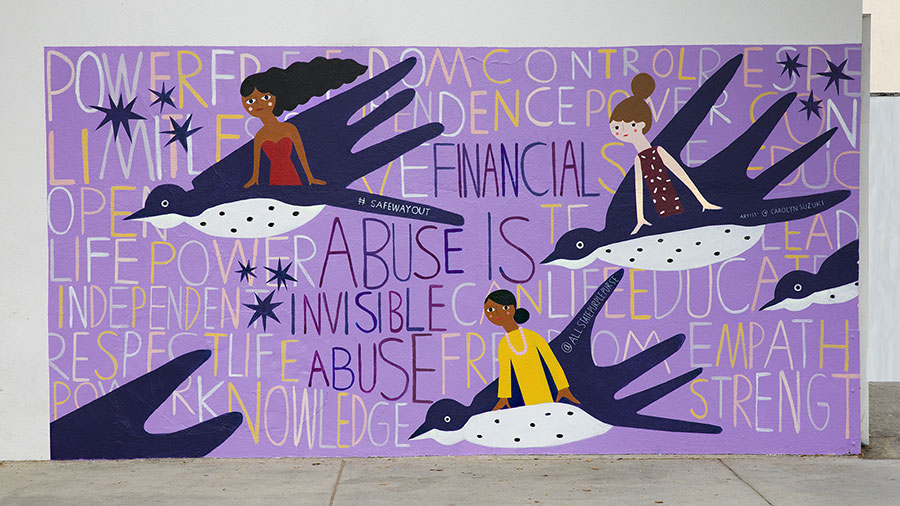
Not all abuse is visible. The Allstate Foundation has teamed up with tennis champion and Serena Williams to raise awareness of financial abuse – a type of abuse that happens in 99% of domestic violence cases. Yet, nearly 50% of Americans don’t know about it.

Titled “Invisible Weapon,” the new video aims to bring awareness to financial abuse, a controlling tactic frequently used by domestic violence abusers and one of the primary reasons victims stay in or return to abusive relationships. The urgent call for support for domestic violence survivors coincides with the start of the Allstate Foundation Purple Purse® Challenge, which takes place 2 – 31 October.

https://www.youtube.com/watch?v=zK23R3Tyfz4&feature=youtu.be

Propelled by a powerful narrative from Williams, “Invisible Weapon” dramatizes the differences between the clear visual signs of physical abuse and the invisible signs of financial abuse, exposing the hidden challenges victims face. The video closes with a call-to-action for people to help empower survivors in their communities.

If you like this, subscribe here for more stories that Inspire The Future.

“For more than a decade, The Allstate Foundation has put a spotlight on this devastating issue, stood up for the victims who have been silenced, and given hope to the survivors trying to break free,” said Vicky Dinges, Allstate’s senior vice president of corporate relations. “Everyone needs to care about this pervasive issue. With Serena joining us to deliver this important message in ‘Invisible Weapon,’ we hope more men and women will speak up about domestic violence and financial abuse and be compelled to end it – once and for all.”

From restrictions on spending to ruined credit, the signs of financial abuse are often invisible, and many people don’t even know it exists. According to a 2018 national public opinion survey conducted by The Allstate Foundation, nearly 50 percent of respondents are unaware that financial abuse is a form of domestic violence.

“I’m proud to speak up for women who can’t use their voices, and let them know we’re working to end the cycle of abuse,” said Williams. “I hope that after viewing the video, people will be more aware of the hidden signs of financial abuse and they’ll understand the need to help those who’ve been burdened by it.”   

New research has found that 1 in 3 Americans think domestic violence is a taboo topic, a 10-point increase since 2014. The study also revealed that nearly half of Americans are not familiar with financial abuse as a form of domestic violence, when in fact it’s one of the top reasons victims can’t “just leave.” Financial abuse tactics include preventing victims from working or keeping them from accessing bank accounts, credit cards or cash.

Championed by The Allstate Foundation, nearly 300 domestic violence nonprofits from across the U.S. are participating in the 2018 Allstate Foundation Purple Purse Challenge. Now in its fifth year, the annual fundraiser coincides with National Domestic Violence Awareness Month. Funds raised by participating nonprofits will go toward providing life-changing services for survivors and their families, such as financial aid and financial empowerment, emergency shelter and child care, and food and transportation.

To support the nonprofits’ fundraising efforts, Williams designed a limited-edition purse. This year’s unique design is a suede and leather purple backpack, which is a first of its kind for Allstate Foundation Purple Purse.

“A purse is symbolic of a woman’s financial domain. We’re thrilled Serena Williams took that to heart when designing the purse for the 2018 Allstate Foundation Purple Purse Challenge, and we’re confident it will encourage an even greater number of people to get involved and support the participating nonprofits,” said Dinges.

If you like this, subscribe here for more stories that Inspire The Future.

George Clooney and HP Partner on Syrian Film

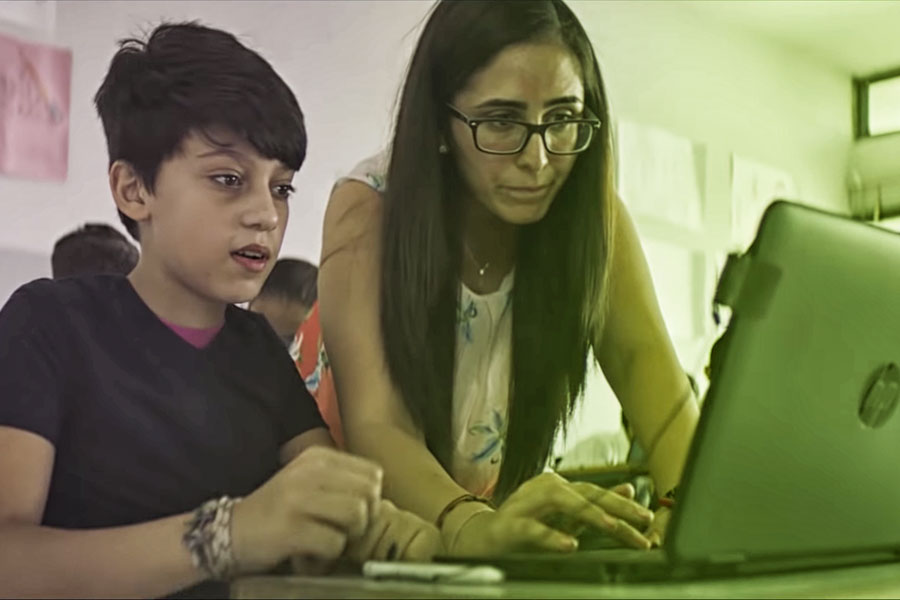
A new film narrated by George Clooney, in conjunction with HP, tells the story of Syrian refugee girls rediscovering their dreams.

If you like this, subscribe here for more stories that Inspire The Future.

The new film brought together HP, the Clooney Foundation for Justice, UNICEF and Google.org in a creative partnership to improve the lives of thousands of students.

Launched on the International Day of the Girl, the powerful film titled, A Generation Found, tells the story of two young Syrian girls living in refugee settlements in Lebanon who regain access to quality education following years of uncertainty. 

More than 65 million people around the world have been forcibly displaced, a record high since World War II, according to the U.N. Refugee Agency. Five million of those have been displaced from Syria since 2011, and more than a million are now living in Lebanon. An estimated 200,000 of these refugees are children. Only a small number of refugees – less than one percent of 17.5 million in 2016 – will ever be resettled.

Four years ago, Marah, a 12-year-old fourth grader, and her family were uprooted by the violence in Syria. And Rawaa, a 12-year-old second grader, was living with her family in the countryside near the southern Syrian city of Aleppo when the fighting broke out and forced their displacement. Marah and Rawaa were at risk of becoming part of the “lost generation” of Syrian refugees who might grow up without the basic human right of education.

But now, as the film reveals, thousands of young Syrians living in Lebanon are getting back to school. Education plays a critically important role in creating opportunities and enabling a more just, equitable and inclusive society. HP and its partners are supporting the broader goal to enable better learning outcomes for 100 million people by 2025.

Through this unique partnership, new technology is being used in nine public schools across Lebanon, from Beruit to the Beqaa Valley, and will reach nearly 3,500 Syrian refugee students, as well as thousands of Lebanese students and teachers as the program is now deployed for its first full school year. The nine schools often serve Lebanese learners in the morning, and then operate a “second shift” to serve Syrian students.

HP is also providing teacher training, curriculum planning support and – a first for these students – laptops, which will be used daily in every classroom. By equipping classrooms with the latest educational technology and giving teachers the proper training and tools, HP and its partners are providing new ways of learning for not just the students who attend second shifts in the afternoon, but for all of the students in each of the nine schools.

With the culmination of more than a year’s work between the organizations in Lebanon, HP is celebrating and amplifying the voices and stories of strong girls and refugees around the world. They also seek to shift mindsets and reinvent the way people think about refugees. 

If you like this, subscribe here for more stories that Inspire The Future.

13-Year-Old Develops Cancer Treatment

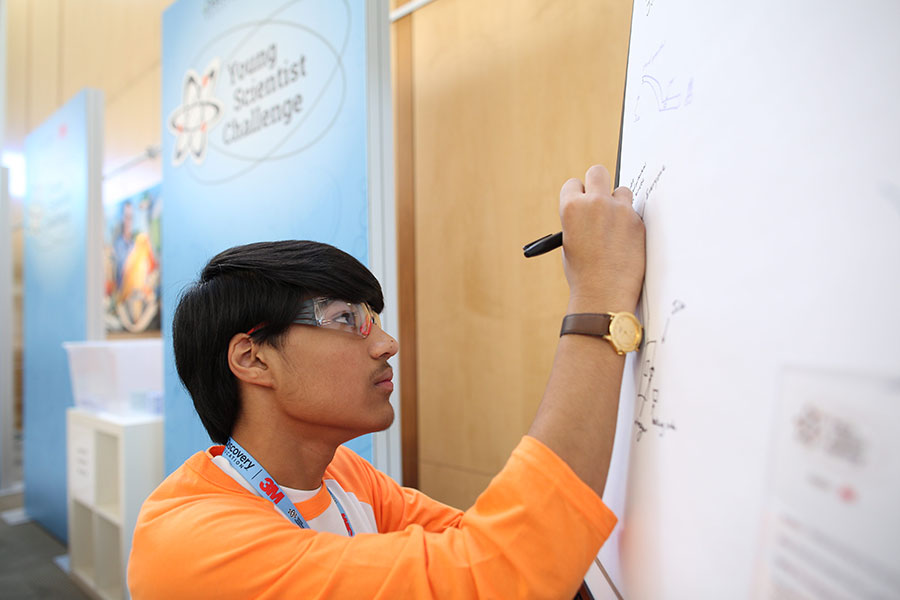
Discovery Education and 3M have named 13-year-old Rishab Jain (above) the winner of the 2018 Discovery Education 3M Young Scientist Challenge for creating an algorithm to make pancreatic cancer treatment more effective.

Jain’s algorithm uses artificial intelligence to accurately locate and track the pancreas in real-time during MRI radiotherapy.

If you like this, subscribe here for more stories that Inspire The Future.

Pancreatic cancer is the third-leading cause of cancer-related deaths in the United States, according to pancreatic.org. An inherent challenge of radiation treatment for pancreatic cancer resides in targeting the pancreas itself. Firstly, it is often obscured by the stomach or other nearby organs, making the pancreas difficult to locate and second, breathing and other anatomical changes may cause the pancreas to move around in the abdominal area. As a result, radiotherapy treatment can inadvertently target and impact healthy cells.

Jain developed and tested his algorithm using images of the human digestive system, and found it could correctly detect the pancreas with a 98.9 percent success rate. The innovation aims to improve accuracy, reduce invasiveness and increase efficiency during treatment, resulting in better quality of life and chance for survival among patients.

A seventh-grader at Stoller Middle School in Portland, Oregon, Jain competed alongside nine other finalists during a live competition at the 3M Innovation Center in St. Paul, Minn. He was awarded the title of “America’s Top Young Scientist” and received a $25,000 prize.

During the summer, the finalists had the exclusive opportunity to work with 3M scientists to develop their innovations as part of a unique mentorship program. Jain was paired with Dr. Döne Demirgöz, a 3M corporate supply chain, product development and research expert who takes innovations developed in 3M labs and brings them to the marketplace.

The finalists presented their inventions to an esteemed panel of scientists and leaders from both Discovery Education and 3M. In addition, they competed in two other challenges that combined multiple 3M technologies to solve a real-world problem.

“All of the finalists for America’s Top Young Scientist embody the same curiosity, creativity, and passion that 3M uses when we apply science to life,” said Paul Keel, senior vice president, business development and marketing-sales, 3M. “These talented young men and women are just beginning their lives as scientists. I’m excited by the endless possibilities that await each of them. We wish them all the joy and success that comes from a lifelong journey of exploration.”

If you like this, subscribe here for more stories that Inspire The Future.

Stanton Chase LA Recognizes Leaders Who Care

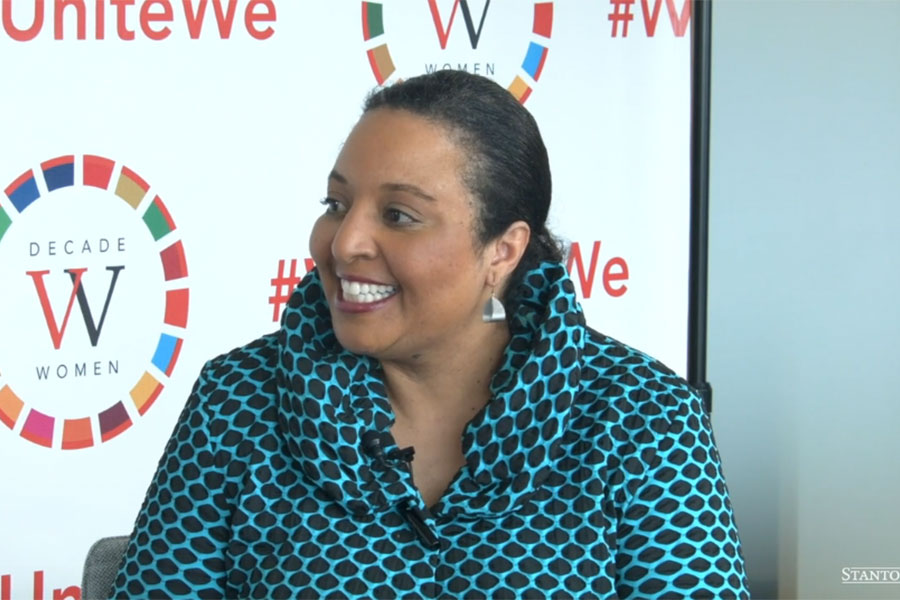
As a global leading executive search firm, Stanton Chase works with female leaders around the world who have made significant improvements and left a lasting impact on their businesses. The Women and Leadership video series of Stanton Chase showcases stories of these inspiring leaders, their history, and how they rose to the top.

Stanton Chase Los Angeles, headquartered on the beautiful Santa Monica, CA beaches, offers clients the resources of one of the top ten global executive search firms, differentiated by its global reach, regional knowledge and local insights. They are committed to their clients as “Their Leadership Partner.”

The company has long served and worked with “Leaders Who Care”, around Inclusion and Diversity, Gender Equity, Corporate Social Responsibility, Wellbeing (Health, Workplace Environment, Nonflict, Kindness), Sustainability and Innovation, Veteran Opportunities, Smart Cities, Mobility and Infrastructure, and more.

Why? Executive leaders who embrace the impact of combining social enterprise (such as adopting a Sustainable Development Goal) with their business enterprise, gain a valuable return on investment on their talent acquisition, development and retention, their business results and both their local and global communities. This cycle then continues, full circle.

In alignment with the Decade Of Women, an action campaign dedicated to achieving gender equity worldwide by 2030, Stanton Chase is highlighting exclusive interviews with top female executives who share their wisdom and experiences in corporate leadership, as they pursue a culture dedicated to social impact.

Are you one of the Leaders Who Care? Do you know one? We’d like to recognize them all at www.makeadifferencela.com and possibly at our Global Summit in November! Email Mark Sadovnick, Managing Director at Stanton Chase – LA: m.sadovnick@stantonchase.com

0