PODCAST PEOPLE:A Summary from the Real Leaders Podcast
“The end goal of EarthX is to save the world and to save it environmentally, but through education, through calls to action, through recruitment. It was a disadvantage starting this in Dallas 10 years ago, but now it’s a great advantage because we have built a huge education and recruitment without preaching to the choir.”
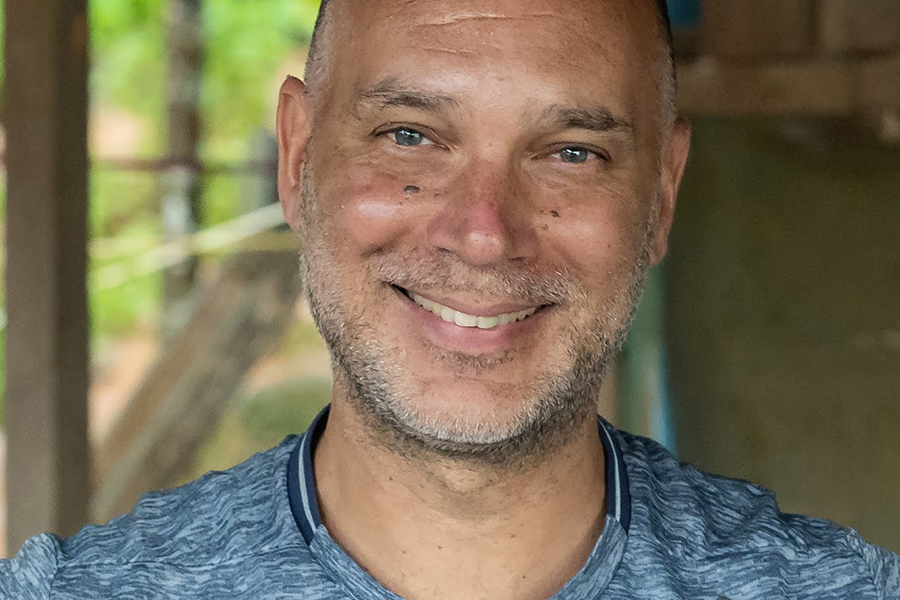
Trammell Crow, Dallas businessman turned environmentalist, knew a different approach was necessary to promote sustainability in Middle America. His solution? EarthX, a pro-business celebration of Earth Day.
The following is a summary of Episode 107 of the Real Leaders Podcast, a discussion of environmental politics with Trammell Crow, founder of EarthX. View, read, or listen to the full conversation below.
The Largest Earth Day Celebration in the World
EarthX emphasizes that business development and sustainability are not mutually exclusive. This middle ground has separated environment from politics, converted many sustainability skeptics, and debunked the “granola” stigma associated with environmentalism. Formerly known as Earth Day Dallas, EarthX has now gone global. Since its debut in 2011, EarthX has attracted over 460,000 participants, making it the largest Earth Day celebration in the world.
Crow explains that EarthX promotes environmental education and awareness for individuals and companies. However, the annual conference also addresses a new responsibility for the environment: it falls not only with big business, but with every individual consumer:
“The economics makes so much sense in many parts of America. If corporations do what’s right for their bottom line, and I mean their triple bottom line, they’ll save the world. Then consumers and you and me and John Q public [need to] realize that it’s not just the corporation’s fault. It’s how we shop and how we consume. [We] take our own responsibility every single day. It’s just two sides of the coin, isn’t it?”
Listen to Episode 107 on Spotify, Anchor, Crowdcast, and Apple Podcasts
Politics have Prevented Environmental Progress
Crow emphasizes that any hesitation towards environmentalism is the result of environmental politics and the nationwide misconception that the environment is a political agenda.
“There are people of all political ilks who are involved in environmentalism, [though] they might not call it that,” Crow states. “And I know down here in Texas great reformer, rancher, hunter, fisher conservationists, but as soon as you start talking climate, they’ll push the chair back and stand up.”
Part of the success of EarthX is its stance that environmentalism is apolitical. Consequently, holding the conference annually in Dallas has also proven instrumental. As a result, environmental politics are transforming into environmental awareness, which now spreads from a new focal point in Middle America.
Crow laughs, “I’ve had grown up white European males come up to me with their Texas accent and say, ‘Trammell, I’ve never been here before, and I have had an epiphany.’ They’ve used the E word. It really, really lets us know we’re doing the right thing.”
PODCAST PEOPLE:A Summary from the Real Leaders Podcast
“Every time I was talking to businesses, they were saying, ‘Oh, we wish we could help, Matt. We wish we could do more.’ I’d always tell companies, ‘You can. Plant trees.’ People don’t realize how important trees are to the environment.”
Matt Hill is the founder and Chief Environmental Evangelist of One Tree Planted, a nonprofit organization that helps global reforestation efforts by making it easier for individuals and businesses to give back to the environment: one dollar plants one tree.
The following is a summary of Episode 106 of the Real Leaders Podcast, a conversation with Matt Hill, founder of One Tree Planted. Watch, read, or listen to the full conversation below.
Why Trees are Important
Trees provide oxygen, but they are directly linked to the state of the environmentin many more ways:
improve air/water/soil quality
provide health/biodiversity
sequester carbon
Planting trees has compounding positive results, which consequently interconnect environmental issues:
“We’re planting a million-and-a-half trees through this corridor in the Pacific Northwest… to cool the water along these streams. And the reason for cooling the water is so that the salmon can come back for spawning, since they’re not coming back for spawning as much as they used to, because the water temperatures are too warm. And by planting these trees it’s cooling it, it’s also cleaning the water. As a result, the salmon will repopulate [to benefit] the resident orca whale’s dependent on these Chinook salmon for their food supply chain.”
Businesses Getting Involved
Recent events have shown how quickly the benefits of a cleaner environment become apparent. As a result, many businesses are capitalizing on this evidence:
“I find a lot of businesses now taking this time to focus on these projects for next year. They’re realizing now. Because before I think people would be skeptical, ‘Well, how do I know this is really gonna work and what’s gonna be a long term results?’ But now in two months, we can all see firsthand, cleaner waterways, cleaner air, just ourselves. So I think companies now are doubling down looking at [environmental] opportunities.”
Listen to Episode 106 on Spotify, Anchor, Crowdcast, and Apple Podcasts
Stories and Transparency Gain Support
While tree-planting is good for the planet, One Tree Planted ensures contributors know exactly how far their planting contributions go:
“We don’t try and position ourselves as “donate to us.” We tell more of the stories, and then I think people or businesses end up wanting to give based on the inspirational story on how this helped these farmers, or helped particular animals that are on the endangered species list.”
PODCAST PEOPLE:A Summary from the Real Leaders Podcast
“My definition of success is inner peace. True happiness is just inner peace. When you trust yourself, you know what kind of value you bring to the world, you know what you want to accomplish in the world. That’s what it is, it’s true peace.”
Drew Hanlen is a private skills coach and consultant for NBA players, and CEO of Pure Sweat Sports. More recently, he has also introduced his strategic coaching process to the business world. In both business and basketball, he helps clientstake their game to the next level.
The following is a summary of Episode 114 of the Real Leaders Podcast, a conversation with private skills coach Drew Hanlen. Watch, read, or listen to the full conversation below.
Off-Court to On-CourtStrategy
“The funny thing is most of the executives that hire me, they hire me because they’ve hit a plateau and they want to take their game to the next level. If you use the word game like I do. And a lot of times we find out that something off of the court, outside of their business, is the thing that’s really holding them back.”
Have a clear objective
not numerous objectives, but one that you can put all energy towards
Create a road map
not only for what direction you’re going, but exactly the stepsto get there
Have an accountability partner
someone to consistently keep you on track
Overcoming Ego
“I always say: you have to master the role that you’re in while working towards the role that you want… You have to succeed in your current role to work toward getting the chance to prove that you can provide value in that future role that you want.”
Have to be a willing learner
Have to crave improvement if you’re going to get results
Have to put in the work
Listen to episode 114 on Spotify, Anchor, Crowdcast, and Apple Podcasts
Quotes to Motivate
“You should pursue things that bring you energy. That’s it.”
“My grandma always told me, ‘You’re never going to have everything you want, but you’re always going to have more than you need.”’
“I believe that most people fail at accomplishing things because they focus so much on direction instead of the steps to get there.”
“Here’s what happens: when you start something: you get motivated. And when you get motivated, things get easier. And when things get easier, then you start wanting to do them more often.”
“Hate me now, thank me later. That’s what I always tell my clients.”
PODCAST PEOPLE:A Summary from the Real Leaders Podcast
“Networking is the most complex and the most beautiful skillset and mindset that we can continuously practice in our lives.”
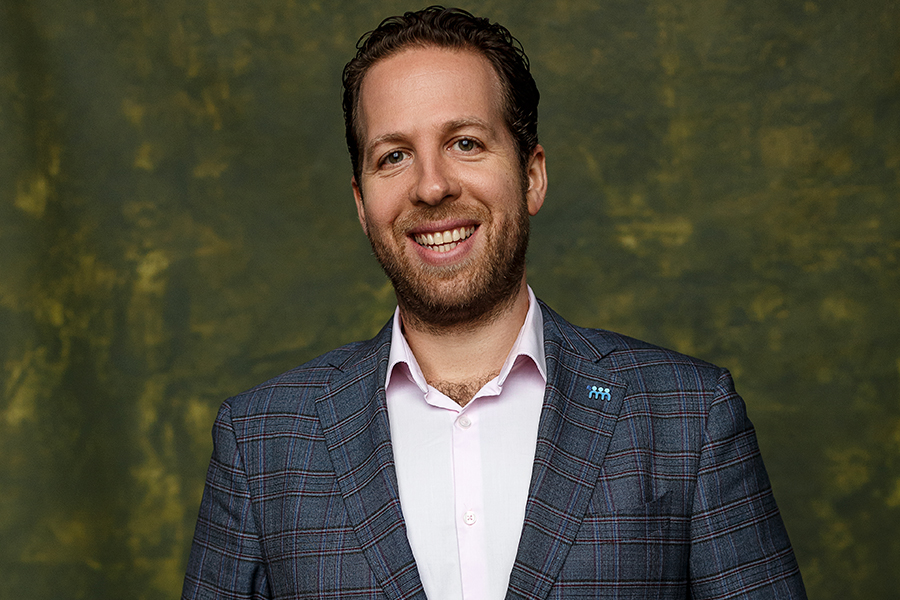
Gil Petersil (above) is a networking guru and international expert on business strategy. His expertise in these fields comes from years of experience living, studying, working and networking in Israel, Canada, the United Kingdom, the United States, Russia and Singapore.
The following is a summary of Episode 112 of the Real Leaders Podcast, a conversation with networking guru, Gil Petersil. Watch, read, or listen to the full conversation below.
Mastermind Methodology
A mastermind group is a mentoring group and support system for addressing members’ challenges and opportunities, eight is the magic numberfor participants
“For the entrepreneurs and the corporate leaders out there, we must constantly learn to ask for help and be open to receiving help. And it’s not feedback. It’s about sharing experience from your story; giving advice on something that I you’ve experienced personally. So it’s structured in a beautiful way… What actually happens is you get very up-to-date insights, opportunities, connections from relevant people.”
Energy management is key to business and life success, and the easiest way to achieve it is to think positively
“First of all, it’s not about thinking positive, ‘Oh money, please come into my life.’ It’s thinking positive about others, specifically. When you think in a complimentary way about other human beings, whether they’re in front of you or not, your body will be completely filled up with energy.”
Networking Hacks
When networking, it’s important to ask “WHY questions”
“’Why did you choose to get into this line of work?’ Or, ‘What are you currently focused on that’s really exciting for you?’ Or, ‘What’s your top priorities that wake you up in the morning?’ These might sound like weird questions, but these are questions that are powerful. They’ll get people talking, they’ll get you listening. And if you’re listening, you’re actually the powerful one in the conversation.”
Pitching yourself is the worst thing you can do in a networking scenario (unless investors require it)
“When you’re selling to people what you do, you need to be thinking, “How do I open up their curiosity?” Not, “How do I sell them?” Not “How do I just give that answer?”
The most important part of networking is the follow-up
“Most people meet someone and they’re expecting, how can I convert this person right away? Networking is really about being able to continuously serve people… Because as we go through life, new challenges come in, new opportunities come in, we might need someone in a different industry, we might need someone in a different country. And that’s when you can go to that person because you’ve added value.Following up is this ability to add value to people until you’re ready to ask for value from that person.”
Listen to episode 112 on Spotify, Anchor, Crowdcast, and Apple Podcasts
Quotes to Remember
“Because of changes happening in the world, we must not stay still. The worst thing that a human being can do when he sees change around him is to stay still and wait for it to go by.”
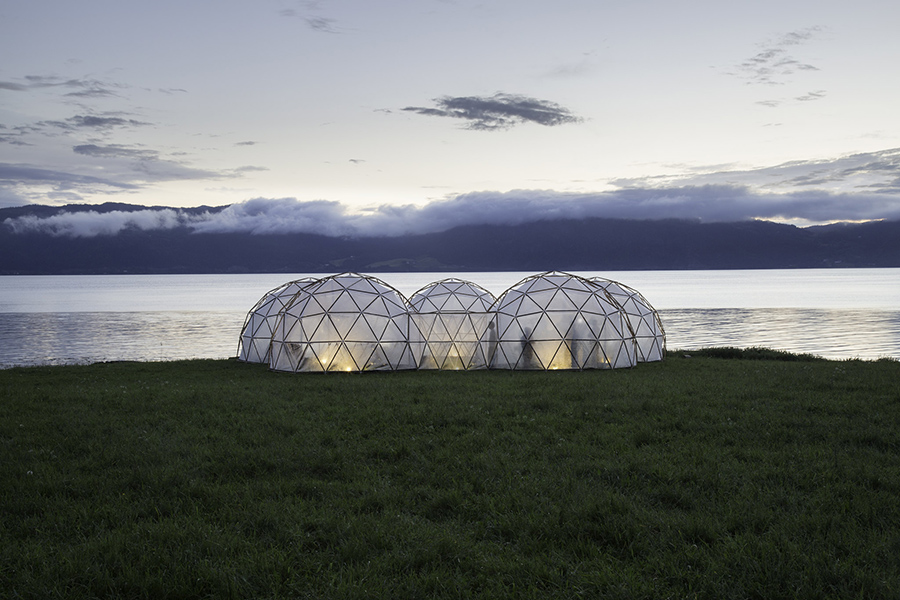
A series of domes containing pollution from cities around the world was placed in the Norwegian city of Trondheim and London earlier this year as part of an investigation by psychologists to ascertain whether art can change people’s perception of climate change.
The idea is the brainchild of British artist Michael Pinsky’s, who created the Pollution Pods installations — a series of five connecting domes that recreates the pollution from London, Beijing, São Paulo, New Delhi and Tautra in Norway. He decided that “smelling is believing,” and set out to give visitors an experience they would never forget.
A visitors walks through the Pollution Pods installation in the courtyard at Somerset House, London. Photo: Peter Macdiarmid
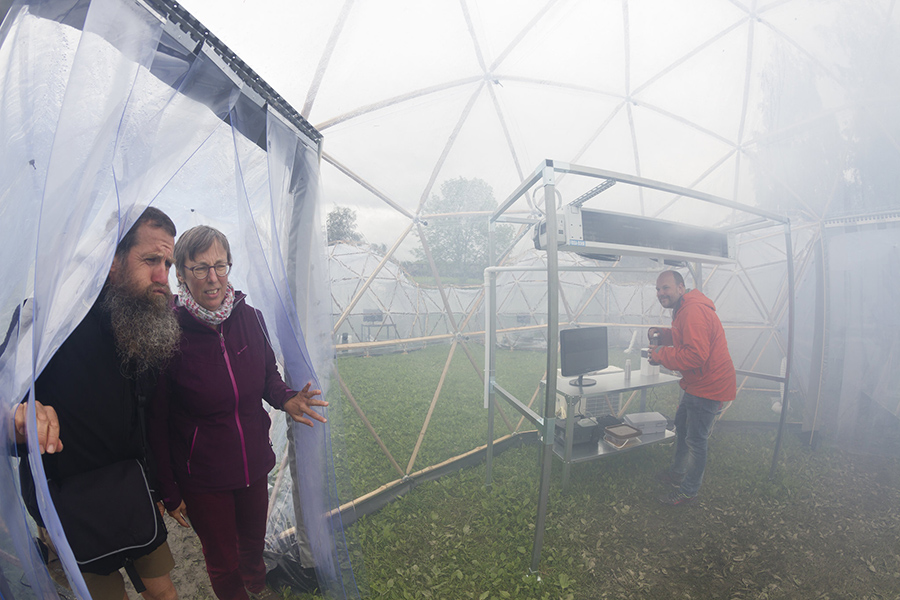
Pinsky filled five interconnected geodesic domes with carefully mixed recipes that emulated ozone, particulate matter, nitrogen dioxide, sulfur dioxide, and carbon monoxide — found in the air in some of the world’s major cities. Entering a first plastic-domed pod, visitors then passed through increasingly polluted cells, from dry and cold locations to hot and humid, giving them a firsthand experience of the air quality of that city.
Visitors stand inside one of the five domes to experience the air quality of a major global city. Photo: Peter Macdiarmid
The UK installation formed a circle in the center of Somerset House courtyard, one of London’s most renowned art centers. Visitors passed through the climatically controlled pods to compare the quality of different polluted global environments. The five Pollution Pods were linked, so that visitors were forced to pass through all of them to exit the installation. This visceral experience encapsulated the sense that the world – and our own impact on it – is interconnected.
The Pollution Pods installation in Norway. Photo: Thor Nielsen / NTNU
The release of toxic gases from domestic and industrial sources increase the rate of global warming and have a direct effect on our health. In the West, in cities such as London, one in five children suffer from asthma, while in developing countries such as Delhi, over half the children have stunted lung development and will never completely recover.
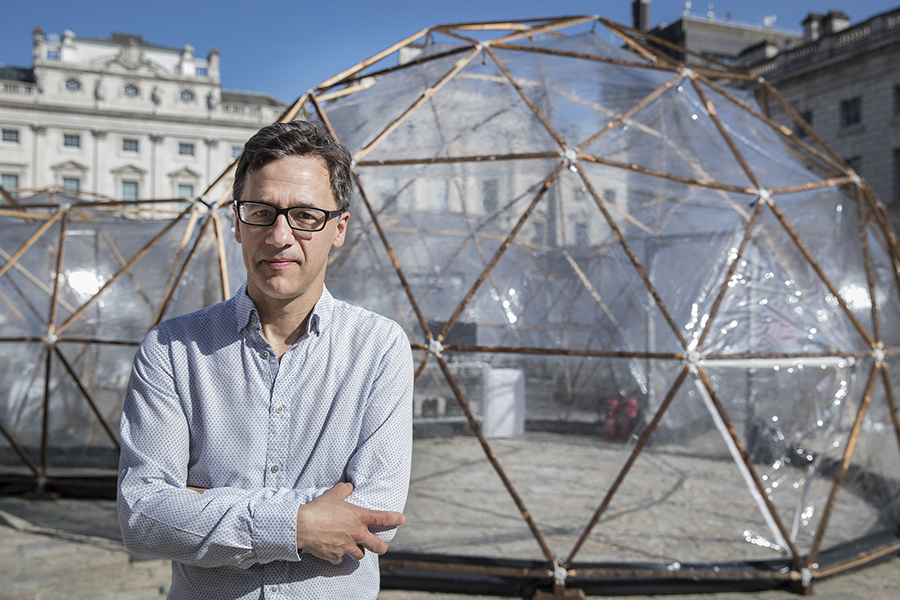
British artist Michael Pinsky stands in front of his Pollution Pods. Photo: Peter Macdiarmid
Those living in the developed world have environments with relatively clean air, while people in countries such as China and India are being poisoned by airborne toxins created from industries that fulfill orders from the West. The experience of walking through the pollution pods demonstrates that these worlds are interconnected and interdependent. The desire for ever-cheaper goods is reflected in the ill-health of many people in the world and in the ill-health of our planet as a whole. “Within this installation people will be able to feel, taste and smell the toxic environments that are the norm for a huge swathe of the world’s population,” says Pinsky.
The Pollution Pods installation in Norway. Photo: Thor Nielsen / NTNUVisitors experienced the air quality of 5 major global cities in a matter of minutes. Photo: Thor Nielsen / NTNU
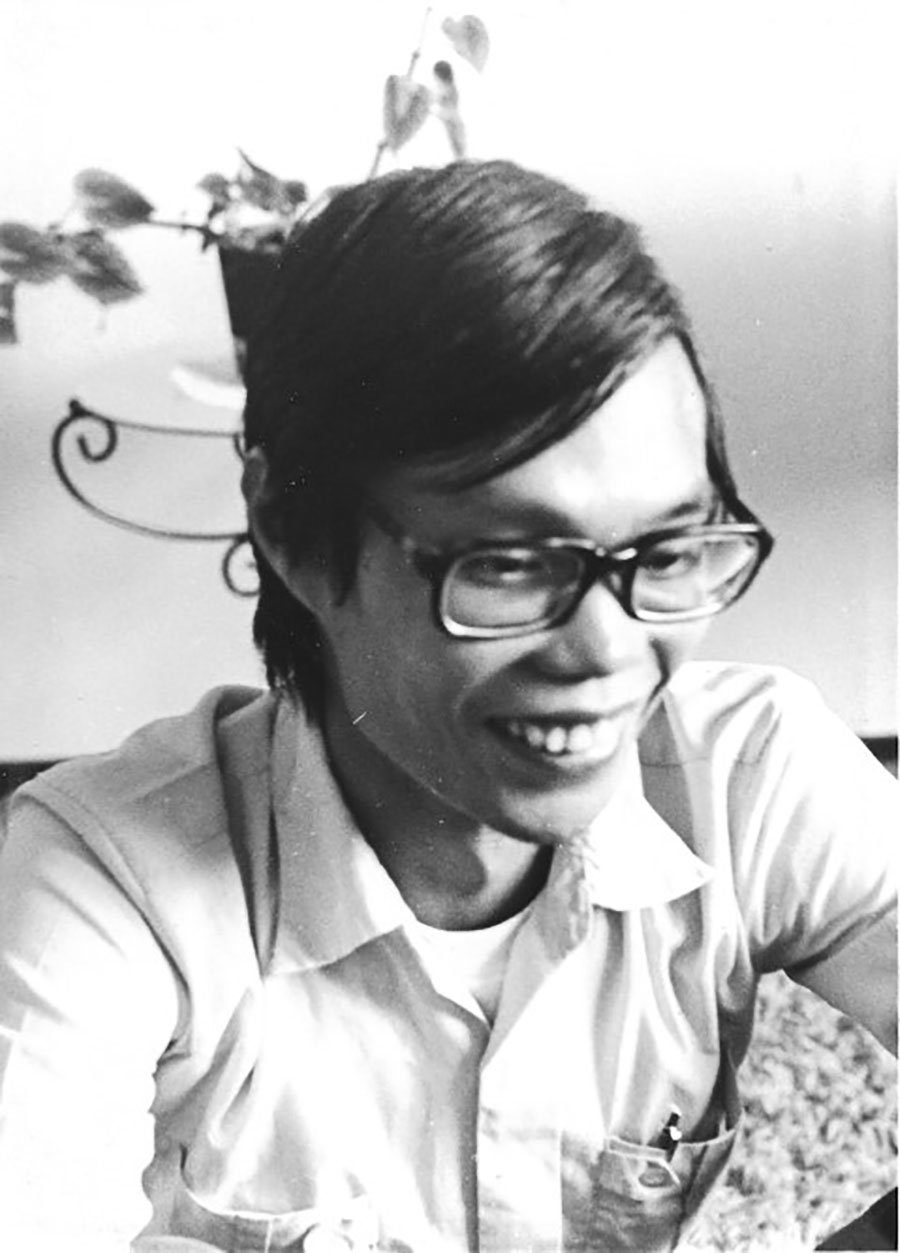
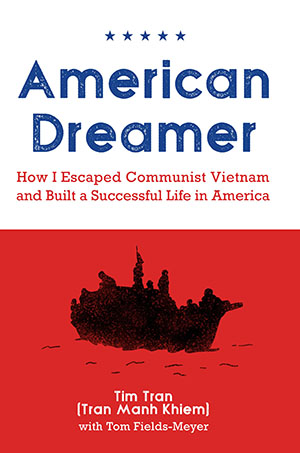
America is known as a melting pot – a country built on the hopes and dreams of refugees and immigrants who sought to escape the dangers and violence of tyranny and authoritarianism. Some of the greatest leadership lessons often come from those who have overcome great challenges and survived. Tim Tran’s remarkable story shows that core values of acceptance, diversity, and inclusion can make anything possible.
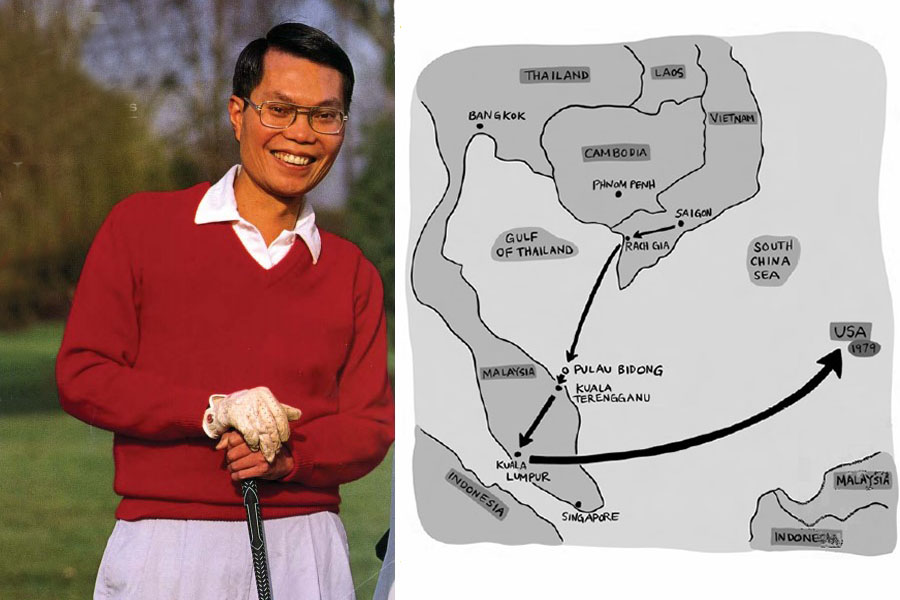
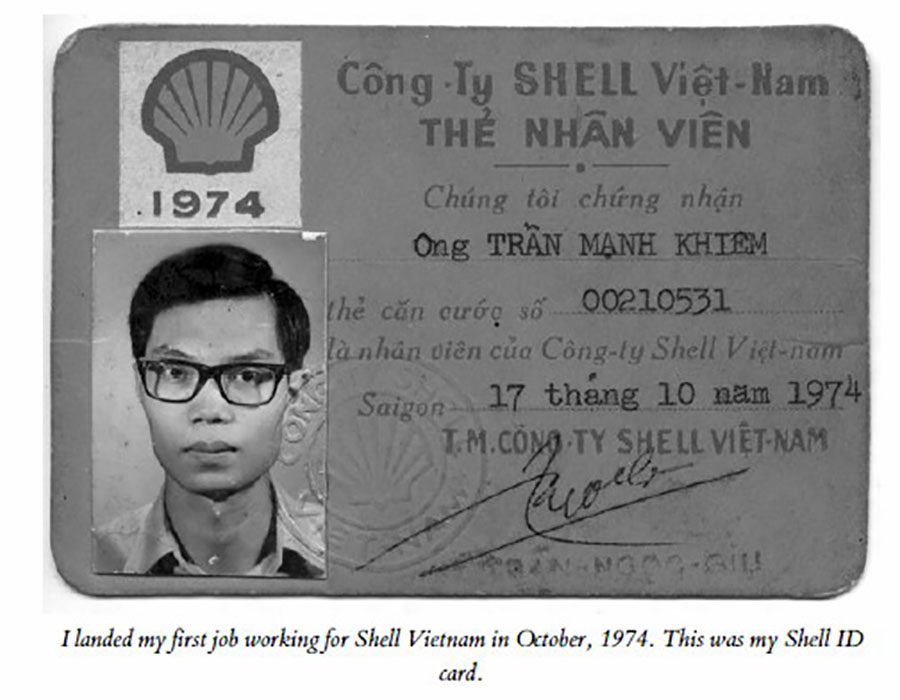
Tim Tran was four years old when his parents fled communist North Vietnam on a U.S. landing craft to South Vietnam. Many years later he received a four-year scholarship from US AID, that allowed him to complete a Bachelor’s degree in Business Administration (Accounting and Finance) from the University of California, Berkeley in 1974. However, he was required to return to South Vietnam after graduation. On arriving home, he landed a dream job with Shell Oil in Saigon, but life became difficult and dangerous when South Vietnam fell to communists on April 30, 1975.
His time in America with Shell, as an internal auditor, had made the newly nationalized company officials (now taken over by the communists) suspicious, and they suspected that Tran was a CIA agent. He was interrogated by security and subsequently fired. He realized that he had to escape or face arrest or imprisonment, and so, with his young wife, Cathy, they fled for their lives.
Over the next four years, and after many failed attempts to reach freedom — which was met with deceit, betrayal, and even the murder of his father — they made it to a coastal province in Malaysia. They carried fake IDs and travel documents, paid bribes in gold, and finally boarded a rickety, overcrowded, 50-capacity boat, along with 350 other desperate people.
During the journey, they were savagely attacked by seven groups of pirates in the open seas. Tran was even robbed of his Levi jeans and prescription glasses. With the boat’s engines damaged from the attacks, the captain crashed and destroyed the boat on a rocky shore, and they all jumped out and ran for higher ground. Unfortunately, they were all captured and placed in a make-shift barb-wire prison on the beach, that was followed by months in a Malaysian refugee camp.
At the time, the U.S. had a policy of admitting refugees with family connections in America, and his sister in Oregon sponsored his application to immigrate. At the requests of his friends, U.S. Senators Bob Packwood and Mark Hatfield and U.S. Congressman Les AuCoin joined the effort, and wrote letters to the Immigration and Naturalization Service (INS) and American Embassy in Kuala Lumpur, Malaysia, to advocate for his application. Eventually, Tran was interviewed and approved for asylum in the U.S.
When he arrived in Forest Grove, just outside Portland, Oregon, in 1979, he carried all his worldly possessions in a plastic bag with the words UNHCR printed on the side. An old college friend, Roberta “Bobbi” Nickels, came to greet him and he joked, “I travel light.” She burst into tears.
Tran’s first day in the United States, 1979.
Tran acknowledges that it was the American values of acceptance, diversity, and inclusion that turned out to be a turning point for his personal and professional success. US AID had given him his first lucky break by helping him get a four-year scholarship that resulted in his Bachelor’s degree. He also received support from dozens of people, that resulted in the approval of his immigration to the United States. He was also offered an entry-level job, despite being a boat-person and penniless refugee.
The spirit of generosity didn’t end there. His new company helped him earn an MBA by covering tuition costs, something that empowered him with the latest developments and knowledge in his field. Getting the total and unwavering support of the company president also ensured that there was no appeal hanging over his head from vendors, when he was placed in charge of highly competitive contract negotiations.
Tran went on to become the chief financial officer of Johnstone Supply, and Cathy worked for U.S. Bank (then Standard Insurance) and became an accounting manager. In 2017, the couple established a Library Endowment Fund at Pacific University. In honor of their gift, the building on the Pacific University Forest Grove Campus was dedicated as The Tim and Cathy Tran Library.
Here are six lessons from Tim’s journey from communist boat-person to C-Suite:
Key Lessons Learned
Tran believes that equity, diversity, and inclusion are incredibly important in every organization and must be brought to the forefront in the workplace and society.
1. The CEO must be front and center. In other words, the CEO must show up at every meeting and training and give prep talk. Don’t outsource this job exclusively to H.R.
2. The company must include diversity and inclusion in the organization’s goals, expressly called out in its mission statement, and reflected in every decision and action.
3. Everyone must champion these values. Executives, managers, and all employees must talk the talk, and walk the walk. When top executives make business decisions, they should ask themselves if they have brought the company closer to “diversity and inclusion” goals. Feedback and discussion must be encouraged and used to ensure relentless improvement is achieved.
4. Cultural diversity needs to be acknowledged, championed, and showcased continuously. Encourage everyone to get to know all the other employees. Feature new employees and those with diverse cultural backgrounds in organization newsletters and social media. Include photos, experiences, unique talents, skills, and hobbies. Place particular emphasis on cultural backgrounds and a variety of lifestyles.
5. Celebrate all cultural days, holidays, or significant sporting events (Lunar New Year, St Patrick’s Day, Independent Days, Cinco de Mayo, Bastille Day, Black History Month, FIFA World Cup, etc.) to encourage and inspire inclusion, foster learning, acknowledgment, and appreciation of cultural differences.
6. Mix up your internal teams to include members of different ethnicities, backgrounds, and genders. These can be sports teams, presentation teams, or problem-solving teams. Allow teams to trade members to win the “most diversified team prize.”
Tim Tran’s new book is American Dreamer — How I Escaped Communist Vietnam and Built a Successful Life in America. www.timtranamericandreamer.com
The American marine biologist, explorer, author, and lecturer is one of the planets biggest advocates for the preservation of our oceans. Dr. Sylvia Earle should know the importance of this, as she’s still regularly exploring the depths at age 84.
She has been a National Geographic explorer-in-residence since 1998 and was the first female chief scientist of the U.S. National Oceanic and Atmospheric Administration. She was named by Time Magazine as its first Hero for the Planet in 1998. In this interview with Real Leaders, she explains why the oceans are critical for all life on earth.
Editors Note: Real Leaders is making its archive of magazines freely available to all visitors to our website as part of our contribution to the Covid-19 pandemic. We believe you’ll emerge stronger and wiser when this crisis passes, and we hope our stories will keep you entertained and inspired while we sit out this challenging time. Sign up here and you’ll be instantly redirected to our archive.
The world has never seen anything quite like the current measures taken to help stem the coronavirus pandemic. Employees who are sick or have been exposed to the virus are self-quarantined.
Out of an abundance of caution, some businesses have chosen to have all or the majority of their teams work remotely. For some workers, the arrangements may morph from a transient response to a more permanent one.
The relatively new digital era enables teams to work in different geographic locations, sometimes spread across the world. This flexibility and agility have never been more critical. While dispersed teams offer an efficient way to operate in a world primed for greater agility and idea diversity, it also challenges the organizational structure. It creates competing demands on time, resources, and loyalties.
The geographical divide transforms team interactions. They are more fluid, complex, and often hinge on technology that impedes as often as enables communications. (We’ve all experienced one of those conference calls.) Members come together for specific tasks and projects, and a member from one team could sit in multiple micro-teams. All this complexity has a ripple effect on managing culture.
The Cultural Aspects of Remote Teams
Communication can be an ongoing issue, as well as employee management. What gets addressed far less is how to include remote workers and remote teams in company culture.
What does company culture look like when it comes to remote teams? If you think of company culture only as the perks that are offered to employees, the well-outfitted office environment, or team-building outings, it can be challenging to apply to workers in remote locations. However, this is a narrow understanding of culture. Less about perks, corporate culture includes how people in a team or organization think and act in order to deliver on results. Culture is how the business executes the strategic vision. It’s up to leaders how intentional they are in managing this added layer of complexity.
Aligning Team Cultures With Company Culture
The first step in aligning the team and corporate cultures is to bring all managers under the umbrella of the organization’s key results: the critical outcomes for the business. Allegiance to the organization should take precedence over loyalty to the team. All managers, especially managers of remote teams, should understand the company’s “umbrella” culture and work to bring his or her team’s culture in alignment with it. Every meeting, conference call, and digital interaction presents an opportunity to create or reinforce culture, for better or worse.
Improving Inclusion Among Remote Employees
Being physically separated from the company’s headquarters, or even their immediate team members creates a working environment in which remote employees more or less put their heads down and complete their assigned tasks without much regard for how their actions affect what the company as a whole is trying to accomplish.
It takes an exceptional level of intentionality to improve inclusion among remote teams. The easiest way to be consistent and intentional about something is to implement a system to help with cultural inclusion. A team’s regularly scheduled meeting or conference call is a great place to start. Managers can start each meeting by reminding participants of the company’s stated goals or tell a quick story about how the team’s work is impacting the key results.
As we illustrate in The Results Pyramid model, experiences—both positive and negative—form beliefs; beliefs lead to actions, which produce results. If you are a remote employee who is required to be on a conference call every week, but it is your experience that you are never asked directly, by name, for your feedback or thoughts, you’ll develop a belief that your opinion is not valued. The resulting action you take—given that no one seems to care if you’re engaged or not—may be to start checking your email or social media accounts during the call. You may still do your job—completing daily tasks and turning in projects on time—but you won’t feel like an integral part of the team or the company.
Conversely, if you are given a specific role in meetings and expected to be actively involved, you know your participation is valued. You will come to meetings more prepared and ready to engage.
The time immediately following a meeting is another chance to promote inclusion among remote workers. The simple act of asking for feedback after a meeting creates a forum for improvement that makes meetings among remote teams more productive. It also provides another way for the main office to increase engagement among their remote sites.
Using Connectivity Tools to Promote Organizational Culture
Using digital tools to regularly remind team members of what they are trying to achieve, communicate progress, give and receive feedback, collaborate to solve specific problems, and celebrate wins keeps what’s most important at the forefront of employees’ minds. It puts their focus squarely on the key results, rather than just on their task list or a specific part of a project. As a side benefit, employees who are engaged and feel heard and valued are more likely to stick around, helping an organization retain talent and reduce turnover expenses.
Allow Remote Employees to Opt-out of Company Culture at Your Own Risk
If your company is to thrive with the use of remote employees, alignment with the company culture is a crucial aspect of success. Teams should never be considered too big, too temporary, or too far away to be exempt from cultural alignment. As a team grows or a project gets more complicated, the cultural aspect becomes more important.
The key to getting the cultural aspect right is putting systems and tools in place that are easy to implement and scalable as teams evolve or a project grows. Culture produces results. Allowing remote employees to opt-out of the company culture or giving managers of remote teams a “pass” is not an option. More tips and strategies at www.partnersinleadership.com.
Editors Note: Real Leaders is making its archive of magazines freely available to all visitors to our website as part of our contribution to the Covid-19 pandemic. We believe you’ll emerge stronger and wiser when this crisis passes, and we hope our stories will keep you entertained and inspired while we sit out this challenging time. Sign up here and you’ll be instantly redirected to our archive.
In this op-ed, a Zero Hour co-founder says we should treat both crises like the emergencies they are.
You know that gnawing feeling of “oh, God, we’re in the midst of something horrible” you have because of the coronavirus? Are you looking around at this crisis sweeping across the world and feeling helpless because you have limited power to stop it?
That’s how many of us have long been feeling about the climate crisis.
The way the world has been able to mobilize itself and shut down in the blink of an eye to properly respond to the coronavirus is proof that political leaders actually do have the ability to make rapid change happen if they want. So where is that rapid response for the climate crisis?
For years, climate justice activists like myself have been calling for immediate action on our climate emergency. And for years, that action has not taken place. Scientists have said that we have less than a decade to completely transform how our entire economy and world runs, transitioning over to renewable energy and sustainable agriculture. Yet we continue to plow ahead with business as usual, paving the way toward a future of extreme weather events, mass displacement, disease, famine, and death. That’s not hyperbole; those are the predictions and findings of experts who have devoted their careers to this issue.
So when we’re in the middle of such an existential crisis, why have there not been coronavirus levels of shutting down and completely rewiring our society? Every time I meet with lawmakers and tell them that we need rapid transformation to halt climate change, they tell me “change that fast just isn’t possible.” But the COVID-19 world response has proven that rapid change and disruption of business as usual is possible!
What would it look like when the world actually decides to take on the climate crisis? It would look like what we’re seeing right now. Media coverage of the issue 24/7. Consistent headlines about updated death tolls. Experts appearing on the news daily to update the public on the crisis. Everyone stopping everything and putting the world on pause to deal with the immediate crisis at hand. The coronavirus response is showing us how people can mobilize and do their part when it is properly communicated to them that we are indeed in an urgent crisis.
The parallels are not exact, and the world COVID-19 response is not a perfect template for how the world must mobilize for climate justice. Many vulnerable people are being left behind in the coronavirus rapid response, and our just transition away from fossil fuels and factory farming must make sure no one is forgotten. And a global rapid response to the climate crisis, unlike the isolating quarantine required to curb the spread of COVID-19, could be joyful. We could call for the rapid creation of jobs in new renewable fields, training workers to transition from fossil fuel jobs to clean energy jobs and mass reforestation projects. Pandemic response is simply trying to mitigate a disaster, while urgent climate response is not only mitigating disaster, but actively creating a better world.
So where do we go from here? Once the coronavirus gets under control, the world cannot exhale and go back to normal. We need to move on to tackling the other deadly crisis that cannot wait.
Jamie Margolin is a youth climate activist who founded the climate justice organization Zero Hour.This story originally appeared in Teen Vogueand is republished here as part of Covering Climate Now, a global journalistic collaboration to strengthen coverage of the climate story.
When the co-founders of Big Path Capital, Shawn Lesser and Michael Whelchel, decided to launch an investment bank in the teeth of the brutal 2008 financial crisis, their friends and families thought they had lost their minds. “My father was really concerned. He said, ‘Are you sure that’s a good idea? It’s one thing to start a company in the best of times, but to start a financial services company in a financial recession?’” recounted Whelchel.
Yet it was the meltdown of the global economy that actually forced Lesser and Whelchel to find a better way to do business. During the Great Recession, Big Path Capital was formed to work with impact-minded companies and funds. “We knew incredible companies with great business models for simultaneously creating significant social and environmental impact,” recalls Whelchel. “We knew it didn’t have to be a trade-off. We thought: Let’s help these companies scale.”
In the beginning, they wondered if they might have been too early. “When we spoke about impact investing, making money, and making a difference, investors quipped ‘How much money am I going to lose?’” says Lesser. “While traditional investors didn’t get it, we were convinced it was a better way to invest.”
Like all scrappy start-ups, Big Path wasn’t too proud to cold-call. Whelchel and Lesser began by reaching out to companies in the Inc. 5000 list of fast-growing businesses that also demonstrated a positive impact focus.
One call in particular stood out. Whelchel phoned Matt O’Hayer, founder and CEO of Vital Farms, the pasture-raised egg company ranked as the fastest-growing food and beverage company in the Inc. 5000.
O’Hayer remembers getting the voicemail. “I would get several calls per week from investment bankers given Inc.’s coverage of us. When I got Whelchel’s voicemail about an investment bank dedicated to positive impact, I was intrigued, if a bit suspicious. Investment bankers wanting to do good?”
O’Hayer engaged Big Path to secure impact investors that shared his values. “Everybody says get the highest. I have a different view. I wanted impact investors who get Vital Farm’s mission, as I believe that creates the most long-term value,” says O’Hayer. Big Path helped raise $50 million in transactions over several years, with escalating valuations, as Vital Farms needed the growth capital and as early investors were looking for partial liquidity. O’Hayer said, “I never thought I would say that I liked an investment banker.”
Big Path has come a long way from its cold-calling days. Today, Big Path Capital is described by the media as “impact investing’s investment bank.” The company, a Certified B Corporation, has worked with over 180 leading impact companies and funds — more than any other investment bank in the impact economy. Big Path’s clients have jointly raised billions of dollars and are examples of what Lesser and Whelchel call, “smarter money.” “We work with companies and funds that maximize return and impact — no trade-offs,” explains Whelchel. Mainstream financial giants such as Blackstone, BlackRock, KKR, TPG, and Apollo have entered the impacting-investing arena. And these large financial firms are now looking to deploy capital in Big Path’s clients.”
“It’s encouraging to see established financial firms recognize this as a growth opportunity,” adds Lesser.
A clear sign of the changing times: BlackRock CEO Larry Fink’s recent annual investor letter, in which he writes, “A company cannot achieve long-term profits without embracing purpose and considering the needs of a broad range of stakeholders… Ultimately, purpose is the engine of long-term profitability.” The winners of the Real Leaders Impact Awards — co-founded by Big Path and Real Leaders — represent companies around the world that embody the sentiment that profit and purpose are synergistic, not at odds.
“My dad was worried about me in 2008,” notes Whelchel. “Now he asks me why it took so long.” Some things don’t change.
But what is changing is that businesses are using the engine of capitalism to achieve greater profits for the greater good. Big Path aims to put more sustainable fuel — and capital — in that engine.