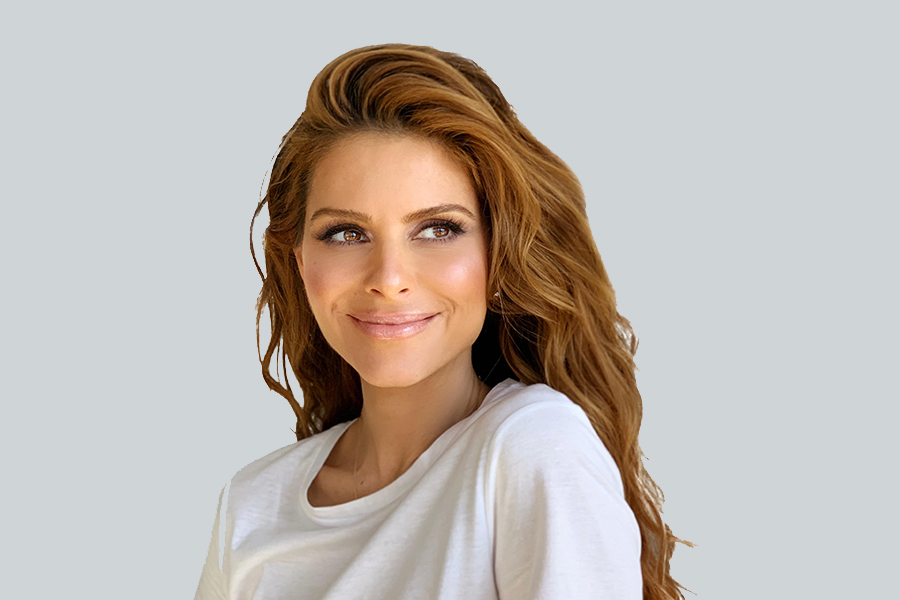
American entertainment reporter, television personality, professional wrestler, actress, and businesswoman, Maria Menounos knows how to keep variety in her life. When the pandemic started, she began a daytime show, Better Together, as a weekly journey through health, wellness, spirituality, career, relationships, and finances.
“What I want to do is expose people to top experts and allow them to have that “a-ha” moment without going through a near-death experience like the brain tumors my mom and I incurred,” she explains.
“In March, when the pandemic hit, I knew we would all face challenges like never before. Jobs would be lost; uncertainty and depression would soar,” she says. The show has brought inspiration, healing and sanity to more than 13 million viewers across all platforms, including YouTube, Facebook, Apple Podcasts and Spotify. She also recently inked deals with GSTV and Coinstar to reach another 145 million viewers a month — to receive branded Better Together tips at gas stations and supermarkets across the country. “Instead of focusing on all the many things we can’t do in these challenging times, we spend our energy focusing on the things we can do.”
Menounos believes that people are inherently good. “We all come from different backgrounds and are shaped by different sets of experiences, but there is so much good in the world. We need to listen to and understand each other.” Menounos thinks honesty is paramount. The best leaders work together on solutions, recognizing that tough moments are an opportunity to grow and be better. “Strong leaders aren’t afraid to make tough decisions. They have a way of cutting through their fears and all the noise to get the job done. They look at all the facts and make the best decisions they can at the moment.”
PODCAST PEOPLE: A Summary from the Real Leaders Podcast
“Consumers want products that have a low impact on the planet. They want to feel like they’re part of the solution. So one of our trade lines is, “Be part of the solution.” If you shop at SPUD, we’re saying you’re being part of a solution to a bigger problem.”
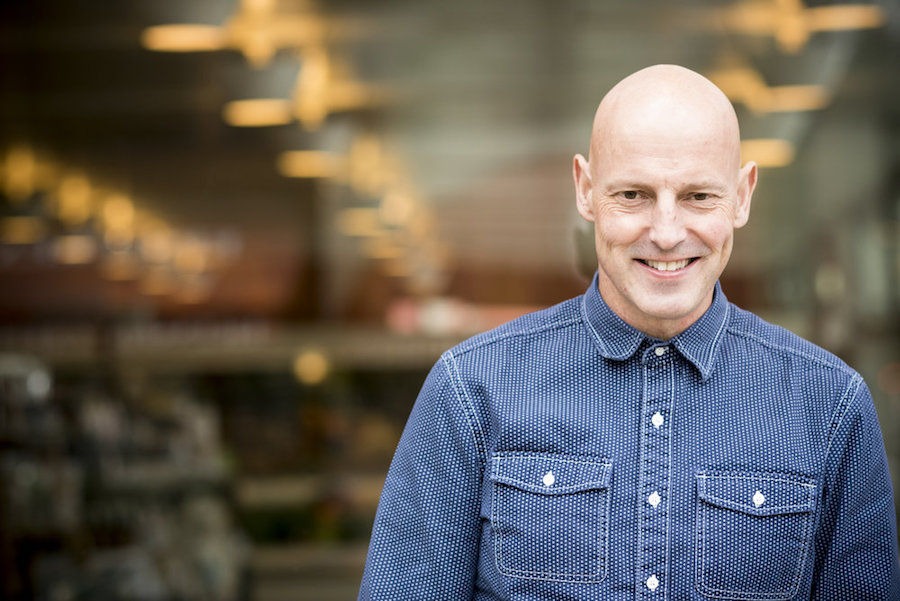
Peter van Stolk is the founder and CEO of SPUD, a sustainable online grocery delivery service operating in Western Canada’s urban centers. SPUD sources the most local products possible, and works with local farmers and vendors to ensure the freshest and highest quality products available. SPUD is named among the Real Leaders 100 Top Impact Companies of 2020.
The following is a summary of Episode 67 of the Real Leaders Podcast, a conversation with SPUD founder and CEO, Peter van Stolk. Read or listen to the full conversation below.
Addressing Food Waste
On a global scale, food waste would be the third largest producer of greenhouse gas emissions behind the US and China. Peter explains that SPUD has avoided the traditional channels of food waste through operating as an online service. SPUD has minimized waste to half a percent. This is because they do not over-order produce, and have no need for displays that inevitably lead to damaged product.
“There’s three functions of food waste, so you can’t solve the problem without looking at the three channels of food. We waste food producing it, we waste food selling it, and we waste food consuming it.”
But food waste is not only an environmental concern, it’s a hugely unprofitable side of the grocery business. Grocery retailers waste 6% of their total sales throwing away profitable goods. Additionally, $400 billion in food is thrown away annually before it even reaches stores. Doug suggests that looking at food waste from a business standpoint would ultimately solve the problem.
“If retailers are throwing away profitable goods, that’s not good business. So let’s make this about good business. If retailers can cut their food waste from 6% to half a percent, that’s more profit. And we live in a capitalist society where profits are good. So let’s make saving the environment profitable.”
Listen to Episode 67 on Spotify, Anchor, Crowdcast, and Apple Podcasts
Circular Sustainability
Doug elaborates that food waste also includes packaging and transportation, additional factors that are often overlooked. SPUD addresses transportation by tracking the food miles for each individual product and giving customers the choice to select how “local” their produce truly is.
SPUD also operates a circular system with their delivery trucks, such that no vehicle returns from a delivery run empty. As a result, trucks pick up produce from nearby suppliers on their way back from deliveries, ensuring backhaul doesn’t account for wasted emissions. Furthermore, SPUD also uses this circular system as a take-back recycling program, to collect plastics from their customers that can’t be recycled in traditional municipal landfills and properly recycle them.
“This is really important. Because if we are going to change the world, and stop the insanity that we’re doing, we can’t make people wrong. We have to make them strong and make them better.”
PODCAST PEOPLE: A Summary from the Real Leaders Podcast
“You know, leaders don’t really start out at the front of the lines. Leaders one day have the courage to get out from the back of the line and walk up to the front and lead.”
Devon Still is a former NFL defensive end and now entrepreneur, peak performance coach, and advocate for childhood cancer awareness. More recently, he is the author of Still in the Game and host of the Undefeated Podcast, helping others to overcome adversity and reach their highest potential in life.
The following is a summary of Episode 124 of the Real Leaders Podcast, a conversation with former NFL defensive end and performance coach Devon Still. Watch, read, or listen to the full conversation below.
From Athlete to Advocate
Devon shares the journey full of ups and downs in his athletic career that brought him to the NFL. But he details that the biggest obstacle he ever faced was his daughter Leah’s battle with cancer. At the age of four she was given a 50/50 chance at surviving. Devon wanted to give Leah’s battle a purpose to help her fight as hard as she could. He decided to use his platform as an NFL player to shed light on what it’s like for families facing this situation.
“When I sat in the hospital, a lot of families were going through things that nobody knew about. It was like a hospital full of the voiceless. And I had a chance to use my voice to give those voiceless families a voice to talk about what they were going through.”
As part of their advocacy for childhood cancer, Devon and Leah formed the Still Strong Foundation, which provides assistance to other families whose children are fighting the same fight.
Listen to episode 124 on Spotify, Anchor, Crowdcast, and Apple Podcasts
The Playmaker Playbook
Devon offers the playbook that got Leah through as guidance that can help anyone overcome adversity:
Give your battle a purpose.
“When you give any goal or any fight that you’re going through a purpose that’s bigger than yourself, you’re more likely to achieve that goal.”
Fight for four quarters.
“We have something in football where we’re taught that no matter how tired you are, no matter how much pain you’re in, you go out there and give it everything you have for four quarters, because you never know when the game can change.”
Triple A — Anticipate, Adjust, Accelerate.
“You have to anticipate that things may go wrong, you have to plan for things to go wrong. And then once they do, you have to adjust. Sometimes your goal stays the same, but the strategy or the plan to get to goal, it changes.”
As Baby Boomers retire and our world begins the largest transfer of wealth in human history — an estimated $30 trillion — a significant part of these assets will go to the descendants of family-owned businesses. According to the Conway Center for Family Business, the largest portion of wealth in the United States resides with family businesses, and the U.S. Census Bureau reports that 90 percent of all businesses in North America are family owned.
But as inspiring as that sounds, research from the Family Business Alliance reveals only 30 percent of family businesses will actually transition to the second generation. About 12 percent will still be viable into the third generation, and a mere 3 percent of all family businesses continue operating with the fourth generation.
How do certain families bake in a leadership culture that helps their businesses remain viable for multiple generations? How can you emulate a leadership culture in your own family, whether you work a business together or not?
According to a 2015 Harvard Business Review article, “Leadership Lessons from Great Family Businesses,” family business leaders focus on the next generation — not just the next quarter. They usually put employees and customers first and dedicate their organizations and their personal time to social responsibility. At their core, family businesses have stronger values, dedicate greater resources to worker motivation and leadership, and measure success in ways other than just growth and profit. Their culture often encompasses a strategy akin to The Golden Rule.
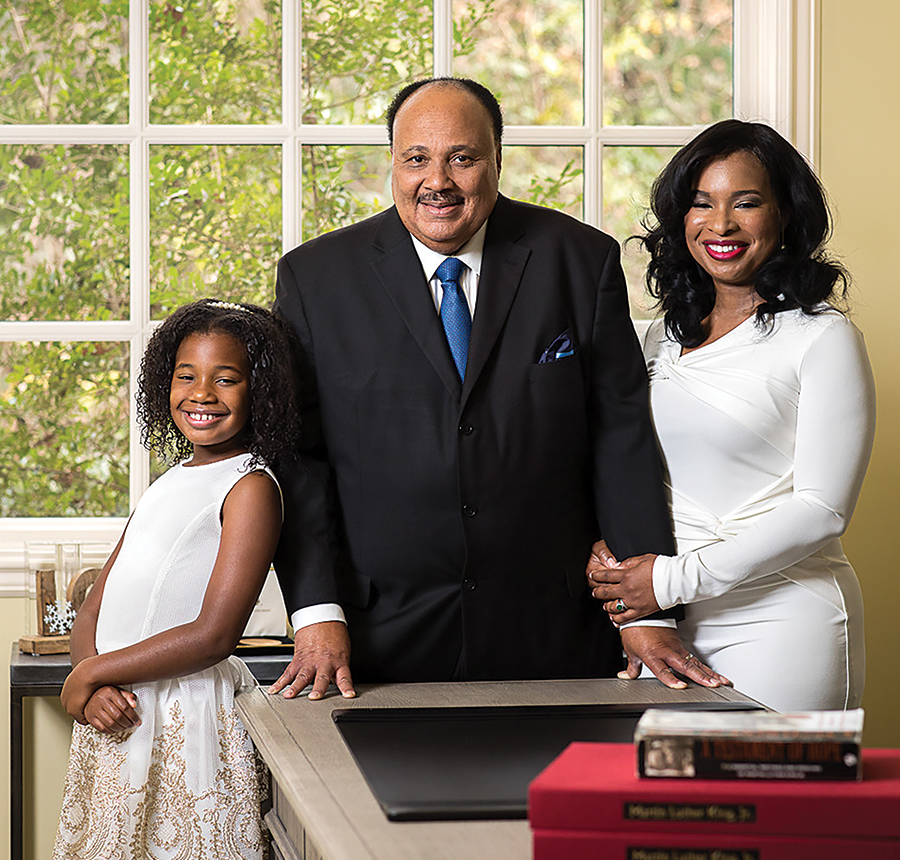
In this exclusive interview, Real Leaders explores the leadership philosophy of Martin Luther King III, and shares his insight on how your family can grow and sustain a mission-aligned leadership culture that transcends your next generation and beyond.
The Martin Luther King family describes what family leadership looks like against a landscape of global problems and then helping us pivot to a more specific discussion on family business leadership.
MARTIN LUTHER KING III:
Civil rights advocate and global humanitarian
Oldest living child of civil rights leaders Martin Luther King Jr. and Coretta Scott King (age 10 when his father was assassinated)
Founder and president of Realizing the Dream, Inc.
Where to focus family leadership efforts.
There are monumental world issues that we should focus on as a society. Climate change is among the most important because if our water and air are polluted, then everything else is for naught. If we don’t find ways to address it, we’re going to all be in trouble.
Second is the eradication of poverty in the world and certainly, within our own nation. Our nation has an inordinate amount of poverty based on the amount of resources that exist here. My parents used to talk about the eradication of poverty, racism, and I’d say violence – although my dad used to call it militarism. Those triple evils are where leadership-oriented families must focus.
The King family’s leadership focus.
Society has embraced a culture of violence. It’s in our cinemas and in the gaming industry targeting our children. It’s in our homes as domestic violence. Leaders have to think about how to create a culture of non-violence because non-violence is sustainable. Our culture cannot sustain itself if we continue to operate this way.
If we can live a day in peace, why can’t we live a week in peace? If we can live a week in peace, why can’t we live a month? If we can live a month, why not a year? And if we can achieve a year, why not a lifetime?
So many people look to the United States for leadership, but we are the most divided we’ve ever been. We can’t focus on one political interest — we have to look at what serves humanity. Leaders need to help communities get above the noise and think at a different level.
As a family, we are focusing on peace, justice, and equity. While that’s furthering the legacy of my parents, it’s also the legacy of our family in general, and our 11-year-old daughter is working with us on it, too.
Role of individual leadership in moving the needle on world problems.
Start by deciding what kind of society you seek for yourself and your family, and then identify where you can make a contribution. Some of us are concerned about the climate, so they should focus there. Some are concerned with police brutality, so they should focus there. Some are concerned with reproductive rights, so they need to engage and get involved there. All of us have a contribution we can make.
Importance of listening to young people.
The truth is that young people are leading the rest of us. The Parkland students are a perfect example. They worked very hard to mobilize people around the country so that the needle can move on responsible gun legislation. These young people are totally engaged and leading us. I haven’t seen a movement like that since 1963 when 3,000 kids were arrested in Birmingham attempting to desegregate the city.
“No one person, no one organization can do all this work. It’s going to take a collective. Leaders need to help communities get above the noise and think at a different level.” — Martin Luther King III
Then we’ve got young people like Greta Thunberg leading us around climate issues. And even younger children like Little Miss Flint leading us around the water crisis in Flint, Michigan.
I go to schools and ask kids what they are worried about. Too often, they say they’re concerned someone will come into their school and shoot them. Think about that: Our children have to practice what to do if someone comes into the classroom shooting at them. Our society has accepted a culture of violence. Instead of focusing on eradicating violence, we are focused on teaching our children how to cope with it.
I’m inspired by children and how easily and naturally they take action. Unfortunately, adults don’t tend to get involved until they are affected by it directly. When there’s a catastrophe, we get engaged. But the kids are showing us that we can get engaged at any time. Adults just have to learn how to disagree without being disagreeable.
On encouraging a culture of leadership within families.
I’m always telling my daughter, Yolanda, that she has to be authentic. She’s been around leaders in her family for generations — parents, grandparents, great-grandparents, aunts, and uncles — we’re all involved. But I tell her she has to find her own authenticity. You don’t have to be like us. Be your best self. You’ve got to find your way.
She got a chance to speak at the March for Our Lives, and she went way beyond what I would have said because I am regimented by the laws of our land. At the event, she said she had a vision, her own dream (see sidebar, “Yolanda Renee King: I Have a Dream, Too.”) We did not help her with this speech or give her any guidance. She said, “I know what I want to say.”
Lessons learned from my daughter.
From day one, she’s had an interest in homelessness and poverty. I never pushed her, but I’m thankful she has this interest. Families that lead let their child be who they want to be. And what if your kid is not focused on being their best self? Exposure is everything. Every kid has a gift, and when they find their gift, they are motivated to work on it because it’s what inspires them.
Yolanda knows what’s happening and why there’s a need to focus on U.S. poverty. If a kid comes to school hungry, they won’t have the energy to do anything. Principals tell me they have many transient students. There are apartments out there where you get your first month’s rent free, so after that, they move. They are constantly moving because they can’t afford to stay, and the kids never get a chance to adjust. Many in our society are completely unaware that these kinds of things are going on. How do we inspire kids to be leaders until we fix these problems?
Some time ago, I visited a school in Sudan. The school was in a tent — in fact, the whole place was a tent village. Our sponsor provided us with a shiny black Mercedes to drive out there. We got out of the car, and the kids started running out and pointing at the car and then running back in and bringing out more children and pointing at the car. And I thought, “Wow, materialism has even made it out here to these kids in Sudan.” But then I realized that the car was so shiny they could see themselves reflected on it. They had never seen a mirror before and were seeing images of themselves for the first time.
You may think you know what’s going on, but it’s all a matter of perspective. American kids often don’t realize how bad other kids have it. Exposure helps them realize, and then from that comes the desire to help others. Parents want to protect their children’s innocence, and that is preeminent. But we still need to let them grow up. Leadership-oriented families expose their kids to things so the kids can embrace the problems and become part of the solution.
Hardest thing about living a consistent life of leadership.
Most challenging is staying authentic in a nation where everything is quickly changing. You have to maintain your values and not let society change who you are and who your family is. But you do have to compromise to stay relevant.
We are focused on creating partnerships to align people and families who can help us with what we want to achieve. That’s what it’s going to take. No one person, no one organization can do all this work. It’s going to take a collective.
That’s what leadership is about — building this collective of collaborators. My dad would have called it creating the beloved community. And that’s what my wife and I, and even Yolanda, are focused on right now: creating these collaborations to continue the legacy and unfinished work of my parents.
YOLANDA RENEE KING:
The only granddaughter of Martin Luther King Jr. and Coretta Scott King is an 11-year-old innocent who speaks the wisdoms of an old soul and solves the world’s problems in one interview.
Real Leaders: Like your grandfather, you have a dream, too. Tell us about your dream.
Yolanda Renee King: I have a dream that this will be a gun-free world. We really need to solve this conflict. With a lot of young activists around the world, I think we can do it. We’ve done the rallying, but now we need to campaign to Congress — and we need to find a way to get this issue to the UN.
What makes someone a good leader?
A real leader wants to make a difference. They aren’t just doing it because they have to or to impress people. If that’s why you’re doing it, you’re not a true leader in your heart. Maybe you’re doing things as a hobby, but it’s not your purpose.
A leader needs passion. For example, Greta [Thunberg] has passion for saving the environment. But you don’t need a world voice. You can start things in your own community because even if you’re just doing something for your family, or your little town, or your small school, that’s still making a difference. And that’s better than sitting down and doing nothing and watching the news and saying, “Oh, that’s too bad that happened. Oh, well.”
Even in the smallest ways, you must stay active because that’s making a difference. A small impact can spread, and a lot of people making a small impact can make one big difference.
What are some things that make your dad a good leader?
Well, I probably have to go through a long checklist. It makes him happy to help people and help the community. He’s not just doing it to follow in his parents’ footsteps; he does it because it’s his passion.
He is courageous and brave because not everyone is going to agree with what you say, and he doesn’t let that bother him. He just gets back up. And sometimes, he doesn’t even let the other person push him down. He has thick skin.
Most grown-ups are good people, and they try hard. But where do you think grown-ups could do better?
We have some problems today because of things the grown-ups did a long time ago. They made a mess and left it standing there, and now we’re picking up their mess.
Accidents happen, but some things, the grown-ups have been doing on purpose. They keep doing it, and they leave it and never come back to clean it up. And now, people who are totally innocent, it will impact their generation unless they clean up the grown-ups’ mess.
So maybe they could do better by cleaning up their own mess. Or stop causing the mess. It’s never too late.
If you could wave a magic wand and change some things in this world, what would you change first?
I would change for all of us to get along. If we have peace and justice, then we probably wouldn’t be shooting each other. And all that hatred and negativity would get sucked out of everyone. There would be no more impoverished communities if we had peace. So, I would do one big magic spell of peace because that one big spell would take care of everything.
This whole world is one big community if you think about it. We shouldn’t hate anyone because they are a human being. Most of our world problems are caused by people. If every person was treated with dignity and respect, that would solve most of the problems in our world.
PODCAST PEOPLE: A Summary from the Real Leaders Podcast
“That’s a big part in behavioral health care or Social Capitalism or social consciousness—with businesses, we can’t forget about the people aspect of it. Yes, the balance sheet’s important. But you and me are what make the balance sheet. It’s not balance sheet run or profit loss run. We have to put our people, the planet, our responsibilities, and then we get profit. It’s a result of doing the right thing.”
Josh Lannon is the founder and CEO of Warriors Heart, an in-patient recovery center for first responders and veterans, with a vision to bring one million warriors home from addiction and PTSD. Warriors Heart is named among the Real Leaders 100 Top Impact Companies of 2020.
The following is a summary of Episode 66 of the Real Leaders Podcast, a conversation with Warriors Heart CEO and founder, Josh Lannon. Read or listen to the full conversation below.
A Holistic Journey
Josh shares his own personal battle with addiction and recovery, and how it took visiting a few treatment centers to find the right approach to address his needs.
“I went to a place that was different. It was from a holistic standpoint. Mind, body, spirit, integrative medicine. They looked at me as a whole person. So I actually then was able to put down my guard and accept some of the information that was coming in, because the environment was so inviting. The environment wasn’t fighting against me, it really supported healing.”
Building on this positive holistic experience, Josh and his wife Lisa founded a series of behavioral health centers that incorporate a holistic integrative approach to treatment. This approach adapts recovery programs according to individual patients’ needs, rather than adapting patients to an over-arching philosophy.
“Integrative medicine, or an integrative approach to treatment, looks at it from the whole point of view. What’s the best way that you learn? And how do we adapt our philosophy or our modalities to share it with you the best thing you can absorb.”
Listen to Episode 66 on Spotify, Anchor, Crowdcast, and Apple Podcasts
Warriors Heart Modalities
Warriors Heart is the Lannons’ in-patient treatment center specifically for veterans, first responders, and the warriors actively protecting and serving the US, which addresses chemical dependencies and co-occurring psychological disorders relating to PTSD and/or the psychological effects of MTBI. Josh explains that these warriors enter a program to start rebuilding their lives through a training modality that represents the academies or basic training they understand from their warrior background.
“It’s like a training course. And we’re training them to survive and thrive in life. So we start rebuilding them with the training model, and it’s something that these guys get, they relate to, and we build upon it. Warriors, we succeed if we’re aggressive, but we teach them subtle ways to survive under pressure.”
Jiu jitsu is a key component of the Warriors Heart training program, because it teaches warriors how to leverage the difficult situations that will inevitably arise on the road to recovery by requiring them to address more immediately difficult positions in the dojo.
“One of the tools in jiu jitsu we use is we work from a bad position. Let a guy get on her back or put you in a choke hold or something. It’s like, “Okay, I’m already in a bad position. I screwed up, but I’m here. Let me work from this position and try to get out.” So where jujitsu applies in life, in business is like, “Hey, I’m here. I’m in this bad position. It is what it is. How do I get out of it now? Relax, breathe, let me think. Because there’s always a way to solve the problem. I take accountability for me, and I start trying to figure a way out.”
PODCAST PEOPLE:A Summary from the Real Leaders Podcast
“For me today, it’s about continuing to demonstrate to people that you can build a great business that does something good for the world, that can be a catalyst for sustainable impact.”
Jodie Morgan is the CEO of GreenMantra, the first company in the world to upcycle post-consumer and post-industrial recycled plastics. These plastics are turned into synthetic polymers and additives that meet specific performance requirements for industrial applications. GreenMantra is among the Real Leaders 100 Top Impact Companies of 2020.
The following is a summary of Episode 68 of the Real Leaders Podcast, a conversation with GreenMantra CEO, Jodie Morgan. Read or listen to the full conversation below.
The Solution Lies in the Problem
Jodie details the behind-the-scenes efforts of recycling companies tackling the problem of plastic from every possible angle. She explains Advanced Recycling, which considers the properties of plastic on a molecular level. However, Jodie affirms that the ultimate solution to an overabundance of plastic is not to eliminate plastic entirely.
“At GreenMantra, we believe that plastic has a really important place. It is what gives us fuel efficiency. It’s what preserves our food. But at the same time, we have to have something that we can do with this plastic after it’s been used. The reason it’s so effective is because it never breaks down. But the problem is also that it never breaks down.”
Through an innovative and environmentally friendly process, GreenMantra breaks down plastics. The process produces a variety of waxes, polymers, and other high-value products. These can be formed into items which would otherwise be made from virgin plastic. But GreenMantra products can also function beyond the traditional uses of plastic, they have been incorporated into essential constructions like roofs and roads.
Listen to Episode 68 on Spotify, Anchor, Crowdcast, and Apple Podcasts
Hope for Recycling
Jodie poses an optimistic view on plastic pollution, and believes it is a problem that we can truly solve if we rally and work together. In order to move towards a solution, she explains the need to form a database or network that will bring solutions providers together with the people that are searching for solutions.
“I think it’s accepting the fact that this problem is big enough that no one has to worry about competing with each other. And many of the things that we’re facing have already been solved in other places. We just have to look for those solutions and bring those people or companies in to help us to address the problems that we’re having in plastic.”
PODCAST PEOPLE:A Summary From the Real Leaders Podcast
“Let’s have a call to action. A call to service, so people want to help and make sacrifices for our country like we did to get out of the Depression, when we reallydepended on each other to pull ourselves up.”
Joanna James is the director and producer of A Fine Line, a documentary empowering women to become leaders in and out of the kitchen. As a result of years of research and her experience making this film, she has gone on to develop the MAPP Impact Campaign to increase women in leadership
The following is a summary of Episode 94 of the Real Leaders Podcast, a conversation with director and producer, Joanna James. Watch, read, or listen to the full conversation below.
A Fine Line
Joanna explains the backstory that led to the making A Fine Line. What began as the chance to tell her mother’s story of perseverance as a small town restauranteur became the framework for a larger dialogue about gender disparity in the culinary world.
Only 7% of head chefs and restaurant owners are women, and according to Bloomburg News, “It is easier for a woman to become a CEO than a Head Chef.”
“For a while, some of the women that I spoke to said they had to put on an armor. They had to change the way they would normally act to be accepted and be able to advance in their career. Whereas today, you hear that’s not the case necessarily. Women are willing to be more authentic to who they really are and what they think is right. And the more women we have leading these kitchens or their own restaurants, the more we see a whole new way of leadership.”
Listen to Episode 94 on Spotify, Anchor, Crowdcast, and Apple Podcasts
Save Restaurants, Feed Heroes
Joanna also discusses her latest project in the works, a web series, Save Restaurants, Feed Heroes. The goal is to highlight the dedication of restaurant owners and workers to serving their communities and feeding healthcare heroes. But she also wants to emphasize the overlooked role restaurants play in the necessary functions of society and economy.
“Restaurants, cafes, bakeries, they literally revitalize a city, a town, a neighborhood. They bring people to that establishment and create community. And all of a sudden real estate values go up, all of a sudden you don’t have empty storefronts. More people want to go and create businesses around that pillar location.”
A New New Deal
In spite of Covid’s impact on local eateries, Joanna postulates that restaurants could play a key role in pivoting with the pandemic to make necessary societal changes.
“I could see we create a new deal, a new deal in the way we feed people, feed our workers. Now’s the time to be doing a lot of construction, empty streets, empty roadways, bridges. Let’s get past all the political gridlock and get people to work, do a lot more that has to do with energy and sustainability. And maybe we tap into the restauranteurs and the caterers and the cafes and bakeries to feed these people. We have to be creative, we need true leadership now to really bring a lot of different fields together, to come up with solutions that help everyone in all these different industries.”
PODCAST PEOPLE:A Summary from the Real Leaders Podcast
“Leadership is not a job title or how many followers you have or how many books you’ve read or written. It’s the ability that you have to become a better version of yourself and to lead others forward toward their possibility.”
John O’Leary is a keynote speaker, best-selling author, and host of the Live Inspired Podcast. His heartfelt discussions are teaching people around the world how to live inspired.
The following is a summary of Episode 118 of the Real Leaders Podcast, a conversation with keynote speaker John O’Leary. Watch, read, or listen to the full conversation below.
From Victim to Victor
John discusses the tragic but formative incident that changed his life when he was nine years old. An experiment with fire and gasoline created an explosion that burned 100% of his body, and he was given a less than 1% chance to live.
Despite the odds, John chose to triumph over his circumstances, but he emphasizes that he couldn’t compare his struggle to anyone else’s. He now uses public speaking as a means of inspiring others to transcend whatever might be holding them back.
“It is popular in a victim society to choose to remain beat down. Or, and here’s the invitation for all of us, you can choose to rise up. And every single time you walk into the room others may see what remains possible for them in their life. And ultimately, it’s your choice. It’s your individual choice and how you want to represent yourself in your life going forward, what an important choice it is to make to choose to be a victor.”
Listen to Episode 118 on Spotify, Anchor, Crowdcast, and Apple Podcasts
More than Comparative Happiness
Today’s culture of comparison is keeping many of us from feeling successful. John explains social media’s role in producing “comparative happiness,” and how its emphasis on self-interest leads to a genuine lack of fulfillment.
“My message is to make sure that we make our lives and our messages not only about us. I think if we do that, we get to the end of our life, and we realize we got to the very top of a ladder, and we had it leaned against the wrong wall. So we want to recognize the foundation of where that ladder rests, and make sure daily, as we climb, that we have it leaned against the right wall. Nothing would be worse than to become successful at things in life that do not matter.”
Advice for Living Inspired
Be aware of all you have to be grateful for
Have a vision of tomorrow that is far greater than the challenges today
Pursue your purpose
Lean into a network
The answer is “Yes”
“I think in the universe, work, professional journey, leadership, the answer to the question in front of you is ‘yes.’ Now go to work. Figure the thing out. “
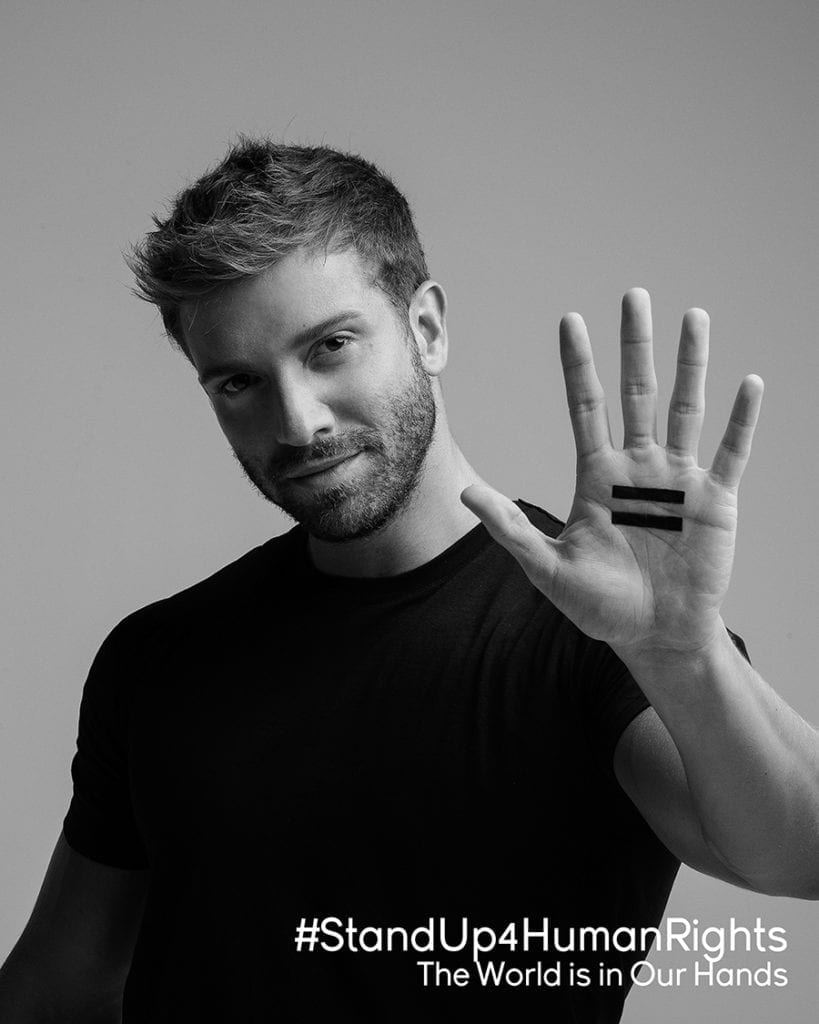
We are all born free and equal in dignity and rights. To increase global awareness of the first two articles of the Universal Declaration of Human Rights, the UN Human Rights Office has teamed up with LA-based The Krim Group and renowned photographer Justin Wu to relaunch the “World is in Our Hands” initiative in support of OHCHR’s #StandUp4HumanRights campaign.
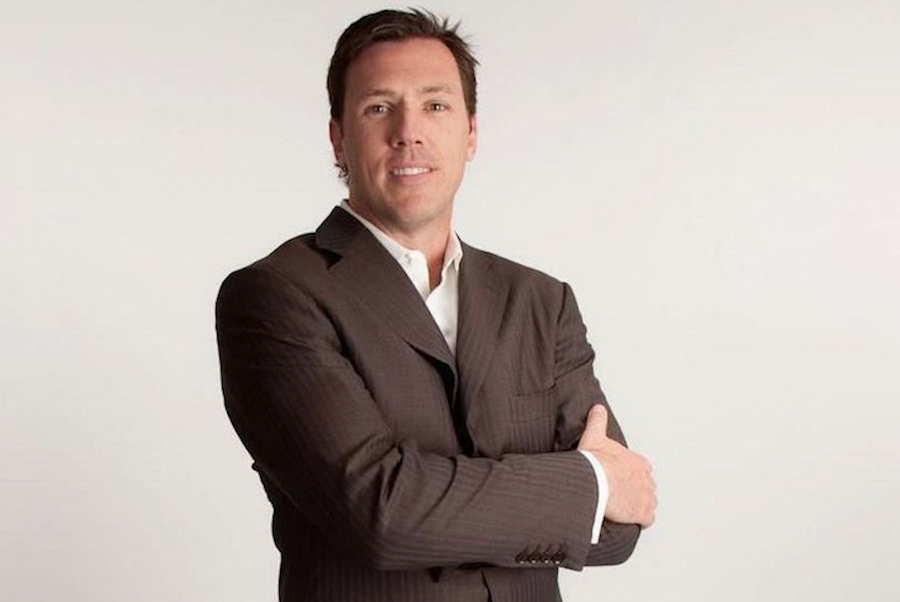
Todd Krim founded The Krim Group as a social impact consulting company that helps nonprofits, charitable foundations, and corporations secure celebrities for special events and social media campaigns.
The challenge kicked-off on International Youth Day, August 12th, 2020, with young global influencers such as Jazz Jennings, an American YouTube personality, spokesmodel, television personality, and LGBT rights activist; Spanish musician, Pablo Alboran; and singer and dancer, Nia Sioux. They all shared an iconic photo taken by Toronto-based director and photographer, Justin Wu, paired with a personal message expressing their stance on the importance of standing up for human rights. They also issued a call to action, encouraging their audience to share their words. The “World Is in Our Hands” message will be amplified through a partnership with Variety.
Processed with VSCO with b3 preset
Justin Wu’s photography is best known for his uplifting approach in his videos and commercials; most notably, his music video for Jay-Z’s Life+Times’ Empire State of Mind’.
The following is a summary of Episode 82 of the Real Leaders Podcast, a conversation with Classy co-founder and CEO, Scot Chisolm. Watch, read, or listen to the fullconversation below.
Stay Classy San Diego
Scot shares the humble origins of his social enterprise: a name inspired by the iconic line in Anchorman, and a group of guys in their 20s who wanted to spread some good in the world. They started off hoping to curate charitable events that would attract a younger crowd. But complications that arose with the money raised from their first unsanctioned pub crawl resulted in a greater opportunity to change the possibilities for giving in a much bigger way.
“The experience for us, trying to do what we call in our world a “third party event,” had so much friction. We were left saying, “Why does giving need to be so hard?” All that we wanted to do was make giving easier, more accessible, and even fun, especially for young people and the younger generation, because we felt like there was a disconnect between the way we wanted to give on our own terms, and the end product the organization was providing us.”
Listen to Episode 82 on Spotify, Anchor, Crowdcast, and Apple Podcasts
Transformation into Social Enterprise
Classy has evolved from something between a nonprofit and a for-profit into the social enterprise it is today. The site offers world-class online fundraising software and a full online fundraising platform for nonprofits of all sizes. Classy campaigns make fundraising more sustainable because they are attractive to a new generation that otherwise wouldn’t be contributing.
Some of the many avenues powered by Classy include websites, fundraising events, and peer-to-peer pages. However, they are all fully white-labeled for nonprofits’ use.
“We’re almost like WordPress is to a website or Shopify is to e-commerce. We’re behind the scenes. So we’d like to say philosophically, it’s their brand before ours. We’re not out there promoting ourselves. And I think that’s also been one of the key ingredients to our success, putting them in the forefront.”
Business Insight from Nonprofits
Scot sees so much activity in the nonprofit space that goes into quantifying and measuring a program’s impact. He believes businesses would benefit from undertaking similar efforts, and sees impact measurement as the future of all businesses and nonprofits.
“The work that organizations in the nonprofit sector are doing day to day on the ground is leading to innovations that eventually end up in the market. A lot of the nonprofit’s are actually trying to solve the root cause. And that’s where this impact measurement really comes in. What problem are you trying to tackle? And what’s the best way to tackle the problem?”
Classy has worked extensively to build an impact measurement framework and hosts impact awards of their own, the Classy Awards, which measure nonprofits on the merit of their impact.
Watch a segment of the conversation with Scot Chisolm on YouTube.