Leaders of Hope: Sage Robbins

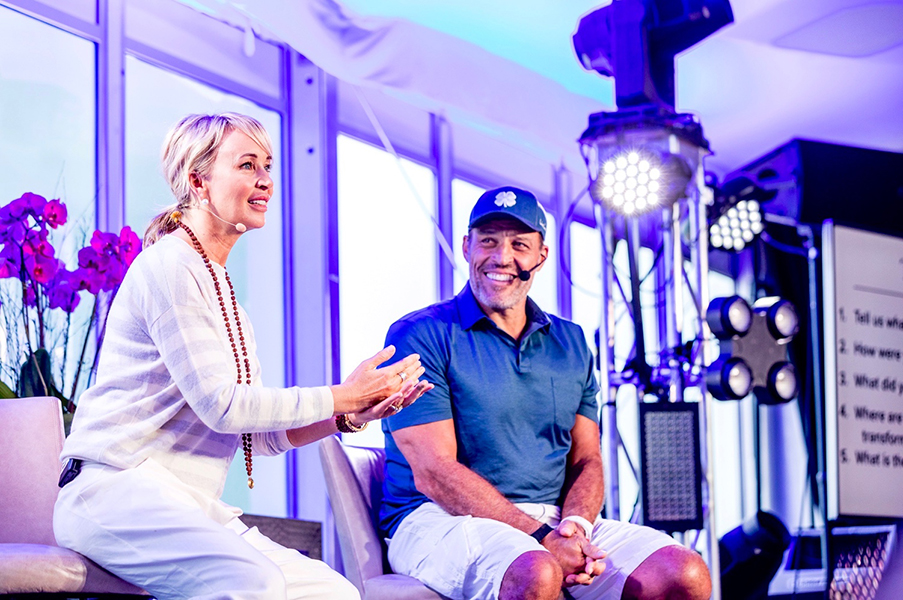
Being an author and speaker, and holding seminars with her husband, Tony Robbins, is a large part of what keeps Sage Robbins motivated during tough times. With the external world reeling from the isolation of a global quarantine and everyone’s daily lives disrupted beyond recognition, what gives Robbins hope is knowing that life is always bigger than any problem we will ever face — whether personally, in our families, at work, or collectively. 

 “There are seasons and stages to life,” she says. “No matter what education level we have, where we are from, how we grew up, or the shade of our skin, we will all experience ups-and-downs and the growing pains of different seasons of our life cycle. There are certainly those of us who may prefer summer over winter, or fall to spring, but each season offers us the gift of growth, insight, life experience, and a broader perspective.” 

 If we are metaphorically in winter right now, then Robbins thinks this is a calling to come inside, to go within, to reflect, to slow down. “It’s a time to become more efficient, reconnect to a higher purpose, and prepare for the road ahead,” she explains. Many people innocently believe that if they yell loud and long enough, or perhaps destroy something or someone else, they’ll be seen and heard. In Robbins’ personal life, yelling can sometimes make the people she loves tune out or walk away, or even fight back. “There are parallels to the world stage in our inner world and with our families,” she says. “It’s all a part of the human condition.” 

 “As a business owner and leader, I feel there is power in recognizing our humanness. We are better off recognizing our strengths and also our blind spots.” Robbins points to the strange reality of social media and news platforms that attempt to tear us down for being precisely what we are — human. “There is an unrealistic expectation for people in leadership roles to be ‘perfect’ and not make mistakes, or without errors in the past,” explains Robbins. “In my experience, goodness does not equal perfection. Rather, it’s a trajectory of growth, evolution, a path forward, and a willingness to see one’s whole self and learn from mistakes. There is such a power to stand in our center with nothing to defend. I certainly didn’t get here by being a perfect human, far from it. I’ve failed, I’ve fallen, I’ve missed. The pain of those situations called to me and awakened me to do my part. It made me take responsibility for what I was missing.”

 According to Robbins, as old structures fall away, the process can be painful, messy, clunky, frustrating, and awkward. This is especially true if we focus on what was, rather than switching toward what life has to offer now. “Leaders recognize that new decisions and actions need to be made to serve the present,” says Robbins. “As much as the death of the old can be uncomfortable, we humans are incredibly adaptable, intelligent, and inventive. Understanding the seasons of transformation and cycles of life allows us to acknowledge that what was, may never be again. We often think of transitions in terms
of life and death, the end of a relationship, or loss of a job, but life is usually more nuanced than that.” 

 Robbins doesn’t think we got to where we are today by being perfect and safe. “We got here by having the courage to step into the unknown and take a leap of faith, despite the adversity. If we develop the willingness to embrace the natural seasons of life, we can lead those we love with grit and grace into the next season of growth and re-creation.”
Leaders of Hope: Jay Shetty

“No one wants to hire you when your resume says ‘served as a monk for three years,’” says Jay Shetty, who at 26 years old, was $25,000 in debt and living with his parents. He was directionless, depressed, and confused about his purpose and working 80-hour weeks. He felt like he wasn’t living up to his potential and knew he had more to offer.

Ten media companies rejected Shetty when he pitched them on his mindfulness-based video ideas. Three media executives told him he was unqualified and too old to have a career in media. Now a highly successful purpose coach with more than 3.5 million followers on YouTube, Shetty believes that self-awareness can change how you see everything.

 Despite the global pandemic, lots of things give him hope. “During my monk training, we learned the importance of perspective and not getting wrapped up in the high emotions of what’s happening at the moment,” he says. “There’s a lot of research on storytelling and the brain — that we create stories to make meaning and sense — but it doesn’t take a scientist to understand that we are storytelling creatures. One thing that’s especially useful right now is that this current global story is still unfolding. As Steve Jobs said: ‘You can’t connect the dots looking forward; you can only connect them looking backwards. So you have to trust that the dots will somehow connect in your future.’ It’s easy to try and jump to conclusions or to tell a negative story about what’s happening, but we have the power to shape our narratives. Science also tells us something else we know from experience: Generally, change feels bad, even if it’s for the better. But we can choose to see things differently. We can look at many things that are happening right now and choose to see opportunities.”

 A recent article in Forbes pointed to companies showing primary interest in people over profit right now. The author, Adam Grant, reckoned that these companies would do best when economies around the world start to rebound because people — employees and consumers—will remember how they were treated. “Standing by your people and everyone who makes your business successful isn’t just the right thing to do, it’s a smart business decision,” says Shetty.

 Shetty came across some interesting research that shows concrete strategies to perpetuate hope. Brain research from the lab of neuroscientist Andrew Huberman at Stanford University shows that what keeps people engaged in challenging tasks in the long term —whether it’s an extreme endurance sporting event or something like what we are facing now — is to receive little dopamine hits along the way. It balances our adrenaline, which would otherwise have us give up at some point. “What’s fascinating to me from a corporate and from a leadership perspective is that some of the things they’ve identified as helping to administer these dopamine hits are a feeling of teamwork and group cohesion, a feeling of being supported, and a feeling of purpose,” says Shetty. “There are others, including laughter and play, that leaders can
key into, too.” 

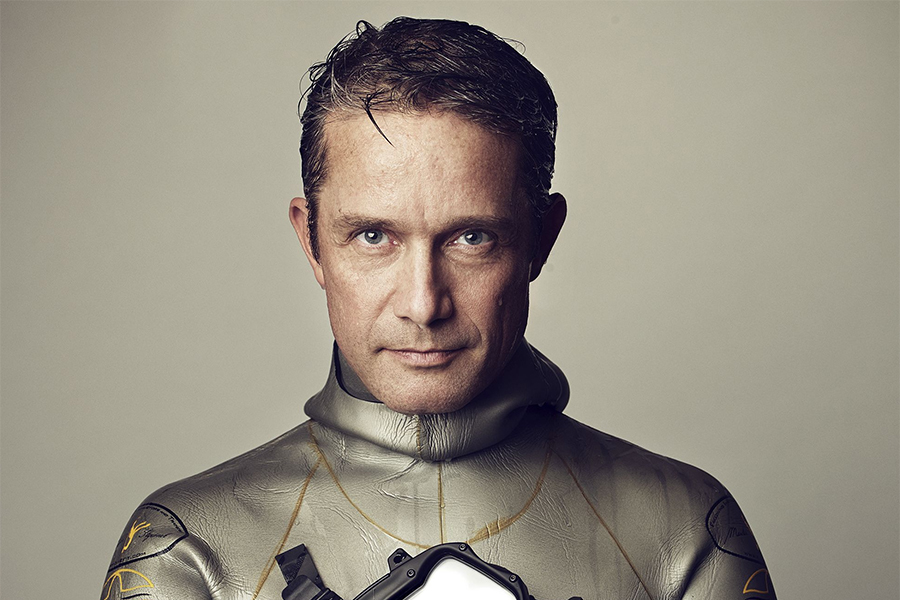
Leaders of Hope: Fabien Cousteau

Fabien Cousteau’s hope for our planet lies in a revolutionary underwater research station and habitat where the world’s best thinkers can address humanity’s most pressing concerns.

As a renowned third-generation ocean explorer and environmentalist, Cousteau’s PROTEUS™ project, in conjunction with his non-profit, the Fabien Cousteau Ocean Learning Center, will work on viruses and cancers, examining chemical compositions that might deliver results in weeks rather than years. PROTEUS™ will also tackle food sustainability and climate change.

 Cousteau likens PROTEUS™ to an underwater version of the International Space Station, a platform for global collaboration among the world’s leading researchers, academics, government agencies and corporations. At a time when humanity is still reeling from the COVID pandemic, Cousteau believes PROTEUS™ — and the promise of the ocean — hold critical answers for the future.

 “I’m continuously inspired and impressed by the young creators I meet through the FCOLC’s programs — artists, activists, scientists — and what they are speaking up about,” Cousteau tells Real Leaders. “Creating a planet where our younger generations can grow up to live more sustainably and in balance with, versus against, the environment and each other remains a constant motivator.”

 PROTEUS™ will be located off the coast of Curaçao in a biodiverse Marine Protected Area, about 60 feet deep (equivalent to three atmospheres). Equipped with state-of-the-art labs and the latest in freezers, microscopes, and other technologies, Cousteau says PROTEUS™ will host scientists, private companies, and NGOs who need to complete years’ worth of research in days. He expects the lab’s biggest impacts to come in ocean conservation; renewable clean energy including solar, wind, and ocean thermal energy conversion; and food advancements such as hydroponics and aquaculture. The findings will be transmitted to land via daily live video streams, social media, and news stories.

  “We are living in extreme, complicated, difficult times,” he says. “We are witnessing daily the need for disruptive solutions.” Cousteau believes this is our chance to refill the Earth’s capital.

 “We can and should be innovative, disruptive, and bolster new industries creating a just, fair, and vibrant economy based on valuing all life and the lifeblood — the ocean — that sustains it,” he says. “Much like this pandemic, climate change is indeed personal. It impacts each of us daily and in our own homes.”

The role of real leaders in all of this is to lead by example and practice what they preach, he continues, explaining that this type of leadership is what perpetuates hope in companies and communities. “I was raised with an understanding of the importance of the ocean — that ocean health is human health,” Cousteau says. “This awareness consciously guides so many of my actions, from recycling to being aware of the foods that I put in my body that are low-impact to the environment. As a real leader, it is my responsibility to put my values into action and hopefully inspire others to do the same.”

To function as a real leader requires tenacity, inquisitiveness, and inclusivity, he says. “A real leader must push boundaries but do so in a manner that inspires and motivates others,” Cousteau says. 

What does he want our world’s real leaders to understand about his work? That the ocean is our life support system and is indispensable to solving the planet’s biggest problems. 

“Challenges created by climate change, rising sea levels, extreme storms, and viruses represent a multi-trillion-dollar risk to the global economy,” says Cousteau. “The knowledge that will be uncovered underwater will forever change the way generations of humans live up above.”

Leaders of Hope: Maria Menounos

American entertainment reporter, television personality, professional wrestler, actress, and businesswoman, Maria Menounos knows how to keep variety in her life. When the pandemic started, she began a daytime show, Better Together, as a weekly journey through health, wellness, spirituality, career, relationships, and finances.

“What I want to do is expose people to top experts and allow them to have that “a-ha” moment without going through a near-death experience like the brain tumors my mom and I incurred,” she explains.  

“In March, when the pandemic hit, I knew we would all face challenges like never before. Jobs would be lost; uncertainty and depression would soar,” she says. The show has brought inspiration, healing and sanity to more than 13 million viewers across all platforms, including YouTube, Facebook, Apple Podcasts and Spotify. She also recently inked deals with GSTV and Coinstar to reach another 145 million viewers a month — to receive branded Better Together tips at gas stations and supermarkets across the country. “Instead of focusing on all the many things we can’t do in these challenging times, we spend our energy focusing on the things we can do.” 

Menounos believes that people are inherently good. “We all come from different backgrounds and are shaped by different sets of experiences, but there is so much good in the world. We need to listen to and understand each other.” Menounos thinks honesty is paramount. The best leaders work together on solutions, recognizing that tough moments are an opportunity to grow and be better. “Strong leaders aren’t afraid to make tough decisions. They have a way of cutting through their fears and all the noise to get the job done. They look at all the facts and make the best decisions they can at the moment.”

Leaders of Hope: Tim Ballard

The founder of Operation Underground Railroad (OUR) is on a mission to end child trafficking and slavery.

For a decade, Tim Ballard worked in the Internet Crimes Against Children Task Force as a special agent for the Department of Homeland Security. He has successfully dismantled dozens of trafficking organizations and rescued countless children from sex slavery. To formulate his business plan, he bought every history book he could find on American slavery.

The Underground Railroad was a network of secret routes and safe houses established in the United States during the early to mid-19th century. They were used by African American slaves to escape into free states and Canada with the aid of abolitionists and allies sympathetic to their cause. The original Underground Railroad was a group that acted and infiltrated, and that’s precisely what Ballard is inspired to do today.

In the past six years, OUR has rescued more than 3,800 victims and assisted in the arrests of more than 2,100 traffickers worldwide. Through partnerships with like-minded organizations, they have collectively rescued more than 10,000 survivors who were enslaved, exploited, or at risk.

“The only thing necessary for the triumph of evil is for good men and women to do nothing,” says Ballard, quoting 18th Century statesman, Edmund Burke. 

“The original Underground Railroad saw people of all colors and creeds coming together to rescue people. Some of these people would pose as slave catchers to learn who was being sought and then devise plans to throw the slave owners off their trails. It’s one of the most inspiring stories of history I have ever heard,” says Ballard. Today, Ballard is doing just that, using similar covert operations to put sex traffickers and pedophiles behind bars. Slavery is not only part of history, either. According to Sean Reves, Utah’s Attorney General, there is more modern-day slavery than at any other time in history. 

“You have to make a decision,” says Ballard. “The world is in turmoil in so many ways, and it’s sometimes easier to crawl into a fetal position and ride it out. But that’s not what we should do — indecision is also a decision. It’s important to stand up for what you believe in and do something that benefits society. Stand up to the evils that hurt people.” 

Ballard reckons that many of us aren’t paying attention when our calling comes. He thinks we should keep our minds open to significant events that move us; it could signal the start of a whole new journey. For Ballard, that moment happened 10 years ago, while still considering a career in fighting crimes against children. “We were rescuing a little boy who had been kidnapped from Mexico,” he recalls. “During the investigation, he gave me a necklace on which was written, “Man of God.” It was a necklace his sister had given him, who had also been trafficked. I found power in that symbol and still wear it today.” 

Despite the horrific things he has seen, Ballard believes that through all the darkness, there are still more good people in the world than bad. “Humanity is good by nature, and most people want to improve their lives continually,” he says. “I focus on the light that I can see in people around me, and I have seen more light this year than ever. 

“A leader must be optimistic and bring hope; a plan that inspires others to be confident,” he concludes. “Leaders can’t always have the right answer, but surround yourself with people who have great ideas and empower them — it doesn’t always have to be about you.” 

Leaders of Hope: Ava Duvernay

Ava DuVernay is providing hope for women and artists of color to promote and showcase their work in film. Her 14,000-square-foot, three-building campus in Los Angeles, which opened in early 2018, includes a new theatre to highlight movies created by these artists.

DuVernay’s collective includes a nonprofit called Array Alliance, which funds programs and educational events that promotes social impact and gives a leg up to women and nonwhite filmmakers; a for-profit distribution company to acquire and release mission-oriented independent movies that might not otherwise be released; and a private production company — whose crew is over 50 percent women — which is already receiving recognition for shows like Netflix’s When They See Us and Emmy-winning and Oscar-nominated documentary 13th (about race problems in America) as well as Oprah Winfrey’s Queen Sugar.

Though each entity operates independently, they share a common mission: first, to break down Hollywood legacy systems that make it difficult for women and artists of color to succeed, and second, to provide a creative platform for social justice.

In an interview with the Los Angeles Times, DuVernay, the first black woman to direct a movie with a $100 million budget (Disney’s A Wrinkle in Time), said, “Every system has roadblocks for people like us, whether it is in acquisition, production, distribution, exhibition, marketing, crewing up… So, what we were looking to do was disrupt those systems so that we create normalcy and momentum.”

DuVernay is no stranger to stirring things up. She was the first African-American woman to spearhead a film (Selma in 2014) nominated for a Best Picture Academy Award — although surprisingly not recognized in the Best Director category. She has been outspoken about Hollywood’s lack of diversity in the Oscars, keeping her 2.6 million followers updated on where, when, and how the movie industry falls short. Her efforts led to the Academy changing membership rules to include more minority voters and continues to spotlight Hollywood’s lack of women and minorities on both sides of the camera. She is one of the most passionate voices calling attention to our nation’s relationship with race.

Her colleagues point out that DuVernay is not trying to push white people out of Hollywood, but rather, to change the system so that everyone gets a chance. Her rise came from nothing but talent, extremely hard work, and a culture that treats everyone equally on the set. “I don’t treat my actors differently than I treat the gaffer or the grip or the craft services manager or hair and makeup, because we’re all making the movie,” she once said. DuVernay is a real leader keeping the spotlight on race and prejudice, providing hope to those whose stories otherwise might never be told, and providing the shoulders for minority artists to stand upon.

Leaders of Hope: Natalie portman

Actress Natalie Portman has set out to change the conversation on women’s sports by investing in the first women majority-owned and led soccer team.

Venture capitalist Kara Nortman of Upfront Ventures and actress Natalie Portman are leading a group that will bring a National Women’s Soccer League expansion team to Los Angeles in 2022. The pair have been joined by gaming entrepreneur Julie Uhrman, the consortium’s president in the majority-female group. Portman has a financial stake in the team along with dozens of other women entrepreneurs including actresses Eva Longoria, America Ferrera, Jennifer Garner, and Uzo Aduba.

 “It’s important to have role models and heroes that are women for kids — both boys and girls — to see,” Portman said in an interview with The Associated Press. “It’s just such an incredible sport in that it really is a team sport. You see one woman’s success, and all the others are cheering her on because one woman’s success is the whole team’s success.”

 Portman was influenced by a speech given by Abby Wambach, a former U.S. national team forward, at a Time’s Up event, and she started considering how female athletes are viewed in society. Then, she met Becca Roux, the executive director of the U.S. Women’s National Team Players Association.

“We started going to games, and we just got so into it,” recalls Portman. “It was a kind of revolution to see my son and his friends, these little 8-year-old boys, wanting to wear Rapinoe and Alex Morgan jerseys. I was like, ‘Wow, this would be a different world.′ It wasn’t unusual to them at all.”

 Sometimes hope alone is not enough — a strategic investment by like-minded people can fast-track an idea and turn it into a reality. Portman believes owning the narrative around an issue and investing in a cause that represents your values, can pay big dividends for the well-being and empowerment of future generations.

We Spend $5 Billion Teaching Languages With a One Percent Effectiveness Rate. Here’s What Needs to Change

PODCAST PEOPLE: A Summary from the Real Leaders Podcast

“Respecting people from all nations and people of different backgrounds, that’s critical for us to solve many of the challenges we face across the planet and then ultimately, to have peace. We really need people to have a skill set that allows them to interact effectively.”

David Young is the CEO of Participate Learning, a company that partners with schools and districts through language acquisition and immersion programs aimed to unite our world through global learning. Participate Learning is among the Real Leaders 100 Top Impact Companies of 2020.

The following is a summary of Episode 59 of the Real Leaders Podcast, a conversation with CEO of Participate Learning, David Young. Read or listen to the full conversation below.

Participate Learning

David explains that Participate Learning strives to develop the next generation of global citizens by uniting our world through global education. To achieve this, the organization offers a series of programs:

  • language acquisition and immersion
  • teaching programs with cultural exchange ambassadors
  • global leaders programs with 21st century competencies.

Through these programs, Participate Learning is committed to empowering students and educators by promoting cultural understanding at home and abroad.

“99% of US citizens that take language in our public schools never learn to speak that language. As a country we spent $5 billion trying to teach languages with a 1% effectiveness rate.”

Participate Learning is tackling these statistics and consequently sees students in their immersion programs developing extraordinary proficiency in whichever language they’re studying. As a result, David expresses that bilingual proficiency and cultural understanding will ultimately lead to a more connected and peaceful world.

Listen to Episode 59 on Spotify, Anchor, Crowdcast, and Apple Podcasts

A Force for Good

In discussing Participate Learning as a B-Corp, David states that organizations play a role in bettering society. As a result, they can function alongside people as larger global citizens.

“Leaders should be thinking of how their organizations can align to help them resolve global challenges and issues.”

David asserts that leaders can do well through doing good, though he closes with some leading questions for organization leaders:

“What is the impact you have on your employees? What is the impact you have on the environment? Is your work truly making the world a better place? Are you impacting the next generation? What opportunities are you giving your team to become leaders? Not just in title but in empowerment? How are they empowered to make a change in the world for the better? I think leaders that can see that bigger picture, have an opportunity to emerge as the real leaders going forward.”

Transcript

Connect

Find out more about Participate Learning here: vifprogram.com

Leaders of Hope: Melinda Gates

The world has many pressing issues, and the Gates Foundation is actively supporting solutions to many of them. But recently, the challenge closest to the heart of Melinda Gates is gender equality. Following her announcement in October of last year that she is committing $1 billion over the next decade to “expanding women’s power and influence in the United States,” Gates recently announced a teaming up with MacKenzie Bezos in a $30 million gender equality initiative.

 Called the Equality Can’t Wait Challenge, Gates and Bezos will provide grants to organizations that show “transformational” plans for boosting gender equality in the United States by 2030. In a June statement about the initiative, Bezos said, “Closing the gap on gender equality will benefit everyone. History keeps teaching us that when a diversity of voices is represented in decisions, the outcome is better for all.”

 “The entrenched inequalities that divide America — race, gender, class — will not go away without systems-wide change,” Gates says. “This Challenge is seeking bold ideas to dismantle the status quo and expand power and influence for women of all backgrounds.”

 In the last 24 months, Melinda Gates has written in several op-eds that she wants to see more women “making decisions and controlling resources.” In a piece she wrote for Time, Gates said, “Women’s potential is worth investing in — and the people and organizations working to improve women’s lives are, too.” 

 Gates is putting her resources into companies who are working specifically to grow the power and influence of women. Her focuses include removing barriers to professional advancement, rapidly advancing women in male-dominated industries and professions, and putting pressure on companies and organizations in need of gender-equality reform.

 In a 2018 Quartz op-ed, she wrote, “When money flows into the hands of women who have the authority to use it, everything changes.” Gates hopes her work will inspire other real leaders to join the effort to address gender equality challenges.

 While climate change and world health will continue to be a focus for the Gates Foundation, Melinda Gates has been deeply touched in recent years by women around the world whose heart-breaking struggles will “not go away on their own.” In her annual letter this year summarizing the activities of the Gates Foundation, she writes of a woman who begged her to take her newborn home with her because the woman had no means to care for him, and a community health volunteer in Ethiopia who described spending the night in a hole to escape her abusive husband — at age 10. Recognizing that these women and girls represent millions more just like them inspired Gates to announce her focus on gender equality.

 “No matter where in the world you are born,” she said in the letter, “your life will be harder if you are born a girl.” Even in the United States, where women earn college and graduate degrees at higher rates than men, Gates says women are often “channeled into less lucrative jobs.” Men are 70 percent more likely to be executives than their female counterparts of the same age, she says. 

 Gates believes the only thing that will significantly move the needle on gender equality is if the real leaders of the world make it a priority. She is calling for “bold attempts at new solutions that will dismantle inequality,” noting that real leaders must make the political and financial commitments necessary to drive real change.

 “If we miss another opportunity, if we let the spotlight sputter out again, we risk contributing to a dangerous narrative that inequality between men and women is inevitable,” she says. “We need to be loud and clear that the reason these problems look unsolvable is that we’ve never put the necessary effort into solving them.

 “And we need to be deliberate about galvanizing a wide range of partners to play a role in changing society’s norms and expectations — not just the activists and advocates who are already leading these conversations, but consumers, shareholders, faith leaders, entertainers, fathers, and husbands,” says Gates.

Leaders of Hope: Muhammad Yunus

“Financial systems are designed in the wrong way, and COVID-19 has revealed their weaknesses,” Professor Muhammad Yunus told Indian Congressman Rahul Gandhi in July. “It’s time to make outrageously bold decisions that will create a new order where there is no global warming, no wealth concentration, and no unemployment.”

 The Nobel Peace Prize winner who proved the world wrong on micro-lending — by proving that people living in poverty are good credit risks — is now calling for a new system that includes informal and rural sectors to become valued parts of society. Beyond the latent innovation that he thinks lies dormant in developing countries, Yunus believes the next significant business opportunities are to be found among 10 percent of the world’s population who live on less than $1.90 a day. As the world gets poorer from the effects of a pandemic, his ideas offer economic hope to billions.“Any idea that solves a problem excites me,” says Yunus. “I’m always looking for new problems; you can never have enough.”

A persistent entrepreneur who has founded dozens of new initiatives, Yunus says we should ask how technology can be harnessed to help solve these problems. “Some of the best solutions can come about when you expose innovators to a problem and challenge them to solve it,” he says. “That’s when a fresh set of eyes will say, ‘Hey, have you considered doing it like this before?’ That’s when real innovation is born.

“If you don’t want to go to the moon, then you’ll never have rocket science,” Yunus continues. “The moment you have that ambition, space exploration and related technologies appear. While space exploration can seem indulgent while so many earthly problems still exist, experiments in space can help lead solutions here on Earth.”  What gives Yunus hope is that innovation can come from anywhere. Many expect great solutions to come out of Silicon Valley, but an equally good idea may emerge from a remote village in Africa. “Remember that Silicon Valley was founded on an investment network that happened to take root in San Francisco,” says Yunus. “The world’s best ideas weren’t already there; investors just became good at attracting talent to that region.”

Likewise, CEOs have already used their ingenuity and creativity to rise to a position of influence. “Use this creative power to start a small social enterprise alongside your existing company, explains Yunus. “Invest as little as $100,000 in a social problem and set out to solve it. Use it as a laboratory to experiment and share the results widely.” For many companies, this may simply be a matter of reshuffling existing assets. Repurpose your Corporate Social Responsibility (CSR) or charity donations by instead investing in social enterprises that will help solve the underlying problem. Yunus thinks that times of crises are when leaders need to step up and offer hope. “A real leader is someone who represents the emotions, aspirations, and hopes of other people — those that cannot express themselves as effectively as the leader. Sometimes, it’s only when people hear a leader express an idea that they say, “Ah, that’s what we want!” They rally around that person because they see further into the future than everyone else and give followers a vision they can get excited about.”

According to Yunus, your authority will emerge because you are trusted, not because you tell people what to do.“Nelson Mandela was not a king, yet even after stepping down as president of South Africa after five years of rule, his voice was heard around the world for another 13 years before his death.”

Yunus is banking on human nature for a brighter future, despite billions of people being unable to express adequately what this may look like. He has already shown that trust and integrity can drive new markets and lift people from poverty. “How did we do that in Grameen Bank?” Yunus asks. “People were shocked. I said that we believed in people’s capacity to be honest. And they believed in us.” If risking vast amounts of money on poor people turned out well, imagine what other “risks” today might be reimagined — and turned into rewards?

0